


I used to think mine was just a cute thing swinging above my bed, feathers doing their little dance every time the fan kicked on. Turns out there’s way more going on than window dressing.
Your grandma’s dreamcatcher, that one from the souvenir shop, the fancy Pinterest DIY version- they all trace back to something with real roots and real meaning, not just vibes.
So what do dream catchers do, exactly? Is it folklore, symbolism, or a little bit of both doing double duty while you sleep? Stick with me, because the answer’s more interesting than the decoration ever let on.
What Do Dreamcatchers Do?
Dream catchers are traditionally believed to protect people from bad dreams while they sleep. In commonly described indigenous tradition, the woven web is associated with catching or filtering harmful dreams.
Good dreams are believed to pass through the opening and reach the sleeper. This protective tradition was particularly connected with children and kids’ sleeping spaces.
The idea is spiritual rather than physical, meaning a dream catcher is not believed to control dreams through a proven process.
There is also no scientific evidence that dream catchers can prevent nightmares or change what someone dreams about.
It is also important not to present this belief as universal across all Indigenous nations, since traditions and meanings differ among Indigenous communities.
Where Did Dream Catchers Originate From?
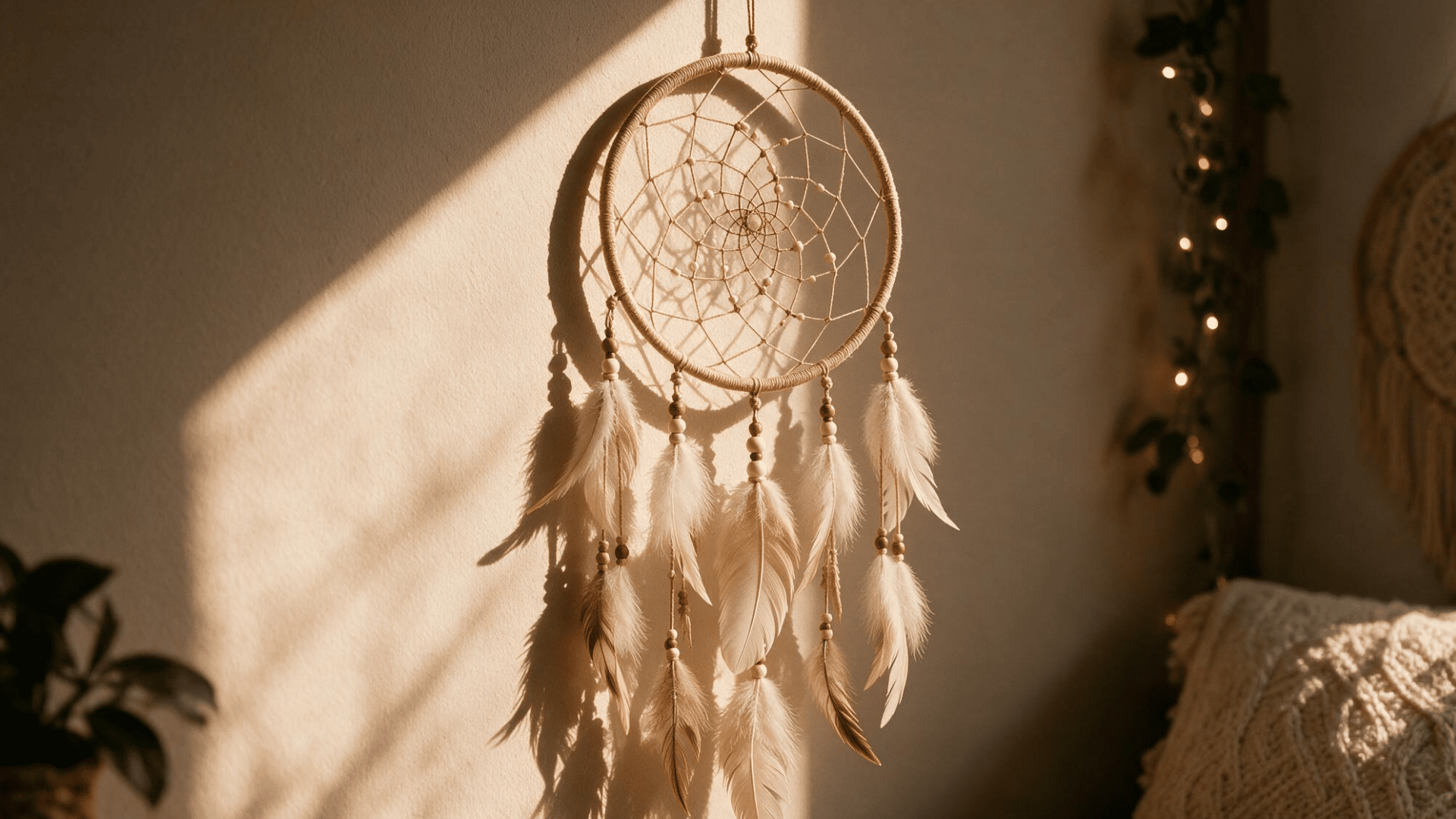
Dream catchers have a much deeper background than their familiar decorative appearance suggests. I noticed this quickly while looking into their history.
1. The Ojibwe Origin and the Story of Asibikaashi
This tradition centers on protection and family care. Its deeper symbolism comes from a specific cultural setting, with the woven form carrying meaning beyond its appearance.
- Ojibwe roots: Most strongly connected with Ojibwe tradition.
- Asibikaashi: A protective Spider Woman figure linked with children.
- Web design: Reflects imagery associated with a spider’s protective web.
- Original role: Used as a protective charm near sleeping children.
- Story variations: Details can differ between communities and tellers.
2. The Lakota Legend of Iktómi
The Lakota account follows a different path. It focuses on guidance, choices, and the forces people encounter throughout life, giving the object a distinct symbolic role.
- Iktómi: A trickster and wisdom figure appearing as a spider.
- Willow hoop: Used as the frame for the woven teaching.
- Life lesson: The web symbolizes positive and harmful influences.
- Dream connection: Tied to visions and the direction a person follows.
- Separate tradition: Distinct from the Ojibwe account.
3. The Pan-Indian Spread
Its meaning broadened over time. As the symbol moved across communities and cultural spaces, it took on a wider identity while still carrying traces of its earlier roots.
- Early movement: Spread through contact between neighboring nations.
- Pan-Indian adoption: Gained broader use during the 1960s and 1970s.
- Shared symbolism: Became associated with solidarity and collective identity.
- Wider circulation: Entered non-Native markets and New Age spaces.
- Historical distinction: Later spread does not redefine its original roots.
4. From Trade Item to Mainstream Product
Commercial popularity changed the object quickly. Once it entered larger markets, both its construction and public meaning began to shift away from its traditions.
- Retail growth: Became common in tourist shops and gift markets.
- Material changes: Synthetic replacements became more common.
- Mass production: Turned into a widely reproduced cultural symbol.
- Lost context: Many commercial versions removed traditional meaning.
- Modern concern: Commercial use raises questions about respectful treatment.
The Dream Catcher Process From Night to Morning
The traditional explanation follows a clear nighttime sequence. Each part of the object is believed to play a role as the sleeper rests.
The steps below show how that process is commonly described from evening through daylight (Source: here):
1. Dreams Reach the Woven Center
While the person sleeps, dreams are believed to move toward the dream catcher hanging nearby. The woven center pattern is where the process starts. It acts as the point where different kinds of dreams are separated before they move any farther.
2. Harmful Dreams Stay in the Web
Troubling dreams are believed to become caught in the woven strands. They stay there instead of reaching the sleeper. In this version of the belief, the web works like a spiritual filter that holds unwanted dreams through the night.
3. Good Dreams Pass Through the Opening
Positive dreams are believed to move through the open center instead of becoming trapped. They continue beyond the web.
From there, they are thought to travel toward the person sleeping below.
4. Good Dreams Move Toward the Sleeper
Some commonly shared versions connect the hanging feathers with the final part of the process. The feathers are believed to help guide good dreams downward. This allows positive dreams to reach the sleeper while unwanted ones remain caught above.
5. Daylight Clears What Was Caught
Morning brings the last stage in some retellings. The first light of day is believed to make the trapped harmful dreams disappear. Once they are gone, the dream catcher is considered ready for another night.
6. The Lakota Teaching Uses the Web Differently
The Lakota account gives the web a broader role. It is not described only as a filter used during sleep. Instead, the web represents helpful and harmful influences a person may meet in life, along with the choices that shape their path.
Note: These explanations describe traditional spiritual beliefs and can vary between Indigenous communities. They are not scientifically proven methods for preventing nightmares.
Meaning Behind the Parts of a Dream Catcher
|
Part |
Common Meaning |
Symbolism |
|---|---|---|
|
Hoop |
Protection and continuity |
The circle can represent life and connection. |
|
Web |
Filtering and protection |
It is linked with catching harmful dreams. |
|
Feathers |
Guidance and movement |
They are often linked with good dreams reaching the sleeper. |
|
Beads |
Personal meaning |
Their meaning can vary by design and tradition. |
|
Hanging Loop |
Placement |
It allows the dream catcher to hang near a sleeping space. |
Can a Dream Catcher Still Feel Comforting?
Yes, a dream catcher can still feel comforting even though there is no scientific evidence that it controls dreams. Familiar objects often help a sleep space feel more personal.
For some people, that comfort comes from symbolism, family meaning, or cultural connection. Seeing an object associated with protection may also feel reassuring before bed, especially when it becomes part of a steady routine.
It can also become part ofcreative room decor. The important distinction is that the comfort comes from personal or emotional meaning, not from proof that a dream catcher can prevent nightmares.
Ideal Dream Catcher Placements Near Sleeping Areas
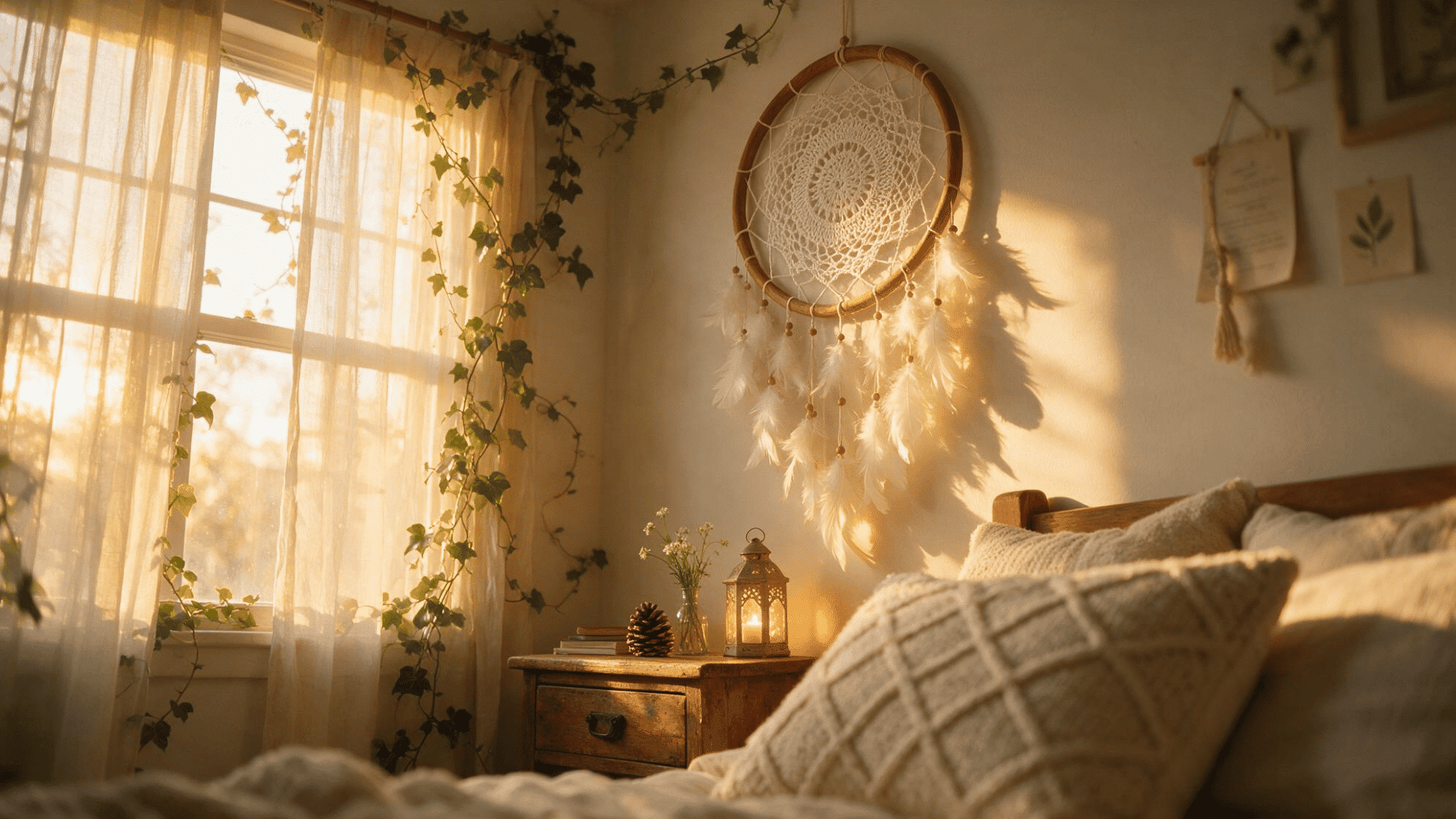
Placement is usually connected with the purpose a dream catcher is believed to serve. The location matters more than simply choosing a blank wall spot where it looks good.
- Above the bed: Keeps it directly over the sleeping area.
- Near the headboard: Places it close to the sleeper without hanging overhead.
- Beside the bed: Works when there is no safe place directly above.
- In a child’s room: Reflects its long association with protecting children during sleep.
- Near a window: Allows morning light to reach it in traditions that include this belief.
- Close to the sleeper: Keeps the object connected with its nighttime purpose.
- Away from hidden corners: A visible position better matches its symbolic role.
- In a secure spot: Prevents it from falling or becoming a hazard.
- According to family tradition: Placement may depend on cultural or household practices.
- Without treating it as universal: Different Indigenous communities may follow different customs.
Can You Make Your Own Dream Catcher?
Yes, you can make a dream catcher as a craft project. A simple design can start with a round hoop, cord or thread, and decorative elements such as beads or feathers. The web can be woven across the center in different patterns.
A homemade version can use similar visual elements, but it should not be presented as an authentic Indigenous object. You can also make creative choices with the materials and decoration.
The size, colors, hanging elements, and web pattern can all vary. If you are making one for a bedroom or craft activity, I would focus on the creative process while being clear about where the design comes from.
Most importantly, making a dream catcher does not give it a traditional spiritual function. It can be a personal craft while still being approached with respect for the Indigenous traditions connected to its history.
Wrapping It Up
Turns out that woven circle above my bed was never just collecting dust between feather sways; it was quietly holding onto a story way older than any decor trend I picked it for.
Once I dug into where it actually came from, I couldn’t look at mine the same way again. Your dream catcher doesn’t have to be magic to mean something; sometimes tradition, comfort, or just a good bedtime reminder is enough.
So what do dream catchers do? Honestly, way more than “look pretty,” Now that you know the story, you’ll never glance at one the same way again.
Frequently Asked Questions
Can Dream Catchers Be Used Outdoors?
They can be, but natural materials may deteriorate when exposed to rain, moisture, and direct sunlight.
Are Dream Catchers Only Used In Bedrooms?
No. They can be displayed in other parts of a home today. Modern placement may differ from traditional use.
What Materials Are Traditionally Used?
Materials can include willow, natural fibers, feathers, and beads. The materials vary by maker and tradition.