

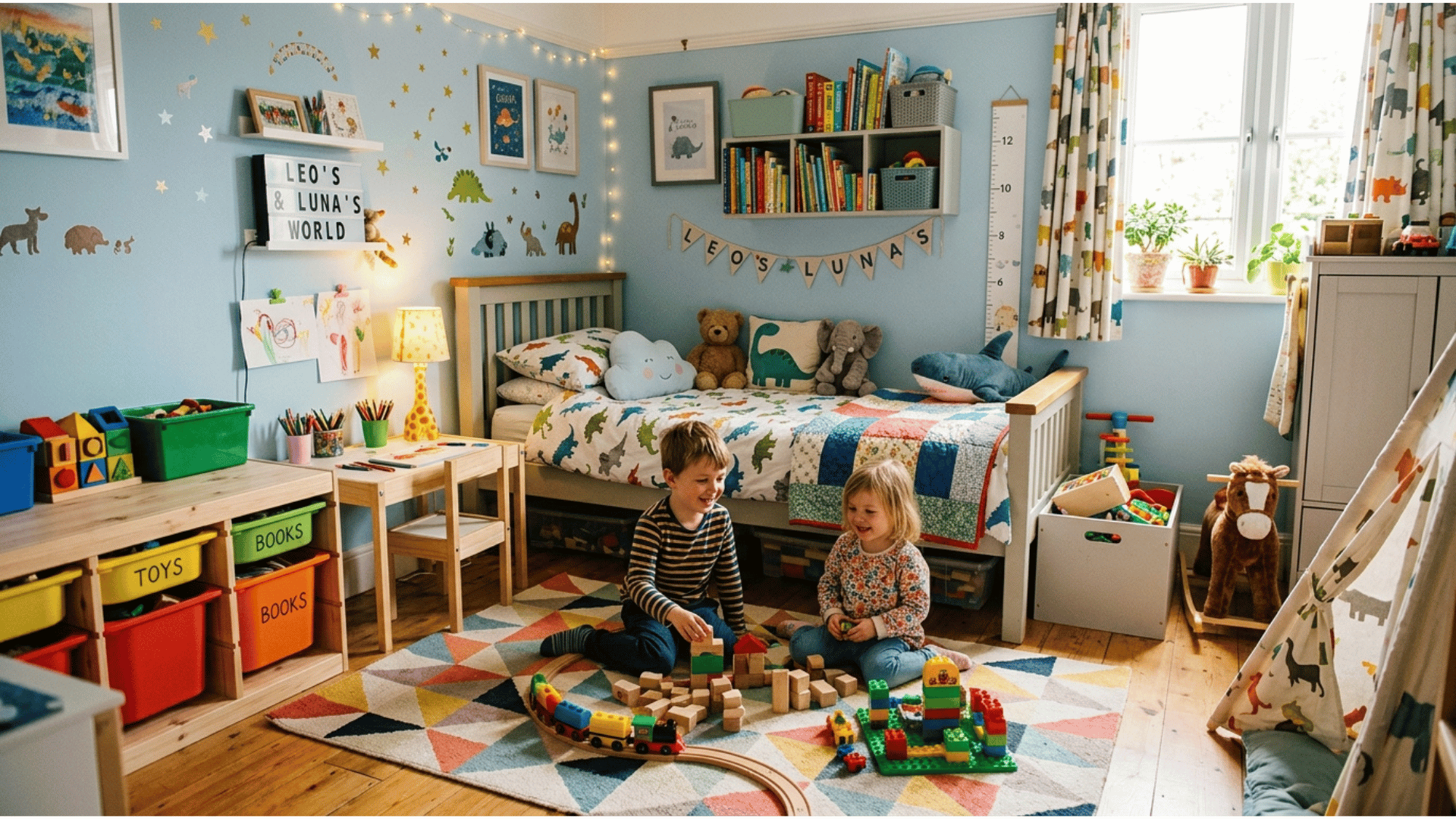
Designing a small kids’ room can feel challenging because children need space for sleeping, playing, learning, and storing their belongings. When the room is small, every inch needs to be used wisely to avoid clutter and make the space feel comfortable.
A smart layout, space-saving furniture, and creative storage solutions can make a big difference. Choosing multi-functional pieces and keeping things organized helps the room feel larger and more practical.
With the right ideas, even a small room can become cozy, fun, and functional. These small kids room ideas will help you create a space that supports daily activities while staying neat and easy to manage.
Things toConsider Before Designing aSmall Kid’s Room
Designing a small kid’sroom is not only about fitting furniture into a tight space. The room should still feel comfortable, safe, and easy for kids to use every day.
A few simple planning steps can help make the room more practical while keeping it fun and organized.
- Use Space-Saving Furniture:Furniture that serves multiple purposesworks best in small rooms. Beds with drawers, storage benches, and foldable desks help reduce clutter.
- Focus on Vertical Space:Walls are often unused in small bedrooms. Shelves, pegboards, and hanging organizers help store toys and books without taking up floor space.
- Keep the Layout Simple:Too much furniture can make a room feel crowded. A simple layout with clear walking space makes the room easier for kids to move around.
- Choose Light and Cheerful Colors:Light shades like soft blue, pastel green, or warm white can make a small room feel brighter and more open.
- Make Storage Easy for Kids:Storage should be simple for children to use. Toy bins, baskets, and open shelves make it easy forkids to clean up their toys.
Small Kids Room Layout Ideas
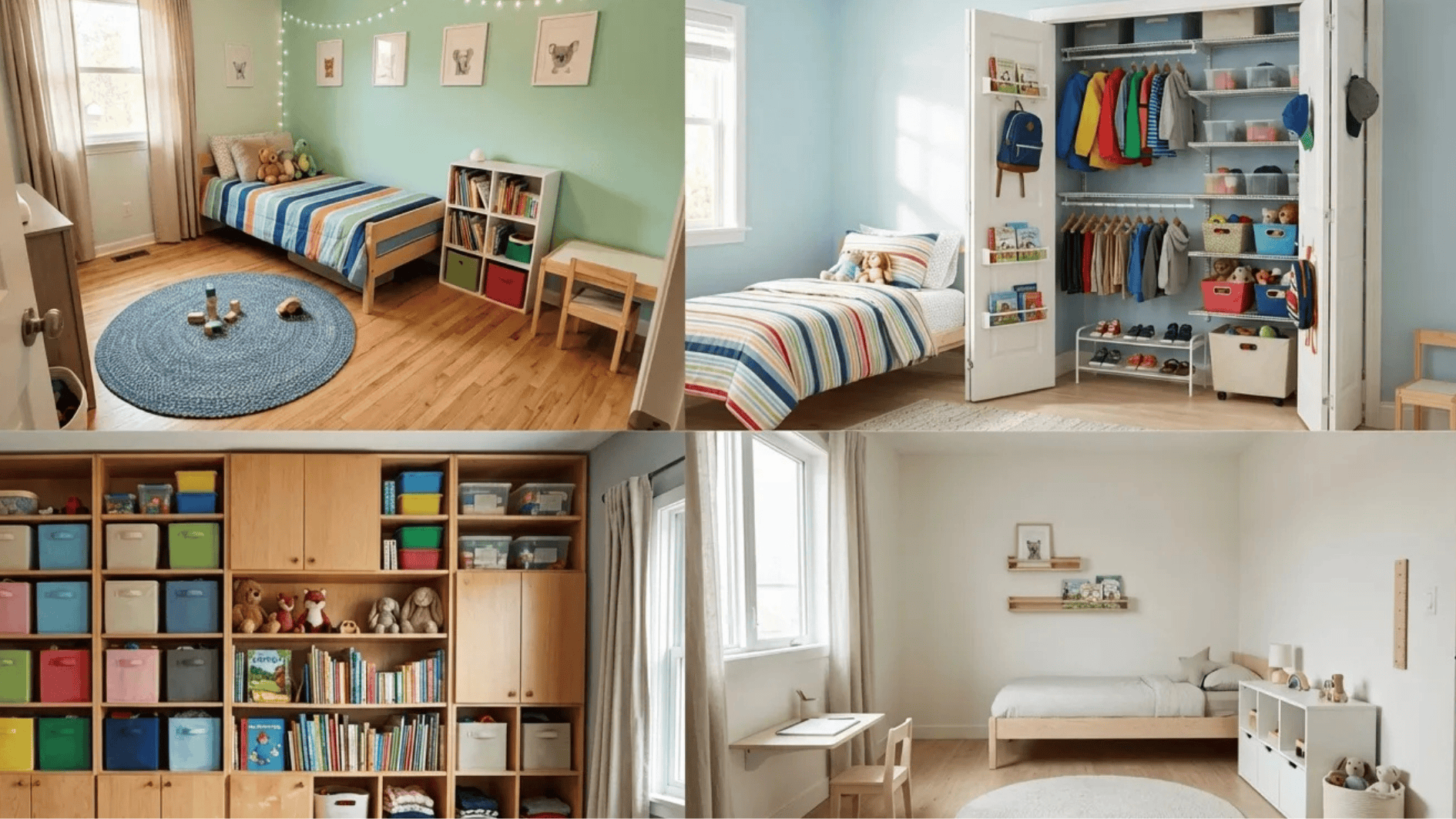
A good layout makes a small room easier to use. The goal is to keep the space open so kids still have room to move and play.
1. Bed Against the Longest Wall
Placing the bed against the longest wall is one of the simplest small kids room ideas. This setup keeps the center of the room open, giving children more space to move around and play.
It also makes it easier to place other furniture, such as toy shelves or a small desk, along the remaining walls. Keeping the bed against a long wall helps maintain a balanced layout and prevents the room from feeling crowded.
2. Corner Bed Setup
A corner bed setup works well when the room is very small and every inch matters. Placing the bed in the corner leaves more usable space in the rest of the room.
This layout can create extra space for a toy bin, a bookshelf, or a small desk. It also makes the bed feel cozy because the walls support it on two sides.
Many parents add wall pillows or soft cushions for comfort and safety. This simple arrangement can make a small kid’s room feel more open while still providing a comfortable sleeping space.
3. Open Center Layout
An open-centered layout keeps the middle of the room clear, providing a safe place for kids to play. Furniture such as beds, storage units, and shelves is placed along the walls rather than in the center.
This arrangement helps make the room feel bigger and easier to move around in. It is especially useful for younger children who enjoy playing on the floor with toys or puzzles.
4. Bed Under the Window
Placing the bed under the window is a smart layout for small kids’ rooms that need better use of space. This setup allows natural light to brighten the sleeping area and can make the room feel more open during the day.
It also frees up other walls for storage shelves, desks, or toy organizers. Many parents add light curtains to keep the space cozy while still letting sunlight in.
5. L-Shaped Furniture Layout
An L-shaped furniture layout helps make better use of corners in a small kids’ room. In this setup, two larger furniture pieces, such as the bed and desk, are placed along two connecting walls.
This arrangement leaves the rest of the room open and easy to move around in. It also helps separate sleeping and studying areas without needing extra furniture.
6. Desk Beside the Bed
Placing a desk beside the bed is a practical solution for small bedrooms that need a study area. A compact desk next to the bed keeps the furniture arrangement simple and avoids taking up extra floor space.
This layout works well for children who need a spot for homework, drawing, or reading. It also keeps school supplies within reach without needing a separate study corner.
Using a small chair or stool that can slide under the desk helps keep the area tidy and prevents the room from feeling crowded.
7. Shared Storage Wall
Using one wall entirely for storage can help keep a small kid’s room organized. A shared storage wall may include shelves, cabinets, or baskets that hold toys, books, and clothes.
Keeping storage in one area prevents clutter from spreading across the room. It also helps children know where to put their toys after playing.
8. Minimal Furniture Layout
A minimalist furniture layout focuses on using only the truly necessary items. In a small kids’ room, too much furniture can make the space feel crowded and hard to navigate.
Choosing a bed, a small storage unit, and possibly a compact desk is often enough. Removing extra furniture helps keep the room open and easy for kids to use.
9. Closet Storage Layout
Making full use of the closet can greatly improve storage in a small kids’ room. Adding shelves, hanging rods, and small bins helps organize clothes, toys, and school supplies in one place.
This layout keeps the main part of the bedroom clutter-free. Some parents add double hanging rods to create more space for children’s smaller clothing. Closet organizers can also include baskets for toys or accessories.
10. Floating Furniture Layout
A floating furniture layout uses wall-mounted furniture to free up floor space. Items like floating shelves, wall desks, and mounted storage units keep the room organized while leaving more open area below.
This design works especially well in very small kids’ rooms where floor space is limited. Keeping furniture off the floor can also make cleaning easier.
Small Kids Room Bed Ideas
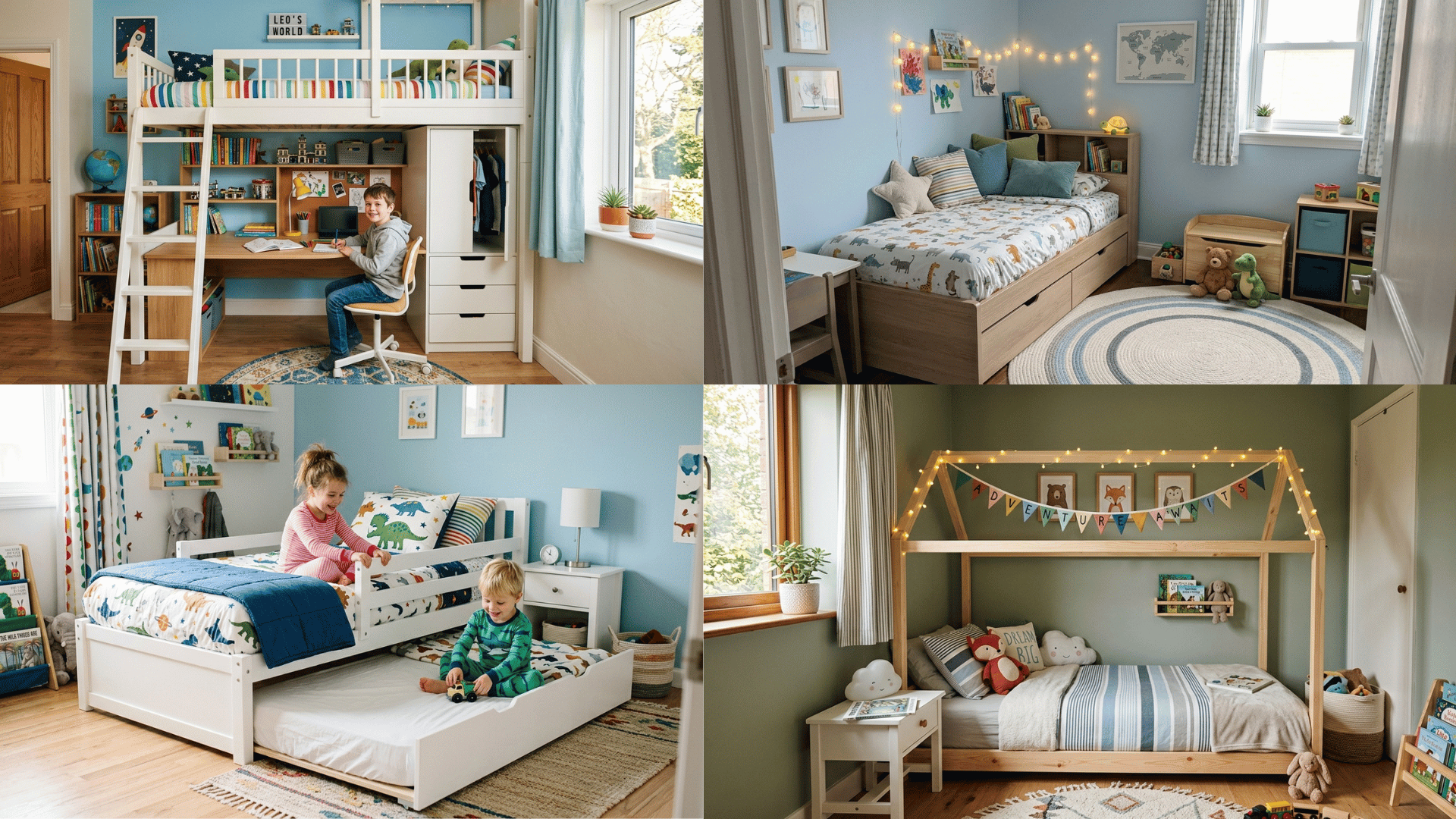
Beds usually take up the most space in a kid’sbedroom. Choosing the right bed style can help save space.
11. Bunk Beds for Siblings
Bunk beds are one of the most practical solutions for siblings’ shared rooms. By stacking two beds vertically, this design saves a large amount of floor space that can be used for play or storage.
Bunk beds also help create a neat and organized sleeping area without needing two separate beds. Many designs include built-in ladders, guardrails, and sometimes storage drawers underneath.
12. Loft Bed with Study Space
A loft bed is a smart choice when a small bedroom needs both sleeping and study areas. The bed is raised off the ground, leaving space below for a desk, shelves, or a small play area.
This layout helps keep the room organized while making better use of vertical space. Many loft beds are designed with built-in desks and storage units, which reduces the need for extra furniture.
13. Bed with Built-In Drawers
A bed with built-in drawers offers a simple way to add storage without bringing extra furniture into the room. The drawers under the mattress can hold clothes, toys, bedding, or seasonal items.
This design helps keep the room tidy because everything has a dedicated place. It is especially useful in small bedrooms where adding a dresser might take up too much space.
14. Trundle Bed
A trundle bed is a great option for families who want to keep extra sleeping space available without crowding the room. The second bed stays hidden underneath the main bed and can be pulled out when needed.
This design is perfect for sleepovers or visits with family. During the day, the extra bed slides back under the frame, keeping the room open and easy to move around in.
15. Daybed Against the Wall
A daybed placed against the wall can work as both a bed and a seating area. During the day, it functions like a small sofa where kids can read or relax. At night, it becomes a comfortable place to sleep.
This arrangement is helpful in small rooms because it reduces the need for additional seating. Placing the daybed along the wall also keeps the center of the room open for play.
16. Corner Bed Design
A corner bed design helps make better use of space in a small kids’ bedroom. By placing the bed in a corner, two walls naturally frame the sleeping area and keep it out of the main walkway.
This setup creates more open space for play areas, desks, or storage units. It also makes the bed feel cozy and protected, which many children enjoy.
17. Raised Platform Bed
A raised platform bed lifts the mattress slightly higher than a standard bed, creating useful storage space underneath. Storage bins, baskets, or drawers can easily fit in the area below the platform.
This setup helps keep toys, clothes, or books organized without needing additional furniture. It also keeps frequently used items easy for kids to access.
18. Fold-Away Wall Bed
A fold-away wall bed, sometimes called a Murphy bed, can be folded up against the wall when not in use. This design creates extra floor space during the day, allowing children to play freely.
At night, the bed pulls down for sleeping. This type of bed is especially useful in very small rooms where a permanent bed might take up too much space. Some models also include built-in shelves or desks.
19. House-Style Kids Bed
A house-style kids’ bed adds a playful element while still fitting well in a small bedroom. The bed frame often has a simple house shape with a roof outline, which can make bedtime more exciting for children.
Despite its creative look, the design remains compact and does not take up more space than a standard bed. Parents sometimes decorate the frame with soft lights, fabric, or small banners.
20. Bed with Storage Shelves
Beds with built-in storage shelves provide easy access to books, toys, and bedtime essentials. The shelves are often placed in the headboard or along the side of the bed frame.
This design reduces the need for separate nightstands or bookcases, which helps save space in small rooms. Kids can keep their favorite storybooks or small toys nearby without cluttering the floor.
21. Toddler Floor Bed
A toddler floor bed sits close to the ground and is designed to be easily accessible for young children. Because it does not require a tall frame, it takes up less visual space and can make a small room feel more open.
Floor beds are often used for younger kids who are transitioning from a crib. They allow children to get in and out of bed safely without needing ladders or steps.
22. Slide Bed
A slide bed adds a playful feature that many children enjoy. The bed frame includes a small slide that children can use when getting out of bed.
While it is fun, the design can still fit well in a compact bedroom if chosen carefully. Some slide beds also include storage drawers or lofted space underneath.
Small Kids Room Storage Ideas
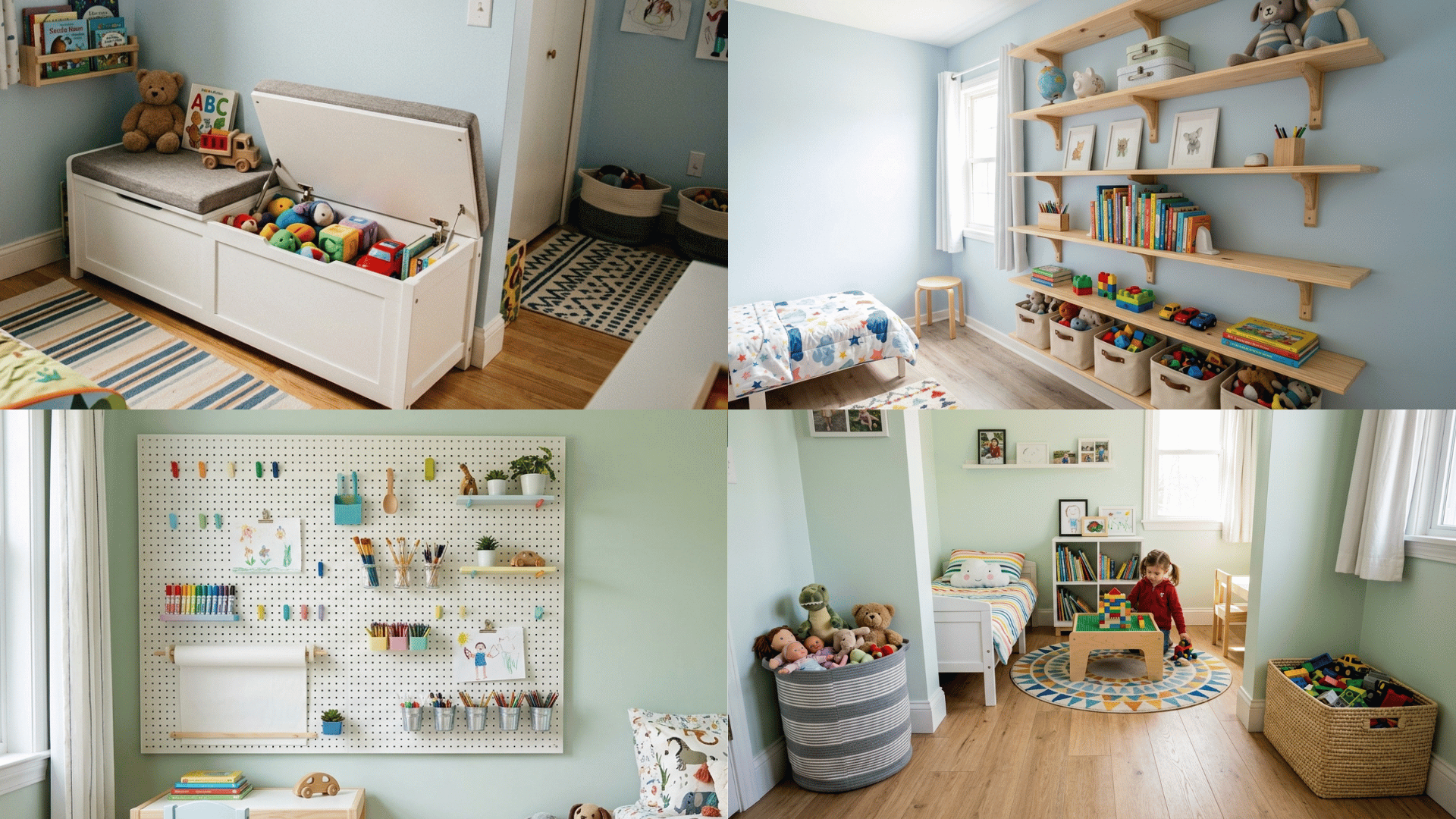
Storage is important in a small bedroom. Organized storage helps keep toys and clothes easy to find.
23. Under-Bed Storage Boxes
Under-bed storage boxes are a simple way to use space that often goes unused in a small kid’s room. These boxes can hold toys, seasonal clothes, extra bedding, or school supplies while staying neatly hidden under the bed.
Using storage containers with lids or wheels makes it easier for kids and parents to pull them out when needed. This solution helps reduce clutter and keeps frequently used items organized.
24. Toy Storage Bench
A toy storage bench is a practical piece of furniture that combines seating with hidden storage. The top of the bench works as a comfortable place for kids to sit, while the inside space can hold toys, blankets, or stuffed animals.
This option works well in small bedrooms because it removes the need for separate storage boxes. Many parents place the bench near the bed or along a wall so it stays out of the main walkway.
25. Cube Storage Shelves
Cube storage shelves are a popular choice for kids’ rooms because they are simple and flexible. Each cube can hold baskets, toys, books, or clothes, making it easy to organize different items.
These shelves can stand against a wall or be placed low enough for kids to reach their toys without help. Colorful bins or fabric baskets can also make the room look cheerful while keeping things tidy.
Cube storage works especially well in small rooms because it helps separate items into sections while using minimal space.
26. Vertical Wall Shelves
Vertical wall shelves make good use of empty wall space in a small kids’ room. Instead of adding bulky furniture on the floor, shelves mounted on the wall provide storage for books, toys, and decorations.
This setup keeps the floor clear and makes the room feel less crowded. Taller shelves can hold items not used daily, while lower shelves can store toys that children play with often.
27. Hanging Toy Organizers
Hanging toy organizers are a helpful way to store small toys, stuffed animals, and accessories. These organizers usually hang on doors, walls, or closet rods and include pockets or compartments for different items.
Because they hang vertically, they do not take up any floor space. This makes them especially useful in small bedrooms where space is limited.
28. Closet Organizers For Kids
Closet organizers can greatly improve storage in a small kid’s bedroom. Adding shelves, hanging rods, and storage bins inside the closet helps make better use of the available space.
Children’s clothing is usually smaller, so double-hanging rods can create extra space for shirts and pants. Baskets and labeled bins can store toys, accessories, or school supplies.
29. Toy Bins Under The Desk
Toy bins placed under a desk are a convenient way to store toys while keeping them out of sight. This setup uses space that might otherwise remain empty. Small bins or baskets can hold building blocks, puzzles, or art supplies while staying within easy reach.
When the bins slide under the desk, they help keep the floor clear and prevent toys from spreading across the room.
30. Rolling Storage Carts
Rolling storage carts are flexible and easy to move around a kid’s room. These carts usually have several small shelves that can hold toys, art materials, books, or craft supplies.
Because the cart has wheels, children can move it to different parts of the room while playing or doing homework. Afterward, it can be rolled up and stored in a corner to save space.
31. Toy Baskets In Corners
Toy baskets placed in corners help make use of spaces that are often overlooked. Corners can hold storage baskets without interfering with walking areas or furniture placement.
These baskets are ideal for stuffed animals, soft toys, or larger play items that do not fit neatly on shelves. Choosing lightweight baskets also makes it easier for kids to move them around.
32. Bedside Storage Pockets
Bedside storage pockets are a simple way to keep small items close to the bed. These fabric pockets attach to the side of the bed frame or mattress and can hold books, small toys, or bedtime essentials.
For kids who enjoy reading before sleeping, this storage option keeps their favorite books within reach. It also removes the need for a nightstand, which can take up valuable space in a small room.
33. Storage Ottomans
Storage ottomans are useful pieces of furniture that provide both seating and hidden storage. The top of the ottoman lifts to reveal a space where toys, blankets, or games can be stored.
This design works well in small kids’ rooms because it replaces the need for separate storage boxes or chairs.
34. Pegboard Storage Wall
A pegboard storage wall is an effective way to organize small items and craft supplies. Pegboards are mounted on the wall and feature hooks or small shelves for holding various items.
This system allows parents and kids to arrange storage based on their needs. Art supplies, toy tools, or small containers can be placed on hooks for easy access.
Small Kids Room Wall Ideas
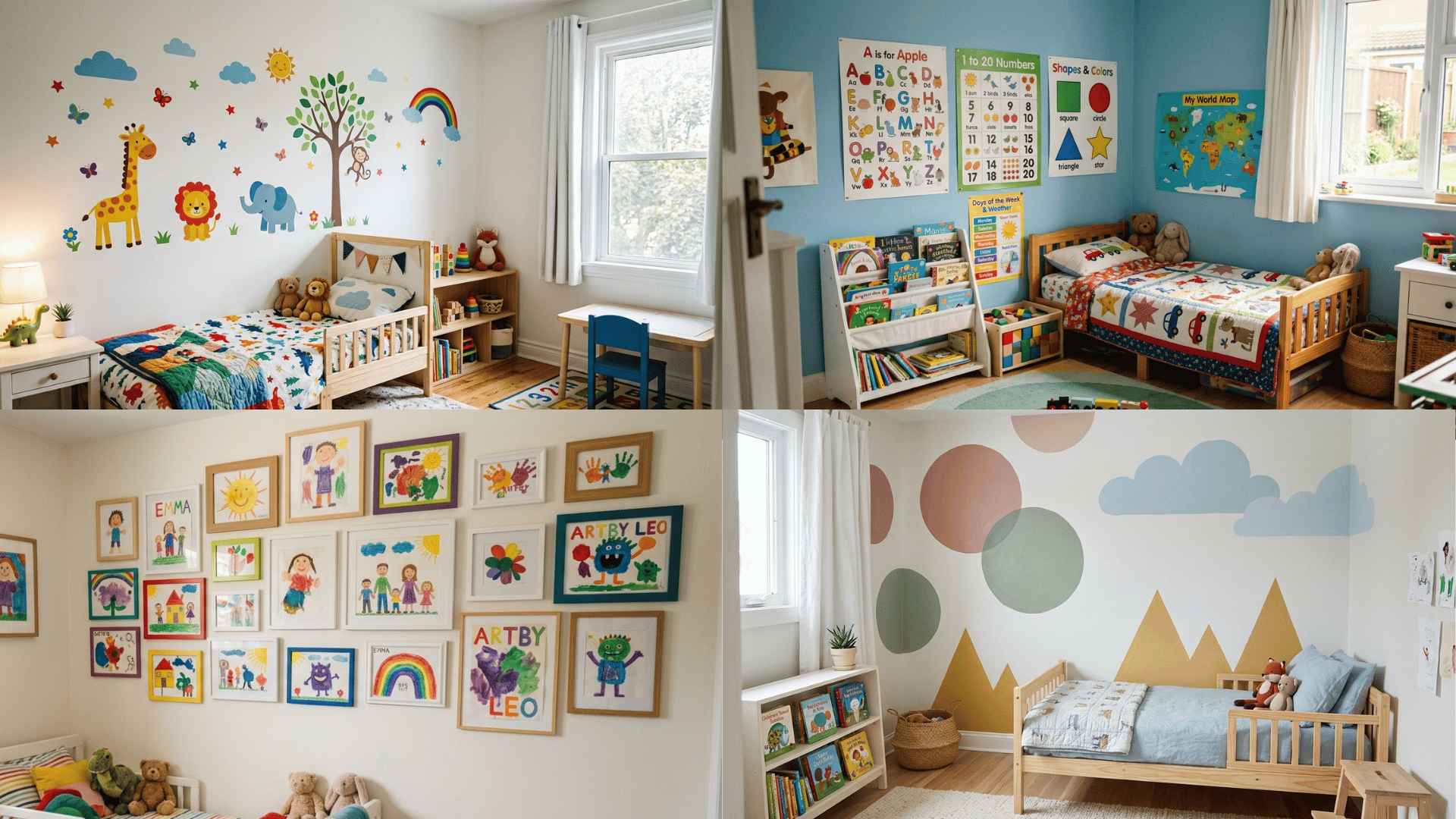
Decorating walls adds personality without taking up floor space. Walls add personality and brightness to the room while keeping things simple.
35. Colorful Wall Decals
Colorful wall decals are an easy way to decorate a small kid’s room without taking up space. These stickers come in many designs,s such as animals, stars, clouds, or playful patterns.
They can be applied directly to the wall and removed later without damaging the paint. This makes them a good option for growing children whose tastes may change over time.
36. Chalkboard Wall
A chalkboard wall turns part of the bedroom into a creative drawing space. By using chalkboard paint on one section of the wall, kids can draw pictures, practice writing, or play games directly on the surface.
This idea works well in small kids’ rooms because it removes the need for large drawing boards or easels.
37. Alphabet Wall Art
Alphabet wall art adds both decoration and learning to a child’s bedroom. Large colorful letters displayed on the wall help young kids recognize and remember the alphabet.
These can be arranged in a straight line, a grid pattern, or a playful design across one wall. Many parents choose bright colors or themed letters to match the room’s style.
38. Animal Theme Wall Decor
Animal-themed wall decor is a fun way to add personality to a kid’s bedroom. Wall art featuring animals like elephants, lions, bears, or birds can make the room feel lively and playful.
This type of decor is especially popular for younger children who enjoy colorful animal characters. Parents can use wall stickers, framed prints, or painted designs to create the theme.
39. Floating Bookshelves
Floating bookshelves provide a stylish way to store books while saving space in a small kids’room. These shelves are mounted directly on the wall, leaving the floor clear for other furniture or play areas.
They are perfect for displaying children’s books with their colorful covers facing outward. This makes it easier for kids to see and choose their favorite stories.
40. Wall-Mounted Toy Display
A wall-mounted toy display turns favorite toys into decorative pieces. Small shelves or wall racks can hold action figures, dolls, or collectible toys.
Instead of keeping everything hidden in boxes, this display allows kids to see and enjoy their favorite items every day.
41. Kids’ Art Gallery Wall
A kids’ art gallery wall celebrates children’s creativity while decorating the bedroom. Parents can frame drawings, paintings, or craft projects and arrange them neatly on one wall.
This creates a personal display that makes the room feel special to the child. The frames can be simple or colorful, depending on the room style.
42. Storybook Theme Wall
A storybook theme wall brings favorite book characters into the bedroom. Decorations can include wall stickers, posters, or painted scenes based on beloved stories.
This type of design helps create a playful environment where children feel connected to their favorite books. It can also encourage reading by reminding kids of stories they enjoy.
43. Educational Posters
Educational posters are a simple way to combine decoration with learning. Posters showing numbers, letters, shapes, or maps can be placed on the walls where kids see them every day.
These visuals help reinforce basic learning concepts in a fun and colorful way. Teachers and parents often use them to support early education at home.
44. Painted Wall Shapes
Painted wall shapes add color and creativity to a child’s bedroom. Simple designs such as circles, triangles, mountains, or clouds can be painted directly on the wall.
These patterns create a playful look without the need for extra decorations. Parents often choose soft colors or bright shades depending on the room’s style.
Small Kids’ Room Study Area Ideas
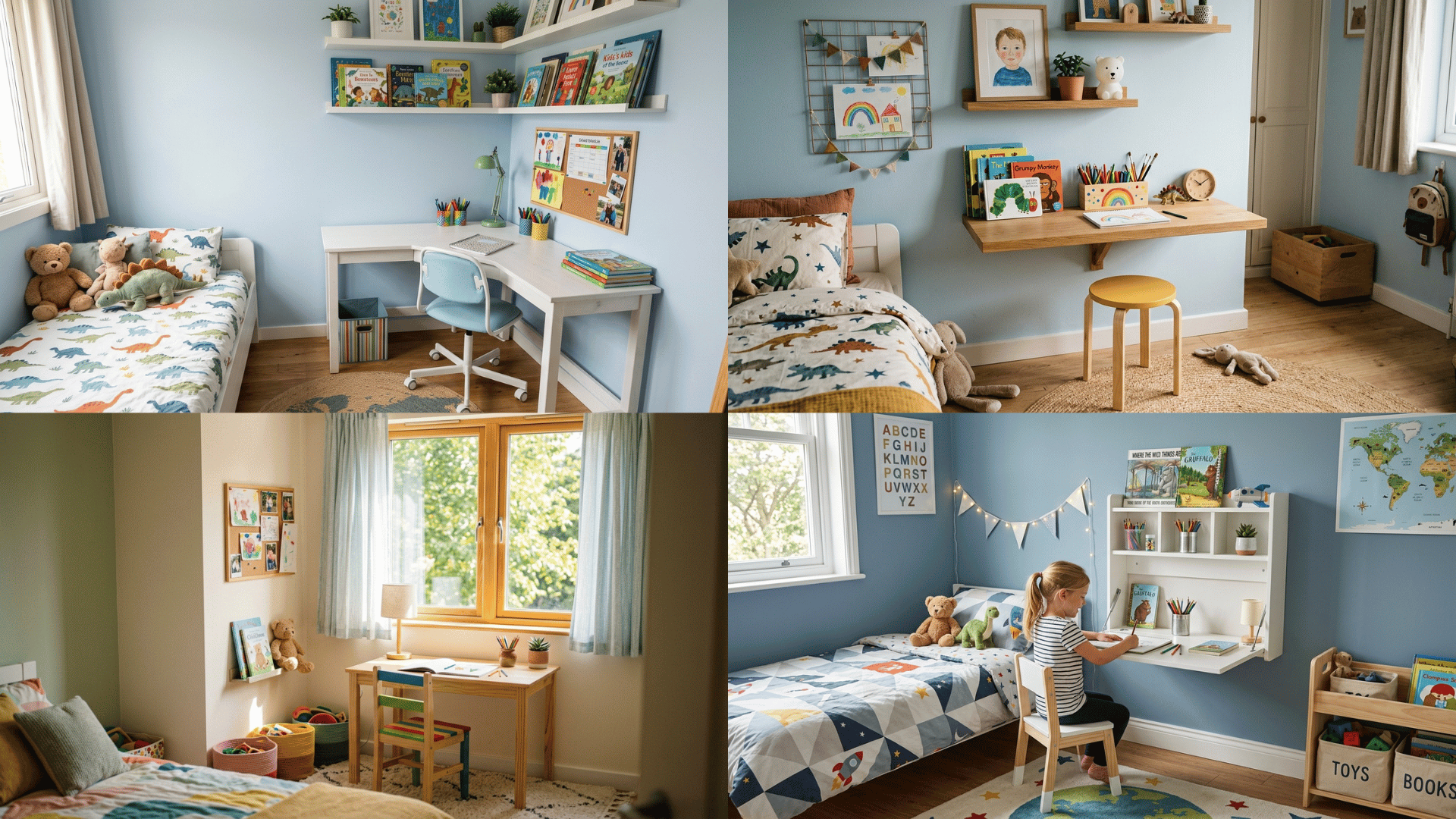
A small study area helps kids read, draw, and do homework. With these ideas, your kid will be productive during the day,
45. Wall-Mounted Desk
A wall-mounted desk is a smart solution for a small kid’s room with limited floor space. This desk attaches directly to the wall and often folds down when needed for studying, drawing, or reading.
When the desk is not in use, it folds back up against the wall, leaving the floor open for play. This helps keep the room tidy and uncluttered.
46. Foldable Study Table
A foldable study table is perfect for rooms where space needs to stay flexible. The table can be opened when kids need to do homework or creative activities and folded away afterward.
This allows the room to serve multiple purposes without feeling crowded. Foldable tables are often lightweight and easy to move, making them practical for small bedrooms.
47. Corner Desk Setup
A corner desk setup is one of the most effective small kids room ideas because it uses space that is often left unused. Placing the desk neatly in the corner keeps the rest of the room open and easy to move around in.
Corner desks are compact but still provide enough space for school supplies, books, and a small lamp, making them both functional and space-saving.
48. Desk Under Loft Bed
Placing a desk under a loft bed is an effective way to combine sleeping and study spaces in one area. Since the bed is raised off the floor, the space underneath is useful for a desk, a chair, and small shelves.
It creates a compact area where kids can read, draw, or complete homework. Many loft bed designs include built-in desks, making the setup even more convenient in smaller bedrooms.
49. Study Shelf with Stool
A study shelf with a stool is a compact option that works well in tight spaces. Instead of using a full desk, a sturdy wall shelf can serve as a small workspace for reading or writing.
A lightweight stool can be tucked under the shelf when not in use, keeping the area neat. This setup works best for younger children who need a simple place to color, draw, or practice writing.
50. Shared Desk for Siblings
A shared desk can be a practical solution for siblings sharing a small bedroom. A longer desk placed along one wall allows two children to sit and work side by side.
Each child can have their own small section with storage bins, books, and supplies. This setup keeps study materials organized while saving space compared to having two separate desks.
51. Study Area Near Window
Placing a study area near a window allows children to benefit from natural light during reading and homework time. Natural light can make the study area feel more comfortable and reduce the need for bright lamps during the day.
A small desk or wall shelf placed near the window can create a peaceful spot for learning. This location also makes the room feel brighter and more open.
52. Mini Homework Station
A mini homework station provides a dedicated spot for schoolwork without taking up much space. This setup usually includes a small desk or wall shelf, a chair, and a few storage containers for pencils, books, and notebooks.
Keeping everything in one place helps children stay organized while studying. A corkboard or small wall organizer above the desk can hold reminders or school notes.
Even in a small bedroom, a simple homework station helps create a routine space for learning and creativity.
Small Kids Room Play Area Ideas
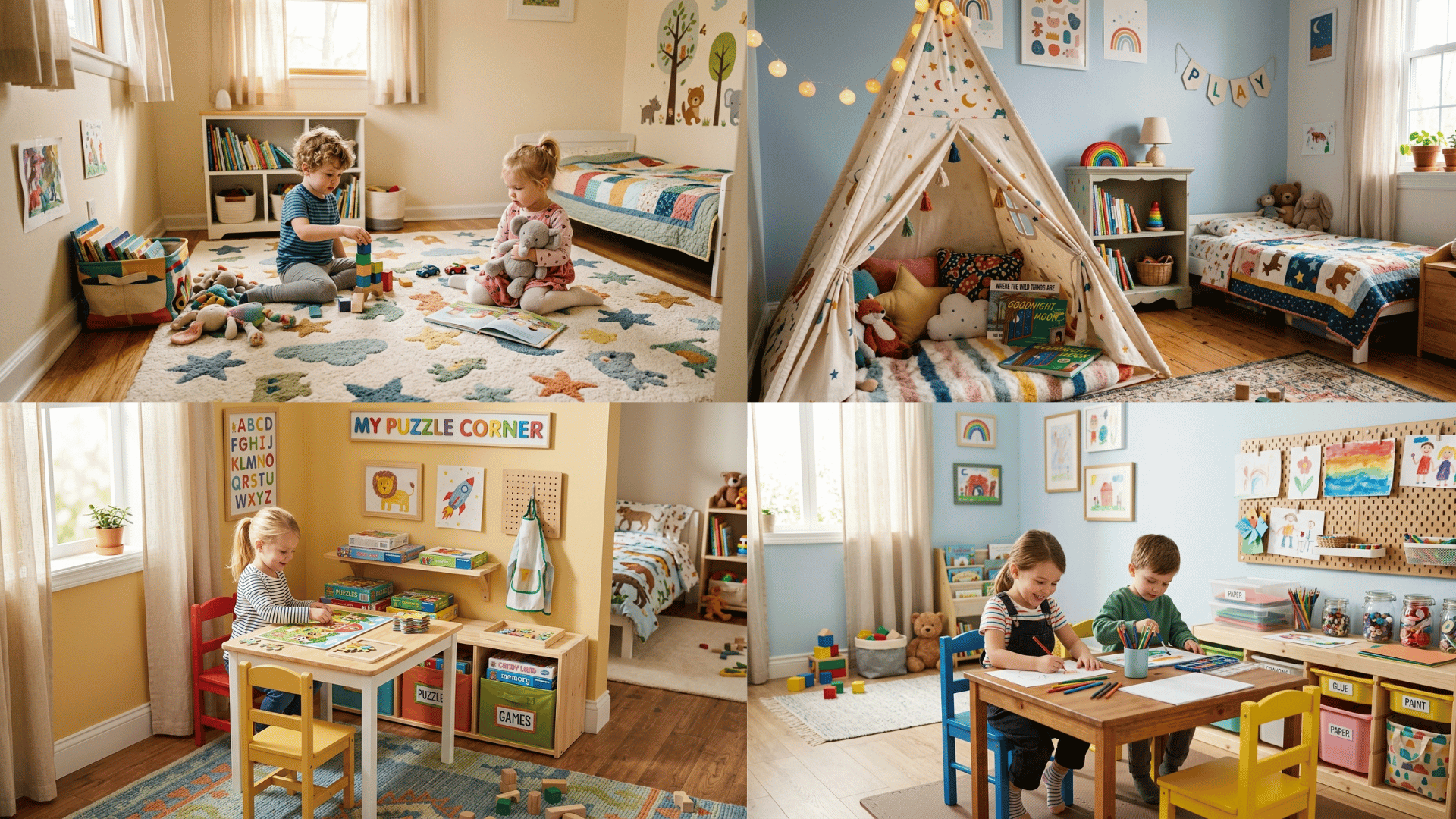
Kids need space to play and use their imagination. You can create a setup that works well in small bedrooms, keeping the play space organized while leaving the rest of the room open.
53. Soft Rug Play Area
A soft rug in a play area can make a small kids’ room feel cozier and more inviting. Placing a large, cushioned rug in the center of the room creates a safe space where children can sit, crawl, and play with toys.
Rugs also help define a play zone without needing extra furniture. Many families choose colorful rugs with simple patterns or playful designs that match the room decor.
54. Indoor Play Tent
An indoor play tent adds a fun,d imaginative space for children in their bedroom. Small fabric tents can be placed in a corner or beside the bed, giving kids a cozy spot to read books or play quietly.
Many tents fold easily, helping save space when not in use. Parents often add soft pillows or blankets inside to make the area more comfortable.
55. Reading Nook
A reading nook creates a quiet corner where children can relax with their favorite books. This space can include a small chair, floor cushions, and a short bookshelf nearby. Good lighting is also helpful so kids can read comfortably.
Even a tiny corner can become a cozy reading spot with a few simple additions. Many parents add soft blankets or stuffed toys to make the area feel warm and inviting.
56. Toy Kitchen Corner
A toy kitchen corner gives children a dedicated space for pretend play. Small play kitchens can fit neatly into a corner without taking up too much room.
Kids can use toy utensils, plates, and pretend food to create their own imaginative cooking games. Keeping the kitchen toys in one area helps prevent clutter from spreading across the room.
Some families also add small shelves or baskets nearby for storage. This setup allows kids to enjoy creative role-playing while keeping the rest of the room organized.
57. Dollhouse Display Area
A dollhouse display area keeps favorite toys organized while also acting as decoration. Placing the dollhouse on a small table or low shelf makes it easy for children to reach and play with it.
Some parents also place small baskets nearby for doll accessories. This arrangement helps maintain order in the room while still allowing children to enjoy imaginative play whenever they want.
58. Puzzle Table Corner
A puzzle table corner provides a quiet place for kids to focus on games and puzzles. A small table with a couple of chairs can fit neatly into a corner of the bedroom.
This setup helps keep puzzle pieces contained in one place instead of scattered across the floor. It also encourages children to return to unfinished puzzles later.
Storage bins or small drawers can hold puzzle boxes and board games. Creating a puzzle corner keeps activities organized while giving kids a calm space to play.
59. Lego Play Station
A Lego play station is a smart and practical feature in small kids room ideas, helping keep toys organized and easy to access. A small table or desk can serve as the building surface, while storage bins or drawers hold different Lego pieces.
Sorting blocks by size or color makes building more fun and manageable. Keeping everything in one place also prevents clutter from spreading across the room.
60. Art and Craft Corner
An art and craft corner provides children with a space to draw, paint, and create. A small table, chair, and storage containers for supplies are usually enough to set up this area. Keeping art materials organized in bins or jars helps prevent clutter.
Many parents place this corner near a good light source so kids can see their projects clearly. Having a dedicated creative space encourages children to express themselves while keeping messy activities contained to a single area of the room.
Small Kids Room Decor Ideas
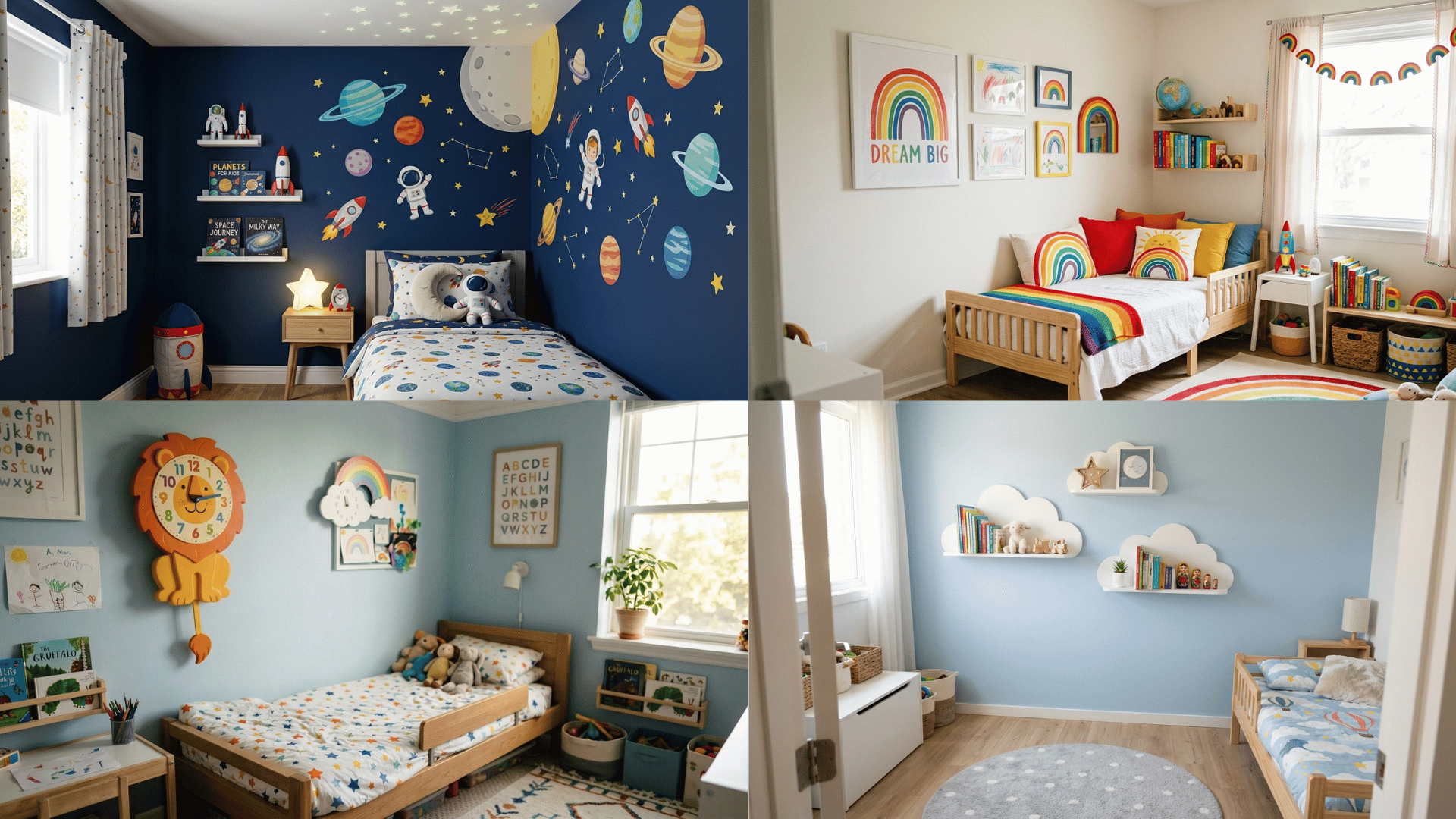
Decor helps make the room cheerful and welcoming. It also lets you reflect your child’s interests, whether they’re animals, cartoons, or favorite colors.
61. Pastel Color Theme
A pastel color theme can make a small kid’s room feel brighter and more spacious. Soft shades like light blue, pale pink, mint green, or gentle yellow create a calm and cheerful atmosphere.
These colors reflect light well, which helps the room appear more open. Pastel tones also work nicely with simple furniture and playful decorations.
62. Space Theme Room
A space-themed room can make a child’s bedroom feel exciting and imaginative. Decorations may include stars, planets, rockets, or moon patterns placed on walls, bedding, or curtains.
Glow-in-the-dark star stickers on the ceiling can create a fun nighttime effect that many kids enjoy. Small shelves can hold space-themed toys or books about planets and astronauts.
63. Animal Theme Room
An animal-themed room brings a lively, playful feel to a child’s bedroom. Decorations may include wall prints, stuffed animals, or bedding with animal patterns such as bears, elephants, or jungle animals.
This theme is especially popular for younger children who enjoy colorful animal characters. Parents can keep the design simple by choosing a few animal elements rather than filling the room with too many decorations.
64. Rainbow Color Accents
Rainbow-colored accents can make a small kid’s room feel cheerful and energetic. Instead of painting the entire room in bright colors, small touches of rainbow shades can be added through pillows, rugs, artwork, or wall decorations.
These colorful details brighten the space without overwhelming it. Rainbow accents are also easy to update as children grow and their preferences change.
Using colorful items in a balanced way helps keep the room playful while maintaining a neat, organized appearance.
65. Cartoon Character Bedding
Cartoon character bedding is a simple way to bring a child’s favorite characters into the bedroom. Bed sheets, pillowcases, and comforters featuring popular characters can make the sleeping area more exciting for kids.
This type of decor often becomes the main focus of the room, allowing the rest of the design to stay simple. Since bedding can be changed easily, it also gives parents the flexibility to update the room as the child grows.
66. Soft String Lights
Soft string lights can add gentle lighting to a child’s bedroom, especially during bedtime. These small lights can be placed along the wall, around a bed frame, or across shelves.
String lights can also highlight certain parts of the room, such as a reading corner or play area. Since they do not take up floor space, they are a good lighting option for small kids’ rooms.
67. Fun Wall Clocks
A fun wall clock can serve both as decoration and a learning tool. Clocks come in playful designs such as animals, colorful shapes, or cartoon themes. Placing a clock on the wall helps children start learning how to read time.
It also adds a bright, cheerful touch to the room’s decor. Because it hangs on the wall, it does not use valuable floor or shelf space, which is helpful in smaller bedrooms.
68. Patterned Rugs
A patterned rug can bring color and texture to the floor of a kid’s bedroom. Rugs with stripes, shapes, or playful designs help make the room feel more lively. They also provide a soft surface where children can sit and play comfortably.
In small rooms, a rug can define the play area without needing extra furniture. Choosing a rug that matches the room’s color scheme helps keep the design balanced while adding warmth and comfort to the space.
69. Colorful Curtains
Colorful curtains can brighten a child’s bedroom while also controlling natural light. Curtains in cheerful shades or playful patterns can make the room feel more lively and welcoming.
They also help create a cozy atmosphere by softening the look of windows. In smaller rooms, lighter fabrics let sunlight through while adding color to the space.
70. Name Sign Above The Bed
A name sign placed above the bed adds a personal touch to a child’s bedroom. This decoration can include the child’s name in wooden letters, painted signs, or simple wall decals. It helps make the space feel special and unique for the child.
Parents often match the colors of the sign with the rest of the room decor. Since the sign is placed on the wall, it adds personality without taking up any floor space, which works well in smaller bedrooms.
71. Ceiling Stickers
Ceiling stickers can make the bedroom feel more playful and interesting for children. Designs such as stars, clouds, or moons are often placed on the ceiling to create a fun visual effect.
Some stickers glow softly in the dark, which can make bedtime more enjoyable. This decoration works especially well in small rooms because it uses space that is usually left plain.
72. Cloud-Shaped Shelves
Cloud-shaped shelves combine decoration with useful storage. These shelves can hold small books, toys, or decorative items while adding a playful shape to the wall.
Their unique design fits well in children’s bedrooms and can match themes such as the sky, nature, or storybook settings.
Because the shelves are mounted on the wall, they keep the floor clear and help maintain an organized room. This type of shelving provides both storage and visual interest in a compact space.
73. Hanging Paper Decorations
Hanging paper decorations is a lightweight way to add color and movement, making it a great addition to small kids room ideas. Items such as paper lanterns, pom-poms, or small banners can be hung from the ceiling or along the wall.
These decorations create a festive, cheerful atmosphere without taking up floor space. They are also easy to change whenever you want to update the room theme.
Conclusion
Designing a small room for kids does not mean giving up comfort, creativity, or organization. With thoughtful layouts, space-saving beds, smart storage, and playful decor, even the smallest room can feel practical and welcoming.
The key is using walls, corners, and multipurpose furniture to keep the space open for both rest and play. Small design choices can make a big difference in how the room feels and functions every day.
These small kids room ideas offer plenty of inspiration for creating a space that supports learning, playtime, and relaxation while keeping everything neat and easy to manage.