

Most of us do not have a spare room that sits empty waiting for visitors. The room that becomes the guest room is usually the one with the sewing table, the laptop desk, or the shelves of paint and paper. It gets used every day, and then for a few nights a year, someone needs to sleep there.
The good news is that a room can do both jobs well. It just takes a little planning. Here is how I think about it.
Start With How You Use the Room Most
Your daily use comes first. If you work at a desk five days a week, the guest bed should not get in the way of that desk. If you craft on a big table, you need to be able to reach your supplies without moving furniture around.
Take a measuring tape and write down three things: the floor space you need to keep clear for your daily work, the wall space you have, and the spot where a bed could go. Think about the bed only when it is in use. For most of the month, it should not be taking up room at all.
Choose a Bed That Disappears
This is the biggest change you can make. A regular bed or even a sofa bed takes up space all day long. A bed that folds away gives the floor back to you.
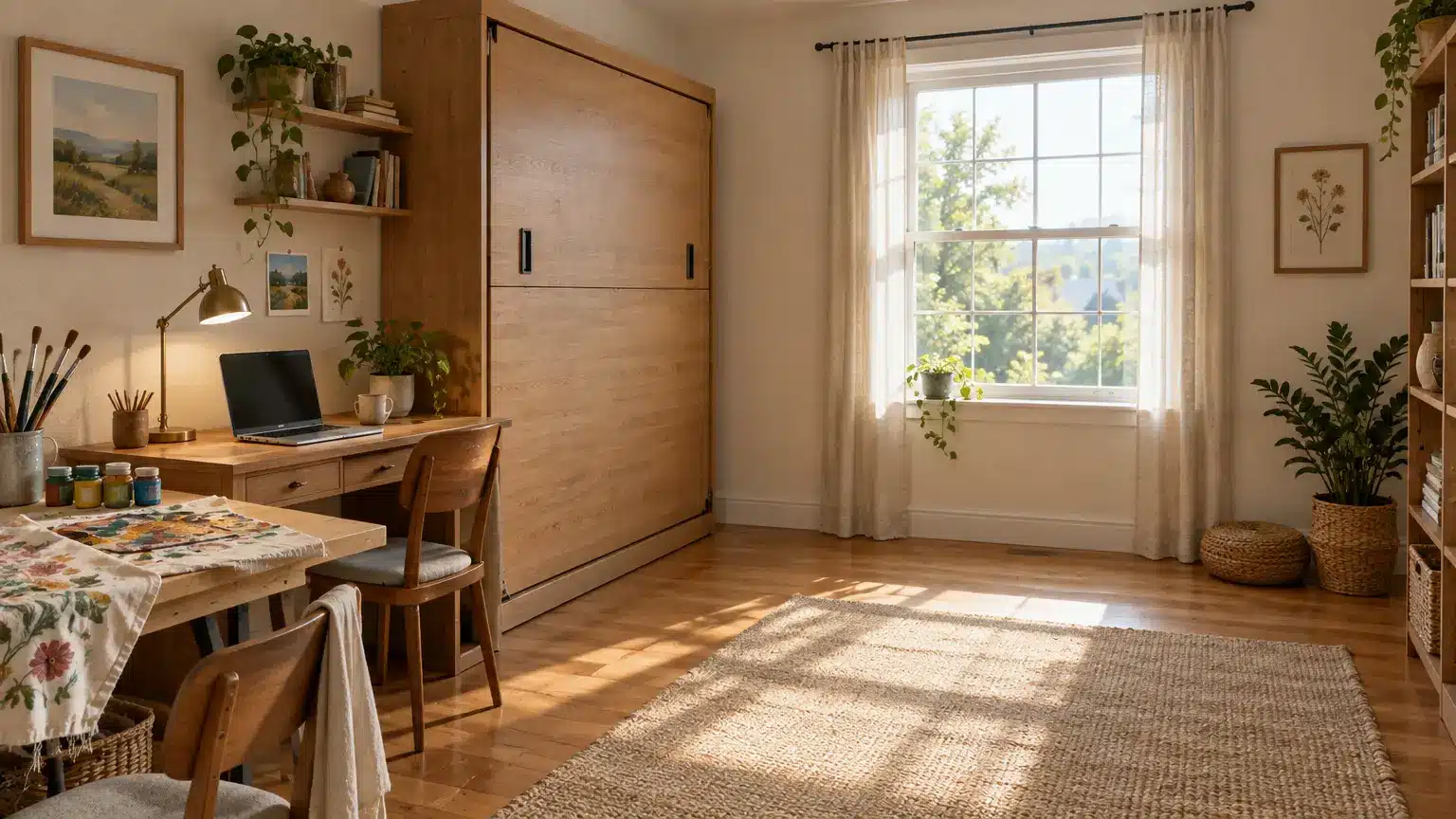
There are two styles worth knowing about. Murphy beds fold up against the wall and sit inside a frame or cabinet. When they are closed, the room looks like it has a nice piece of storage furniture in it. When a guest arrives, you pull the bed down and it is ready in moments. Browsing the range is a good way to see how the different styles look when closed.
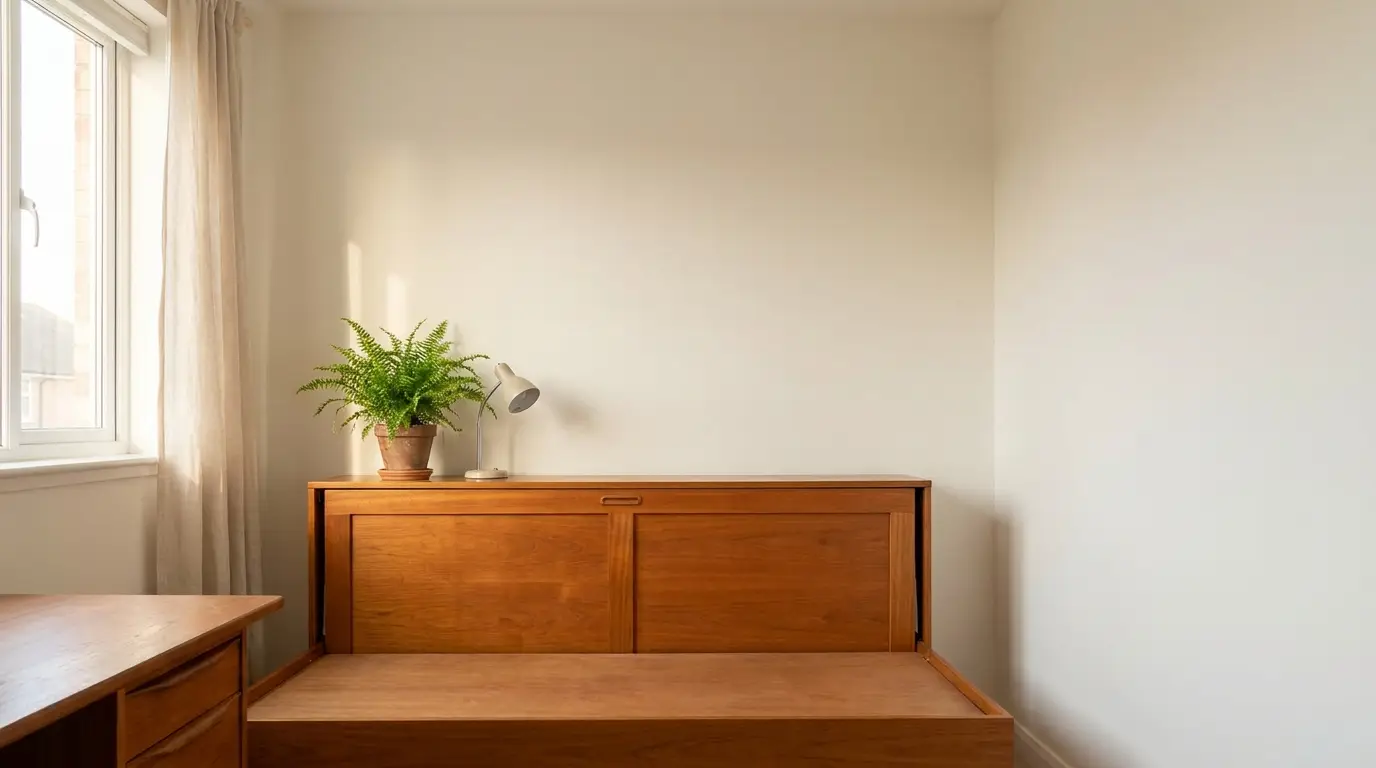
The second style is cabinet beds. These look like a low cabinet or credenza when folded up, which can suit a craft room well because the top can hold supplies, a lamp, or a plant. One thing to check with any fold away bed is the closed depth and height, so you know it will fit under a window or beside your desk.
Plan the Room in Zones
Even a small room feels easier to live in when you divide it into zones.
The work zone is your desk or craft table. Keep it near a window if you can, because natural light helps with both typing and cutting. Keep the cords and tools in one spot so the area is simple to tidy.
The sleep zone is the wall where the bed folds down. Leave enough floor space in front of it for the bed to open, and think about where the guest will put their bag and their shoes.
The storage zone is everything else. Use tall shelves, wall hooks, and boxes with lids. Vertical storage keeps the floor clear, which is the most valuable thing in a small room.
Make a Quick Reset Routine
A dual use room works best when switching between modes is easy. Before guests arrive, I like to do a ten minute reset:
- Clear the work surface and put loose items into labelled bins.
- Wipe down the desk or table so it is clean.
- Fold the bed down and make it with fresh sheets that you keep close by.
- Add a small lamp, a glass of water, and a spare charging cable.
Keep a set of guest sheets and a spare pillow in a nearby cupboard so you are not hunting for them. If everything lives in the same room, the reset takes almost no time.
Think About Privacy and Noise
If the room is also your office, a guest may be sleeping next to your work things. Put away anything private or fragile. A small rug and a curtain make the room feel more like a bedroom and help with sound. If someone is staying for a few days, let them know they are welcome to close the door, and let them know when you plan to use the room.
Do Not Forget the Small Comforts
Guests remember the little things. A hook on the back of the door, a spot to sit and put on shoes, and a small mirror go a long way. A basket with a towel, a spare toothbrush, and a note with the wifi password makes the room feel thought through, even if it is also where you keep your glue gun.
A Room That Works for Both
You do not need a second spare room to host well. When you pick furniture that folds away, keep the zones clear, and use a simple reset routine, one room can be a calm workspace on Monday and a comfortable guest room on Friday. Start by measuring, decide what you want the room to do most days, and then add the bed that gives you the space back.