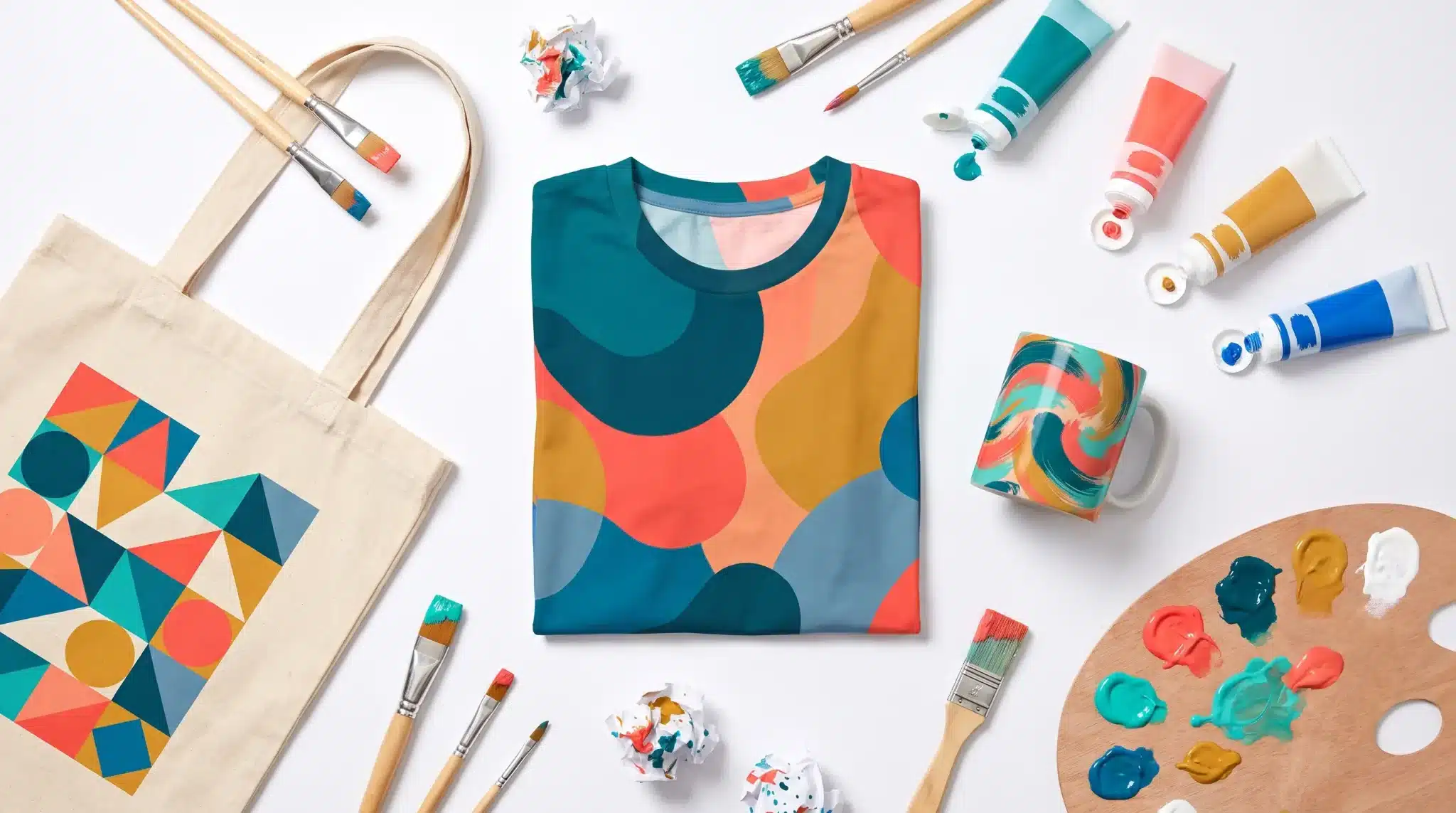

A blank canvas looks harder to fill than it actually is. Easy canvas painting ideas need only three or four colors and an hour of your evening.
You do not need an art degree to make something you would hang on your own wall. Simple shapes, soft blends, and a steady hand go further than expensive brushes ever will.
The blog moves through simple art ideas from landscapes to seasonal scenes, so you can pick a style that matches your mood and start painting today.
What Is Canvas Painting?
Canvas painting means applying paint, usually acrylic or oil, onto a woven fabric surface stretched over a wooden frame. That texture gives brushstrokes more grip than paper or wood ever will.
Acrylic dries within twenty to thirty minutes, which is why most beginners reach for it instead of oil paint, which can take days to fully cure.
I would choose acrylic for a first project because it is easier to correct, layer, and clean up. Oil paint offers longer blending time, but it also requires better ventilation and more careful handling.
A basic 9×12-inch canvas costs around eight dollars at most craft stores and gives you enough room for one simple scene without feeling like a big commitment.
Image Grid Easy Canvas Painting Ideas
These ideas work well as a photo grid because each one relies on color and shape rather than fine detail, making every image instantly recognizable at a glance.
1. Sunset Over Ocean Waves
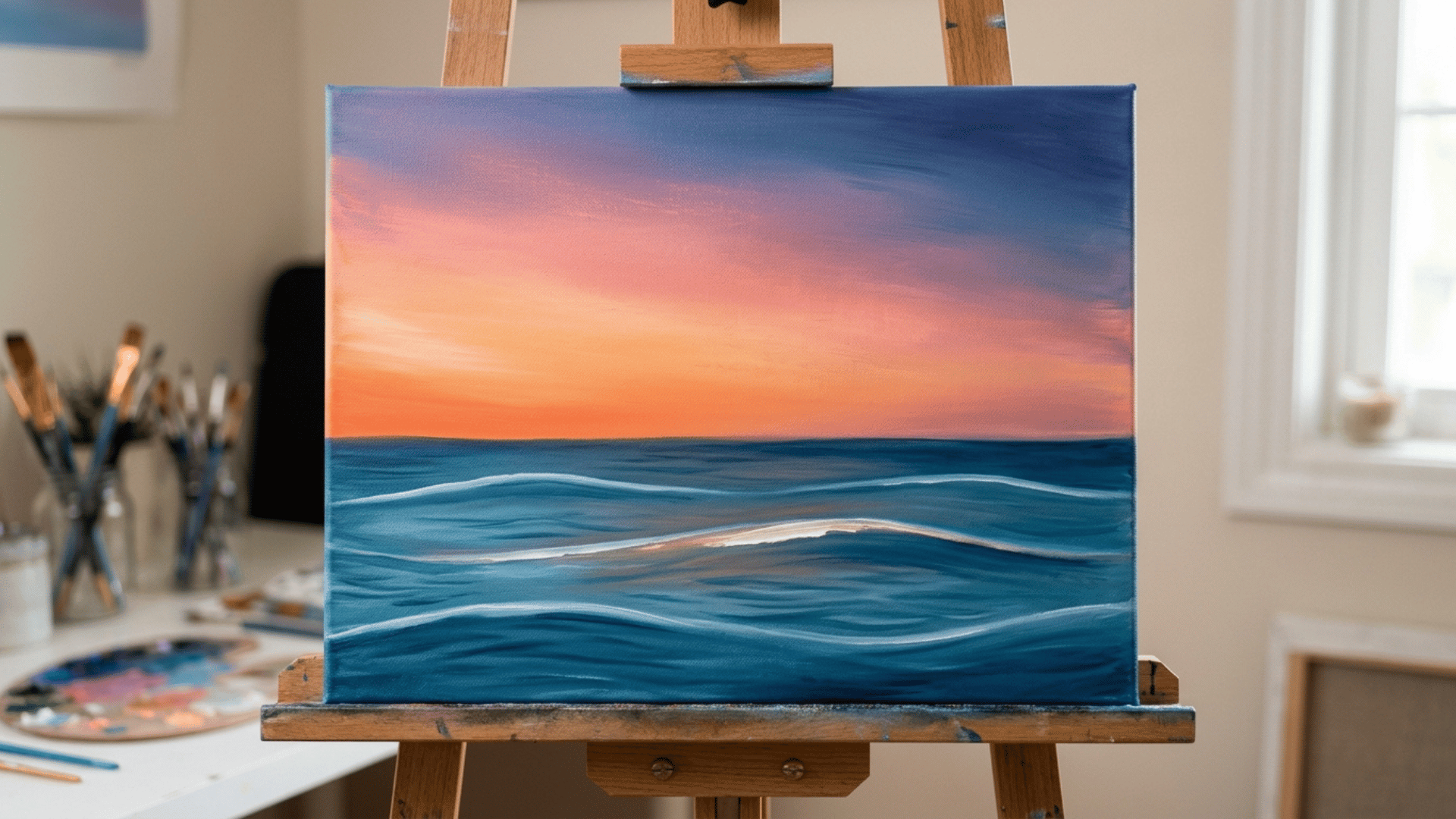
A sunset over ocean waves blends warm oranges into cool blues in one smooth gradient. It works well as a first canvas project since blending forgives uneven brushwork.
What stands out to me is how easily this idea can be simplified. A clear horizon, three sky colors, and a few horizontal wave marks are enough to make the subject recognizable.
- Key Features to Focus On: Horizon line, layered orange to pink sky, dark blue water, small wave highlights.
- Easy Painting Approach: Block in the sky gradient first, then add the horizon, then paint waves using short horizontal strokes.
- Color Ideas: Orange-and-pink sky, deep blue or purple water, white highlights on wave crests.
- Creative Variations: Sunset with palm tree silhouette, sunset with a sailboat, sunset with birds, sunset over calm water instead of waves.
- Final Touches: Add a sun reflection streak, scattered clouds, or a few seagulls in the sky.
2. Mountain Silhouette at Dusk
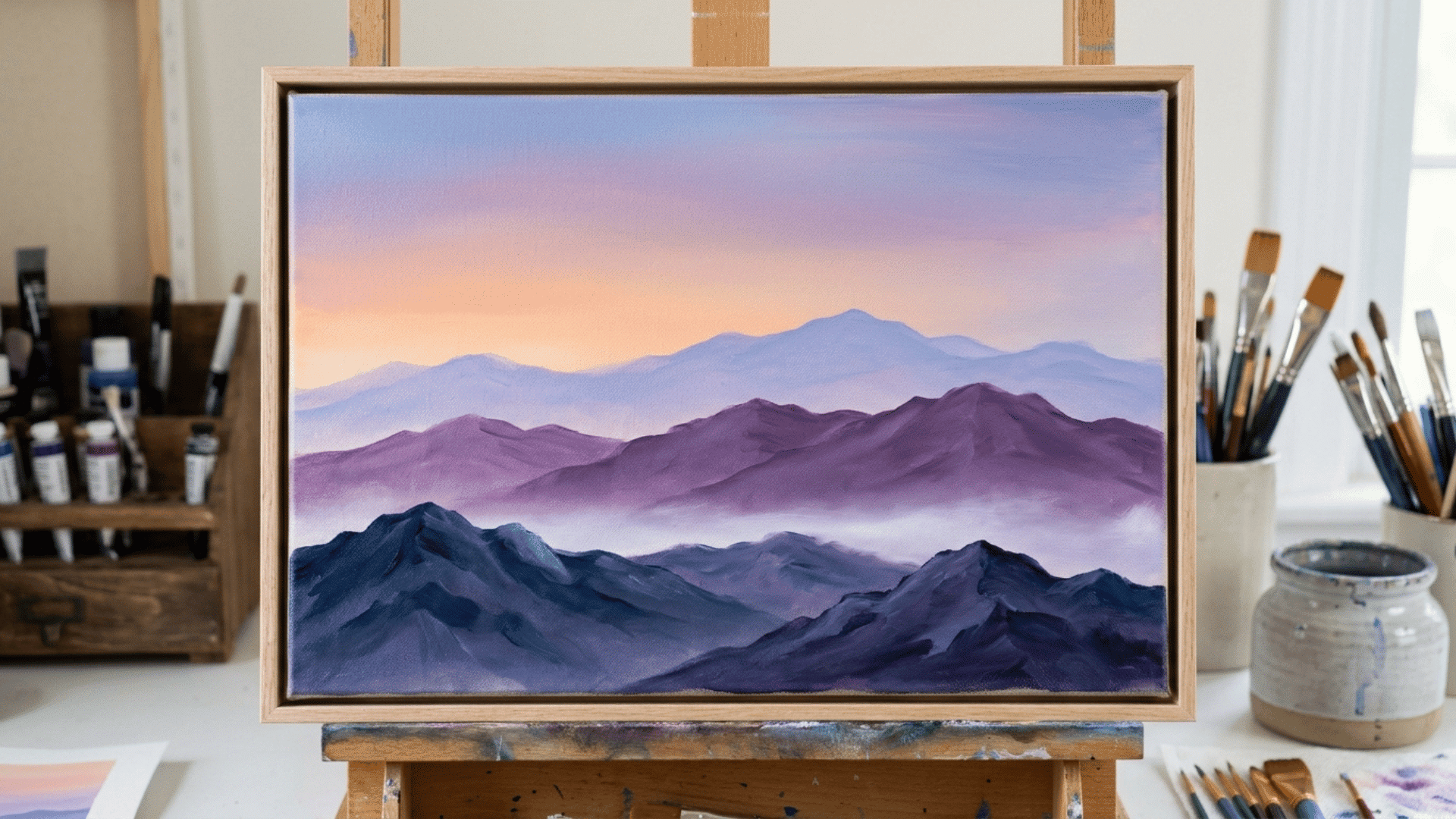
A mountain silhouette at dusk uses flat, layered shapes instead of fine detail. Each range sits behind the next in a soft, fading gradient.
- Key Features to Focus On: Layered mountain shapes, gradient sky, flat silhouette color, subtle tree line.
- Easy Painting Approach: Paint the sky gradient first, then add mountain layers from back to front using darker shades each time.
- Color Ideas: Purple, navy, or deep teal mountains against an orange or pink dusk sky.
- Creative Variations: Snow-capped peaks, mountains with a lake reflection, mountains with a cabin, mountains under a full moon.
- Final Touches: Add stars, a moon glow, or a thin layer of mist between the ranges.
3. Forest Path in Autumn Colors
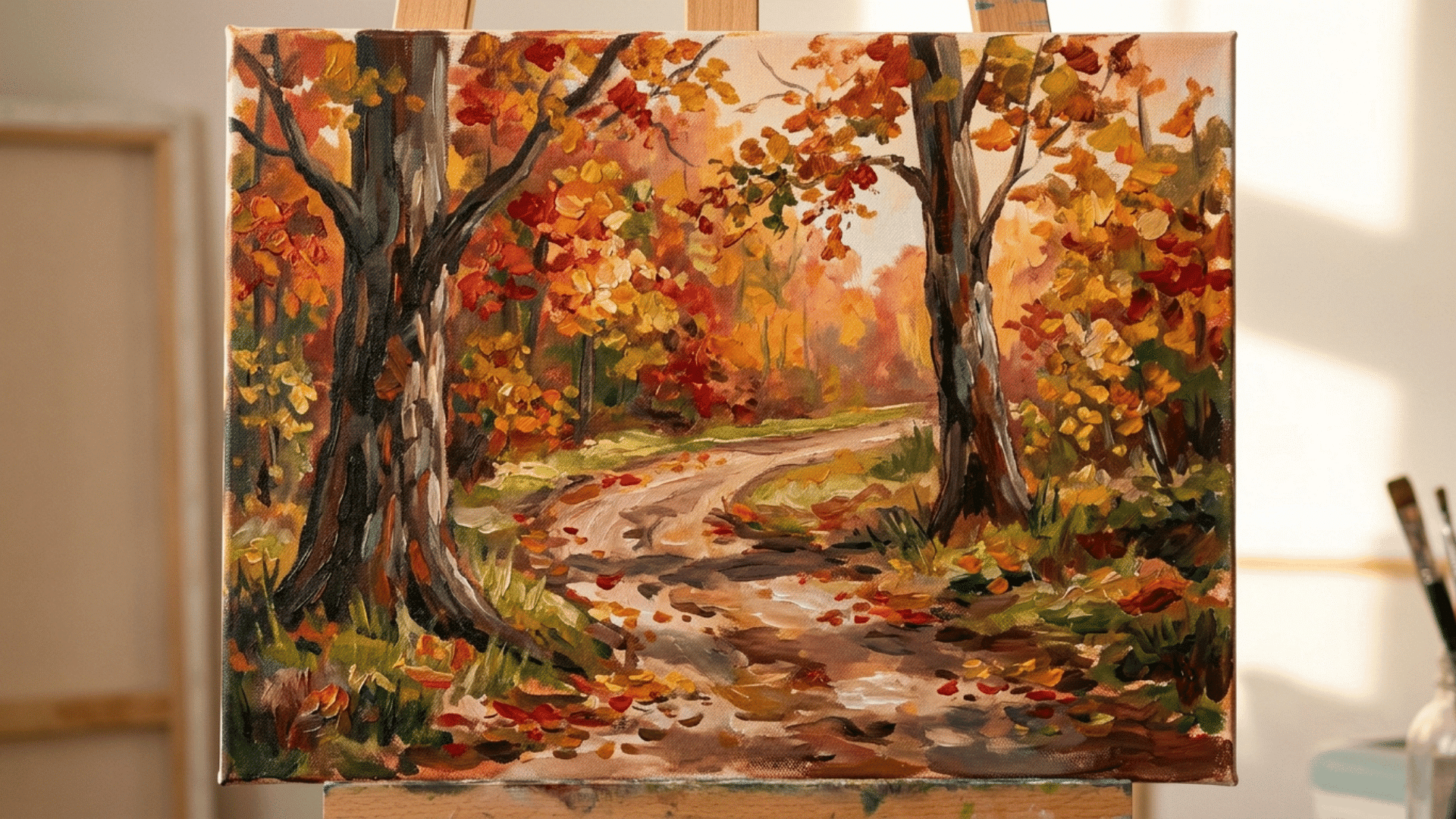
A forest path in autumn colors uses warm reds, oranges, and browns instead of green. The path itself gives the painting a clear sense of depth.
- Key Features to Focus On: Curved path, tall tree trunks, colorful leaf canopy, fallen leaves on the ground.
- Easy Painting Approach: Paint the path and ground first, add trunks next, then dab in leaf clusters with a small brush or sponge.
- Color Ideas: Burnt orange, deep red, mustard yellow, and brown tones for the canopy.
- Creative Variations: Path with a bench, path leading to a cabin.
- Final Touches: Add scattered leaves on the path, a few birds, or warm sunlight breaking through the branches.
4. Starry Night Sky With a Crescent Moon
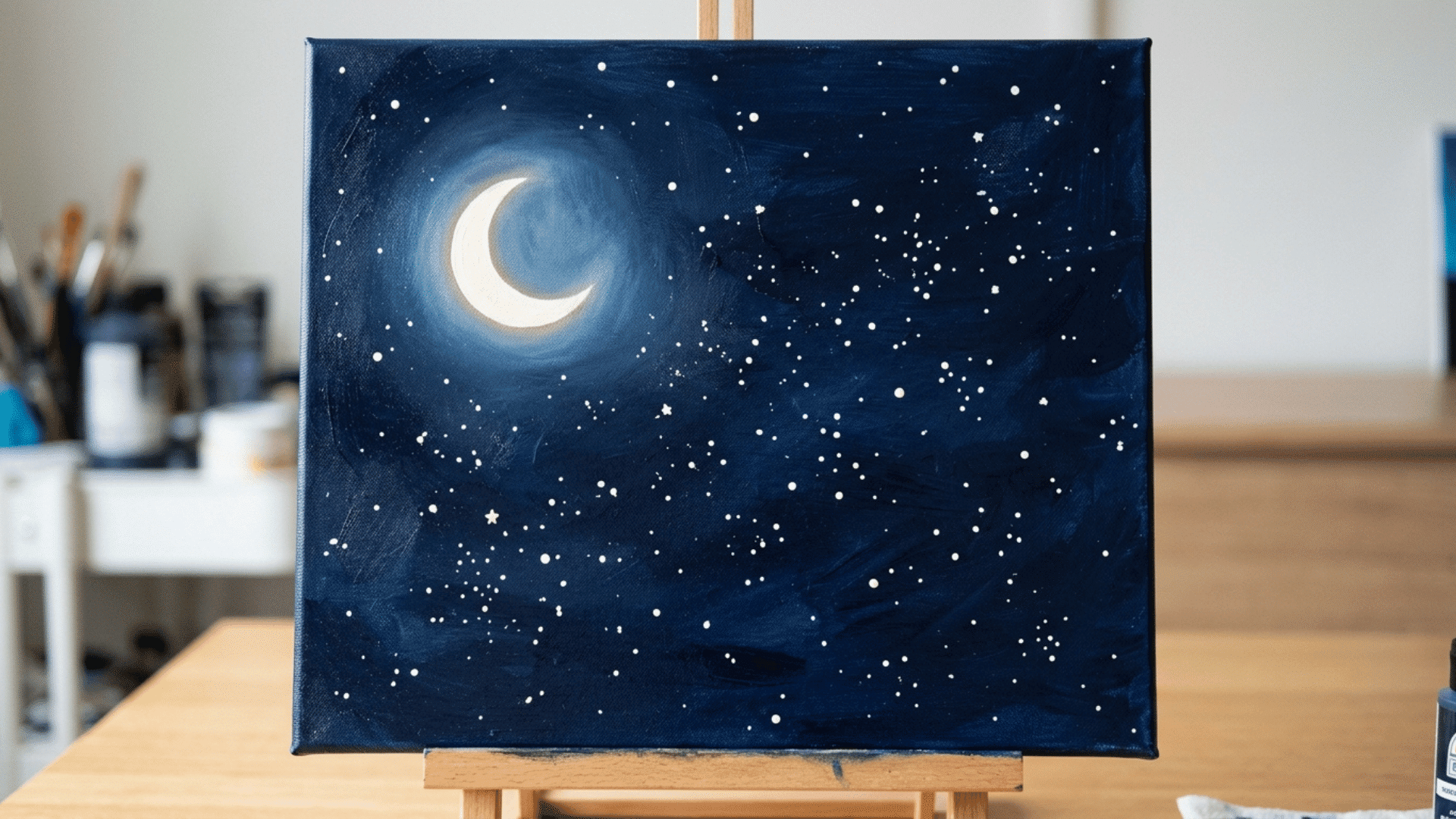
A starry night sky with a crescent moon relies on contrast rather than detail. Dark paint makes the small dots of light stand out on their own.
- Key Features to Focus On: Deep night sky, crescent moon shape, scattered stars, optional tree or hill silhouette.
- Easy Painting Approach: Paint the dark sky base first, let it dry, then add the moon and stars with a fine brush or toothpick.
- Color Ideas: Navy or black sky, pale yellow moon, white or silver star dots.
- Creative Variations: Night sky with a shooting star, night sky with a person’s silhouette, night sky with clouds, moonlit ocean.
- Final Touches: Add a soft glow around the moon or a thin haze near the horizon.
Safety Note: Use a brush or toothbrush for controlled paint splatter and protect nearby walls, furniture, and clothing. Wear eye protection when flicking paint and direct the bristles away from the face.
5. Single-Stem Wildflower
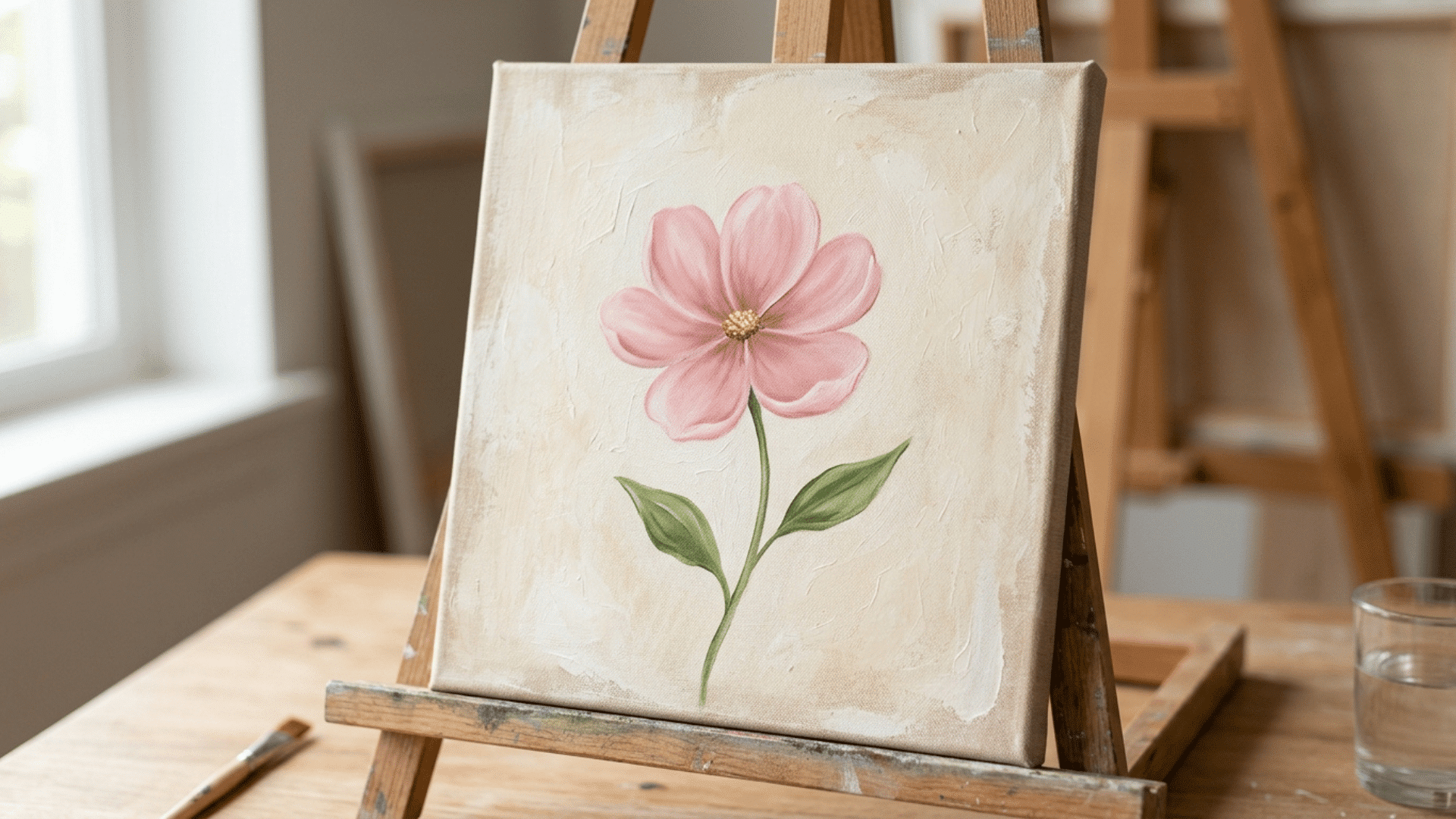
A single-stem wildflower keeps the composition simple with one bloom against a plain background. The empty space around it does most of the visual work.
- Key Features to Focus On: One flower head, thin stem, one or two leaves, plenty of negative space.
- Easy Painting Approach: Sketch the stem and flower shape lightly first, then fill in the petals before adding the stem and leaves.
- Color Ideas: Soft pink, lavender, or yellow flower against a cream or pale blue background.
- Creative Variations: Wildflower in a jar, wildflower pressed flat like a botanical print, wildflower with a small bee, wildflower at golden hour.
- Final Touches: Add a light shadow beneath the stem or a few scattered petals nearby.
6. Loose Watercolor-Style Rose Bouquet
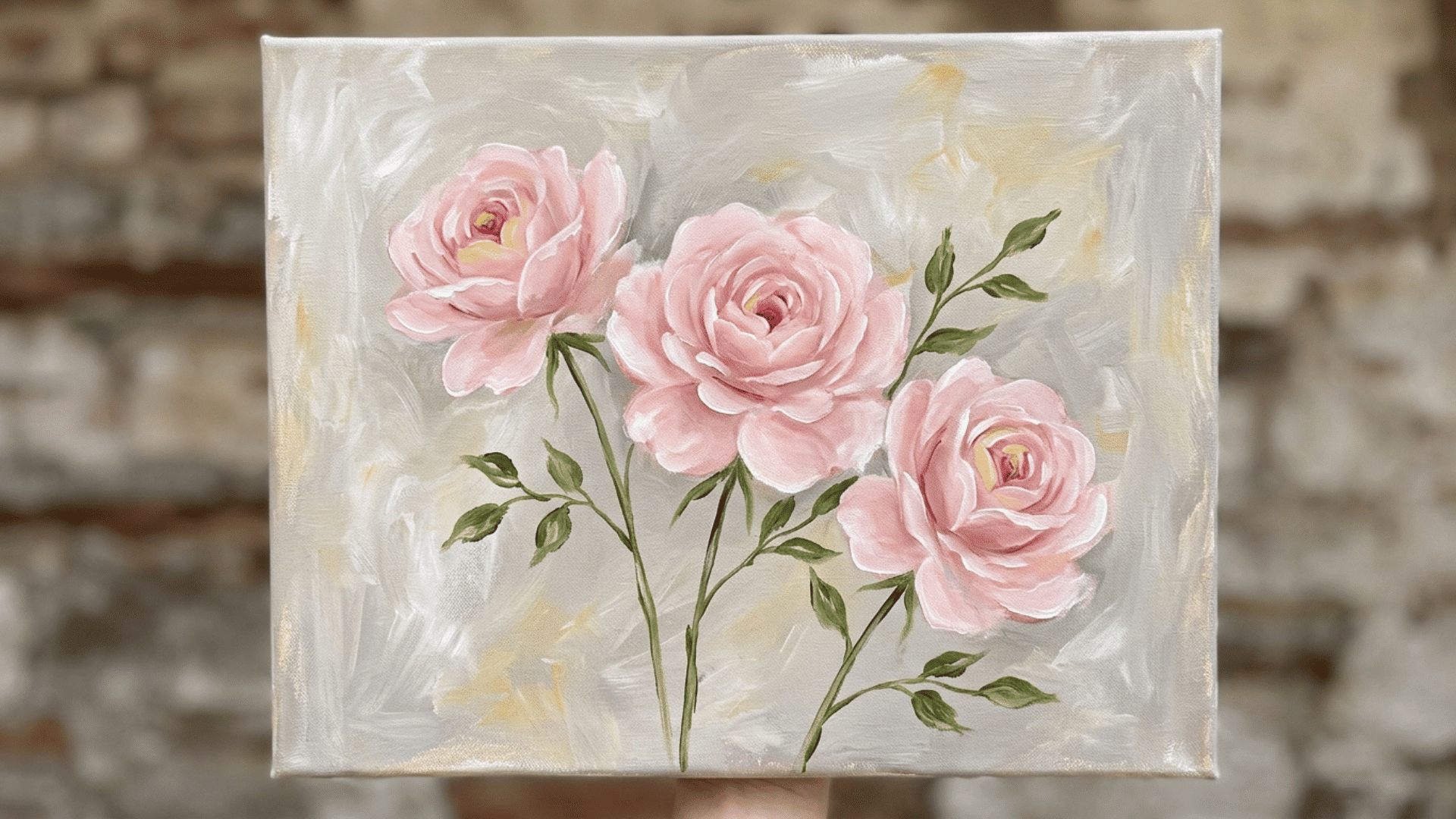
A loose watercolor-style rose bouquet features soft, blurred edges rather than sharp outlines. Acrylic paint thinned with water can mimic the same effect on canvas.
- Key Features to Focus On: Overlapping rose shapes, soft color bleeds, loose stem lines, minimal background detail.
- Easy Painting Approach: Thin your acrylic paint with water, dab in rounded rose shapes first, then add stems once the blooms dry.
- Color Ideas: Blush pink, deep red, or peach roses against a white or pale grey background.
- Creative Variations: Bouquet in a vase, single rose close-up.
- Final Touches: Add a ribbon detail, a few loose petals, or light water droplets on the petals.
7. Cactus and Succulent Arrangement
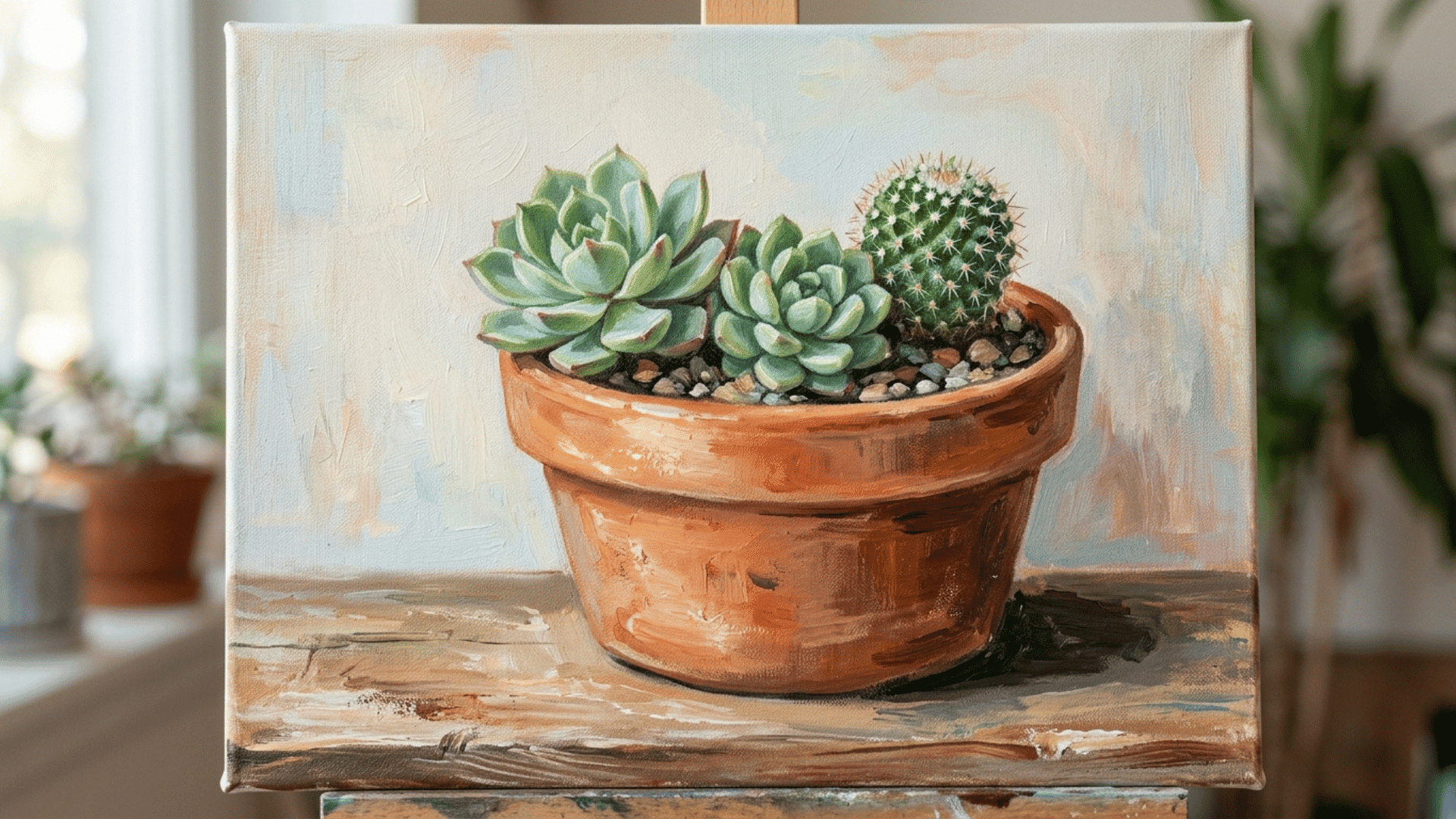
A cactus and succulent arrangement uses simple rounded and spiky shapes that sit well together in one pot. The muted green palette keeps it easy to blend.
- Key Features to Focus On: Rounded succulent shapes, spiky cactus arms, terracotta pot, small highlight dots for texture.
- Easy Painting Approach: Paint the pot first, then block in each plant shape before adding texture lines and highlight dots on top.
- Color Ideas: Sage green and deep green plants in a terracotta or white pot.
- Creative Variations: Cactus with a small flower bloom, hanging succulent, cactus family in matching pots, cactus with polka-dot pot.
- Final Touches: Add small cactus spines, a sandy tabletop, or a soft shadow under the pot.
8. Flamingo Silhouette on a Beach
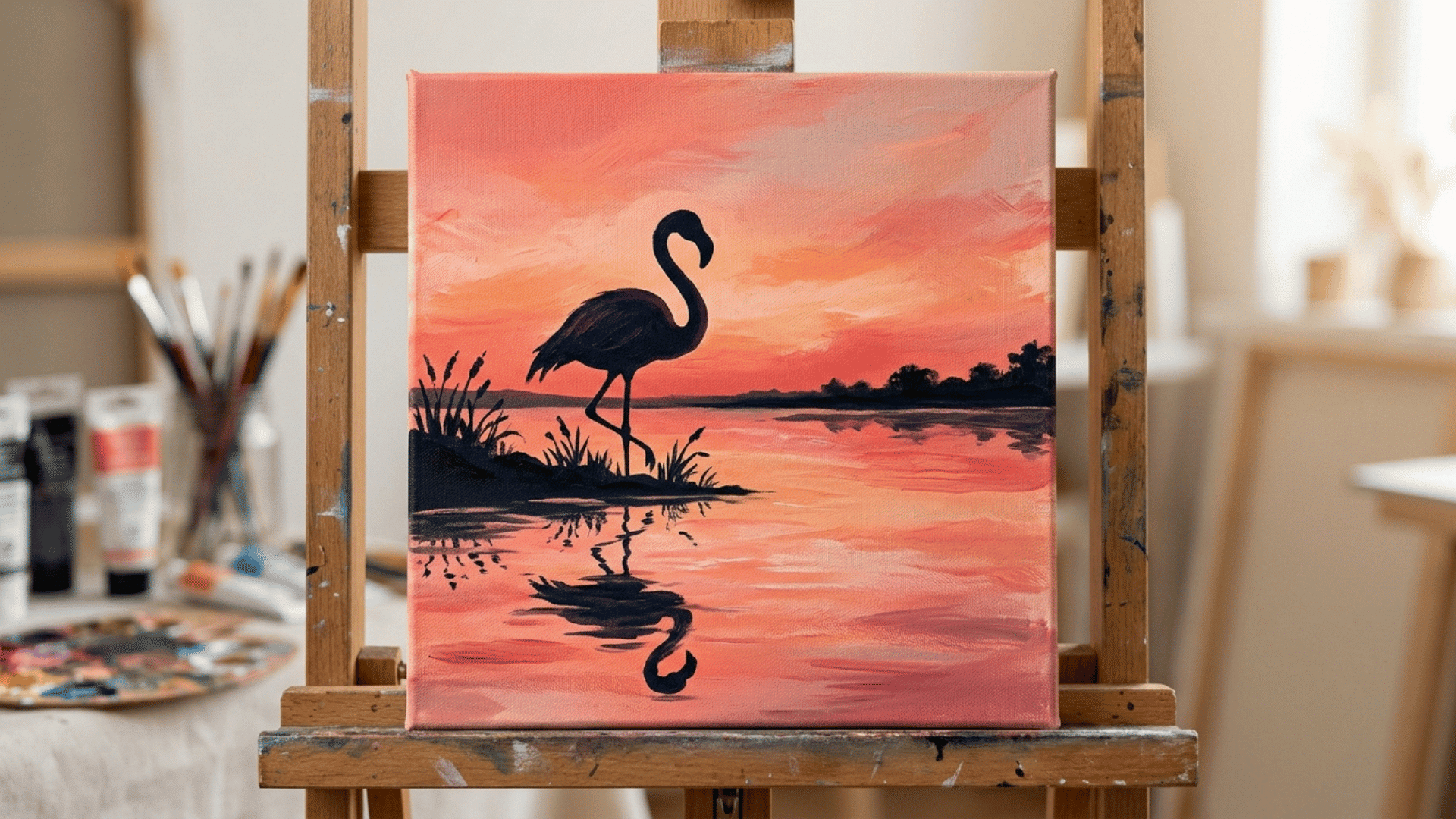
A flamingo silhouette on a beach pairs one bold shape with a soft sunset backdrop. The curved neck and long legs make it instantly recognizable even in silhouette form.
- Key Features to Focus On: Curved neck, long thin legs, one-leg standing pose, soft sky gradient behind it.
- Easy Painting Approach: Paint the sky and water gradient first, let it dry, then add the flamingo silhouette on top using a small round brush.
- Color Ideas: Pink or coral sky with a solid black or dark pink flamingo shape.
- Creative Variations: Two flamingos facing each other, flamingo with palm leaves, flamingo at sunrise, flamingo standing in shallow water.
- Final Touches: Add a water reflection, a few clouds, or small ripples around the legs.
9. Fox Playing in the Snow
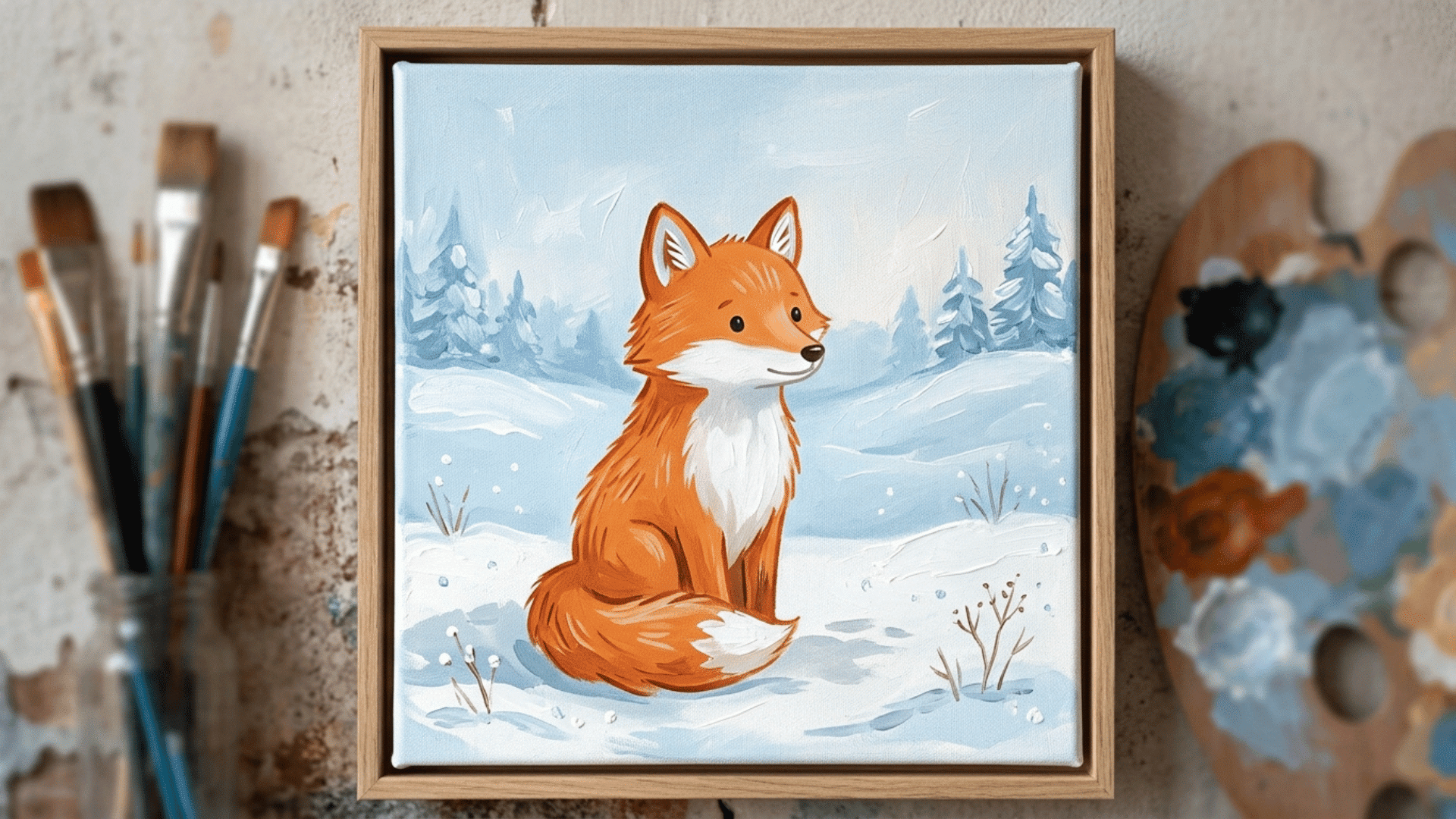
A fox playing in the snow wears a bright orange coat against a cool white-and-blue background. The contrast between the two colors carries most of the weight in the painting.
- Key Features to Focus On: Pointed ears, bushy tail, orange and white fur pattern, simple snow texture.
- Easy Painting Approach: Block in the body shape first, add the white belly and face patches, then add fur texture lines last.
- Color Ideas: Burnt-orange fur, white belly patches, and a pale blue or grey snow background.
- Creative Variations: Fox curled up sleeping, fox with a red scarf.
- Final Touches: Add falling snowflakes, small paw prints, or a few bare winter branches.
10. Butterfly Resting on a Branch
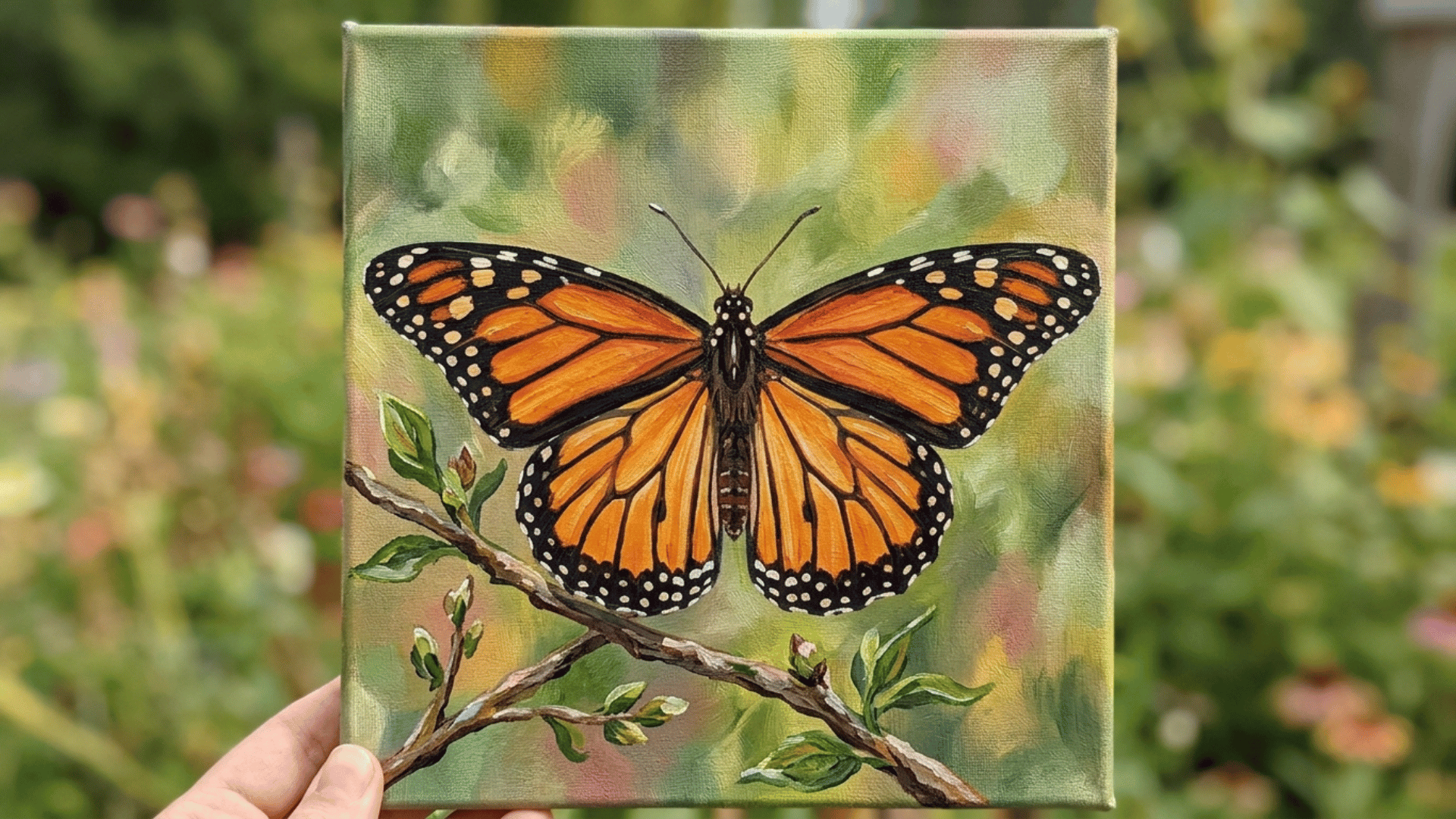
A butterfly resting on a branch works well as a close-up composition. Symmetrical wings make the shape easy to plan since one side mirrors the other.
- Key Features to Focus On: Symmetrical wing shapes, wing pattern detail, thin antennae, small tree branch.
- Easy Painting Approach: Sketch one wing, trace or fold paper to mirror it onto the other side, then fill in color and pattern.
- Color Ideas: Orange and black monarch pattern, blue morpho shades, or pastel wings for a softer look.
- Creative Variations: Butterfly on a flower instead of a branch, group of butterflies, butterfly with visible wing vein detail, night-flying moth version.
- Final Touches: Add small dots along the wing edges, a soft blurred background, or a leaf beneath the branch.
11. Owl Under a Full Moon
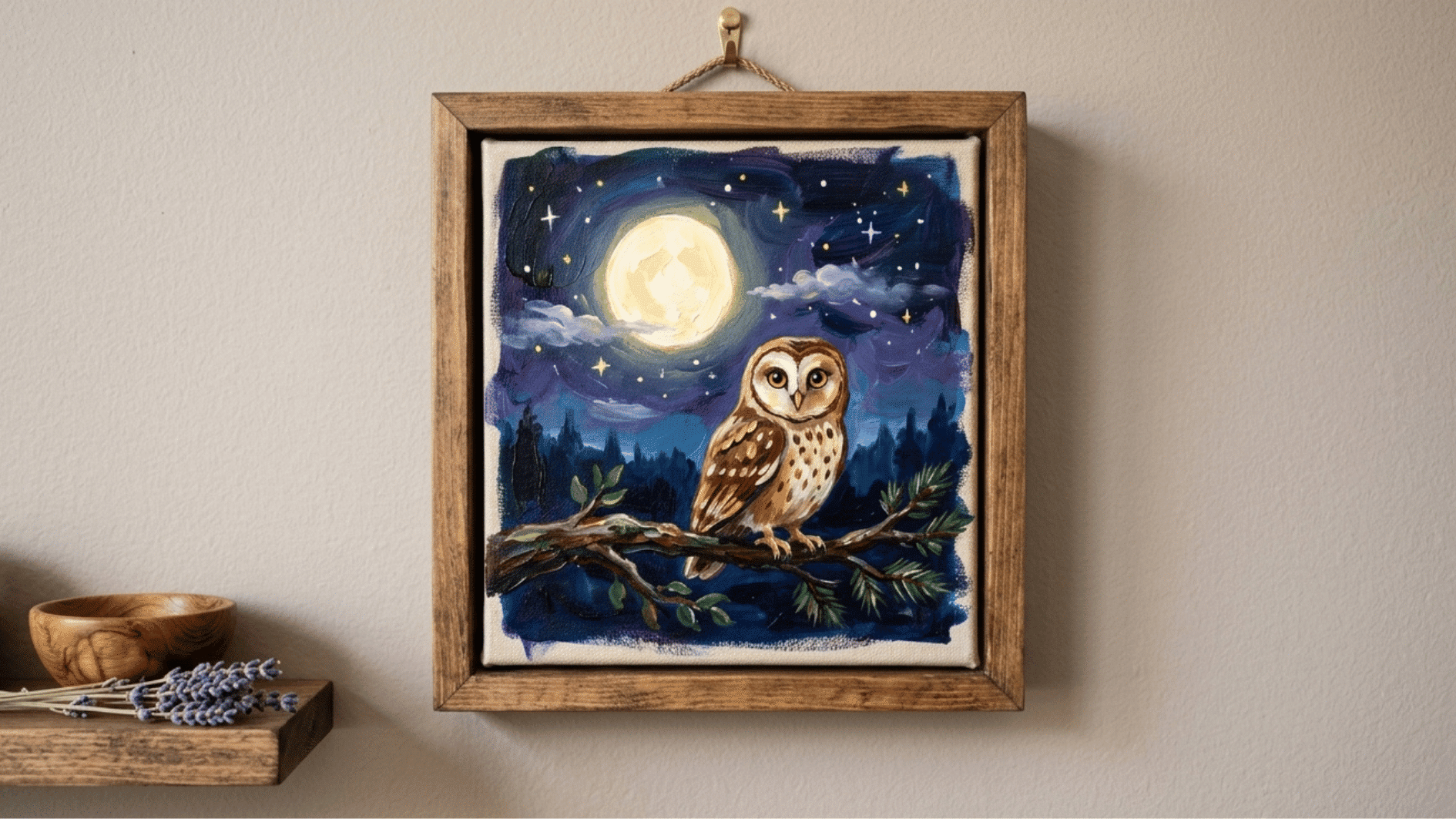
An owl under a full moon uses a round body shape and large eyes to keep the design simple. The moon behind it adds contrast without extra detail work.
- Key Features to Focus On: Round body, large forward-facing eyes, feather texture lines, tree branch perch.
- Easy Painting Approach: Paint the moon and night sky first, then add the owl’s body shape on top before layering feather texture and eyes.
- Color Ideas: Brown and cream feathers against a navy sky with a pale yellow moon.
- Creative Variations: Owl with wings spread, baby owl version, owl in a tree hollow, snowy white owl variation.
- Final Touches: Add a few stars, a soft moon glow, or small branch details around the perch
News-Style Curated Easy Canvas Painting Ideas
These ideas track what people are searching and painting around specific seasons and holidays, making them the ones most likely to trend at a given time of year.
12. Christmas Tree Ornament Close-Up
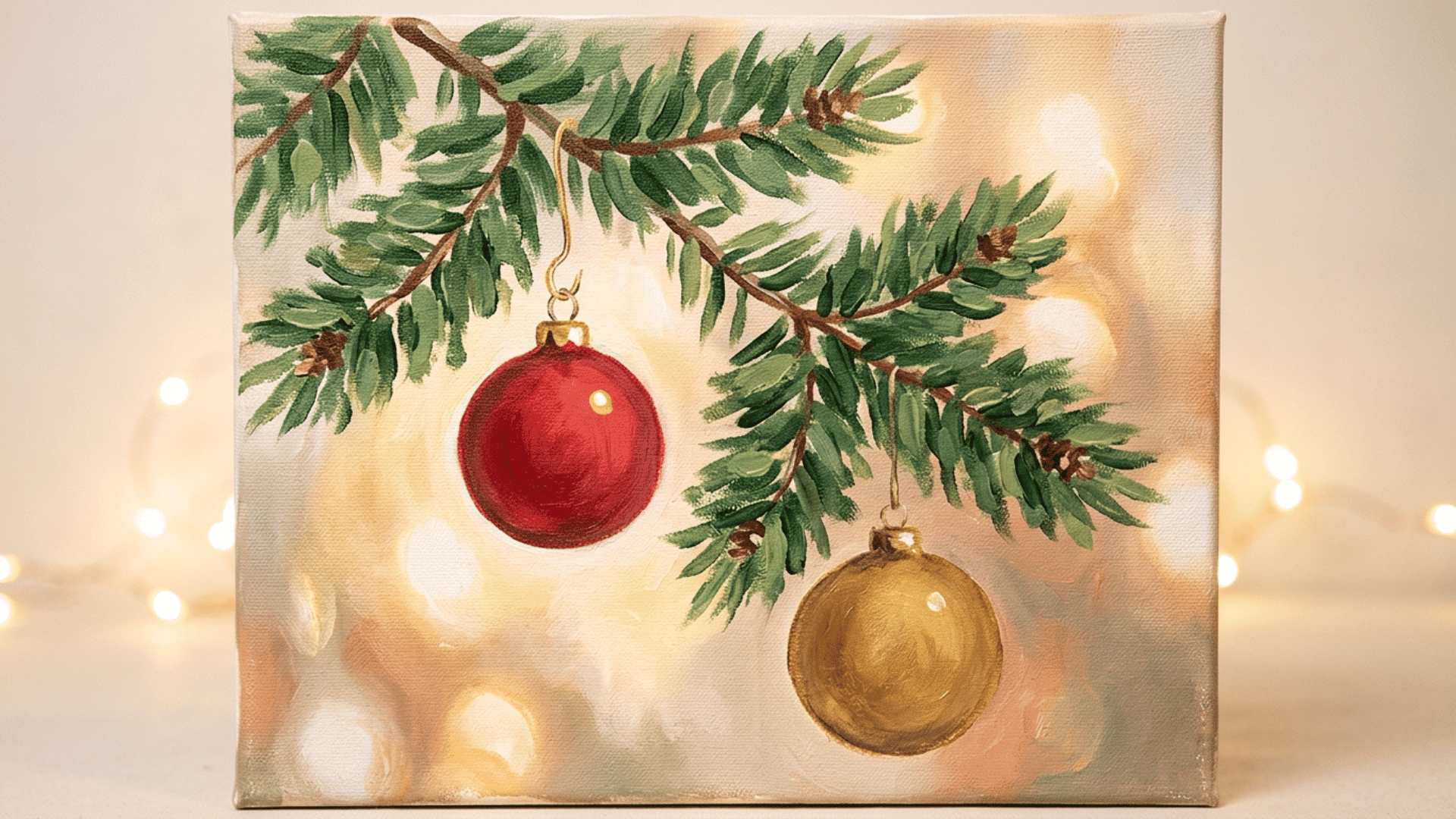
A Christmas tree ornament close-up focuses on one or two branches rather than the entire tree. Cropping in tight makes the painting feel festive without needing a large canvas.
- Key Features to Focus On: Pine needle texture, one or two hanging ornaments, small string lights, close-cropped composition.
- Easy Painting Approach: Paint the green branches first using short angled strokes, then add ornaments on top once the base layer dries.
- Color Ideas: Deep green branches, red or gold ornaments, warm yellow light glow.
- Creative Variations: Ornament with a reflection of the room inside it, candy cane version, snow-dusted branch, plaid ribbon detail.
- Final Touches: Add a soft, glowing light around the bulbs, a dusting of snow, or a small ribbon bow.
13. Pumpkin Patch for Fall
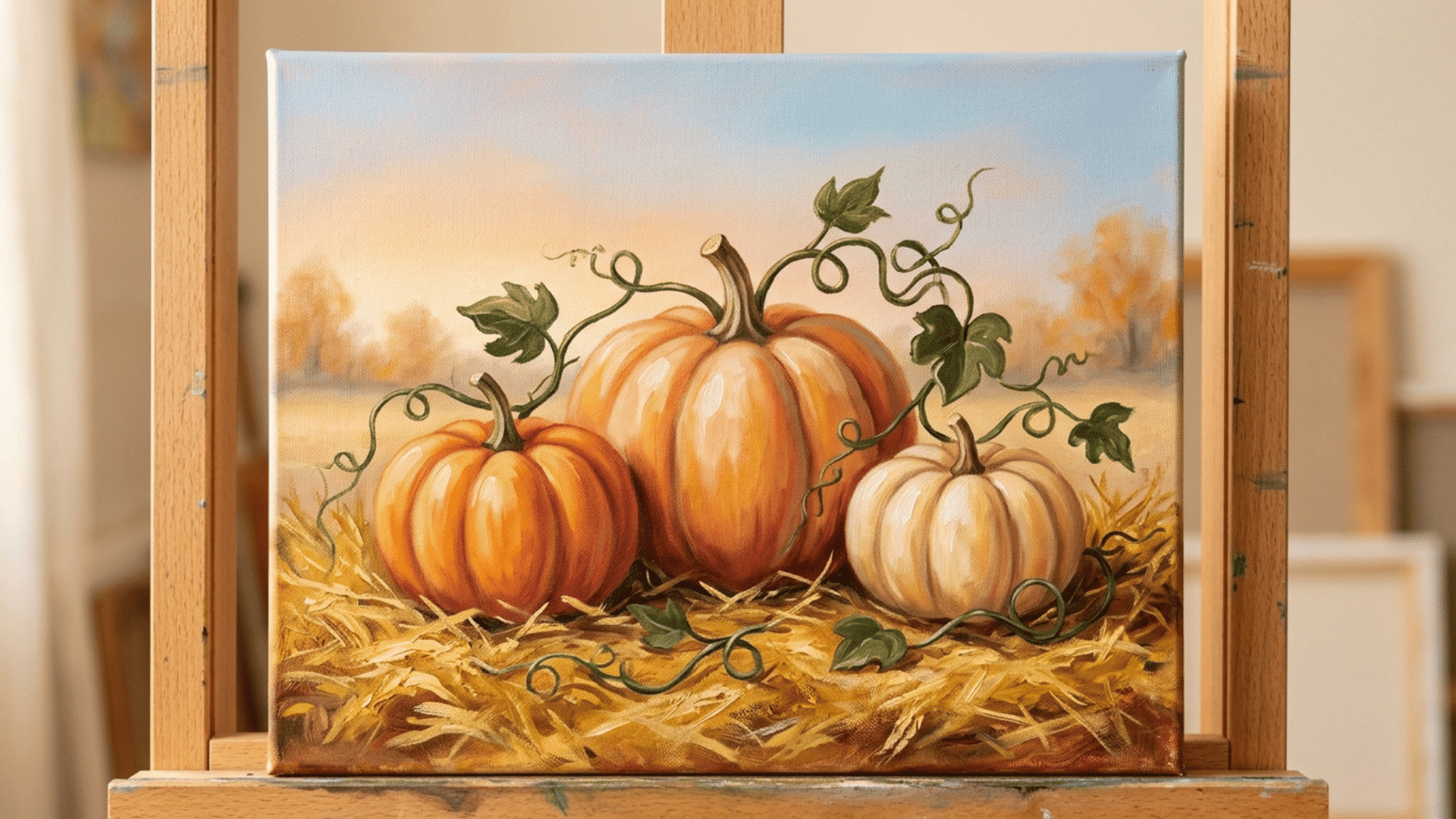
A pumpkin patch for fall groups several rounded pumpkin shapes together in a field. The repeated shape makes the composition easy to plan even for a first attempt.
- Key Features to Focus On: Rounded pumpkin shapes, curled vines, hay or straw texture, warm fall sky.
- Easy Painting Approach: Block in the field and sky first, then add pumpkin shapes from back to front, layering shadows for depth.
- Color Ideas: Orange and burnt sienna pumpkins, golden hay, muted green vines.
- Creative Variations: Pumpkin patch at sunset, single pumpkin close-up.
- Final Touches: Add fallen leaves, a wooden fence, or a small crow perched nearby.
14. Easter Eggs in a Basket
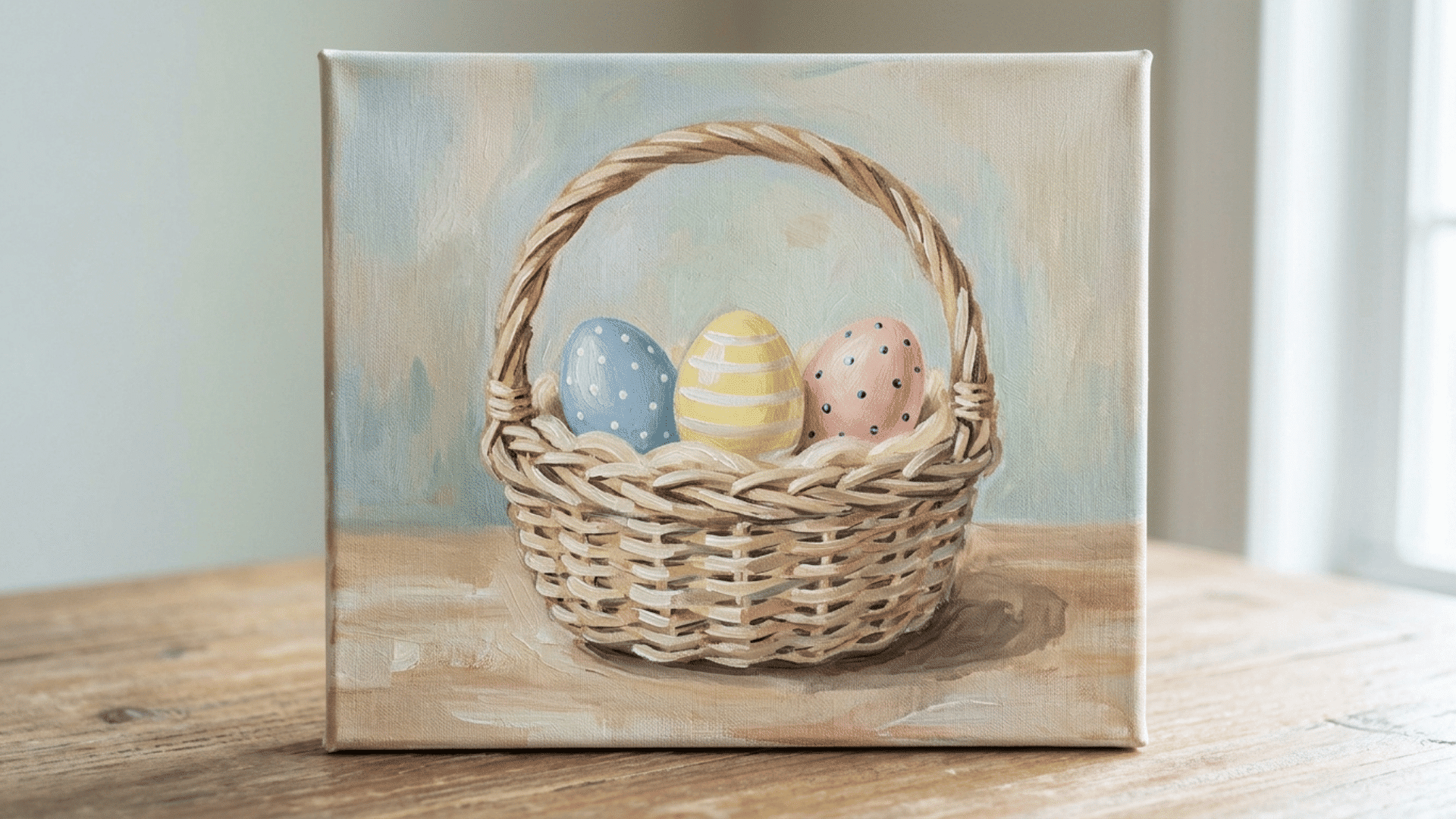
Easter eggs in a basket use simple oval shapes with painted patterns on top. The basket weave adds texture without requiring precise detail work.
- Key Features to Focus On: Oval egg shapes, woven basket texture, pastel color palette, small pattern details on each egg.
- Easy Painting Approach: Paint the basket first, add plain egg shapes on top, then let them dry before adding patterns and dots.
- Color Ideas: Pastel pink, mint, lavender, and pale yellow eggs in a tan woven basket.
- Creative Variations: Eggs scattered in grass, eggs with floral patterns.
- Final Touches: Add small flowers around the basket, a ribbon handle, or a soft grass texture underneath.
15. Fourth of July Fireworks
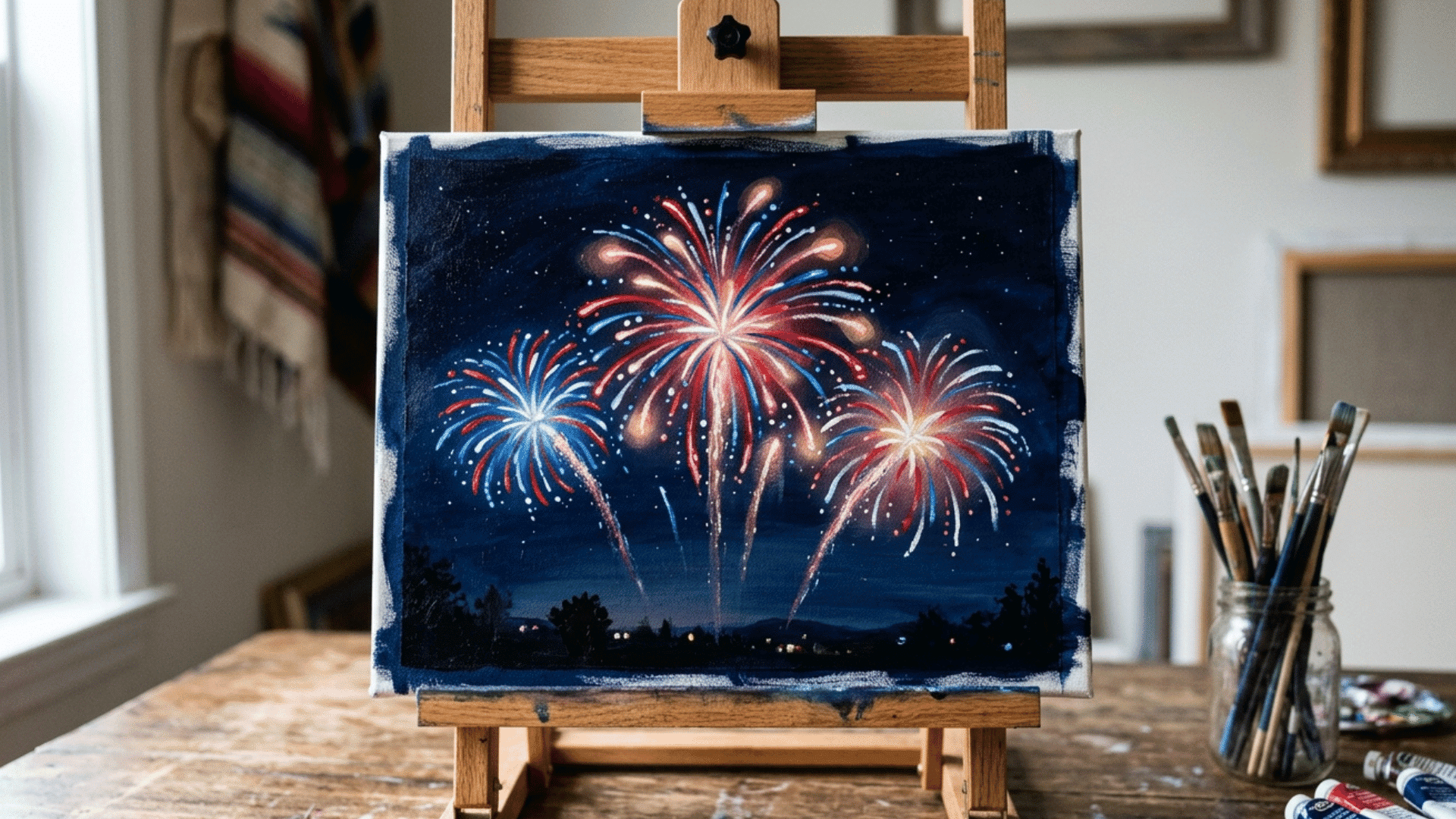
Fourth of July fireworks use bright bursts of color against a dark sky. Splatter techniques make the sparks look natural without needing a fine-detail brush.
- Key Features to Focus On: Dark night sky base, radiating firework bursts, small spark trails, optional silhouette below.
- Easy Painting Approach: Paint the dark sky first, let it dry fully, then flick or splatter bright paint outward from a few center points.
- Color Ideas: Red, white, and blue bursts against a navy or black sky.
- Creative Variations: Fireworks over a city skyline, fireworks reflected in water, fireworks with flag silhouette below, single large burst close-up.
- Final Touches: Add small white star dots, a light smoke haze, or a crowd silhouette at the bottom edge.
16. Valentine’s Day Heart Balloons
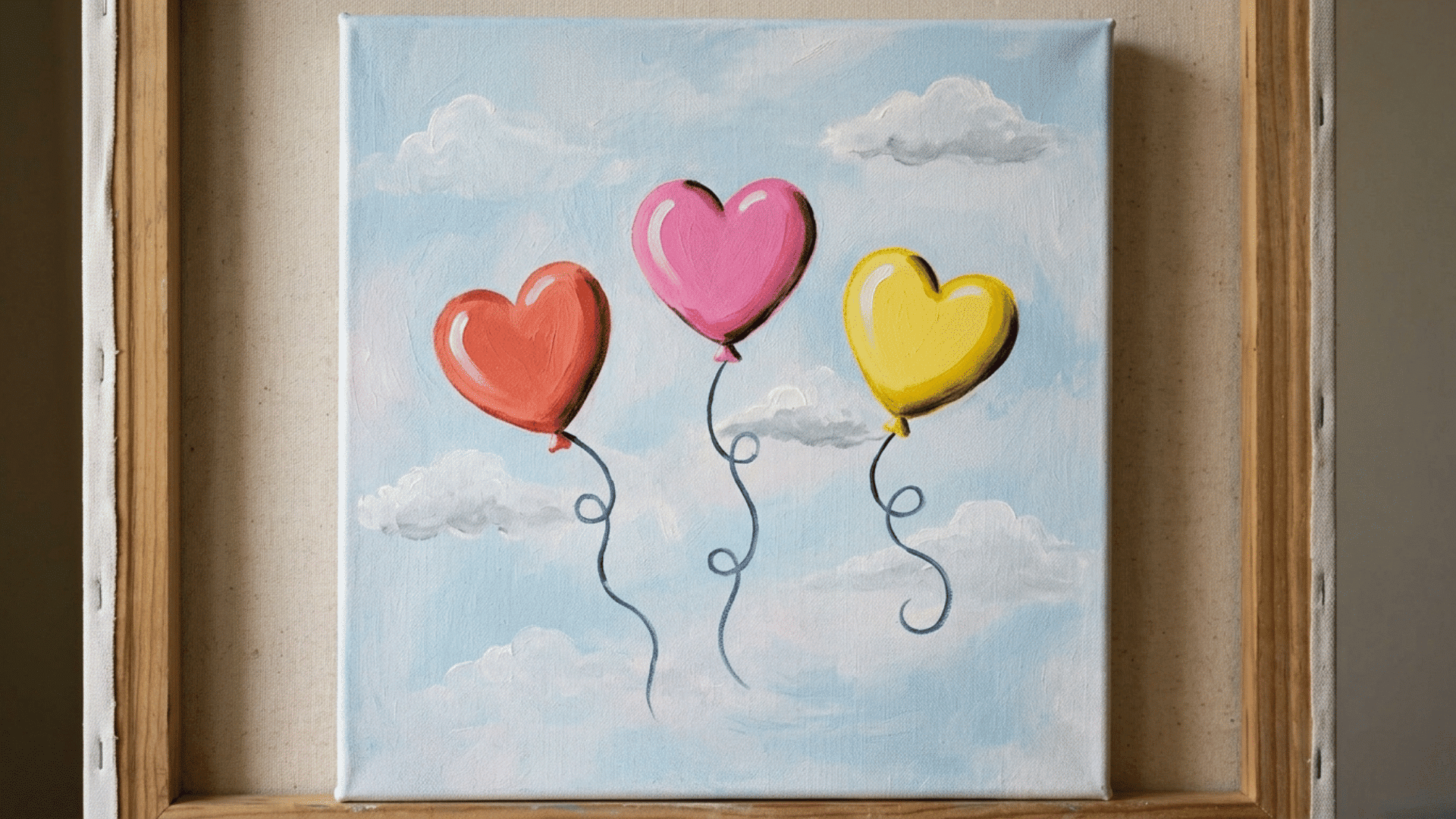
Valentine’s Day heart balloons group a few floating heart shapes together against a plain sky. The simple rounded shape makes this one of the easier holiday ideas to paint.
- Key Features to Focus On: Rounded heart balloon shapes, thin balloon strings, soft highlight on each balloon, plain sky background.
- Easy Painting Approach: Sketch heart outlines lightly first, fill each one in solid color, then add a highlight and string once dry.
- Color Ideas: Red, pink, and white balloons against a pale blue or cream sky.
- Creative Variations: Balloons floating over a city, single large heart balloon close-up, balloons with confetti falling, balloons tied to a gift box.
- Final Touches: Add small confetti dots, a soft cloud, or a ribbon curl on each string.
17. Cherry Blossom Branch
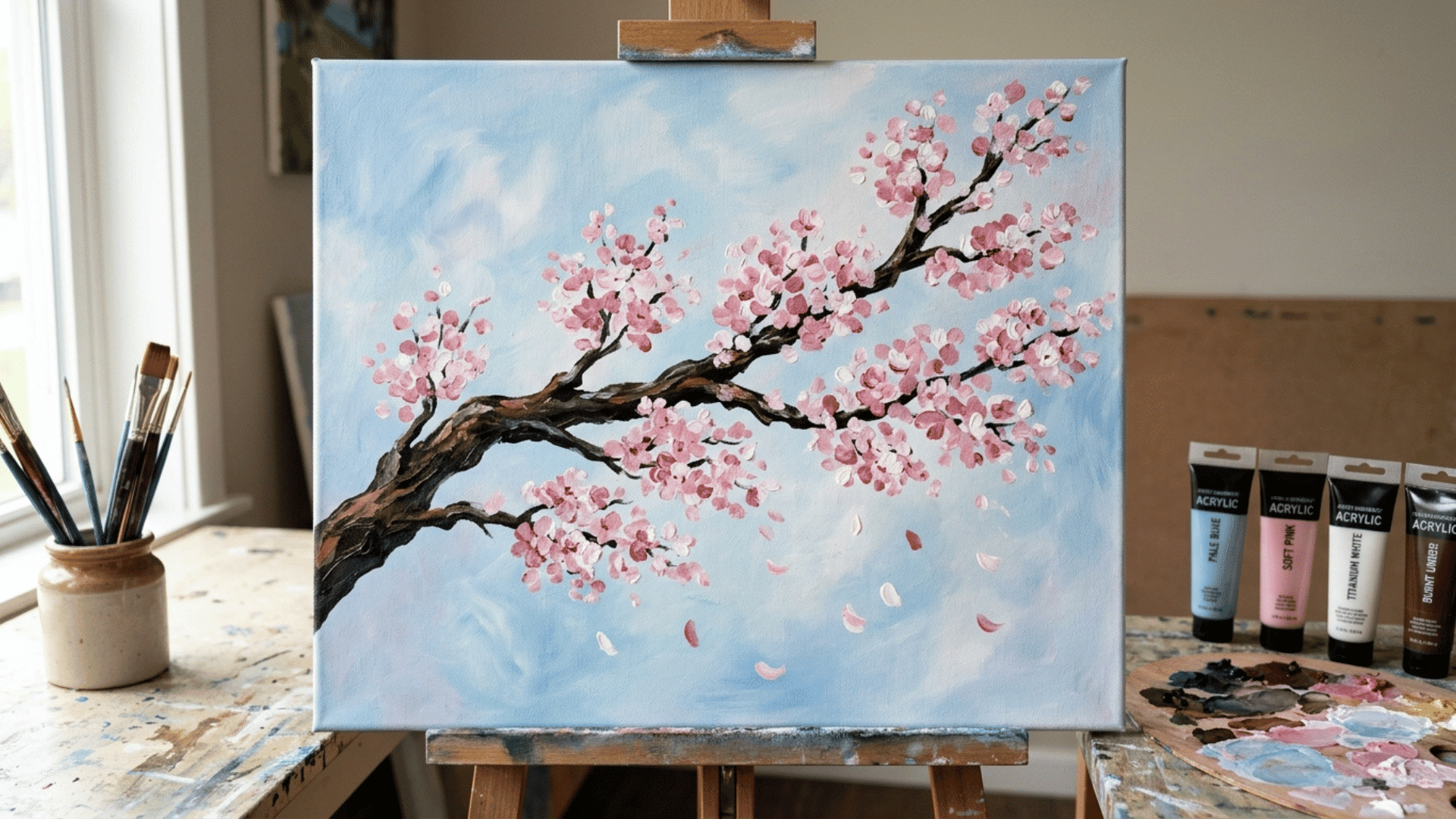
A cherry blossom branch uses small dabbed dots of color instead of individually painted petals. This dabbing technique makes a full branch of flowers quick to complete.
- Key Features to Focus On: Curved branch line, clustered blossom dots, occasional dark branch knots, soft pink color variation.
- Easy Painting Approach: Paint the branch first with a thin brush, then dab blossom clusters along it using a cotton swab or dry brush.
- Color Ideas: Soft pink and white blossoms on a dark brown branch, pale blue sky background.
- Creative Variations: Blossom branch against a sunset sky, falling petal version.
- Final Touches: Add a few falling petals, small buds, or a soft blurred background.
18. Sunflower Field Horizon
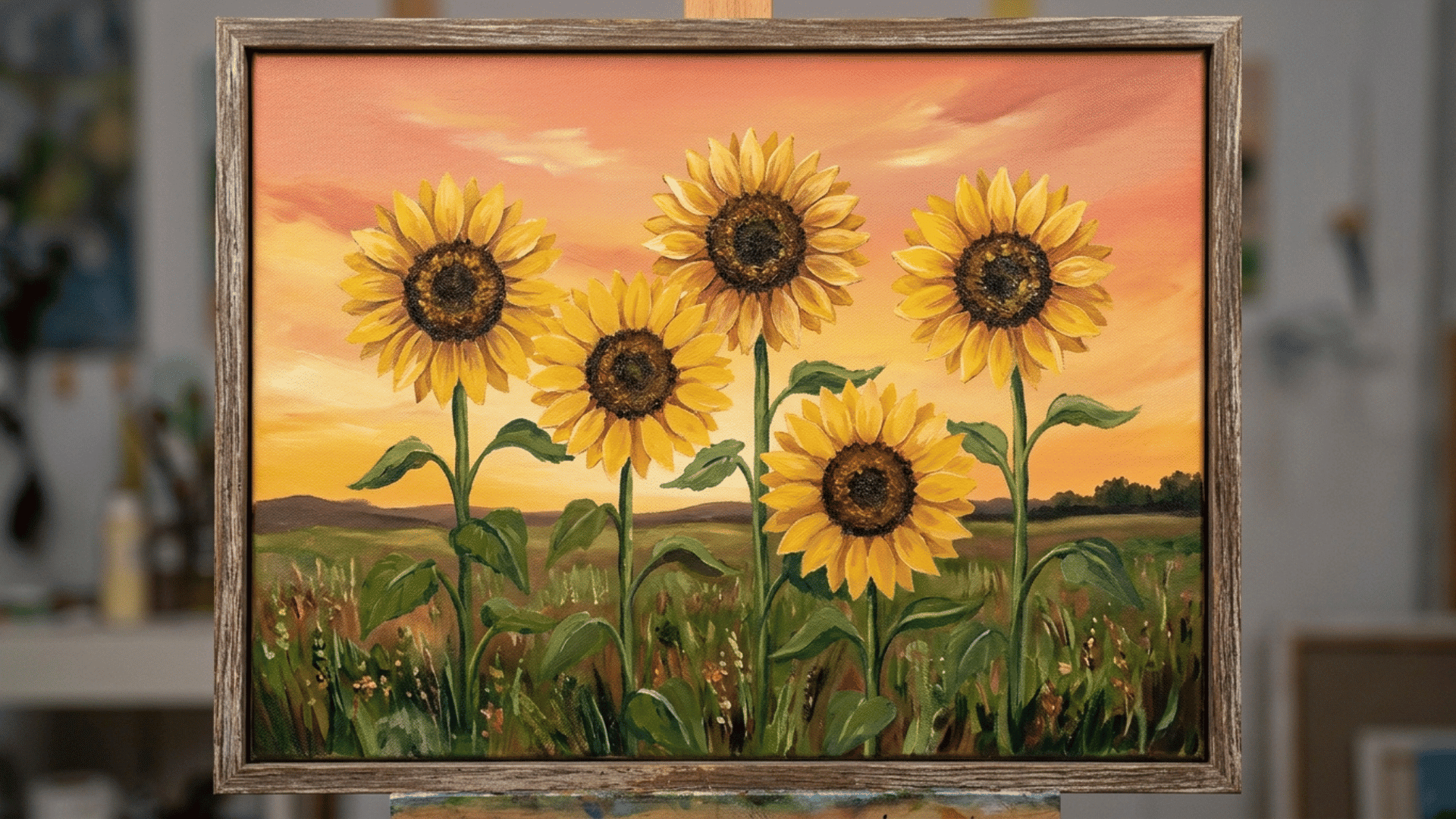
A sunflower field horizon repeats one simple flower shape across a wide field. The repetition makes it forgiving since no single flower needs to look perfect.
- Key Features to Focus On: Rows of sunflower heads, green stems and leaves, warm sky, low horizon line.
- Easy Painting Approach: Paint the sky and field base first, then add sunflower centers and petals, working from the back row forward.
- Color Ideas: Golden yellow petals, dark brown centers, warm orange or blue sky.
- Creative Variations: Single sunflower close-up, field at sunset.
- Final Touches: Add a few loose petals on the ground, soft rays of sunlight, or a distant tree line.
19. Koi Fish in a Pond
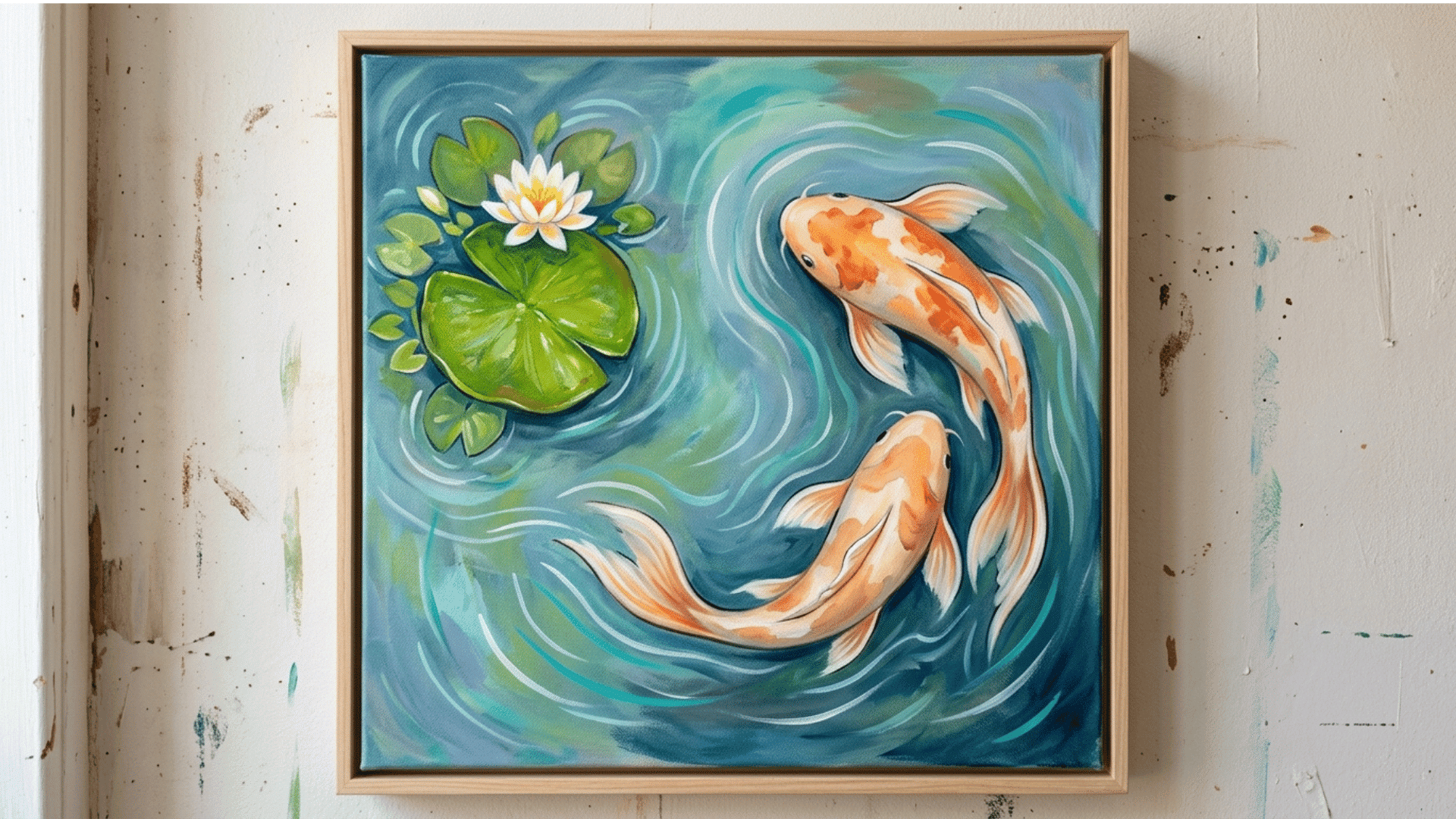
Koi fish in a pond pair flowing fish shapes with rippling water patterns. The overlapping fish bodies create movement without needing exact anatomy.
- Key Features to Focus On: Curved fish bodies, orange and white or black patterning, rippling water lines, lily pad shapes.
- Easy Painting Approach: Paint the water base first, add fish shapes on top, then finish with ripple lines and lily pads.
- Color Ideas: Orange, white, and black koi patterns against deep green or blue water.
- Creative Variations: Single koi close-up, koi with cherry blossoms above.
- Final Touches: Add lily pad flowers, soft light reflections, or a few floating leaves.
20. Desert Sand Dunes at Sunrise
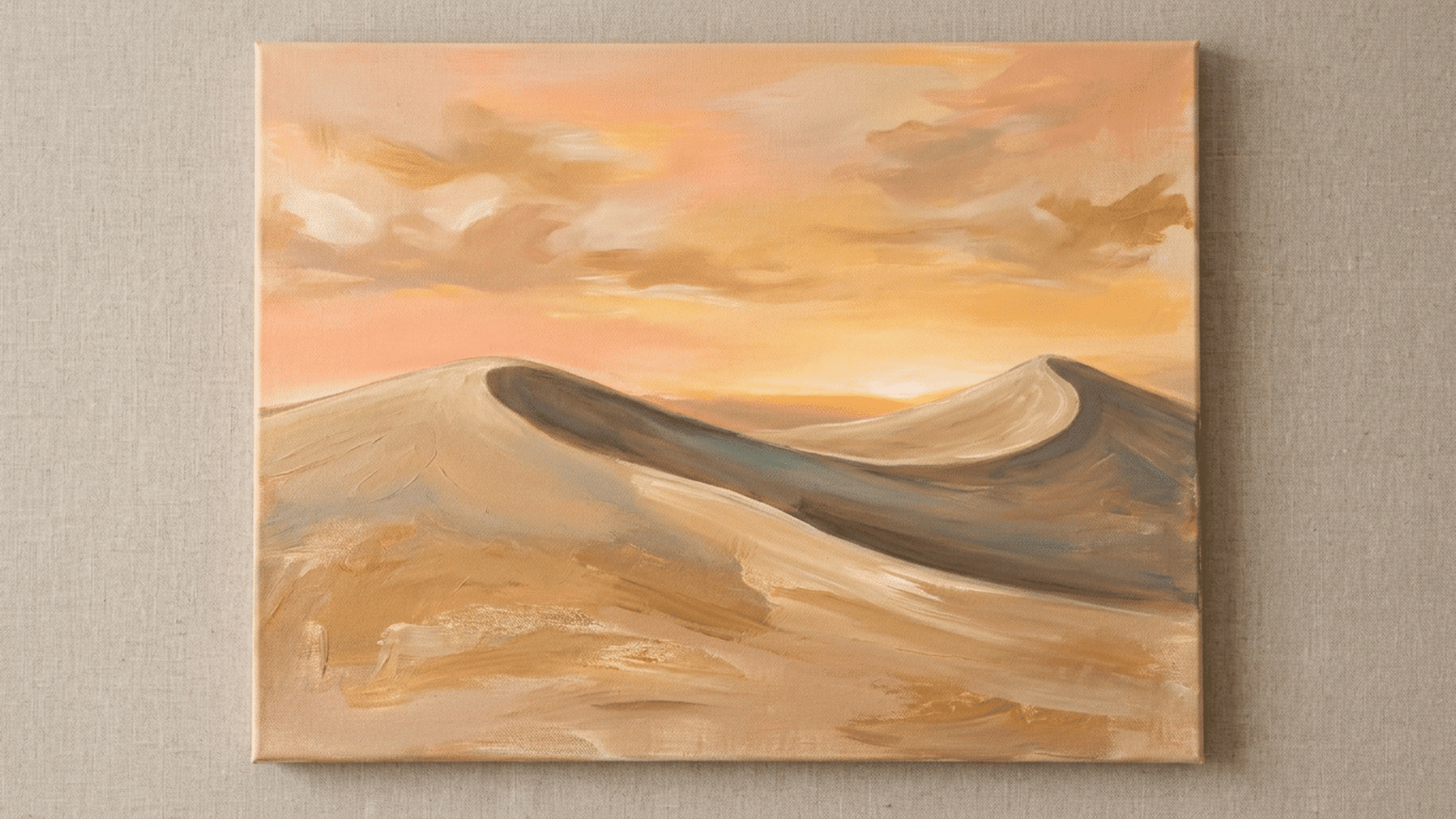
Desert sand dunes at sunrise feature curved shapes and warm light rather than sharp lines. The dunes’ natural curves make small brush errors barely noticeable.
- Key Features to Focus On: Curved dune shapes, warm gradient sky, soft shadow lines, minimal detail.
- Easy Painting Approach: Paint the sky gradient first, then layer dune shapes from back to front using a dry brush for texture.
- Color Ideas: Peach, gold, and a soft orange sky with tan or rust-colored sand.
- Creative Variations: Dunes with a lone cactus, dunes with camel silhouettes, dunes at sunset instead of sunrise, dunes with footprints.
- Final Touches: Add a sun glow on the horizon, soft shadows between dunes, or a small silhouette figure.
21. Rainy City Skyline Reflection
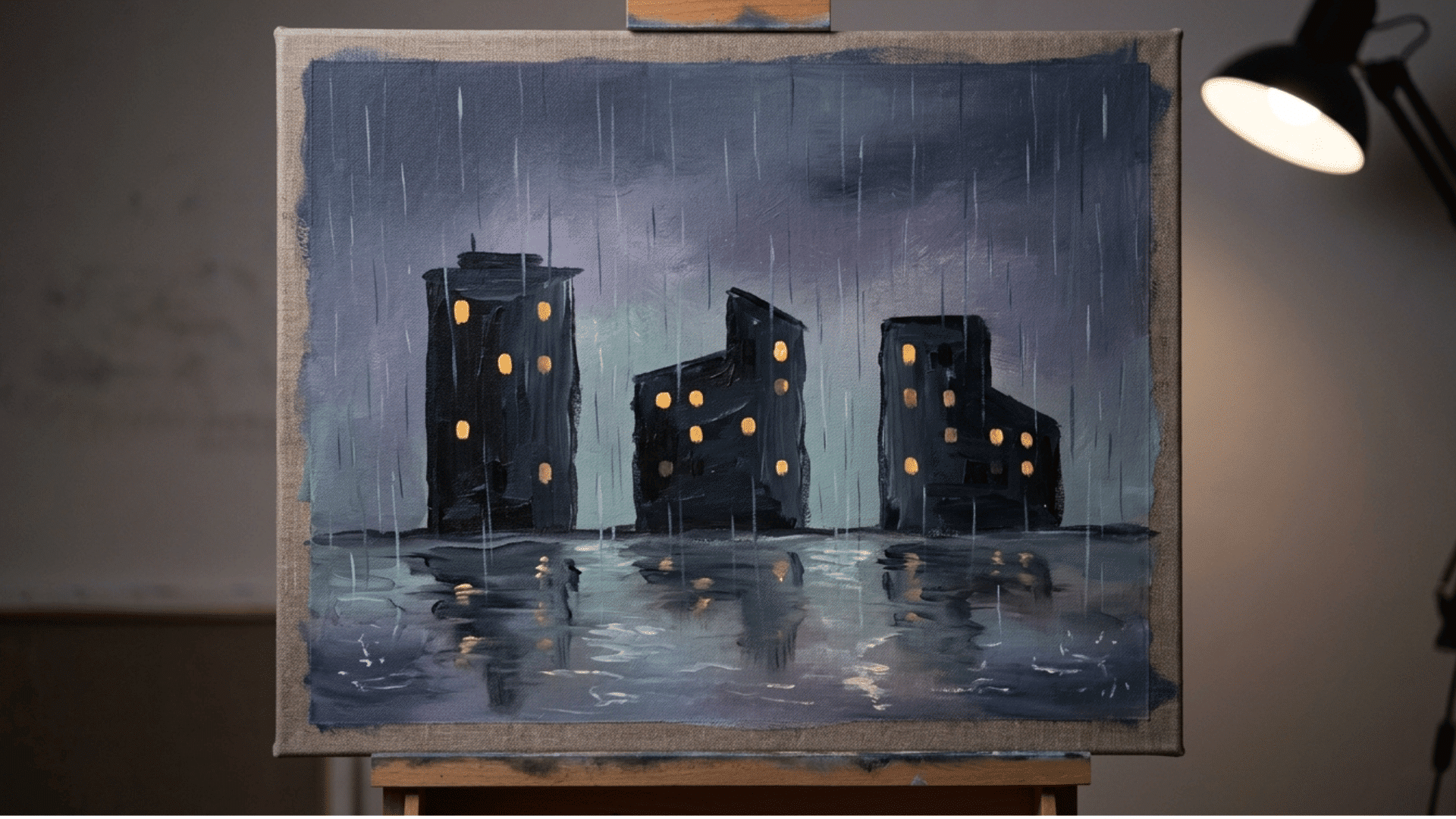
A rainy city skyline reflection pairs simple building shapes with a mirrored puddle below. The reflection adds visual interest without any extra detail work.
- Key Features to Focus On: Flat building silhouettes, soft rain streaks, mirrored reflection on wet ground, muted color palette.
- Easy Painting Approach: Paint the sky and buildings first, then flip the same shapes upside down and soften them for the reflection.
- Color Ideas: Grey, navy, and muted purple tones with small pops of yellow window light.
- Creative Variations: Skyline with an umbrella silhouette, skyline at night.
- Final Touches: Add thin rain lines, glowing windows, or a few scattered streetlights.
Additional Canvas Painting Ideas for Beginners
These ideas fall outside the seasonal and image-grid categories but stay just as approachable, covering abstract styles and playful themes that work for any time of year.
22. Drip Painting in Blue and Gold
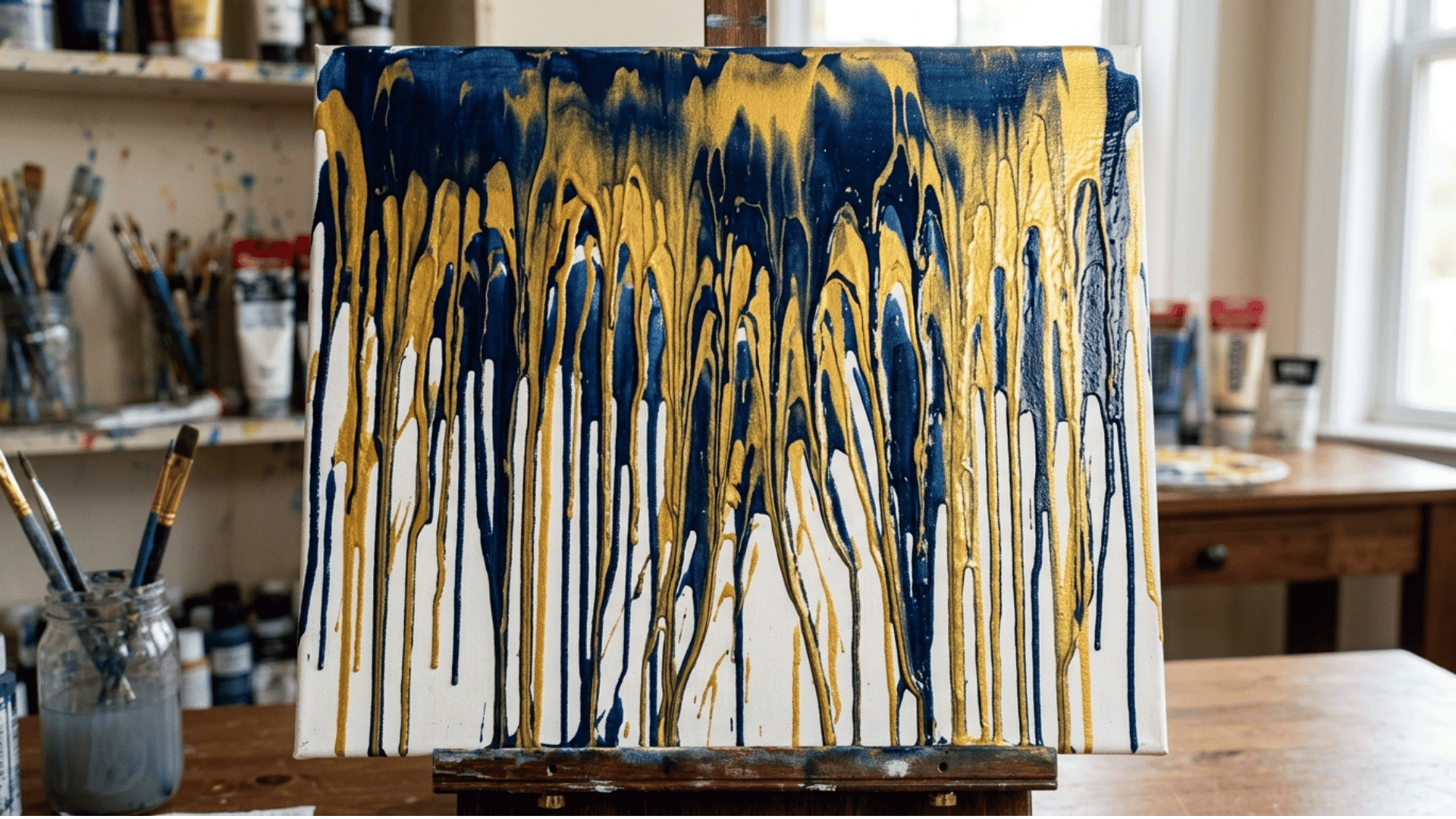
A drip painting in blue and gold lets gravity do most of the work instead of a steady brush hand. Tilting the canvas creates natural, flowing lines that never look forced.
- Key Features to Focus On: Vertical paint drips, overlapping color streaks, visible canvas texture between drips, controlled color palette.
- Easy Painting Approach: Thin your paint slightly, pour small amounts near the top of a tilted canvas, then let gravity pull it downward.
- Color Ideas: Navy and cobalt blue paired with metallic gold or bronze accents.
- Creative Variations: Single-color drip version; drip painting over a solid-color base; horizontal drip effect; drip painting with metallic leaf added on top.
- Final Touches: Add a few gold paint splatters or a light coat of varnish once fully dry.
23. Geometric Color-Block Design
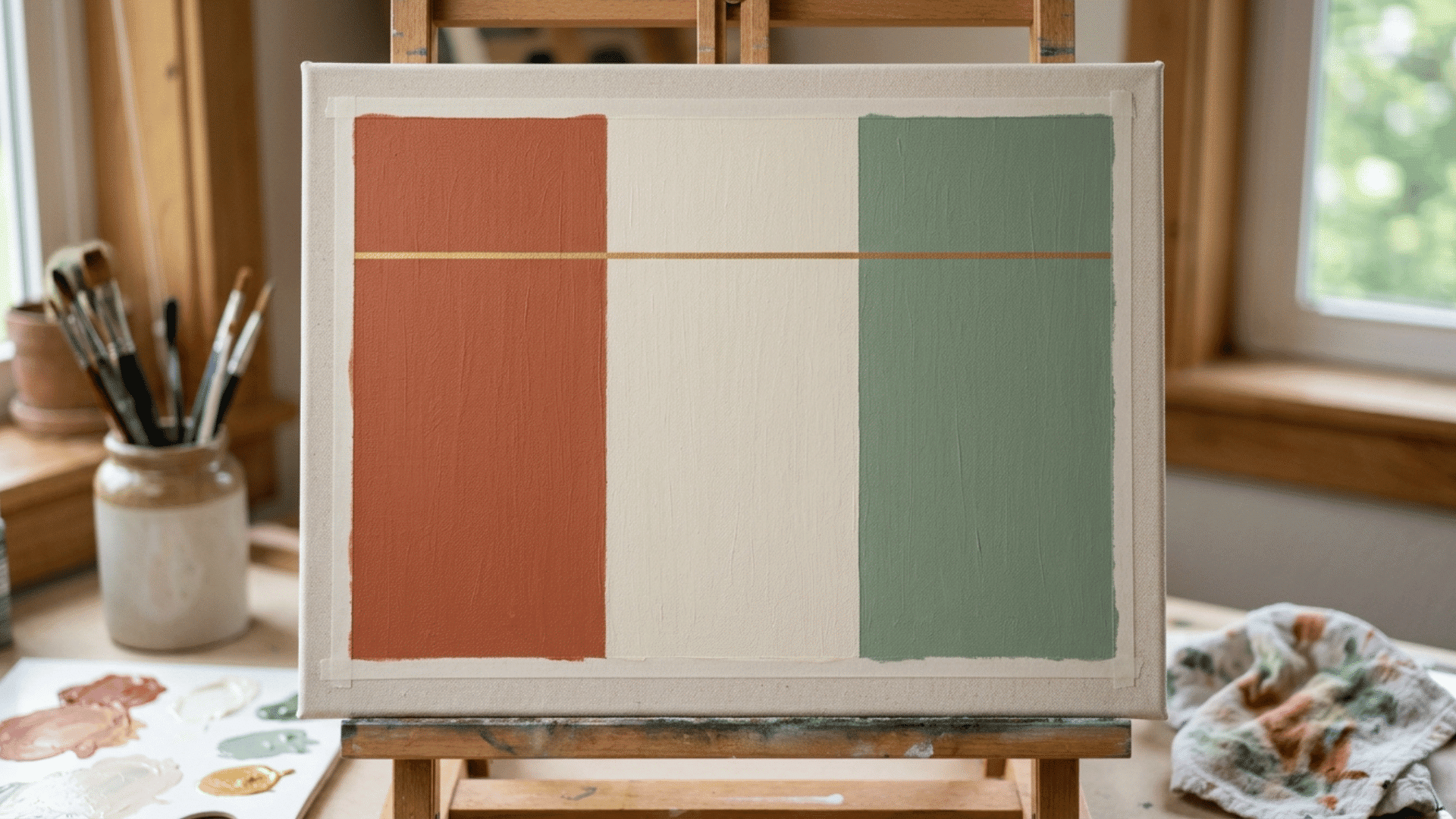
A geometric color-block design uses painter’s tape to create crisp, clean edges. This method entirely removes the need for a steady freehand line which makes it suitable for kids also.
- Key Features to Focus On: Straight edges, flat color sections, balanced shape sizes, limited color palette.
- Easy Painting Approach: Tape off sections in a simple pattern, paint each block one color at a time, then peel the tape once dry.
- Color Ideas: Two or three complementary colors, such as terracotta, cream, and sage green.
- Creative Variations: Diagonal block pattern, circular shapes instead of straight lines, ombre color blocks, single accent color on a neutral base.
- Final Touches: Add a thin contrasting border line or a small painted shape overlapping two blocks.
24. Acrylic Pour Swirls
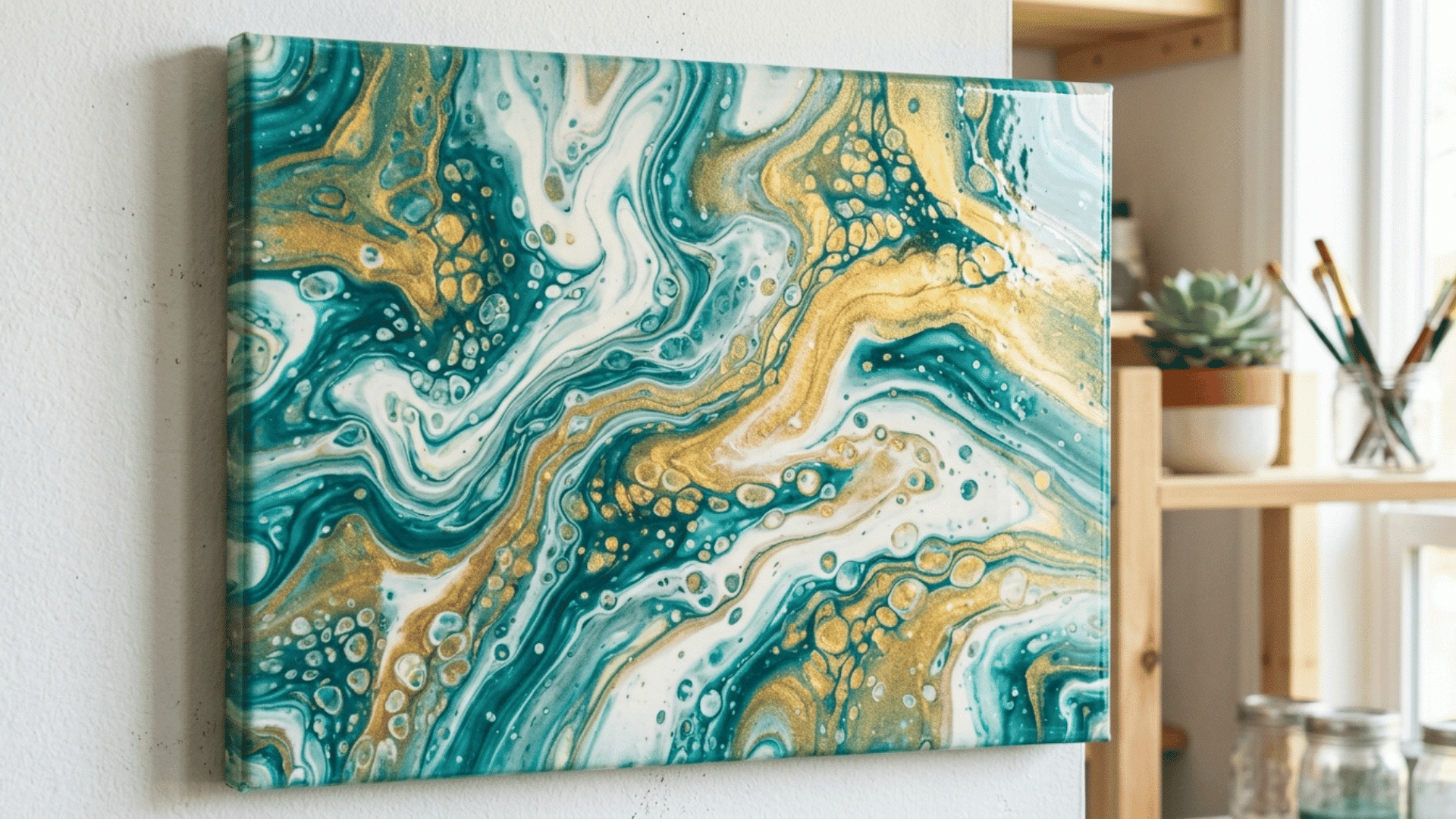
Acrylic pour swirls create marbled patterns by pouring thinned paint directly onto the canvas. No brush is needed for the base layer, which makes this one of the easiest techniques on the list.
- Key Features to Focus On: Swirled color patterns, cell-like texture, smooth glossy finish, natural color blending.
- Easy Painting Approach: Mix acrylic paint with pouring medium, layer colors in a cup, then flip and pour directly onto the canvas.
- Color Ideas: Teal, white, and gold for a marbled look, or pink and purple for a softer blend.
- Creative Variations: Single-color tonal pour, pour with silicone oil for extra cells.
- Final Touches: Tilt the canvas gently to spread paint evenly, then let it cure flat for at least 24 hours.
25. Minimalist Single-Line Art
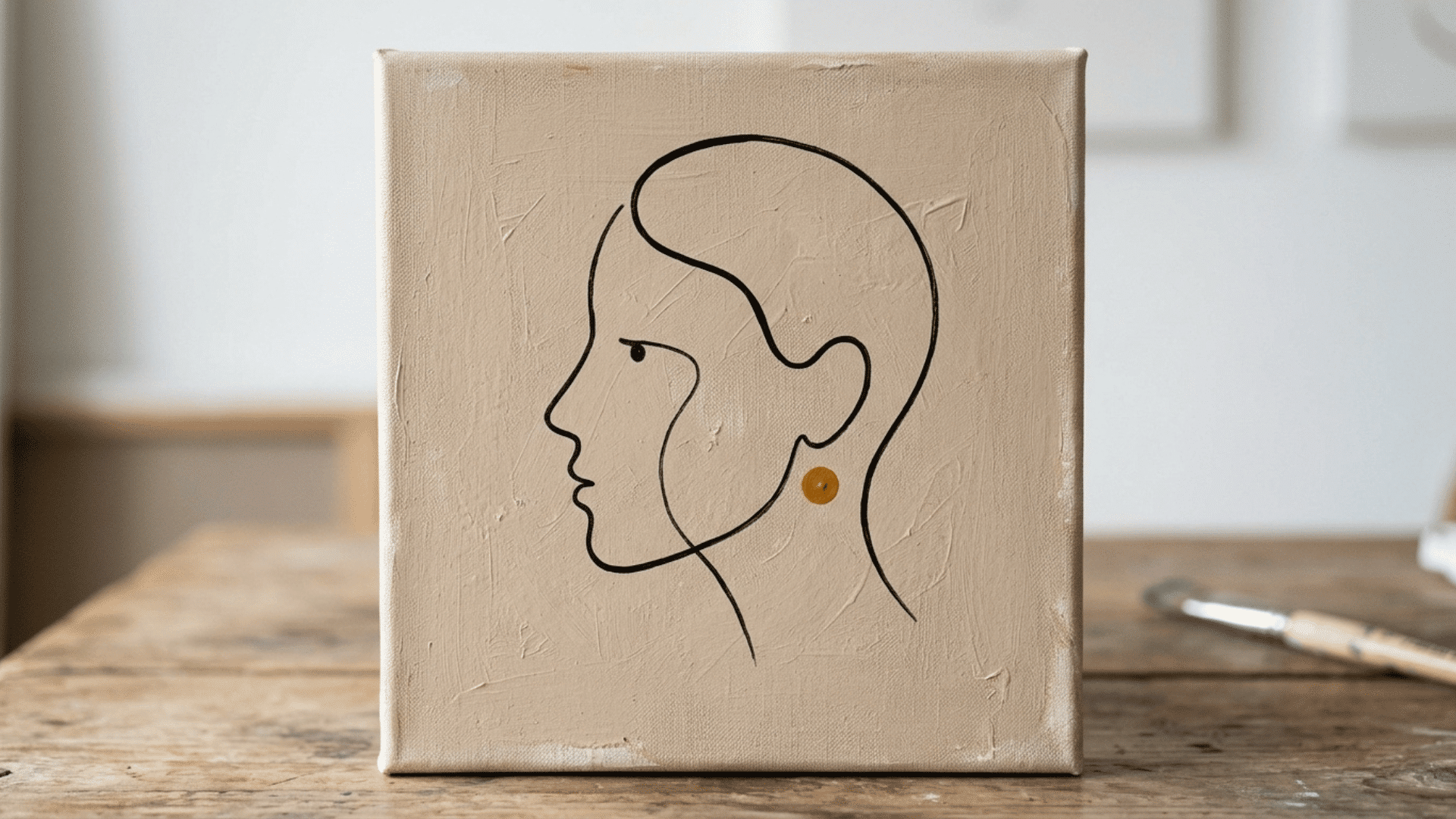
Minimalist single-line art uses one continuous stroke to form a simple shape or figure. Keeping the line unbroken forces a clean, modern look with very little paint.
- Key Features to Focus On: One unbroken line, simple subject shape, plenty of empty canvas space, thin consistent line weight.
- Easy Painting Approach: Sketch the line lightly in pencil first, then trace over it slowly with a small round brush without lifting.
- Color Ideas: Black or navy line on a white or cream canvas.
- Creative Variations: Line art face profile, line art of a plant, line art of two hands, line art with one small color accent.
- Final Touches: Add a single dot of color at one point along the line, or leave it entirely monochrome.
26. Textured Palette-Knife Abstract
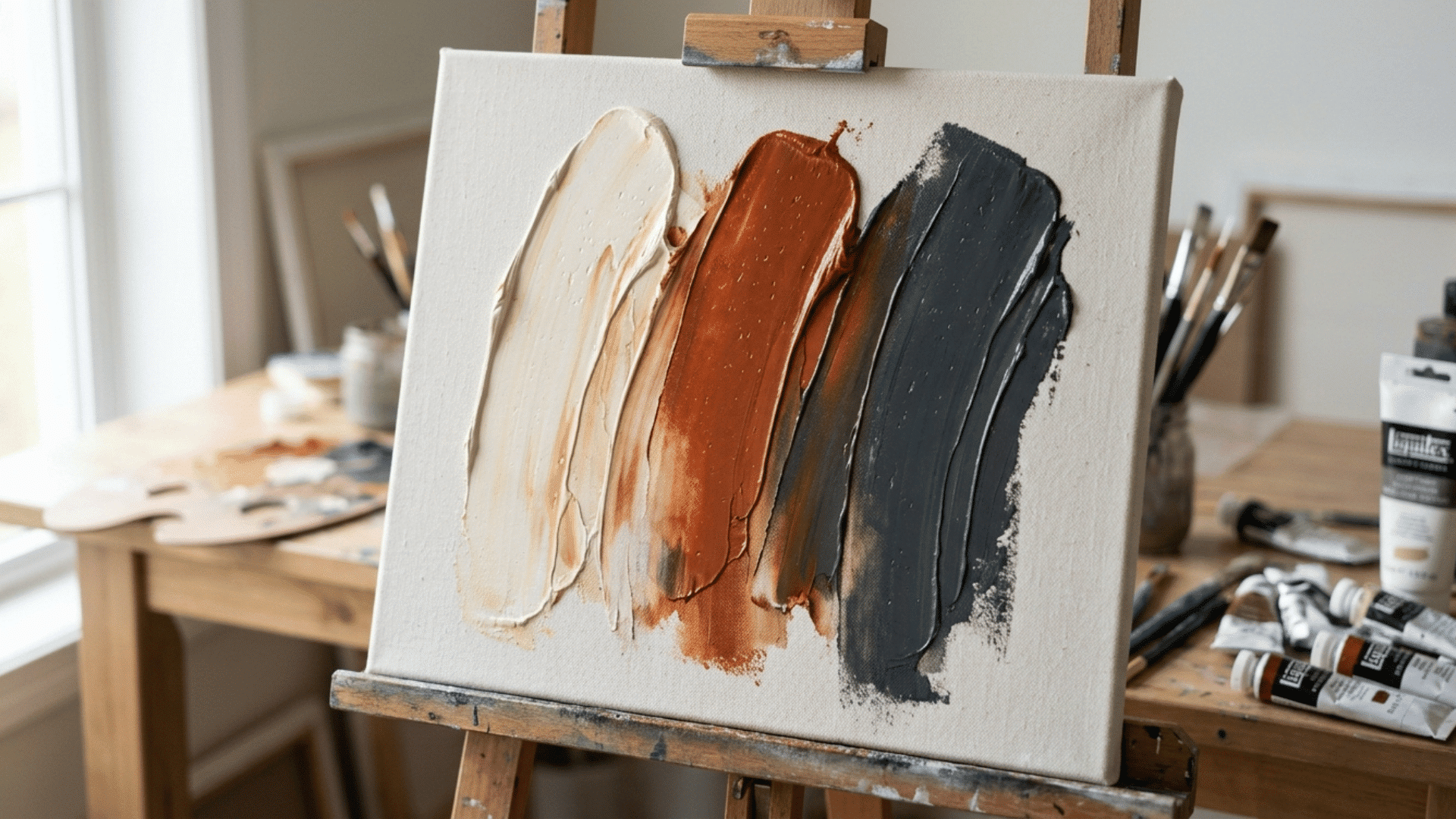
A textured palette-knife abstract builds up thick layers of paint rather than thin brushstrokes. The raised texture catches light differently depending on the angle it is viewed from.
If you enjoy working with thick materials and layered surfaces, mixed media art ideas covers techniques like torn paper, fabric, and cardboard that take the same tactile approach even further.
- Key Features to Focus On: Thick paint ridges, layered color transitions, visible knife stroke marks, no fine detail.
- Easy Painting Approach: Load paint directly onto a palette knife, then drag and layer it across the canvas in overlapping sections.
- Color Ideas: Warm neutrals like cream, rust, and charcoal, or cool tones like teal and slate grey.
- Creative Variations: Textured abstract landscape, single accent stripe of bold color, metallic paint mixed into the texture, small textured canvas set of three.
- Final Touches: Let each layer partially dry before adding the next to keep ridges distinct.
27. Ombre Gradient Sky in One Color Family
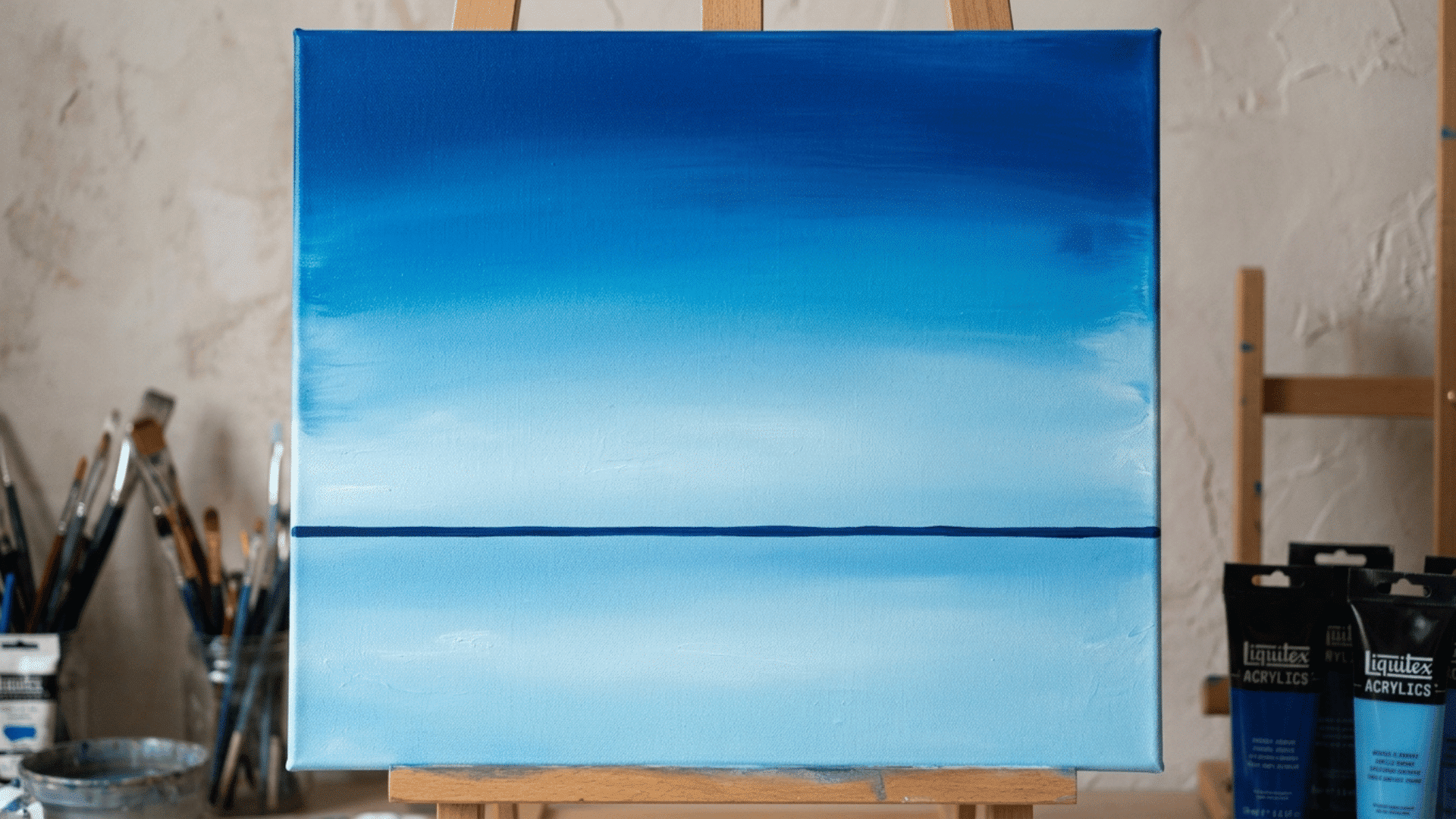
An ombre gradient sky in a single color family blends light-to-dark shades of that color across the canvas. This single-color approach makes blending far easier than mixing multiple hues.
- Key Features to Focus On: Smooth top-to-bottom blend, consistent color family, no harsh transition lines, even brush coverage.
- Easy Painting Approach: Paint the lightest shade at the top, then work downward, blending each new shade into the previous while still wet.
- Color Ideas: Light blue fading to navy, or pale pink fading to deep maroon.
- Creative Variations: Horizontal gradient instead of vertical, gradient with a simple tree silhouette added, two-tone sunset version, gradient inside a circular canvas.
- Final Touches: Add a thin horizon line or a small silhouette shape once the gradient dries.
28. Rainbow With Fluffy Clouds
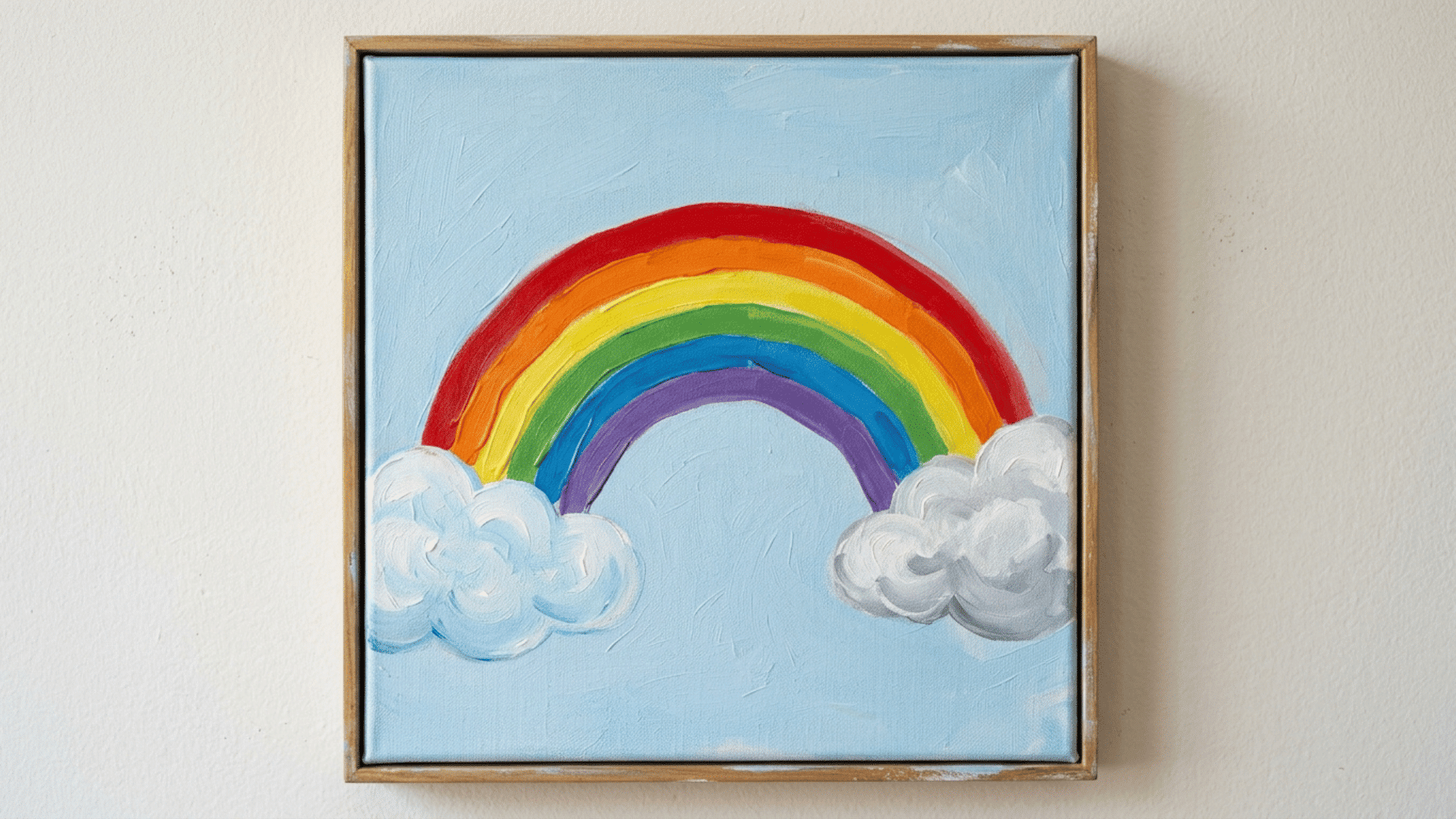
A rainbow with fluffy clouds pairs simple curved bands of color with soft, rounded cloud shapes. The repeated arc shape makes this an easy first project for younger painters.
- Key Features to Focus On: Curved rainbow bands, rounded cloud shapes, soft edges, bright color order.
- Easy Painting Approach: Paint each rainbow band with a curved stroke, working outward, then add clouds at either end once dry.
- Color Ideas: Classic rainbow order in bright, saturated tones against a pale blue sky.
- Creative Variations: Pastel rainbow version, rainbow over a green hill, rainbow with a sun peeking through clouds, double rainbow version.
- Final Touches: Add a light blue wash over the clouds for shading or a few small raindrops.
29. Melting Ice Cream Cone
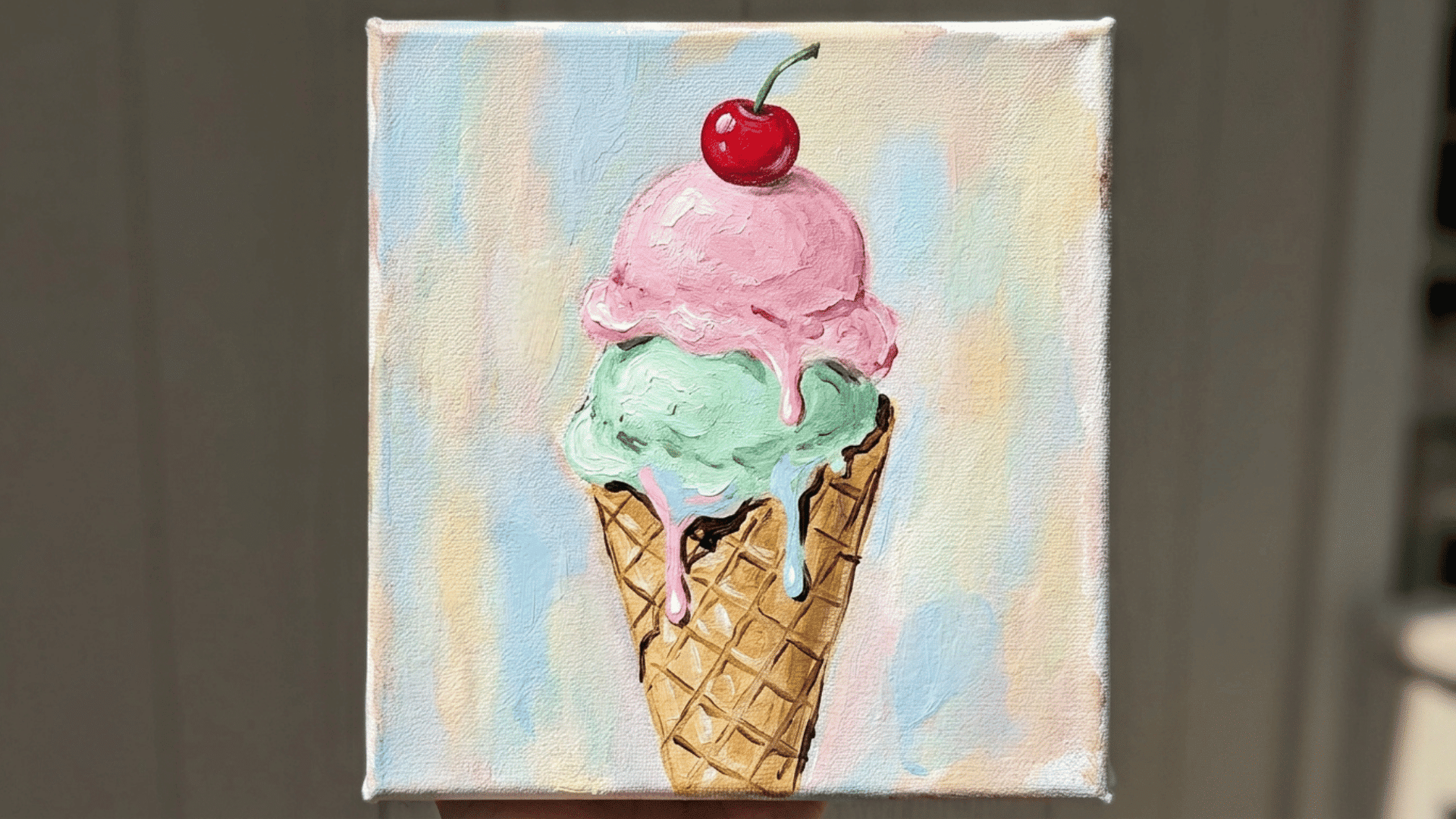
A melting ice cream cone features playful drips running down a simple cone. The dripping detail adds character without requiring precise shading.
- Key Features to Focus On: Rounded scoop shapes, waffle cone texture lines, drip details running downward, bright candy-like colors.
- Easy Painting Approach: Paint the cone shape first using crosshatch lines for texture, then add scoop shapes and let drips flow from the base of each scoop.
- Color Ideas: Pastel pink, mint, and vanilla scoops on a tan cone.
- Creative Variations: Ice cream sundae version; popsicle instead of a cone; ice cream with sprinkles; stacked triple-scoop version.
- Final Touches: Add a cherry on top, sprinkle dots, or a light shadow beneath the cone.
30. Under-the-Sea Scene With Fish
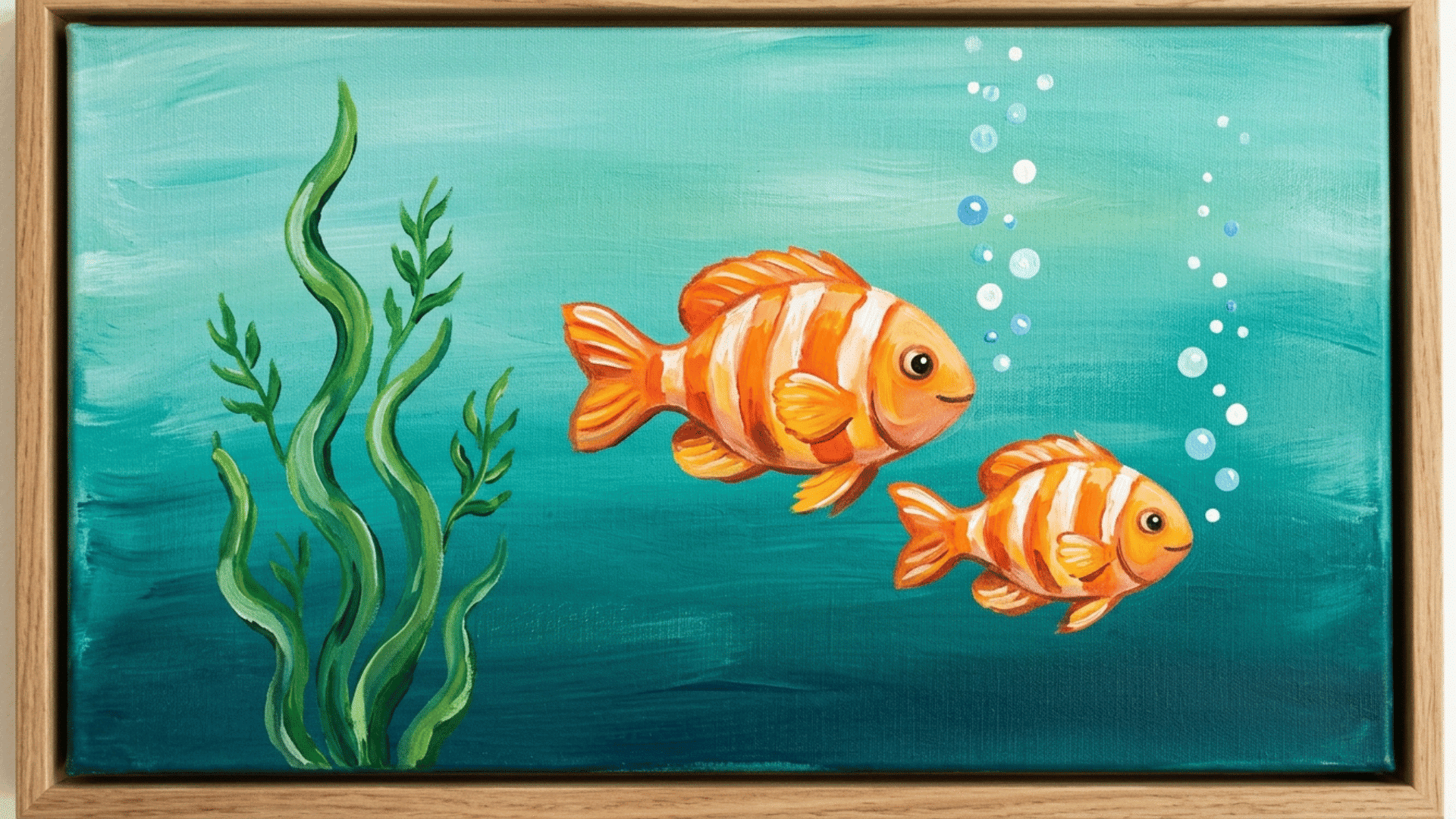
An under-the-sea scene with fish groups, simple rounded fish shapes among wavy seaweed lines. The layered background adds depth without needing realistic water detail.
- Key Features to Focus On: Rounded fish bodies, wavy seaweed shapes, bubble details, layered blue water tones.
- Easy Painting Approach: Paint the water gradient first, add seaweed and coral shapes next, then finish with fish and bubbles on top.
- Color Ideas: Teal and turquoise water with orange, yellow, or striped fish.
- Creative Variations: Scene with a sea turtle, scene with a small octopus, coral reef close-up, scene viewed from below looking up at the surface.
- Final Touches: Add rising bubble trails, a beam of light from above, or small sand details at the bottom.
31. Handprint Tree Keepsake
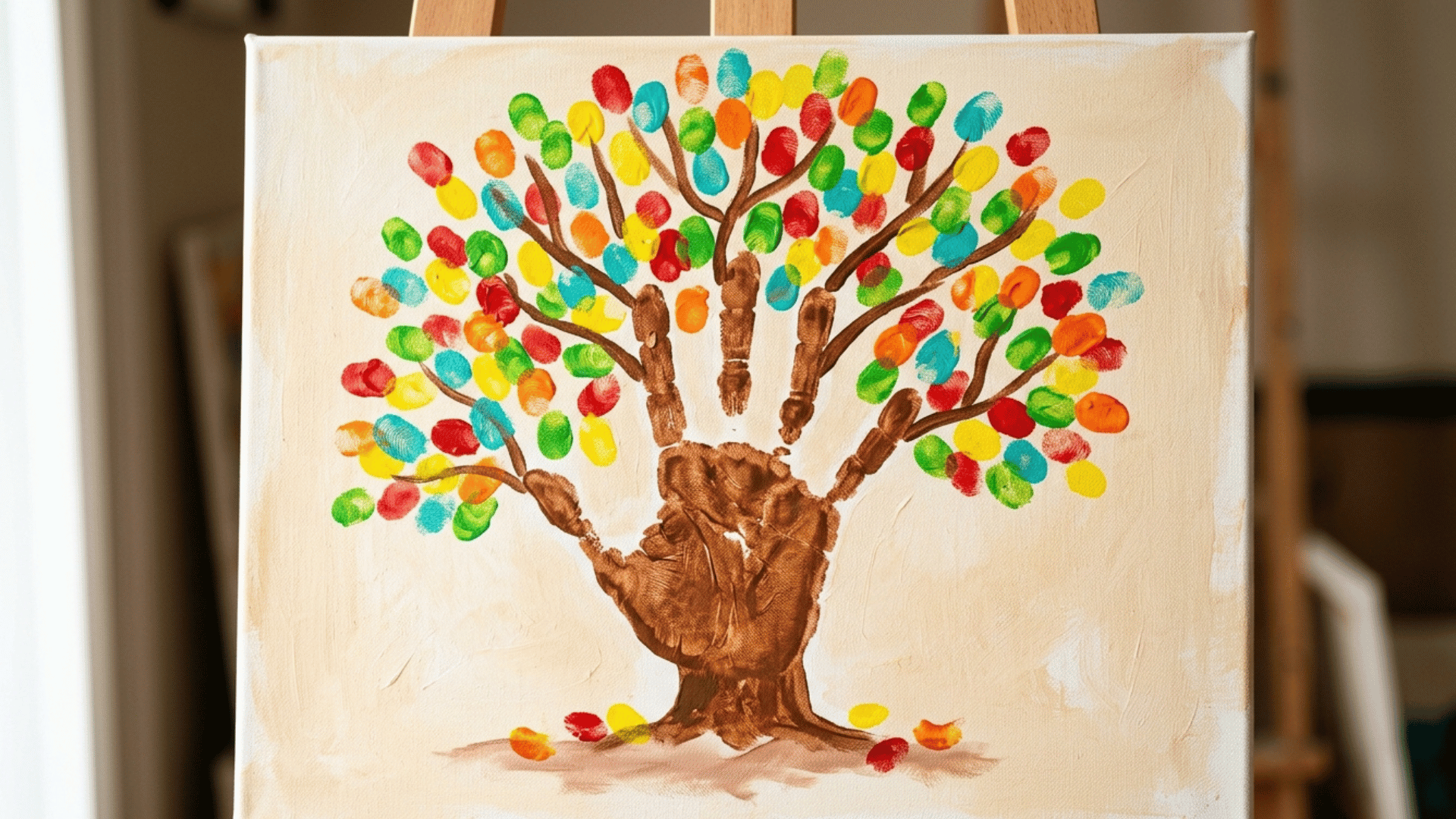
A handprint tree keepsake turns a painted handprint into the trunk and branches of a tree. This makes it a common keepsake project for kids and family painting sessions.
If you are setting this up as part of a broader creative afternoon with children, kids’ creative activities at home have plenty of companion projects that pair well with a simple canvas session.
- Key Features to Focus On: Handprint as the trunk and branches, small fingerprint or dab leaves, simple ground line, plain background.
- Easy Painting Approach: Press a paint-covered hand onto the canvas to form the trunk shape, then dab colored fingerprints or use a sponge for leaves once the print dries.
- Color Ideas: Brown handprint trunk with green, yellow, or multicolor leaf dabs.
- Creative Variations: Seasonal version with autumn-colored leaves, family handprint tree with multiple sizes, handprint tree with birds added, handprint tree on a round canvas.
- Final Touches: Add a date or name at the bottom, small grass details, or a sun in the corner.
In a Nutshell
Picking easy canvas painting ideas beats scrolling through dozens without starting. A single finished piece on your wall will teach you more than ten unfinished sketches ever could.
I recommend starting with a design that uses broad shapes and a limited palette, such as mountain silhouettes, a simple sunset, or geometric color blocks. These options leave room for correction and do not depend on detailed drawing skills.
Pick a color palette you already own and commit to one design tonight. Momentum matters more than perfect technique when you are just starting out.
Save this list of easy canvas painting ideas for your next free evening, then share a photo of your finished piece with a friend who paints too.