

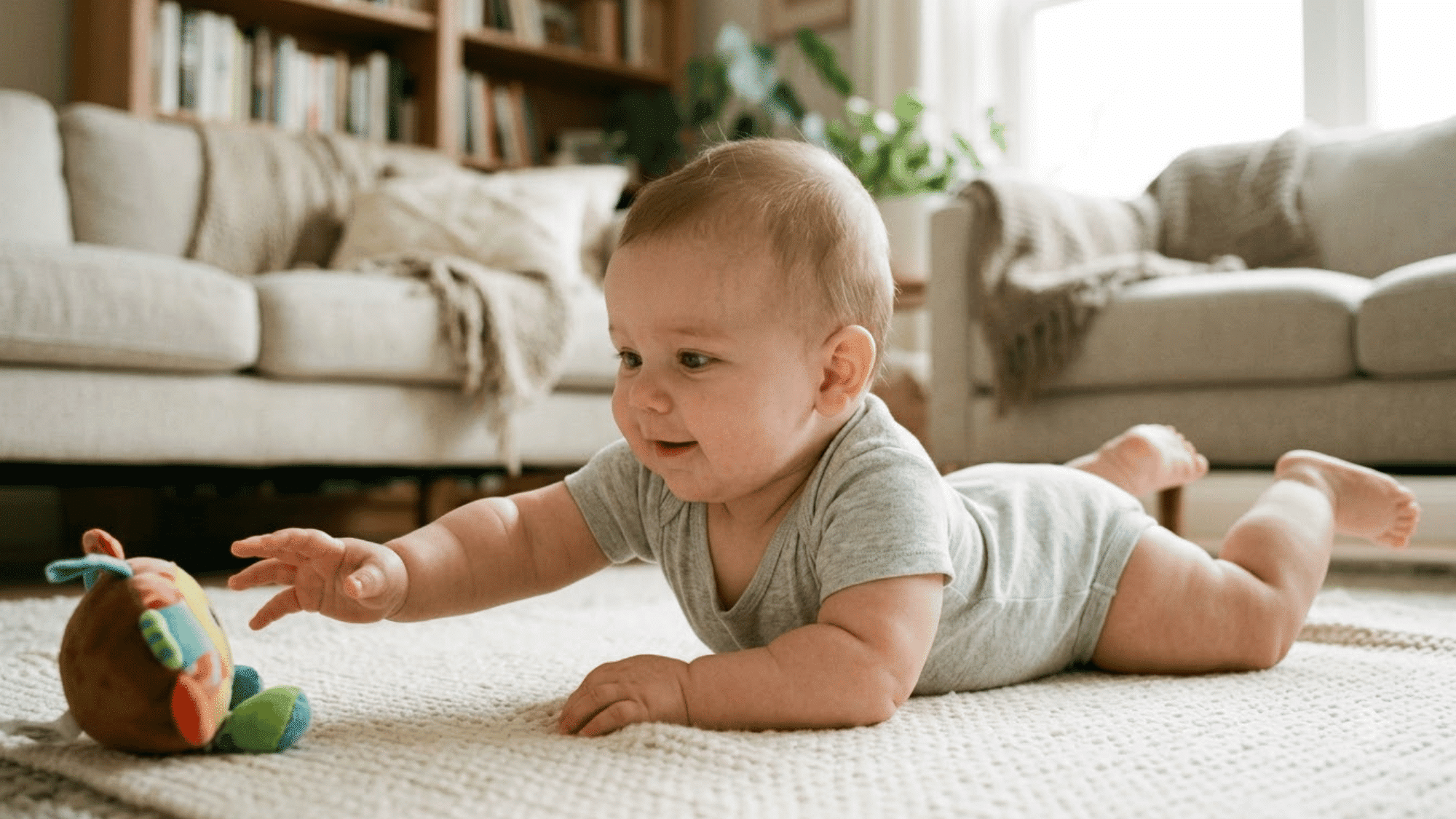
A little wiggle during tummy time or a tiny turn to the side can make parents excited. These small moves are signs that your baby is practicing new skills.
Many parents start noticing these changes during play and wonder when the first roll will happen. Some babies roll quickly, while others need more time to build confidence.
This blog explains when babies start rolling over, the usual age range, ways to support this skill, and real experiences from parents who shared when their babies reached this milestone.
When Do Babies Start Rolling Over?
Most babies start rolling over between 4 and 6 months old. Some babies may roll a little earlier, while others may take longer as they build strength and confidence in movement.
Rolling is one part of early motor development.
Babies usually practice skills such as lifting their heads, pushing up, reaching, and shifting their weight before they can complete a full roll.
The CDC.gov recommends tracking a baby’s overall development rather than focusing on a single skill.
Typical Age Range for Rolling Over
A baby’s first roll may happen in different ways. Some babies roll from their tummy to their back first, while others learn to roll from their back to their tummy.
At 2 to 3 Months
During this stage, babies are usually not rolling fully yet, but they are practicing the movements that help prepare their bodies.
They may lift their head during tummy time, push up with their arms, kick their legs, and turn slightly from side to side as they become more comfortable moving.
Around 4 to 6 Months
This is the age range when many babies begin rolling over, which is why parents often ask when babies start rolling over.
They may start by accidentally tipping from their tummy to their back.
Parents may notice more twisting, reaching for toys, and shifting weight during play. These small movements often come before a baby completes a full roll.
By 6 to 8 Months
By this stage, many babies are working on rolling in both directions and using movement to reach things around them.
Some babies roll across the floor during play, while others may focus more on sitting or reaching skills. Each baby develops these abilities in their own order and at their own pace.
This is also around the time many parents look into starting solid foods, since sitting with support is one of the readiness signs pediatricians look for.
Each baby develops these abilities in their own order and at their own pace.
Why is Rolling Over Considered a Significant Developmental Milestone?
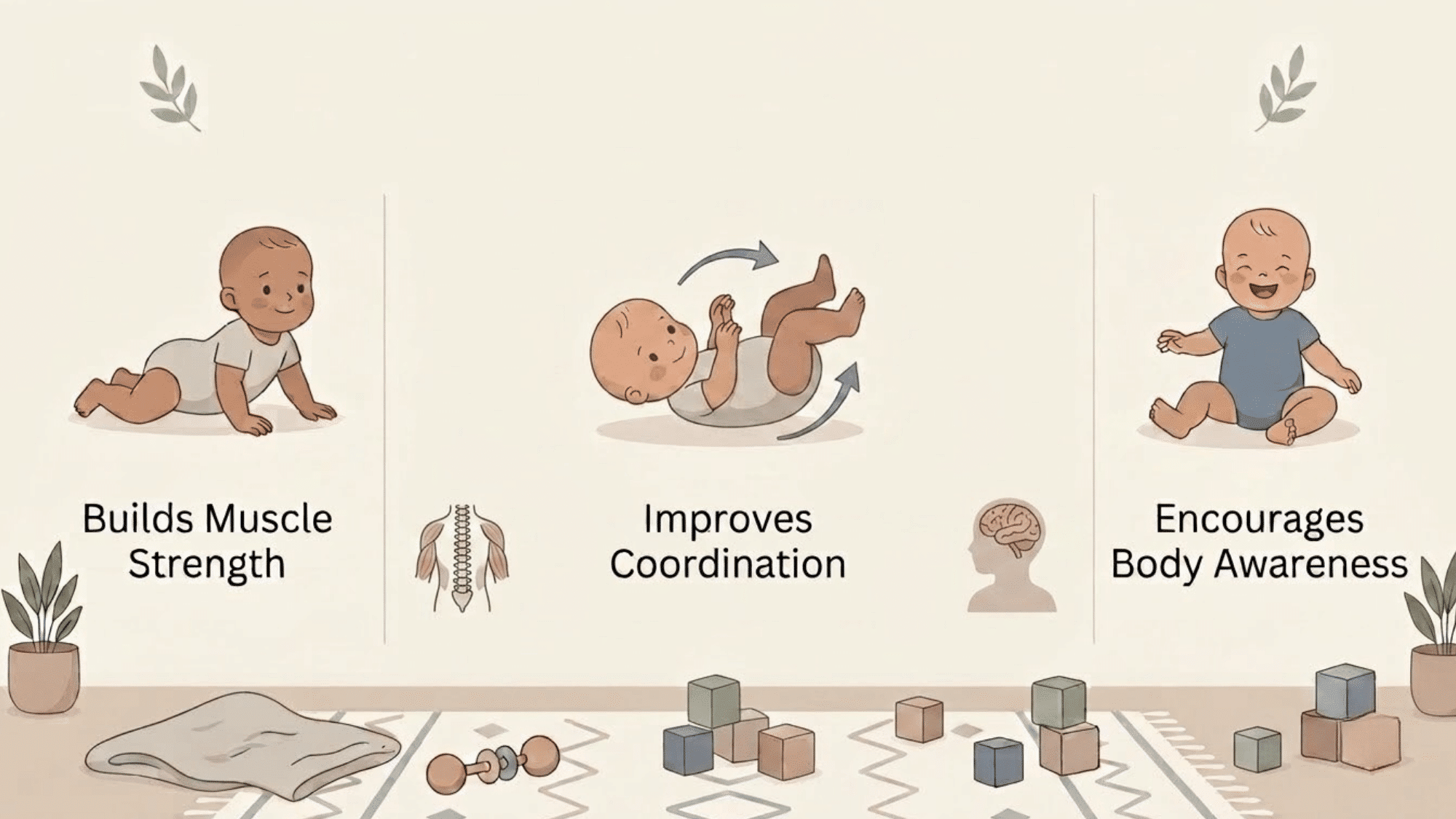
Rolling is an early sign that a baby is learning how to control their body. It gives them practice using different muscles together during movement. This skill also helps babies understand how their body moves.
Builds Muscle Strength
Regular tummy time gives babies a chance to practice lifting their head and pushing against the floor, which supports muscle movements in the neck, shoulders, arms, back, and tummy.
Improves Coordination
A baby needs to move their arms, legs, and body together to roll successfully. These movements help prepare them for later skills like sitting, reaching, and changing positions independently.
Encourages Body Awareness
Babies learn by moving and noticing what happens when they kick, twist, or shift their weight. Rolling helps them understand that their actions can change their position and surroundings.
Around this same window, many babies also get curious about grabbing their feet during floor play, which is another early sign of that same growing body awareness.
Other Skills Babies Often Develop Around the Same Time
Babies usually work on several skills during the months when they begin rolling. A baby may focus on one skill for a while before moving on to another.
| Skill Area | What You May Notice |
|---|---|
| Upper body strength | Pushes up during tummy time, lifts their chest, and holds their head steady |
| Hand movements | Reaches for toys, grabs objects, and brings things closer to explore |
| Body control | Turns, twists, and shifts weight while learning new positions |
| Sitting skills | Sits with support and may start balancing briefly on their own |
How Parents Can Help a Baby Learn to Roll Over
Parents do not need to teach a baby to roll in a specific way. Most babies learn through regular movements and playing. Simple activities can give babies more chances to become comfortable moving their bodies.
- Give Daily Tummy Time: Helps babies practice lifting, pushing, and turning.
- Place Toys Nearby: Encourages babies to look, reach, and shift their weight.
- Allow Free Movement: Loose clothing and safe floor space make movement easier.
- Play on the Floor Together: Babies often try new movements when they feel encouraged.
- Respond to Attempts: Smiling and talking can make practice feel fun.
Tummy Time Exercises That Can Encourage Rolling
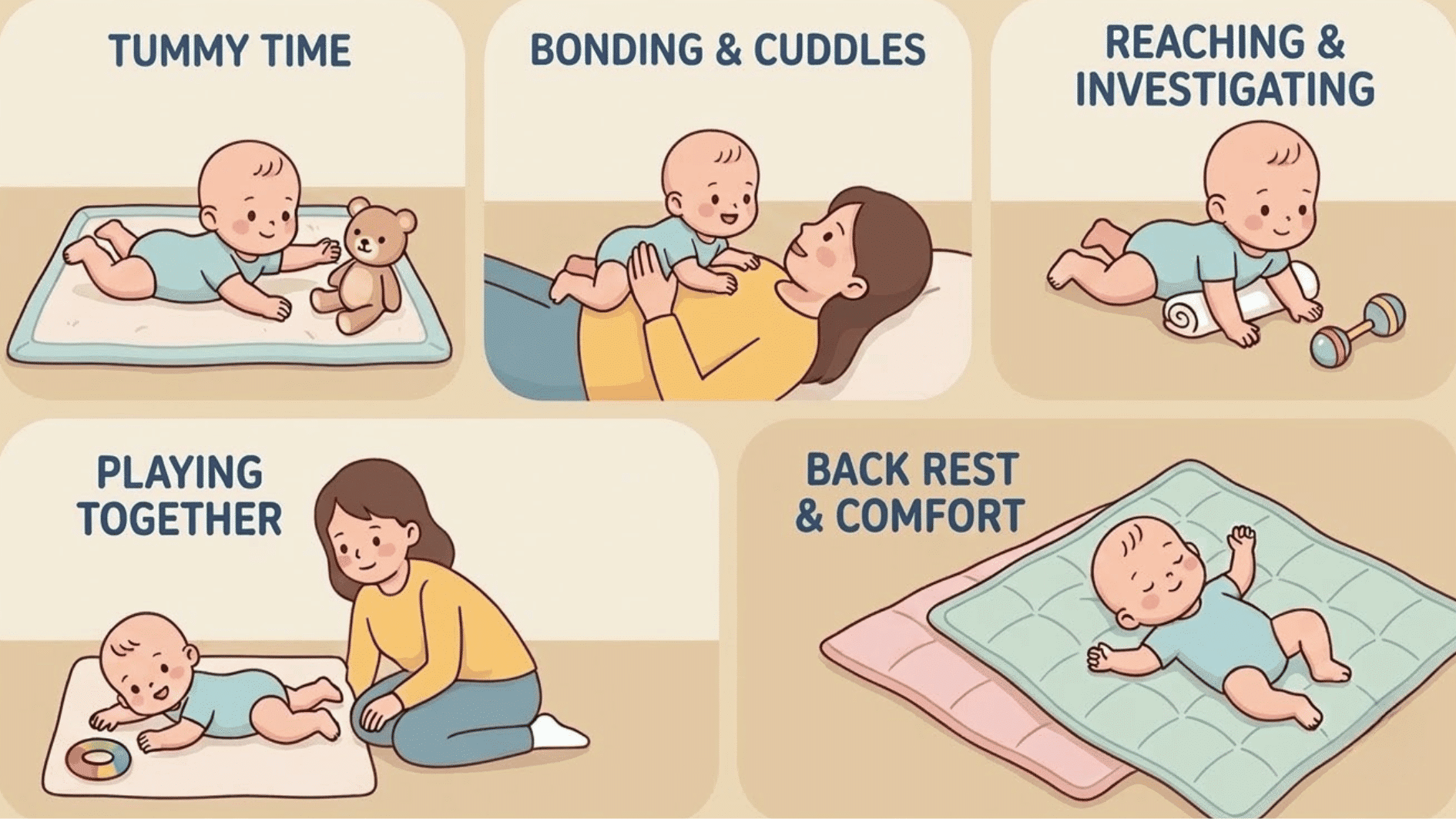
Tummy time gives babies practice using the muscles needed for rolling. It should always happen when the baby is awake and supervised. Short sessions throughout the day can help babies.
1. Placing Toys Slightly to the Side During Tummy Time
Keeping a favorite toy just to one side can encourage your baby to look, reach, and turn their body. This simple activity helps them practice shifting their weight and moving toward something they find interesting.
As your baby reaches across their body, they learn how to use their arms and shoulders together. These movements are similar to the ones needed for rolling.
2. Trying Chest-to-Chest Tummy Time
Lying your baby on your chest during supervised tummy time can help them practice lifting their head and pushing up. Many babies enjoy this position because they can see and interact with a parent.
This activity supports upper body strength while also making tummy time feel more comfortable. It can be a helpful option for babies who do not enjoy lying on the floor at first.
3. Using a Rolled Towel for Support
A small rolled towel placed under your baby’s chest can give gentle support while they practice pushing up. This position may help them lift their upper body and move their arms more freely.
As your baby gets stronger, they may start reaching, turning, and shifting their weight more easily during play.
4. Practicing Side-Lying Play
Side-lying play gives babies a chance to experience a different position and practice moving their bodies. Place a toy nearby and let your baby look toward it or reach for it while you stay nearby.
This position can help babies learn how to shift their weight from one side to another, which is an important part of learning to roll.
5. Allowing Comfortable Movement After Swaddling
Swaddling can help younger babies feel calm and secure, but babies need more freedom to move as they begin practicing skills like rolling.
Once your baby shows signs of trying to roll, such as twisting or turning, it may be time to discuss stopping swaddling. You can also learn more about when to stop swaddling as your baby grows.
Signs Your Baby May Be Ready to Roll Over
Before a baby completes their first roll, they often show small signs that their body is getting ready. These movements may appear during floor play, tummy time, or when they are reaching for toys.
- Lifts legs during play: Brings feet upward while lying on their back.
- Turns toward one side: Starts shifting weight and twisting their body.
- Pushes up during tummy time: Uses arms and shoulders to lift their chest.
- Reaches for nearby toys: Moves their body while trying to grab objects.
- Shows stronger head control: Keeps their head steady during movement.
- Moves arms and legs together: Practices using both sides of the body.
- Enjoys floor play: Spends time stretching, kicking, and changing positions.
What if My Baby Is Not Rolling Over Yet?
A baby who is not rolling yet may still be developing other skills. Some babies spend more time practicing reaching, sitting, or pushing up before they begin rolling.
If you are searching for an answer to when do babies start rolling over after watching another child’s growth, remember that the timing alone does not always show the full picture of a baby’s development.
However, you should consider talking to a pediatrician if your baby shows very little movement during play, loses a skill they previously had, or you have concerns about their overall development.
Wrapping it Up
Seeing your baby learn new ways to move can be a special part of the early months. Learning when babies start rolling over can help you enjoy these changes with more confidence.
Try to enjoy these small moments without comparing your baby’s progress with others.
Babies grow at their own pace, and everyday play, comfort, and connection all help them feel ready for new skills.
The first roll is just one of many exciting changes. You must monitor your baby’s overall progress to feel more confident as your baby continues to learn and grow.
Frequently Asked Questions
Do Babies Roll Before They Sit Up?
Many babies roll before sitting independently, but the order can differ. Some babies focus on sitting skills first and spend less time rolling.
Should I Help My Baby Roll Over?
You can encourage movement with tummy time and play, but babies usually learn to roll through their own practice.
Is It Normal for a Baby to Roll Only One Way?
Yes. Many babies learn to roll in one direction first and need more time before they can roll both ways.