

Taco night can come together quickly until you reach for the seasoning packet and realize there isn’t one left. That little kitchen moment might make you wonder what actually goes into the mix.
Making DIY taco seasoning is one of those ideas that sounds like extra effort at first. But once you try it, you may find yourself looking at those familiar spice jars a little differently.
I like knowing I can mix a batch whenever I need it without complicating family dinner plans. If you’re curious about what goes into homemade taco seasoning and how it all comes together, you’re in the right place.
What Is DIY Taco Seasoning?
DIY taco seasoning is a homemade blend of dried spices and seasonings used to add classic taco flavor to meat, beans, vegetables, and other easy dinner fillings. It takes the place of a packaged seasoning mix.
The blend usually combines several pantry spices that work together to create a warm, savory flavor with a little heat. The exact taste can change depending on the ingredients and amounts you use.
Making the mixture at home also means you know exactly what is going into your food. I find it especially handy when a recipe needs more or less seasoning than a standard packet provides.
Ingredients You Need for Making Taco Seasoning
|
Ingredient |
Amount |
What It Adds |
|---|---|---|
|
Chili powder |
1 tbsp |
Warm chili flavor |
|
Ground cumin |
1 tsp |
Earthy slightly nutty taste |
|
Paprika |
1 tsp |
Mild pepper flavor and color |
|
Garlic powder |
½ tsp |
Savory garlic flavor |
|
Onion powder |
½ tsp |
Mild savory depth |
|
Dried oregano |
½ tsp |
Light herbal note |
|
Salt |
½ tsp |
Balances the other spices |
|
Black pepper |
¼ tsp |
Gentle peppery bite |
|
Cayenne pepper |
¼ tsp |
Extra heat |
Let’s Make DIY Taco Seasoning In a Few Simple Steps
A good batch comes together quickly when each stage is handled in the right order. The process is simple, but a few small details make the final mix easier to use and more consistent. The steps below take you from the first measure to a finished jar:
Step 1: Measure All the Spices
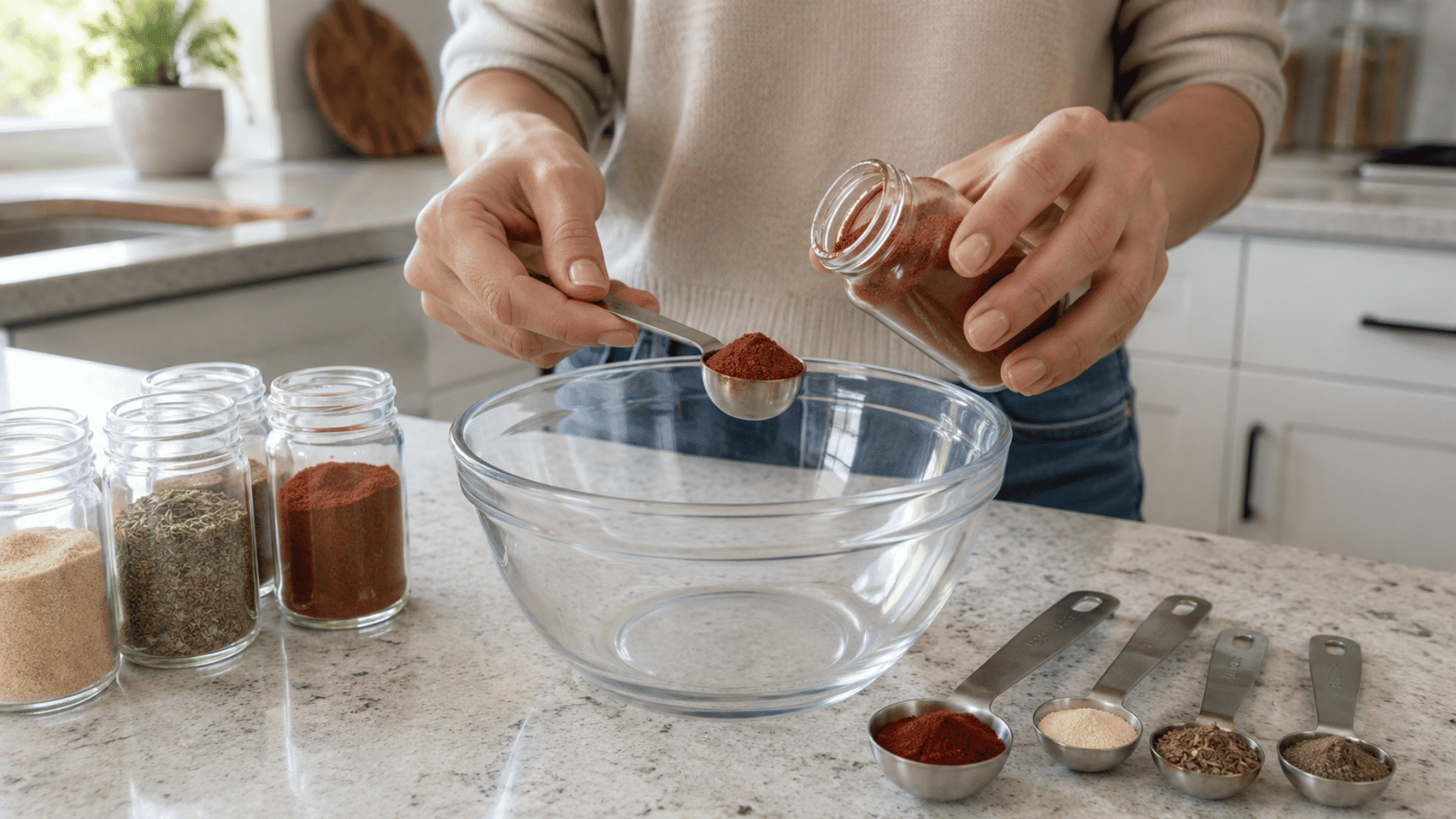
Accuracy matters most at the beginning. Small differences can shift the balance of the final blend, especially with stronger ingredients. Use these quick checks as you portion everything out:
- Follow the recipe amounts: Measure each ingredient exactly as listed.
- Level each spoon: Remove any excess before adding it to the bowl.
- Use dry tools: Keep bowls and measuring spoons free from moisture.
- Add everything together: Place all measured ingredients in one mixing bowl.
- Keep powders loose: Break up any firm bits before moving on.
Tip: I like to measure cayenne carefully because even a small amount can bring noticeable heat. You can always add another pinch later if you want more.
Step 2: Mix Everything Thoroughly
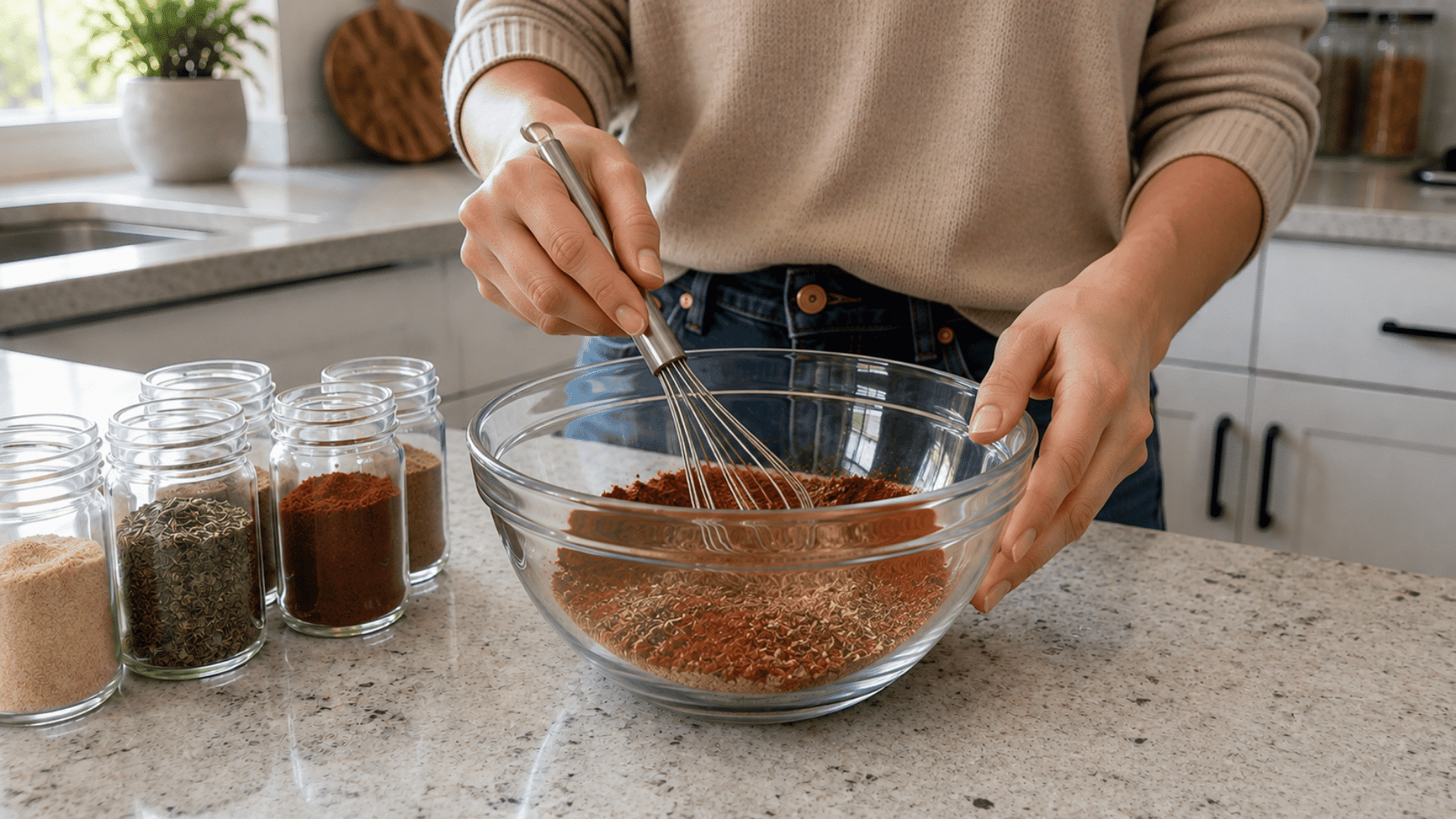
This stage is all about even distribution. A few extra turns make a noticeable difference and help prevent one scoop from tasting stronger than the next.
- Stir from every direction: Move across the center, sides, and bottom.
- Break up clumps: Press any small lumps apart with the spoon.
- Watch the color: Keep going until the blend looks consistent throughout.
- Check the bottom: Make sure finer particles are not collecting underneath.
- Give it extra turns: Finish with several more stirs once it looks combined.
Step 3: Check and Adjust the Seasoning
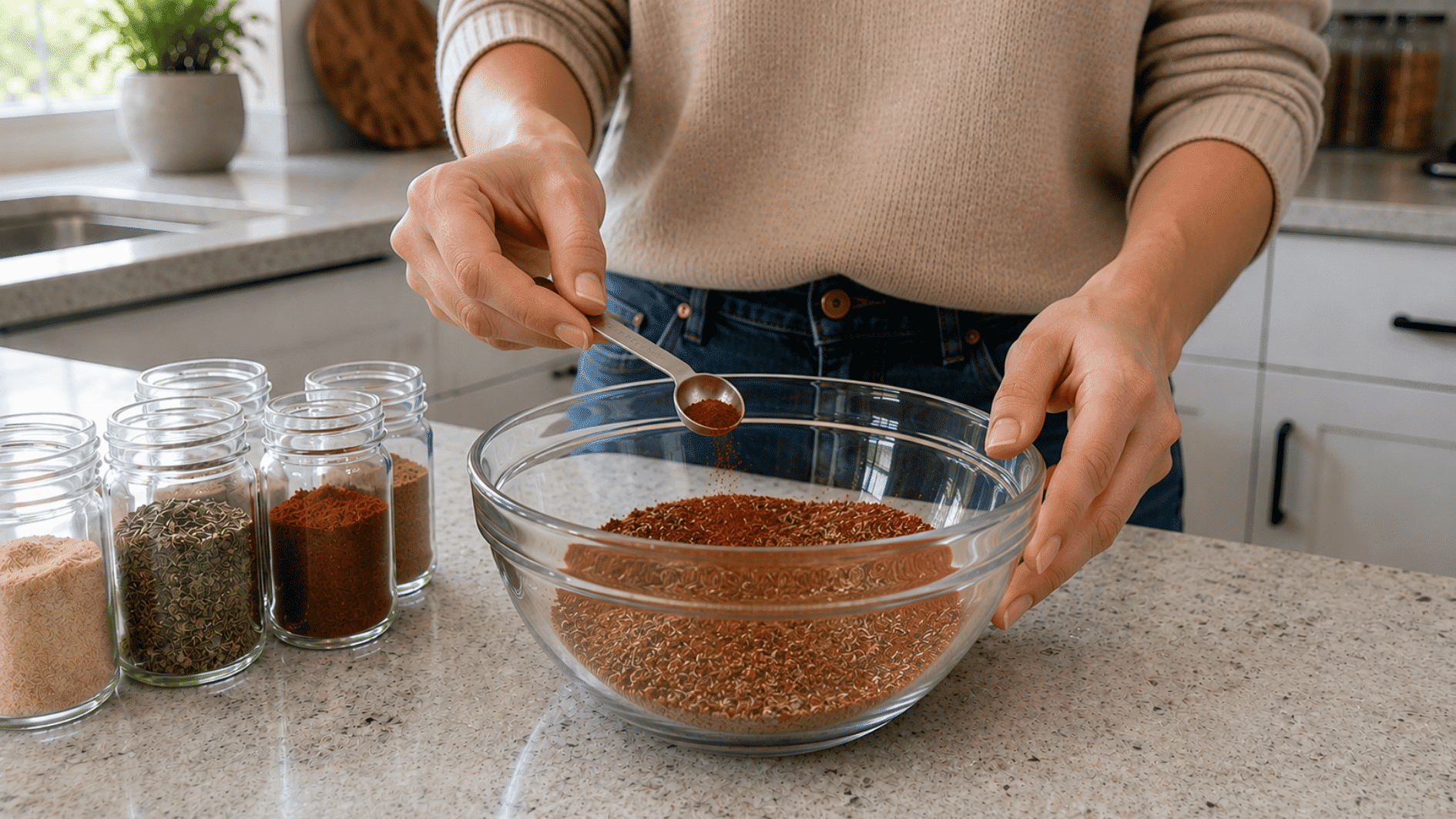
Now is the best point to fine-tune the batch. Any uneven areas are easier to correct before the mixture goes into storage. Make small changes rather than adding too much at once:
- Scan the blend: Look for lighter or darker patches.
- Stir again if needed: Redistribute anything that looks uneven.
- Adjust heat slowly: Add cayenne in tiny amounts.
- Mix after each change: Spread every addition through the full batch.
- Test before committing: Sample a small amount in cooked filling first.
Tip: I prefer testing a small amount in cooked taco filling before changing the whole batch. It gives you a much clearer idea of how the seasoning will actually taste.
Step 4: Transfer It to a Container
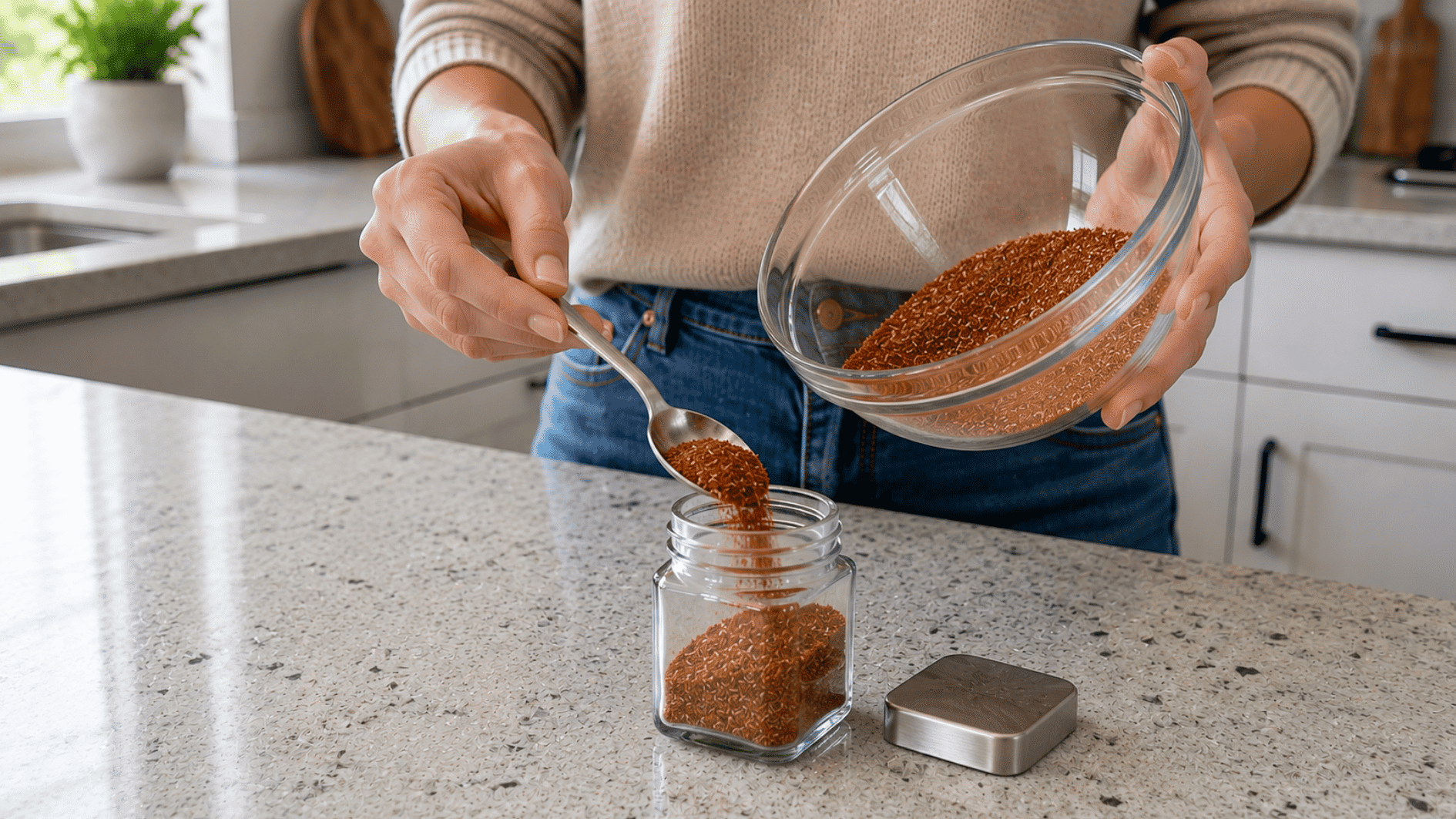
Once the blend is finished, storage becomes the priority. Keeping it sealed and protected helps the texture stay easy to scoop later.
- Choose a clean jar: Make sure the container is fully dry.
- Use an airtight lid: Seal the mixture to keep out air and humidity.
- Transfer carefully: Spoon it in or use a small funnel.
- Clean the rim: Wipe away any residue before closing.
- Seal it firmly: Keep the lid shut between uses.
- Label the jar: Add the preparation date for easy tracking.
- Use as needed: Scoop it into meat, beans, vegetables, or other taco fillings.
Taco Seasoning Amounts for Different Fillings
The amount of taco seasoning you need can change depending on what you are cooking. Use these amounts as a starting point, then adjust them to match the flavor you prefer:
|
Filling |
Taco Seasoning |
Water to Add |
|---|---|---|
|
1 lb ground beef |
2–3 tbsp |
½ cup |
|
1 lb ground turkey |
2–3 tbsp |
½ cup |
|
1 lb chicken |
2–3 tbsp |
⅓–½ cup |
|
1 lb cooked beans |
1½–2 tbsp |
¼ cup |
|
1 lb vegetables |
1–2 tbsp |
1–2 tbsp |
|
2 cups cooked rice |
1–1½ tbsp |
1–2 tbsp |
Tip: I suggest starting with the smaller amount of seasoning and tasting as you cook. It’s much easier to add another sprinkle than balance an overly seasoned filling.
Does DIY Taco Seasoning Need a Thickener?
No, DIY taco seasoning does not need a thickener to season taco fillings. The spices can be added directly during cooking, although some packaged mixes include starches or other ingredients that help create a thicker sauce.
- Without a thickener: The seasoning coats meat, beans, or vegetables as the added liquid cooks down.
- With cornstarch: A small amount can create a thicker, more sauce-like coating.
- For ground meat: Simmering the seasoned mixture usually reduces enough liquid naturally.
- For saucier tacos: Cornstarch can be added if you specifically want a thicker consistency.
- For dry seasoning: Skip the thickener when using the blend as a dry rub or sprinkle.
- For storage: Keep the thickener separate and add it only when a recipe calls for it.
Homemade Taco Seasoning vs. Store-Bought Packets
|
Factor |
Homemade Taco Seasoning |
Store-Bought Packets |
|---|---|---|
|
Ingredients |
Made from spices you choose |
Varies by brand and product |
|
Salt level |
Easy to adjust yourself |
Already set in the mix |
|
Heat level |
Can be made mild or spicy |
Depends on the packet |
|
Flavor |
Easy to change to your taste |
Consistent with each packet |
|
Amount |
Use only what your meal needs |
Comes in a set quantity |
|
Convenience |
Requires measuring and mixing |
Ready to open and use |
|
Batch size |
Easy to double or triple |
Usually portioned per packet |
Best Way to Store Homemade Taco Seasoning
Store homemade taco seasoning in a clean, dry, airtight container with a tightly fitted lid. A small glass spice jar works well because it keeps the mixture contained and makes it easy to scoop out what you need.
Keep the container in a cool, dry, dark place, such as a pantry or kitchen cabinet. Avoid storing it near the stove, sink, or other areas where heat, steam, and moisture can reach the spices.
For the best flavor, use your DIY taco seasoning within about 6 months. I suggest labeling the jar with the date so you know when it was made and can replace it once the aroma and flavor start fading.
It’s a Wrap
Empty seasoning packet, taco night hanging by a thread, and I did what any reasonable person does: stared into the spice cabinet as it owed me answers.
Turns out it did. No emergency grocery run, sad plain tacos, just a little digging and a lot of shaking spices into a bowl until it smelled right.
Frequently Asked Questions
Can I Make DIY Taco Seasoning without Salt?
Yes. You can leave out the salt completely and season the finished dish separately according to your taste.
Does Taco Seasoning Need Cornstarch?
No. Cornstarch is not required, though some recipes use it to help create a thicker sauce around the taco filling.
Can I Double or Triple a DIY Taco Seasoning Recipe?
Yes. Simply multiply every ingredient by the same amount to keep the spice proportions consistent across a larger batch.
Can I Use Smoked Paprika Instead of Regular Paprika?
Yes. Smoked paprika works well, but it will give your taco seasoning a noticeably smokier flavor than regular paprika.
Can I Use Taco Seasoning for More than Tacos?
Yes. Try it with nachos, quesadillas, soups, roasted potatoes, taco bowls, or seasoned rice for an easy flavor boost.