
Caught yourself staring at your toddler’s plate, wondering where the fiber even fits in?
I used to focus so much on protein and calcium that fiber barely crossed my mind. But it plays a bigger role than most parents realize, especially for comfortable, regular digestion.
So what really counts as high-fiber foods for toddlers, and how much is actually enough? That’s exactly what I’m breaking down next.
What Counts As a High-Fiber Food for Toddlers?
A high-fiber food for toddlers provides a meaningful amount of fiber in a small, age-appropriate serving.
Since toddlers ages 1 to 3 need about 19 grams of fiber each day, foods that provide around 3 grams or more per serving can contribute a useful share of that total.
The FDA defines a food as “high,” “rich in,” or an “excellent source” of a nutrient when it provides 20% or more of the Daily Value per serving.
Portion size matters because toddlers usually eat less than adults. A food may be considered fiber-rich even when the serving looks small.
It is also better to spread fiber intake across the day instead of offering a large amount at once. Increase fiber gradually and pair it with enough fluids.
Fiber-Rich Foods You Should Add to Your Toddler’s Meals
Getting enough fiber into a little one’s diet sounds harder than it is. Most parents already have the right ingredients sitting in their pantry or fridge. Below is a breakdown by food group, with easy ways to serve each one safely:
1. Fruits with Fiber
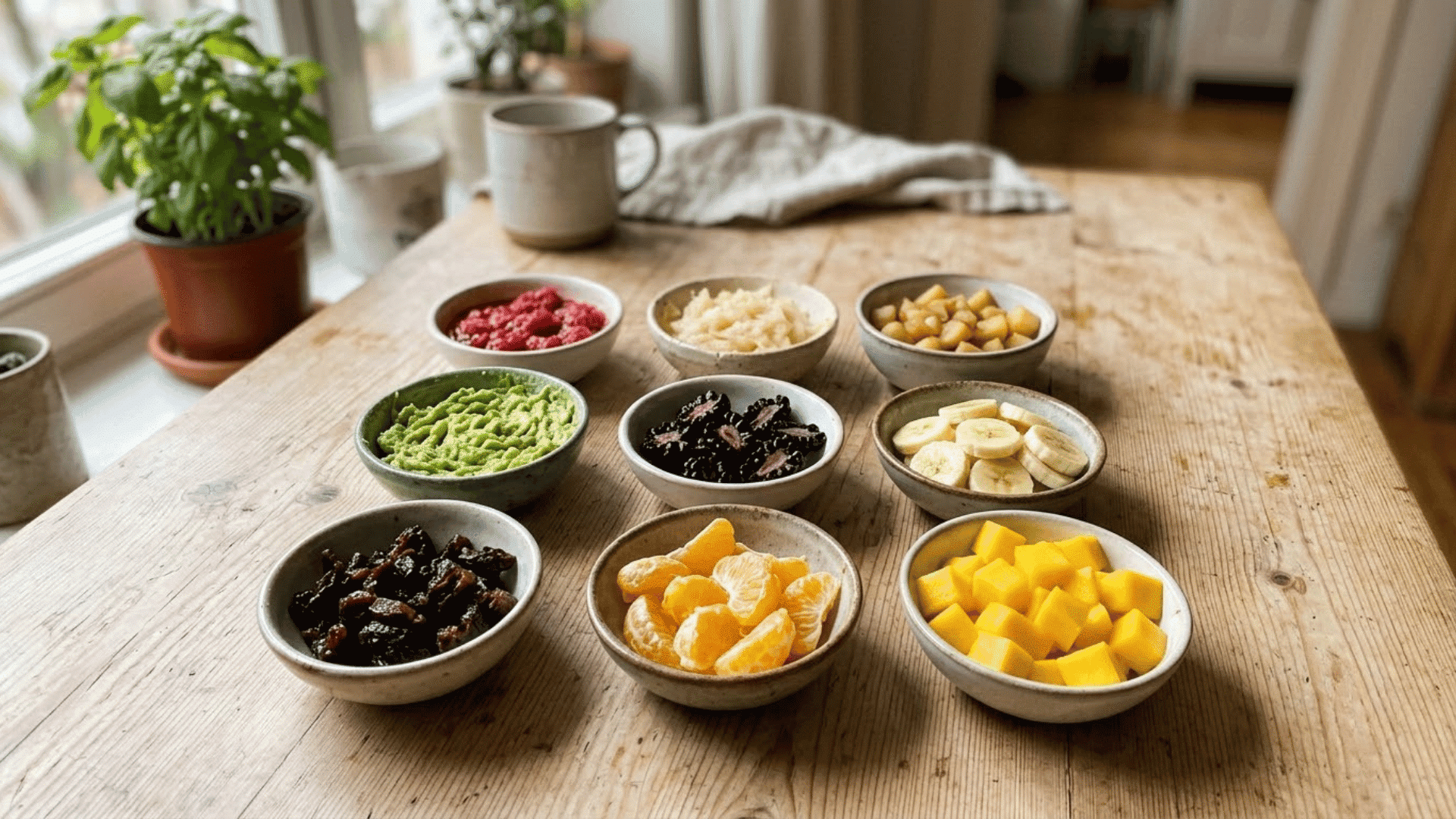
Sweet, colorful, and naturally appealing, fruit is often the easiest sell with picky eaters. It also doubles as one of the gentlest ways to boost daily fiber. Take a look at which options pack the most punch per bite:
|
Food |
Toddler Serving |
Approximate Fiber |
Safe Serving Idea |
|---|---|---|---|
|
Raspberries |
¼ cup |
~2 g |
Serve fresh or lightly mashed |
|
Pear |
¼ medium |
~1.5 g |
Grate raw or steam until soft |
|
Apple |
¼ medium |
~1 g |
Steam or grate; peel if needed |
|
Avocado |
2 tbsp |
~1.5 g |
Mash onto toast or stir into puree |
|
Blackberries |
¼ cup |
~1.8 g |
Halve or mash; serve fresh |
|
Banana |
½ small |
~1.5 g |
Slice thin or mash |
|
Prunes |
1 to 2 prunes |
~1 g |
Chop finely or puree before serving |
|
Orange |
2 to 3 segments |
~0.7 g |
Remove membrane; serve soft segments |
|
Mango |
2 tbsp diced |
~0.5 g |
Dice small or blend into puree |
2. Fiber-Rich Vegetables
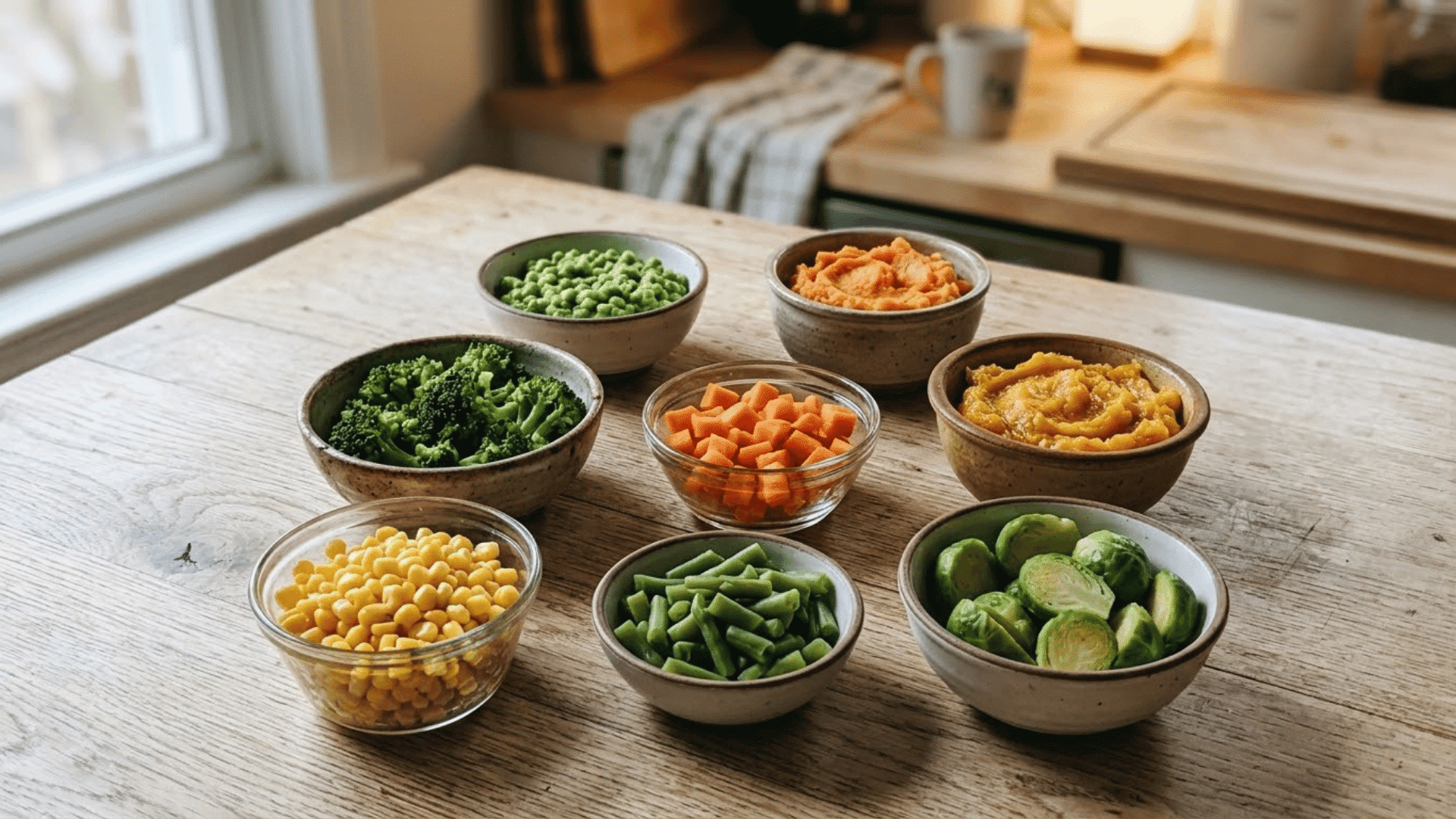
Vegetables sometimes need a little more coaxing than fruit, but texture makes all the difference. Soft, warm, and mild often wins over toddlers who reject raw or crunchy pieces.
|
Food |
Toddler Serving |
Approximate Fiber |
Safe Serving Idea |
|---|---|---|---|
|
Green peas |
2 tbsp |
~1.5 g |
Lightly mash or serve whole if fully soft |
|
Sweet potato |
2 tbsp mashed |
~1 g |
Bake and mash; season plainly |
|
Broccoli |
2 to 3 small florets |
~0.7 g |
Steam until very soft; chop small |
|
Carrots |
2 tbsp cooked |
~0.9 g |
Cook until fork-tender; dice small |
|
Winter squash |
2 tbsp mashed |
~1 g |
Roast and mash or cube when soft |
|
Corn |
2 tbsp |
~0.6 g |
Serve cooked kernels off the cob |
|
Green beans |
2 to 3 pieces |
~0.5 g |
Cook soft; cut into small pieces |
|
Brussels sprouts |
1 to 2 sprouts |
~1 g |
Steam until soft; halve or mash |
3. Beans and Lentils
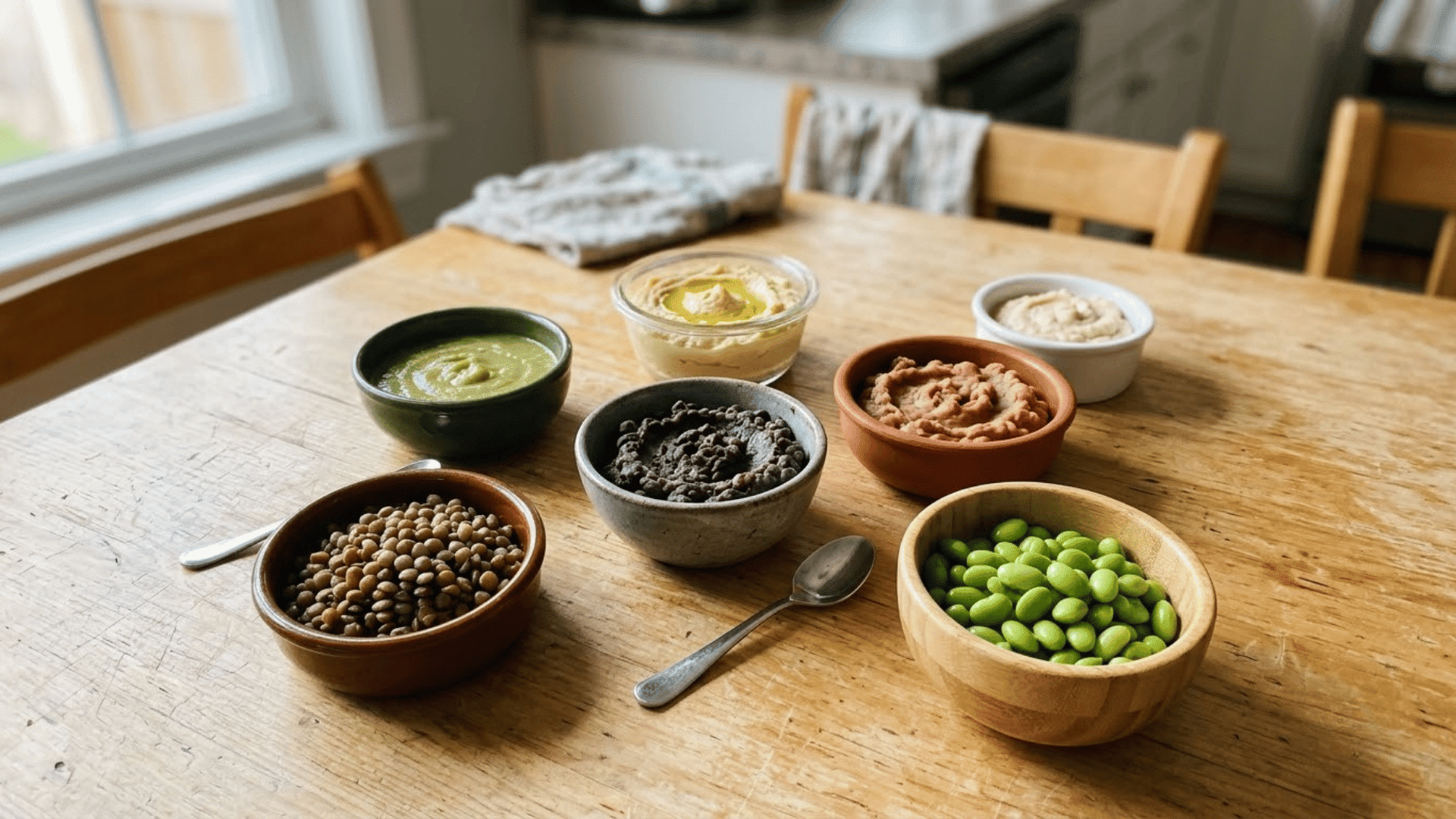
Small and often overlooked, this food group quietly does a lot of heavy lifting on the nutrition front. Beyond fiber, there’s protein and iron riding along for the ride.
|
Food |
Toddler Serving |
Approximate Fiber |
Safe Serving Idea |
|---|---|---|---|
|
Lentils |
2 tbsp cooked |
~2 g |
Stir into soup, rice, or pasta sauce |
|
Black beans |
2 tbsp cooked |
~1.9 g |
Mash lightly or blend into dips |
|
Chickpeas |
2 tbsp cooked |
~1.6 g |
Mash well or blend into hummus |
|
Pinto beans |
2 tbsp cooked |
~1.9 g |
Mash and serve with soft tortilla |
|
White beans |
2 tbsp cooked |
~1.4 g |
Blend into soups or pasta sauces |
|
Split peas |
2 tbsp cooked |
~2 g |
Puree into soup or mix with grains |
|
Edamame |
2 tbsp shelled |
~1.5 g |
Shell, cook fully soft, serve whole |
4. Whole Grains and Cereals
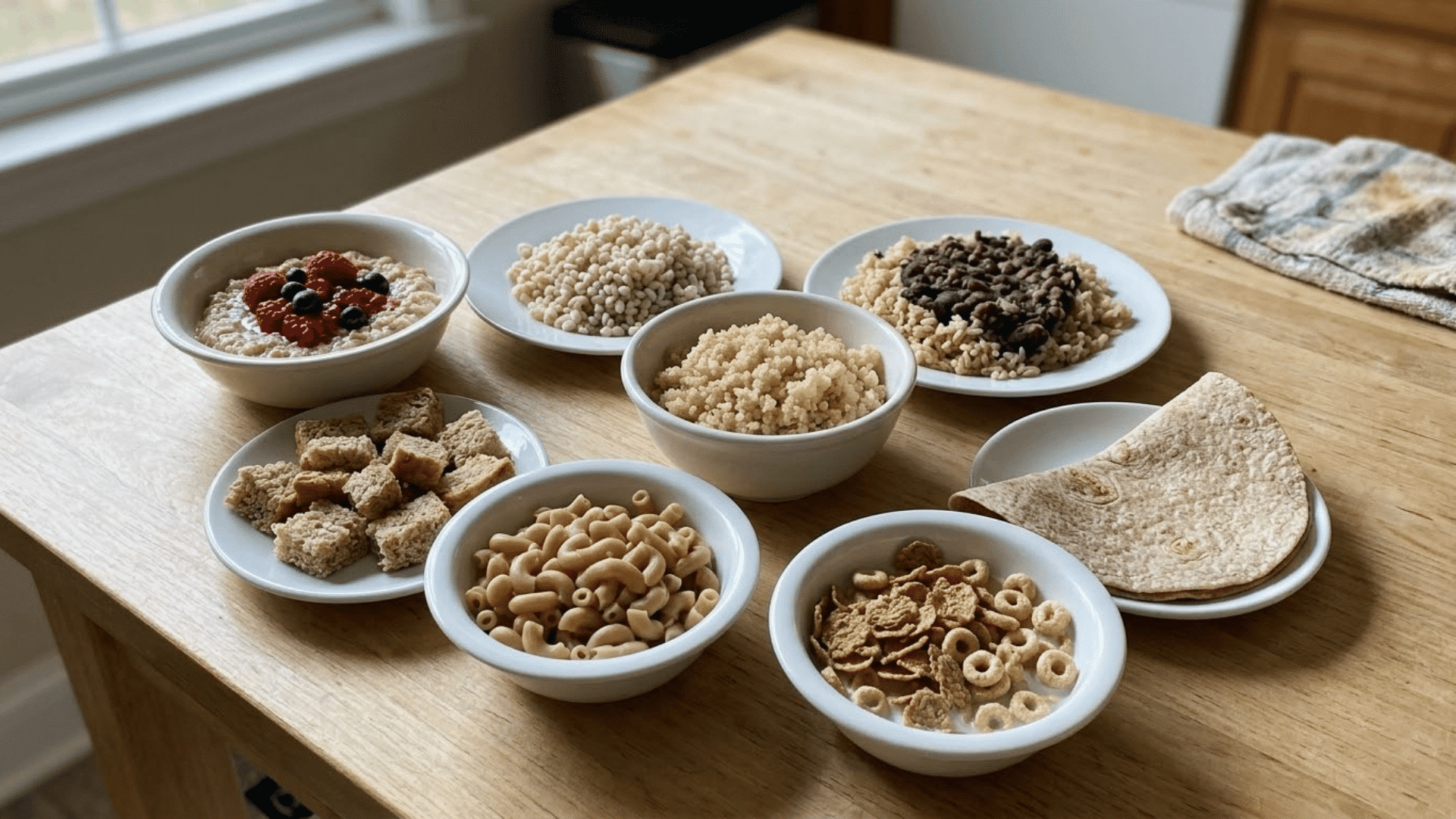
Breakfast and lunch options for kids already lean on grains, so this is a low-effort place to build fiber into a routine. Some options carry more weight than others.
|
Food |
Toddler Serving |
Approximate Fiber |
Safe Serving Idea |
|---|---|---|---|
|
Oatmeal |
¼ cup cooked |
~1 g |
Cook soft; mix in mashed fruit |
|
Barley |
2 tbsp cooked |
~1.5 g |
Add to soup or serve with vegetables |
|
Quinoa |
2 tbsp cooked |
~0.7 g |
Mix with soft vegetables or puree |
|
Brown rice |
2 tbsp cooked |
~0.4 g |
Pair with beans to boost fiber |
|
Whole-wheat pasta |
2 tbsp cooked |
~0.9 g |
Cook very soft; toss with mild sauce |
|
Whole-grain bread |
½ slice |
~1 g |
Serve soft; cut into small pieces |
|
Whole-grain tortilla |
¼ tortilla |
~0.8 g |
Tear into small soft pieces |
|
Lower-sugar fortified cereal |
2 tbsp dry |
~1 to 2 g |
Check label; soften with milk |
5. Nuts, Seeds, and Safe Fiber Add-Ins
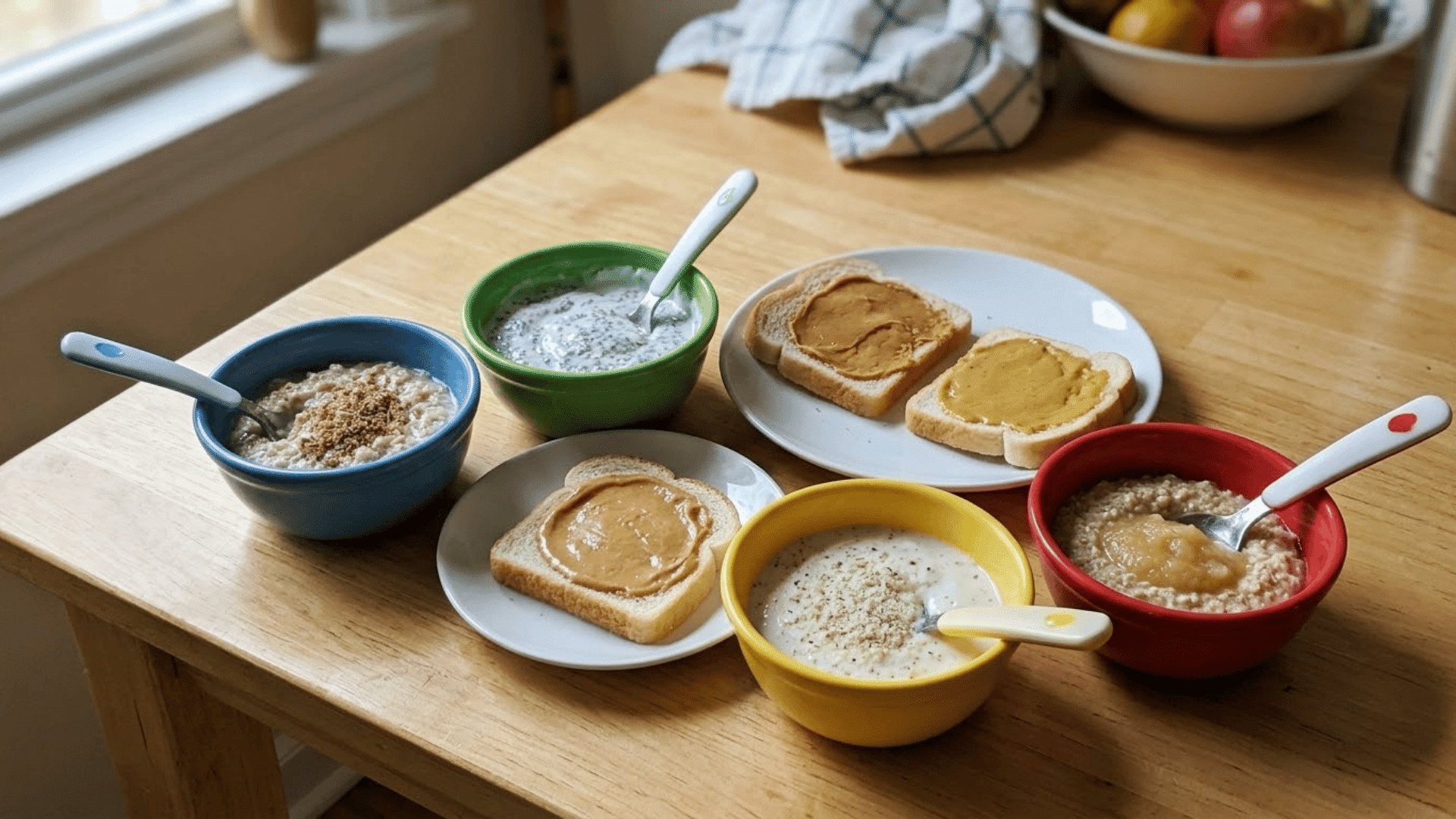
A small spoonful can shift a meal’s nutrition without changing how it tastes. These add-ins work quietly in the background rather than as standalone dishes. Check the safe amounts and mix-in ideas listed here:
|
Food |
Toddler Serving |
Approximate Fiber |
Safe Serving Idea |
|---|---|---|---|
|
Ground flaxseed |
1 tsp |
~0.9 g |
Stir into oatmeal, yogurt, or puree |
|
Chia seeds (soaked) |
1 tsp soaked |
~1.9 g |
Mix with liquid first; add to puree |
|
Smooth nut butter |
1 to 2 tsp |
~0.5 g |
Thin with water; spread on toast |
|
Smooth seed butter |
1 to 2 tsp |
~0.5 g |
Spread thinly on soft bread |
|
Finely ground nuts |
1 tsp |
~0.3 g |
Mix into oatmeal or yogurt |
|
Oat bran |
1 tbsp |
~1.5 g |
Stir into porridge or baked goods |
Note : Fiber values are approximate. Amounts vary by brand and preparation.
Fiber Snacks for Toddlers for Balanced Daily Eating
Snack time is one of the simplest opportunities to add fiber to a toddler’s day. The best fiber snacks for toddlers combine a fiber-containing food with protein or fat while remaining soft and easy to chew. Each idea below uses common ingredients and requires minimal prep:
1. Mashed Avocado on Whole-Grain Toast Strips
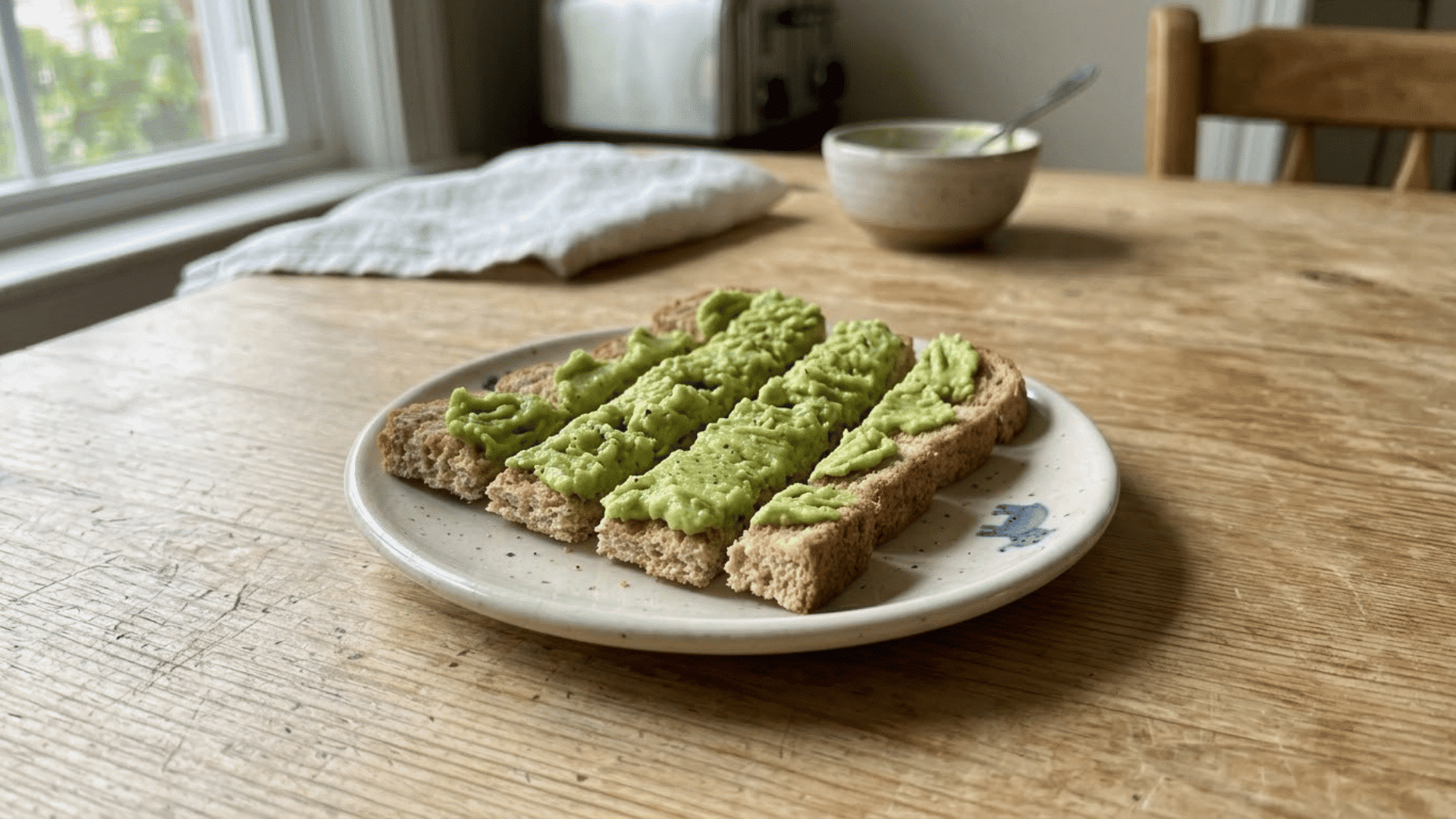
Avocado provides healthy fat alongside fiber, which helps keep toddlers satisfied between meals. Whole-grain toast adds a second fiber source in one simple snack.
Ingredients: ¼ ripe avocado, ½ slice whole-grain bread
Approximate fiber: ~2.5 gSteps to Prepare:
- Toast bread until just firm, not hard
- Mash avocado with a fork until smooth
- Spread evenly over the toast
- Cut into thin strips before serving
2. Oatmeal with Mashed Raspberries
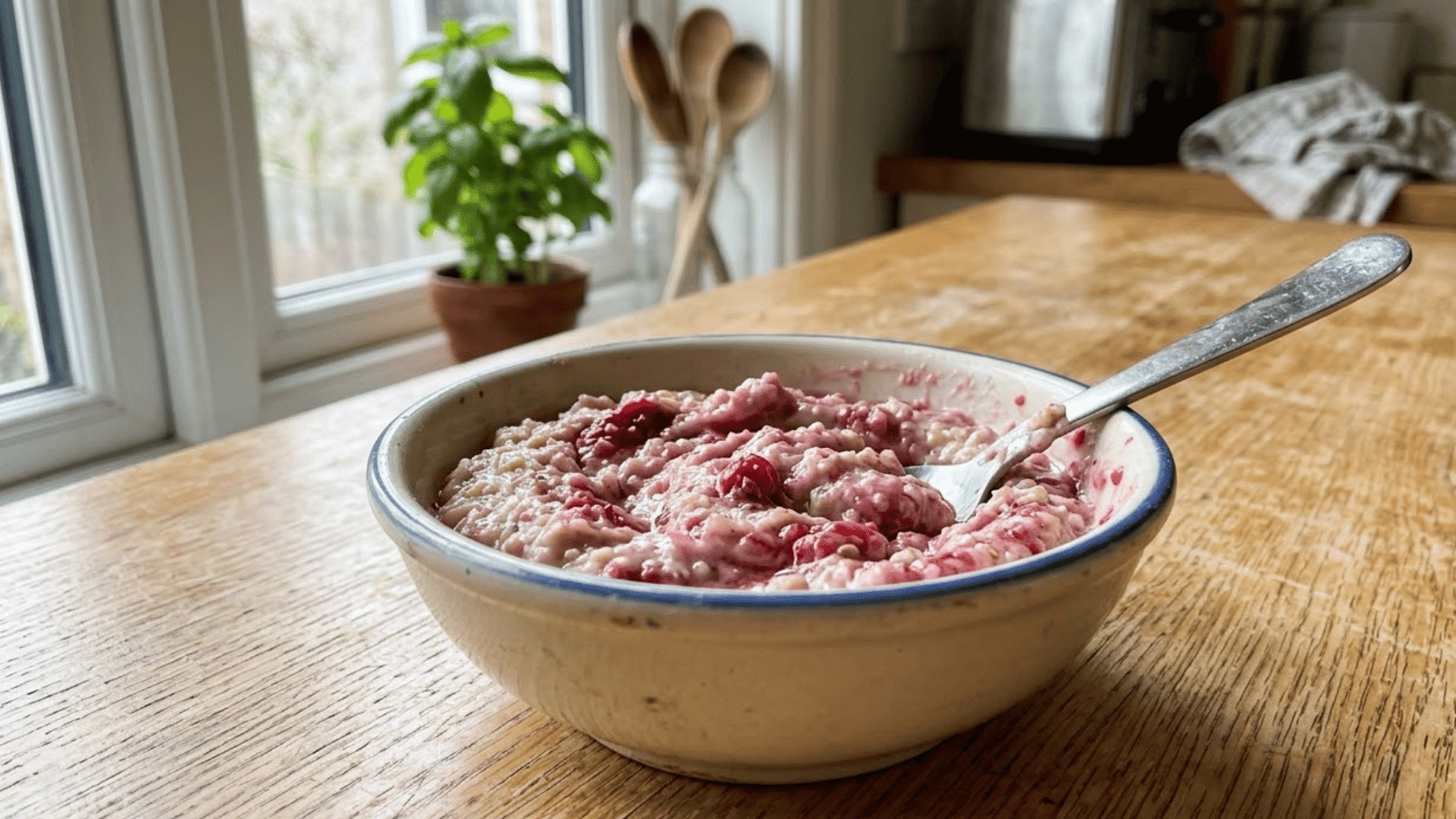
Oatmeal is one of the most toddler-friendly whole grains available. Adding mashed raspberries increases the fiber content and adds natural sweetness without extra sugar.
Ingredients: ¼ cup rolled oats, cooked; 2 tbsp fresh or thawed raspberries
Approximate fiber: ~3 gSteps to Prepare:
- Cook oats in water or milk until very soft
- Mash raspberries separately with a fork
- Stir mashed raspberries into the oatmeal
- Cool to a safe temperature before serving
3. Soft Pear with Plain Yogurt
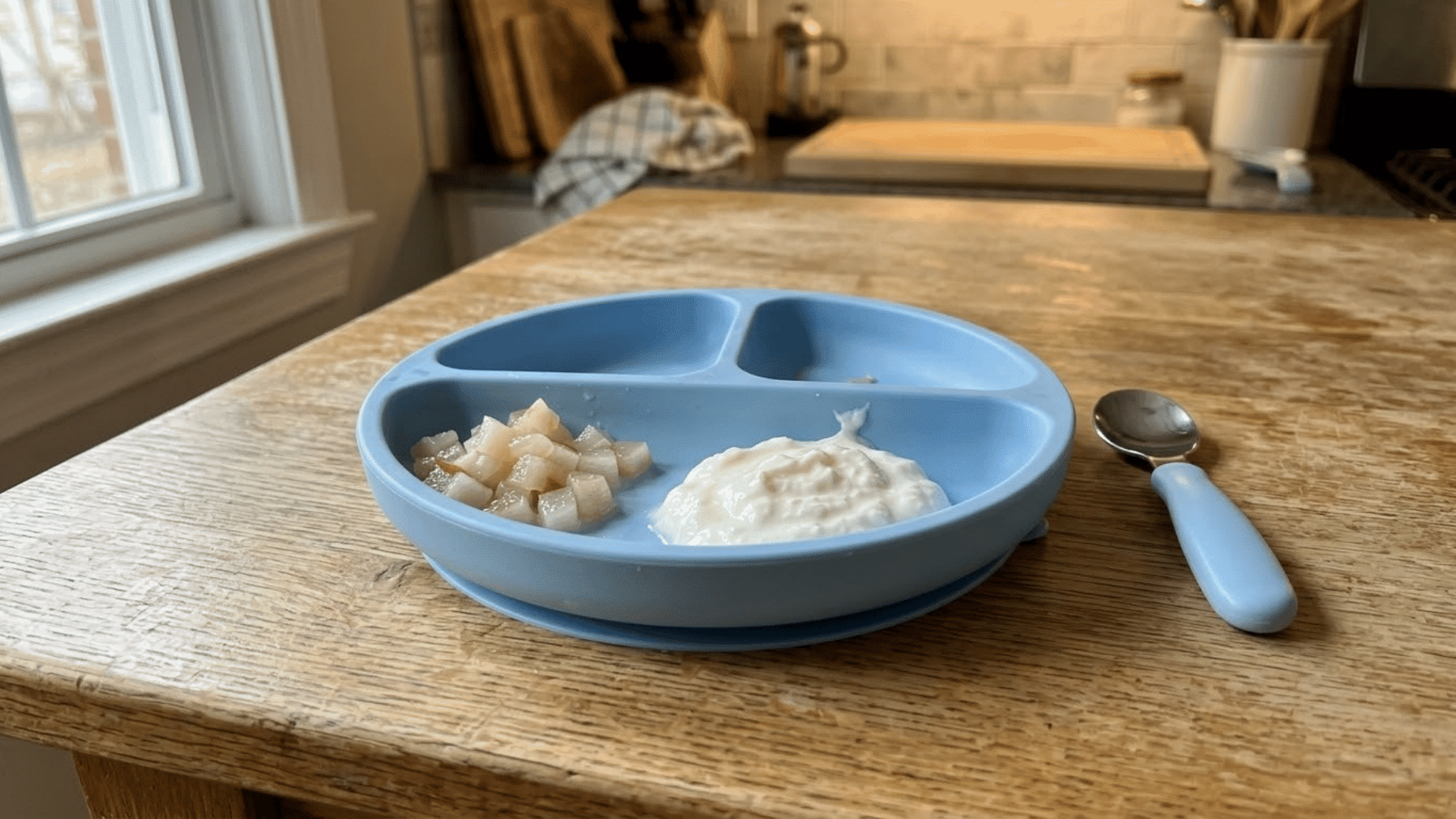
Pear contributes fiber and natural sweetness. Plain yogurt adds protein and calcium, making this a balanced, filling snack.
Ingredients: ¼ medium pear, 2 to 3 tbsp plain whole-milk yogurt
Approximate fiber: ~1.5 gSteps to Prepare:
- Steam or grate pear if firm
- Cut into very small, soft pieces
- Spoon yogurt into a small bowl
- Serve pear pieces alongside or mixed in
4. Applesauce with Ground Flaxseed
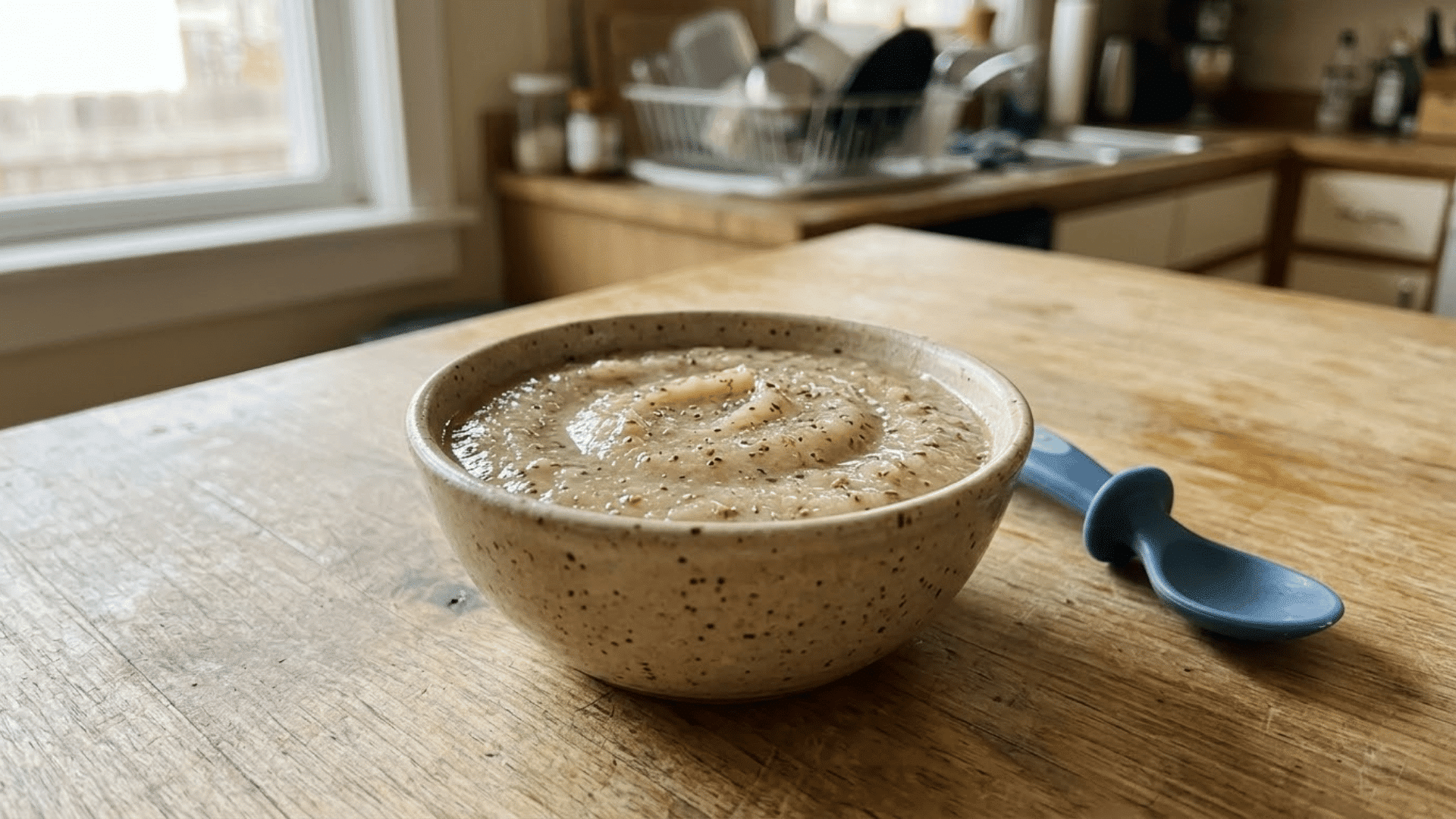
Unsweetened applesauce is easy for toddlers to eat independently. Stirring in ground flaxseed adds fiber without noticeably changing the texture.
Ingredients: 3 tbsp unsweetened applesauce, 1 tsp ground flaxseed
Approximate fiber: ~1.5 gSteps to Prepare:
- Spoon applesauce into a small bowl
- Add ground flaxseed on top
- Stir well until fully combined
- Serve immediately
5. Mashed Black Bean and Cheese Quesadilla
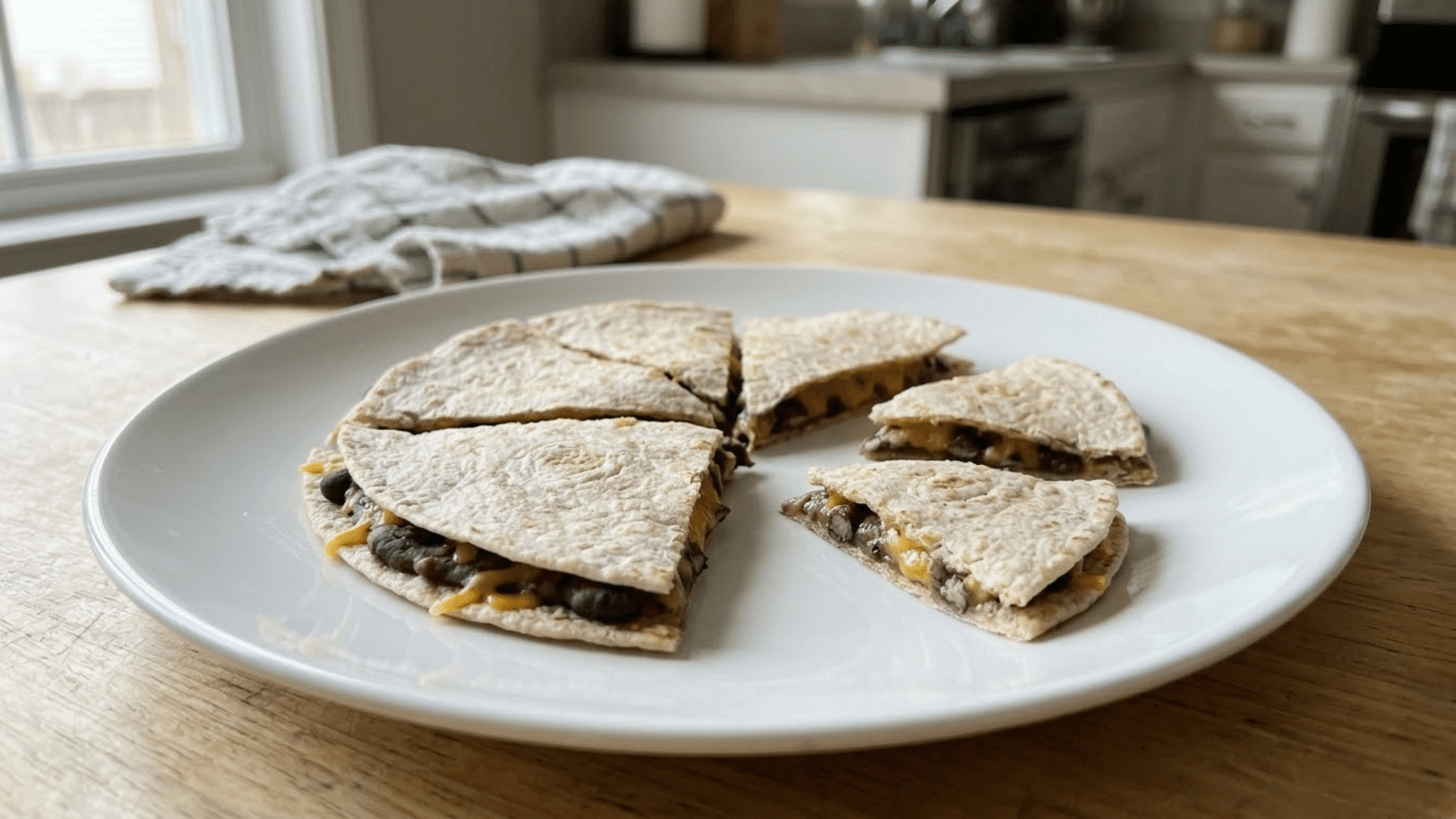
Black beans bring fiber and plant protein together. Cheese adds fat and calcium, and a soft tortilla makes the whole snack easy to chew and hold.
Ingredients: 2 tbsp mashed black beans, 1 tbsp shredded cheese, ¼ whole-grain tortilla
Approximate fiber: ~2.5 gSteps to Prepare:
- Mash black beans well with a fork
- Spread beans onto one half of the tortilla
- Sprinkle shredded cheese on top
- Fold and cook in a pan until cheese melts and tortilla is soft
- Cut into small pieces before serving
6. Hummus with Soft-Cooked Vegetable Strips
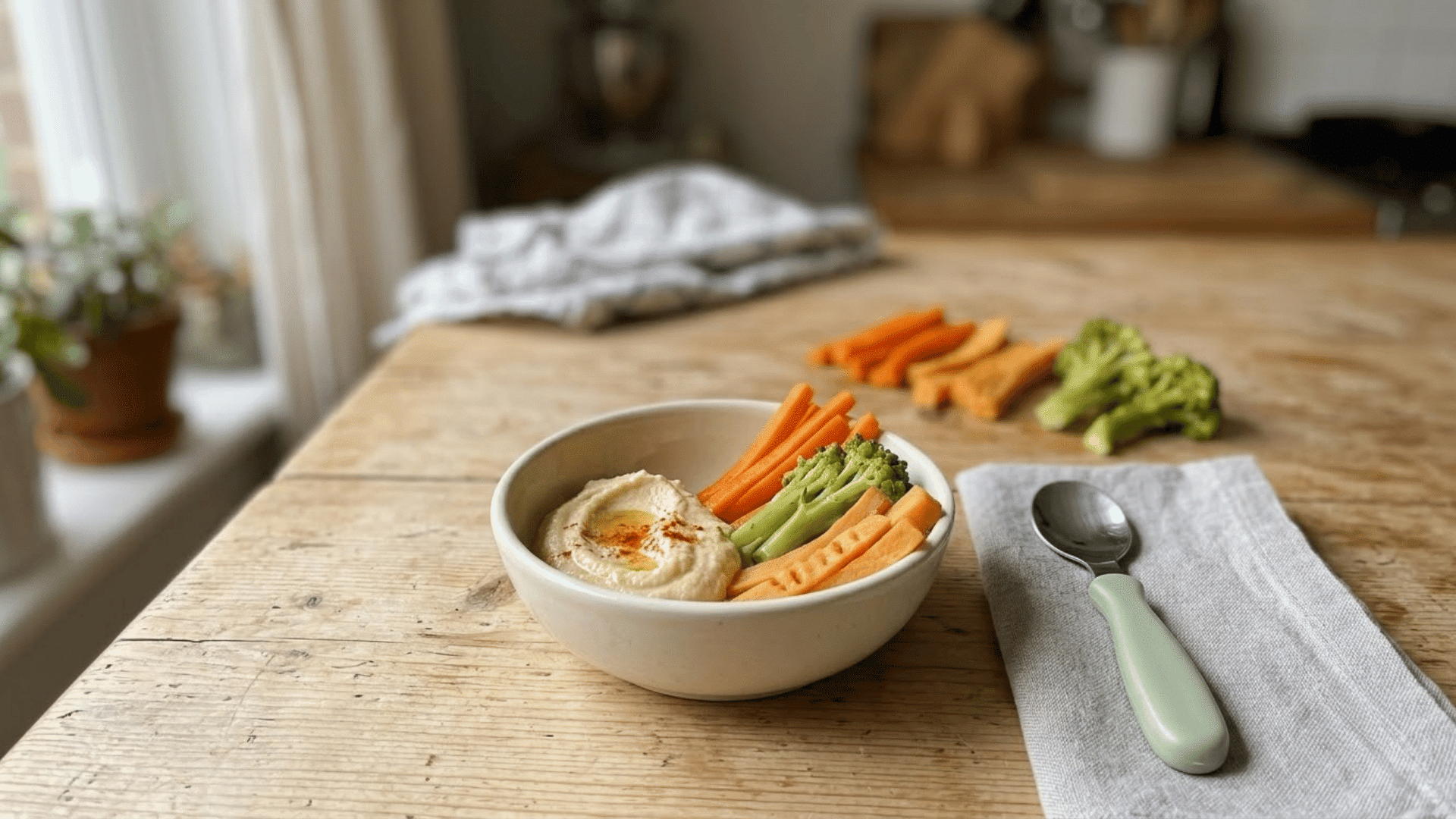
Hummus is made from chickpeas, which are a reliable fiber source. Pairing it with soft-cooked vegetables adds a second source and makes the snack more filling.
Ingredients: 2 tbsp hummus, 2 to 3 strips of steamed carrot, broccoli, or sweet potato
Approximate fiber: ~2 gSteps to Prepare:
- Steam vegetables until fully fork-tender
- Cut into thin strips once cooled slightly
- Spoon hummus into a small bowl
- Serve strips alongside or spread hummus directly on each piece
7. Banana with a Thin Layer of Smooth Peanut Butter
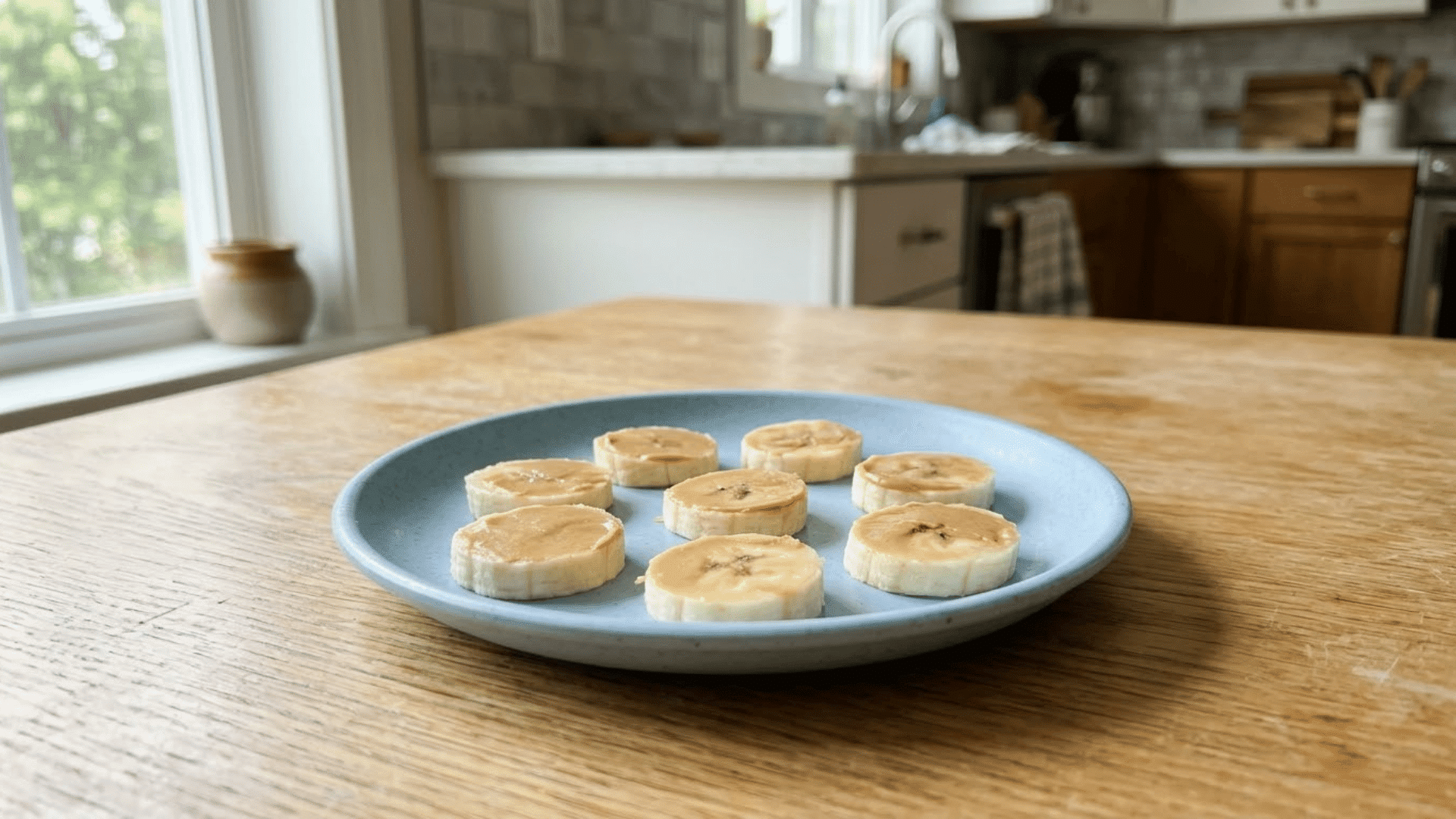
Banana provides fiber and natural sweetness. Smooth peanut butter adds protein and fat, which helps the snack feel more satisfying.
Ingredients: ½ small banana, 1 to 2 tsp smooth peanut butter
Approximate fiber: ~1.8 gSteps to Prepare:
- Peel and slice banana into rounds
- Spread a very thin layer of smooth peanut butter on each slice
- Check that no thick lumps remain before serving
- Serve immediately
8. Chia Pudding with Mashed Berries
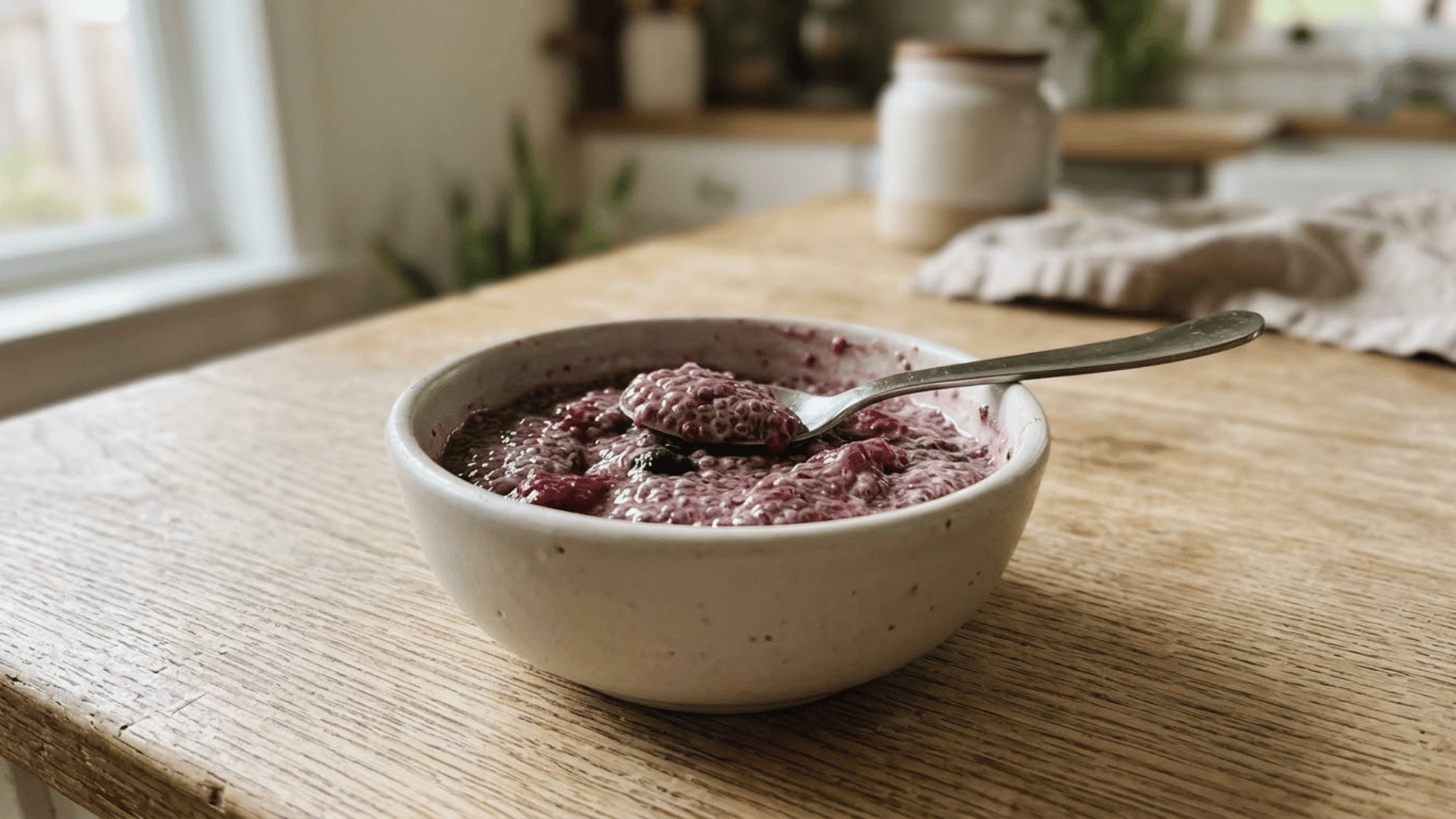
Soaked chia seeds provide a concentrated source of fiber in a soft, spoonable texture. Mashed berries add flavor and a small amount of additional fiber.
Ingredients: 1 tsp chia seeds soaked in 3 tbsp whole milk or formula, 2 tbsp mashed raspberries or blueberries
Approximate fiber: ~2.5 gSteps to Prepare:
- Mix chia seeds with liquid and stir well
- Refrigerate for at least two hours until fully gelled
- Mash berries with a fork until smooth
- Stir berries into pudding just before serving
9. Mini Oatmeal Muffin with Pear
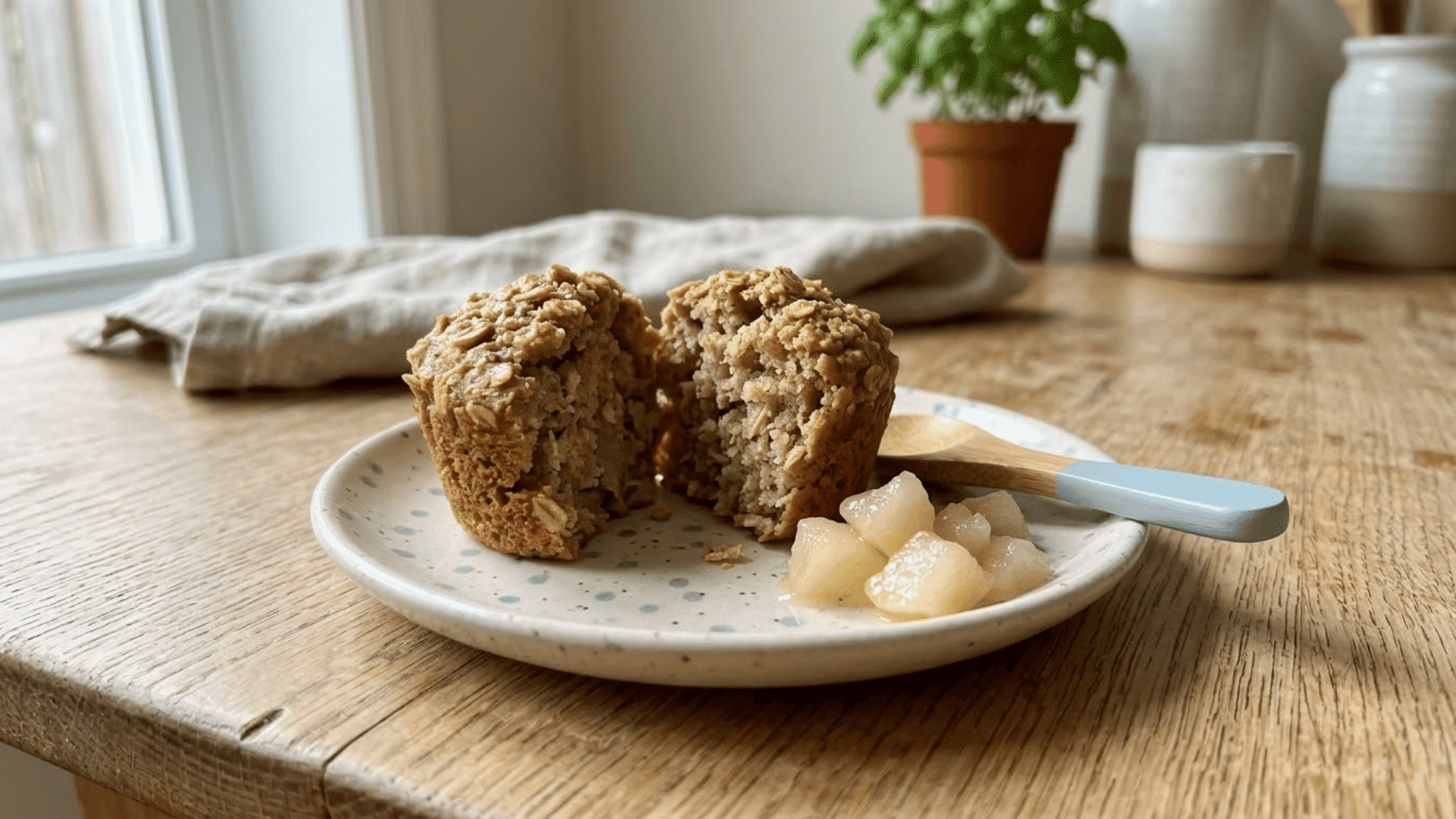
A small oatmeal muffin made with whole-grain flour offers fiber in a format toddlers enjoy holding independently. Adding soft pear on the side rounds out the snack.
Ingredients: 1 small homemade oatmeal muffin, ¼ medium soft or steamed pear
Approximate fiber: ~2 gSteps to Prepare:
- Bake muffins using whole-grain flour and rolled oats
- Check that the muffin compresses easily between two fingers before serving
- Steam or grate pear until soft
- Dice pear into small pieces and serve alongside
10. Lentil Spread on Soft Toast
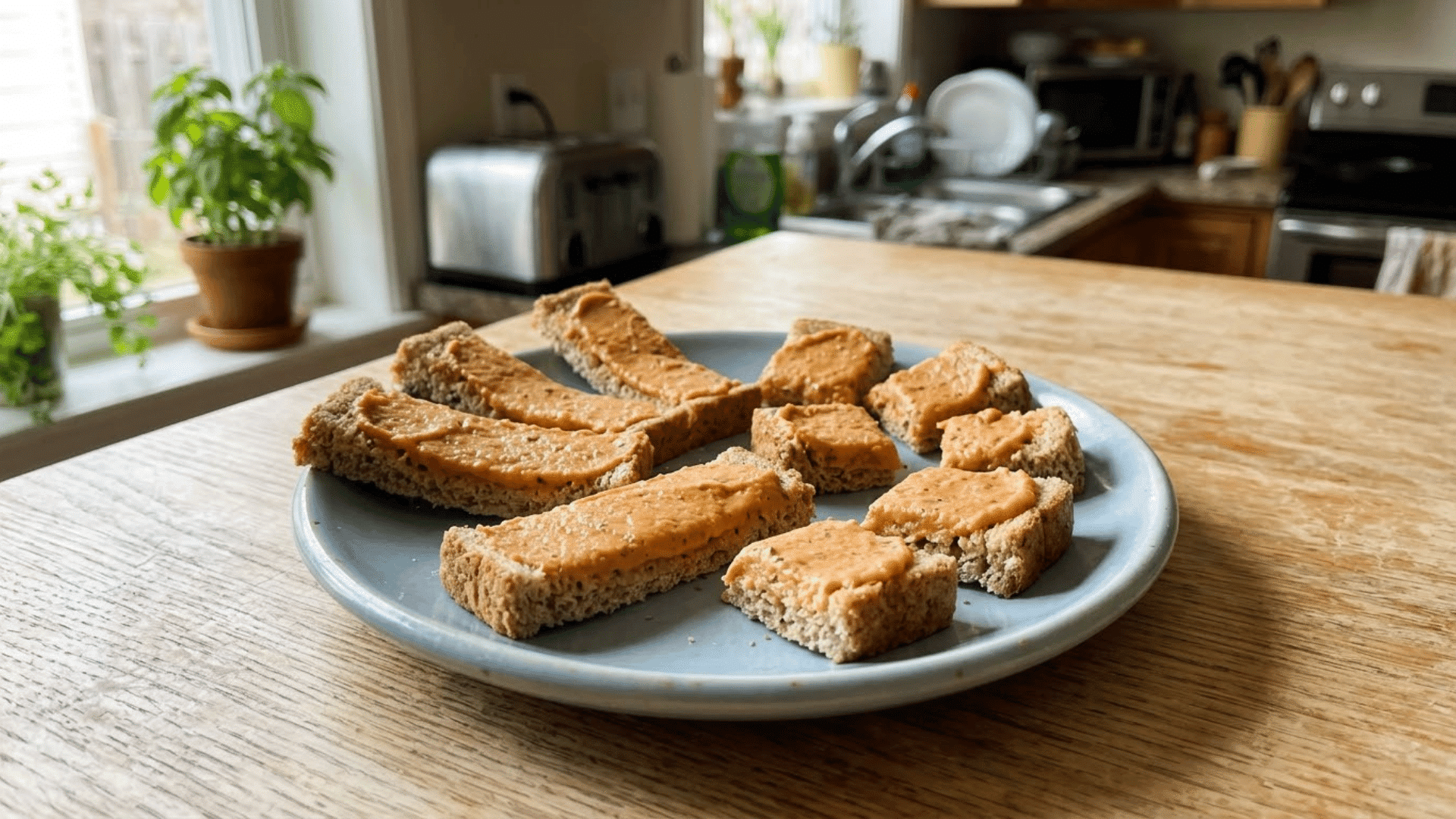
Cooked lentils blend into a smooth, protein-rich spread that works well on soft bread. This snack delivers fiber, iron, and plant protein in a few small bites.
Ingredients: 2 tbsp cooked red lentils blended smooth, ½ slice soft whole-grain bread
Approximate fiber: ~2.5 gSteps to Prepare:
- Cook red lentils until fully soft
- Blend with a small amount of water or olive oil until smooth
- Spread onto soft toast
- Cut into strips or small squares before serving
11. Sweet Potato with Plain Yogurt
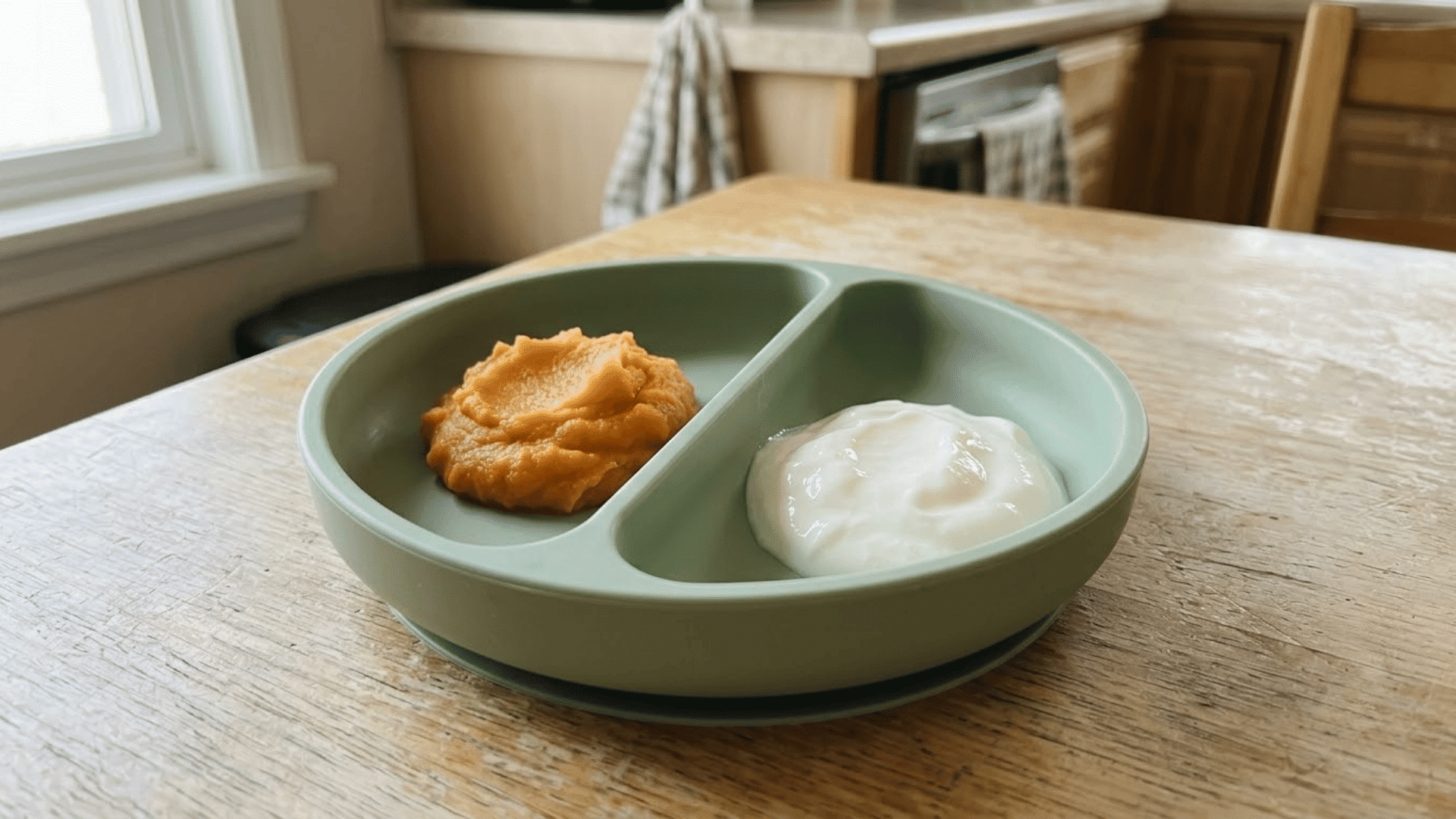
Sweet potato is naturally soft and mildly sweet, which makes it one of the more accepted vegetables at this age. Plain yogurt adds protein and creaminess alongside it.
Ingredients: 2 tbsp mashed or cubed cooked sweet potato, 2 tbsp plain whole-milk yogurt
Approximate fiber: ~1.5 gSteps to Prepare:
- Bake or steam sweet potato until fully soft
- Mash or cut into very small cubes
- Spoon yogurt into a small bowl
- Serve sweet potato alongside or mix together for a smoother texture
12. Smoothie Bowl with Berries, Oats, and Yogurt
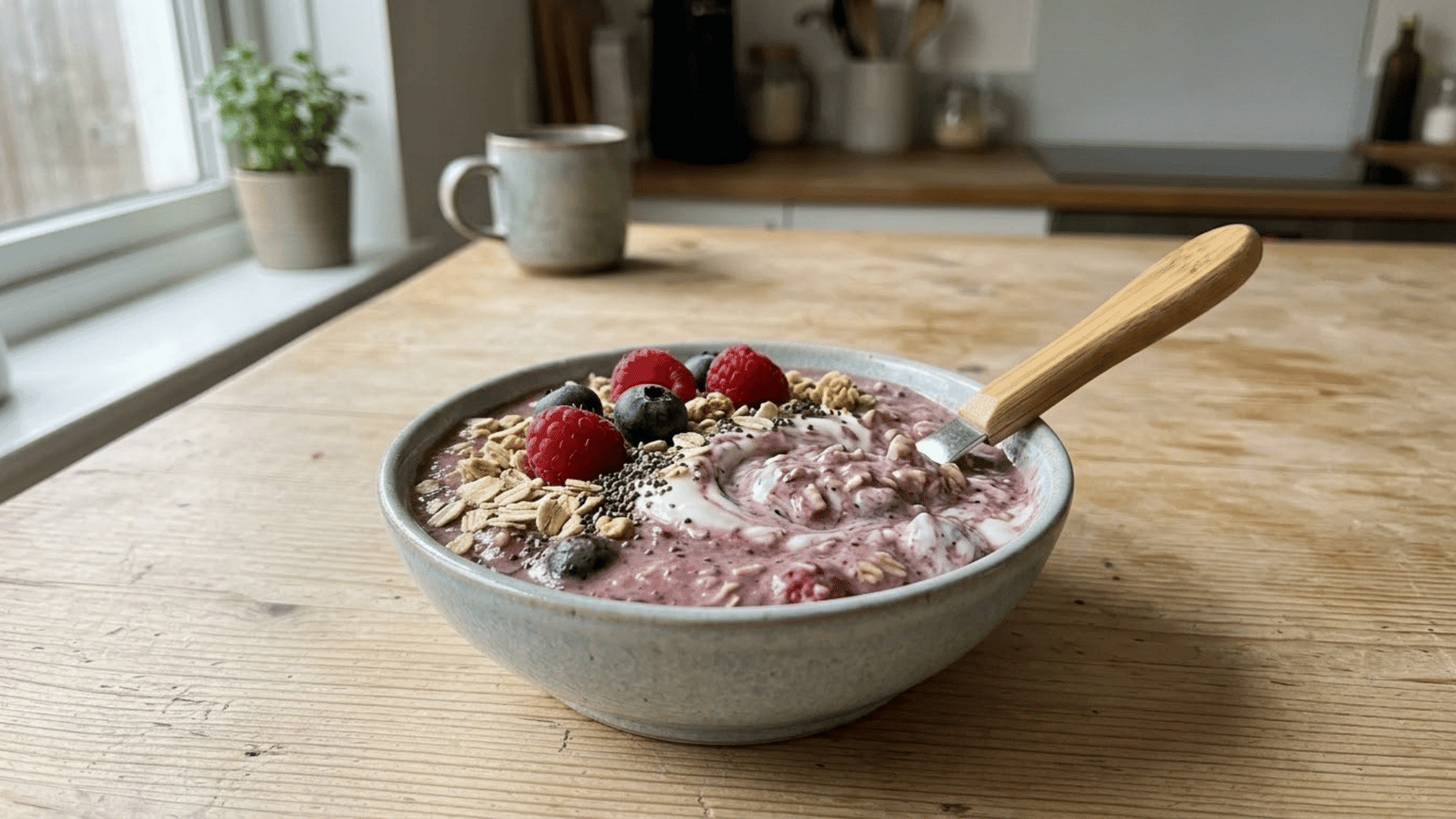
A smoothie bowl is thicker than a drink, which makes it easier for toddlers to eat with a spoon. Berries, oats, and yogurt each contribute fiber, protein, or both.
Ingredients: 2 tbsp plain whole-milk yogurt, 2 tbsp mixed berries blended, 1 tbsp dry rolled oats softened
Approximate fiber: ~2 gSteps to Prepare:
- Soften oats in a small amount of warm milk or water
- Blend yogurt and berries until smooth
- Pour into a small bowl
- Stir in softened oats and serve immediately
13. Soft Whole-Grain Crackers with Avocado
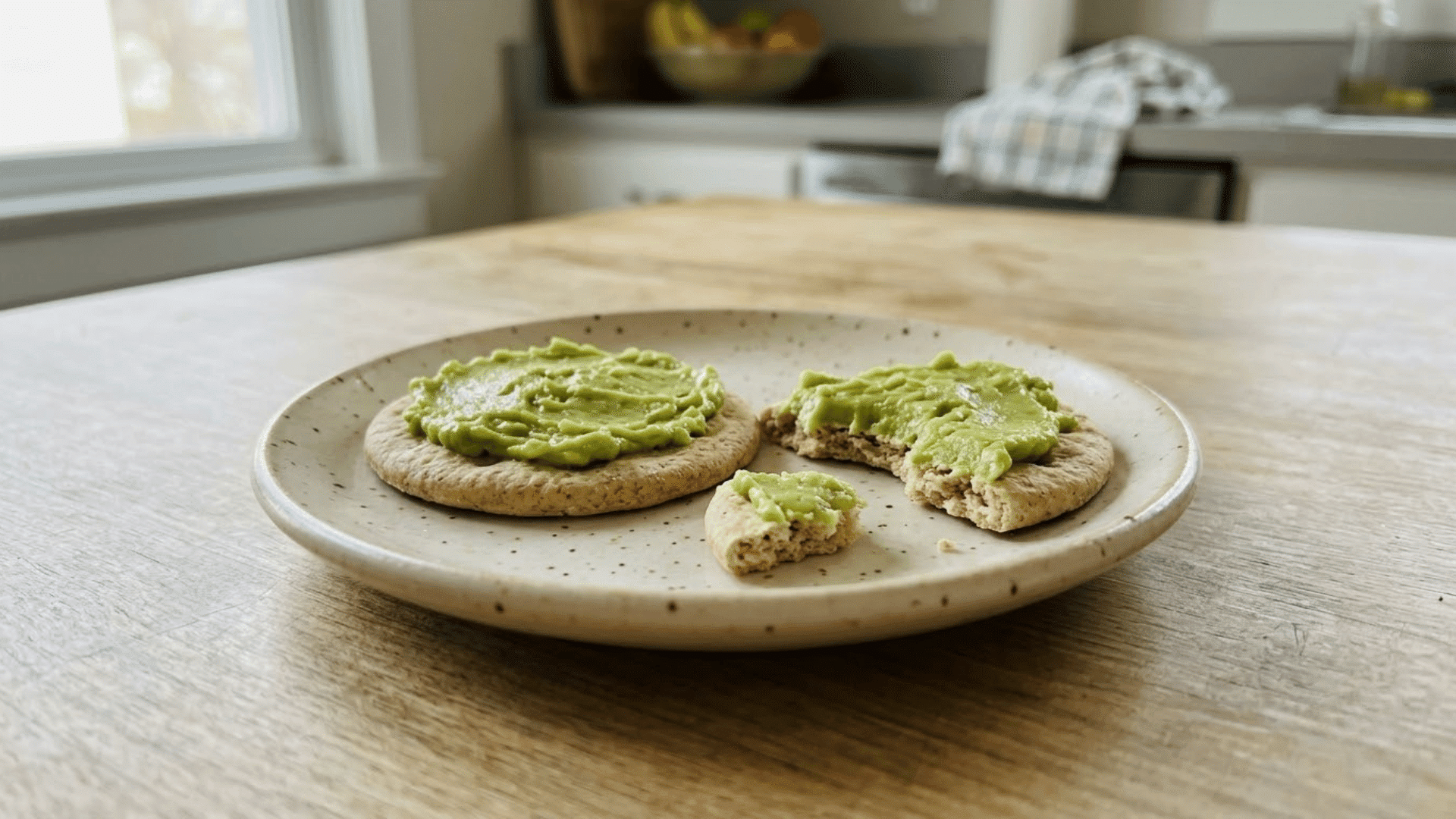
Whole-grain crackers that dissolve easily in the mouth give toddlers a safe crunchy texture experience. Mashed avocado adds fiber and healthy fat.
Ingredients: 2 to 3 soft whole-grain crackers, 2 tbsp mashed avocado
Approximate fiber: ~2 gSteps to Prepare:
- Choose crackers that soften quickly when chewed
- Mash avocado with a fork until smooth
- Spread avocado generously onto each cracker
- Avoid crackers with large surface seeds before serving
14. Bean Dip with a Soft Whole-Grain Tortilla
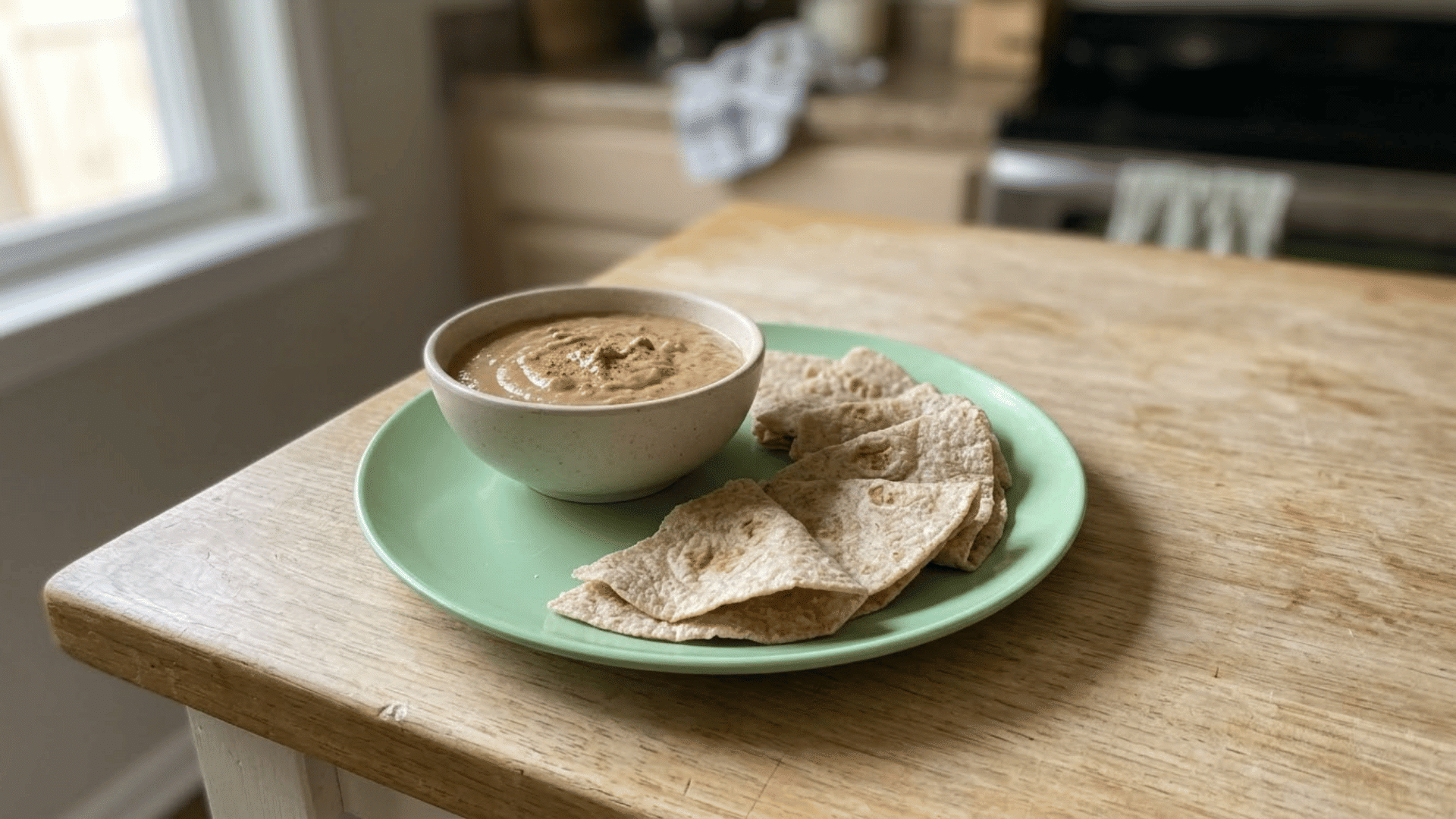
A simple bean dip made from pinto or white beans gives toddlers fiber and plant protein in a familiar format. A soft tortilla makes it easy to scoop or tear into pieces.
Ingredients: 2 tbsp mashed pinto or white beans, ¼ soft whole-grain tortilla
Approximate fiber: ~2.5 gSteps to Prepare:
- Blend beans with a small amount of olive oil or water until smooth
- Warm the tortilla until pliable and soft
- Tear tortilla into small pieces for dipping
- Serve bean dip in a small bowl alongside
15. Prune Puree Stirred Into Oatmeal
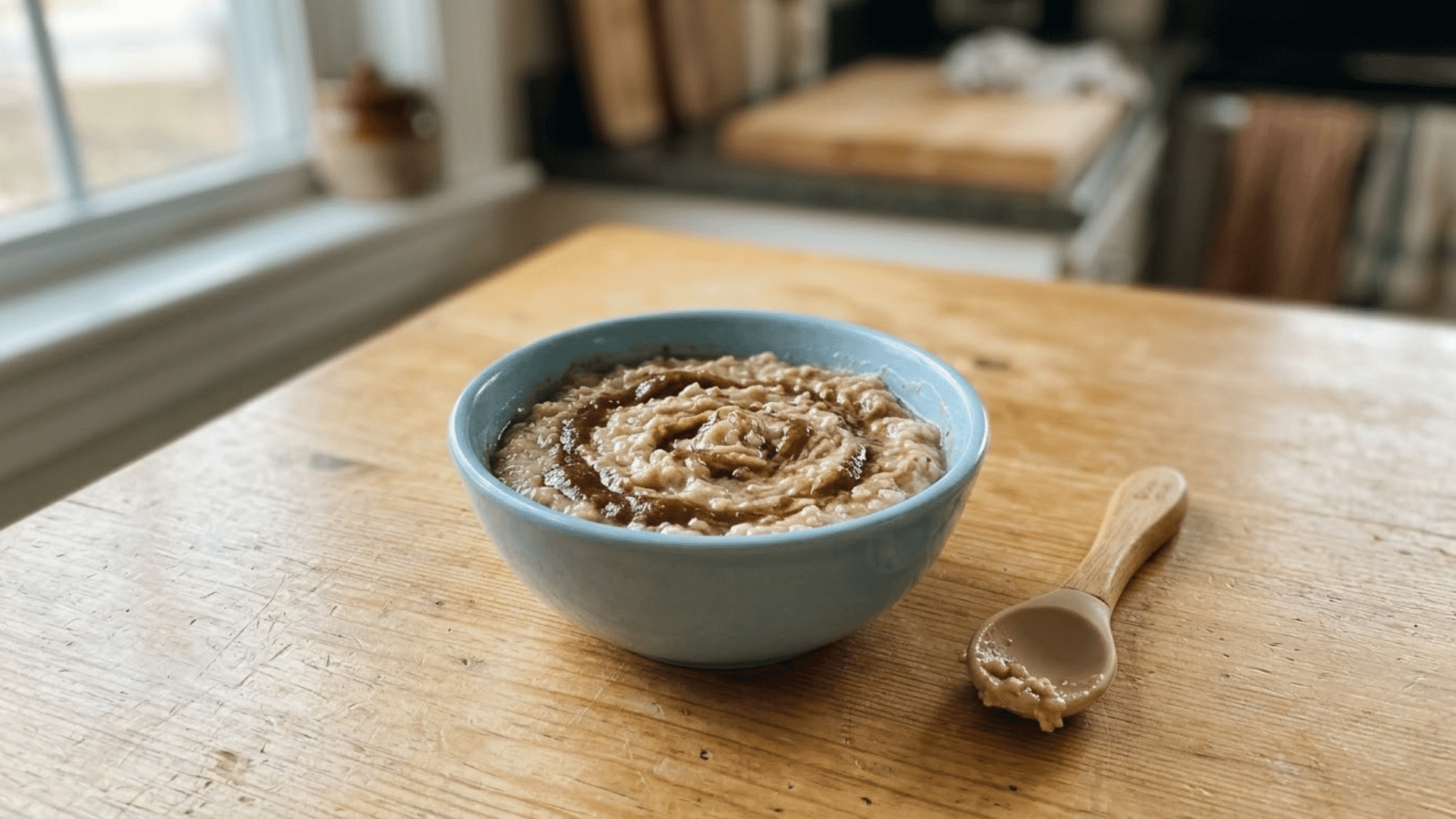
Prunes are well known for supporting digestive regularity. Stirring prune puree into oatmeal combines two fiber sources into one warm and easy-to-eat snack.
Ingredients: 1 to 2 tbsp prune puree, ¼ cup cooked rolled oats
Approximate fiber: ~2.5 gSteps to Prepare:
- Cook oats until very soft
- Use store-bought prune puree or blend soaked prunes until fully smooth
- Stir puree into warm oatmeal
- Start with a small amount if your toddler has not had prunes before
How to Add High-Fiber Foods to a Toddler’s Day Safely
Adding more fiber to a toddler’s diet works best when it happens gradually. A simple formula helps at snack time: fiber food + protein or fat + water. Most fiber snacks for toddlers come from plant foods, but while serving high-fiber foods for toddlers, keep these points in mind:
- Add one higher-fiber food at a time and increase portions gradually over several days
- Offer water with every meal and snack
- Avoid introducing flax, bran, chia, and fiber-fortified products all at once
- Cook vegetables until fully fork-tender before serving
- Grate or steam firm fruits like apples and pears
- Mash or blend beans and lentils rather than serving them whole and firm
- Soak chia seeds fully in liquid before serving; never offer them dry
- Cut all soft foods into pieces no larger than a thumbnail
- Always sit with the toddler during snack and mealtime
Can Toddlers Get Too Much Fiber?
Yes, toddlers can get too much fiber, especially when their intake rises well beyond what their small bodies need. Too much fiber may lead to gas, bloating, cramps, or loose stools.
It can also make toddlers feel full too quickly. That may leave less room for enough calories and other important nutrients needed for growth.
The goal is not to push fiber as high as possible. A balanced diet matters more. Increase fiber gradually, and keep fluids adequate.
When to Contact Your Toddler’s Pediatrician?
Dietary changes can support healthy digestion, but some symptoms need medical attention rather than more fiber. Contact your toddler’s pediatrician if you notice any of the following:
- Persistent constipation: Symptoms continue even after simple diet changes.
- Blood in the stool: You notice any visible blood in the diaper or toilet.
- Vomiting or swollen abdomen: Repeated vomiting or unusual belly swelling appears.
- Severe abdominal pain: Pain is intense, frequent, or keeps returning.
- Painful bowel movements: Your toddler strains, cries, or avoids passing stool.
- Poor appetite or growth: Eating drops noticeably or weight gain becomes a concern.
- Possible food reaction: Symptoms keep appearing after certain foods are eaten.
Urgent symptoms should never be managed by adding more fiber alone. A pediatrician or registered dietitian can assess what is actually happening and recommend the right next step.
It’s a Wrap
Figuring out fiber for your toddler doesn’t have to feel like a science project. I’ve learned that small, consistent additions matter far more than getting every gram perfect.
A spoonful of mashed beans here, a soft pear there- it adds up faster than you’d think. And when digestion stays comfortable, everything else tends to fall into place too, from mood to appetite to sleep.
So don’t stress over hitting an exact number every single day. Keep offering variety, keep the fluids coming, and trust that these small habits around high-fiber foods for toddlers are doing more good than they seem.
Frequently Asked Questions
Can Fiber Intake Affect a Toddler’s Sleep or Mood?
Yes. Constipation, gas, or bloating can make toddlers uncomfortable, which may affect mood and sleep.
Do Toddlers Need Different Fiber Targets During Illness or Recovery?
Not usually. During illness, focus on tolerated foods and hydration rather than forcing a specific fiber target.
Can a Toddler Who Refuses Vegetables Still Get Enough Fiber?
Yes. Toddlers can still get enough fiber from other plant-based foods.
Is Organic Fruit or Produce Higher in Fiber Than Conventional Options?
No. Organic produce is not generally higher in fiber than conventionally grown produce.