



Most parents wonder, when do babies sit up for the first time? It’s one of those milestones that gets the whole family talking.
And honestly, it can feel a little nerve-wracking not knowing what to expect or how to help.
The encouraging insight? There are simple, everyday ways parents can support their baby through this stage. From tummy time to the right kind of play, small steps can make a real difference.
This blog leads you through everything parents need to know about when babies sit up and how they can help along the way.
When Do Babies Sit Up and What Does It Mean for Their Growth?
Most babies sit up on their own somewhere between 4 and 7 months of age. By around 6 months, many can hold themselves up with little to no support.
Some babies get there a bit earlier, and some take a little longer; both are completely normal.
It all comes down to how strong their neck, back, and core muscles are getting. And those muscles build up gradually, through everyday movement and play.
But sitting up is more than just a cute milestone indicating a baby’s body and brain are developing normally, with their nervous system sending the right signals to control balance and posture, and that’s a big deal.
This new ability also opens up exciting learning opportunities. Babies can now use both hands to explore toys, make better eye contact, and engage more actively with the world around them.
Here’s What to Expect at Every Stage
Every baby grows at their own pace, but knowing the typical milestones can help you track progress and catch any concerns early. Here’s exactly what you can expect, stage by stage:
2 to 3 Months: Head Control
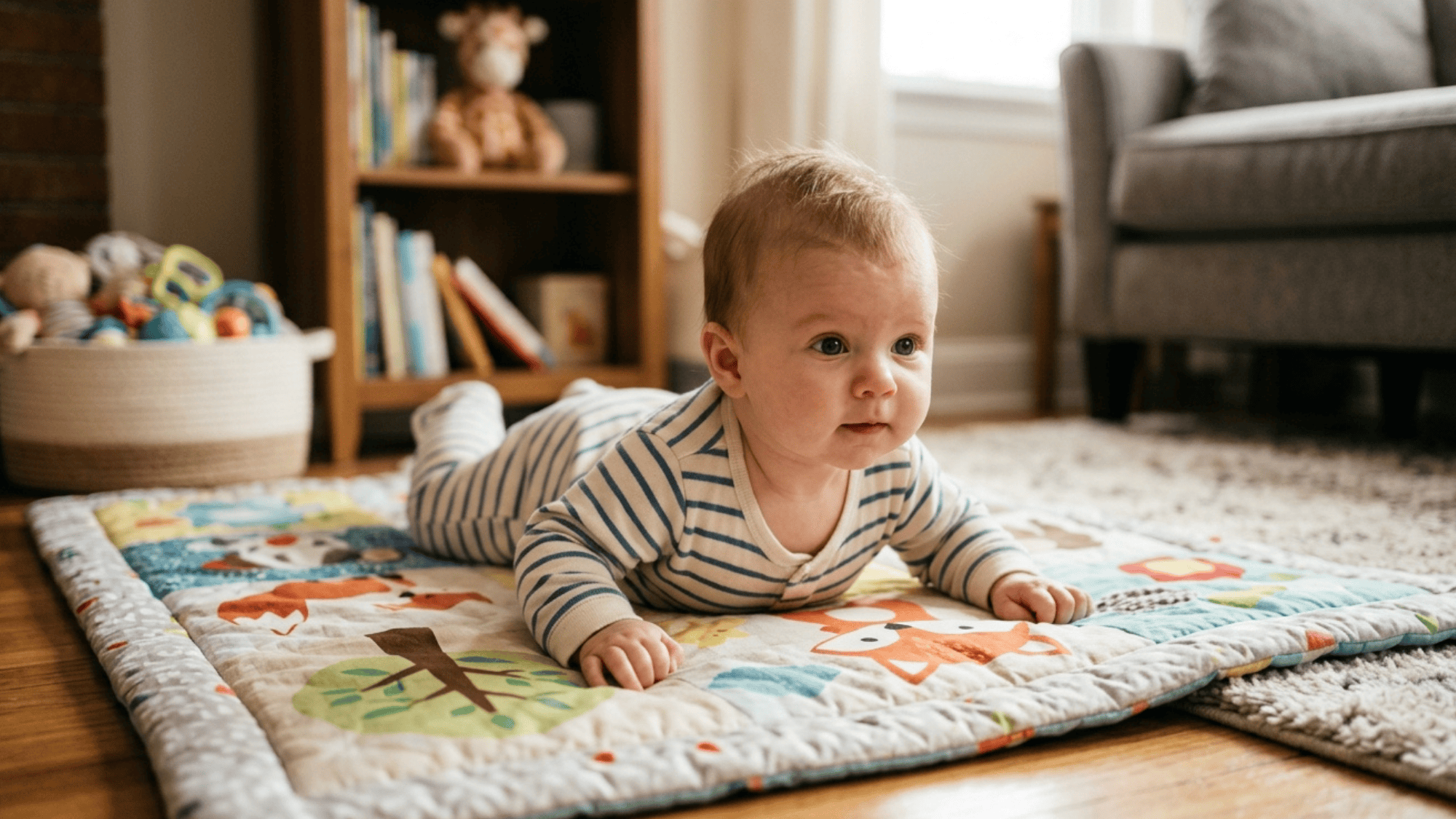
Babies aren’t sitting yet at this stage, but the groundwork is being laid. Your baby will start lifting their head during tummy time and holding it steady for a few seconds.
Neck muscles are strengthening with every little effort. These early movements are the first step toward the core control required for sitting.
4 to 5 Months: Sitting With Support

If you’re asking when babies start sitting up, this is where it begins. By 4 to 5 months, many babies can sit upright when fully supported by a caregiver’s hands or a pillow.
They’re not doing the work yet; the support is doing most of it. However, their back and core muscles are actively developing during this time.
6 Months: The Tripod Sit
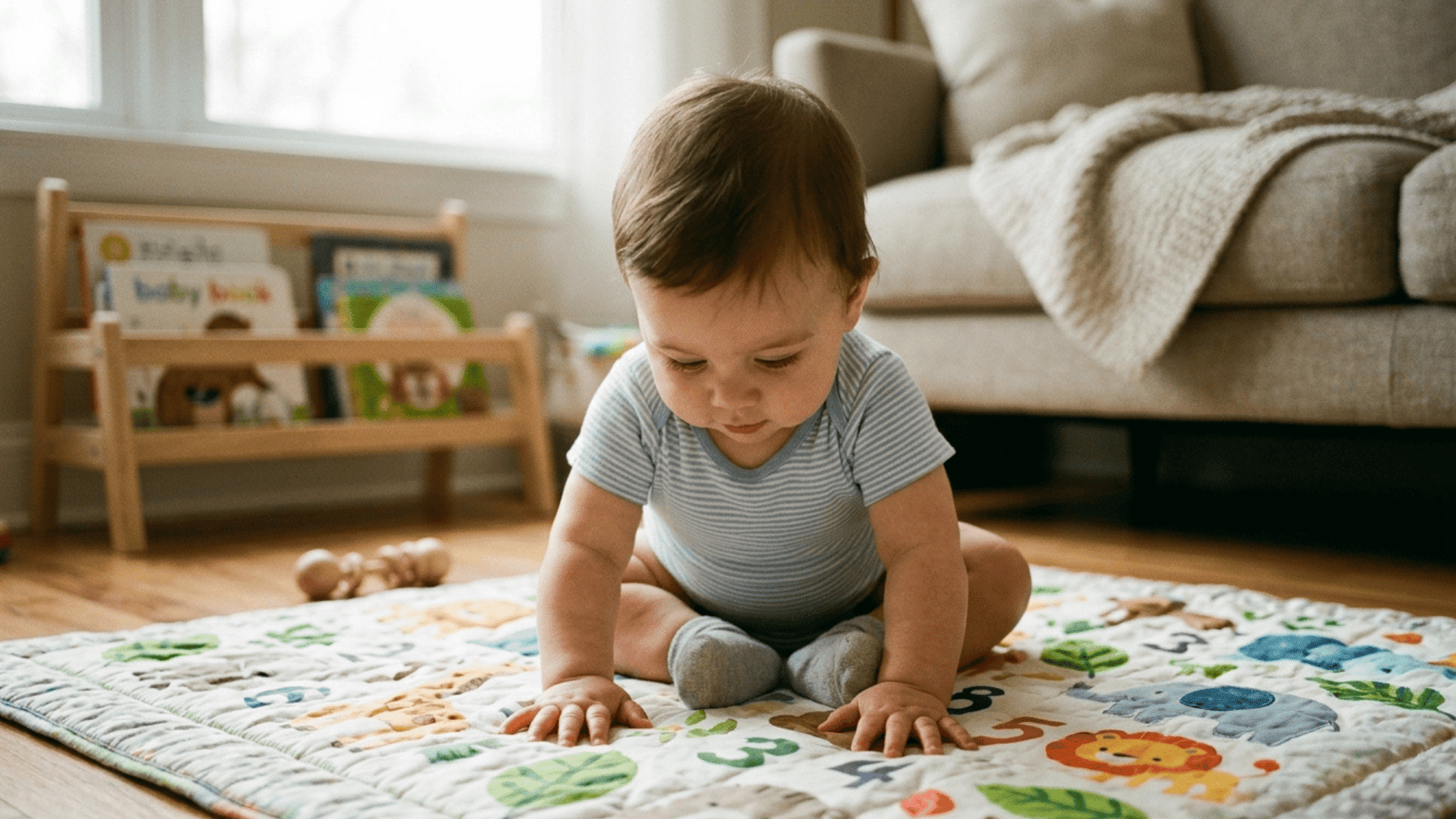
Around 6 months, many babies reach what’s called the tripod sit, leaning forward and using both hands on the floor for balance. It’s wobbly and imperfect, but it’s a huge leap forward.
Core strength is growing fast at this stage. Babies are actively figuring out how to distribute their weight and stay upright on their own.
7 to 8 Months: Sitting Without Support
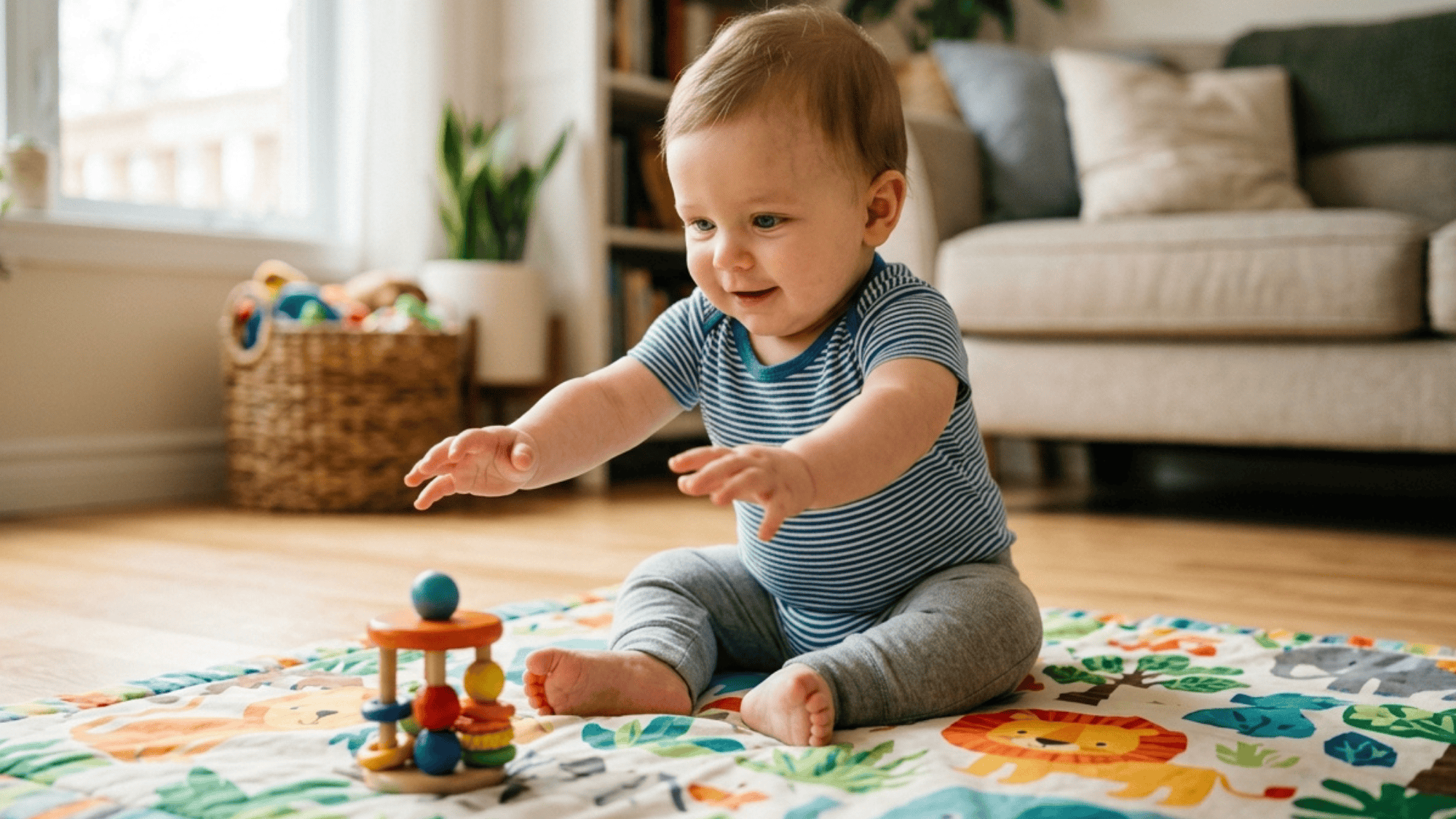
This is the milestone most parents are waiting for. When do babies sit up completely on their own? For most, it happens right around 7 to 8 months.
Your baby can now sit without leaning on anything, reach for toys without toppling over, and engage far more actively with everything around them.
9 Months and Beyond: Sitting With Confidence
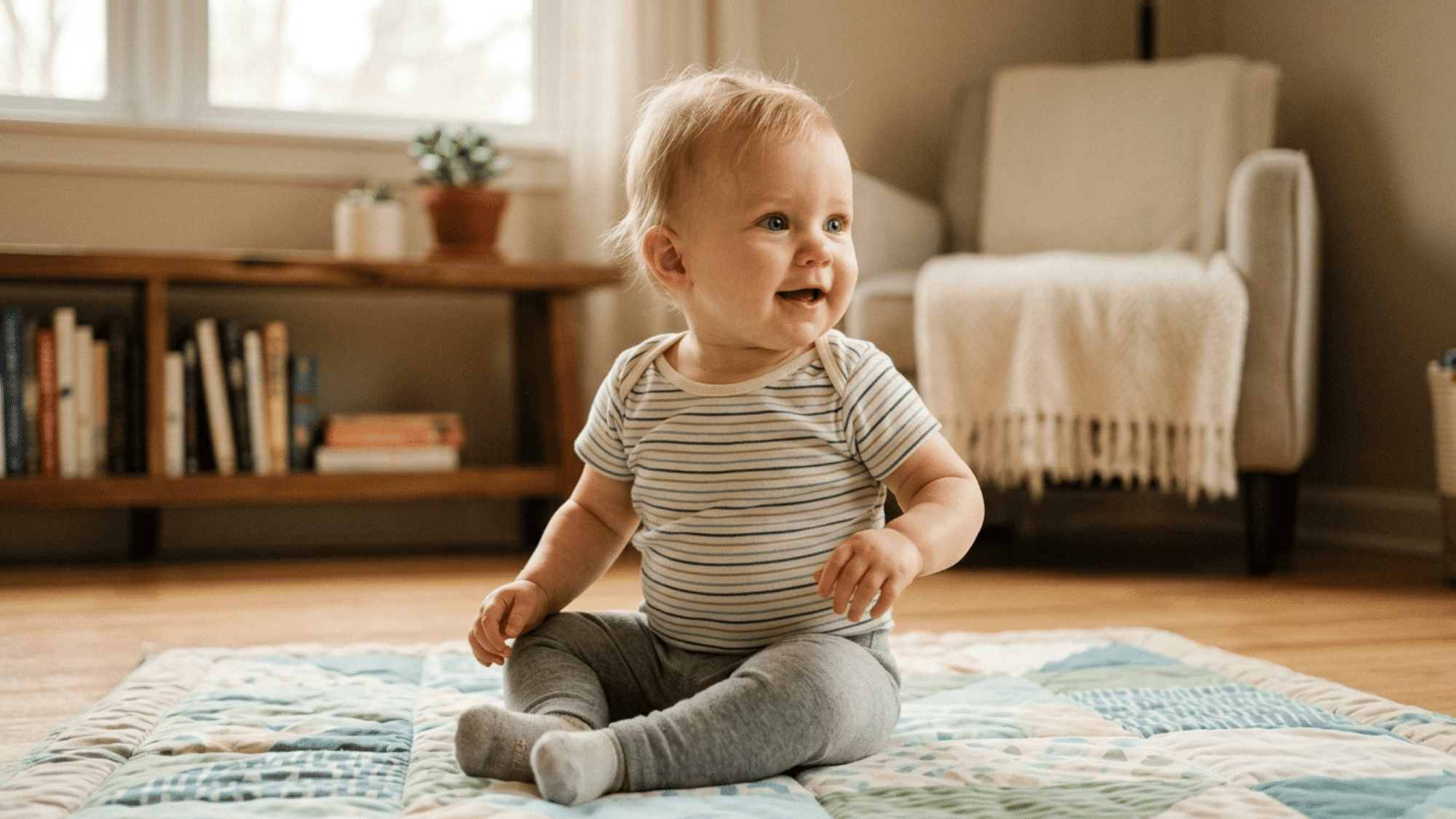
By 9 months, most babies are sitting confidently and transitioning in and out of the position on their own. They can twist, reach, and move without losing balance.
This stage also sets the foundation for the next big milestones: crawling, pulling up, and eventually standing.
A quick note: The CDC’s Developmental Milestones lists sitting without support as a key movement milestone by this age, so if your baby isn’t there yet, a quick check-in with your doctor can help rule anything out.
Small Steps You Can Try to Help Your Baby Sit Independently
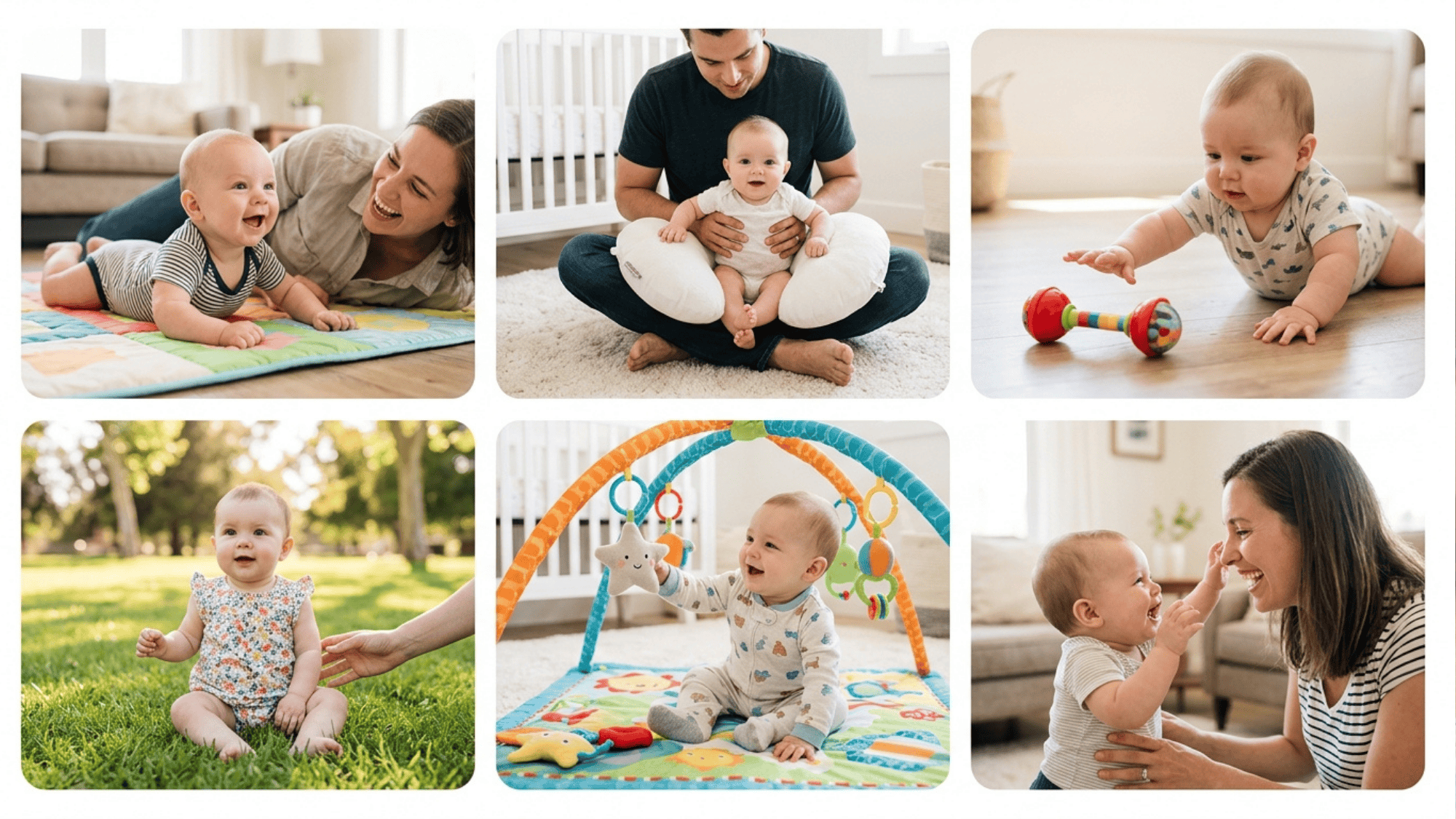
You can’t rush development, but you can support it. Knowing when babies start sitting up helps you introduce the right activities at the right time. Here are simple, practical ways to help:
1. Start With Tummy Time Early
Tummy time is the foundation of sitting. It builds the neck, back, and shoulder muscles your baby needs most. Here’s how to do it right:
- Start with 2 to 3 minutes a few times a day and slowly increase over time
- Place a rolled towel under their chest for extra support in the early weeks
- Get down to their level to keep them interested and calm
- Work up to 30 total minutes spread across the day by 3 months
2. Use Supported Sitting to Build Confidence
Before an independent sitting comes practice. Short supported sessions help your baby build muscle and balance steadily. Try these simple approaches:
- Sit behind your baby and let them lean lightly against you
- Use a Boppy or nursing pillow to prop them up safely
- Keep each session to 2 to 3 minutes for younger babies
- Always stay within arm’s reach in case they tip over
3. Place Toys Just Out of Reach
Play is one of the best ways to build sitting strength. Placing toys just out of reach pushes your baby to stretch and shift their weight. Keep these tips in mind:
- Put a favorite toy slightly to the side to encourage movement
- Use colorful or noisy toys to hold their attention longer
- Switch toys often to keep things fresh and exciting
- This type of play helps a lot when babies sit up on their own
4. Try Sitting on Different Surfaces
Different surfaces challenge your baby’s balance every time. Each texture pushes their coordination a little further. Here’s how to do it safely:
- Start on a firm, flat play mat before trying softer ground
- Try short sessions on grass or carpet for variety
- Keep a hand close by at all times
- Never leave your baby unsupported on a bed or sofa
5. Limit Time in Bouncers and Seats
Bouncers and loungers are handy, but spending too much time in them does the work your baby’s muscles should be doing. Cutting back really helps. Keep these points in mind:
- Limit bouncer or swing time to 30 minutes or less at a stretch
- Swap some seat time for floor play and tummy time
- Pick activity mats over infant seats when you can
- More time on the floor means a stronger core
6. Make Eye Contact and Talk to Them
Your face is your baby’s biggest motivation. Talking and making eye contact during practice keeps them lifted and engaged. Try these easy steps:
- Sit directly in front of your baby during tummy time and supported sitting
- Sing, talk, or make funny faces to keep them focused and upright
- Use diaper changes and mealtimes for quick face-to-face time
- Babies often reach milestones faster when they feel safe and connected, and that’s especially true when they start sitting up
The Bottom Line
Every parent googles: when do babies sit up, at least once. Maybe in the middle of the night, maybe right after a wobbly tummy time session. And now there’s a real answer to go with it.
Development takes time, and no two babies move through it the same way. But the fact that it’s being paid attention to, that makes a difference.
A little floor time and a lot of love go further than most people think. So keep showing up for those small moments. Because in this season of firsts, every single one of them counts.