

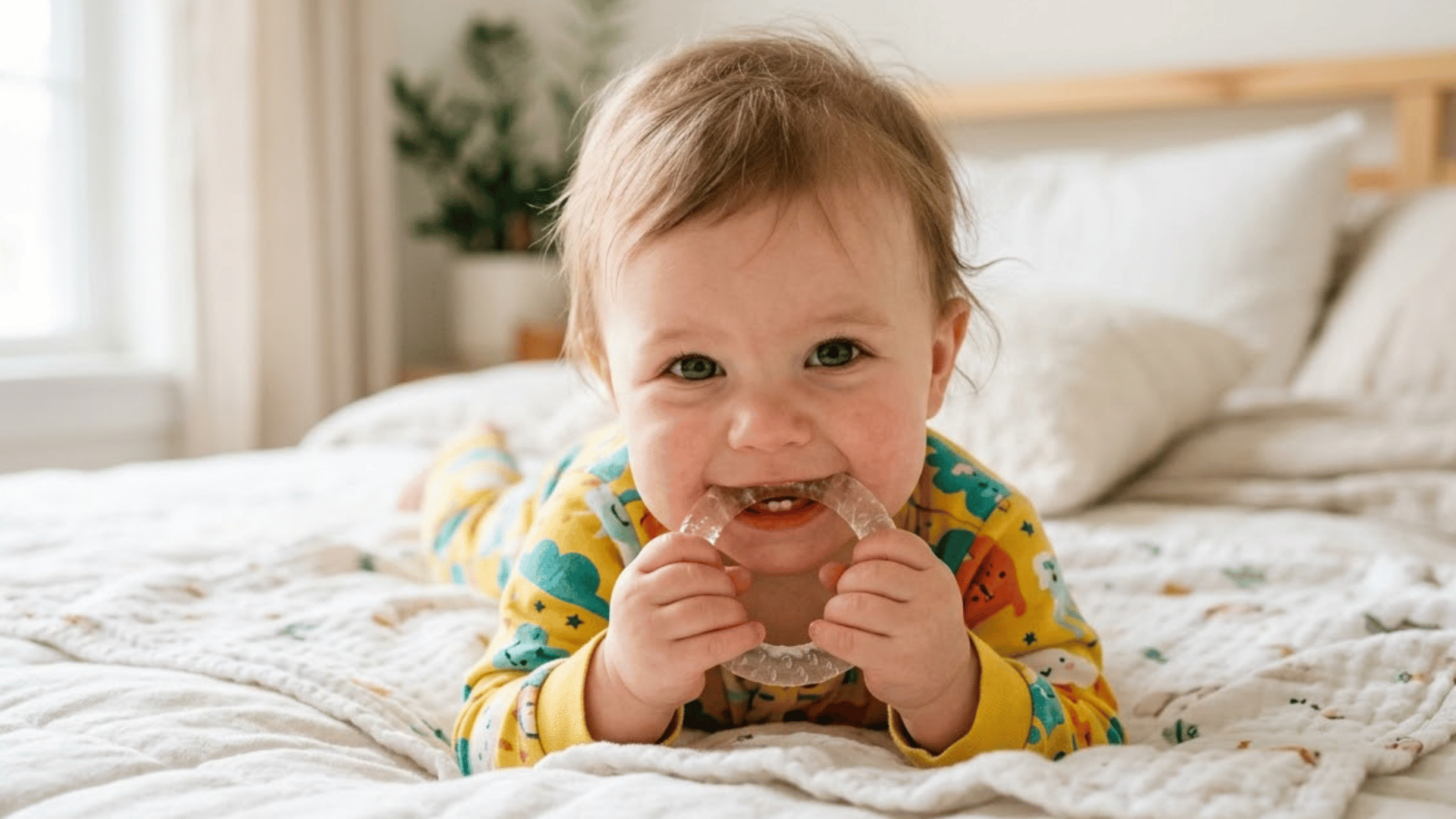
If your baby has been waking up more than usual or sleeping in longer than normal, teething might be the reason.
I’ve heard the same question from friends over and over: do babies sleep more when teething, or does it just make everything harder?
The answer isn’t as simple as yes or no, and it depends a lot on your baby, just like so much other advice for new parents.
In this blog, you’ll find out what teething really does to sleep, when it usually starts, and small changes that can help your baby and you rest easier.
Do Babies Sleep More When Teething?
No, for most babies, teething does not make them sleep more. In fact, it often does the opposite. Sore, swollen gums can cause enough pain to wake a baby from a nap or from nighttime sleep.
Many parents notice more waking at night, trouble falling asleep, or shorter naps during this time. Some babies may seem sleepier than usual while teething, but this is not very common.
When it does happen, it is usually not caused by teething alone. It is often linked to another symptom, like a mild fever, showing up at the same time.
But if your baby sleeps much more than normal for several days in a row, it is worth checking in with your pediatrician.
When Do Babies Actually Start Teething?
Most babies get their first tooth between 6 and 10 months old. The two bottom front teeth usually come in first. The top front teeth often follow a few weeks or months later.
Some babies start teething as early as 3 months, while others do not get a tooth until closer to their first birthday.
This is normal, and there is no need to worry if your baby is on the earlier or later side, the same way it’s normal for milestones like when babies sit up to vary widely from one baby to the next.
By the time a child turns 3 years old, all 20 baby teeth have usually come in. Molars, which are the back teeth, tend to arrive later and can take longer to push through than the front teeth.
Down the road, you’ll go through the whole process again in reverse once your child starts losing their baby teeth.
Every baby follows their own timeline. If your baby has not gotten a first tooth by 12 to 15 months, it is a good idea to mention it at their next checkup.
Teething Symptoms That Often Come With Sleep Changes
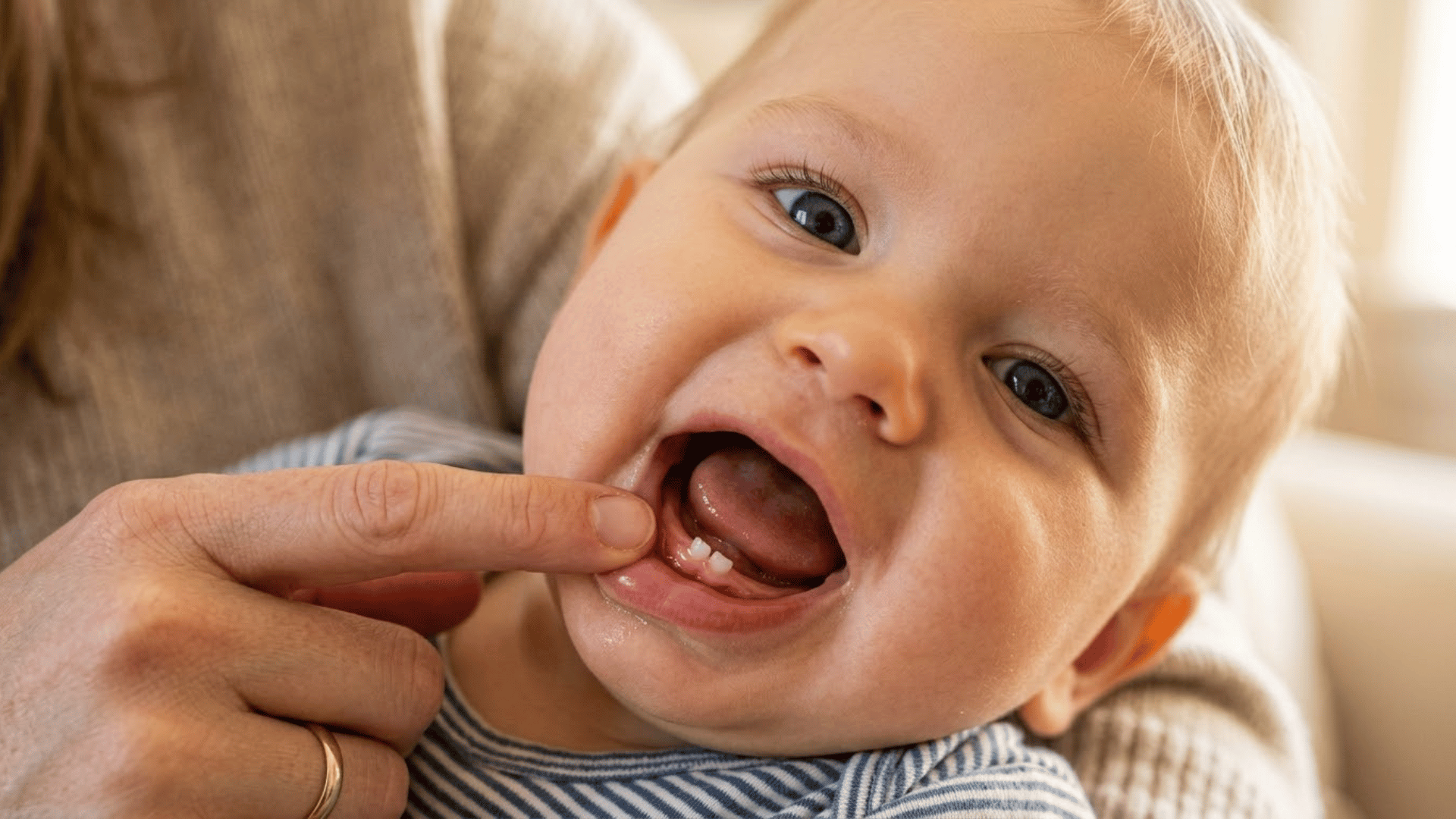
Sleep trouble rarely shows up alone. Here are the signs that usually come along with it, so you can connect the dots.
1. Excessive Drooling
Teething often causes a big jump in drooling, sometimes enough to soak through a shirt in an hour. This extra saliva can irritate the skin around the mouth and chin, leading to mild redness or a rash.
Some babies also cough a little more during this time, simply from swallowing extra saliva, which is normal and not a sign of illness.
2. Swollen or Sore Gums
Right before a tooth breaks through, the gums in that spot often look puffy, red, or slightly bruised. If you gently run a clean finger along your baby’s gum line, you may even feel a small hard bump.
This swelling is usually what causes the most discomfort, since the pressure from the tooth pushing up can feel sharp or achy.
3. Chewing and Biting
Babies often chew on toys, fingers, teething rings, or anything else they can get into their mouth.
This is not just a habit; the counter-pressure from biting down actually helps relieve pain in the gums.
You may notice this behavior gets more intense in the evening or right before bedtime, which can also explain why bedtime feels harder during a teething stretch.
Since these toys spend so much time with your baby, it's worth reviewing how to clean baby toys properly between uses.
Parenting Tip: Keep a clean, chilled (not frozen) teething ring in the fridge and offer it 20–30 minutes before bedtime. The cold numbs sore gums and can make settling down much easier.
4. Mild Irritability
A fussier mood than usual is common in the days leading up to a new tooth, especially in the evening when tiredness and discomfort combine.
Your baby may cry more easily, want to be held more, or seem harder to soothe with the usual tricks. This can make bedtime routines feel more difficult than usual.
5. Rubbing Ears or Cheeks
Because tooth pain can travel along the jaw and nerves nearby, some babies rub or pull at their ears or press on their cheeks, even though there is nothing wrong with their ears.
This can sometimes worry parents into thinking it’s an ear infection, so it helps to check for other teething signs, like swollen gums or drooling, happening at the same time.
According to HealthyChildren.org (the American Academy of Pediatrics’ parenting resource), the front teeth typically arrive first, followed by the molars and canines.
How Long Does Each Teething Episode Last?
Not all teeth cause the same amount of discomfort, and knowing what to expect can help you tell normal teething apart from something else.
| Tooth Type | Typical Age of Eruption | How Long Discomfort Usually Lasts |
|---|---|---|
| Bottom front teeth | 6–10 months | 3–5 days |
| Top front teeth | 8–12 months | 3–5 days |
| Lateral incisors | 9–16 months | 4–6 days |
| First molars | 13–19 months | 5–7 days |
| Canines (eye teeth) | 16–22 months | 4–6 days |
| Second molars | 23–33 months | 7–10 days |
Note: Most of the discomfort happens right before a tooth breaks through the gum. Once the tooth is visible, the soreness usually fades within a few days.
Tips to Help Your Restless Teething Baby Sleep Better
A few small changes during the day and at night can make teething discomfort easier to manage, without disrupting your baby’s sleep habits long-term.
- Gentle massage: Use a clean finger to rub your baby’s gums lightly for a minute to ease pressure
- Safe chewing options: Soft, baby-safe teething toys let your baby bite down and relieve some of the ache on their own
- Dress for comfort: Slightly cooler pajamas can help if your baby’s temperature is a bit higher than usual
- Same bedtime routine: Sticking to the usual bath, book, and lullaby helps your baby feel secure, even when they’re uncomfortable
- Cold washcloth: Let your baby chew on a clean, damp washcloth that’s been chilled in the fridge
- Skip teething gels with benzocaine: These are not recommended for babies, so check with your doctor before using any numbing product
Suggested Teething Toys That Actually Help Baby Sleep
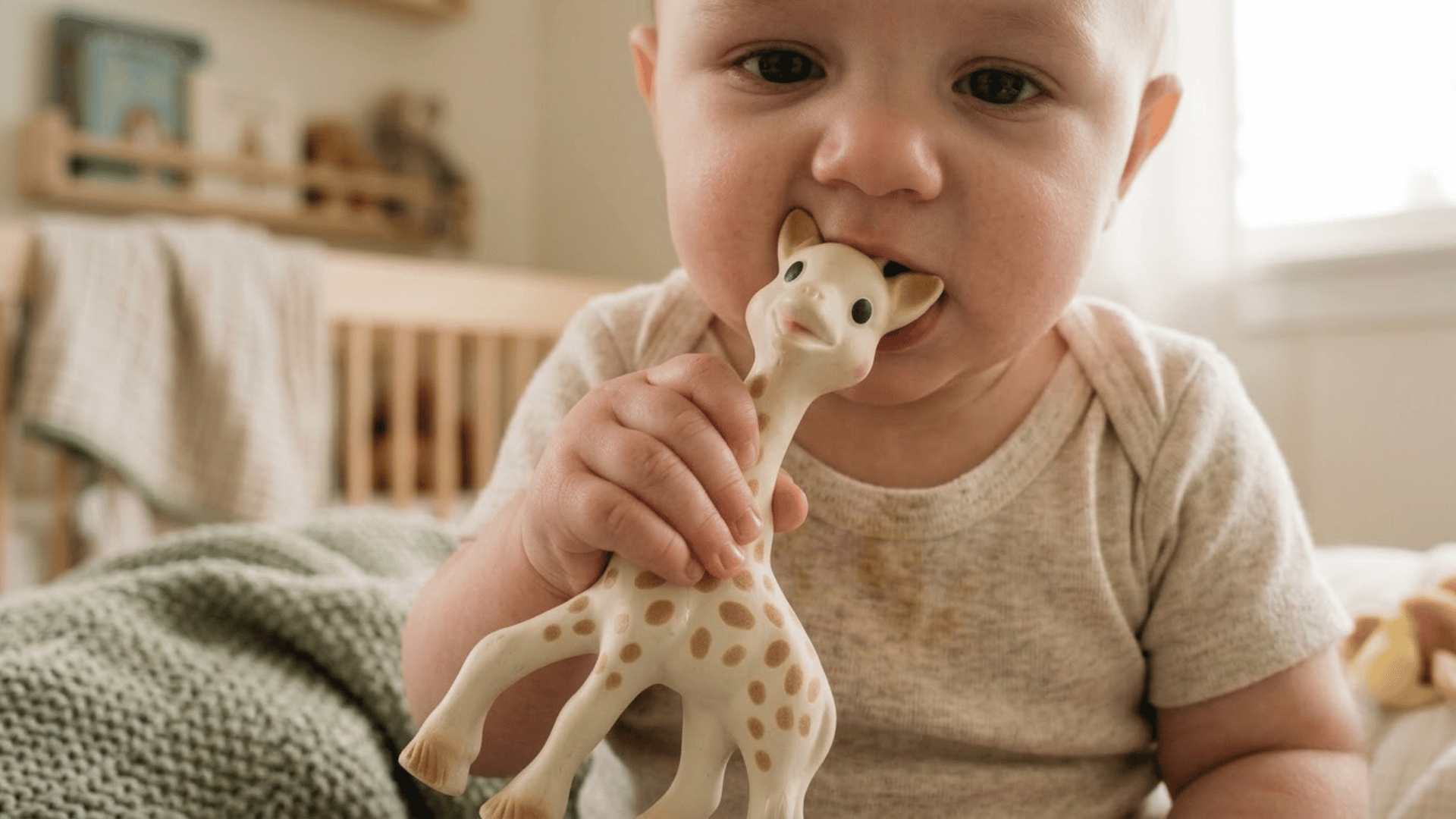
The right teether can cut down on nighttime wake-ups and give your baby a safe way to push back against gum pressure before bed. Here are some options worth checking out.
This teether is made from soft natural rubber. Your baby can chew on the ears, horns, or legs, so there’s always a new spot for them. It’s a gentle pick for younger babies just starting to teethe.
Baby Banana Teether Toothbrush
This teether looks like a banana with soft silicone bristles. It soothes sore gums while getting your baby used to brushing early on. It works well as a first toothbrush once teeth start coming in.
Itzy Ritzy Silicone Teething Mitt
This mitt slips onto your baby’s hand so they can chew without scratching their own face. A crinkle sound inside keeps them interested while they gum on the textured silicone. It’s a smart pick for babies who aren’t great at holding small teethers yet.
This teether is filled with a gel that stays cold longer than water after time in the fridge. The key shapes are easy for baby to grab and turn over in their hands. Textured surfaces on each key help massage sore spots.
This teether looks like a tangle of colorful loops that baby can grab from any angle. The loops are easy to hold even for very young babies with less hand control. You can chill it in the fridge for extra comfort on sore gums.
How Do Teething and Sleep Regressions Overlap?
Around 8 to 10 months, sleep often falls apart for reasons that have nothing to do with teeth. Babies hit a big growth spurt at this age.
It’s also around this stretch that parents start wondering whether it’s time to think about transitioning to a toddler bed, even though most babies aren’t ready for that step quite yet.
They learn to crawl, pull up, and notice when you leave the room. Missing you can unsettle a baby just as much as a sore gum can, and the two often land in the same week.
There’s a second overlap worth knowing. First molars usually show up between 13 and 19 months. That’s the same stretch when many babies hit another rough patch tied to walking.
A growth-related sleep slump can stick around for two to six weeks, even after a tooth is fully in. If your baby is still restless a month later, the tooth probably isn’t the reason anymore.
When to Call Your Pediatrician?
Teething alone should not make your baby seriously unwell. If you notice a high fever, diarrhea, vomiting, a rash, or your baby refusing to eat or drink, these are likely signs of something other than teething.
You should also call your pediatrician if your baby seems unusually sleepy or hard to wake up, or if fussiness and sleep trouble last for more than a few days without any sign of a new tooth.
It’s always better to check in and get peace of mind than to wait and think what’s wrong.
Wrapping It Up
Teething never lasts forever. Each tooth usually causes a few days of discomfort, then settles down until the next one arrives.
So do babies sleep more when teething? For most, no. Sleep tends to get harder, not easier, with more waking at night and fussier bedtimes.
Keep the bedtime routine the same, offer safe things to chew, and watch for signs that point to something beyond a new tooth. I always remind parents to trust what they see in their own baby.
Tonight, try a chilled teether before bed and see how your baby responds, and check in with your pediatrician if sleep still feels off weeks later.
Frequently Asked Questions
Do Babies Sleep More when Teething at Night?
Usually not. Most babies wake up more often at night during teething because of gum discomfort, rather than sleeping longer or more deeply.
Can Teething Make a Baby Unusually Cranky?
Yes. Gum swelling and pressure can start days before a tooth is visible, so fussiness may show up before you actually see anything.
Is It Safe to Give a Teething Baby Melatonin or Sleep Aids?
No, melatonin and other sleep aids are not recommended for infants without a pediatrician’s guidance. Stick to doctor-approved comfort methods instead.
Do Breastfed Babies Experience Different Sleep Disruptions During Teething than Formula-Fed Babies?
Not significantly. Sleep disruption during teething is mainly linked to gum pain and discomfort, not feeding method.