

If your baby puts every toy straight into their mouth, you already know how fast those toys get dirty. As a parent, keeping those toys clean isn’t just about looks – it’s about protecting your little one from germs that can make them sick.
I’ve spent a lot of time figuring out what actually works when it comes to cleaning baby toys safely. The good news is that it doesn’t have to be complicated or take hours out of your day.
In this blog, I’ll walk you through the best methods for cleaning baby toys using safe products.
From plastic rattles to soft stuffed animals, you’ll find easy, practical steps that actually get the job done – without putting your baby at risk.
Baby Toy Cleaning: Why It Matters More Than You’d Expect
Babies see the world with their hands and mouths, which means their toys pick up bacteria, viruses, and allergens incredibly fast.
The American Academy of Pediatrics (AAP) confirms that hand-to-mouth contact is one of the most common ways young children come into contact with harmful germs.
A study published in Pediatrics found that contaminated toys – especially in shared environments like daycares – can spread respiratory viruses, rotavirus, and staph bacteria from child to child within hours.
Regular cleaning isn’t a parenting overreaction. It’s a basic layer of protection. I always tell parents: if the toy goes in the mouth, it needs to go into the cleaning routine.
Once you build a simple schedule, it really doesn’t take long. Here’s how often to clean based on use:
- Daily-use toys and teethers – Every 1–2 days
- Shared toys (playdates, daycare) – After every use
- Stored or displayed toys – Once a week
- Any toy used during illness – Deep clean immediately
How to Clean Kids’ Toys
Different toys need different cleaning methods. Here’s a simple breakdown by toy type to keep things safe and germ-free.
1. Plastic Baby Toys
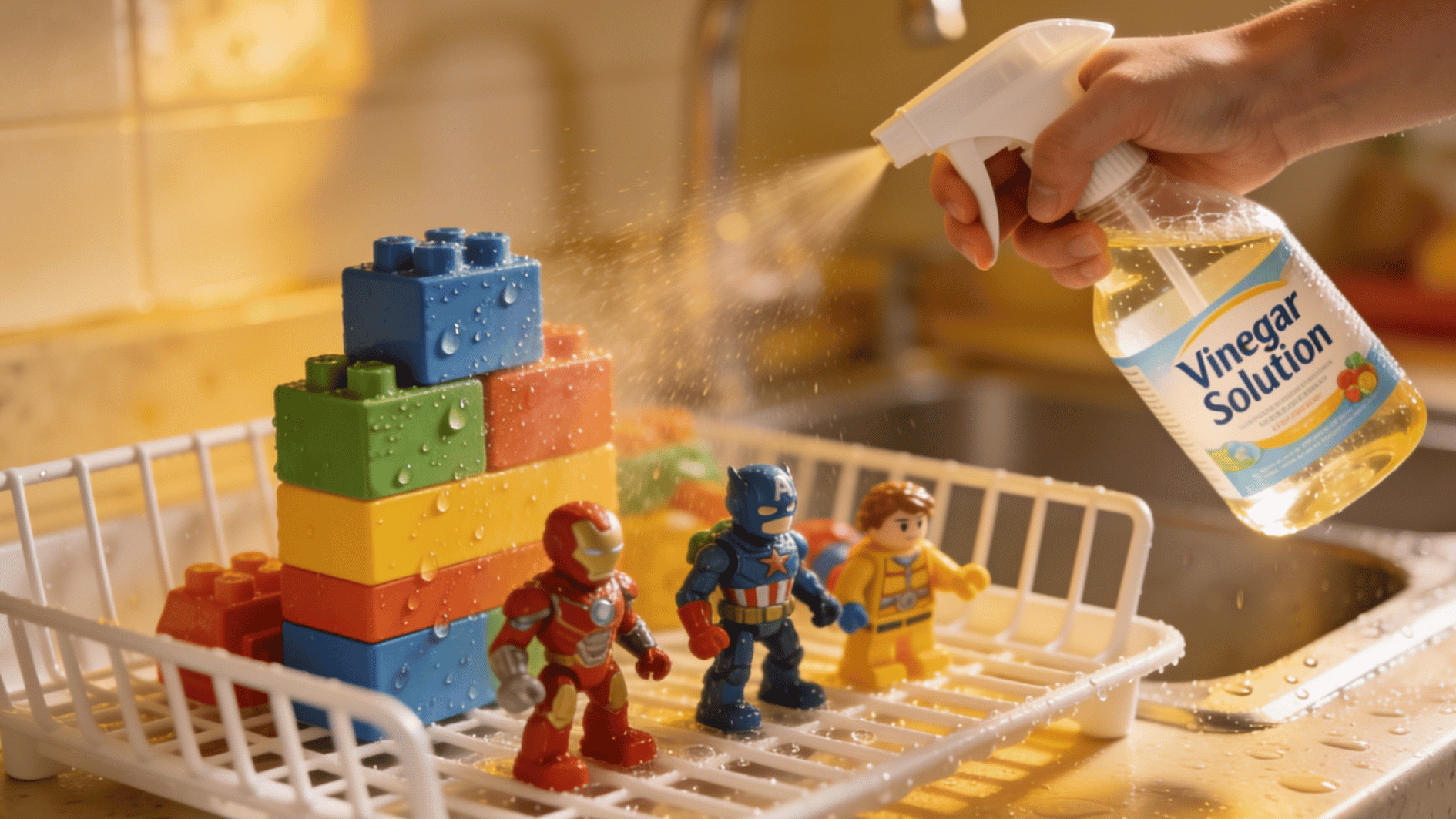
You don’t need anything fancy- warm water and a fragrance-free dish soap (Dawn Free & Clear or Seventh Generation both work well) handles everyday drool, food, and grime without leaving residue that irritates a baby’s skin or stomach.
Scrub crevices with a soft brush, rinse under running water for at least 20–30 seconds, and air dry completely before handing it back.
After illness or a playdate, step up to a disinfecting rinse:
- Diluted white vinegar (1:1 with water) – spray, wait a few minutes, wipe, rinse. Effective against E. coli and Salmonella at proper concentrations.
- Hydrogen peroxide (3%) – spray, wait 5 minutes, rinse well.
- EPA-registered baby-safe sprays – check the label for a rinse-required notice.
2. Soft and Stuffed Baby Toys
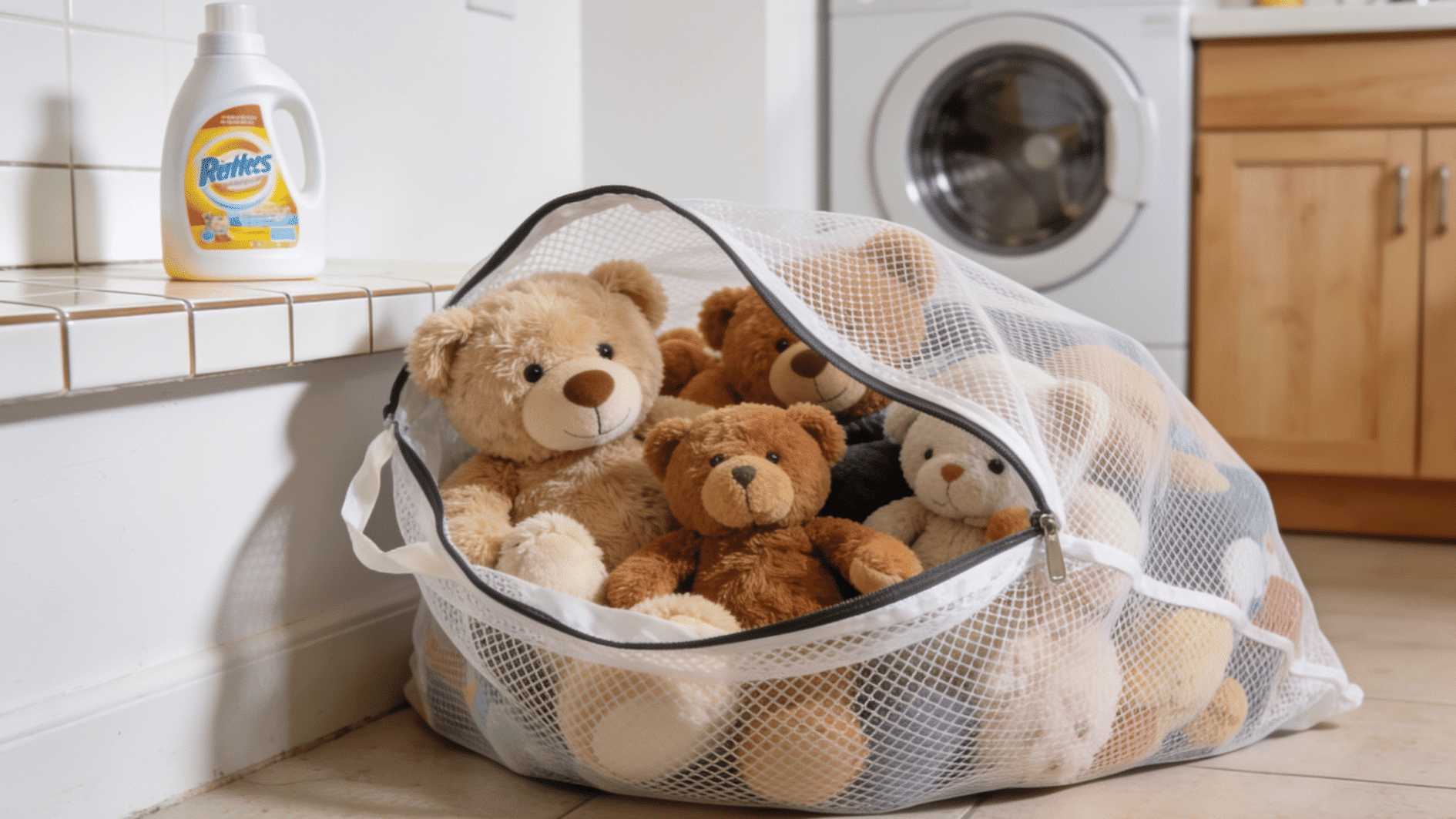
Always check the care tag before washing any fabric toy. Machine-washable stuffed toys do well on a gentle cold or warm cycle in a mesh laundry bag with fragrance-free detergent- skip the fabric softener and always air dry flat.
For surface-clean-only toys, a damp cloth with mild soap does the job; wipe off residue with a second clean damp cloth and dry fully before putting it away. Damp toys left in a toy box grow mold fast.
Between washes, sprinkle baking soda, leave it for 15 minutes, then shake or vacuum off. No care tag? Treat it as surface-clean only.
3. Electronic and Battery-Operated Toys
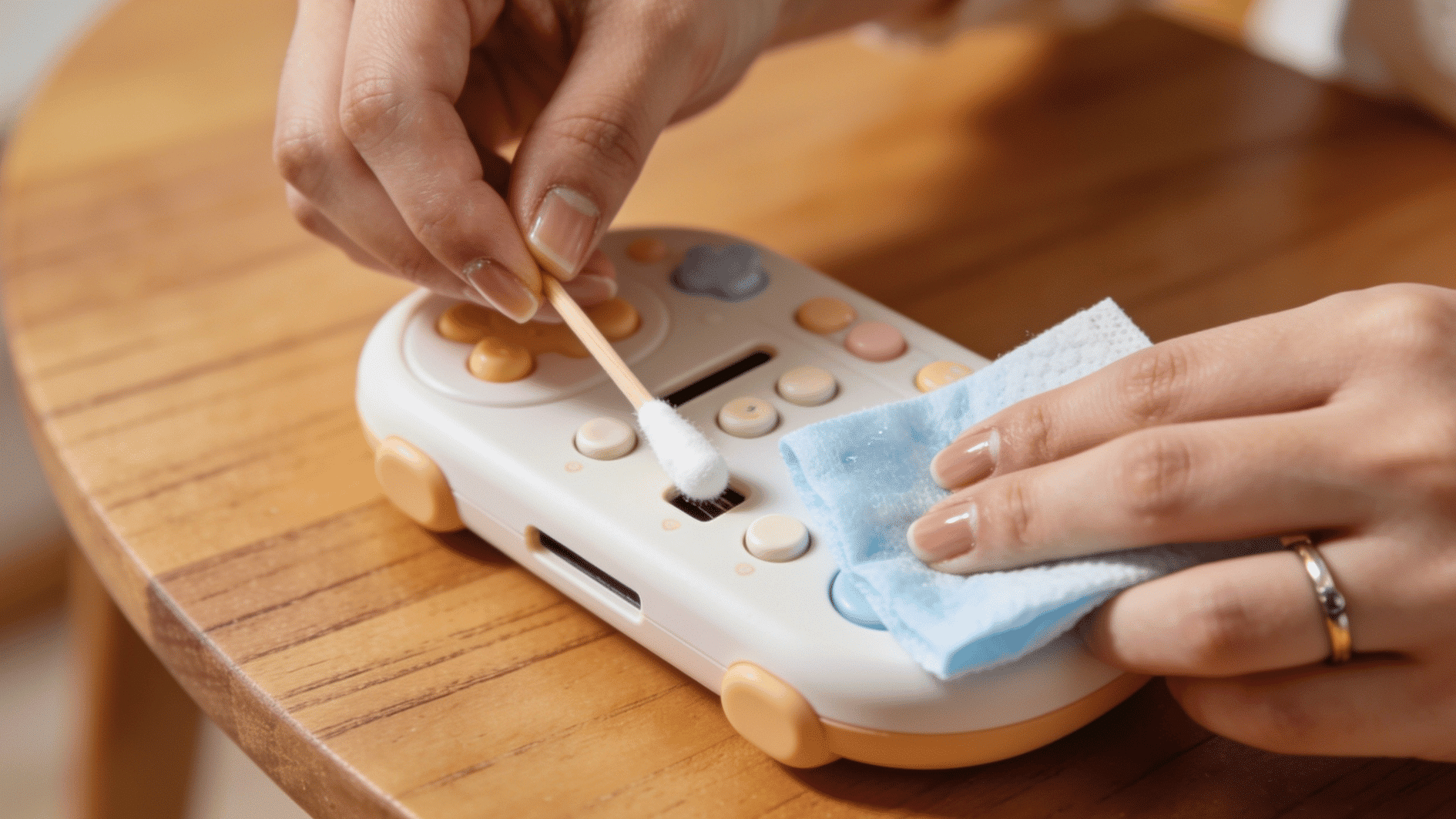
Water and electronics don’t mix- but skipping cleaning altogether isn’t an option either. These toys get touched constantly.
- Step 1: Remove the batteries first. Always. Even a slightly damp cloth near an open battery compartment can cause corrosion over time.
- Step 2: Wipe outer surfaces with a well-wrung damp cloth. It should feel barely damp, not wet.
- Step 3: Follow with a baby-safe disinfectant wipe across all surfaces the baby touches: buttons, edges, backs.
- Step 4: Clean crevices using a cotton swab dipped in diluted vinegar. Keep liquid away from speaker vents and any openings.
- Step 5: Air-dry completely before reinserting the batteries. Don’t rush this step.
4. How to Clean Play Areas and Other Essentials
Toys aren’t the only things that need regular attention.
Play mats and foam tiles should be wiped down after each use with a damp cloth and fragrance-free soap- never soak foam, as trapped moisture underneath breeds mold you won’t see until it’s a problem.
Disinfect weekly with diluted vinegar and air dry fully. Replace any mat that’s cracking or peeling.
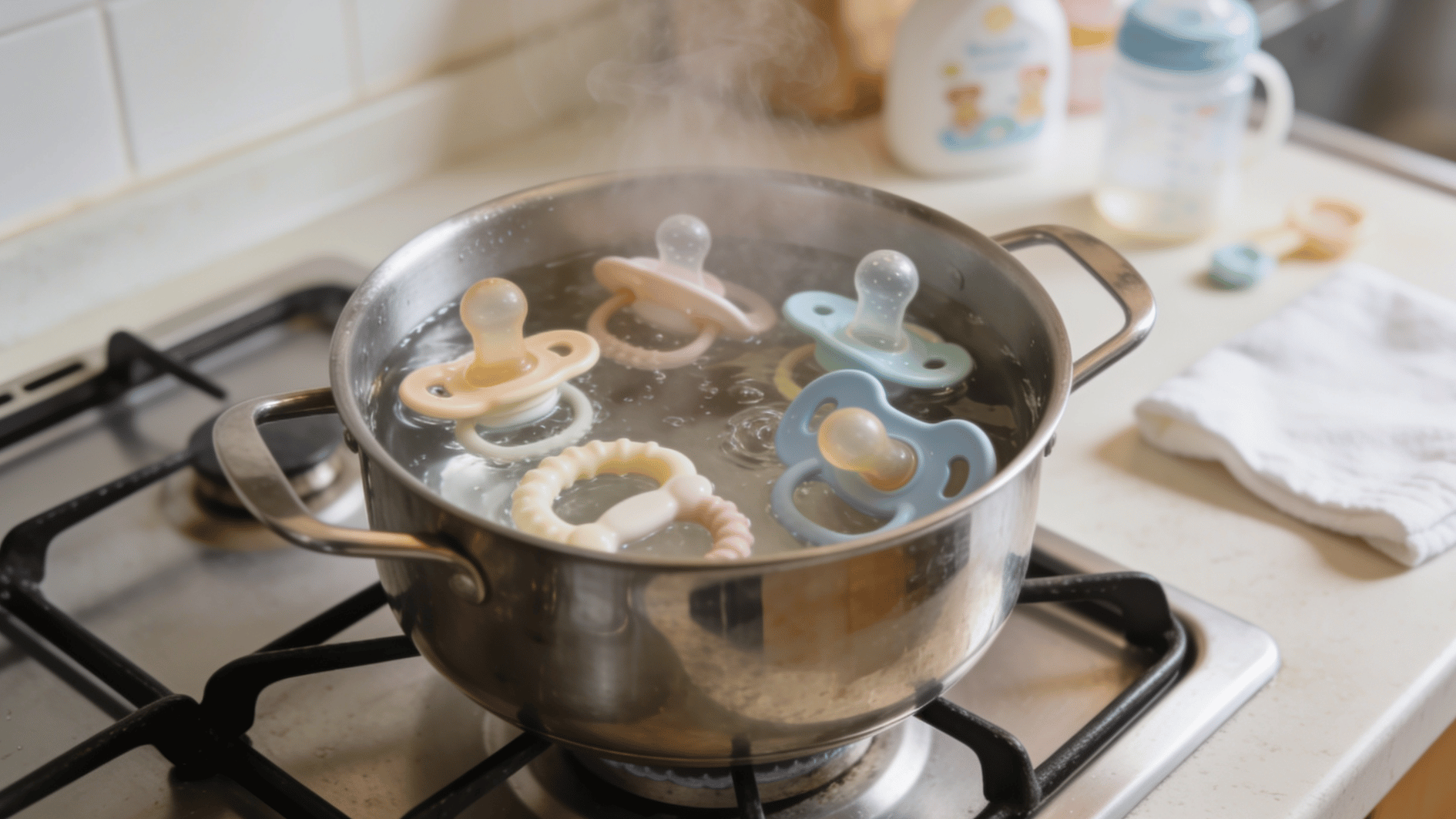
For pacifiers and teethers, rinse with warm water after every use and sterilize weekly by boiling for five minutes or using a steam sterilizer.
The AAP warns against cleaning pacifiers in your own mouth- it transfers adult oral bacteria directly to your baby. Replace silicone items every four to six weeks.
Safe Products to Use When Cleaning Toys
Choosing the right products matters just as much as how you clean.
The CDC recommends that when disinfecting items used by children, parents choose products that are effective but low in toxicity – and always rinse thoroughly after use on any item a child might mouth.
| Cleaning Product | Best Use | How to Use |
|---|---|---|
| Fragrance-Free Dish Soap (Dawn Free & Clear, Seventh Generation) | Everyday cleaning for hard and soft toys | Wash toys with warm water and soap, then rinse thoroughly and air dry. |
| White Distilled Vinegar (1:1 with Water) | Natural cleaning for hard plastic toys | Wipe surfaces with the diluted solution, then wipe clean with water and dry. |
| Hydrogen Peroxide (3%) | Disinfecting hard surfaces | Apply to the toy, let sit for 1 minute, then rinse thoroughly and allow to dry. |
| Baby-Safe Disinfectant Wipes (BabyGanics, Puracy) | Quick clean-ups between deep washes | Wipe the toy surface completely and allow it to air dry. |
| Baking Soda | Removing odors from soft toys | Sprinkle lightly, let sit for a few hours, then shake or vacuum off. |
Things to Keep in Mind While Cleaning Baby Toys
Cleaning baby toys isn’t complicated, but a few small details make a real difference in how safe and effective the process actually is. Getting the method right matters just as much as cleaning regularly.
- Always remove batteries before cleaning any electronic toy – moisture near battery compartments causes corrosion
- Rinse every toy thoroughly after cleaning – soap or disinfectant residue left behind can irritate a baby’s gut and skin
- Air dry completely before returning any toy to your baby – damp surfaces grow mold fast, especially inside hollow toys
- Replace cracked, chipped, or peeling toys promptly – bacteria settle into damaged surfaces that cleaning can’t reach
- Check labels on every cleaning product before use – anything marked “keep away from children” isn’t safe on mouthed surfaces, even when dry
Conclusion
Cleaning baby toys doesn’t have to feel like one more thing on an already full plate. With the right products and a simple routine, you can keep your baby’s toys genuinely clean without spending hours on it.
Start with whatever type of toy your baby reaches for most – build from there. The routine gets faster every week.
And knowing that the things your baby mouths and handles every day are actually clean? That peace of mind is absolutely worth it.
Frequently Asked Questions
Can I Use Clorox Wipes to Sanitize Baby Toys?
Yes, Clorox wipes can sanitize hard plastic baby toys, but always rinse the toys thoroughly and let them dry completely before giving them back to your baby.
Are Lysol Wipes Safe for Babies?
No, standard Lysol wipes should never be used directly on babies because the disinfecting chemicals can irritate sensitive skin.
Is It Okay to Spray Baby Toys with Lysol?
Yes, Lysol can be used on baby toys, but any residue should be rinsed off completely since babies often put toys in their mouths.