




A baby looking at their toes, lifting their legs, and reaching for their tiny feet can be a sweet moment for parents. It is also a sign that their body control is growing.
Many parents start asking about timing when they notice their baby holding their feet during play or bringing toes closer to their hands.
This blog explains when babies start grabbing their feet, why this skill matters, how it connects with rolling and movement, and what parents can do to support healthy development.
When Do Babies Start Grabbing Their Feet?
Babies usually begin noticing and reaching for their feet around 3 to 6 months of age. Many can grab their toes or feet between 4 and 7 months of age, as their coordination improves.
Foot-grabbing is one small part of early movement development. The Centre for Disease Control recommends tracking overall milestones rather than focusing on one skill alone.
The question of when babies start grabbing their feet is often linked with growing hand control, body awareness, and curiosity about movement.
Typical Age Range for Foot Grabbing at a Glance
The timing is different for every baby. Some babies show interest in their feet early, while others focus first on skills like rolling, reaching for toys, or sitting with support.
| Baby Age | Common Foot Movements |
|---|---|
| 3 to 4 months | Watches feet, kicks more, and notices leg movements |
| 4 to 6 months | Reaches toward feet and may hold toes |
| 6 to 8 months | Plays with feet while rolling or sitting |
Reasons Babies Grab Their Feet
Babies learn through touch and movement. Holding their feet helps them notice different body parts and understand how their body moves.
This skill also supports early movement development by giving babies practice with reaching, grasping, and coordination.
These same abilities are used later for playing with toys and changing positions.
Foot-grabbing is also a form of exploration during infancy. A baby may look closely at their toes, hold their feet, bring them toward their mouth, or move their legs while watching them.
How Foot Grabbing Relates to Motor Development?
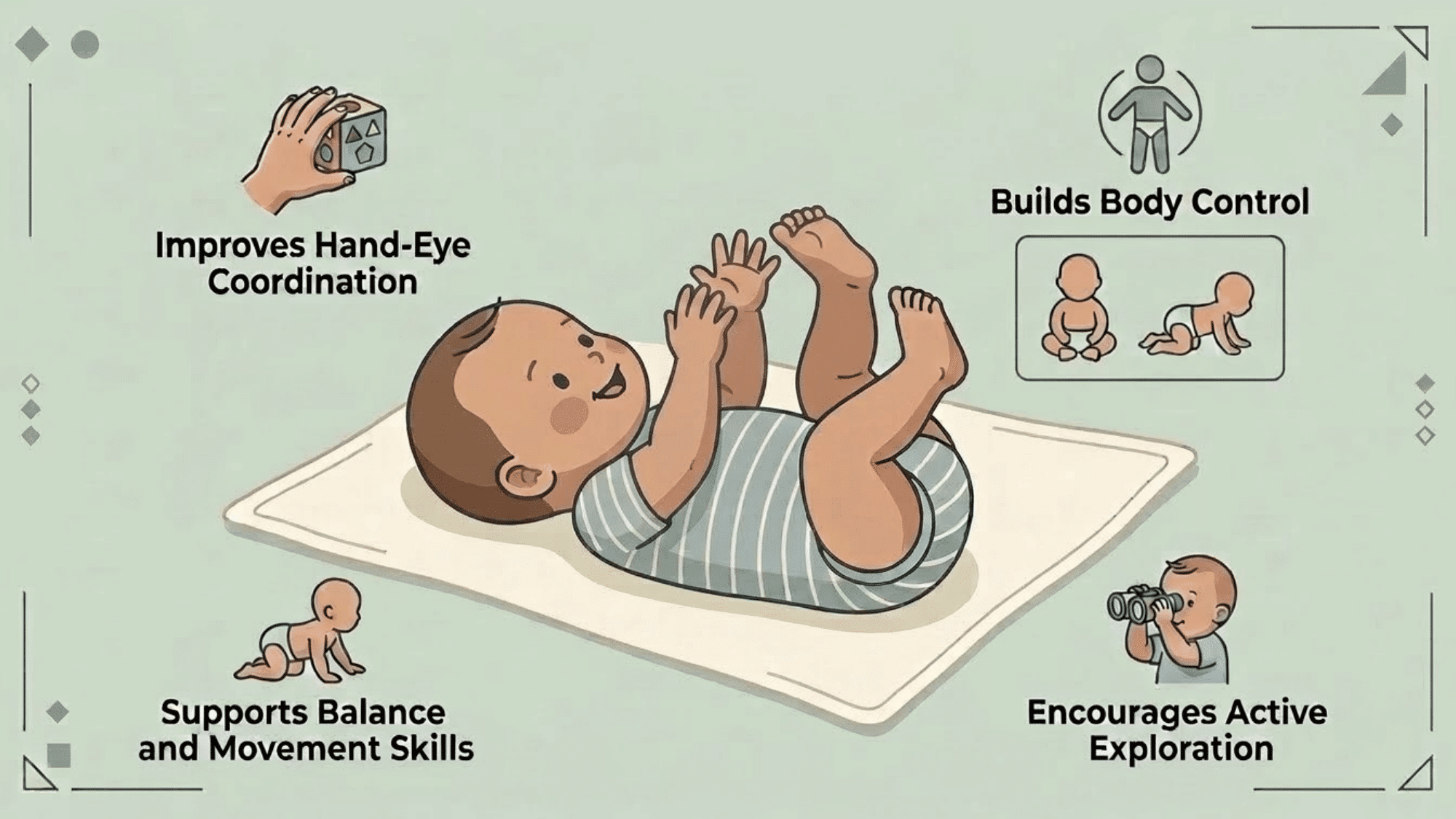
Foot-grabbing helps babies practice movement, coordination, and body control during early development.
Improves Hand-Eye Coordination
Babies learn to guide their hands toward something they can see. Reaching for their feet helps them practice controlling their movements and improving coordination.
Builds Body Control
Lifting their legs and reaching downward requires babies to use their developing muscles. This practice supports better control over their body during movement.
Supports Balance and Movement Skills
Moving their arms and legs together helps babies understand how their body works as one unit. These movements prepare them for skills like rolling, sitting, and changing positions.
Encourages Active Exploration
When babies freely move, kick, and hold their feet, they get more chances to practice new movements. This type of play supports curiosity and physical development.
Other Skills That Often Develop Around The Same Time
A baby who grabs their feet is practicing control over their movements. Babies usually develop several movement skills during the same stage of growth.
| Skill Area | Examples |
|---|---|
| Hands | Reaching, holding toys, bringing objects closer |
| Legs | Kicking, lifting feet, touching toes |
| Body control | Rolling, pushing up, sitting with support |
| Exploration | Touching, grabbing, and mouthing objects |
Signs Your Baby Is Getting Ready to Grab Their Feet
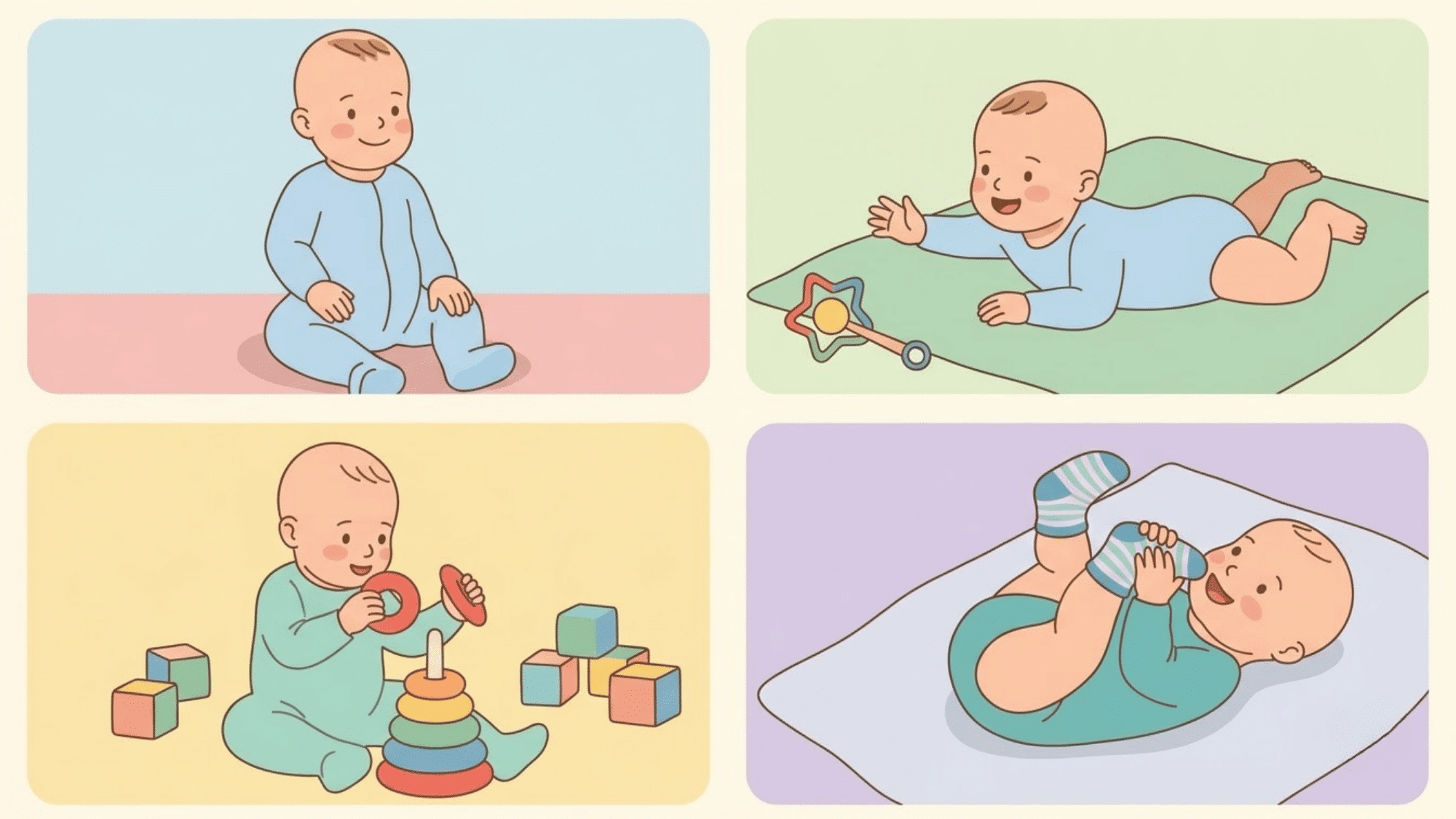
Some babies show interest in their feet before they can fully hold them. These small actions often appear as hand and body coordination improves.
- Practices rolling movements: Twists their body, shifts weight, and works on changing positions.
- Watches their feet often: Looks at toes and follows leg movements during play.
- Lifts legs while lying down: Brings feet closer while practicing body control.
- Reaches toward their lower body: Tries to touch legs, ankles, or toes.
- Brings toys to their mouth: Shows growing hand coordination, control, and speech development.
- Moves arms and legs together: Uses both sides while kicking and playing.
- Enjoys floor play: Moves freely and practices new positions.
What if My Baby is Not Grabbing Their Feet Yet?
A baby who has not started grabbing their feet yet may still be developing other abilities, such as reaching, rolling, or improving head and body control.
As a new parent, you should consider reaching out to a pediatrician if your baby rarely moves their arms or legs, they are not reaching for objects as expected, or they lose a skill they previously had
If you are asking when do babies start grabbing their feet because your baby has not reached this skill yet, know that movement skills can appear at different times.
How Parents Can Encourage Babies to Explore Their Feet
Parents do not need to teach babies how to grab their feet. Most babies find this skill through everyday movement and play. Simple activities can give babies more chances to notice and move their bodies.
- Give supervised floor time: Allow babies to stretch, kick, and move freely.
- Choose comfortable clothing: Loose outfits make leg movement easier.
- Play gentle toe games: Touch toes softly while talking or singing.
- Place toys nearby: Encourage reaching and movement.
- Allow safe exploration: Let babies practice while awake and supervised.
Wrapping it Up
Seeing your baby grab their feet is a small part of how they learn and grow through the motor movement phase at their own pace.
Knowing when do babies start grabbing their feet can help parents understand what is typical, but there is no single timeline every baby follows.
Rolling, reaching, and playing with feet are all small steps in a baby’s growth.
Providing safe playtime and watching overall development can help you feel more confident as new skills appear in your child.
Frequently Asked Questions
Do Babies Grab Their Feet Before They Sit Up?
Some babies play with their feet before sitting independently, while others develop sitting skills first. These skills can appear in different orders.
Should I Help My Baby Grab Their Feet?
Gentle play is fine, but babies usually learn this skill by moving and discovering their own bodies.
Why Does My Baby Put Their Feet in Their Mouth?
Babies use their mouths to learn about objects and body parts. This behavior is a common part of early exploration.
One Response