

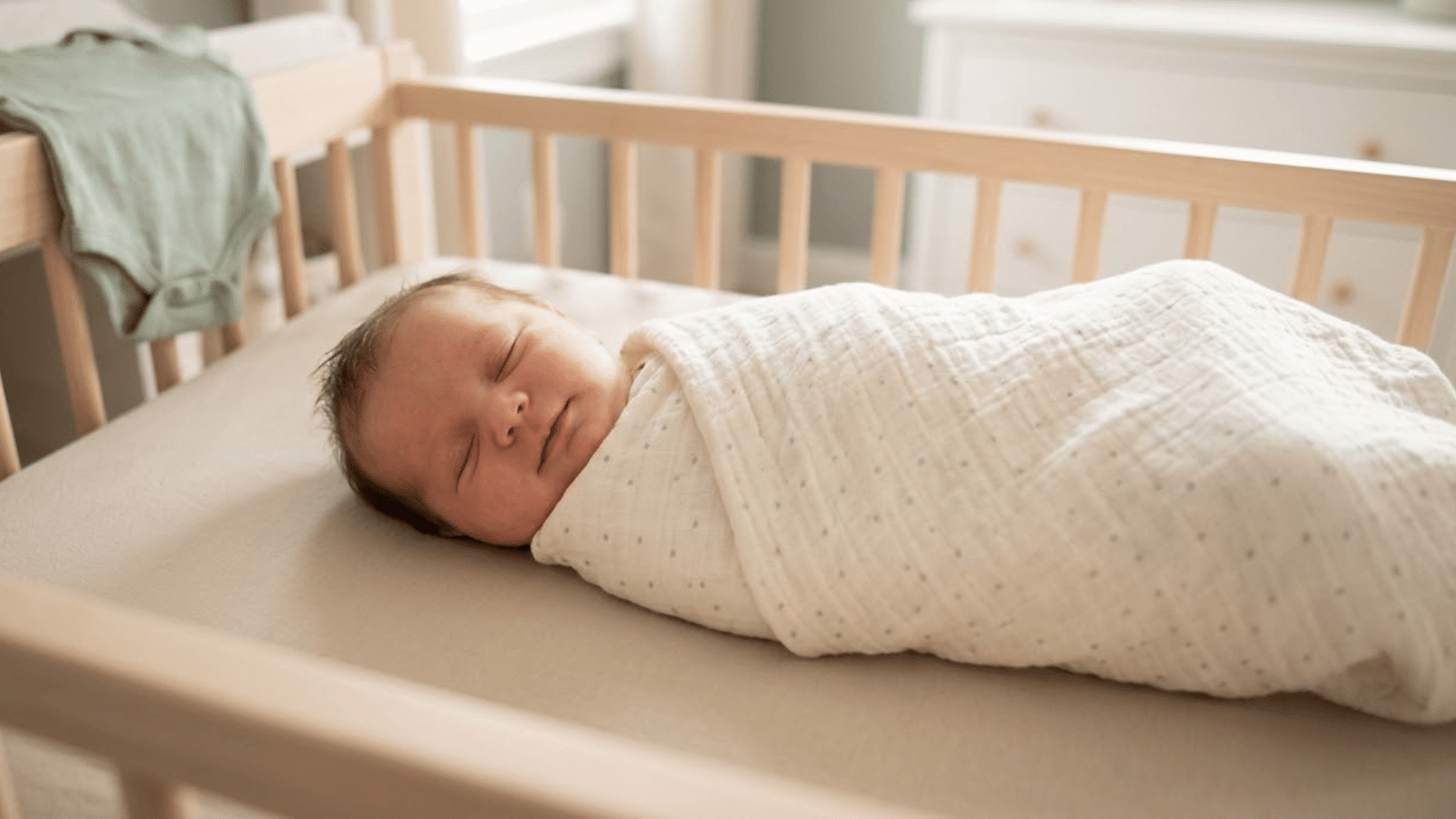
Most parents have checked on a sleeping baby, felt their arms or back, and questioned if that blanket was the right choice. It is one of the most common worries new parents face.
There is rarely a clear answer in the moment; babies cannot say when they feel too hot or too cold. Parents must judge from small signs: fussing, sweat, or a cold nose.
In my own experience, dressing baby for sleep becomes far simpler once you understand what those signs mean. A few small changes to nighttime clothing can lead to fewer wake-ups.
Once these basics are clear, bedtime becomes much easier to manage.
A Simple Rule for Dressing Baby for Sleep
Babies run warmer than we expect, and most parents dress them a little too warm without realizing it.
It’s an easy mistake to make; bundling up feels like the safe move, but a sweaty, restless baby usually isn’t cold; they’re overdressed.
The easiest fix is a simple rule: dress baby in about one layer more than you’d wear to sleep comfortably in that same room.
If you’d sleep in just a t-shirt, baby does fine in a onesie plus a light sleeper.
Skip the extras too: hats, loose blankets, anything bulky just in case. They add warmth in places baby doesn’t need, and they’re not part of how they actually sleep safely.
Once you’ve got that instinct down, the rest is just knowing how to fine-tune it, which is where TOG comes in.
What is TOG and Why is it the Easiest Way to Dress Baby for Sleep?
TOG stands for Thermal Overall Grade; it’s just a number that tells you how warm a piece of sleepwear is. The higher the number, the warmer the fabric.
A low TOG, like 0.5, is light and good for summer. A higher TOG, like 2.5 or 3.5, is thick and made for cold rooms. Most sleep sacks and swaddles have this number printed right on the tag.
That’s what makes TOG so easy to use. You don’t have to guess how warm something is just by looking at it or feeling the fabric.
Once you check your baby’s room temperature, you can just match it to the right TOG.
How to Dress a Newborn for Sleep?
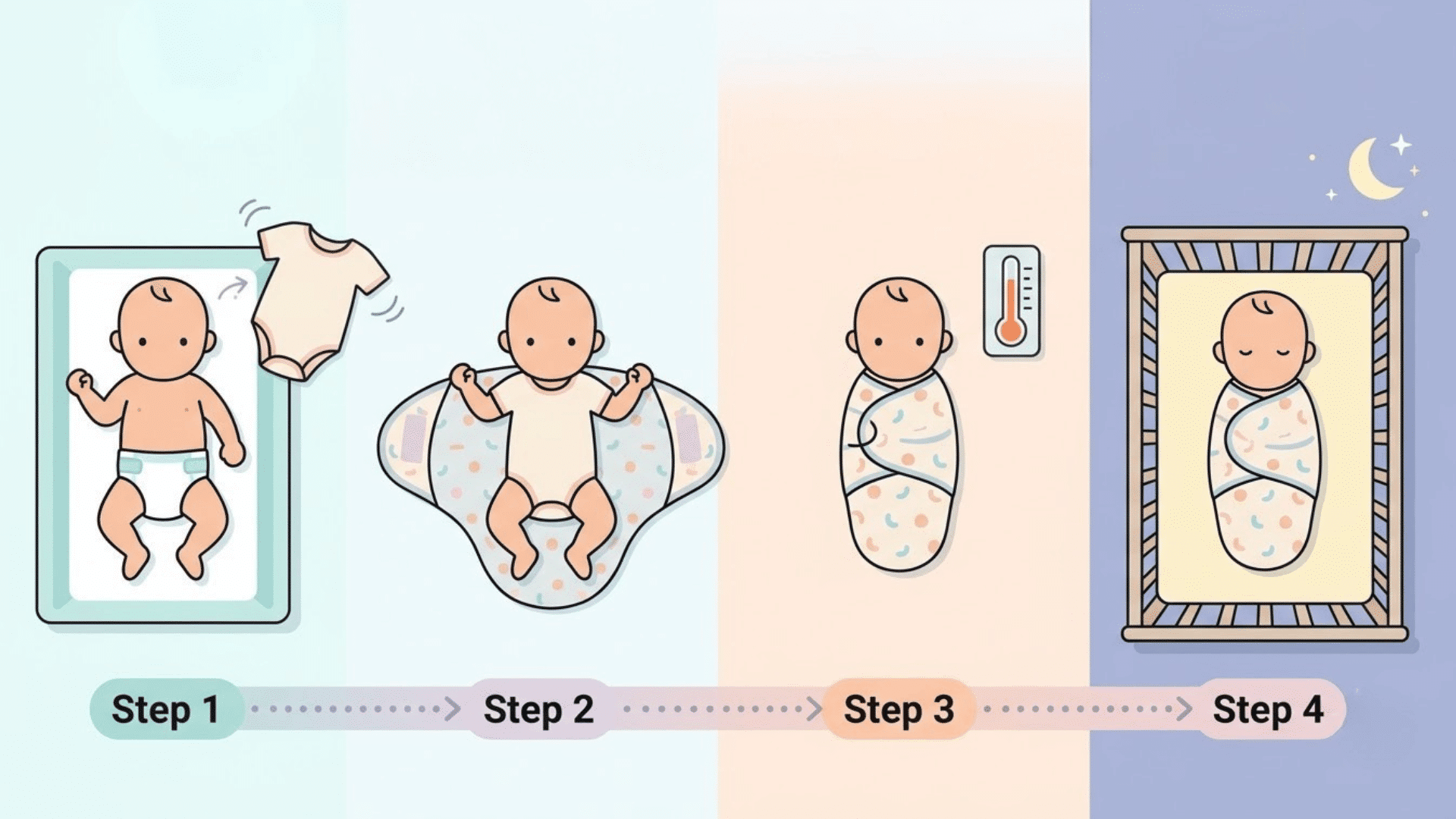
Newborns need closer attention when it comes to sleep clothing. They are smaller, cannot roll over yet, and still have the startle reflex, which can wake them on their own.
Step 1: Start With a Simple Base Layer
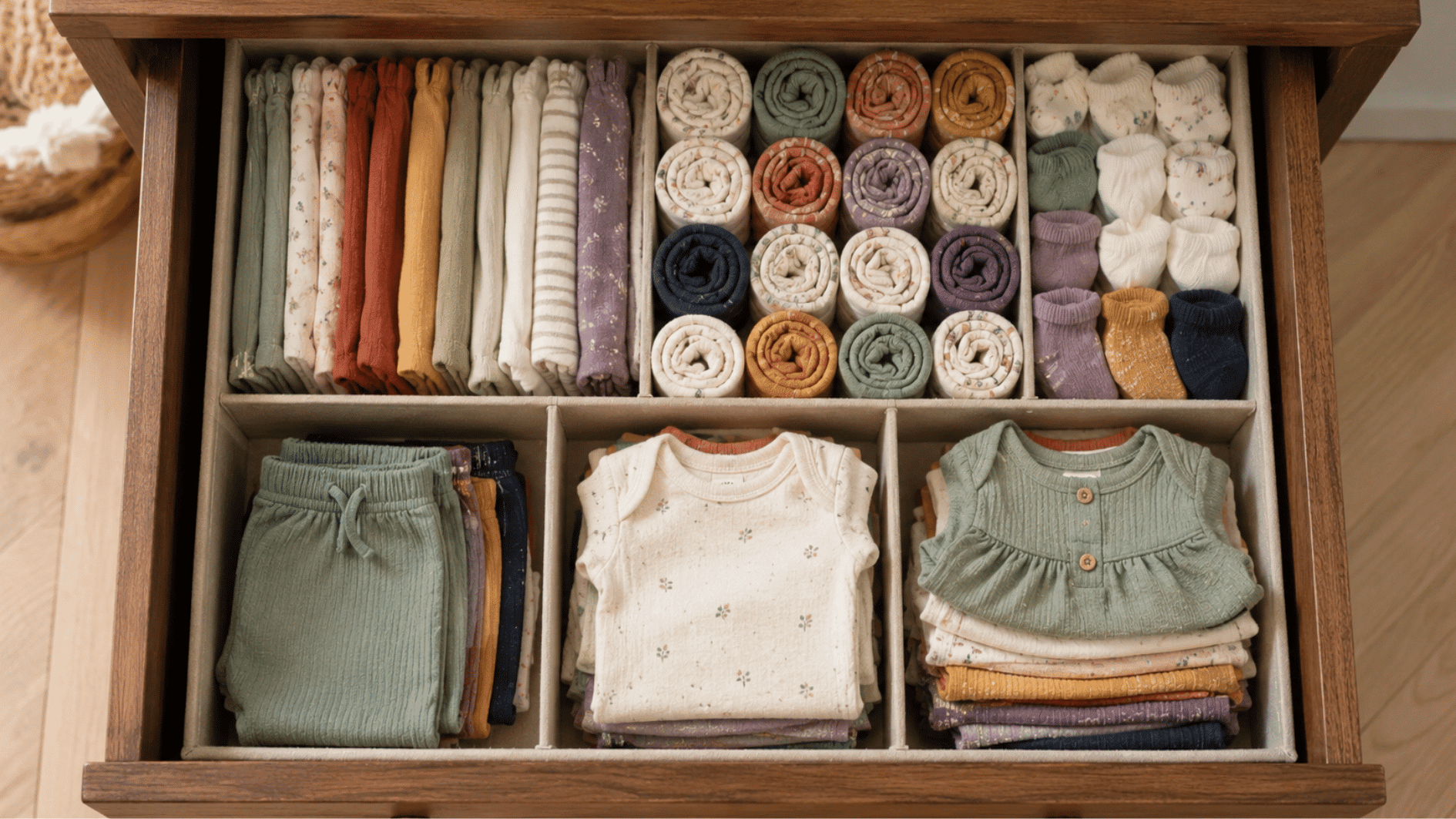
Put a soft cotton onesie directly on baby’s skin. This is the layer that touches their skin all night, so comfort matters more here than anywhere else.
Use cotton, since they let air move and helps prevent your baby from getting too sweaty.
Step 2: Add a Swaddle for Better Sleep
Most newborns sleep better when they’re swaddled. It wraps snugly around the baby’s arms and body, which stops the startle reflex from jolting them awake every time their arms twitch.
This often means longer, deeper stretches of sleep for both baby and you. Look for a swaddle with a TOG rating that matches your room temperature.
Step 3: Know When to Stop Swaddling
The moment your baby starts showing any sign of rolling over, even just once, it’s time to stop swaddling.
A swaddled baby who rolls onto their stomach can’t use their arms to reposition themselves, which makes it unsafe.
Step 4: Match the Layer to Room Temperature
On cooler nights, add a long-sleeve sleeper underneath the swaddle or sleep sack for extra warmth. A simple short-sleeve onesie under a lighter swaddle or sack is usually enough on warmer nights.
A quick way to check if you’ve got it right is to feel the back of baby’s neck or their chest.
Step 5: Skip Hats, Socks, and Mittens Indoors
These extras feel like they add warmth, but indoors, they usually aren’t necessary.
A baby’s head and hands actually help release extra body heat, so covering them up can make overheating happen faster than parents expect.
Swaddling vs. Sleep Sacks: What’s Best and When
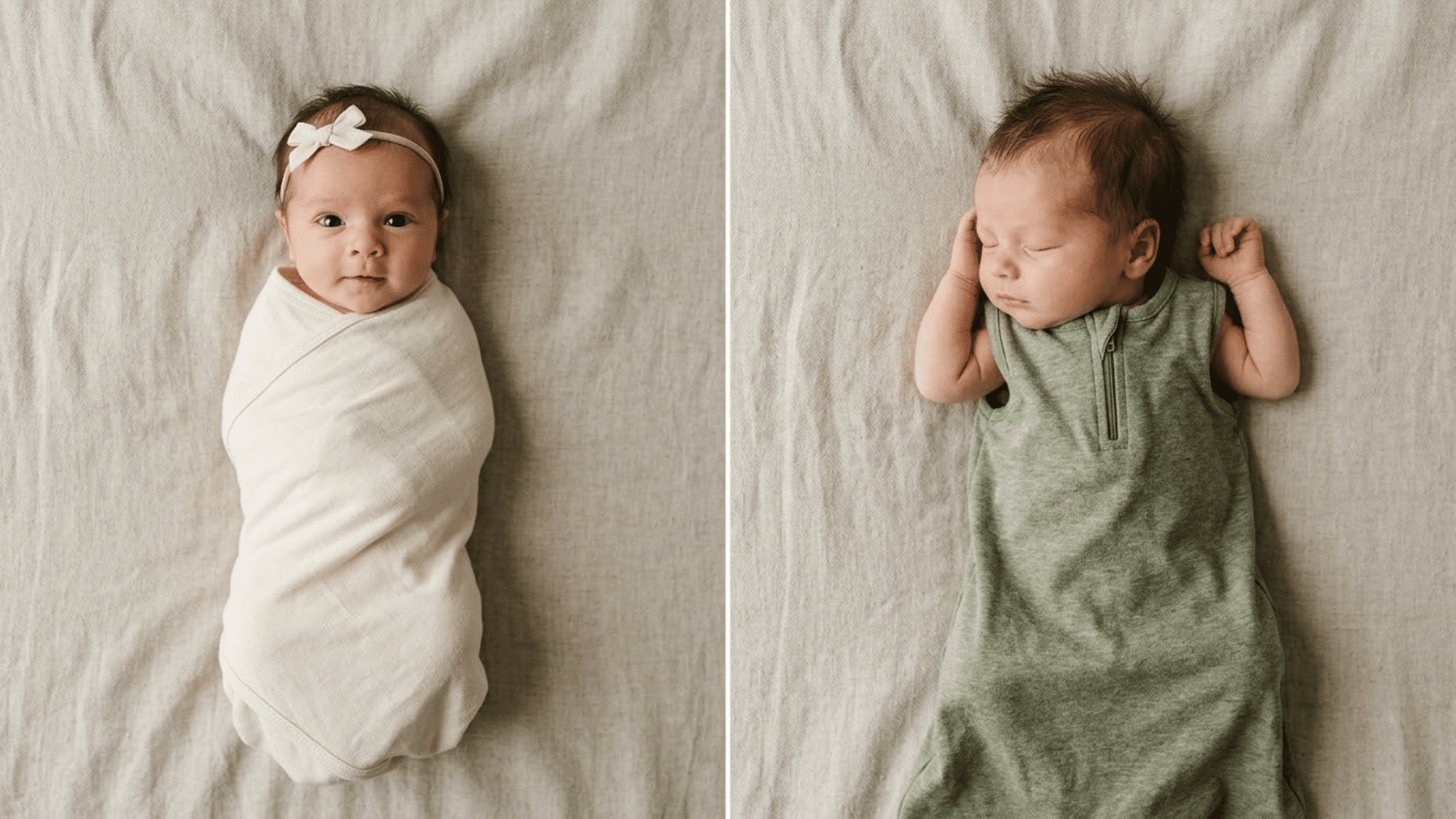
Both swaddles and sleep sacks help babies sleep safely without loose blankets in the crib. The right choice mostly comes down to age and whether your baby has started rolling over.
| Feature | Swaddle | Sleep Sack |
|---|---|---|
| Best age | Birth to when baby starts rolling | From the moment baby shows signs of rolling, through the toddler years |
| Arm position | Arms wrapped snugly against the body | Arms free to move |
| Main benefit | Calms the startle reflex for longer sleep stretches | Lets baby move safely, including rolling and repositioning |
| Safety note | Must be stopped once baby can roll | Safe to use even after baby rolls, since arms are free |
| Fit tip | Snug around chest, loose around hips | Roomy enough for legs to kick and move |
| TOG matters? | Yes, choose based on room temperature | Yes, choose based on room temperature |
Choosing the Right Sleep Clothes for Every Season
Room temperature doesn’t stay the same all year, so your baby’s sleepwear shouldn’t either. Here’s how to adjust layers season by season.
Adjust Sleeve Length with the Season
In summer, a short-sleeve onesie or bodysuit is usually enough on its own. In winter, switch to a long-sleeve onesie or sleeper as the base layer for extra warmth. Let the room, not the calendar, decide which one you reach for.
Choose Breathable Fabrics Year-Round
Cotton and bamboo let air move and help sweat evaporate, keeping baby comfortable whether it’s hot or cold. Synthetic fabrics tend to trap heat and moisture, which can make a warm room feel even warmer.
Use Tools to Manage the Room
A fan angled away from the crib helps keep air circulating in summer. In winter, avoid loose blankets entirely and rely on wearable layers instead, since heating can also make a room warmer than expected.
What Parents are Actually Saying About Dressing Baby for Sleep
Reading through personal experiences can add a lot of context. Here’s a look at a few cases where parents share their own take on this exact question.
A diaper alone can be enough: Another response said that at the bare minimum, a diaper works fine, and if not that, then a simple onesie or pajamas in a proper crib or bassinet. – Quora
Winter means full coverage, but still cotton: One user recommended leaning on cotton fabrics for winter nights, layering with things like a hooded sweater, booties, and fleece pants rather than synthetic materials. – Quora
The season should decide the outfit, not a fixed rule: A different parent pointed out that what a newborn wears to bed really comes down to the time of year, keeping it light in summer and warmer in winter. – Quora
Wrapping it Up
Dressing your baby for sleep doesn’t have to be a nightly guessing game.
Once you know the basics checking the room temperature, matching it to the right TOG, and knowing when to reach for a swaddle or a sleep sack- the rest falls into place naturally.
I still remember sneaking into my baby’s room, pressing a hand against his back just to check if he was too warm or too cold; until I learned to stop guessing and just check the neck instead.
No chart will ever know your baby better than you do, so use this as your starting point, adjust as you go, and trust what you’re seeing and feeling each night.
Frequently Asked Questions
Should Baby Wear Socks or a Hat to Sleep Indoors?
Not usually. Indoors, a baby’s head and hands help release extra body heat, so covering them can speed up overheating.
Can I Put a Onesie Under a Footed Sleeper, or is That Too Much?
It depends on the room temperature. In a cooler room, a onesie under a footed sleeper is a fine combo. In a warmer room, it can be one layer too many, so check baby’s chest or neck to be sure.
What if My Baby Always Feels Warm to the Touch? Should I Dress Lighter than the Chart Suggests?
Yes, charts are a starting point, not a strict rule. If your baby consistently runs warm, it’s fine to size down a TOG level or drop a layer, as long as you keep checking that they’re comfortable.
Is it Safe to Use a Fan Instead of Adding or Removing Layers to Manage Temperature?
A fan can help with air circulation, but it shouldn’t replace proper layering. Use it alongside the right TOG and clothing choices, not as a stand-in for dressing baby appropriately.