


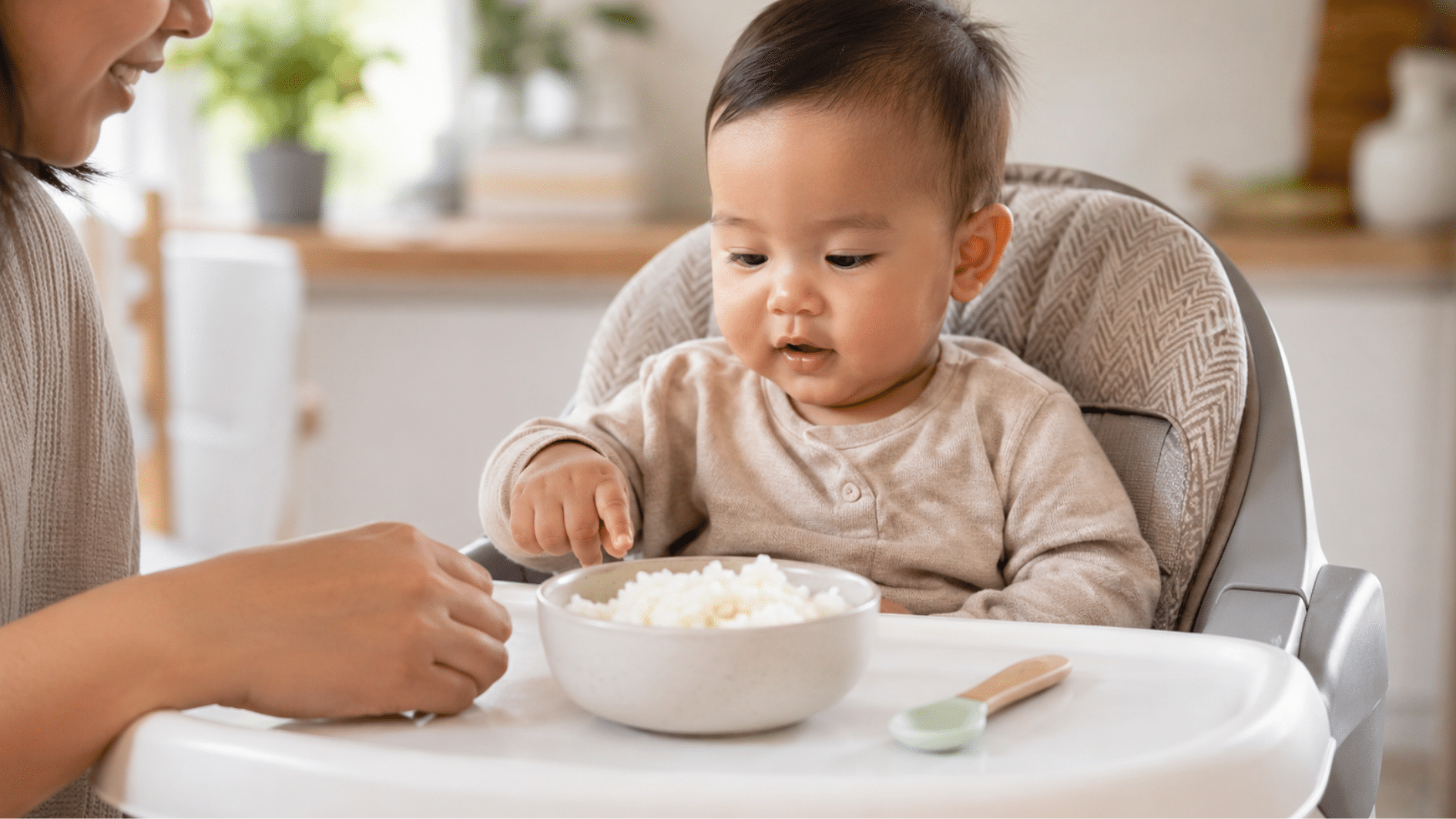
So your baby’s finally eating solids, and now you’re thinking whether babies can have rice? Good news is, yes, they can, and it’s actually one of the easier foods to start with.
But there’s more to the story than a quick yes. Rice can carry trace amounts of arsenic, and that’s worth understanding before it becomes a regular part of your baby’s plate.
It’s not a reason to panic, though. Once you know a few basics like the right age, how much is fine, and how to serve it safely, rice can be a solid, no-fuss addition to your baby’s meals. Let’s walk through it.
Can Babies Have Rice?
Yes, babies can have rice once they are ready to begin solid foods, which is usually around 6 months of age. Rice has a mild flavor and a soft texture when properly cooked, making it easy to include in early meals.
Breast milk or infant formula remains the main source of nutrition during the first year, while solid foods gradually provide additional nutrients and new textures.
Age alone is not the only factor. According to the CDC, a baby should also be able to control their head and neck, sit upright with support, open their mouth to take food, and swallow rather than push food back out.
Is Rice Safe for Babies?
Yes, rice can contain arsenic, but babies can still eat it in moderation. The main concern is serving rice or rice cereal too often instead of offering different grains.
- Why does rice contain arsenic? Rice absorbs more arsenic from soil and groundwater than many other crops.
- Why does it matter for babies? Babies may eat more rice in relation to their body weight than adults, so repeated exposure can add up faster.
- Should parents stop serving rice? No. Rice does not need to be removed from a baby’s diet. It should simply be served as one of several grain choices.
- How can exposure be reduced? Rotate rice with fortified oat, barley, and multigrain cereals rather than offering rice cereal every day.
The FDA also sets an action level of 100 parts per billion for inorganic arsenic in infant rice cereal to help reduce exposure.
Cooked Rice vs. Infant Rice Cereal
Babies can have either cooked rice or infant rice cereal once they are ready for solid foods, usually around 6 months. Cooked rice is regular rice prepared until soft, while infant rice cereal is finely ground and often fortified with iron.
| Factor | Cooked Rice | Infant Rice Cereal |
|---|---|---|
| Texture | Soft, mashed, or served in moist clumps | Smooth cereal mixed to a spoonable texture |
| Nutrition | Mainly provides carbohydrates | Often fortified with iron and other nutrients |
| Preparation | Cook thoroughly and adjust the texture by age | Mix with water, breast milk, or prepared formula |
| Serving Method | Offer by spoon or as soft finger food | Serve with a spoon, not in a bottle |
| Role in Meals | Can be paired with vegetables and protein | Can be one of several early grain options |
Rice cereal does not need to be a baby’s first or only cereal. Iron-fortified oat, barley, and multigrain cereals can also be offered to provide greater grain variety.
How to Serve Rice to Babies by Their Age Group
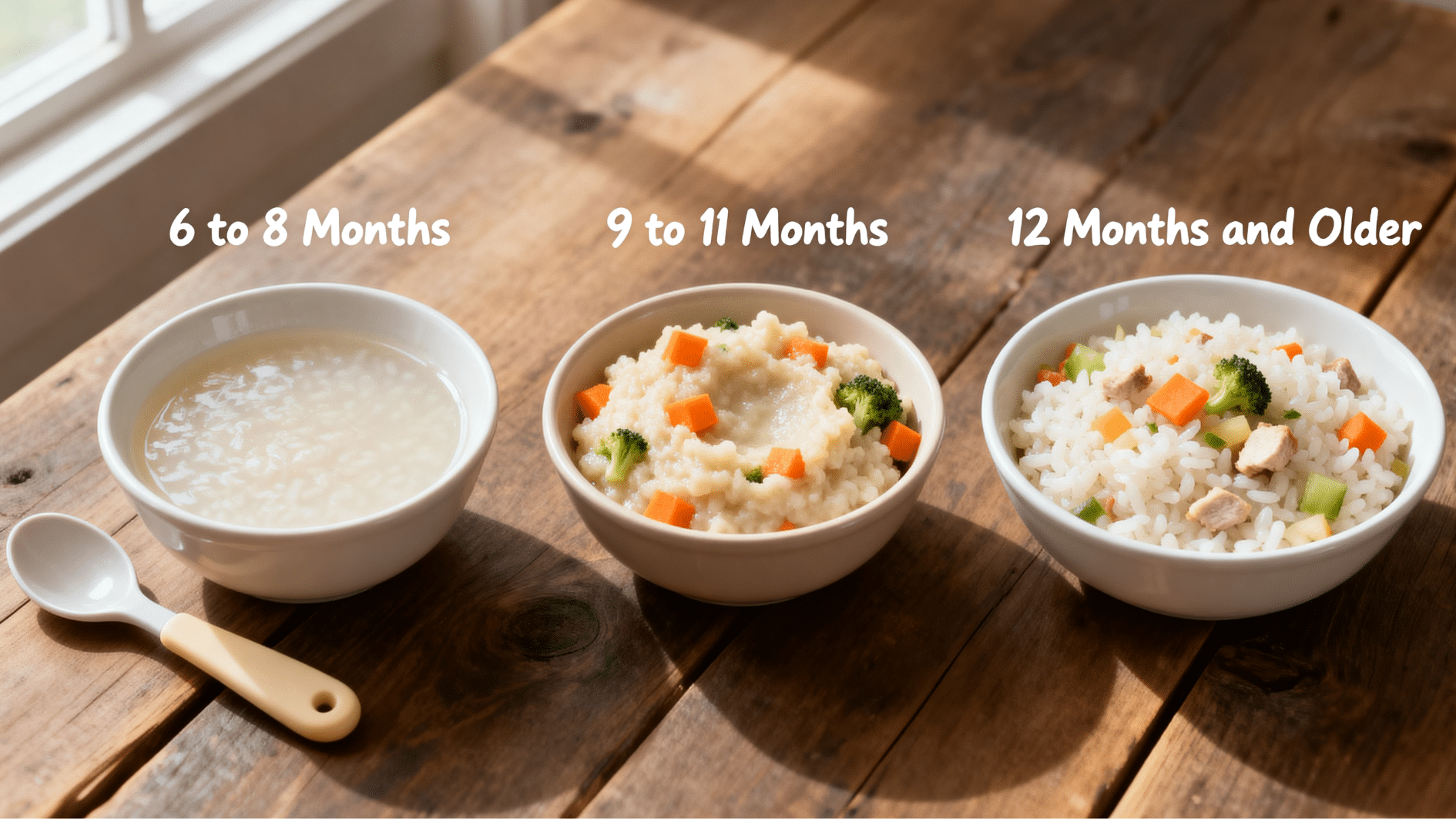
The texture and serving style should change as a baby’s eating skills develop. Rice should always be fully cooked, soft, and moist enough to swallow comfortably.
Babies should sit upright and remain closely supervised during meals.
6 to 8 Months
Begin with smooth rice porridge, pureed rice, or iron-fortified rice cereal. Mix it with water, breast milk, or prepared formula until it has a thin, smooth texture.
As the baby becomes more comfortable, gradually make the rice thicker or slightly mashed. Start with one or two spoonfuls and follow the baby’s hunger and fullness cues.
9 to 11 Months
At this stage, babies can usually manage thicker, lumpier textures.
Serve well-cooked rice mashed lightly with a fork or mixed with soft vegetables, lentils, beans, eggs, meat, or fish.
Rice can also be shaped into soft, moist clumps that the baby can pick up. Avoid serving it dry, hard, sticky, or mixed with large pieces that may be difficult to manage.
12 months and Older
Mix rice with vegetables and a protein source to create a balanced meal.
The same combination appears in many balanced toddler breakfast ideas, where grains are paired with eggs, yogurt, fruit, vegetables, or other protein sources.
Continue rotating rice with oats, barley, quinoa, couscous, and other grains rather than serving it every day
How Much Rice Can Babies Eat?
There is no fixed serving size specifically for rice because every baby has a different appetite. When starting solids, offer about one or two tablespoons of food and let your baby decide how much to eat.
This amount can gradually increase as their appetite and feeding skills develop.
Watch for signs of fullness, such as closing the mouth, turning the head away, or losing interest, and never pressure your baby to finish the serving.
Breast milk or infant formula should remain the main source of nutrition from 6 to 12 months
Baby-Led Weaning Rice Ideas
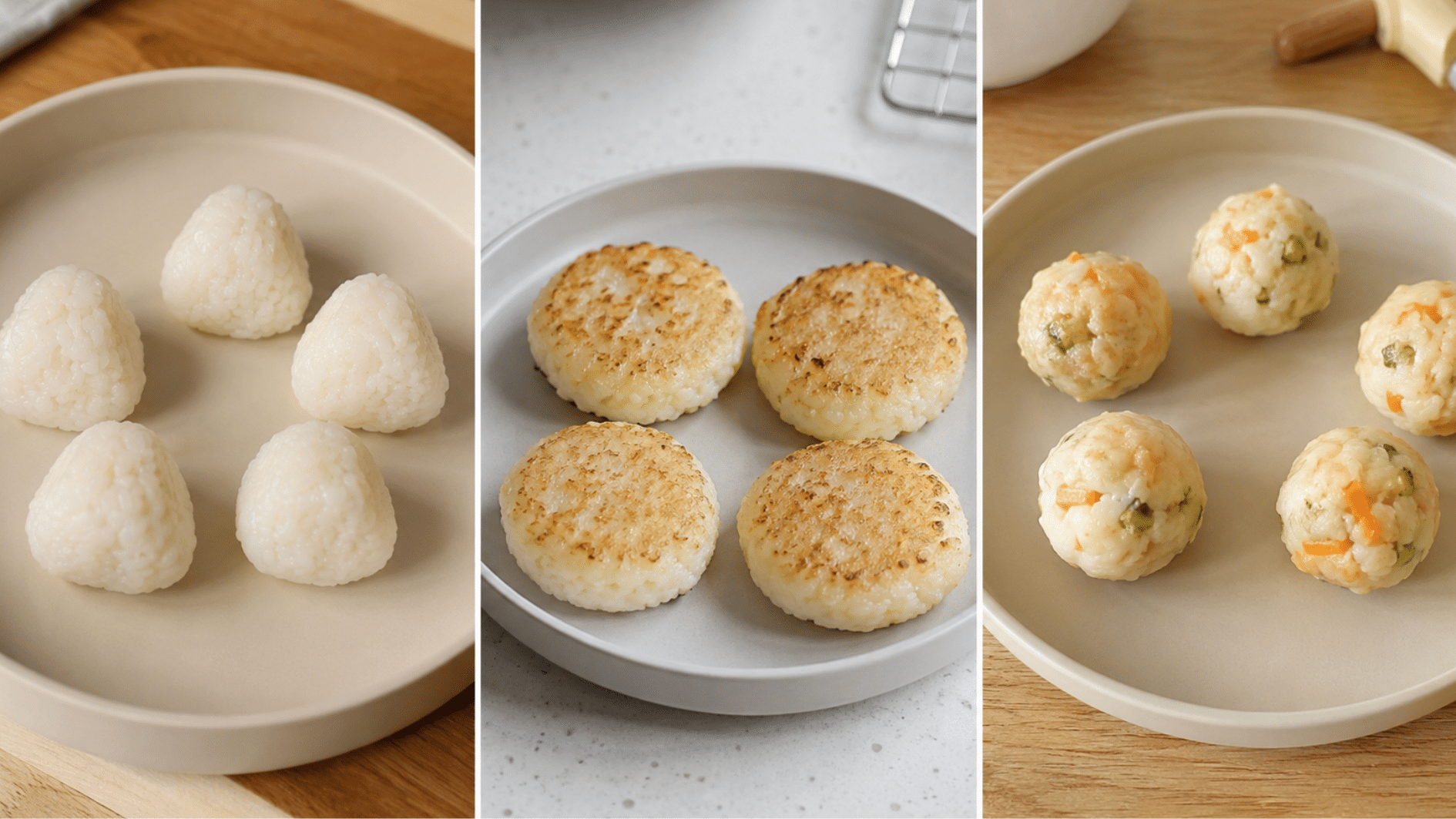
Rice can be a useful baby-led weaning food because it is soft, mild, and easy to mix with other ingredients. Plain rice grains can be hard for babies to pick up, so shaping them into soft patties, short logs, or loose clumps makes self-feeding easier.
- Soft Rice Patties: Mix cooked rice with mashed sweet potato, squash, or avocado. Press the mixture into small, flat patties that your baby can hold.
- Onigiri-Style Rice Logs: Shape soft, slightly sticky rice into short finger-shaped logs. Keep them plain and avoid adding salt, soy sauce, or strong seasonings.
- Rice and Lentil Bites: Combine well-cooked rice with soft lentils. Mash the mixture lightly and form it into flat pieces for a meal that includes both grains and protein.
- Vegetable Rice Cakes: Add finely mashed peas, carrots, broccoli, or spinach to cooked rice. Press the mixture into soft cakes and cook them lightly in a pan without creating a hard crust.
- Egg and Rice Strips: Mix cooked rice with beaten egg and cook it like a soft omelet. Cut it into wide strips that are easy for your baby to grasp. Only use egg after it has been introduced safely.
- Cheesy Rice Bites: Stir a small amount of pasteurized cheese into warm rice, then shape it into soft patties. Choose a lower-sodium cheese when possible.
- Rice With Thick Purees: Serve small clumps of rice with thick vegetable, bean, or meat puree. The puree helps hold the grains together while adding more flavor and nutrients.
Cook the rice until it is very soft and moist. Each serving should mash easily between your fingers or with a fork. Avoid firm, round rice balls because dense, round foods can be harder for babies to manage.
Tip: Rice can be part of your baby’s meals, but it does not need to be served every day. Rotate it with oats, quinoa, barley, pasta, potatoes, and other grains or starches to add variety.
What Type of Rice is Best-Suited for Babies?
Most plain rice varieties can be offered once a baby is ready for solid foods, usually around 6 months of age. Preparation matters more than the rice type. Cook it until soft, moist, and easy to mash, then adjust the texture to match your baby’s eating skills.
| Rice Type | Texture | Main Benefit | What to Watch | Serving Idea |
|---|---|---|---|---|
| Basmati Rice | Light and soft | Easy to mix with other foods | May feel dry if undercooked | Mash with vegetables, lentils, or meat |
| Jasmine Rice | Soft and slightly sticky | Easy for babies to scoop | Avoid added salt and sauces | Serve in soft clumps or short rice logs |
| Long-Grain Rice | Loose and separate | Works well in mixed meals | Grains can become dry or firm | Mix with puree, yogurt, or broth |
| Short-Grain Rice | Tender and sticky | Easier to shape for self-feeding | Do not pack it into firm balls | Form into soft patties or loose clumps |
| White Rice | Soft and easy to digest | Usually lower in arsenic than brown rice | Contains less fiber | Pair with vegetables, protein, and healthy fats |
| Brown Rice | Chewier and firmer | Contains more fiber and nutrients | Usually contains more arsenic | Cook with extra water until very soft |
Both white and brown rice can be served to babies. Offer rice alongside other grains, such as oats, barley, quinoa, and pasta, instead of using it as the main grain every day.
Is Rice a Common Allergen?
Rice is not considered a common food allergen, and most babies tolerate it well when introduced as part of a balanced diet.
If your baby shows signs of a possible reaction, such as skin changes, vomiting, swelling, or breathing difficulties, stop offering the food and seek medical advice.
Introducing new foods one at a time can also make it easier to identify what may have caused a reaction. However, any food can cause an allergic reaction, so it is helpful to watch your baby when trying rice for the first time.
Choking and Gagging Safety Tips
Soft, fully cooked rice can be offered to babies, but its texture must match their feeding skills.
- Choose a safe texture: Cook rice until it can be easily mashed with a fork. Any rice clumps or patties should be soft, moist, and easy to flatten between two fingers.
- Keep the baby upright: Seat the baby securely in a high chair or feeding seat. Do not offer food while the baby is lying down, crawling, walking, or riding in a stroller or car.
- Supervise every bite: Stay close and watch the baby throughout the meal rather than leaving food on the tray unattended.
- Know gagging from choking: Gagging, coughing, or spitting food out may happen while babies adjust to new textures. Choking may prevent a baby from breathing, crying, or making noise and requires immediate action.
Wrapping It Up
Can babies have rice? Yes, and once you’ve got the basics down, there’s really nothing to stress about.
Soft and pureed at first, then rolled into little balls or pressed into patties as your baby gets better at self-feeding, rice earns its spot on the menu either way.
Just don’t let it hog the whole plate. Rotate in oats or quinoa now and then, and the arsenic question basically takes care of itself.
Dinner’s calling, so go ahead and add that scoop of rice to the bowl.
Frequently Asked Questions
Does Rice Cause Constipation in Babies?
Rice may contribute to firmer stools for some babies, especially when eaten often and without enough variety. Offering fruits, vegetables, and other grains can help support a balanced diet.
Can Babies Have Rice Water?
Rice water is the liquid left after cooking rice, and some families traditionally offer it to babies. However, it should not replace breast milk or formula.
Can Babies Eat Leftover Rice?
Yes, babies can eat leftover rice if it has been stored safely. Refrigerate cooked rice promptly in a covered container and reheat it until it is steaming hot before serving.