




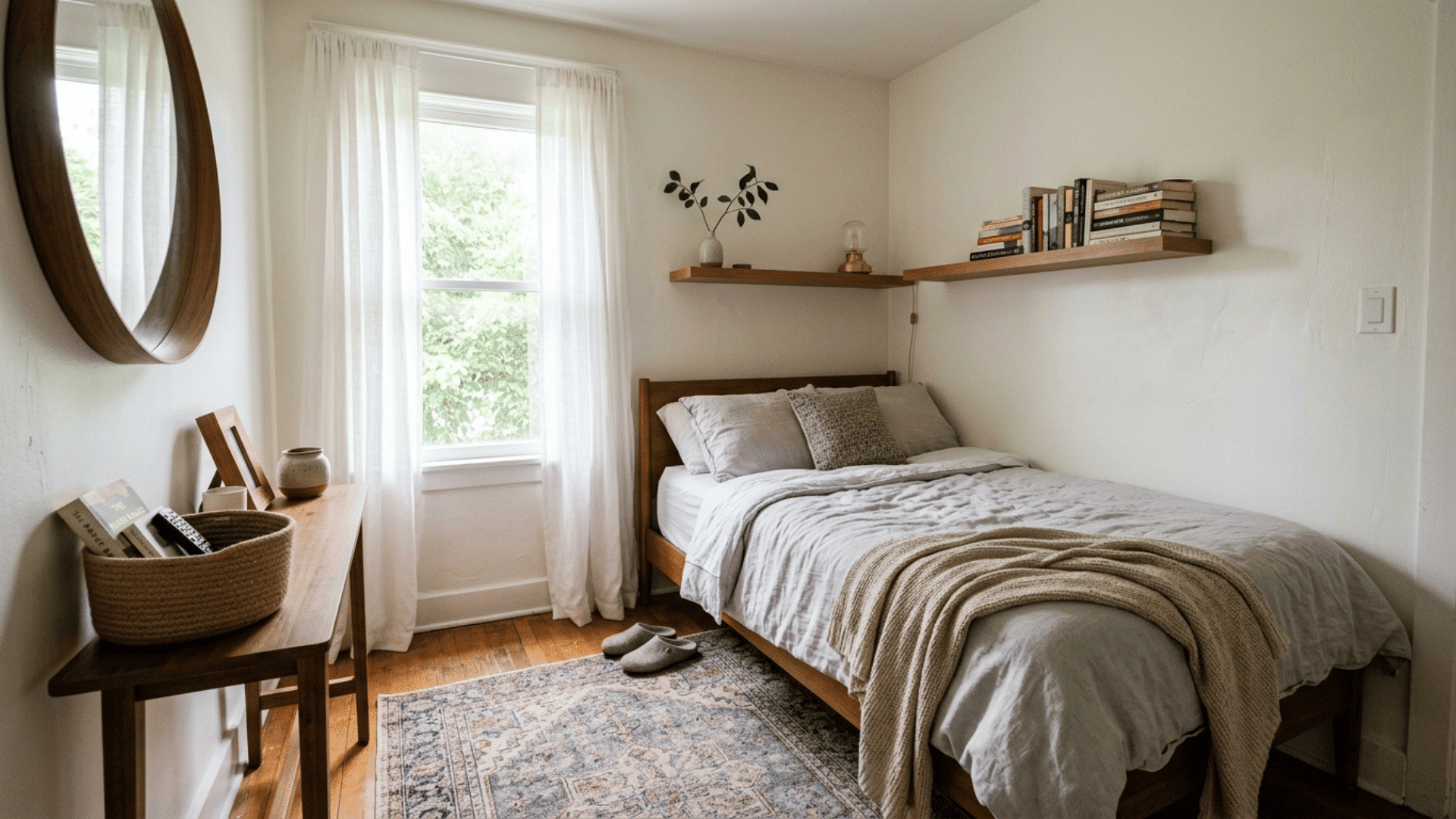
A small guest room often gets less attention than the rest of the house, even though visitors notice it the most.
Limited space can make it room feel bare, cramped, or mismatched, especially without a clear plan for furniture and layout.
This blog covers small guest bedroom ideas that focus on two things: using the space well and adding warmth without adding clutter.
You’ll find furniture swaps, layout tips, color and lighting choices, and a few creative touches that work in most small rooms.
The Secret to Making a Small Guest Room Feel Twice as Big
A small guest room feels cramped for one simple reason: too much stuff is fighting for the same space. A bed pushed into the wrong spot, a dresser that’s too bulky, or a lamp that eats up half the nightstand.
Start by picking furniture that can do two jobs at once, like a daybed that also works as a sofa.
Add light colors and good lighting to open up the walls. Then bring in a few personal touches without piling on clutter.
Once you get these three things right, even a tiny room can feel open and welcoming. At its core, that’s what a good small room design really is.
Design Ideas that Add Style Without Clutter
Style doesn’t require more stuff, just the right pieces in the right spots. These ideas add warmth and personality to a small guest room without weighing it down.
1. Add Layered Textiles for Warmth
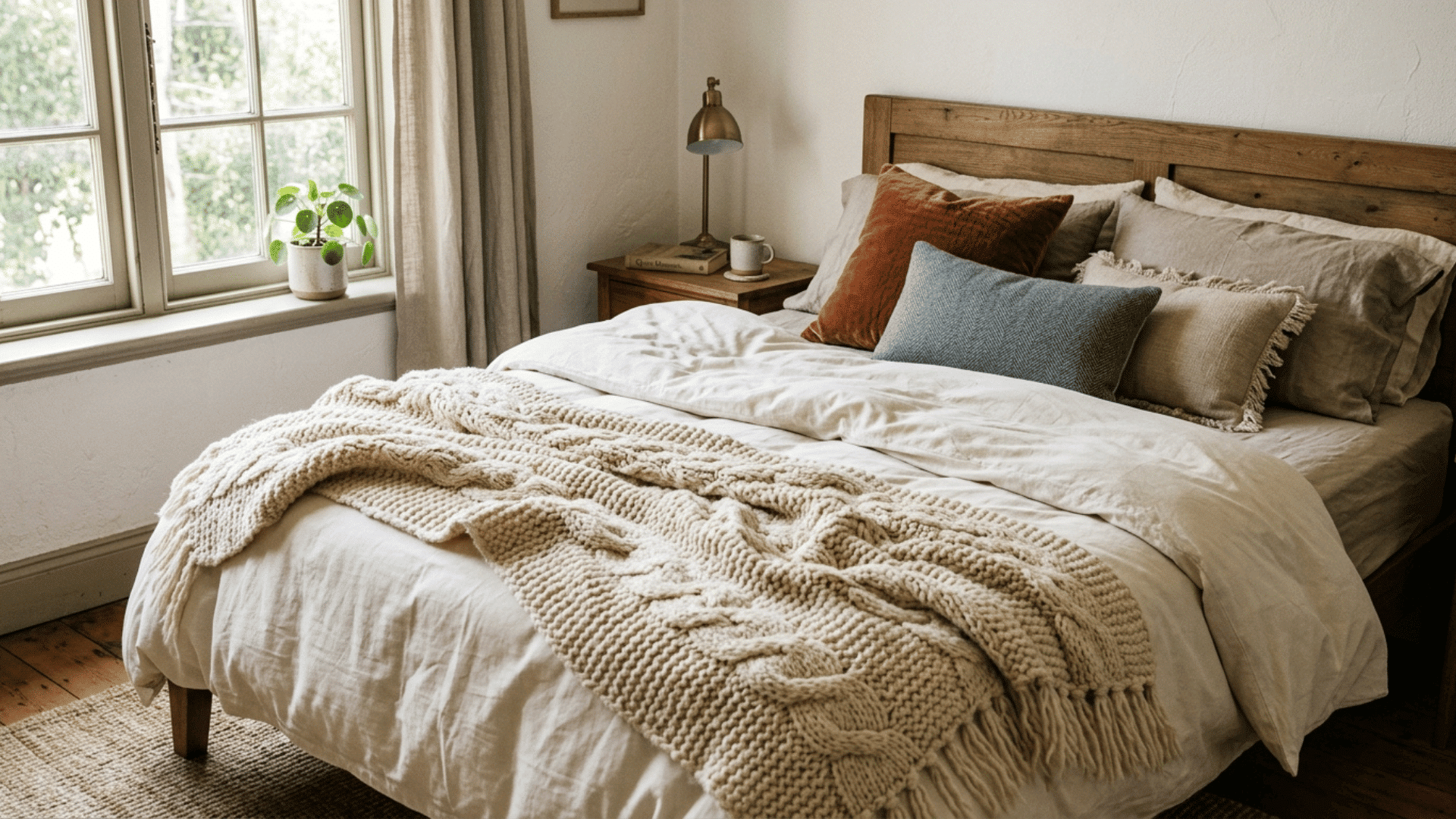
A mix of throw blankets, pillows, and a textured bedspread makes a guest room feel cozy without adding a single new piece of furniture.
Soft textures add visual warmth and depth to a room.
Layered textiles work especially well when the room has a clear style direction; these cozy cabin bedroom ideas are a great place to find that kind of warmth.
Styling tip: Layer at least two different textures, like a knit throw over a smooth duvet, so the bed doesn’t look flat.
2. Hang Art at Eye Level to Add Height
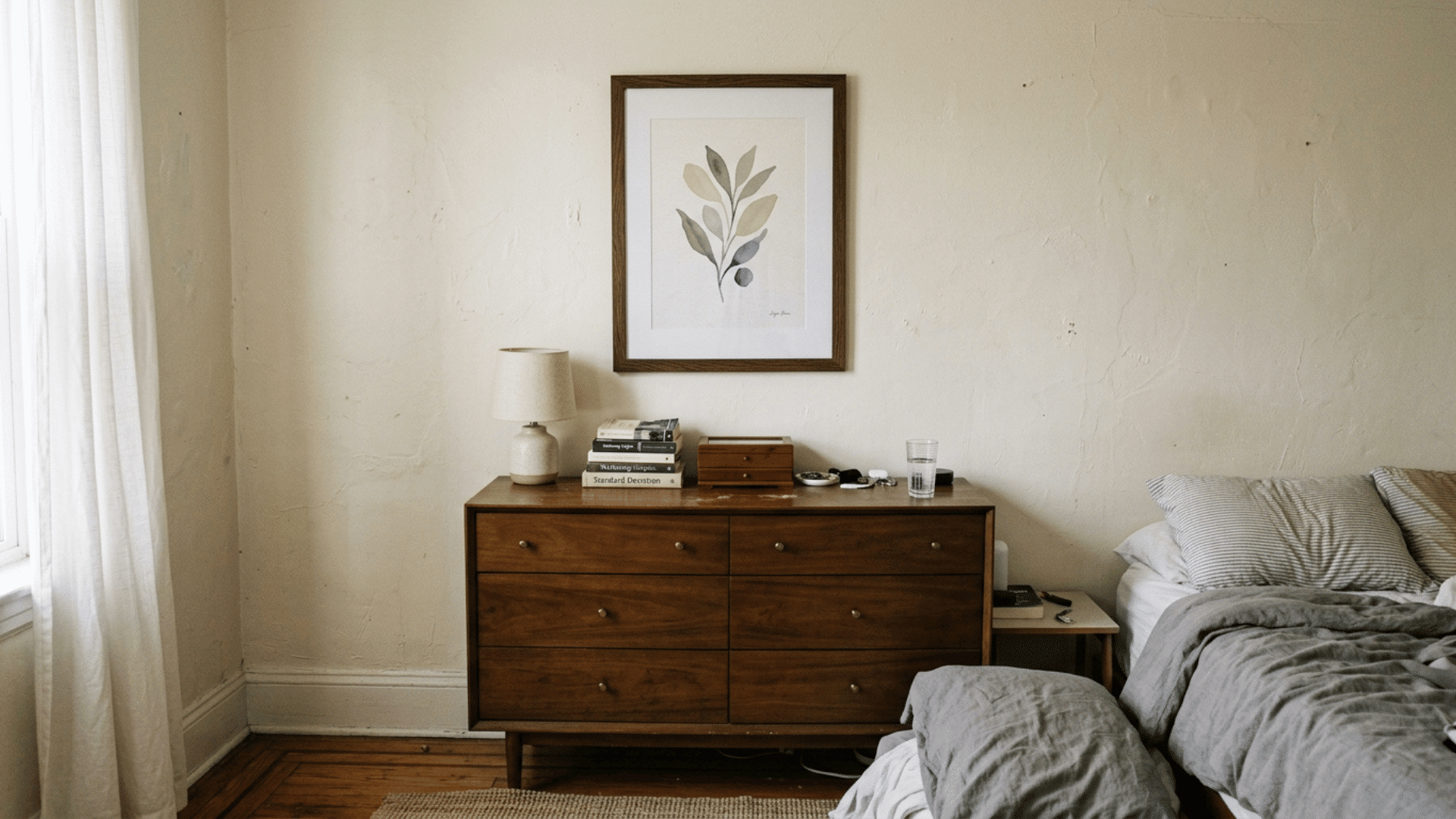
Artwork hung too high or too low can throw off the whole feel of a room, while eye-level pieces make the space feel balanced and draw the eye naturally around the room.
This works well for bare walls above a dresser, console, or headboard: all you’ll need is some framed art, a measuring tape, and a few wall hooks or nails.
3. Small Area Rug to Define Space
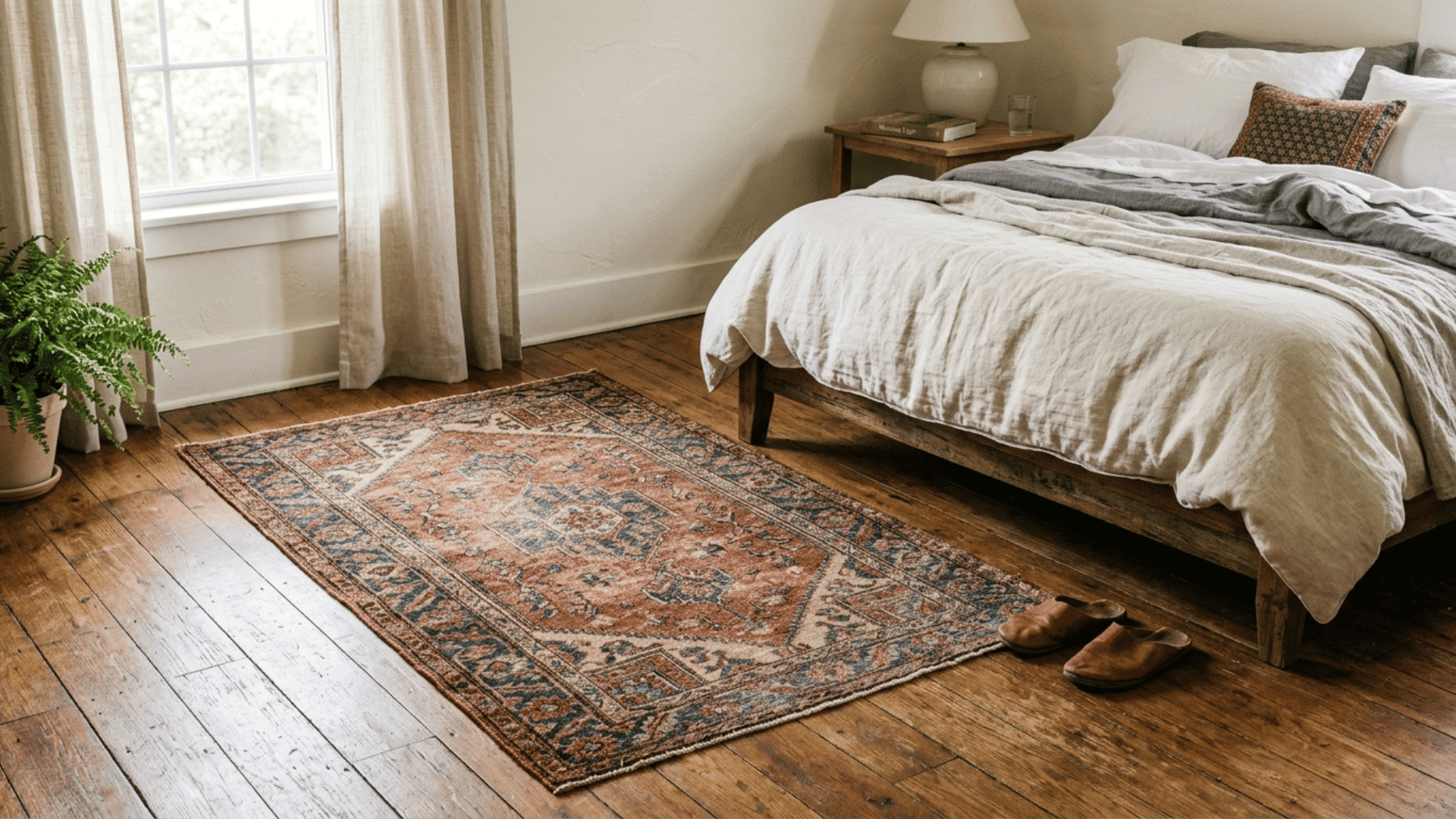
A rug placed under or beside the bed adds warmth underfoot and helps define the room without taking up extra floor space, anchoring the furniture around it and giving the room a sense of structure.
It’s ideal for rooms with hardwood, tile, or other cold flooring: choose a small- to medium-sized rug and a non-slip pad to keep it in place.
Styling tip: Choose a patterned rug rather than a solid color, since patterns hide dirt and wear better in a guest room.
4. Bring in One Statement Piece
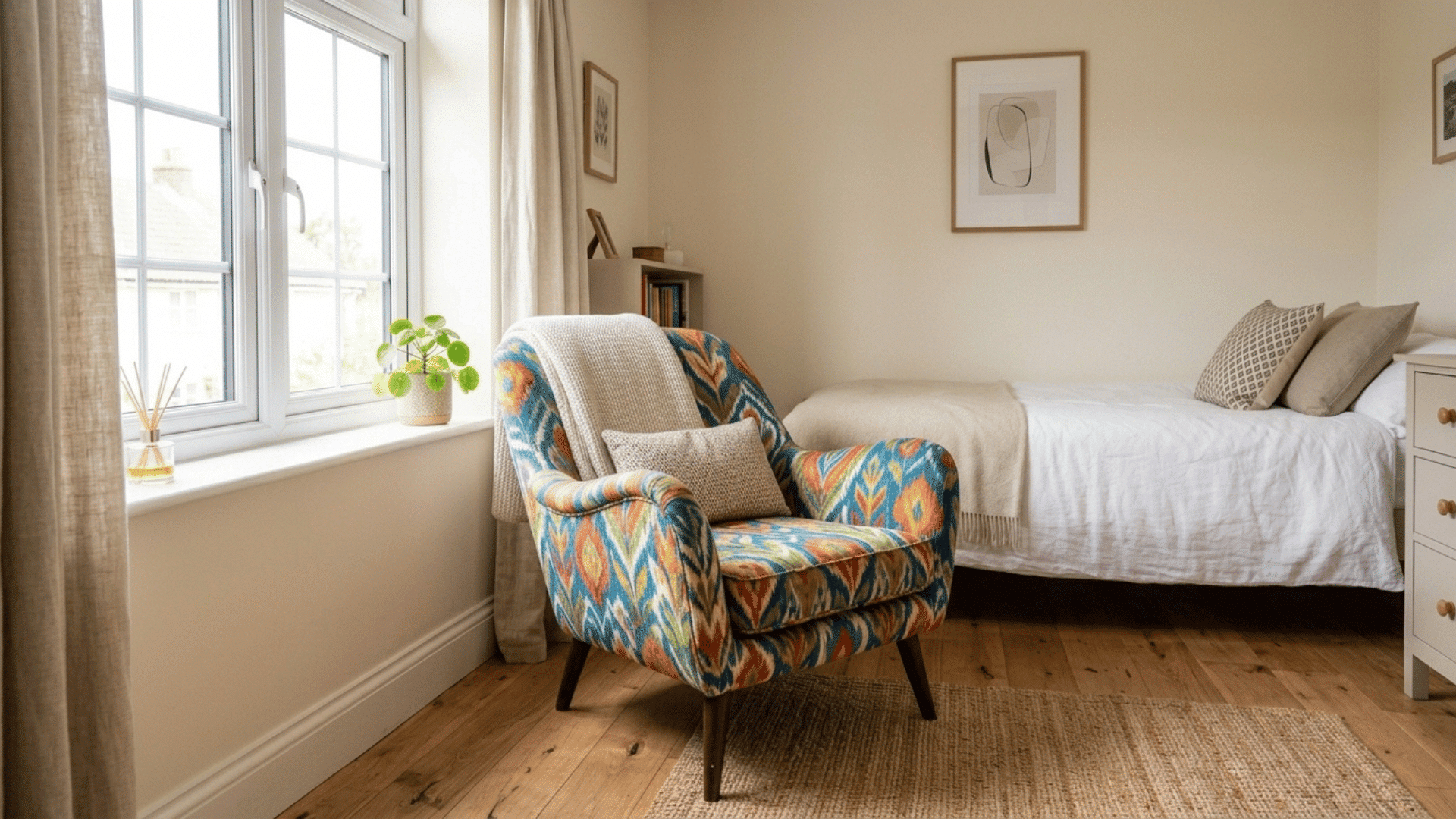
A single bold item, like a colorful headboard or a patterned chair, gives the room personality without needing several decor pieces: one strong focal point does more than five small decorations scattered around.
This idea suits plain rooms that need personality without a full redesign; all it really takes is one bold piece, like a chair or a headboard.
5. Add Greenery With Low-Maintenance Plants
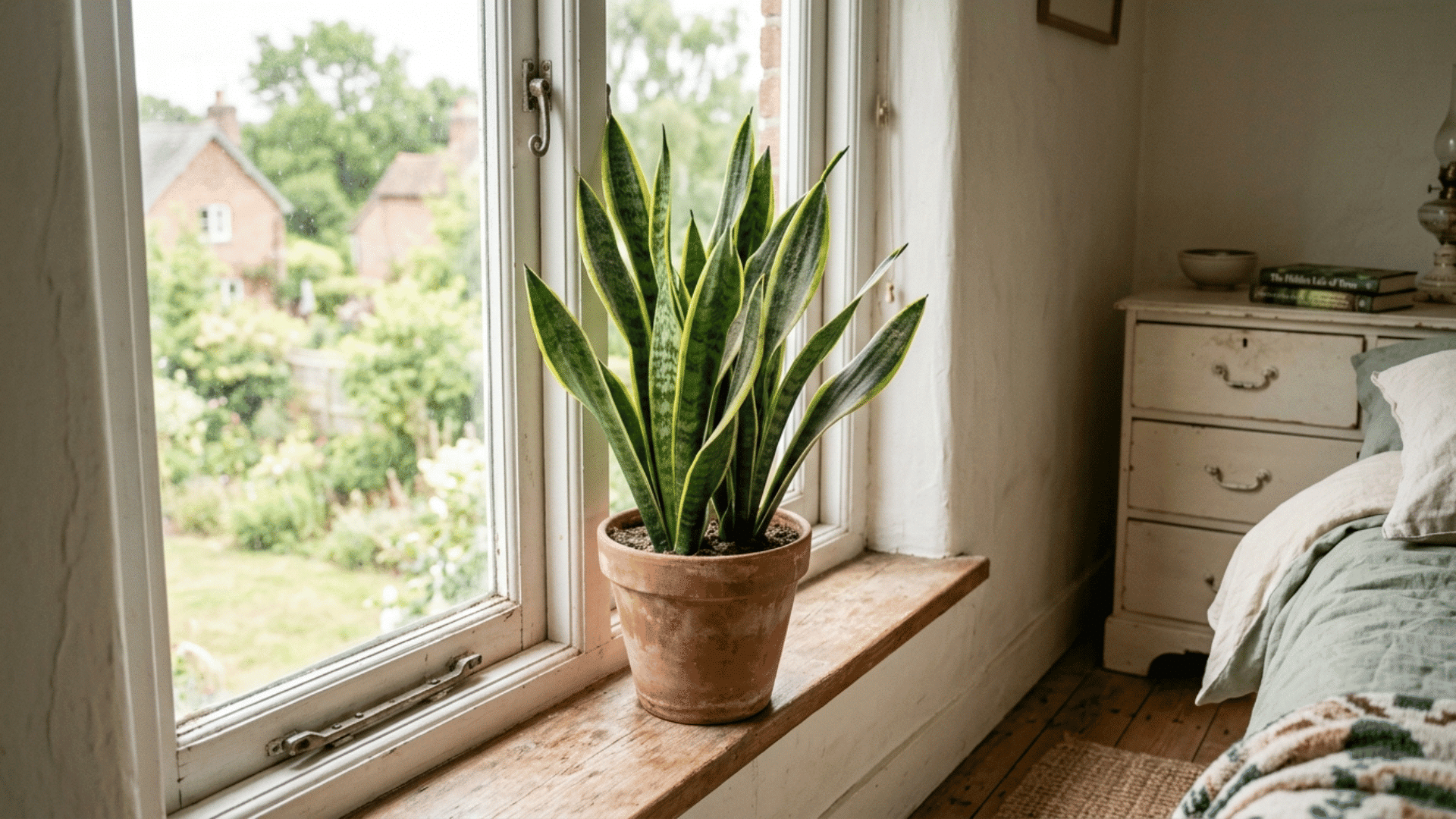
A plant or two brings life into a guest room, even if no one waters it every single day. Greenery adds color and texture in a way that feels natural instead of decorative for it own sake.
It works especially well in low-light corners or rooms that sit empty most of the year: a snake plant or pothos, a planter, and some potting soil are all you need.
Styling tip: Choose a snake plant or pothos, since both tolerate low light and irregular watering better than most houseplants.
6. Add a Reading Nook by the Window
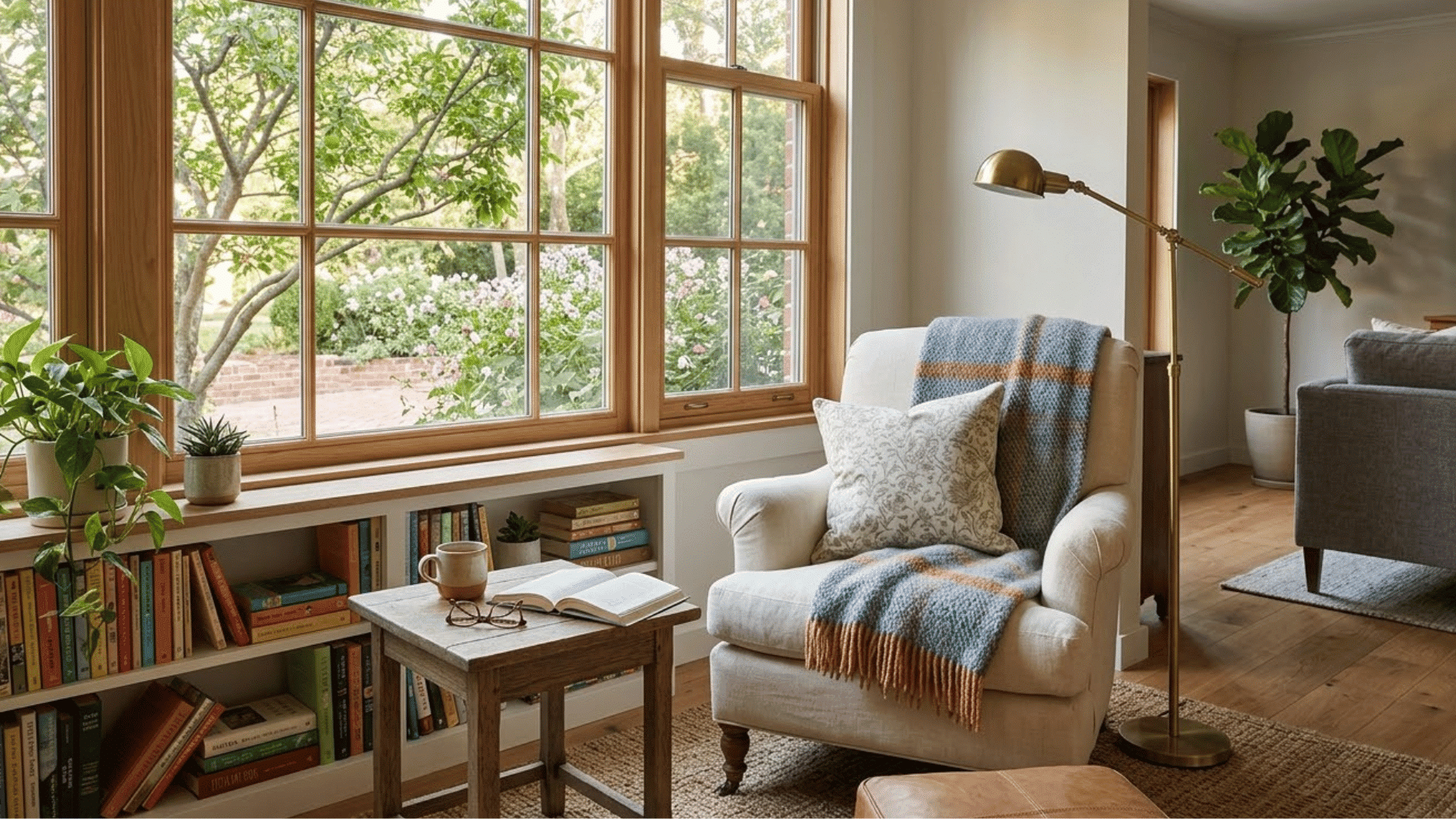
A small chair and a side table near the window offer guests a quiet spot to sit other than the bed, giving the room a second purpose beyond sleeping.
It fits nicely into rooms with a window seat or an otherwise unused corner: you’ll need a small chair, a side table, and a reading lamp.
Styling tip: Add a small reading lamp with a warm bulb instead of relying on the room’s main overhead light.
7. Design a Craft or Hobby Station
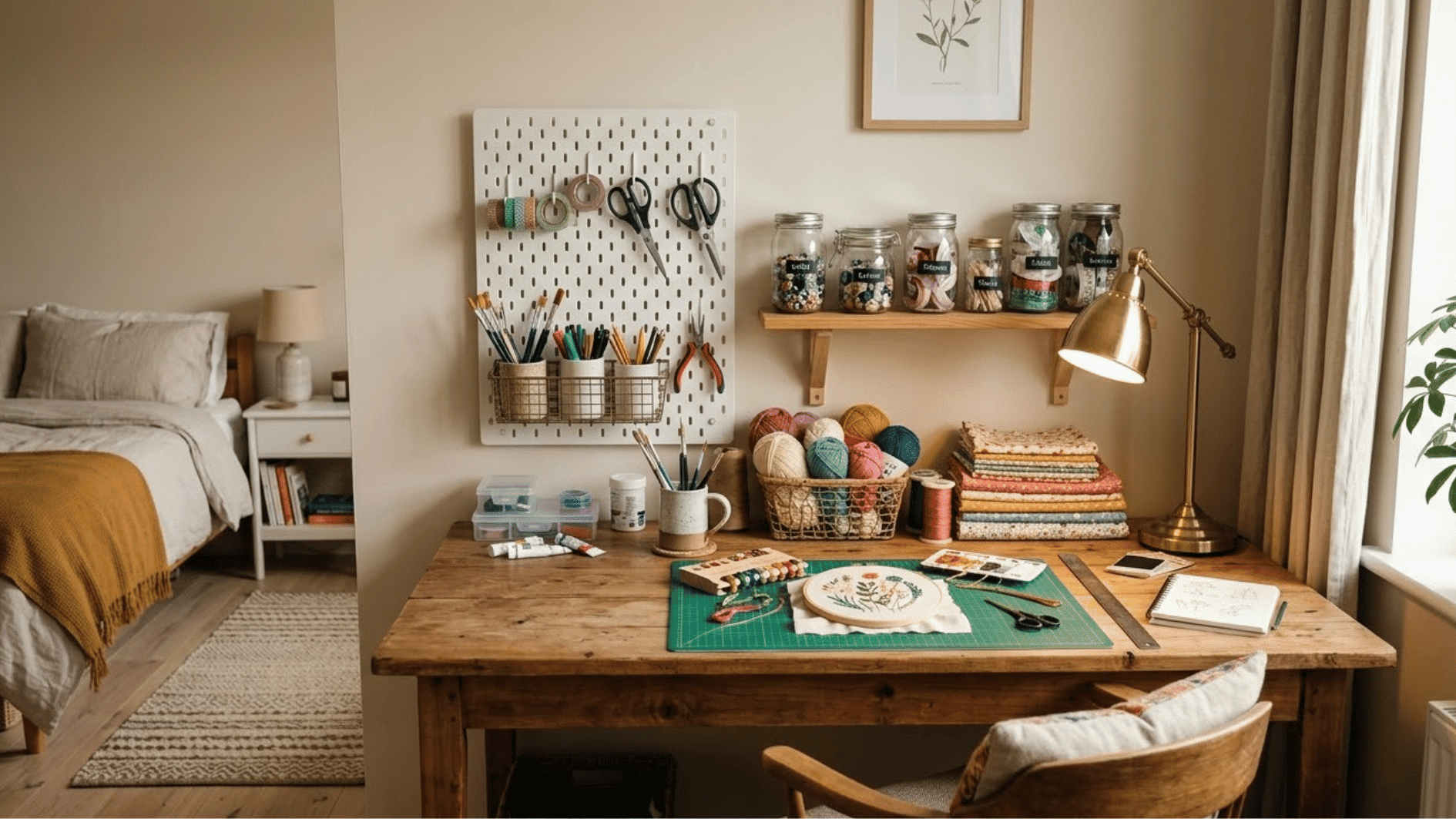
A small desk or cart with hobby supplies gives the guest room a purpose year-round, turning unused space into something the household actually uses.
This is a good fit for rooms that sit mostly unused between guests: a rolling cart or small desk, some storage bins, and your hobby supplies are all you need.
8. Shop Secondhand for Statement Furniture
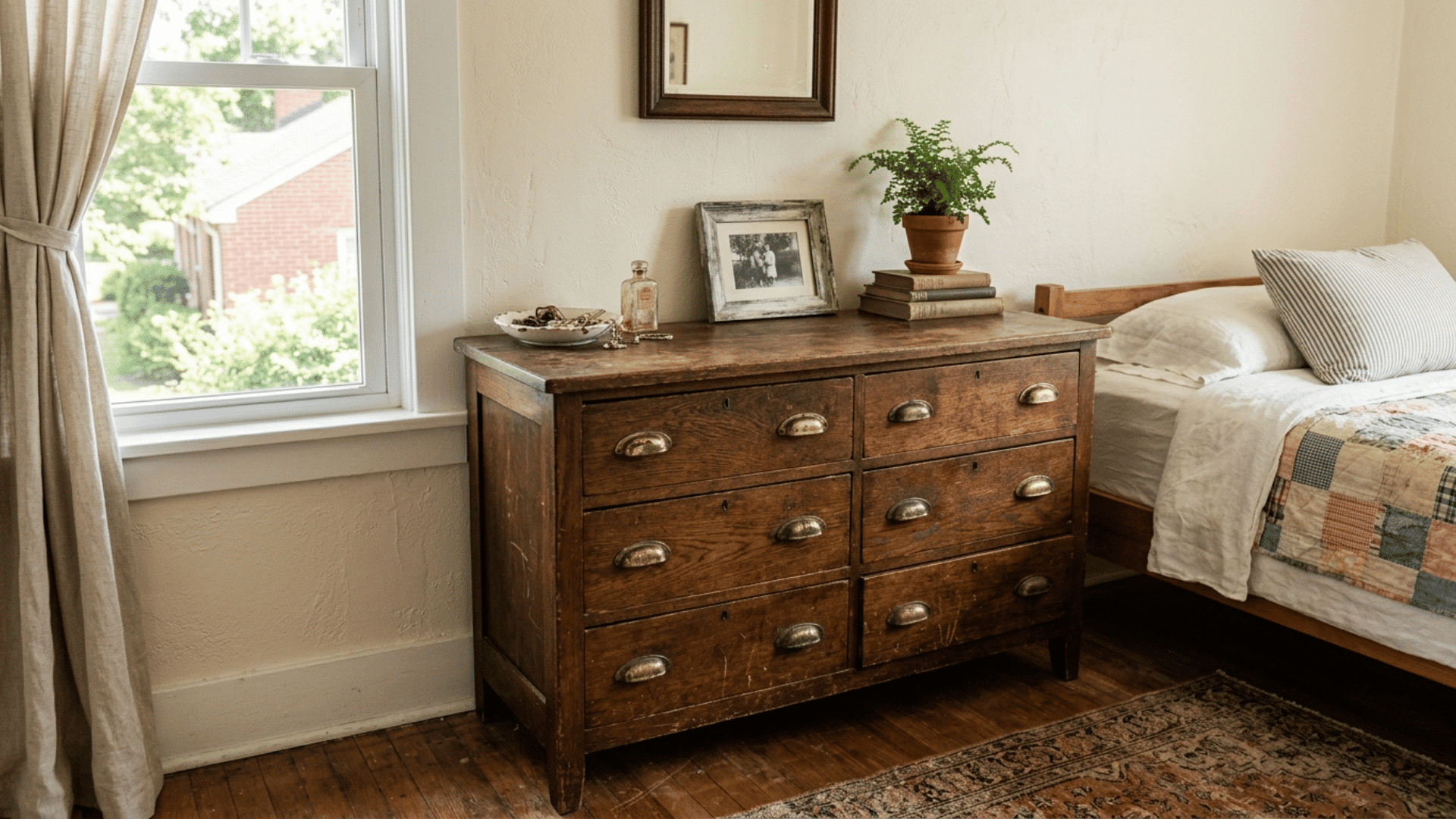
Vintage or secondhand furniture often has more character than new pieces and usually costs less, with details and craftsmanship that are harder to find in mass-produced items.
It’s a great option for budget-conscious updates that still add character: look for one vintage or thrifted piece, like a dresser or a mirror, rather than furnishing the whole room this way.
Styling tip: Look for one standout piece, like a vintage dresser or mirror, rather than furnishing the whole room secondhand.
9. Repaint Old Furniture Instead of Replacing It
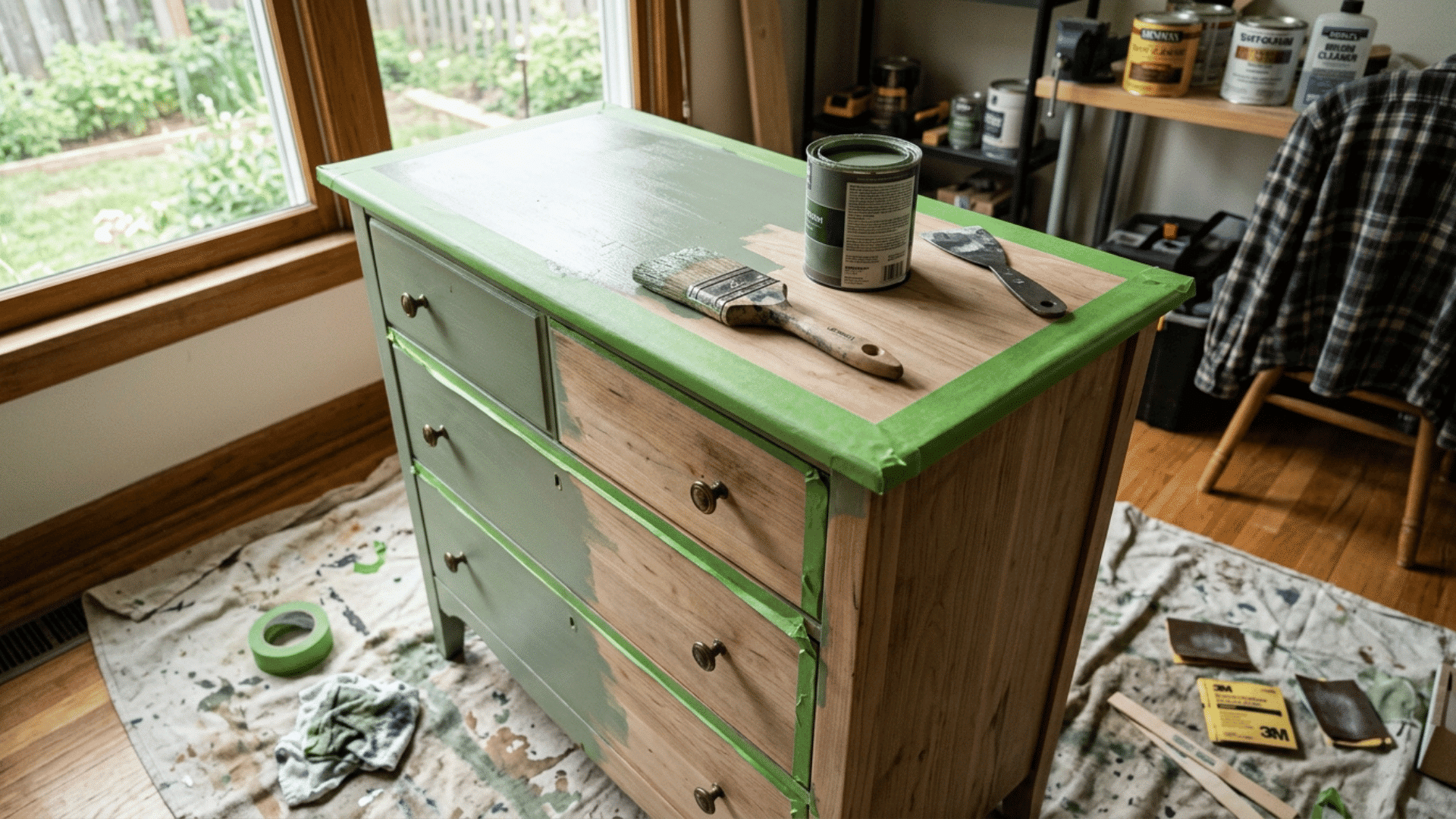
A fresh coat of paint can make old, outdated furniture look brand new without the cost of buying replacements.
This works well for outdated, inherited, or mismatched furniture pieces: you’ll need sandpaper, primer, paint, and either brushes or a sprayer.
10. Use Removable Wallpaper for Instant Style
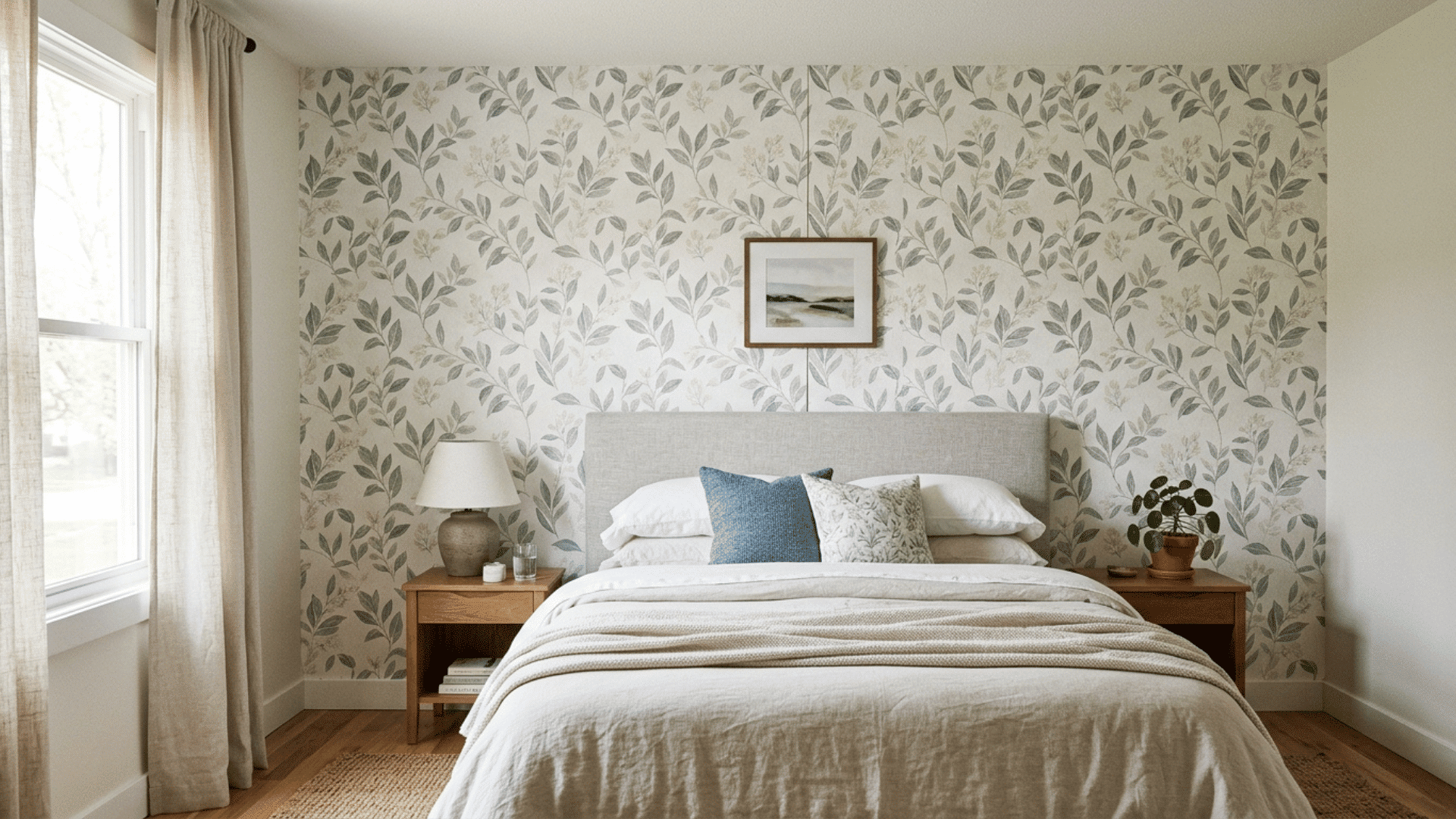
Removable wallpaper adds pattern and color to a guest room without the commitment or damage of traditional wallpaper, changing the feel of a room in an afternoon.
It’s ideal for renters or anyone who wants pattern without a long-term commitment: you’ll need the wallpaper itself, a smoothing tool, and a measuring tape.
Styling tip: Apply it to just one accent wall behind the bed instead of the whole room, so the pattern doesn’t overwhelm the space.
11. DIY Your Own Headboard
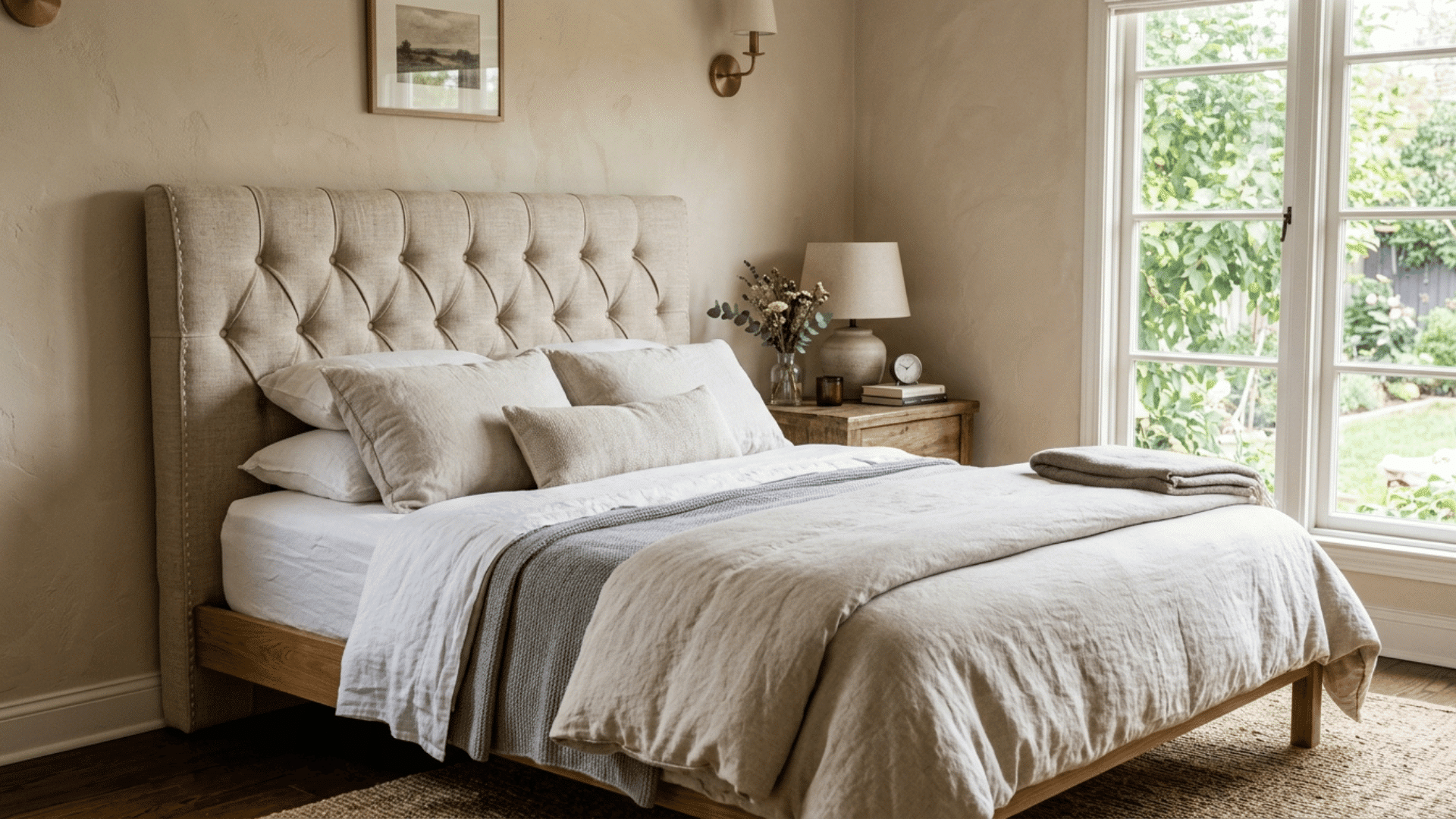
A homemade headboard, upholstered in fabric or made from reclaimed wood, adds style to the bed without the cost of buying a new one.
Styling tip: Use plywood and foam covered with fabric for an upholstered look at a fraction of the cost of a store-bought headboard.
12. Swap Hardware for an Instant Refresh
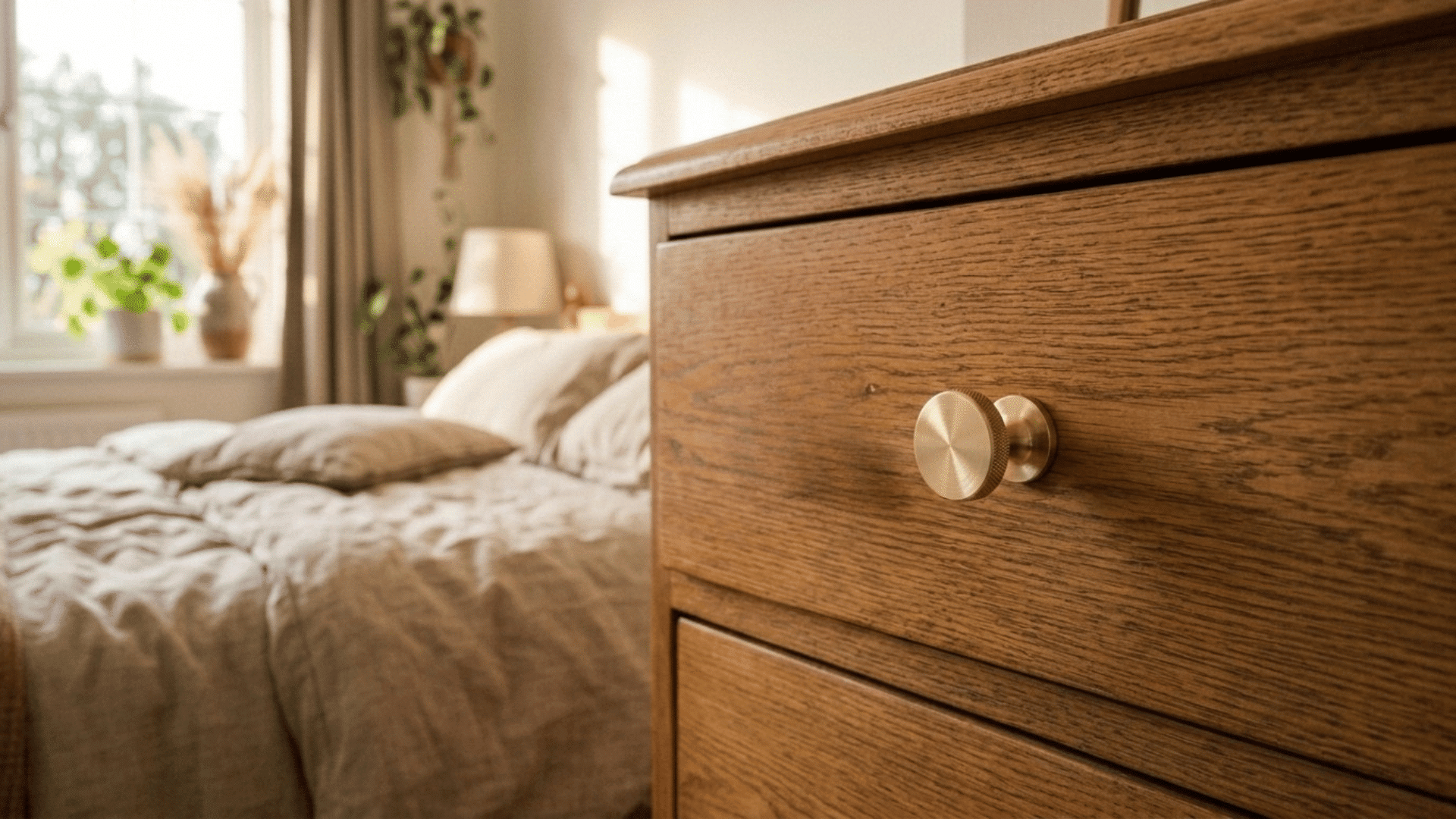
New knobs and pulls on a dresser or nightstand can make old furniture feel updated in less than an hour, since small details catch the eye up close.
It’s a simple fix for dated dressers, nightstands, or mismatched furniture sets: all you need are new knobs or pulls and a screwdriver.
Furniture and Storage That Free Up Space
A few smart pieces like stackable bins or a slim dresser can double your usable space without adding clutter.
13. Choose a Daybed Instead of a Full Bed
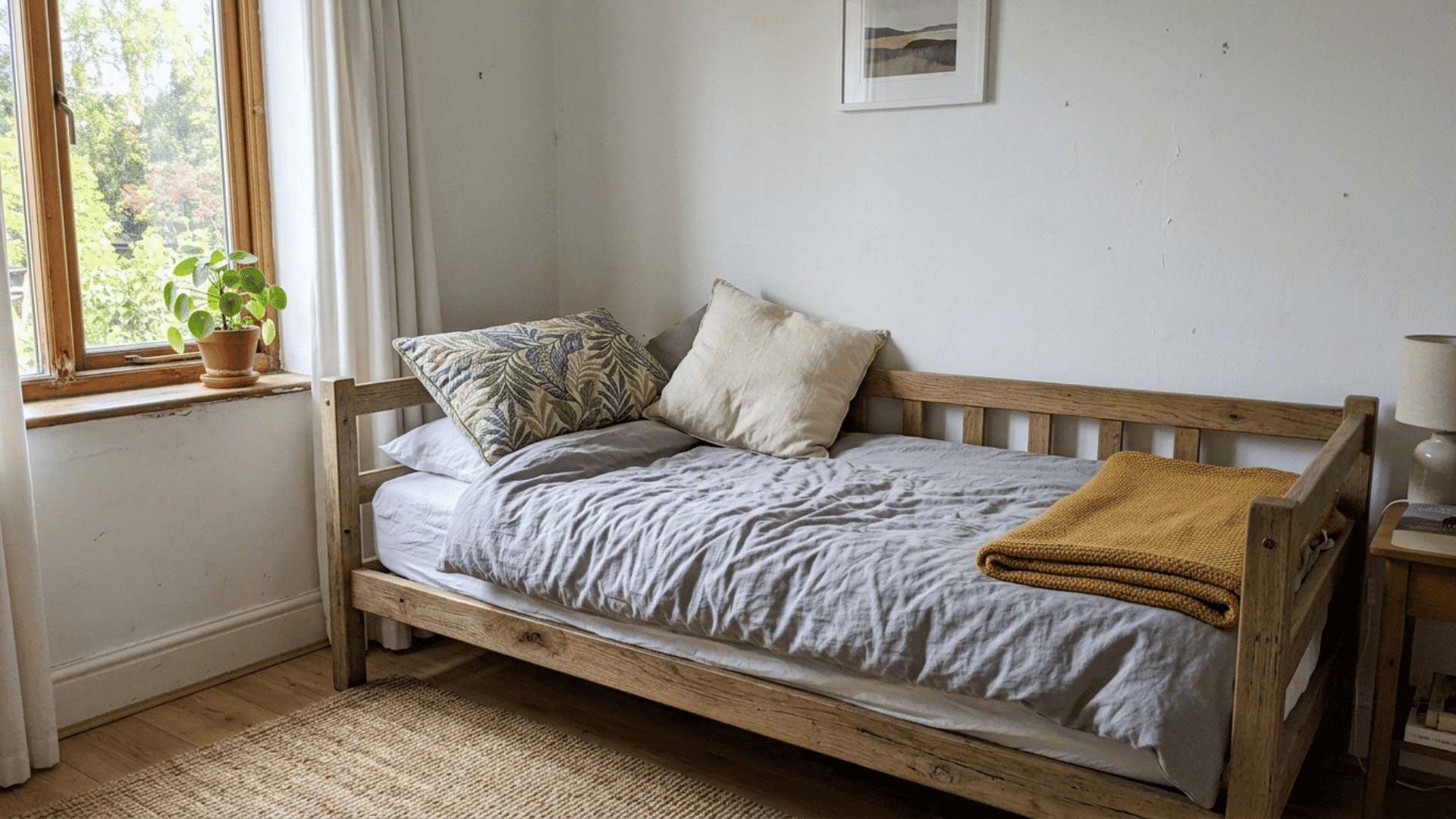
A daybed gives your guests a comfy place to sleep without taking up as much floor space as a full or queen bed. It also doubles as a couch during the day, so the room doesn’t feel like a bedroom.
Adding a few throw pillows in different sizes helps it look more like a sofa when it isn’t being used as a bed.
This works well in rooms that double as a den or sitting area during the day, especially when floor space is tight. A daybed with a trundle can even sleep a second guest without needing extra furniture
14. Murphy Bed for Flexible Space
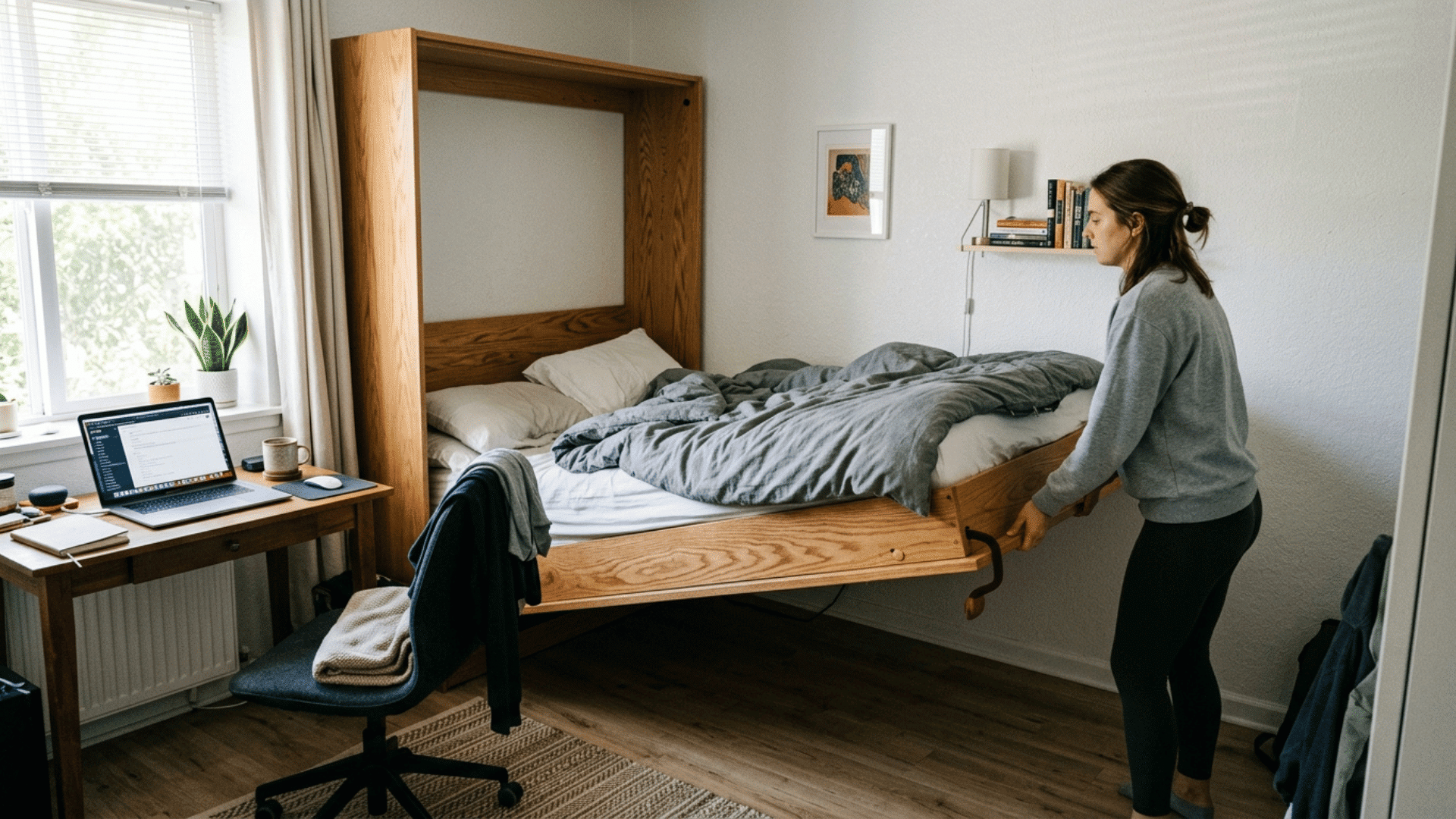
A Murphy bed folds up into the wall when it’s not in use, so your guest room can revert to an office or workout space the rest of the time.
Choosing a Murphy bed with built-in shelves on the sides means the unit doubles as storage even when it’s closed.
Styling tip: “Choose a Murphy bed with built-in shelving so the wall doesn’t look bare when it’s folded up.”
15. Pick Nesting Nightstands
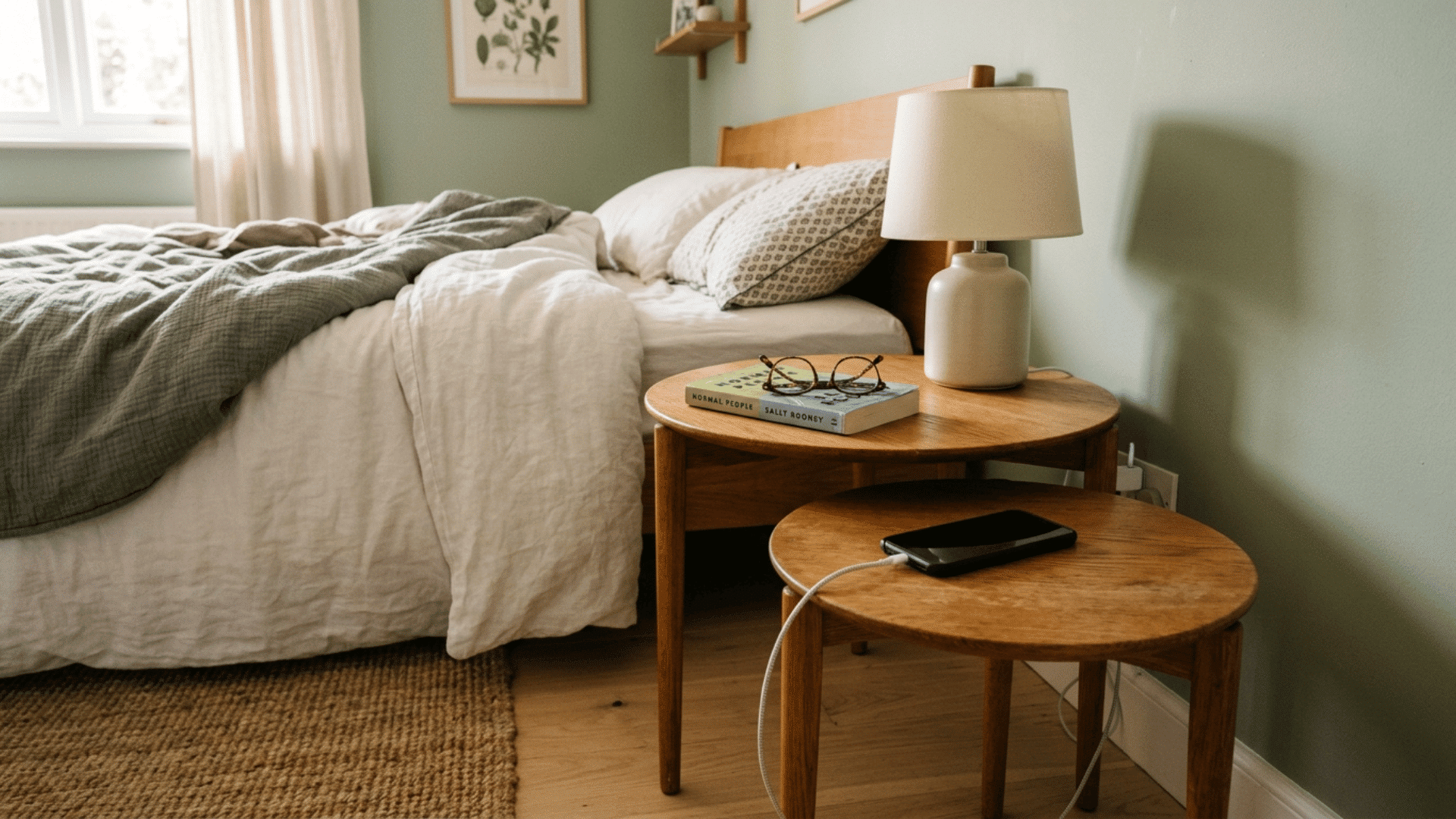
Nesting nightstands are small tables that stack or slide together, so you can pull one out only when you need extra surface space.
They take up a fraction of the space of a regular nightstand but still give guests somewhere to set a phone or a glass of water.
These work best in rooms with very little floor space around the bed, since one table can slide away completely when it’s not needed. Look for a set with mismatched finishes for a bit of visual interest
16. Use a Slim Console Instead of a Dresser
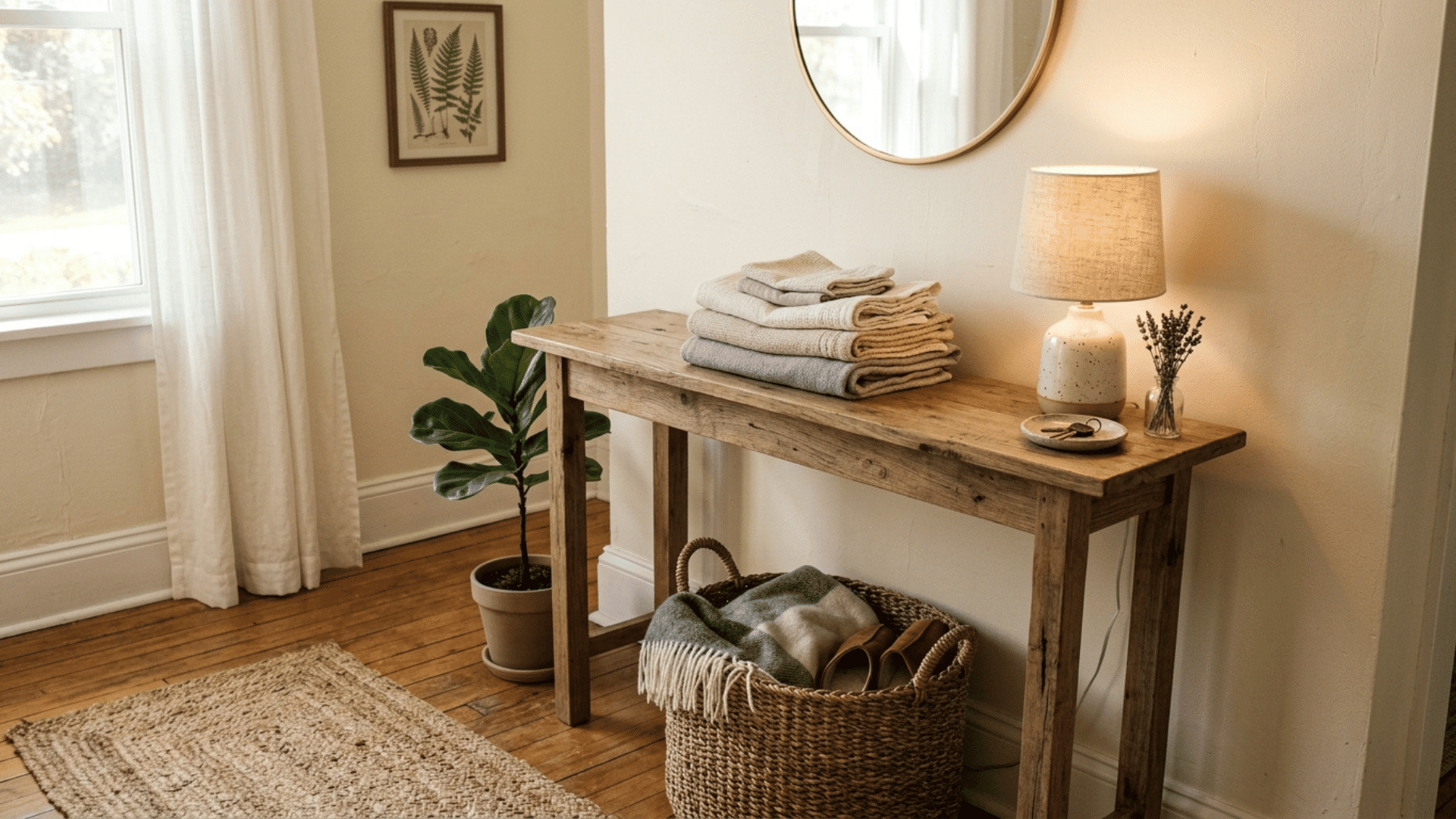
A slim console table can hold folded clothes, a small lamp, or a tray of guest essentials without eating up the wall the way a bulky dresser does.
Its narrow depth means it fits in spots a standard dresser never could, like against a short wall or beside a door.
Styling tip: Pick a console with a drawer or two so small items stay hidden instead of piling on top.
17. Add Fold-Down Wall Desks
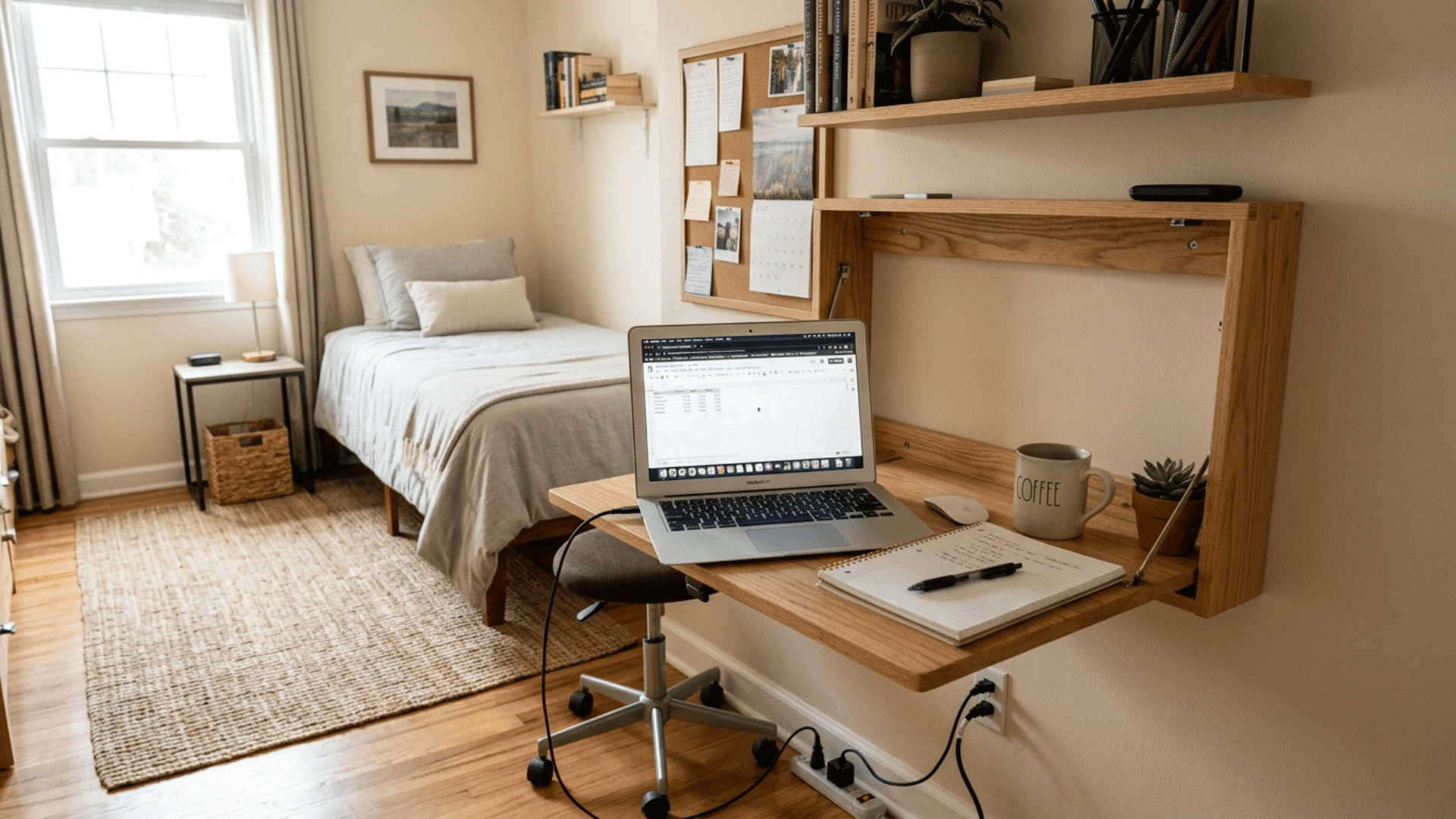
A fold-down desk mounts flush against the wall and opens only when needed, making it perfect for a guest room that doubles as a workspace.
It disappears completely when not in use, so the room can feel like a full bedroom again in seconds.
This is a smart pick for guest rooms that double as a home office, since the desk stays out of the way until you need it. Mounting it near an outlet keeps a lamp or laptop charger within reach.
18. Install Floating Shelves Above the Bed
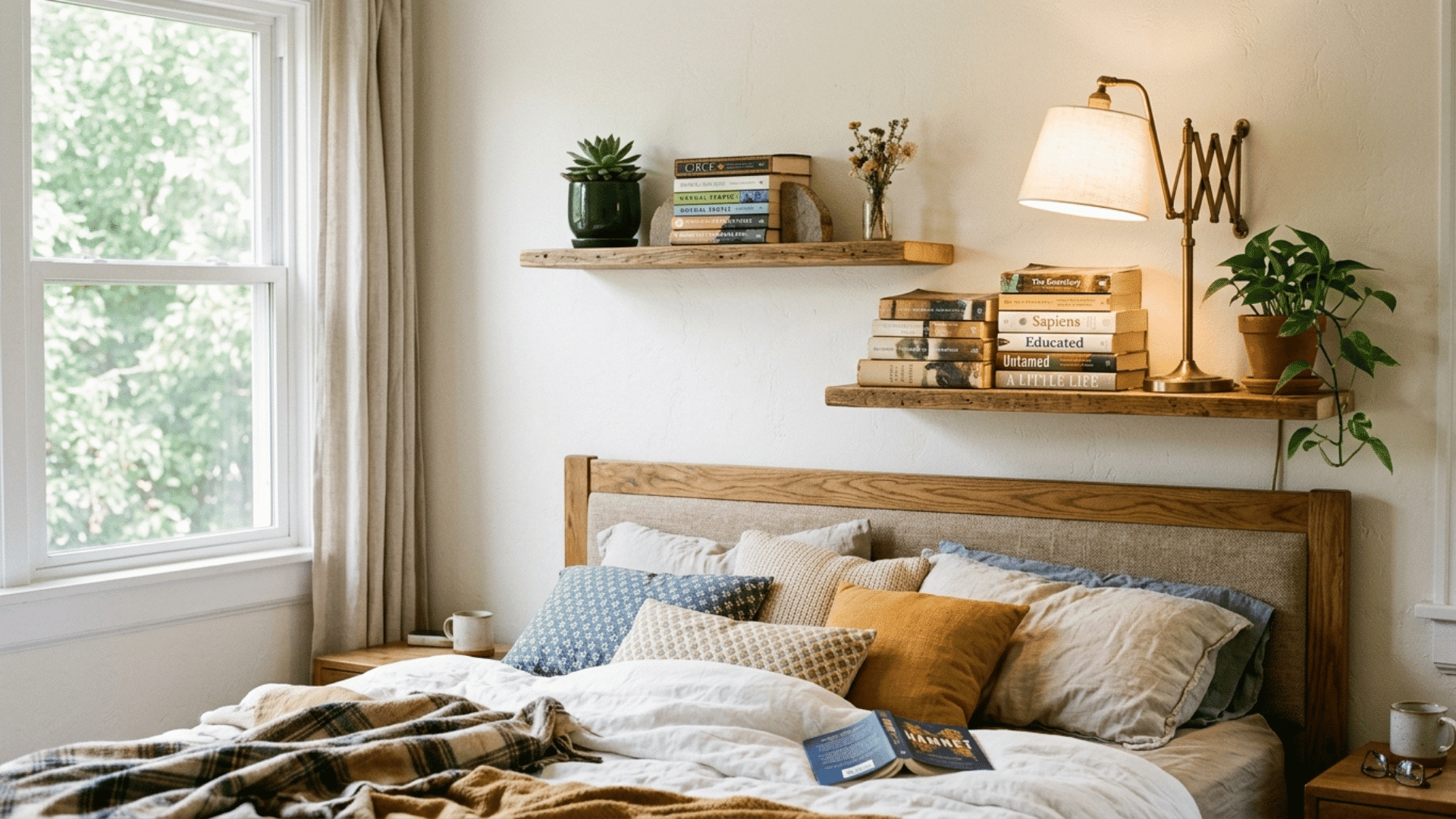
Floating shelves mounted above the headboard give guests a spot for books, glasses, or a small lamp without the need for a nightstand at all.
They use wall space instead of floor space, which matters most in a room where every square foot counts.
Styling tip: Keep the shelves shallow, around 6 to 8 inches deep, so they hold books and lamps without crowding the headboard.
19. Use Under-Bed Storage Bins
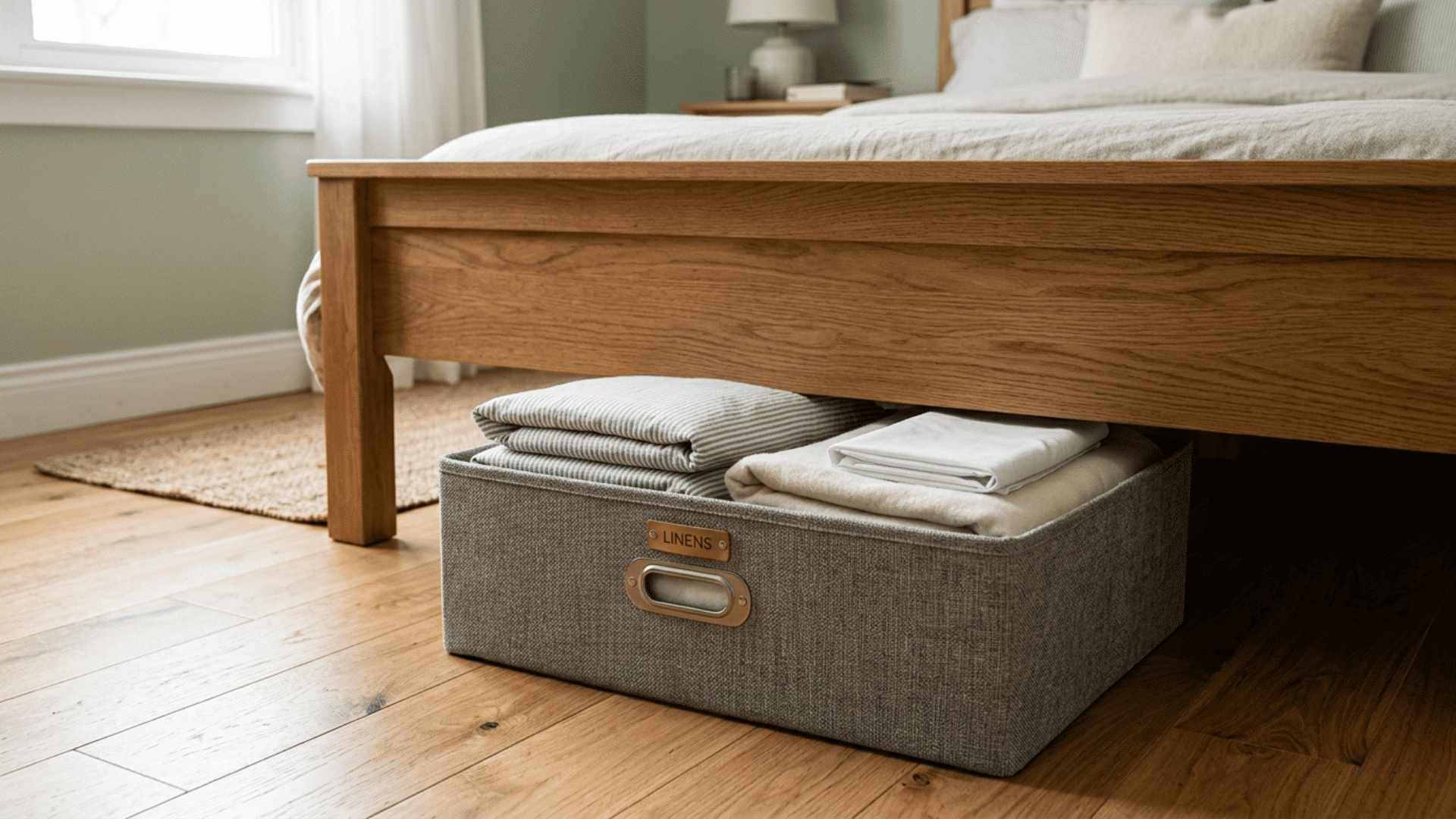
The space under a guest bed is often wasted, but a few flat bins can hold extra linens, pillows, or off-season items out of sight.
It turns dead space into usable storage without adding a single new piece of furniture to the room, which makes it especially useful in rooms with no closet or for storing extra linens and guest towels.
This works especially well when the bed frame sits a few inches off the floor, since flat bins slide in and out easily.
20. Add a Freestanding Wardrobe
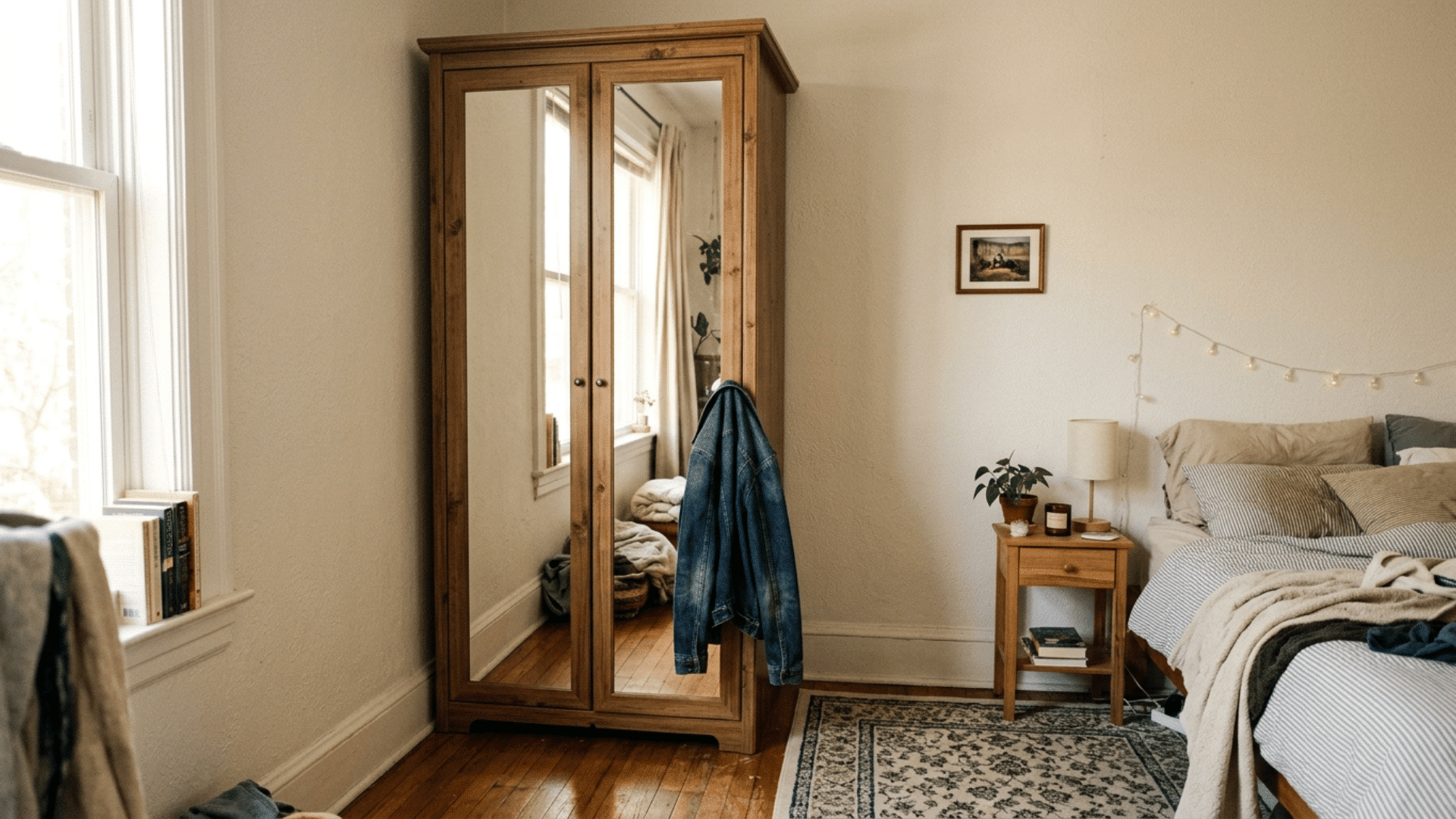
A slim freestanding wardrobe works well in guest rooms without a built-in closet, giving visitors a place to hang clothes during their stay.
It solves the closet problem without construction, and you can move it to a new spot or room later if your needs change.
Styling tip: Look for one with a mirrored door so it also doubles as a full-length mirror.
21. Hang a Wall-Mounted Coat Rack
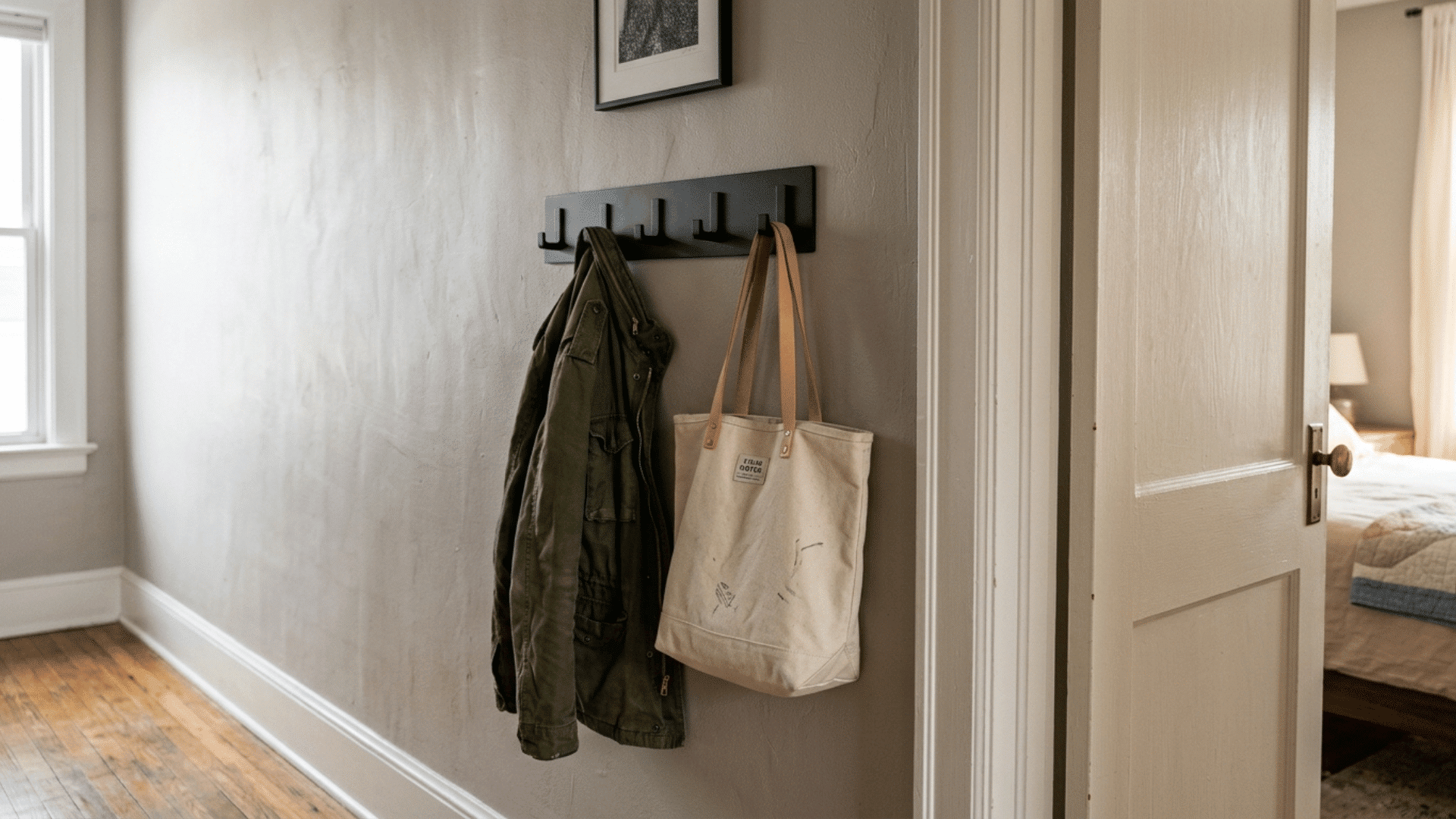
A simple coat rack near the door gives guests a spot to hang a jacket or bag without digging through a suitcase.
It keeps everyday items off the floor and out of the way, which helps a small room feel less cluttered.
This is especially useful near the entry of the room, where guests set down bags and jackets the moment they arrive. A rack with a few hooks and a small shelf on top can also hold keys or sunglasses.
22. Use Storage Ottomans as Extra Seating
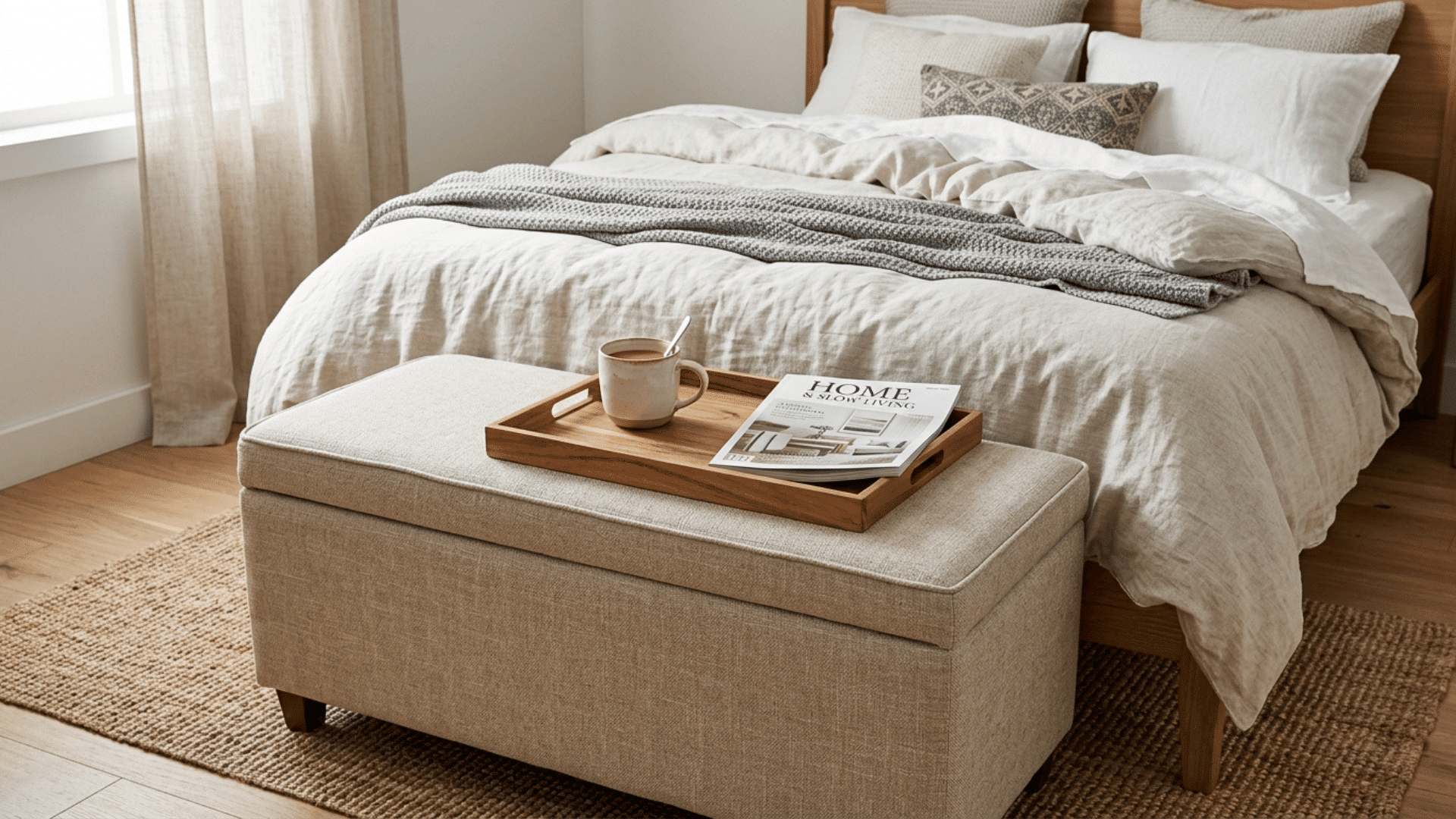
A storage ottoman gives guests a place to sit while also holding extra blankets, pillows, or luggage out of sight.
It replaces two pieces of furniture with one, which is exactly what a small room needs. An ottoman with a tray top doubles as a small table when guests need to set something down.
Styling tip: Choose an ottoman with a locking lid so it holds its shape as a stable seat, not just a soft cushion.
23. Use a Sofa Bed for Dual Purpose
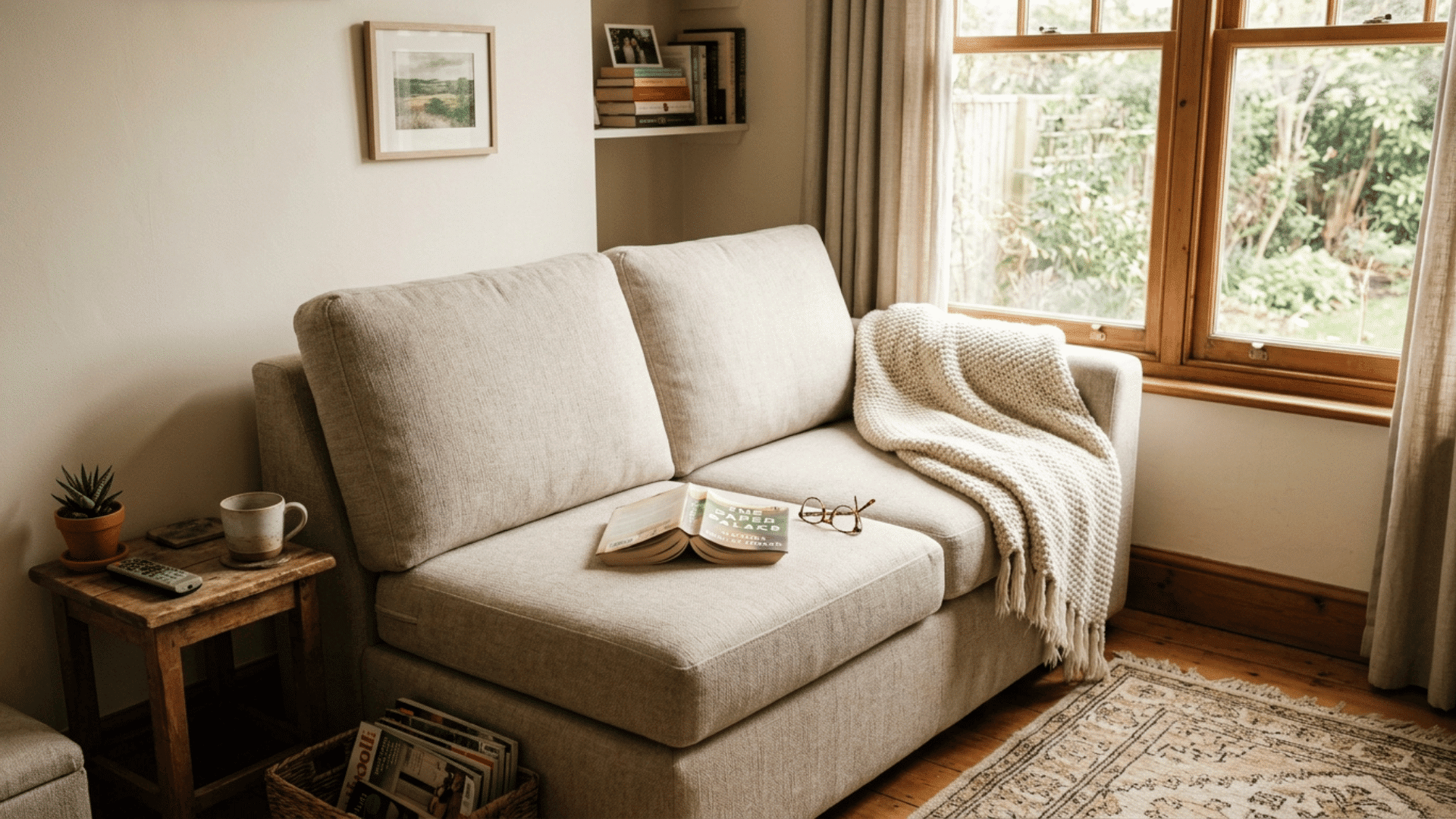
A sofa bed lets the guest room work as a sitting area, reading corner, or TV room until it’s time to fold it out for the night.
It gives the room a real purpose beyond just waiting for guests, so the space feels used instead of empty.
This works well in guest rooms that need to feel useful outside of visits, since it functions as real seating the rest of the year.
Choose one with a memory-foam mattress insert so it’s still comfortable once it’s folded out.
24. Combine a Guest Room With a Home Office
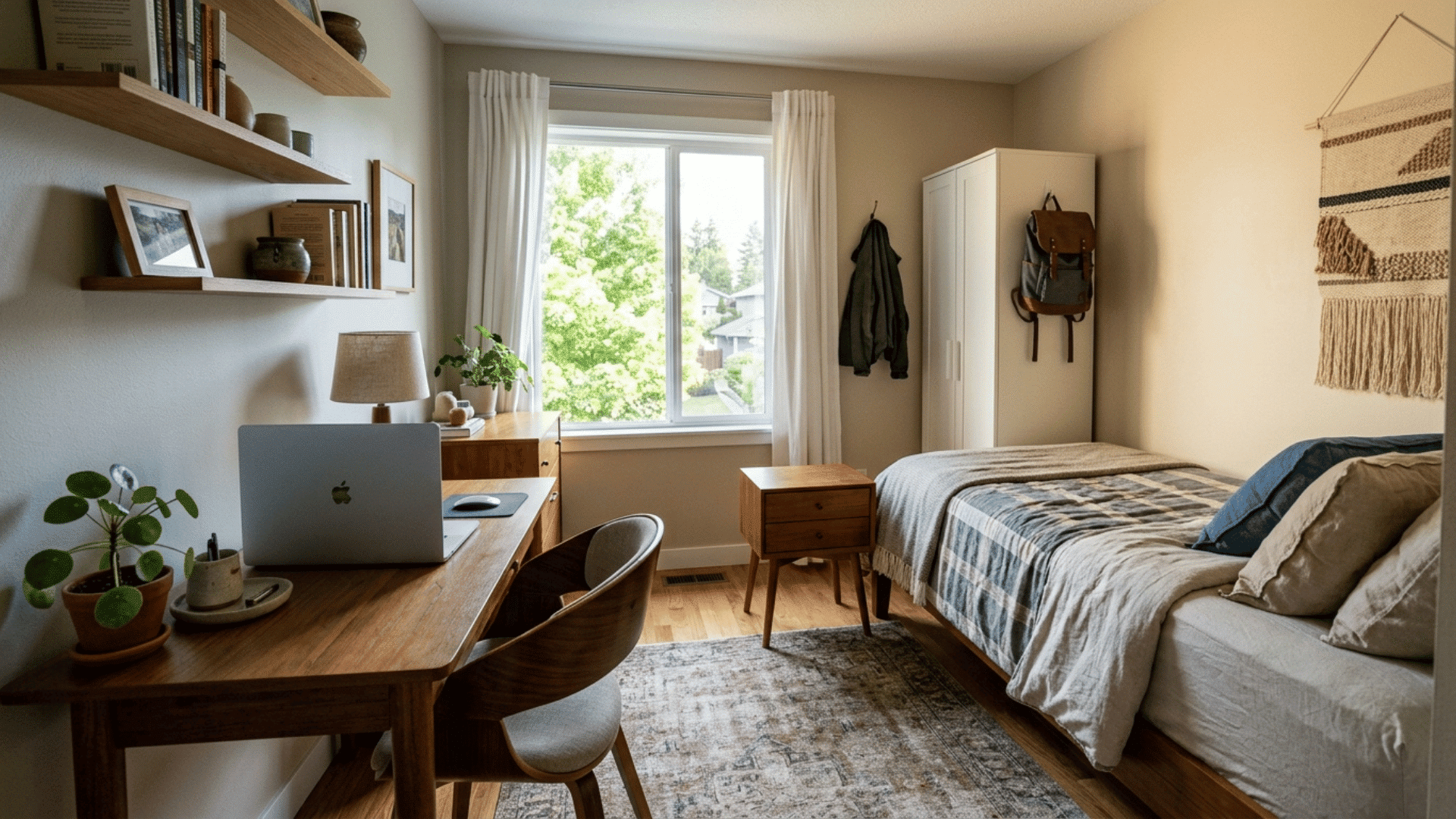
Pairing a guest room with a home office means the space earns its keep every single day, not just when someone is staying over, and a well-placed DIY room divider idea project can keep the two zones feeling distinct even in one small room.
It stops the room from sitting empty most of the year, which makes the square footage feel worth it.
Styling tip: Keep a rolling cart nearby to tuck office supplies out of sight before guests arrive.
25. Paint Walls in Soft, Light Tones
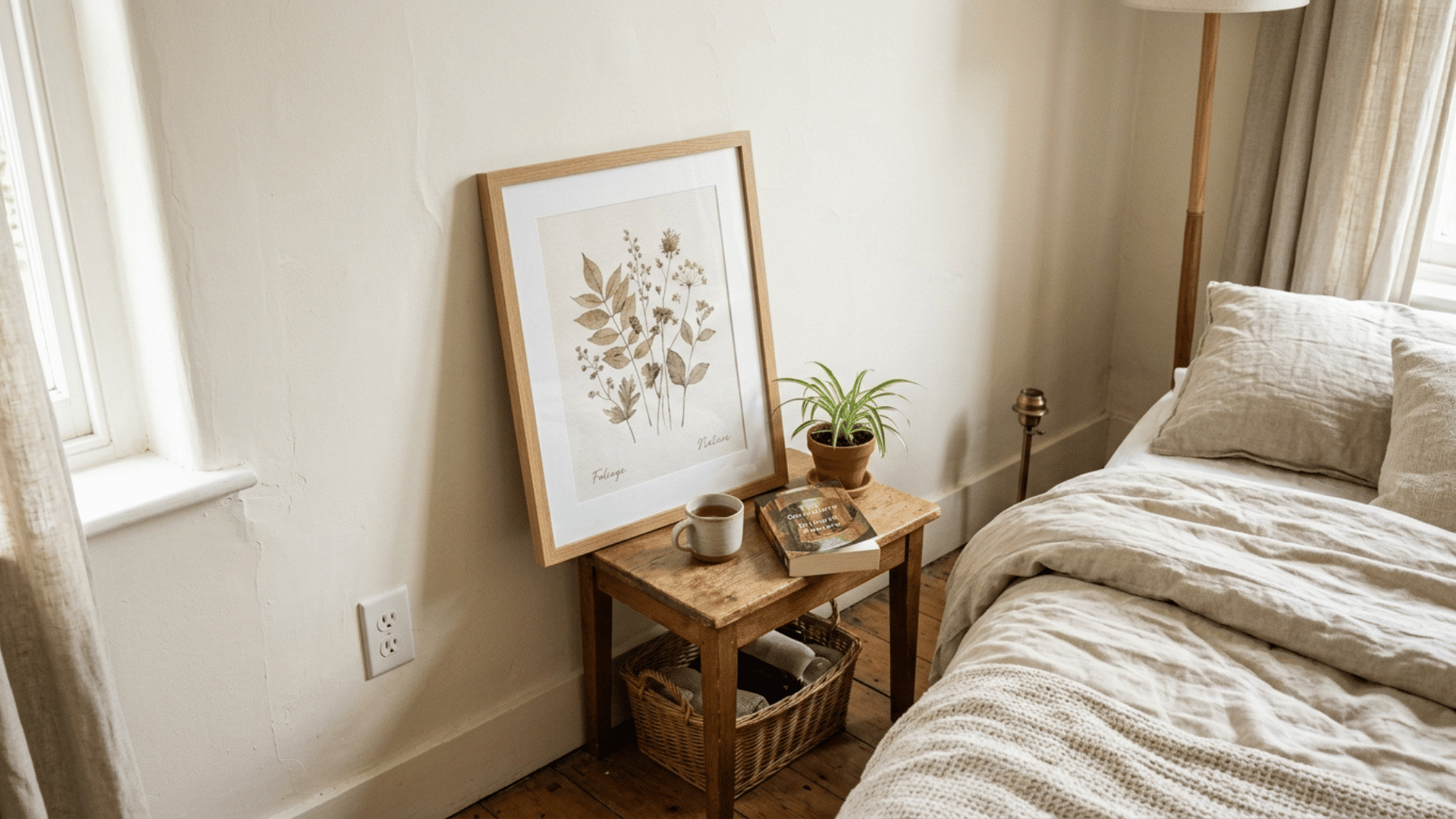
Light wall colors reflect more natural light throughout the room, making the walls feel farther apart than they really are.
Dark colors absorb light and make walls feel closer, while soft tones bounce light back into the room.
This works in nearly any guest room, but it makes the biggest difference in spaces with little natural light. Warm whites and soft greiges tend to feel more inviting than stark, cool whites.
26. Use Mirrors to Bounce Natural Light
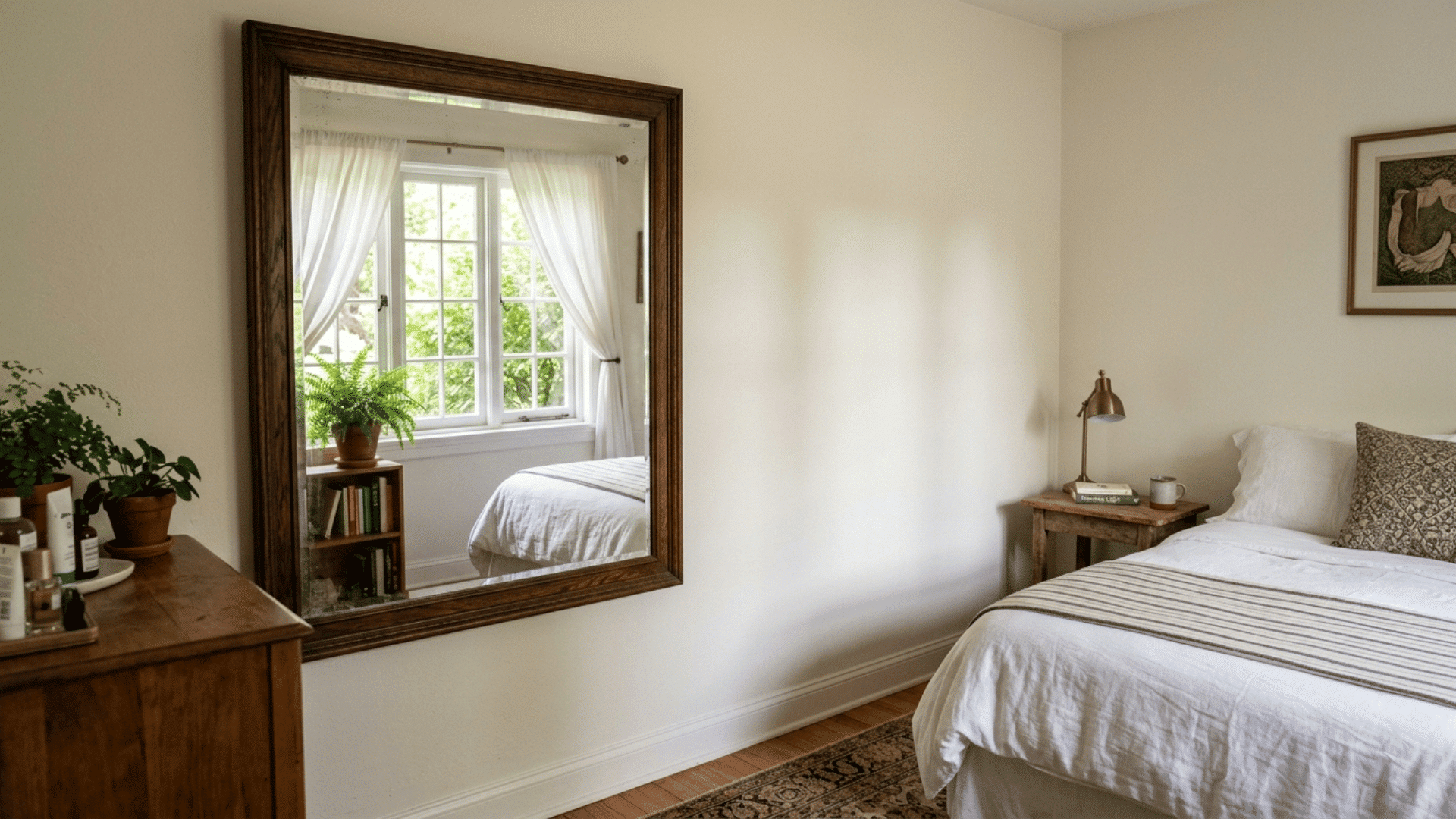
A well-placed mirror reflects light around the room, creating the illusion of a second window, even if there isn’t one.
Mirrors double the light in a room and add visual depth, which tricks the eye into seeing more space than there is.
Styling tip: Hang a mirror directly across from the window so it reflects the most natural light back into the room.
27. Layer Lighting With Wall Sconces
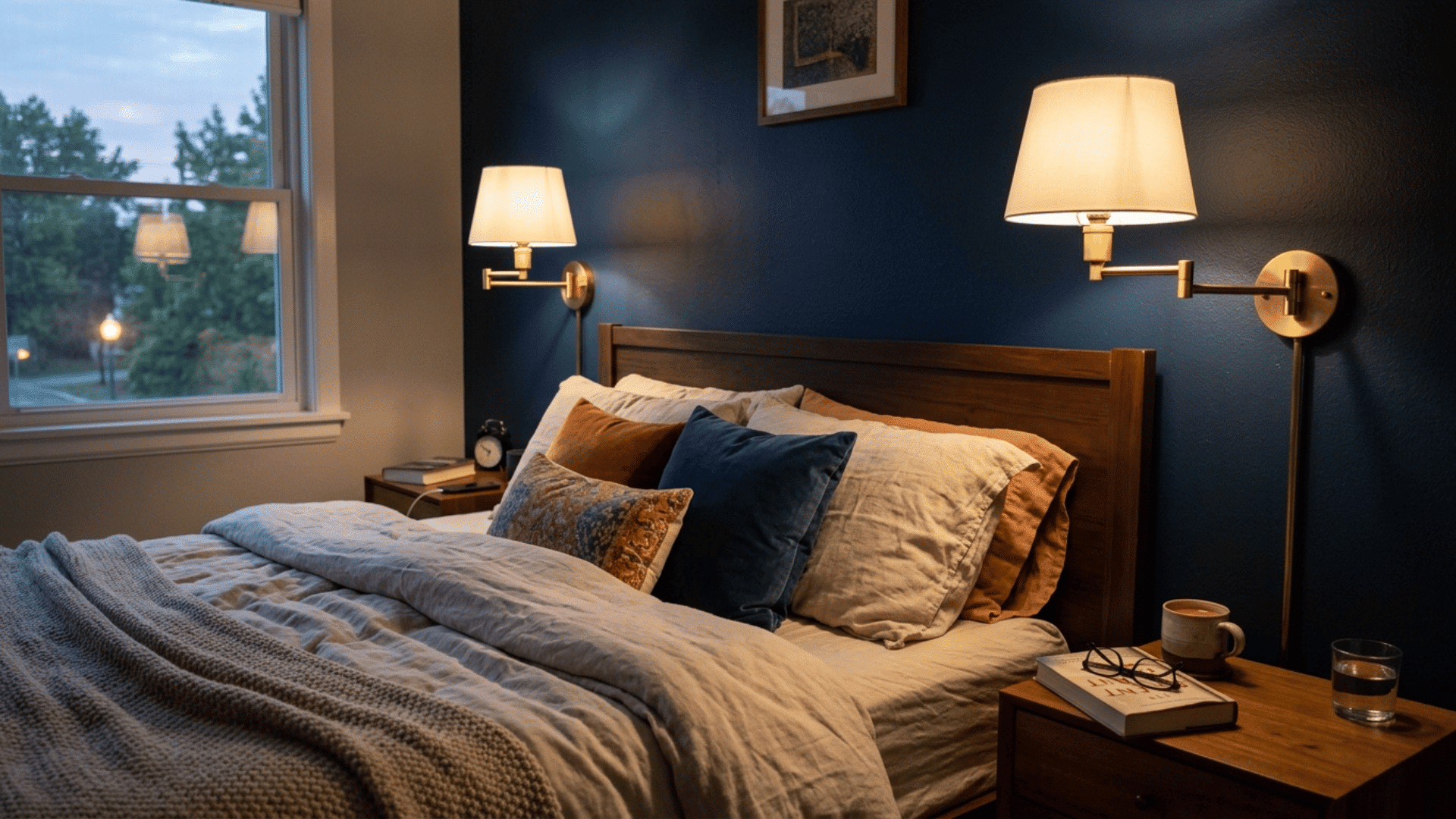
Wall sconces free up table space and provide light at eye level instead of relying on a single overhead fixture.
Light from multiple sources spreads more evenly across the room, softening shadows and making corners feel less cramped.
This works especially well in rooms without space for a nightstand lamp, since the light comes straight off the wall.
Look for sconces with a swing arm so guests can angle the light for reading.
28. Choose Sheer Curtains for a Brighter Feel
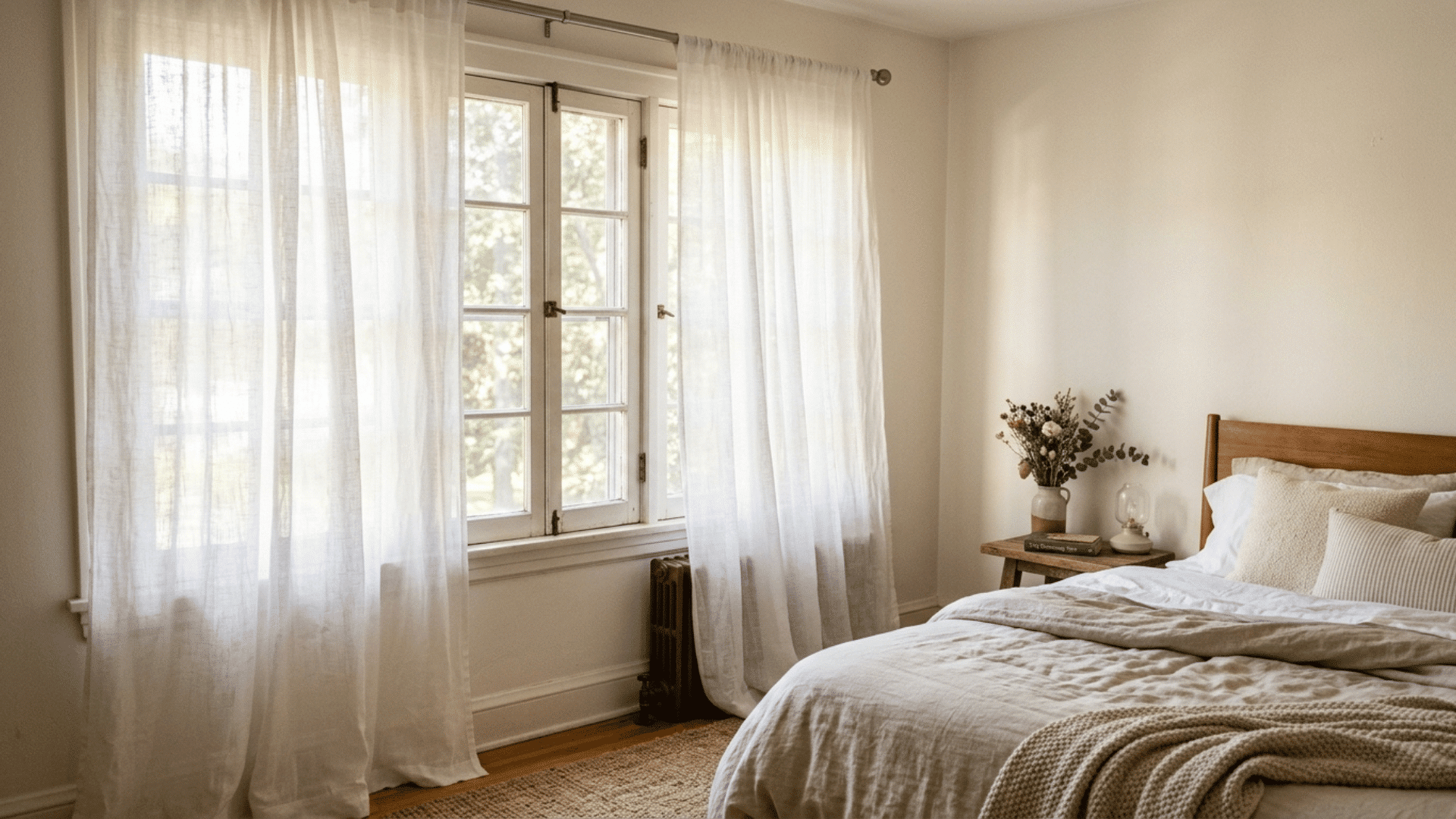
Sheer curtains let in more daylight than heavy drapes, keeping the room from feeling closed off during the day.
More natural light coming through the window makes the whole room feel airier and less boxed in.
Styling tip: Pair sheer panels with a simple blackout liner guests can add for privacy at night.
29. Add a Statement Ceiling Color
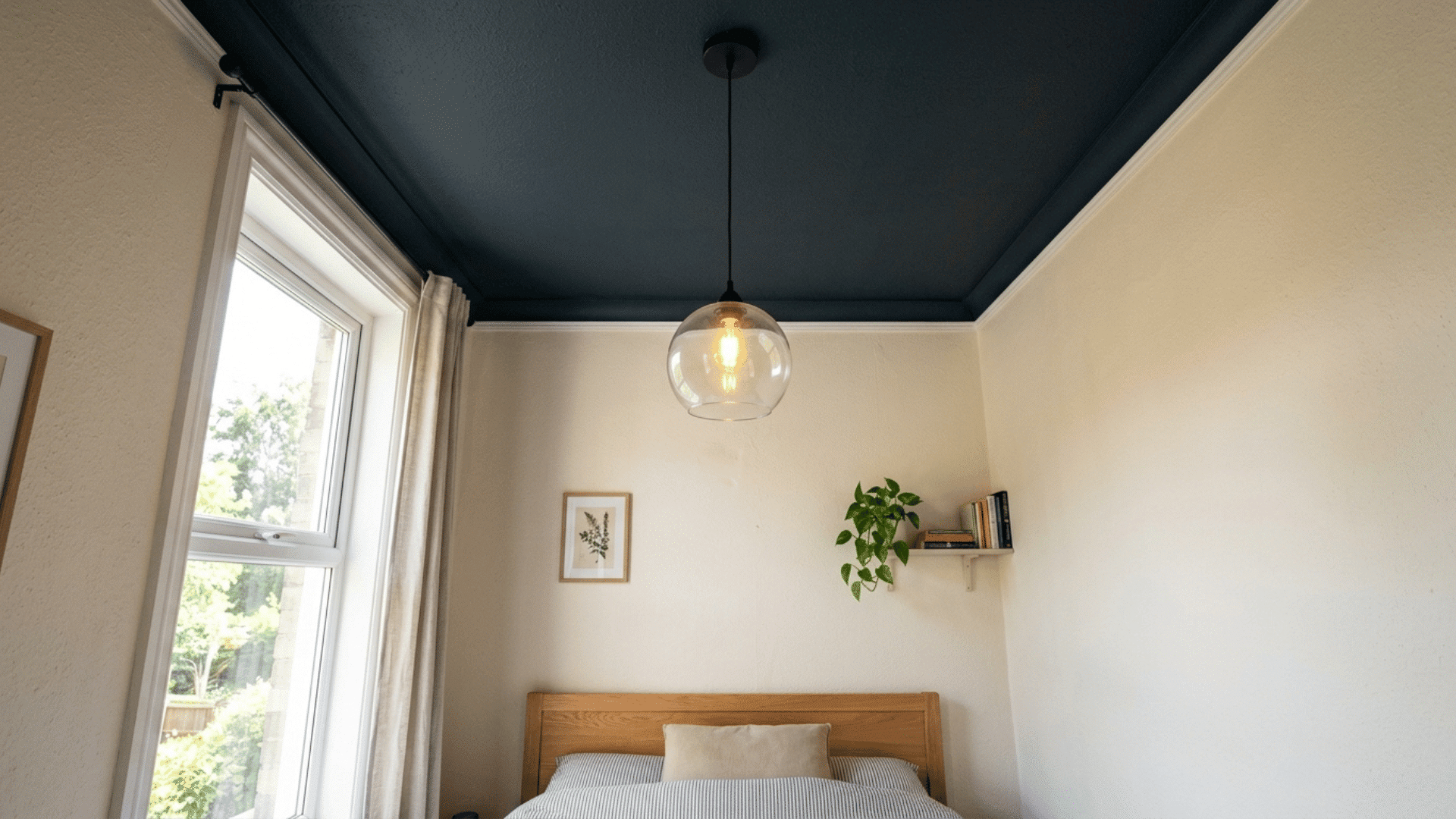
Painting the ceiling instead of the walls draws the eye upward, making the room feel taller than it actually is.
A painted ceiling shifts attention away from the room’s width and toward its height, which changes how the whole space feels.
This works best in rooms with higher ceilings or simple crown molding, since the color has more room to make an impact.
A soft, muted shade keeps the effect subtle rather than overwhelming.
30. Float the Bed Away From Corners
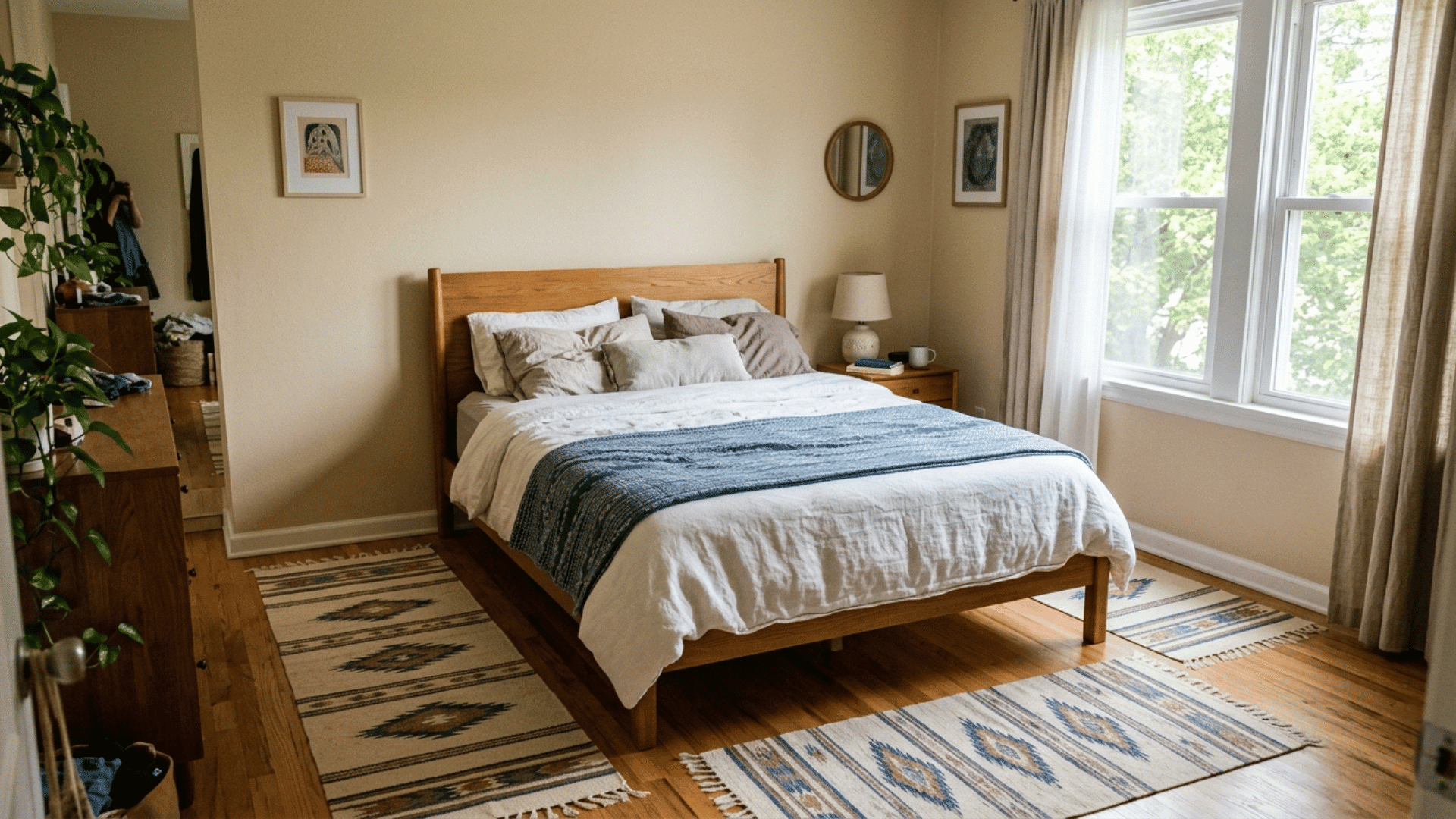
Pushing a bed into a corner can actually make a room feel more cramped, since it blocks two walls at once; floating the bed against just one wall opens up sightlines and makes the room easier to walk through.
A small runner rug on either side of the bed now visually anchors it, since it isn’t tucked into a corner.
Styling tip: Leave at least a few inches of breathing room between the headboard and the wall so the bed doesn’t feel boxed in.
31. Keep Walkways at Least 24 Inches Wide
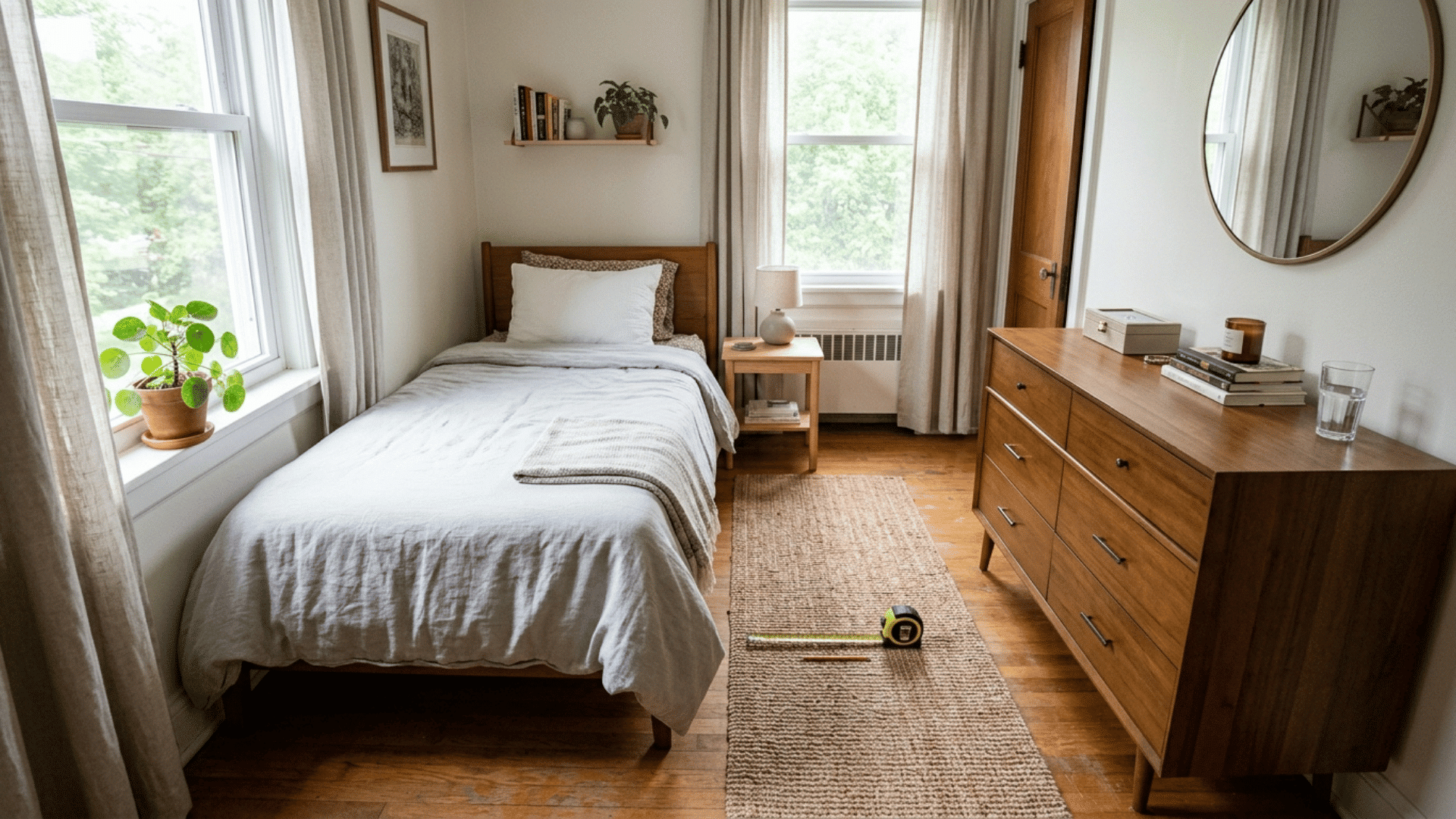
A cramped walkway can make an entire room feel smaller, even if the furniture itself doesn’t take up much space.
A clear path lets guests move through the room without squeezing past furniture, which makes the whole layout feel more open.
This matters most in rooms where the bed, dresser, and door are all close together, since even a few extra inches of clearance changes how the room feels to move through.
32. Use Vertical Space Instead of Floor Space
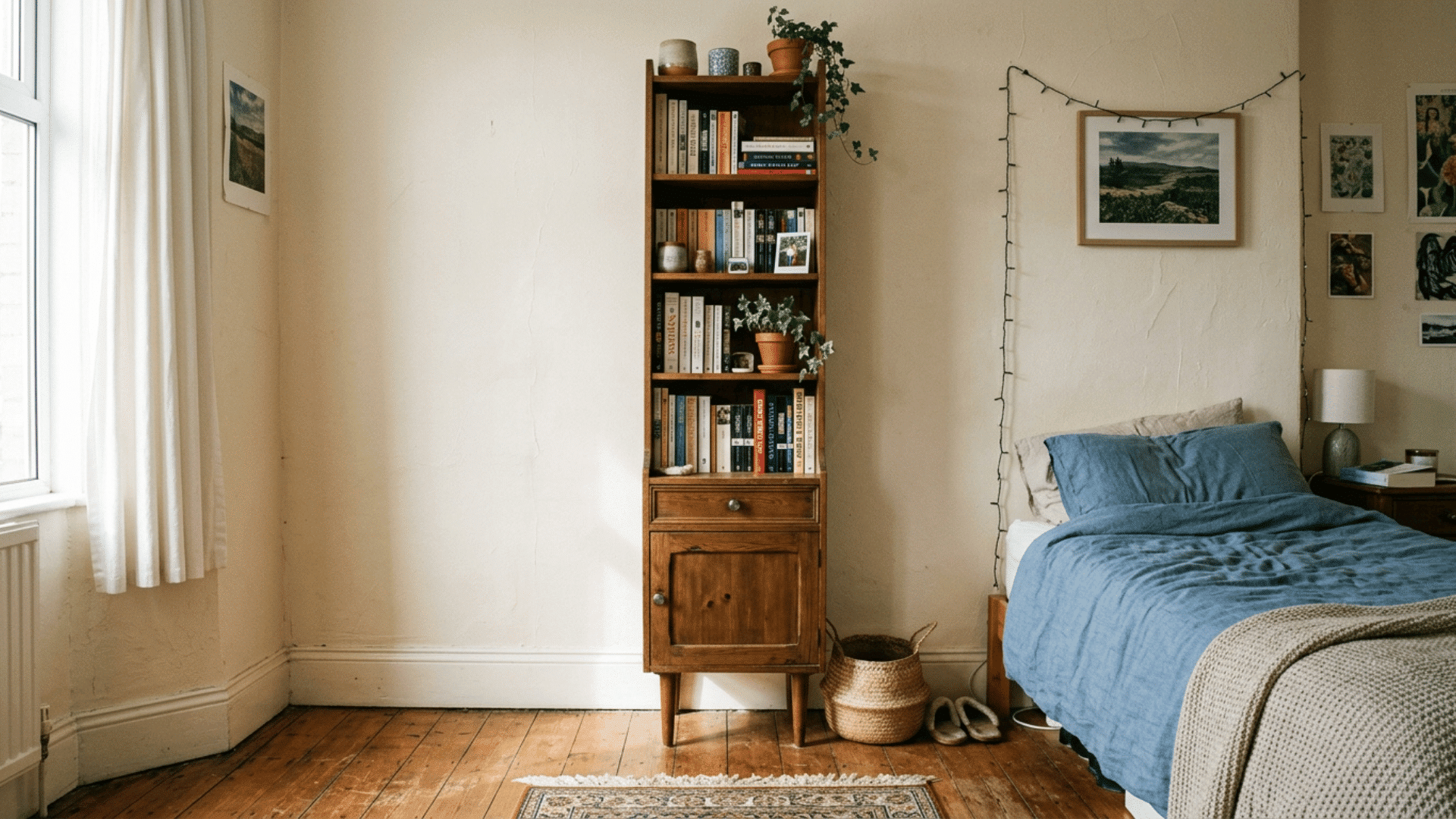
Tall, narrow furniture pieces store just as much as wide ones without eating into your walking room.
Going up instead of out keeps the floor clear, which is often the biggest factor in how spacious a room feels, making it a smart approach for narrow guest rooms or small closets with little room to spare.
Styling tip: Choose furniture with legs instead of a solid base so the floor still shows through, keeping the room from feeling boxed in.
33. Place Furniture on a Diagonal
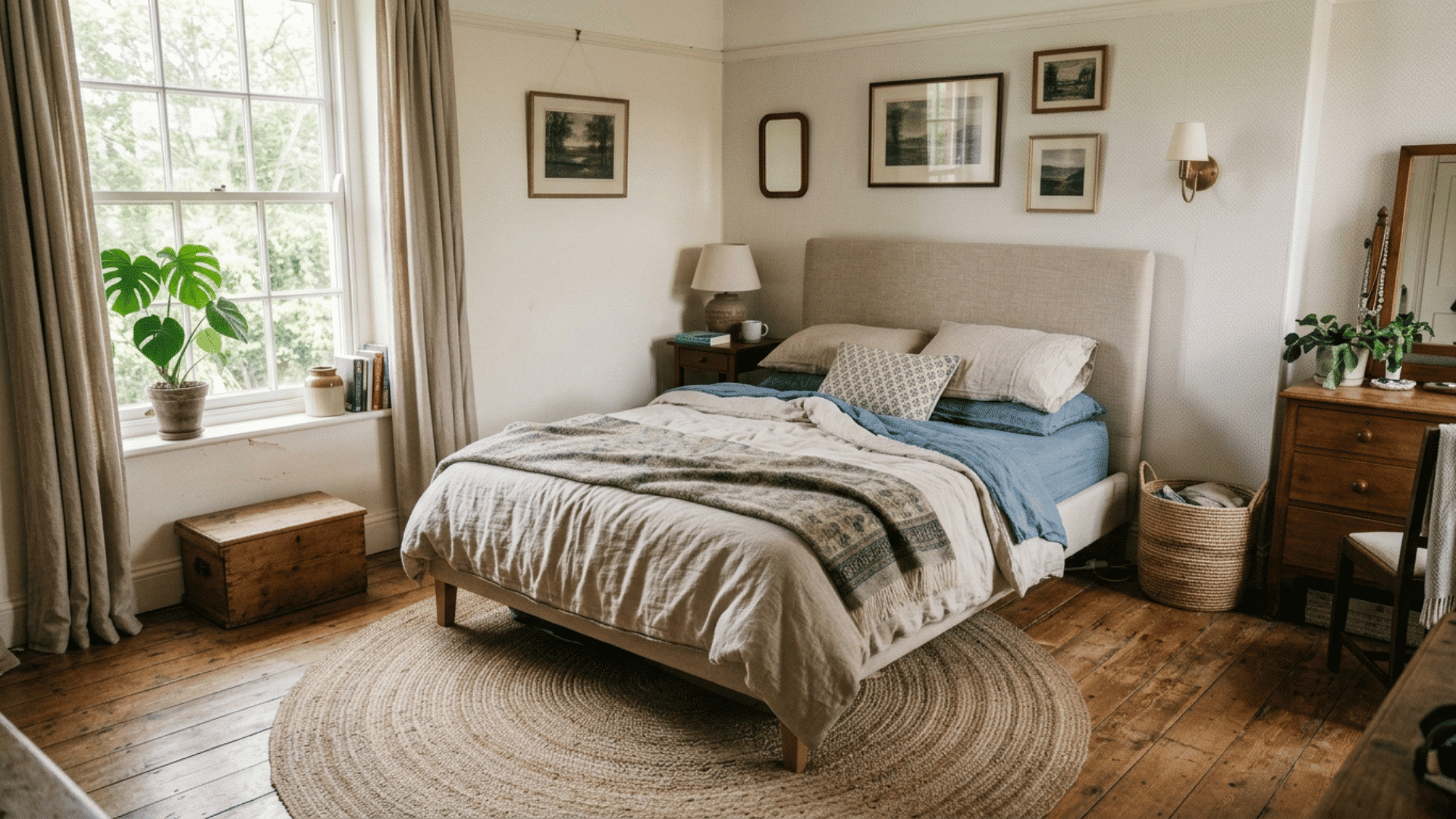
Angling a bed or dresser into a corner can open up unexpected floor space in your guest room.
A diagonal layout uses corner space that would otherwise go unused, freeing up the rest of the room for movement.
This works especially well in square or oddly shaped rooms, where a straight layout tends to leave awkward gaps. Test the angle with painter’s tape on the floor before moving the furniture into place.
34. Skip the Full Bedroom Set
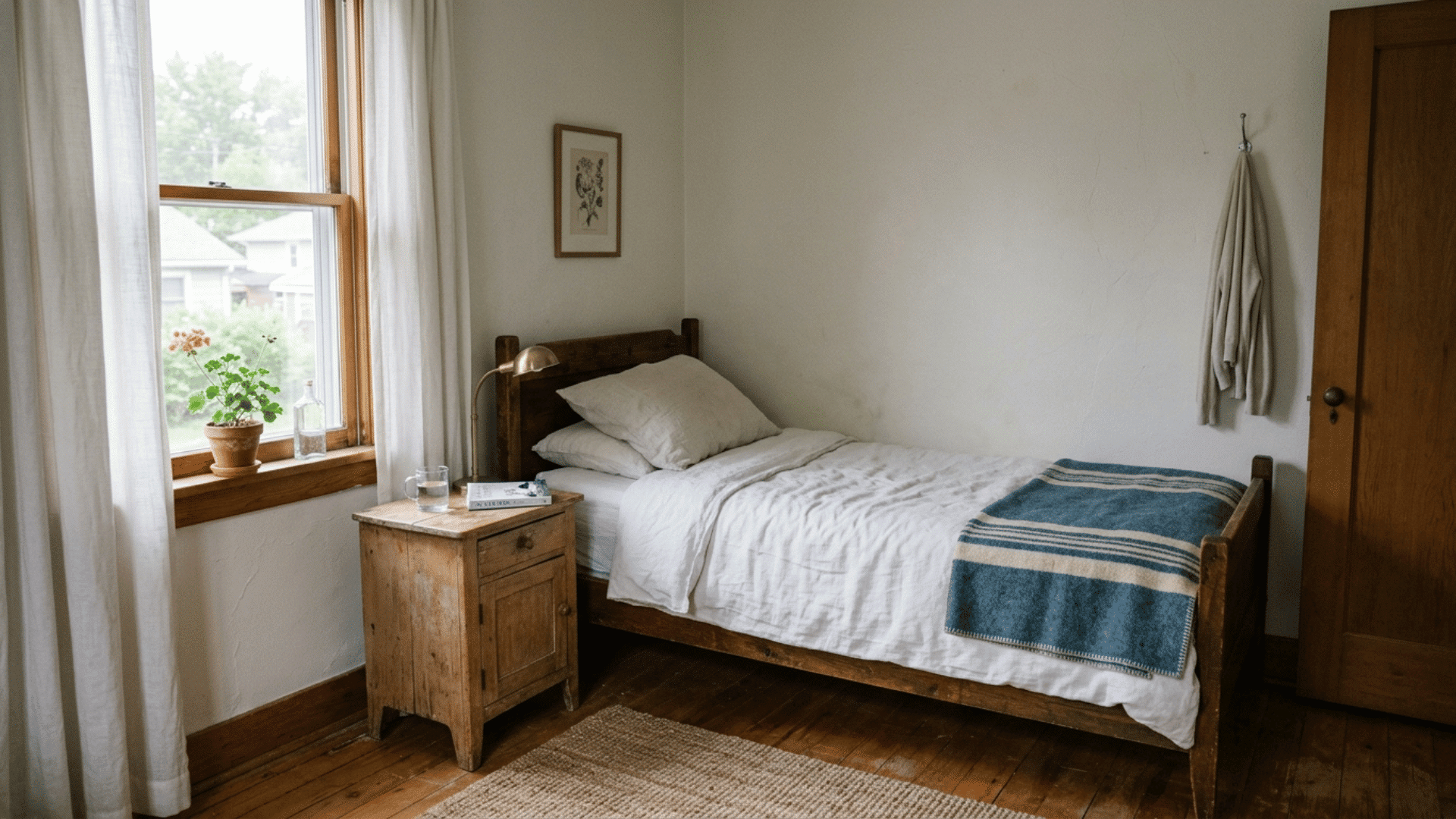
Buying a matching bedroom set often means more furniture than the room actually needs, just to fill out the collection.
Choosing only the pieces the room truly needs keeps the layout open, rather than forcing in extra furniture for the sake of a matching look.
Styling tip: Mix in one or two pieces from a different set instead of matching everything, since it makes the room feel curated rather than showroom-perfect.
35. Fitness Corner With Foldable Equipment
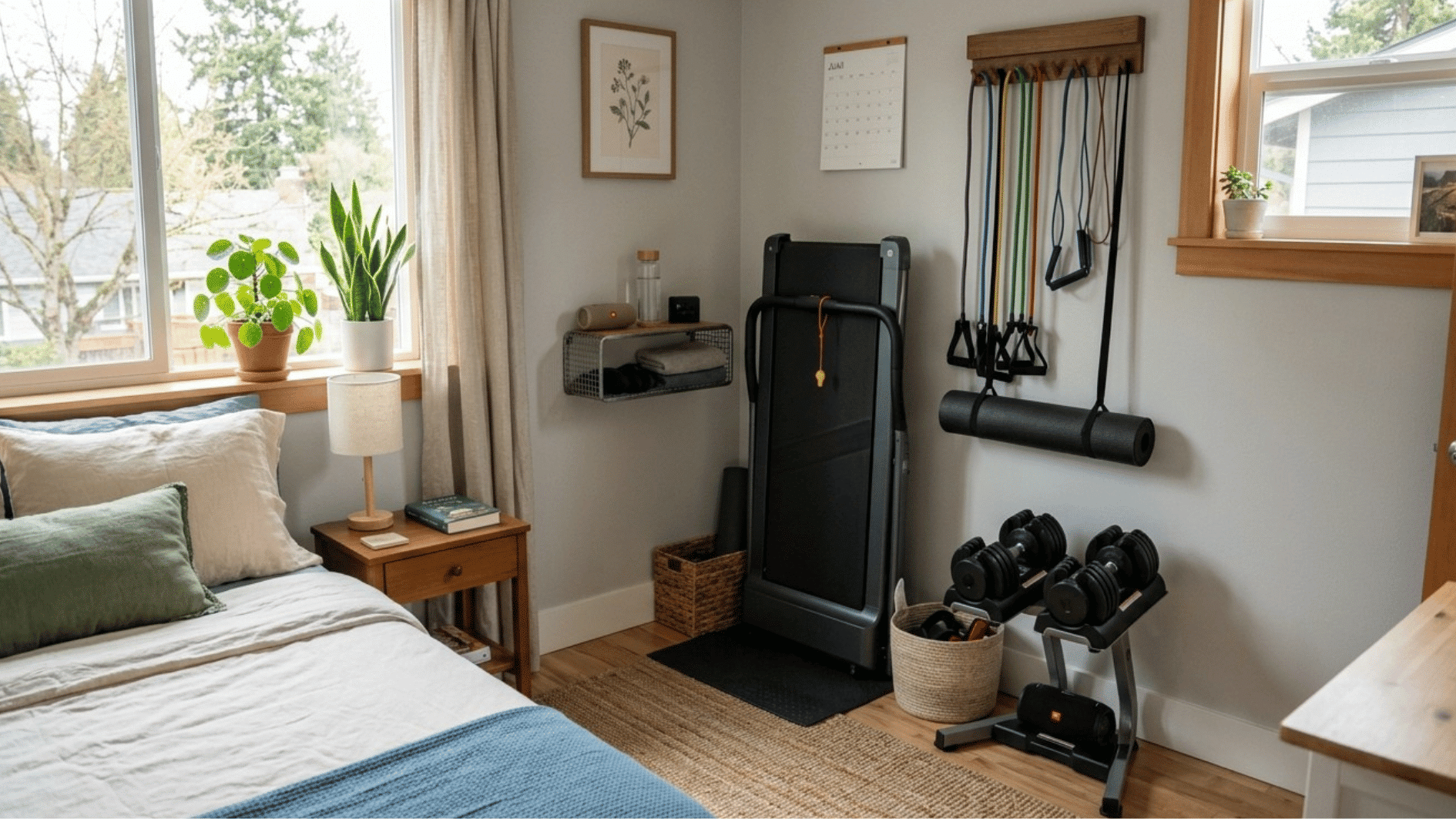
A small corner with foldable equipment lets the guest room serve a second purpose without permanently taking up space.
Foldable gear can tuck against the wall or into a closet when guests arrive, so the room can switch purposes in minutes.
This works well in guest rooms that double as a workout space the rest of the year, since resistance bands, a yoga mat, and light dumbbells all store easily.
A slim over-the-door rack keeps the gear organized without needing a dresser or shelf.
In a Nutshell
You don’t actually need a bigger room to make your guest feel at home, just a few good choices in the right places.
That’s what small guest bedroom ideas really come down to: small changes that make extra square footage unnecessary.
Pick two or three ideas from this list and try them this week. Hang a shelf, swap the lamp, or move the bed a few inches. Your guest won’t measure the room, but they’ll notice how good it feels to be there.