




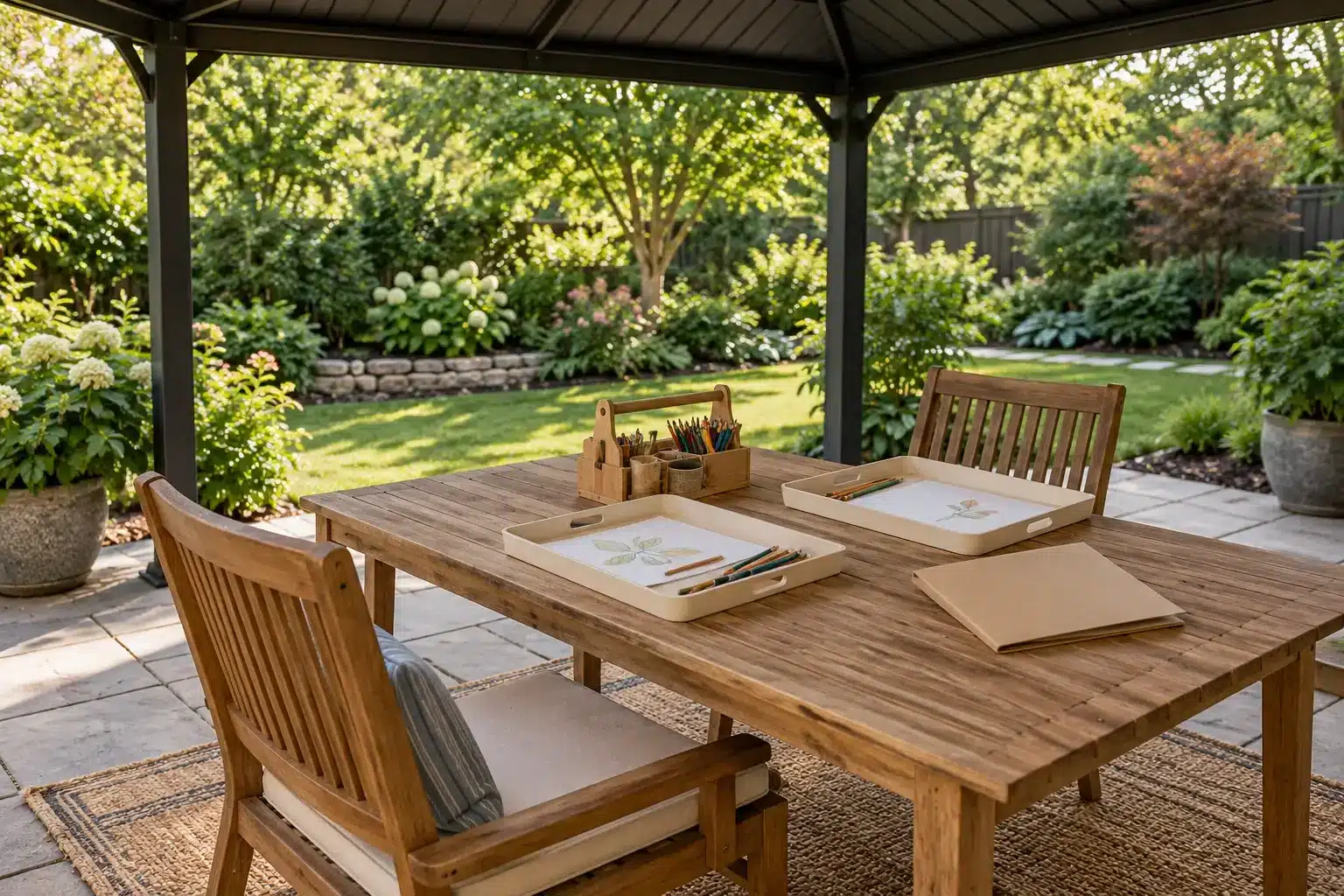
To set up an outdoor art station for kids, start with a stable table, comfortable seats and a small kit for one activity. Give each child a clear working space and a folder for their pictures. For a shared patio, a portable drawing setup lets you bring the supplies outside and put them away when the session ends.
Start with drawing, then choose the setup
Think about what you actually want to make outside. Drawing garden flowers takes little more than paper and pencils. A paper collage needs room for sorting pieces. Painting adds a different question: where will the wet work go when everyone is finished?
Choose a spot for the table and supervising adult
Visit the space at the time you expect to use it. Notice where sunlight falls across the tabletop and whether a breeze keeps lifting the paper. A place that looks inviting early in the morning may feel quite different later in the day.
Choose a stable surface for the furniture and keep the route back indoors clear. Position the activity where the supervising adult can stay close and reach the materials. Being able to see the table through a window is different from being there to help.
If a gazebo is part of a wider backyard plan, compare gazebo designs with your actual table and chairs in mind. Look at the usable space between posts, the openings people will walk through and the other jobs the area needs to do. A nominal roof size alone does not tell you how comfortably a craft session will fit beneath it.
Treat an open shelter as an outdoor setting. Keep a simple indoor alternative ready when conditions become uncomfortable or unsuitable.
Keep temporary use separate from a room conversion
Some households already have a covered utility area and wonder whether it could become a dedicated craft room. If that means enclosing a carport, the decision goes well beyond arranging a table. The existing structure, proposed use, ventilation and local building requirements need assessment before adding walls or planning a permanent workspace.
For occasional family crafts, try a portable setup first. It will reveal whether you need more working room, somewhere for projects to dry or simply a better way to carry supplies. Those are different problems, and an enclosure is not automatically the answer to any of them.
A complete drawing session for two children
Imagine one adult and two school-age children drawing at an existing patio table. This is a suggested setup to adapt to your family, not a tested layout or an equipment requirement. The activity is simple: draw something you can see in the garden.
Bring out one small drawing kit
Gather the materials indoors before inviting the children to sit down. For this example, take:
- Two drawing boards or flat trays with firm surfaces, one for each child.
- Four sheets of drawing paper, with the spare sheets kept in a folder.
- A small selection of age-appropriate colored pencils or crayons in their labeled packaging.
- Two folders labeled with the children’s names.
- A handled caddy or container for carrying the supplies.
- A cloth appropriate for cleaning the table afterward.
Adjust the quantities to your family, and carry only what you can comfortably manage.
Give each child a place to work
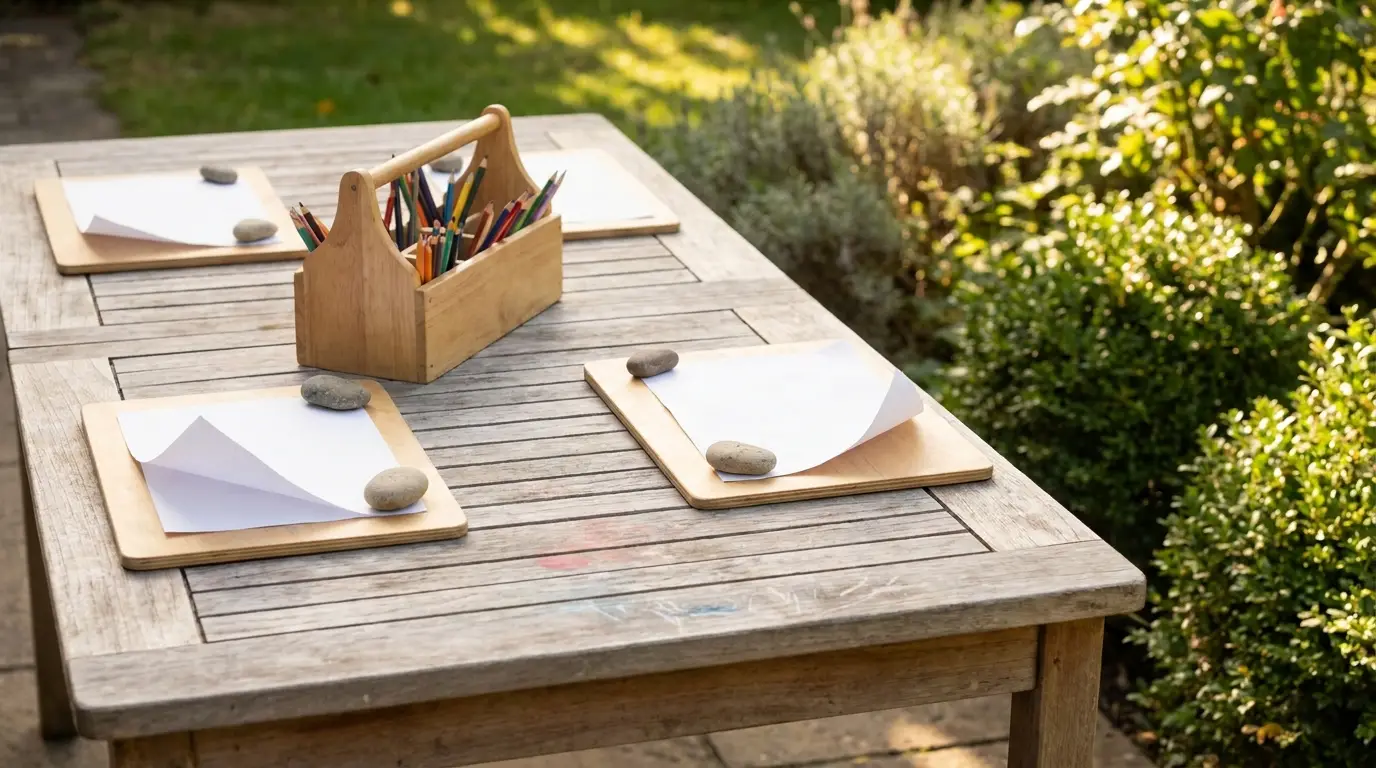
Place one board and sheet of paper at each seat. Put the pencils within comfortable reach of both children, with the adult seated where they can help. Keep the spare paper and folders together on a dry, clear part of the table.
Have everyone sit down before starting. If elbows overlap or a child must lean across another person’s drawing to reach the pencils, move the supplies or reduce what is on the table. Keep containers out of the route around the chairs.
Offer a prompt with room for different answers
Ask each child to choose something visible from the table: a flowerpot, a leaf shape, a birdbath or part of the house. They can draw its outline and add the colors they notice. Looking is enough; there is no need to collect plants or other objects.
If a child wants an imaginary garden instead, let the drawing go that way. One might make a careful sketch while the other fills a page with enormous flowers. The shared activity does not need matching results. The adult can draw alongside them while remaining available to supervise.
Pack unfinished drawings before clearing the supplies
When it is time to stop, put each dry drawing in its named folder, including pictures the child wants to finish later. Return the pencils to their packaging and place them in the caddy. Carry the folders flat so the work does not fold or slide out.
Bring the boards, folders and supplies indoors, then clean the table according to its care instructions. Everyone washes their hands after using the art materials. The table and chairs can stay ready for their usual outdoor use; the art supplies return to suitable storage away from children’s unsupervised access.
What changes if you want to paint?
Painting needs a suitable place for wet work to dry before the table is needed again. Decide where that will be and how you will move the work before opening any paints. Follow the materials’ use, drying and cleanup directions.
Protect furniture with a suitable covering that stays clear of feet and walking routes. Read the product’s surface restrictions: “washable” does not mean it will come off every finish. If drying and cleanup would be awkward that day, keep the drawing kit and save painting for another session.
Make the routine suitable for children
The U.S. Consumer Product Safety Commission’s Art and Craft Safety Guide recommends close supervision, small amounts of materials, keeping food and drinks out of the art area and washing hands afterward. These are useful habits for a patio craft table as well as an indoor one.
Choose supplies intended for the child’s age and abilities, keep the original labels, and follow the directions. Avoid turning outdoor craft time into an opportunity to use adult finishing products, aerosols or unfamiliar chemicals around children. Moving a project outside does not remove the need for suitable materials and precautions.
Adjust the station after the first session
Notice what interrupted the activity. If pages kept lifting, try a more sheltered spot or a sketchbook on a calmer day. If carrying everything was awkward, simplify the kit or choose a container that is easier to handle. If drawings got bent, improve how the folders travel indoors.
A new shelf or easel is useful only if it solves a problem you actually have. Try the same basic setup again before buying more equipment. Store materials according to their labels; a roof overhead or a lidded box does not make every outdoor location suitable for permanent supply storage.
Frequently asked questions
Do I need a gazebo for an outdoor art station?
No. A suitable patio or other outdoor sitting area can work for a temporary session. Choose the location around comfort, supervision, furniture stability and the activity. Consider a gazebo as part of a broader outdoor living plan, rather than a requirement for taking a sketchbook outside.
Do children need an easel?
No. A table with a firm drawing surface is enough for the drawing session described here. Consider an easel later if the activities your children enjoy call for one. Check its intended age range, stability and use instructions before choosing it.
How can the craft table become a dining table again?
Give supplies and unfinished work separate containers, then remove both when the session ends. Clean the surface according to the materials used and the furniture’s care directions before setting out food. Avoid leaving a permanent pile at one end of a shared table.
Start with one afternoon
A useful outdoor art station gives children room to draw and makes it easy to put their work away. The most useful setup may be the table you already own, a modest kit and a reliable home for the work afterward.
Choose one familiar activity for your next suitable afternoon and try the full routine. Keep what helps, change what gets in the way and add equipment only when it earns its place. That is how a shared backyard becomes somewhere your family can create without leaving the next person a table to clear.