





A distinct new stage begins somewhere between a child’s first unsteady step and their first confident sprint across the yard.
Parents often notice the change well before they know what to call it.
That is usually when the question comes up: what age is considered a toddler, and is it really just about age?
This blog covers where that stage begins, how it unfolds month to month, and why the exact age can vary a little from one child to the next.
What Age is Considered a Toddler?
A toddler is generally a child between 1 and 3 years old, or 12 to 36 months.
This is the age range that most pediatricians and child development groups use when discussing toddlerhood.
After age 3, most children move into the preschooler stage, when new skills like sentences and simple problem-solving start to take over.
The word itself comes from “toddle,” an old term for the unsteady, short steps a child takes when first learning to walk. It has been used this way since the early 1800s.
Infant Vs Toddler Vs Preschooler: What’s the Difference
Growing out of one stage means growing into another. Here’s how infants, toddlers, and preschoolers differ across movement, language, and daily habits, so you can see exactly where your child fits.
| Category | Infant (0–12 months) | Toddler (1–3 years) | Preschooler (3–5 years) |
|---|---|---|---|
| Mobility | Rolls, sits, crawls, pulls to stand | Walks, climbs, starts to run | Runs, jumps, and climbs with control |
| Language | Coos, babbles, may say 1 to 2 words | Builds a growing vocabulary, short sentences | Speaks in full sentences, asks constant questions |
| Fine motor skills | Grasps objects, brings hands to mouth | Stacks blocks, scribbles, feeds self | Draws shapes, uses scissors, dresses self |
| Social behavior | Bonds mainly with caregivers | Parallel play, testing limits, tantrums | Cooperative play, sharing, forming friendships |
| Sleep needs | 12 to 16 hours a day, including naps | 11 to 14 hours a day, including a nap | 10 to 13 hours a day, naps often fade out |
| Feeding | Breast milk, formula, then purees | Table food, self-feeding, picky eating | Eats independently, wider food variety |
| Common milestone | First steps or first words | Toilet training begins | Starts preschool or kindergarten prep |
Picky eating during the toddler years is real enough to plan around, and a rotation of healthy toddler meals makes those table-food battles a little more manageable.
The Toddler Years, Broken Down by Stage
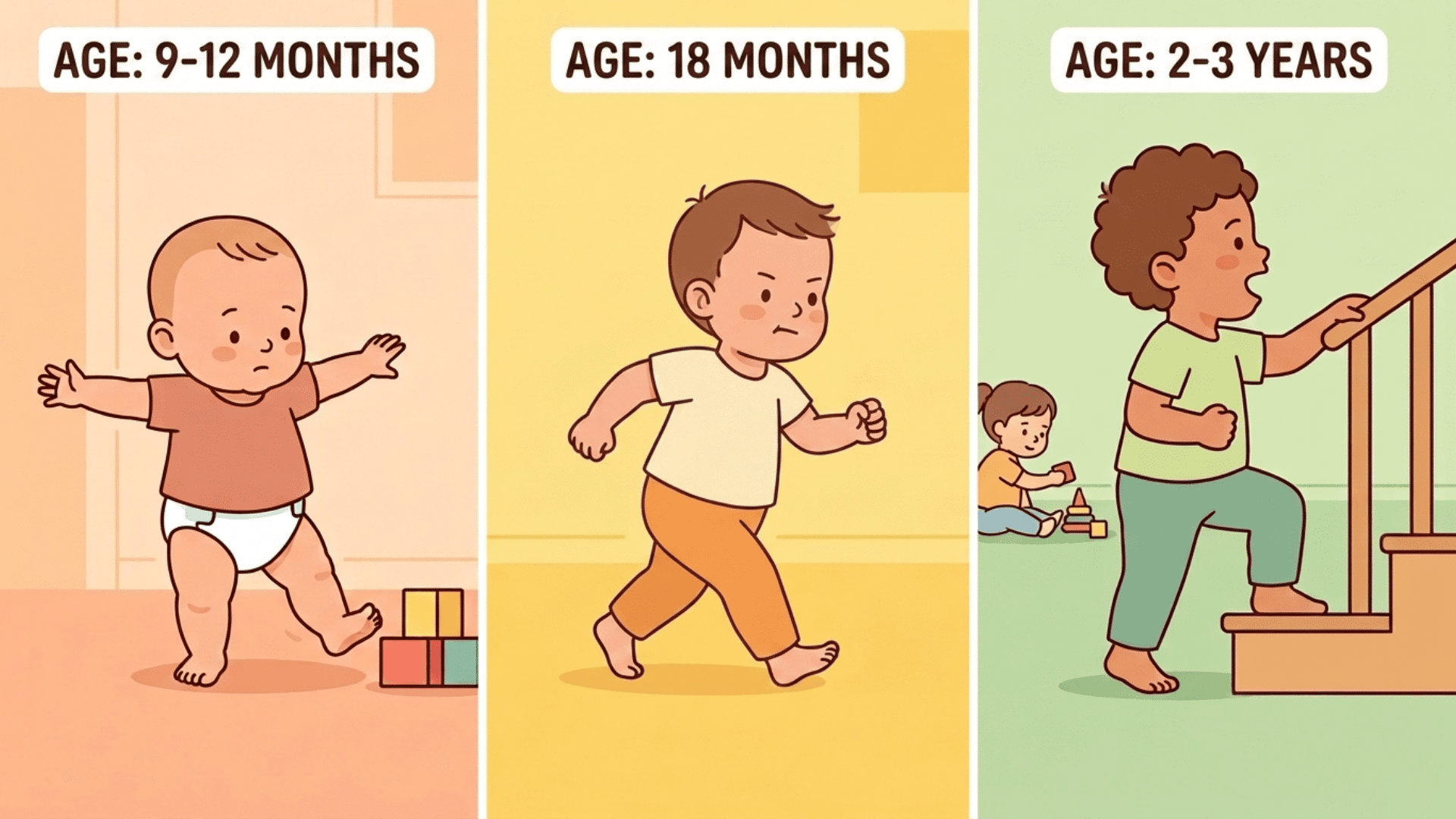
The toddler stage spans two years, and children change fast within it. Breaking it into shorter windows shows what actually shifts month to month, not just start and end points.
12 to 18 months
This window marks the shift out of infancy, driven mostly by new mobility and a first grasp of words. Most of the energy at this stage goes into balance, since walking is still new and unstable.
- Takes first independent steps, may still stumble often
- Says a handful of clear words like “mam” or“no”
- Points to objects to show interest or ask for something
- Enjoys stacking two or three blocks before knocking them down
18 to 24 months
Movement gets steadier here, which frees up energy for language and early imagination to take off. Confidence builds quickly, and curiosity starts to drive most of the day.
- Runs with more control and can kick a ball
- Vocabulary grows to 50 or more words
- Starts combining two words, like “more juice”
- Begins pretend play, such as feeding a stuffed animal
2 to 3 years
Physical skills level off a bit, so the biggest changes now happen in speech and social behavior. This is also when independence starts to show up in everyday routines, not just in play.
- Climbs stairs one foot per step, sometimes without help
- Speaks in short sentences of three or more words
- Shows early signs of potty training readiness
- Plays alongside other children, though not always cooperatively yet
When Does Toddlerhood End?

Toddlerhood ends around a child’s third birthday. Past that point, most pediatricians shift the label to “preschooler,” though the change rarely happens overnight.
A calendar enforces no strict cutoff.
Some children act like preschoolers a few months early, while others stay toddler-like well past their third birthday; plenty of parents ask whether their child is still a toddler well after turning four, and the answer depends more on behavior than the date on a calendar.
What really marks the shift is a jump in language, patience, and social play, changes that build up gradually around that third birthday rather than on the day itself.
Why Isn’t the Age Range Exact for Every Child?
Age ranges come from averages across thousands of children, but development depends on genetics, environment, and individual pace, so no two toddlers hit the same milestone on the same day.
- Genetics can speed up or delay walking and talking, even between siblings
- Premature birth often shifts milestones later than the standard age chart
- Bilingual homes can slow early vocabulary growth without signaling any real delay
- The amount of hands-on interaction with caregivers affects how fast skills build
- Birth order plays a role, since younger siblings often talk earlier by copying others
- Health conditions or ear infections can temporarily set back speech or motor skills
Parenting Tips for The Toddler Years
The toddler years come with big emotions, new skills, and plenty of learning moments. Simple parenting habits can help make daily routines smoother while supporting your child’s growing independence.
Create a Consistent Routine
Keep regular meal, nap, and bedtime schedules to help toddlers feel secure and know what to expect.
Offer Simple Choices
Let toddlers choose between limited options, like two outfits, to encourage independence while keeping boundaries clear.
Talk Through Daily Activities
Describe what you are doing throughout the day to support language development and build vocabulary naturally.
Stay Calm During Tantrums
Avoid trying to reason during big emotions and focus on helping your toddler feel safe and calm first.
Be Patient With Development
Remember that toddlers are still learning emotional control, communication, and independence at their own pace.
Key Takeaways
Toddlerhood isn’t something you spot on a single day or from one skill checked off a list. It shows up slowly, through steadier steps, new words, and a stubborn streak that catches most parents off guard.
The age range for what counts as a toddler gives you a general window, not a countdown. If part of the toddler’s mean age shows up a little early or late for your kid, that’s normal, not a warning sign.
Watch your child, not the calendar, and bring up any real concerns with your pediatrician instead of a search bar.
Frequently Asked Questions
Do Boys and Girls Become Toddlers at The Same Age?
Yes. Toddlerhood age ranges apply equally to boys and girls. Some studies suggest that girls reach early language milestones slightly earlier, but the 1- to 3-year window remains the same for both.
Is There a Toddler Age Range for Twins or Premature Babies?
Premature babies are often measured by adjusted age, not birth date, until around age two. A baby born two months early may reach toddler milestones a bit later than the standard chart shows.
What Comes Right Before the Toddler Stage?
The stage right before toddlerhood is infancy, usually defined as birth to 12 months. Pediatricians sometimes call the final months before walking begins the “cruising” phase, as babies pull up and move along furniture.
Do Daycares Use the Same Toddler Age Definition as Pediatricians?
Not always. Many daycare centers group children into a “toddler room” starting as early as 12 to 15 months, based on mobility rather than the exact pediatric age cutoff of one year.