

Space in art is something the eye picks up before the mind even names it.
It shows in the way objects sit, how they relate to each other, and how the viewer moves through a scene without realizing it.
Some areas feel crowded, some feel open, and that contrast shapes the entire visual experience. Even simple drawings rely on elements of art, such as space, to determine what feels close, what feels far, and what holds attention first.
Meaning of Space in Art
Space in art refers to how objects sit in relation to each other and the area around them. It includes both filled parts and open areas, and both work together to shape how an artwork is read.
These elements of art space also help show distance and position. What appears closer, what lies behind, and how much room each part takes all depend on how space is arranged.
From basic sketches to detailed scenes, it helps the viewer follow what is happening without confusion. It organizes what the eye sees first and what comes next.
Space becomes easier to understand when you also look at composition in art, because both focus on how objects, background areas, and visual balance are arranged within an artwork.
Types of Space in Art
Space in art is generally understood through two main types. Both work together to shape how an artwork is perceived and how its elements relate to one another.
One focuses on what is present, while the other focuses on what surrounds it.
Positive Space

Positive space refers to the areas taken up by objects, figures, or shapes in an artwork. These are the parts that form the main subject and carry the visible details. It is the area that defines what the artwork is about.
It can include anything from a single object in a drawing to multiple figures in a complex scene. The size, placement, and arrangement of these elements affect how strong or noticeable the positive space feels.
Elements of Positive Space:
- Main subjects or objects in the artwork
- Solid shapes that occupy a visual area
- Filled forms that carry visual weight
- Defined figures that stand out from the surroundings
Example: A tree in a landscape or a face in a portrait is positive space because it forms the main subject of the artwork.
Negative Space
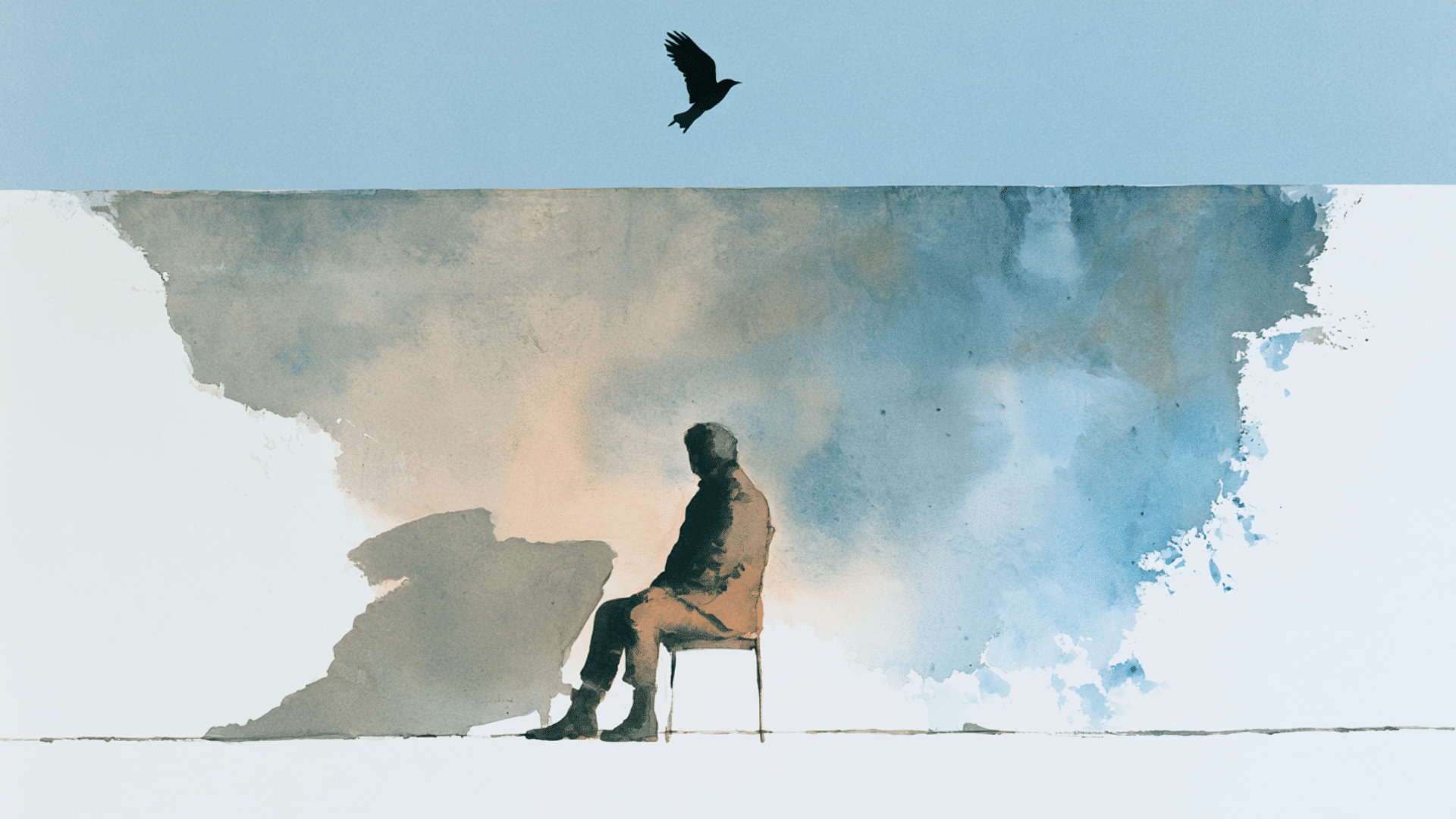
Negative space refers to the areas around and between objects in an artwork. These parts do not hold the main subject but help define how everything is positioned within the composition.
It enhances clarity by separating forms and allowing each subject to be seen clearly. It also affects how the viewer’s eye moves across the artwork, creating pauses and shifts in attention.
Elements of Negative Space:
- Open areas surrounding the main subjects
- Spaces between different objects or forms
- Background regions without primary focus
- Gaps that help define edges and separation
Example: The empty wall behind a seated person or the open sky around a flying bird is negative space because it surrounds the main subject and helps clearly define the main subject’s form.
Perspective in Art and Space
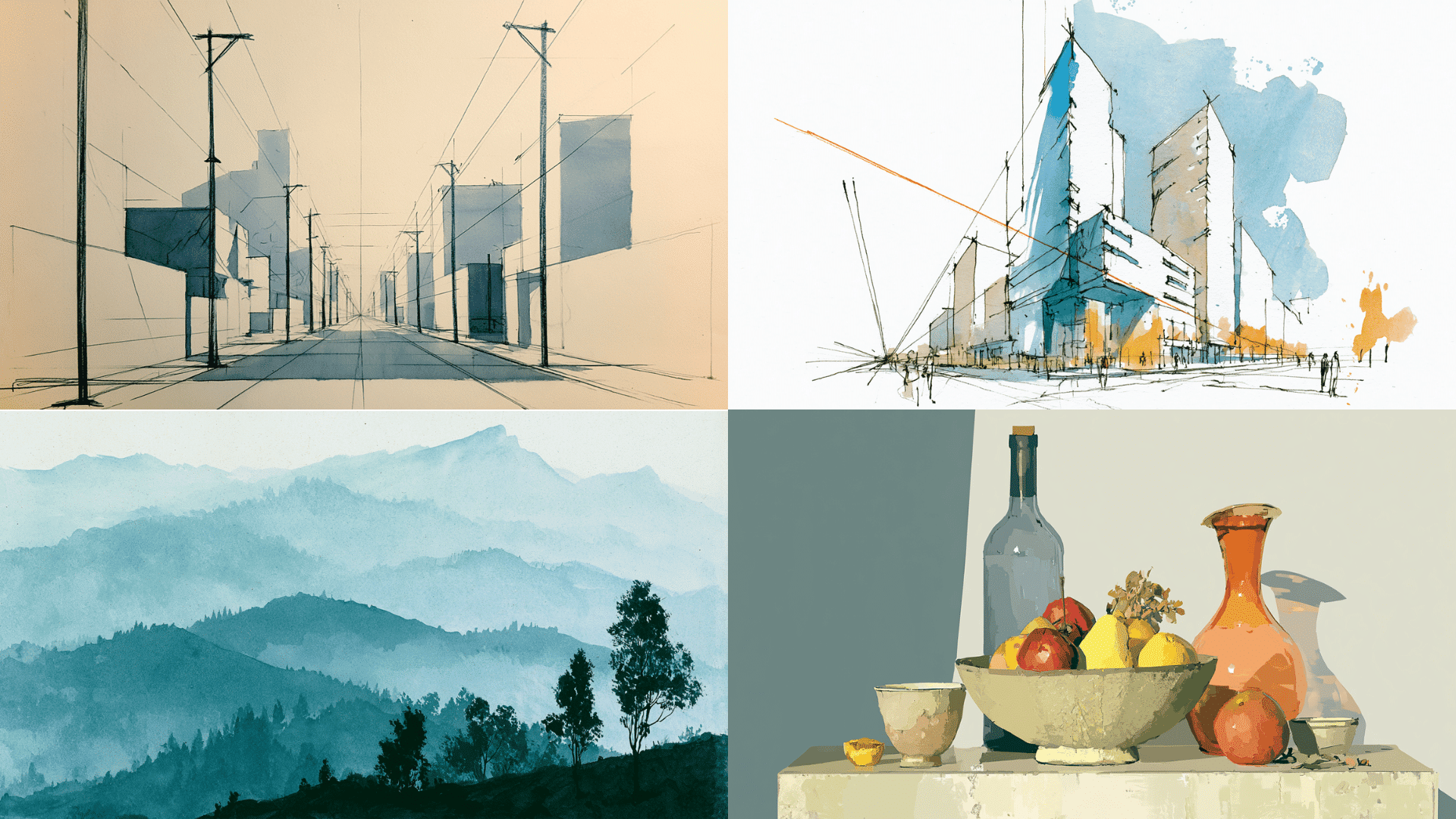
Perspective in art explains how objects appear to change as they move closer or farther away. It uses space to arrange elements on a flat surface in a way that clearly shows distance and structure.
| Type of Perspective | What It Means | How it Works in Space |
|---|---|---|
| One-Point Perspective | Uses one vanishing point where lines meet | inward flow, single point, depth, straight direction |
| Two-Point Perspective | Uses two vanishing points on the horizon line | angled view, two sides, spread form, corner look |
| Atmospheric Perspective | Uses change in visibility with distance | fading, light tone, less detail, far effect |
| Size Perspective | Uses a change in object scale | large near, small far, scale shift, position clarity |
Placement in Art and Its Techniques
Placement in art refers to how objects are positioned within a composition. It decides where each element sits on the surface and how the viewer reads the arrangement.
Careful positioning helps create order, making it easier to understand relationships among closeness, distance, and importance, even without changing their sizes or details.
Foreground Placement
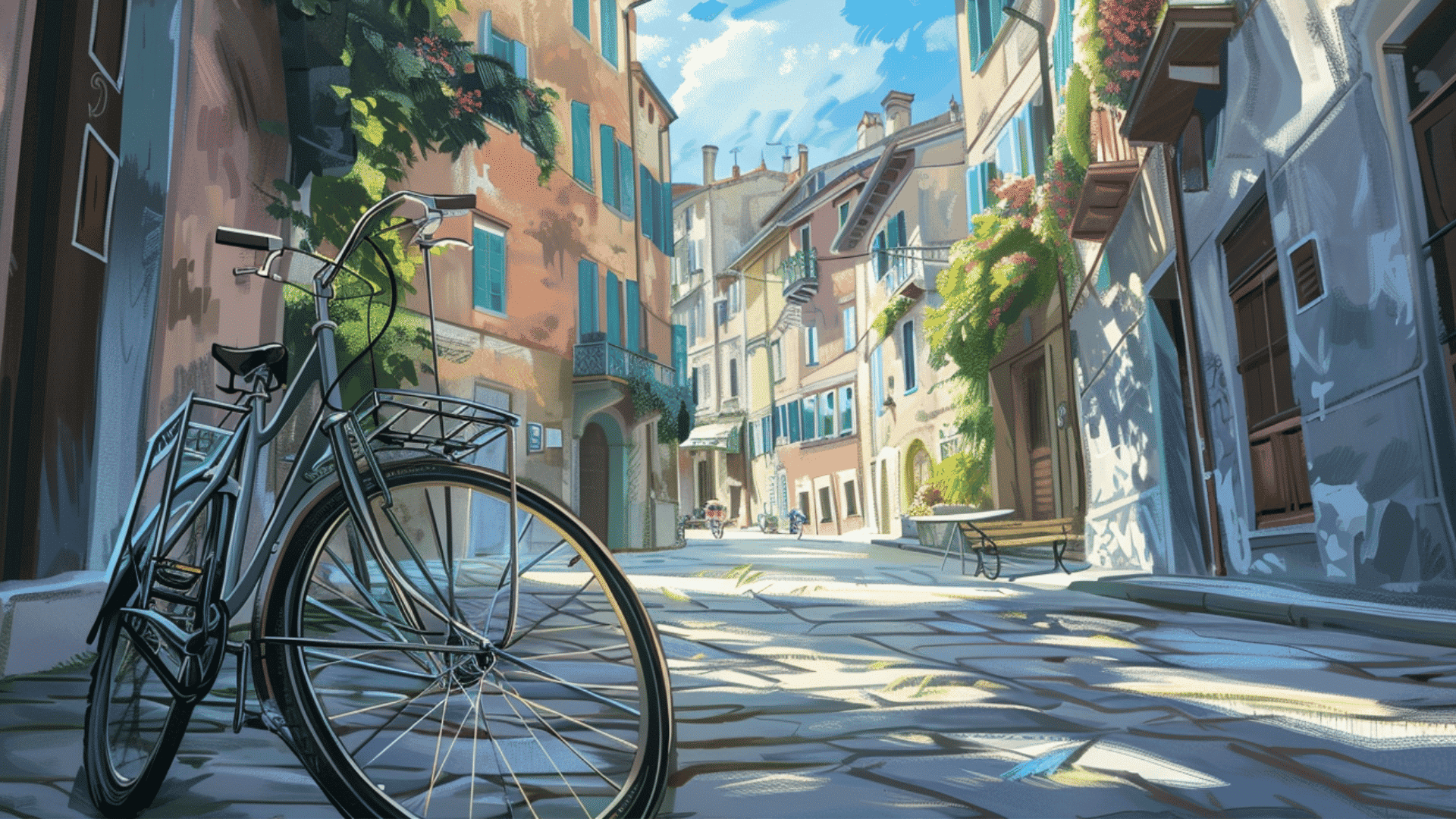
Foreground placement refers to elements positioned near the front of the composition. These objects are usually the first to catch attention due to their position.
Meaning: Objects placed in the front area of the artwork
How It Works In Space:
- Suggests closeness to the viewer
- Draws attention to the front elements first
- Sets the starting point of visual reading
Example: Bicycle placed at the bottom front of a street scene because it appears closest to the viewer.
Middle Ground Placement
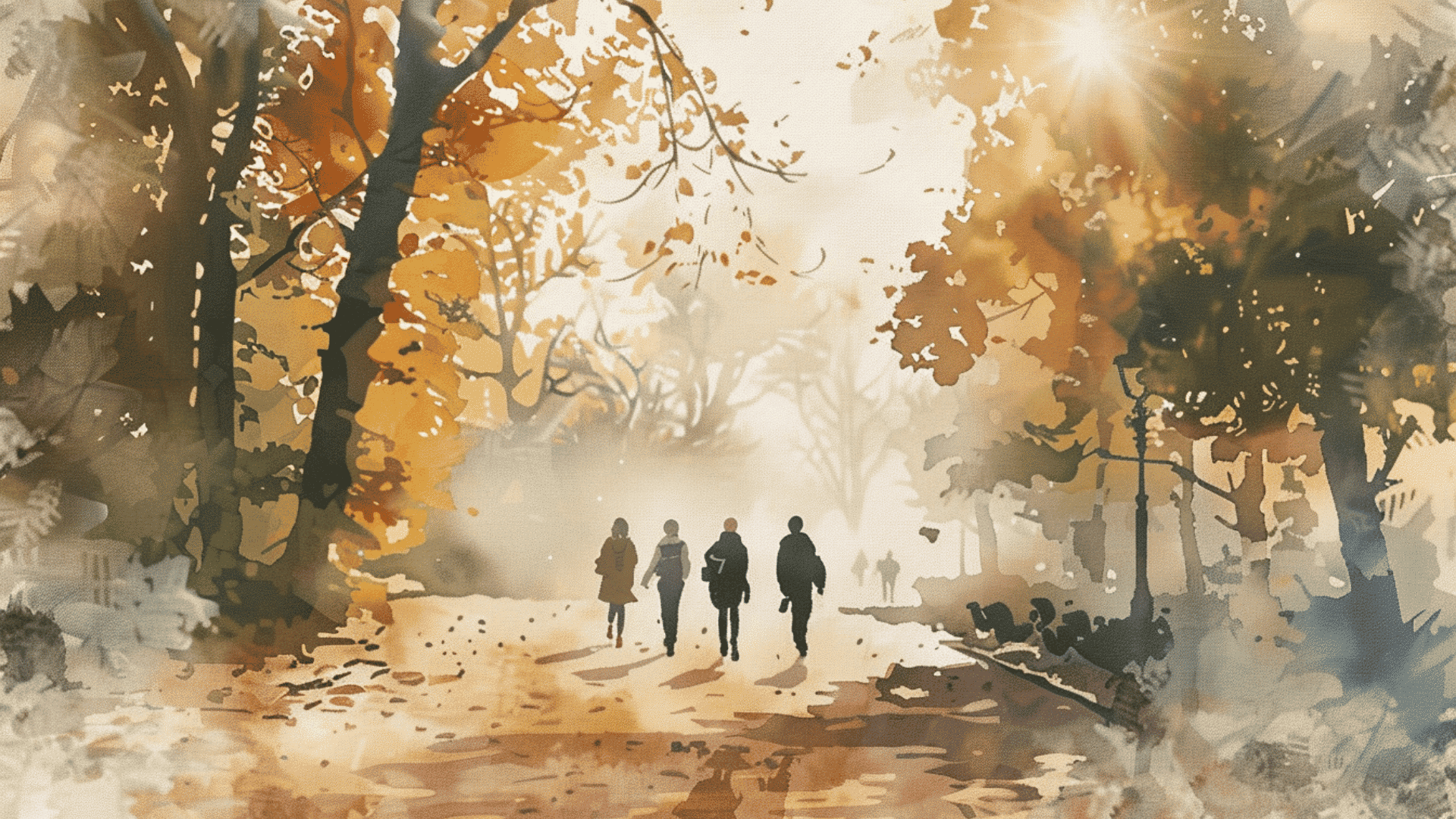
Middle ground placement refers to objects placed between the front and back areas of a composition. It connects different layers of space within the artwork.
Meaning: Objects positioned in the central area of the artwork
How It Works In Space:
- Links foreground and background areas
- Helps transition the eye across the scene
- Adds structure to the spatial arrangement
Example: People walking on a park path in the center of a painting because they sit between the front and back spaces.
Background Placement
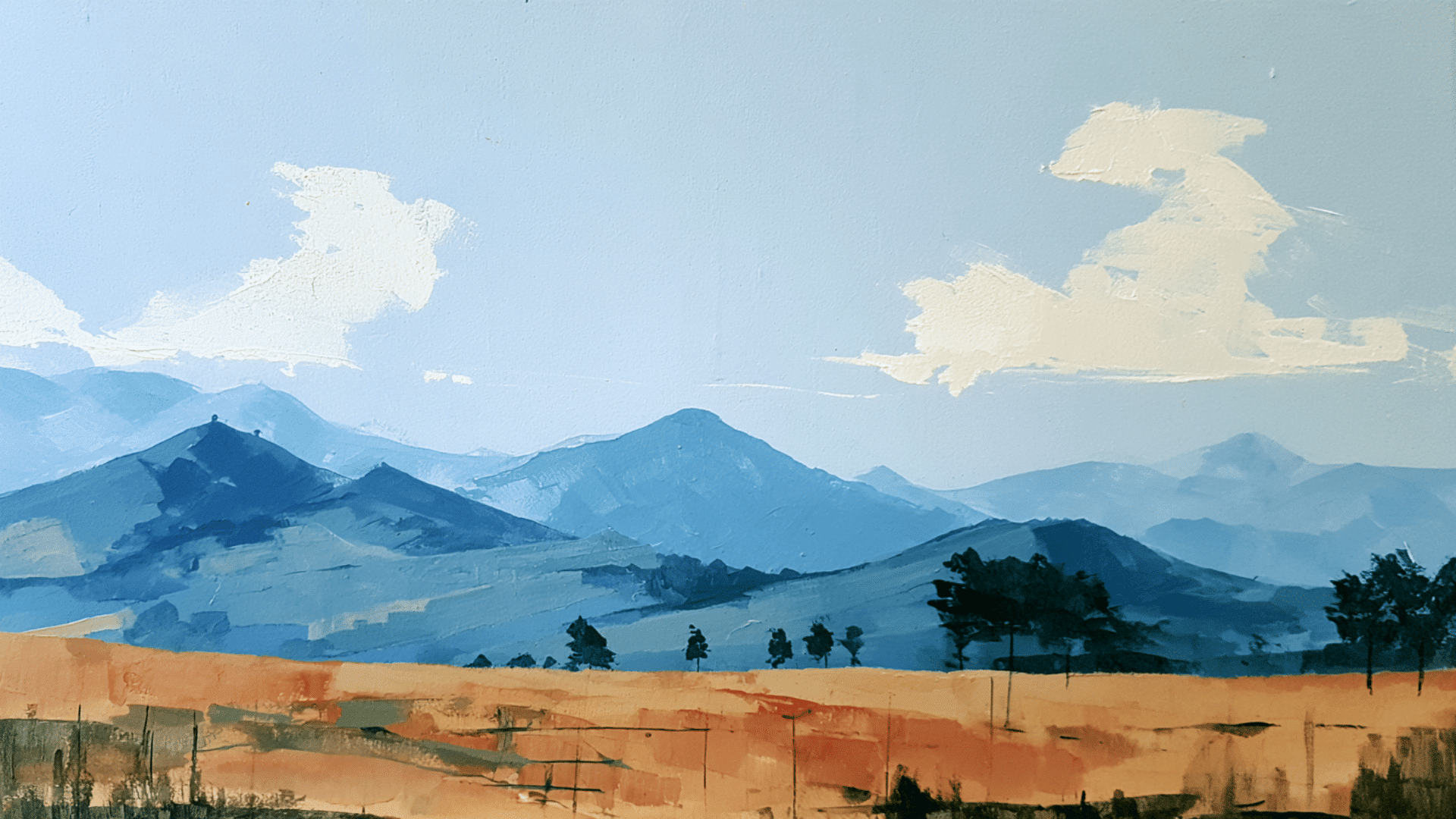
Background placement refers to elements positioned at the back of a composition. These objects usually support the main subject without taking focus.
Meaning: Objects placed in the rear area of the artwork
How It Works In Space:
- Creates a sense of distance
- Keeps focus on the main subjects in front
- Builds depth in the overall scene
Example: Distant hills and trees near the horizon in a landscape because they appear farthest in the scene.
Overlapping Placement
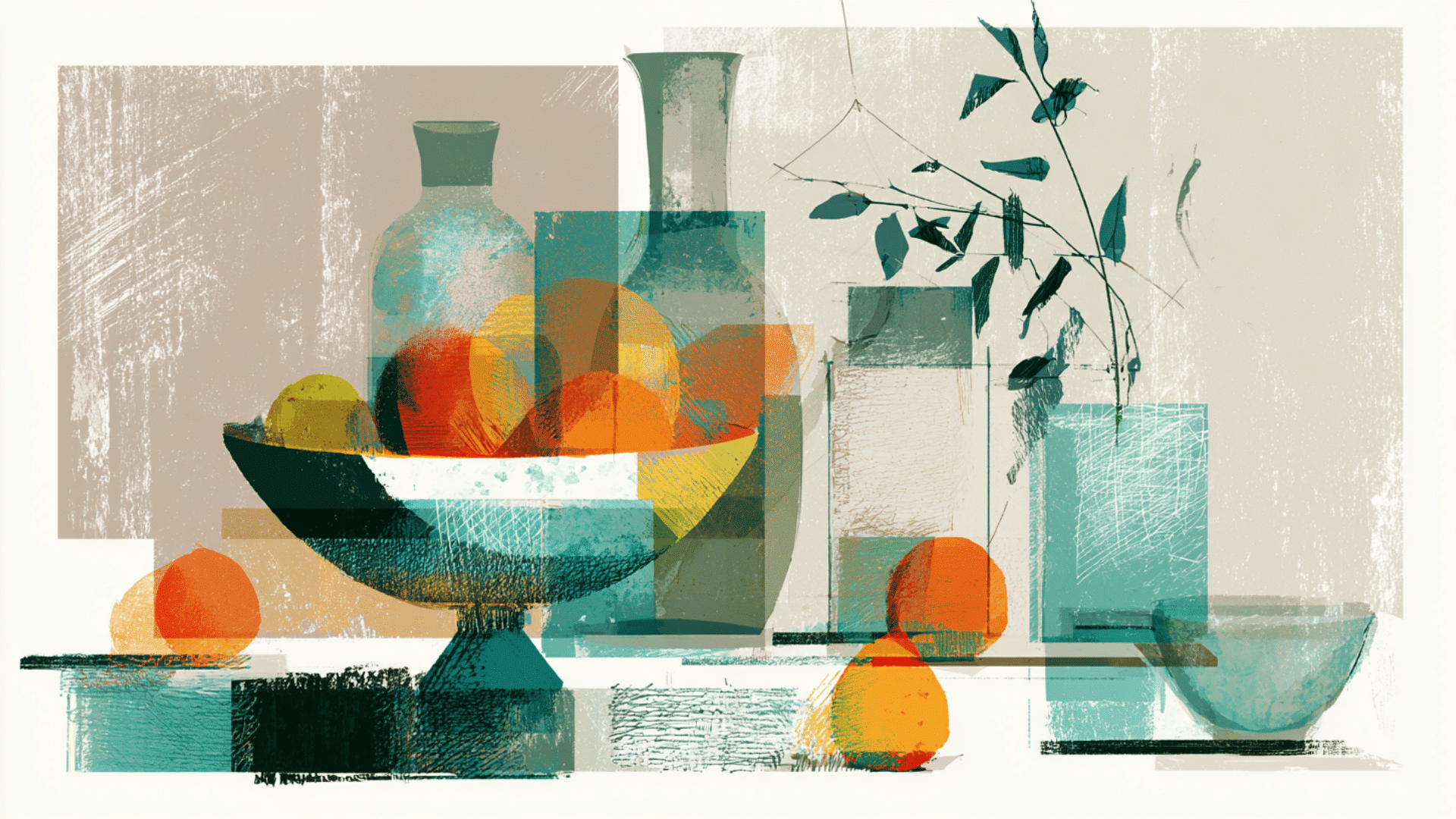
Overlapping is used to show how objects relate to one another. When one shape covers part of another. It creates a clear visual order that helps the viewer understand the arrangement at a glance.
Meaning: One object partially covers another to show arrangement
How It Works In Space:
- Indicates which elements are positioned closer
- Builds separation between forms without extra detail
- Organizes objects into clear visual order within the scene
Example: A fruit bowl placed in front of a vase partially covering it because it shows one object positioned closer than the other.
Final Thoughts
Space in art shapes how a viewer understands what is shown, even before noticing details. It decides how objects sit together, how distance is felt, and how the eye moves across a composition.
When used well, space supports clarity between forms and helps each part of an artwork feel properly placed within the scene.
Positive space, negative space, perspective, and placement all contribute to this structure in different ways.
Frequently Asked Questions
When Did the Idea of Space in Art Develop Historically?
The idea of space in art developed during the Renaissance when artists began using perspective to show depth and distance.
Can Color Affect Space in Art?
Yes, lighter colors often appear farther away while darker tones feel closer, helping to separate different areas in a composition.
What is Linear Perspective in Art?
Linear perspective is a technique in which lines converge at a vanishing point to create a sense of distance and space.