
Farmhouse decor was never supposed to be this complicated. It started as something real, something rooted in simplicity and ease.
Then it went viral, and everything changed. Suddenly, every home had shiplap, every shelf had a lantern, and every kitchen had a sign with words on it, often inspired by trending Modern Farmhouse Decor ideas.
The style did not disappear, but something about it did. That quiet authenticity that made it feel so appealing in the first place got buried somewhere under all the matching sets and mood boards.
Getting it back starts with knowing where it went wrong.
Key Elements that Define Farmhouse Interiors
Farmhouse interiors are defined by their warm, lived-in feel, blending rustic charm with practical comfort. The style focuses on simplicity, natural materials, and a balance between old and new elements.
It creates inviting spaces that feel both functional and effortlessly cozy, as design shifts spark conversations about modern farmhouse alternatives.
- Neutral color palettes like whites, creams, and soft greys
- Natural materials such as wood, stone, and metal
- Vintage or distressed furniture with character
- Simple, functional layouts with minimal clutter
- Cozy textiles like linen, cotton, and wool
- Subtle mix of rustic and modern design elements
Biggest Farmhouse Decorating Mistakes to Watch out For
Even the most charming farmhouse spaces can fall flat when key design details are overlooked. Knowing these common mistakes can help you create a space that feels warm, balanced, and truly real.
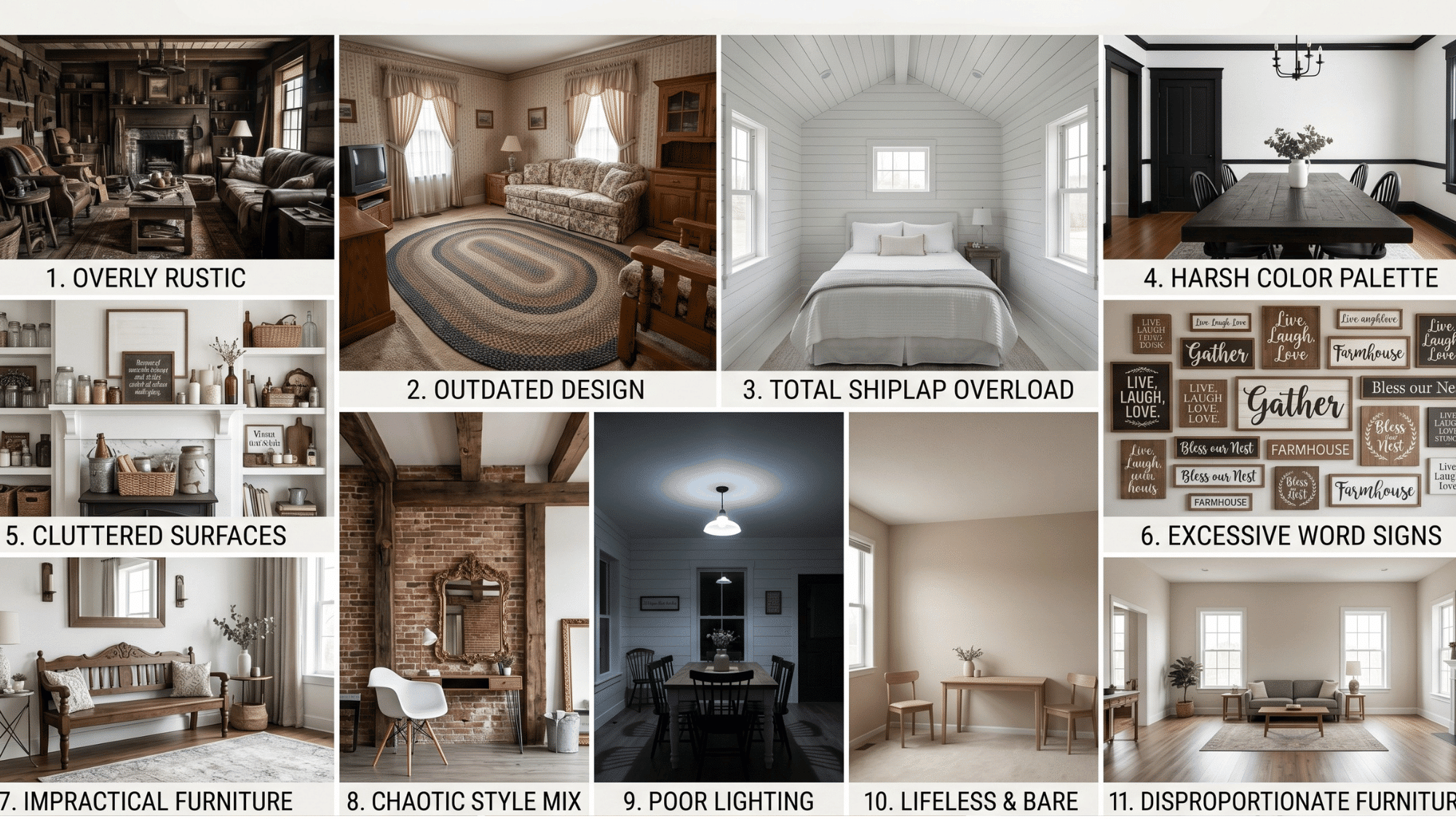
1. Overdoing the “Rustic” Look
Farmhouse decor is meant to feel warm and inviting, not overly aged or neglected. When you use too many distressed finishes or vintage items, the space can quickly feel chaotic and heavy.
Instead of charm, it starts to look artificially worn out and visually overwhelming. This often happens when every piece competes for attention.
2. Ignoring Balance Between Modern and Rustic Elements
Modern farmhouse style thrives on contrast between old and new. If you lean too heavily into traditional rustic elements, your home may feel outdated and one-dimensional.
Adding sleek furniture, clean lines, or subtle modern accents keeps the look fresh. Without this balance, the design can appear flat and uninspired.
3. Using Too Much Shiplap Everywhere
Shiplap is a signature farmhouse feature, but overusing it can overwhelm a space. Covering every surface removes its uniqueness, making the design feel repetitive.
This can make interiors look overly themed rather than naturally styled.
Use shiplap as an accent wall or focal point. Pair it with other textures to create variety. Moderation helps maintain visual balance and keeps the design interesting.
4. Choosing the Wrong Color Palette
Color plays a huge role in defining farmhouse style. While white is popular, too much of it can feel cold and sterile rather than inviting. On the other hand, overly dark tones can make the space feel heavy and closed in.
Shades like beige, taupe, and soft greys create a balanced base.
5. Cluttering Spaces with Too Many Decor Pieces
Farmhouse decor emphasizes simplicity and functionality. Filling your space with too many decorative items can make it feel cramped and overwhelming.
Instead of showcasing style, clutter distracts from it and reduces visual clarity. It also allows the room to breathe and feel more open.
6. Relying Too Heavily on Word Signs
Word signs have become a common farmhouse trend, but overusing them can feel predictable and repetitive. When every wall is covered with text, it loses its charm and visual impact.
It can also make your home feel less personal and more like a showroom. Farmhouse style emphasizes materials and textures. Incorporating handmade or meaningful decor adds a unique touch.
7. Ignoring Functionality for Visuals
Farmhouse design originated from practical living, so functionality is essential. Prioritizing looks over usability defeats the purpose of the style.
Furniture and decor should serve a real purpose while remaining attractive. A beautiful piece that isn’t comfortable or useful won’t add long-term value. Focus on items that increase everyday living.
8. Mixing Too Many Farmhouse Sub-Styles
Farmhouse decor comes in many variations, but combining too many can create visual chaos. Each sub-style has its own identity, materials, and color schemes. Mixing them without intention leads to inconsistency and confusion.
It can make the space feel disjointed rather than cohesive. Choose one dominant style as your base. Then layer subtle influences to add character.
9. Poor Lighting Choices
Lighting can make or break the ambiance of a farmhouse interior. Harsh lighting feels clinical, while dim lighting can make the space dull and lifeless.
The goal is to create a warm and inviting glow throughout the room. Layered lighting works best, combining ambient, task, and accent lighting.
10. Forgetting Natural Elements
Nature is at the heart of farmhouse design. Without natural elements, the space can feel flat and uninspired. Adding plants, raw wood, and organic textures brings warmth and life.
These elements create a more grounded and relaxing environment. They also add subtle color and texture variation. Even small touches like fresh flowers can make a difference.
11. Using Furniture That’s Too Small or Too Delicate
Farmhouse interiors typically feature solid, well-built furniture that anchors the room. Using pieces that are too small or delicate can disrupt the overall balance. It may make the space feel incomplete or mismatched.
Larger furniture helps create a sense of stability and comfort.
It also aligns with the practical roots of farmhouse design. Choose pieces that fit the scale of your room. This ensures a cohesive and well-proportioned look.
How to Get Farmhouse Decor Right?
Creating the perfect farmhouse look comes down to keeping things balanced, warm, and practical.
- Keep the space simple and clutter-free
- Mix rustic and modern elements
- Use warm, neutral colors
- Choose comfortable, functional furniture
- Add natural materials like wood and plants
- Use soft, warm lighting
In a Nutshell
Farmhouse decor at its best is not something you put together.
It is something you ease into over time. The spaces that get it right are not the ones with the most shiplap or the most carefully curated shelves.
They are the ones that feel like someone actually lives there. Stepping back, editing down, and letting a space breathe will always do more than adding another layer.
The goal was never to replicate a look. It was to create a feeling, and that is something no trend, no purchase, and no mood board can do for you.