
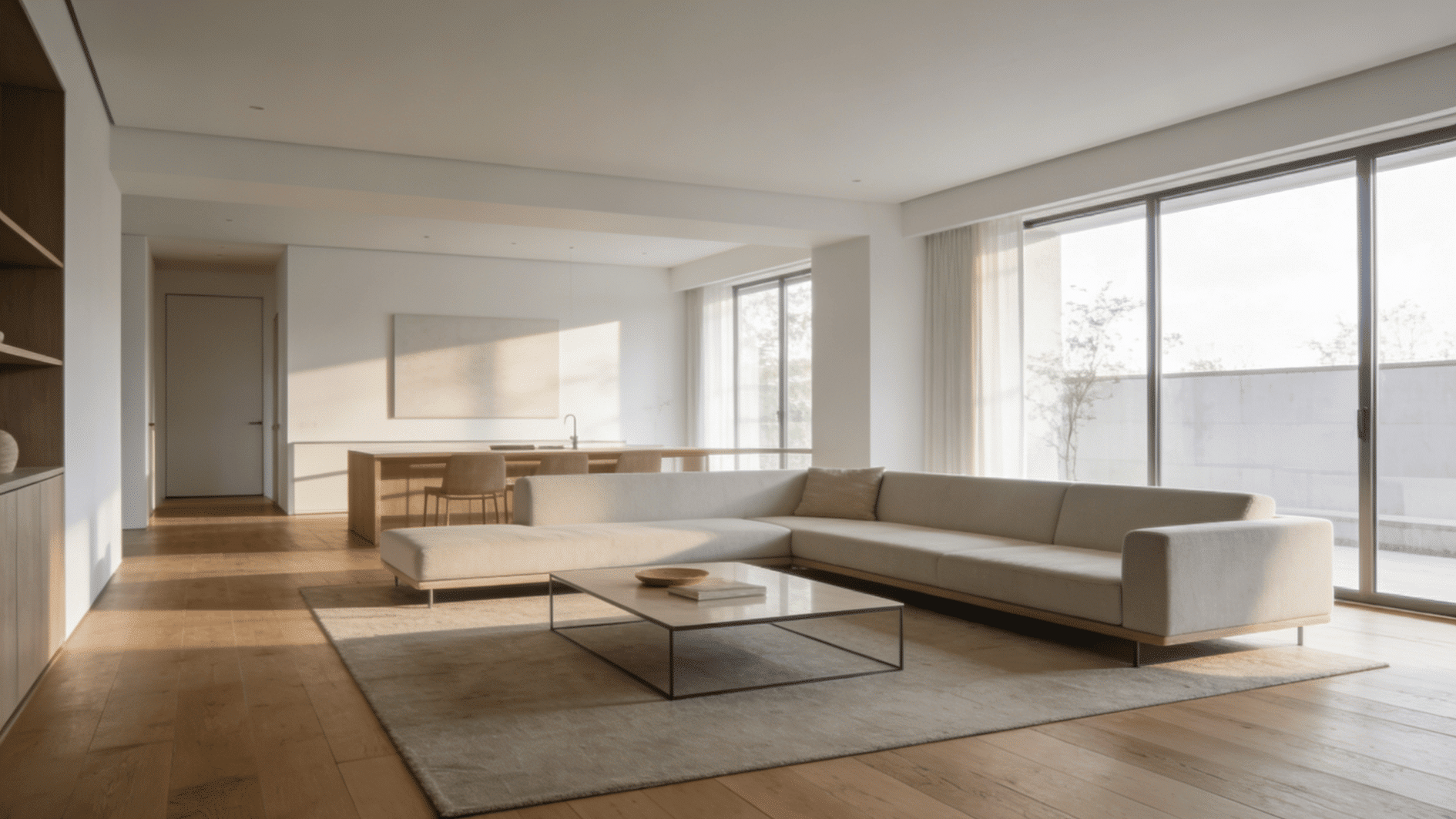
If you’ve ever walked into a room that felt instantly calm, open, and just right, there’s a good chance minimalist design was doing the work.
That clean, breathable feeling isn’t luck – it’s the result of intentional choices, and you can absolutely recreate it in your own home.
In this blog, I have shared some real, usable minimalist interior design ideas – organized by room – so you can draw inspiration and start making changes today – without much renovation required.
What is Minimalist Interior Design?
Minimalist interior design is built on one idea: keep only what’s necessary, and make every piece count.
It grew out of the minimalist art movement of the 1960s and is now one of the most widely practiced styles in the US, Japan, and Scandinavia.
It’s not about making a room feel empty – it’s about removing what doesn’t serve you, so what does can actually be noticed.
A few principles guide every minimalist space: a neutral color palette of whites, beiges, and soft grays; clean-lined furniture over ornate details; intentional negative space; quality pieces over quantity; and concealed storage that keeps clutter out of sight.
Every element earns its place.
Minimalist Design vs. Bare and Boring
Minimalist design and a bare, boring space can look similar at first glance – but the difference comes down to intention. One is thoughtfully edited; the other is simply unfinished.
| Aspect | Minimalist design | Bare and boring |
|---|---|---|
| Overall feeling | Calm, intentional, and considered | Unfinished, cold, or neglected |
| Furniture | Few pieces, each chosen deliberately for function and form | Few pieces because nothing has been added yet |
| Walls | Intentionally sparse with one or two anchor pieces like art or a mirror | Empty with no focal point or visual interest |
| Texture | Layered through materials – linen, wood, stone, or woven textiles | Flat and uniform with no variation in surface or material |
| Color | A warm, curated neutral palette that feels cohesive and deliberate | Default white or builder-grade finishes with no thought behind them |
| Lighting | Warm, layered lighting used to set mood and define zones | A single overhead light with no warmth or atmosphere |
| Negative space | Used as a design tool to give each piece room to breathe | Present by default because the space simply has not been styled |
| Personal touches | A few meaningful objects – a book stack, a plant, a single art piece | None, which makes the space feel like no one lives there |
Minimalist Interior Design Ideas to Inspire Your Space
Here are a few ideas you can start using right away, organized by room and concept. Each one is practical, visual, and built to give you real inspiration for your own space.
Living Room Ideas
The living room is usually the best place to start when you go minimalist – it’s the space you spend the most time in, and the visual payoff of decluttering and simplifying it is immediate.
1. Choose a Neutral Sofa as Your Anchor Piece
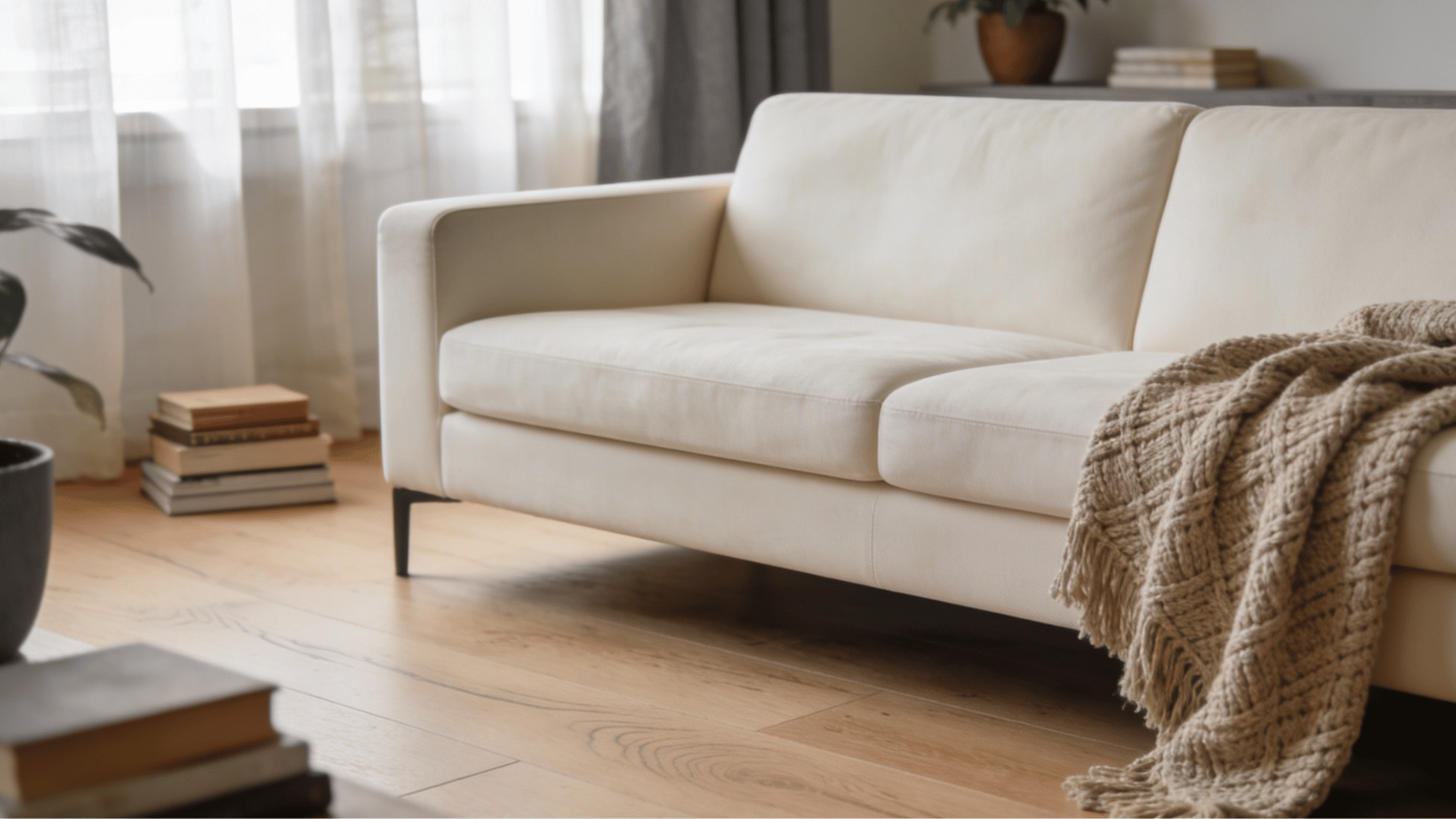
Your sofa is the largest item in the room, which means it sets the tone for everything else. Choose one in a neutral tone – warm gray, cream, oat, or tan.
These shades work with virtually any other color in the room and give you flexibility to change up accessories over time without replacing your biggest investment.
2. Use a Single Large Area Rug
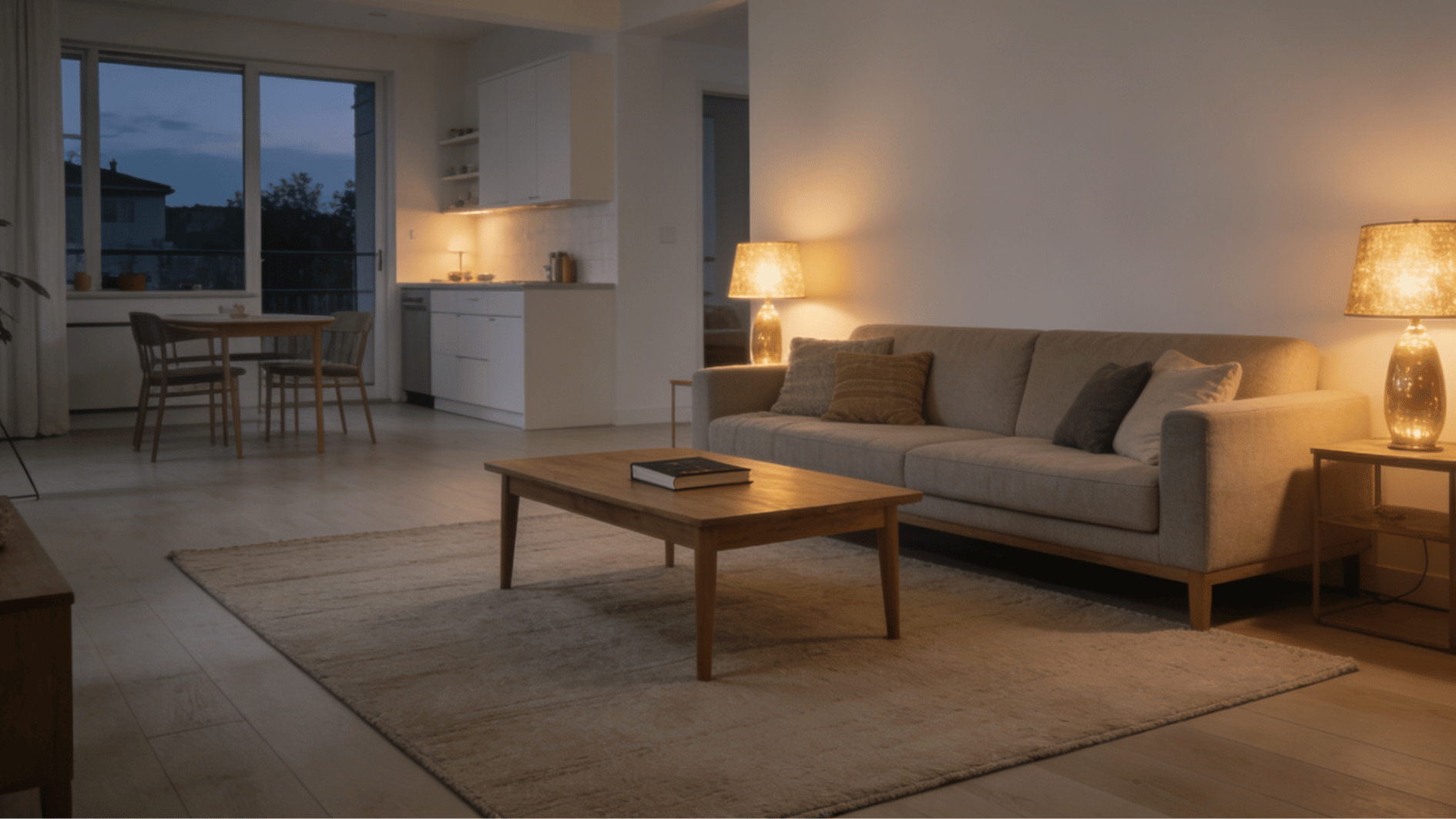
Layering multiple rugs might look intentional on design Instagram, but in a minimalist space, it creates visual noise.
One large rug that extends under the front legs of your sofa anchors the seating area cleanly and makes the room feel pulled together.
3. Limit Throw Pillows to Two or Three
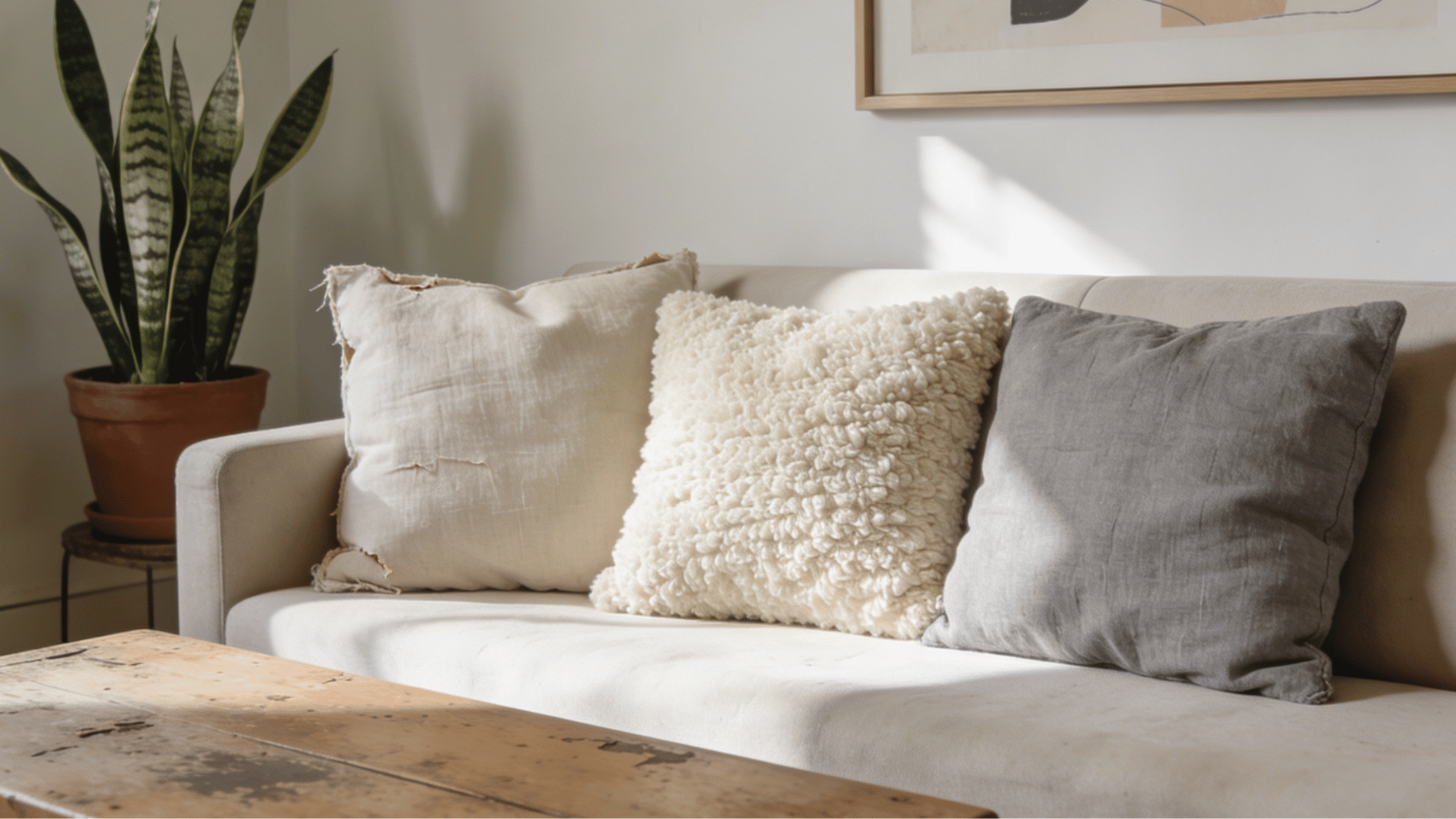
Throw pillows are one of the fastest ways a living room tips from collected to cluttered. Stick to two or three pillows in tones that already exist in your palette.
Matching textures – like a linen pillow next to a boucle one – adds interest without adding color chaos.
4. Mount Your TV on The Wall
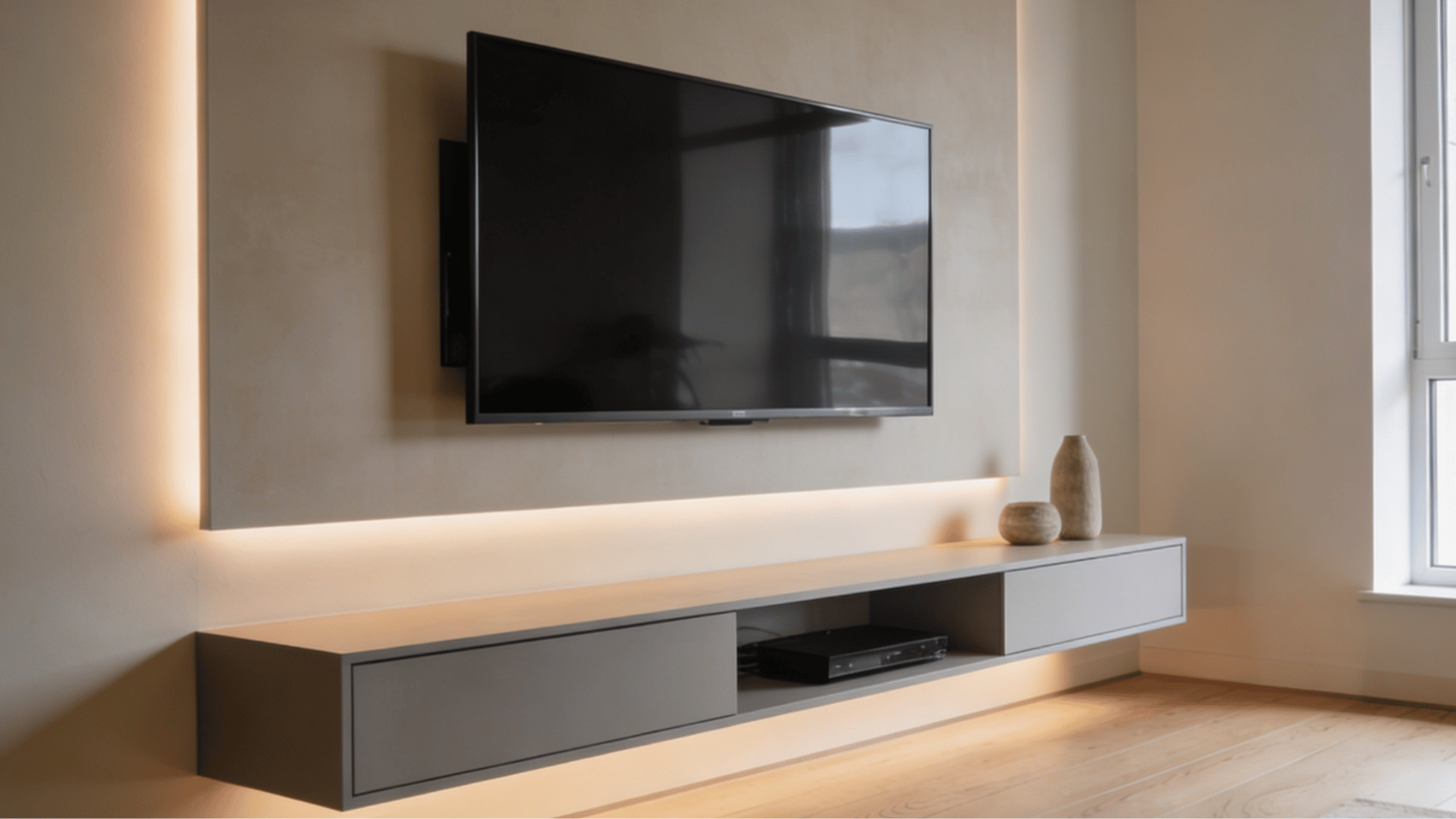
A TV on a media console usually comes with cords, remotes, a cable box, and three things you put there temporarily and forget about.
Mounting the TV on the wall and running cables through the wall or hiding them in a cable channel gives you one clean focal point and frees up significant floor space.
5. Use a Coffee Table with Built-In Storage
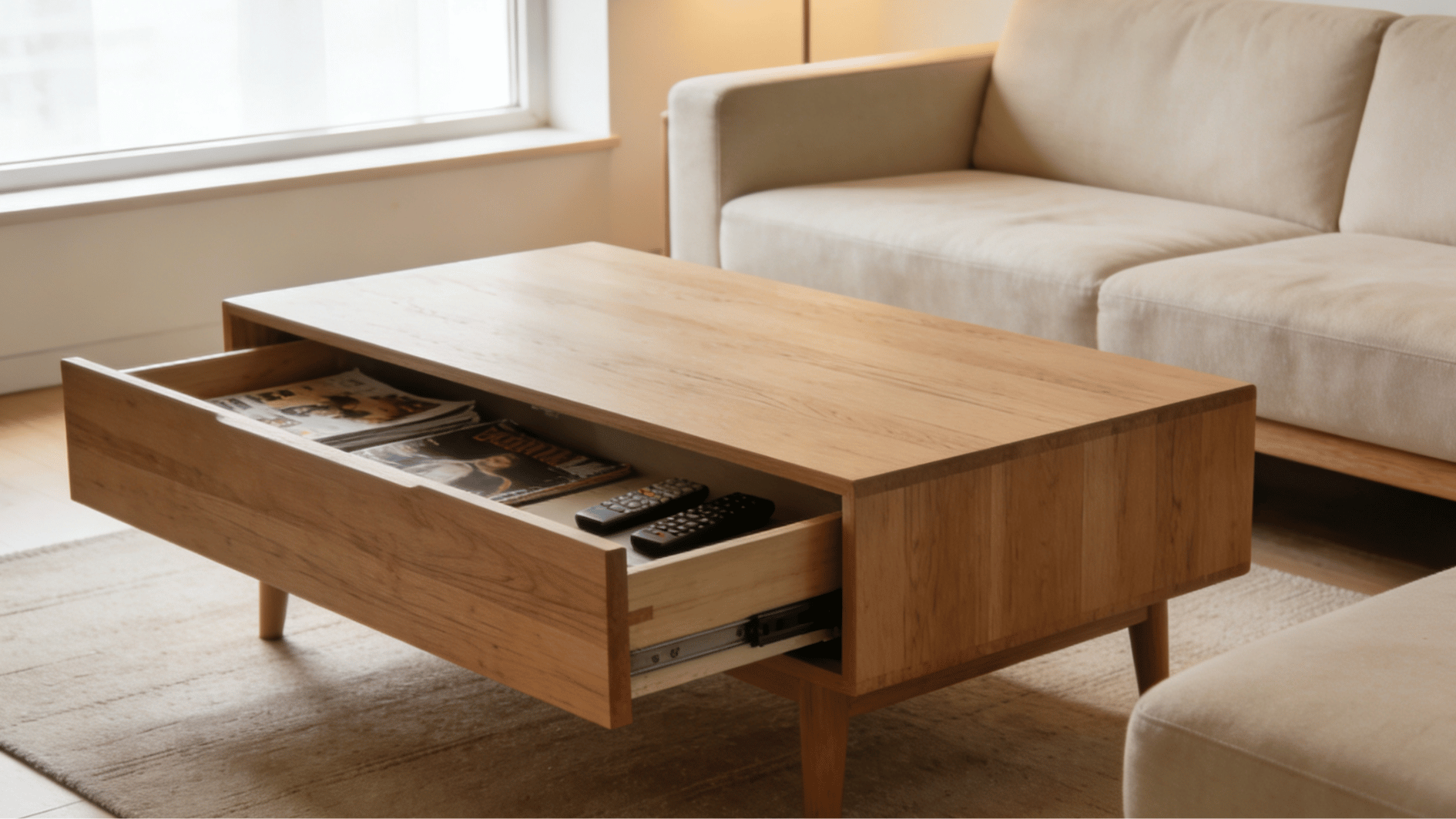
Functional furniture is a cornerstone of minimalist living. A coffee table with a lower shelf or hidden drawer gives you a place for remotes, magazines, and coasters that’s within reach but out of sight.
Form follows function here, literally.
6. Keep Wall Art to One Large Statement Piece
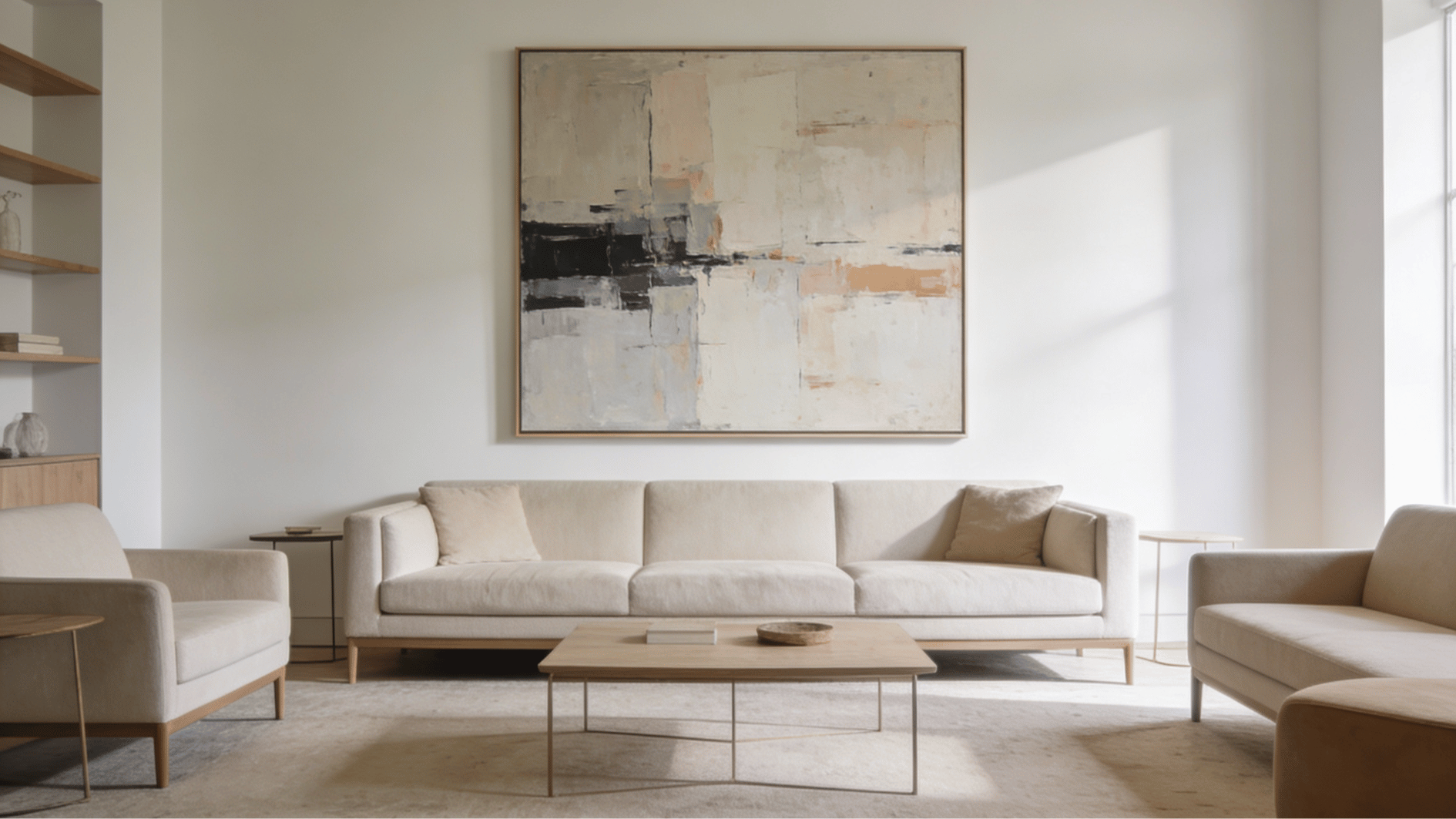
A gallery wall can work beautifully in the right context – but in a minimalist living room, one large piece of art carries far more visual weight and intentionality than a dozen smaller frames.
Choose something you genuinely love, hang it at eye level, and let it breathe with empty wall space around it.
7. Choose Furniture with Visible Legs
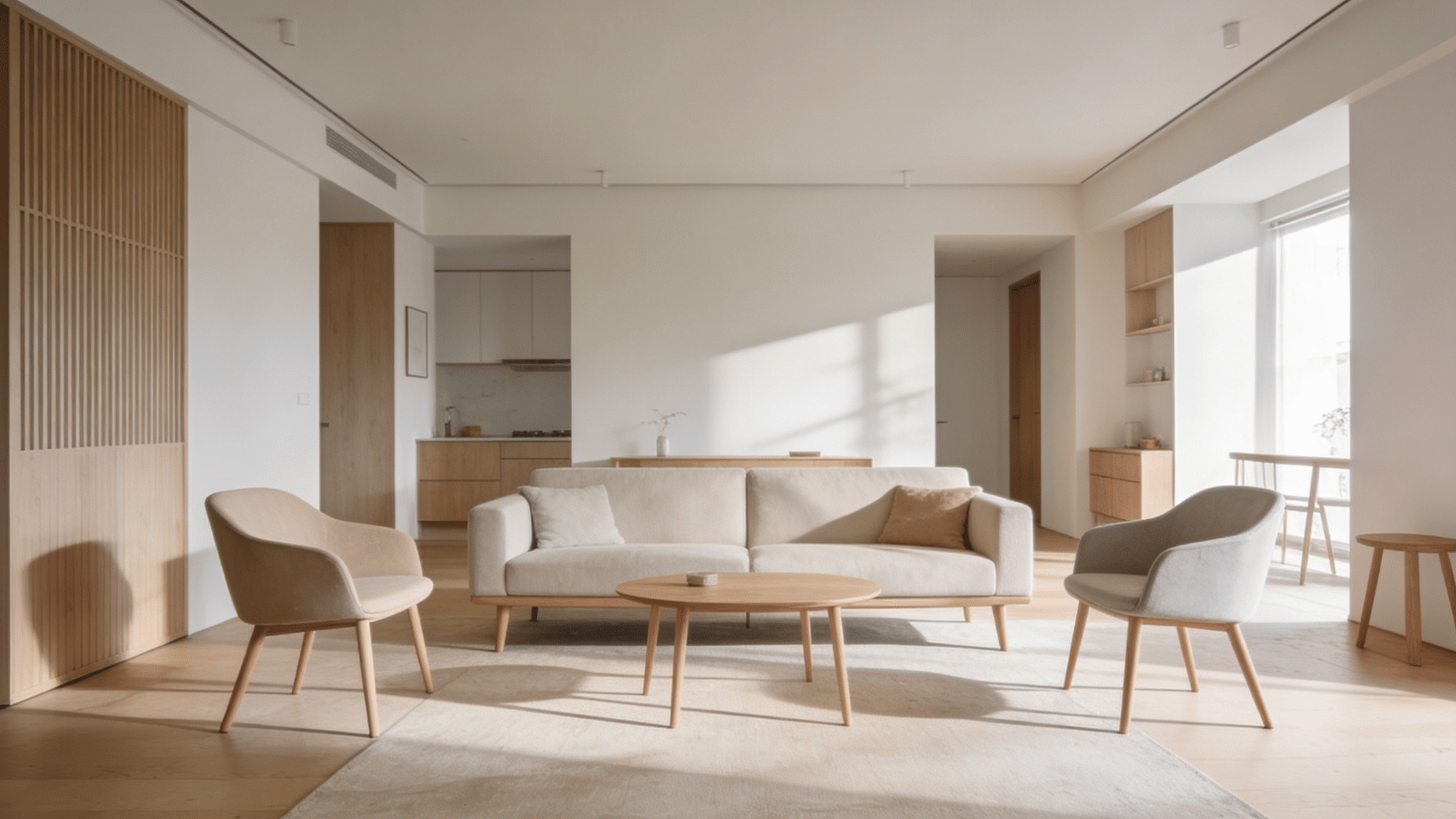
Sofas and chairs that sit directly on the floor create a heavy, grounded look that can make a room feel smaller.
Furniture with exposed legs – even just a few inches of clearance – lets light pass under pieces, which makes the room feel more open and airy without changing a single thing about the layout.
Bedroom Ideas
Your bedroom should be the most restful room in your home. Minimalist design makes that significantly easier to achieve, because a visually quiet room is also a mentally quiet one.
8. Go With a Low-Profile Platform Bed
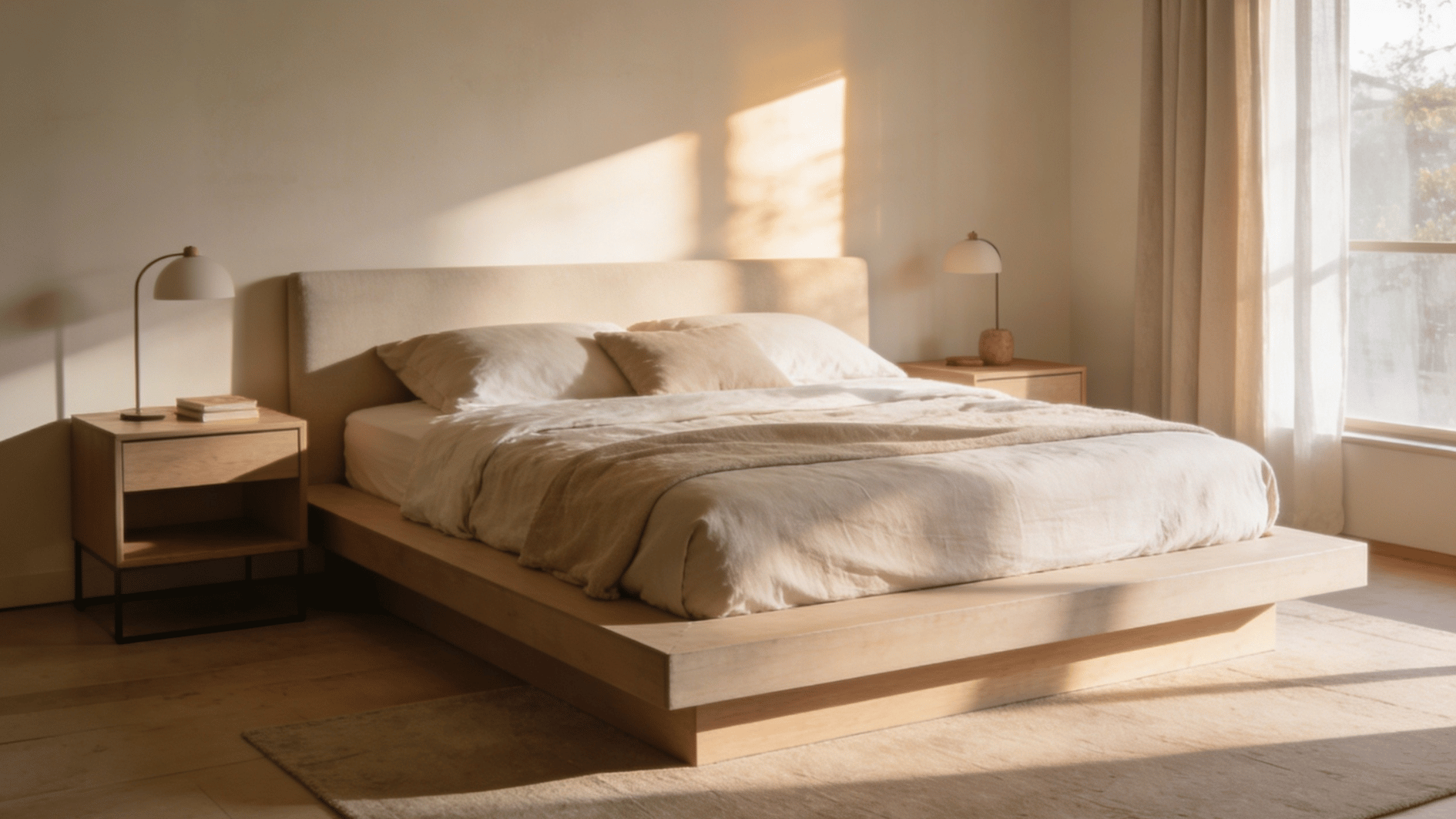
A platform bed sits close to the ground and typically has a simple, clean headboard – or no headboard at all.
It draws the eye down and out, rather than up, which makes ceilings feel higher and gives the room an open, grounded quality. Pair it with quality bedding in a single neutral tone, and the whole room settles.
9. Use Matching Nightstands
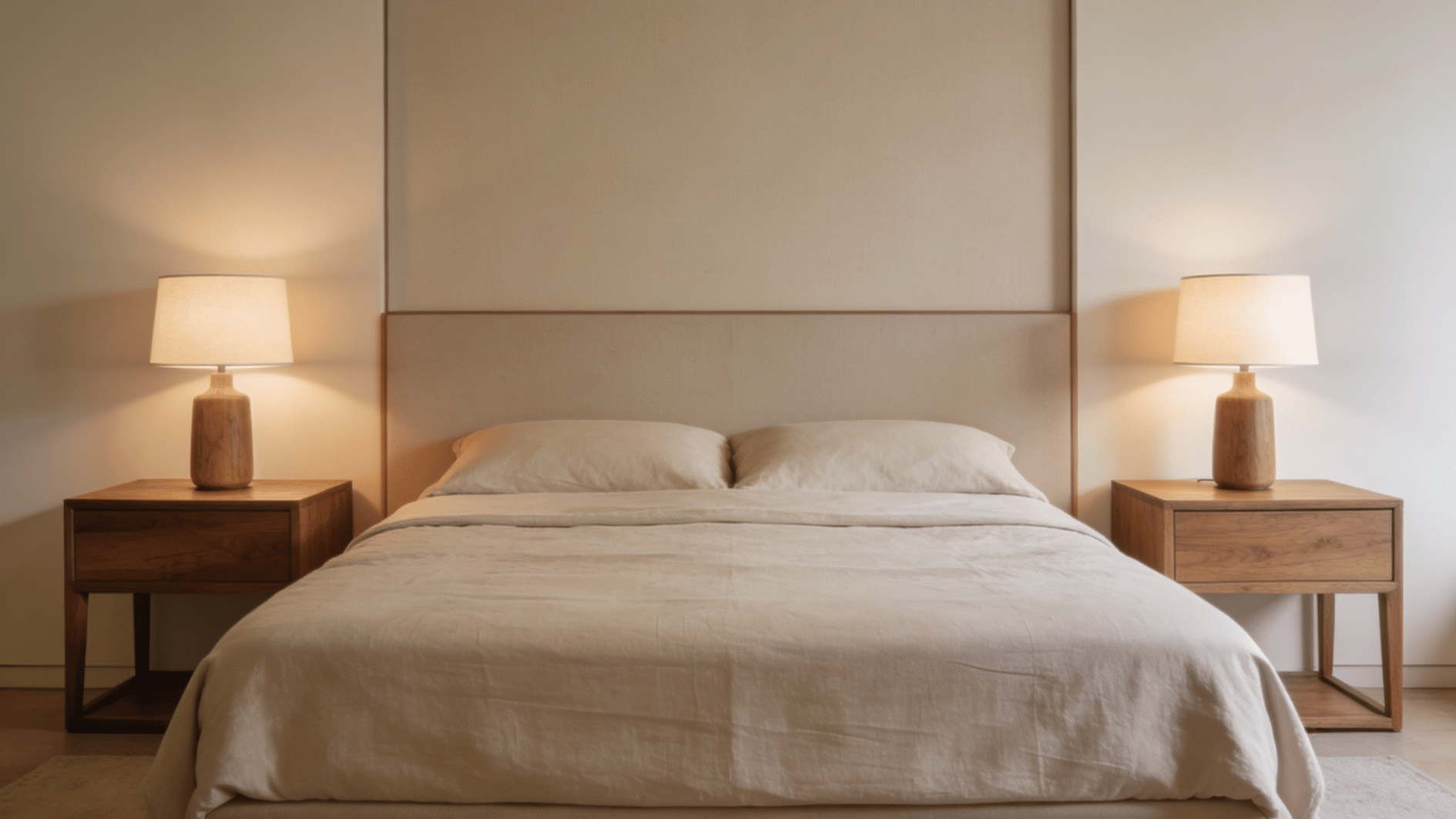
Mismatched nightstands add visual noise, even if each one is attractive on its own. Two identical nightstands – or two that share the same material and finish – create symmetry and calm on either side of the bed.
This is one of the easiest, lowest-cost changes that makes a bedroom feel more intentional.
10. Stick to a Two or Three-Color Palette
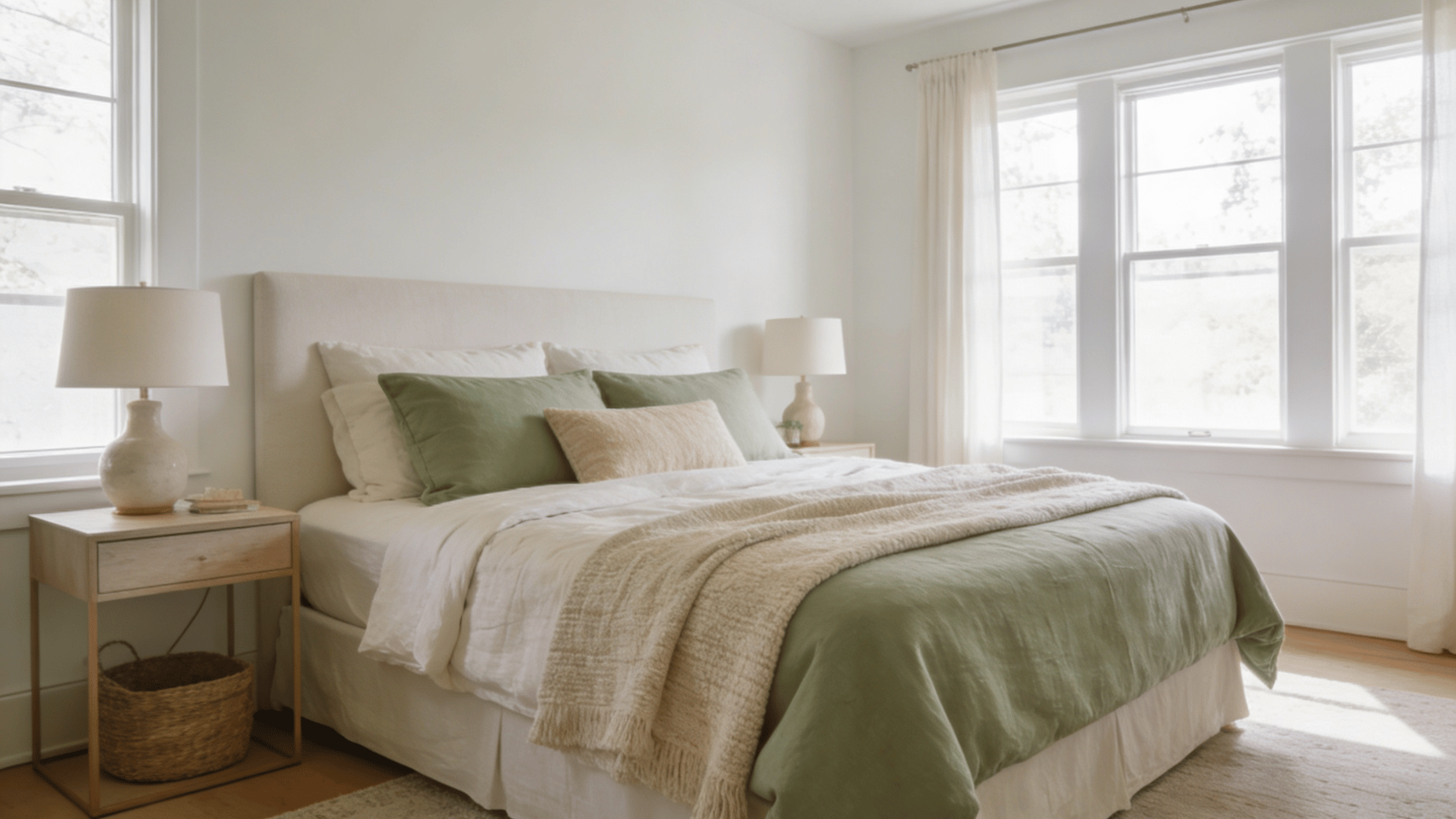
For bedding and walls combined, try to stay within two or three coordinating tones.
You don’t need to go all-white – layering warm white, oat, and a soft sage works beautifully – but the more colors you introduce, the harder the room becomes to visually rest in.
11. Install Floating Shelves Instead of a Bulky Bookcase
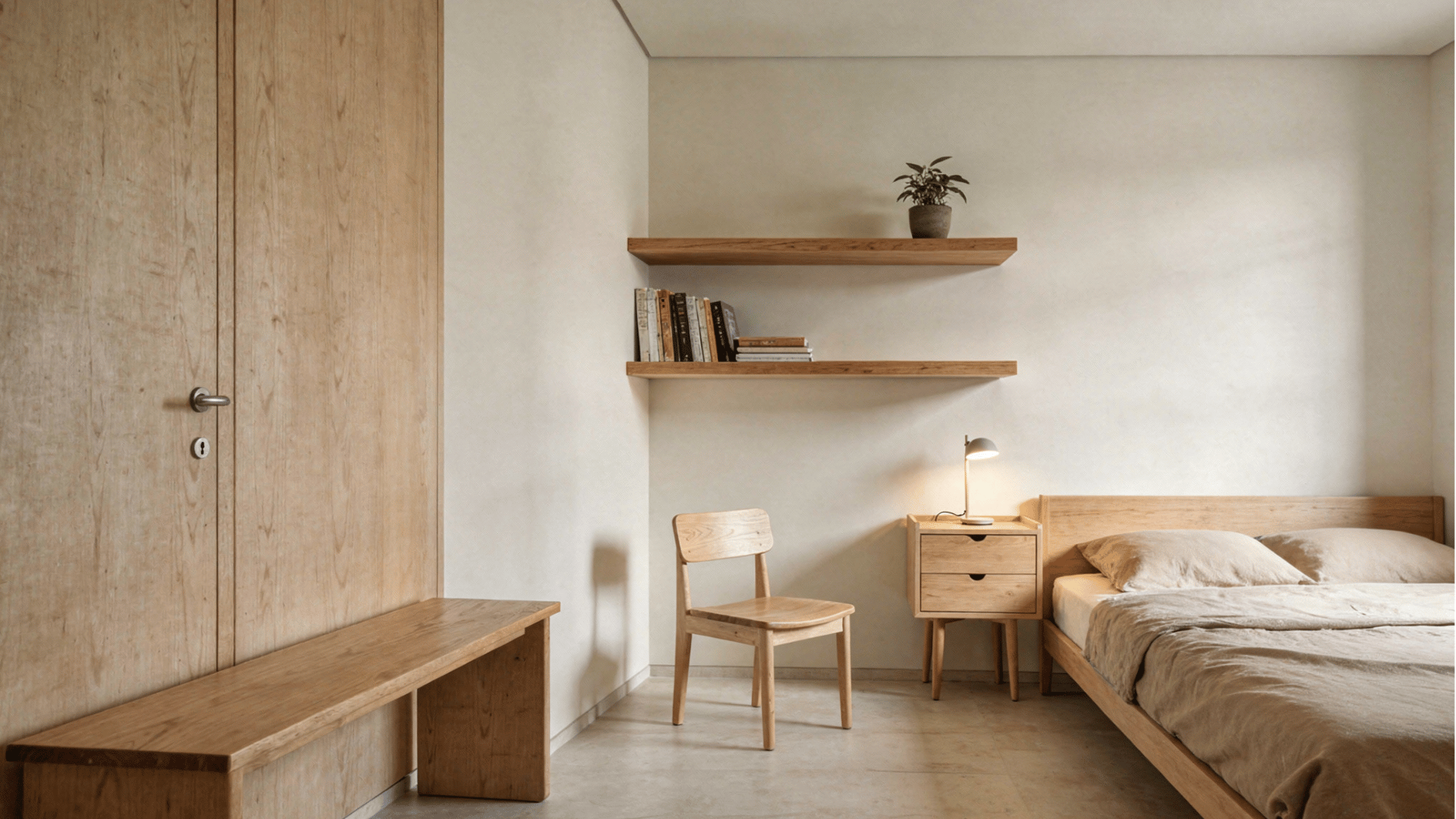
If you want to keep books or a few objects in the bedroom, floating shelves take up no floor space and keep the room feeling open.
Use them sparingly – one or two shelves, not five – and display only items you genuinely want to look at every day.
12. Clear Your Dresser Top
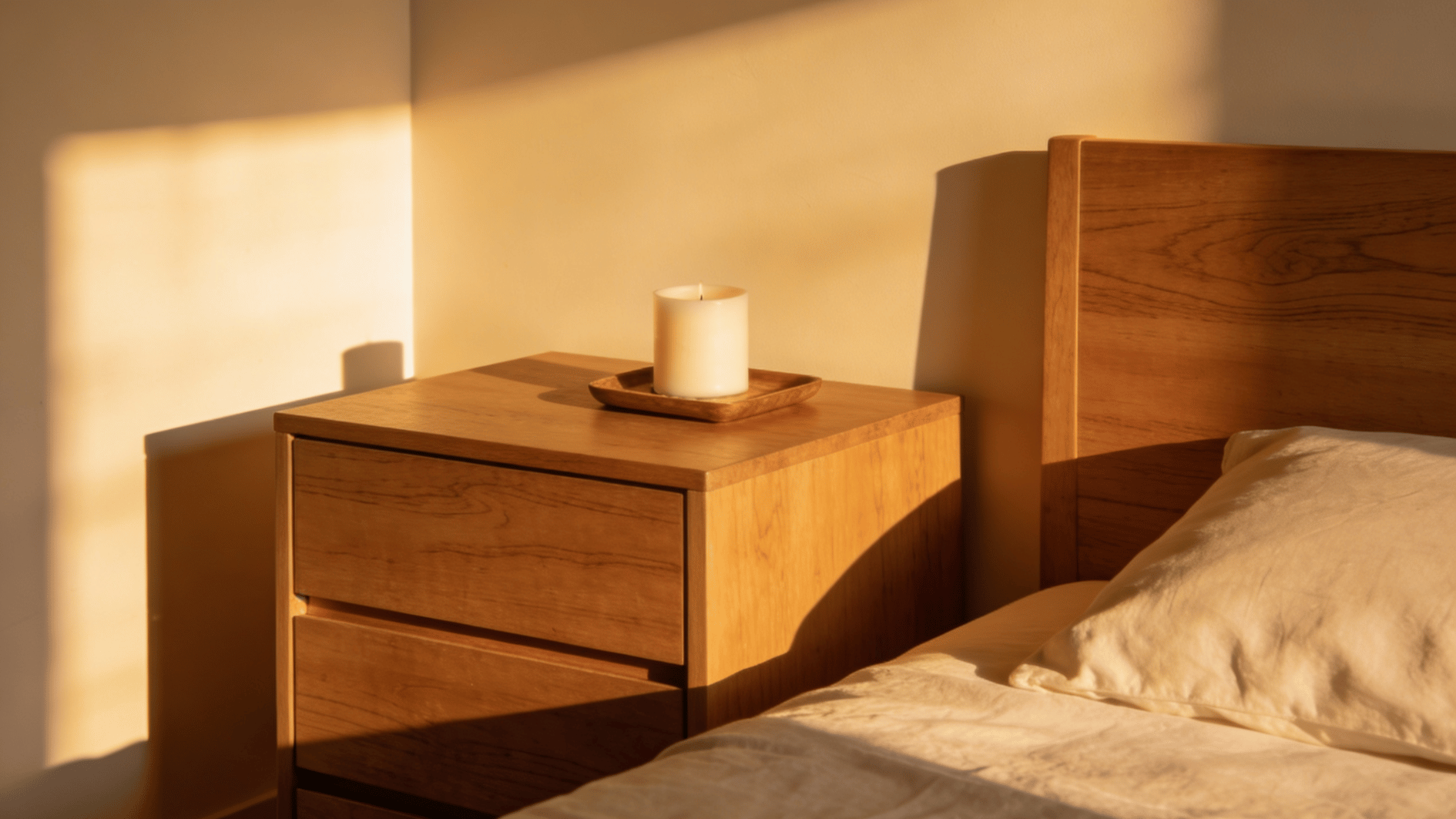
The top of a dresser collects things at an alarming rate. As a rule, keep only one to two intentional items on the surface – a small tray, a single candle, or a plant.
Everything else (jewelry, receipts, change, that Chapstick you forgot about) belongs in a drawer.
13. Use Blackout Curtains in a Solid Neutral Color
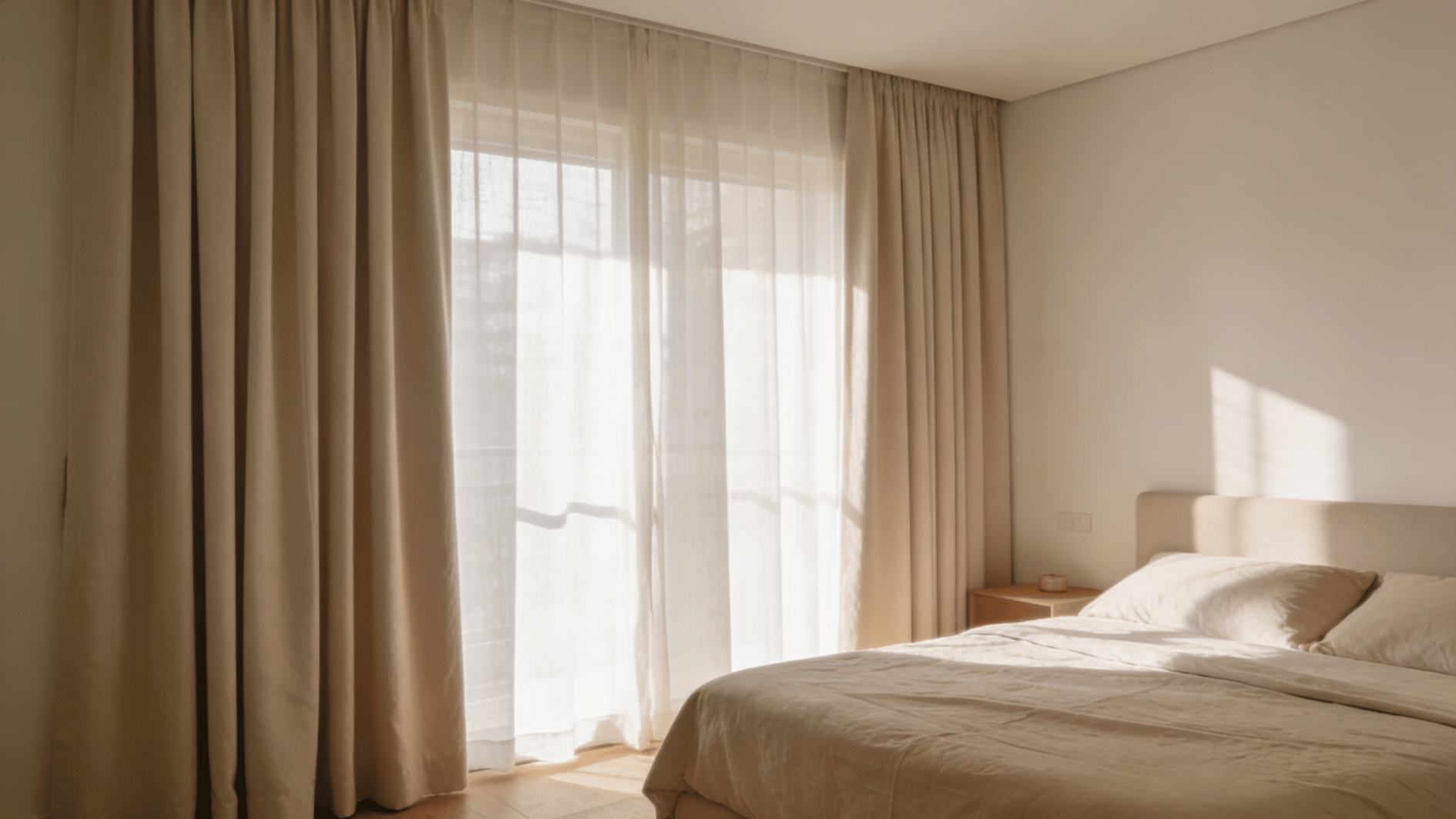
Patterned curtains in a minimalist bedroom fight with every other surface in the room.
A floor-length blackout curtain in white, linen, or a soft, warm gray is functional, clean-looking, and it makes the ceiling feel taller by drawing the eye upward.
14. Keep Under-Bed Storage in Uniform Bins
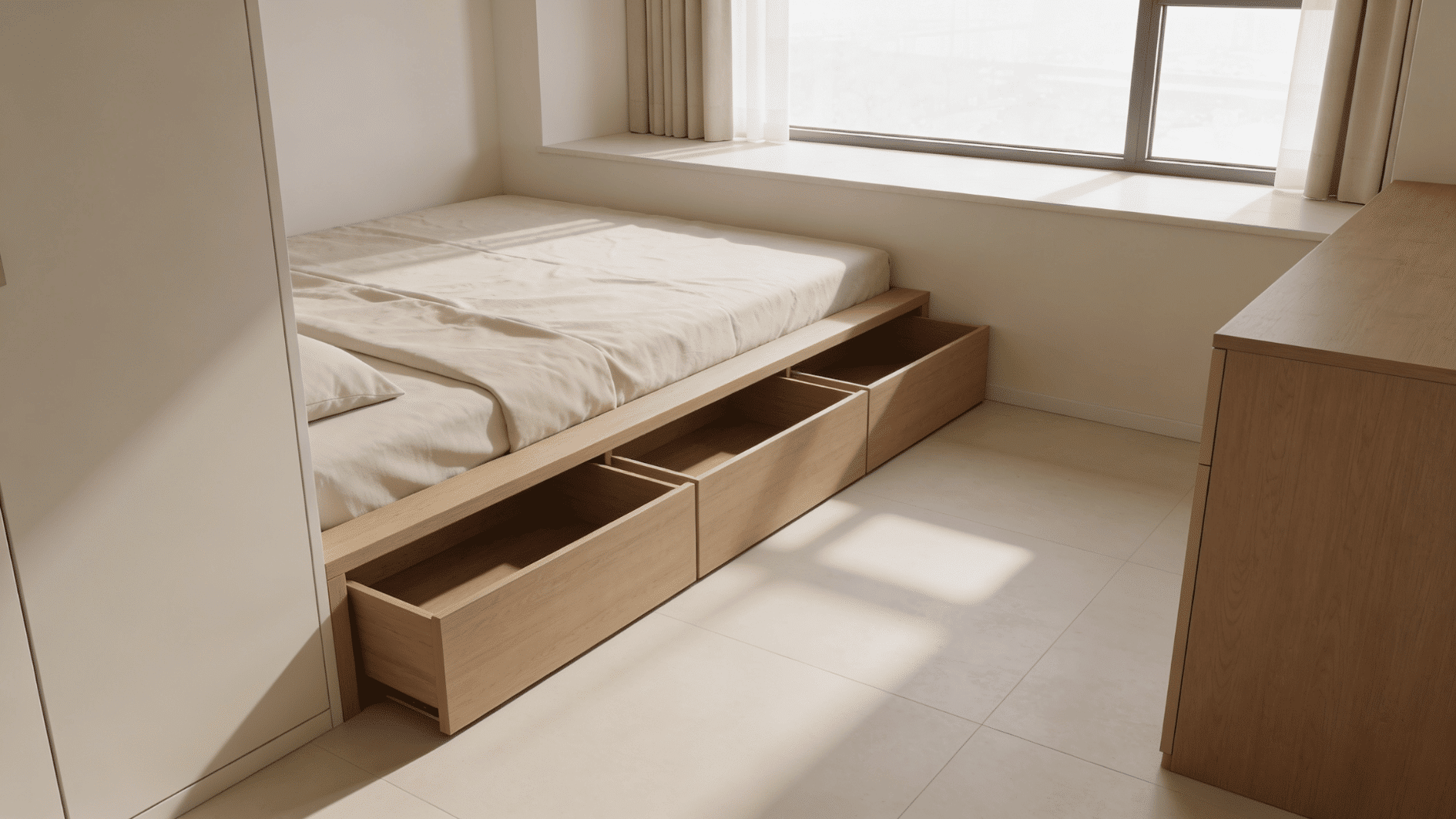
If you use the space under your bed for storage – which is a smart move in a minimalist home – keep it in matching, low-profile bins or boxes.
Mismatched bags and loose items under the bed create visual chaos every time you walk past it.
Kitchen Ideas
A minimalist kitchen isn’t just easier to look at – it’s also significantly easier to cook and clean in. Less stuff on the counter means less to move, wipe around, and put away.
15. Clear Your Countertops to The Essentials
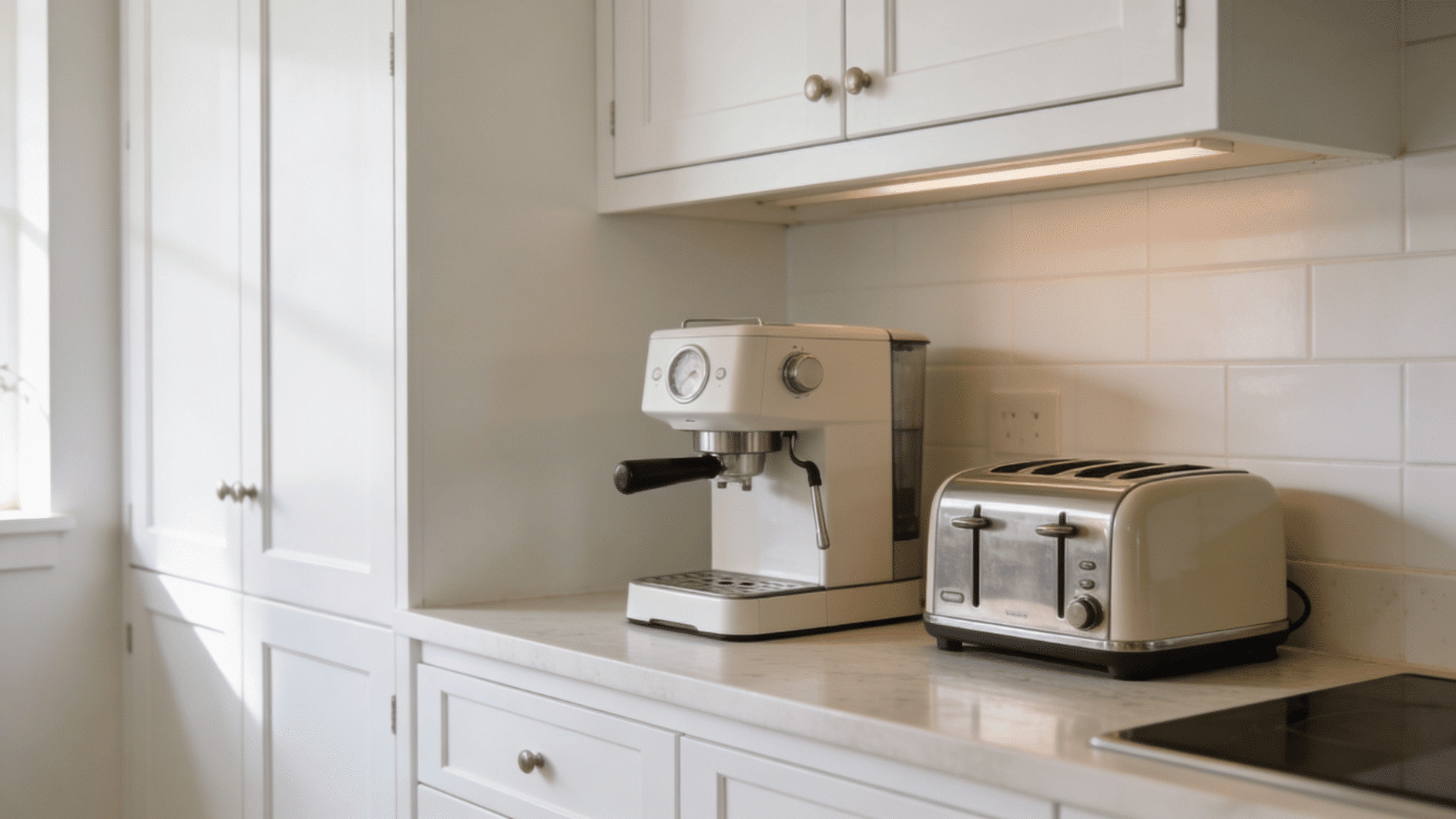
The single biggest visual upgrade you can make to a kitchen is clearing the countertops.
Keep out only the appliances you use every single day – coffee maker, toaster, and if you use it daily, maybe a knife block. Everything else goes in a cabinet.
16. Use Open Shelving Sparingly and Intentionally
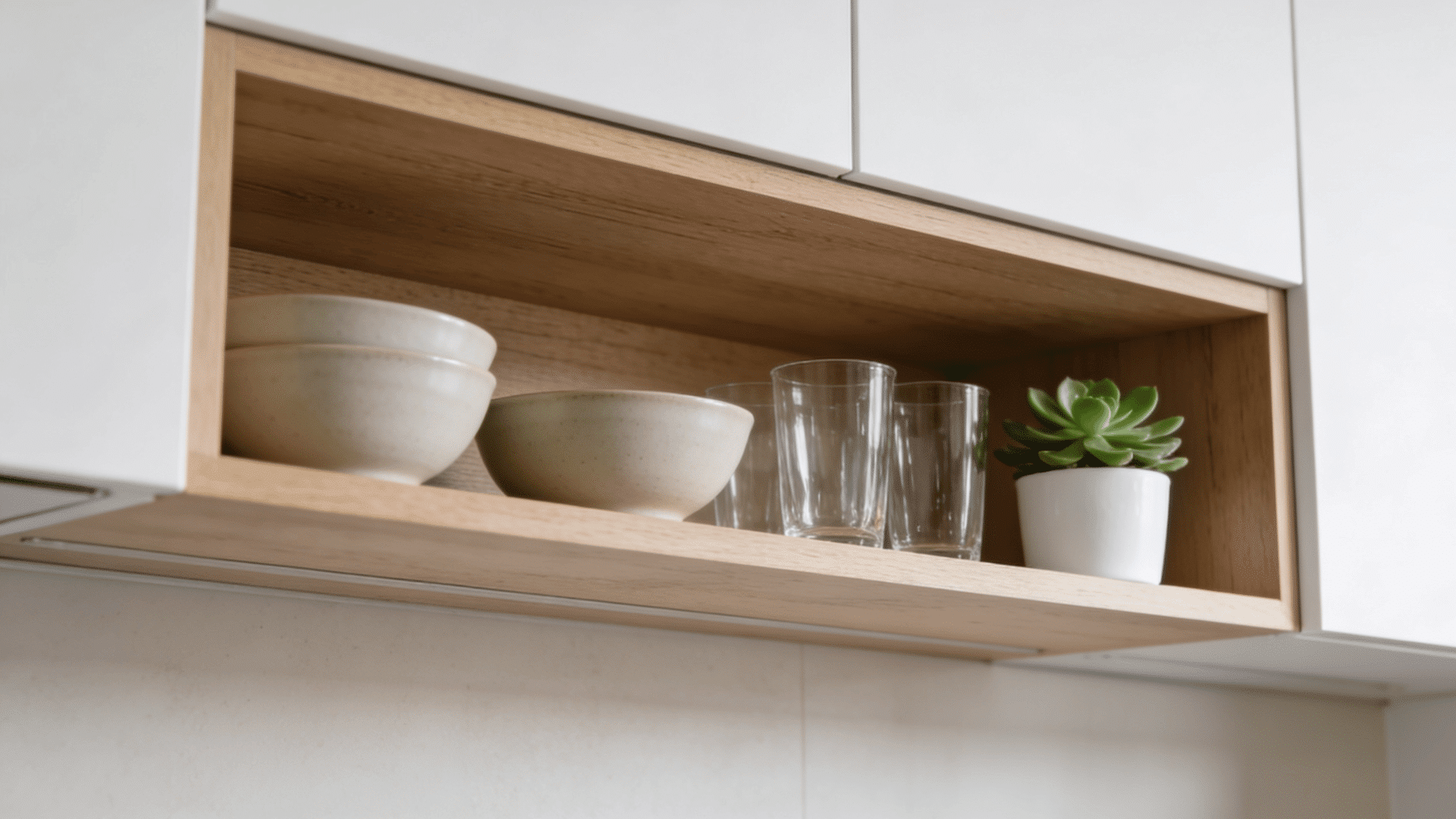
Open shelving works in a minimalist kitchen only if you’re disciplined about what goes on it. Display items you use regularly and that you find genuinely attractive – a set of matching bowls, a few clean glasses, a small plant.
Open shelves that hold random clutter defeat the purpose entirely.
17. Choose Handleless Cabinets
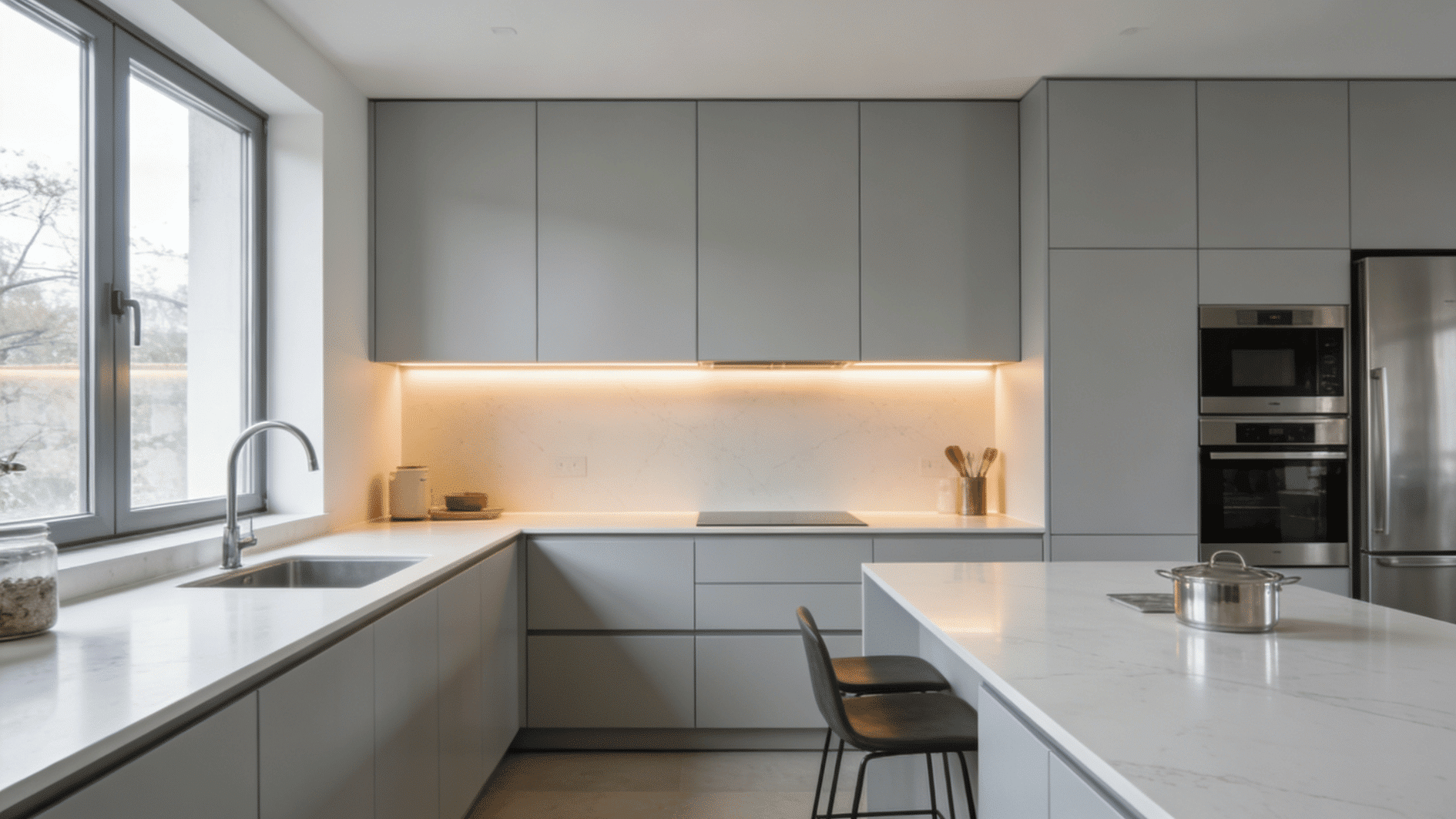
This is one of the most recognizable features of contemporary minimalist interior design in the kitchen.
Integrated-handle or push-to-open cabinets eliminate the visual interruptions that traditional hardware creates along a wall of cabinetry.
The result is a sleek, unbroken surface that reads as one clean element rather than a dozen separate pieces.
18. Stick to One Countertop Material
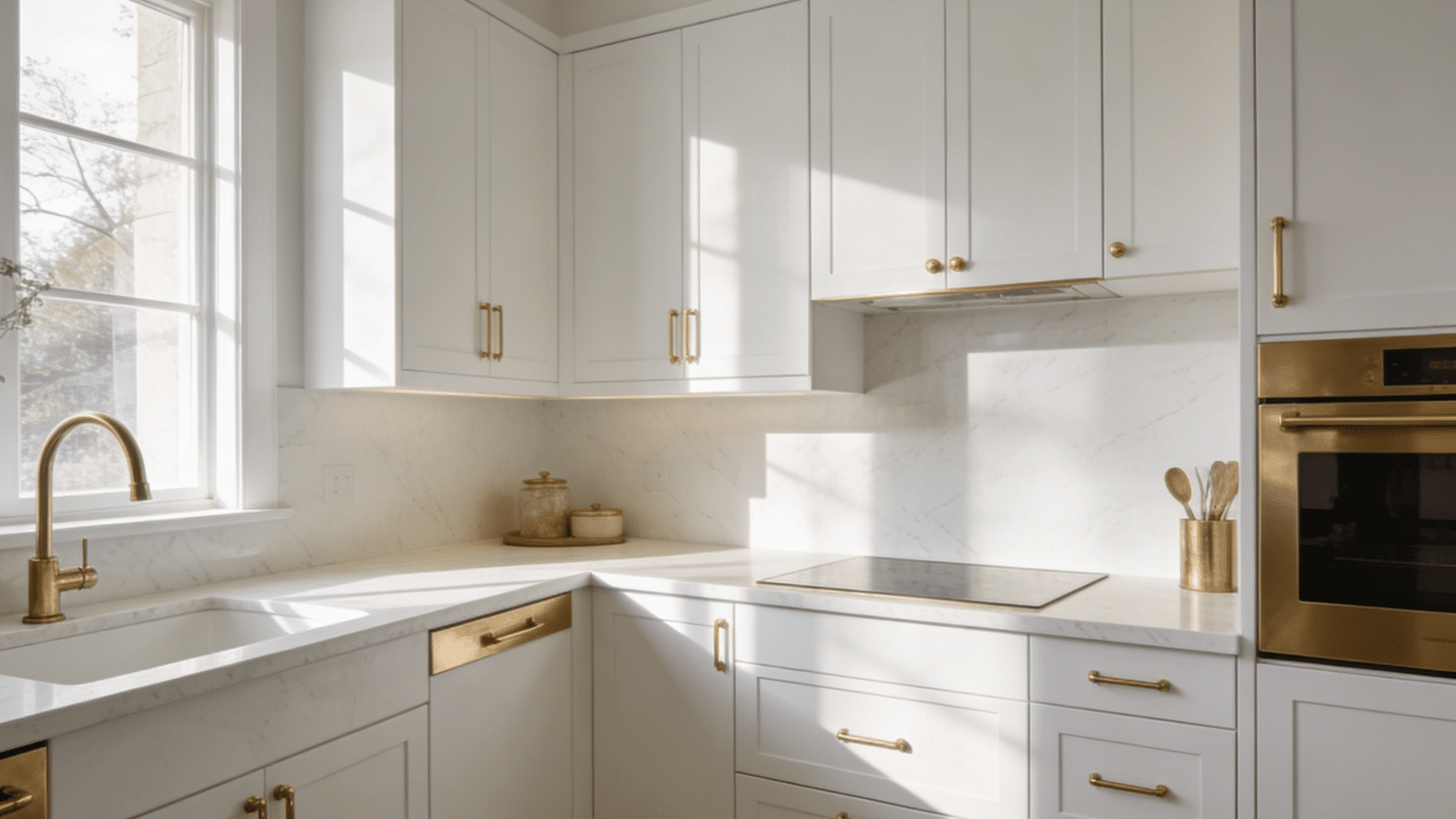
Using two different countertop materials – say, quartz on the island and butcher block on the perimeter – creates a split that breaks the visual flow of the kitchen.
Choose one material and use it throughout. Consistency in surfaces is one of the fastest ways to make a kitchen feel more designed.
19. Use One Large Pendant Light Over the Island
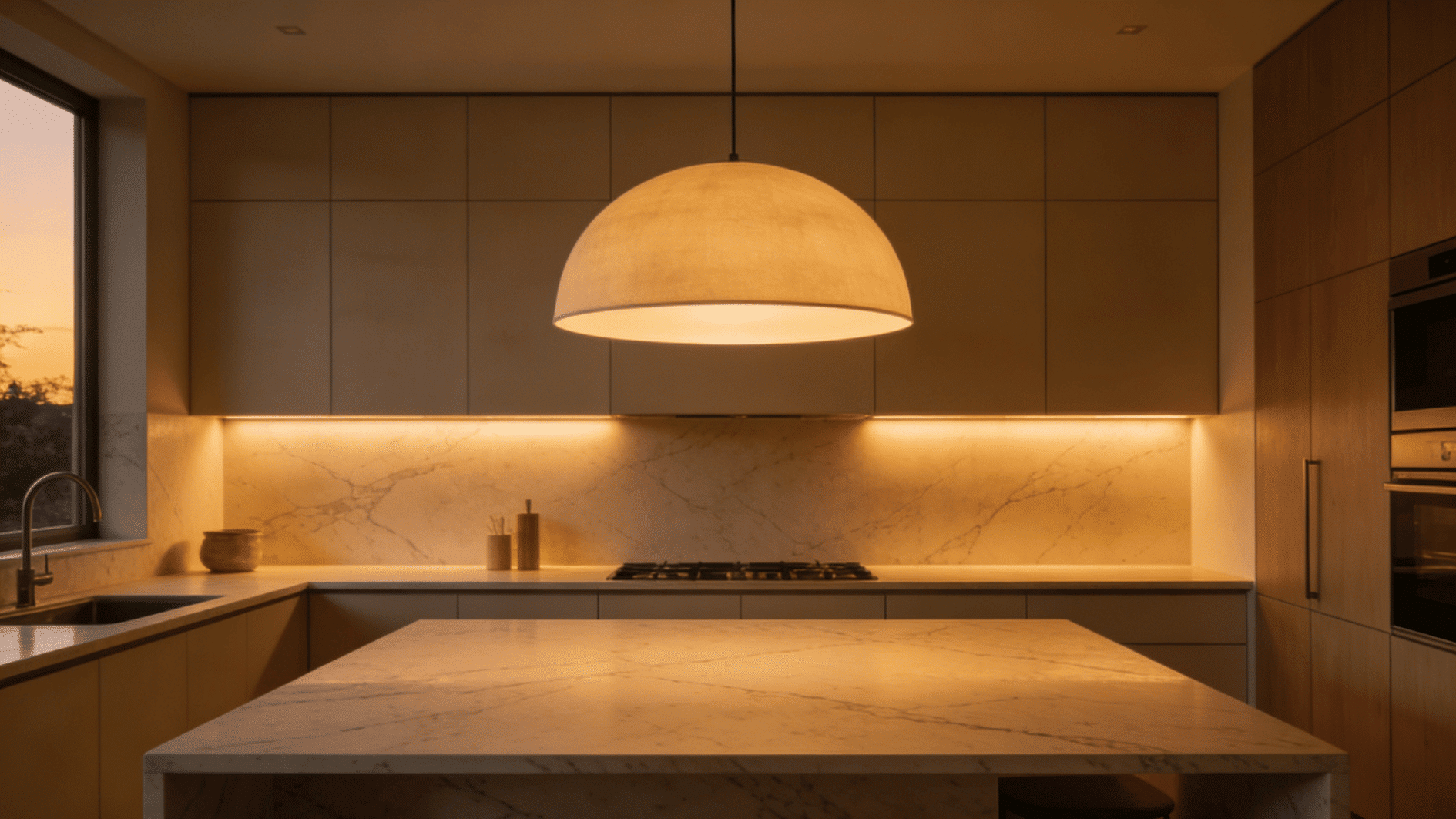
Multiple small pendants can feel busy. A single oversized pendant – or two if your island is very long – makes a stronger visual statement and keeps the ceiling from looking crowded.
20. Store Dry Goods in Uniform Glass Jars
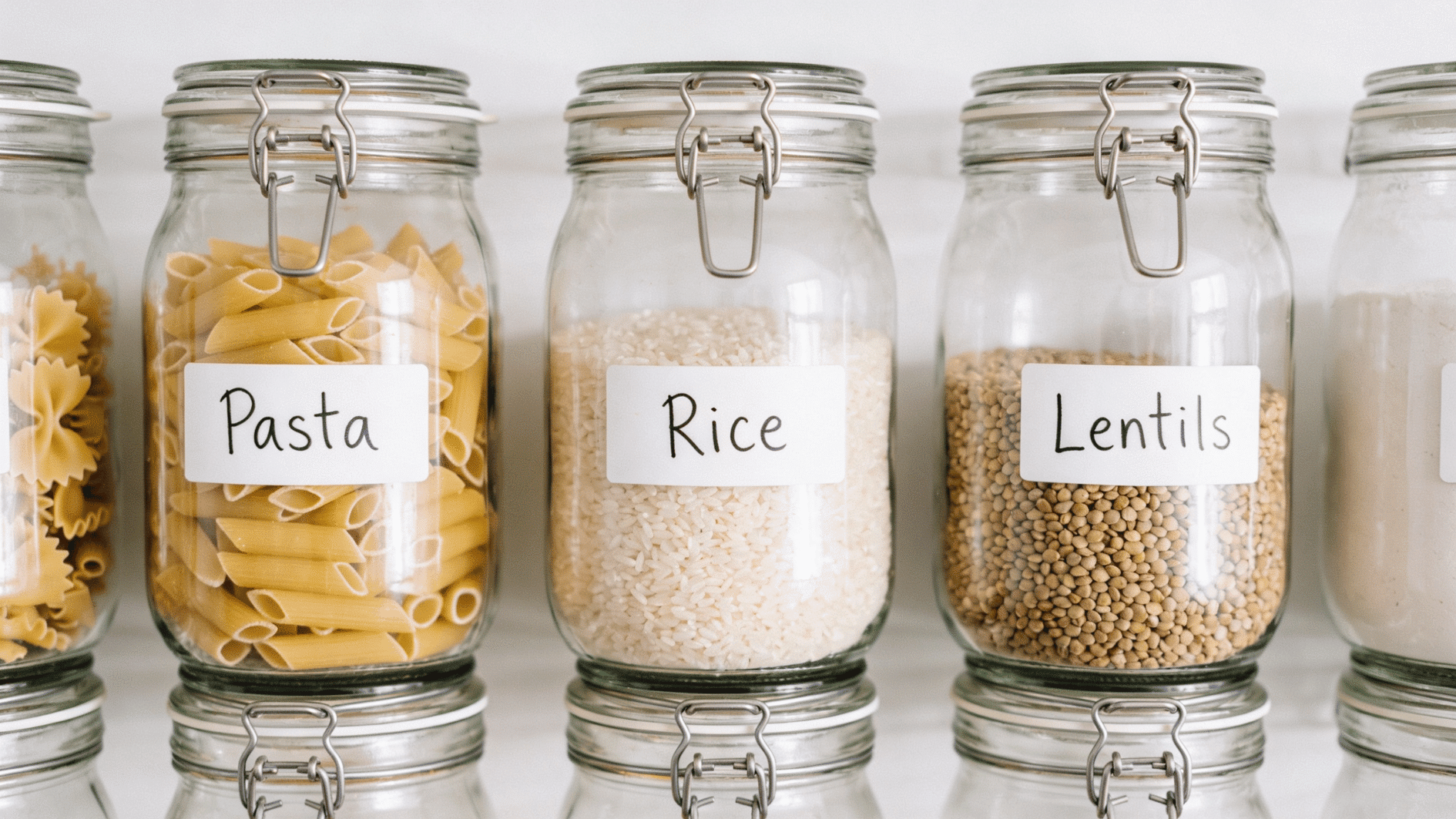
This applies to your pantry and any visible storage areas. Decanting pasta, rice, lentils, and similar staples into matching glass or clear acrylic jars creates an organized, cohesive look.
It also makes it easier to see what you have at a glance, which is a practical bonus.
Bathroom Ideas
Bathrooms are naturally small spaces, which makes minimalist design both easier to pull off and more noticeably impactful when you get it right.
21. Install a Floating Vanity
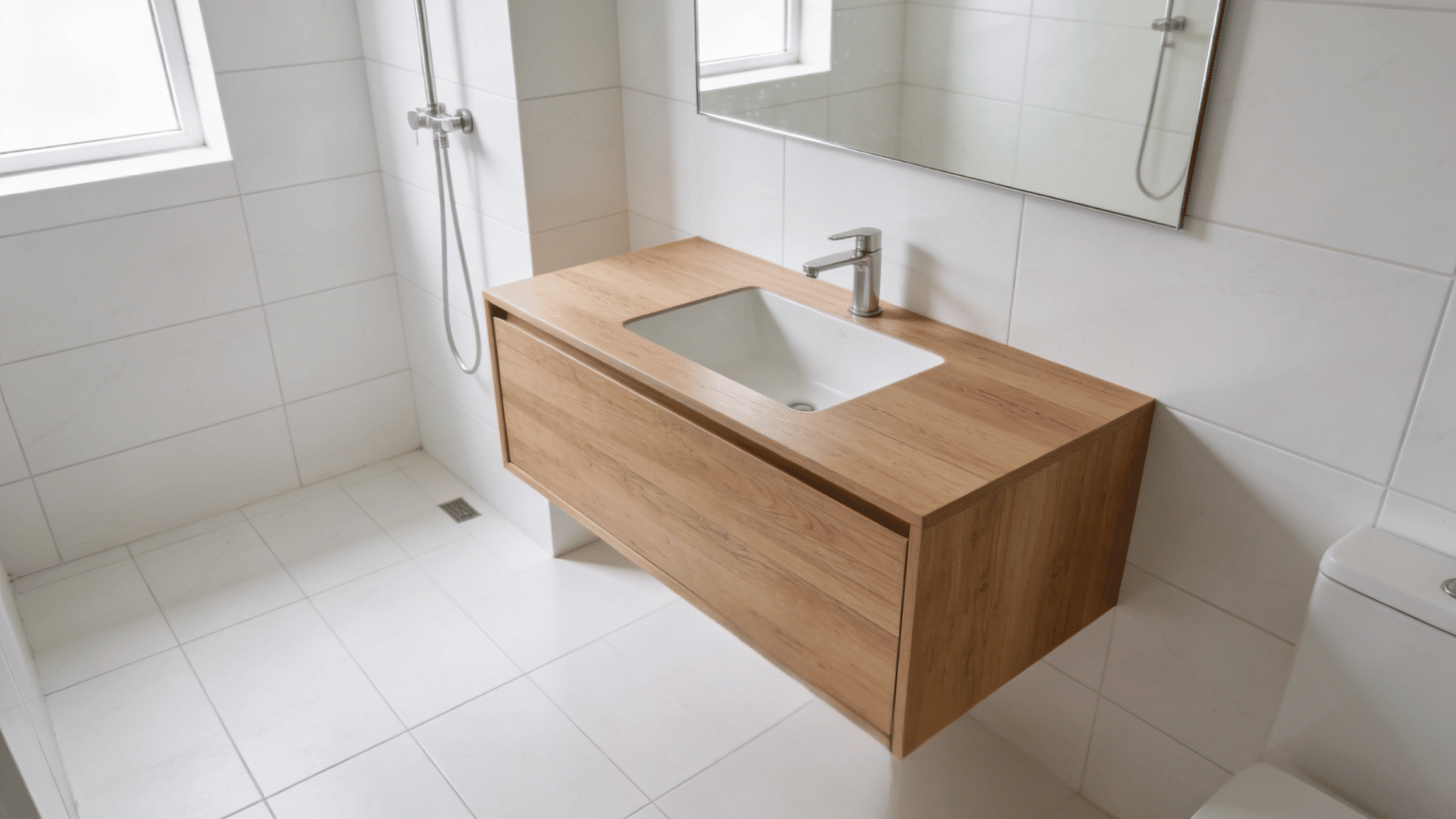
A wall-mounted vanity creates visible floor space beneath it, making the room feel larger than it is. It also makes cleaning the floor easier – no base cabinet to work around when mopping.
Pair it with a simple rectangular sink and clean-lined faucet hardware.
22. Limit Your Counter Products to Daily Essentials
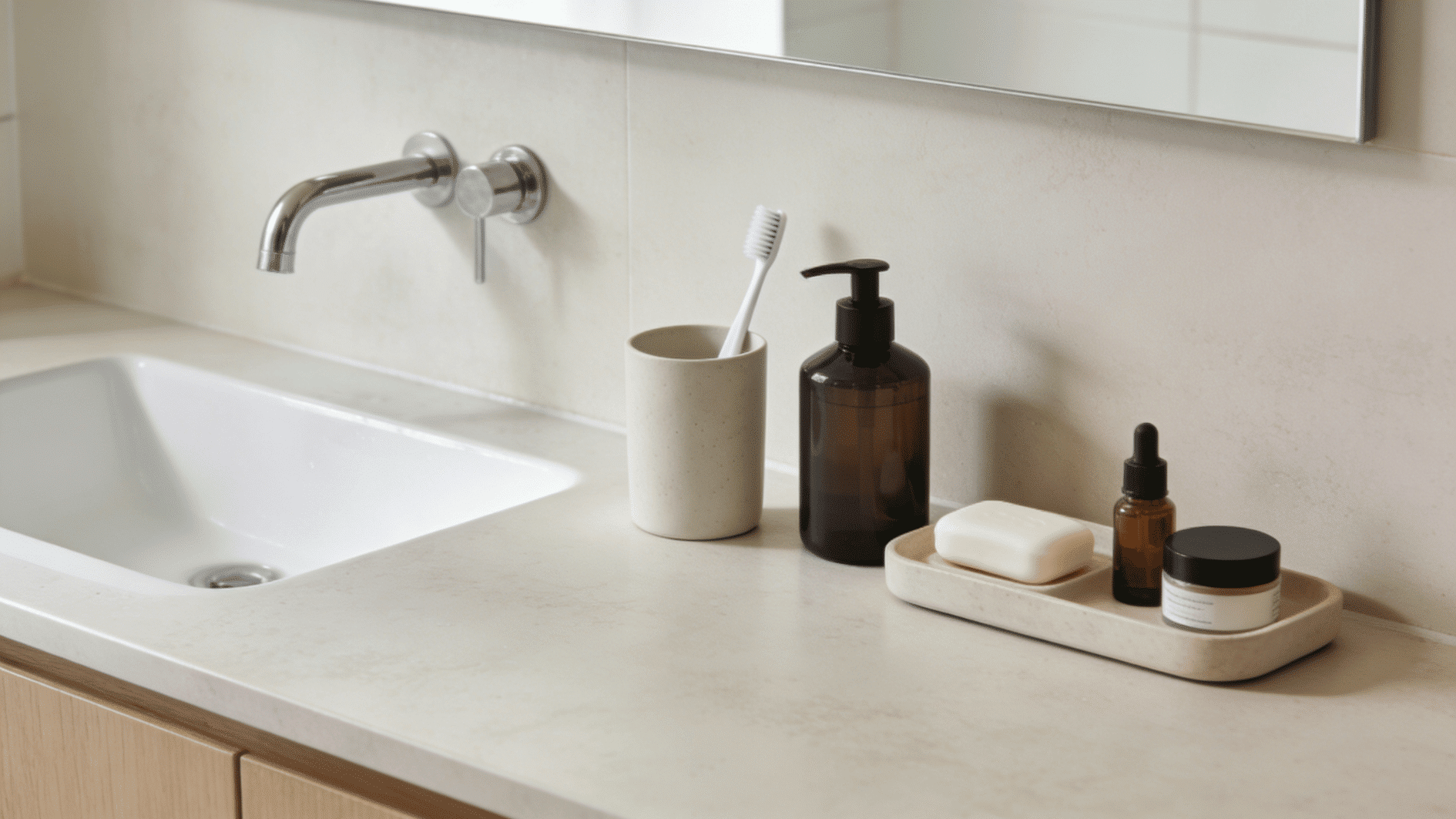
The bathroom counter is a magnet for products. Do an honest edit: what do you actually use every day? Those items stay on the counter in a small, contained tray.
Everything else – the serum you use twice a week, the hair tools, the backup toiletries – lives in a drawer or cabinet.
23. Choose Large-Format Floor Tiles
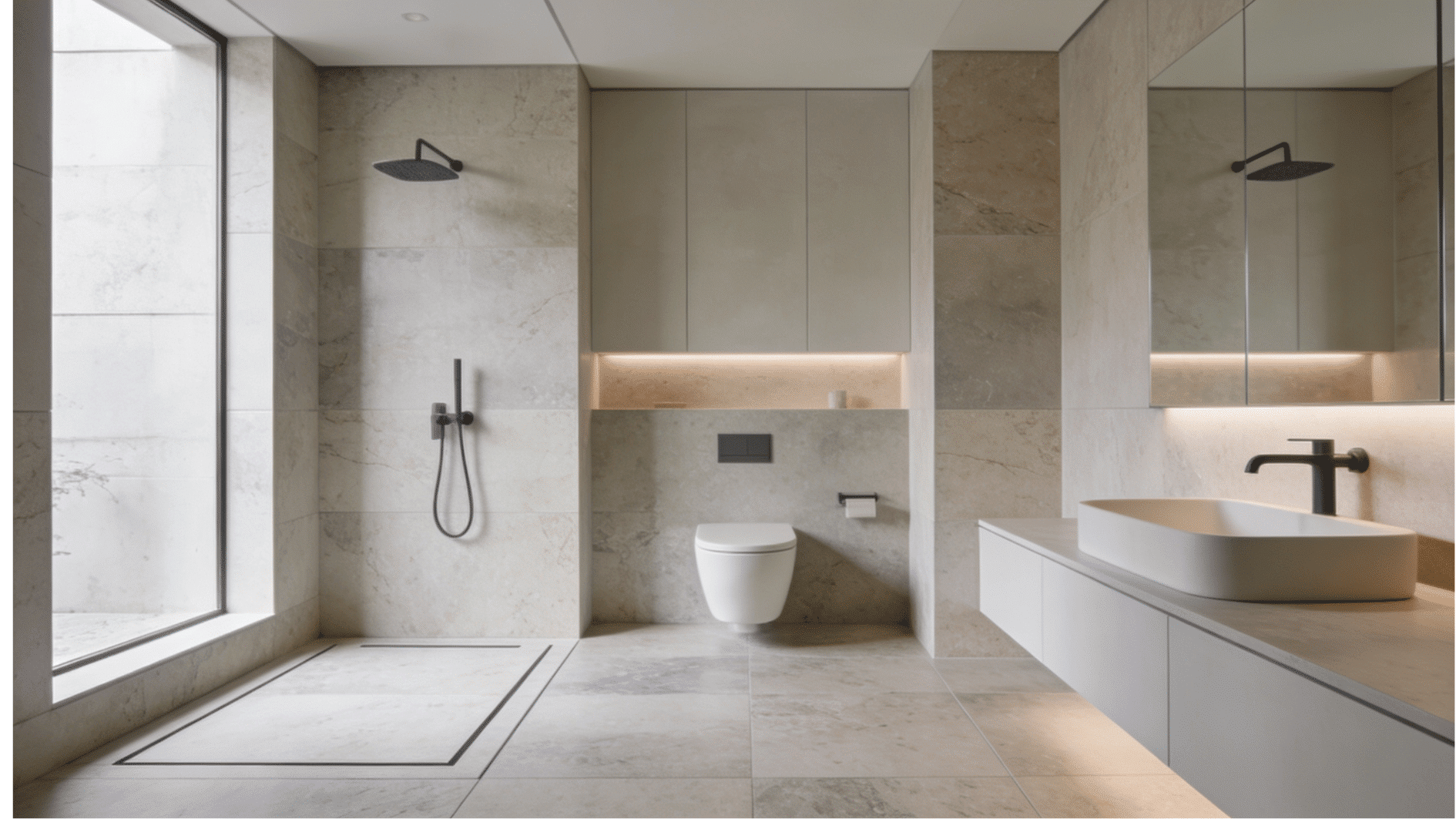
Smaller mosaic tiles have more grout lines, which means more visual interruption across the floor.
Large-format tiles – 12×24 or 24×24 inches – create a smoother, cleaner plane that reads as open rather than busy. Light stone tones work especially well in small bathrooms.
24. Install a Frameless Glass Shower
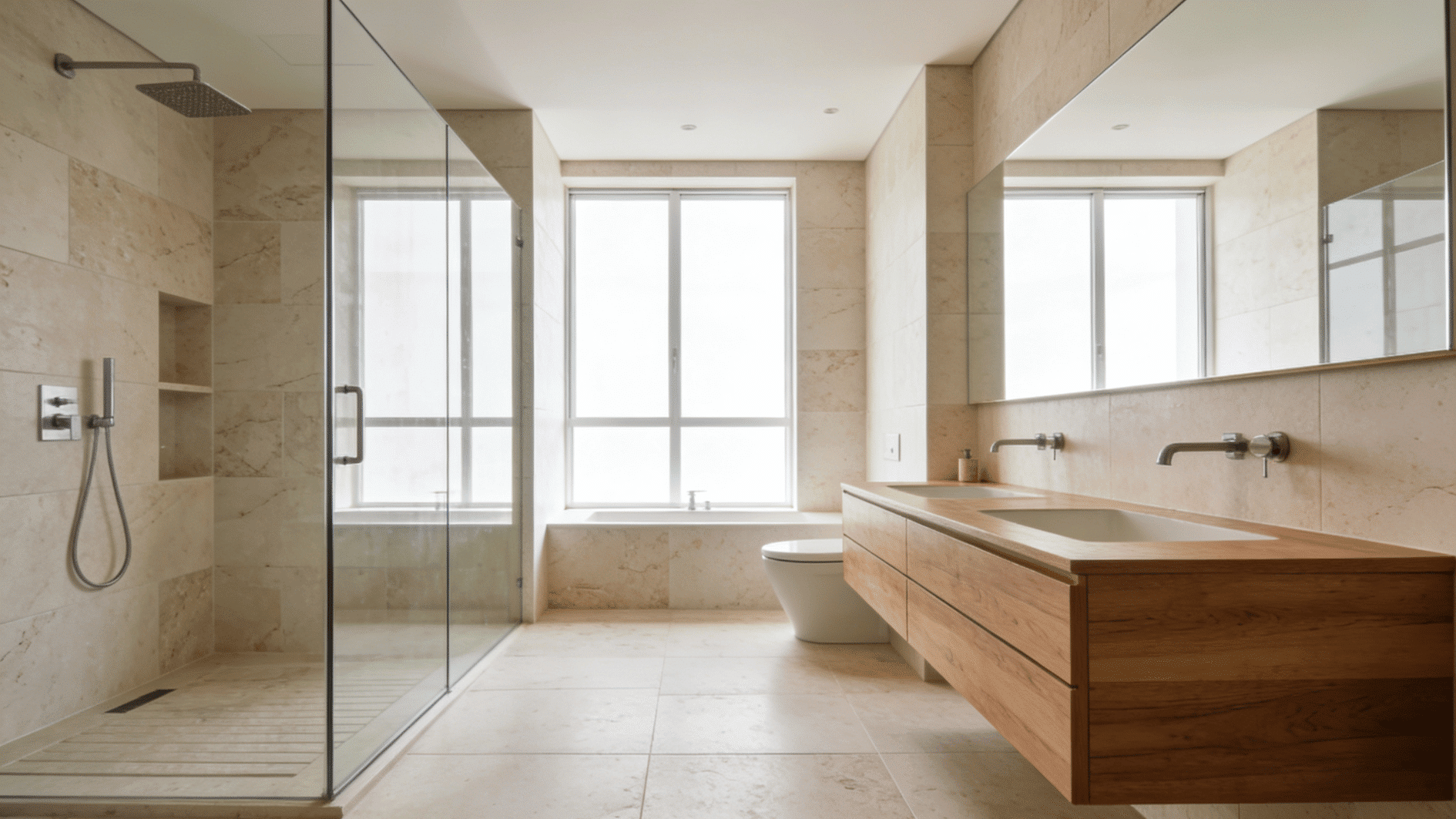
If you’re doing any bathroom renovation, a frameless glass shower is one of the highest-impact changes you can make for a minimalist look.
Removing the shower curtain and heavy framing visually opens the bathroom, makes it feel significantly larger, and simplifies the space.
25. Keep Your Color Palette to Two Tones Maximum
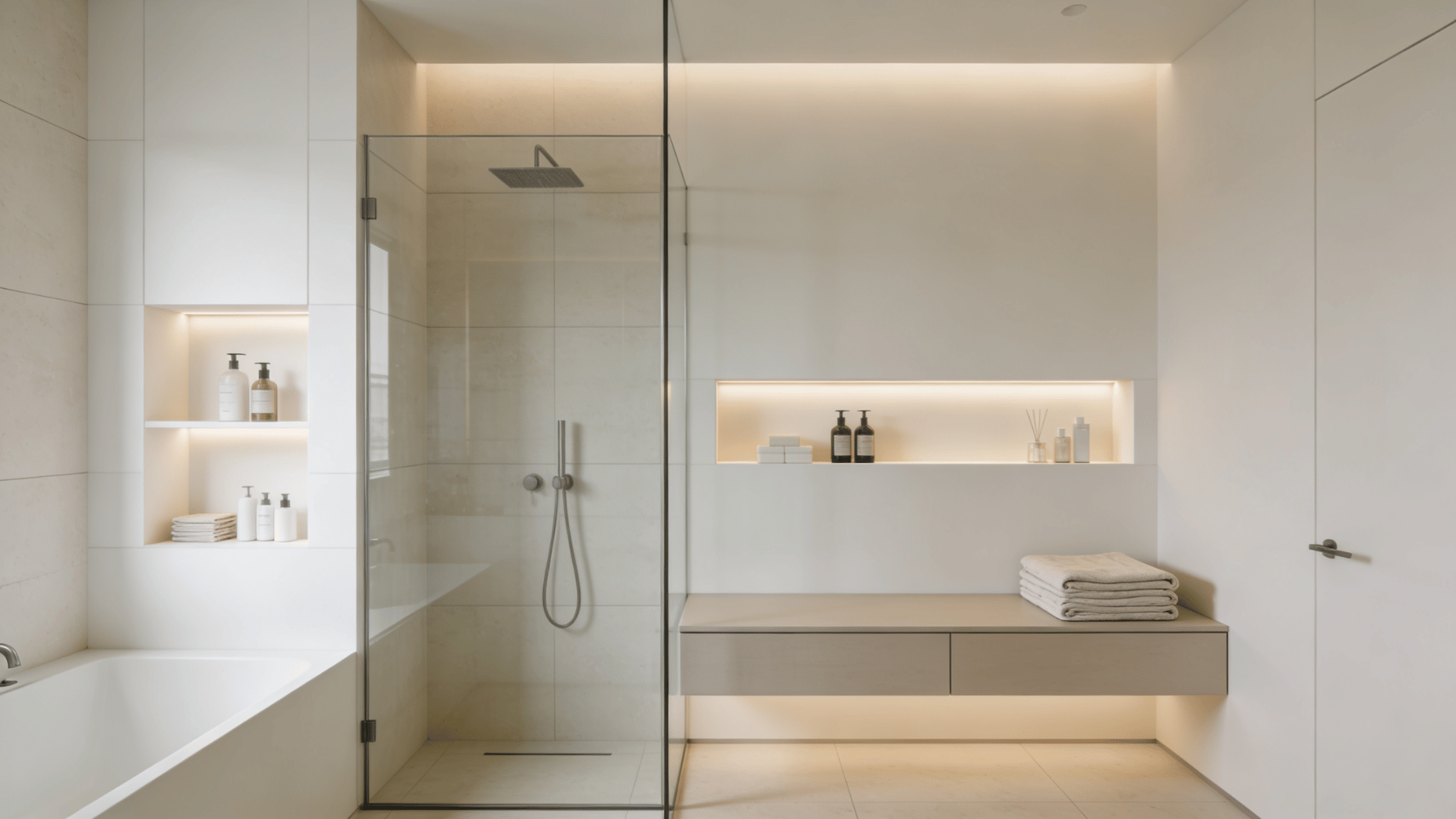
White or off-white walls with a warm stone floor. Soft greige tile with matte black fixtures.
Pick two tones and stay there. Introducing a third color in a small bathroom almost always makes the space feel smaller and more complicated than it needs to be.
Whole-Home Minimalist Ideas
Some design choices work across every room in the house, creating consistency and flow that ties everything together.
26. Use the Same Flooring Throughout Your Main Living Areas
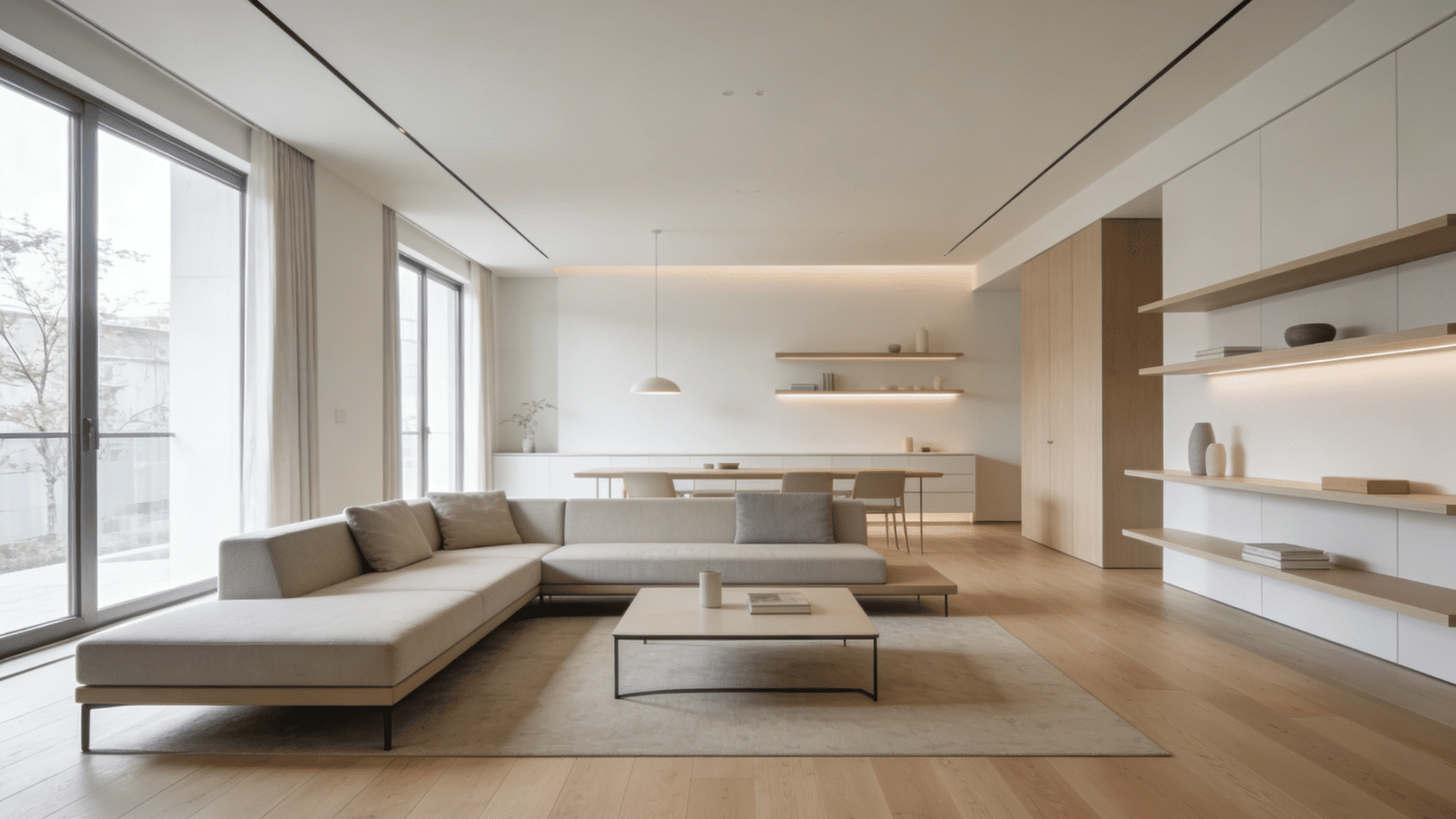
Changing flooring between the living room, hallway, and kitchen breaks the visual continuity of the space and makes the rooms feel smaller and more fragmented.
Running the same hardwood, LVP, or polished concrete throughout your main level creates an unbroken line that makes the whole home feel larger and more cohesive.
27. Edit Your Entryway Down to Three Elements
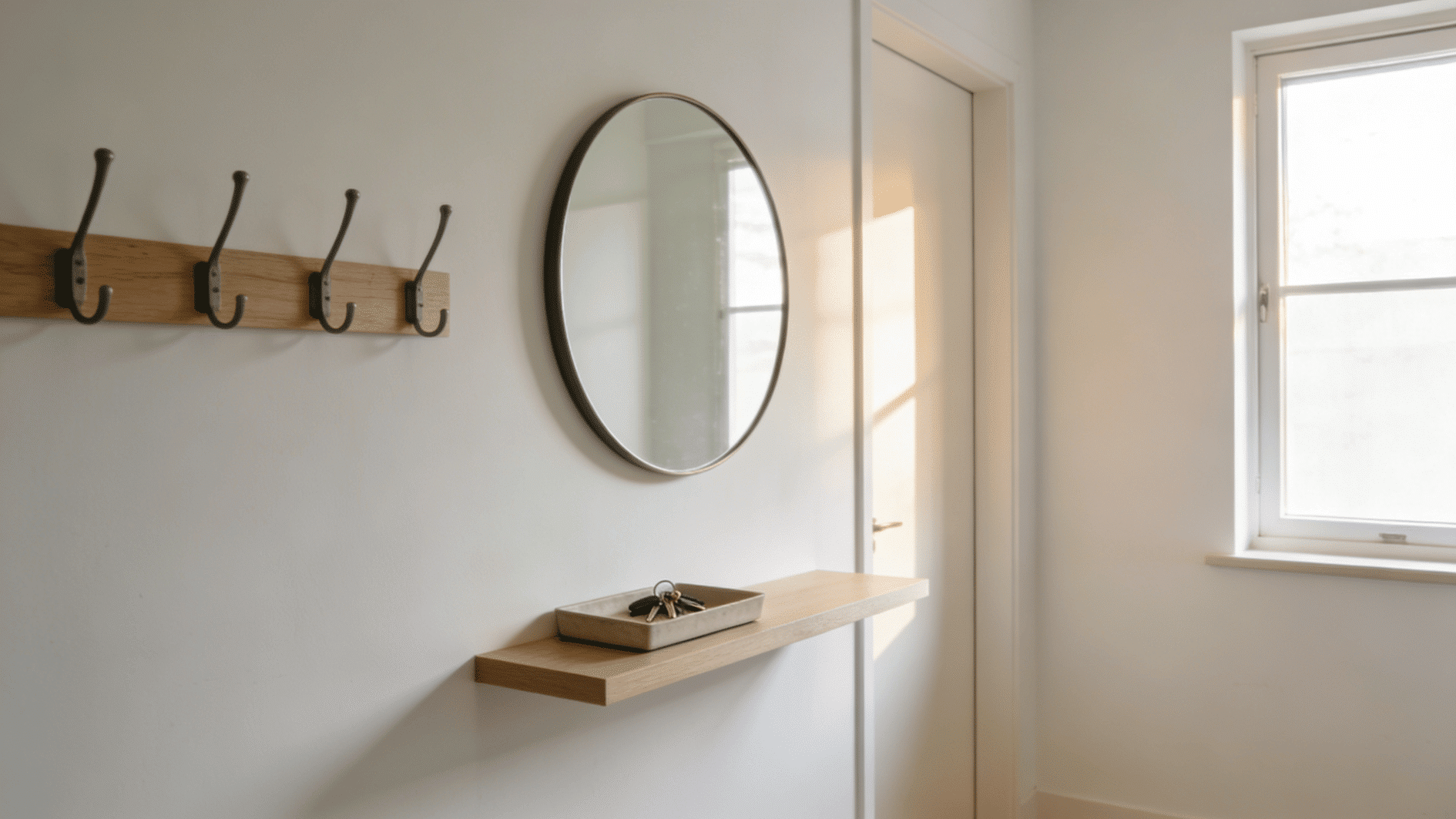
Your entryway sets the tone for every room that follows.
A hook for bags and coats, a small tray or bowl for keys, and a mirror to check yourself on the way out – that’s genuinely all you need.
When guests walk in, and the first thing they see is clean and intentional, it signals that the rest of the home will be too.
How to Start Your Minimalist Interior Design Journey
Getting started doesn’t mean gutting a room over a weekend. In my experience – both from working in interior design and in my own home – the most sustainable approach is gradual and room-by-room. Here’s where to begin:
- Start with one room – the space you spend the most time in, so you feel the impact right away.
- Sort before you shop – do a “keep, donate, store” pass first. Most minimalist changes require removing things, not buying them.
- Invest in one quality piece over several cheaper ones. A solid wood side table or a well-made rug will outlast and outlast five discount-store finds.
- Commit to your color palette – off-palette impulse buys quietly undo the cohesion you’ve built.
- Give it a few weeks. The space will tell you what’s missing and what’s exactly right.
Conclusion
Minimalist interior design isn’t a trend you chase – it’s a way of making your home work better for you, every single day. It makes your space easier to live in, easier to maintain, and genuinely better to look at every day.
These ideas above cover everything from your living room to your entryway, giving you a clear starting point no matter where you are in the process.
You don’t need to overhaul everything at once. Pick one idea, try it this week, and notice how the room feels. Small, intentional changes add up faster than you’d expect.
Once you experience that sense of calm and order in your space, contemporary minimalist interior design becomes less of a style choice and more of a lifestyle.