

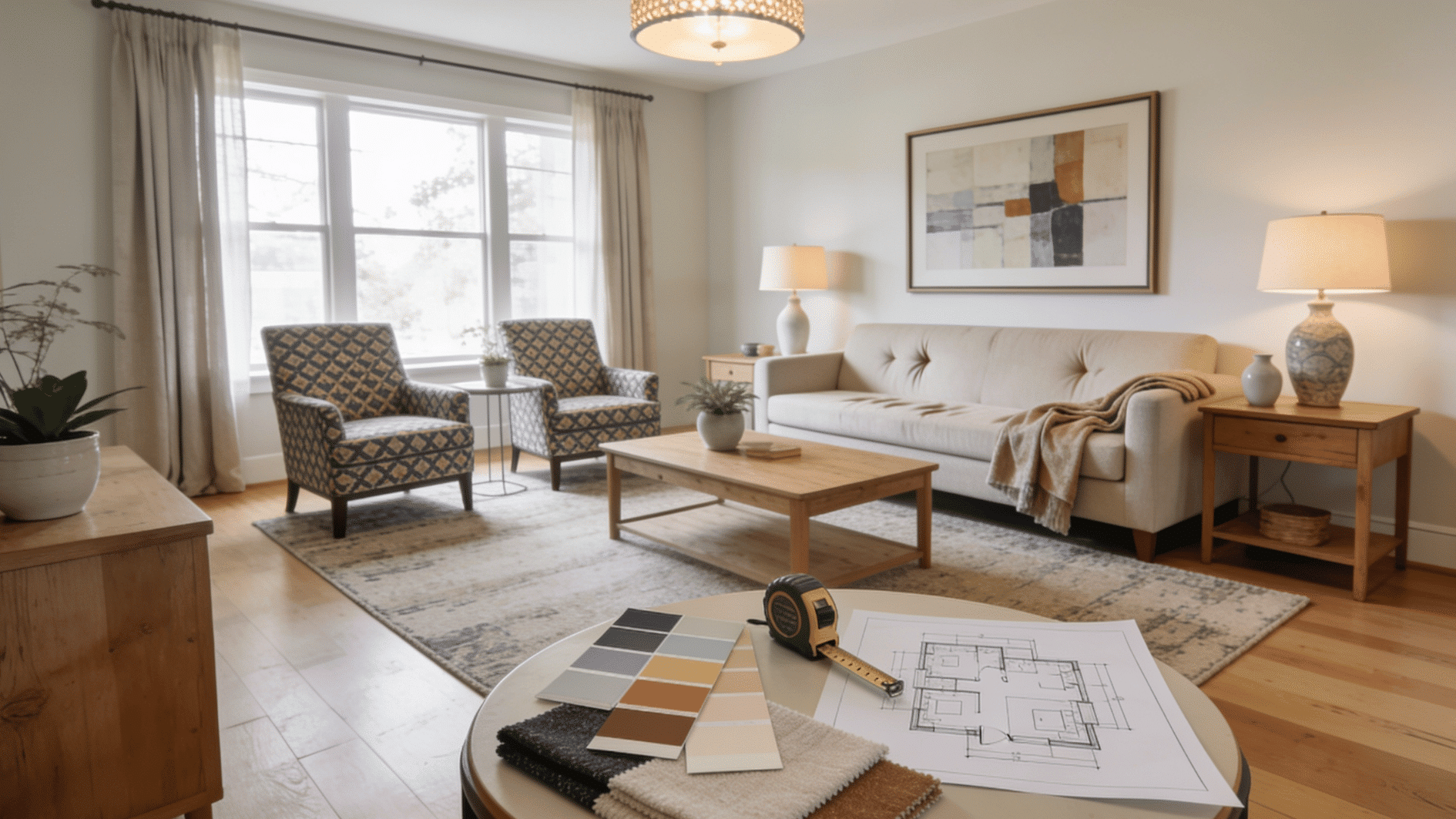
Interior design can feel confusing when every room seems to come with its own rules, trends, and expensive furniture recommendations.
It begins with understanding how a room needs to function, measuring what you have, and making choices that work together.
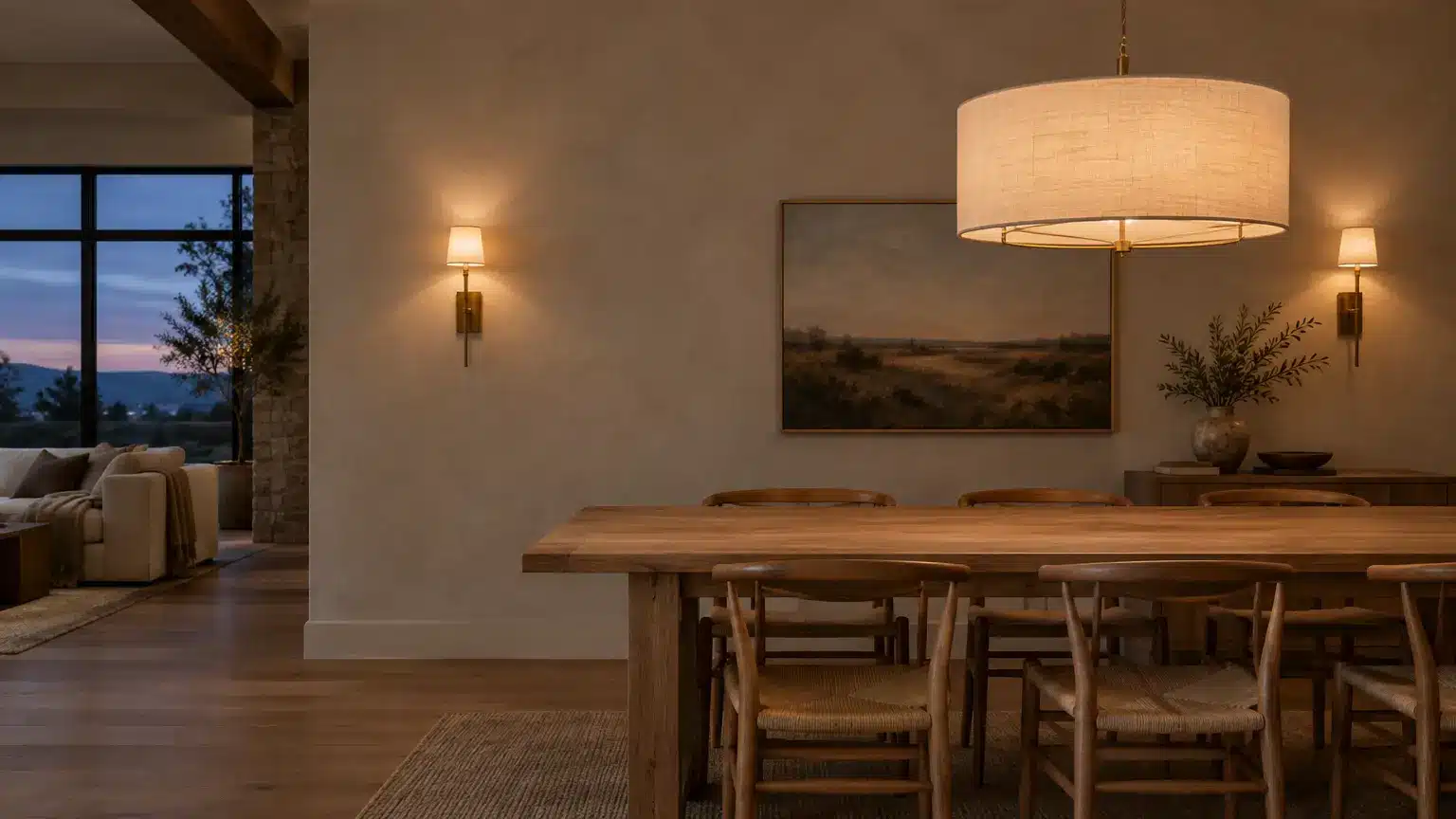
This blog on interior design for beginners explains how to plan a room, choose colors, arrange furniture, select lighting such as incorporating dimmable table lamps to instantly set the right mood and add decorative details without making the space feel crowded.
You will also learn useful interior design basics, common mistakes to avoid, and ways to control your spending.
Start with one room, make thoughtful decisions, and remember that owning a tape measure already puts you ahead of anyone ordering a couch based solely on a product photo.
What is Interior Design?
Interior design is the process of planning and improving indoor spaces to make them functional, comfortable, and visually consistent.
It includes decisions about room layouts, furniture, lighting, colors, materials, storage, and decorative elements.
Interior design looks at the full space, including how people move through it, where furniture should sit, how lighting affects daily activities, and whether each item suits the size of the room.
For example, a living room may look attractive in a photo but still be poorly designed if the sofa blocks a doorway, the lighting is too dim for reading, or the coffee table is difficult to reach.
Learning the basics of interior design helps you avoid impulse purchases and create rooms that feel connected.
Figuring Your Personal Interior Design Style
Your design style is not a strict label that forces every room to look the same. It is a useful reference you choosing colors, furniture, materials, and decorative pieces that work well together.
Before selecting a style, pay attention to the rooms, furniture, and images you already like. Look for repeated details rather than choosing a style because it happens to be popular.
- Save room images that catch your attention: Collect photographs of rooms you genuinely like. After saving several examples, look for repeated colors, furniture shapes, materials, and layouts.
- Review items you already own: Check which furniture, artwork, rugs, and decorative pieces you still enjoy to know if you prefer simple modern spaces, traditional details, or colorful designs.
- Study common interior styles: Learn the basic traits of modern, traditional, farmhouse, industrial, Scandinavian, mid-century modern, and eclectic interiors.
- Notice your preferred color range: Some people feel comfortable around warm earth tones, while others prefer pale neutrals, dark colors, or bright accents.
- Consider your daily routine: A home with children, pets, frequent guests, or limited storage may need durable fabrics and practical furniture rather than fragile display pieces.
- Create a simple mood board: Place paint colors, fabric samples, furniture images, lighting ideas, and room references together. Remove anything that feels disconnected from the rest.
- Choose three descriptive words: Words such as warm, simple, relaxed, colorful, structured, or vintage can help you judge future purchases.
Step-by-Step Process of Designing Your Room
Designing a room becomes easier when you follow a clear order. Buying decor first and planning later often leads to mismatched pieces, poor proportions, and a closet full of cushions that have nowhere to go.
Step 1: Plan the Room Before Buying Anything
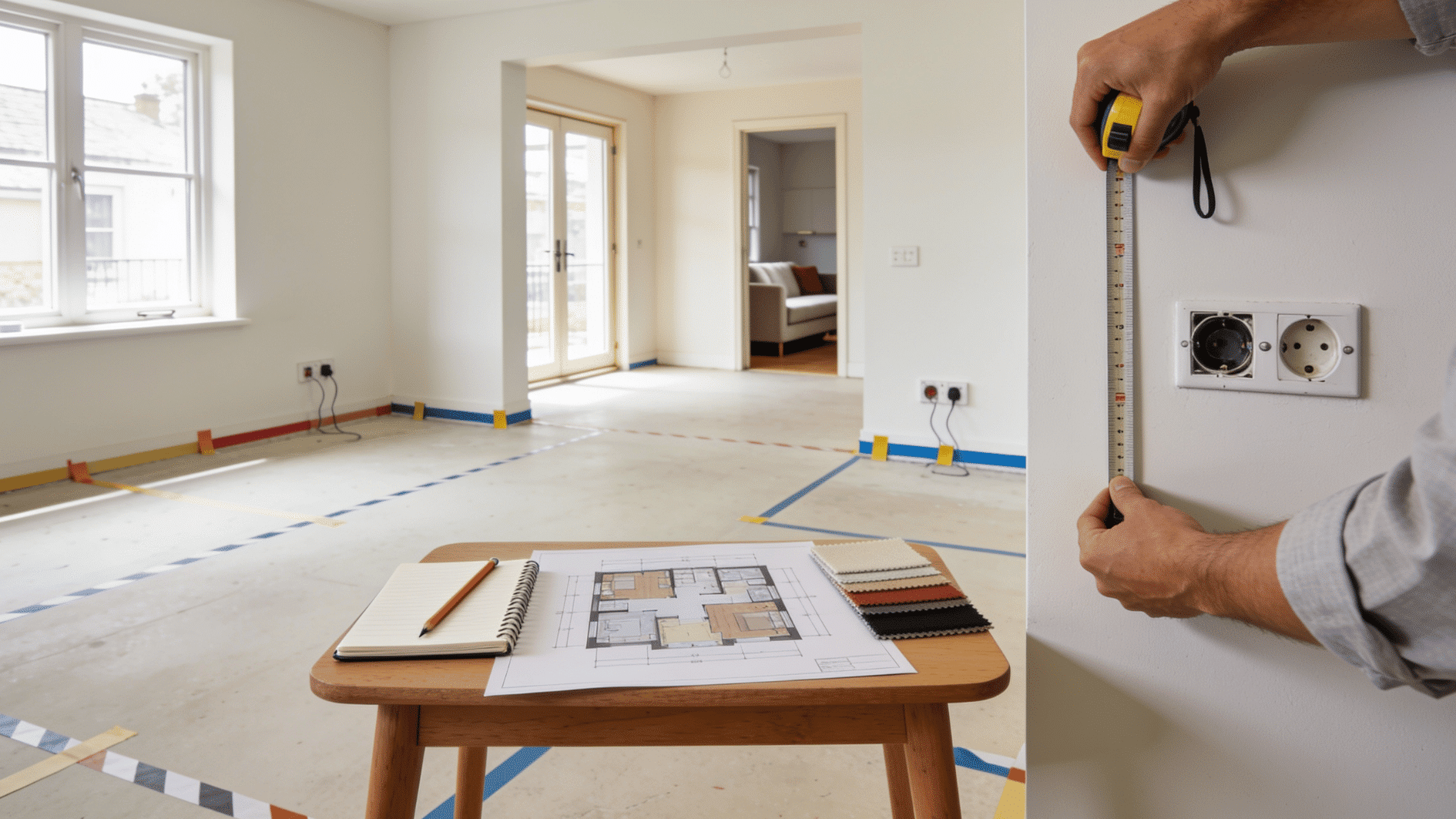
Room planning helps you understand how the space will be used and what it can reasonably hold. Begin with practical information before thinking about paint colors or accessories.
- Decide the room’s main purpose: Write down the activities that will take place in the room, such as sleeping, working, entertaining, reading, or watching television.
- Measure the full space: Record the length and width of the room, ceiling height, windows, doors, built-in features, and wall openings.
- Mark electrical outlets and switches: Their locations may affect where you place lamps, televisions, desks, and charging stations.
- Create a simple floor plan: Draw the room on graph paper or use a digital planning tool. Include the dimensions of existing furniture.
- List what the room actually needs: Separate essential purchases from optional items. A dining table is essential in a dining room. A decorative ladder holding one blanket is less urgent.
Step 2: Choose a Color Scheme
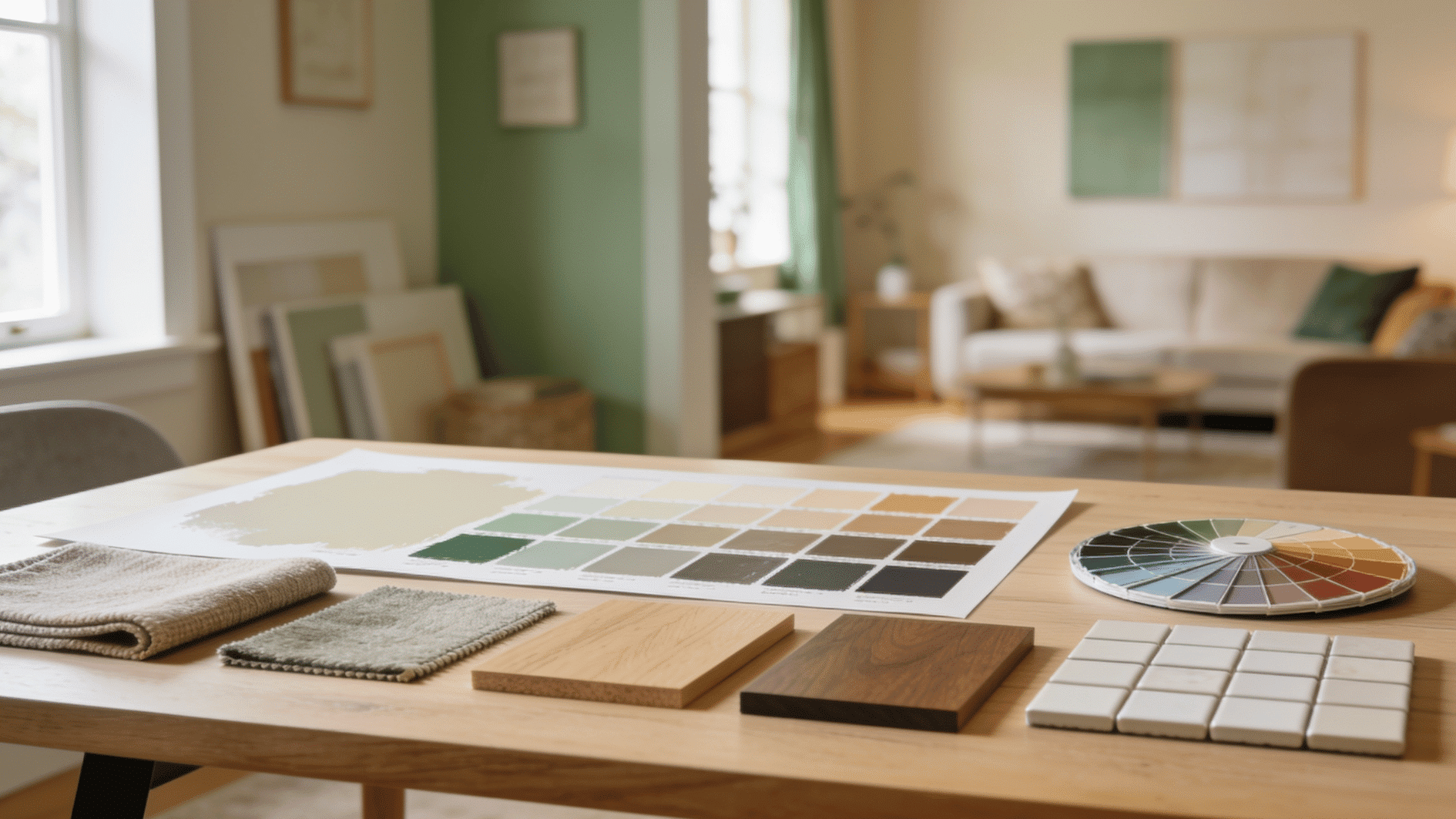
A clear color scheme gives the room a consistent direction. It also prevents you from buying individual pieces that look good on their own but clash when paired.
- Begin with a fixed item: Use flooring, countertops, a sofa, a rug, or existing cabinetry as the starting point for your palette.
- Select one main color: This color should cover the largest areas, such as walls, large furniture, or cabinetry. Add one or two supporting colors and an accent color.
- Use the 60-30-10 rule as a reference: Let the main color cover about 60 percent of the room, the supporting color 30 percent, and the accent color 10 percent.
- Check undertones: Whites, grays, and beiges may have warm, cool, green, pink, or yellow undertones. Compare samples beside the room’s permanent finishes.
- Repeat colors around the room: A color should appear in more than one location so it feels intentional rather than accidental.
Step 3: Arrange Furniture Properly
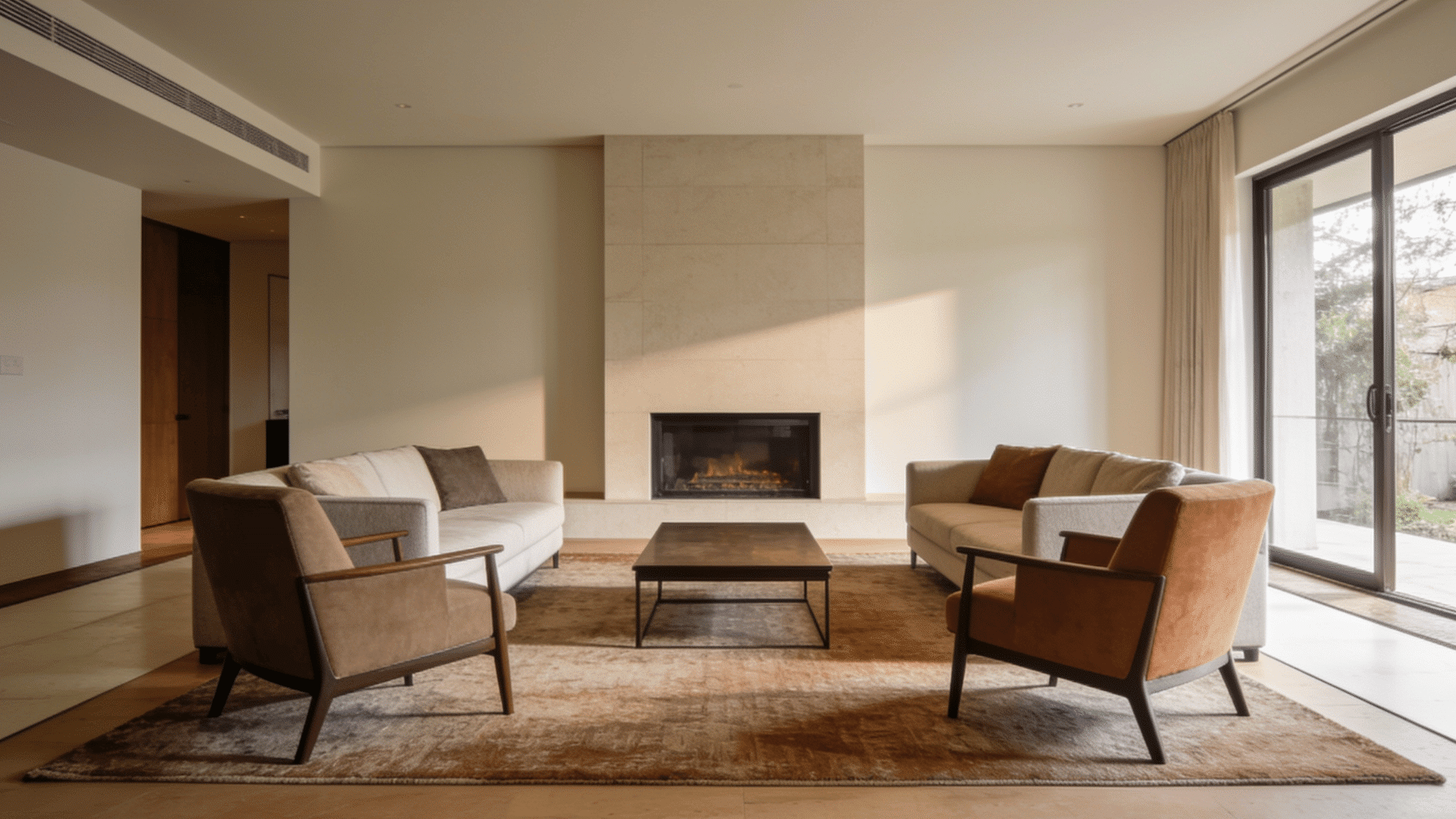
Furniture arrangement affects comfort, conversation, traffic flow, and the apparent size of a room. The goal is to create a layout that supports movement without leaving everything pressed against the walls.
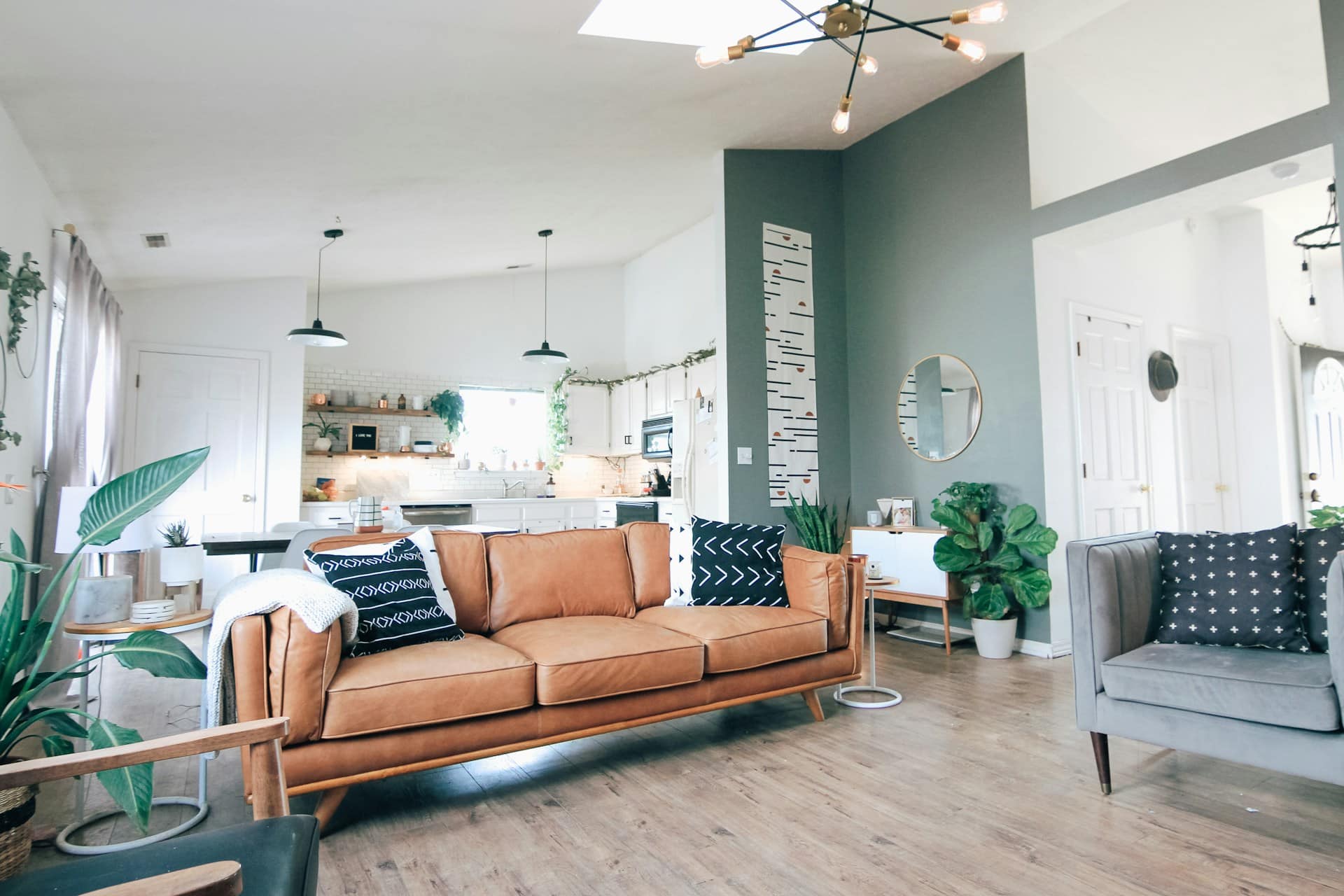
Careful living room furniture placement can improve conversation, walking paths, and the way the room feels from the doorway.
- Place the largest piece first: Begin with the sofa, bed, dining table, or main desk because smaller items will be arranged around it.
- Identify the focal point: This may be a fireplace, window, television, artwork, or architectural feature.
- Leave clear walkways: Allow approximately 30 to 36 inches for main paths when space permits.
- Create conversation areas: Position seating close enough that people can speak without shouting across the room.
- Keep tables within reach: Coffee tables and side tables should be easy to use from nearby seating.
- Check the layout from the doorway: The room should feel open when you enter. Avoid placing bulky furniture directly in the main sightline unless it serves a clear purpose.
Step 4: Select Lighting for Each Room
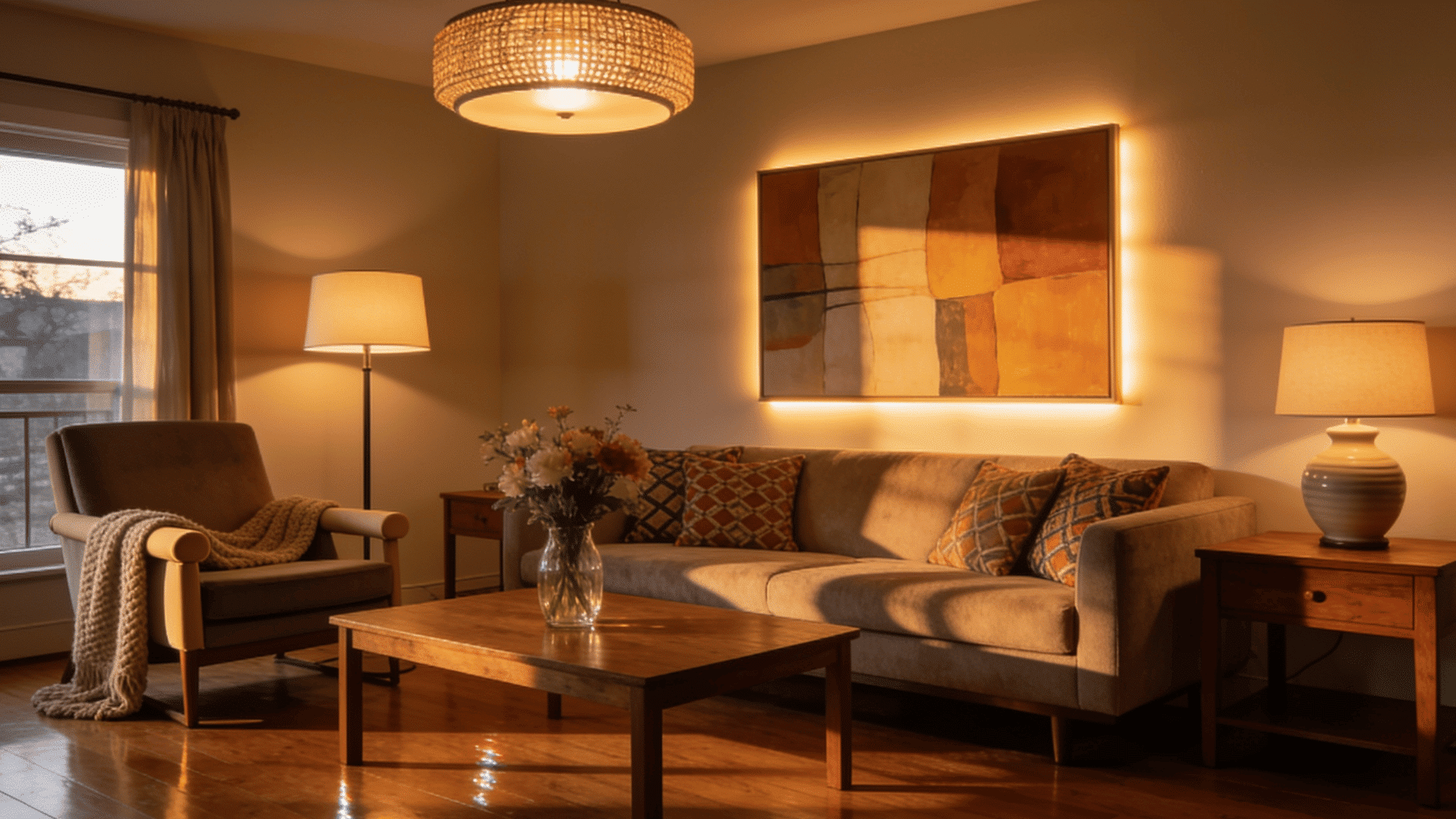
Lighting affects how colors appear, how comfortably you complete tasks, and how welcoming a room feels. One ceiling fixture is rarely enough, especially when it produces the lighting quality of a waiting room.
| Lighting Tip | What to Do | Why It Matters |
|---|---|---|
| Use ambient lighting | Add ceiling fixtures, recessed lights, or large pendants for general brightness. | Provides even illumination across the room. |
| Match lighting to the room’s purpose | Use bright task lighting in kitchens, soft bedside lights in bedrooms, and glare-free desk lighting in home offices. | Makes the room more comfortable and practical for daily activities. |
| Choose bulb temperature carefully | Use warm bulbs in bedrooms and living spaces, and neutral bulbs in kitchens, bathrooms, and work areas. | Helps the lighting suit the mood and function of the space. |
| Add dimmers | Install dimmer switches where possible to control brightness levels. | Allows you to adjust the room for working, cleaning, relaxing, or entertaining. |
| Use natural light well | Keep windows clear where privacy allows and place mirrors where they can reflect daylight. | Helps darker areas feel brighter without adding more fixtures. |
Step 5: Mix Materials, Patterns, and Textures
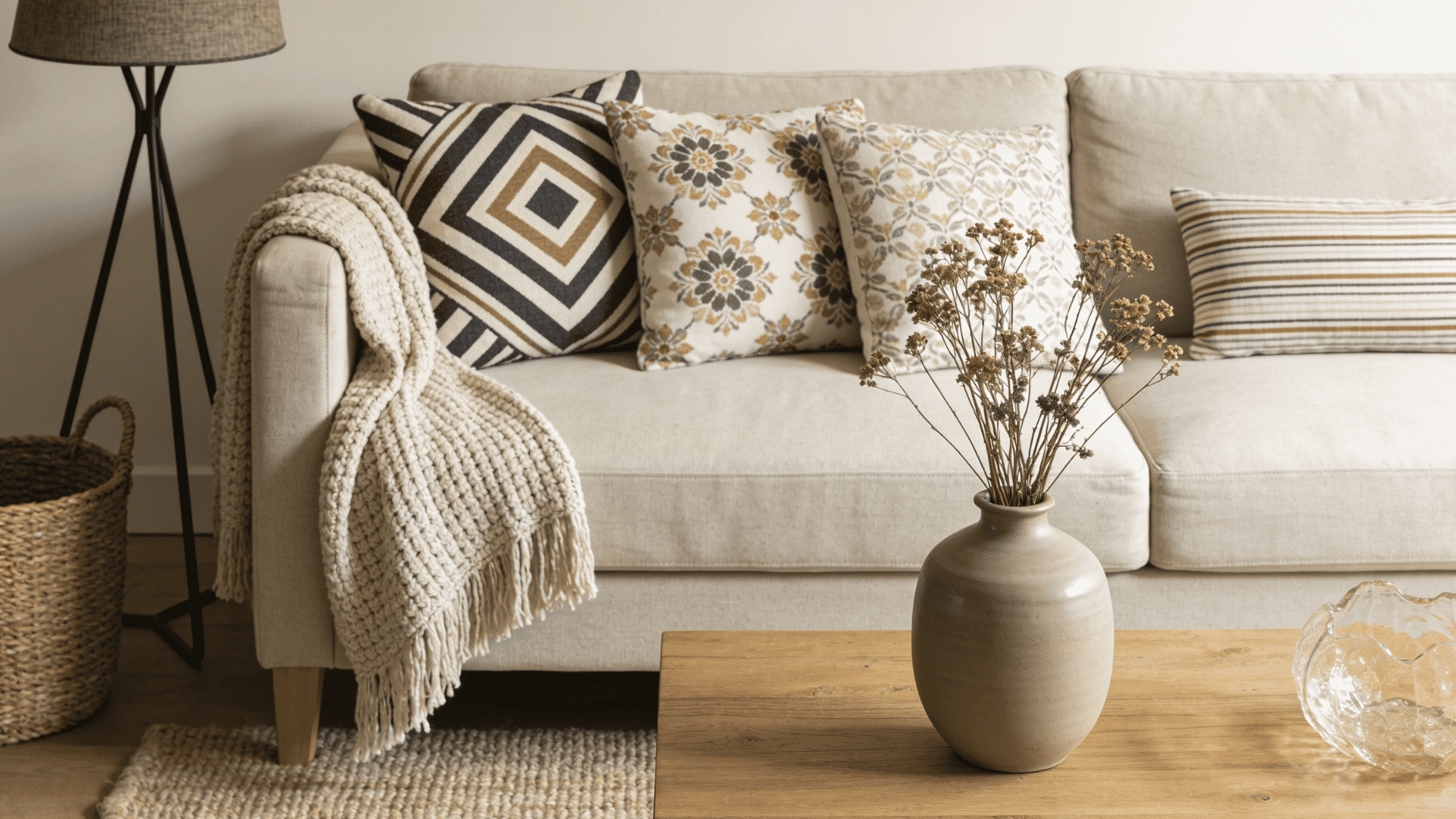
A room with only one type of surface can feel flat, even when the colors work well. Combining materials and textures adds depth without requiring more furniture.
- Mix soft and hard materials: Pair wood, metal, glass, or stone with upholstery, rugs, curtains, and cushions.
- Vary texture within the same color family: A cream room can include linen, wool, cotton, wood, and ceramic without looking plain.
- Change pattern scale: Pair a large floral or geometric print with a smaller stripe, check, or subtle texture.
- Leave quiet areas: Plain walls, solid upholstery, or simple flooring give patterned pieces room to stand out.
- Use samples together: Compare fabric, wood, paint, tile, and metal samples in the room before placing large orders.
Step 6: Choose Rugs, Curtains, and Decorative Pieces
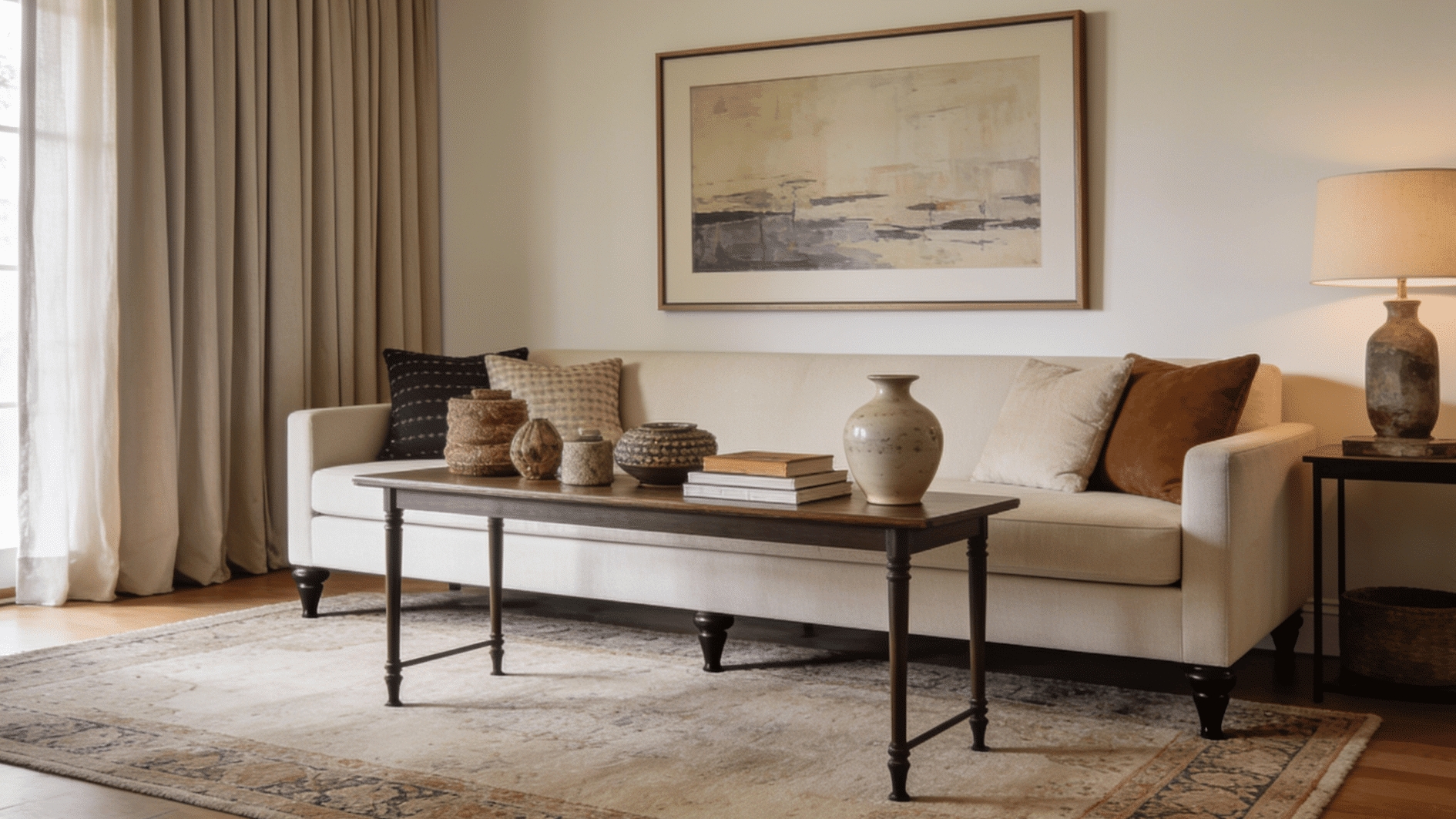
Rugs, curtains, and decorative objects complete the room, but they should support the design rather than cover every available inch.
- Choose the correct rug size: In a living room, at least the front legs of the main seating should sit on the rug. In a dining room, chairs should remain on the rug when pulled out.
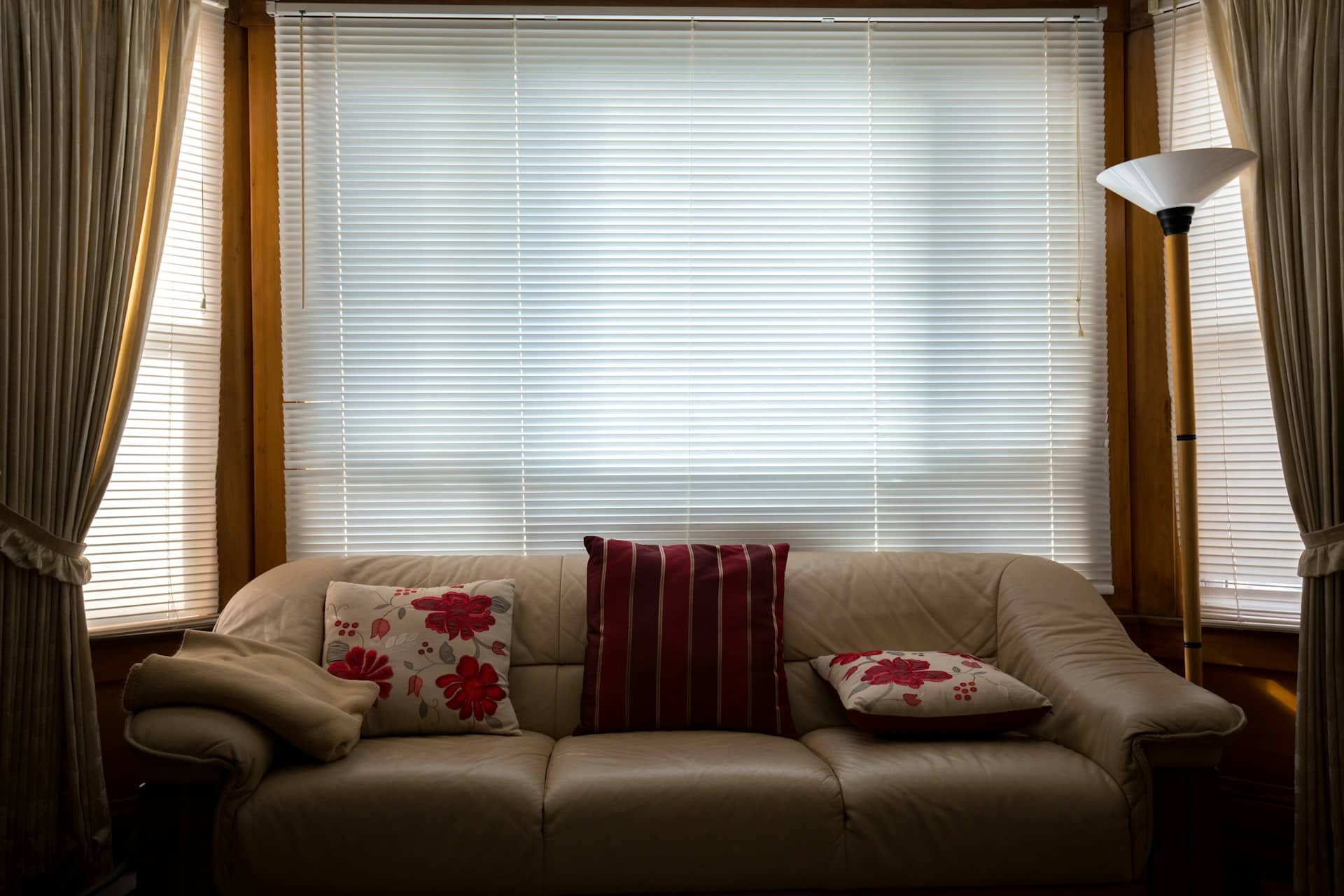
- Hang curtains above the window frame: Mounting the rod closer to the ceiling can make the room feel taller.
- Use enough curtain fabric: Panels should look full when closed rather than stretched flat across the window.
- Hang artwork at a comfortable viewing height: The center of a single artwork usually works well around eye level.
- Group decorative objects: Arrange small items in groups rather than spreading them evenly across every shelf.
- Leave some space: Not every surface needs an object. Space helps the pieces you choose look more purposeful.
Best Interior Design Books for Beginners
The best interior design books explain design ideas in a clear, practical way instead of relying only on polished room photos.
For beginners, useful books should cover color, scale, furniture placement, lighting, and room planning with examples that are easy to apply at home.
| Book | Main Focus | Best For |
|---|---|---|
| The Interior Design Handbook by Frida Ramstedt | Scale, balance, layout, and lighting | Learning core design rules |
| Styled by Emily Henderson | Decor, color, and room styling | Finishing a room |
| New York School of Interior Design: Home by Ellen S. Fisher | Space planning, furniture, and materials | Detailed beginner learning |
| The Furniture Handbook by Frida Ramstedt | Furniture size, placement, and quality | Choosing the right pieces |
|
The Color Scheme Bible by Anna Starmer |
Color combinations and palettes | Building a color scheme |
| Domino: The Book of Decorating by Dara Caponigro | Layouts, styling, and room ideas | Practical visual inspiration |
Common Interior Design Mistakes Beginners Should Avoid
Most beginner mistakes happen because purchases are made too quickly or without considering the full room. These problems are usually easy to prevent with measurements, samples, and a little patience.
- Buying furniture without measuring: Check the room, doorways, stairs, elevators, and hallways before ordering large items.
- Ignoring scale: Small accessories can disappear in a large room, while oversized furniture can block movement in a compact space.
- Selecting paint before fixed finishes: Compare paint with flooring, countertops, tiles, and furniture before making a final decision.
- Following trends too closely: Trendy colors and shapes can work in small doses, but expensive permanent items should suit your long-term preferences.
- Adding too many decorative pieces: More objects do not automatically make a room look complete. Edit shelves and surfaces regularly.
- Forgetting storage: Plan where daily items will go before adding decorative features.
- Designing every room separately: Repeat certain colors, materials, or shapes across connected spaces to create consistency.
Budget Tips for Beginner Interior Design
A limited budget can help you make smarter choices by keeping your focus on function, quality, and long-term use.
Start by setting a total room budget, then divide it among furniture, lighting, paint, textiles, and decor. Spend more on pieces used every day, such as sofas, beds, and dining tables, while saving on items that are easier to replace.
Reuse furniture you already own, shop secondhand for solid wood pieces, and compare the full cost, including delivery and installation.
Work in stages when needed, and always buy the correct size first to avoid expensive returns.
Conclusion
Learninginterior design for beginners starts with practical decisions rather than decorative shopping. Measure the room, decide how it should function, choose a clear color scheme, and arrange the largest furniture.
The most useful interior design basics involve balance, scale, lighting, movement, and consistency. Once these elements are in place, rugs, curtains, artwork, and accessories become easier to select.
Use planning tools, samples, and the best interior design books to understand why certain room choices succeed.
A well-designed room does not need to look expensive or professionally staged. It needs to make daily life easier, feel comfortable, and reflect the people who use it.
Frequently Asked Questions
Can Interior Design Be Self-Taught?
Yes, beginners can learn through practice, online courses, books, and by studying well-designed spaces.
Do Interior Designers Need Drawing Skills?
Basic sketching helps, but digital planning tools can handle most layout and visualization tasks.
How Long Does It Take to Design One Room?
A simple room may take a few weeks, while larger projects can take several months depending on orders and installation.
Is Interior Design Different From Home Staging?
Yes, interior design supports long-term living, while home staging prepares a property to appeal to potential buyers.