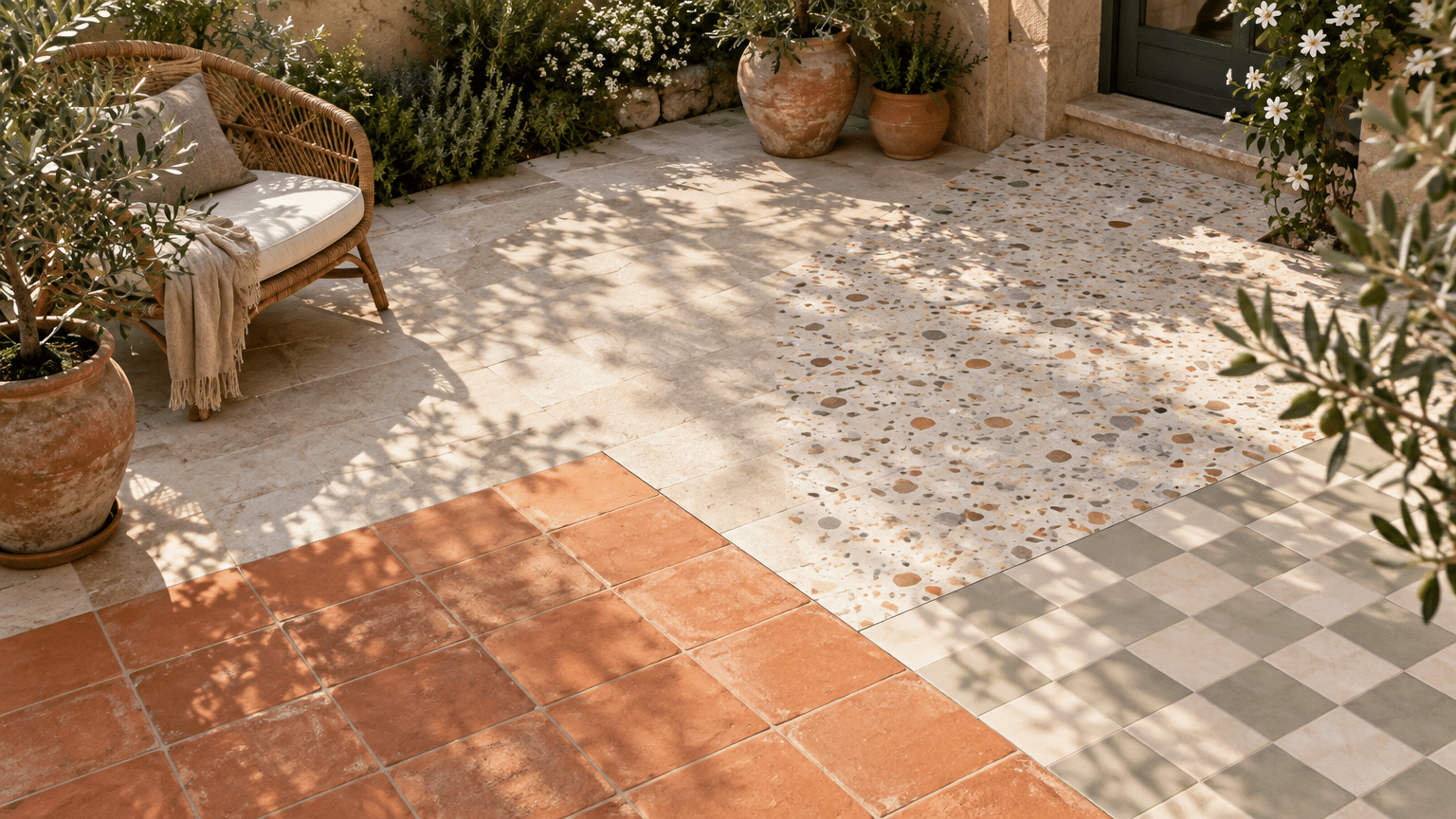

If you’ve ever looked at a building and thought, “How much energy does this thing waste?”, you’re already thinking like a sustainable architect. Sustainable architecture design is reshaping everything in a resource-limited world.
You don’t need to be a licensed architect to understand what green architecture is and why it’s becoming one of the most important conversations in design today.
This blog walks you through the core concepts, academic paths you can take, and the real debates happening inside the industry right now.
If you’re a student, a curious reader, or someone weighing a career shift, this is just what you need.
What is Green Architecture, and What Does It Actually Mean?
Green architecture is not just about adding a few solar panels to a rooftop. It’s a design philosophy that considers the full environmental impact of a building – from the materials used in construction to its performance over the next 50 years.
At its core, it’s about designing structures that consume fewer resources, produce less waste, and create healthier spaces for the people who use them.
The concept gained formal recognition in the early 1990s, but the thinking behind it is much older – rooted in how traditional builders across cultures instinctively responded to climate, material availability, and site conditions long before energy bills existed.
The Building Blocks of Sustainable Architecture
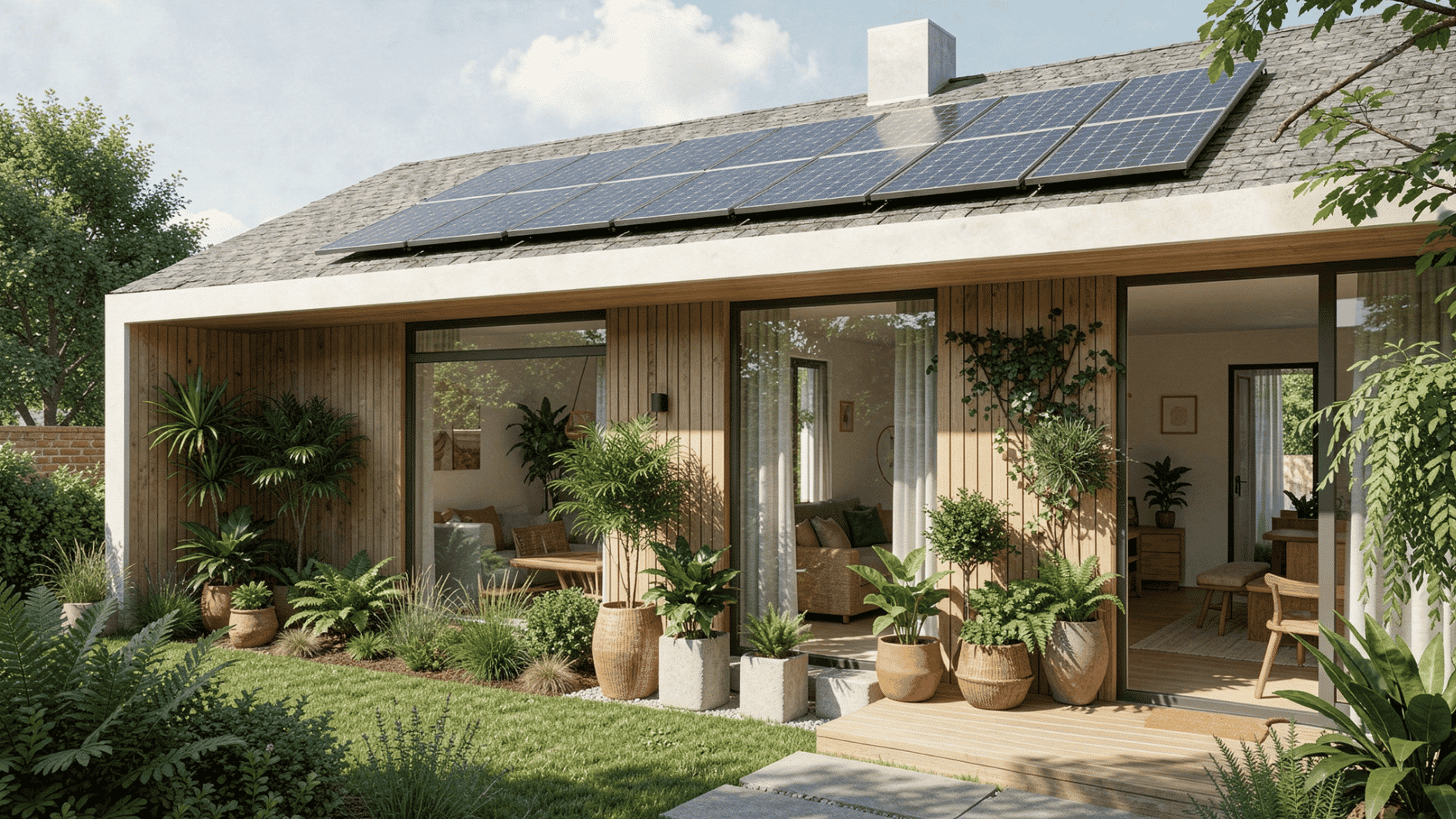
Sustainable architecture relies on key principles like energy efficiency, eco-friendly materials, water conservation, and healthy indoor spaces.
These building blocks form the foundation for environmentally responsible, future-ready designs.
Sustainable architecture design is built around one central idea: buildings should work with the environment, not against it. Every design decision is evaluated against its environmental cost and benefit.
- Energy Efficiency Through Passive Design: Uses a building’s form, orientation, and materials to naturally regulate temperature and daylight, reducing reliance on mechanical systems.
- Responsible Material Sourcing: Prioritizes low-emission materials, such as reclaimed timber, recycled steel, and compressed earth blocks, over high-emission options like conventional concrete.
- Water Conservation: Incorporates rainwater harvesting, greywater recycling, and low-flow fixtures to reduce municipal water demand and limit ecosystem runoff.
- Site Sensitivity: Treats the building site as a living system, preserving vegetation, managing on-site stormwater, and integrating green roofs or living walls where appropriate.
- Indoor Air Quality and Occupant Wellbeing: Limits VOC emissions from paints, adhesives, and flooring. The WELL Building Standard takes this further, formally measuring air quality, lighting, thermal comfort, and acoustics as sustainability criteria.
How Green Architecture Differs from Conventional Construction
When you look at green architecture versus standard construction, the gap is fundamental – not stylistic.
| Aspect | Conventional Construction | Green Architecture |
|---|---|---|
| Main Goal | Focuses on lower upfront cost and faster construction. | Focuses on long-term sustainability and efficiency. |
| Design Approach |
Sustainability is optional or added later. |
Sustainability is integrated from the start. |
| Materials Used | Heavy use of high-carbon materials like cement and steel. | Uses eco-friendly, low-carbon, and resource-efficient materials. |
| Long-Term Impact | Higher energy use, waste, and maintenance costs over time. | Lower operating costs, reduced emissions, and better environmental performance. |
| Certification Systems | Rarely measured against sustainability standards. | Evaluated through LEED, BREEAM, and GRIHA certifications. |
Career & Academic Program in Sustainable Architecture
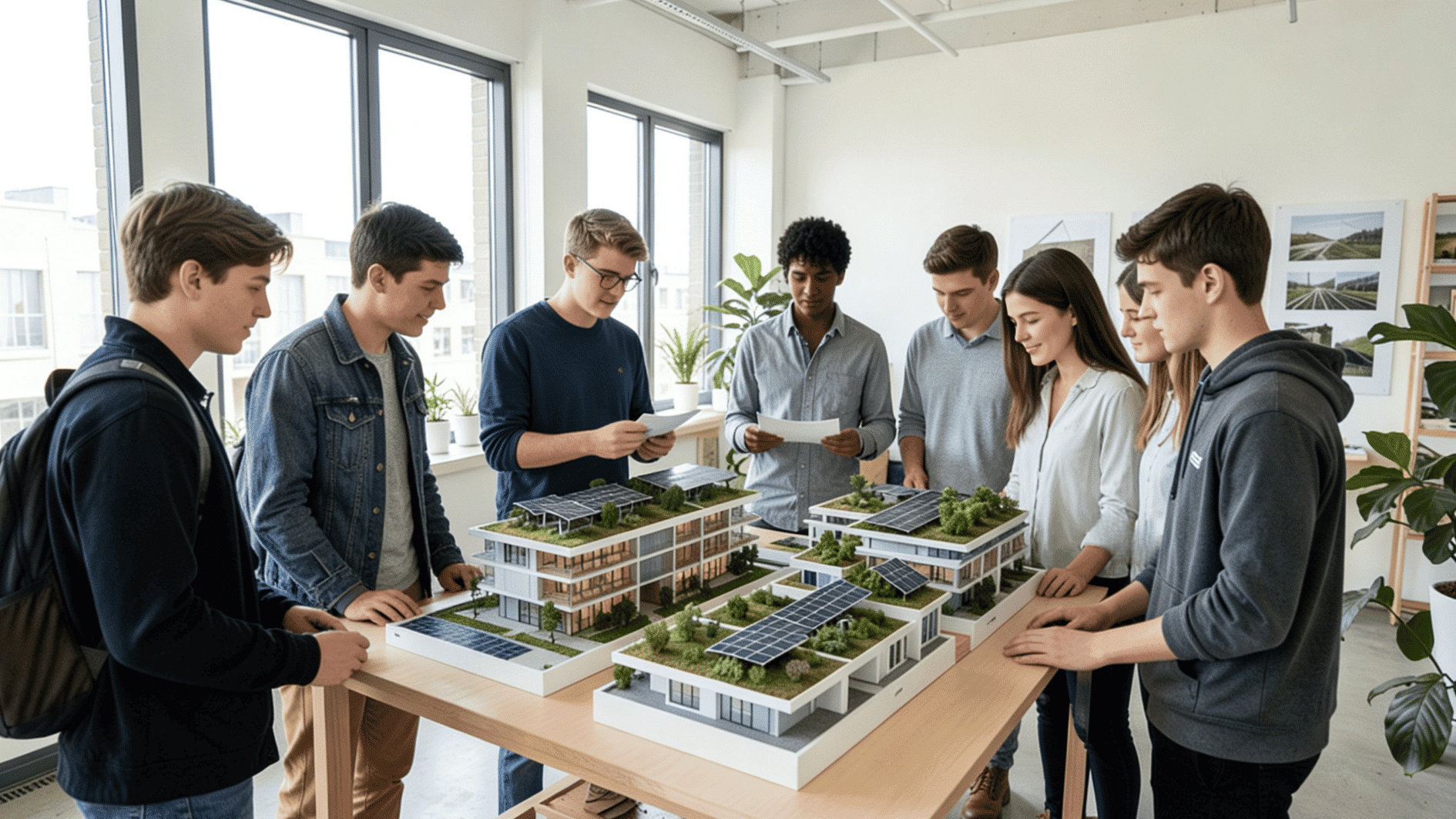
If you’ve been researching degrees or certifications in this field, you’re in good company.
Enrolment in sustainable design programs has grown steadily, driven by both student interest and real hiring demand from architecture firms, urban planning agencies, green building consultancies, and government bodies.
Undergraduate and Graduate Programs
If you’re starting from scratch, a NAAB-accredited B.Arch. is the professional degree required for licensure three strong options focused on sustainability:
- University of Oregon: Consistently ranked among the top sustainability-focused architecture programs in the country. Offers an Ecological Design Certificate alongside the B.Arch.
- Cal Poly San Luis Obispo: Hands-on, project-based curriculum. 1 in 5 practicing architects in California graduated from here.
- UT Austin: Runs a dedicated Center for Sustainable Development and a full-scale thermal testing lab. Their MS in Sustainable Design (MSSD) is STEM-designated.
Already have a bachelor’s degree? These graduate programs go deeper:
- Harvard GSD: MDes with an Ecologies concentration. Research-heavy, focused on building performance and climate adaptation.
- Carnegie Mellon: 2-year MSRSD (STEM-eligible). Covers computational design, lifecycle analysis, and building performance modeling.
- UC Berkeley: Strong on social equity and ecological design, with an interdisciplinary structure across architecture, planning, and landscape.
- Columbia GSAPP: Based in NYC, where Local Law 97 is actively reshaping what architects must deliver. Real-city context built in.
Certifications Worth Your Time
If a full degree isn’t practical, industry-recognized certifications offer a faster way to build credibility and gain specialized knowledge in sustainable architecture and green building practices.
These credentials are widely valued across the construction and design industry and can strengthen both your skills and career opportunities. The U.S. Green Building Council administers the most widely recognized of these.
- LEED Green Associate: Entry-level. 100 questions, $250 (or $200 for USGBC members). Can be taken remotely. The standard first step before pursuing LEED AP.
- LEED AP BD+C: Advanced credential for active project professionals. $450 for non-members. Requires an active LEED Green Associate credential first.
- PHIUS Certified Passive House Consultant (CPHC): The most technically rigorous U.S. certification. Covers building envelope, airtightness, and energy modeling at a standard beyond LEED.
- Coursera / edX: If you’re testing the waters, Coursera’s Sustainable Architecture courses (including offerings from the University of Michigan) give structured, certificate-bearing options on your schedule.
The Real Debates in Sustainable Architecture Today
This field has real unresolved problems – not just technical ones, but ethical and financial too. If you’re heading into sustainable architecture, these are the debates you’ll walk straight into.
Does Green Architecture Actually Deliver on Its Promises?
Honestly? Not always. Buildings certified as high-efficiency under LEED frequently consume more energy in actual use than their design models predicted – a phenomenon known as the energy performance gap.
A 2024 study in Frontiers in Built Environment found that top-tier LEED certification reduced embodied carbon by as little as 1.05% relative to the baseline.
The core problem: certification systems reward design intent rather than real-world results.
LEED v5 is attempting to address this with stronger requirements for whole-life carbon and verified performance data. Post-occupancy evaluation (POE) is also gaining ground as a required step.
But the gap is still real, and professionals who can actually measure and verify building performance are in high demand because of it.
The Cost Dilemma: Who Can Actually Afford Sustainable Design?
High-performance green buildings typically cost 5–15% more than conventional construction. That premium comes from specialized materials and consultants, energy modeling software, and certified construction processes.
The good news is that sustainable thinking doesn’t have to stop at the commercial scale.
Homeowners tackling a thoughtful kitchen renovation or a planned home addition can incorporate many of the same materials and efficiency choices – lower-VOC finishes, better insulation, reclaimed materials – without the institutional price tag.
The result is a market that mostly serves commercial developers and premium clients – while affordable housing, which makes up the bulk of new U.S. construction, largely operates outside these frameworks.
| Benefits Most | Gets Left Out |
|---|---|
| Commercial developers | Affordable housing projects |
| Institutional clients | Low-income communities |
| Premium residential projects | Most new urban construction |
Conclusion
Sustainable architecture design isn’t a perfect field – the performance gaps and cost barriers are real. But regulations are tightening, hiring demand is growing, and the industry is correcting course.
If pursuing a degree or starting with a LEED credential, you’re entering a field that directly shapes how the world builds – and consumes energy.
Understanding what green architecture is today puts you ahead of where the industry is heading tomorrow.
The most useful thing you can do right now is start learning the tools, follow the debates, and choose a program that builds real skills – not just credentials.
Frequently Asked Questions
What are the 4 pillars of sustainability?
The four pillars of sustainability are environmental, social, economic, and cultural sustainability.
Which country is No. 1 in sustainable development?
Finland ranks No.1 in sustainable development based on the 2025 SDG Index.
What is the greenest building in the world?
The Bullitt Center in Seattle is considered the world’s greenest commercial building due to its net-zero energy and water systems.