




Most of us only bother with the garden when the sun’s out. The furniture gets dragged out around May, the barbecue does overtime for a couple of months, and then everything gets stuffed back in the shed come October. But there’s no real reason your patio or deck has to go unused for half the year.
A few smart upgrades can turn it into a space you’ll actually use through autumn rain, cold winter nights and those weird spring days where it’s sunny one minute and chucking it down the next.
Start With What’s Overhead
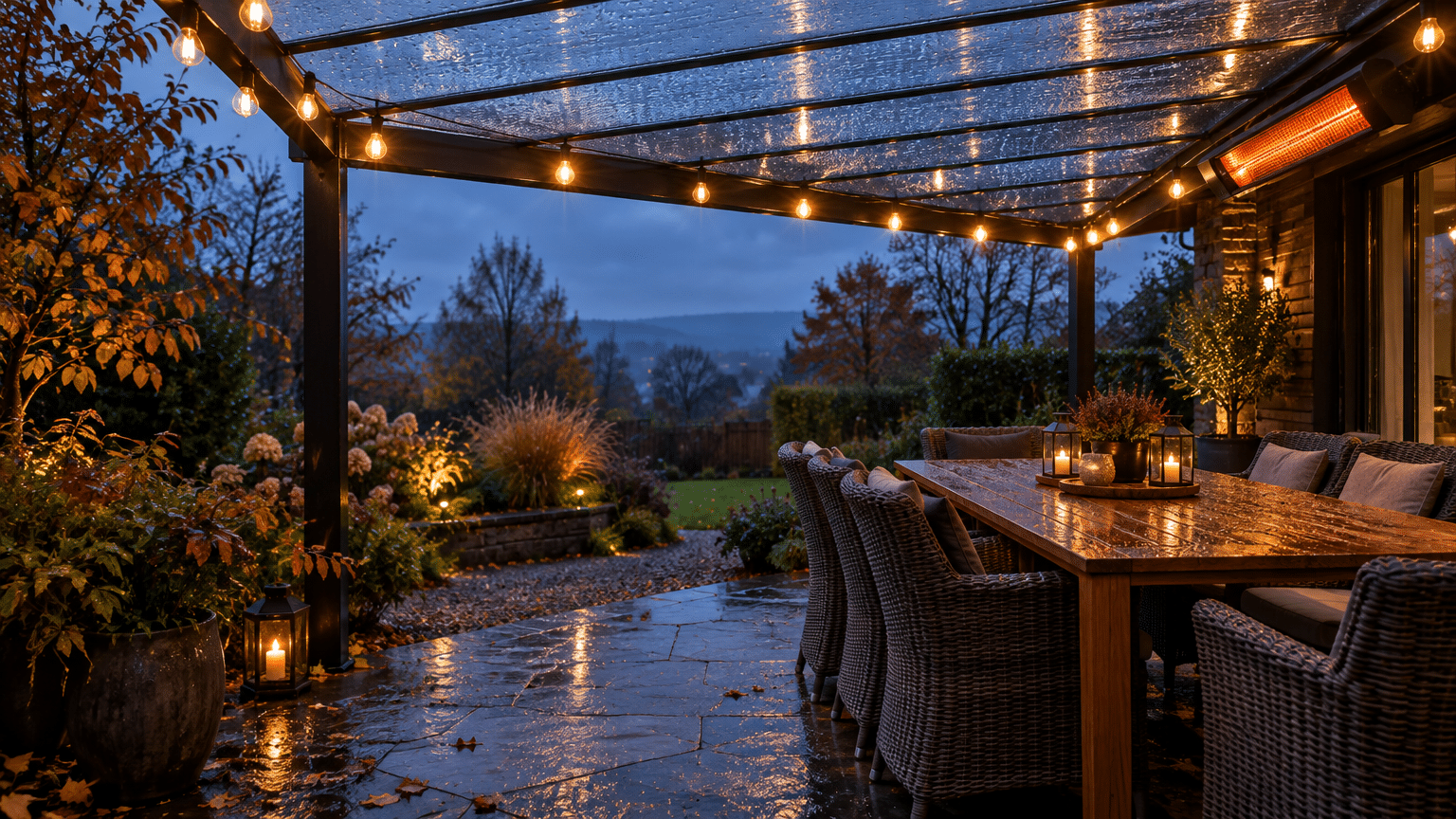
Rain kills outdoor living faster than anything else. Once summer’s done, most people just stop going outside because they don’t want to sit in the wet. You don’t need to build an extension or a conservatory to sort that out, though. A canopy, pergola cover or fixed roof panel over your main seating area will keep you dry and still let the space breathe.
What you’re after is a dry zone that doesn’t box you in. Retractable awnings can work if you like the flexibility, but they tend to flap about and struggle when the wind picks up. A fixed pergola with a solid cover on top gives you protection all year and also works as a frame for hanging lights or growing climbing plants up.
A lot of people want something that blocks rain but still lets daylight through. That comes down to what material you pick for the covering, and we’ll get into that further down.
Weatherproof Furniture That Actually Lasts
Cushioned furniture left out through a British winter will end up covered in mould with seats that never properly dry. If you want your outdoor space to be ready whenever you are, you’ll need stuff that can take a beating from the weather.
Hardwoods like teak and eucalyptus handle rain and frost well. Powder-coated aluminium won’t rust the way bare steel will, so that’s another good shout. For seating, quick-dry foam cushions are worth the investment, or you could go with all-weather wicker that doesn’t soak up water at all.
How to Keep Warm Without Heading Inside
When the temperature drops, heat is what decides whether you spend twenty minutes outside or a whole evening.
- Electric infrared heaters mount onto a wall or pergola frame and kick out warmth almost straight away. They’re quiet, there are no fumes, and they’re great for covered areas.
- Gas patio heaters pump out more heat and suit bigger, open spaces, but you’ll need decent ventilation around them.
- Fire pits look brilliant and give you a natural gathering point, but they’re not that practical for everyday use if your patio’s on the smaller side.
Tuck a couple of heaters into a sheltered corner, throw some blankets over the chairs, and you’ll comfortably sit outside on most autumn and winter evenings.
Overhead Cover Options That Let Light In
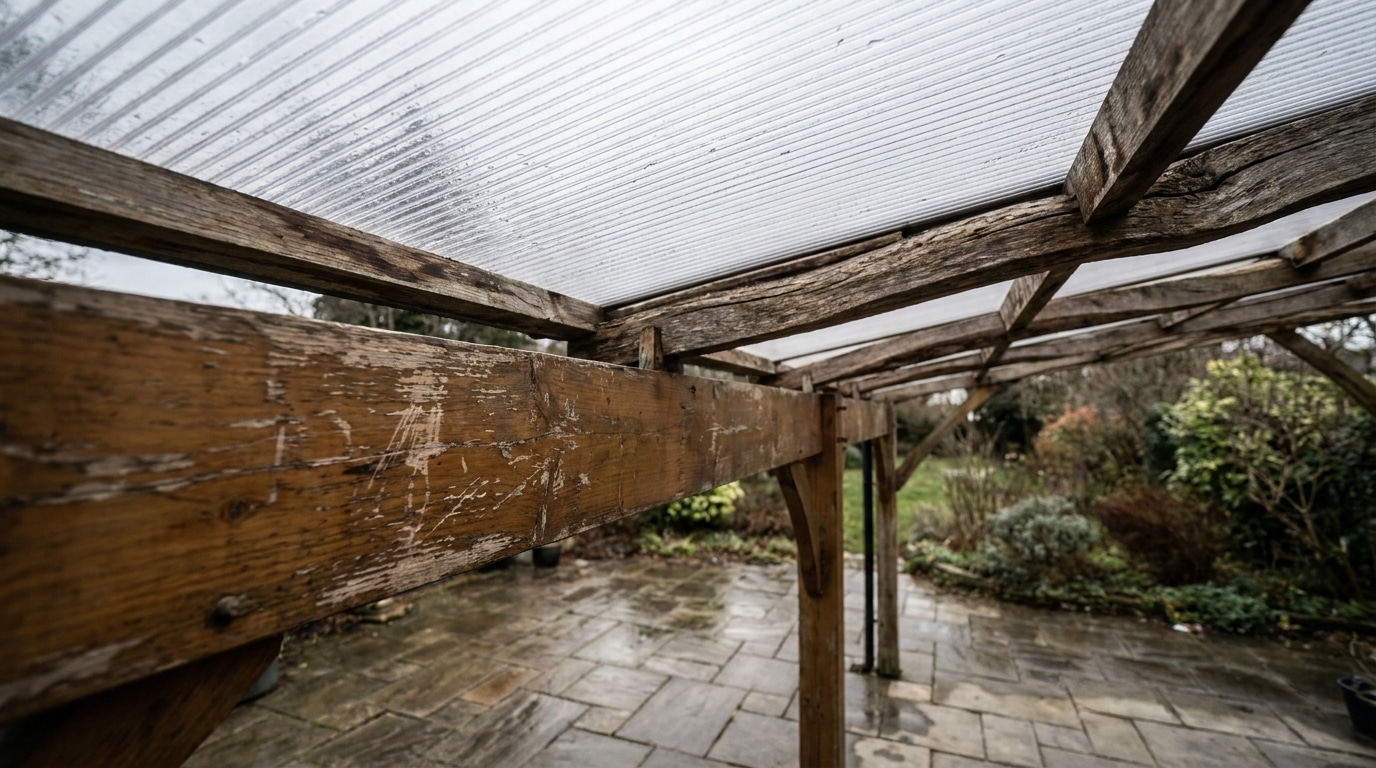
One of the biggest mistakes people make with covered outdoor areas is blocking out all the daylight. A solid timber or metal roof will keep you dry, obviously, but it can leave the space underneath feeling dark and cramped. That’s especially true during winter when there’s barely any natural light to begin with.
A clear polycarbonate panel is a lightweight, virtually unbreakable canopy material that lets sunlight flood through while keeping rain off completely. It’s a popular pick for pergola roofs, lean-to covers and patio canopies because you get full weather protection without turning the area into a cave. Polycarbonate is also a lot lighter than glass, so you can fit it onto an existing pergola or timber frame without having to beef up the structure.
If you want total transparency, clear panels will do the job. There are opal and tinted versions too, which can help if you’d rather have some shade during the hotter months.
Set Up a Covered Dining Area
Eating outside is one of the best things about having a garden, and it’s always the first thing people give up when the weather turns. A dedicated covered dining spot, even a small one, will add months to your season. Stick a table and chairs under your covered area, hang an overhead heater above it, and you’ve got somewhere to eat from early spring right through to late autumn. String some festoon bulbs across the cover too, because they’ll make the whole thing feel warm and inviting on dark, drizzly evenings.
A Year-Round Space Starts With Small Wins
You don’t need to tear up the garden and start from scratch to make your outdoor space work all year. A dry covering overhead, furniture that won’t fall apart in the rain, a decent heat source and a bit of wind shelter will get you most of the way there.
Think of it like an extra room and put the same thought into it that you’d give any other part of your home. Once you do, you’ll kick yourself for ever packing it all away in October.