

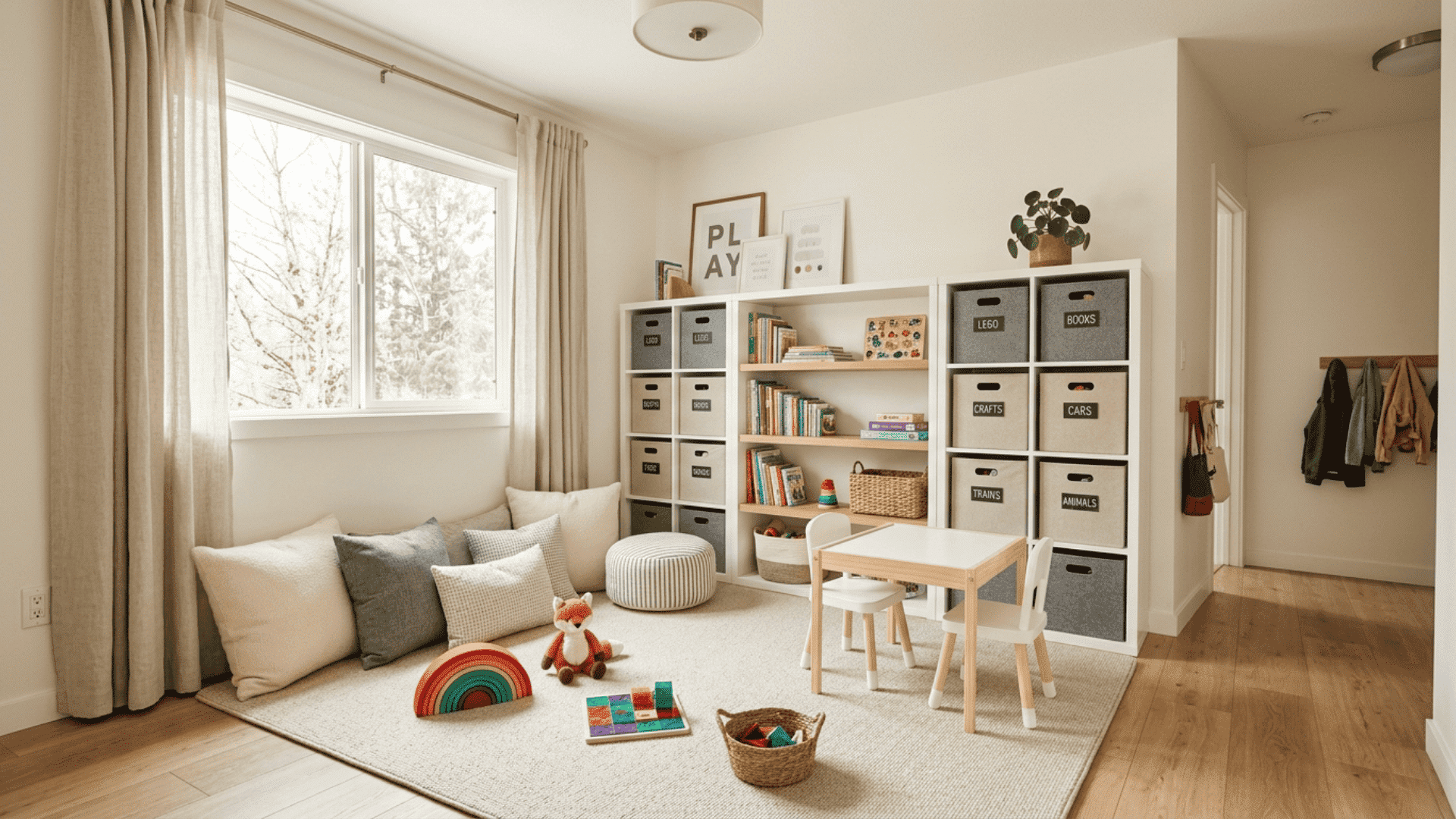
Most kids don’t need a huge room to have fun. They need a space that actually works for them. But when the room is small, parents often feel stuck trying to fit in toys, storage, and enough floor space for play.
That’s where smart, small playroom ideas come in. With the right layout, a few storage tricks, and some simple design choices, even the most compact space can work really well.
This blog covers practical ideas that help turn a tight room into a spot kids genuinely love spending time in.
What Matters Most in a Small Playroom?
A small playroom does not need to be big to work well for kids. What it needs is a clear layout, enough storage, and room actually to move around.
Parents who focus on these three things tend to get the best results from a compact space. It comes down to choosing furniture and storage that serve multiple purposes.
Small playroom ideas that hold up over time are the ones built around how kids naturally play.
That means easy access to toys, a defined spot for activities, and enough floor space to sit, build, or spread out comfortably.
Keeping things simple and organized goes a long way. A tidy, well-planned room feels bigger than it is and makes daily use a lot easier for both kids and parents.
Small Playroom Ideas that Maximize Space
These small playroom ideas focus on storage, layout, and design choices that actually fit compact spaces. Each one keeps the area neat while making it fun and usable for kids.
1. Use Vertical Storage Shelves
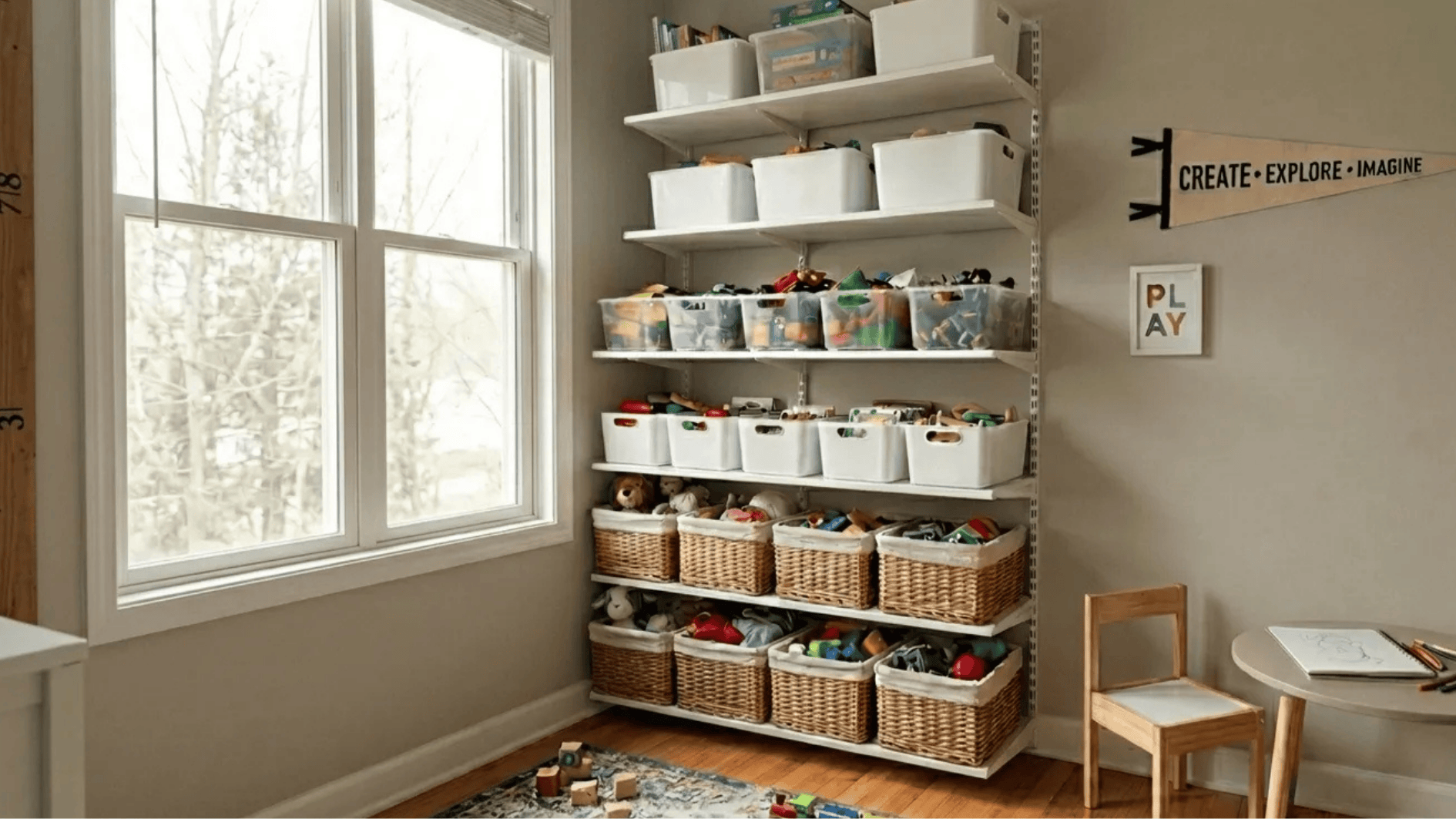
When floor space is limited, going up is one of the smartest moves a parent can make. Vertical shelves use wall height instead of taking up valuable ground area.
Tall shelving units work well along a single wall, keeping the floor open for play. Adding baskets or bins on each shelf helps sort items by type so kids can find what they need easily.
2. Add Wall-Mounted Storage Bins
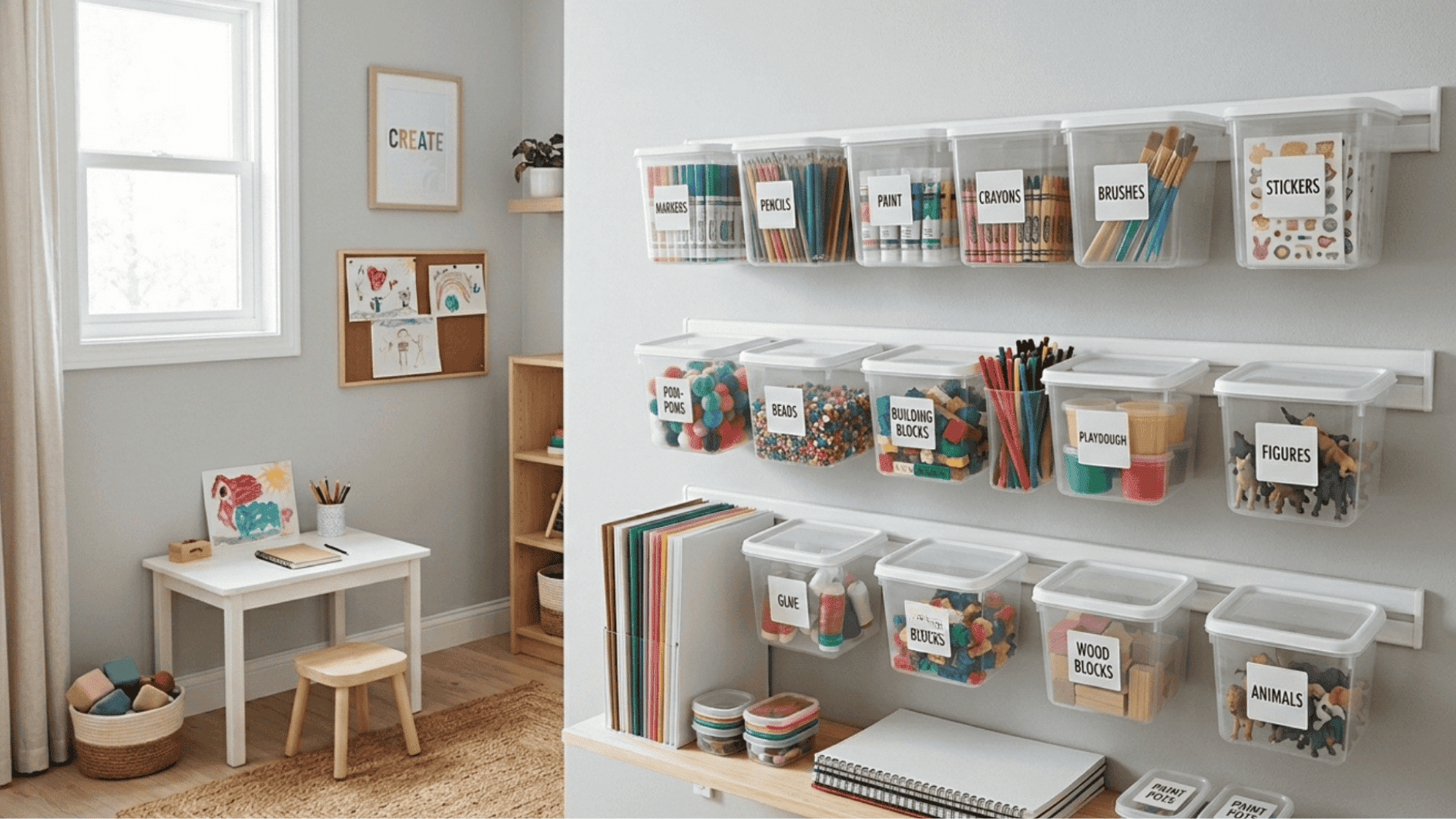
Wall-mounted bins are a practical solution for compact playroom setups. They keep frequently used toys off the floor and within a child’s reach.
These bins work great for storing art supplies, small figures, or craft materials. Since they are fixed to the wall, they free up shelf and floor space for other things.
3. Choose Foldable Furniture
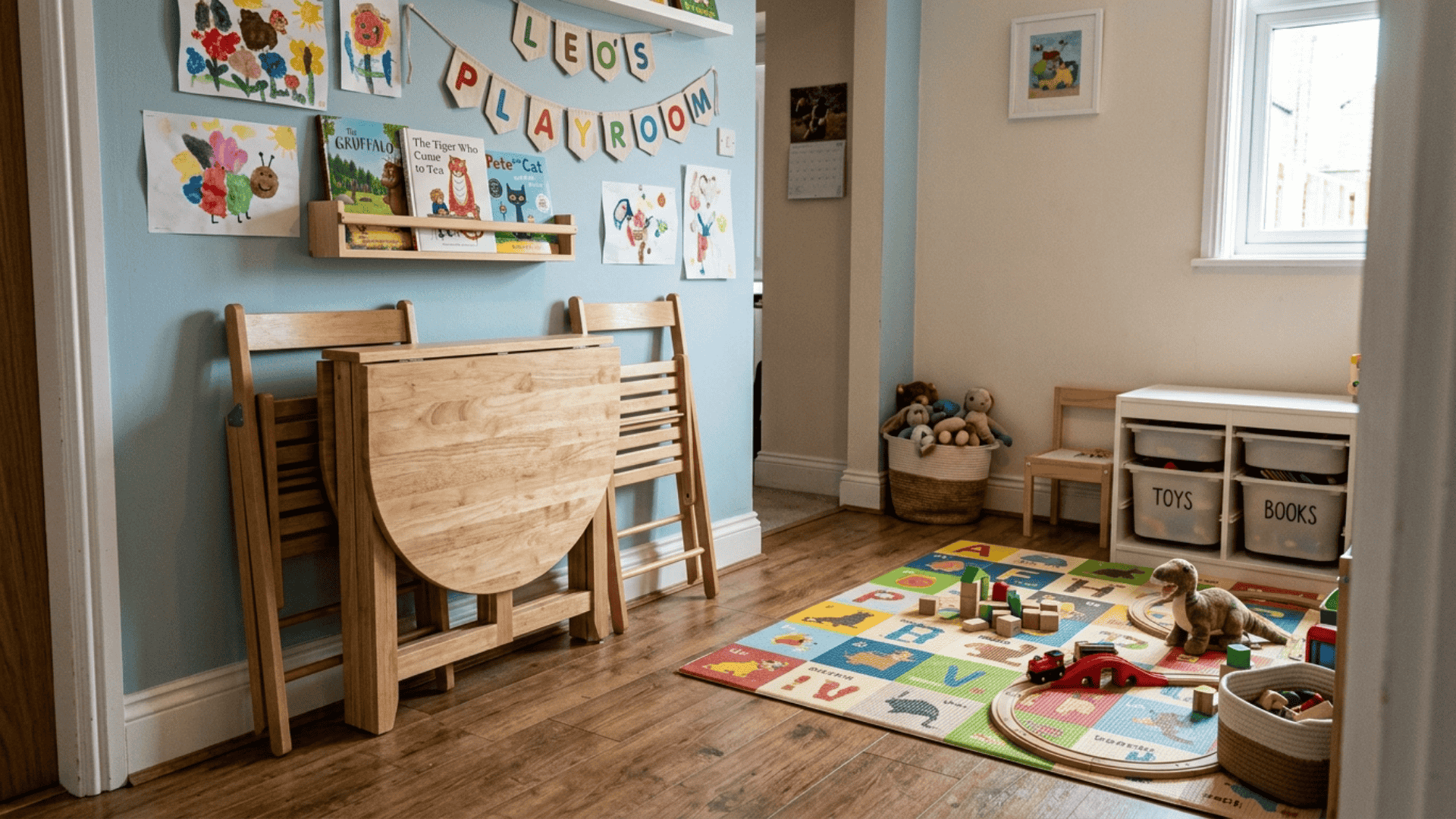
Foldable furniture is one of the best investments for a compact playroom. It can be set up when needed and tucked away when kids want open floor space.
Foldable tables or chairs take up very little room when not in use. This makes the space flexible enough to handle different activities throughout the day.
Small foldable pieces also make it easier to reorganize the room as kids grow. The layout can change without needing to buy new furniture every time.
4. Create a Corner Play Zone
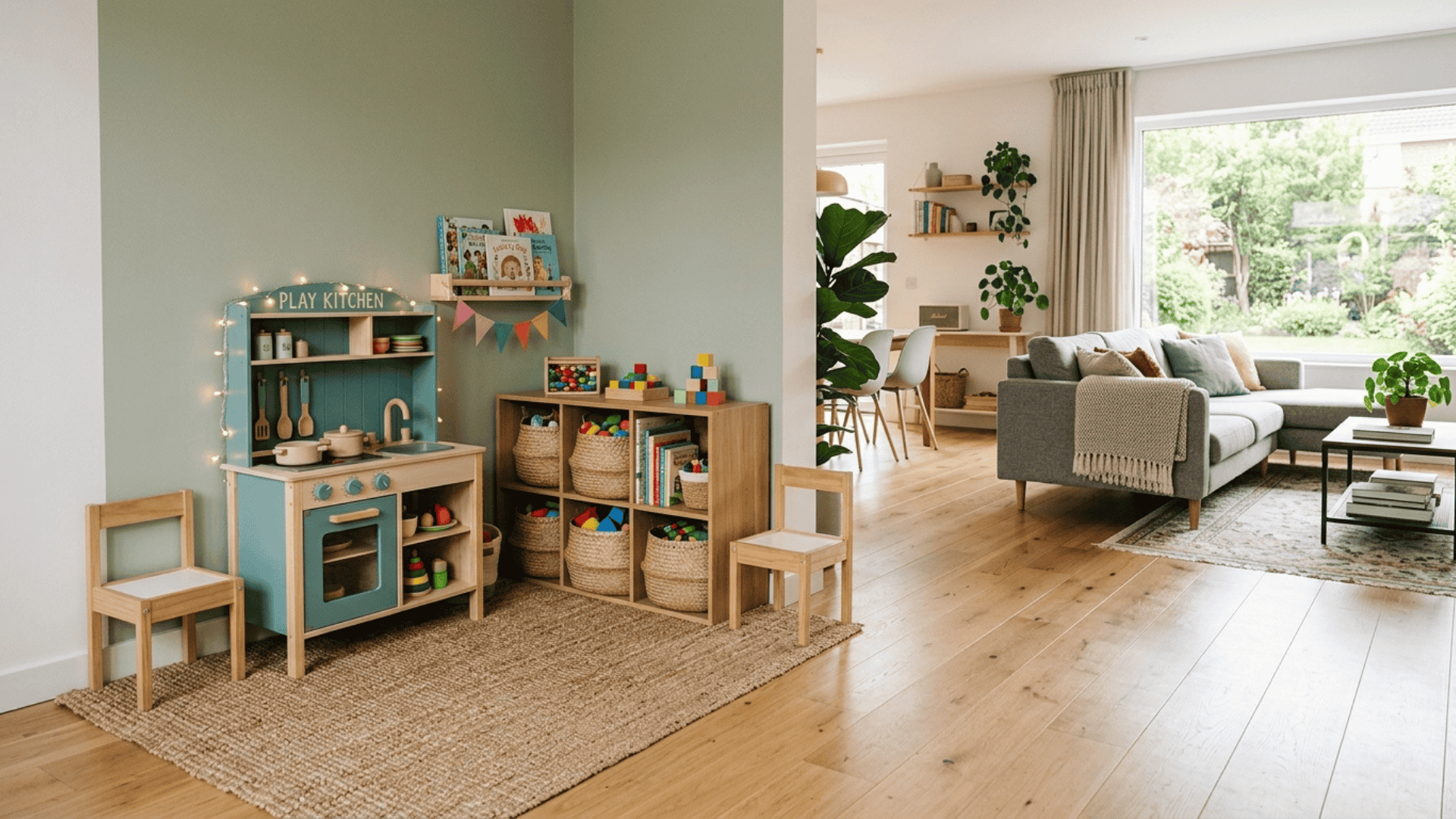
Corners are often the most ignored spots in a small playroom’s layout. Using them smartly can add a whole activity area without taking up the center of the room.
A corner setup can be used for different activities like pretend play or building, a small play kitchen, or a building zone. It keeps one activity contained in its own area, so the rest of the room stays open.
5. Use Under-Bench Storage
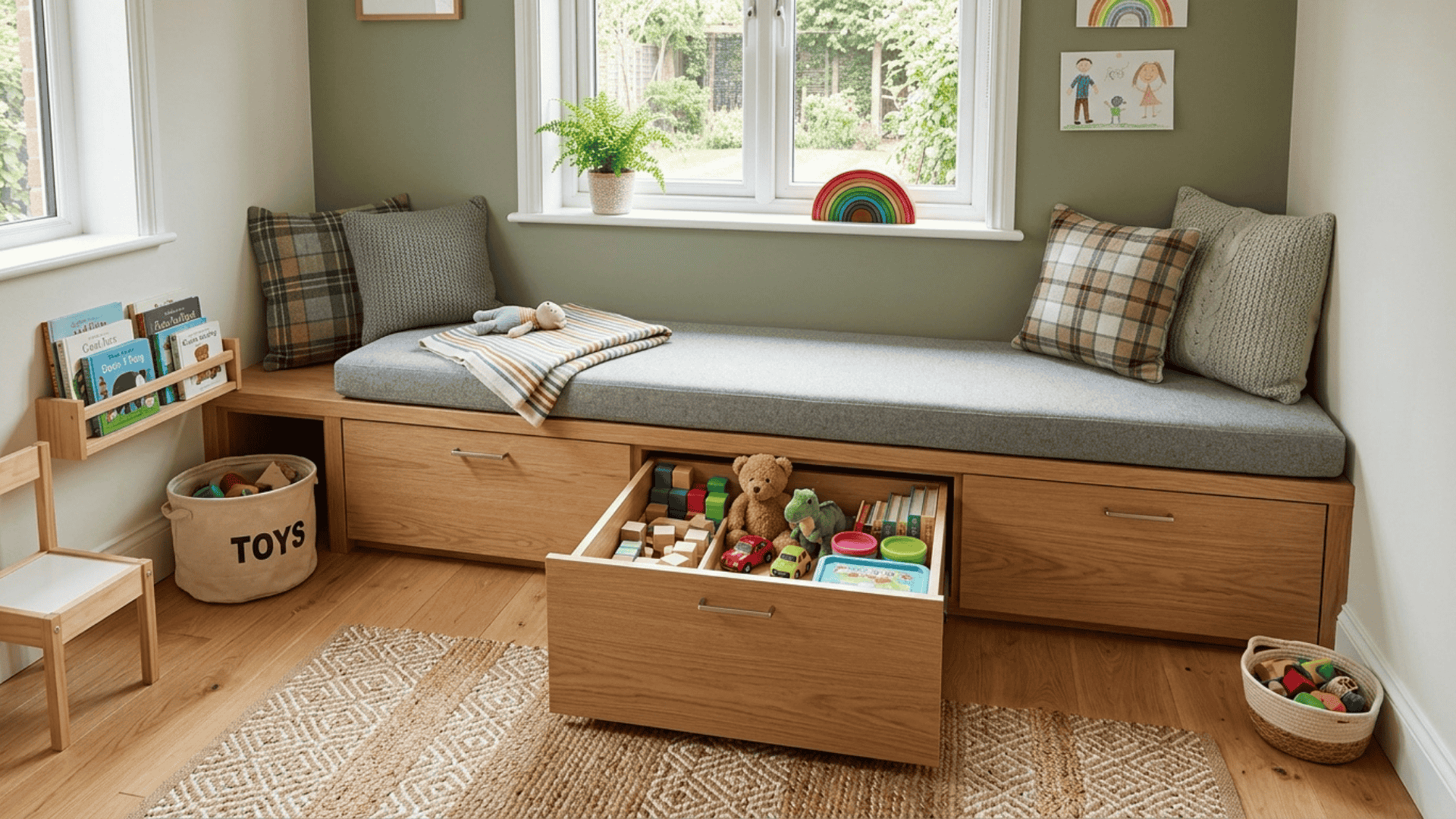
A bench with storage underneath is one of the most space-efficient pieces of furniture a playroom can have. It gives kids a place to sit while hiding toys inside.
Pull-out drawers or lift-up compartments built into a bench keep bulky items out of sight. This helps reduce visible clutter without limiting storage, without reducing the available storage
6. Install Floating Bookshelves
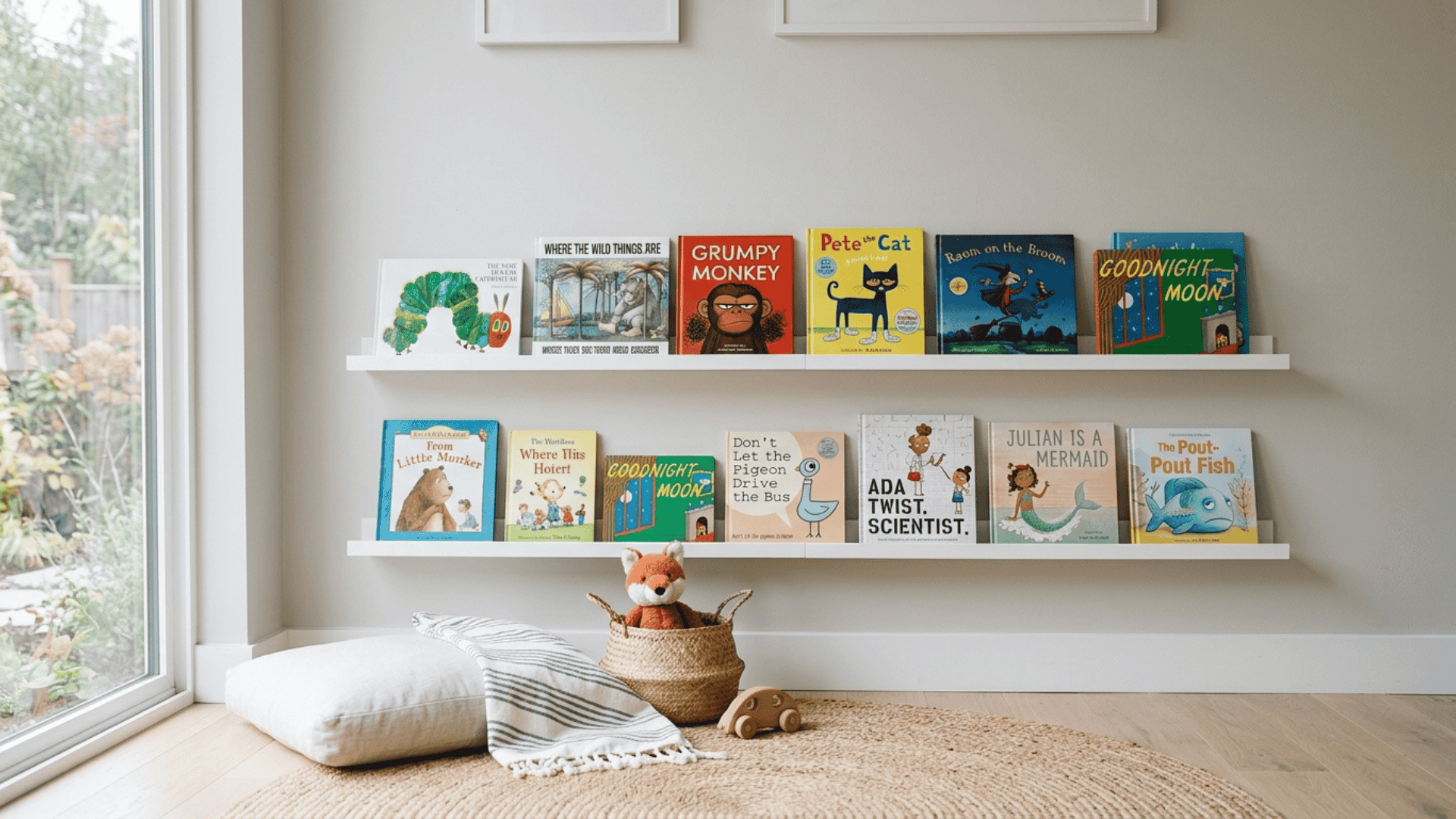
Floating bookshelves are a clean, simple way to store books without taking up floor space. They sit flush against the wall and keep reading materials easily accessible for kids.
These shelves are ideal for compact layouts with limited floor space. because they can be installed at any height. A lower placement lets younger kids pick their own books independently.
7. Add Multi-Use Storage Ottomans
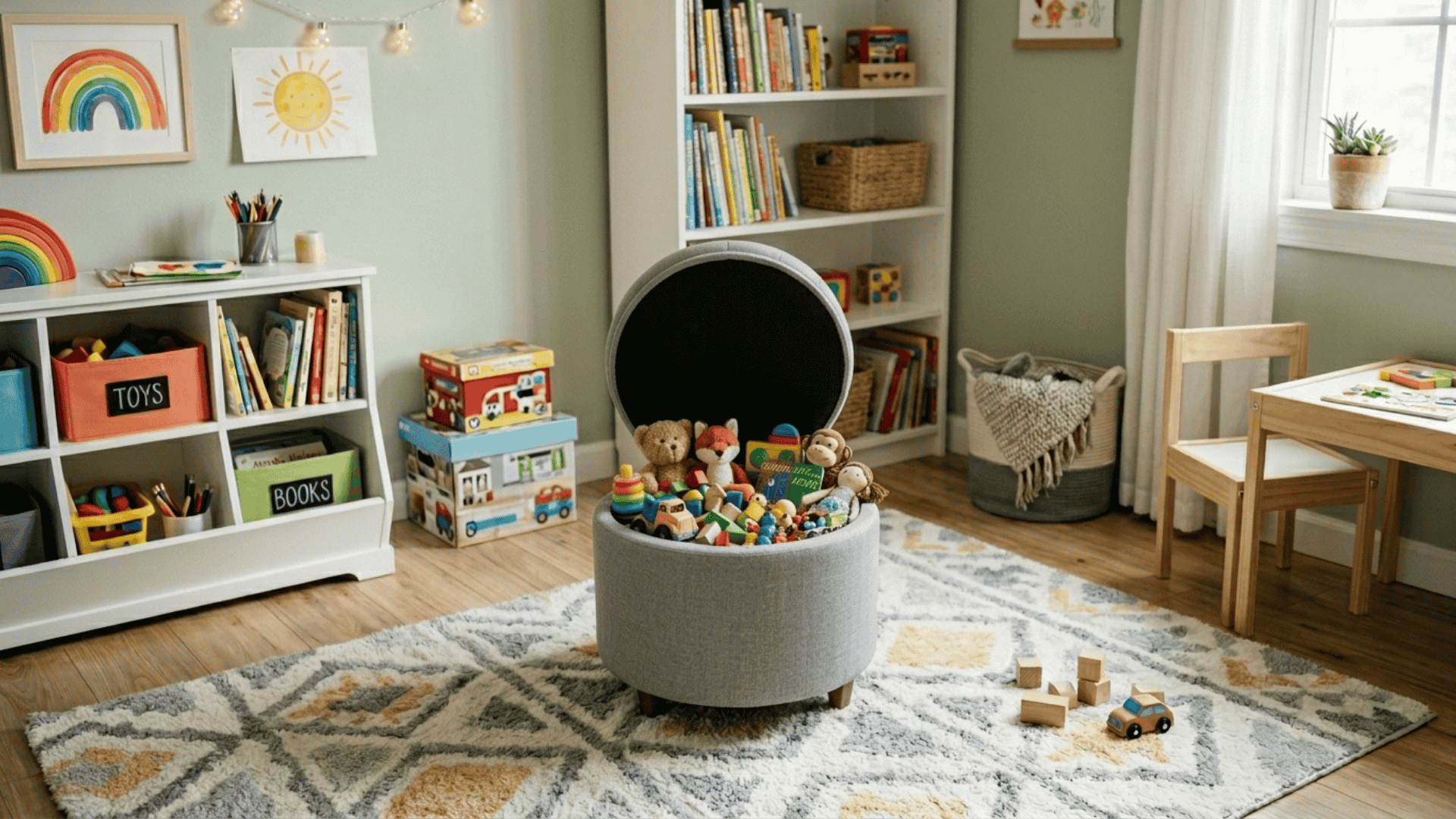
A storage ottoman does two jobs at once: it provides kids with a soft surface to sit on and hides toys. This makes it a smart pick for rooms where every piece of furniture needs to earn its spot.
Ottomans come in many sizes, so finding one that fits a compact space is not difficult. They also work as a footrest or a small table when needed.
Lightweight ottomans are easy for kids to move around on their own. This gives the room more flexibility depending on the activity that day.
8. Use Clear and Labeled Storage Boxes
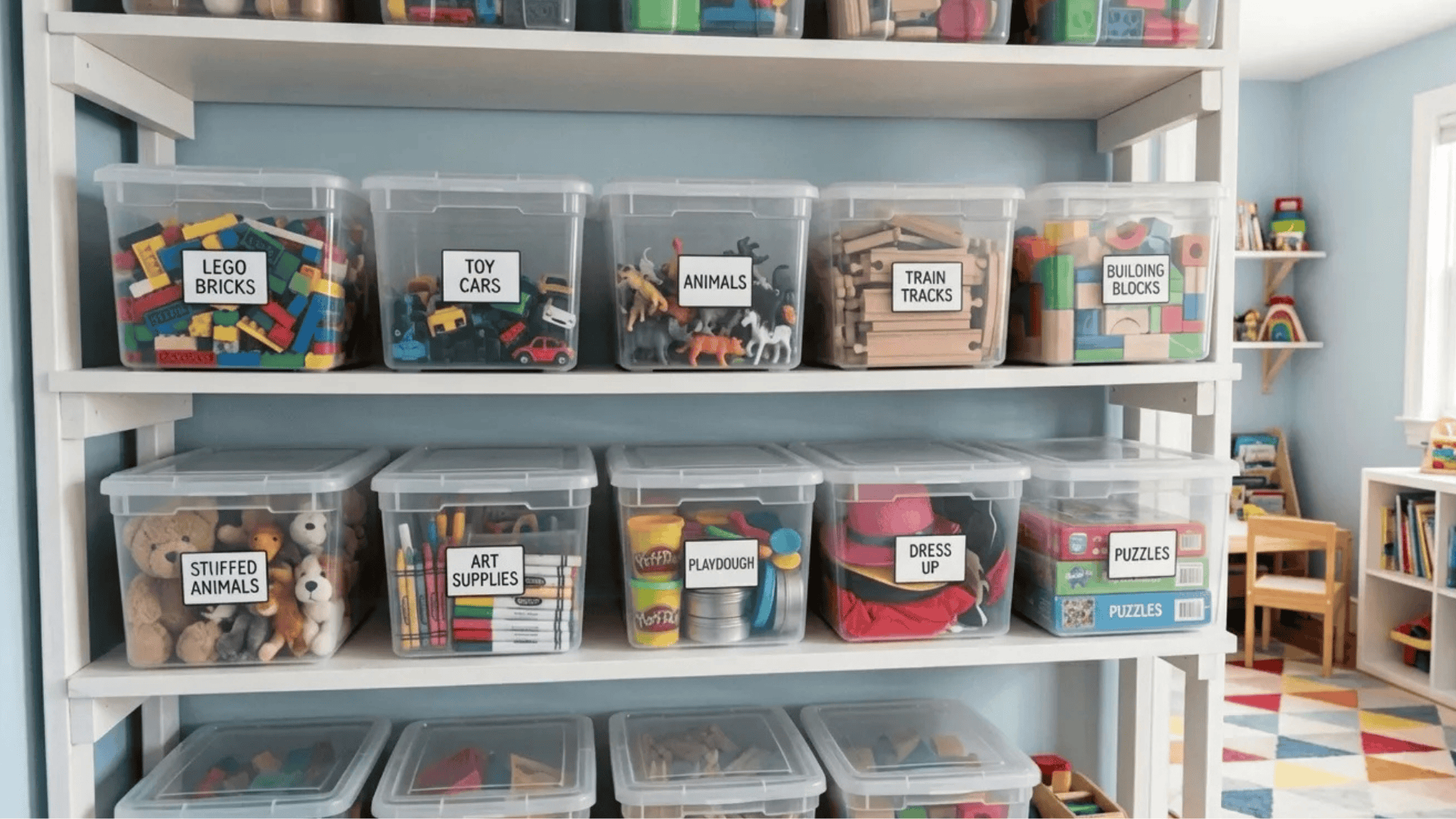
Clear storage boxes are one of the most useful small playroom ideas for keeping things organized. Kids can see exactly what is inside without having to pull everything out to search.
Adding labels to each box makes cleanup faster and more independent for children. It teaches them where things belong and helps them build a habit of putting items back after use.
9. Create a Reading Nook in A Small Corner
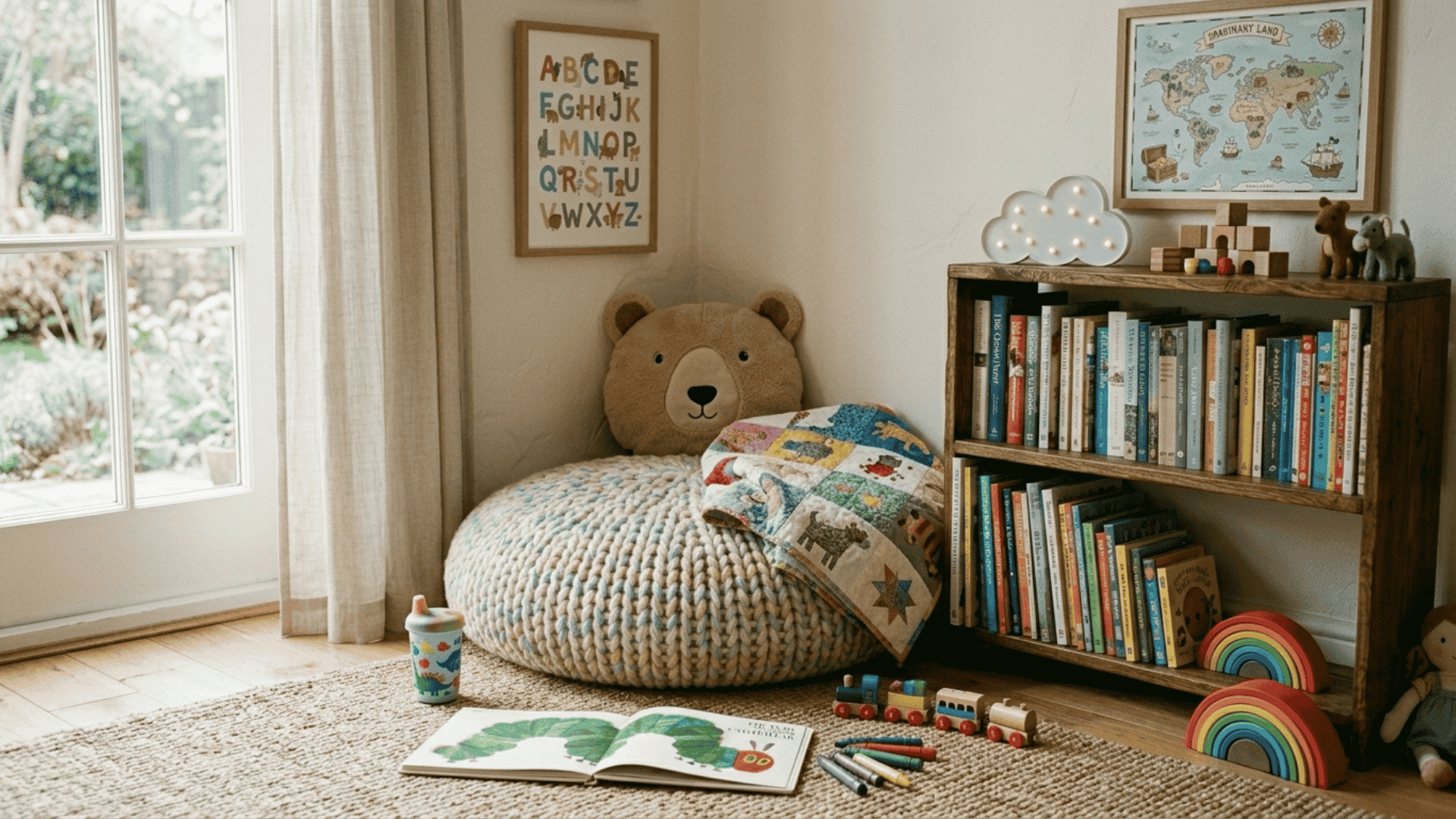
A reading nook does not need much space to feel cozy and functional. A small corner with a low shelf, a soft mat, and a cushion is all it takes to set one up.
This kind of setup gives kids a quiet spot away from the main play area. It adds variety to the room without taking up a large footprint.
Keeping the nook simple and clutter-free makes it more inviting for children. A small basket for books nearby keeps everything within easy reach.
10. Add a Pegboard for Easy Organization
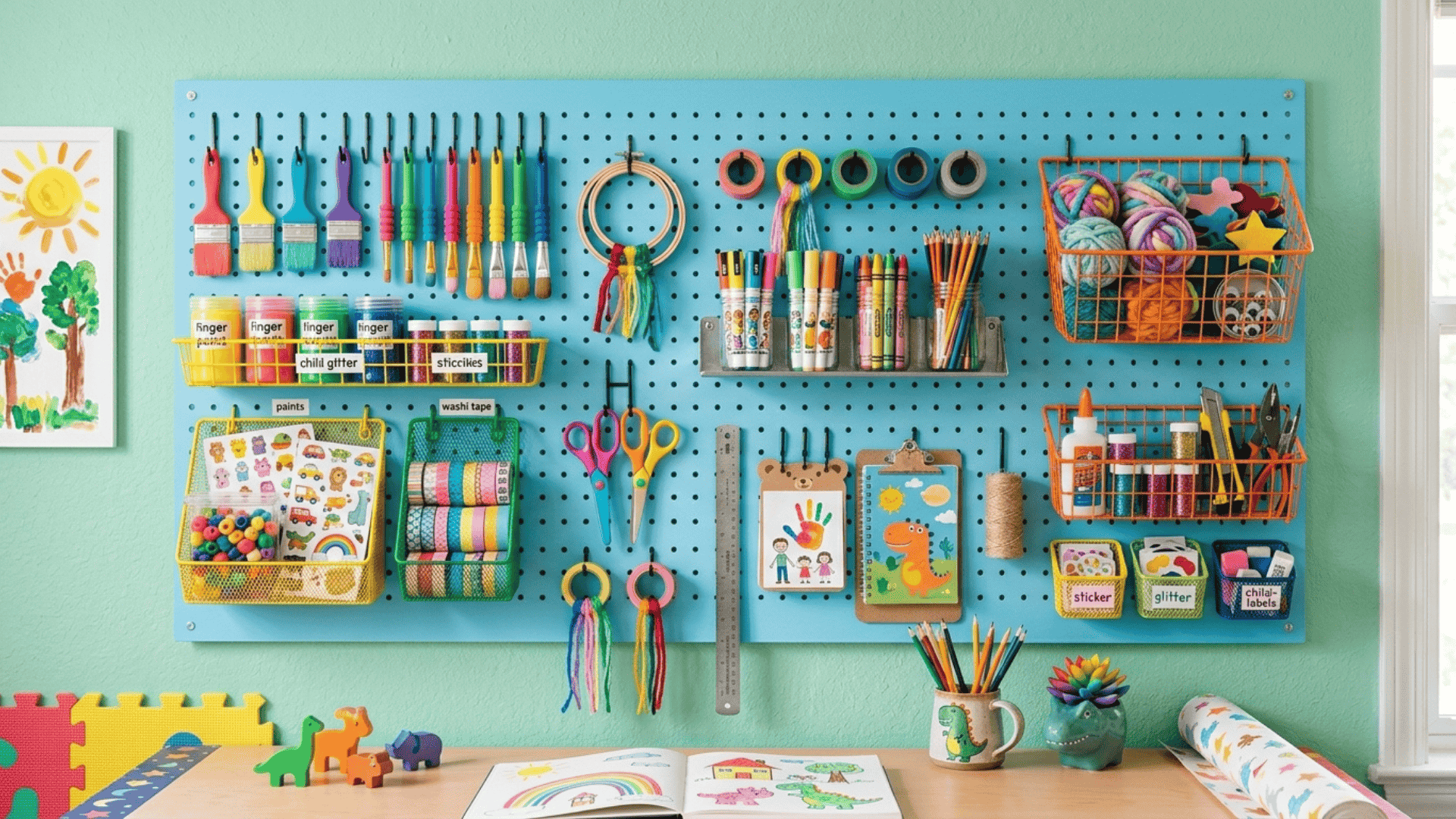
A pegboard mounted on the wall is one of the most flexible storage options for a compact playroom. Hooks and small baskets can be rearranged anytime to fit whatever needs storing.
It works especially well for art supplies, small bags, or dress-up accessories. Everything stays visible and within reach, so kids can grab what they need without making a mess.
11. Use Stackable Storage Units
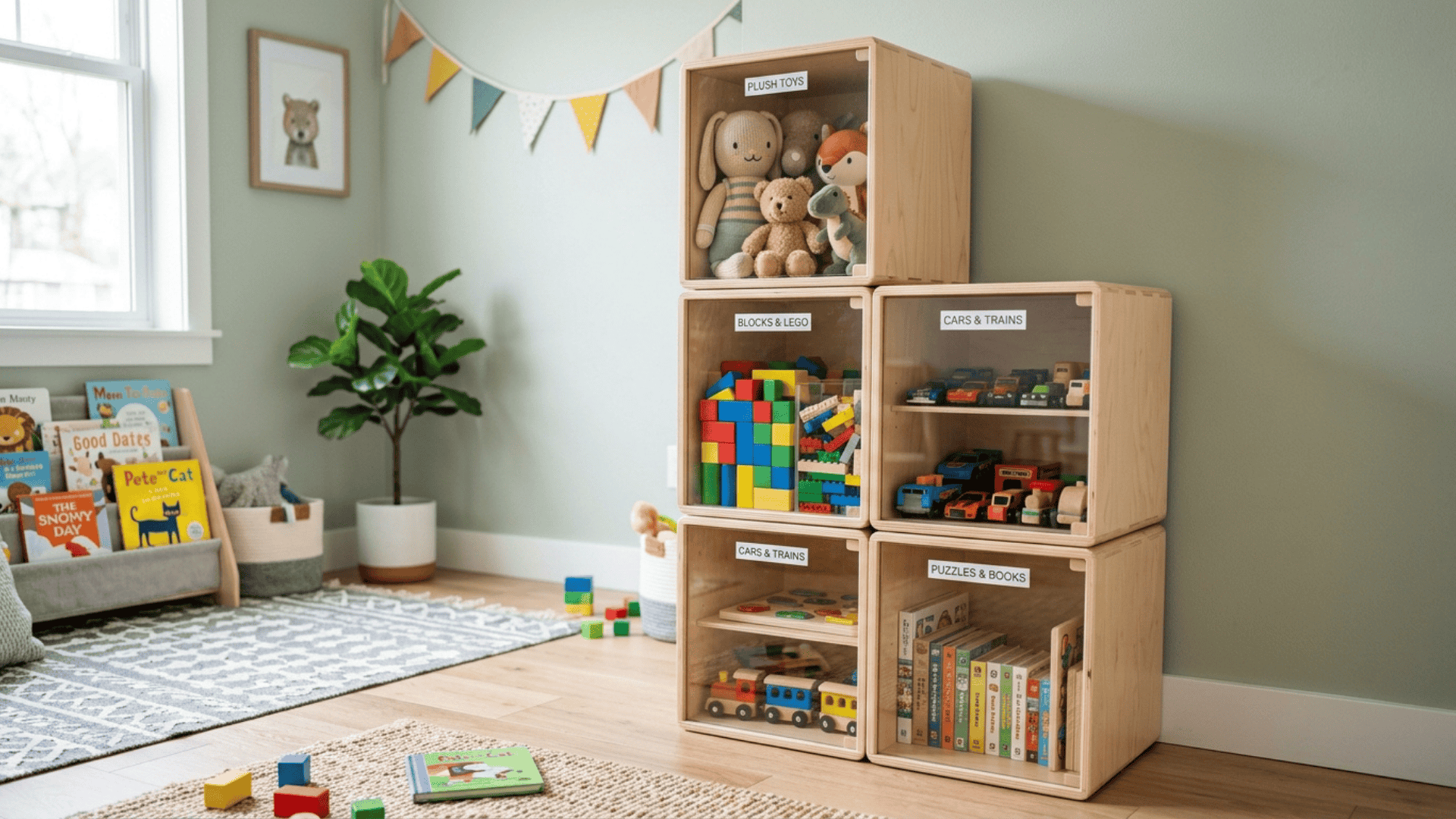
Stackable units offer flexible storage that can be rearranged or expanded as needs change without taking up more floor space. They are easy to rearrange and work well in small playroom setups of any shape.
Each unit can hold a different category of toys or supplies. This makes sorting simple and keeps the room looking neat even on busy days.
Choosing stackable units in the same color or finish keeps the room looking consistent. It avoids the visual clutter that comes from mixing too many different storage styles.
12. Rotate Toys to Reduce Clutter
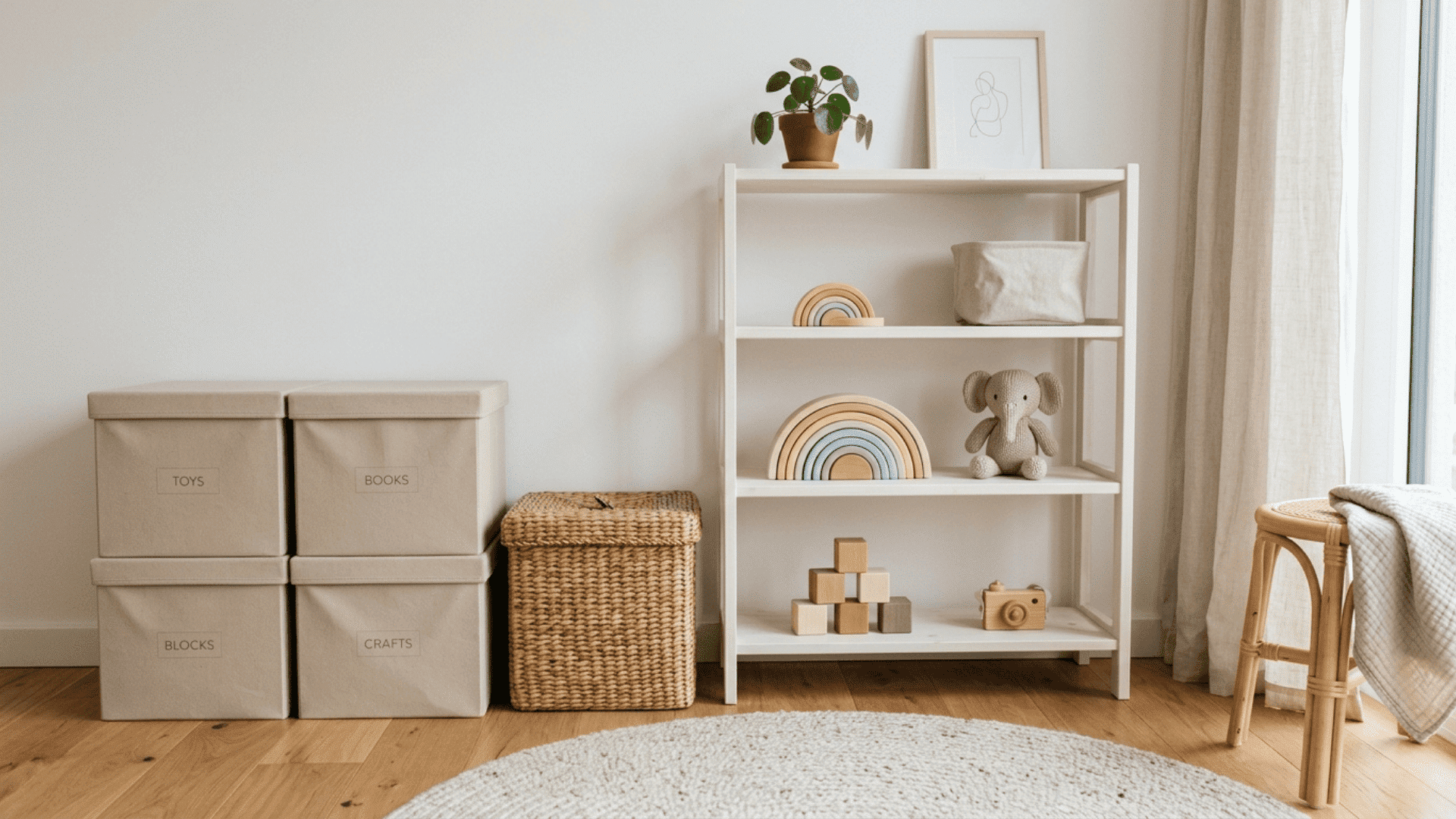
Keeping every toy out at once is one of the fastest ways to make a small room feel overwhelming. Rotating toys means only a portion of them are available at any given time.
This approach keeps kids more engaged with what is out since things feel fresh when reintroduced. It also makes the room significantly easier to tidy up each day.
13. Add a Small Activity Table with Storage
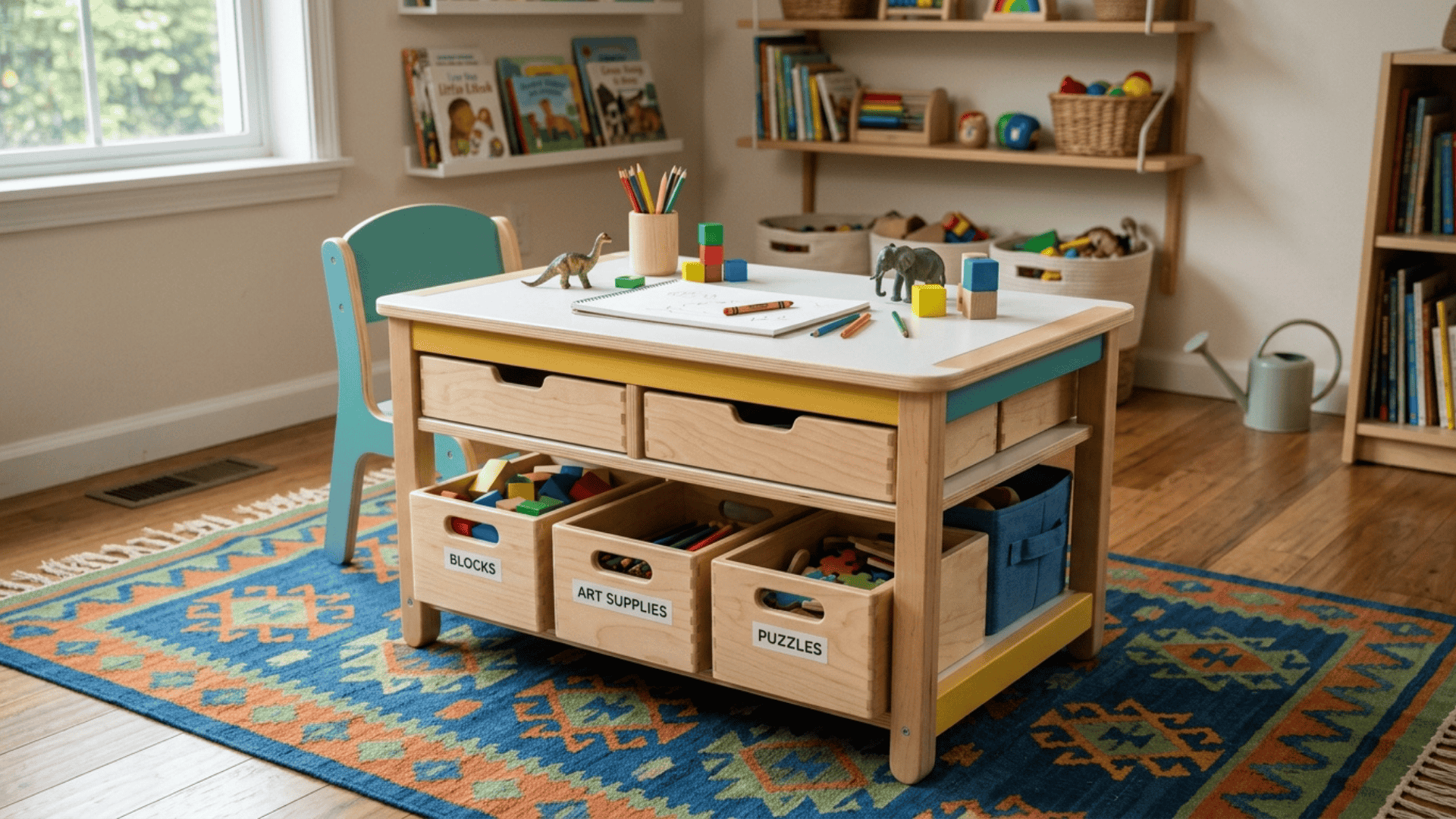
A small activity table with built-in storage is a practical centerpiece for any compact playroom. It gives kids a dedicated surface for crafts, puzzles, or drawing without adding extra furniture.
Many of these tables come with shelves or compartments underneath. That extra storage keeps supplies close at hand without needing a separate unit in the room.
Choosing a table that fits the size of the room is important. One that is too large will block movement and make the space feel tight.
14. Use Wall Hooks for Dress-Up Clothes
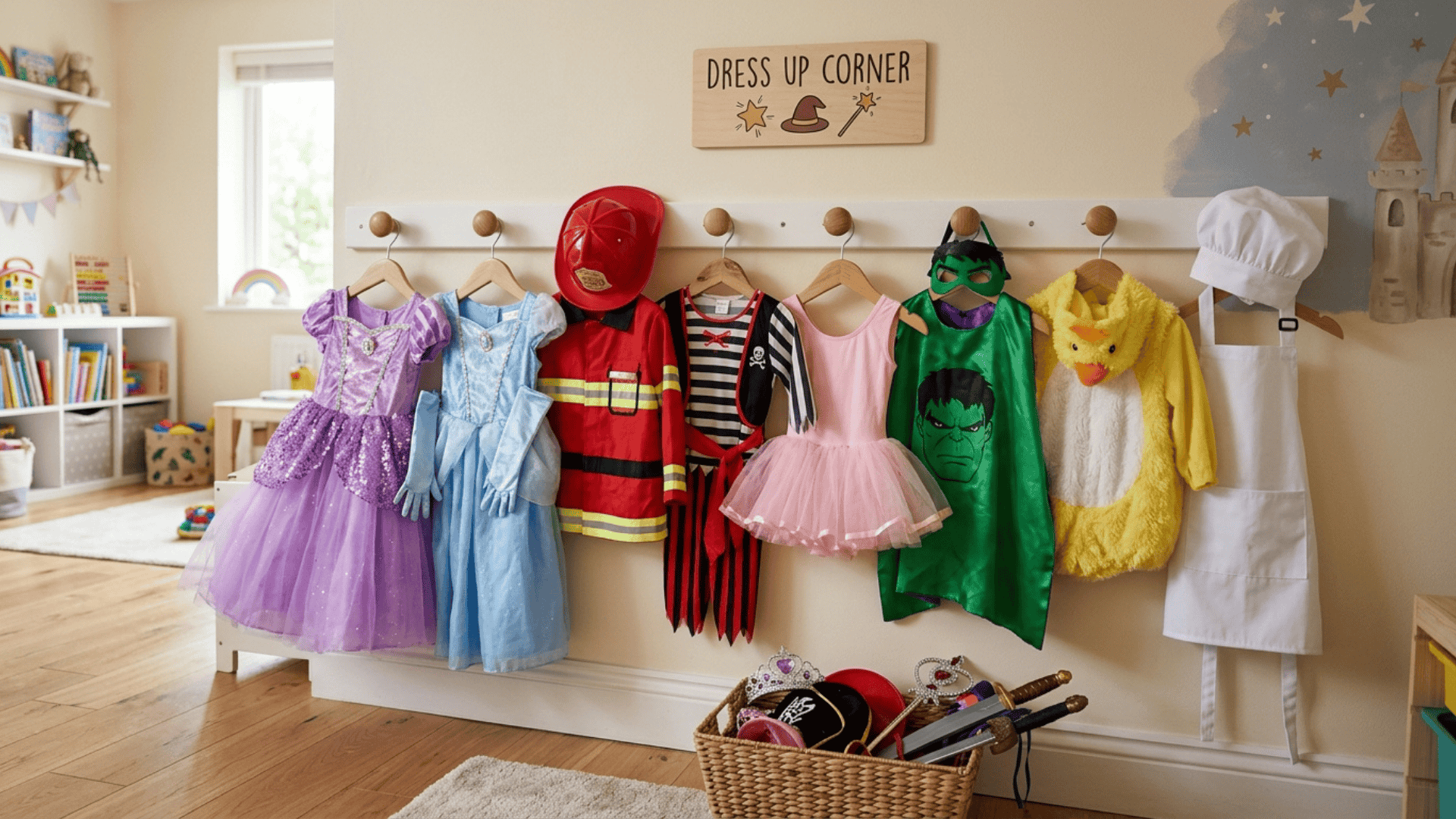
Wall hooks are a simple and affordable way to store dress-up clothes in small playroom spaces. They keep costumes visible, accessible, and off the floor, where they usually end up.
A row of hooks at kid-height lets children pick their own outfits. This adds an element of independence while keeping the room more organized throughout the day.
15. Create a Floor Seating Area with Mats
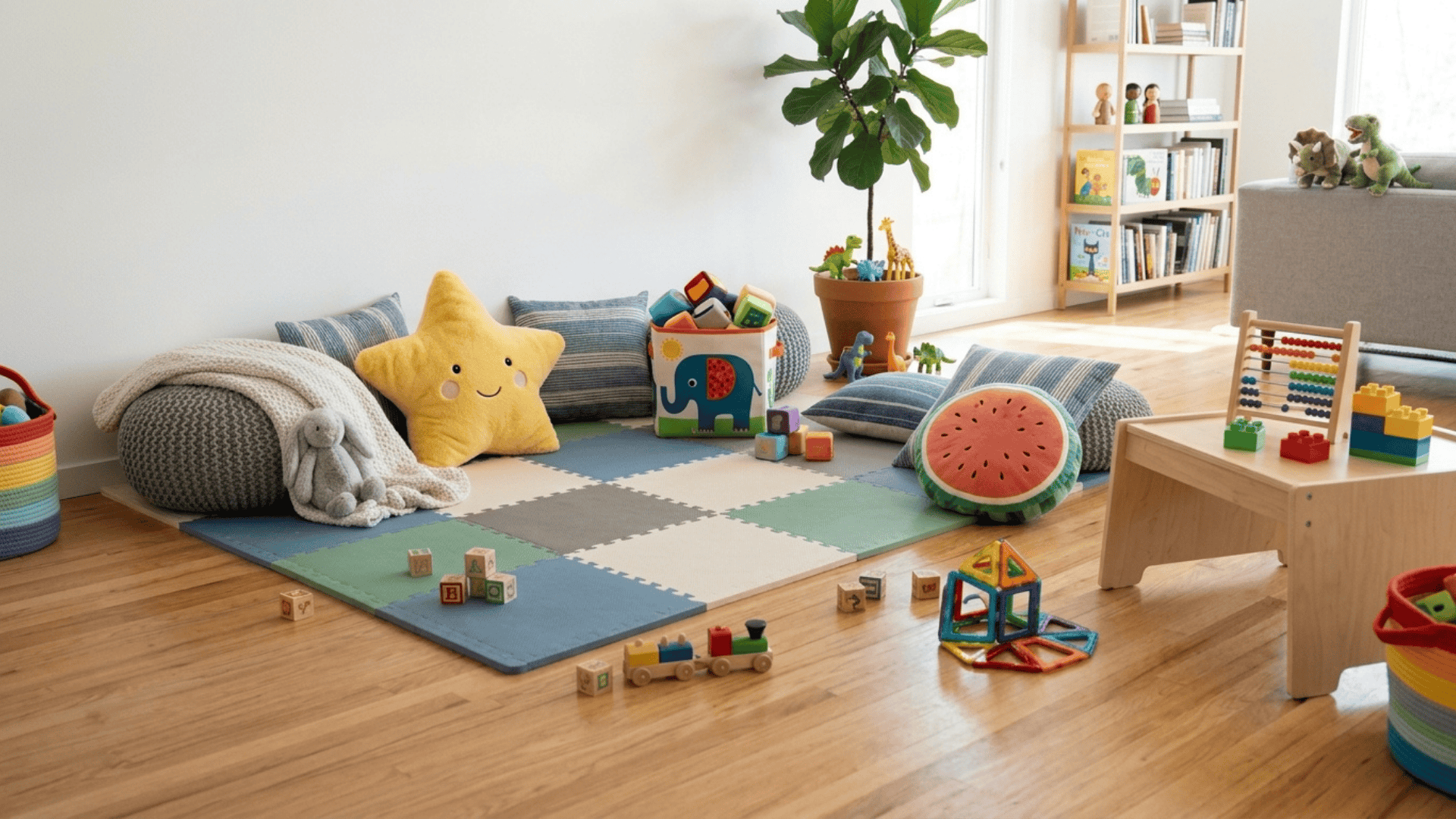
Floor seating works well in small playrooms because it keeps the space open and flexible. Foam mats or cushions can be moved easily as the kids move.
This setup works well for reading, building, or group play. It eliminates the need for bulky chairs that take up space even when not in use.
Choosing mats in a neutral tone keeps the room looking clean and visually balanced. They can be stacked or stored in a corner when the floor space is needed for something else.
16. Use Sliding Storage Cabinets
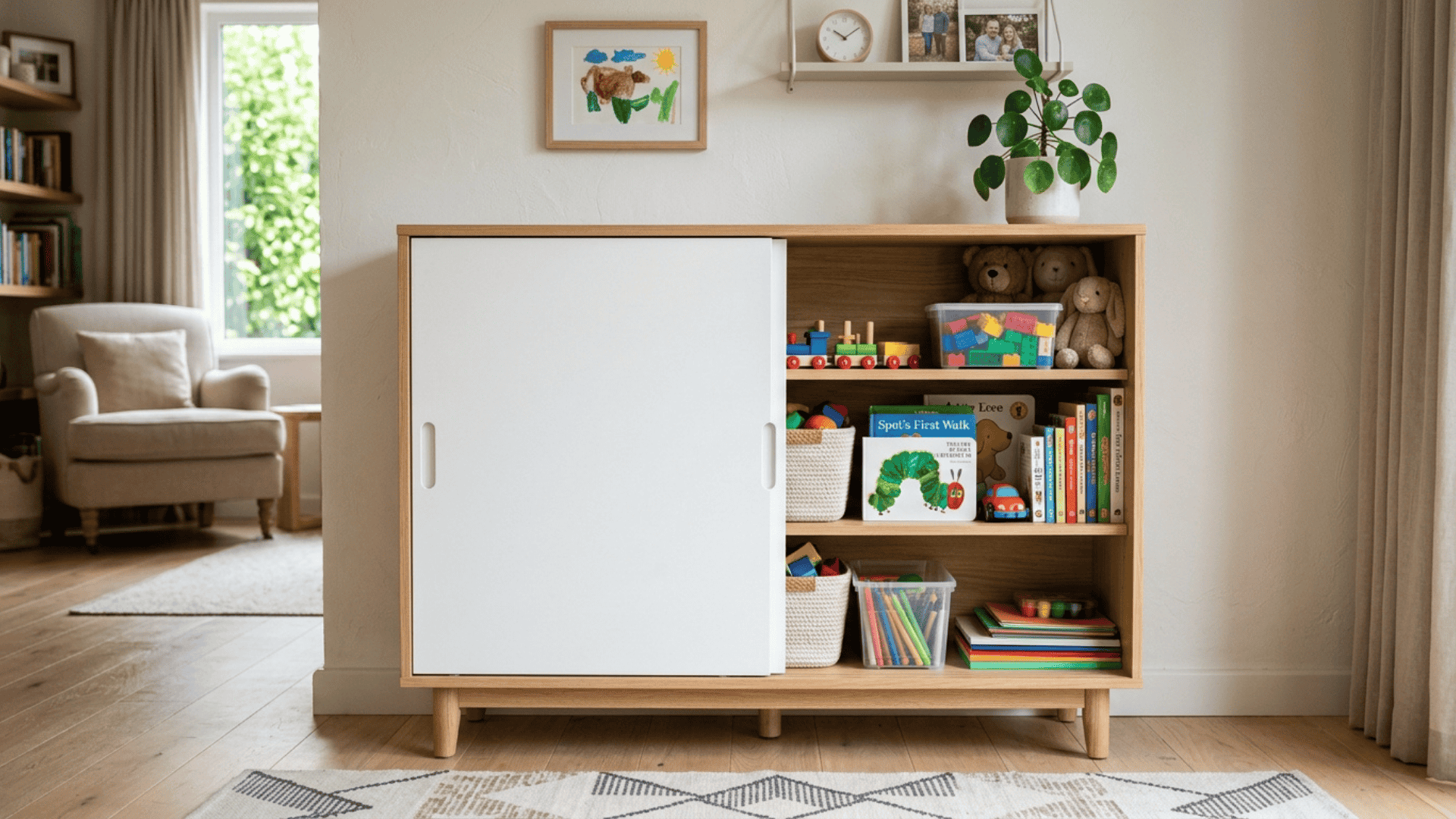
Sliding cabinets are a great fit for tight spaces because they do not need extra room to open. The doors slide flat, so nothing gets blocked when accessing storage.
These cabinets work well along a wall in layouts where swing-out doors would be inconvenient.
They keep toys hidden while maintaining a clean look in the room. Adjustable shelves inside add flexibility as kids grow and storage needs change over time.
17. Design a Loft Bed Play Area
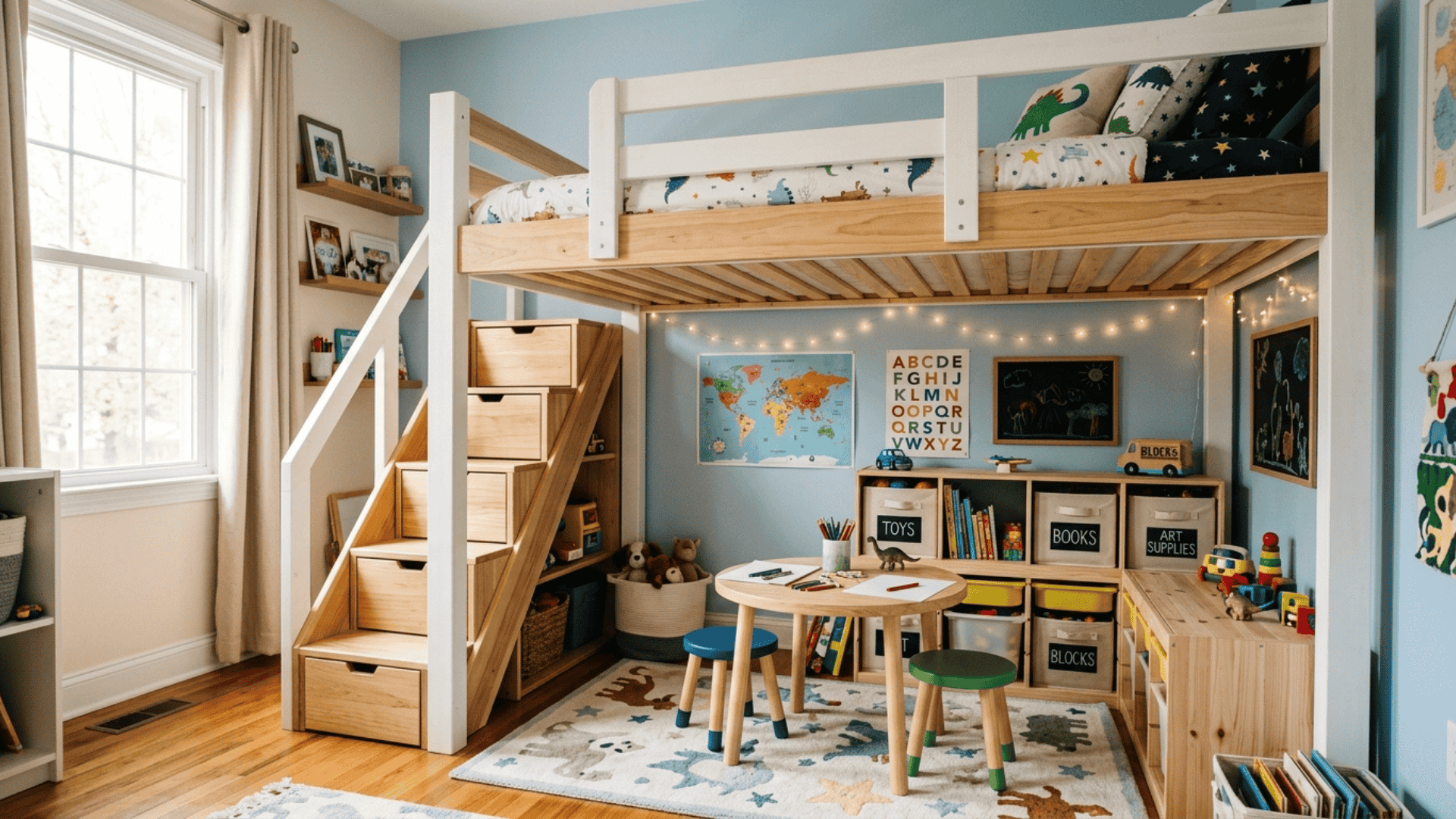
A loft bed creates two usable zones in the space of one. The bed sits at the top, while the area below becomes a dedicated play space for kids.
This setup works especially well as it also doubles as a bedroom. It keeps sleeping and playing separately without needing extra square footage.
18. Install a Chalkboard or Whiteboard Wall
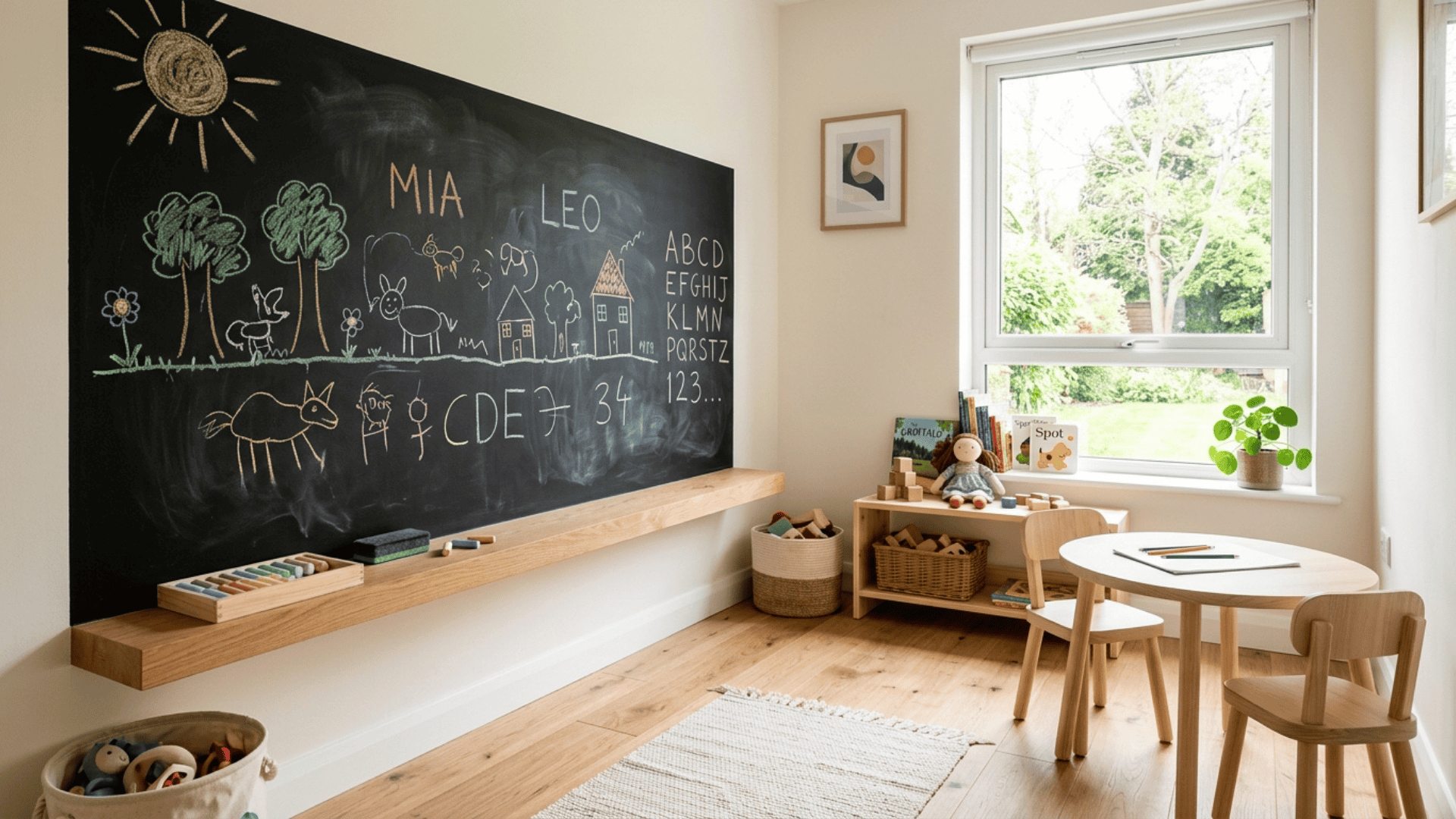
A chalkboard or whiteboard wall gives kids a creative outlet without taking up any floor space. It turns a plain wall into an activity zone kids actually want to use.
This idea works well in compact rooms because it adds play value to an existing surface. There is no need for an easel or art table to support drawing and writing activities.
19. Use Curtains to Section Off Play Areas
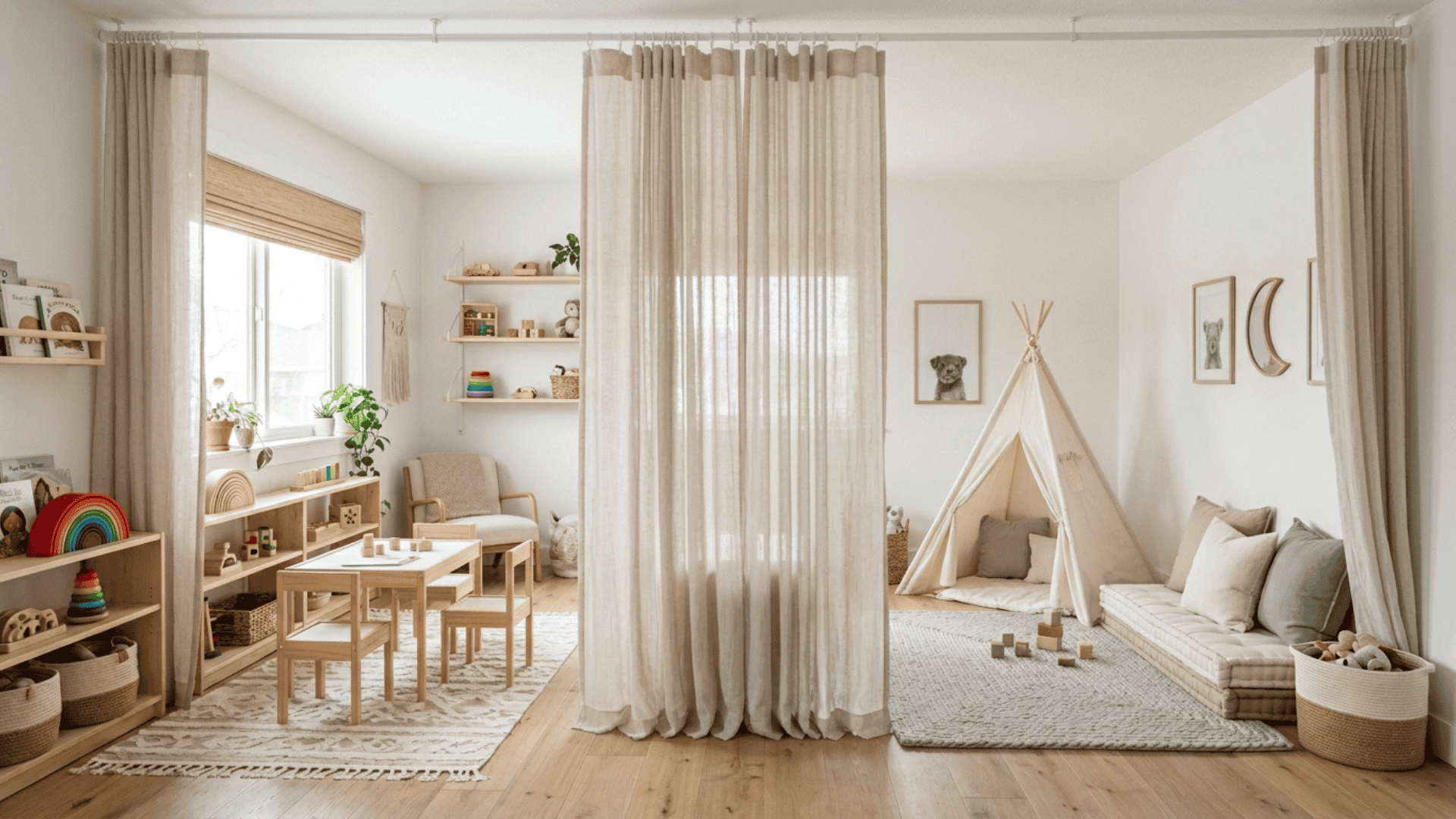
A curtain is one of the simplest ways to divide a small playroom into separate activity zones. It creates a sense of separation without adding walls or permanent fixtures.
It helps hide a storage area or create a cozy reading corner behind a soft divider. Kids often enjoy having their own tucked-away spot in the room.
A lightweight curtain in a neutral color keeps the space feeling open and uncluttered.
20. Add a Toy Chest with Compartments
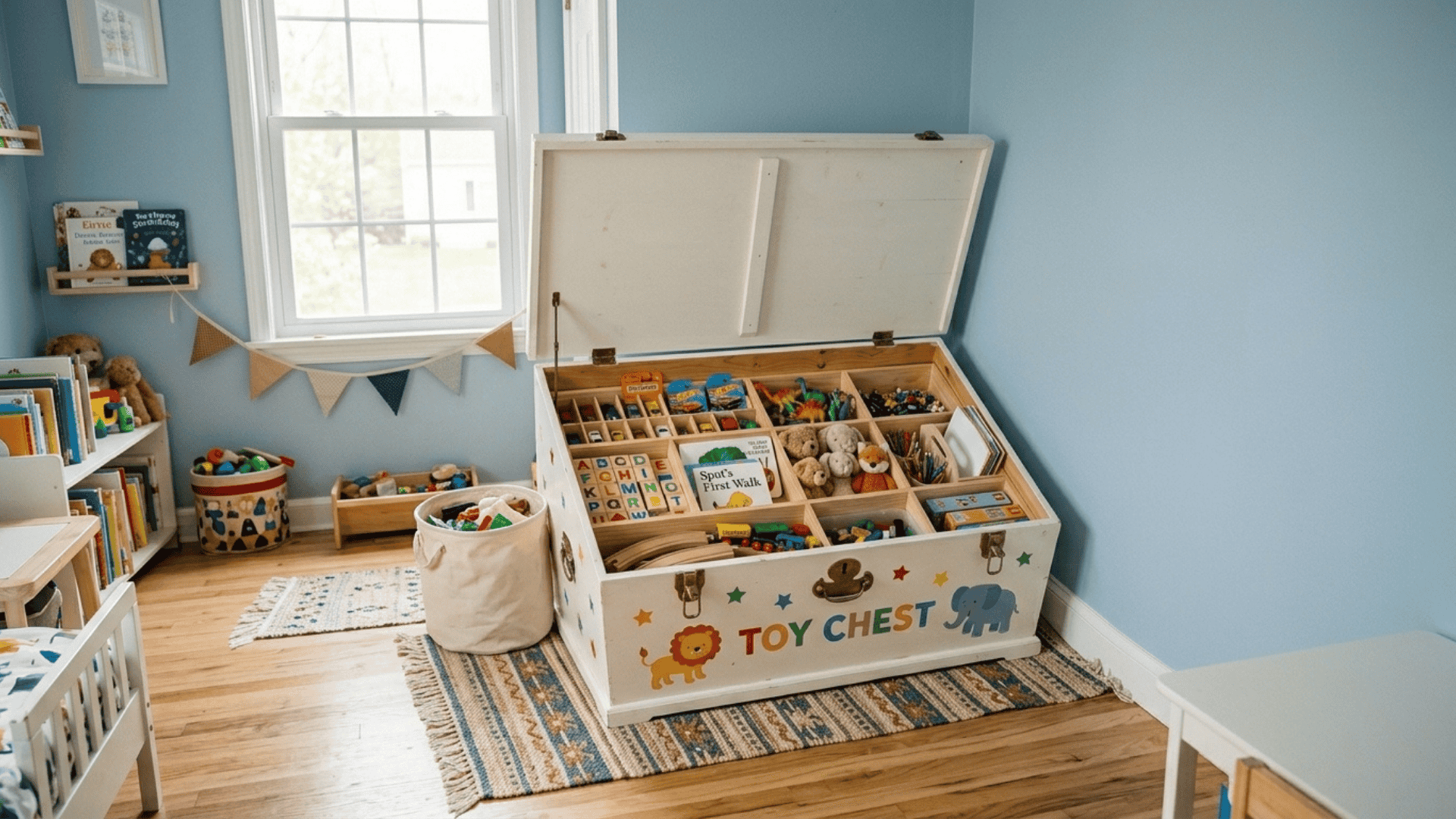
A toy chest with internal compartments is far more useful than a basic open box. Each section keeps a different category of toys sorted, so finding things stays quick and easy.
This kind of chest works well in small playroom setups because it combines bulk storage with organization. One piece of furniture handles what might otherwise require several separate bins.
21. Use a Rolling Cart for Art Supplies
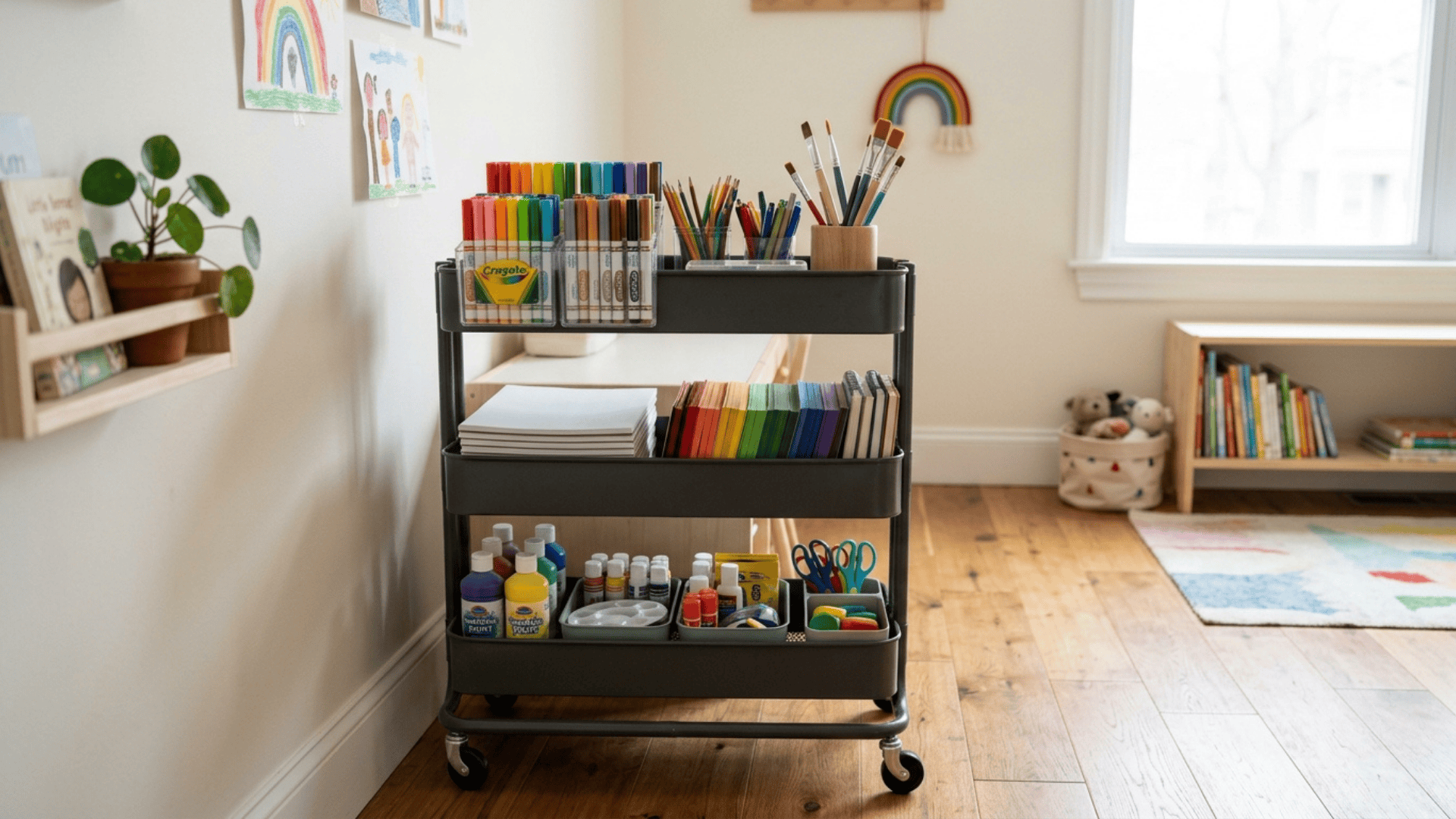
A rolling cart keeps all art supplies in one place and moves them wherever they are needed. It can sit in a corner when not in use and roll out during craft time without any hassle.
This is a flexible option for rooms where a fixed art station would take up too much space. The cart does the same job while staying out of the way the rest of the time.
A cart with multiple tiers stores more in a small footprint without jumbling supplies together.
22. Use Magnetic Strips for Small Toys
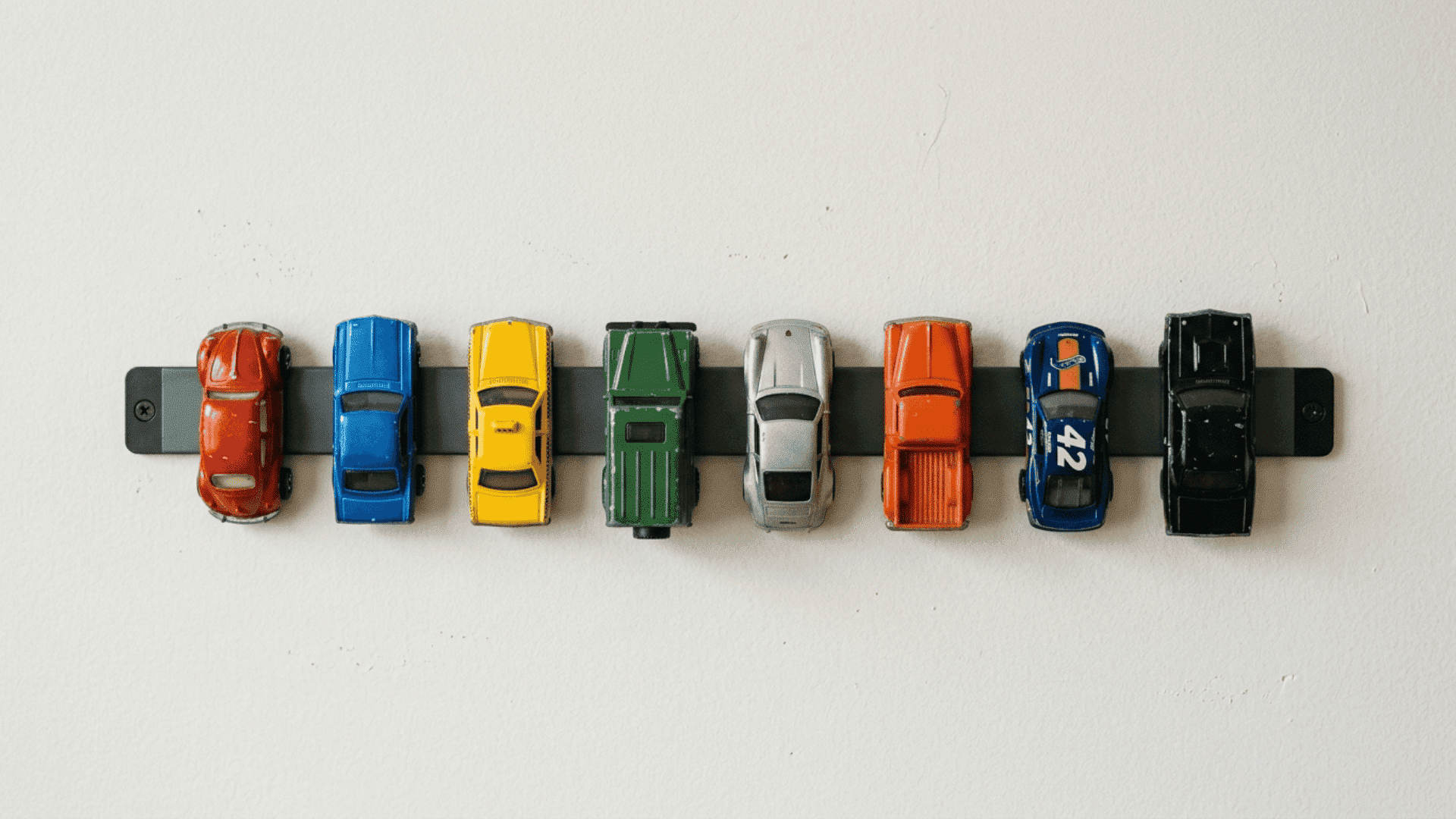
Magnetic strips mounted on a wall are a clever way to store small metal toys or figures. They keep tiny pieces visible and organized without needing a bin or a drawer.
This works especially well in compact rooms where loose pieces are easily lost. A strip near the play area means kids can grab and return items without much effort.
Placing the strip at a lower height makes it accessible for younger children on their own.
23. Add a Fold-Down Wall Desk
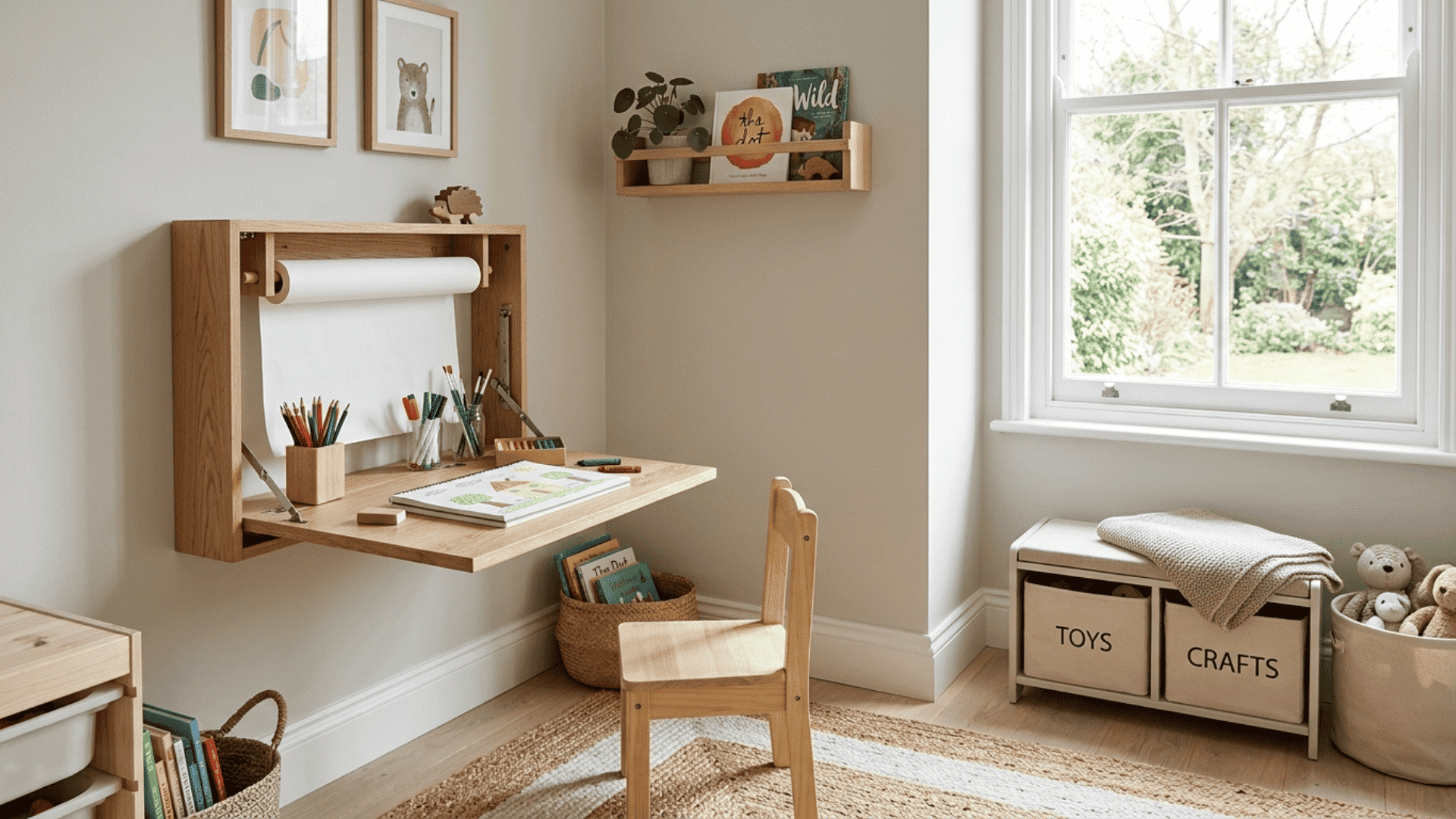
A fold-down desk attaches to the wall and stays flat when not in use. When kids need a surface for drawing or activities, it folds out and locks into place quickly.
This is one of the most space-saving options available for small playroom setups. It provides a full work surface without permanently occupying floor space the way a standard desk would.
24. Use Corner Shelving Units
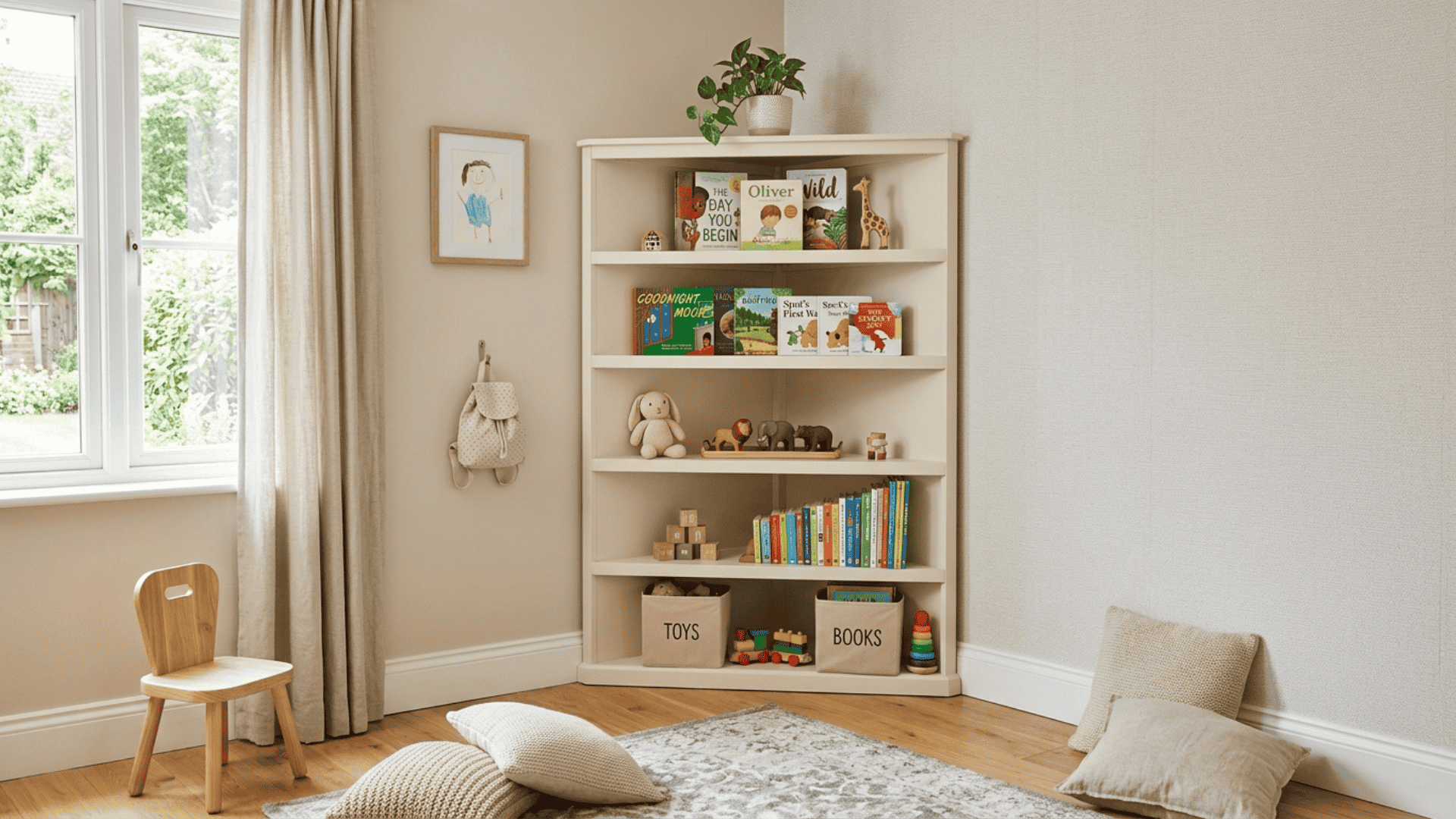
Corner shelving units fit into spots where standard shelves simply cannot. They make the most of angled corners that would otherwise sit empty in the room.
These units work well for storing books or small toys in compact playrooms. They add useful storage without pushing into the main floor area, where kids need room to move.
Choosing units that match the rest of the room’s storage keeps things looking consistent and intentional.
25. Create a Small Indoor Play Tent
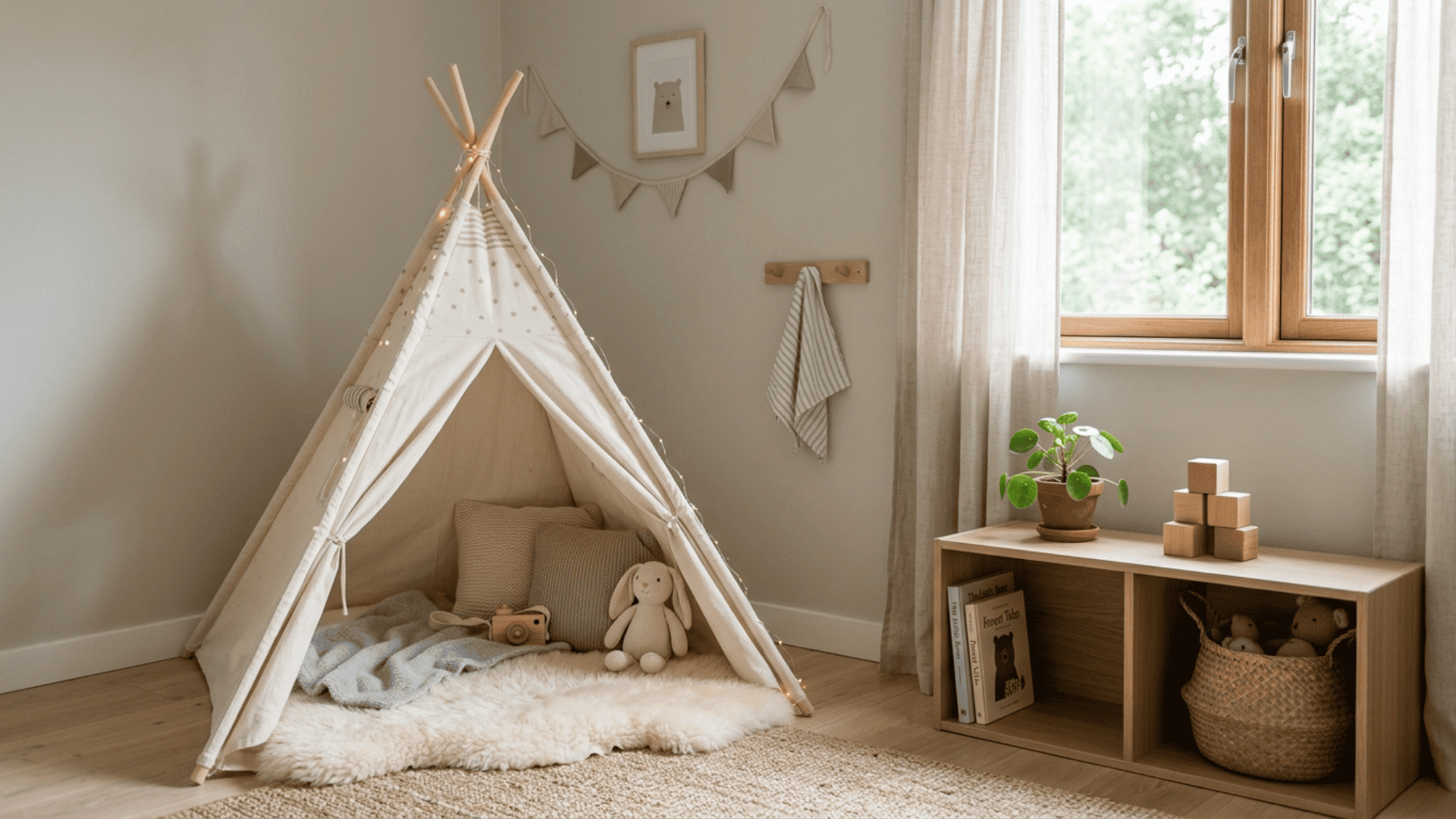
A small indoor play tent gives kids their own defined space within the playroom. It adds an element of imagination and keeps one activity area contained in a single spot.
Tents are easy to set up and take down, which makes them a flexible addition to a compact room. When not in use, they fold flat and store in a corner or a nearby closet.
26. Use Floor Tape for Play Zones
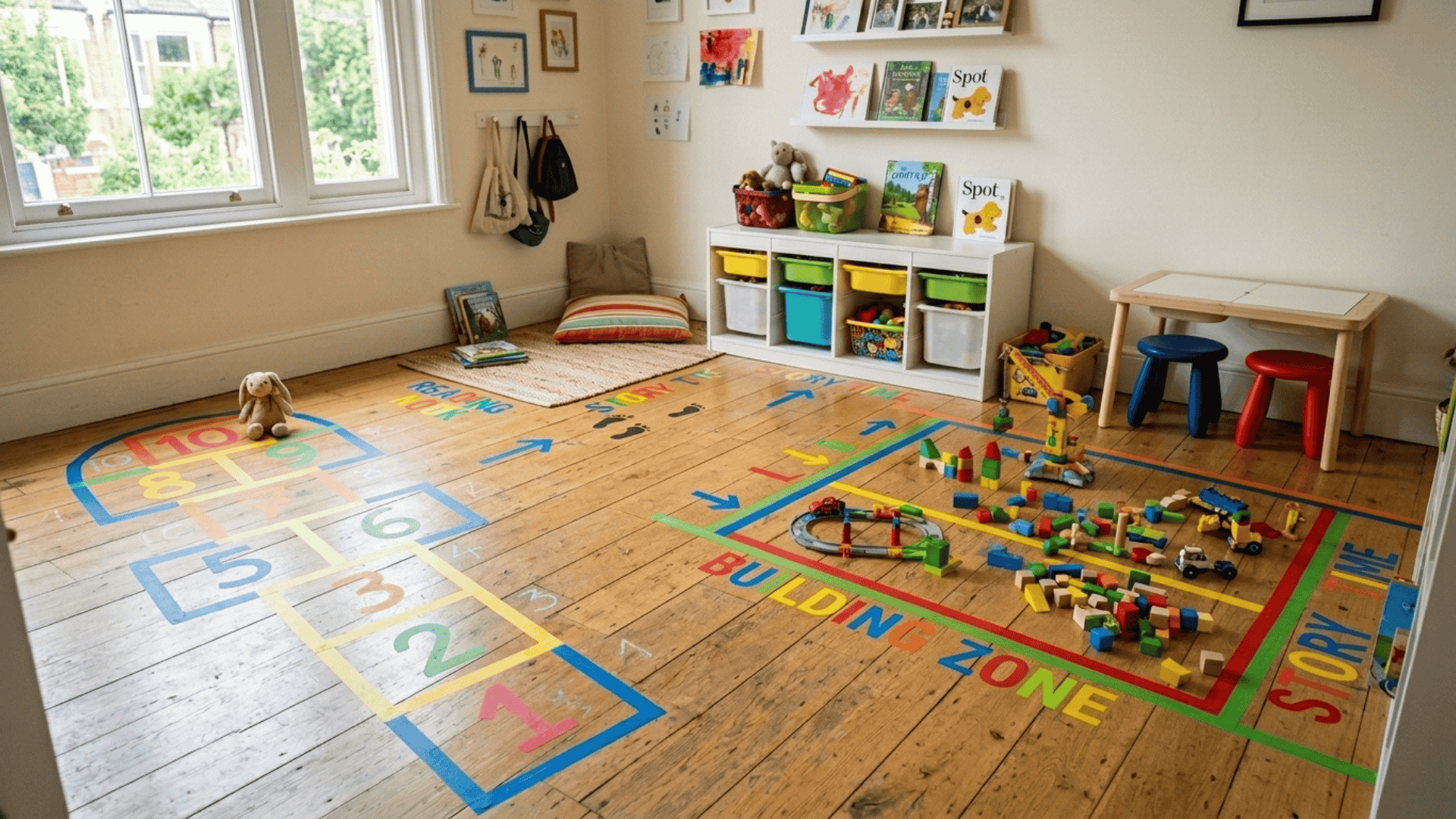
Floor tape is a simple addition to small playroom ideas that helps define play areas without adding furniture. It can mark sections for games, building, or movement while keeping the layout clear.
It works well in small playrooms where space needs to stay open and flexible. The tape can be removed or replaced at any time, making it easy to adjust the setup as needed.
27. Add Storage Behind Doors
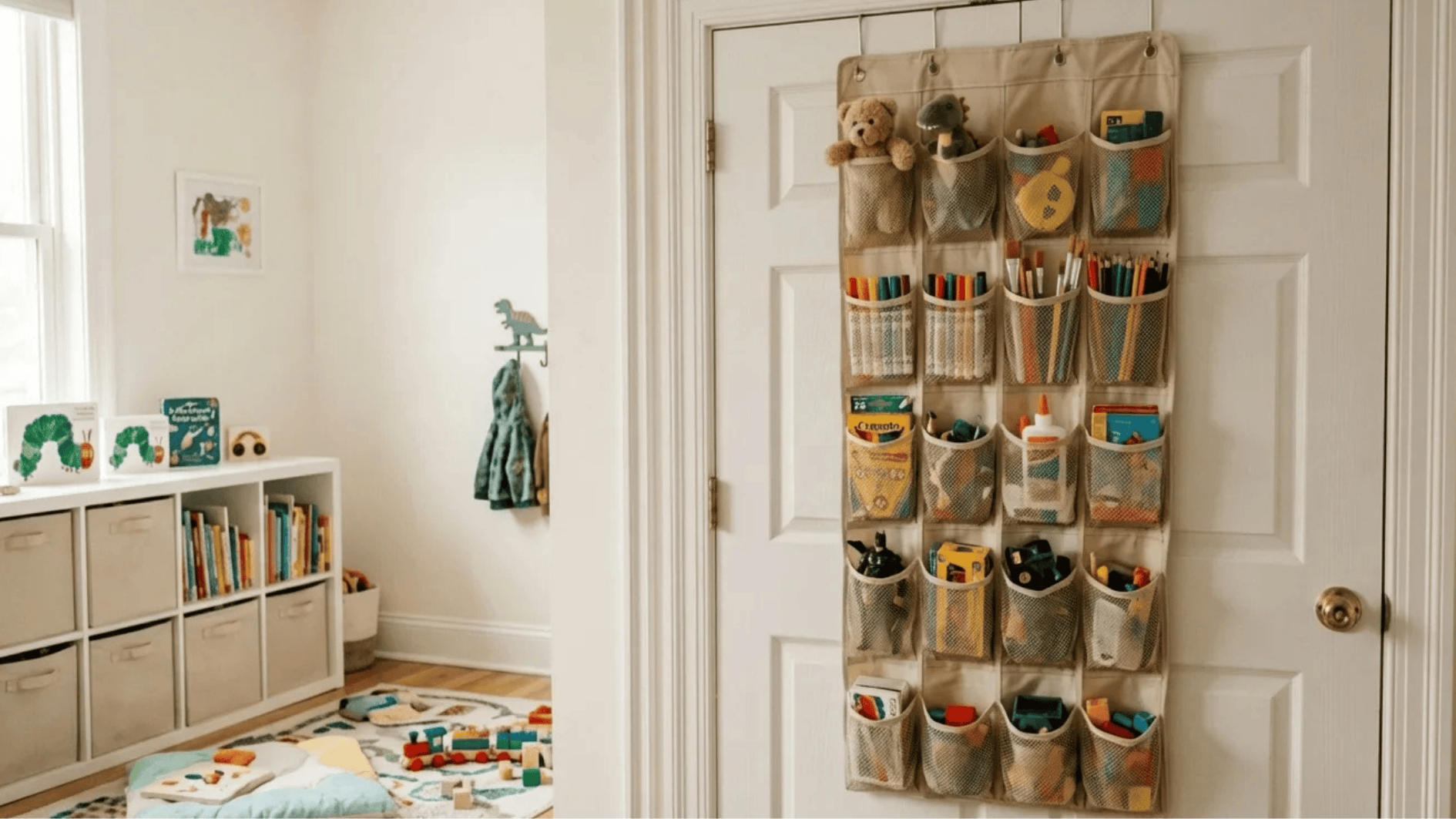
The back of a door is one of the most underused storage spots in any room. Over-the-door organizers or hooks can hold bags, small toys, or art supplies without taking up any wall space.
This works especially well in compact playrooms where every inch of wall space is already in use. It adds a layer of storage that stays completely out of sight when the door is open.
28. Use Soft Storage Baskets
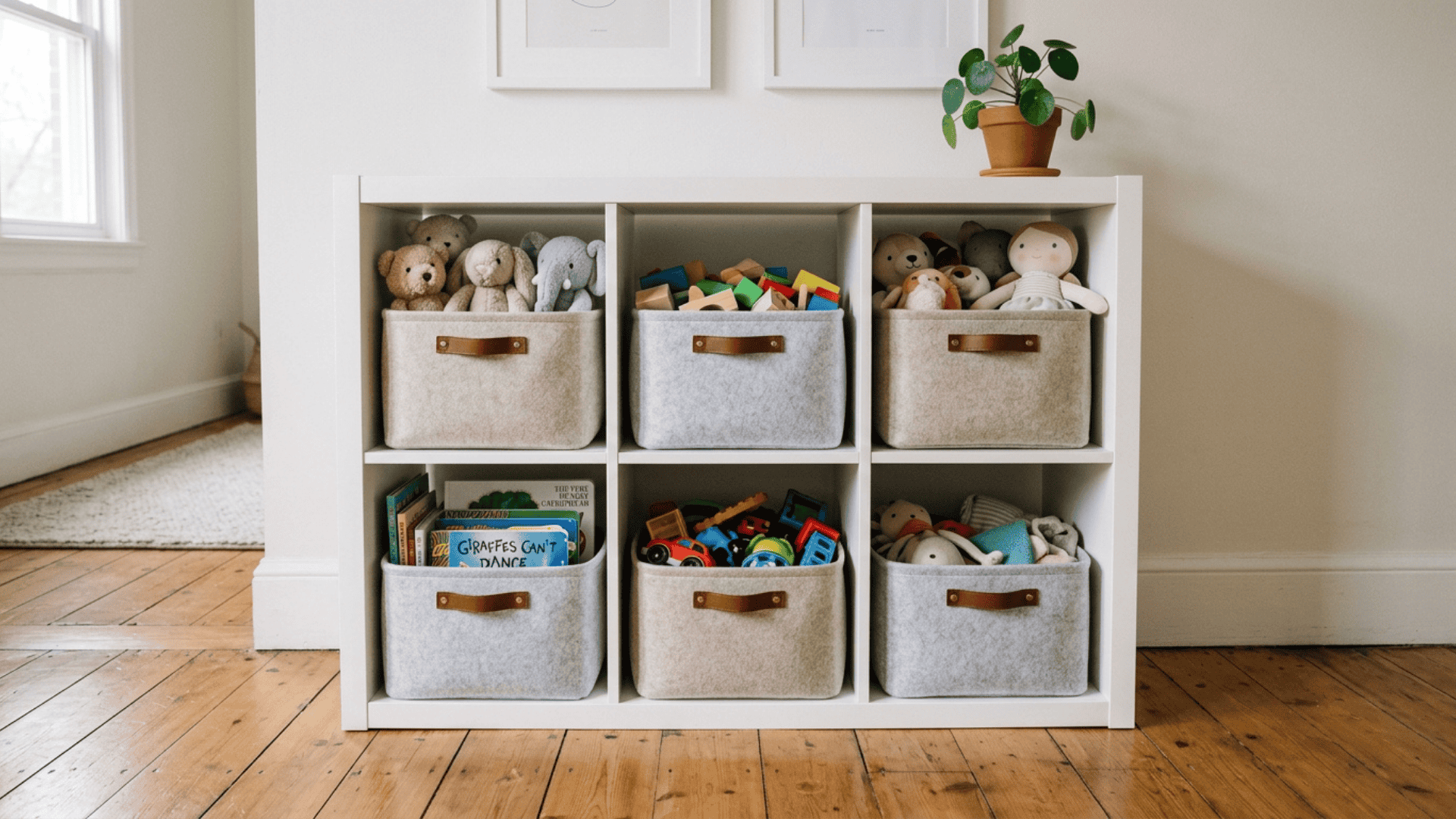
Soft storage baskets work best for quick cleanup and easy movement, especially for younger kids. They are easy for kids to carry, pull out, and put back on their own without any difficulty.
These baskets fit well on shelves or in cubbies in small playroom setups. Choosing a consistent size and color keeps the room looking neat rather than cluttered.
29. Create a Defined Building Zone
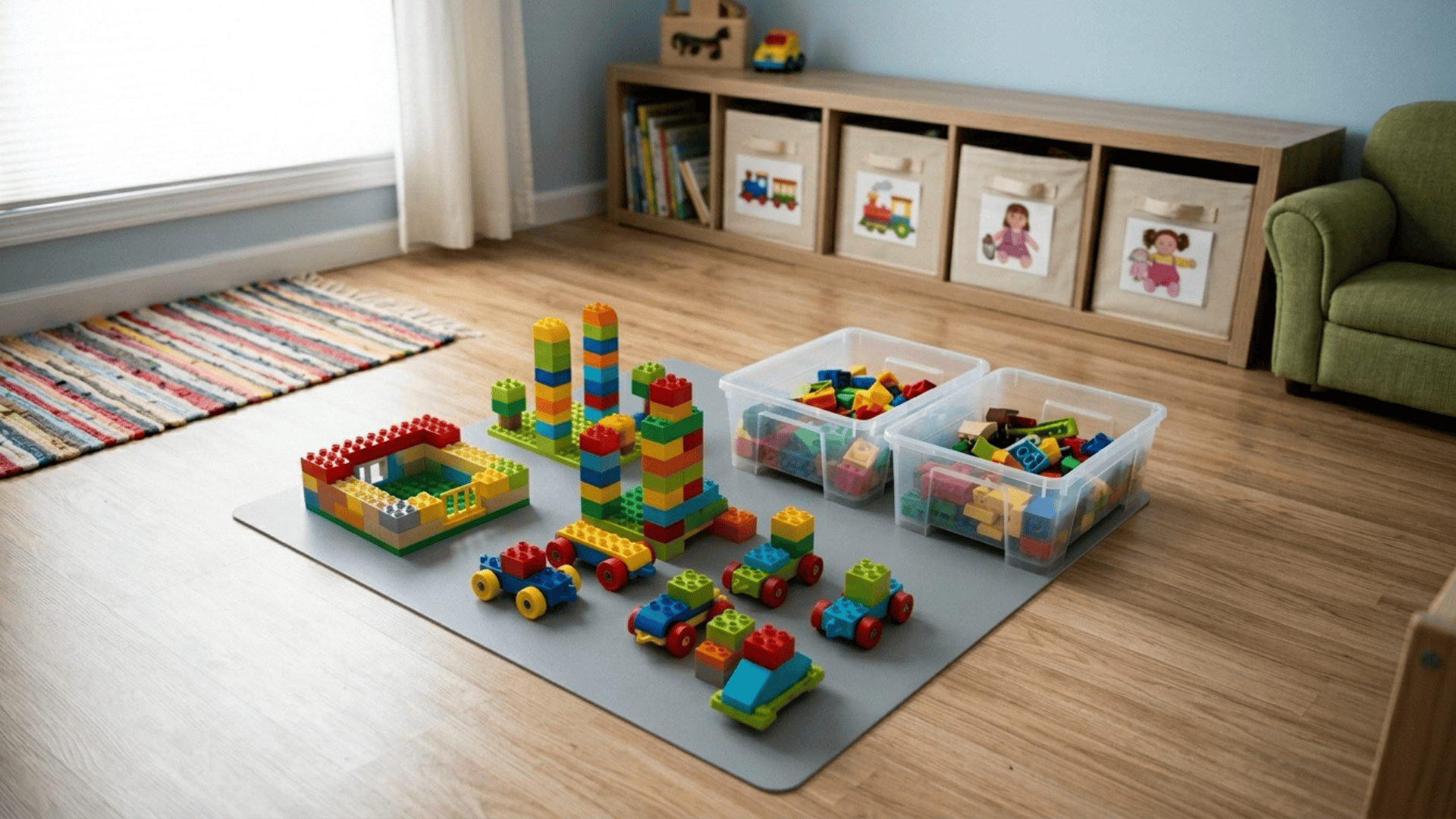
Instead of adding another table, create a defined building zone using a flat surface, such as a mat or baseplate. This works well in small playroom ideas, where adding extra furniture can make the space feel crowded.
Keeping building activity confined to a single surface prevents small pieces from spreading across the room. This helps maintain order while still allowing focused play.
30. Add a Mini Art Display Wall
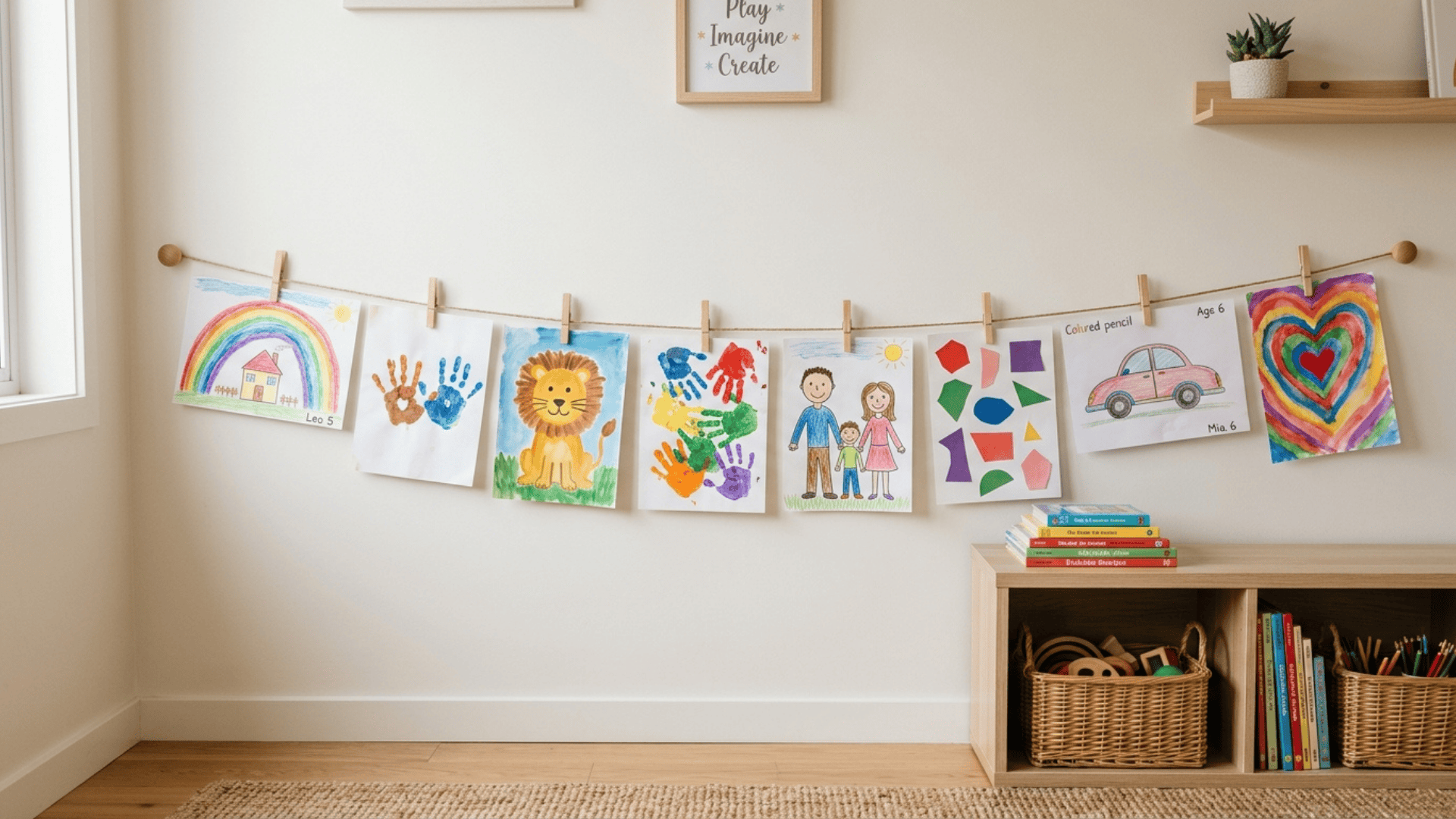
A small section of wall can be used to display kids’ artwork using clips or a wire line. It gives children a sense of ownership over their space without taking up any floor area.
This works well in compact playrooms because it uses vertical wall space that might otherwise go unused. Rotating the display regularly keeps the wall fresh and gives kids something to look forward to.
Keeping the display area small and defined prevents the wall from looking too busy or overwhelming.
31. Use Play Rugs for Defined Activity Areas
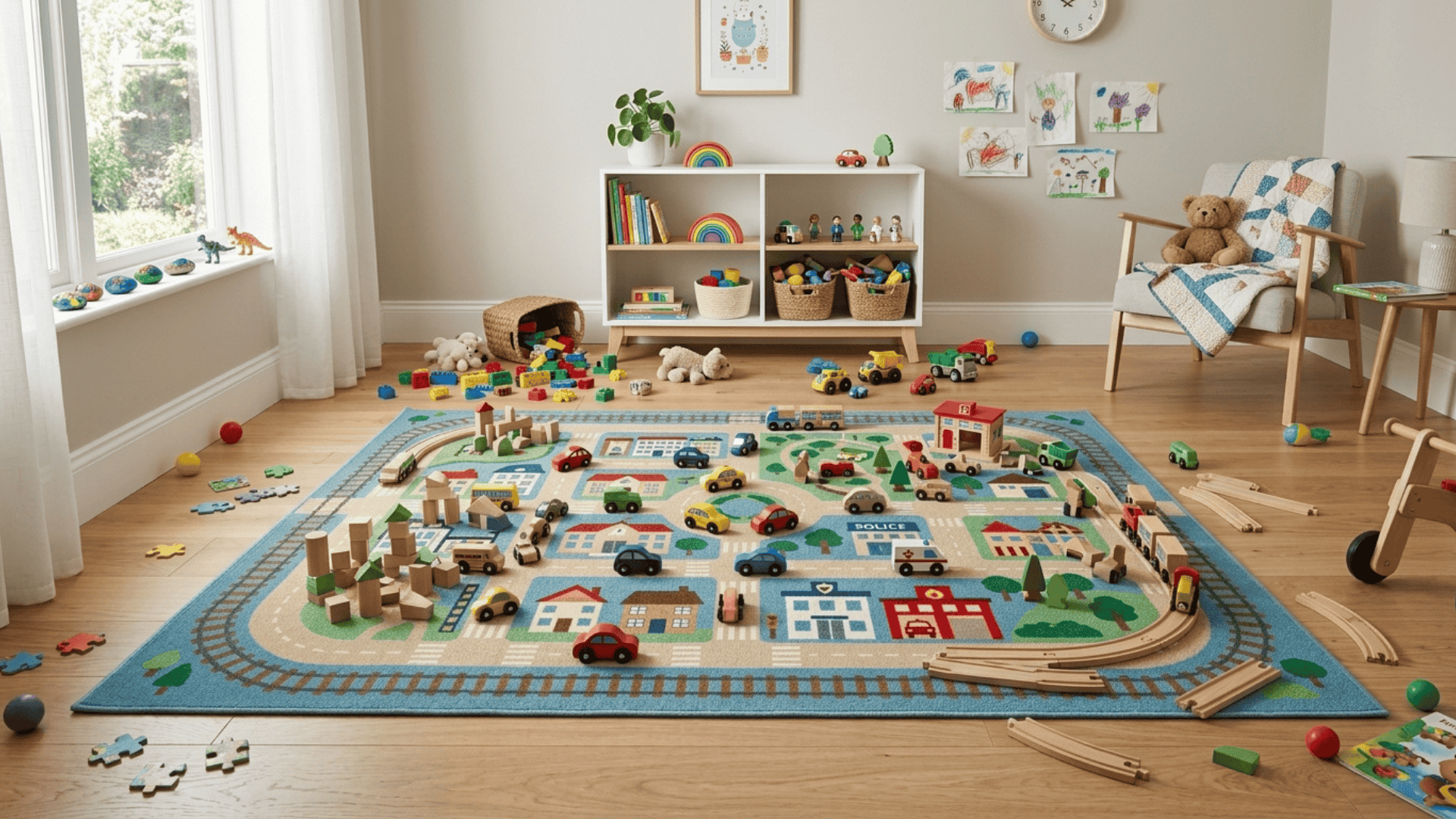
A play rug is one of the simplest ways to define a specific activity zone within a small room. It signals to kids that a certain area is meant for a particular type of play.
These rugs work well in small playroom layouts because they add function without adding furniture. A road map rug or a building grid can keep kids engaged right on the floor.
32. Store Seasonal Toys Separately
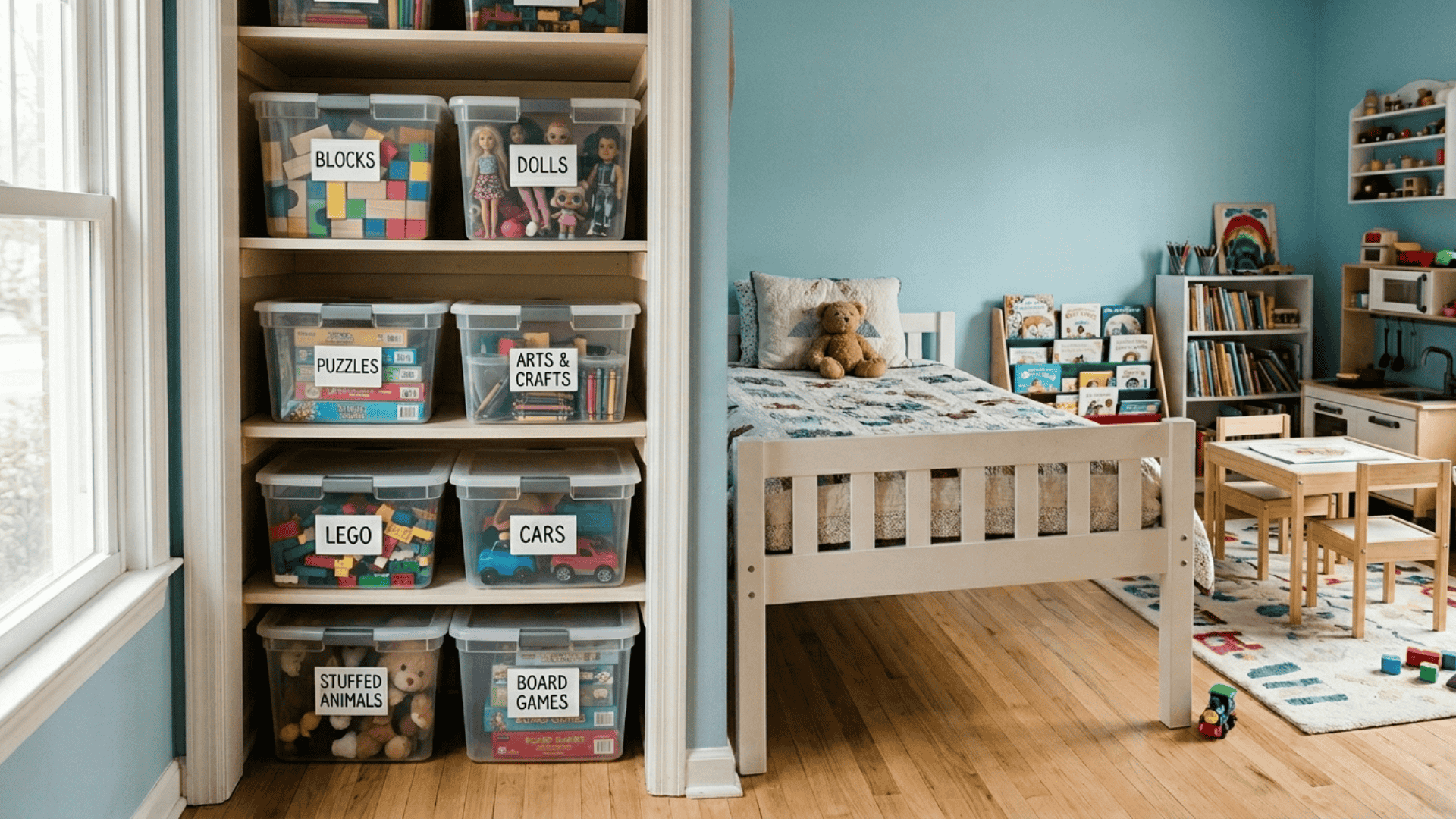
Keeping seasonal or less-used toys out of the main playroom frees up a lot of daily storage space; boxes stored in a closet or under a bed work well for rotating items in and out.
This approach keeps the active play area from feeling overstocked and hard to manage. Kids also tend to engage more with toys when fewer options are competing for attention at once.
Labeling each storage box makes it easy to find specific items when it is time to swap them back in.
33. Use Compact Play Kitchens or Sets
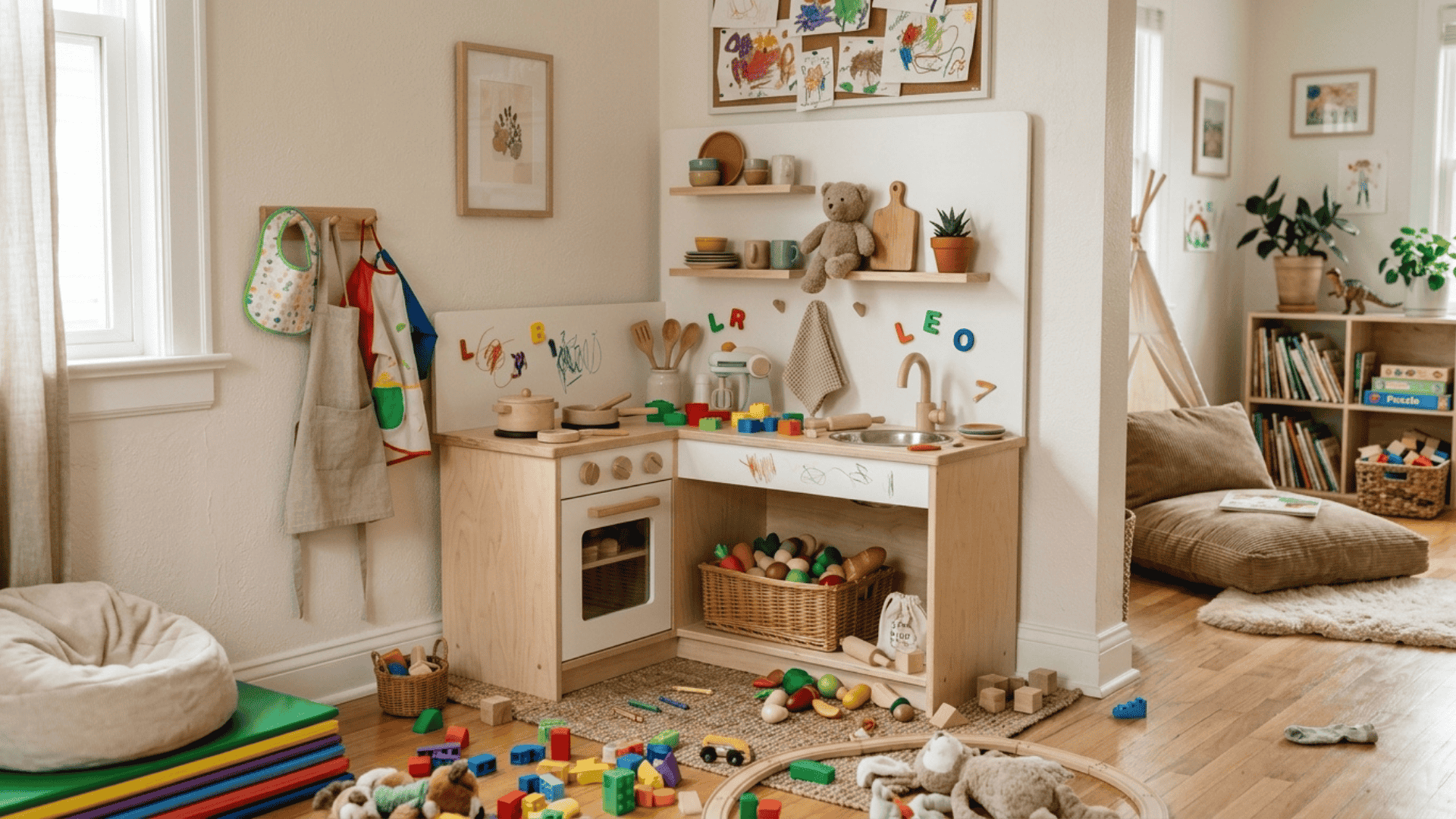
Full-sized play kitchens can take up a large portion of a small room. Choosing a compact or corner version keeps the fun intact while using significantly less floor space.
Smaller play sets work just as well for imaginative play and leave more room for other activities. In small playroom spaces, this kind of swap makes a noticeable difference in how open the room feels.
34. Keep the Layout Open for Movement
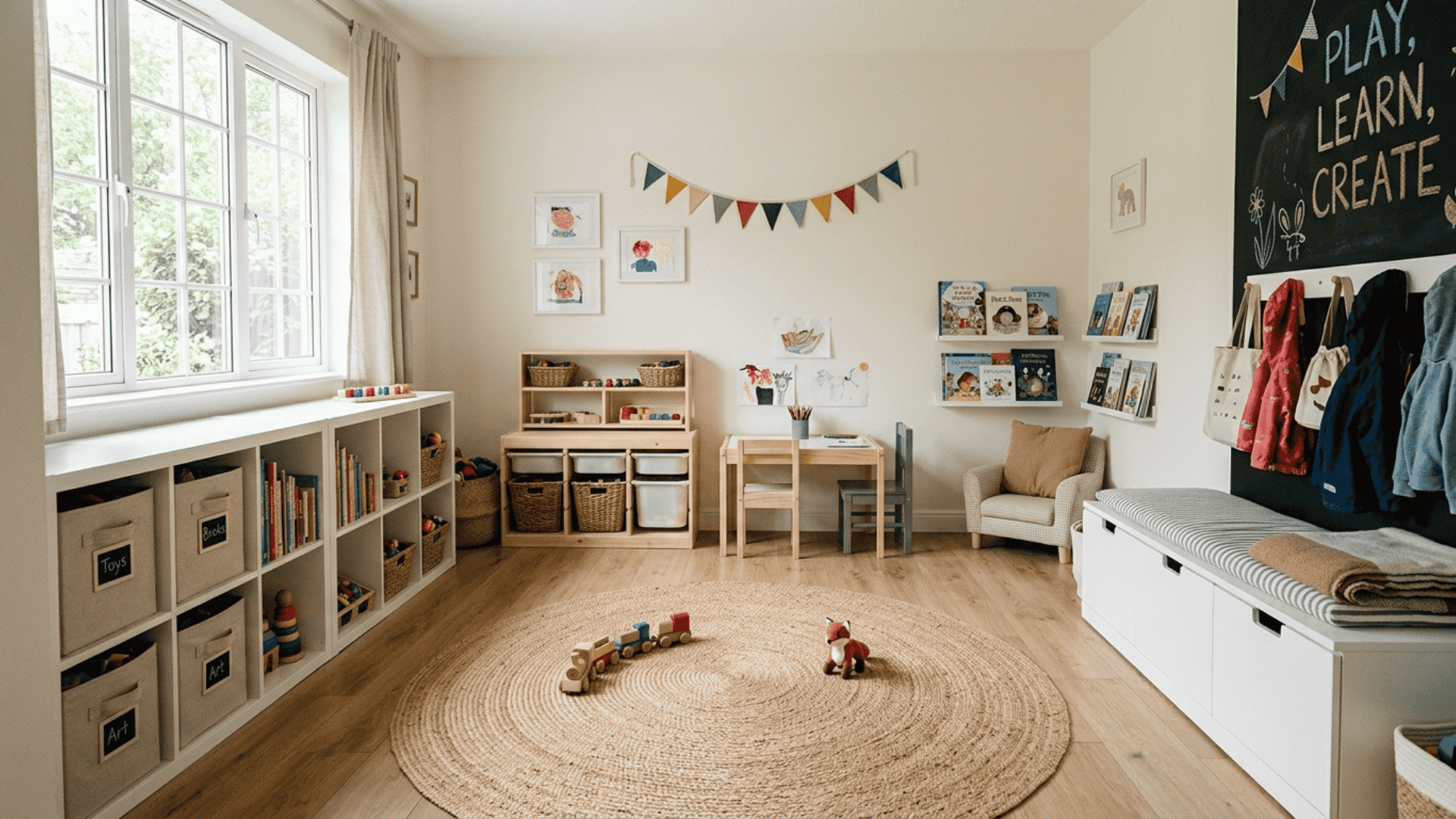
Keeping the center of the room clear of toys is one of the most effective ways parents can make a small playroom feel bigger. Open floor space gives kids room to move, roll, build, and play without feeling boxed in.
Pushing all storage and furniture to the walls creates a natural open zone in the middle. This simple layout choice makes even a very small room feel more spacious and usable for active play.
35. Combine Play and Study Zones in One Area
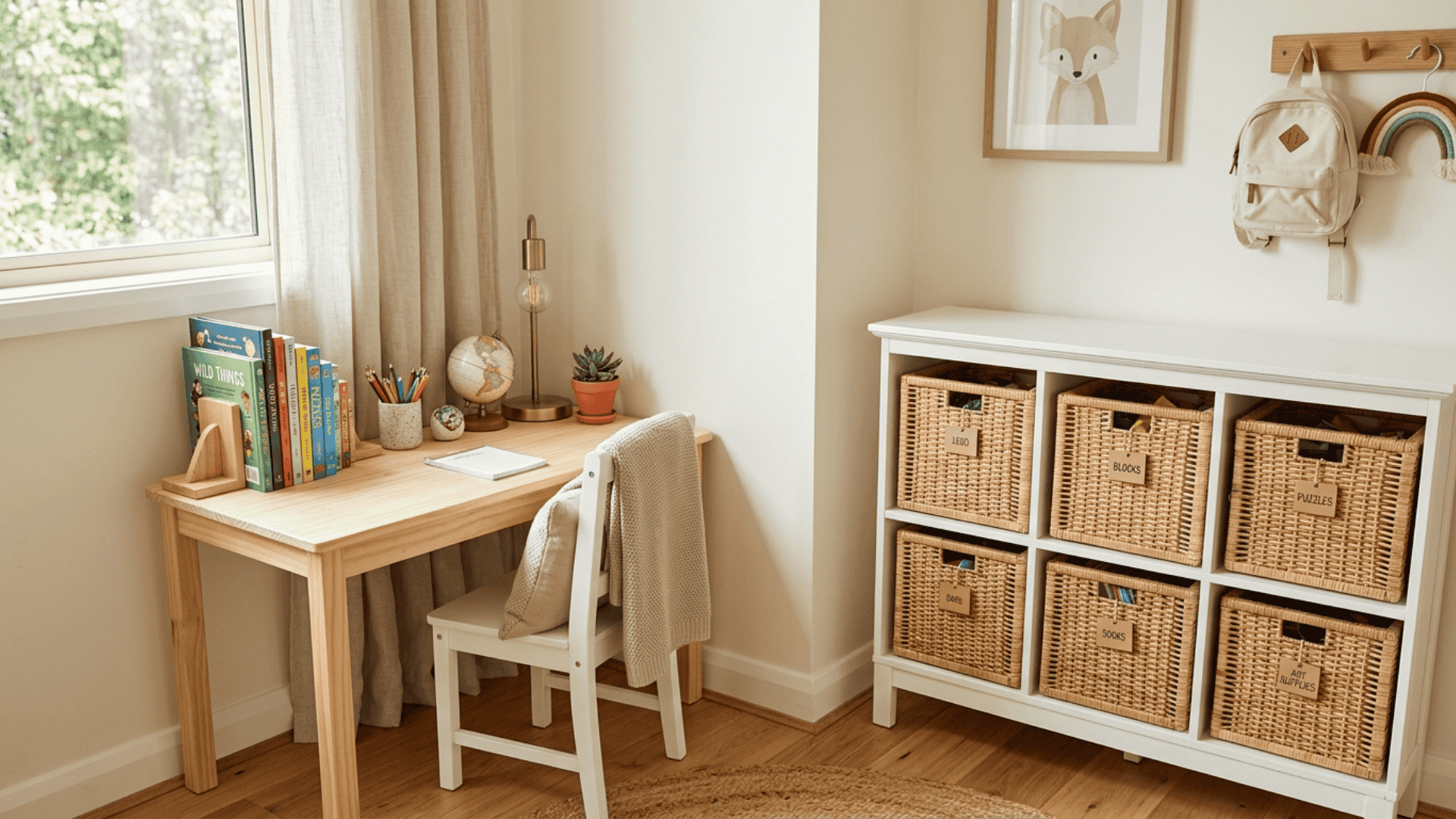
A shared play-and-study zone works well when space is limited, and kids need both areas daily. A small desk near a shelf of books and supplies can handle both activities without needing separate rooms.
This setup works especially well in spaces that also serve as homework areas. Keeping both functions in one defined corner prevents the rest of the room from feeling overloaded.
Choosing furniture that works for both play and study keeps the zone looking clean and purposeful.
36. Use Neutral Storage to Reduce Visual Clutter
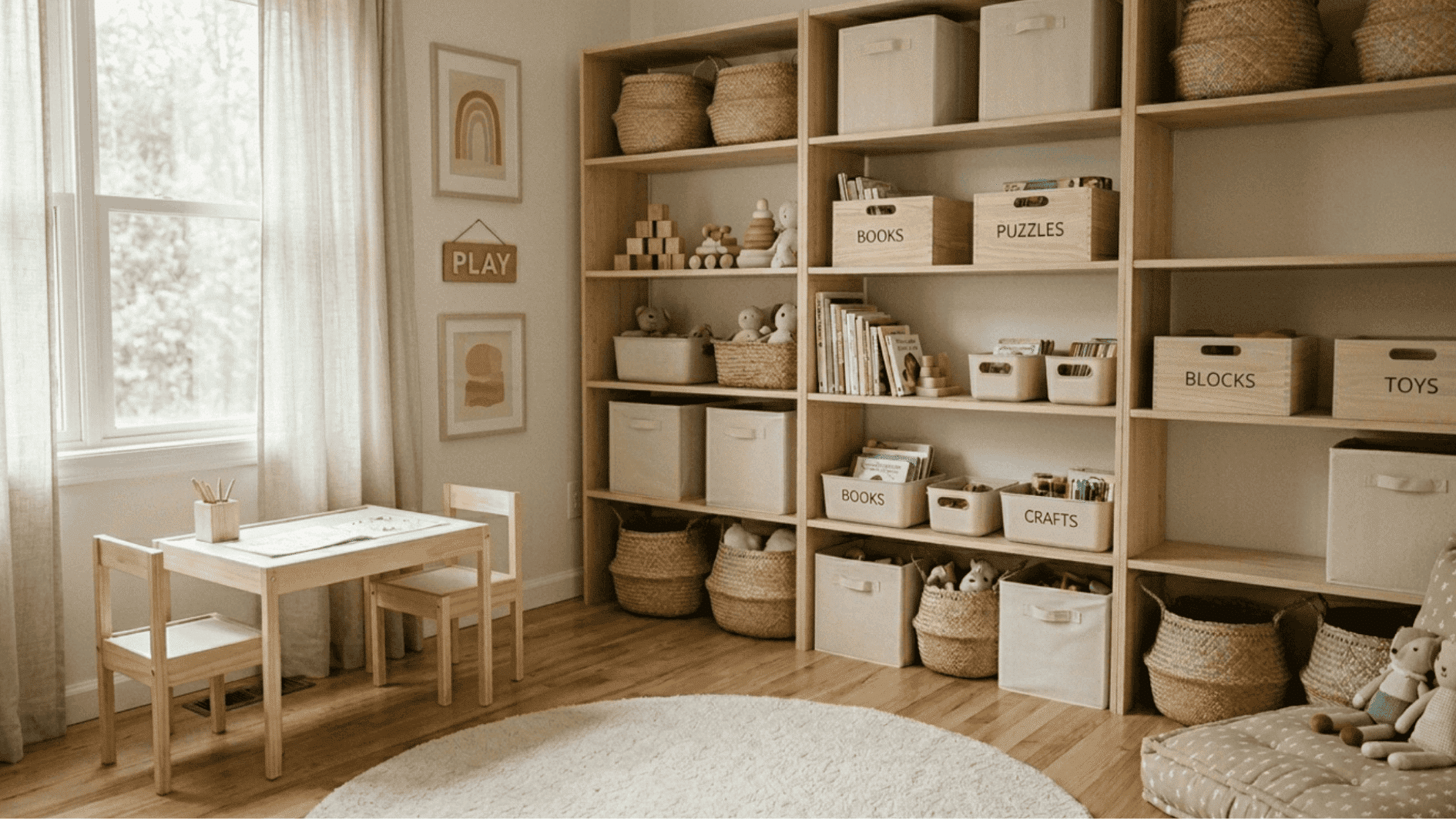
Bright mismatched storage can make a small room feel busier than it actually is. Choosing bins, baskets, and shelves in neutral tones keeps the room looking calm and visually balanced.
This is a simple but effective approach for spaces where too much color can feel overwhelming. A consistent storage palette makes the room easier on the eyes and simpler to maintain over time.
It’s a Wrap
A small playroom does not have to feel cramped or chaotic. With the right small playroom ideas in place, even the tightest space can work really well for kids.
It comes down to creating a setup that supports how kids use the space every day. Simple choices in layout and organization can make a noticeable difference without needing a big budget or major changes.
Start with what most bothers the space, whether it is clutter, a lack of floor space, or poor organization. Fix one thing at a time, and the difference adds up quickly.