





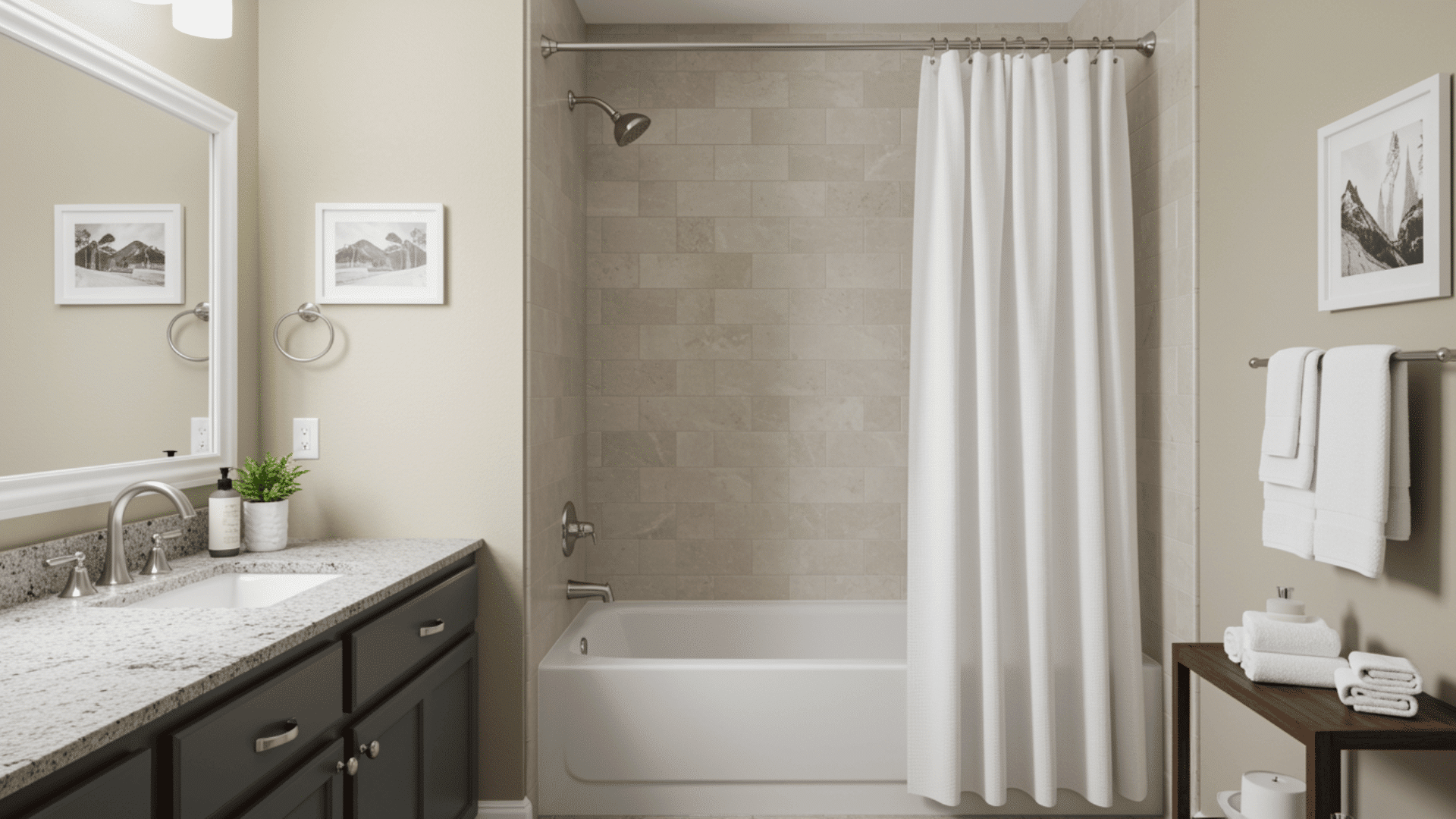
Getting your shower setup right sounds simple, but small details can make a big difference. The right shower curtain height affects how well water stays inside and how your bathroom looks overall.
At the same time, choosing the standard shower curtain size helps avoid awkward gaps or bunching.
If you’ve ever dealt with a curtain dragging on the tub or sitting too high, you know the frustration.
In this blog, I’ll break it down in a clear, practical way so you can get the height and size just right without second-guessing.
Understanding Shower Curtain Height
Shower curtain height refers to how high you install the curtain rod and how the curtain hangs in relation to your tub or shower floor. It may seem like a small detail, but it plays a big role in both function and appearance.
If the curtain hangs too low, it can bunch up or stay damp, which isn’t ideal. If it’s too high, water can escape and create a mess outside the tub.
Getting the height right helps keep water where it belongs while also making the bathroom feel more balanced.
A well-placed curtain can even make the space look taller and more put-together without much effort.
Shower Curtain Sizes by Bathroom Type
Choosing the right curtain depends on your bathroom layout and affects how well your shower curtain height works in practice.
While the standard shower curtain size fits most setups, different bathroom types often need slight adjustments for better coverage and a cleaner look.
1. Standard Bathtub
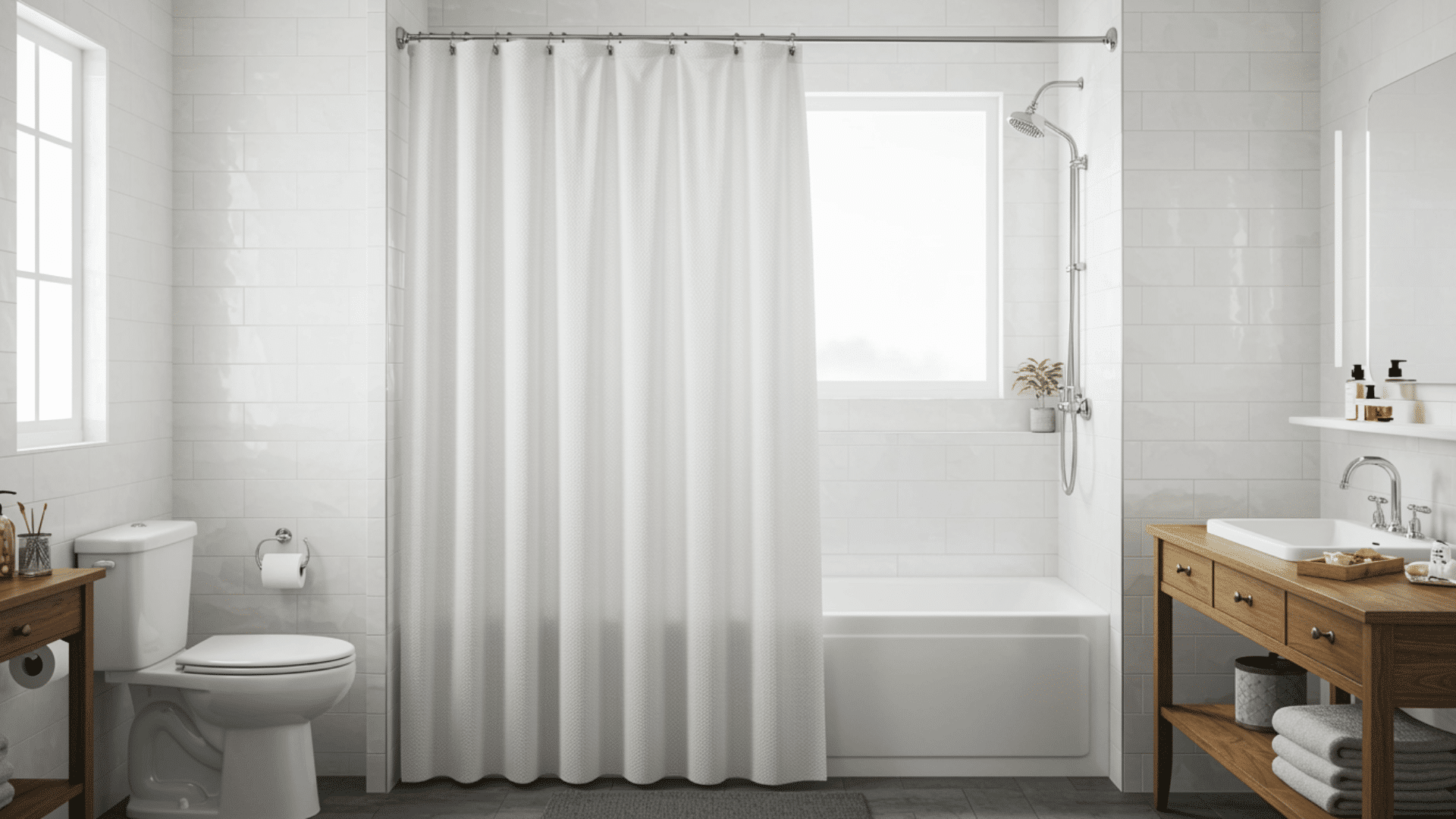
For a typical bathtub, the standard shower curtain size of 72 x 72 inches works well in most homes.
It offers enough width to fully cover the tub while allowing the curtain to hang correctly at the ideal shower curtain height.
When paired with the right rod placement, this size keeps water inside without the fabric dragging or sitting too high.
2. Shower Stall
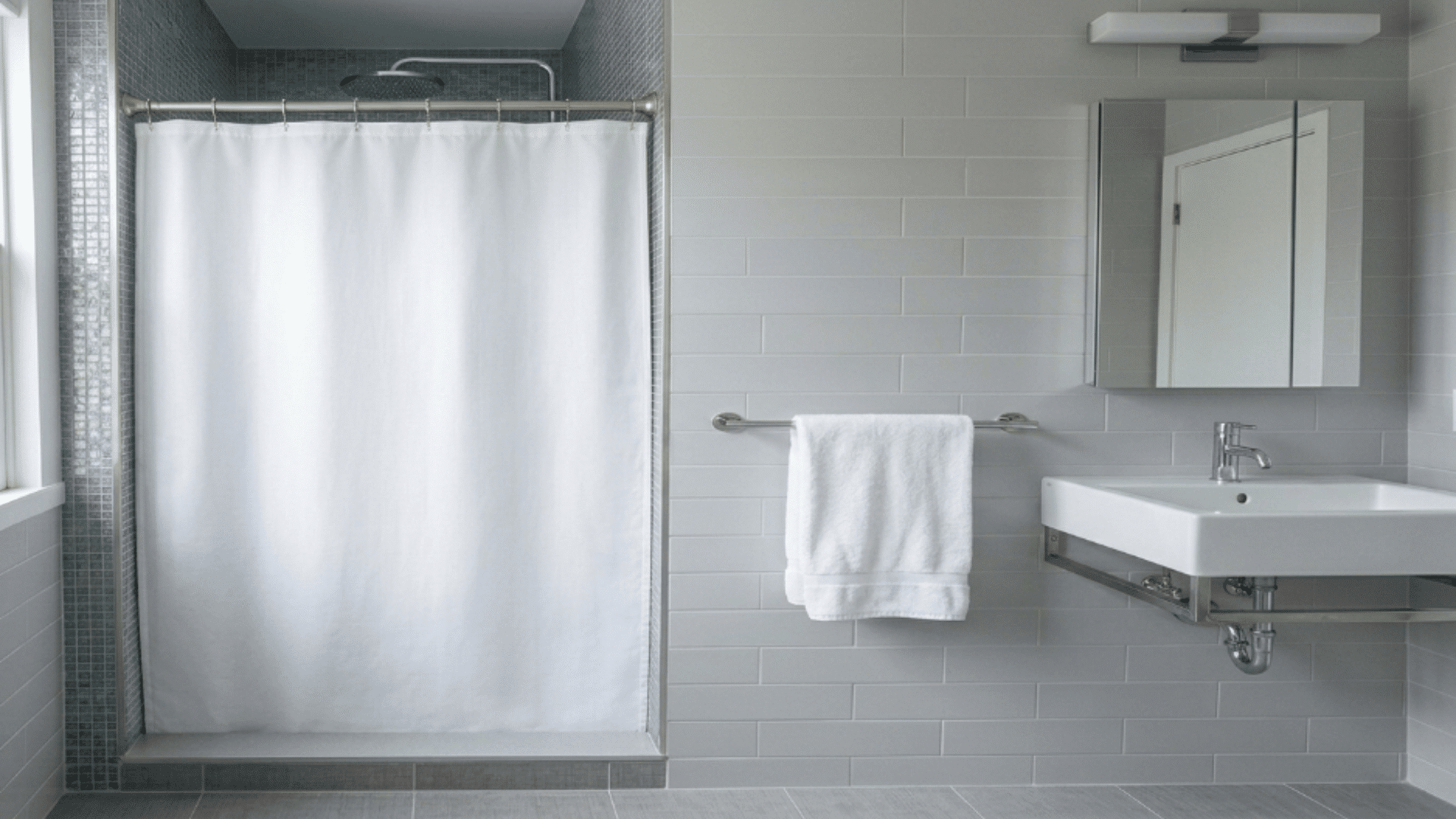
Shower stalls are more compact, so using the standard shower curtain size can feel bulky. Instead, a narrower option, such as 54 x 78 inches, is usually a better fit.
The reduced width prevents bunching, while the added length helps maintain proper shower curtain height and keeps water from escaping the edges.
3. Extra Tall Bathrooms
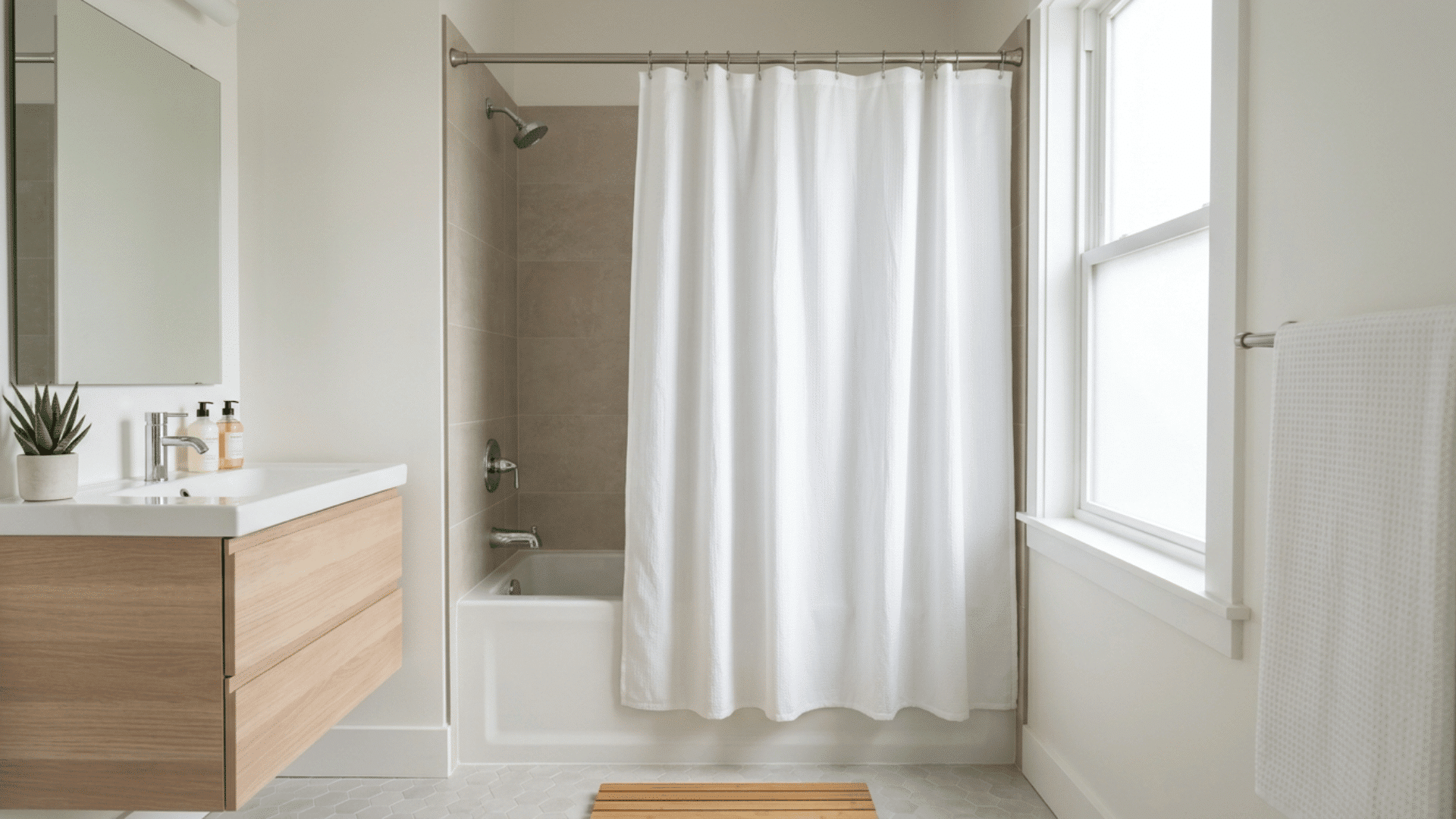
In bathrooms with higher ceilings, a 72-inch curtain may look short and throw off the overall balance.
Going for 72 x 84 inches or 72 x 96 inches gives better vertical coverage and allows you to raise the rod slightly. This not only improves shower curtain height but also makes the space feel more open.
4. Clawfoot or Freestanding Tub
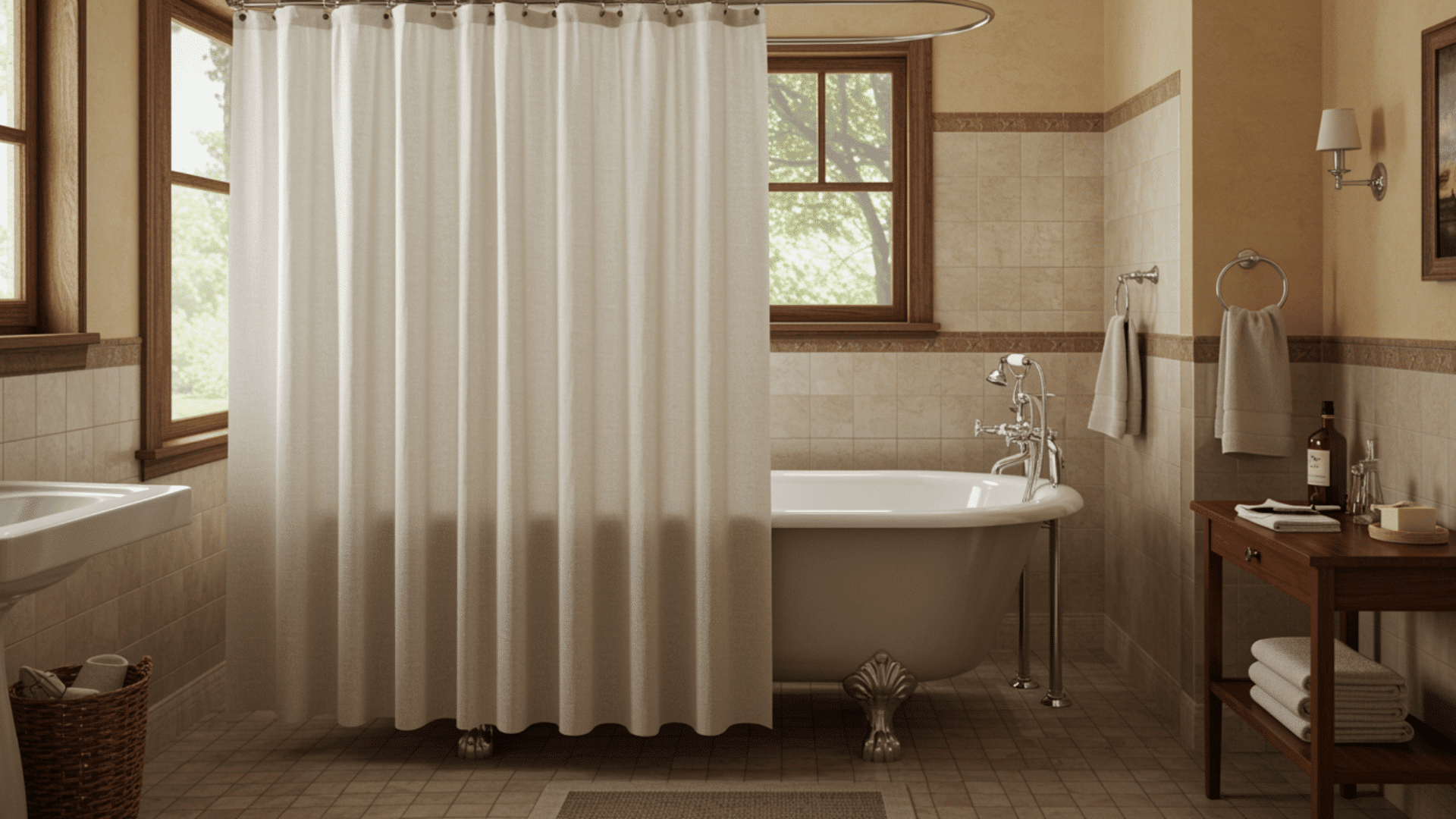
Clawfoot and freestanding tubs need a different setup since they are exposed on all sides.
Instead of a single curtain, you may need wraparound or circular curtains, often with multiple panels.
In this case, maintaining the proper shower curtain height is even more important, as the curtain must fully enclose the tub while still hanging neatly above the floor.
Standard Shower Curtain Height (How to Get It Right)
While sizes can vary, getting the shower curtain height right is what really makes the setup work. It mainly comes down to where you place the rod and how the curtain falls inside the tub.
In most homes, the rod is installed at about 75 to 77 inches from the floor. This placement works well with a standard bathtub and helps the curtain hang properly without causing water to spill out.
Here are the key things to follow:
- Keep the curtain 1 to 2 inches above the tub floor
- Avoid letting the curtain bunch up or hang too high
- Leave a gap of about 4 to 12 inches below the ceiling
- Mount the rod slightly higher if you want the bathroom to feel taller
A small height adjustment can make a noticeable difference in both function and overall appearance.
How to Measure Shower Curtain Height (With Quick Size & Height Chart)
A few simple measurements can help you get the shower curtain height right the first time. Instead of guessing, use this quick chart to match your bathroom type with the right curtain size and rod placement.
| Bathroom Type | Curtain Size | Tub Height | Recommended Rod Height | Clearance from Tub |
|---|---|---|---|---|
| Standard Bathtub | 72 x 72 inches | 14–16 in | 75–77 inches | 1–2 inches |
| Shower Stall | 54 x 78 inches | N/A | 75–77 inches | 1–2 inches |
| Taller Bathroom | 72 x 84 inches | 14–16 in | 77–80 inches | 1–2 inches |
| High Ceiling Setup | 72 x 96 inches | 14–16 in | 80–84 inches | 1–2 inches |
Common Shower Curtain Installation Mistakes
Small mistakes during installation can affect both how your shower works and how your bathroom looks. Getting the shower curtain height and size right from the start helps avoid these common issues.
- Hanging the curtain too low, which can cause water to collect and keep the fabric damp
- Installing the rod too low, making the bathroom feel shorter and less open
- Choosing the wrong width can lead to gaps where water can escape
- Ignoring the liner length mismatch, where the liner is either too short or longer than the outer curtain
- Letting the curtain drag inside or outside the tub, which can lead to faster wear
- Not measuring before installation results in a poor fit and uneven hanging
- Using a rod that isn’t secure, causing it to shift or fall over time
Final Tips
Getting the right setup comes down to a few simple choices.
When you understand the correct shower curtain height and pick the standard shower curtain size that fits your space, everything works better, from keeping water inside to making the bathroom feel more put-together.
Small adjustments, like rod placement or curtain length, can make a noticeable difference.
Take a moment to measure, choose wisely, and install it properly. Once done right, you won’t have to keep fixing it again and again.
Frequently Asked Questions
Do curved shower rods change curtain height requirements?
Curved rods don’t change height much, but they create extra space inside the shower, which may affect how the curtain hangs.
How often should shower curtains be replaced?
Most should be replaced every 6–12 months, depending on wear, stains, and mildew buildup.
What material works best for shower curtains?
Polyester and PEVA are popular choices because they resist moisture and are easy to clean.