




A kitchen renovation is one of those projects that sounds straightforward until you actually start pricing it out.
The costs involved are more complex than most people expect, and the final number almost always differs from the initial estimate.
This blog covers everything, how much is a kitchen remodel – from the big-ticket items most people already know about to the smaller costs that quietly add up in the background.
By the time you finish reading, you’ll have a clear picture of what to expect, what to watch out for, the average kitchen remodel cost, and how to approach your budget in a way that actually holds up once the work begins.
What to Know Before You Set a Budget
Setting a kitchen renovation budget without context is one of the most common planning mistakes homeowners make.
A number pulled from a general search doesn’t account for your specific situation. Two homeowners with the same budget can end up with completely different results based solely on those variables.
Before you commit to any number, it helps to understand what actually drives renovation costs-and which factors you actually have real control over.
Key Factors that Affect Cost
- Kitchen Size: Bigger kitchens cost more due to higher material and labor needs.
- Scope of Work: Cosmetic updates are cheaper than full remodels.
- Layout Changes: Moving plumbing or walls significantly increases cost.
- Material Quality: Cabinets, countertops, and finishes heavily impact your budget.
- Labor Costs: One of the largest expenses varies by location.
- Unexpected Repairs: Hidden issues can quickly add to your total cost.
What is the Average Kitchen Remodel Cost?
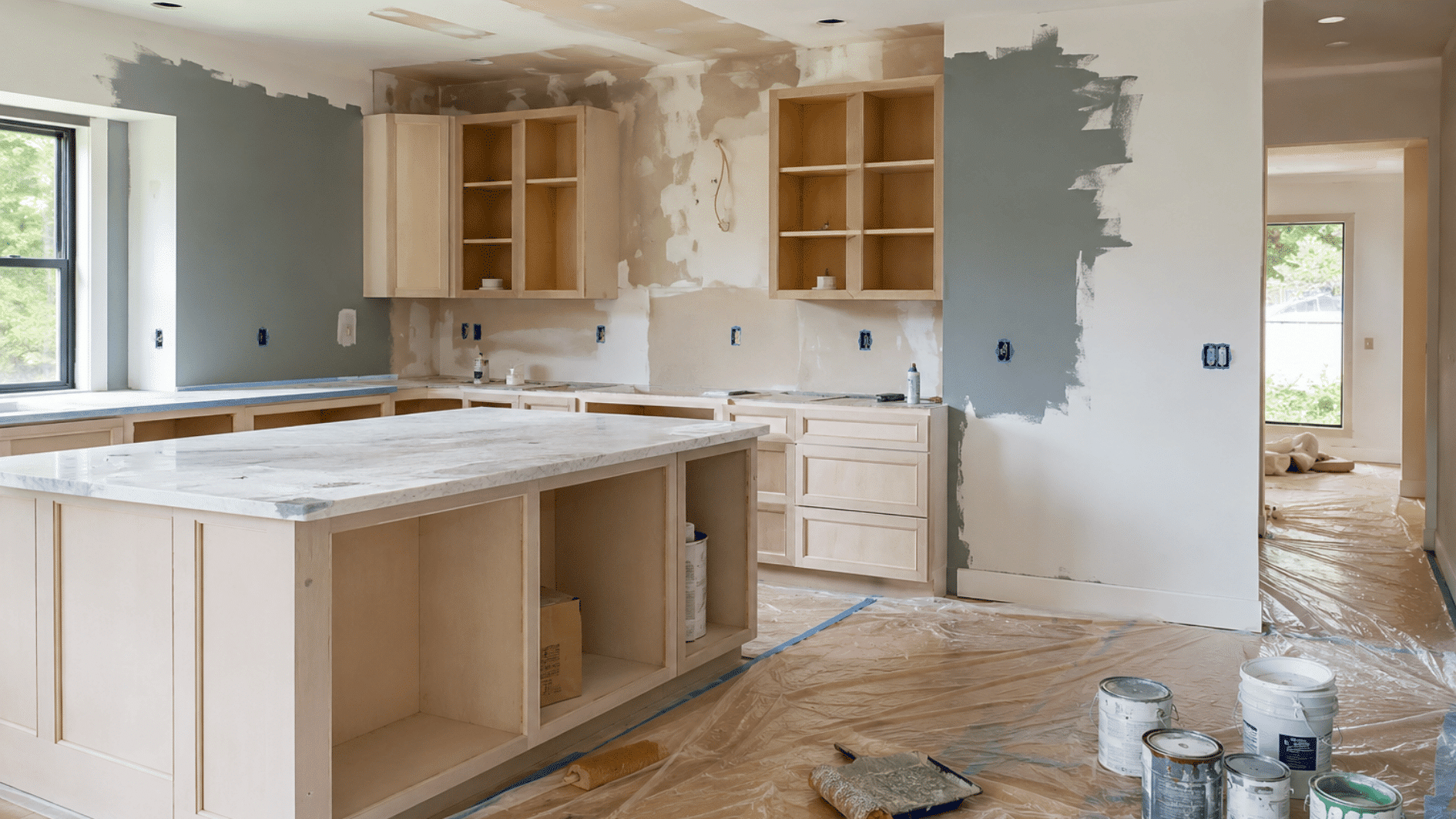
Before getting into individual cost categories, it helps to understand what most homeowners actually spend.
Having a realistic baseline keeps your planning grounded and prevents you from either overspending unnecessarily or setting a budget that simply won’t get the job done.
That number shifts considerably based on the key factors while renovating your kitchen. Here’s how the three main budget tiers by Renovation Level break down:
| Renovation Level | Estimated Cost Range | Description | What’s Included |
|---|---|---|---|
| Budget Remodel | $5,000 – $15,000 |
Focuses on visual updates without changing the layout. Ideal if your current kitchen works well. |
Cabinet repainting, new hardware, updated lighting, and basic appliances |
| Mid-Range Remodel | $15,000 – $50,000 |
Balances cost and quality, making it the most popular choice for homeowners. |
Semi-custom cabinets, new countertops, updated flooring, better appliances |
| High-End Remodel | $50,000 – $150,000+ |
Involves major upgrades and possible layout changes for a complete overhaul. |
Custom cabinets, premium appliances, structural changes, full redesign |
These ranges are starting points, not fixed rules. A small kitchen renovated with high-end materials can exceed a mid-range budget, while a large kitchen refreshed with smart material choices can stay well within one.
Full Cost Breakdown by Category
Breaking your renovation into categories helps you understand where your budget goes and where you can adjust costs without major compromises.
1. Cabinets: 25% to 35% of Total Budget
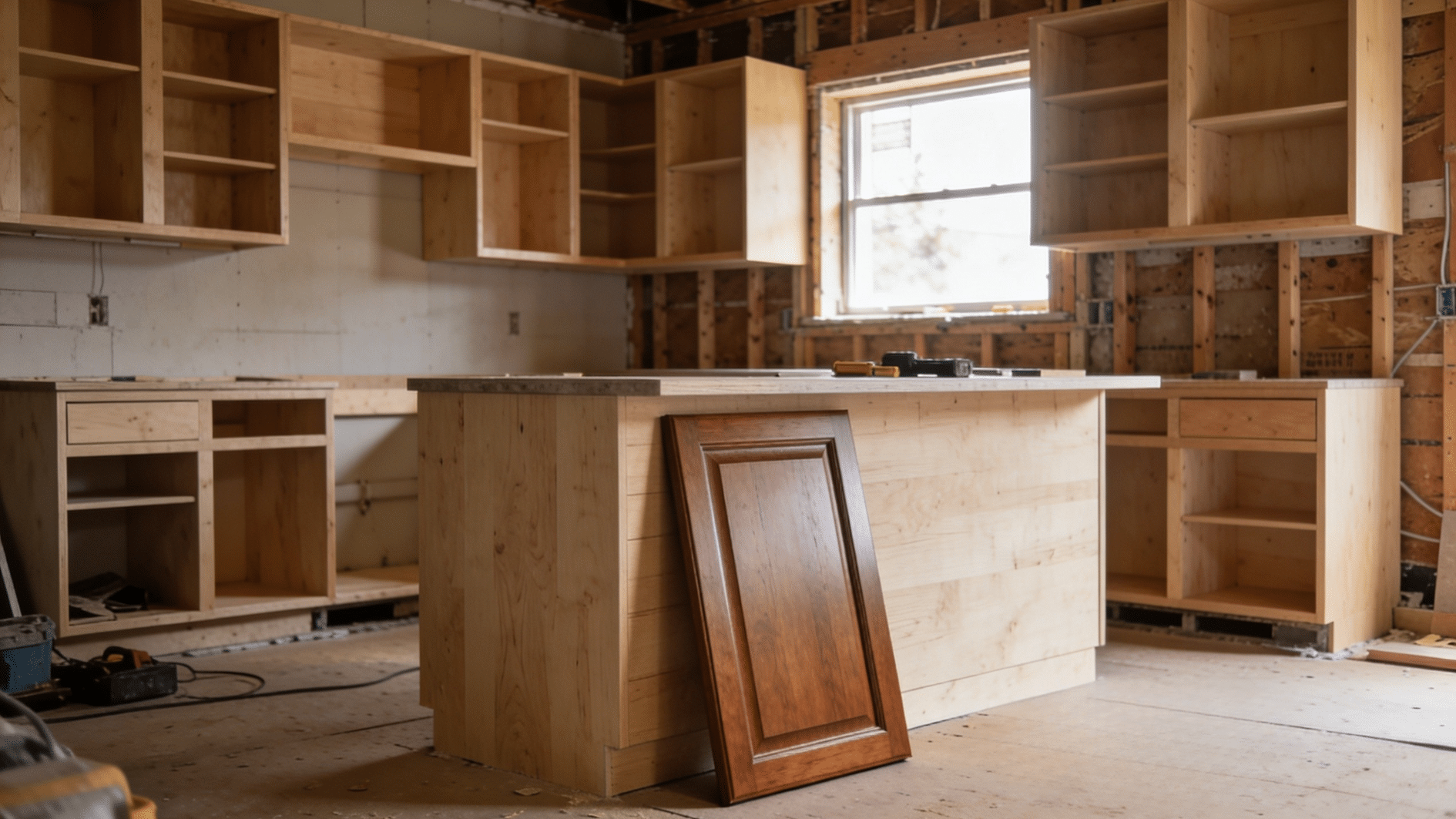
Cabinets are the single largest expense in any kitchen renovation.
Stock cabinets run $60 to $200 per linear foot installed, semi-custom cabinets run $100 to $650, and custom cabinets start at $500 and can exceed $1,200 per linear foot.
If your existing cabinet boxes are structurally sound, refacing – replacing just the doors, drawer fronts, and hardware – saves 30% to 50% compared to full replacement and still produces a significant visual change.
2. Countertops: 10% to 15% of Total Budget
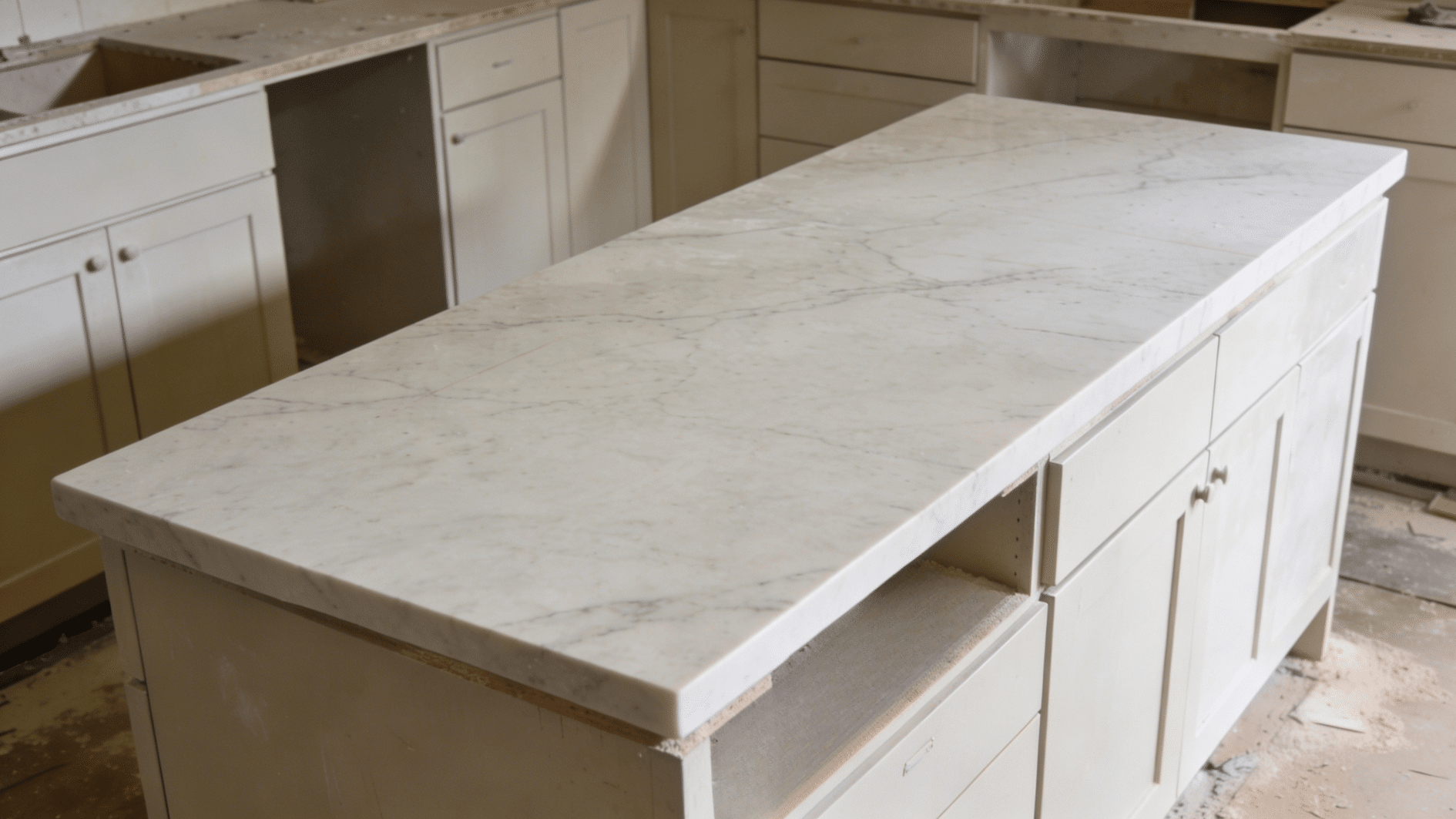
Countertop costs vary widely depending on the material you choose.
Laminate starts at $10 to $40 per square foot installed; ceramic tile runs $20 to $60; butcher block $30 to $80; granite $40 to $140; quartz $50 to $150; and marble $75 to $250.
Quartz is currently the most popular mid-to-high-end choice – non-porous, low-maintenance, and more durable day-to-day than natural stone options that require periodic sealing.
3. Appliances: 10% to 15% of Total Budget
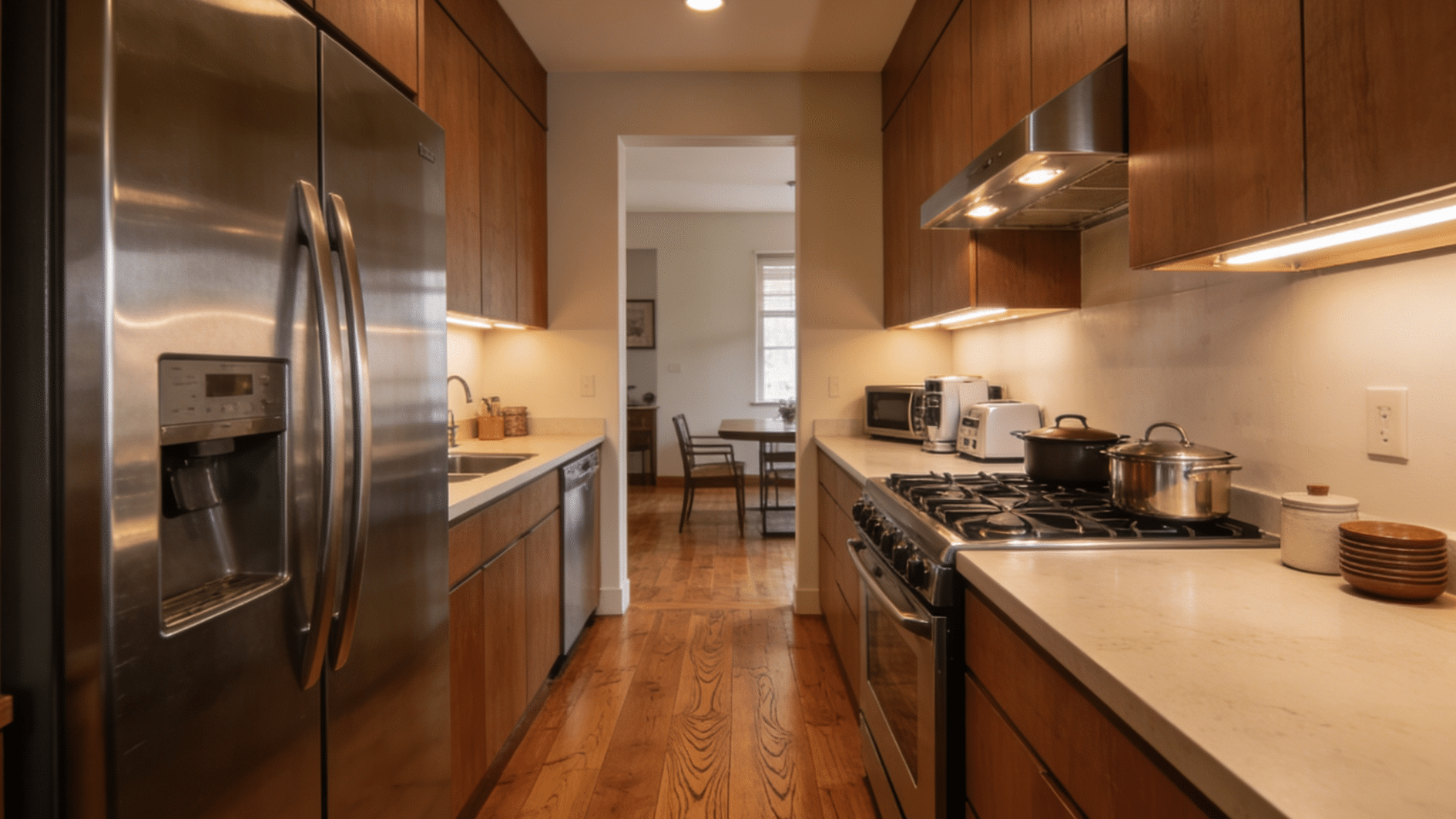
A full appliance package – refrigerator, range, dishwasher, and microwave or hood vent – runs $2,000 for entry-level and $20,000 or more for professional-grade brands.
If your current appliances are functional, keeping them through the renovation and upgrading individually over time is a smart way to free up meaningful budget without affecting any other part of your renovation plan.
4. Flooring: 5% to 10% of Total Budget
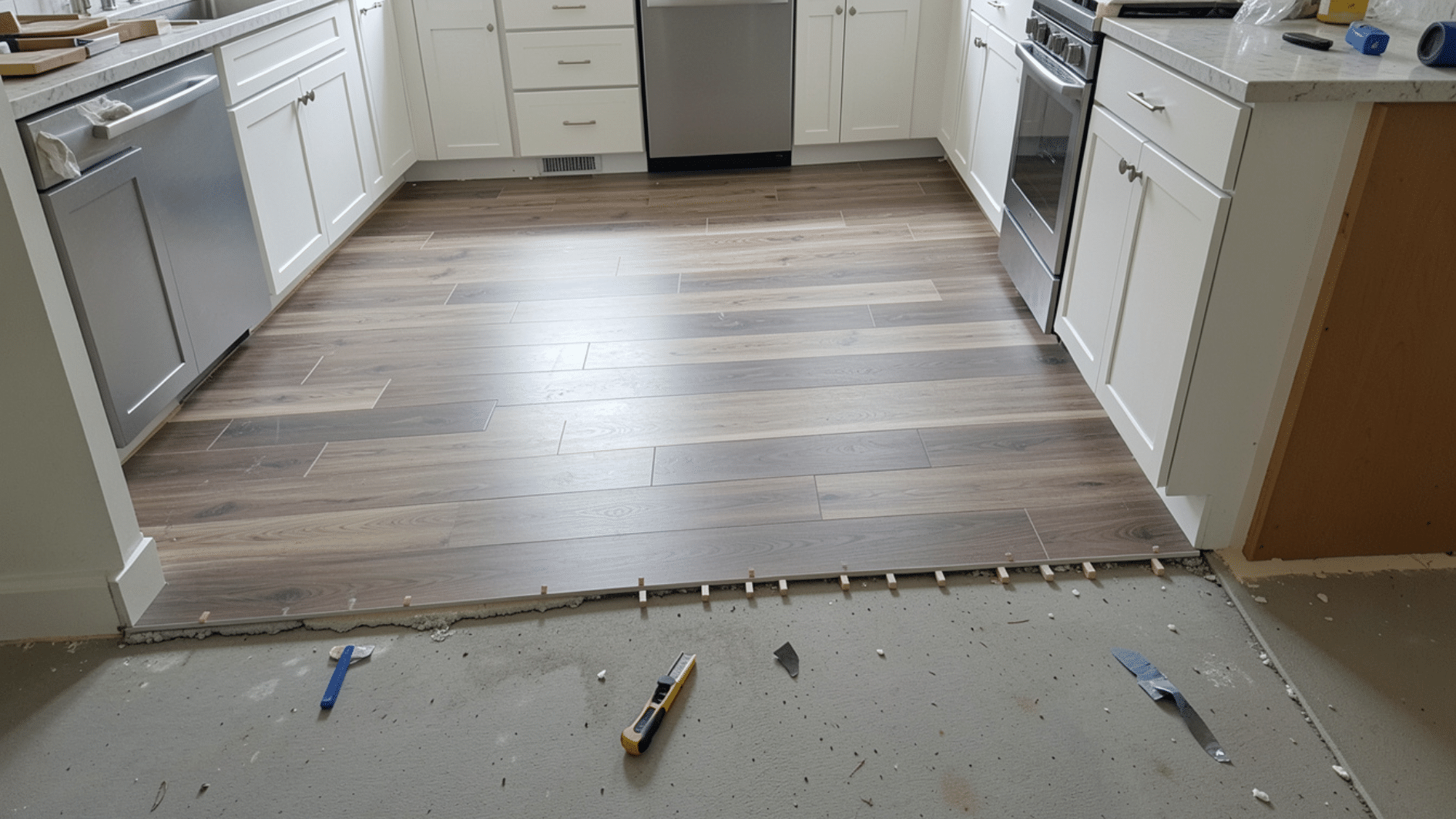
Kitchen flooring needs to handle daily wear, spills, and heavy foot traffic.
Luxury vinyl plank (LVP) is the most popular budget-to-mid-range choice at $2 to $7 per square foot installed, and it’s waterproof and durable. Porcelain or ceramic tile runs $5 to $15 per square foot.
Hardwood costs $8 to $25 per square foot, adds resale value, but requires more moisture management than either of the other two options.
5. Plumbing and Electrical: 5% to 15% of Total Budget
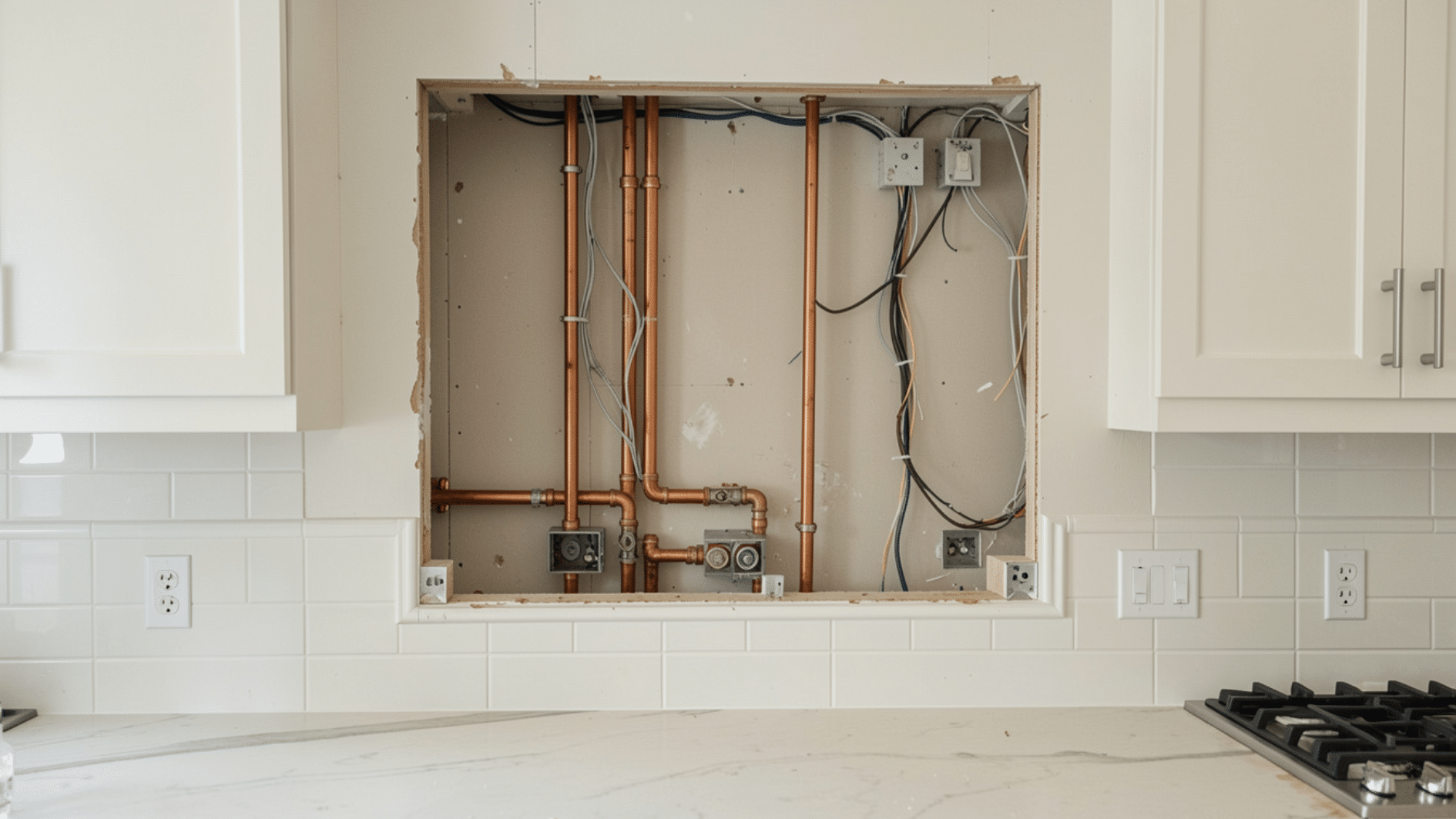
If both stay in their current positions, costs remain relatively low.
Standard plumbing with no relocation runs $500 to $1,500. Each fixture move adds $1,000 to $3,500. Electrical work for dedicated appliance circuits runs $500 to $3,000.
Older homes requiring a panel upgrade add an additional $1,500 to $4,000. The moment either plumbing or electrical moves from its original position, this category becomes one of the more significant budget line items.
6. Lighting: 2% to 5% of Total Budget
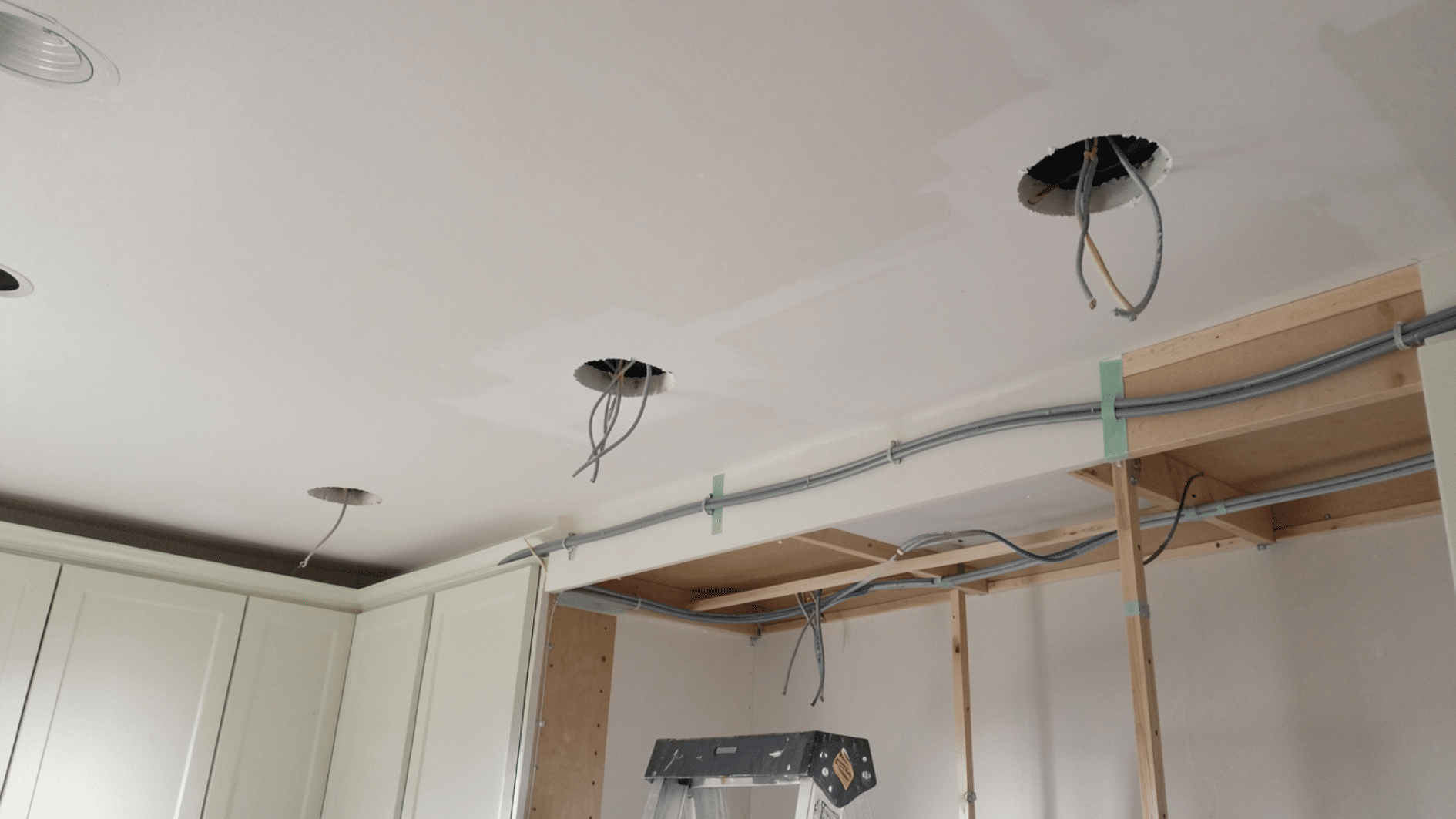
A full lighting update – recessed ceiling lights, under-cabinet LED strips, and pendant fixtures over an island – typically runs $800 to $3,000 installed.
Under-cabinet lighting alone starts at $200 to $600 and makes a genuine difference to daily food prep.
If you’re already opening walls or ceilings for other work, adding or repositioning lighting at the same time costs considerably less than doing so separately.
7. Backsplash: 2% to 5% of Total Budget
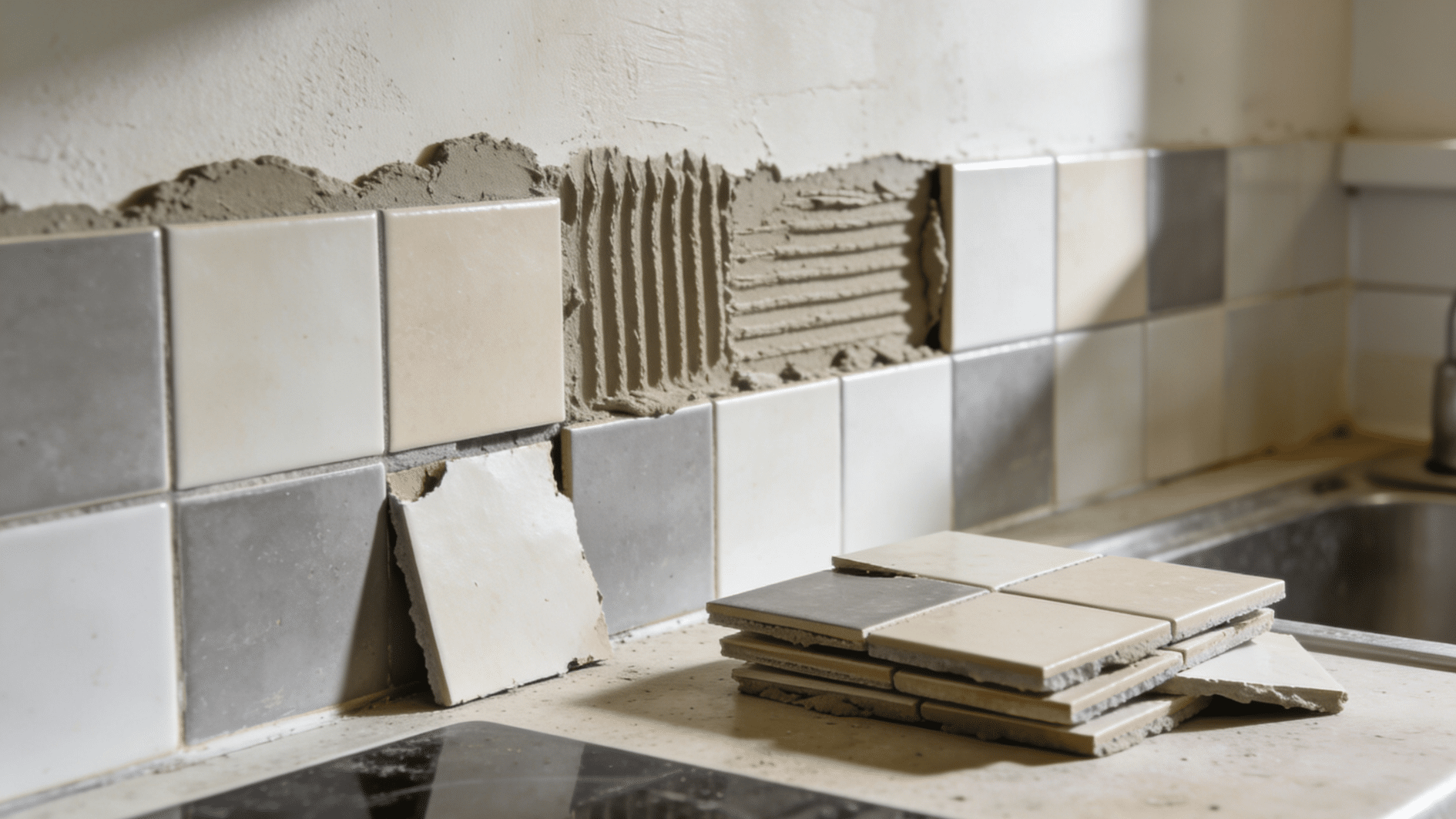
Basic ceramic subway tile starts at $10 to $20 per square foot installed.
Porcelain, glass, or patterned tile runs $20 to $50, while natural stone or custom mosaic can run $50 to $100 or more.
Most kitchens have 30 to 40 square feet of backsplash space, keeping total costs between $400 and $1,500 – making it one of the more flexible and manageable budget categories in the entire renovation.
Is a Kitchen Remodel Worth the Investment?
A kitchen renovation consistently ranks among the highest-return home improvement projects.
A mid-range remodel recoups 60% to 80% of its cost in added home value, while a minor refresh often delivers an even better return proportionally.
Beyond resale value, an updated kitchen improves daily functionality, storage, and comfort in ways that are hard to measure financially.
- Boosts Home Value: Buyers often see the kitchen as the heart of the home, so modern upgrades can make your property more appealing and increase resale potential.
- Improves Everyday Living: Better layouts, updated appliances, and smarter storage make cooking, cleaning, and family time much easier and more enjoyable.
Conclusion
A well-planned kitchen renovation comes down to one thing – knowing where your money goes before you spend it.
You now have a clear picture of every major cost category, what drives them up, and where smart choices save money without cutting corners.
From cabinets and countertops to lighting and backsplash, every line item has a number attached to it – and now you know what those numbers actually look like.
Plan carefully, prioritize smartly, and your kitchen renovation will deliver returns both in daily use and long-term home value.