




Grass is easy to judge by what shows above ground, but almost everything that decides whether a lawn thrives happens below the surface. Roots, soil texture, and the way moisture moves through the ground all respond directly to how a yard gets watered.
A lawn that receives water in the right amount, at the right depth, and at the right time builds a foundation that carries it through heat, heavy rain, and long stretches of dry weather. A lawn watered carelessly stays shallow and fragile no matter how often the water runs.
What Happens When Water Stops Reaching the Ground Evenly
A yard can follow every good watering habit and still come up dry in places, which is usually a sign that the problem sits in the equipment rather than the schedule. An irrigation system that has lost pressure, sprung a leak below ground, or developed a wiring fault at the controller will soak one zone while starving another, and the grass shows it within a week or two.
The dependable move is to hire professionals to repair irrigation system faults before dry patches spread and the soil underneath starts to harden. Licensed crews carry the diagnostic tools to pinpoint the break quickly and fix it without digging up more lawn than the job actually requires.
Watering Deeply Instead of Watering Often
Short, frequent watering feels responsible, but it trains grass to keep its roots near the surface where the moisture sits. Those shallow roots dry out fast, burn in heat, and struggle to pull nutrients from deeper soil. Longer sessions spaced further apart push moisture several inches down, and roots follow it. Over a season, that single change produces a noticeably tougher lawn.
A useful way to check depth is to water normally, wait about half an hour, then push a screwdriver or a long probe into the ground. If it slides in easily for six inches or more, the water has gone where it needs to go. If it stops short, the run time needs to increase.
How Soil Structure Responds to Regular Moisture
Soil is not a fixed thing. It compacts under foot traffic, tightens when it stays dry too long, and turns dense and airless when it stays saturated. Each of those conditions makes water harder to absorb, which means more of it runs off or pools instead of soaking in.
Ground that receives steady, measured moisture holds a looser structure. Air pockets stay open, earthworms and microbes stay active, and organic matter breaks down at a healthy rate. That looser texture accepts rainfall better too, so a well-watered lawn actually benefits more from a summer storm than a neglected one does. Sandy ground drains fast and needs shorter, more frequent attention, while heavier clay holds moisture far longer and punishes overwatering.
Timing the Watering Around Heat and Wind
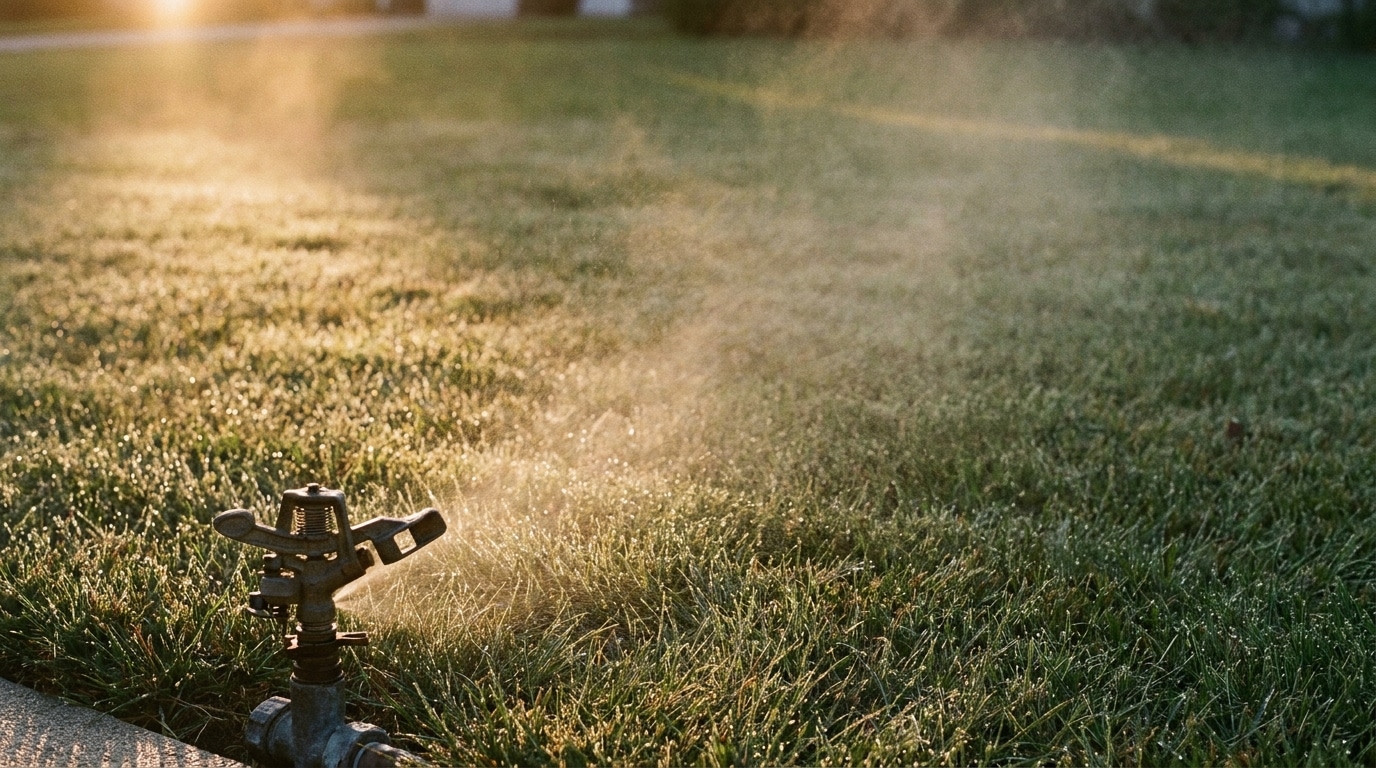
The hours between very early morning and just after sunrise are the best window for watering in nearly every climate. Temperatures are low, wind is usually calm, and water lands on the ground instead of drifting sideways or evaporating before it reaches the roots. Grass blades also dry through the morning, which limits the damp overnight conditions that fungal problems need.
Watering in the middle of the afternoon wastes a large share of what is applied. Watering late in the evening leaves the lawn wet for hours in the dark, which invites disease. Neither habit is fatal on its own, but repeated week after week both quietly undermine everything else a homeowner does for the yard.
Reading the Lawn for Early Signs of Stress
Grass gives warnings long before it turns brown. Blades take on a dull, grayish cast when moisture runs low. Footprints stay visible across the lawn instead of springing back within a minute or two. Individual blades fold or curl inward along the center line to conserve what water they still hold.
Overwatering produces its own signals, and they are easy to misread as drought. Spongy ground underfoot, a sour smell after a hot afternoon, moss creeping into shaded corners, or thin patches where roots have suffocated all point toward too much water rather than too little. Reacting to a dull lawn by adding more water can make a wet problem considerably worse, so a quick check of the soil before changing anything saves a great deal of trouble.
Adjusting the Schedule Through the Seasons
A watering routine set once in spring and left alone all year will be wrong for most of that year. Grass grows fast and drinks heavily during warm months, then slows down as temperatures drop and daylight shortens. Rainfall patterns shift, humidity rises and falls, and evaporation rates swing widely between one season and the next.
Reviewing the schedule every couple of months keeps the lawn matched to conditions instead of to a calendar. During the wettest stretch of the year, the yard may need almost nothing beyond what falls naturally. In the driest weeks, it may need close to double the usual amount. Cutting back during cool weather also gives the soil a chance to breathe and prevents the constant saturation that weakens roots heading into the next growing season.
Mowing Height, Thatch, and How Much Water Gets Through
Watering practices do not operate alone. Cutting the grass too short exposes soil to direct sun, drives up evaporation, and forces the lawn to spend energy regrowing blades instead of building roots. Leaving the mower a notch higher keeps the ground shaded and cooler, which means every gallon applied goes further.
Thatch matters just as much. A thin layer of decomposing material at the soil line is normal and even helpful, but once it builds past roughly half an inch, it starts acting like a sponge that intercepts water before it reaches the ground. Raking it out or aerating compacted areas restores the path between the surface and the root zone. Sharp mower blades help as well, since clean cuts heal quickly while torn blades lose moisture through ragged edges for days.
The lawns that hold up best over years are rarely the ones receiving the most water. They are the ones where water arrives evenly, sinks deep, and lands on soil prepared to accept it.