

Think about the last home you walked into and loved. Price probably wasn’t what won you over. The home just felt pulled together. It was the feeling that every piece belonged there.
I hear this a lot from designers. A home feels custom when the small things are right. The faucet, the mirror, the cabinet. Those details do the heavy lifting.
The best part is that you don’t have to tear out a single wall. A wall hung vanity can make a tight bathroom feel open. A kitchen pot filler can make cooking easier and look great doing it. A floor mirror in living room corners can double the light.
Even your patio can get the same treatment. One luxury outdoor sofa and a few luxurious home accents can turn it into a spot you actually use.
Below, I walk through nine upgrades, room by room. Each one has a quick tip you can try this month. Let’s start with the bathroom, where a small change goes a long way.
The Bathroom – Make It Feel Like a Spa
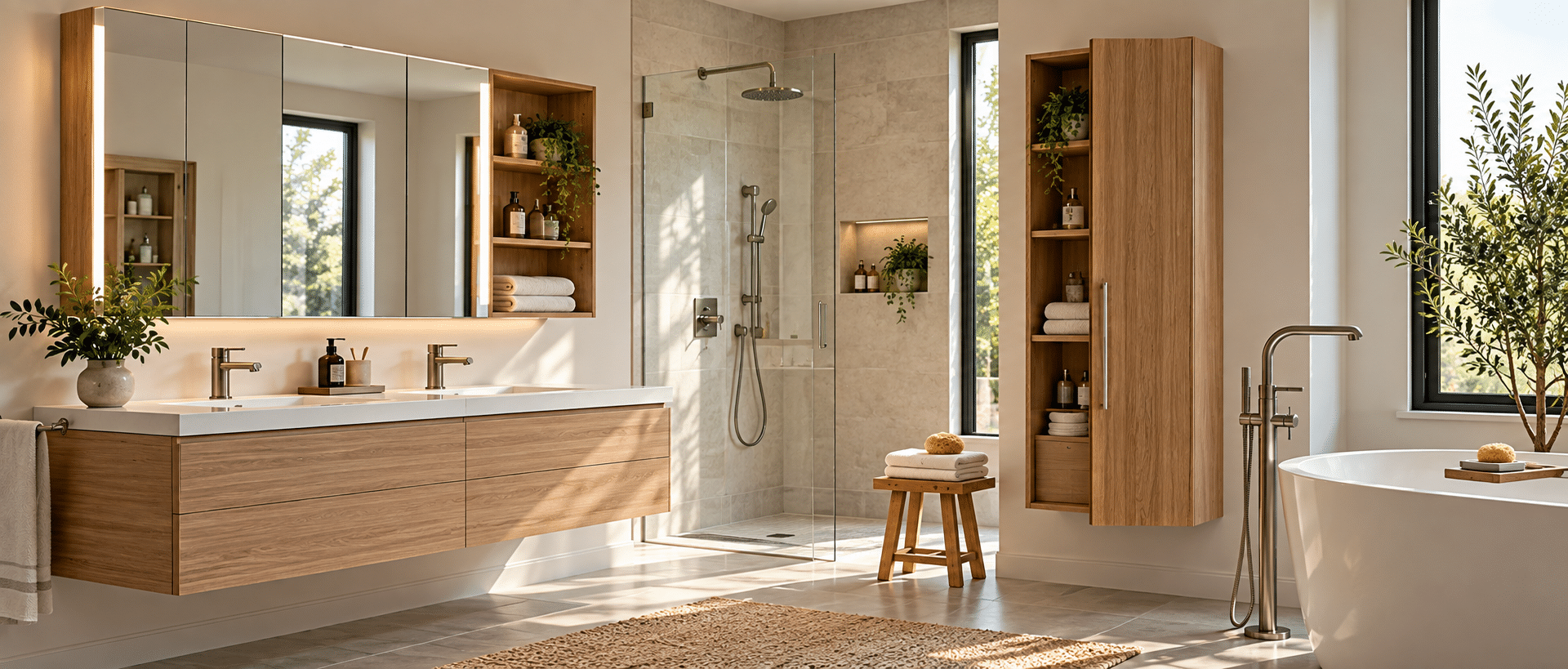
The bathroom is small, so a few changes show up fast. One or two upgrades can transform it.
I have looked at hundreds of bathroom layouts. One complaint comes up in almost every one. People say the room feels tight, not worn out. Give it more breathing room, and most of the frustration fades.
Start with the floor – go wall hung
A wall hung vanity is the quickest way to open up a tight bathroom. More floor shows underneath. That trick makes the room seem larger than it is. Mopping gets easier, too.
Run through this list before you shop:
- Wall strength: You need solid blocking or studs behind the vanity. Drywall alone can’t carry the weight.
- Mounting height: Most people like the sink rim between 32 and 36 inches.
- Plumbing location: Moving pipes adds cost. Pick a vanity width that lines up with the pipes already in your wall.
- Storage need: Wide drawers give your toothbrush, razor, and hair tools a home inside the vanity.
For a classic look, check out James Martin vanities. They come in many widths and finishes. Many use real wood frames. A solid build feels steady and lasts longer.
Tiny powder rooms can use a wall mount sink. It takes up less space than almost any other option. The tradeoff is storage, since nothing fits underneath. A small wall shelf or a woven basket nearby solves that.
One safety note. Ask a licensed plumber to check any wall-hung setup. A good install matters more than a good price.
Think about the toilet, too
A wall-hung toilet bowl follows the same logic. The tank sits inside the wall. Nothing blocks the floor. Sweeping around it takes seconds, and the whole room looks tidier.
It does need an in-wall carrier. That means extra wall depth and a bit more planning. Talk to your installer early. Planning this before the walls close is far easier.
Pick the right medicine cabinet
A bathroom medicine cabinet does a lot of quiet work. It holds small items and gives you a mirror. It also keeps the counter clear.
There are two main styles:
- Recessed: This sits inside the wall. It looks sleek, but you need open space between studs.
- Surface-mount: This hangs on the wall. No cutting is needed. It works well for renters and quick updates.
A wall medicine cabinet with a mirror front is the classic pick. The glass spreads daylight across the room. Small bathrooms look wider and less dim. For a warmer feel, try a wooden medicine cabinet. The grain adds character next to cool tile and glass.
Here is a tip many people miss. Pharmacists often suggest storing medicine in a cool, dry spot. Steamy bathrooms are not ideal. Keep daily items in your medicine cabinet, like floss and skin care. Store pills and vitamins in a bedroom drawer or hall closet.
Add storage that looks good
A linen cabinet is the hero of a small bathroom. Look for one that is slim, about 12 to 16 inches deep. It holds towels, spare soap, and extra rolls. It also keeps counters clear.
Short on floor space? Use your wall height instead. A tall, narrow linen cabinet fits where a wide one can’t. A simple rack for towels also works well. Hang it near the shower, so a towel is always in reach.
Finish with a few warm touches
Small details give a bathroom that spa feel. You don’t need many.
- A bathroom stool in teak or light wood. It works as a seat, a plant stand, or a spot for towels.
- A tray for soap and candles.
- A few luxurious home accents, like a glass jar or a linen towel.
- One small plant that likes humidity.
Keep your color palette tight. Soft whites, warm woods, and one metal finish look calm. A crowd of colors makes a little room feel chaotic.
My quick bathroom rule
Pick one big upgrade and two small ones. Try a wall hung vanity, a new mirror cabinet, and a stool. Together, they give you the most visible payoff for your budget.
Now let’s head to the kitchen, where small fixtures make a big difference.
The Kitchen – Small Fixtures, Big Payoff
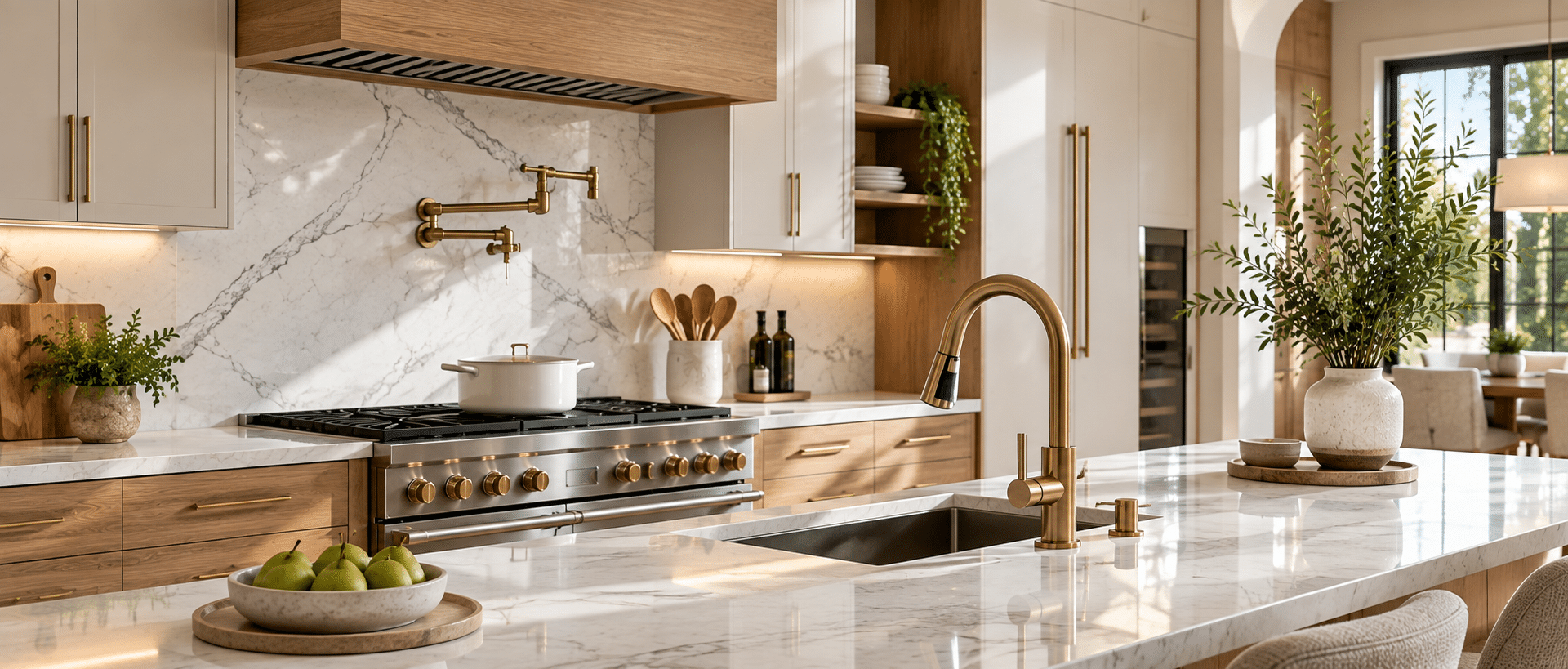
Most kitchen remodels cost a fortune. But a few fixtures can change how the room works, and they cost far less than new cabinets.
I like to start with the spots where your hands go every day. The faucet. The sink. The stove. Those three spots do the most work, so they give you the most return.
Add a pot filler above the stove
A kitchen pot filler is a small faucet on the wall behind your cooktop. It folds out on an arm. You fill a pot right on the burner. No heavy lifting. No drips across the floor.
Is it worth the money? That depends on how you cook. Ask yourself these three questions:
- Do you cook often? Pasta, soup, and big batches all need lots of water.
- Do you have a large range? Big pots get heavy fast.
- Do you mostly reheat food? If so, the money may go further elsewhere.
Plan a few things before you buy:
- Water line: Most pot fillers need their own supply line inside the wall. A licensed plumber should handle that.
- Cold water only: Many models give cold water only, which is fine for most pots.
- Shutoff valve: Ask for one near the faucet. It makes repairs simple.
- Height and reach: The arm should clear your tallest pot. It should also sit over the burners, not the edge.
One honest note. This upgrade is easiest during a remodel, when the wall is open. Adding one later means cutting into tile or the backsplash. Get a quote first, so the cost is no surprise.
Choose a faucet that moves with you
The faucet takes more daily wear than almost anything else in the house. A good one saves you effort every single day.
Pull out kitchen faucets have a spray head that slides straight out toward you. The hose is shorter than on a pull-down style. That makes them a smart pick for low windows or tight cabinets. Many people also like how easy the spray head is to guide.
Here is a simple way to choose. Measure the space above the sink first. Then check the height of the spout. A tall spout under a low window will hit the glass. A short one can make big pots hard to fill.
When you shop for pull out faucets, check these points:
- Hose length: Longer hoses reach the far corners of a deep sink.
- Spray modes: Two modes, a stream and a spray, cover almost every job.
- Spray head dock: A strong magnet keeps the head from drooping.
- Finish: Pick a finish that stands up to fingerprints and water spots.
A few years ago, I swapped an old faucet for a newer pull out kitchen faucet in a friend’s rental. It took under an hour. Rinsing big pans became easy. Small wins like that add up.
Think about a farmhouse double sink
A farmhouse double sink is a big, bold piece. The front of the sink sticks out past the cabinet. That is called an apron front. It gives the kitchen a classic look, and it is easy on your back when you lean in.
Two bowls also help you work better. One side holds dirty dishes. The other stays clear for rinsing or washing produce. If you cook a lot, you will notice the difference right away.
Check these things before you commit:
- Cabinet size: Many double-bowl farmhouse sinks run about 33 to 36 inches wide. Measure your base cabinet first.
- Cabinet cuts: The cabinet front often needs trimming to fit the apron. A pro can do this.
- Weight: Fireclay and cast iron are heavy. The cabinet needs strong support.
- Material: Stainless steel is light and tough. Fireclay is smooth and classic, but it can chip.
- Bowl depth: Deeper bowls hold big pans, but they can feel tall for short users.
If you rent or can’t change your cabinets, a single-bowl insert may be easier. But if you own the home and plan to stay, a double sink is a long-term pick.
Match the metals, then add small touches
Kitchen fixtures look best when they feel like a family. Pick one main metal finish. Use it on the faucet, the pot filler, and the cabinet pulls. A second metal can work as a small accent, but stop at two.
Then add a few luxurious home accents to finish the look. A wood cutting board leaned on the counter. A ceramic crock for spoons. A linen towel on the oven door. These details cost little, but they make the room feel lived in and cared for.
My quick kitchen rule
Put your budget where your hands go daily. A well-made faucet and a sturdy sink will serve you for years. Go lighter on pieces you rarely use. A pot filler is great for a busy cook, but it’s optional for others.
Living Room and Entryway – Mirrors, Storage, Statement Pieces
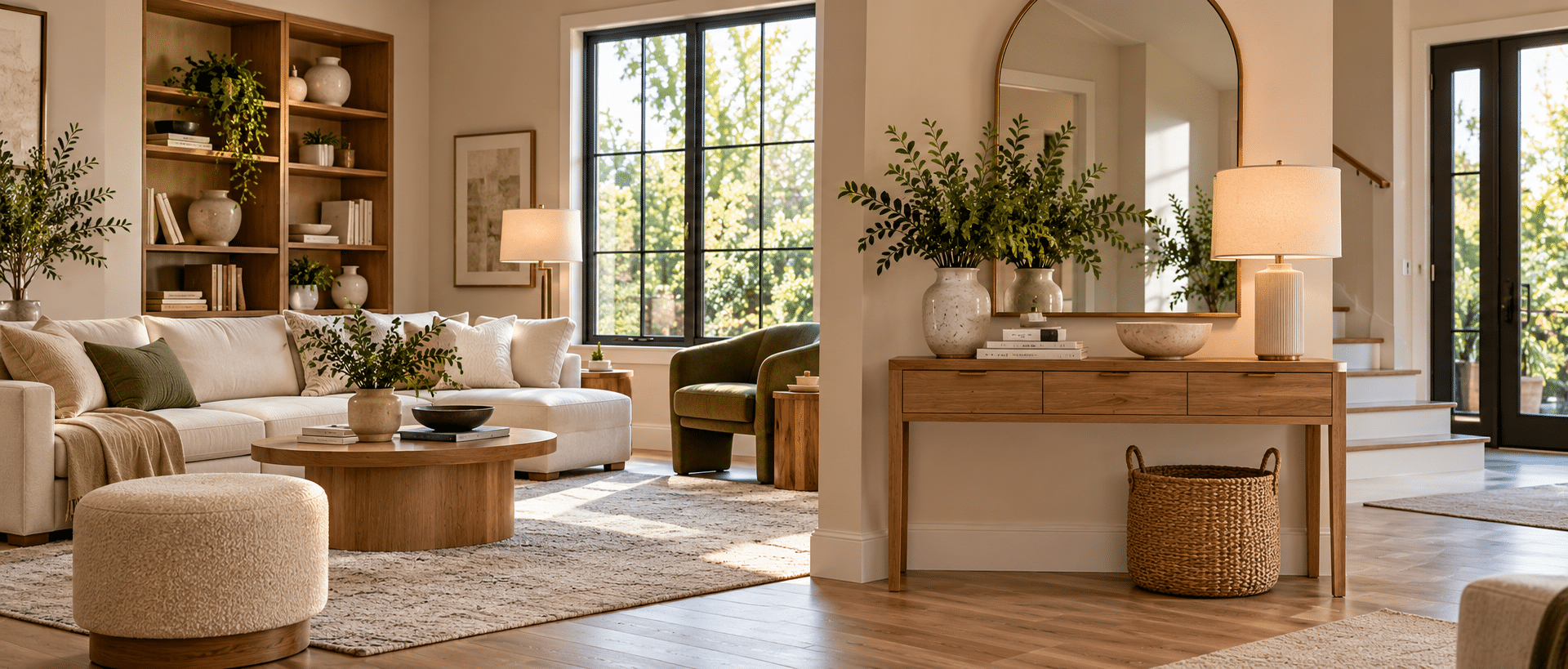
Guests see these two spaces first. You use them every single day. Nail these two rooms, and every other space follows their lead with less effort.
I have helped friends style both rooms many times. The pattern is always the same. People buy lots of small items, and the room still feels unfinished. A few larger pieces fix that fast.
Start with a mirror that does real work
A haum floor mirror in living room corners adds depth. It also pulls daylight into dark spots.
Placement beats style every time. Try these spots:
- Across from a window: The glass catches the view and the light.
- Near a lamp: The glow doubles after sunset.
- Beside a doorway: A tight hallway looks roomier.
- Away from clutter: A mirror repeats whatever it faces, mess included.
Frame style changes the feel. A modern floor mirror usually has a slim metal edge and straight lines. It suits simple rooms and small spaces. A decorative floor mirror often has a curved or carved border. Treat it like art, and let it anchor a quiet wall.
For a richer look, try a luxury floor mirror with a solid frame. It feels weighty and real. A thin, flimsy frame can look cheap, even with great glass. Check the frame depth and the back panel before you buy.
Here are the specs I check first:
- Height: Most full-length mirrors run 60 to 72 inches tall. Pick one that shows your whole body.
- Weight: Big mirrors are heavy. Ask a helper to move it.
- Safety: Leaning mirrors can tip. Use an anti-tip strap or wall anchor, especially with kids or pets.
- Angle: Lean it slightly back for a steady, natural reflection.
A smaller luxury mirror looks great over a fireplace or a console too. Aim for the center to land about five feet off the floor. That keeps it close to eye level for most adults.
Add a clock as a quiet statement
A luxury clock is useful and pretty at once. A large wall clock with a plain face looks bold, not busy. A mantel or tabletop clock gives a softer touch.
Go bigger than your first instinct. Small clocks vanish on a large wall. Aim for about one-third of the width of the sofa or console below it.
Choose furniture with storage
Clutter ruins a nice room faster than anything. Furniture with storage hides it, and the room never looks like a closet.
Here are pieces I like:
- Storage ottomans: They hold blankets and toys, and they double as a seat or table.
- Sideboards: They tuck away board games, extra plates, and chargers.
- Benches with bins: They keep shoes neat by the door.
- Console tables with drawers: They catch keys, mail, and small items.
For an entryway, consider a Beaumont Lane traditional 1 drawer console table. The classic lines suit many homes, and the single drawer holds keys, mail, and dog leashes. The top stays free for a lamp, a bowl, or a plant. Confirm the width and depth listed on the product page before you measure your wall. Leave at least 30 inches of walking room in front.
A simple rack by the door helps too. Wall hooks or a coat rack keep jackets off chairs. Mornings run smoother.
Pick seating that fits real life
A good sofa should feel great on a Tuesday night, not just in a showroom. Luxury sectionals come in many shapes. Picture your own evenings first. Who sprawls out, who perches, and who naps?
Use this short checklist:
- Measure the room: Mark the shape on the floor with painter’s tape.
- Measure the path: Check doorways, stairs, and hallways. Big sectionals can get stuck.
- Test the depth: Many seats run 36 to 40 inches deep. Tall people like deeper seats. Shorter people may prefer shallower ones.
- Check the fabric: Performance fabrics resist stains and wear. They suit homes with kids or pets.
- Leave walking space: Keep 30 to 36 inches between the sectional and other furniture.
A chaise on one end gives you a spot to stretch out. A modular style lets you change the layout later. That helps if you move or switch rooms.
Don’t skip the dining spot
Plenty of homes use one open space for both lounging and meals. Good chairs matter in that setup. Luxury dining chairs should stay comfortable well past dessert.
Check these points:
- Seat height: Most seats sit 17 to 19 inches high.
- Table gap: Leave roughly a hand’s width, about 10 inches, between the seat and the table’s underside.
- Cushion: A thick, firm cushion is easier on your back.
- Frame: Solid wood or strong metal legs last longer.
Mix chair styles with care. Try two armchairs at the ends and side chairs along the table. The layout looks planned and feels relaxed.
Finish with a few warm accents
Once the big pieces are in, bring in some luxurious home accents. Keep them simple:
- A large ceramic vase with dried stems.
- Two or three oversized photo books stacked flat on a console.
- A chunky knit blanket folded over one end of the sofa.
- A woven tray for remotes.
Group items in odd numbers, like three. Vary the heights. A shelf or table looks styled, not crowded.
My quick living room rule
Let one big piece take the lead. It could be a mirror, a sectional, or a clock. Keep everything around it quiet and simple. The room stays calm and easy to read.
Now let’s head upstairs to the bedroom and home office, where layered texture makes a big difference.
Bedroom and Home Office – Layered Texture
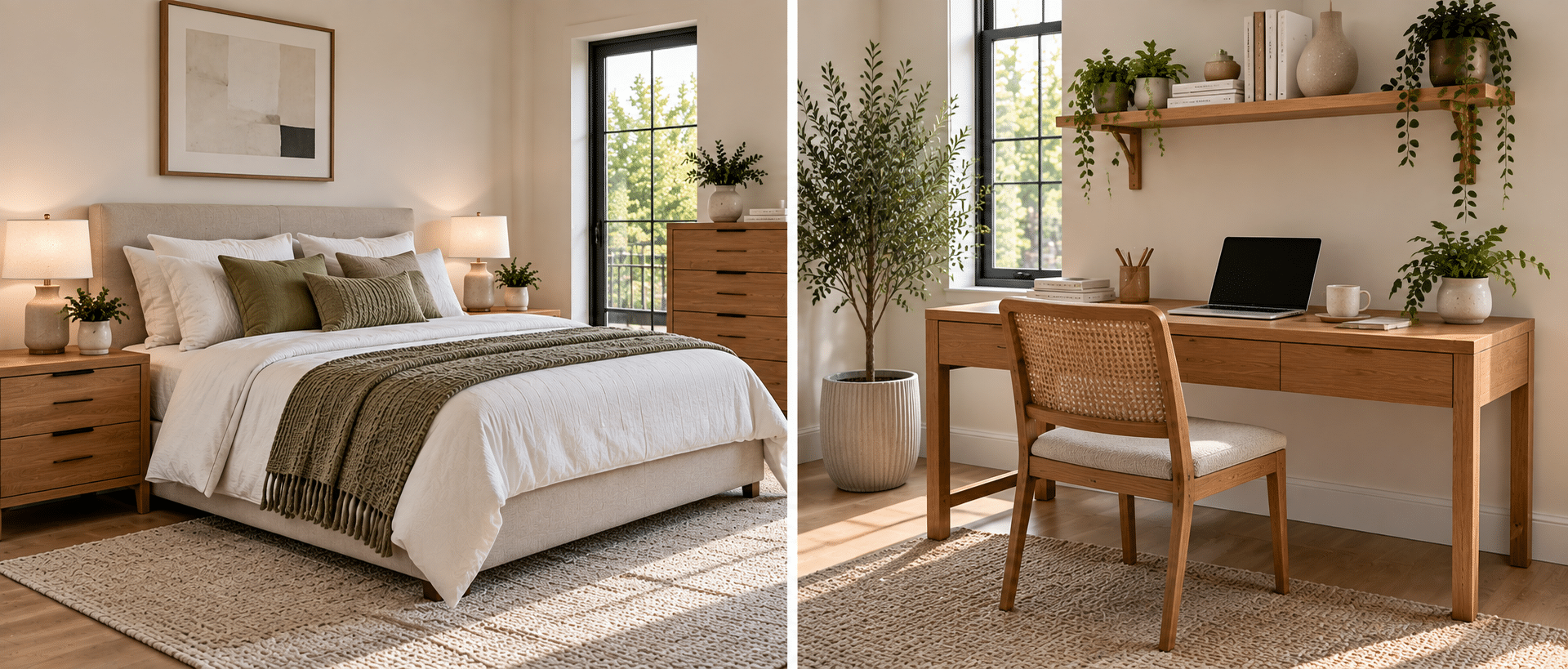
A room with only smooth surfaces can feel chilly, even when the furniture is lovely. Texture warms it up. Without it, the eye has nothing to catch on.
I see the same issue in many bedrooms and home offices. Every surface is matte, flat, and one shade. Photos look fine, but standing inside feels dull. Mixing a few materials fixes that.
What “layered texture” means?
Think of texture as the touch and look of a surface. Wood shows grain. Wool feels bumpy. Linen has a loose, slightly uneven weave. Glass feels cool and slick.
Set a few of these together, and the room gains depth. Three or four materials are plenty.
Here is the mix I reach for most:
- Something woven: like rattan or a jute rug.
- Something soft: like linen sheets or a wool blanket.
- Something sturdy: like oak or walnut.
- Something glossy: like a brass lamp or a mirror.
Keep the colors close. Warm white, tan, and soft brown pair well. When the shades match, the materials carry the look.
Start with the nightstand
You reach for a nightstand in the dark, half asleep. Make it practical first, then pretty.
Think about what actually lives there. A phone charger. A water glass. A paperback. Maybe your glasses. If you keep more, choose a style with a drawer or shelf.
A simple wood piece, like a Thuma nightstand, shows how tidy joinery and a low profile can feel modern and quiet. Use that idea as a guide. Then compare options by size, finish, and drawer depth.
Check these points before you buy:
- Height: The top should sit within a few inches of your mattress. That makes it easy to reach.
- Width: Most fit well between 16 and 24 inches. Measure the gap beside your bed.
- Corners: Rounded edges are safer for kids and dark rooms.
- Weight: Solid wood is heavy, so it stays put.
Pairs look neat, but they don’t have to match. Two different nightstands in the same wood tone feel relaxed and personal.
Add storage that keeps the room calm
Bedrooms gather clutter in odd ways. A chair turns into a clothes pile. A dresser top fills with receipts. Shoes drift across the floor.
Good haum furniture with storage answers each of those problems:
- Storage bench: Set it at the end of the mattress. It holds spare blankets or off-season sweaters.
- Dresser with deep drawers: Fold clothes on their sides so you can see everything at a glance.
- Under-bed bins: Flat bins on wheels slide out easily.
- Wall rack: A simple rack with hooks keeps robes and bags off the floor.
I like to keep the tops of these pieces mostly bare. A lamp and a small plant are all a surface needs. Empty space lets the textures stand out.
Bring in a rattan desk
A rattan desk is one of my favorite ways to warm up a home office. Most desks are wood, metal, or laminate. Rattan looks different. The woven pattern brings soft, natural character.
It also suits many styles. It fits boho, coastal, and modern rooms. It looks especially good beside black metal or white walls.
Think about daily use before you choose one:
- Work surface: Make sure the top is flat. A bumpy weave makes writing hard. Look for a smooth glass or wood top over the rattan.
- Size: A good desk runs about 45 to 55 inches wide. You’ll have space for a laptop plus a notepad.
- Leg room: You need about 24 to 27 inches of clear space under the desktop.
- Frame: A strong wood or metal frame under the rattan keeps it steady.
- Care: Dust it with a soft brush or a dry cloth. Keep it out of long, direct sun, which can dry out the fibers.
If you work at a desk all day, pair it with a good chair. A beautiful desk won’t help if your back hurts by noon.
Use mirrors and clocks with care
In a small bedroom, glass stretches the visual space. A modern floor mirror leaned in a corner also helps with getting dressed. Place it where it catches window light, not the bed.
In an office, a luxury mirror over a console or shelf adds a polished touch. It also bounces light onto your work area.
A luxury clock works well in a home office. Time is easier to track on the wall. Pick one with a quiet movement. A loud tick can break your focus during calls.
Finish with soft, lived-in details
Small touches pull everything together. Add a few luxurious home accents, and keep them simple:
- Linen bedding in a warm, neutral shade.
- A chunky throw at the end of the bed.
- A jute or wool rug under the desk or bed.
- A lamp with a stoneware base and a fabric shade.
- A basket for papers or extra pillows.
Layer pillows in odd numbers. Mix sizes and fabrics. Smooth cotton, ribbed knit, and soft velvet look great together.
My quick bedroom and office rule
Pick one natural material and repeat it three times in the room. It might be rattan on the desk, a woven basket, and a rattan lamp shade. That repetition makes the space feel planned, not random.
Outdoor – Extend the Living Room
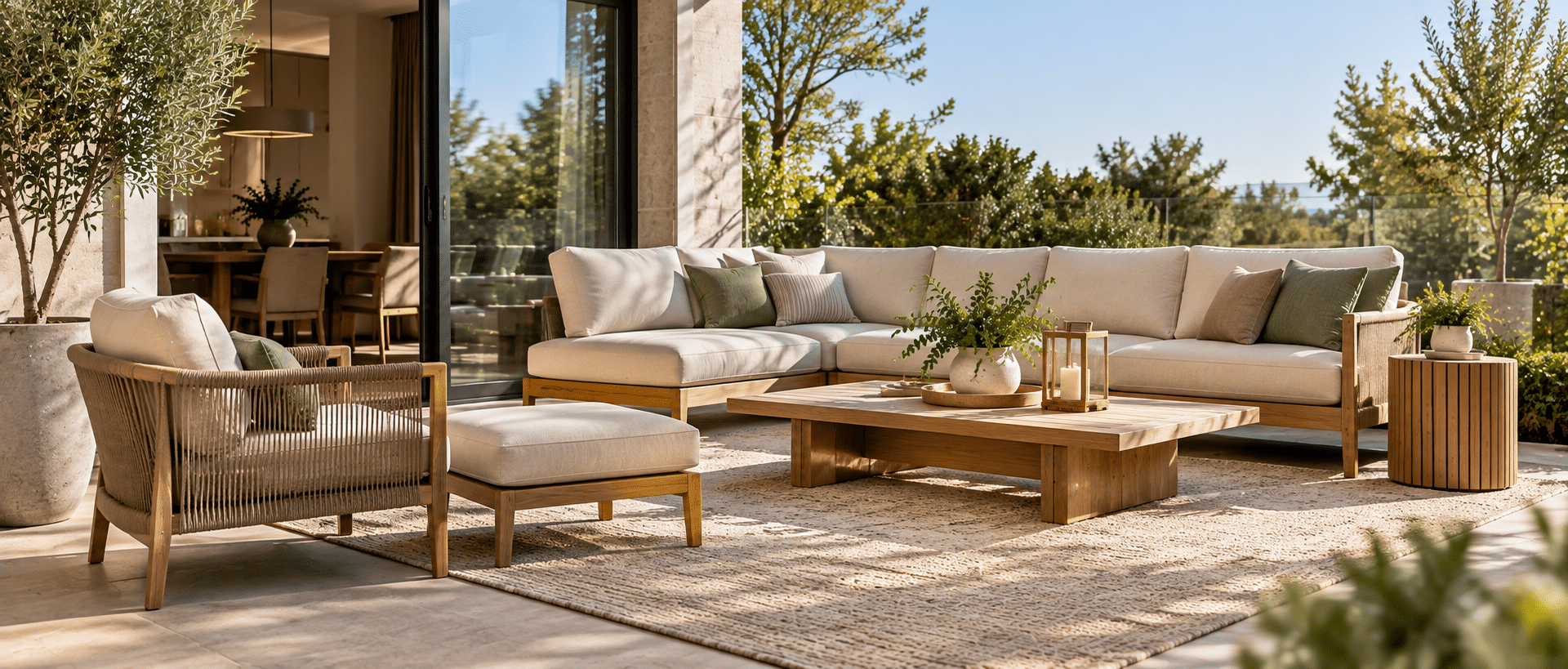
Your patio can work like an extra room. You just need the right layout and the right gear. Weather is the big test here, so build quality matters more than looks.
I have seen plenty of patios that nobody uses. The cause is rarely the view. The seating is usually too hard, too small, or too hot in the sun. Fix those three things, and people stay outside for hours.
Start with the plan, not the furniture
Before you shop, grab a tape measure. Outdoor spaces fool the eye. A patio that looks huge can shrink fast once the sofa arrives.
Here is how I plan one:
- Mark the zones: Decide where you will sit, eat, and walk.
- Measure the area: Use chalk or tape to outline each piece on the ground.
- Check the sun: Note where the afternoon sun hits. Shade matters more than you think.
- Leave a path: Keep about 3 feet of walking room around the seating.
- Think about wind: Light pieces can slide or tip on a breezy deck.
Treat it like a living room. Put the seating in a loose circle. That way people face each other and can talk.
Pick a sofa that handles real weather
Your luxury outdoor sofa should be as cozy as your indoor one. It also has to survive rain, heat, and cold. That is a tall order, so check the materials closely.
Here is what to look at:
- Frame: Powder-coated aluminum resists rust and stays light. Teak is dense and weathers to a soft gray. Wicker built over a metal frame looks warm and holds up well.
- Cushions: Look for quick-dry foam. It lets water drain out instead of soaking in.
- Fabric: Solution-dyed acrylic resists fading and mildew. Ask how it handles direct sun.
- Depth: A seat depth of 22 to 26 inches suits most people. Deeper seats are cozy but can feel too big for small patios.
- Warranty: A longer warranty on the frame and fabric is a good sign of quality.
I always check one more thing. Lift a corner of the sofa. If it feels flimsy, it will wobble in a storm. A solid piece has weight and tight joints.
If your space is large, luxury sectionals made for outdoor use can anchor the whole patio. Pick modular pieces. You can then rearrange them for a party or a quiet night. Measure the gate, steps, and doorways first. A big sofa that can’t get through the side yard is a very sad delivery day.
Add flexible seats with an armchair and ottoman
A sofa alone can feel stiff. Extra seating makes the space friendlier. An outdoor armchair and ottoman gives you a spot to stretch out with a book.
Here is why I like this pair:
- Easy to move: You can shift it to follow the sun or the shade.
- Good for small spaces: One chair and a footrest fit on a narrow balcony.
- Feet-up comfort: The ottoman turns a regular chair into a lounger.
- Extra table: Set a tray on top, and it holds drinks or snacks.
Try the chair in a store if you can. Settle in and stay put for a minute or two. Your lower back should feel supported. Your feet should reach the ottoman without a stretch.
Choose storage that fights the weather
Cushions are the first thing to go in bad weather. Rain, sun, and bugs wear them down. Smart storage cuts that damage.
Furniture with storage works well outside. Look for these pieces:
- Deck box: It holds cushions, throws, and pool toys.
- Storage bench: It gives you a seat and a hidden spot for gear.
- Side table with a lid: It keeps small items dry and out of the way.
Pick pieces with vented lids. Trapped moisture can cause mold. Slide a silica packet inside to help absorb dampness.
A simple rack by the door also helps. Mount hooks for towels, hats, and bug spray. It keeps clutter off the furniture, and everything stays within reach.
Set up a dining spot
Got extra room? Add a compact table. Eating outside makes a patio feel worthwhile. Luxury dining chairs made for outdoor use are worth the upgrade. Cheap plastic chairs crack and fade. Better ones are comfortable and last for years.
Check these points:
- Seat comfort: Sling or mesh seats dry fast. Cushioned seats feel plusher but need more care.
- Armrests: Arms add comfort, but they need extra table clearance.
- Stacking: Stackable chairs save space in winter.
- Weight: Heavy chairs stay put in wind. Light ones are easier to move.
Plan on roughly two feet of table edge per guest. That gives everyone space for a plate and a glass.
Layer in warmth and light
Once the main furniture is in, add finishing touches. A few luxurious home accents can make a patio feel finished:
- A weather-safe outdoor rug in a neutral tone.
- Throw pillows in fade-resistant fabric.
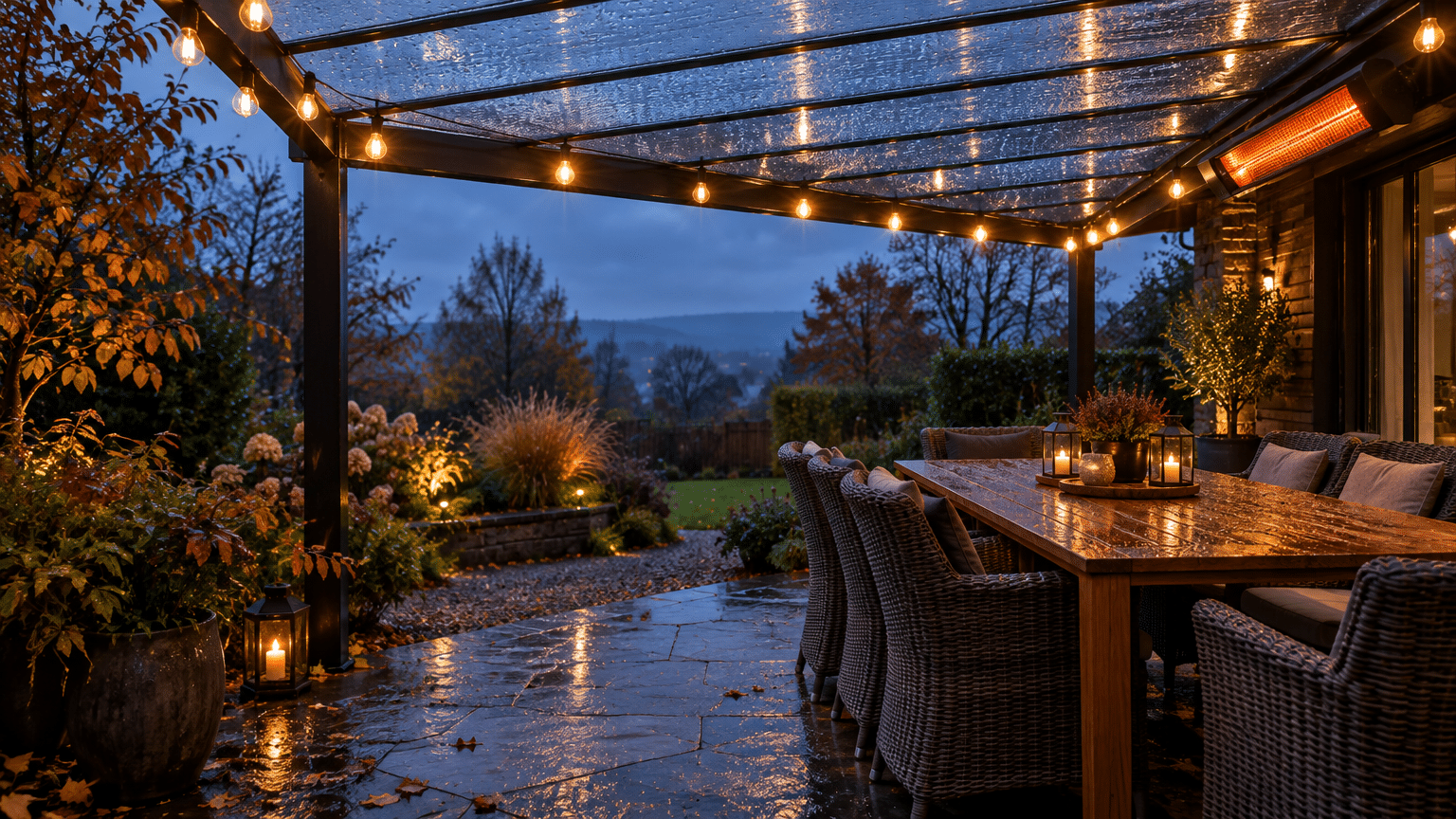
- Lanterns or string lights for soft evening light.
- Large planters with herbs or tall grasses.
- A stool or small table that holds drinks and a candle.
Keep the colors calm. Gray, cream, and soft green blend with nature. A pop of color in the pillows or planters adds life without clutter.
Lighting matters as much as furniture. Warm white bulbs feel inviting. Cool white ones feel harsh. Solar lights are easy to install and need no wiring.
Care tips that make furniture last
Good furniture still needs some care. These habits go a long way:
- Wipe it down: A gentle soap mix and a soft cloth every few weeks does the job.
- Dry the cushions: Stand them on their edges after rain.
- Use covers: Breathable covers protect pieces in the off season.
- Check the hardware: Tighten screws once or twice a year.
- Read the label: Follow the maker’s care steps, since each material differs.
My quick outdoor rule
Spend the most on the piece you sit on. A good sofa or chair makes the patio worth using. Choose simple tables and decor, and add more later. A patio built slowly usually looks better than one filled all at once.
Final Thoughts
A home feels custom when the small details are right. You don’t need a huge budget or a full remodel. You need a clear plan and a few smart picks. A wall hung vanity can open up a tight bathroom, and a kitchen pot filler can make cooking easier. A floor mirror in living room spaces adds light and depth, while a rattan desk warms up a home office. A luxury outdoor sofa can turn a plain patio into a place you actually use.
Skip the urge to buy everything in one weekend. Pick the one or two problems that bug you most each day, and fix those first. Spend more on the things you touch and use often, and let the extras wait. A few luxurious home accents can finish the look later.
Measure twice before you buy, and check wall strength before you hang anything heavy. Call a licensed plumber or electrician for pipes and wiring. Small steps add up fast, and soon your home will work better and look great, too.