




My first attempt at making DIY deodorant was a complete disaster, a greasy, lumpy mess that smelled more like coconut oil than deodorant.
Despite that failure, the goal remained the same: finding a natural alternative to aluminum-based products and artificial fragrances.
Over the next few months, after texting different combinations of baking soda, arrowroot powder, oils, and butters, some recipes worked surprisingly well, while others ended up in the trash.
Before getting into what actually worked, it’s worth looking at why the switch to natural deodorant became appealing in the first place and why so many people are making the same choice.
Disclaimer: This blog is for informational purposes only; results may vary based on individual skin type and ingredient quality.; always patch-test new ingredients before use.
Why are More People Switching to Natural Deodorant?
One of the biggest reasons people (including myself) start exploring natural deodorant is curiosity about simpler, more transparent ingredients.
Many like to avoid aluminum and strong artificial scents found in some regular deodorants.
Another reason is skin comfort. Some people find that regular deodorants can cause irritation or dryness, while natural options often feel gentler on the skin.
For others, it starts with simple curiosity. They want to try cleaner personal care products, and many end up making the switch part of their daily routine.
If you already enjoy making things at home, this fits right alongside other easy DIY home projects that give you full control over what goes into your household.
Key Ingredients Required for Making DIY Deodorant at Home
Choosing the right ingredients is what separates a DIY deodorant that actually works from one that irritates your skin or leaves stains on your clothes.
| Category | Common Ingredients |
|---|---|
| Base Ingredients |
Coconut Oil, Shea Butter, Beeswax |
| Moisture Absorbents |
Arrowroot Powder, Cornstarch, Kaolin Clay |
| Odor Fighters |
Baking Soda, Magnesium Hydroxide |
| Natural Fragrances | Essential oils: Lavender, Tea Tree, Peppermint |
| Skin Soothers | Vitamin E, Aloe Vera |
Step-by-Step: My Foolproof Natural Deodorant Recipe
Making your own natural deodorant is easier than you might think. After several failed batches, this is the recipe that worked consistently for me. It’s simple, skin-friendly, and doesn’t rely on harsh ingredients to control odor.
Step 1: The Melt

Gently melt beeswax, shea butter, and coconut oil using a double boiler or a heat-safe bowl over simmering water. Keep the heat low to protect the ingredients; overheating can damage texture and reduce effectiveness.
Stir occasionally until fully melted and smooth, with no solid pieces remaining. Avoid direct stovetop heat, as it can cause scorching or uneven melting.
The melting technique here is nearly identical to what you’d use in DIY candle making; the same low-and-slow approach protects both the wax and the fragrance.
Tip: The mixture should look glossy and fully liquid with no chunks before moving to the next step.
Step 2: The Blend
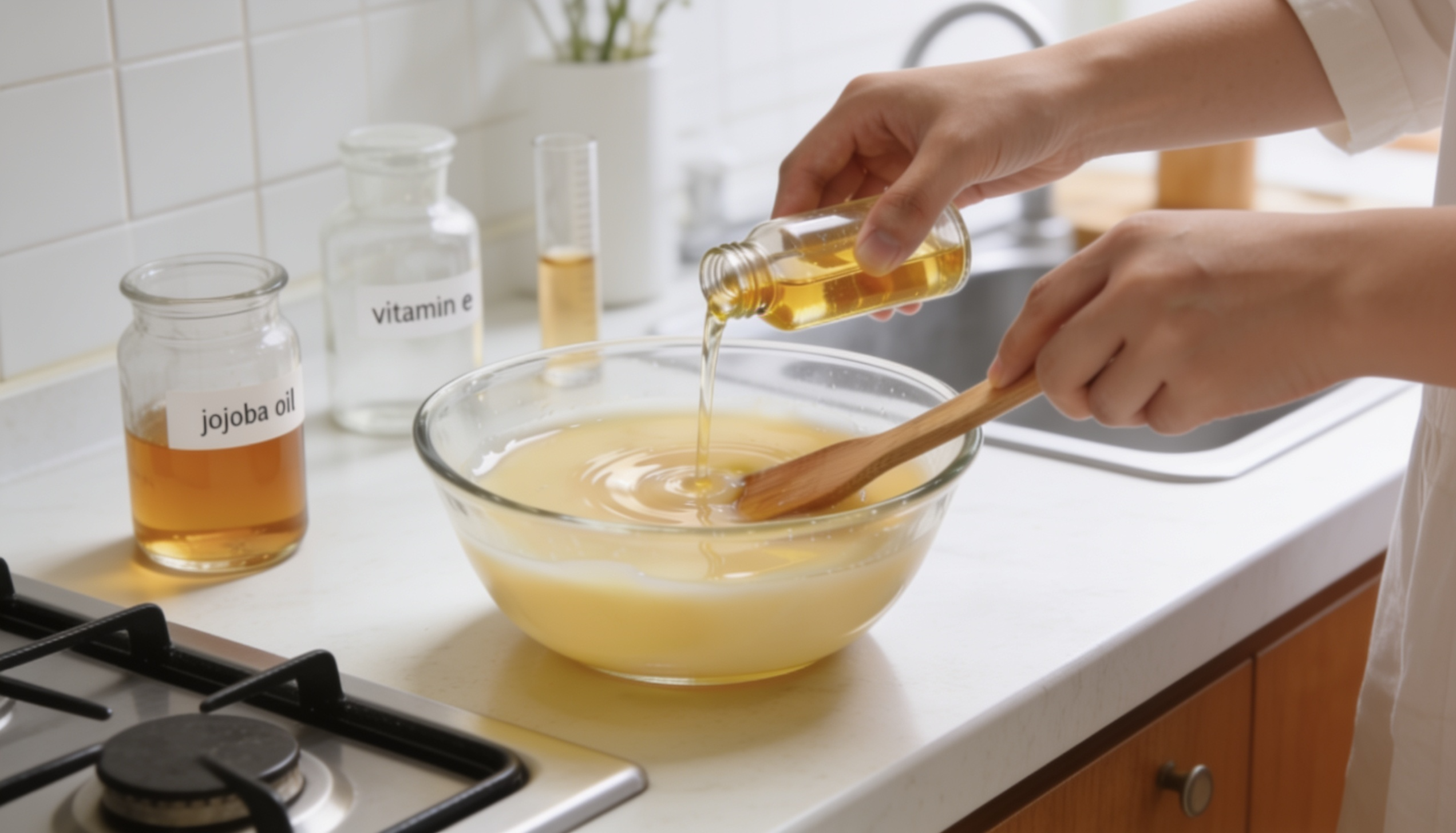
Remove the melted mixture from the heat and add liquid oils, such as vitamin E or jojoba oil. Stir continuously until everything is fully combined and the texture is uniform.
Do not rush this step, as incomplete mixing can cause separation or poor setting later. If it begins to cool too quickly, keep stirring to maintain a smooth consistency.
Tip: The final blend should look even with no oily streaks or separation.
Step 3: The Sift
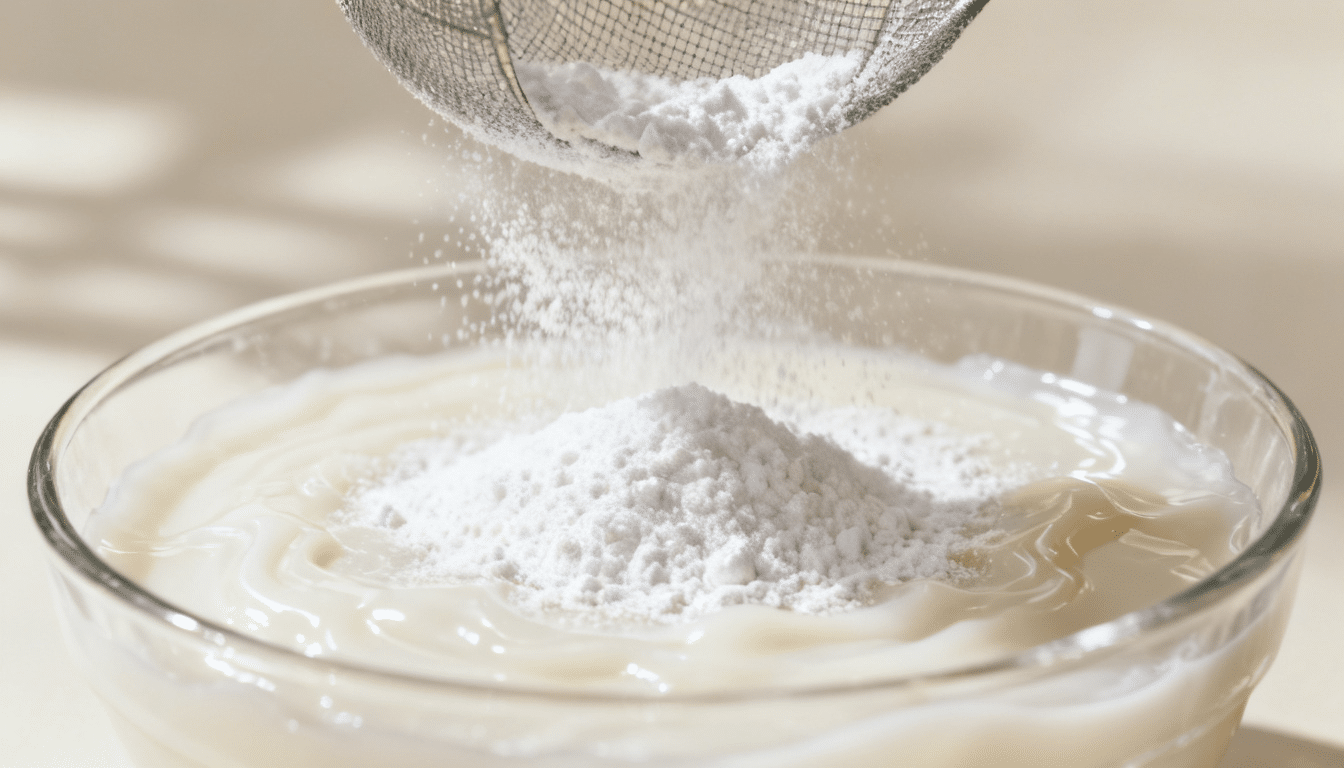
Slowly sift in dry ingredients like arrowroot powder and baking soda while stirring continuously. This prevents clumping and ensures a smooth, even texture.
Adding powders too quickly can create lumps that are hard to break down. Keep mixing until the mixture becomes creamy, stable, and fully integrated.
Tip: A properly mixed base should feel smooth with no visible powder pockets.
Step 4: The Scent
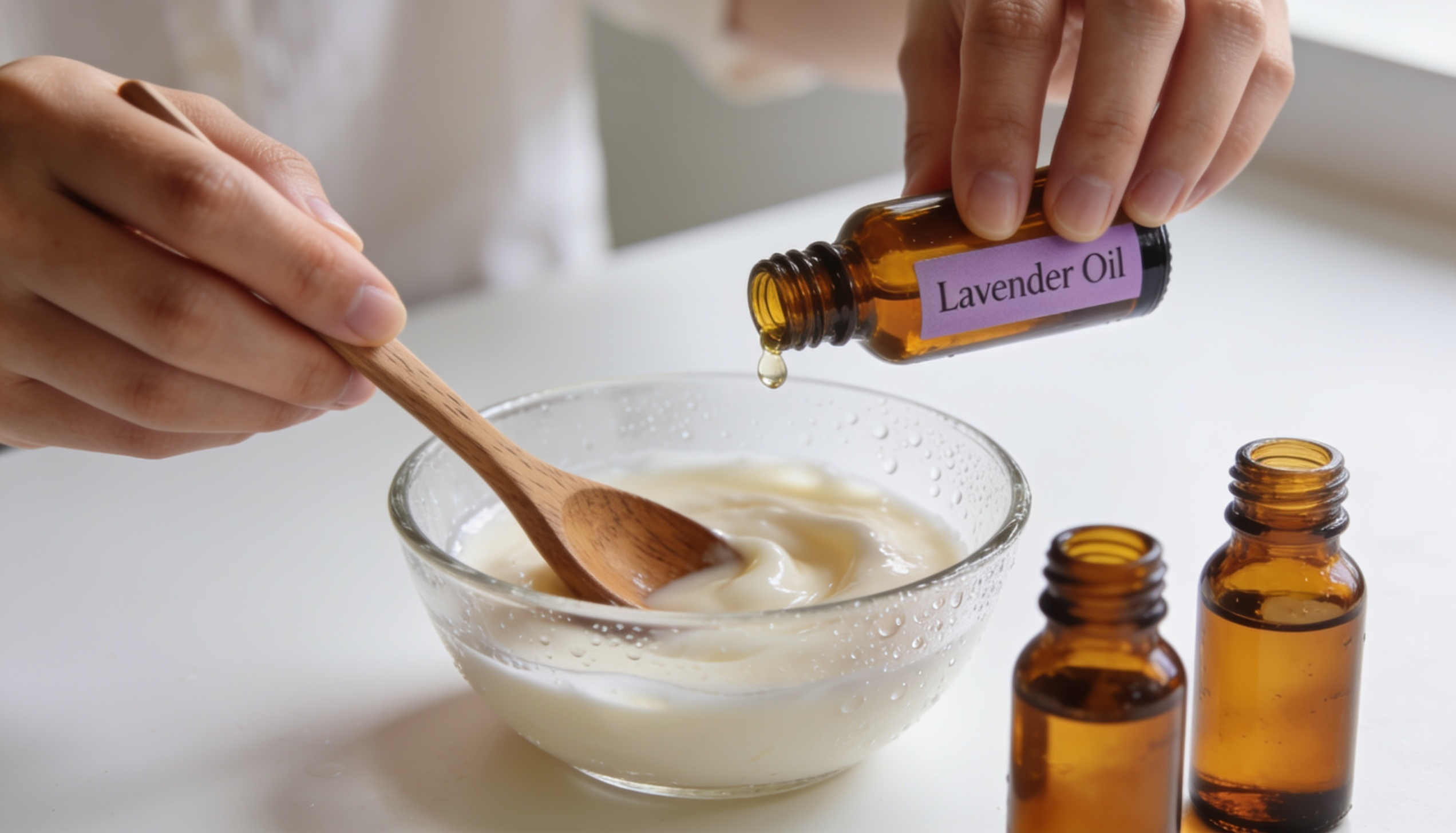
Let the mixture cool slightly before adding essential oils. If it’s too hot, the fragrance and benefits of the oils may evaporate. Add oils drop by drop, stirring well to distribute evenly.
Avoid overusing essential oils, as high concentrations may irritate sensitive skin.
Tip: The scent should be noticeable but never overpowering.
Step 5: The Set
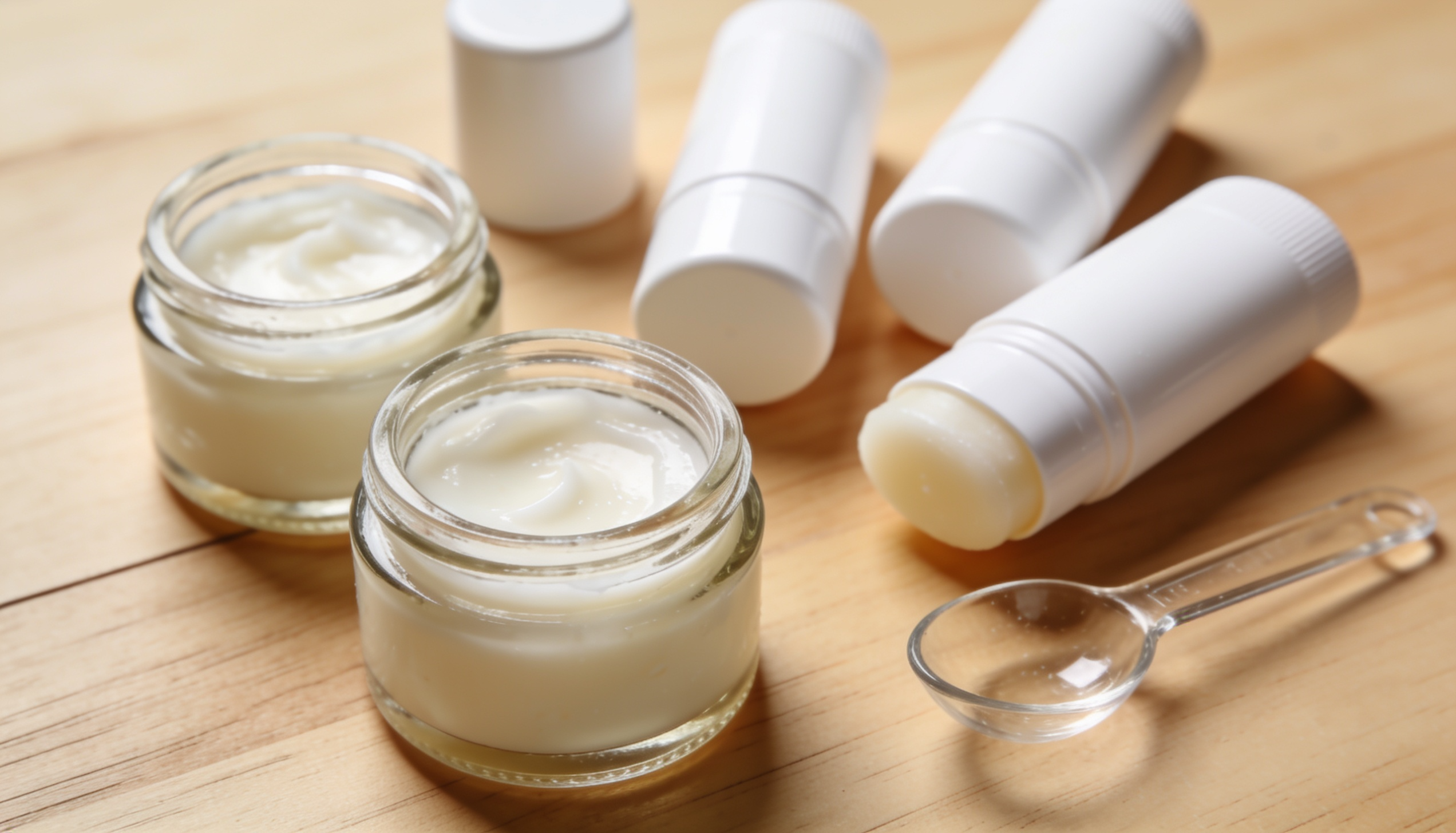
Pour the mixture into deodorant tubes, tins, or jars while it’s still liquid. Place containers on a flat surface and leave them undisturbed until fully set.
Avoid shaking or moving them during cooling, as this can create uneven texture or air pockets. Depending on the room temperature, the setting may take several hours.
Tip: Once set, the deodorant should feel firm but glide smoothly on skin.
Other Natural Deodorant Recipes to Give a Try
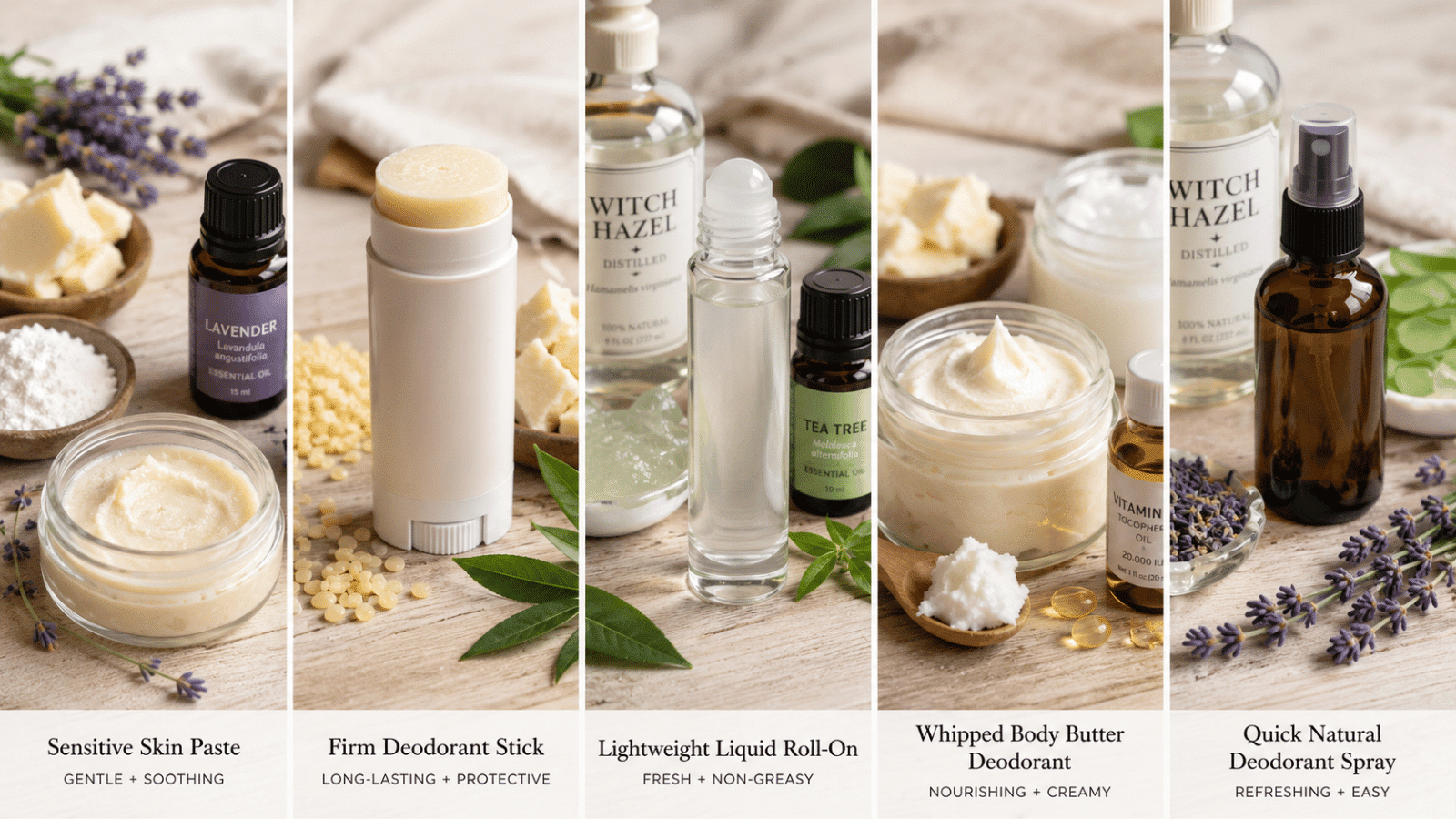
Not everyone’s skin reacts the same way to a single formula. These recipes use different base ingredients and offer varied textures, so there’s a good chance one of them will work better for your skin type.
1. Sensitive Skin Paste (Baking Soda-Free)
This recipe works best for people who get redness or itching from baking soda. It produces a soft, creamy paste with a texture similar to thick lotion, making it easy to apply with fingertips without any pulling or irritation.
Ingredients
- Shea Butter: 4 tbsp
- Arrowroot Powder: 3 tbsp
- Magnesium Hydroxide: 1 tbsp
- Coconut Oil: 1 tbsp
- Lavender Essential Oil: 5–8 drops
How to Make It
- Melt shea butter and coconut oil together over low heat.
- Remove from heat and stir in arrowroot powder and magnesium hydroxide until smooth.
- Let it cool slightly, then add essential oil.
- Spoon into a small jar and allow it to set at room temperature.
2. Firm Deodorant Stick (Beeswax-Based)
This recipe is ideal for people who prefer a traditional stick format. It creates a firm, solid deodorant that glides smoothly on the skin without feeling greasy or sticky and holds its shape well even in warm weather.
Ingredients
- Beeswax: 2 tbsp
- Cocoa Butter: 2 tbsp
- Arrowroot Powder: 2 tbsp
- Baking Soda: 1 tsp
- Tea Tree Essential Oil: 6 drops
- Peppermint Essential Oil: 4 drops
How to Make It
- Melt beeswax and cocoa butter together using a double boiler.
- Remove from heat and mix in arrowroot powder and baking soda until fully combined.
- Add essential oils and stir well to distribute evenly.
- Pour into a deodorant tube and leave it undisturbed until fully solid (at least 2–3 hours).
3. Lightweight Liquid Roll-On
This recipe is best for those who prefer a light, fast-absorbing formula. It has a refreshing, watery texture that dries quickly on the skin, making it ideal for hot, humid conditions.
Ingredients
- Witch Hazel: 3 tbsp
- Aloe Vera Gel: 2 tbsp
- Magnesium Hydroxide: 1 tbsp
- Arrowroot Powder: 1 tsp
- Tea Tree Essential Oil: 5 drops
How to Make It
- Combine witch hazel and aloe vera gel in a small bowl and mix well.
- Slowly add magnesium hydroxide and arrowroot powder while stirring to avoid clumps.
- Add essential oil and mix thoroughly.
- Pour into a roll-on bottle and shake well before each use.
4. Whipped Body Butter Deodorant
This recipe is perfect for dry skin and creates a soft, airy whipped texture that melts easily on contact with the skin. It doubles as a moisturizer while still helping control odor.
Ingredients
- Shea Butter: 5 tbsp
- Coconut Oil: 2 tbsp
- Arrowroot Powder: 2 tbsp
- Vitamin E Oil: 1 tsp
- Baking Soda: 1 tsp
- Frankincense Essential Oil: 5 drops
How to Make It
- Melt shea butter and coconut oil together, then refrigerate until semi-solid (not fully hard).
- Whip the mixture using a fork or hand mixer until it becomes light and fluffy.
- Gently fold in arrowroot powder and baking soda.
- Add vitamin E oil and essential oil, then whip again for a smooth texture.
- Transfer into a jar and store in a cool place.
5. Quick Natural Deodorant Spray
It is ideal for people who want a fast, lightweight deodorant that can be applied in seconds.
It creates a fine mist that dries quickly on the skin without leaving a greasy or sticky residue, making it especially convenient for warm weather and on-the-go use.
Ingredients
- Witch Hazel: 4 tbsp
- Distilled Water: 2 tbsp
- Aloe Vera Gel: 1 tbsp
- Tea Tree Essential Oil: 5 drops
- Lavender Essential Oil: 5 drops
How to Make It
- Combine witch hazel, distilled water, and aloe vera gel in a small bowl or measuring cup.
- Add the tea tree and lavender essential oils and stir well to distribute them evenly.
- Pour the mixture into a clean spray bottle using a small funnel if needed.
- Shake well before each use to ensure the ingredients remain evenly mixed.
What I Got Wrong About Natural Deodorant?
Not every popular DIY deodorant ingredient works well for every skin type. Looking back, there were a few key things I got wrong about natural deodorant, and most of the lessons came from the recipes that completely failed.
Here is an honest look at what went wrong and what those mistakes taught me.
- Overusing Baking Soda: Baking soda was used in large amounts, thinking it would improve odor control, but it often caused irritation and redness. Reducing or removing it completely made the formulas much more skin-friendly.
- Ignoring Skin Reactions: Mild itching was often dismissed as normal, but it was actually a sign of irritation. Skin reactions are now treated as an important signal that a formula needs adjustment.
- Relying on a Single “Hero” Ingredient: Early formulas focused too heavily on a single strong ingredient to solve everything. Better results were achieved by balancing oils, waxes, and powders rather than relying on a single dominant component.
- Getting the Texture Wrong: Many early batches were either too greasy or too firm. A proper balance of wax, butter, and oil is now used to create a smooth, stable texture suitable for a range of temperatures.
- Prioritizing Strength Over Comfort: Strong odor control was once the main goal, even at the cost of skin comfort. The focus has now shifted to formulas that are effective while still gentle enough for everyday use.
What People are Saying About Making Their Own Deodorant?
People online have very mixed feelings about homemade deodorant; some swear by it, others warn against certain ingredients. Here is what real Reddit users have shared.
Ten Years, No Issues: Keeping baking soda to a minimum and balancing it with arrowroot, coconut oil, and shea butter has worked consistently for nearly a decade with zero irritation.
Source – u/emotionalsupportfern
Better and Cheaper Than Store-Bought: A simple blend of baking powder, cornstarch, and coconut oil outperformed Dove, lasted longer, and actually absorbed sweat rather than just masking odor.
Source – ToiletSwampCove
One Stick, One Year, Zero Odor: A martial artist switched to Crystal alum stick deodorant after his training partner stayed completely odor-free through six hours of intense sweating .
Source – u/bossoline
Swap Your Base With the Seasons: Use cocoa butter as the base in warmer months and coconut oil in colder months, then add tea tree oil and baking soda to consistency each base stays perfectly creamy and easy to apply year-round.
Source – u/houston-norfolk
The Bottom Line
Making DIY deodorant felt a little like digging through an old record crate. Some tries were scratchy, some were surprising, and one finally hit the right note.
Those first batches were too greasy, too crumbly, or too strong on the baking soda side. Each mistake, though, helped shape a better mix.
Eventually, I landed on a recipe that felt simple, gentle, and truly personal.
So, is natural deodorant better than store-bought deodorant brands? Sometimes, yes. It is cheaper, customizable, and fun to make, but it may take patience to find what your skin likes.
Frequently Asked Questions
How Long Does it Take to Adjust to Natural Deodorant?
Most people take about 1–2 weeks to adjust, depending on skin type and the formula used.
Does DIY Deodorant Stop Sweat Completely?
No, DIY deodorant controls odor but doesn’t block sweating because it doesn’t contain antiperspirant ingredients.
What Makes a Good Natural Deodorant Formula?
A balanced mix of oils, waxes, and absorbent powders usually works best for comfort and odor control.
Why Do Some DIY Deodorants Fail?
Most failures stem from incorrect ingredient ratios, leading to issues such as greasiness, a grainy texture, or melting.