
Most parents end up dumping baby clothes into a heap, not out of laziness but because nobody ever showed them how they can organize them properly.
You’ve probably dug through that drawer for one onesie, pulled half the pile out, and still not found it. It was in there the whole time, buried.
Learning how to fold baby clothes takes about five minutes, and there’s one method that works for nearly everything.
In this blog, you’ll learn how you can do the folding and save space.
Folding Baby Clothes (Step by Step)
Folding baby clothes like onesies properly helps make the most of limited storage while keeping every tiny outfit neat, organized, and ready to use.
Marie Kondo popularised the technique for adult wardrobes, and it happens to work even better on baby clothes, because tiny garments are exactly the ones that disappear in a stack.
Step 1: Lay It Flat, Face Down

Place the garment face down on a clean, firm surface such as a dresser, bed, or table.
Smooth the fabric with your hands so bunching around the shoulders, seams, or hem does not get trapped inside the fold.
Check that the neckline and shoulders sit evenly before moving on. Starting with a straight shape makes the next folds easier to control and gives the finished bundle cleaner edges.
Step 2: Fold the Sleeves Straight In

Bring each sleeve inward so it rests flat against the back of the garment. Keep the sleeves running close to the side seams instead of folding them diagonally across the middle.
If the sleeves overlap too much, spread them slightly so you do not create extra bulk in one spot. Keeping this layer in place even helps the finished bundle hold its shape when you stand it in the drawer.
Step 3: Bring Both Sides to The Middle

Fold one side toward the center, then bring the opposite side in to create a long, narrow rectangle.
Aim for roughly the same amount of fabric on both sides rather than measuring the width exactly.
Use the neckline as a quick visual check. If it sits near the middle of the rectangle, your folds are usually balanced enough for the garment to stand without leaning.
Step 4: Fold the Hem up In Thirds

Bring the bottom edge upward about one-third of the garment’s length, then fold it up once more toward the neckline.
Stop just below the top rather than forcing the final edge tightly against it.
Leave a little natural thickness in the bundle. This gives the fold enough structure to stay upright without compressing soft fabrics or making the finished piece difficult to unfold later.
How to Fold Baby Clothes, Onesies and Sleepers?
Baby clothes come in different shapes, so one folding method will not fit every item. Onesies, sleepers, pants, and tops each need a small adjustment to keep them compact and easy to stack or store upright.
Using the right fold for each piece can help free up drawer space while keeping everything neat and easy to find.
Footed Sleepers and Pajamas
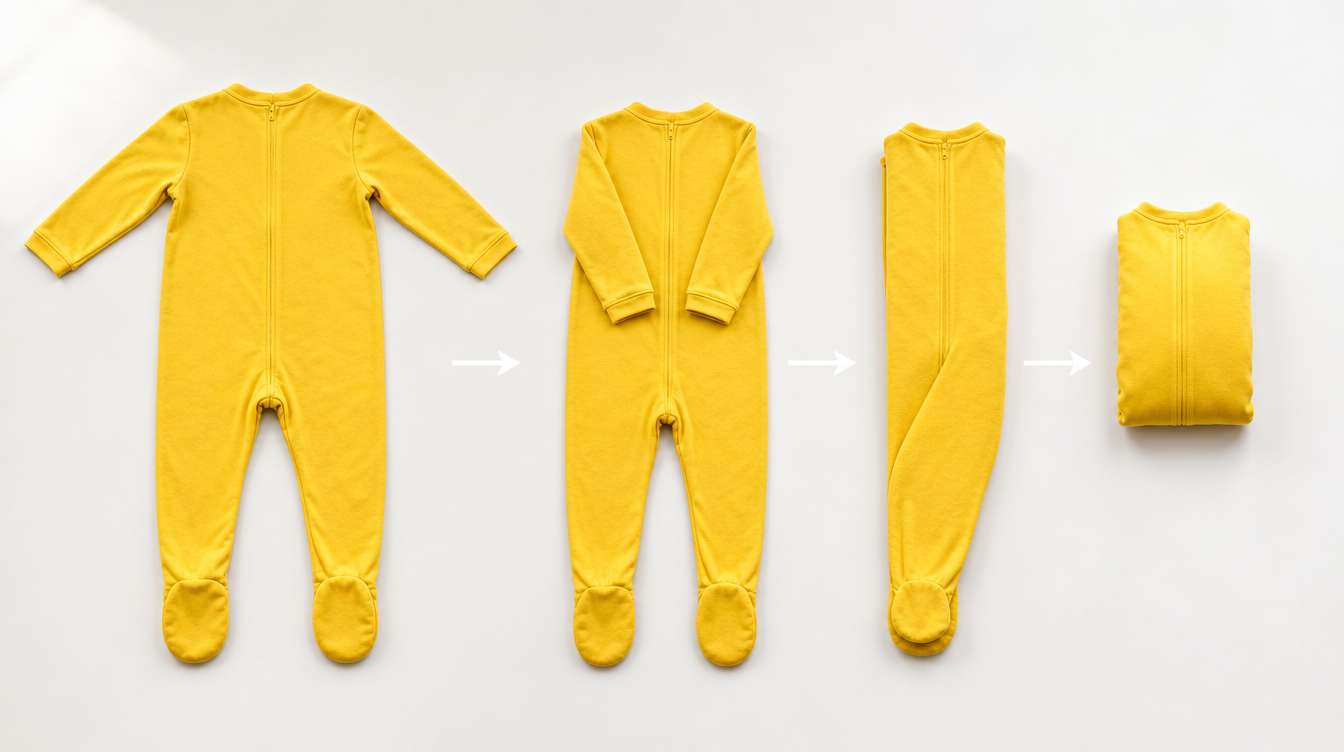
Zip or snap a sleeper shut before you fold it. An open zip snags on whatever it’s sitting next to and pulls the whole row loose.
- Close the zip or every snap, then lay the sleeper face down.
- Fold both sleeves in so they lie flat against the back.
- Bring one leg over the other; you form a straight column.
- Fold up at the knee, then again at the hip.
- Stand it upright with the folded edge facing out.
Baby Pants and Leggings
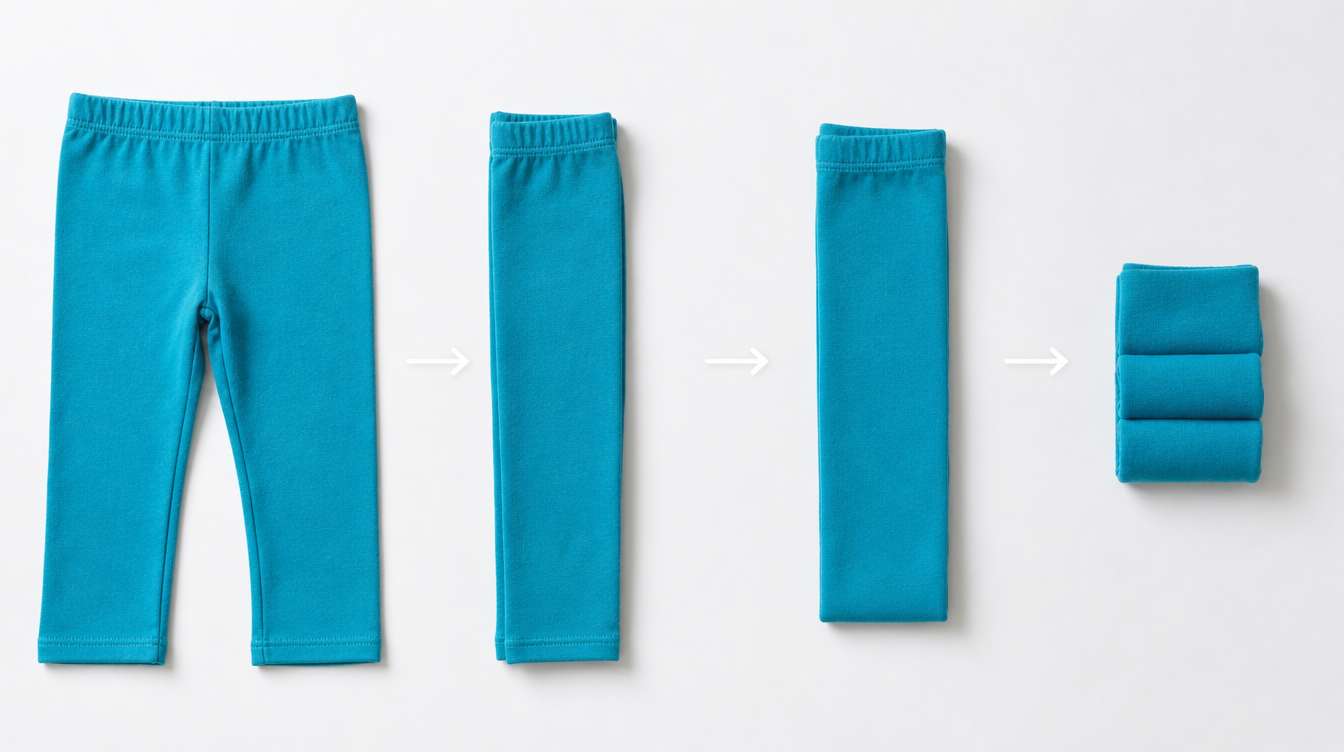
Leggings don’t need side folds at all, which makes them the quickest thing in the basket.
Save them for when you’re running out of patience.
- Lay the pants flat and smooth the waistband.
- Fold one leg right over the other.
- Tuck the crotch seam in so both edges run straight.
- Fold up from the ankle two or three times.
- Stand them upright, or lay them flat in a bin if your drawer is shallow.
Tip: Don’t fold across the elastic waistband itself. A crease sitting directly on the elastic is what turns a snug 6-month legging into one that slides down by month seven.
Knotted Gowns and Kimono Tops
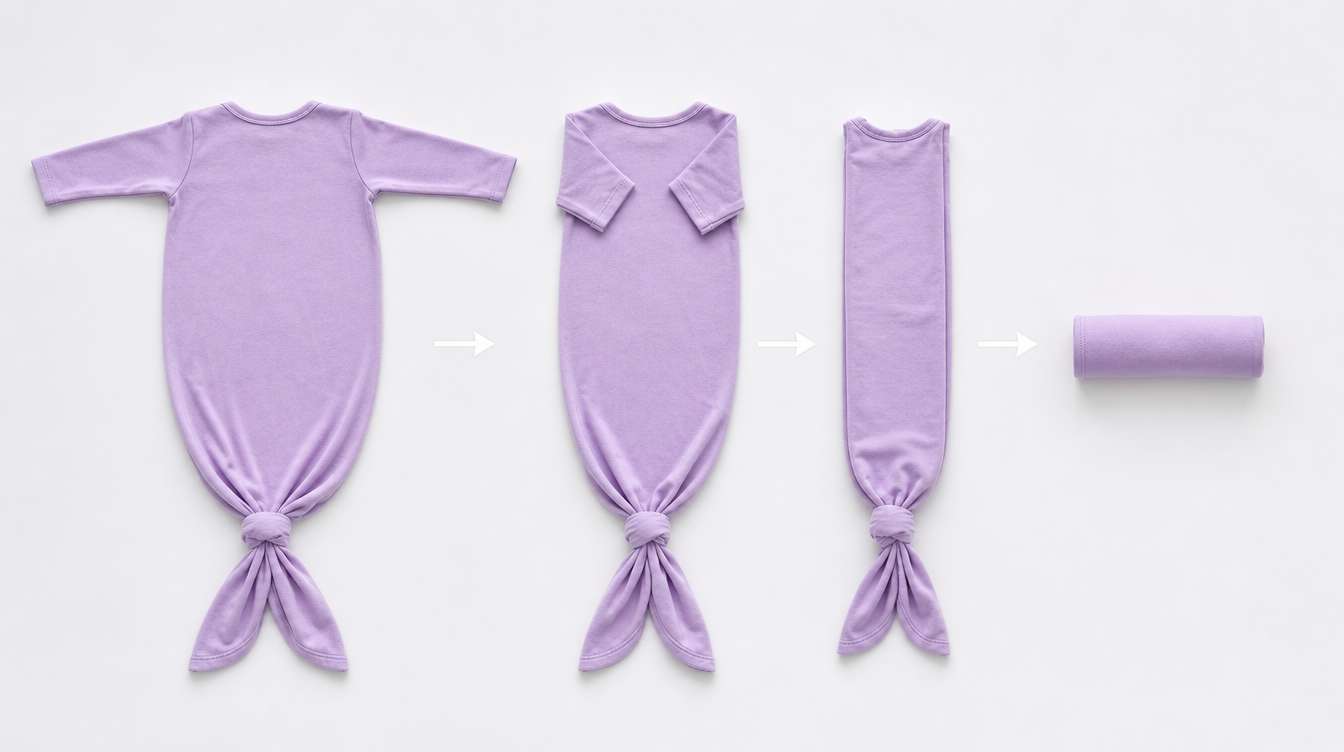
Untie the knot first, then roll rather than fold. All that extra fabric at the hem will never sit flat in a square, so stop fighting it.
- Untie the knot completely, or overlap the kimono panels shut.
- Lay it flat, face down, and smooth the front closed.
- Fold the sleeves in, then both sides toward the middle.
- Roll it up from the hem into a firm little cylinder.
- Store it rolled, seam side down, in a divider or shallow bin.
Baby Socks and Mittens
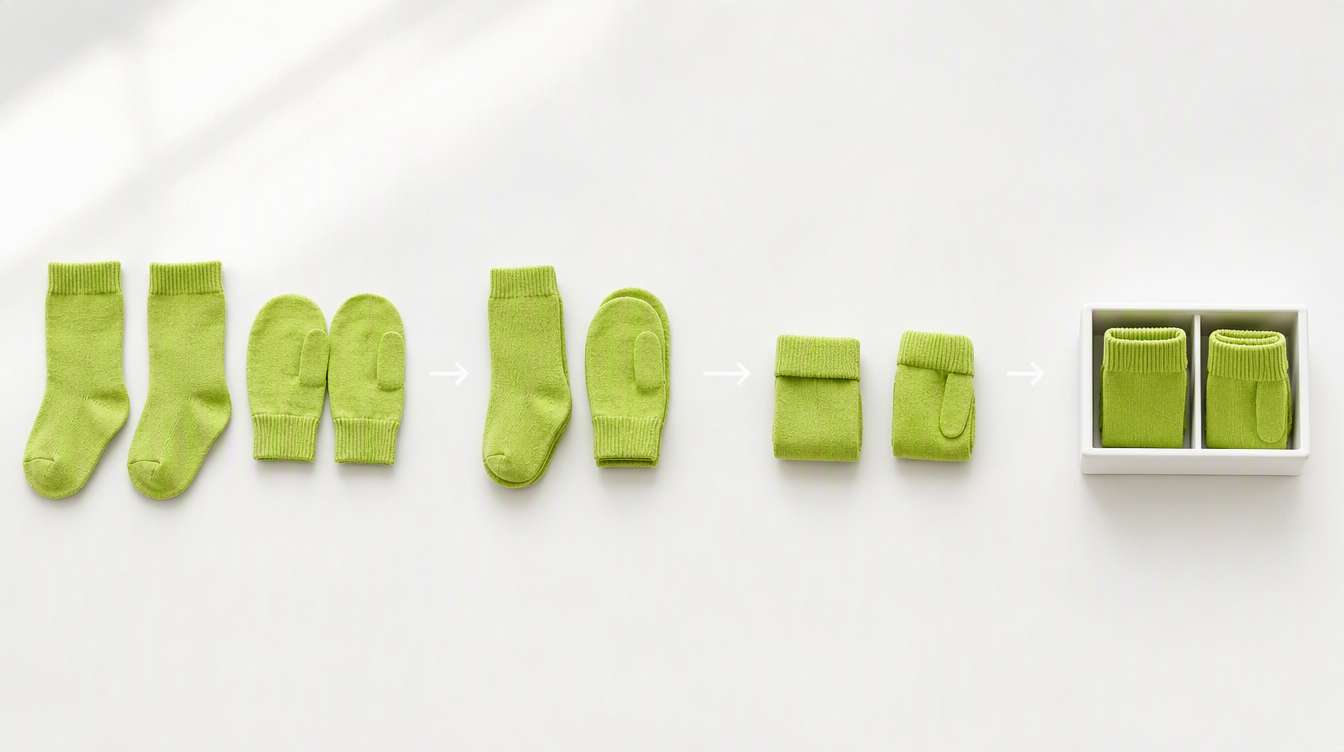
Don’t stretch one sock cuff over the pair. It feels tidy, but that’s the habit that leaves newborn socks slack and sliding off by the third wash.
- Lay both socks flat, one right on top of the other.
- Line up the heels and toes so the pair sits square.
- Fold once at the arch, cuff resting on the toe.
- Do the same with mittens, matching up the thumbs.
- Stand them upright in a small divider so you can see the pairs.
Tip: If your socks are too short and thick to fold at the arch, roll the pair loosely instead and set them cut-side up so you’re looking at a row of little spirals. Either way, keep them in a box inside the drawer, not loose. Loose socks migrate under everything else and you’ll swear you’ve lost half of them.
Bibs, Burp Cloths and Swaddles
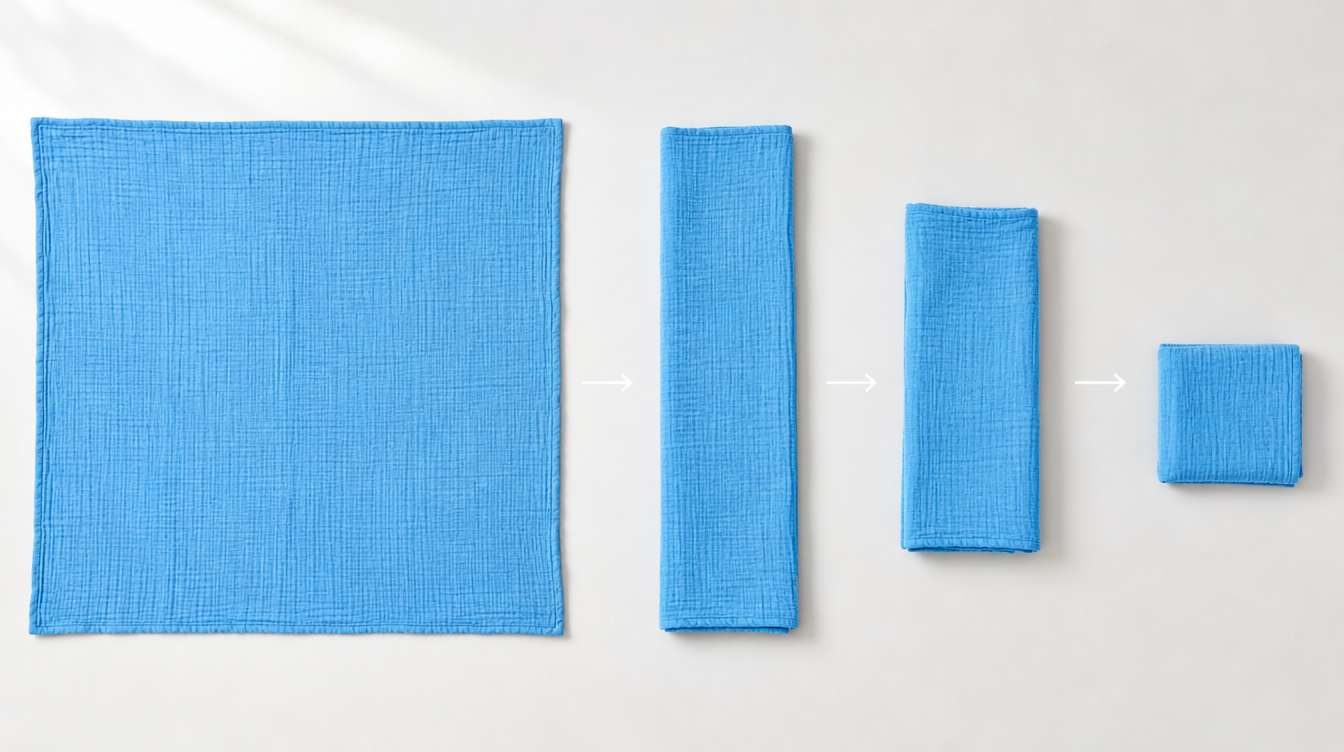
Fold flat items in thirds, not quarters. Fewer creases mean less ironing, which you weren’t going to do anyway.
- Lay the cloth flat and square up the corners.
- Fold in thirds lengthwise into a long strip.
- Fold that strip in half, or in thirds if it’s a big muslin.
- Stack these flat instead of standing them up. Light fabric won’t hold.
- Keep bibs in their own divider near wherever you feed.
Dresses and Rompers
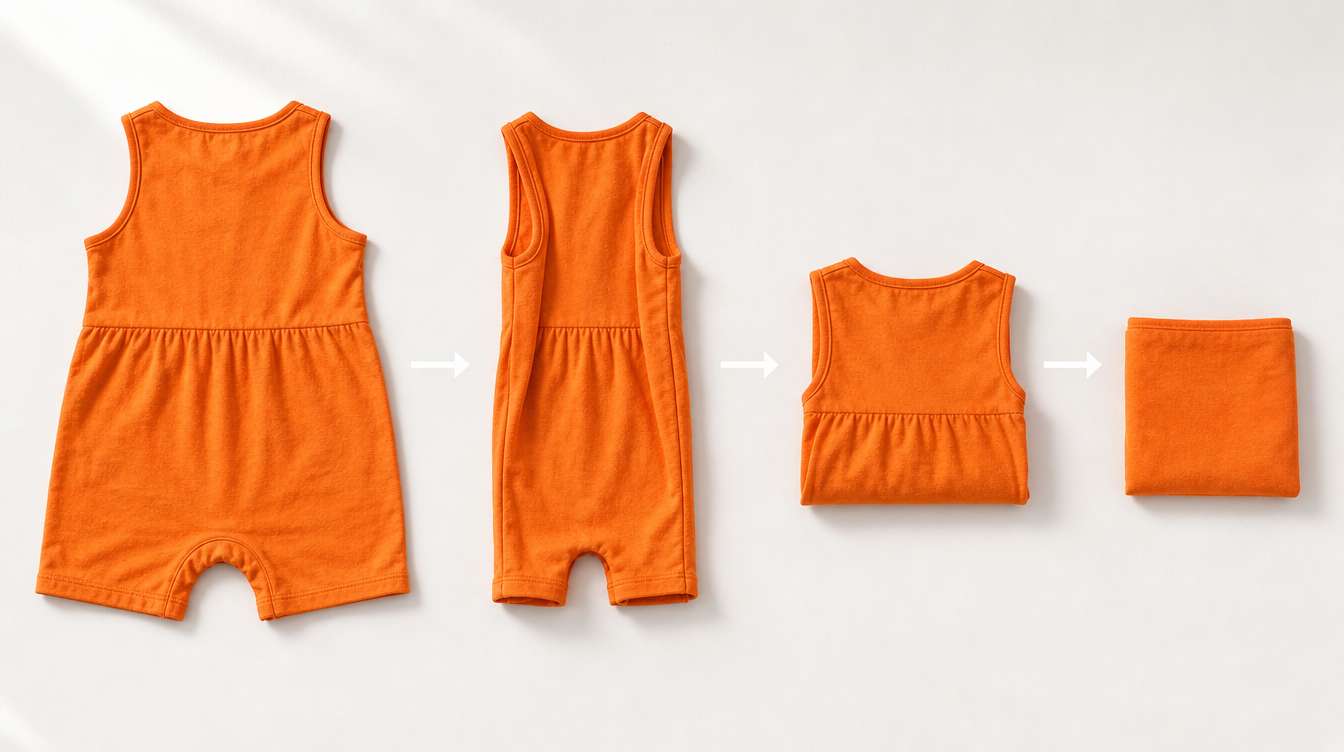
Hang dresses and structured rompers if you’ve got the rail. Folding puts a crease across the skirt that a wash won’t lift.
- Hang anything with a full skirt, sash, or appliqué on a baby hanger.
- If you’re folding, lay it face down and fold the sleeves in.
- Fold in half at the waist, then in half again.
- Lay it flat in a clear bin rather than standing it up.
- Keep special occasion pieces away from everyday clothes.
Other Simple Methods for Folding Baby Clothes
These practical folding methods keep small clothes neat, visible, and easy to reach. They can help you save drawer space, separate outfits by size, and find what you need without disturbing the rest of the stack
| Folding Method | How It Works | Best For |
|---|---|---|
| Basic Flat Fold | Fold the sleeves inward, bring the sides toward the center, and fold the garment in half | Everyday shirts and tops |
| File Fold | Fold the item into a small rectangle and store it upright instead of stacking it | Drawers and storage bins |
| Rolling Method | Fold the sides inward, then roll the garment tightly from one end | Travel bags and limited spaces |
| KonMari Fold | Fold the garment into thirds until it forms a compact shape that stands upright | Organized dresser drawers |
| Outfit Fold | Place matching items together and fold them into one small bundle | Prepared daily outfits |
| Pocket Fold | Fold the lower section upward and tuck the rest of the garment into it | Onesies and bodysuits |
| Bundle Fold | Stack several lightweight items and wrap them together with one larger piece | Diaper bags and short trips |
| Hanger Fold | Fold pants or matching bottoms over the lower bar of a hanger | Coordinated sets and formal clothes |
How to Organize Baby Clothes in a Dresser?
A dresser stays organized when every item has one obvious home. Sort by routine rather than by garment type, and you’ll stop opening three drawers to get one baby dressed.
Sort Out What You Actually Use
Keep the clothes your baby wears often and remove pieces that are too small or rarely used. Fewer clothes make each drawer easier to organize and maintain.
Group Clothes by Routine
Keep daytime outfits together and place pajamas or bedtime items in another drawer. This makes it quicker to find everything you need for a particular part of the day.
Use Drawer Dividers
Dividers keep upright clothes from falling over when you remove one item. They also give each clothing type its own clear section.
Keep Small Items Together
Place socks, mittens, and hats in a small box or organizer inside the drawer. This stops tiny pieces from getting buried under larger clothes.
This sorting works similarly in other rooms. For instance, it keeps a well-run toddler playroom from sliding back into a toy pile once your baby gets there.
Separate Similar-Looking Clothes
Keep plain and printed items in separate sections when they are hard to tell apart when folded. You can then find the style you want without opening several pieces.
The Bottom Line
A space-saving drawer works best when every item has a clear place, and you can see what is available without digging through stacks.
Learning how to fold baby clothes consistently also makes it easier to group similar pieces and keep everyday outfits within reach.
Once the clothes are folded, group similar pieces together and keep the most-used sizes and outfits within easy reach.
As your baby grows, remove outgrown pieces regularly so drawers do not become overcrowded again.
Frequently Asked Questions
Is It Better to Fold or Hang Baby Clothes?
Fold almost everything. Hang only structured pieces like coats, blazers, and full-skirt dresses that crease badly once folded.
How Often Should You Refold a Baby’s Drawer?
Once a week, on laundry day. Ten minutes weekly keeps it from becoming a full reset every month.
Do You Need to Wash New Baby Clothes Before Folding Them?
Yes, wash first. New clothes carry factory finishes and dyes that can irritate skin, and folding them unwashed just means refolding later.
How Many Onesies Should Be in One Drawer?
Enough to fill about two-thirds of the space. A packed drawer stops you from pulling one item out cleanly, which is what breaks the system.