

Setting up a toddler playroom can feel tricky for many parents at first. There’s a lot to think about: safety, storage, and keeping things fun without creating a daily mess.
A well-planned space helps toddlers move freely, learn new skills, and enjoy their daily playtime with ease.
The good part is that creating the perfect setup doesn’t have to cost much or take much effort. With the right playroom ideas, even a small space can become a fun, organized area.
This guide shares simple and practical toddler playroom ideas that are easy to follow and actually work in real homes today.
Why Your Toddler Needs a Dedicated Playroom?
A dedicated playroom gives your toddler a safe, structured space to play, learn, and grow. When children have a room built specifically for them, they feel a sense of ownership that naturally boosts confidence and independence.
It also keeps the rest of your home organized; toys, art supplies, and activity mats stay contained in one area, reducing daily clutter.
Beyond organization, a dedicated space supports your toddler’scognitive and social development, encouraging imaginative play, problem-solving, and creativity.
Most importantly, it gives parents peace of mind, allowing toddlers to play freely in a child-friendly environment, making it a practical investment for the entire family.
Creative Toddler Playroom Ideas for Daily Play
Simple Ideas can help create a space that feels fun, organized, and easy to use every day, while also making it easier for both kids and parents to enjoy playtime without constant mess.
1. Reading Corner Setup
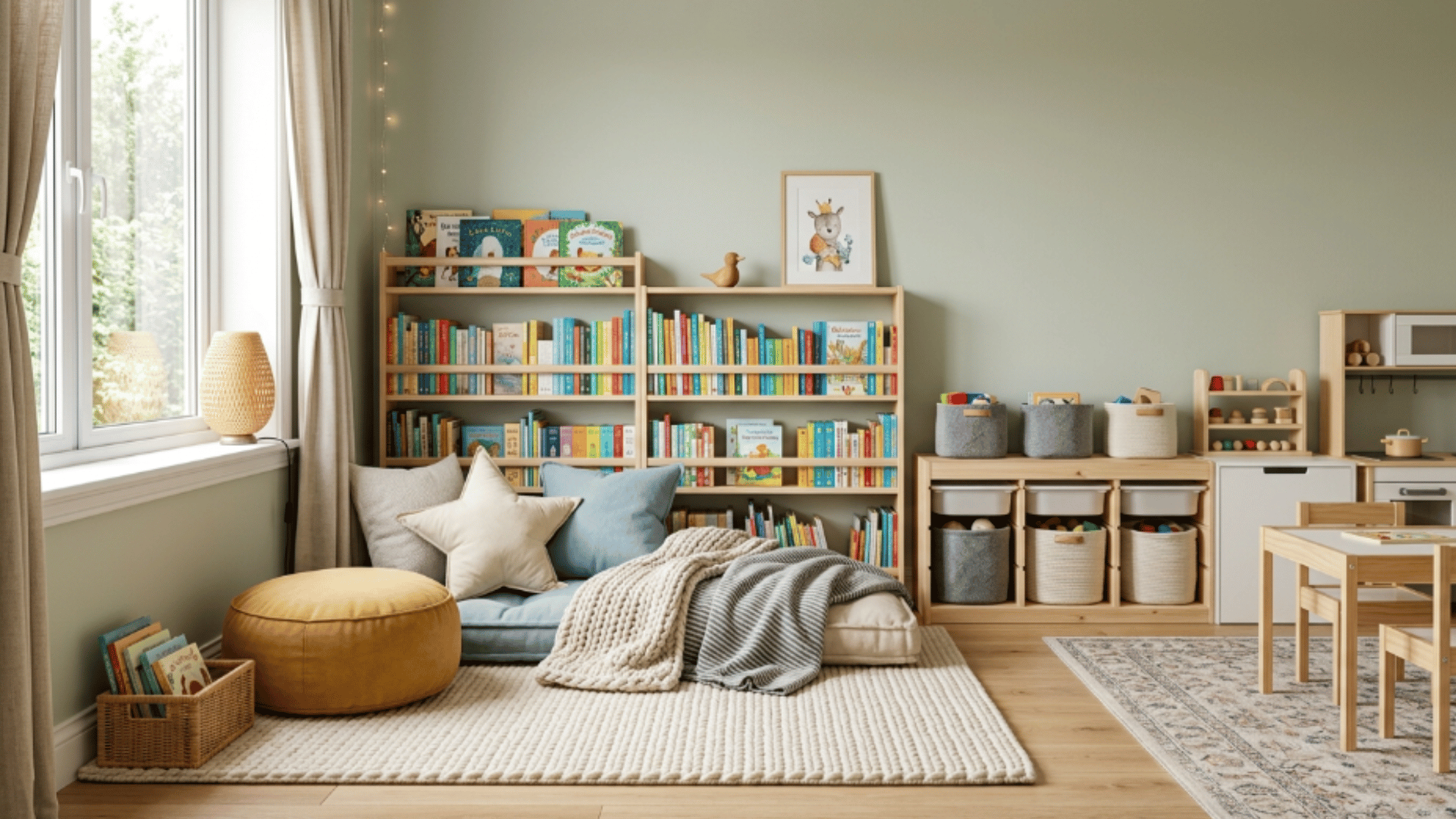
A cozy reading corner is one of the most useful playroom ideas for quiet time. Using front-facing shelves makes it easier for toddlers to see and pick books independently.
Adding soft cushions or a small mat makes the space more inviting. It also helps build a daily reading habit in a calm environment.
Keeping books within reach encourages independence and interest in stories.
2. Multi-Use Furniture
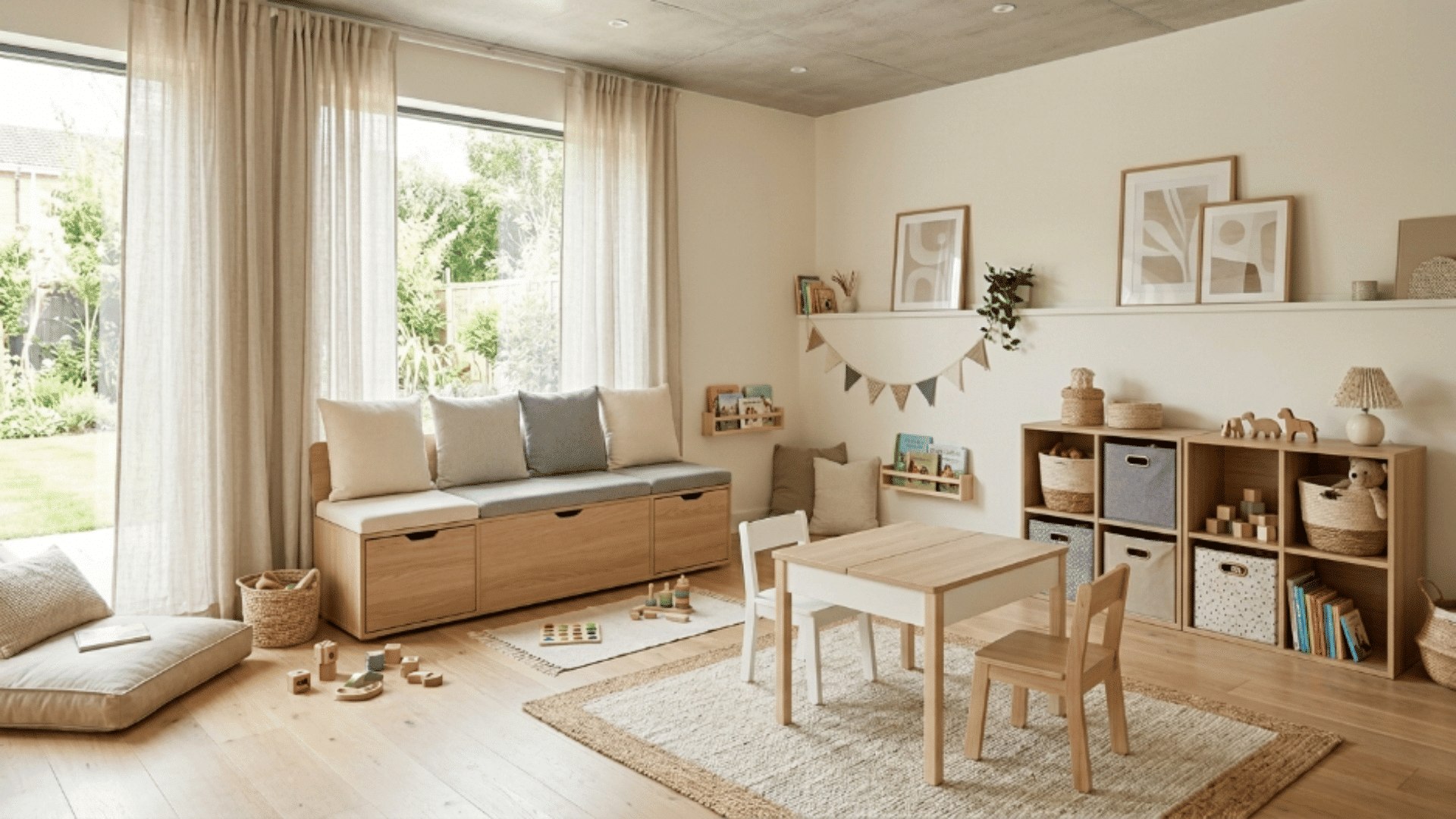
Smart furniture choices are a key part of playroom ideas for small spaces. Using benches or tables with storage inside helps reduce clutter.
It keeps toys hidden while still being easy to access when needed. This setup makes the room look cleaner and more organized.
Parents can store extra toys without needing additional cabinets. Toddlers can sit comfortably while keeping their space tidy.
3. Light Color Filter Window Panel
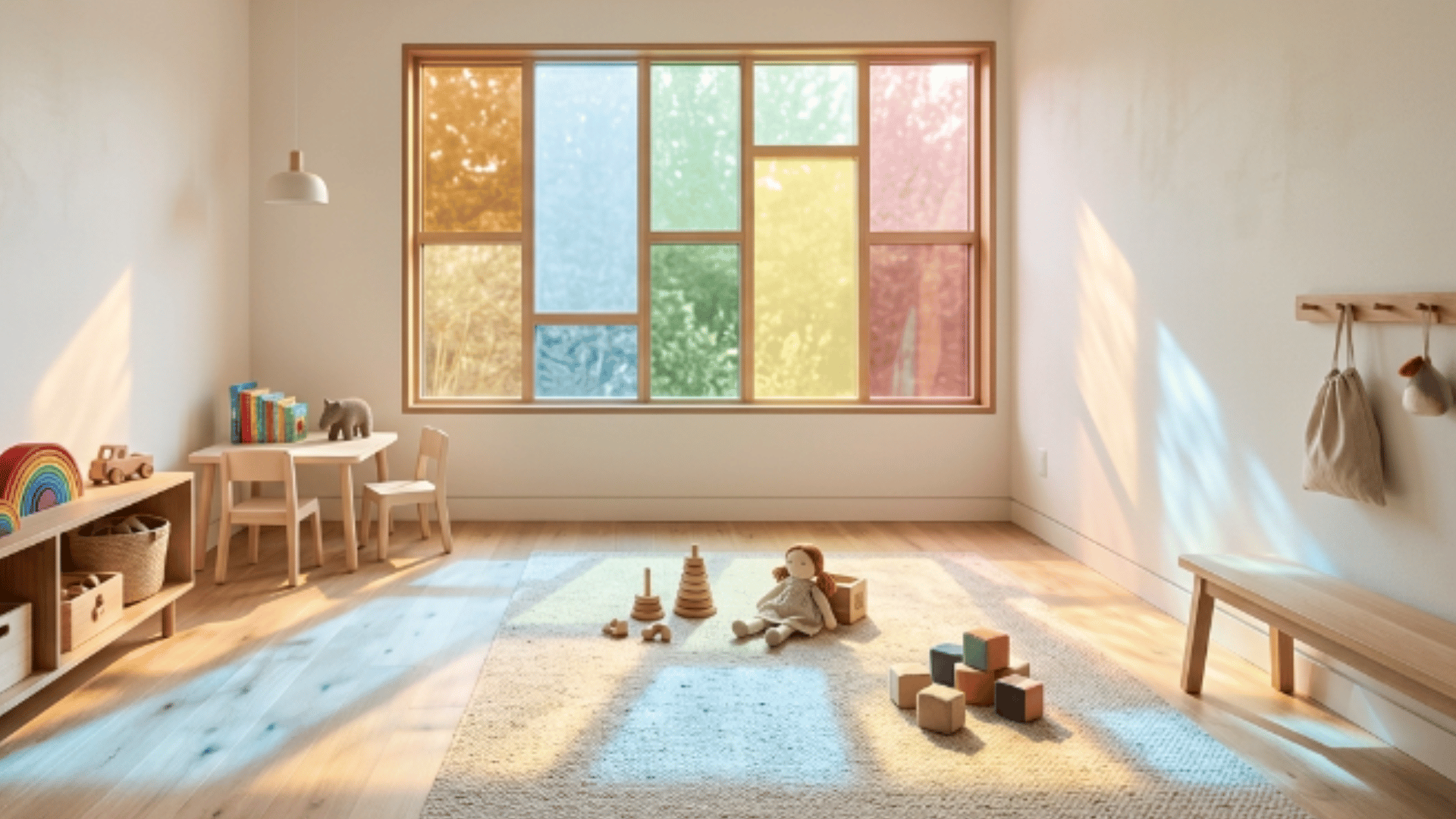
A light-colored filter window panel is a simple way to add visual play. Attaching colored transparent panels near a window lets sunlight pass through in soft shades.
As light moves during the day, it creates changing patterns on the floor and walls. Toddlers can watch, move through, and interact with the colors naturally.
This setup does not need much space or extra items. It works well near play areas where natural light is available. It also adds a calm and engaging element without creating a mess.
4. Mini Snack or Cafe Spot
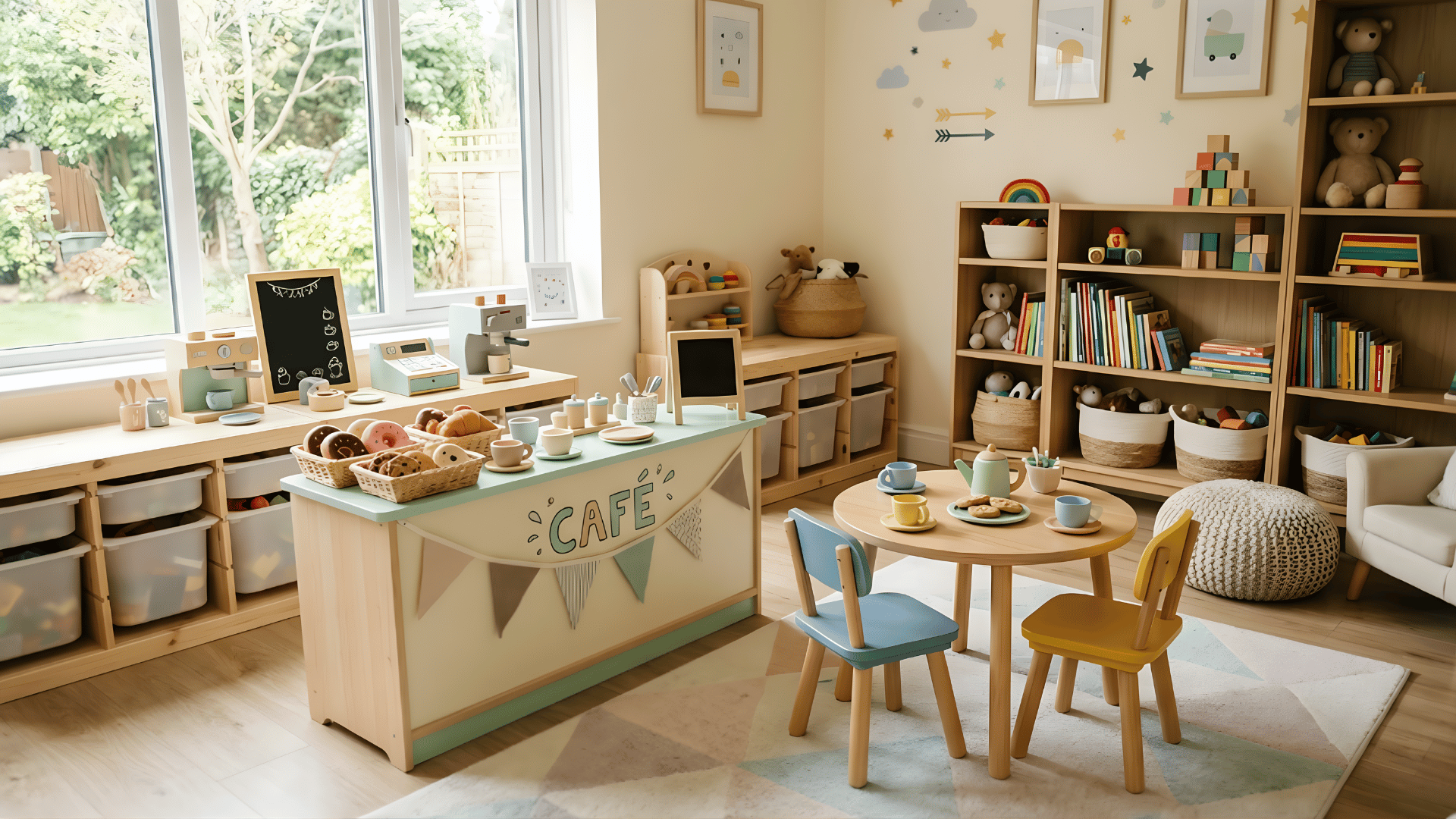
Adding a small snack area makes toddler playroom more interactive. A tiny table with pretend food items creates a fun role-play space.
It can also be used for real snack time during the day. This keeps food activities separate from toy areas. It adds variety to how toddlers use the space.
Toddlers enjoy copying daily routines through pretend play. It also helps create a structured routine for snack breaks.
5. Pegboard Storage Wall with Playing Space
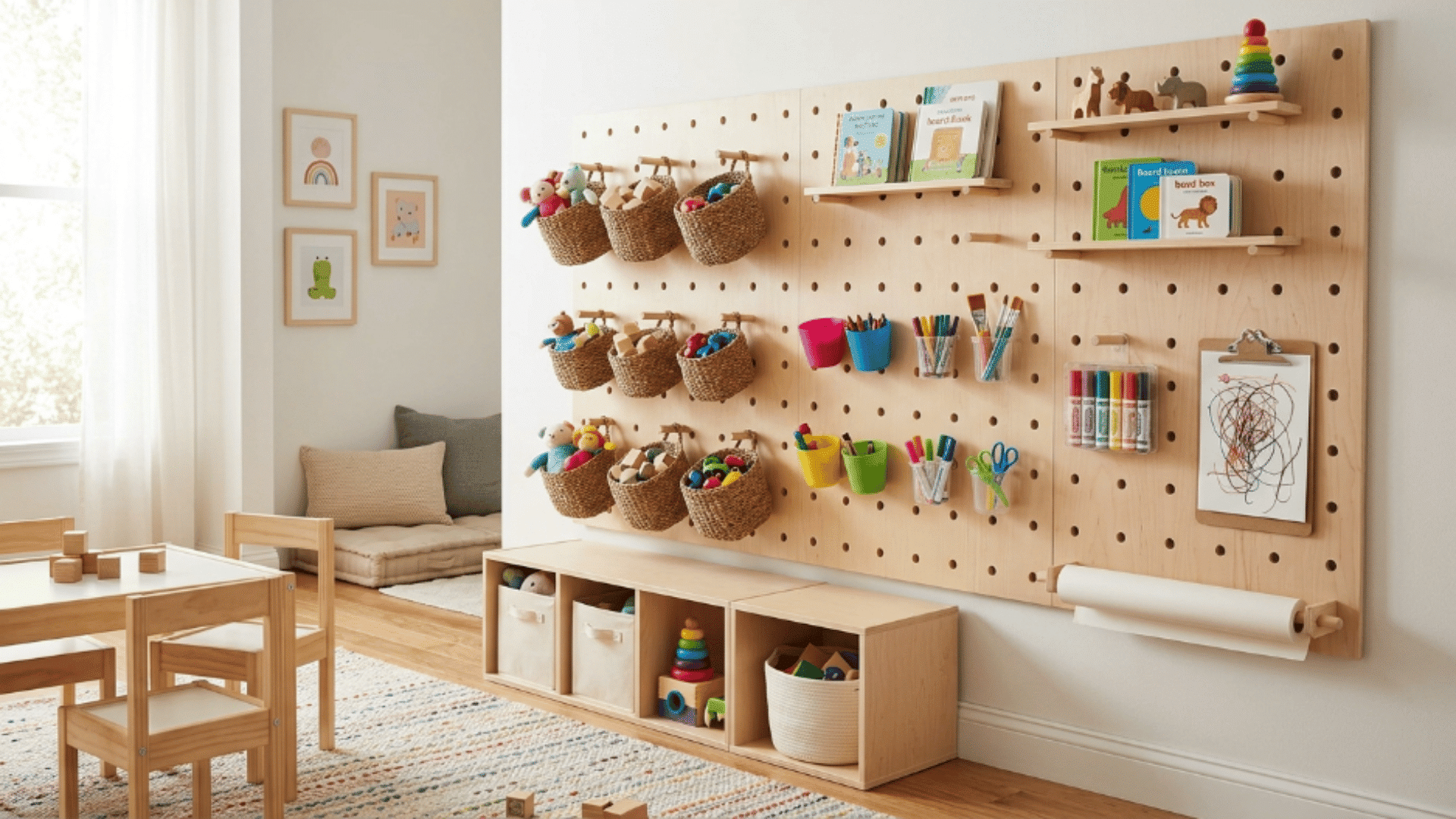
Wall storage is a smart idea that saves space. A pegboard allows you to hang baskets, toys, or art supplies.
It keeps items visible and easy to reach. You can change the setup at any time based on your needs. This makes the playroom more flexible and organized.
6. Window Seat Play Area
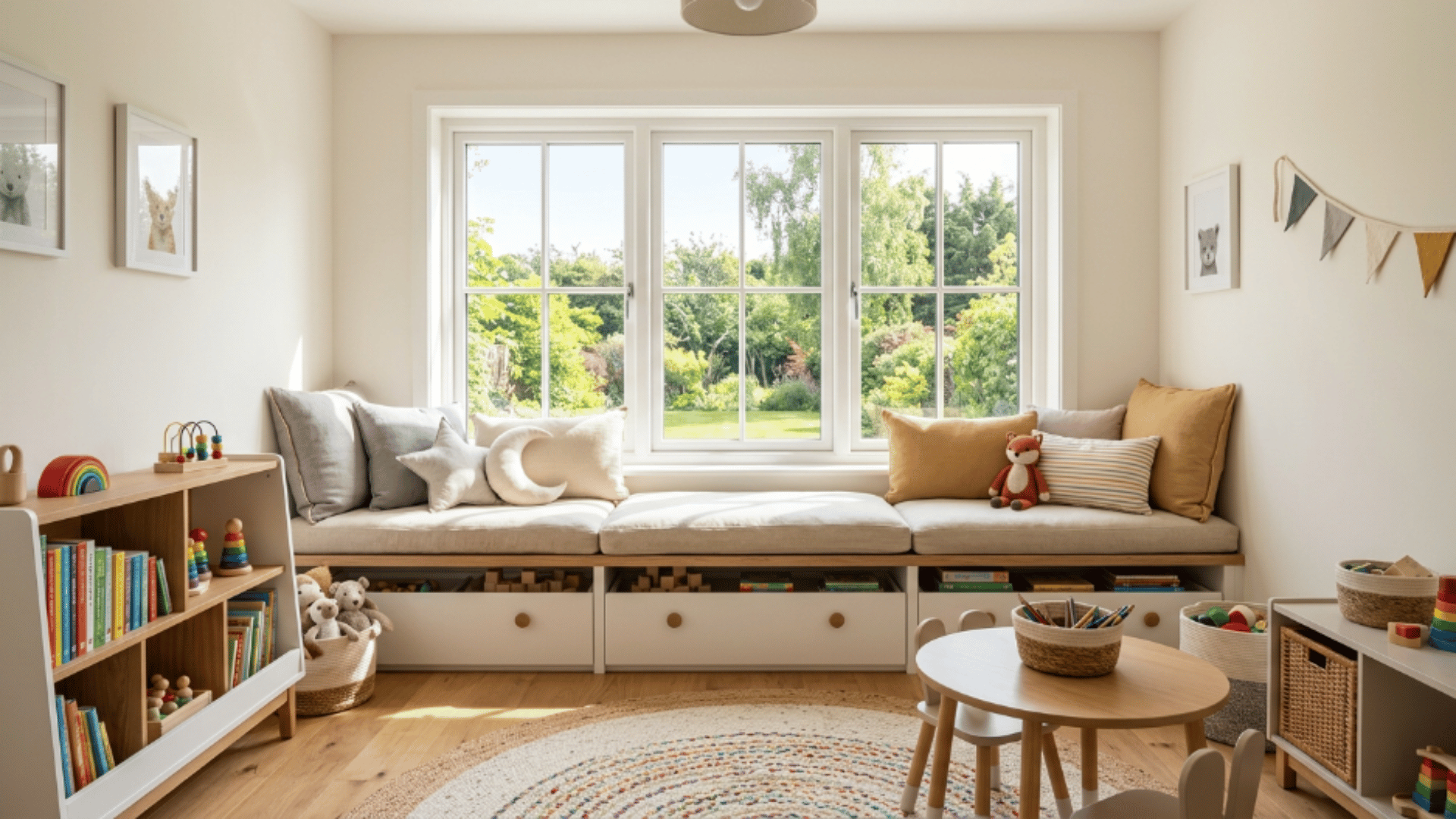
Using natural light is a great addition to playroom ideas. A window seat creates a bright and calm play spot. Storage underneath can hold books or toys.
It makes use of space that often goes unused. This area works well for both play and relaxation.
Natural light helps keep the space feeling open and fresh.
It also creates a peaceful corner for quiet activities.
7. Mirror Play Wall
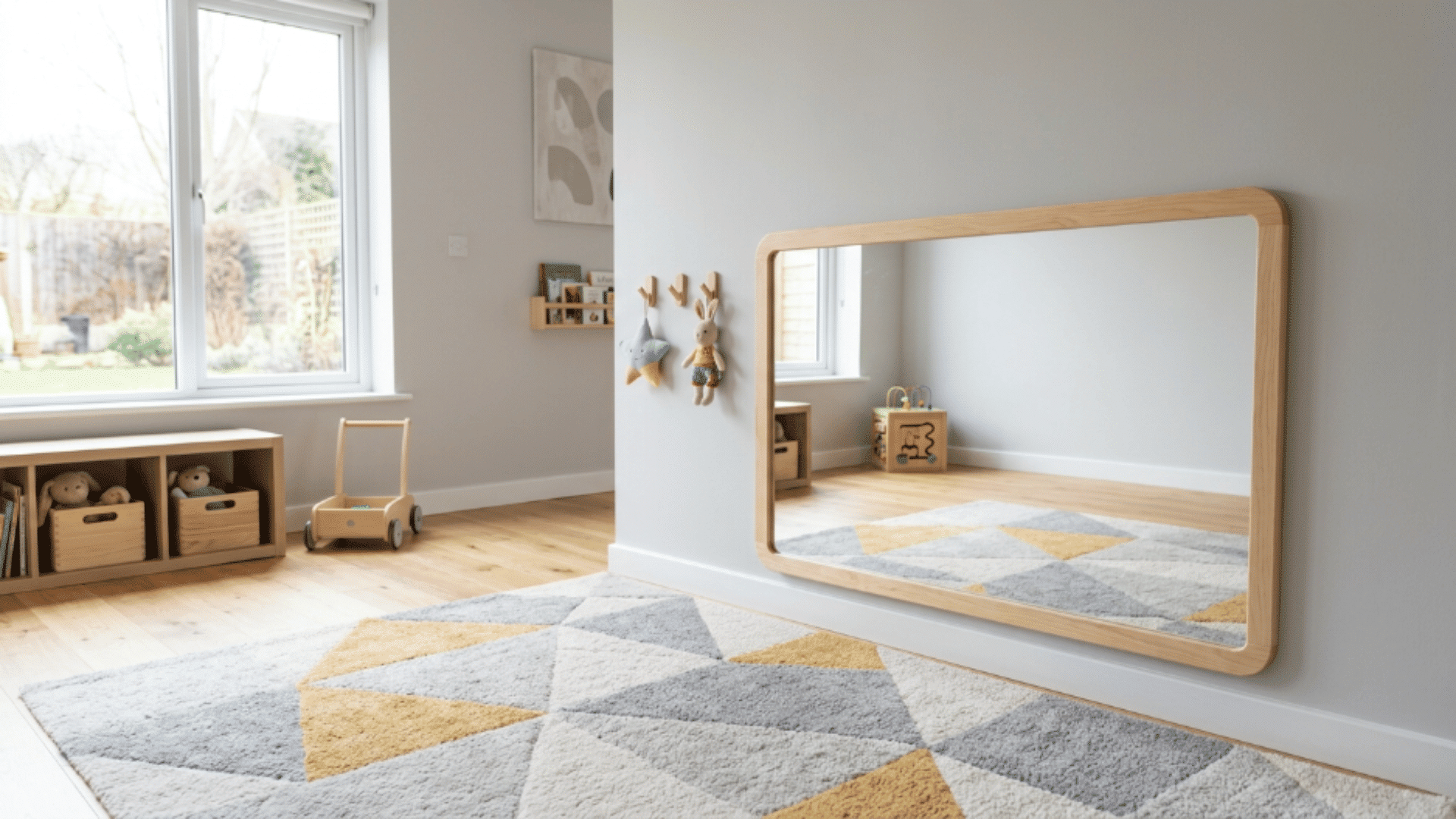
A mirror play wall is a simple addition that makes a big impact in toddler playroom. Placing a child-safe mirror at a low height allows toddlers to see themselves while playing.
It encourages movement, facial expressions, and self-awareness during playtime. The reflection also makes the room feel more open and bright.
Pair it with a soft rug to create a safe and comfortable space. This setup keeps toddlers engaged while supporting early development in a natural way.
8. Theme-Based Setup
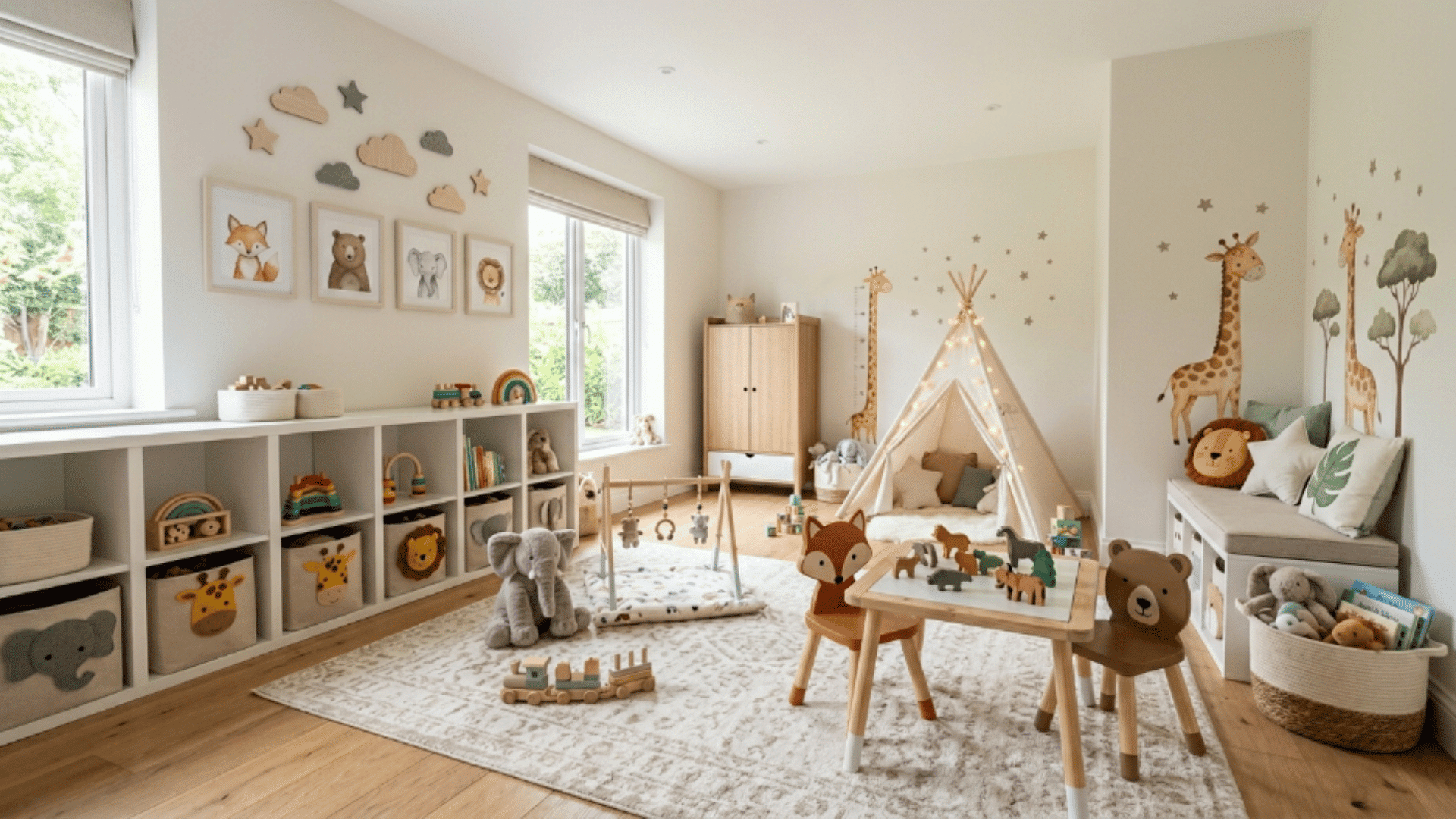
Simple themes can make playroom ideas more engaging. Using themes like animals or nature adds a playful touch. Decor can stay minimal to avoid clutter.
Themes help tie the whole room together visually. It makes the space feel more fun for toddlers. You can update the theme easily as your child grows.
This keeps the playroom fresh without major changes.
9. Toy Parking Zone
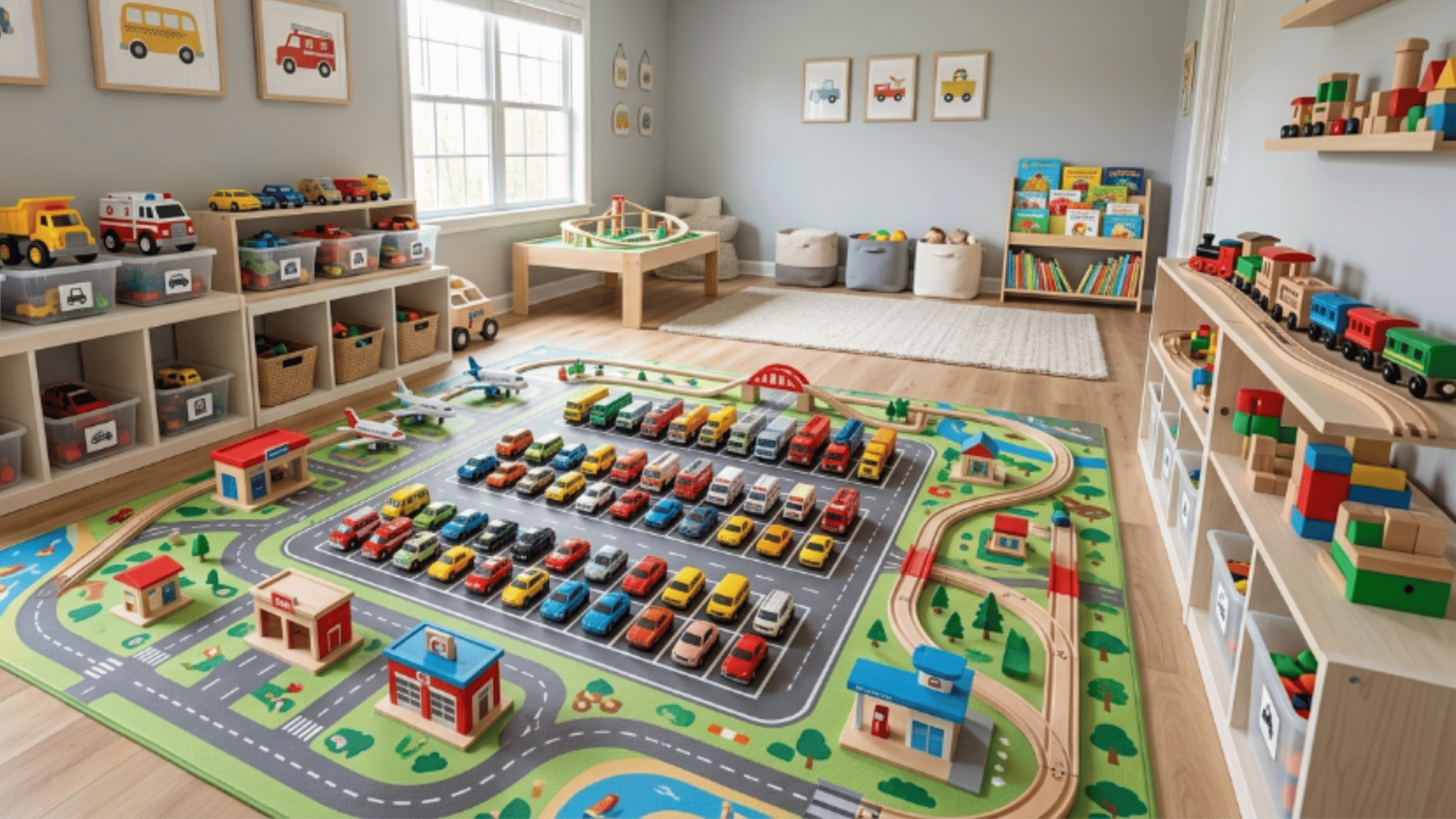
Organizing small toys is easier with a focused toddler playroom. Creating a parking area for toy cars keeps them in one place. Using mats or shelves helps define the space.
It prevents toys from getting lost around the room. This also encourages more structured playtime. It also makes cleanup after playtime quicker and less stressful.
Labeling the area can help toddlers learn to put their toys back on their own.
10. Indoor Swing Spot
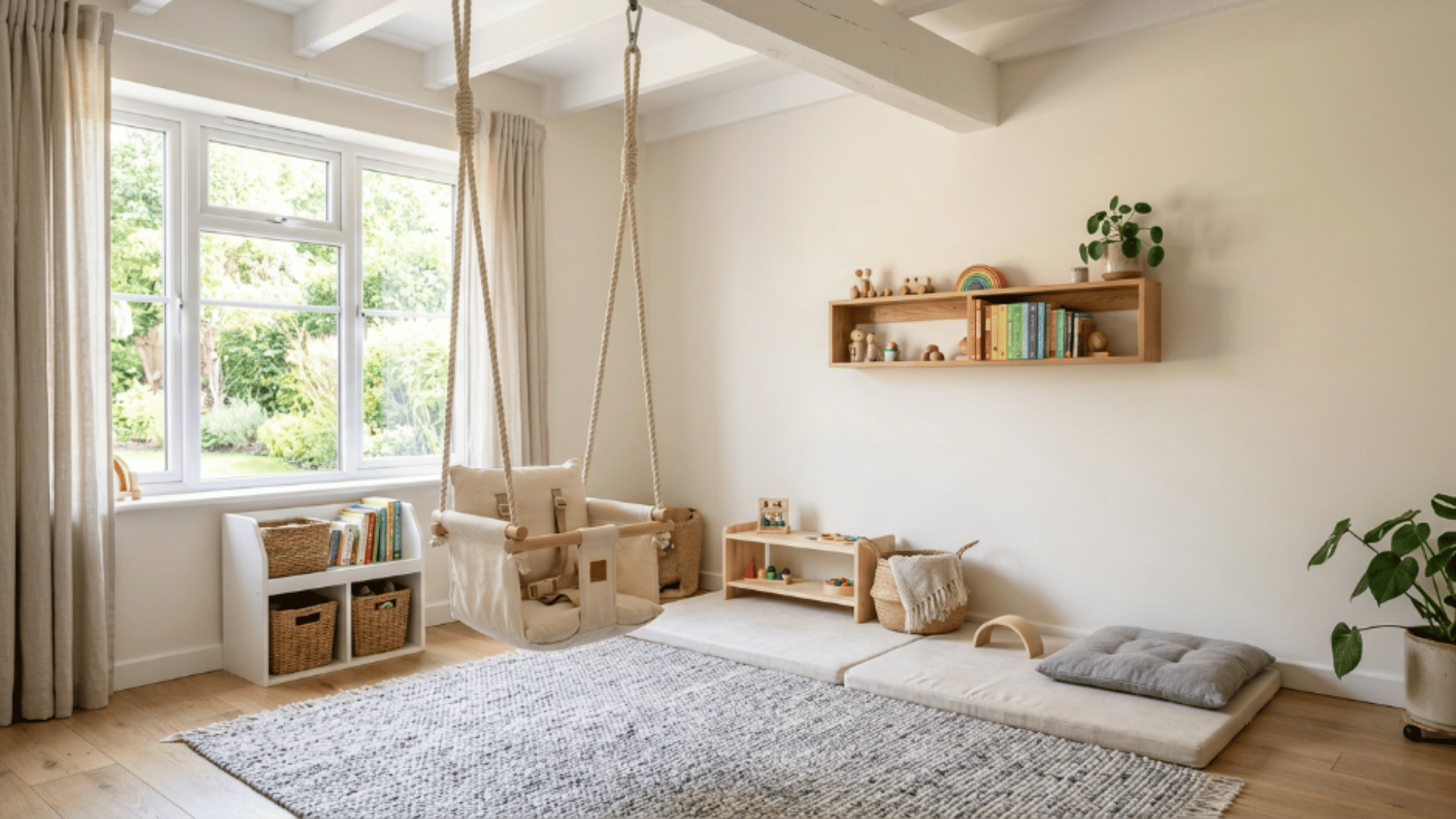
Adding movement features makes playroom ideas more fun. A small indoor swing gives toddlers a relaxing play option. It can help with calm time and active play.
Make sure it is installed safely and securely. This adds variety to the playroom setup. It also gives toddlers a soothing way to unwind. The swing becomes a favorite spot for daily playtime.
11. Fabric Texture Wall
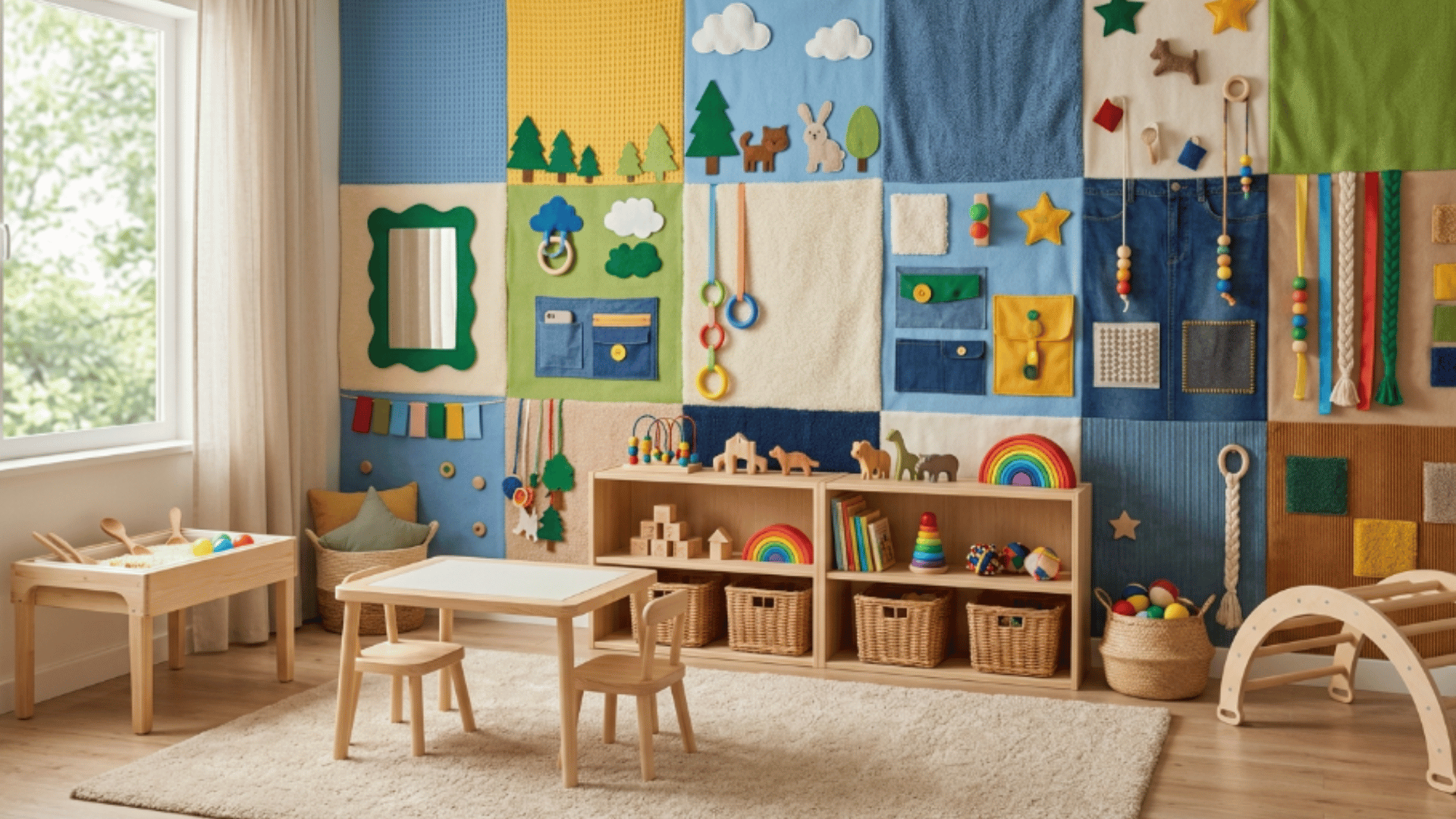
A texture wall is a great addition to a toddler playroom focused on sensory play. Attach different fabrics, such as cotton, felt, or soft materials, to a board.
Toddlers can safely touch and feel each texture. This helps build sensory awareness through simple interaction. You can change fabrics over time for variety.
It also adds a unique wall feature without using extra space. This setup supports learning through touch and play.
12. Floor Mattress Area
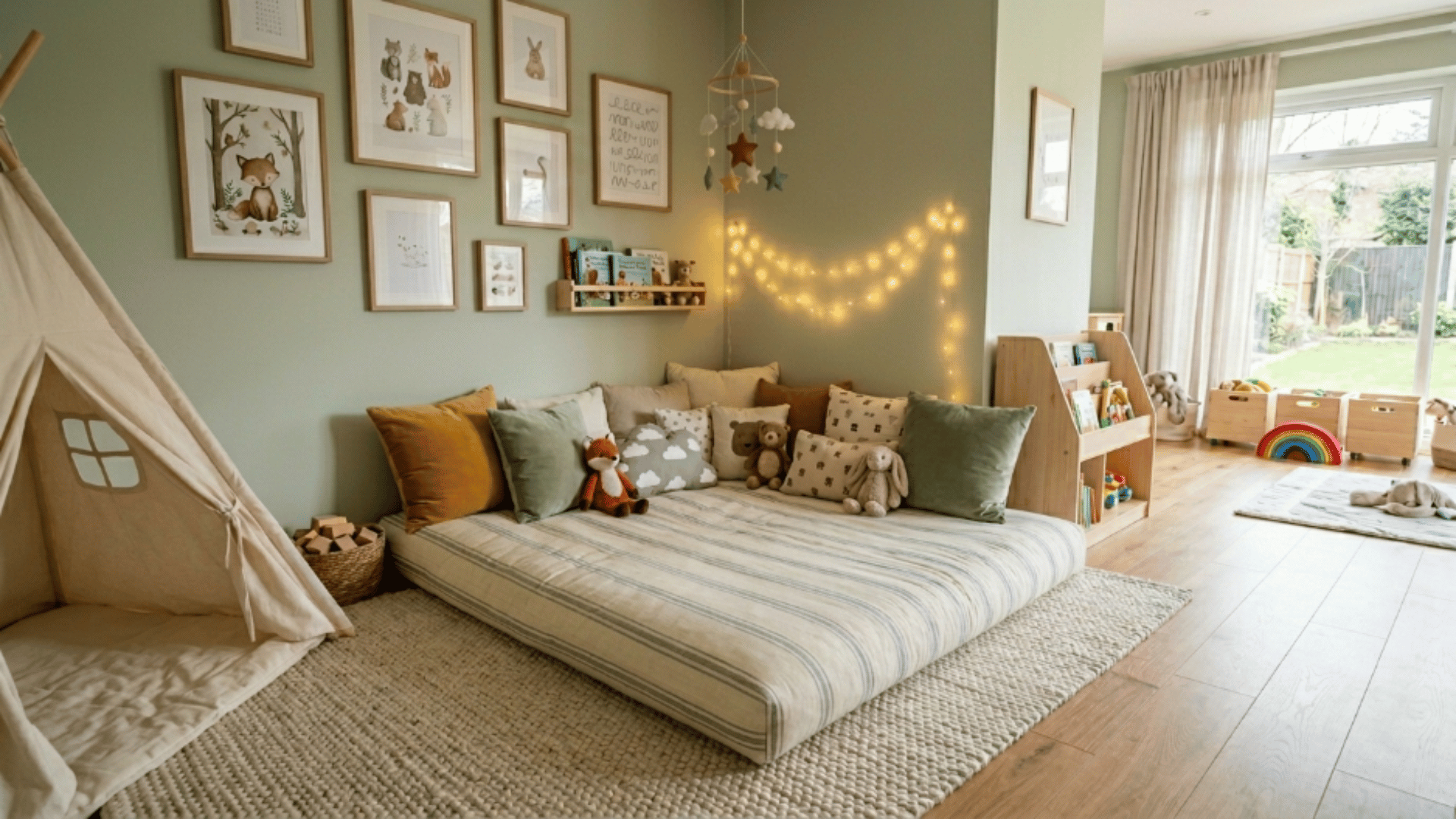
A floor mattress creates a soft and safe area for toddlers to relax or play. It works well for quiet time, reading, or even short naps during the day.
This is one of the more comfortable toddler playroom ideas for daily use. You can place it near a corner to create a cozy spot. Soft cushions can be added to make it more inviting.
It also provides extra safety during active playtime. The mattress can double as a space for parents to sit and join activities.
13. Game Station
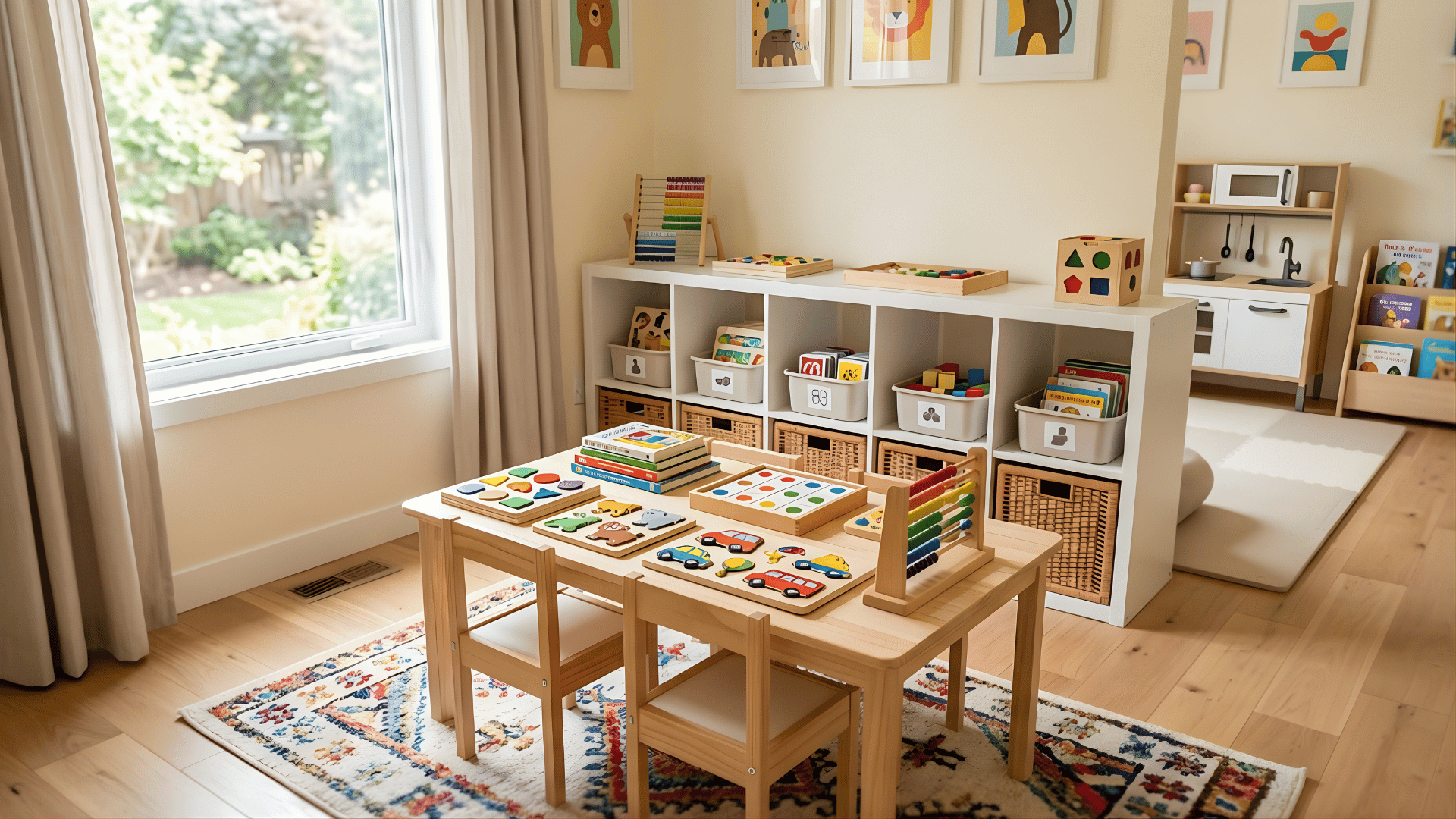
A dedicated puzzle area helps toddlers focus on quiet activities. It keeps small pieces organized in one place. Using trays or boxes makes it easier to manage puzzles.
This setup encourages problem-solving and concentration. It also reduces mess in other parts of the room. It also gives toddlers a calm break after active play.
Rotating puzzles regularly can keep the space fresh and interesting.
14. Bunk Bed Playroom
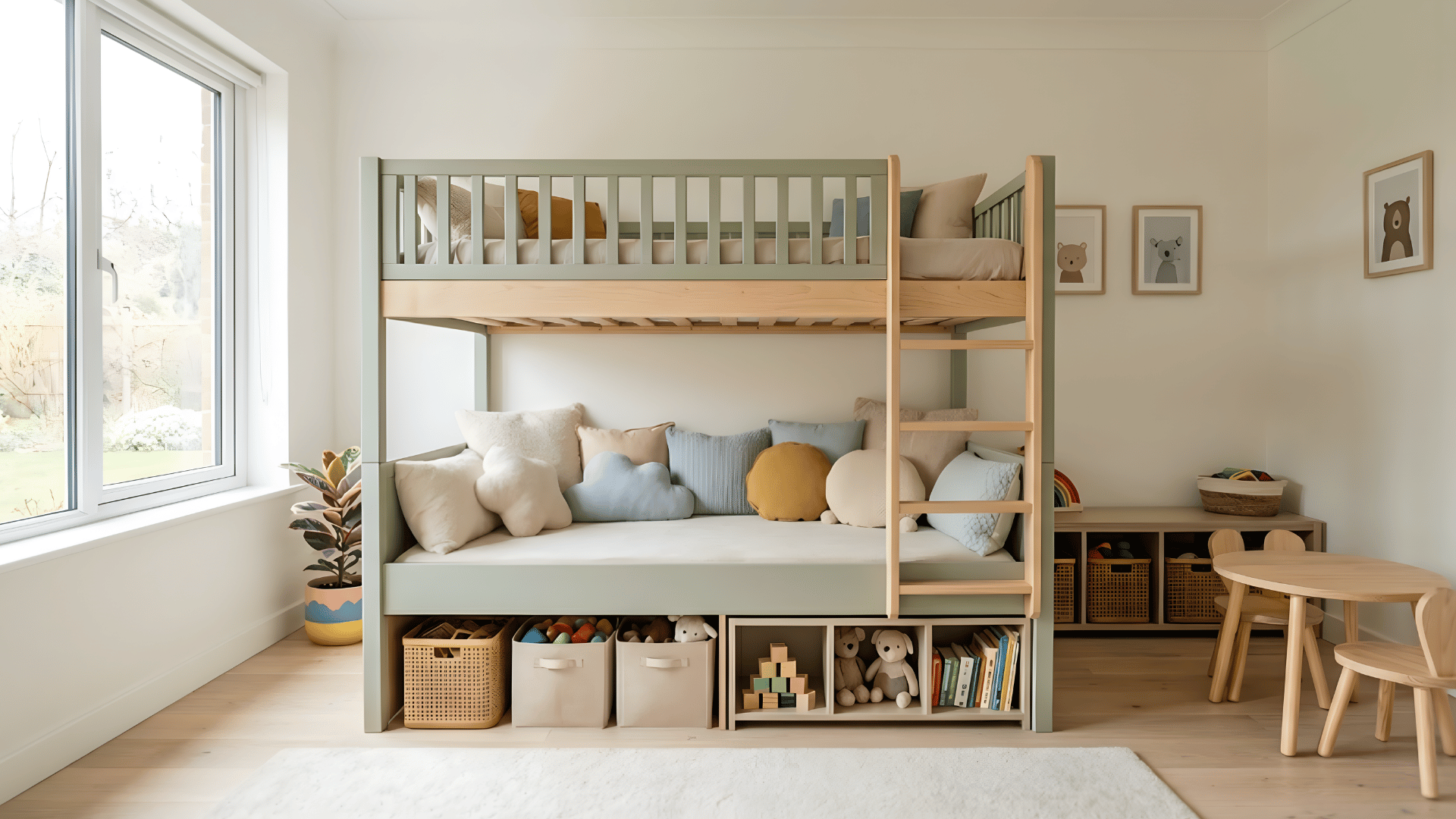
A bunk bed can be more than just a place to sleep when used in toddler playroom. The lower section can serve as a cozy play area, a reading nook, or a small activity zone.
Adding soft cushions, storage baskets, or a small rug makes the space more comfortable. This setup is useful for smaller rooms where space is at a premium.
It also creates a defined play area without needing extra furniture. Using vertical space in this way keeps the room organized and easy to manage.
15. Slide Play Corner
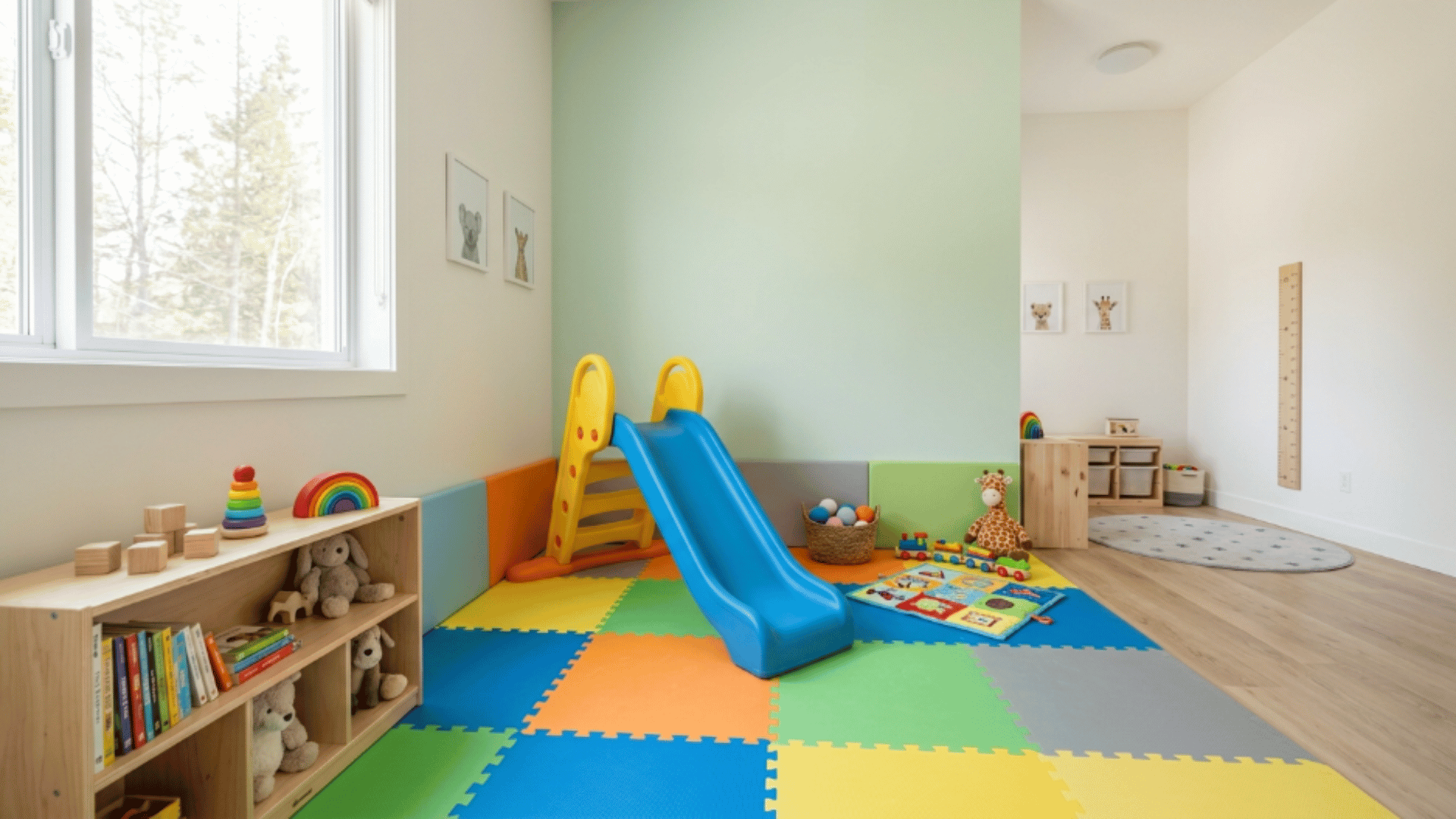
A small indoor slide adds fun and movement to the playroom. It encourages active play without the need for outdoor space. Keeping it in a corner saves room for other activities.
Soft mats can be placed underneath for safety. This setup keeps toddlers engaged and active. It also helps improve balance and coordination during play.
Choosing a sturdy, age-appropriate slide keeps playtime safe and enjoyable.
16. Basket Storage System
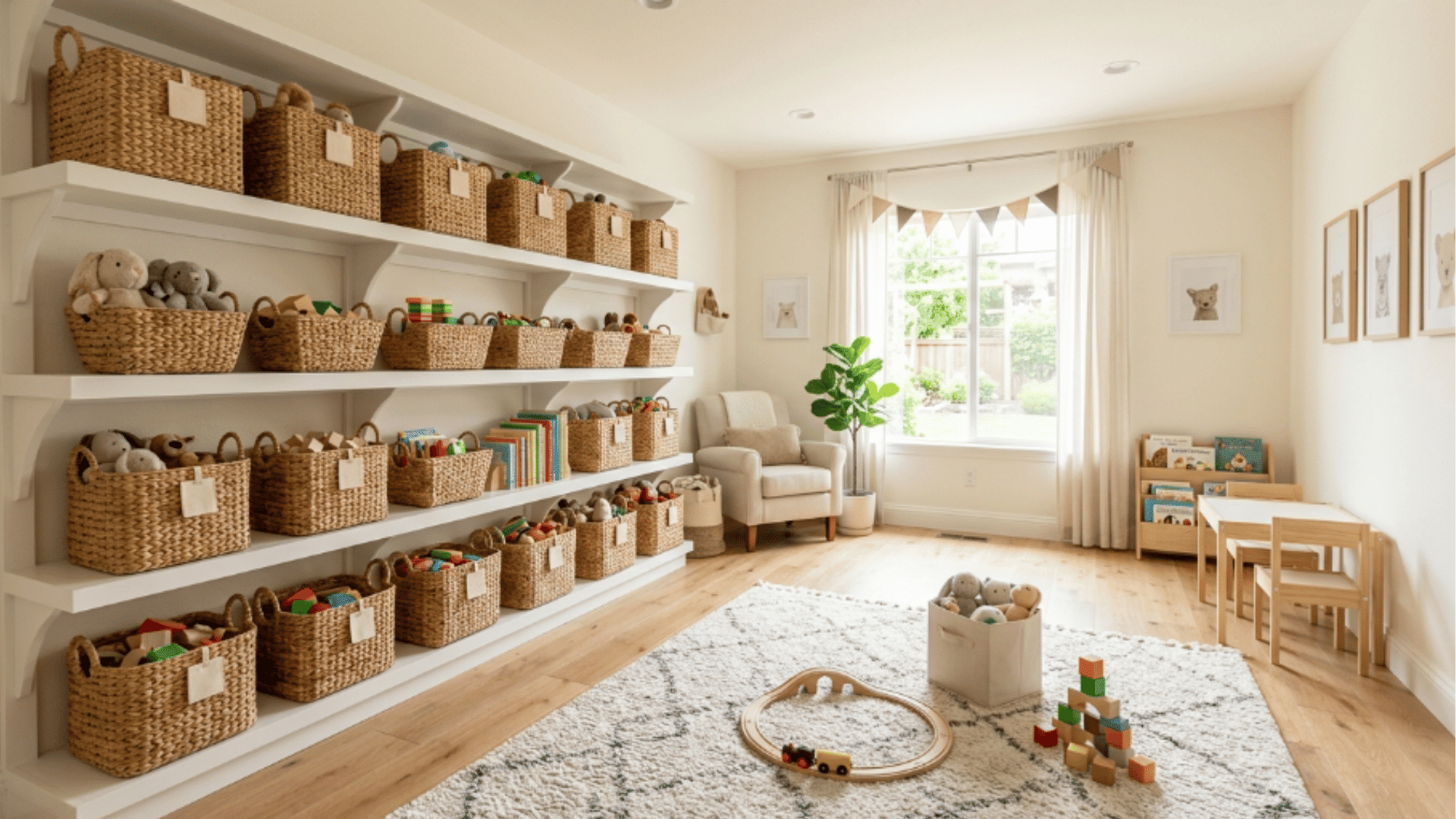
Using baskets makes toy storage simple and easy to manage. Different baskets can be used for different types of toys. This keeps the playroom organized without much effort.
It also helps toddlers learn basic sorting skills. Lightweight baskets are easy for toddlers to handle. This setup makes daily clean-up quicker and easier. It also keeps the room looking neat throughout the day.
17. Art Display Wall
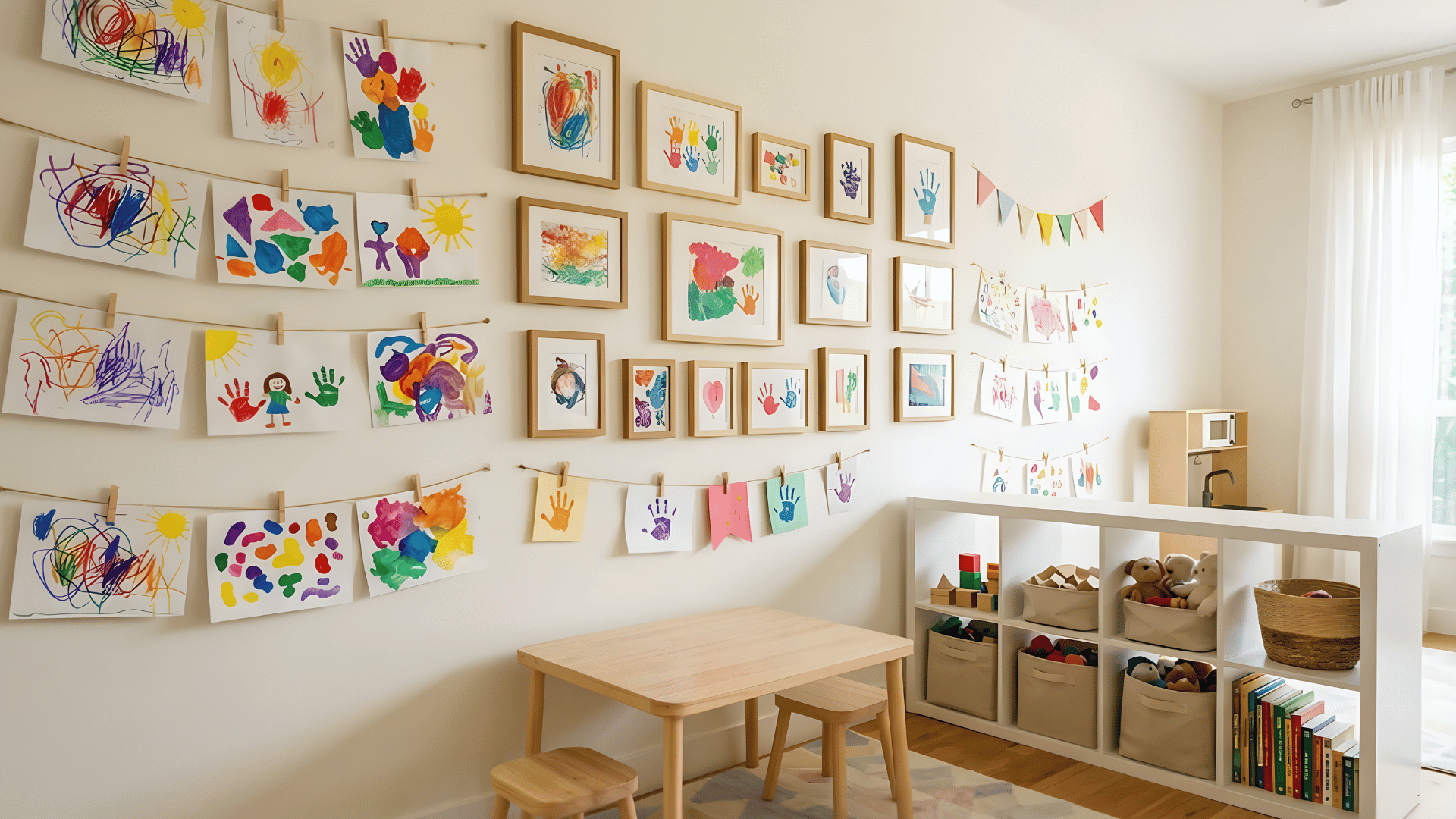
Displaying your toddler’s artwork adds a personal touch to the room. It also encourages creativity and confidence. You can use clips or frames to switch artwork easily.
This keeps the space fresh and up to date. It gives toddlers a sense of pride in their work. It also motivates them to keep creating and trying new activities.
Keeping the display at their eye level makes it more meaningful for them.
18. Dress-Up Wardrobe
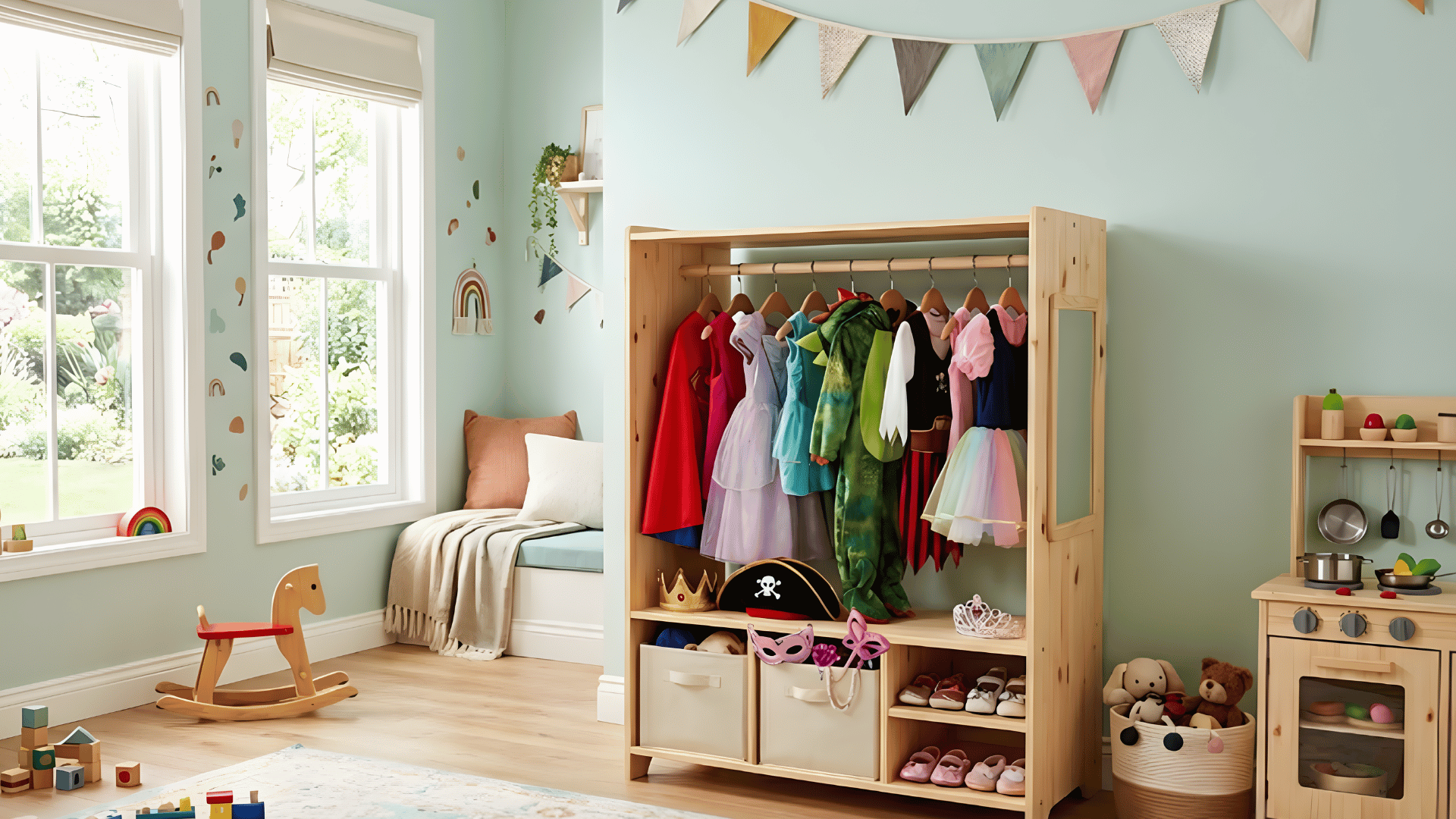
A small wardrobe or rack keeps dress-up clothes organized. It creates a dedicated space for pretend play. Toddlers can easily pick and change their own outfits.
This supports imagination and role-play activities. Keeping items visible makes the setup more engaging. It also helps avoid clutter in other parts of the room.
This is one of the more playful playroom ideas to try.
19. Layered Lighting Setup
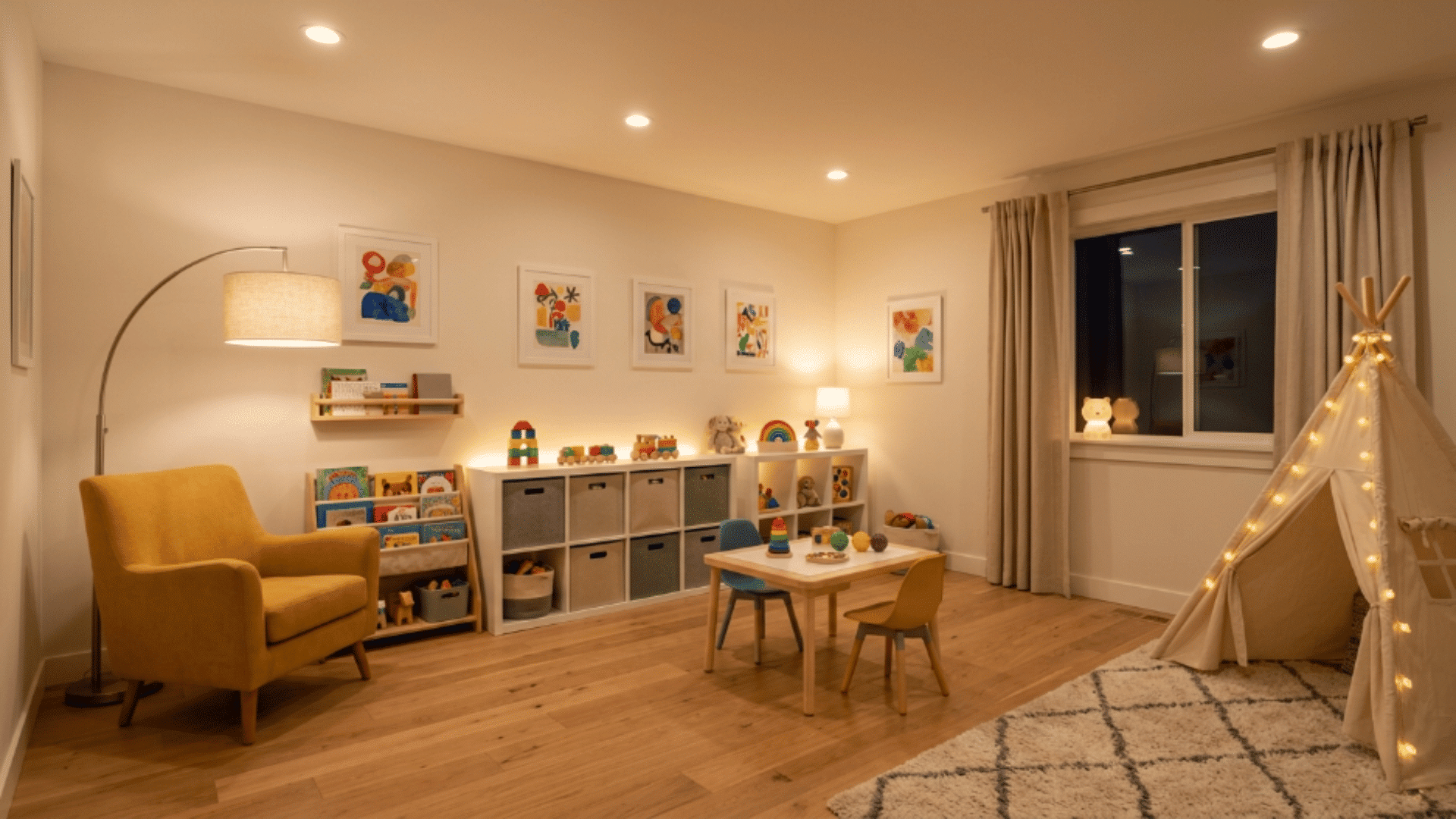
Using different light sources makes the playroom more comfortable. Soft lamps can create a calm mood or quiet time. Brighter lights can be used for active play areas.
This helps adjust the space based on different activities. It also makes the room feel warm and inviting. It also helps reduce eye strain during longer play sessions.
Using child-safe lighting fixtures keeps the space secure and comfortable.
20. Rainbow Accent Wall
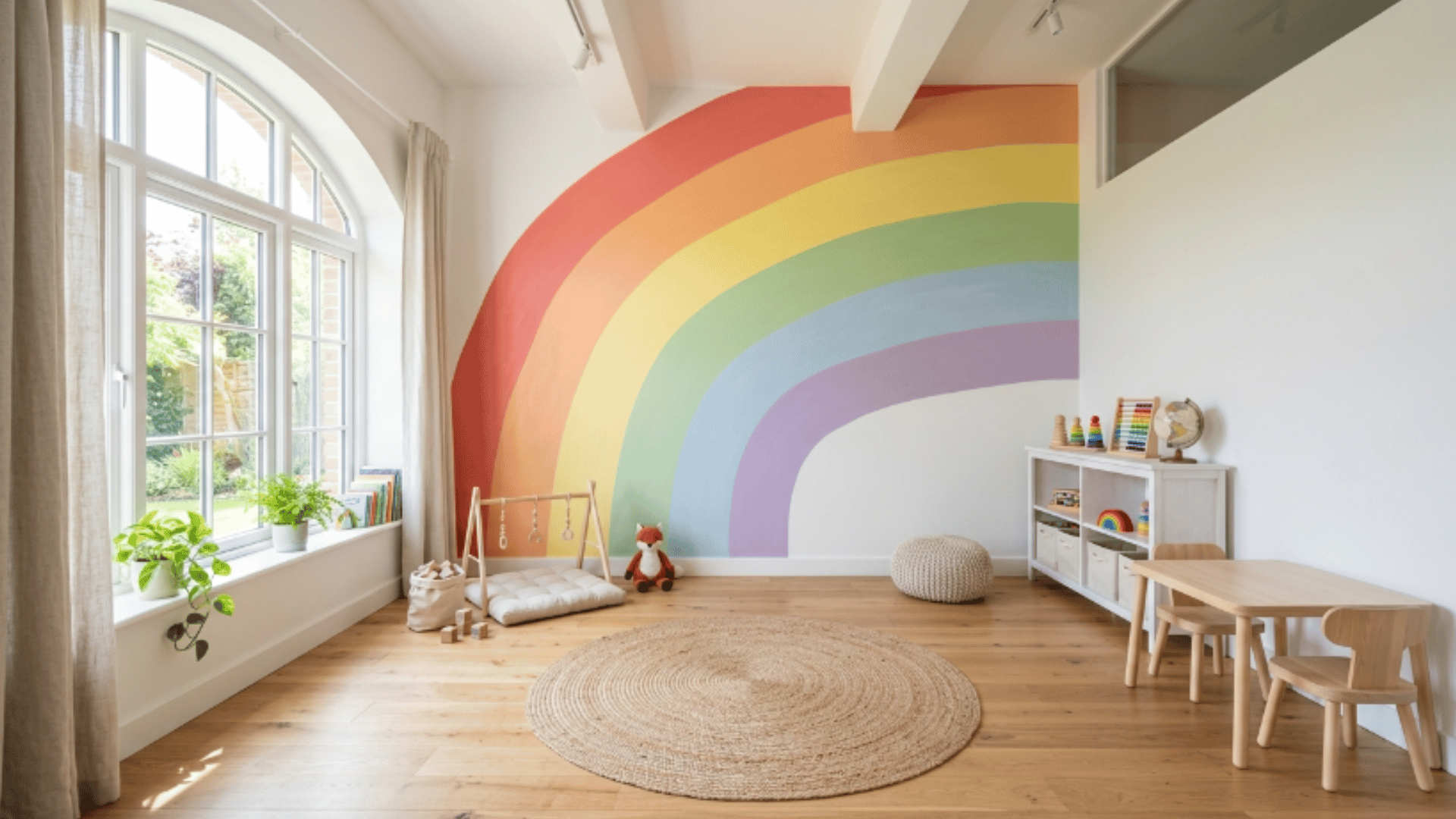
A rainbow accent wall is a simple way to bring color into a toddler’s playroom. It acts as a focal point without needing too many extra decor items.
You can use soft shades for a calm look or brighter tones for a playful feel. Pairing it with simple furniture helps keep the space balanced.
This setup makes the room feel engaging for toddlers. It also works well with different layouts and styles.
21. Small Playhouse Corner
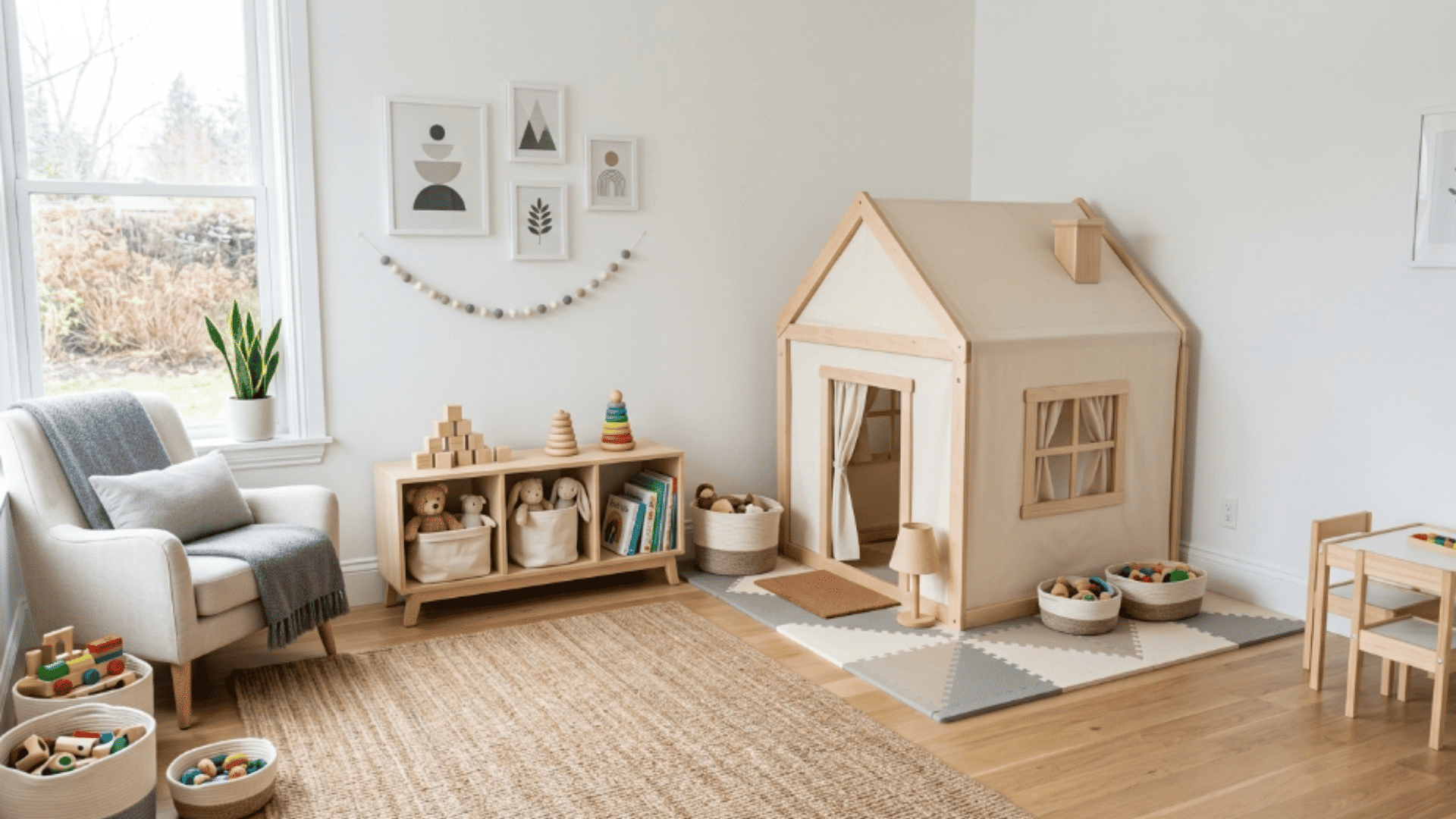
A small indoor playhouse provides a fun, interactive space for toddlers. It gives them a place for pretend play and quiet time. You can place it in a corner to save space.
Soft mats around it make the area safer for play. This setup keeps toddlers engaged for longer periods. It also helps build imagination through role-play activities.
Adding a few favorite toys inside makes the space feel more special and cozy.
22. Climbing Wall
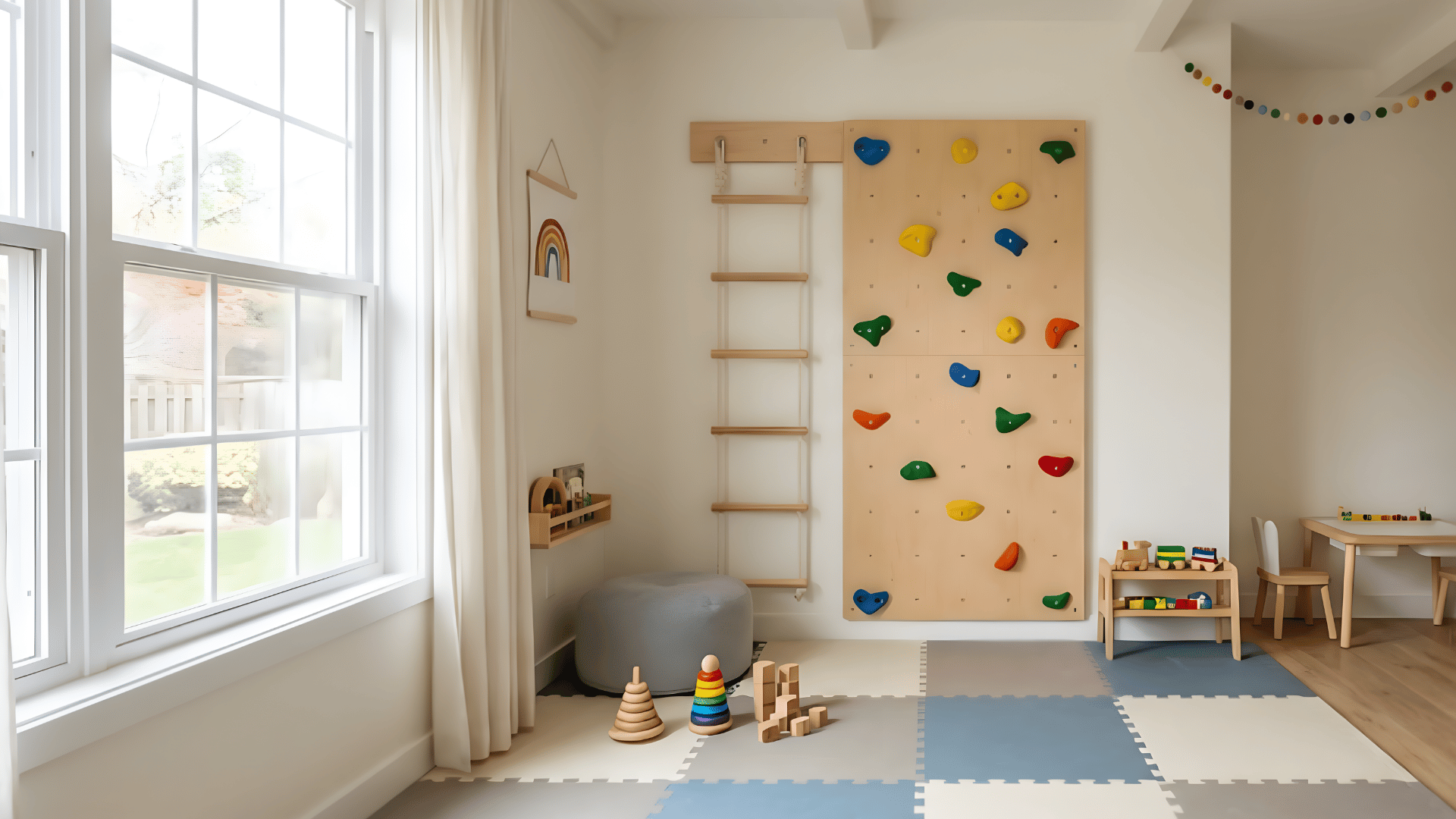
A small climbing wall adds an active element to playroom ideas. Keeping it low and adding soft mats underneath helps maintain safety.
It allows toddlers to practice movement and build strength indoors. You can adjust the setup as your child grows. This setup works well in one corner to save space.
It keeps toddlers engaged while supporting physical activity at home.
23. Activity Board Setup
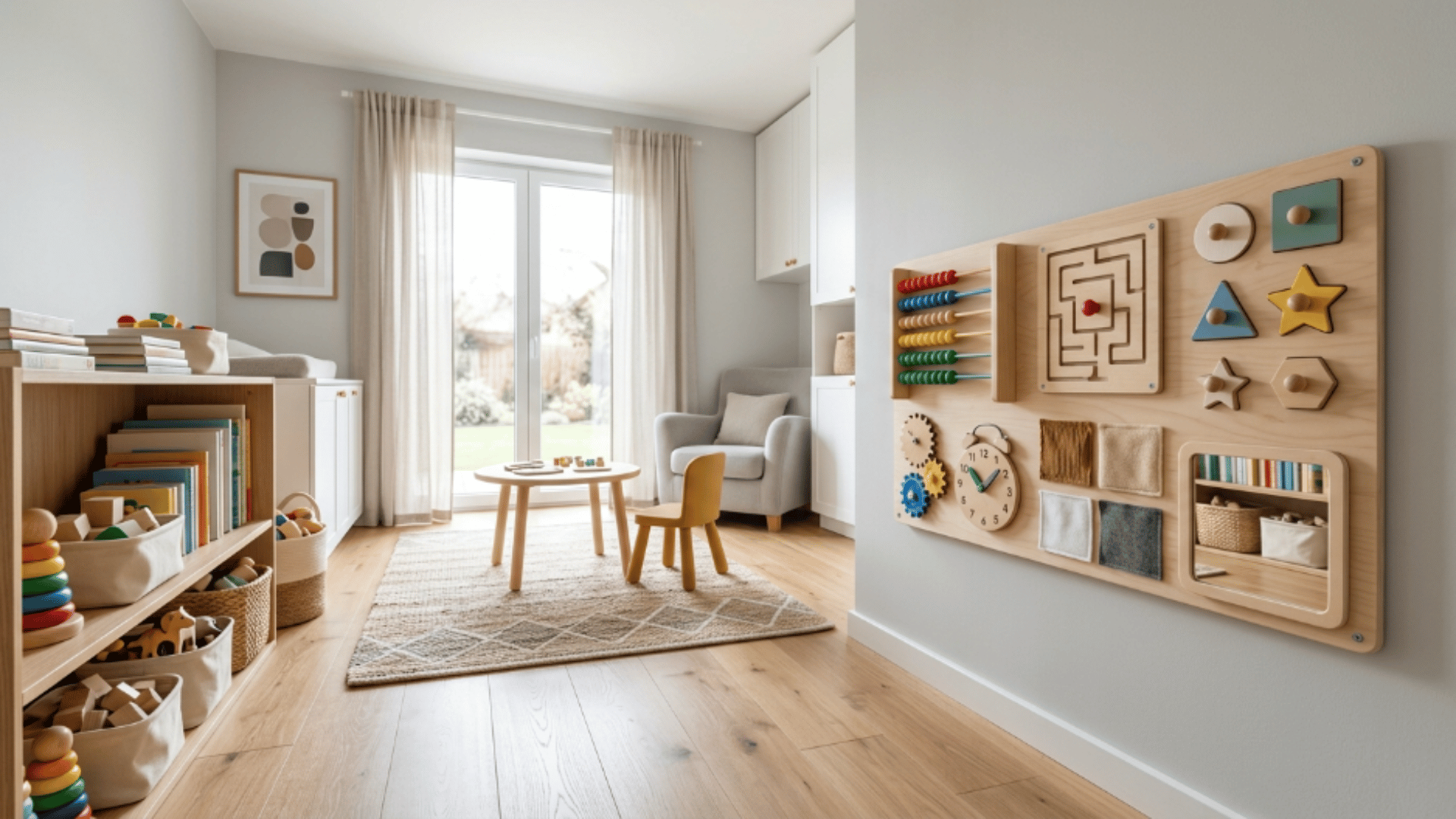
An activity board adds hands-on play to playroom ideas. You can include simple items like knobs, switches, or shapes. It keeps toddlers busy with focused activities.
This setup supports learning through play. It also reduces boredom during quiet time.
It also helps improve fine motor skills and hand-eye coordination. Keeping the board at a reachable height makes it easy and safe for toddlers to use.
24. Music Playing Corner
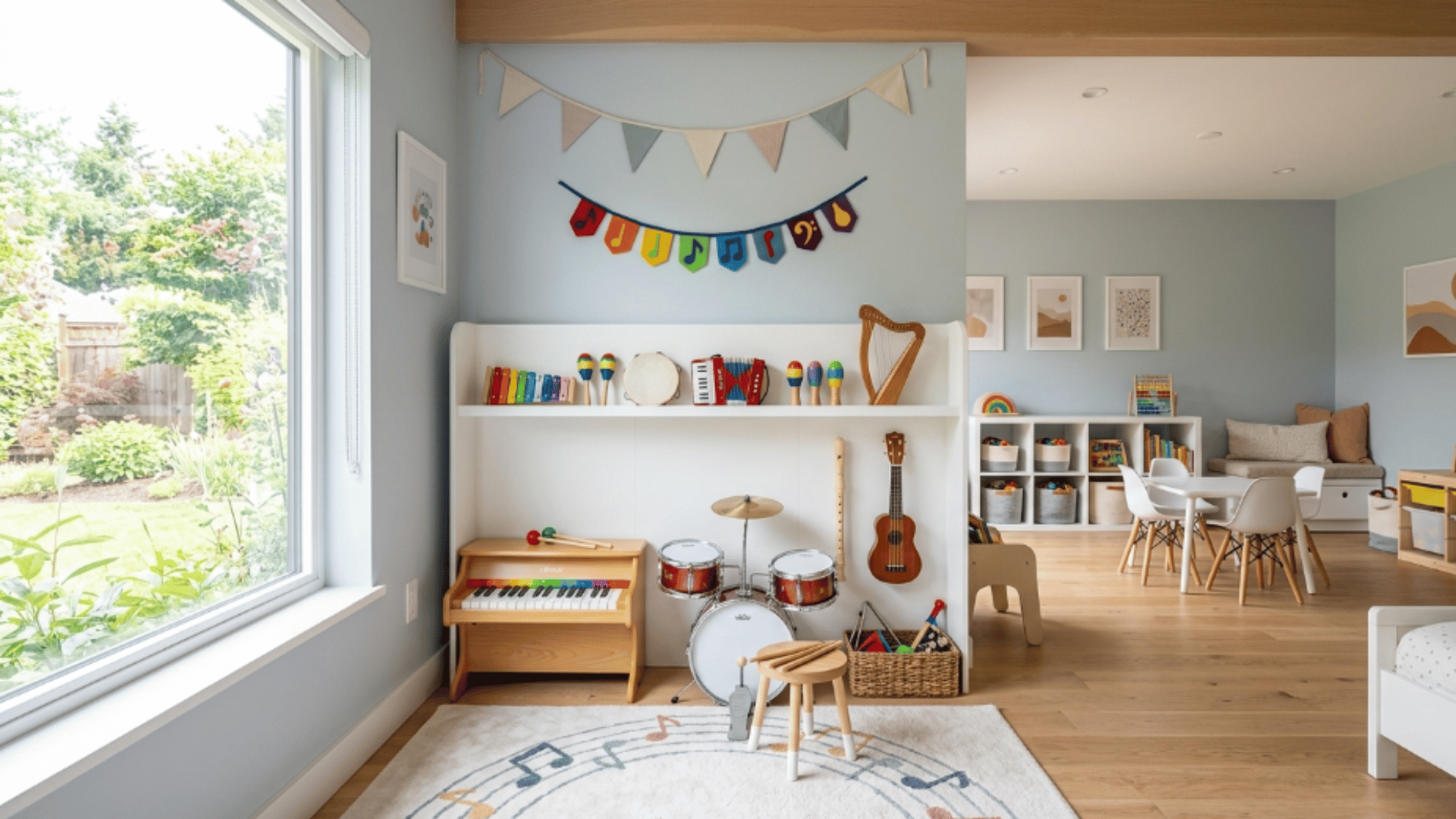
A music corner brings fun sound play into the playroom. Adding simple instruments keeps toddlers engaged. It allows them to explore sounds and rhythm.
Keep everything in one area for better organization. This setup adds variety to daily playtime. It also encourages creativity and active play. Storing instruments nearby keeps the space tidy.
It can also help toddlers express emotions in a playful way. Choosing soft-sound or toddler-safe instruments keeps noise levels manageable.
25. Bean Bag Chairs
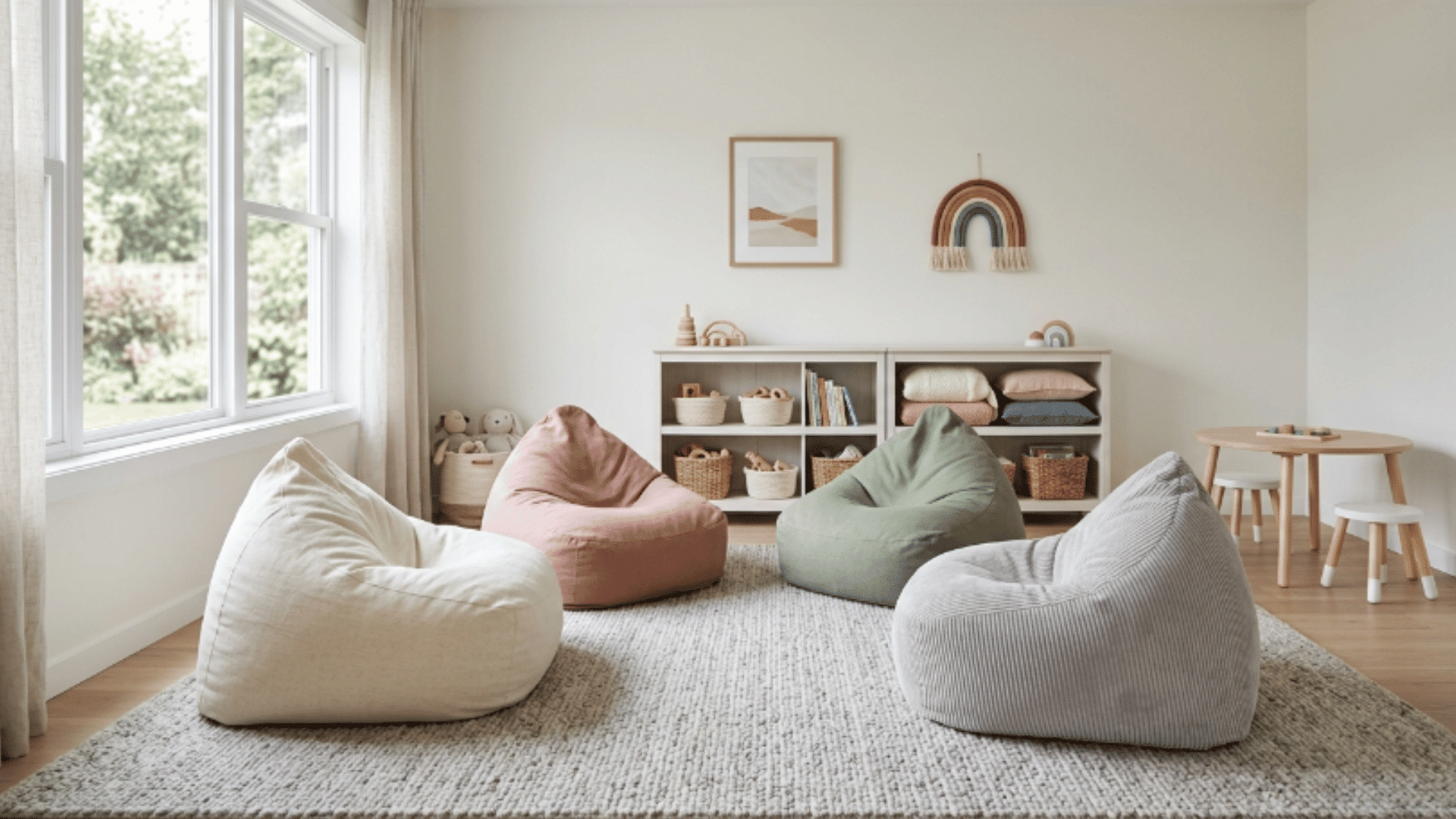
Bean bag chairs add soft and flexible seating to playroom ideas. They are easy to move around, making the space more flexible for different activities.
Toddlers can sit, relax, or use them during reading time. These chairs also help create a cozy corner without adding bulky furniture.
Choose soft and washable materials for easy maintenance. This setup makes the playroom feel more comfortable and relaxed.
26. Nature-Inspired Play Area
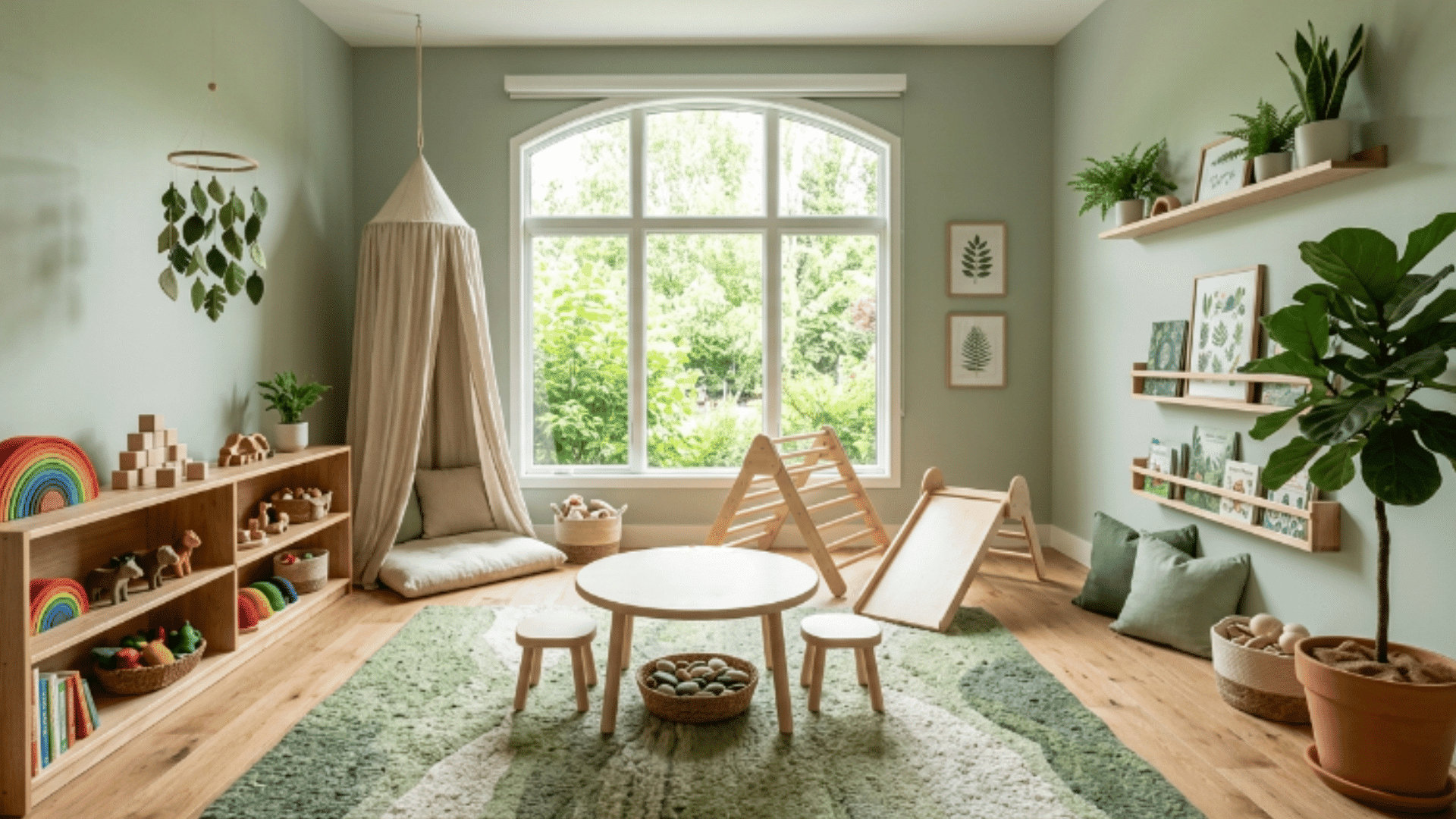
A nature-inspired setup adds a calm feel to toddler playroom ideas. Using wooden toys and soft green tones keeps the space simple. It creates a relaxed environment for play.
Natural elements can make the room feel fresh. This setup works well for both play and rest. It also adds a soft, peaceful look to the space. Simple decor helps keep the room easy to maintain.
27. Rolling Art Cart
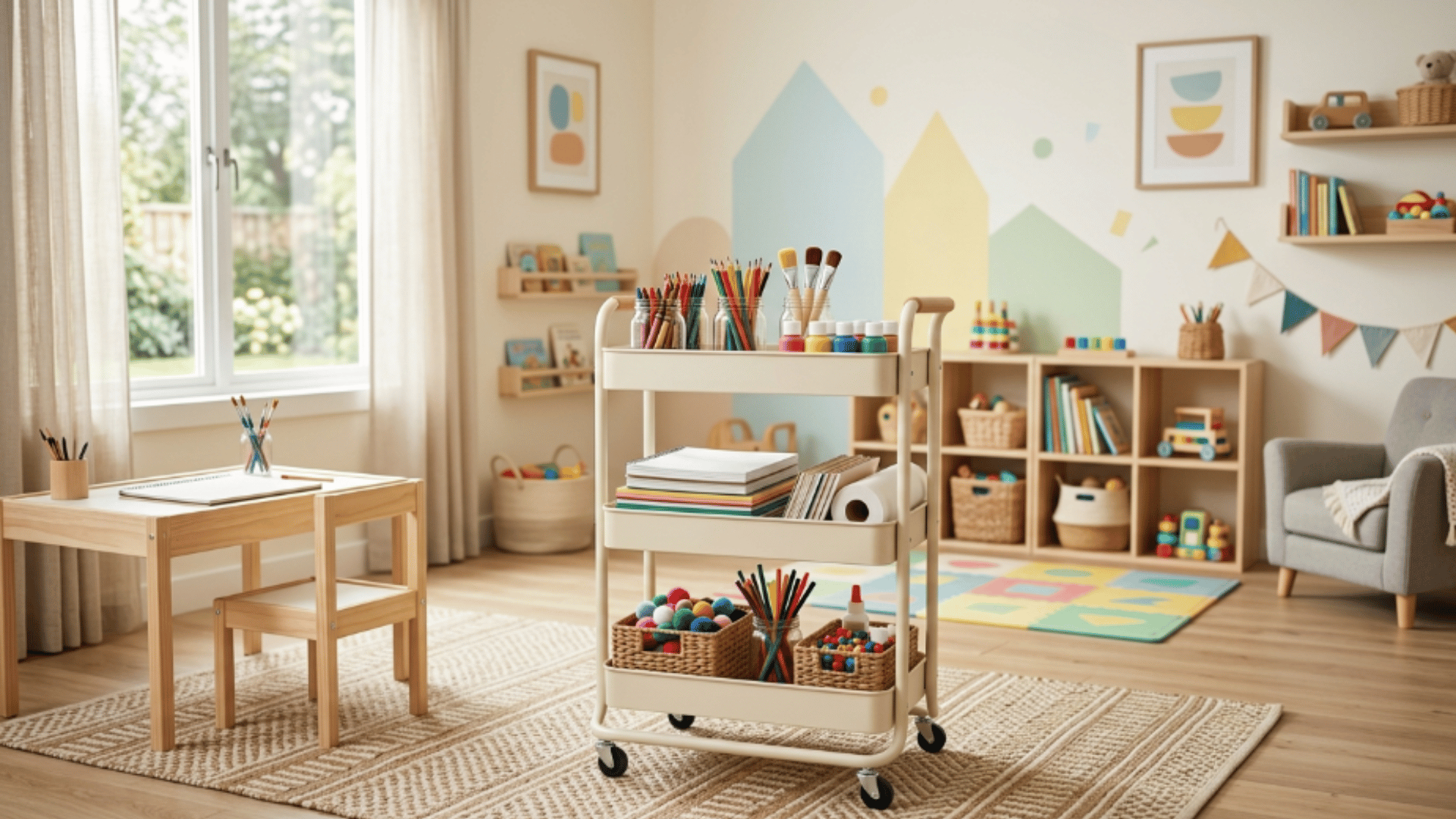
A rolling cart keeps art supplies organized and easy to move. It allows toddlers to easily access crayons, paper, and tools. This setup supports creative play anywhere in the room.
It also keeps supplies in one place. The cart can be moved away after use to reduce clutter. It also makes cleanup after activities quicker and more manageable.
Using labeled sections can help toddlers learn where each item belongs.
28. Curtain Divider Setup
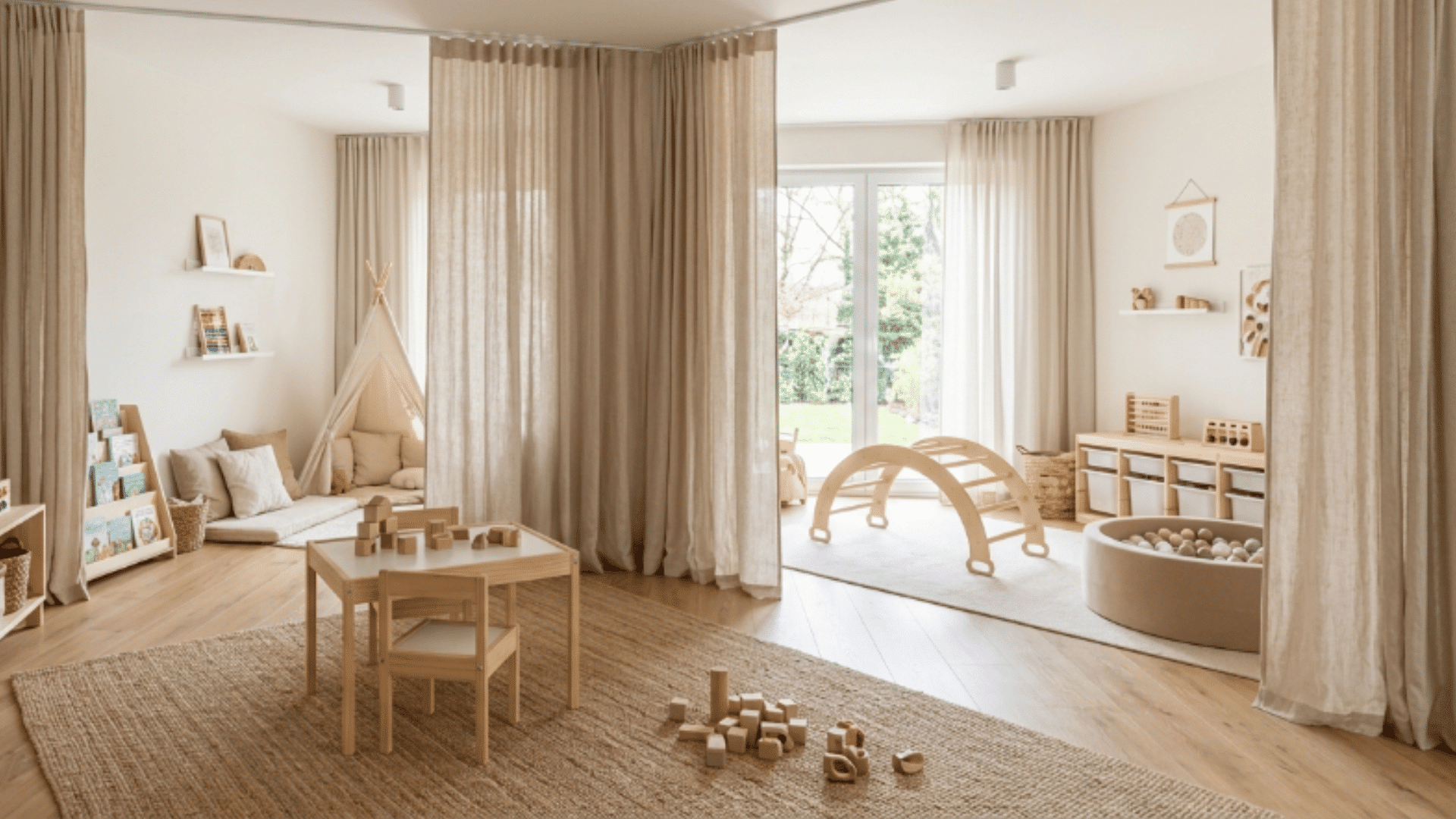
Curtains can divide space in playroom ideas without adding walls. They help create separate play areas easily. This makes the room feel more organized.
Curtains are soft and safe for toddlers. They can be opened or closed as needed. This adds flexibility to how the room is used. It also helps create quiet corners when needed.
29. Puzzle Wall
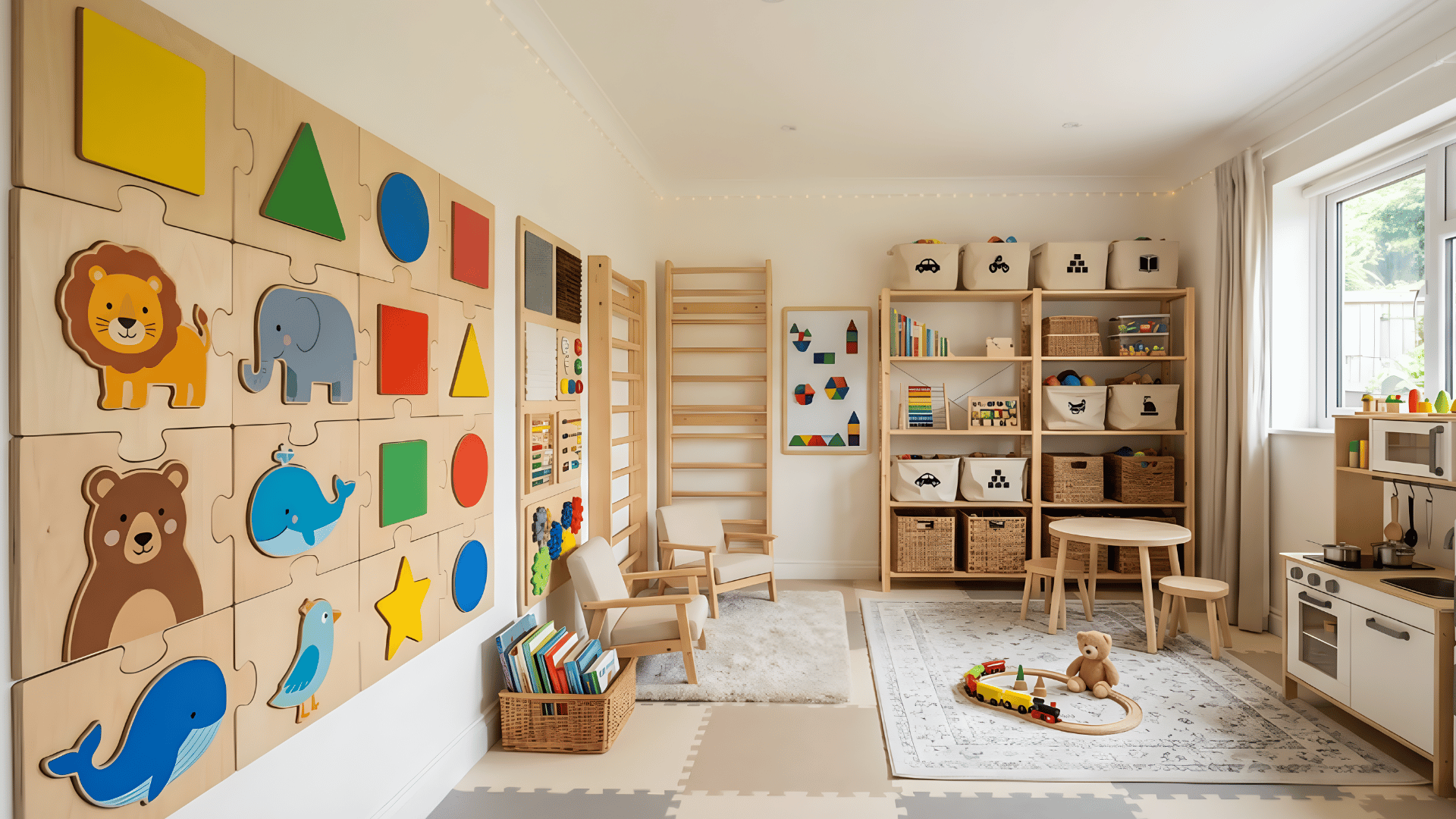
A puzzle wall is a simple way to add hands-on play without using floor space. Large puzzle pieces can be fixed to a board or wall so they stay in one place.
Toddlers can remove and place pieces again and again without losing them. This setup helps improve problem-solving and hand coordination.
It also keeps small parts from spreading across the room. A puzzle wall works well in any corner and keeps the play area neat.
30. Ball Pit Corner
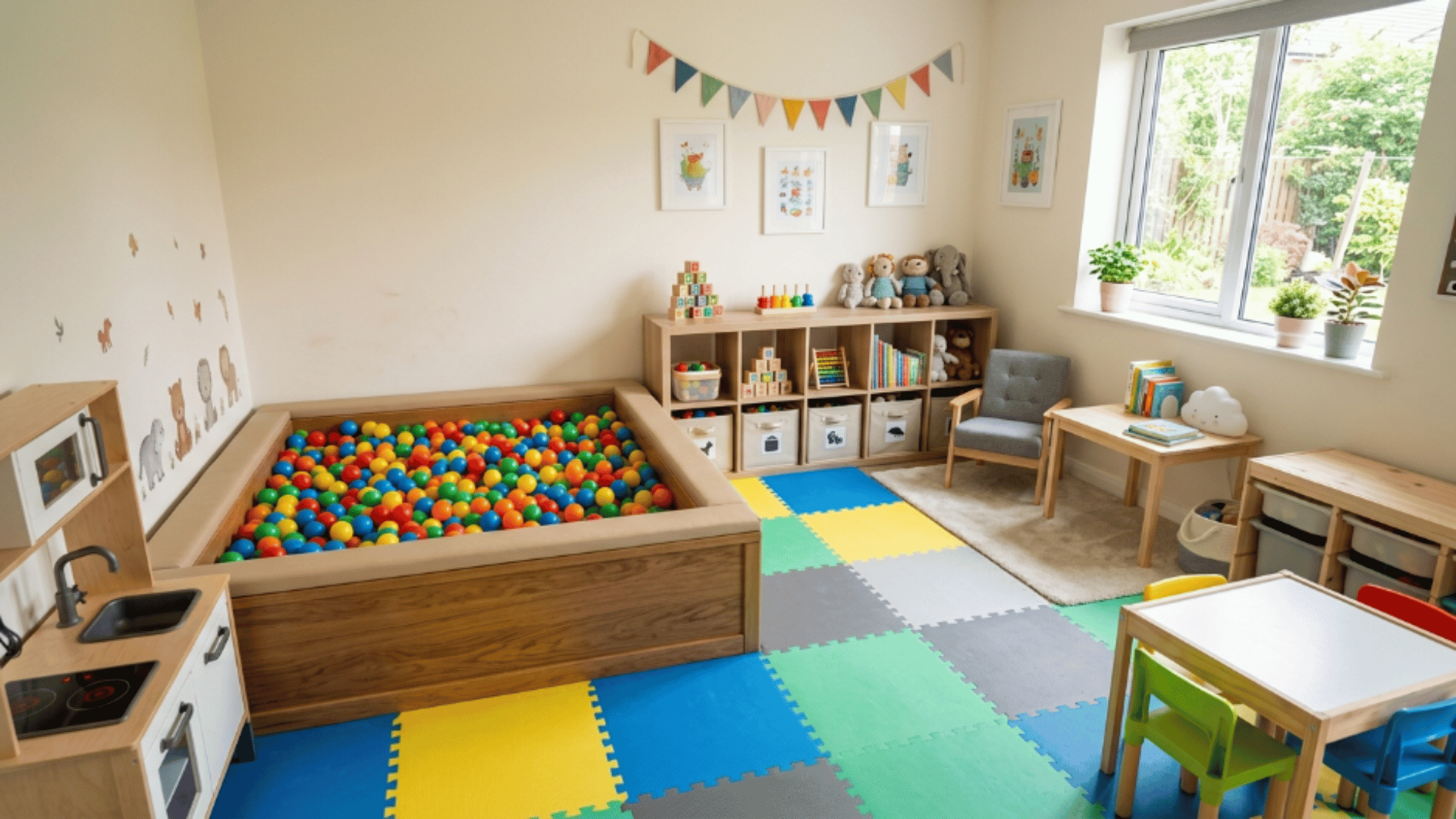
A small ball pit adds active fun to toddler playroom ideas. It gives toddlers a space for movement and play. Softballs make it safe and enjoyable.
Keeping it in a corner saves space. This setup adds variety to the playroom. It also keeps toddlers active indoors during the day. The area can be cleaned easily with simple storage.
31. Hidden Room Gate
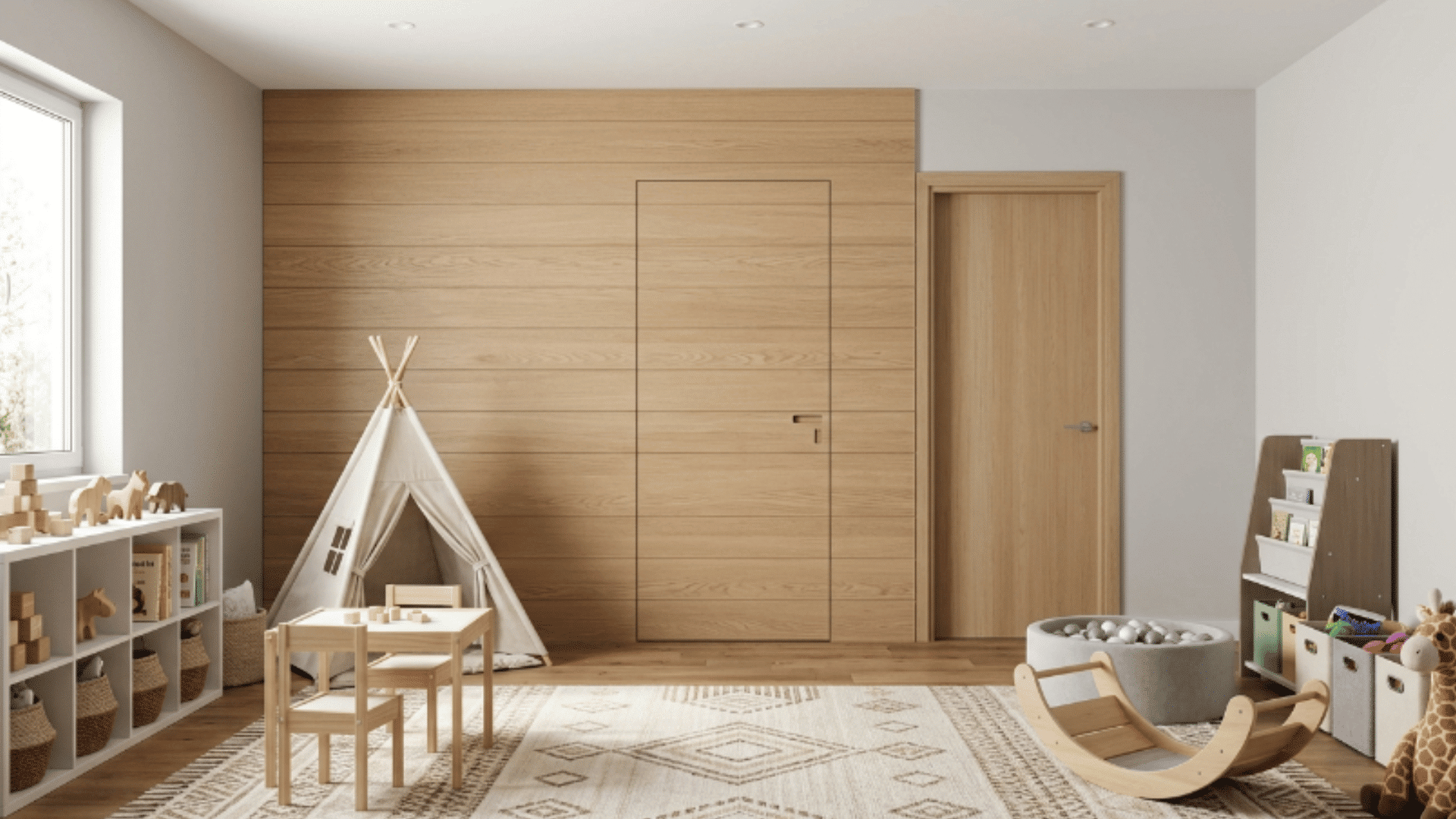
A hidden room gate is a smart addition to a toddler’s playroom for safety and design. It blends into the wall or doorway, keeping the space looking clean and uncluttered.
This type of gate helps block off areas without making the room feel closed. It works well for separating play zones or keeping toddlers in a safe area.
You can choose designs that match your room style for a smooth look. This setup keeps safety in place while maintaining a neat and open feel.
32. Sensory Play Table
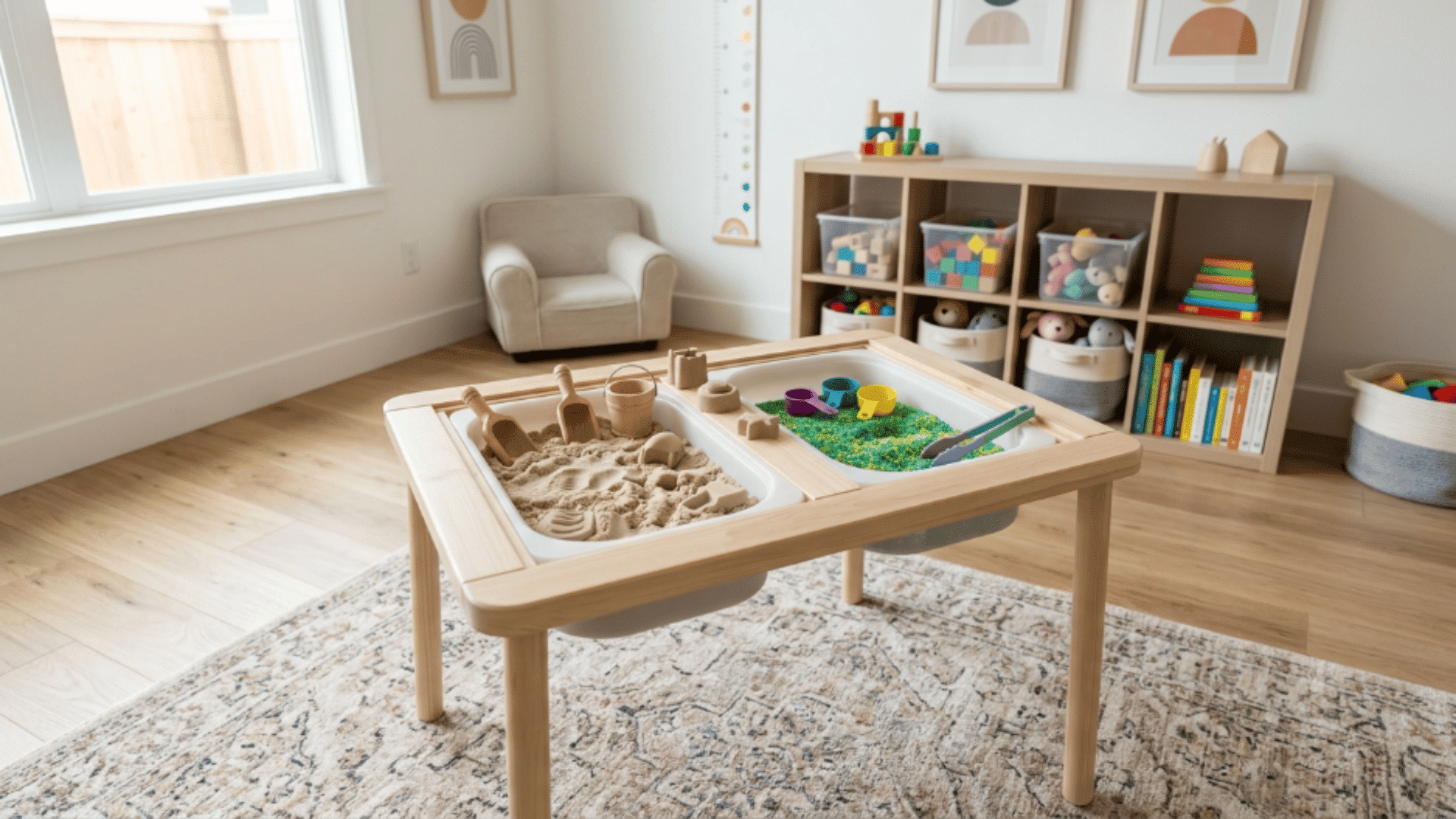
Set up a small table with safe materials, such as sand or rice. It helps toddlers with textures and keeps them engaged longer. This is one of the most interactive toddler playroom ideas.
Sensory play supports learning through touch and movement. Keep materials safe and easy to clean. This setup keeps toddlers busy while learning naturally.
It also helps improve focus and fine motor skills during play. Using bins or trays can help keep the area clean and organized.
33. Hanging Ring Toss Setup
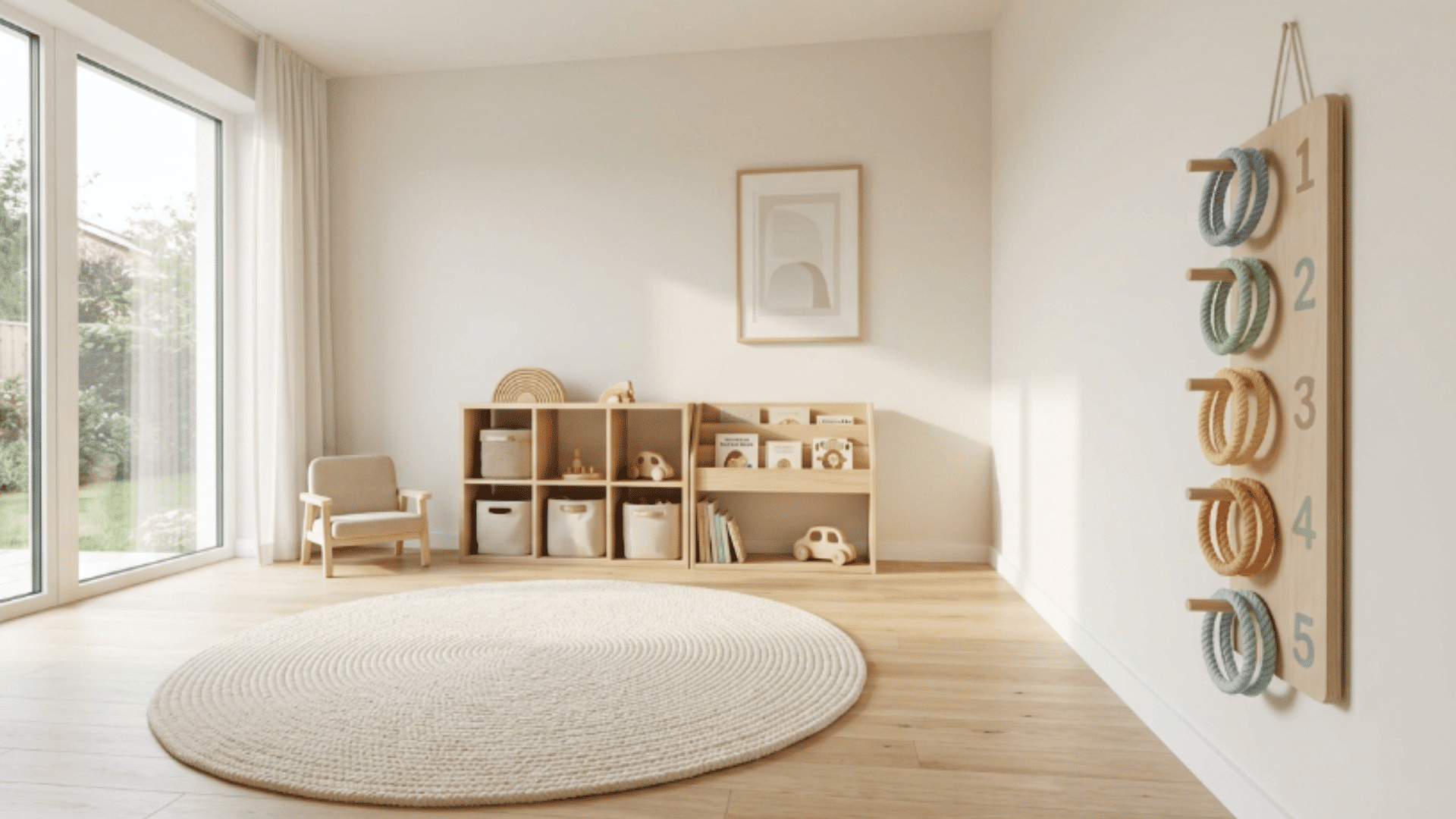
A ring toss setup is one of the most engaging toddler playrooms for active play. You can hang rings on a wall or use a simple stand.
It helps improve hand-eye coordination during playtime. This setup also keeps toddlers active indoors. You can adjust the height based on your child’s level. It adds a fun and simple game to the room.
34. Magnetic Wall Board
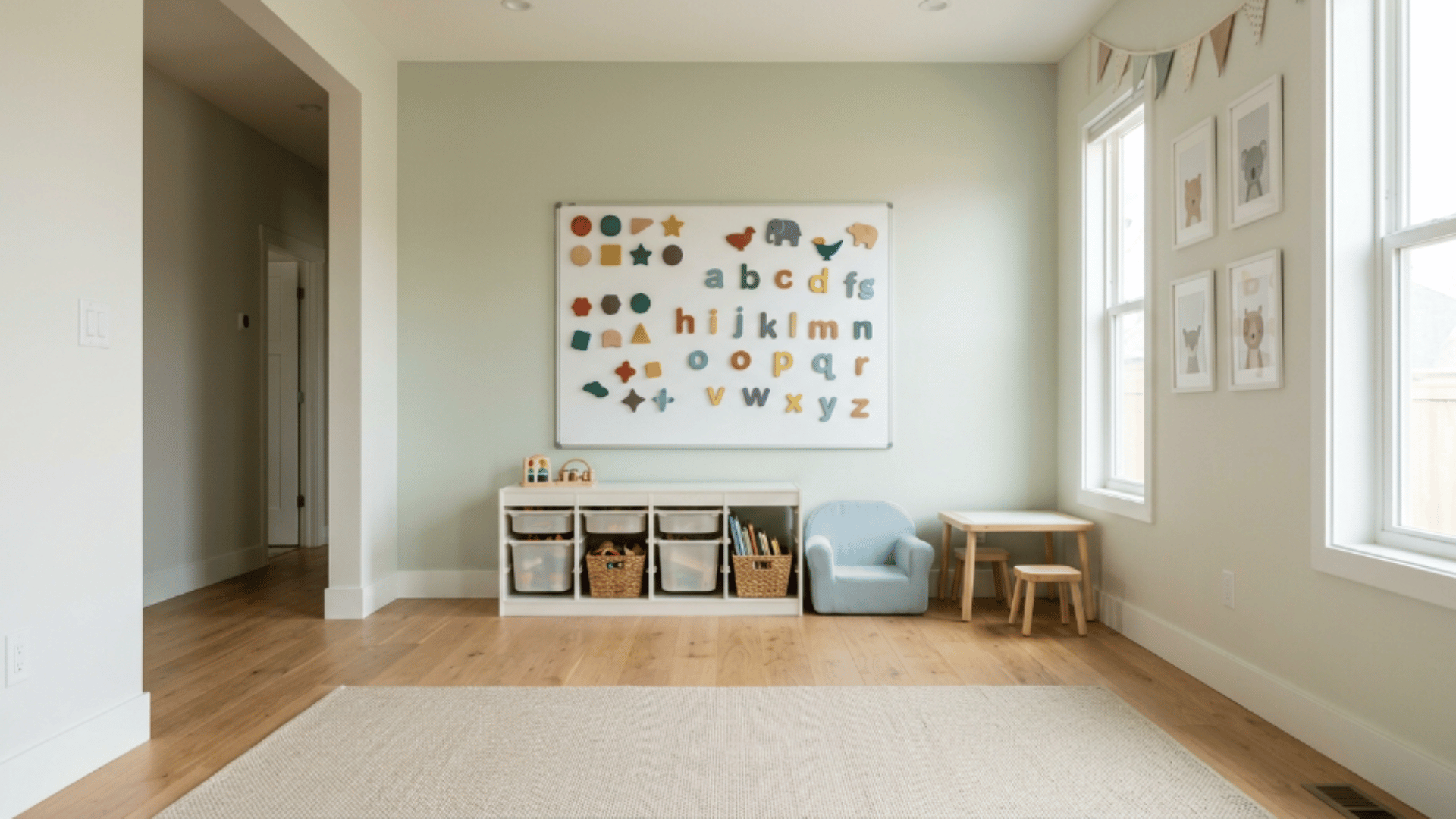
Install a magnetic board for letters, shapes, or simple play pieces. It adds a hands-on activity without taking up floor space. This fits well in a toddler playroom for learning and play.
Toddlers can move pieces around and stay engaged. It also keeps activity items in one place.
This setup supports early learning in a simple way.
It also helps build hand strength and coordination through play. Keeping magnets large and safe makes the activity suitable for toddlers.
35. Soft Foam Climbing Blocks
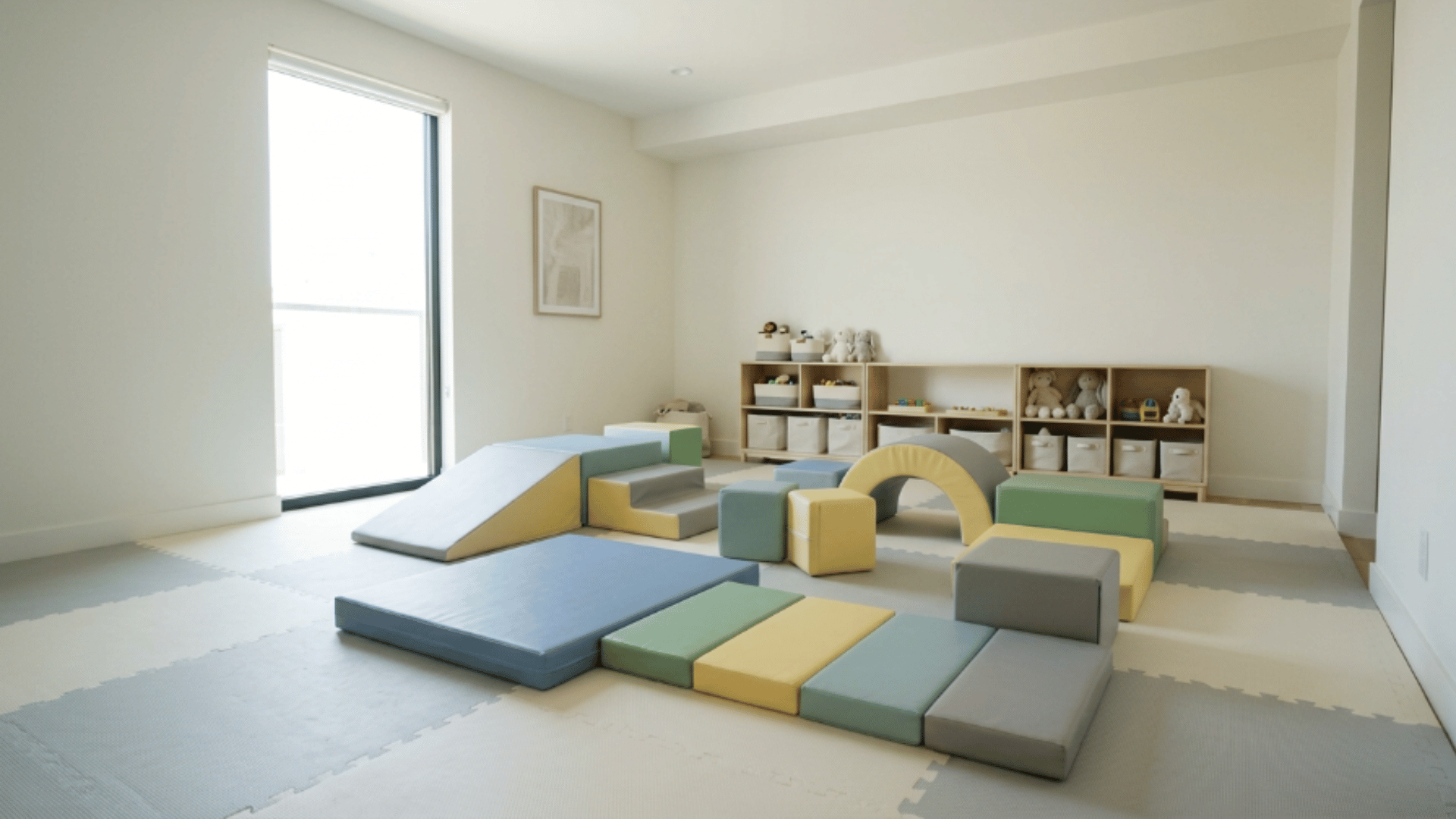
Add foam blocks for stacking, climbing, and safe movement. They support active play while keeping the setup safe. These are useful toddler playrooms for movement indoors.
Soft material reduces the risk of injury during play. You can arrange blocks in different ways for variety. This keeps toddlers active and engaged throughout the day.
36. Light Projection Corner
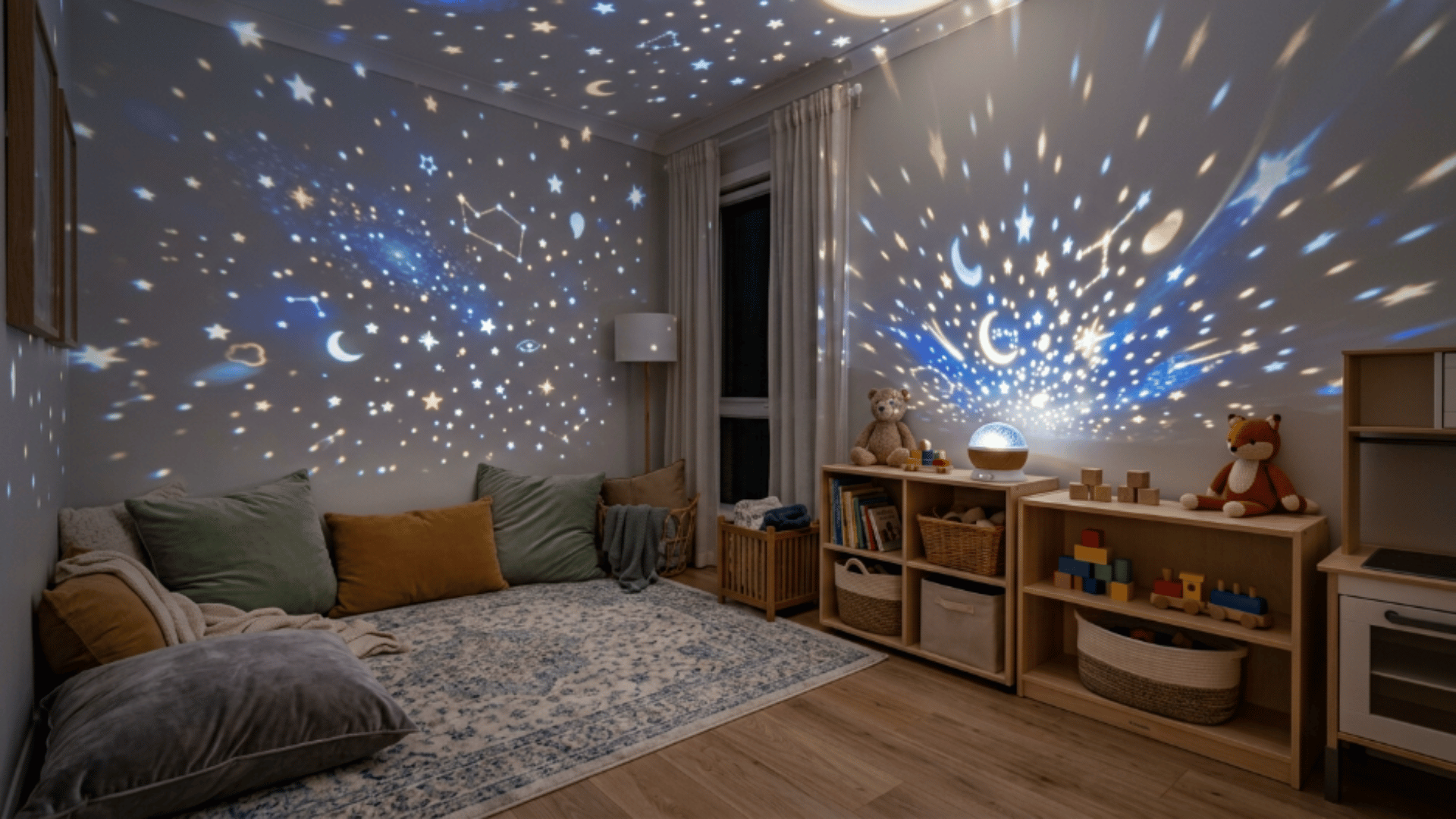
Add a soft projector that displays shapes or stars on walls. It creates a calm and engaging visual space for toddlers. This is one of the most calming toddler playroom ideas for evening time.
Soft light helps create a peaceful play environment. You can place it in a quiet corner for a better effect. It works well during wind-down time before sleep.
This setup keeps toddlers relaxed while still engaged. It also adds a gentle visual element without taking up space.
37. Floor Tape Activity Paths
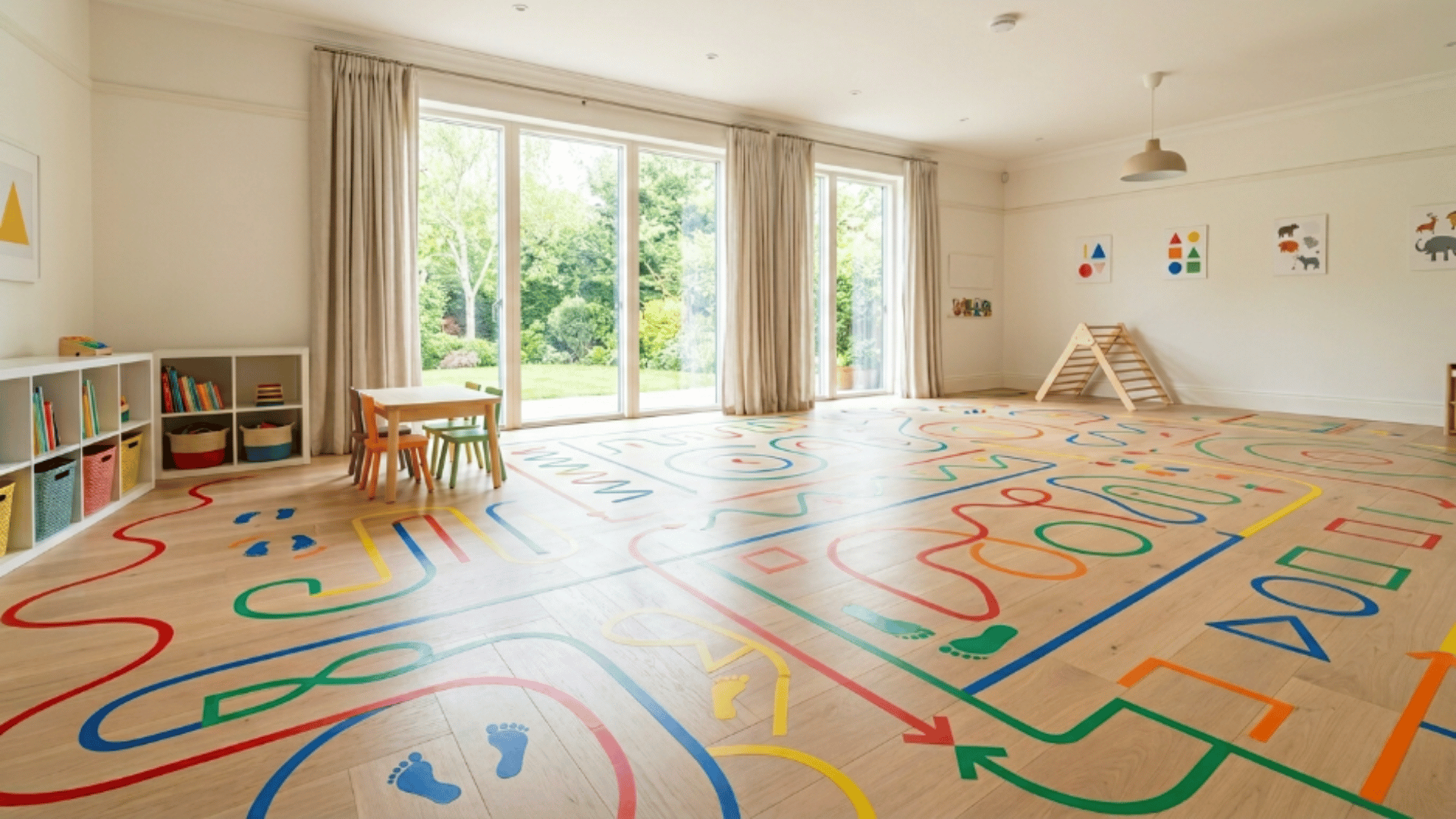
Use colorful floor tape to create paths, shapes, or hop areas. This encourages movement and simple indoor games. It is a fun addition to a toddler’s playroom for active play.
You can change patterns anytime to keep things interesting. It helps toddlers follow paths and improve coordination. This setup makes the floor more interactive.
38. DIY Cardboard Play Zone
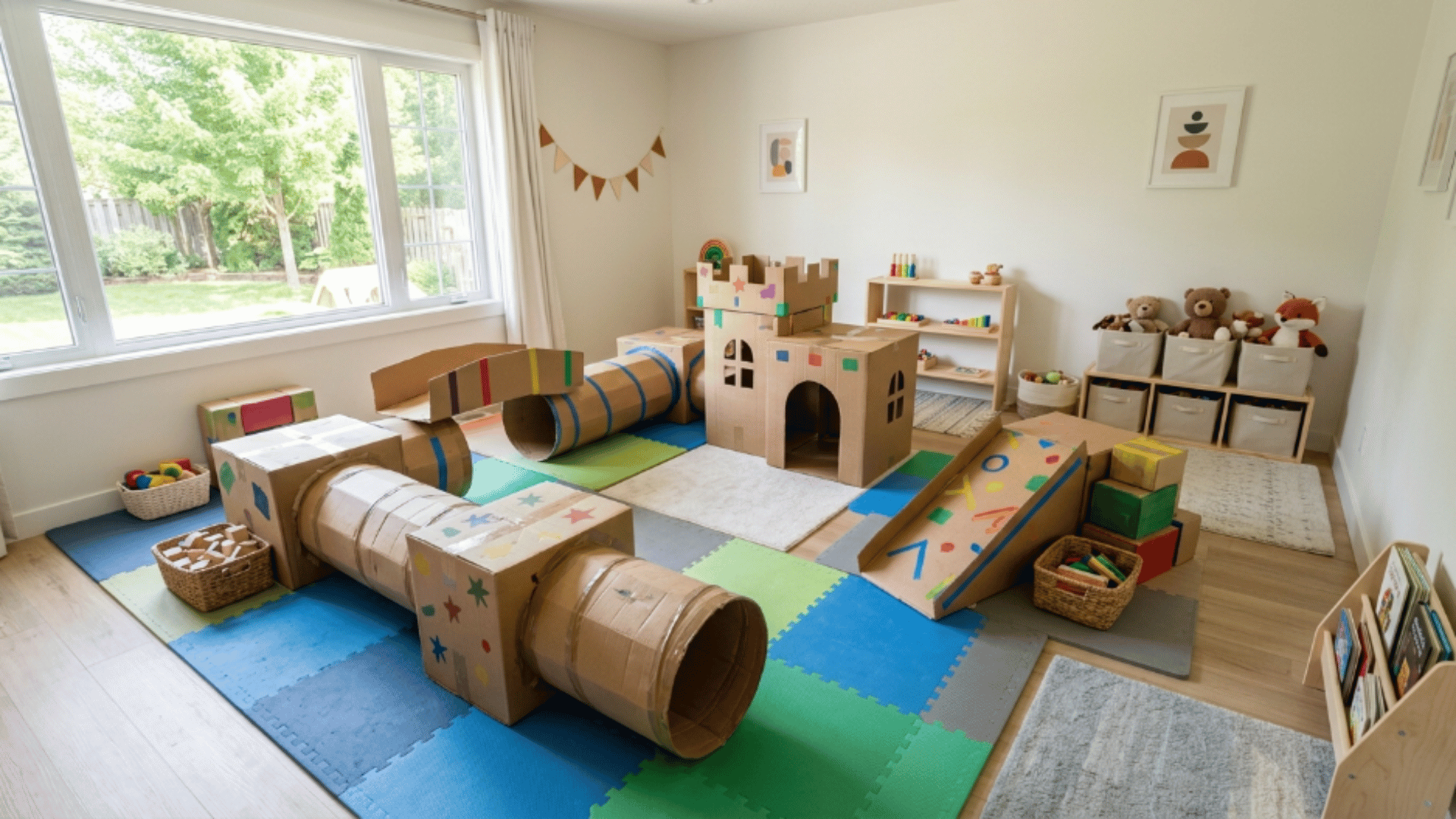
Use cardboard boxes to create tunnels or small play structures. It’s budget-friendly and easy to change at any time. This is one of the most creative toddler playroom ideas to try at home.
You can cut and shape boxes into fun designs. It allows toddlers to crawl, hide, and enjoy.
This setup can be updated based on your child’s interests.
It also encourages imagination during playtime. Cardboard can be replaced easily when needed.
39. Stuffed Toy Hammock
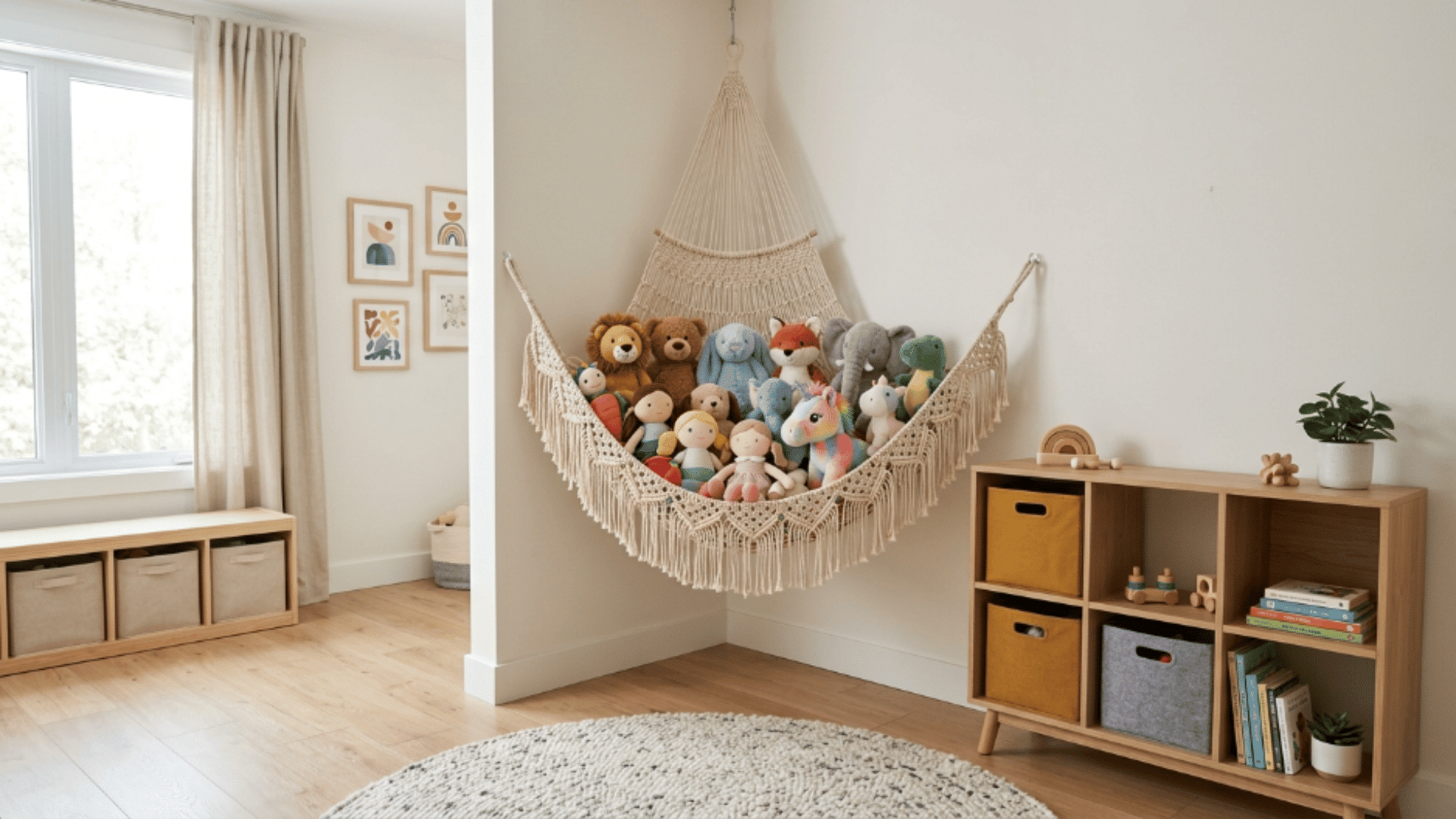
Hang a soft hammock to store plush toys. It saves space and keeps toys visible. This works well for toddler playroom ideas to improve storage. It keeps soft toys off the floor.
Toddlers can easily pick up and return toys. It also adds a simple storage solution without taking up floor space. It also helps reduce clutter and keeps the room looking neat.
Placing it at a safe height makes it easy for toddlers to use independently.
40. Color Sorting Station
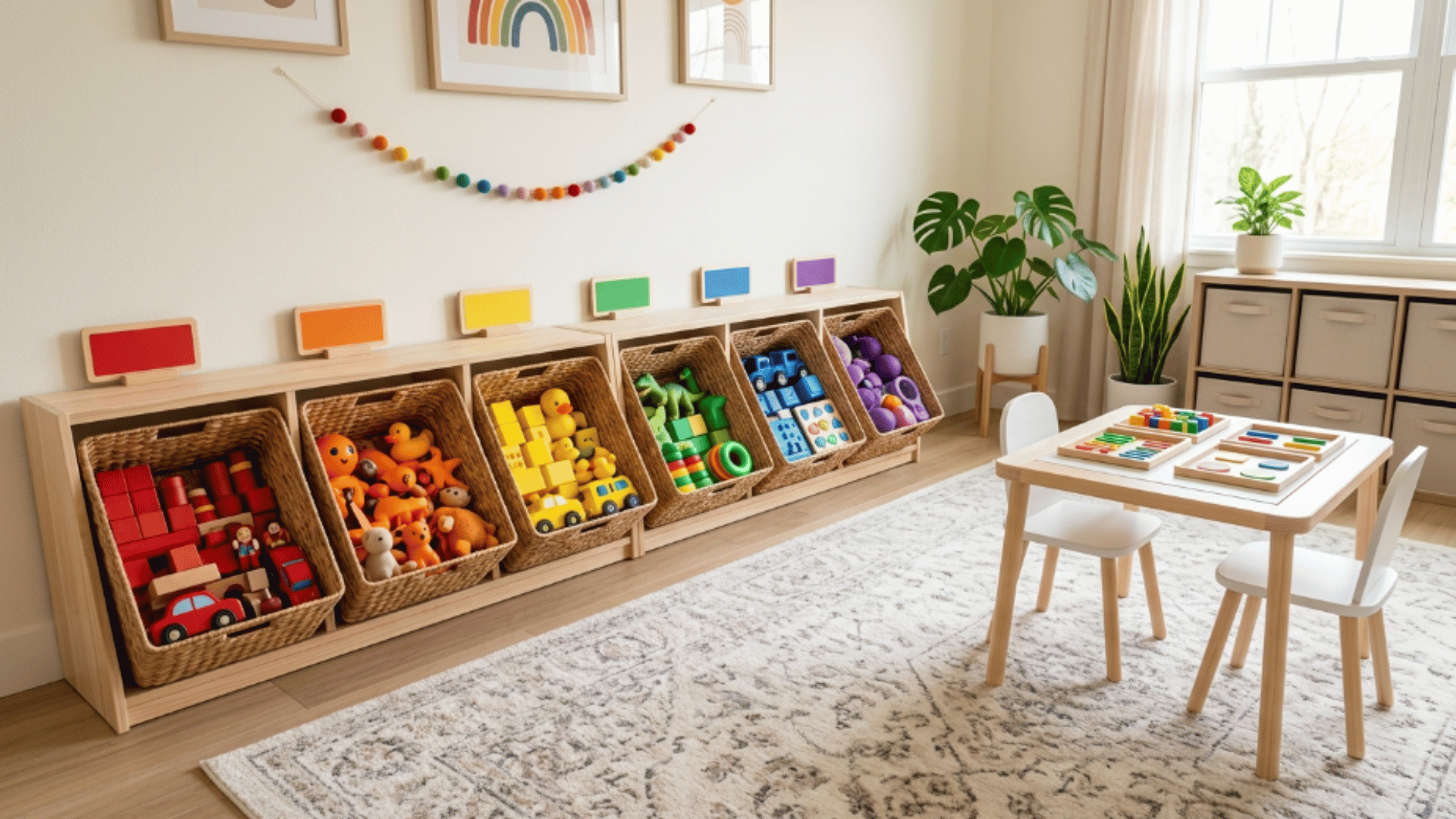
Create a simple area where toys are grouped by color. It helps toddlers learn sorting and recognition. This is one of the easiest toddler playroom ideas for early learning.
You can use baskets or trays for sorting. It makes playtime both fun and educational. Toddlers can match colors during play. This setup supports focus and basic learning skills. It also keeps toys organized in a simple way.
41. Hang a Large Chalkboard
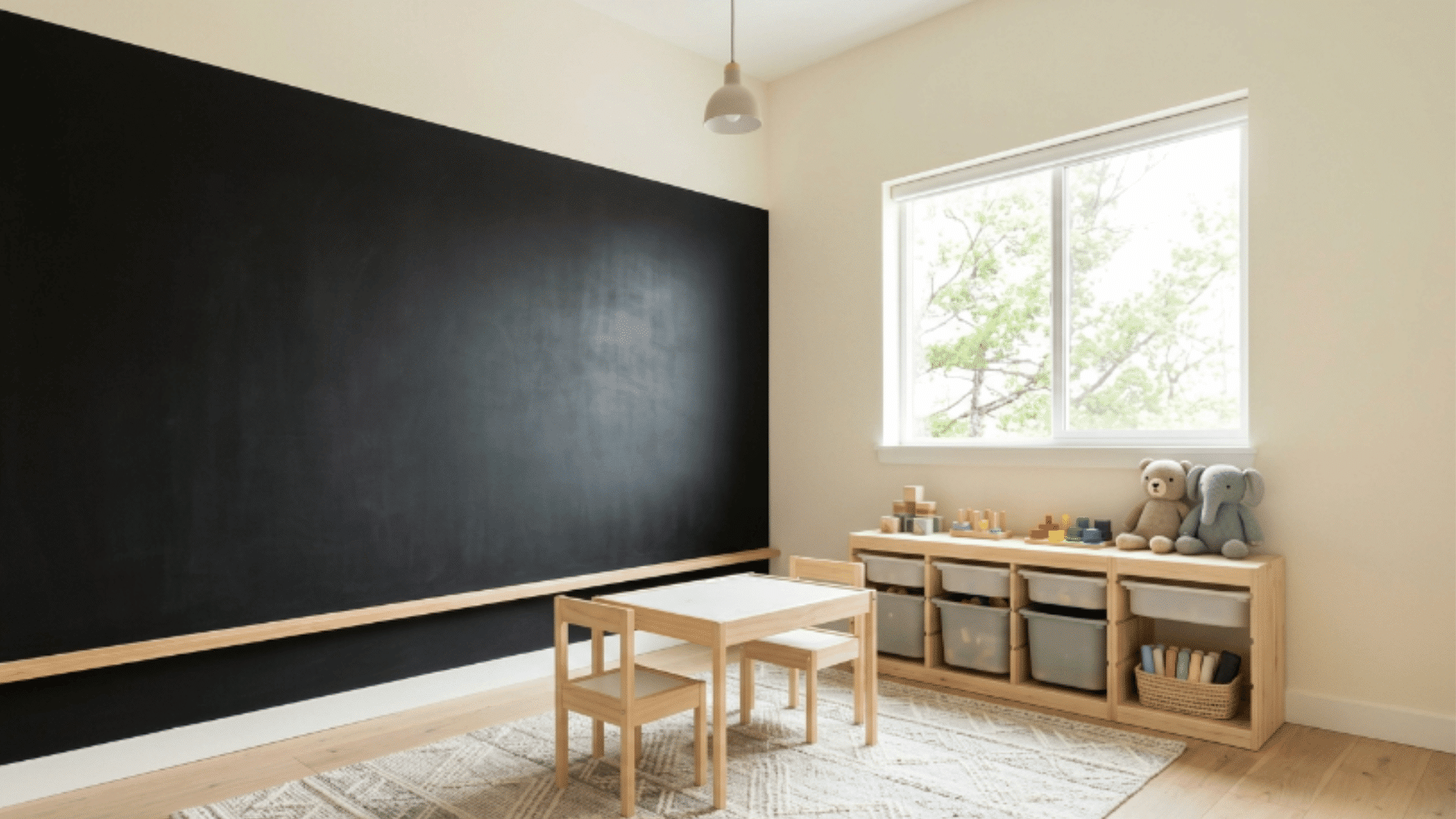
A large chalkboard wall is a simple way to add a dedicated creative space in toddler playroom ideas. It gives toddlers a place to draw shapes without using other walls or furniture.
You can pair it with a small table or keep chalk within easy reach for quick access. This setup works well for both free play and guided activities, such as tracing or simple drawing.
Cleaning the surface is quick, making it easy to reuse every day. It also helps keep creative mess in one area while supporting daily play and learning.
42. Balance Beam Strip
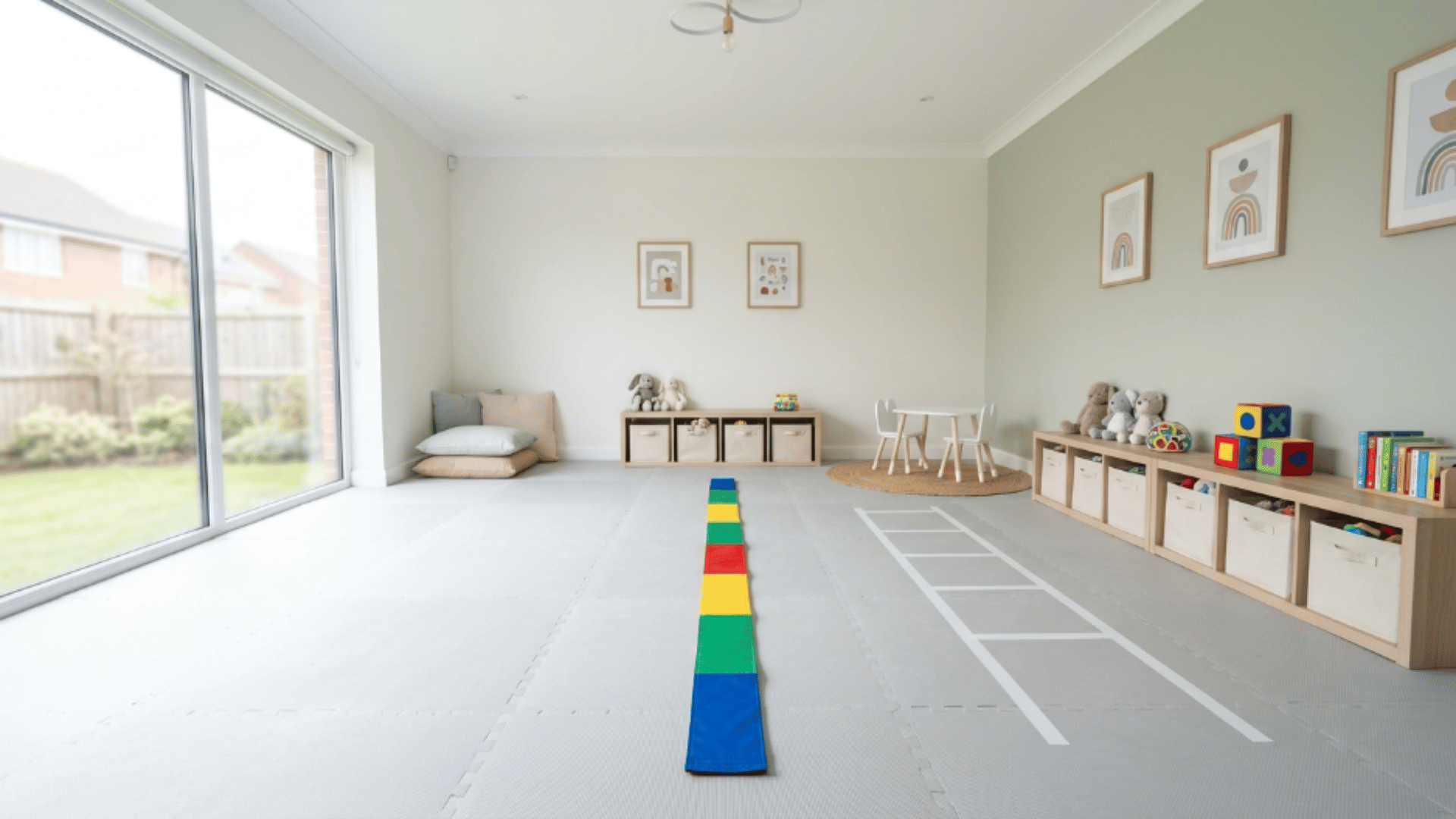
Add a low balance beam or taped line for walking practice. This helps improve coordination and movement. It is a great addition to toddler playroom ideas for active play.
You can use tape or a soft beam on the floor. Toddlers can practice walking and balancing. It supports physical development during playtime. This setup is simple but very effective.
43. Light and Shadow Play Area
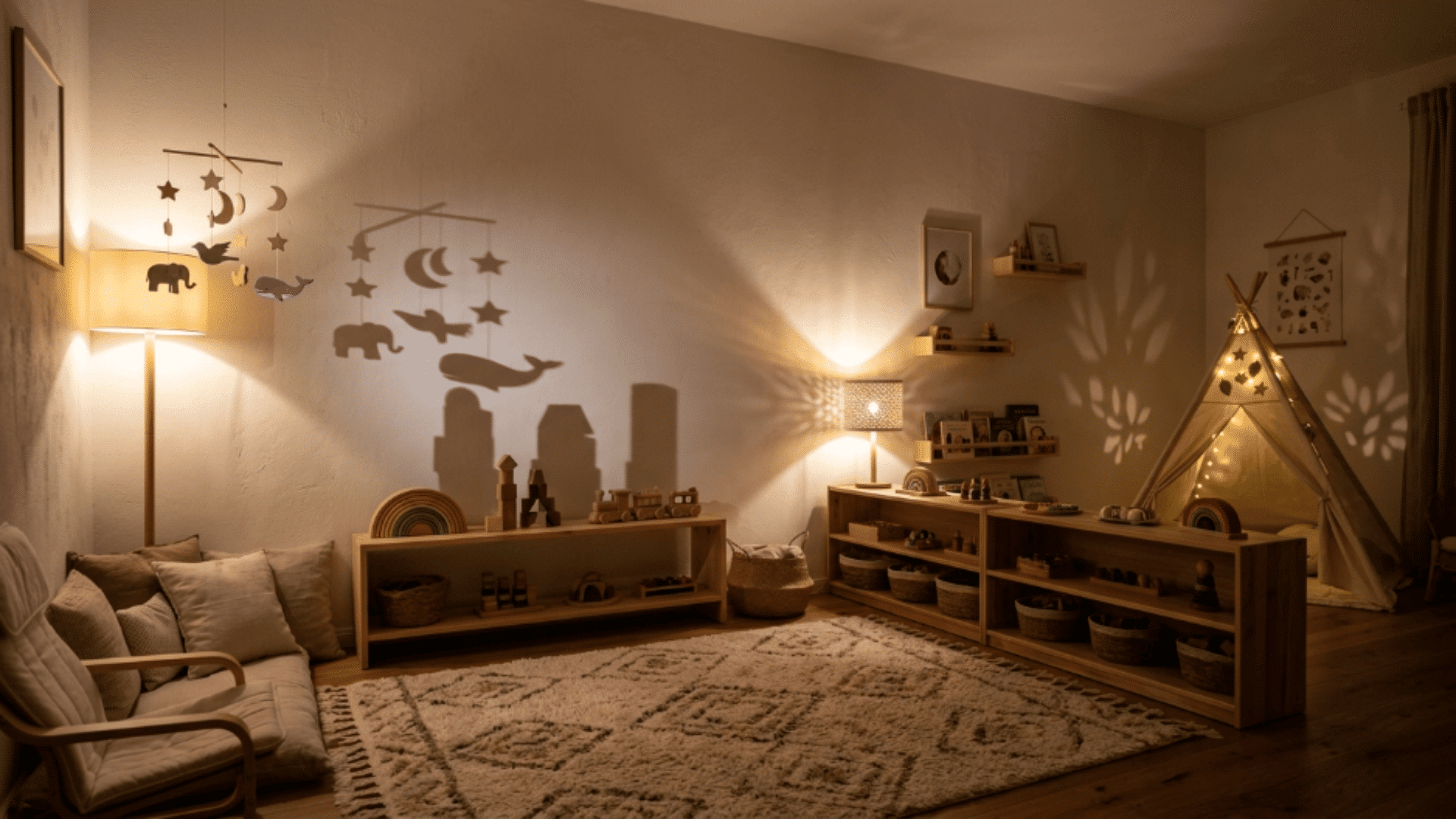
Use lamps and objects to create shadow play on walls. It adds a fun and simple learning activity. This fits well in toddler playroom ideas for creative play.
Toddlers can easily play with shapes and shadows. It works well in a dim corner of the room. This setup keeps playtime simple and engaging.
44. Toy Washing Station
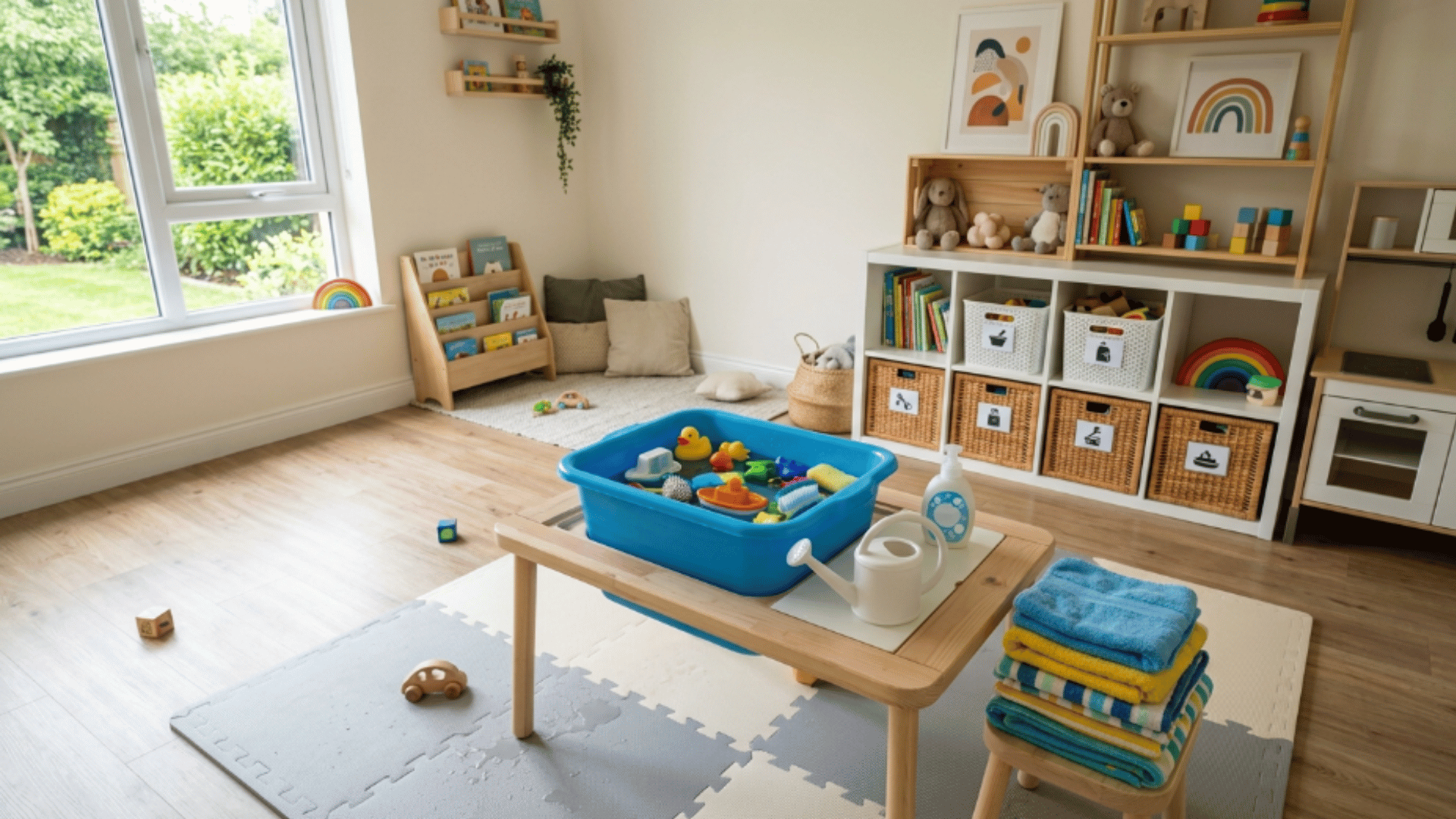
A toy washing station is one of the most practical toddler playroom ideas for daily routines. Set up a small tub with water-safe plastic toys for easy cleaning play.
It turns clean-up into a fun and engaging activity for toddlers.
This setup helps build responsibility in a simple way. You can place towels nearby for drying toys after washing. It also keeps messy play limited to one area.
45. Pattern Play Floor Mats
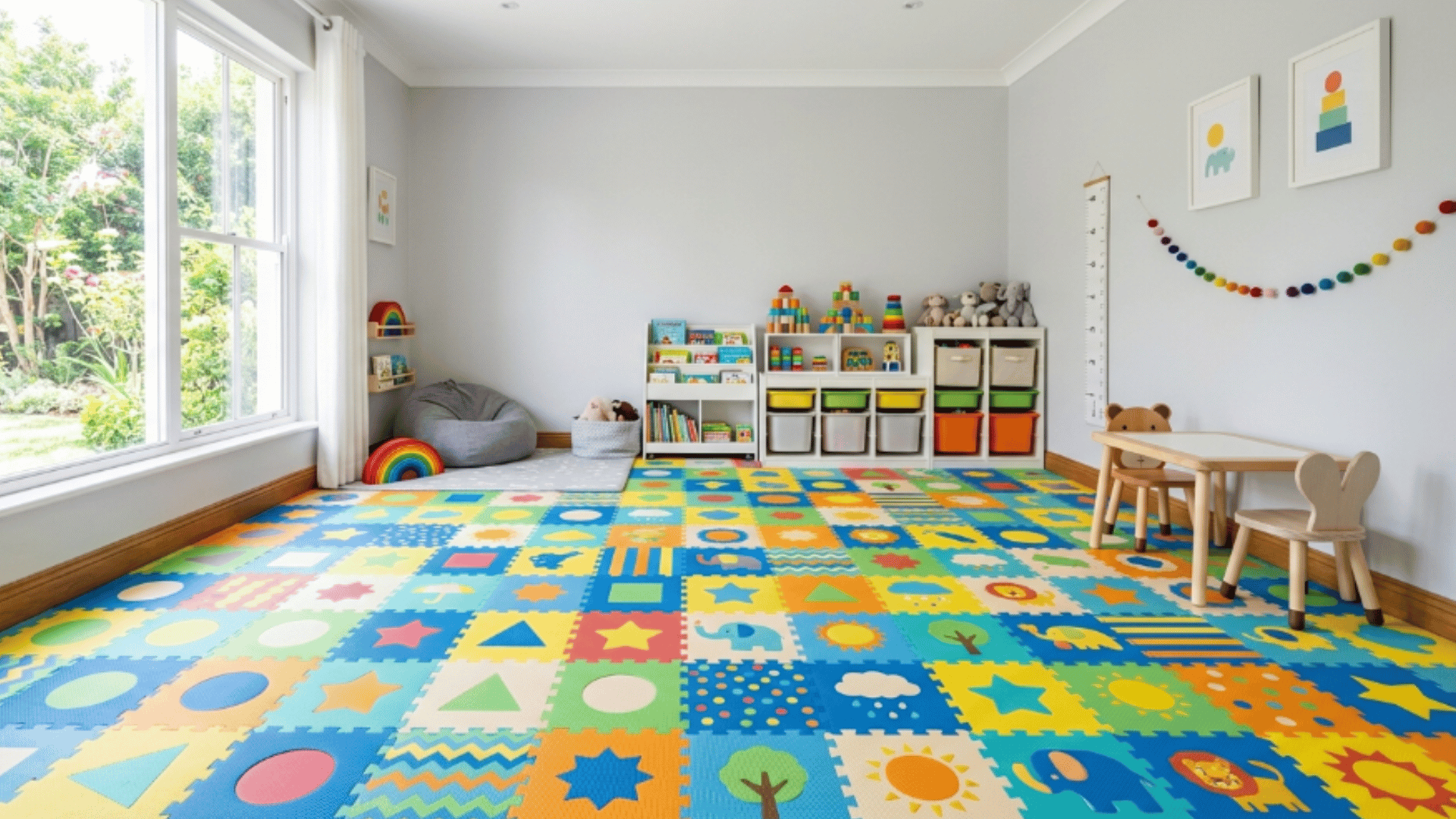
Pattern mats are useful toddler playroom ideas for learning through play. Use mats with shapes, colors, or simple designs for activities.
Toddlers can match patterns while playing on the floor. It supports early recognition and problem-solving skills. These mats also make the space more comfortable for playtime.
They are easy to clean and maintain daily. This setup adds both comfort and learning in one place.
Best Toddler Playroom Products to Try
The right products can make a toddler’s playroom more organized, safe, and fun. These simple picks support daily play and learning and make cleanup easy.
- Lovevery The Play Gym: A soft play mat with built-in sensory zones and hanging toys that support early development and keep toddlers engaged during floor play.
- Skip Hop Activity Center: A multi-stage activity center that grows with your child and later converts into a play table for extended use.
- Toy Storage Organizer: A multi-bin storage unit that helps keep toys, books, and small items organized and easy to access for toddlers.
- Melissa & Doug Solid Wood Table and Chair Set: A sturdy wooden table and chair set that works well for drawing, puzzles, and everyday toddler activities.
- Kids Bean Bag Chair: A soft and lightweight seating option that creates a comfortable spot for reading, relaxing, or quiet playtime.
- Fisher-Price Play Tent: A lightweight indoor tent that creates a cozy space for pretend play, reading, and quiet time.
- Chalkboard Wall Decal: A peel-and-stick chalkboard surface that gives toddlers a space to draw freely without using walls.
It’s a Wrap
Creating a toddler playroom doesn’t have to feel complicated or expensive.
Small, thoughtful setups can make a big difference in how your child plays, learns, and stays organized throughout the day.
The goal is to build a space that supports both active and quiet moments while keeping things easy to manage.
Try a few of these ideas based on your space and your child’s interests, and adjust as you go. A well-planned playroom can make daily routines smoother and more enjoyable for everyone.