

Watching a baby take their first steps is one of those moments parents never forget. But the wait leading up to it can feel long, especially when other babies in your circle seem to be walking already.
Parents often ask me what age babies walk, and the truth is that timing varies more than most expect.
Rather than watching the calendar, I always tell parents there’s more to the picture than just a number.
Here, I’ll cover the typical timeline, the milestones that lead up to it, and how you can support your baby along the way.
What Age Do Babies Walk?
Most babies walk between 9 and 18 months independently. That is a nine-month window, which surprises many parents who assume there is one “correct” age.
Many babies take a few independent steps around their first birthday and are walking on their own by 18 months.
The average age is roughly 12 months, but that number can mislead; it does not mean your baby is late if they are still working on it at 14 or 15 months.
One number should never tell the whole story. A baby walking at 14 months who is hitting other milestones sitting independently, babbling, pulling up, and cruising along furniture is developing well overall.
What Counts as Independent Walking?
A baby may take one unsupported step and still rely mostly on crawling or furniture. Knowing what doctors usually mean by independent walking can make it easier to understand where your child is in the process.
First Unsupported Step
The baby takes one or two brief, wobbly steps without holding a person, furniture, or another object.
Independent Walking
The baby takes several steps in a row and moves between places without support. This is usually what doctors mean when they say a baby is walking.
Confident Walking
The baby regularly chooses to walk and can turn, stop, and regain balance more smoothly. This stage may develop within days or take several weeks.
Developmental Stages Leading Up to Independent Walking
Before those first independent steps appear, babies usually build several movement skills over time.
| Stages | Developmental Marker | Age Range | Functional Benefits |
|---|---|---|---|
| Head and Trunk Control | Holds head steady and sits upright | 3-4 months | Builds core strength |
| Sitting and Floor Movement | Sits alone and shifts weight | 6-9 months | Supports balance |
| Pulling to Stand | Pulls up using support | 8-10 months | Strengthens legs |
| Cruising | Steps while holding furniture | 10-12 months | Practices balance |
| Standing Alone | Stands briefly without support | 10-12 months | Improves body control |
| First Steps | Walks without support | 9-18 months | Marks early walking |
Note: This is a flexible progression, not a fixed checklist. Some babies race through. Others sit at one stage for weeks before moving on.
Signs Your Baby May Start Walking Soon
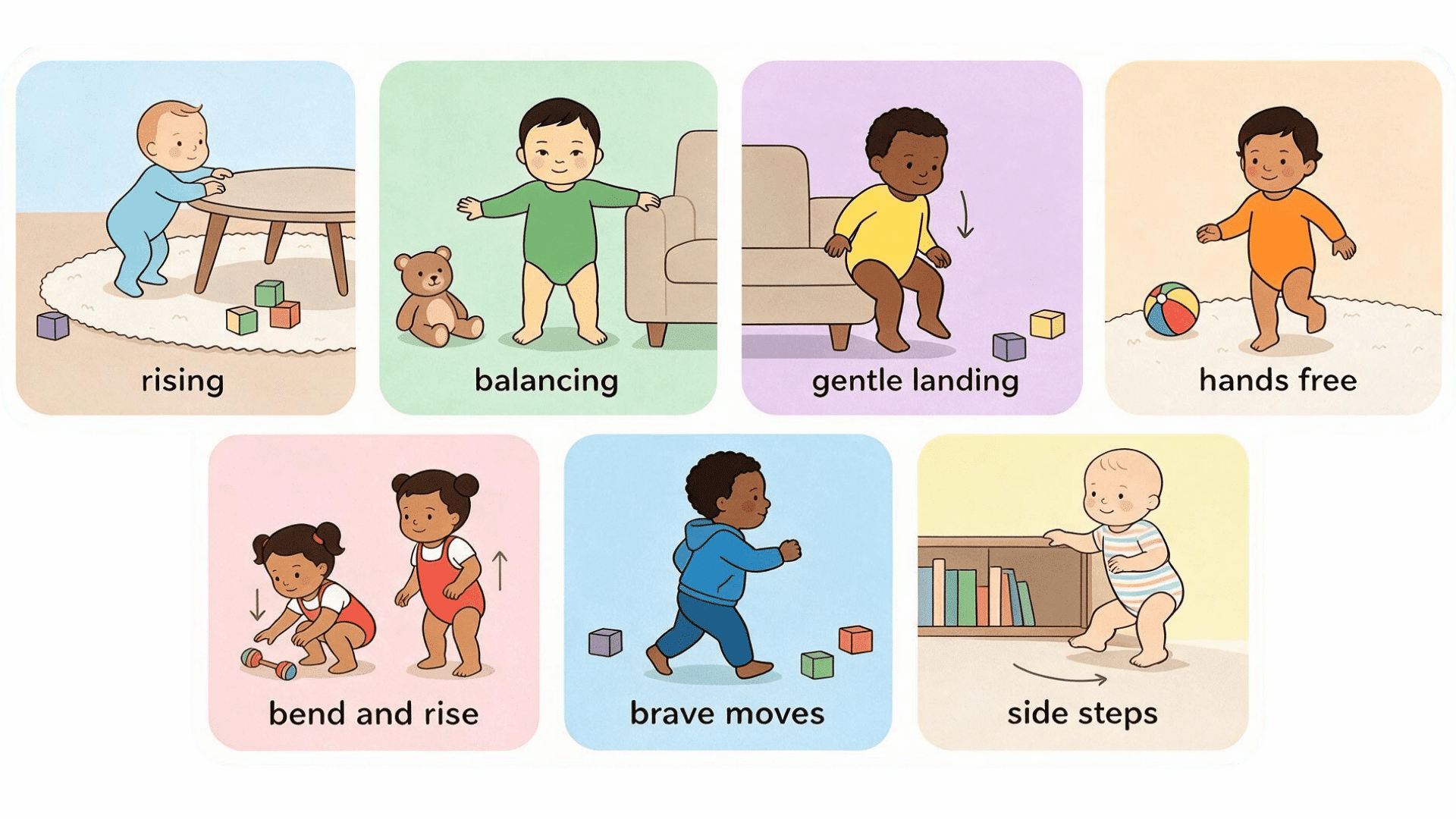
Some babies give noticeable clues before they begin walking on their own.
Changes in balance, standing, movement, and willingness to let go of support may show that your baby is getting closer to taking independent steps.
- Pulling Up With Less Help: Your baby stands using furniture or your hands with less assistance.
- Cruising Both Directions: They move left and right along furniture while holding on.
- Standing Briefly Alone: They balance without support for a few seconds before holding on again.
- Squatting and Standing Again: They squat to pick something up, then stand without falling.
- Lowering Down With Control: They ease themselves to the floor instead of dropping suddenly.
- Letting Go While Distracted: They may stand or step without support while focused on a toy.
- Taking More Movement Risks: They reach farther, try new positions, and rely less on support.
Reasons Some Babies Walk Earlier
There’s no single explanation for why the range is so wide. Most of the time, variation is just normal.
I find it more useful to look at a baby’s overall progress, including strength, balance, and movement skills, rather than focusing only on how early walking begins.
Floor time builds strength and balance. Temperament, activity level, and motivation to move affect readiness. For premature babies, corrected age matters more than birth age when tracking milestones.
Health, development history, and personal factors all play a role. That’s why pediatricians assess delays individually rather than going off a single number.
For a broader perspective on what to expect in early development, advice for new parents often helps frame walking alongside everything else happening at this stage.
How to Help a Baby Walk Safely?
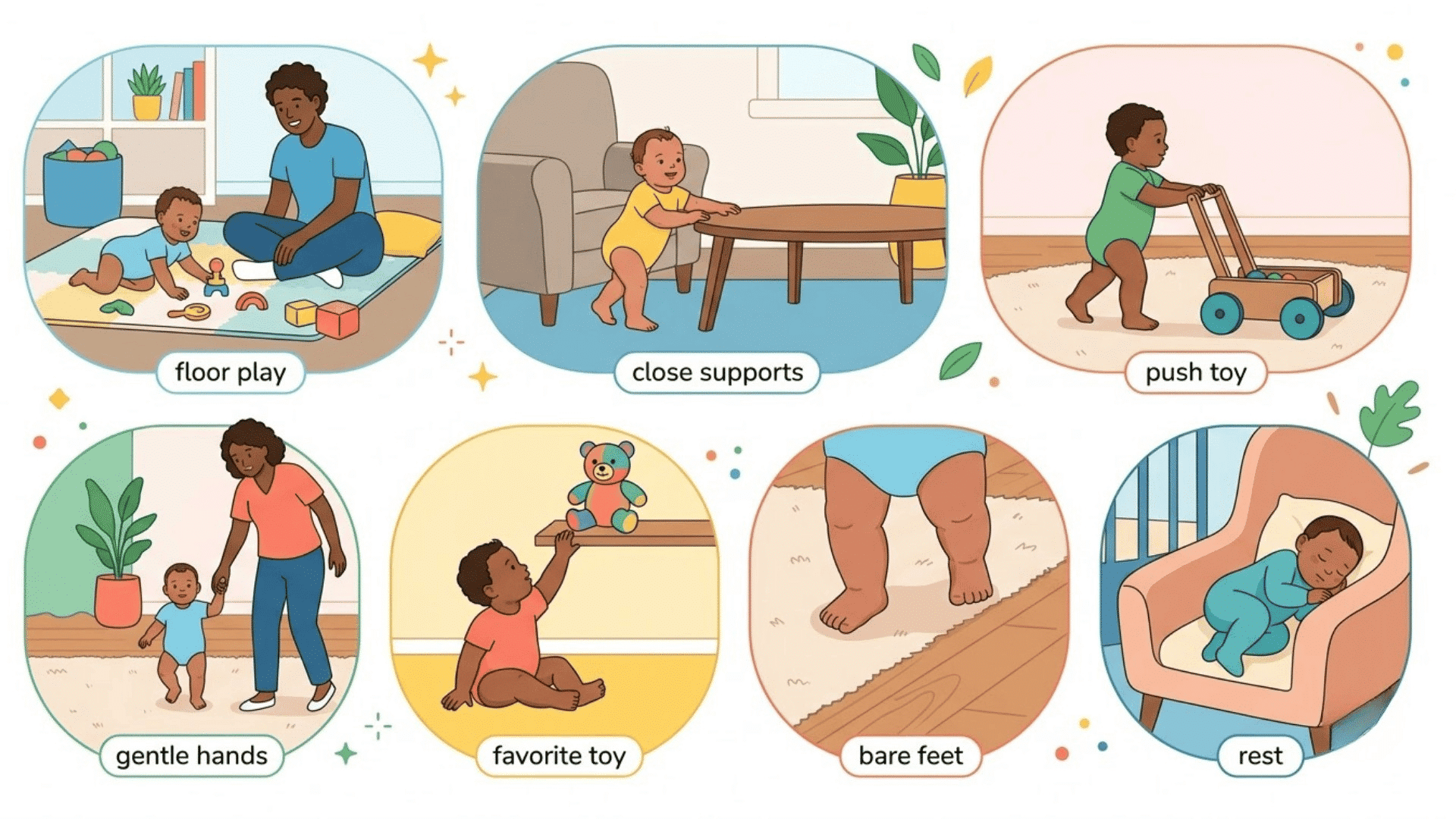
Parents cannot set the walking date, but they can make daily movement safer and easier to practice.
Simple opportunities to stand, shift weight, move between supports, and walk barefoot indoors can support steady skill development.
- Allow Plenty of Supervised Floor Time: Gives babies space to pull up, balance, and move.
- Practice Moving Between Two Close Supports: Position stable surfaces close together for safe weight transfer.
- Let the Baby Push a Stable Weighted Toy: A sturdy toy builds leg strength safely.
- Offer Hands Without Pulling the Arms: Hold hands low, let baby grip fingers, and lead.
- Place a Favorite Object a Short Distance Away: A favorite toy nearby encourages extra steps.
- Let the Baby Practice Barefoot Indoors: Bare feet improve grip and help foot muscles develop.
- Follow the Baby’s Interest and Stop When Tired: Keep sessions short and stop when tired.
Do Baby Walkers, Push Toys, or Shoes Help?
Once babies begin standing and moving more often, walking products can seem useful for extra support. Their benefits vary widely, though, so knowing what each item actually does can help parents make safer choices.
| Item | Helps? | Main Point |
|---|---|---|
| Seated Walker | No | Injury risk; may affect natural movement |
| Push Toy | Sometimes | Choose sturdy; supervise use |
| Activity Center | Play Only | Does not support walking skills |
| Bare Feet Indoors | Often | Improves grip and foot strength |
| Non-Slip Socks | Sometimes | Must fit and grip well |
| Outdoor Shoes | Yes | Choose light, flexible shoes |
Note: The American Academy of Pediatrics has flagged wheeled seated walkers as a safety concern and does not recommend their use. That one is worth taking seriously regardless of how convenient it seems.
How Walking Unfolded for Other Families?
Real parent experiences from online communities reflect exactly what pediatric guidance already tells us: healthy babies walk on their own schedule, and that schedule varies more than most people expect.
“Average age is 12-18mo for walking. My daughter was walking unassisted by 10mo. My son took until 18mo to walk unassisted.” – sharleencd
“I did hand-hold walking at the park (big open grassy field) and then would let go. Sometimes she would take a few steps and sometimes she would just stop. Then, I would hold her hands again and try again a few steps later.” – acocoa
“My daughter walked around 17.25 months. One day she went from cruising to full out walking around. Now she doesn’t stop – she’s all over everywhere all at once. She just turned 18 months.” – princessgrey
“Crawled at 7mo, but did not walk independently til 20mo. Made us crazy!” – alocaisseia
“Mine took first steps when he was 12 months, but he didn’t actually walk for transportation or as anything other than a party trick until he was nearly 15 months.” – riversroadsbridges
Habits to Avoid During the Walking Stage
Supporting your baby’s progress mostly means getting out of the way. A few common habits can slow things down or create unnecessary risk. A gentler overall approach to parenting can reduce that pressure.
- Pulling a baby up by the hands or arms can strain developing joints.
- Forcing a baby to stand when they resist can cause discomfort and frustration.
- Comparing walking progress with other children can create unnecessary concern since timelines vary.
- Relying on lightweight chairs, baskets, or unstable furniture can increase the risk of falls.
- Turning every walking attempt into a test can add pressure, so keep practice relaxed.
When Walking Delays Need Medical Attention?
Talk to your pediatrician if your baby isn’t walking by 18 months, or sooner if something feels off.
Ask earlier if your baby isn’t bearing weight through the legs, moves mainly on one side, seems unusually stiff or floppy, shows discomfort while standing or moving, loses a skill they had, or stops making progress.
Parents of premature babies should ask how corrected age affects milestone tracking specifically.
A pediatrician can look at your child’s overall development and recommend screening, early intervention, or physical therapy if needed. Trust your instincts and ask early, even if the concern feels small.
Final Take
Walking timelines are messier than most parenting books let on. Somewhere between 9 and 18 months covers a lot of ground, and healthy kids land all over that range.
I believe it is more helpful to watch how a baby’s strength, body control, and movement skills develop over time than to focus only on the date of those first steps.
Pulling up, cruising along furniture, standing alone, and taking a few unsupported steps can all show progress.
Give them safe floor space, patient encouragement, and room to figure it out. When something genuinely seems wrong, talk to a pediatrician. Otherwise, try to enjoy the wobbly part.
Frequently Asked Questions
Is Frequent Falling Normal When Babies First Walk?
Yes, frequent falls are common while babies build balance and coordination. Contact a pediatrician if falls seem unusual, painful, or one-sided.
Why Does My Baby Cruise but Not Walk Alone?
Cruising feels safer because furniture provides support. Your baby may need more balance, confidence, and leg control before taking independent steps.
Why Does My Baby Still Crawl After Taking First Steps?
Crawling can still feel faster and more familiar after first steps. Babies often switch between crawling and walking until balance and confidence improve.
Can a Baby Walk Before Standing Alone?
Yes, some babies take brief steps before standing steadily alone. Both skills develop together, and the order can vary between children.