



One minute your baby is lying quietly on the play mat, and the next they are reaching for everything in sight and stuffing whatever they can find straight into their mouth.
It usually means one thing: your baby is ready to look into the world with their hands, eyes, and gums all at once.
That’s exactly why the right toys for 6-month-old babies matter so much right now.
This blog takes you through why this stage calls for specific kinds of play, shares best toy options worth buying, offers tips on picking just the right few, and covers what to check for safety.
How Much Playtime Does a 6-Month-Old Need?
There is no strict number of hours a 6-month-old must play each day. Babies this age usually get plenty of playtime in short bursts spread across the whole day, rather than one long session.
Most experts suggest aiming for a total of 2 to 3 hours of active playtime daily, broken into small chunks of 10 to 20 minutes.
Babies at this stage have short attention spans and tire out quickly. Tummy time, sitting practice, reaching for toys, and even bath time all count as playtime, so it adds up faster than most parents expect.
Around this same stage, babies also start grabbing their own feet as a kind of built-in toy, which says a lot about where their curiosity is headed next.
It also does not need to be structured; simply placing baby on a mat with a few toys nearby counts too.
Best Toys for 6-Month-Old Worth Every Penny
At six months, baby is ready for toys that can be grabbed, shaken, and chewed from every angle. Here are some toy ideas grouped by the type of play they support, so it’s easier to pick what fits your baby’s stage.
Sensory and Textured Toys
These toys give little hands something new to feel, squeeze, and study, which is exactly what growing fingers want to do right now.
Have a preschooler at home too? Check out these sensory activities for preschoolers
1. Textured Sensory Balls
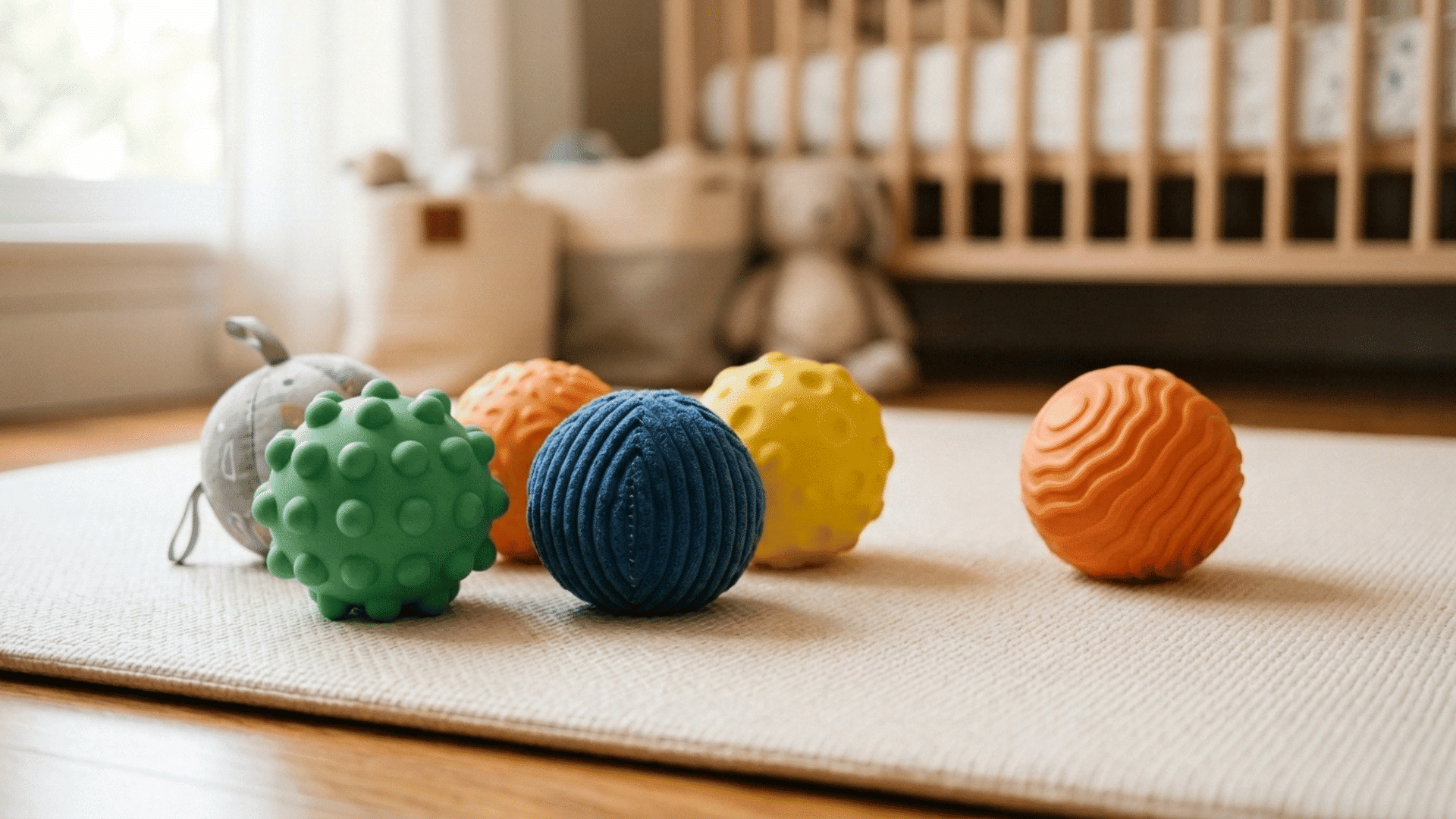
Soft balls with bumps, ridges, and different fabric patches give baby’s hands plenty to play with in one small toy. Since they’re easy to grip and roll, they also encourage coordination.
A ball with a soft bell or rattle noise inside adds an audio cue that keeps baby motivated to keep reaching for it.
2. Crinkle Fabric Toys
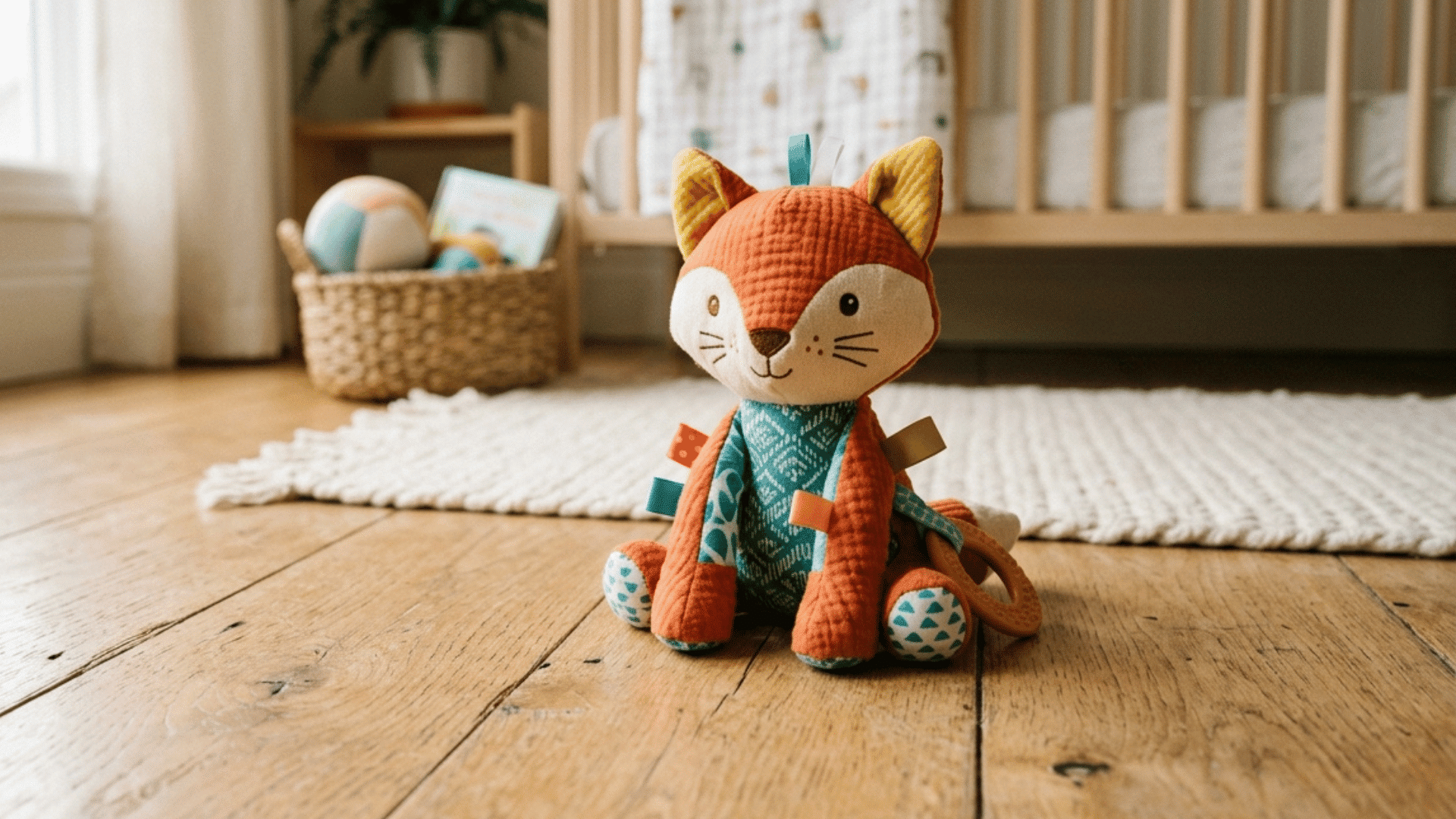
The crinkle sound catches baby’s attention right away and encourages them to keep touching, squeezing, and holding on to the toy.
Many come in fun shapes like animals or fruit, which adds a bit of visual interest along with the sound. These toys also pack flat, making them an easy grab for the diaper bag or stroller pocket.
3. Soft Sensory Blocks
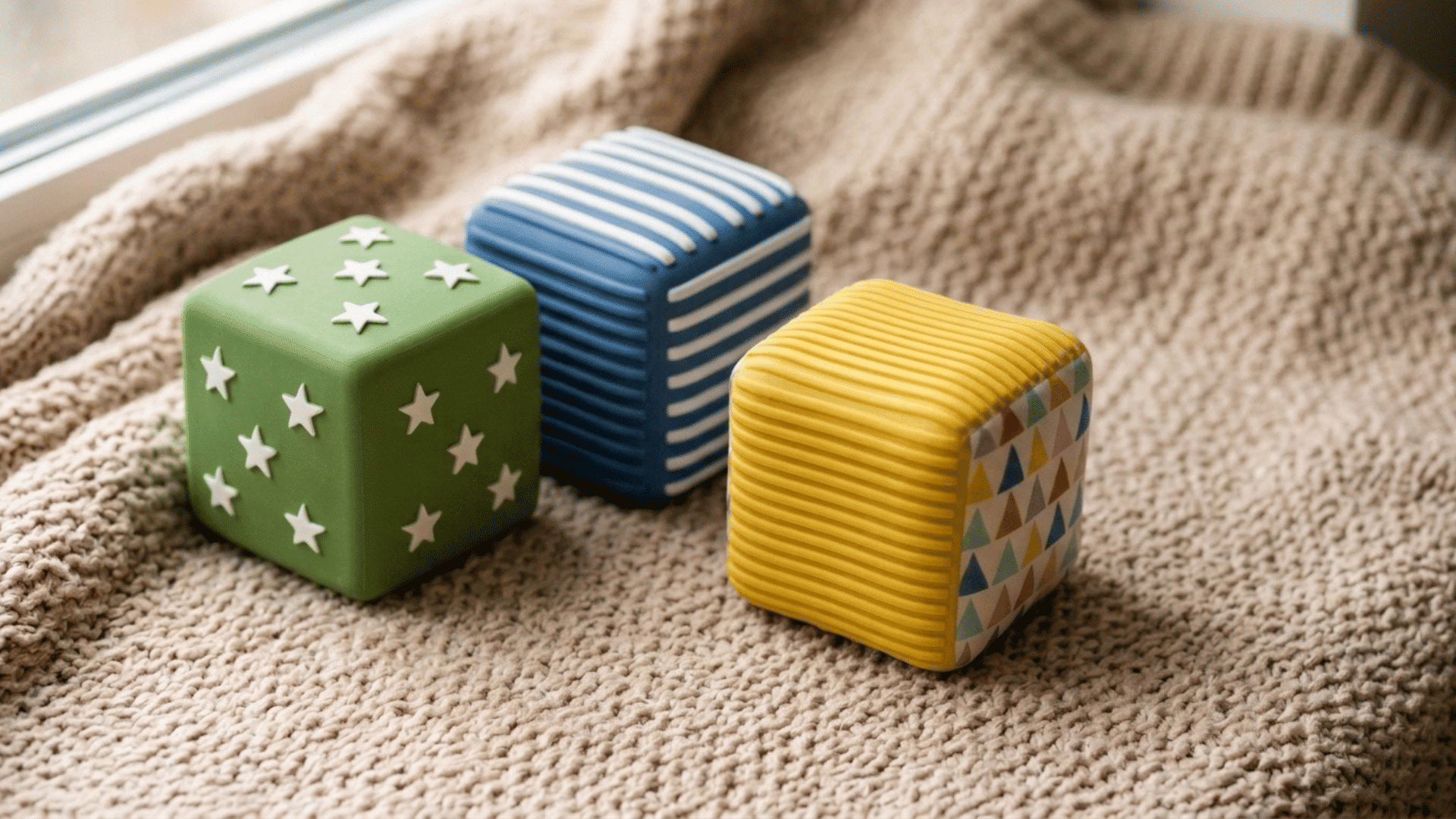
Fabric blocks with different textures on each side are gentle for small hands and safe for mouthing.
Baby can turn them over again and again, finding out a new texture and sound.
Because they’re soft-sided, they also double as a gentle first building toy without the worry of dropped blocks.
4. Textured Grip Rings
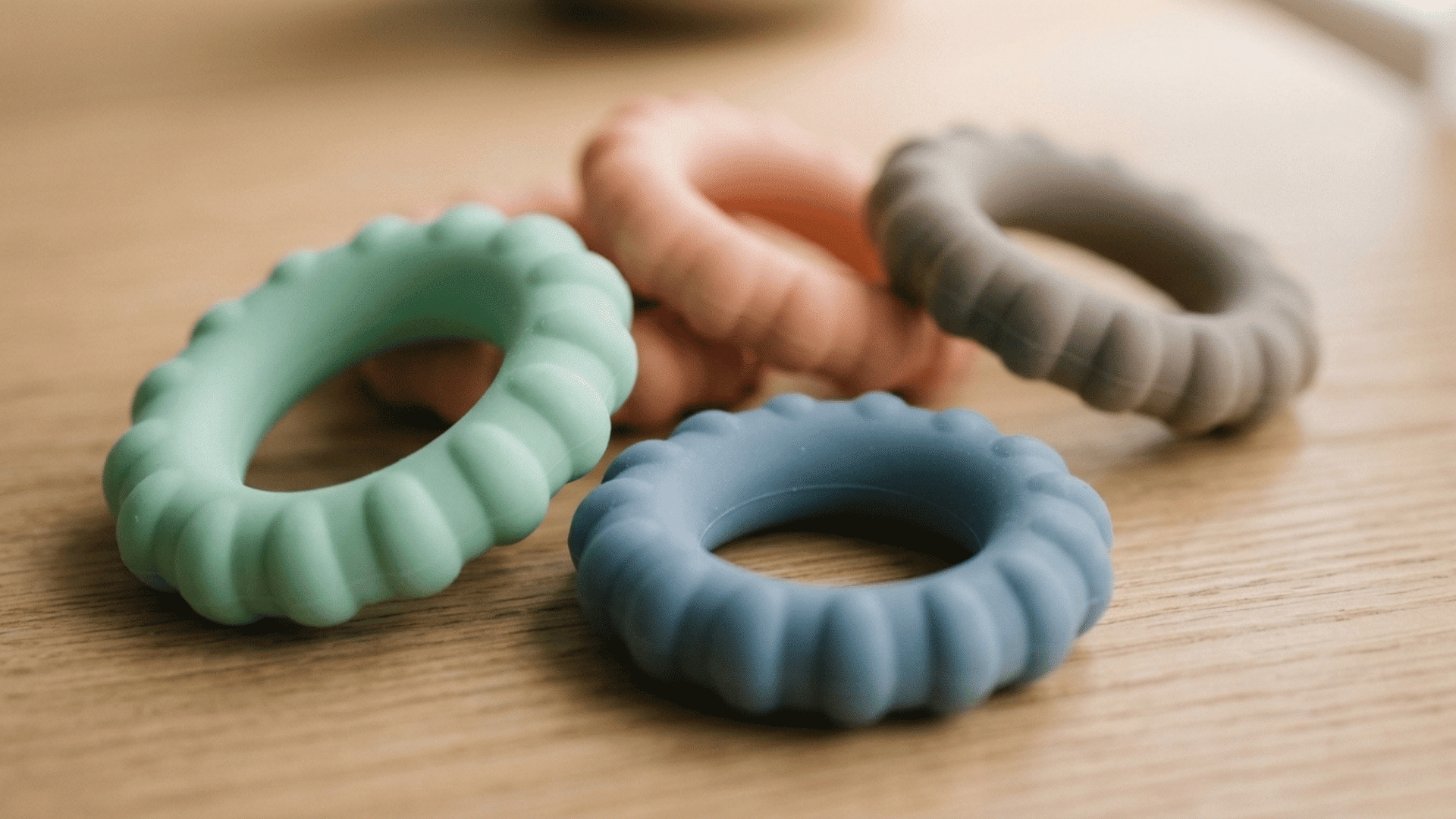
Easy-to-hold rings with bumpy or ridged surfaces help baby practice grabbing and passing toys between hands.
This kind of repeated practice builds the fine motor control baby will need for self-feeding a little later on. The varied ridge patterns also give baby a chance to compare textures side by side within a single toy.
5. Fabric Activity Cube
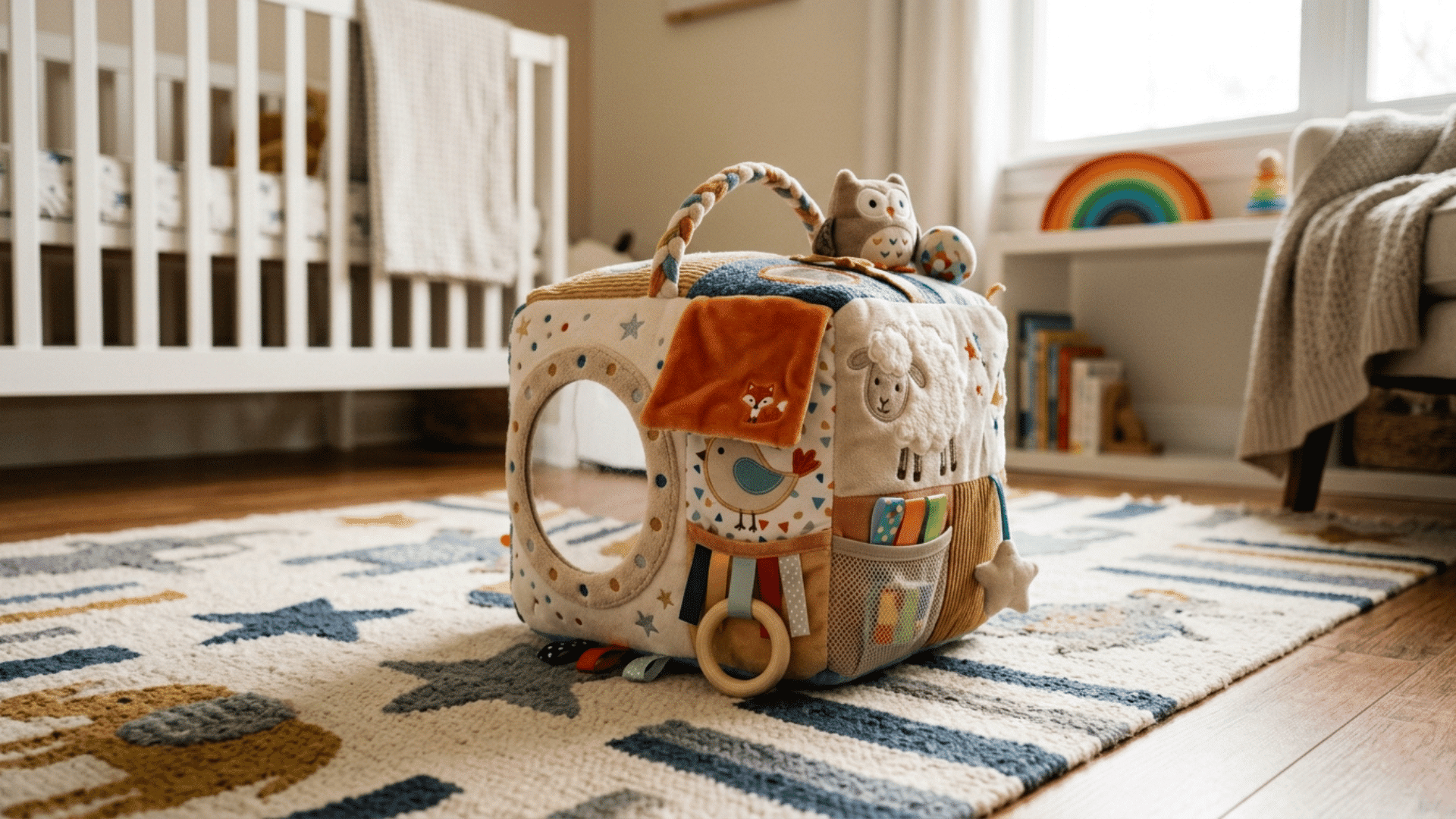
A soft cube with different textures, sounds, and flaps on each side keeps baby curious no matter which way it’s facing.
It’s a good option for tummy time since baby can prop up on their arms and reach for a new side. Look for one with a squeaker or small bell inside to add an auditory surprise to the visual exploration.
Many cubes also include a teething corner or crinkle fabric panel, which comes in handy once those first teeth start pushing through.
6. Silicone Sensory Mat
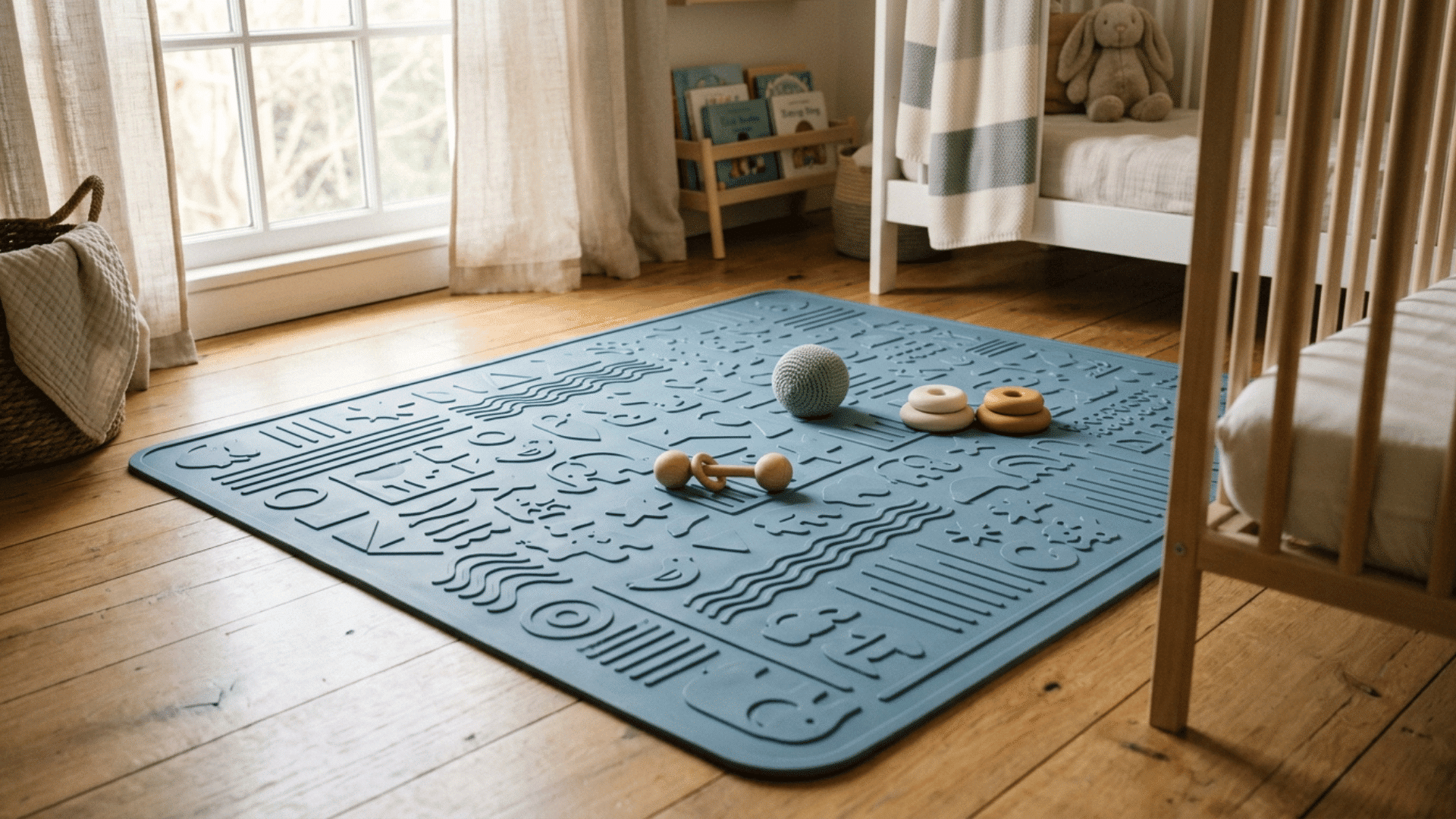
A textured mat baby can lie on, sit on, or press their hands into adds an extra sensory layer to everyday floor time.
The raised patterns are gentle enough for bare feet and hands, making it comfortable for longer play sessions.
It also wipes clean easily, which is a nice bonus for messy hands during snack time or after a diaper blowout.
7. Ribbon Sensory Wand
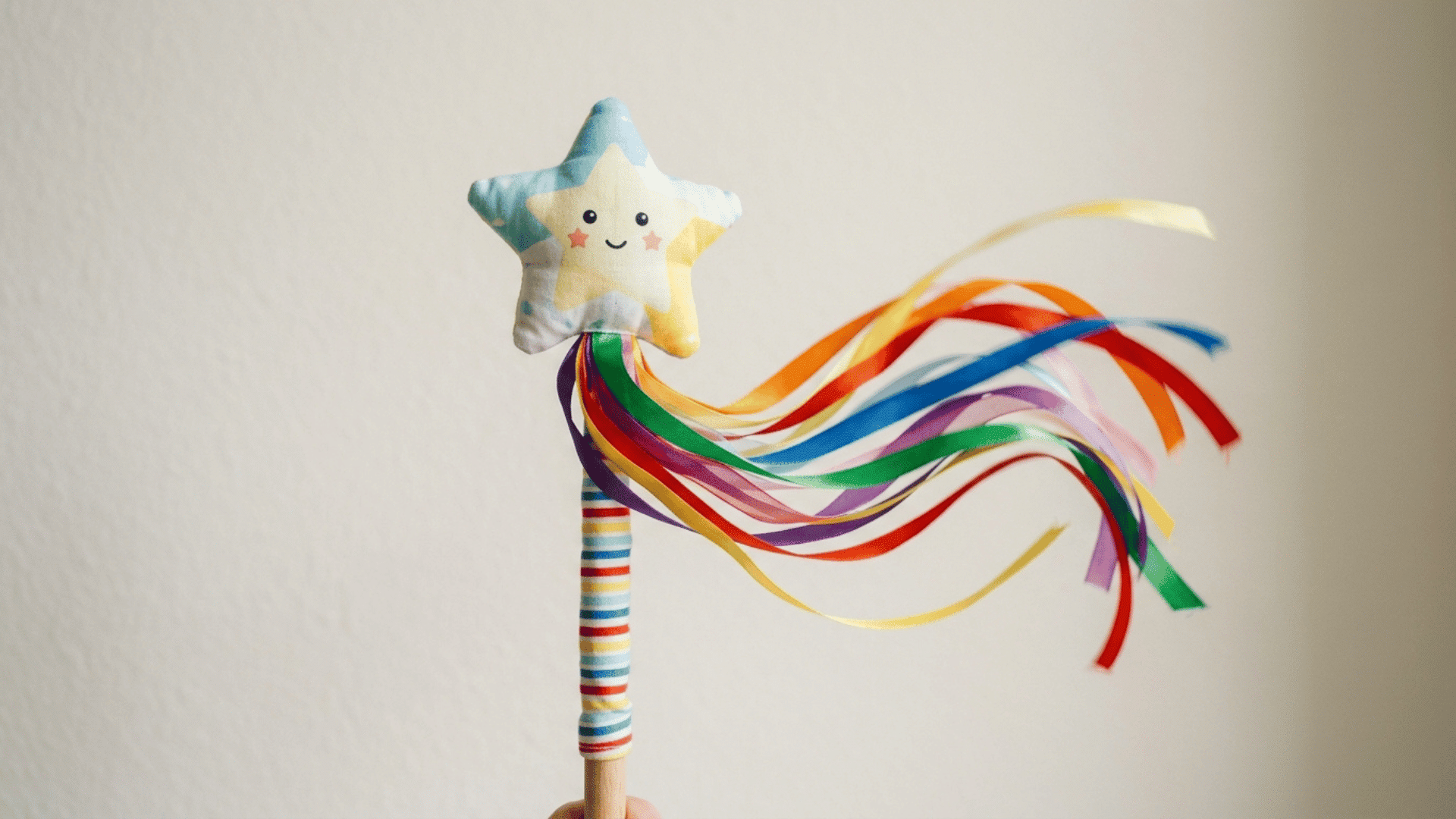
A soft wand with ribbons attached moves and flutters with the smallest wave, which is great for baby’s tracking and reaching skills.
Watching the ribbons move also helps baby practice following an object with their eyes across a wider range. The lightweight design makes it easy for them to grab and wave, which improves coordination.
Teething Toys
With teething often starting around this age, toys made for gumming and chewing bring real comfort during an uncomfortable stretch.
This is also right around when a lot of parents start experimenting with first foods. If you’re at that point too, sweet potato baby food is a gentle, low-fuss place to start once gumming turns into actual eating.
8. Silicone Teething Rings
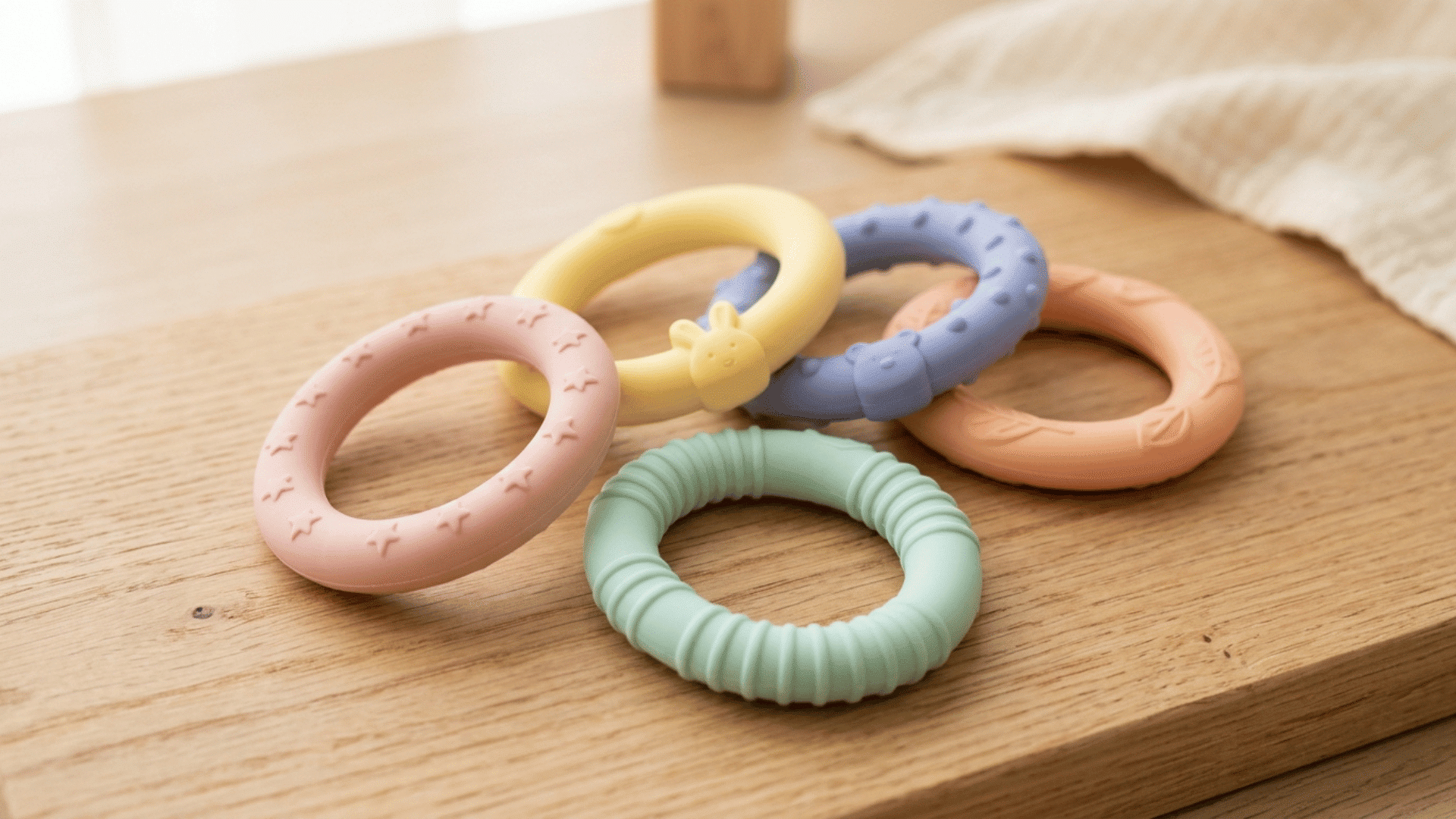
Easy to hold and safe to chew, these rings are a teething essential for most babies this age. The ring shape makes them simple to pass between hands, so baby always has a side ready to gum.
Many are dishwasher-safe on the top rack, which makes the daily cleaning routine far less of a hassle. It can also be popped in the fridge for a bit, since the extra chill helps soothe sore and swollen gums.
Look for one made from food-grade silicone with no small parts, so it stays safe even during the most enthusiastic chewing sessions.
Parenting Tip: If gums look extra swollen, a clean, chilled washcloth works just as well as a store-bought teether in a pinch.
9. Chillable Gel Teethers
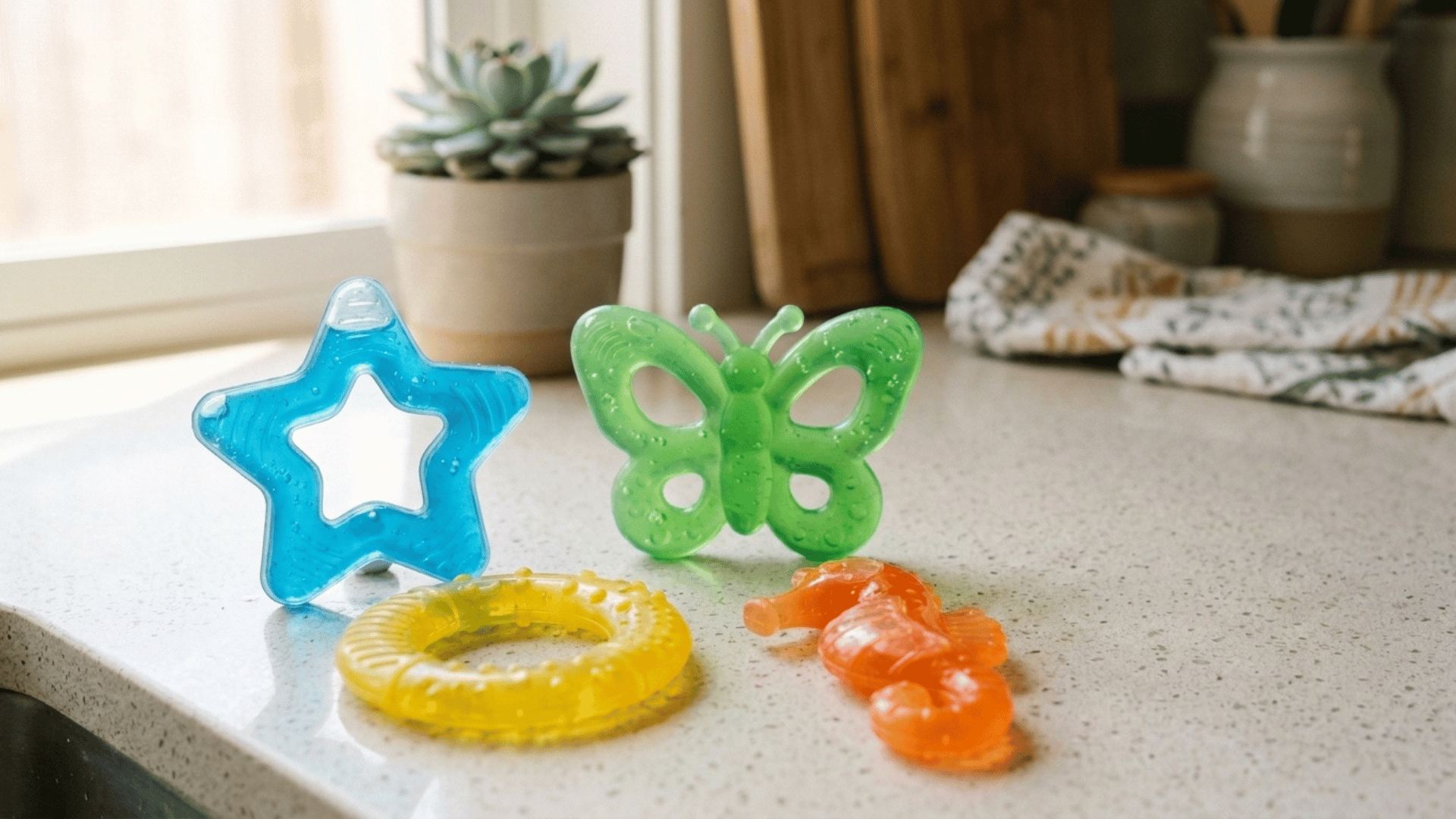
These teethers can be cooled in the fridge, and the cold surface helps soothe sore, swollen gums on a rough teething day.
Many come in fun shapes, which makes it easier for tiny hands to hold steady while chewing. Nuby is a common pick for silicone teethers, teething mittens, and gel-filled rings.
Avoid freezing them solid, since a rock-hard surface can bruise sensitive gums; the fridge alone is cold enough to help.
10. Wooden Teething Toys
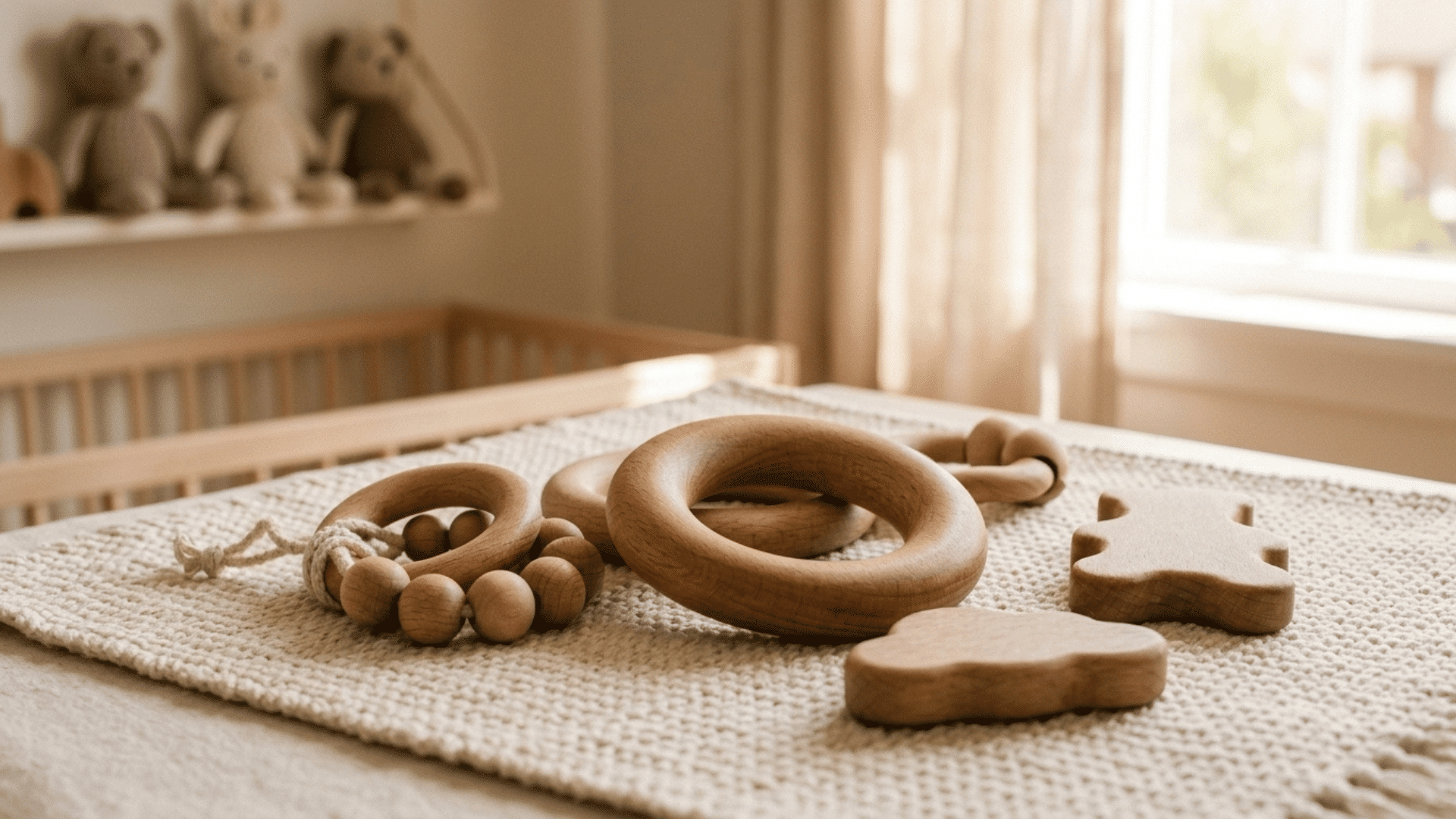
Natural, untreated wood teethers are sturdy and offer a firmer chewing texture than silicone, which some babies seem to prefer.
They also tend to hold up well over time, even with constant gnawing. Wipe them down with a damp cloth rather than soaking them, since standing water can warp the wood over time.
11. Textured Teething Mitten
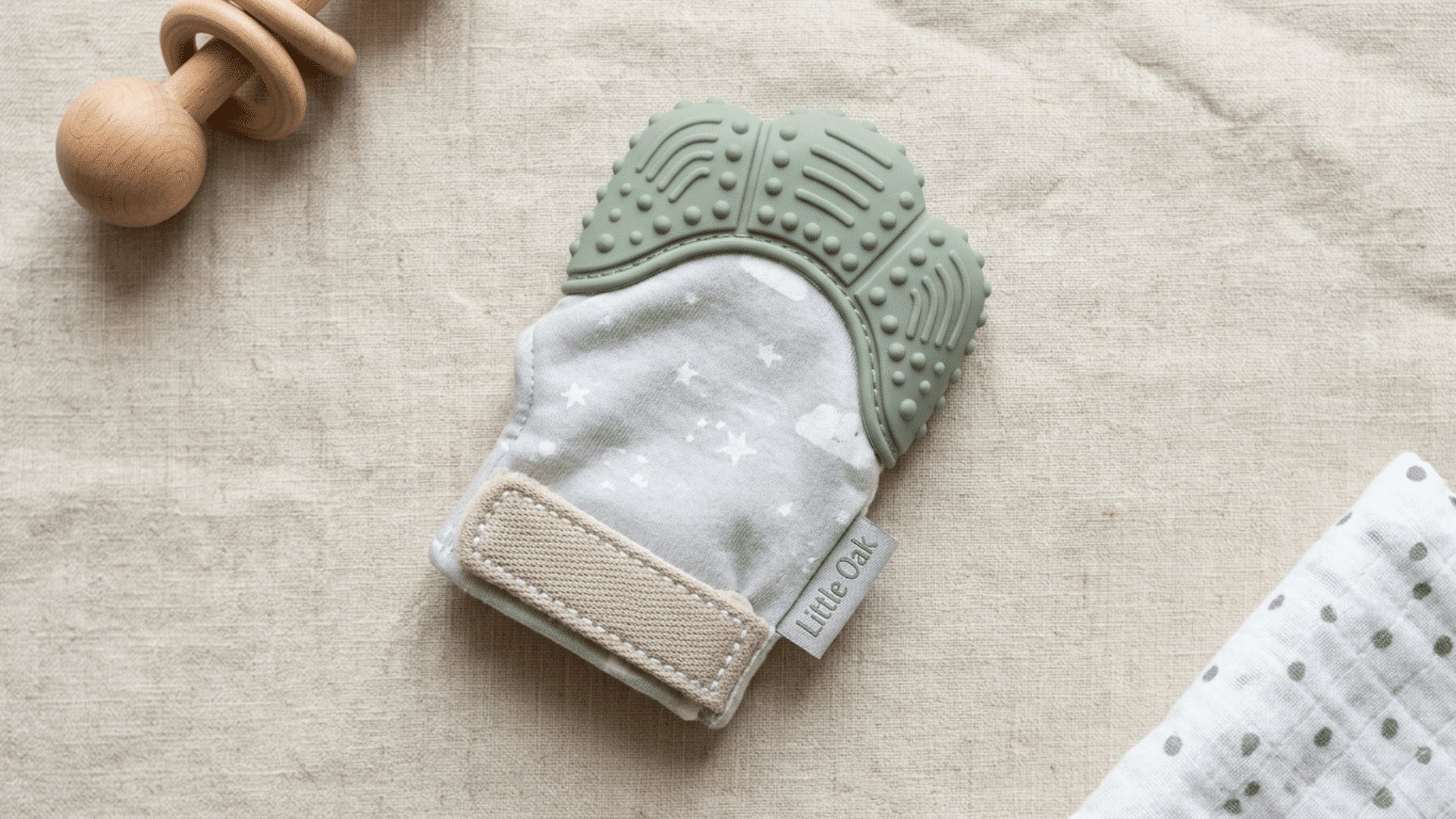
A wearable mitten with a teething pad attached lets baby self-soothe without constantly dropping the toy on the floor.
Look for one made from food-grade silicone with a machine-washable fabric backing, since it’s bound to end up in baby’s mouth more often than not.
This is especially handy for babies who are still working on holding small objects.
12. Banana-Shaped Teether
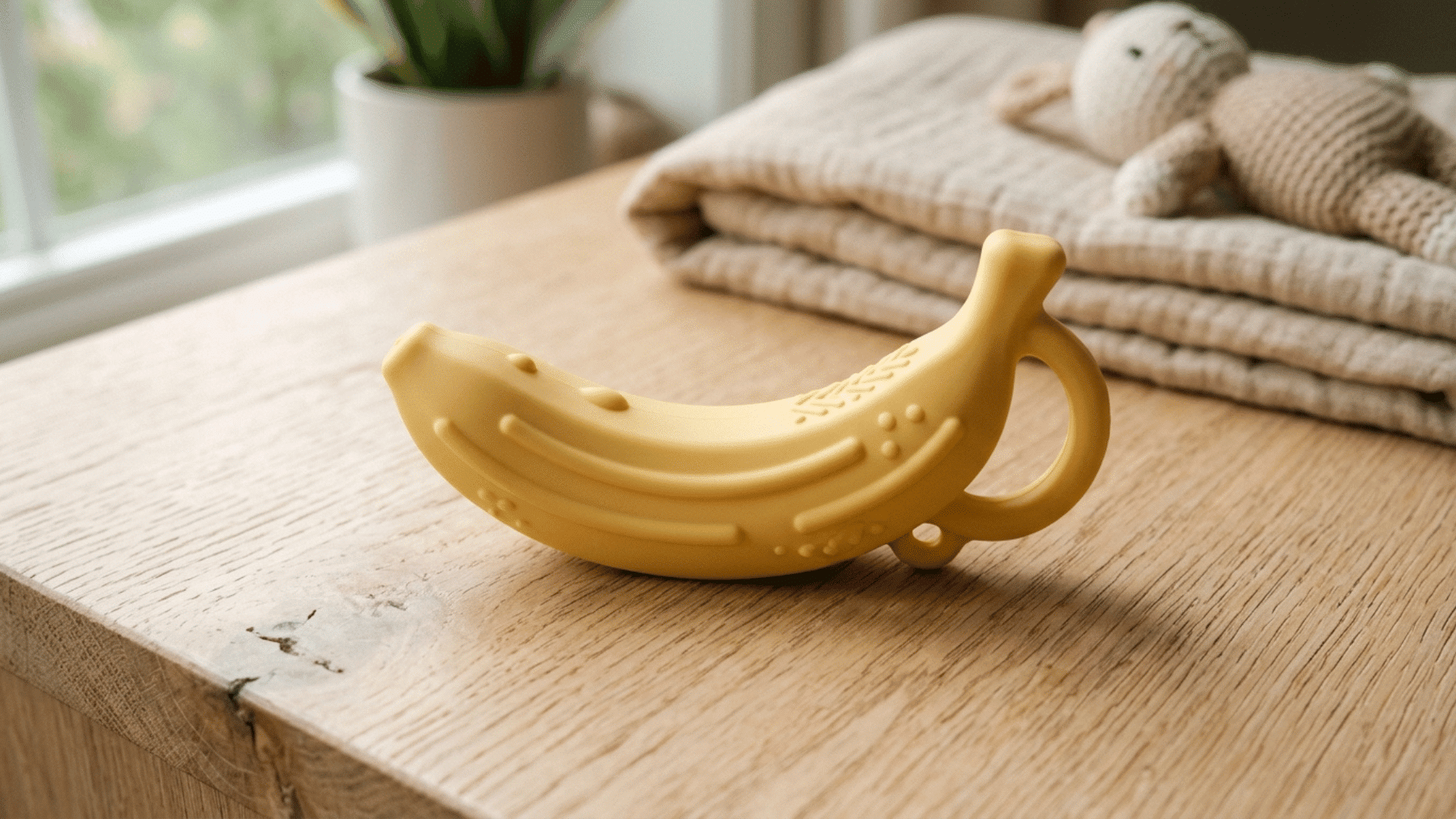
A curved, easy-grip shape makes it simple for small hands to hold and guide straight to their mouth. The different textured sections along the toy also give baby a few chewing options in one piece.
Its lightweight design means baby can hold and reposition it solo, without needing help from a parent every time it slips.
13. Multi-Textured Teething Ball
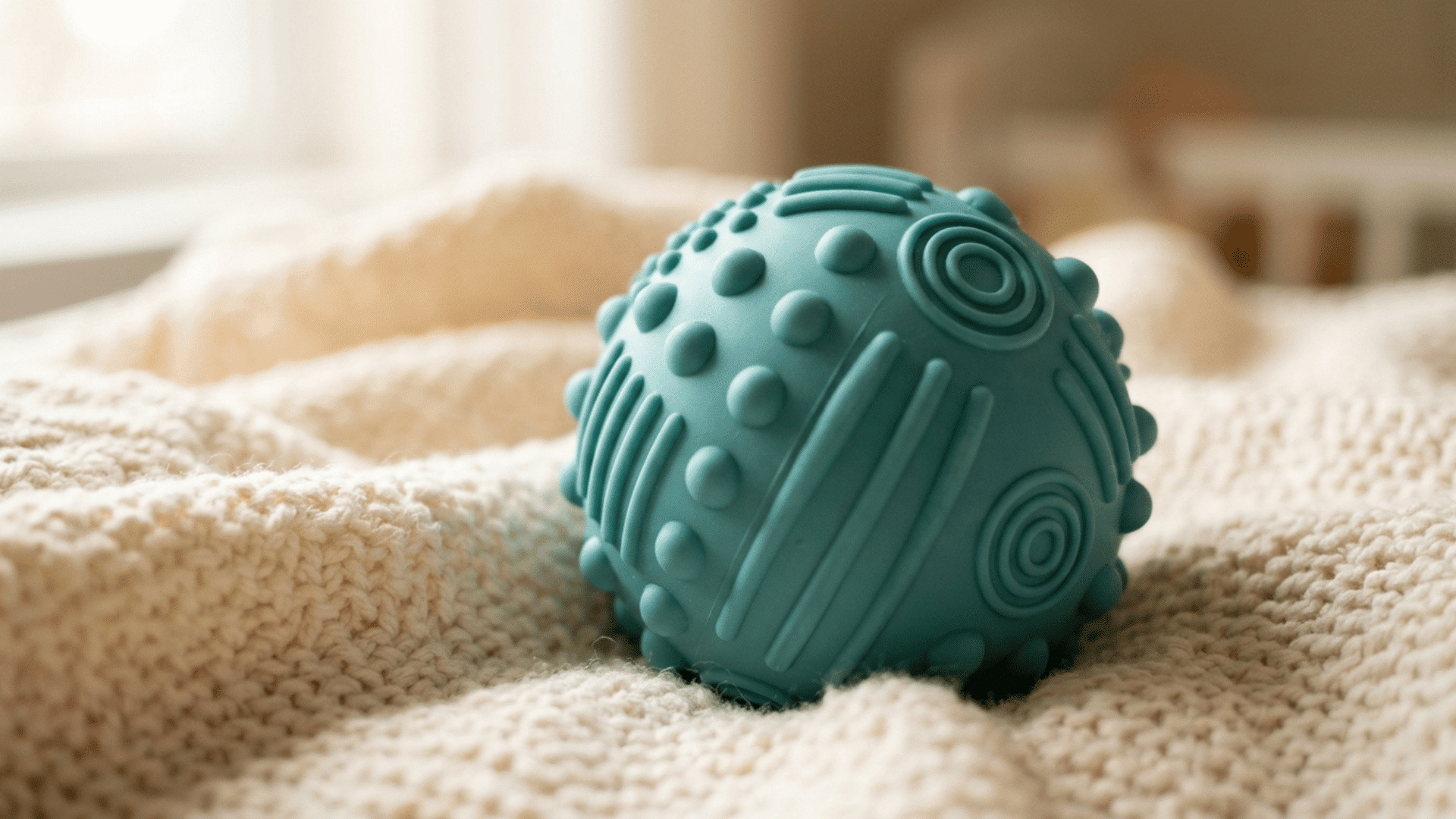
A ball covered in bumps, ridges, and grooves gives sore gums something satisfying to chew on from any angle.
Its round shape also makes it easy for a baby to roll. Because it’s too large to pose a choking hazard, it’s a safer pick to toss in a bag for teething on the go.
The varied textures also give baby’s fingers something to explore, adding a bit of tactile play alongside the teething relief
14. Silicone Teething Pendant
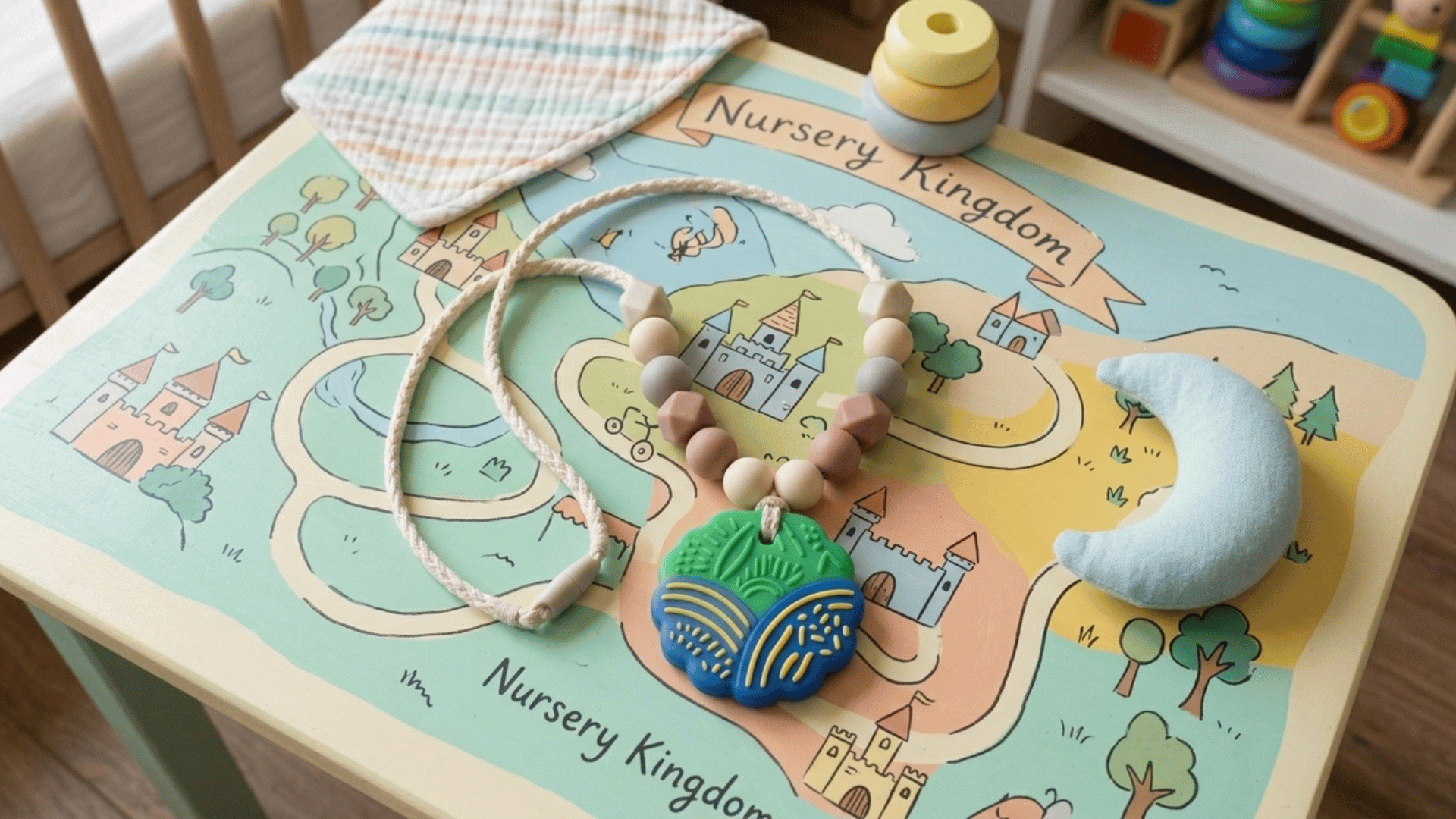
Worn by a parent around the neck, this lets baby chew safely during cuddle time, feeding, or while being carried around the house.
It keeps a teether within easy reach without needing to search for a dropped toy. The cord is typically food-grade and fully washable, so it stays sanitary with daily wear.
Toys That Teach Cause and Effect
Baby is starting to notice that their own actions make things happen, and these toys turn that into playtime fun.
15. Shaker Rattles
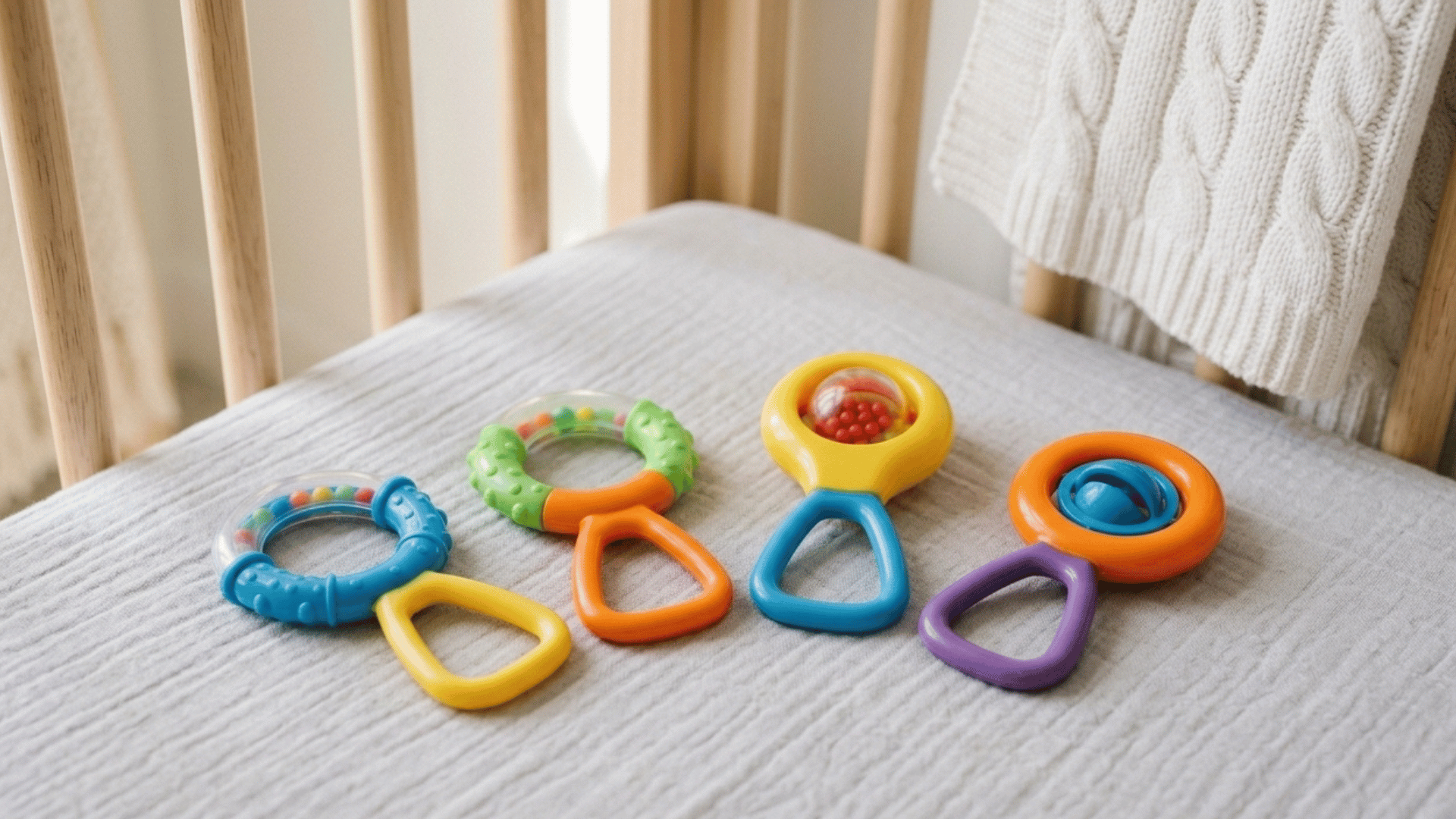
A gentle shake makes a sound, helping baby connect their own movement to a clear result.
Lightweight designs work best at this age since baby is still building up arm strength and control, and with a slim, easy-grip handle, also make it simpler for baby to switch hands mid-play.
16. Roly-Poly Wobble Toy
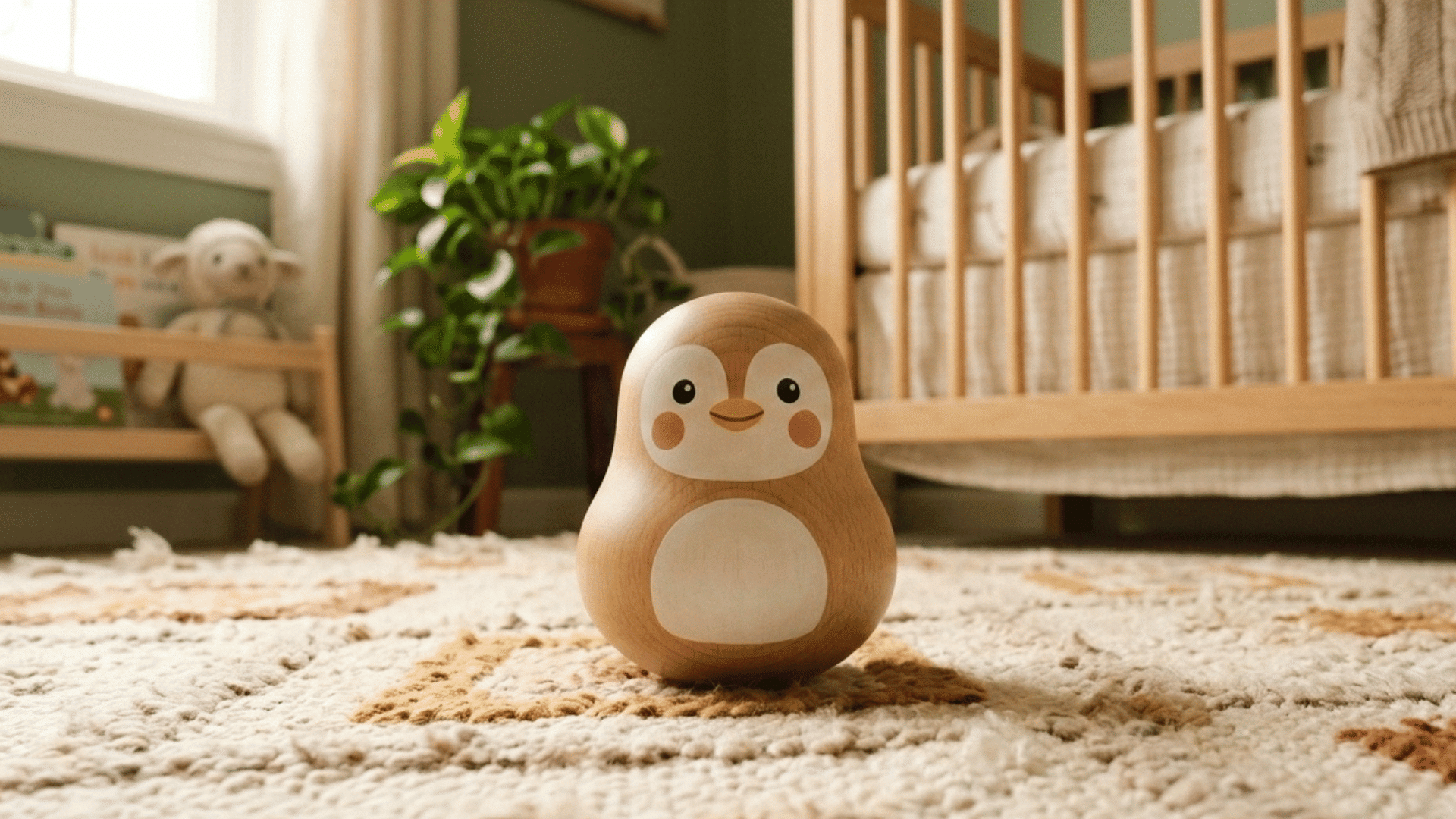
When pushed or tapped, it wobbles side to side and rights itself again, keeping baby entertained with repeated pokes and pushes.
The weighted base usually contains a soft chime, adding sound to every wobble and tumble.
Parenting Tip: This kind of toy is great for babies who are just starting to sit up and reach forward.
17. Press-and-Pop Buttons Toy
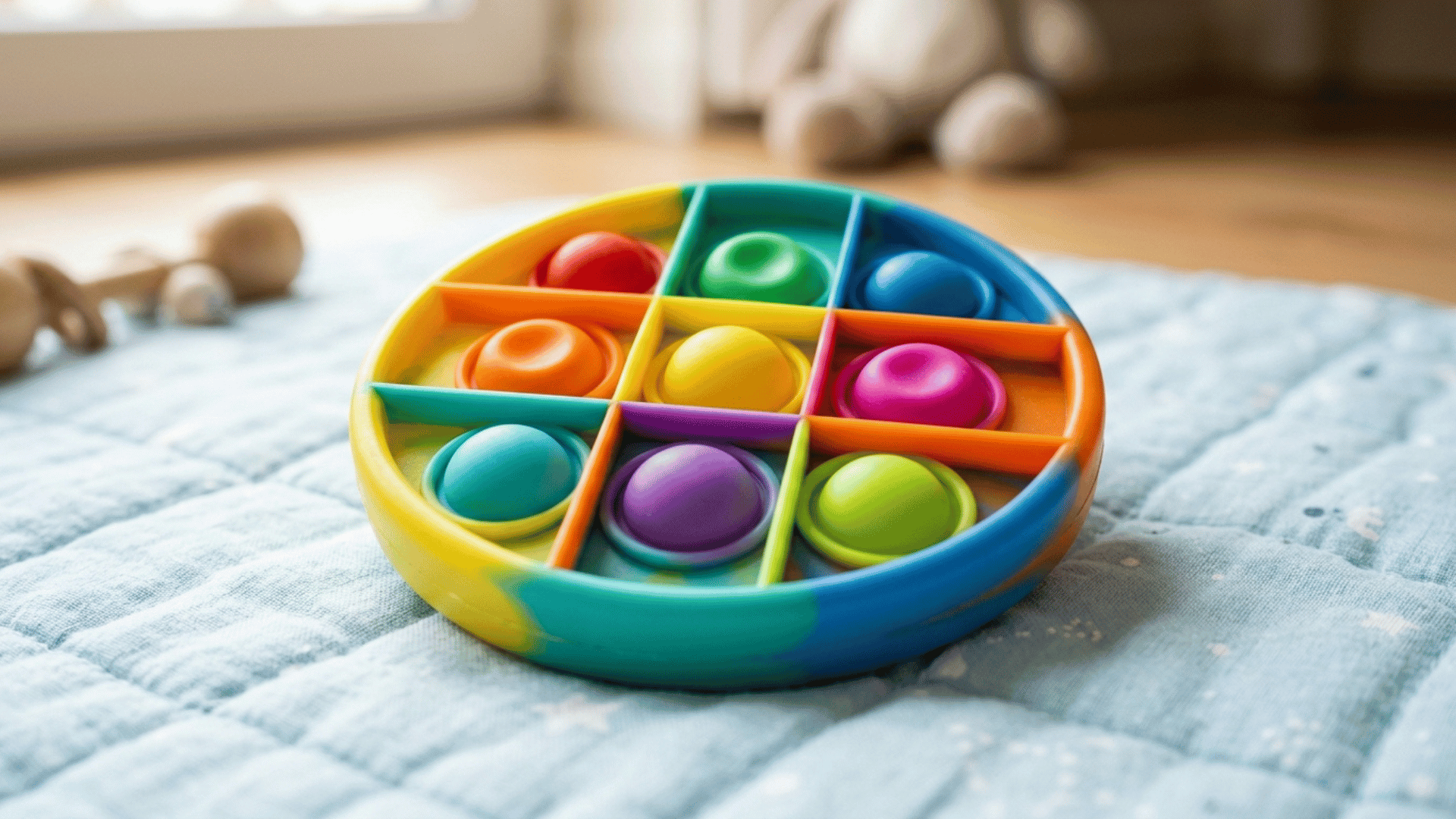
Simple buttons that pop or click when pressed are satisfying for baby’s growing finger control and hand strength.
Bright colors on each button also add a visual reward alongside the sound.
Look for a toy with buttons of varying sizes, since it gives baby a chance to practice both whole-hand pressing and more precise fingertip taps.
18. Soft Musical Plush
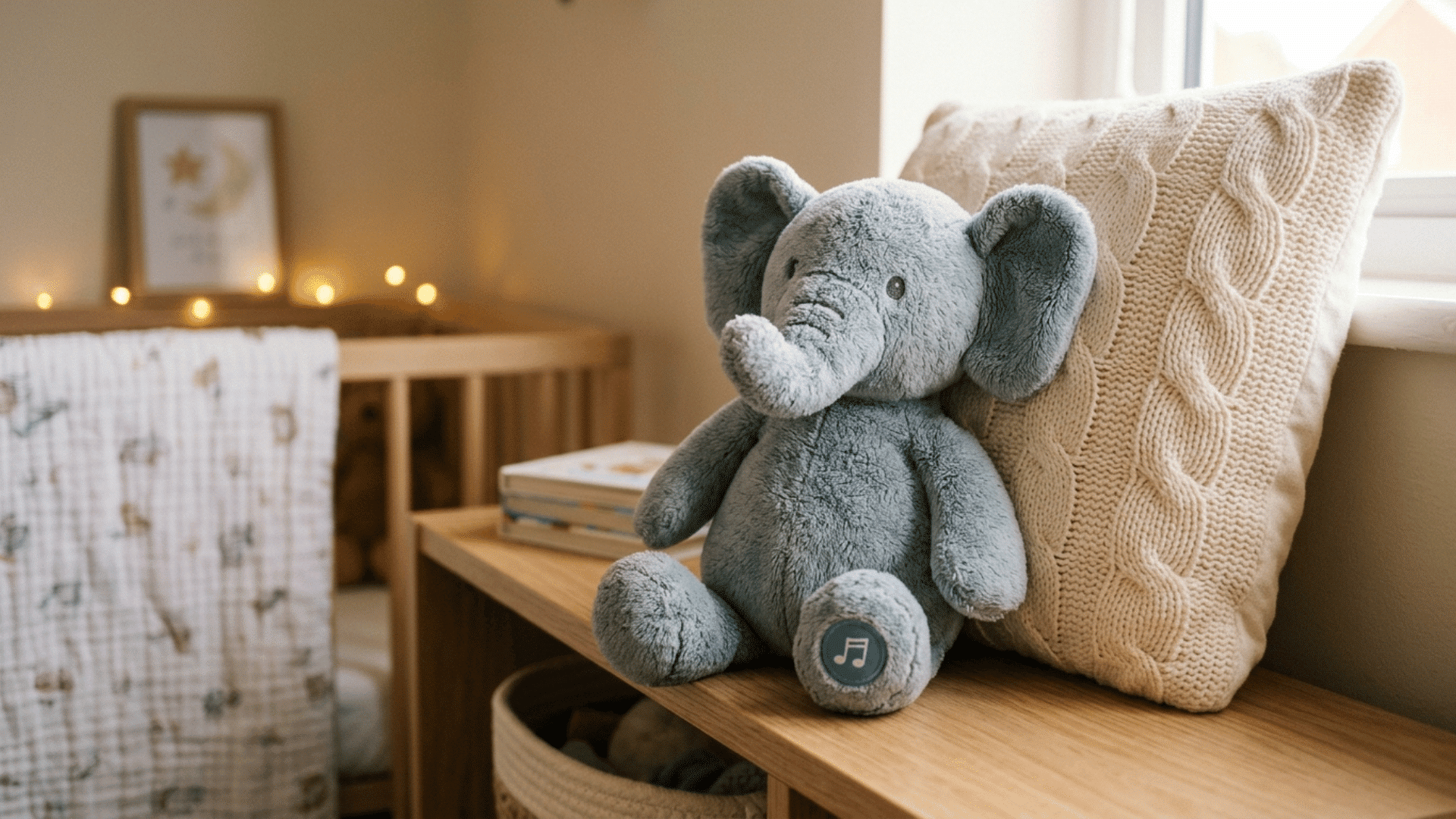
A plush toy that plays a gentle tune or melody when squeezed introduces baby to rhythm and sound in a soothing way. Many also double as a comfort toy for naps or car rides.
Volume is often adjustable, which helps when the same toy pulls double duty for quiet naps and livelier playtime.
19. Jingle Bell Wrist Rattles
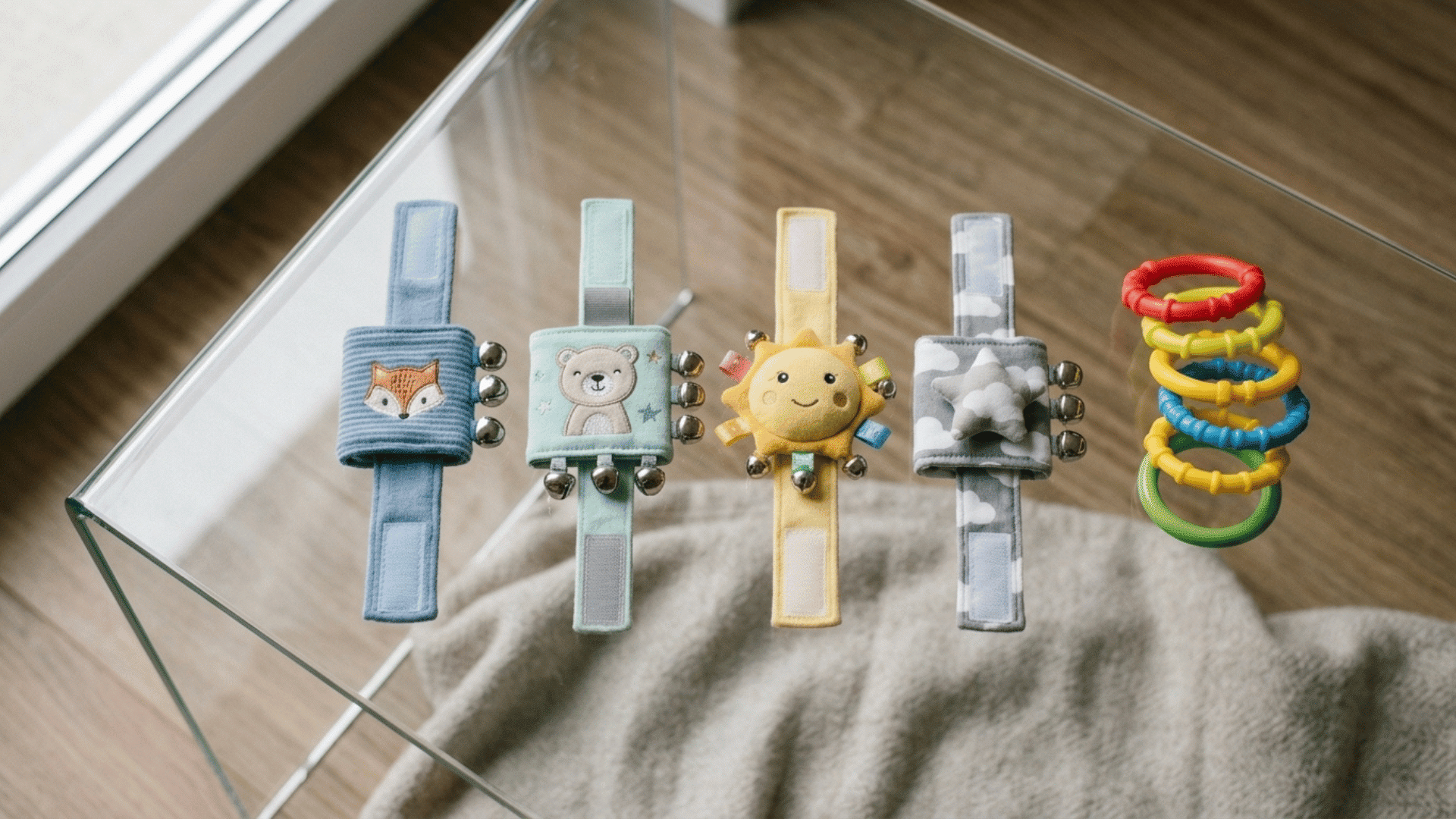
Worn on the wrist or ankle, these introduce sound through baby’s own natural movements, like kicking, waving, or reaching.
They’re a fun way to add a bit of music to tummy time or floor play. Just be sure to check the fit regularly, since baby’s wrists and ankles grow quickly at this age.
20. Simple Baby Xylophone
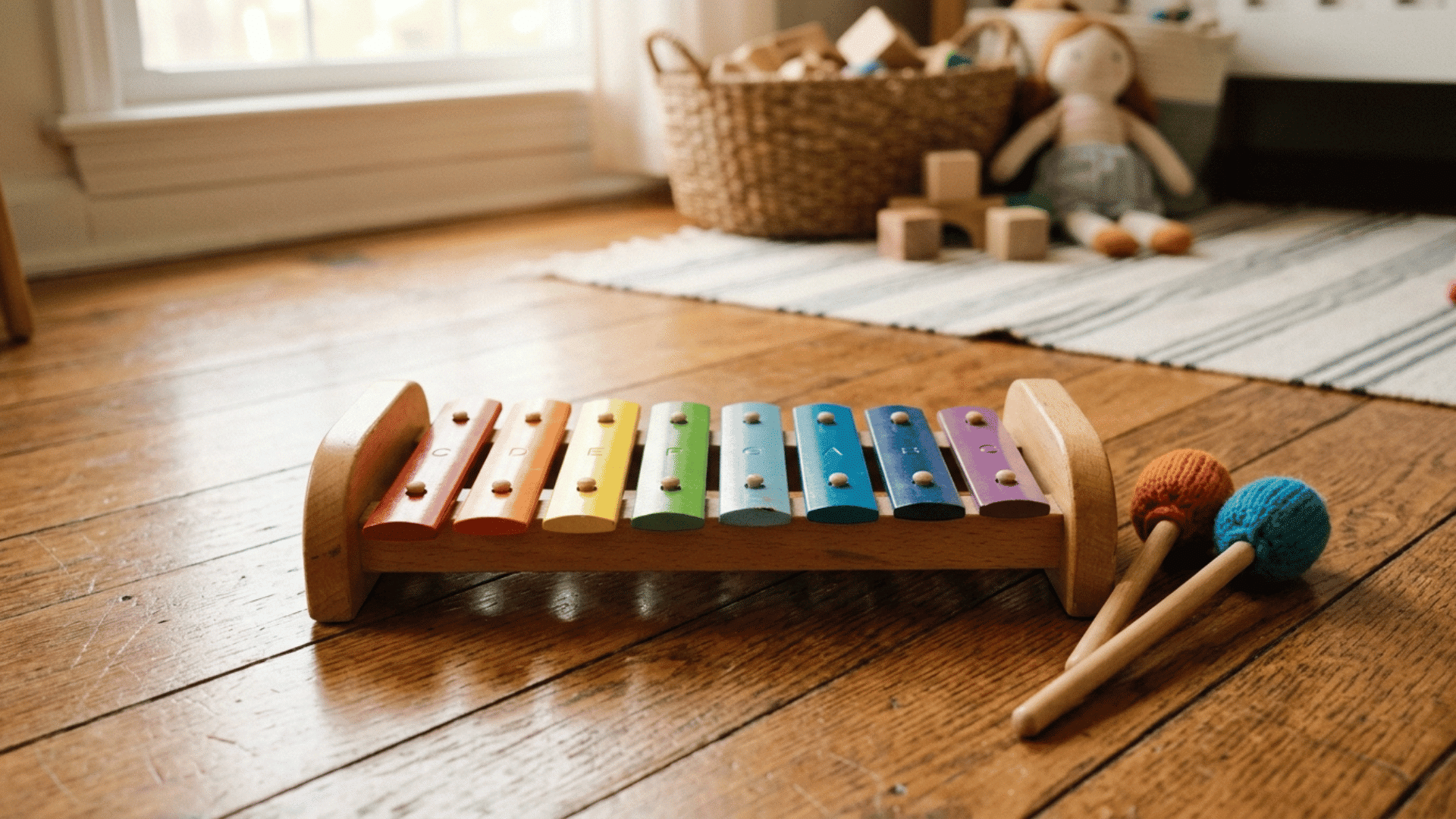
Large, soft mallets and big, colorful keys make this an easy first instrument for exploring cause and sound. Color-coded keys sometimes line up with musical notes, giving older siblings a chance to play along too.
The bright colors and bold key shapes also help with visual tracking as baby watches each mallet strike.
Plus, hitting the keys with any real accuracy takes practice, making it a fun way to build hand-eye coordination over time.
21. Squeeze-and-Squeak Toy
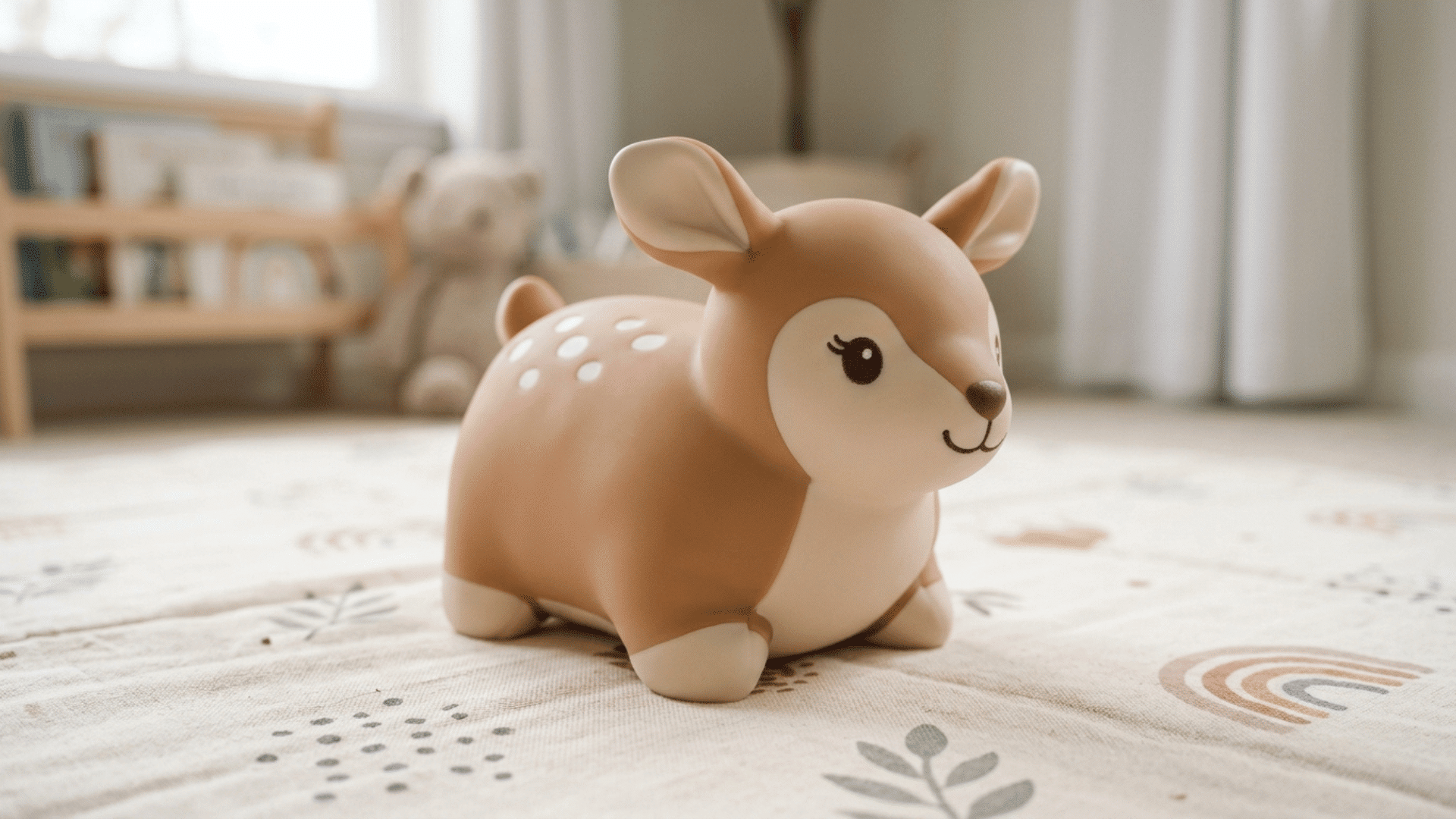
A gentle squeeze makes a squeak, which is an easy cause-and-effect concept for baby to grasp and repeat on their own.
It’s also a good option for building up baby’s palm and finger strength ahead of more precise grasping milestones. Many come in animal shapes with a soft, textured coat that adds a second sensory layer to the squeeze.
22. Light-Up Cause-and-Effect Toy
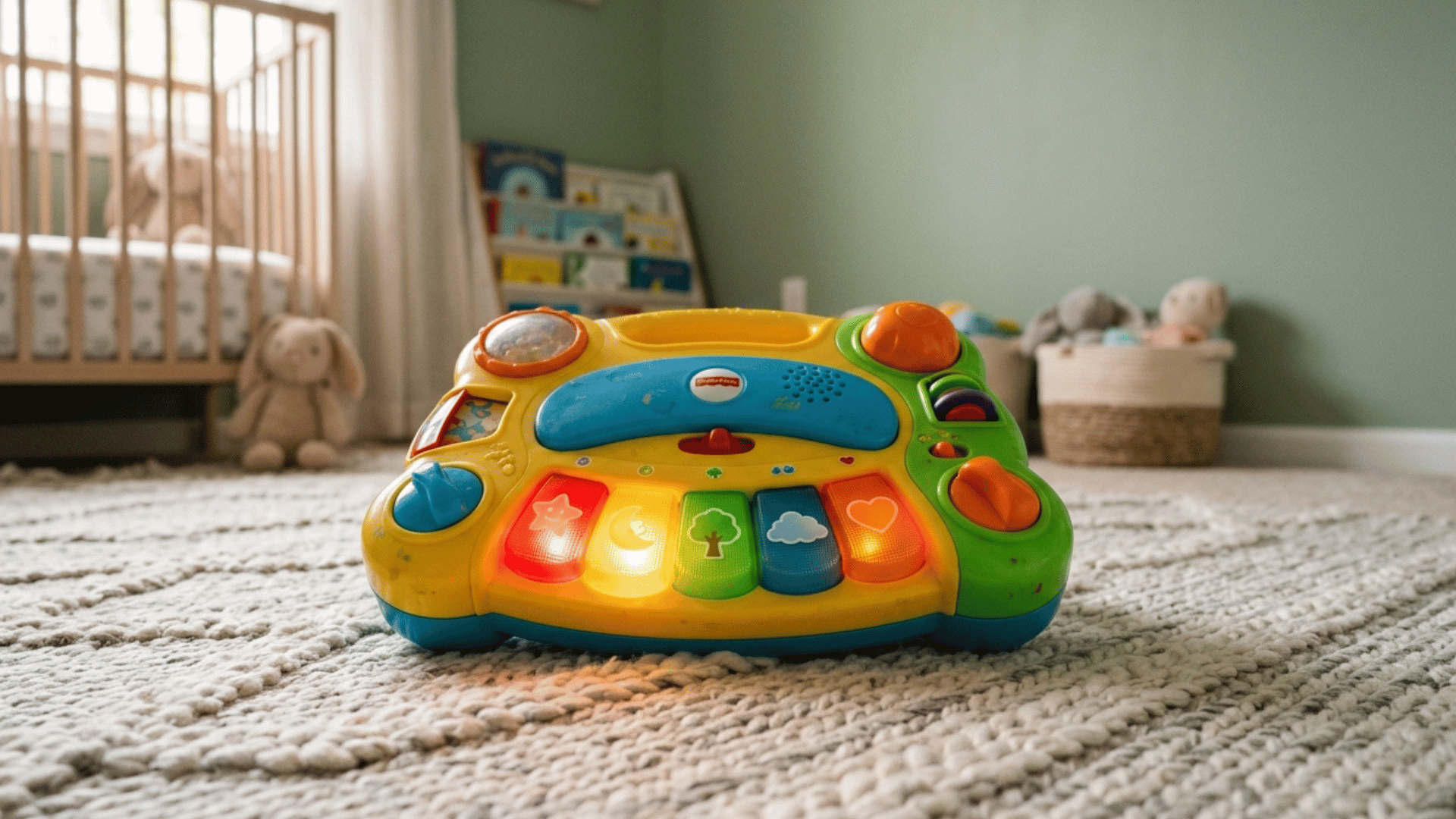
Pressing a button triggers lights or sounds, keeping baby engaged as they figure out how to repeat the action for the same result.
This kind of toy is especially good for building focus and hand coordination together. Look for a version with a dimmer or volume switch so play doesn’t feel overwhelming in a quiet or dark room.
Splash-Time Toys
Bath time becomes an easy play session with a few simple toys made just for splashing and water play.
23. Floating Bath Toys
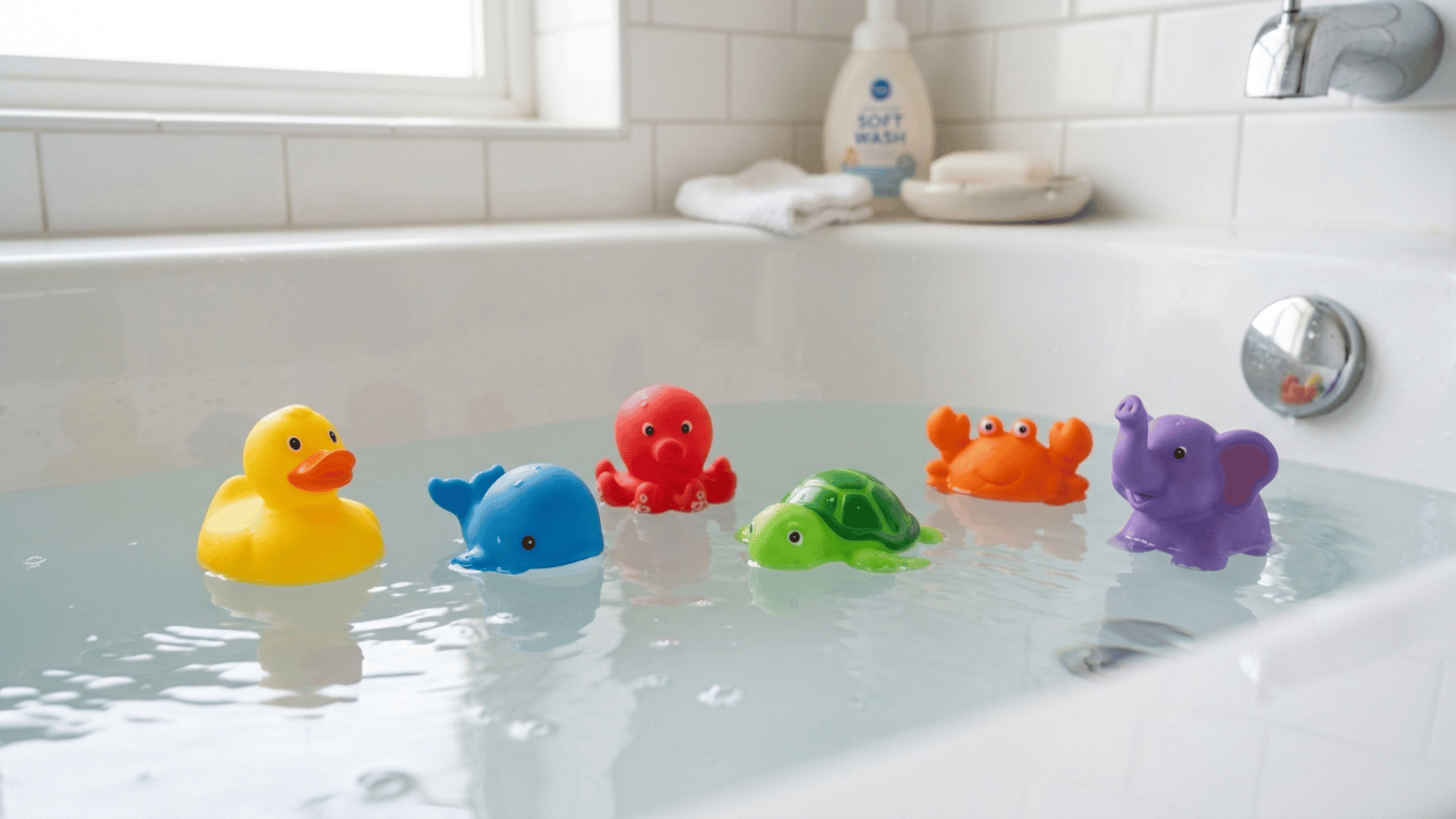
Simple floating shapes or animals make splashing more fun and are easy for baby to grab with wet hands. They also help baby practice reaching and grasping in a slightly different, more slippery setting.
Their bright colors and gentle bobbing motion also help hold baby’s attention during bath time, making the whole routine a bit smoother.
Parenting Tip: Always test bathwater temperature with your wrist or elbow before placing baby in, since their skin is more sensitive to heat than adult hands realize.
24. Bath Squirters
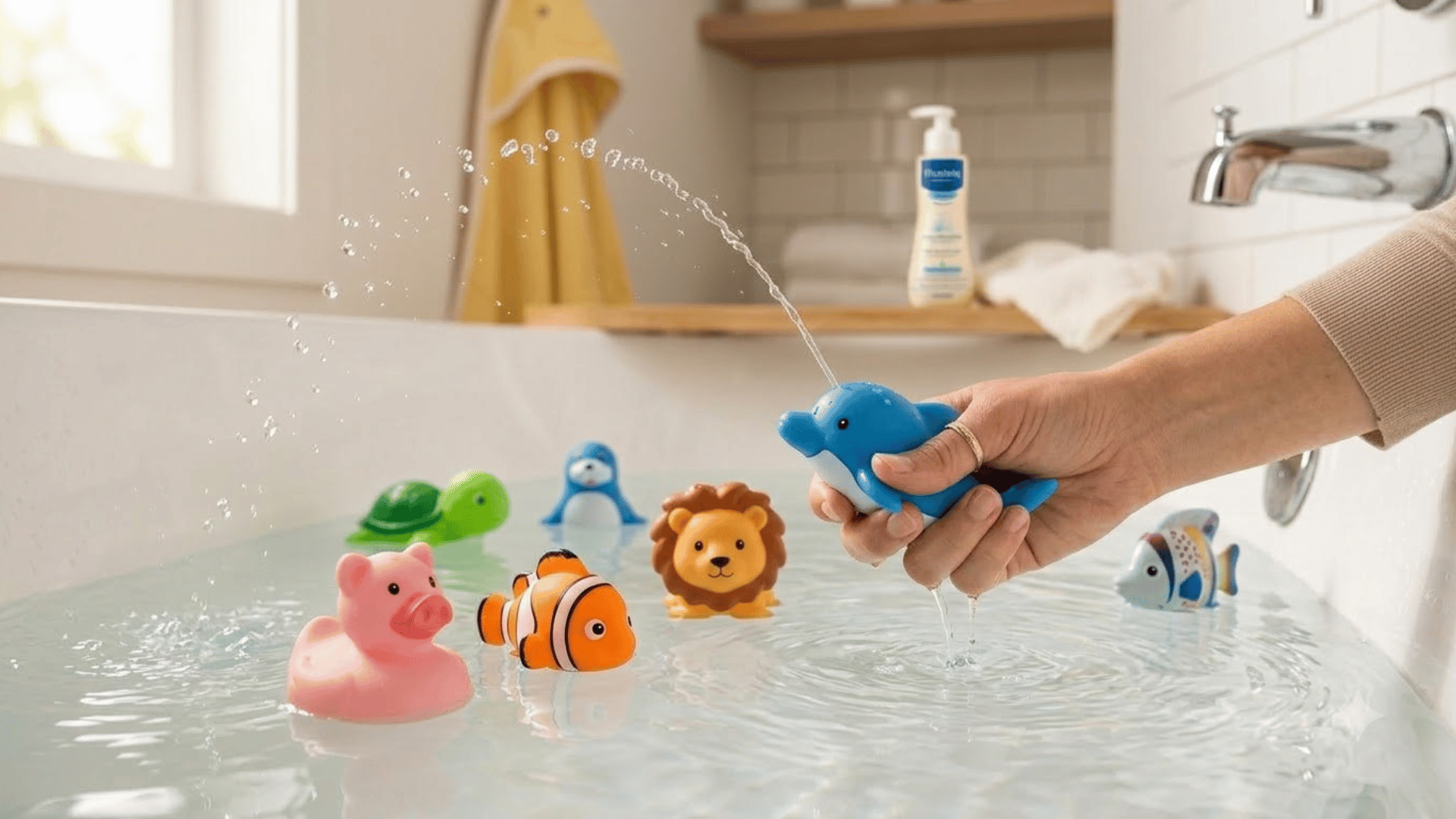
Soft squeeze toys that squirt water introduce a fresh cause-and-effect moment right in the middle of bath time.
Watching water shoot out when squeezed is often enough to get baby giggling. Just like floating toys, look for open designs that are easy to rinse out and dry completely between uses.
Squeezing the toy also gives baby’s little hand muscles a gentle workout, which supports fine motor development.
25. Soft Bath Books
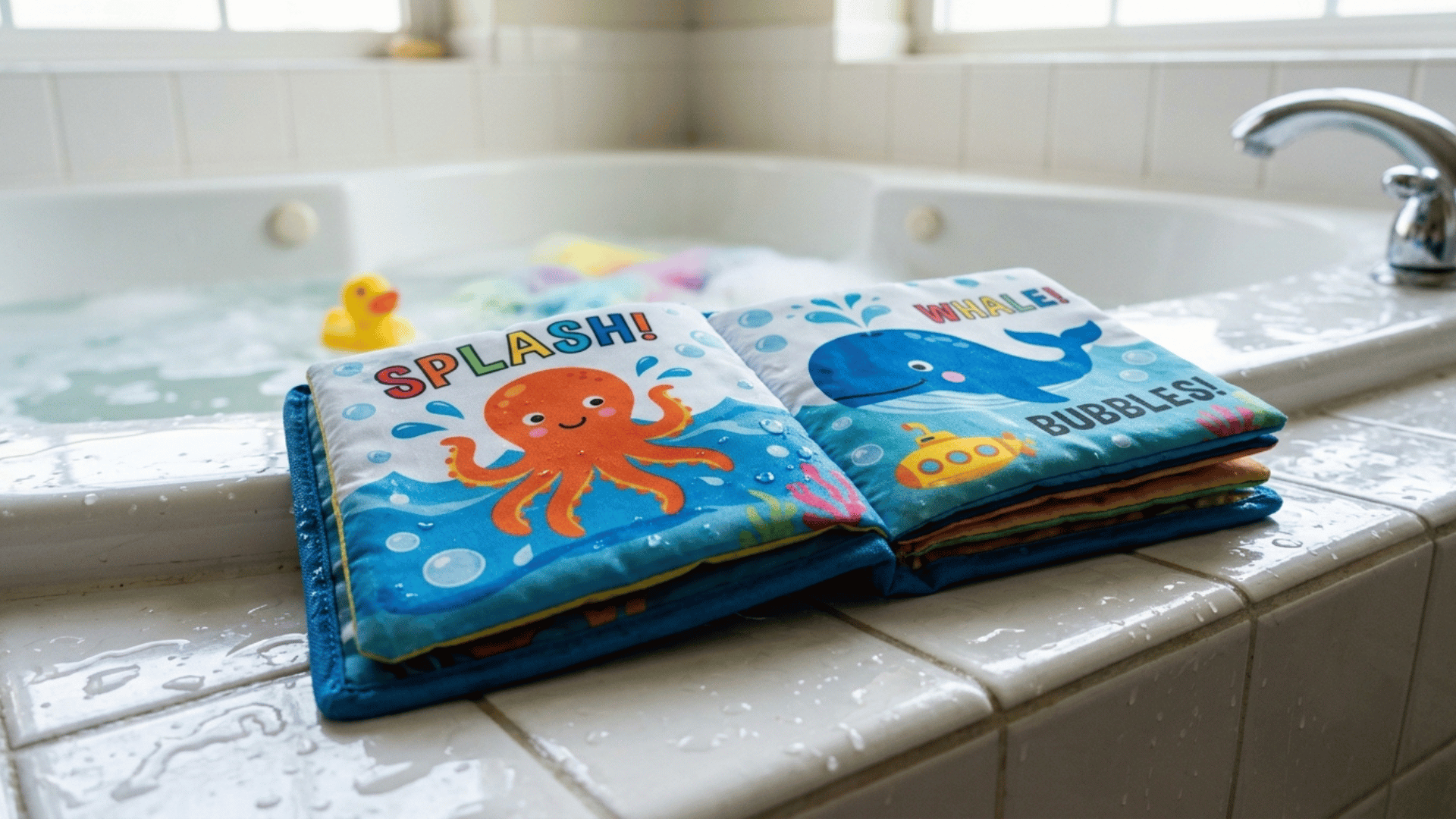
Waterproof pages with bright, simple pictures make bath time a chance for a bit of gentle reading, too.
Since they can get wet and chewed without issue, they hold up well to daily use. Hang-dry them fully between baths to keep the pages from developing a musty smell.
Munchkin is a top brand you can check for bath squirters, floating toys, and suction bath toys.
26. Bath Time Sensory Balls
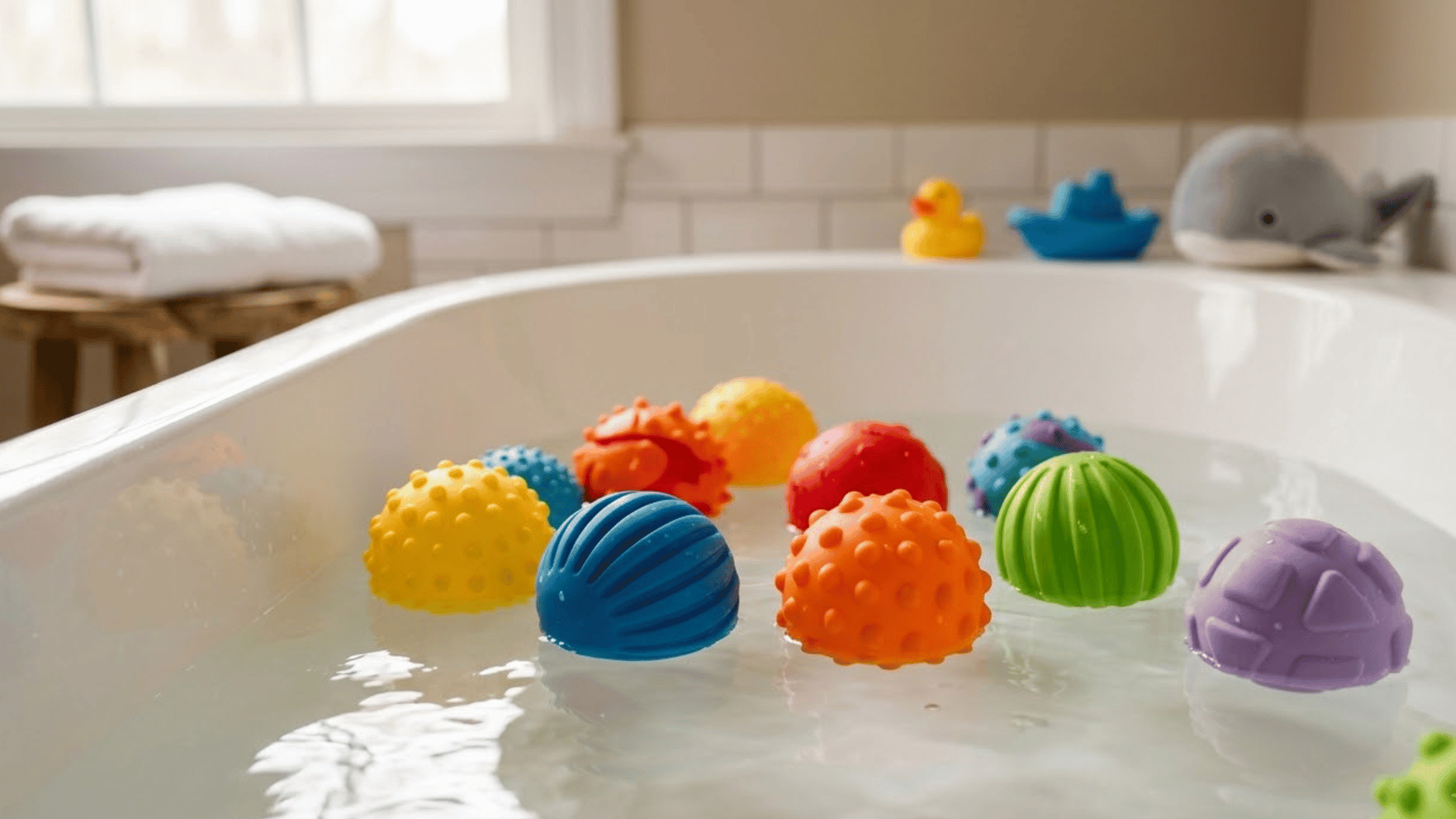
Textured balls made for water play give baby something familiar to play with, even while sitting in the tub. A ball that shifts color with water temperature can double as a subtle safety check for parents.
Choose one with small drainage holes so trapped water doesn’t sit inside.
27. Suction Cup Bath Toys
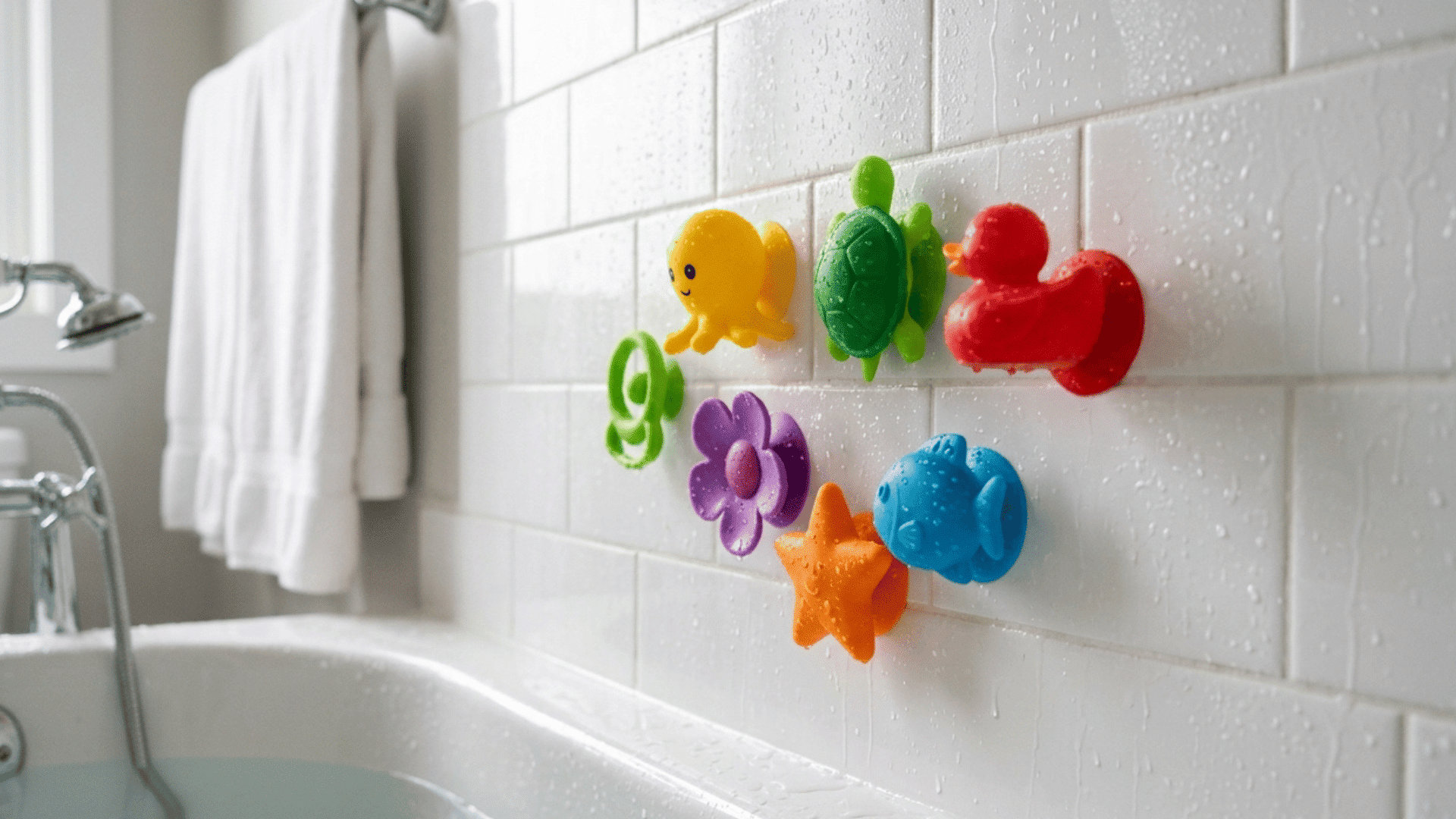
Toys that stick to the tub wall are fun for baby to pull off and press back on repeatedly. This simple action helps build hand strength while keeping bath time entertaining.
The repetitive pulling and pressing also gives baby an early, low-stakes way to practice cause-and-effect learning.
Sticking a few at different heights also encourages baby to reach and stretch, adding a bit of movement to the fun.
28. Foam Bath Shapes
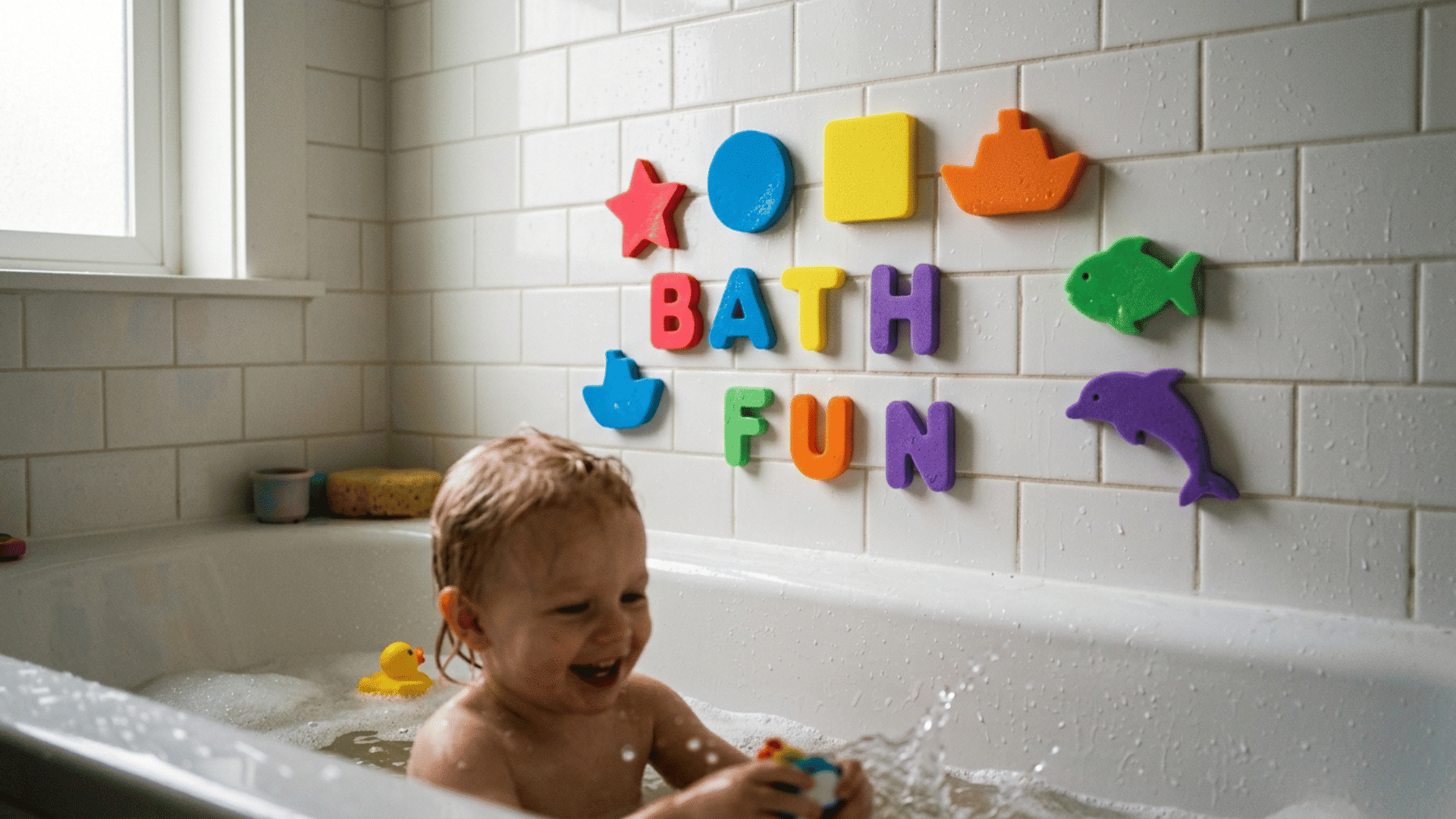
Soft foam shapes stick to wet tub walls and are simple for baby to touch, move around, and rearrange.
They’re lightweight and easy to grip, even for hands still learning to hold onto slippery objects. Rinse and air-dry them fully after each use to keep the foam from breaking down too quickly.
Parenting Tip: Keep an eye out for foam that stays firm rather than crumbling, since soggy pieces can become a choking hazard.
Soft Books, Mirrors, and Stacking Toys
These toys support early looking, tracking, and hand skills while keeping playtime calm and easy to manage.
They’re especially handy for quieter stretches like right after a nap or before bed, when baby is alert but not looking for high-energy stimulation.
29. Cloth Baby Books
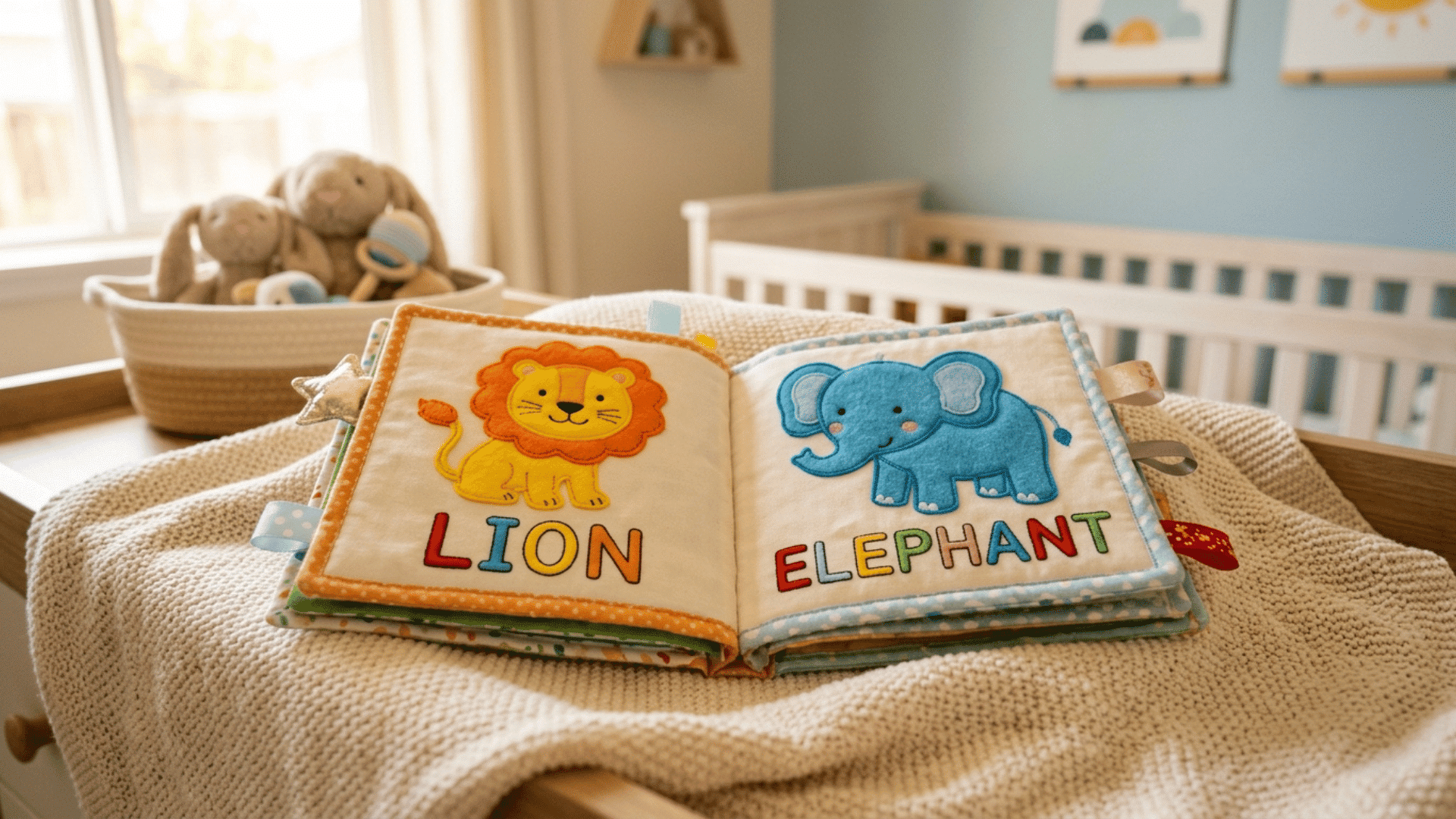
Soft, chewable pages with bright, simple pictures make an easy first book for little hands to hold and turn. Since they’re washable and safe for mouthing, they hold up well to daily wear and tear.
Many also include crinkle sounds or hidden textures on each page, giving baby another reason to keep flipping through.
30. Unbreakable Baby Mirror
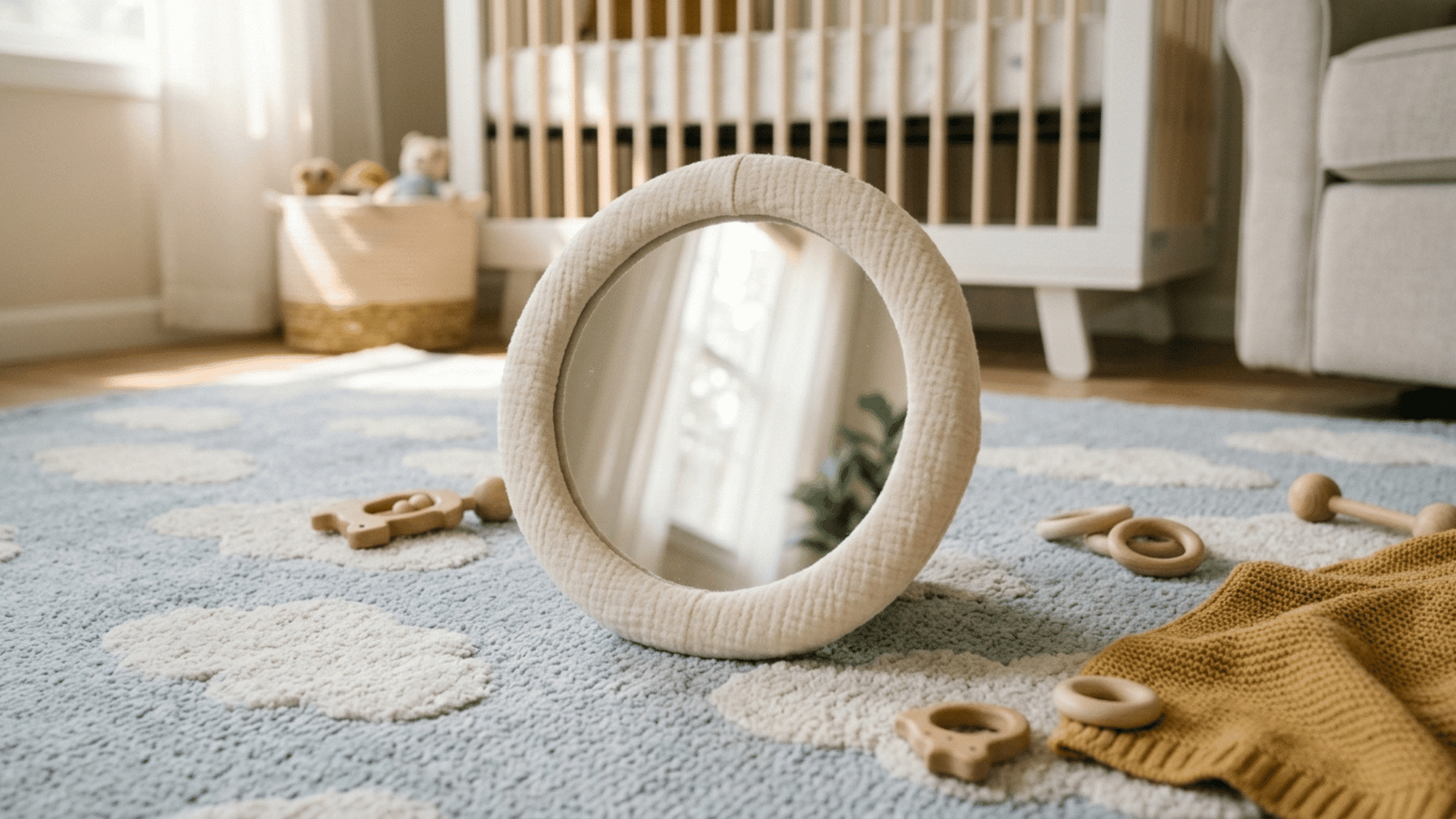
Babies are naturally drawn to faces, and a safe, shatterproof mirror gives them a whole new one to study up close.
This is also a great way to encourage baby to prop up during tummy time; some even come with a stand, so baby can enjoy independent mirror time while lying on their back too.
Watching their own expressions and movements in real time is an early step toward self-awareness, even if baby doesn’t quite grasp it’s their own reflection yet.
31. Soft Stacking Rings
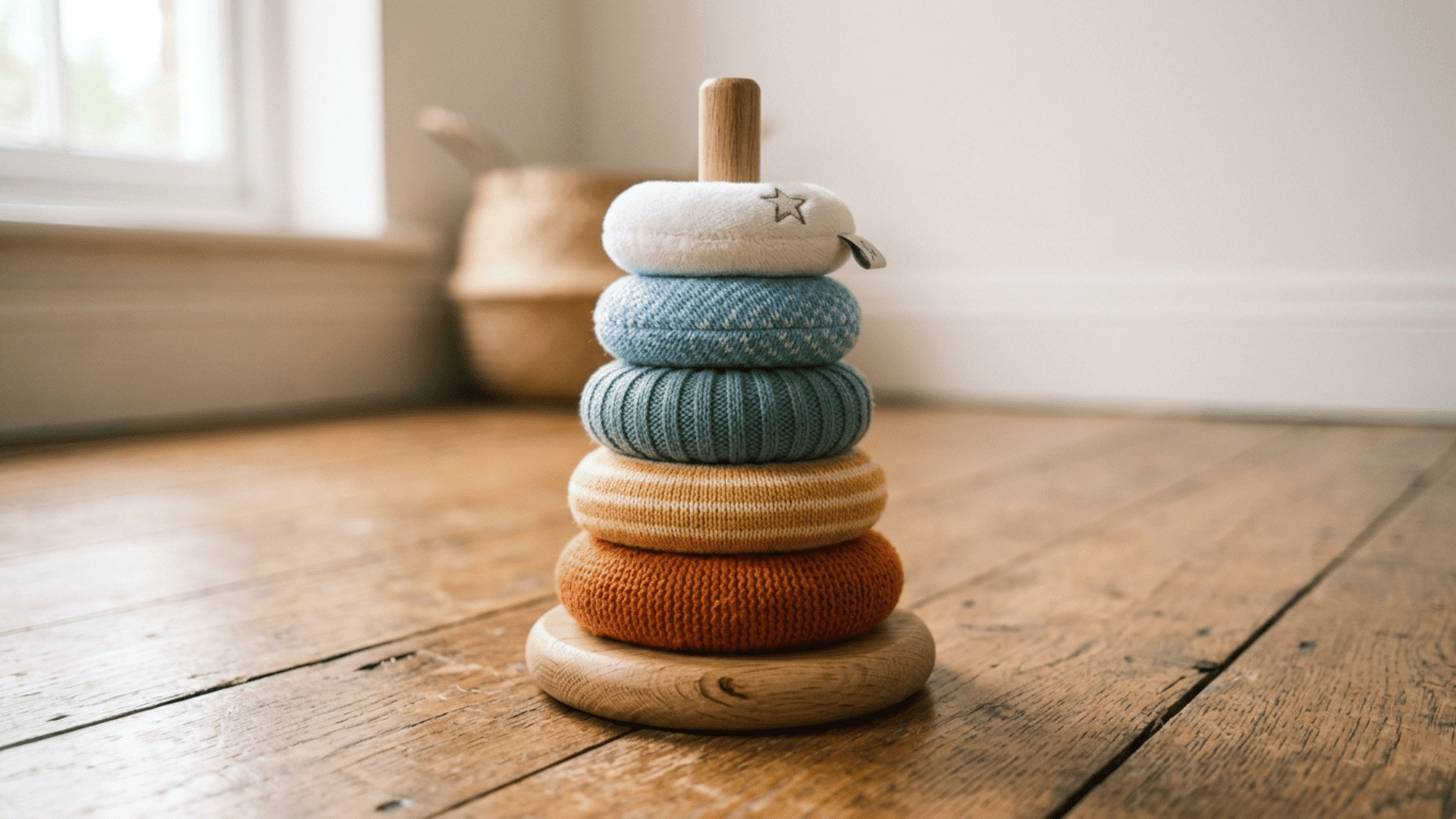
Large, soft rings on a sturdy base help baby practice reaching, grabbing, and dropping items with growing control.
At this age, baby may not stack them in order yet, but pulling them off is a great time of fun for them. A sturdy, weighted base also keeps the whole toy from tipping over each time baby tugs at a ring.
The varying ring sizes also introduce an early sense of big versus small, long before baby can name the concepts.
32. Nesting Cups
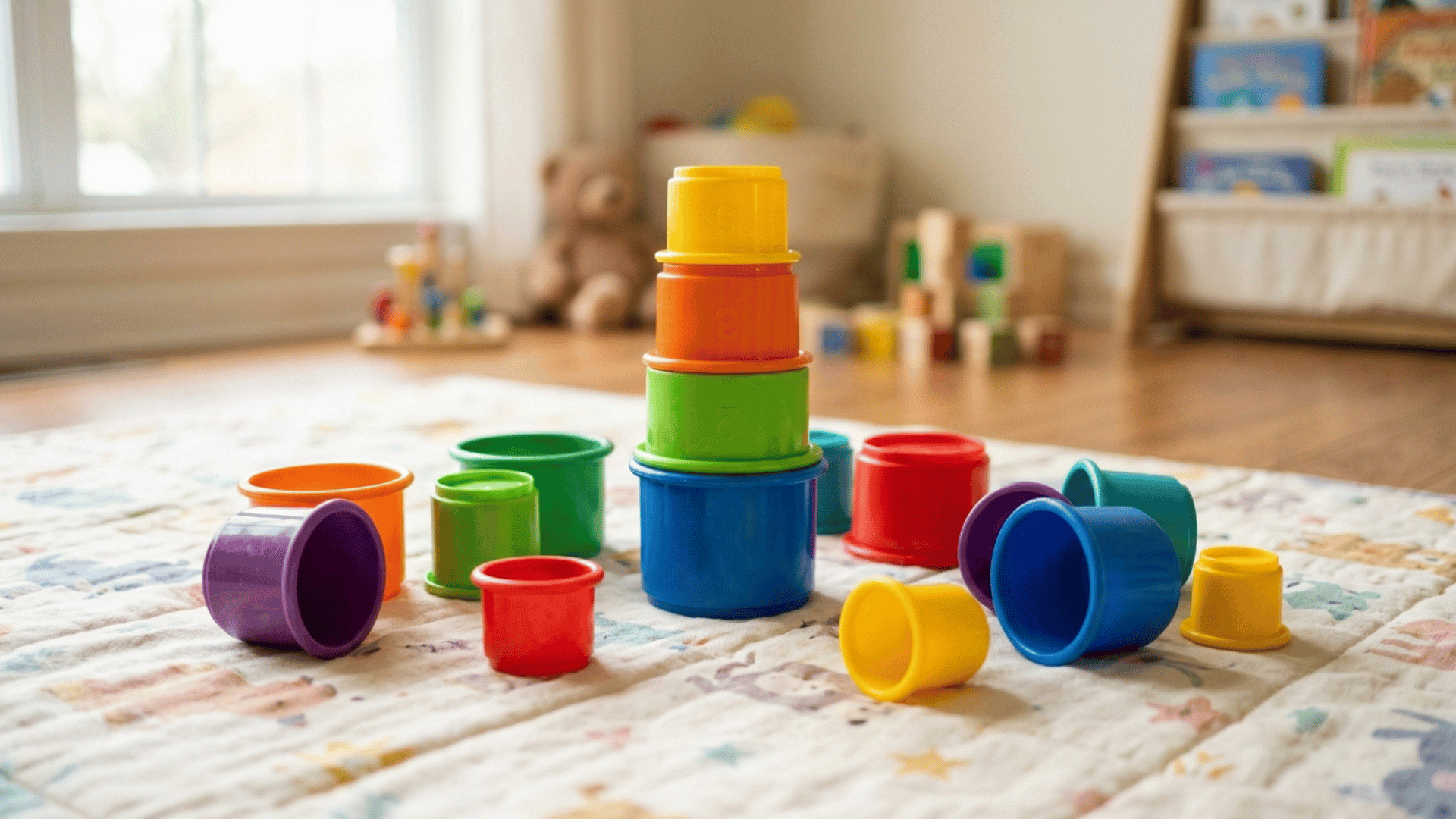
Cups that fit inside one another are simple for baby to handle and bang together,
They’re also easy to take along for on-the-go play since there are no small loose pieces. As baby gets a bit older, the same set can double as an early lesson in stacking and sizing.
Bath time is another natural fit for these cups, since baby can practice filling, pouring, and dumping water between them.
33. High-Contrast Board Books
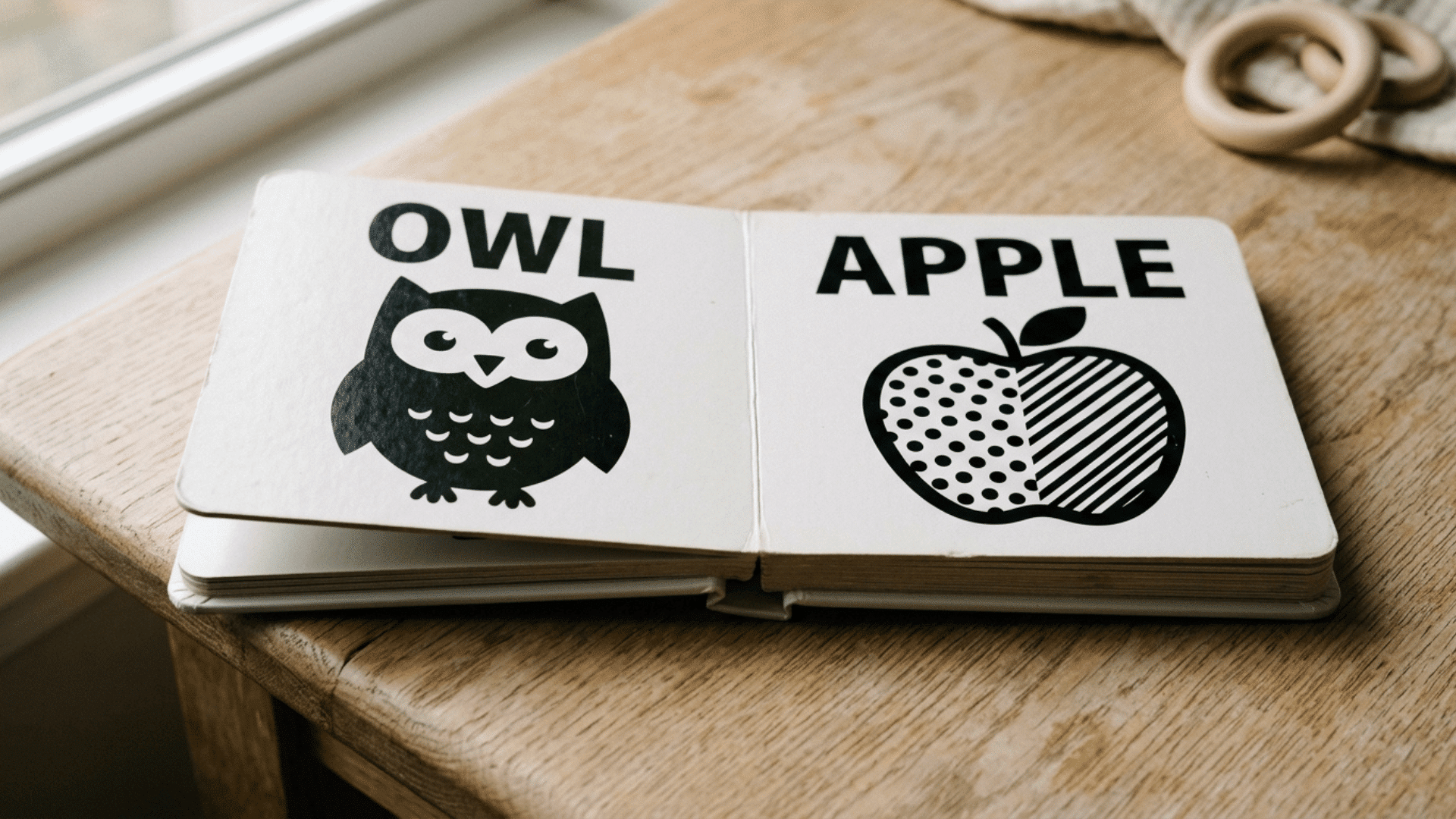
Bold black-and-white or bright, simple images are easier for baby’s developing eyes to focus on and follow. They help encourage visual tracking during quiet reading moments.
Thick board pages hold up well to baby’s grabbing and occasional chewing without tearing.
Rounded corners also make the book safer to hold close to baby’s face during shared reading time.
34. Soft Fabric Stacking Blocks
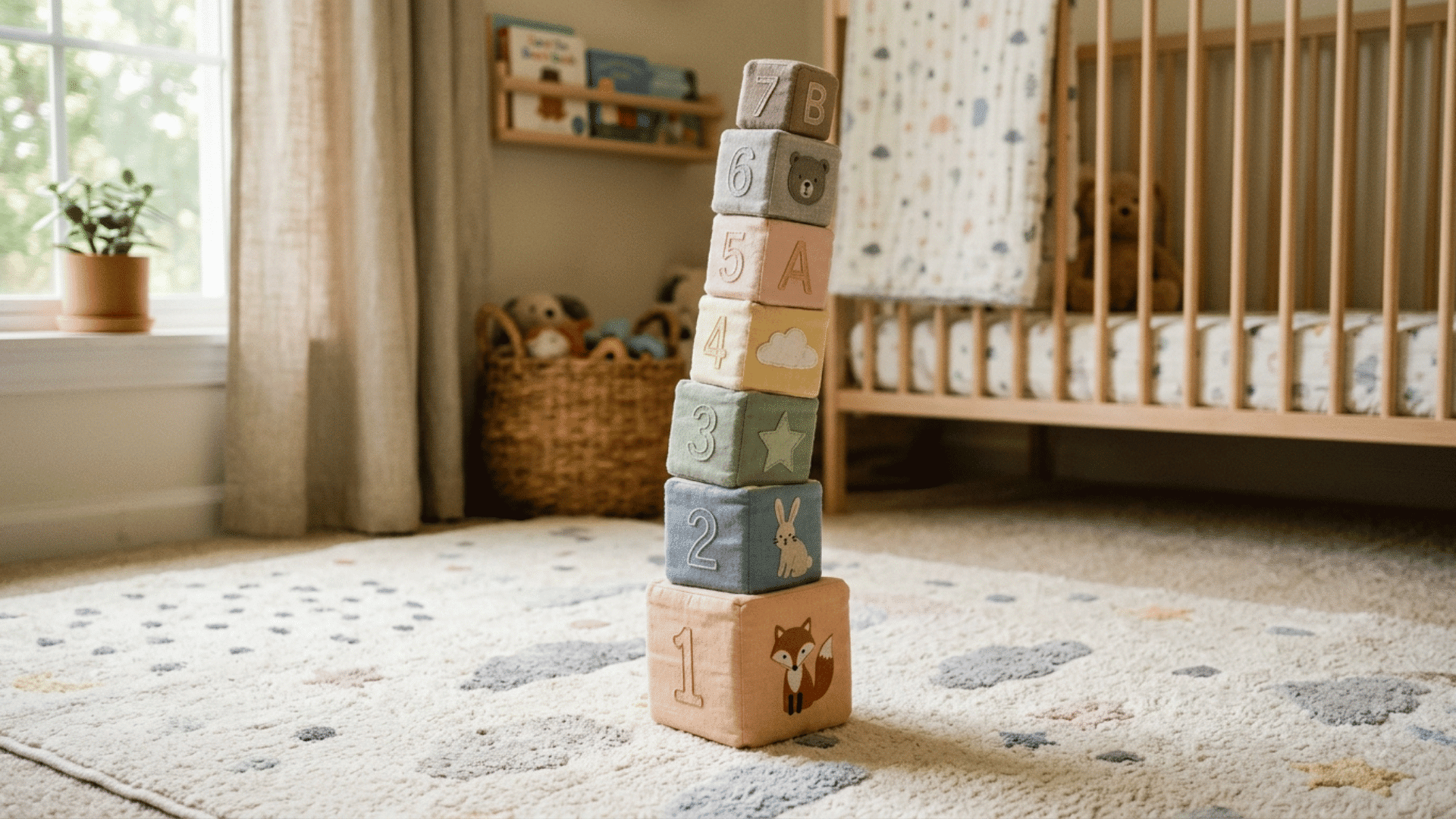
Lightweight, safe blocks let baby practice holding, banging, and attempting to stack without any risk if they get dropped.
Their soft texture also makes them comfortable for baby to chew on between stacks. Because they’re so lightweight, they’re also easy for baby to hold up and offer back and forth during early social play.
Melissa & Doug is a trusted brand for soft books, stacking rings, and wooden toys that toddlers love.
35. Crinkle Mirror Book
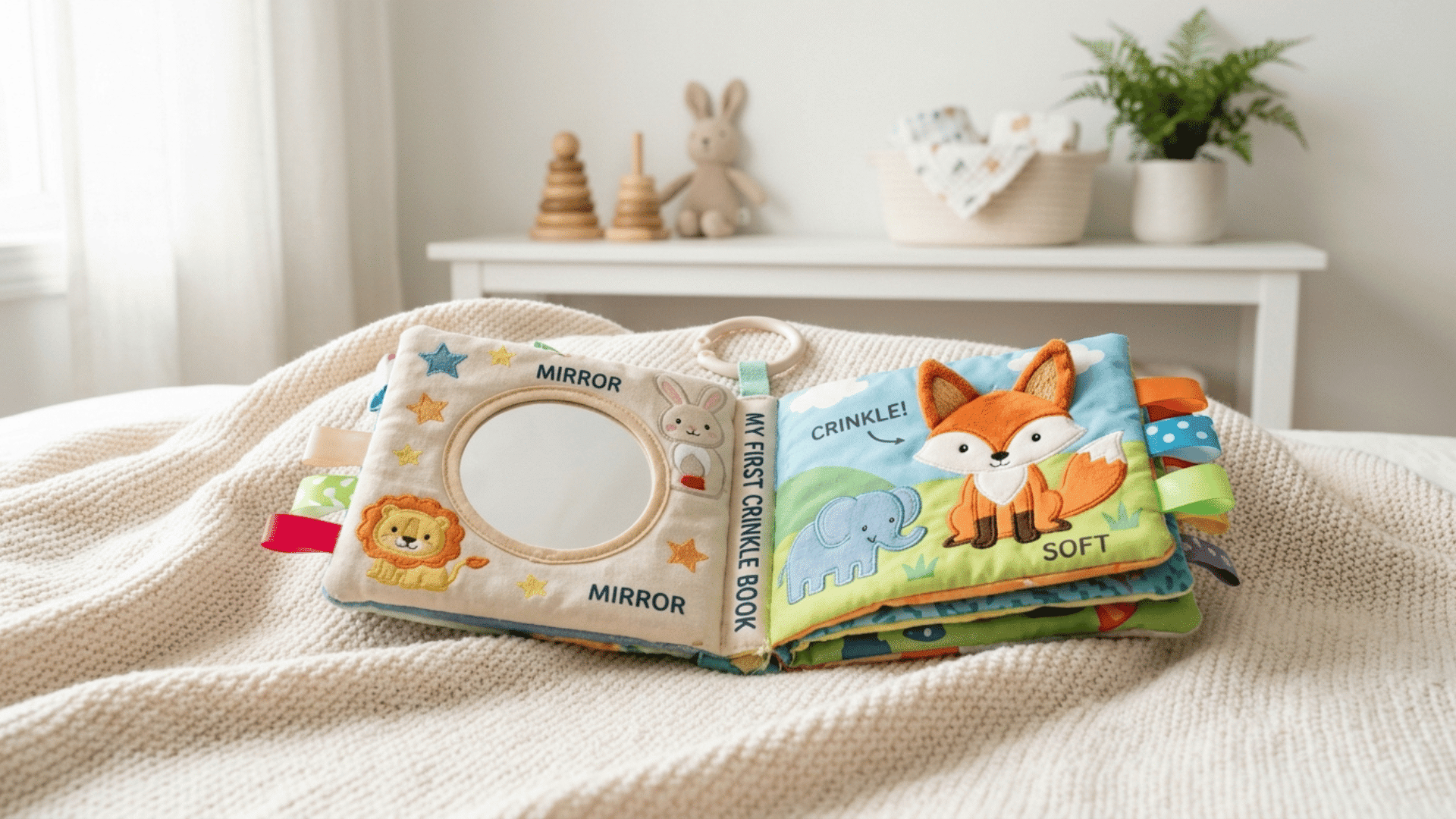
Combining a mirror, a crinkle sound, and soft-textured pages, this toy covers a few types of play in one simple item. It’s a good pick for babies who enjoy a bit of everything during a single play session.
The mix of sound, reflection, and texture also makes it easy to hold baby’s interest a little longer than a single-feature toy might.
It’s also small enough to fit in your bag, which makes travel easy for you.
How to Choose the Right Toys From this List for Your Baby?
It’s normal to feel unsure where to start, but it isn’t that complicated. A good first step is watching what your baby naturally reaches for during playtime.
Some babies are drawn to sound, others to texture, and some simply want anything they can get into their mouth. Picking toys from different categories works better than grabbing a whole set from just one type.
It also helps to think about the baby’s current stage rather than what’s trending. There’s no need to buy everything at once.
A handful of well-chosen toys, introduced gradually, often keeps the baby more engaged than a big pile all at once.
Safety Tips for Choosing Toys for a 6-Month-Old
Since most toys end up in the baby’s mouth at this age, a quick safety check before buying can save a lot of worry later.
- Check for small parts: Avoid anything that can fit through a toilet paper roll, as it’s a choking risk.
- Look for non-toxic materials: Choose toys labeled BPA-free, phthalate-free, and made with food-grade silicone or paint.
- Inspect for loose parts: Skip toys with buttons, eyes, or strings that can be pulled off and swallowed.
- Avoid long cords or ribbons: Anything longer than a few inches can pose a strangulation risk.
- Choose the right size: Toys should be bigger than baby’s fist to prevent choking hazards.
- Test durability: Pick toys that won’t crack, splinter, or break apart with regular chewing and dropping.
- Clean toys regularly: Wash or wipe down toys often, since most will end up in baby’s mouth daily
The American Academy of Pediatrics lists most of this same advice for parents shopping for infants and young kids.
Wrapping it Up
Choosing toys for a 6-month-old is not at all confusing once it’s clear what this stage is really about: grabbing, chewing, and figuring out cause and effect.
From sensory balls and teethers to bath toys and soft books, these options above cover the kind of play that actually matches where baby is right now, while the safety tips help narrow things down with confidence.
So instead of thinking which toys are worth buying, the next step is simple: pick two or three from the list above that fit baby’s current stage, and watch how quickly they become daily favorites.