





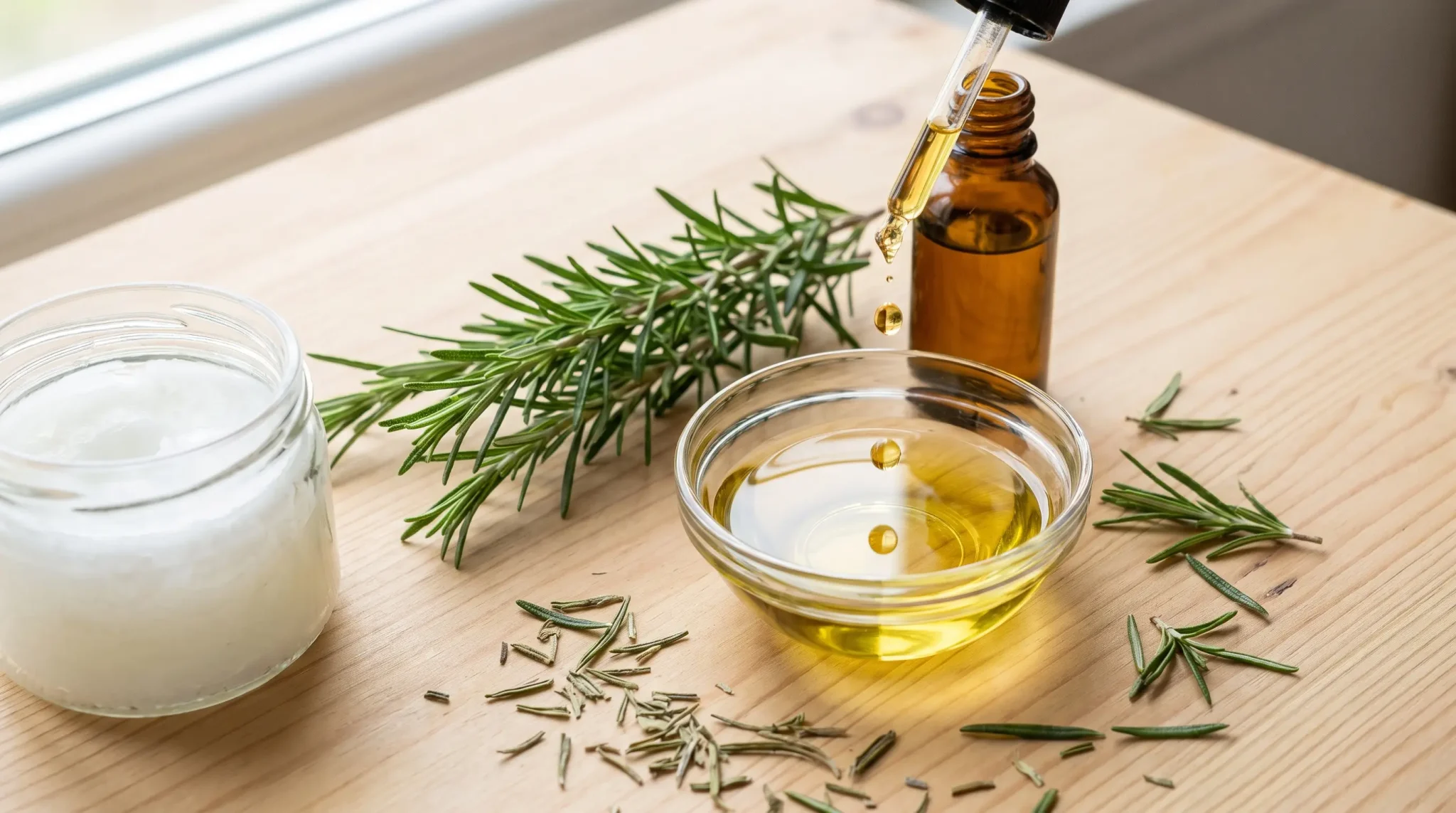
If you’ve surfed the internet for the benefits of rosemary oil and are now in possession of this well-loved product, you might be wondering how to use it. A quick search may feel confusing, as some sources warn against using the oil on its own, and others may suggest direct application.
The confusion arises because there are different types of rosemary products. If you have bought rosemary essential oil, then it is important to dilute it before use. Find out how through our guide.
What Is Rosemary Oil
When a product says “rosemary oil”, it can refer to multiple different types of products, such as an essential oil, oil infusion, oil blend, or serum. In terms of formulation, the most potent product out of these is the rosemary essential oil.
Rosemary essential oil refers to a 100% pure concentrated extract derived from the leaves and flowers of the rosemary plant. It is much stronger than the other types of rosemary products and must be diluted before it is used. A rosemary oil infusion or a rosemary hair/skin blend may be applied directly to the skin, although it is always good to check the label for confirmation first.
Why Do You Need to Dilute Rosemary Oil
You might be wondering what happens if you don’t dilute rosemary essential oil. Undiluted essential oil, from any plant, can be quite irritating when applied topically to the skin or hair. Rosemary essential oil is also highly concentrated, and diluting it allows you to apply the product directly onto your skin.
Diluted rosemary essential oil is not “weaker” and still has the same benefits as undiluted essential oil. Think of it as a fruit juice concentrate; you wouldn’t enjoy the syrup without mixing it with a liquid first.
What Are Other Forms of Rosemary Oil
You will find the following rosemary oil products other than rosemary essential oil.
Rosemary Oil Infusion: This refers to a carrier oil being “infused” with rosemary and is often ready to use without dilution
Pre-Formulated Rosemary Hair Oil: A rosemary hair oil may already be diluted; check the ingredients list to confirm if it is ready to use
Rosemary Serum: Rosemary products labelled as a “serum” are already formulated with other ingredients and can be applied in accordance with product instructions.
To be absolutely sure about the product you have, your best bet is to check the label and ingredient list. An essential oil will always contain rosemary essential oil as its ingredient, and may also be called 100 percent pure essential oil. If you notice multiple ingredients in a list, then it is most likely not an essential oil and does not have to be diluted.
What Can You Dilute Rosemary Essential Oil With
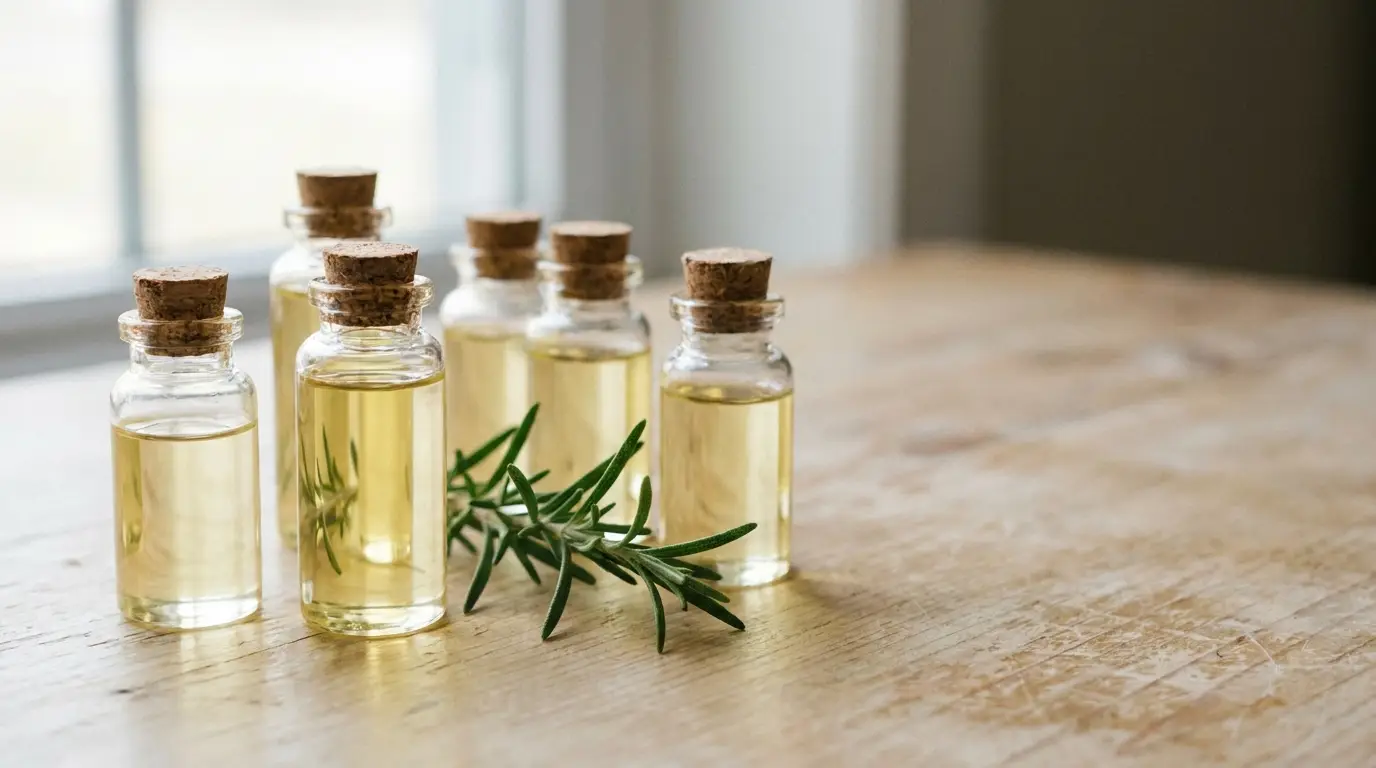
There are many different mediums you can use to dilute rosemary essential oil. The most common options are using a carrier oil or another personal care product.
Carrier Oils
Carrier oils refer to non-volatile plant oils such as jojoba, coconut, or almond oil. These oils are safe to use on the skin alone, and typically don’t offer much targeted treatment besides hydration and conditioning. These oils act as “bases” for your dilution. Each carrier oil has its own unique texture and scent, which you can use to decide the texture and feel of your blend.
The most versatile carrier oils are jojoba oil, fractionated coconut oil, grapeseed oil, argan oil, and sweet almond oil. You can experiment with these different oils and see which you like the best.
Other Products
You can also dilute rosemary essential oil with other products such as a hair oil, your shampoo, conditioner, or even with water. When using water-based products as your dilution base, make sure to shake your bottle before each use to disperse the essential oil properly.
How to Dilute Rosemary Oil
To dilute rosemary essential oil, start by picking your base. It can be another oil, another product, or water. With rosemary essential oil, it is recommended to measure the amounts of product you use so that the mixture is not too concentrated.
Typically, for skin and hair applications, you should aim for 1-2 percent dilution. At 1 percent, this means 1 part rosemary essential oil and 99 parts base. For a 2 percent dilution, you should measure 2 parts rosemary essential oil and 98 parts carrier.
Don’t try to use more rosemary essential oil for a stronger mixture. This will not enhance your results and may cause irritation rather than benefit.
How to Dilute Rosemary Oil: The Bottom Line
Pure rosemary essential oil should always be diluted before applying it to the skin or scalp. First, ensure that you have the right kind of rosemary oil; once you do, you can add any carrier oil of your choice. The goal of dilution is to make the essential oil tolerable for topical application.
If you’re buying bulk rosemary oil and want to dilute it in big batches, you might want to contact and consult a cosmetic chemist or a formulator to ensure you do it properly. After all, diluting rosemary essential oil for personal use vs. commercial use is going to be vastly different. Even a minor imbalance can ruin a whole batch.