


Ever looked at a drawing and wondered how the artist made it feel so alive? It all comes down to the 7 elements of art drawing, the foundation every great artwork is built on.
If you’re starting or brushing up on the basics, understanding these elements makes a real difference. And the good news? Learning these elements doesn’t require any fancy skills or expensive art school.
You need to know what they are and how they actually work together. Master them one at a time, and you’ll notice your drawings improving faster than you’d expect. Let’s break it all down simply.
What are the 7 Elements of Art Drawing?
Think of the 7 elements of art as your artist’s toolkit. Every drawing, from a quick sketch to a detailed masterpiece, uses these building blocks in some way.
Artists rely on them to create structure, add depth, and give their work meaning. Once you understand each one, you’ll start seeing them everywhere.
They are important for students because:
- They build a strong drawing foundation by giving students a clear structure to work within from the very beginning.
- They improve creativity by helping students understand how to use each element intentionally rather than guessing.
- They help students understand composition, making it easier to arrange objects and figures in a drawing that feels balanced.
- They make learning art easier overall because once the elements are understood, everything else in art starts to make more sense.
- strengthen observation skills by encouraging students to notice details like lines, shapes, textures, and light in everyday objects.
The 7 Elements of Art Drawing: Complete Details
Understanding the 7 elements of art is the foundation of better drawing and visual expression. These basic elements help artists create depth, balance, and meaning in every piece.
1. Line
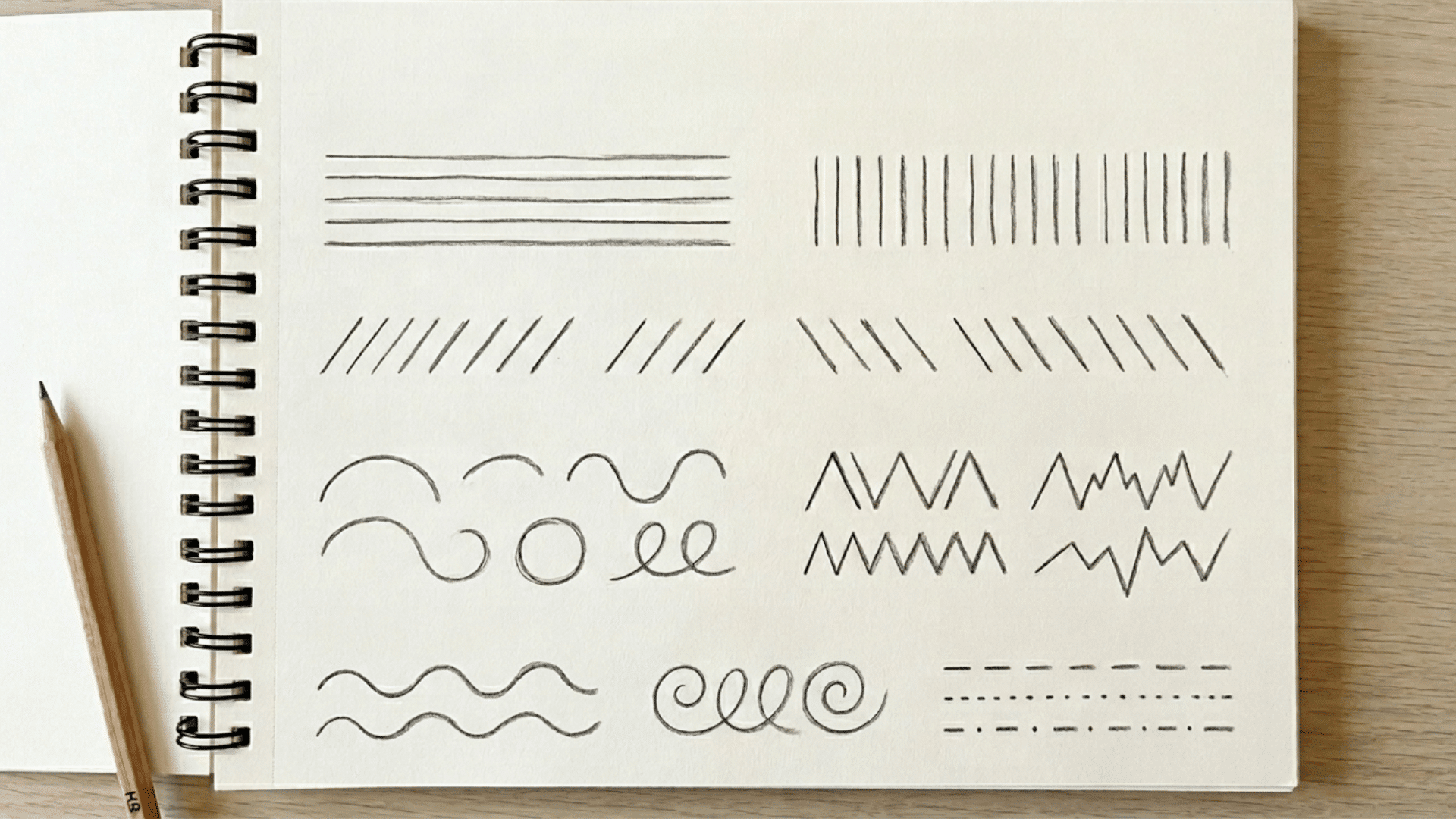
Line is the very first element most artists learn, and honestly, it’s the one you’ll use the most. Every drawing starts with a line, whether it’s a rough sketch or a detailed artwork.
A line is a mark made by a moving point across a surface. It has length and direction but very little width. In drawing, lines are made using pencils, pens, charcoal, or even digital tools.
There are more types of lines than most beginners realize, and each one serves a different purpose:
- Straight Lines: Clean, precise, and direct. Commonly used in architecture, geometric shapes, and technical drawings.
- Curved Lines: Soft and flowing. Used for human figures, plants, and landscapes.
- Zigzag Lines: Diagonal lines going back and forth. Great for textures like grass, fur, and jagged surfaces.
- Horizontal Lines: Lines running left to right. Found in horizons, landscapes, and peaceful scenes.
- Vertical Lines: Lines running straight up and down. Used for tall buildings, trees, and powerful compositions.
- Diagonal Lines: Angled lines across the page. Perfect for action scenes, speed, and dynamic tension.
2. Shape
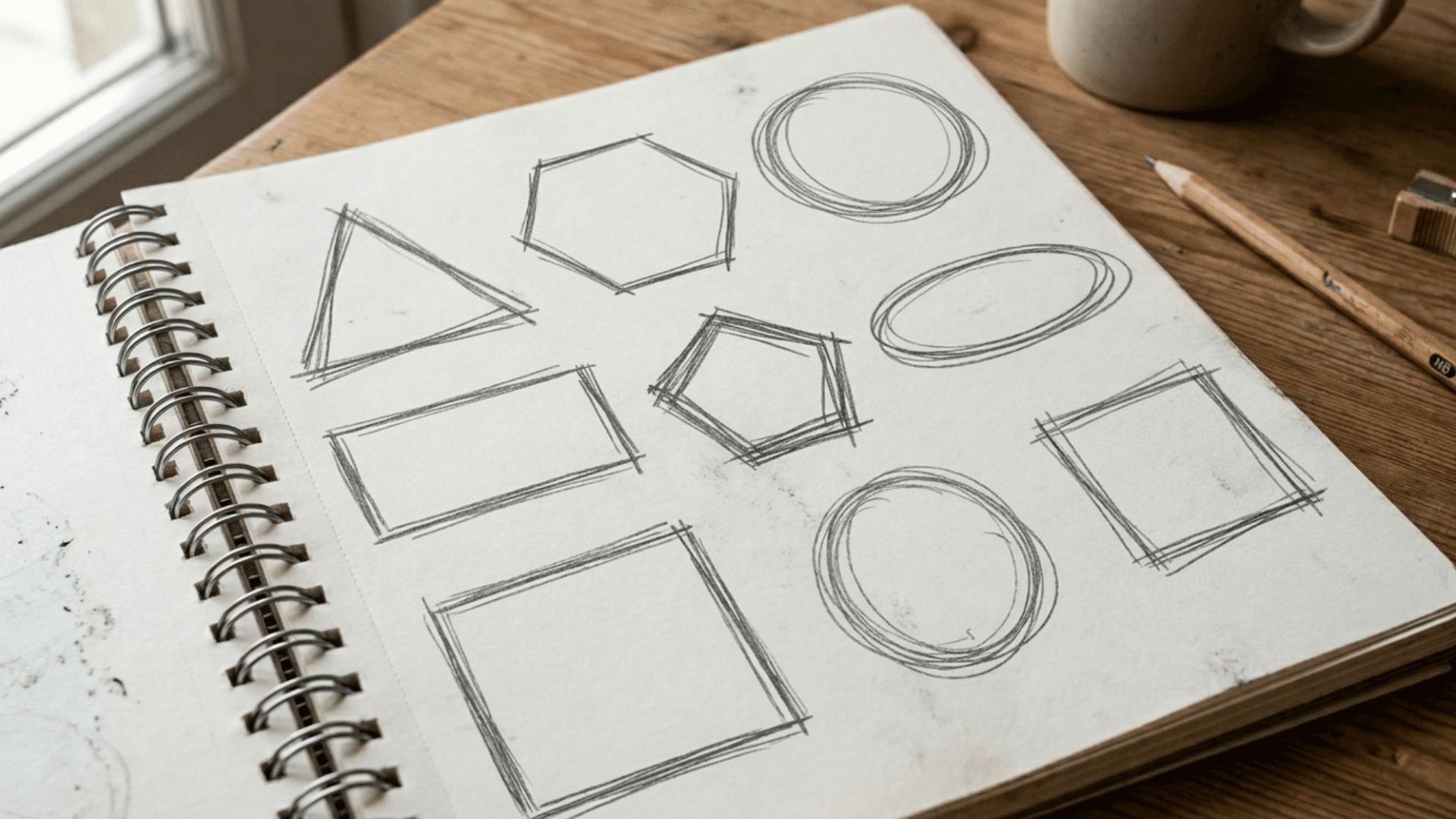
Shape is everywhere in art. Once you start noticing shapes in drawings, you really can’t stop seeing them. It’s one of those elements that quietly holds everything together.
A shape is a 2D enclosed area created by lines. When a line connects back to itself, it forms a shape. Shapes have length and width but no depth.
They can be simple or complex, bold or subtle. In drawing, shapes are used to build figures, objects, and compositions. There are four main types of shapes artists work with. Each one plays a different role in a drawing.
- Geometric Shapes: Clear, defined edges with mathematical precision. Commonly used in architecture, graphic design, and pattern-based artwork.
- Organic Shapes: Freeform, natural, and irregular. Found in leaves, clouds, rocks, and human figures.
- Positive Shapes: The actual object or figure being drawn. It’s the main subject and focal point of the artwork.
- Negative Shapes: The space around and between positive shapes. Used to create balanced compositions and improve accuracy in drawing.
3. Form
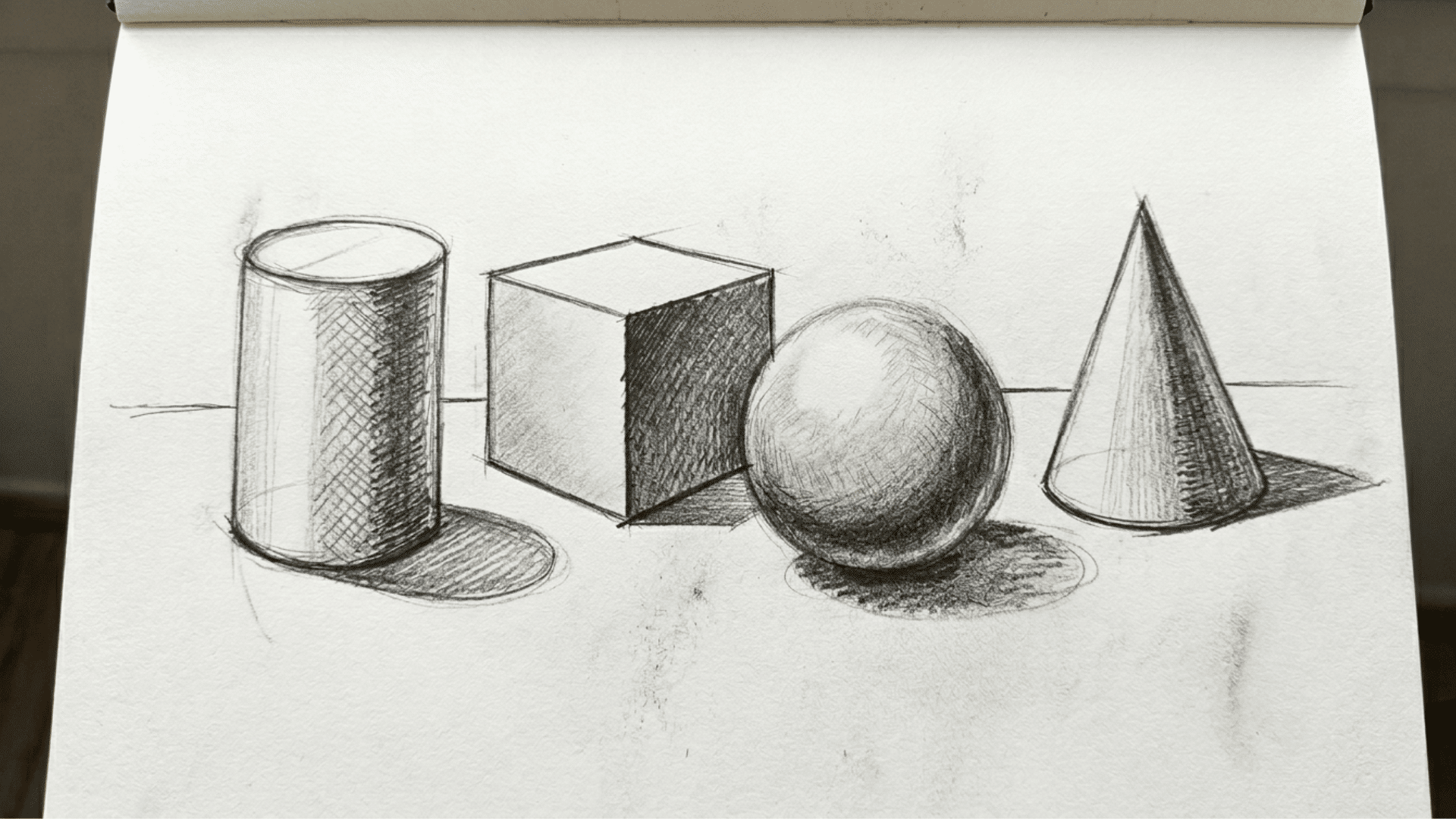
Form takes your drawing from flat to three-dimensional. It’s what makes objects look real and solid on paper. Form is basically the 3D version of shape. While a shape is flat and two-dimensional, form has depth, volume, and mass. A circle becomes a sphere. A square becomes a cube.
Like shapes, form can exist in two ways: actual form and implied form. Actual form is found in sculptures, architecture, and other physical objects that you can touch and walk around. In contrast, implied form is used in drawing, painting, and digital art to create the illusion of three-dimensional depth on a flat surface.
- Sphere: A circle with shading that makes it look round and three-dimensional, like a ball.
- Cube: A square taken into 3D space with visible sides, edges, and corners.
- Cylinder: A tube-like form used for objects like cans, arms, or tree trunks.
- Cone: A form that tapers from a circular base to a point, like a party hat or a mountain tip.
4. Space
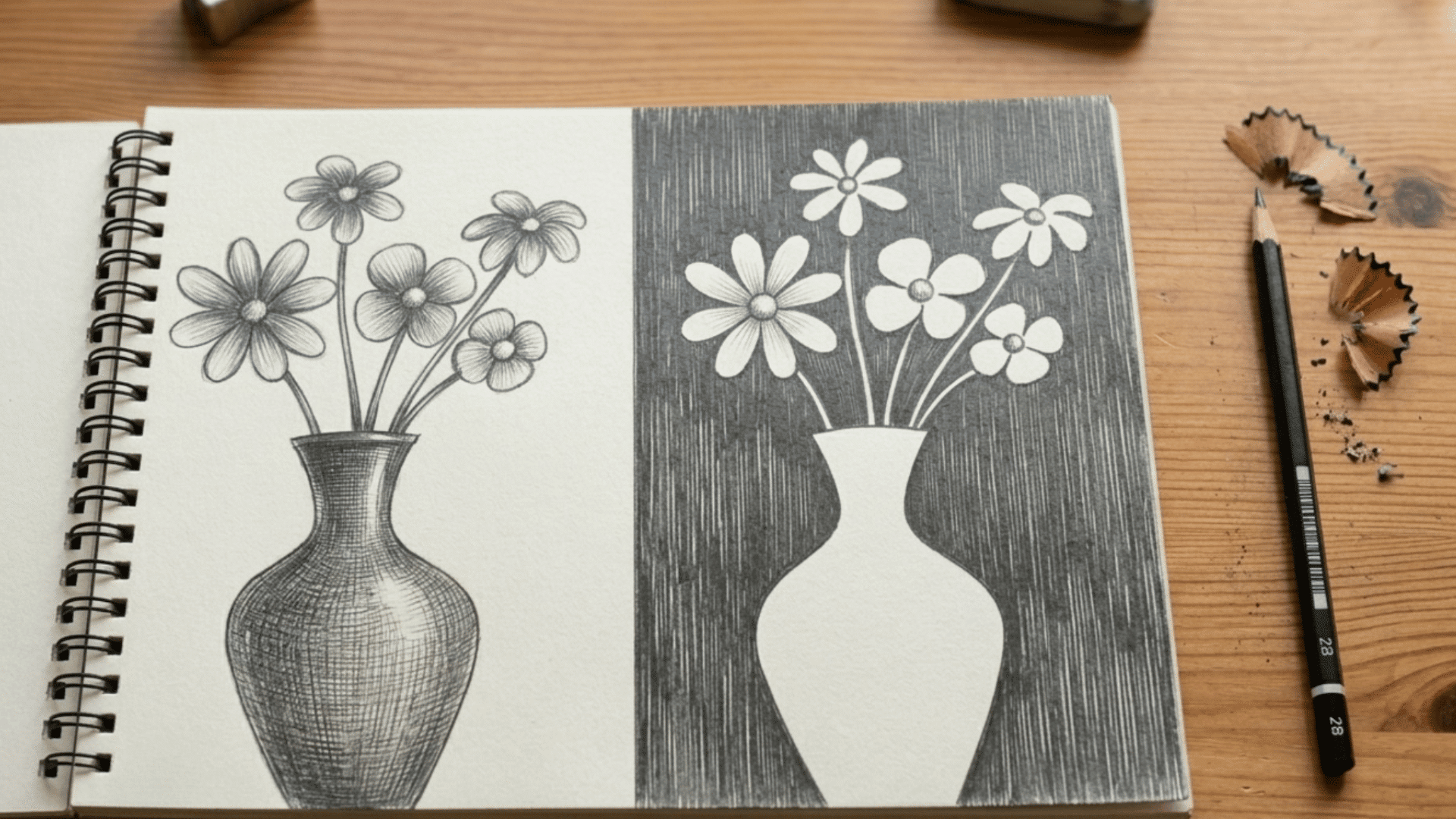
Space is one of those elements that beginners often overlook, but it makes a massive difference in how a drawing feels.
It is the area around, between, and inside objects in artwork. It’s not just an empty background. Space is an active part of the composition.
It tells the viewer what’s important, what’s in the background, and how objects relate to each other. Every drawing has space, and knowing how to use it separates a flat drawing from one that feels alive.
- Positive space: This is the space taken up by the main subject or objects in the drawing. It’s what you’re actually drawing.
- Negative space: the space around and between the subjects. Intentionally using negative space makes compositions feel more balanced and professional.
5. Texture
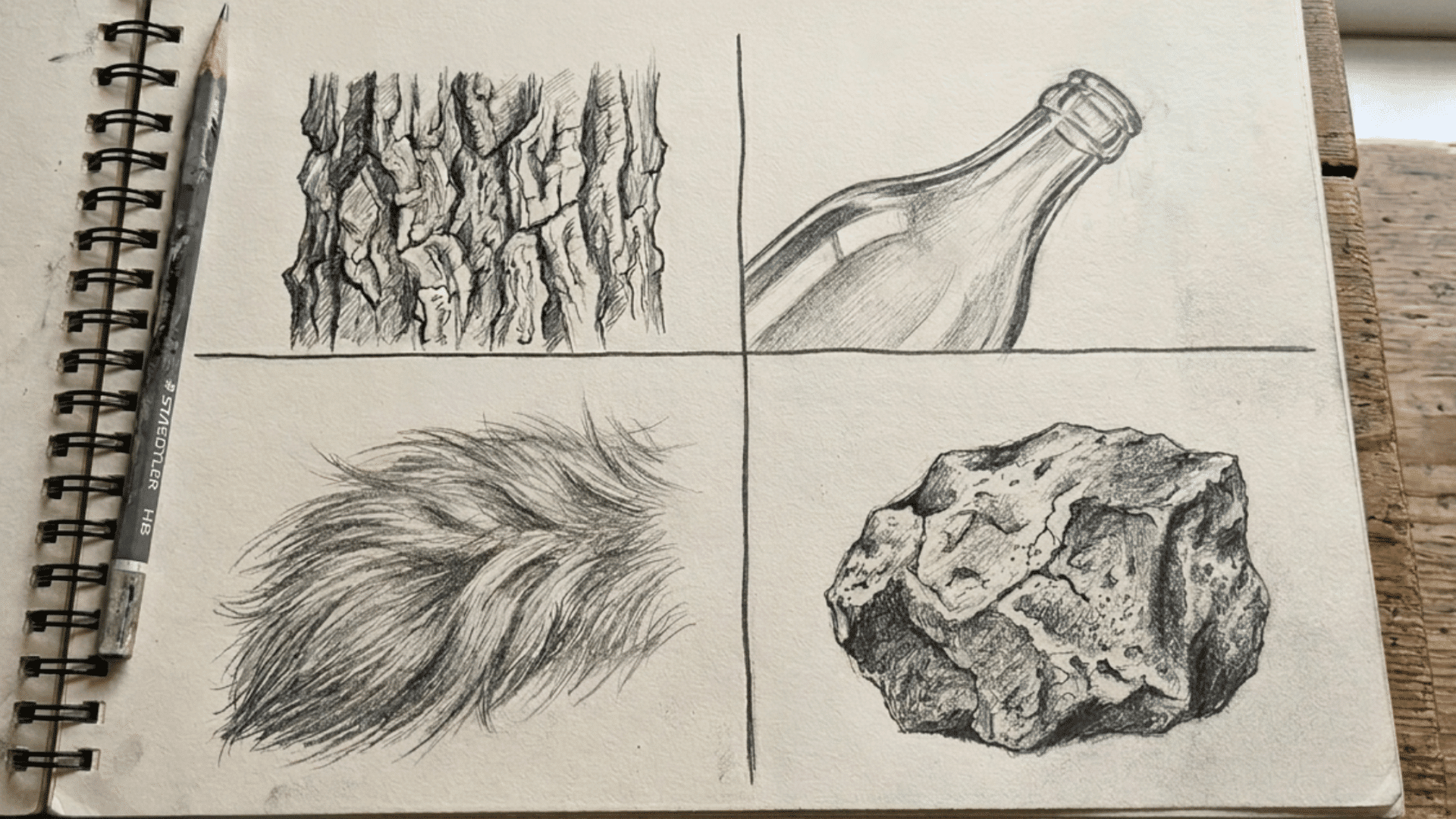
Texture is what makes a drawing feel real, even when it’s just lines on paper. Texture is the surface quality of objects in a drawing. It describes how something would feel if you could touch it. In real life, surfaces feel different.
In drawing, artists recreate that feeling using marks, patterns, and techniques. Common texture qualities include:
- Rough: Think tree bark, gravel, or cracked walls. Rough textures use irregular, varied marks.
- Smooth: Skin, glass, or polished metal. Smooth textures use even, consistent shading with few visible marks.
- Soft: Fur, fabric, or clouds. Soft textures use light, feathery strokes that blend gently.
- Hard: Rocks, wood, or metal edges. Hard textures have sharp, defined lines and strong contrast.
6. Value
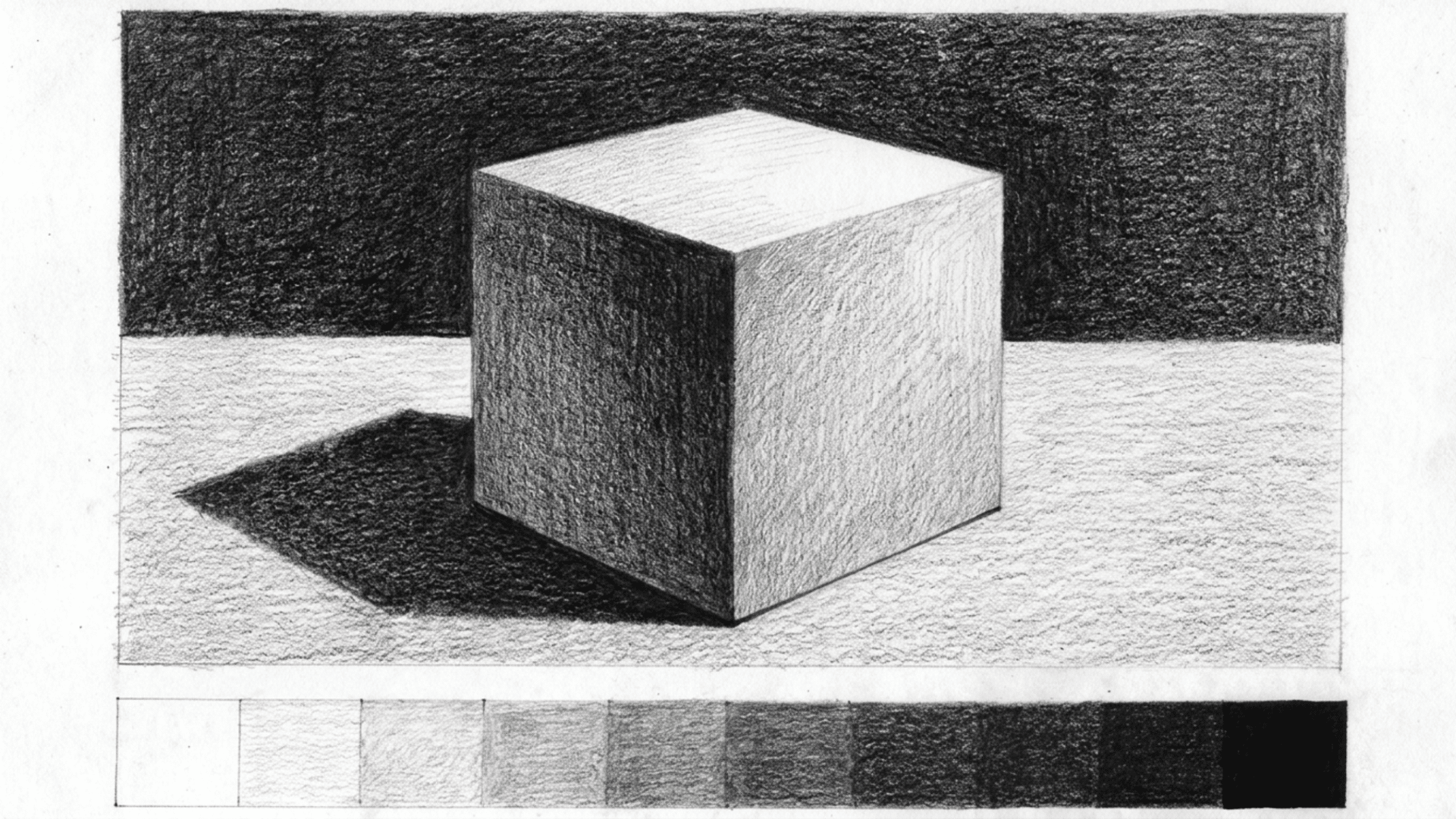
Value refers to the lightness or darkness of a tone in a drawing. It has nothing to do with color. Every mark you make is either lighter or darker than the one next to it.
A value scale runs from pure white to pure black, with every shade of grey in between. Practicing a value scale trains your eye to see tonal differences clearly and is one of the best exercises for beginners.
- Creates contrast: Strong differences between light and dark values make parts of a drawing stand out. Contrast draws the eye to the most important areas.
- Adds depth: Darker values tend to recede while lighter values come forward. Using this in a drawing creates a natural sense of three-dimensional space.
- Makes drawings look realistic: Realistic drawing is really just accurate value. When the lights and darks are placed correctly, the brain reads the drawing as real, even if the lines aren’t perfect.
7. Color
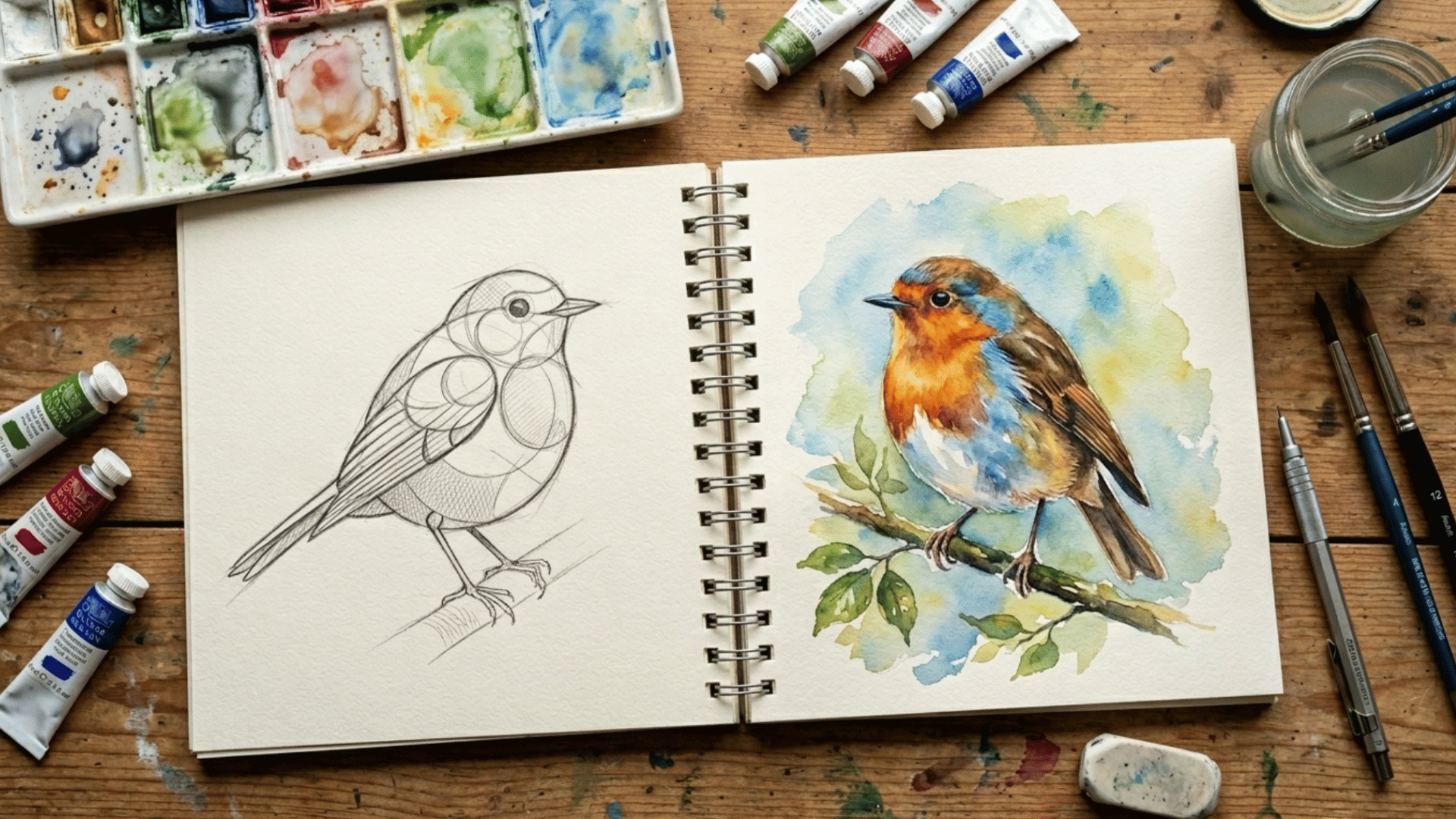
Color is created when light reflects off the surfaces and hits our eyes. Different surfaces absorb and reflect different wavelengths of light, and that’s what we see as color.
In drawing and painting, color is one of the most powerful tools an artist has. It can make something feel warm or cold, calm or intense, happy or heavy. Basic color concept includes:
- Primary colors: Red, blue, and yellow. These are the base colors that can’t be mixed with other colors. Every other color starts here.
- Secondary colors: Orange, green, and purple. These are made by mixing two primary colors.
- Warm colors: Reds, oranges, and yellows. Warm colors feel energetic, bold, and inviting. They tend to pop forward in a composition.
- Cool colors: Blues, greens, and purples. Cool colors feel calm, distant, and serene. They tend to recede in a composition.
The 7 Principles of Art Drawing Explained Simply
These core principles help bring structure and meaning to your drawings. They show how different elements work together to create a visually clear and interesting result.
| Principle | What It Means | How It Helps in Drawing |
|---|---|---|
| Balance | Even distribution of visual weight | Keeps the artwork stable and not too heavy on one side |
| Contrast | Difference between elements (light/dark, rough/smooth) | Adds depth and makes parts stand out |
| Emphasis | Focal point that draws attention | Guides the viewer’s eye to the main subject |
| Movement | Path the viewer’s eye follows | Creates flow and direction in the artwork |
| Pattern | Repetition of shapes or elements | Adds consistency and decorative detail |
| Rhythm | Repeated elements with variation | Creates a sense of visual beat or flow |
| Unity | All parts working together as one | Makes the artwork feel complete and connected |
How Beginners Can Practice the 7 Elements of Art
These simple practices are beginner-friendly and can be done with just a pencil and paper.
- Start by drawing everyday objects using only lines. Focus on outlines, contours, and line weight to build confidence and control.
- From there, move into creating drawings using basic shapes like circles, squares, and triangles. Build up simple scenes by combining them in different ways.
- Once you’re comfortable with shapes, practice shading on simple forms to understand how value works. Try going from light to dark on a plain sphere or cube.
- Next, study textures around you and try recreating them on paper. A rough wall, a soft pillow, or a wooden surface all make excellent references.
- Finally, set up a basic still life using everyday objects from around your house.
Helpful PDFs and Learning Materials to Try
Learning the easy 7 elements of art drawing becomes much easier when you have the right resources at hand. If you’re a student, a teacher, or just someone picking up a pencil for the first time, these materials can seriously speed up your progress.
- Elements of Art Worksheet – Art Projects for Kids: Provides a simple printable worksheet that introduces the seven elements of art through drawing activities and visual examples suitable for kids and beginners.
- Elements of Art Printables – Superstar Worksheets: Offers classroom-friendly posters and worksheets that explain line, shape, form, space, texture, value, and color in a clear and easy-to-follow format.
- Elements of Art and Principles of Design Worksheets – Teachers Pay Teachers: offers a large collection of free worksheets, activities, and classroom resources focused on the elements of art and principles of design.
- Free Elements of Art Worksheets – A Space to Create Art:This resource offers free printable worksheets and activities that help students learn the seven elements of art: line, shape, form, space, texture, value, and color.
Conclusion
And that’s a wrap on the 7 elements of art drawing: line, shape, form, space, texture, value, and color. Seven things that seem simple but can completely change the way you draw.
The best part is you don’t need to master all of them at once. Just pick one, practice it, and build from there. That’s really what the easy 7 elements of art drawing approach is all about.
Small steps, consistent practice, and a little patience go a long way. Every great artist started exactly where you are right now.
So grab a pencil, pick your favorite element, and start drawing today. Your progress will surprise you.
Frequently Asked Questions
What Are the 7 Major Art Forms?
The seven major art forms are painting, sculpture, architecture, literature, music, theater, and film. Each form uses creative expression to communicate ideas, emotions, and stories.
How Long Does It Take to Get Good at The Elements of Art?
It depends on practice, but noticeable improvement can happen within a few weeks. Consistent daily drawing, even for 20–30 minutes, helps build skills faster.
Which Element of Art Should Beginners Focus on First?
Most beginners start with line and shape since they form the base of all drawings. Once comfortable, moving to value and form helps add depth and realism.