



Art has always been special, but for some artists, it has also made them incredibly rich. From paintings that sell for millions to music empires and global brands, the art world is far more profitable than most people think, even starting with simple scratch art ideas that spark creativity.
But who exactly is the wealthiest living artist in the world today? The answer might come as a surprise. It is not just about talent and creativity anymore.
It is about smart decisions, big opportunities, and building something that goes way beyond the art itself. Let us find out who truly tops the list!
How is an Artist’s Net Worth Calculated?
An artist’s net worth is calculated by estimating the total value of their assets minus any liabilities.
This includes earnings from artwork sales in both primary (galleries) and secondary markets (auctions), often influenced by trends and even shifts driven by the latest craft craze in the art world.
It also factors in income from commissions, exhibitions, and licensing or brand collaborations. The value of unsold artworks, intellectual property rights, and studio assets may also be considered.
For high-profile artists, past auction records and current market demand significantly influence valuations. However, since much of this information is private, net worth figures are usually informed estimates rather than exact amounts.
The Richest Living Artists Ranked by Net Worth
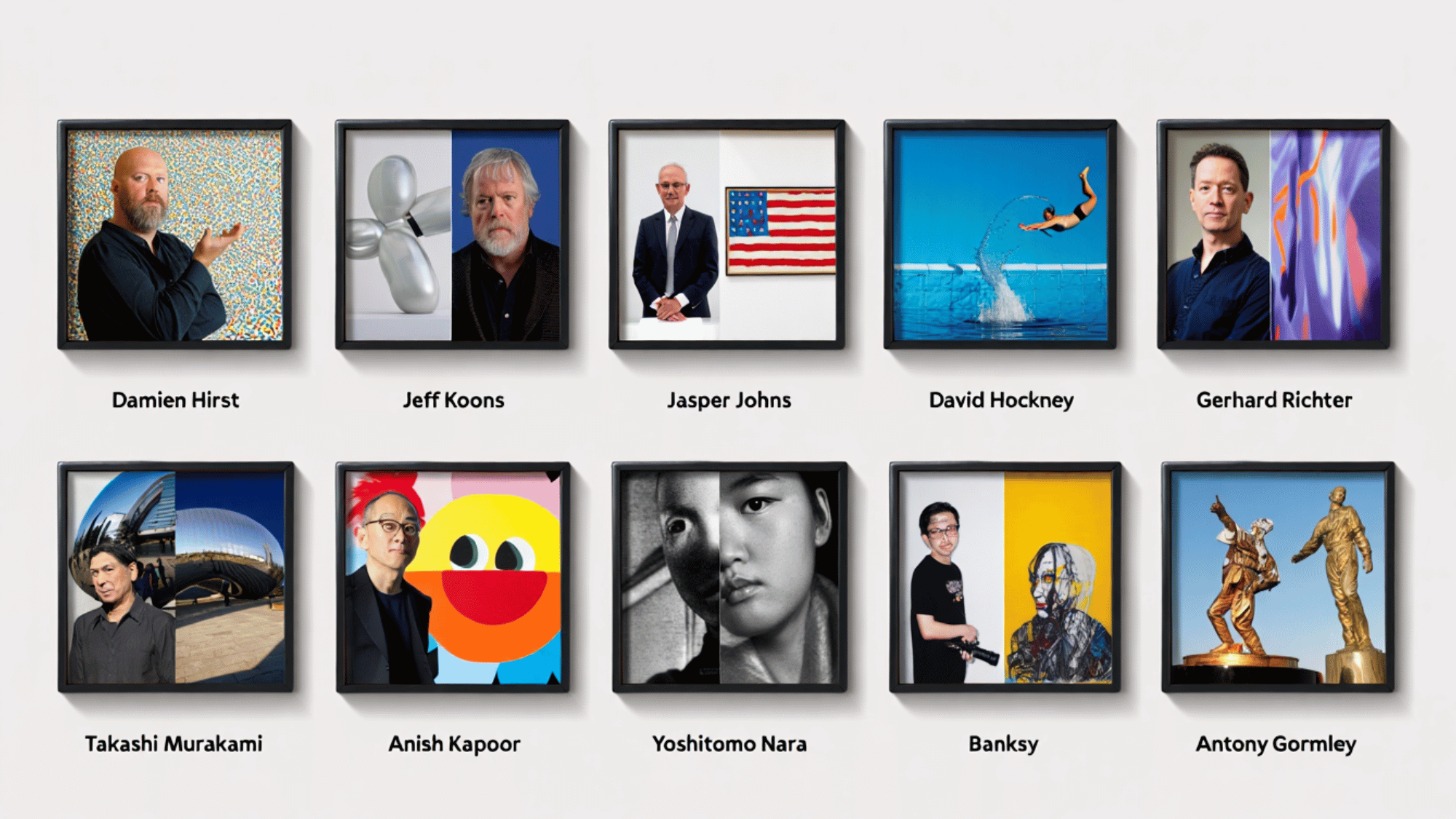
The global art market has converted many contemporary creators into multimillionaires, with a select few reaching extraordinary levels of wealth through record-breaking sales, strong collector demand, and strategic brand expansion.
1. Damien Hirst
- Artistic Style & Signature Work: Conceptual art, spot paintings, and formaldehyde installations
- Net Worth (Estimated): $1B+
- Major Achievements: Led the YBA movement; historic Sotheby’s direct sale
- Market Influence & Demand: Extremely high global demand; dominant commercial presence
2. Jeff Koons
- Artistic Style & Signature Work: Pop/kitsch sculptures; Balloon Dog series
- Net Worth (Estimated): $400–500M
- Major Achievements: Record-breaking auction sales for living artists
- Market Influence & Demand: Strong collector demand; major auction dominance
3. Jasper Johns
- Artistic Style & Signature Work: Neo-Dada; Flag series
- Net Worth (Estimated): $300–400M
- Major Achievements: Highly influential postwar American artist
- Market Influence & Demand: Consistently strong museum and auction demand
4. David Hockney
- Artistic Style & Signature Work: Modern figurative art; pool paintings
- Net Worth (Estimated): $200–300M
- Major Achievements: Record sales for a living artist (at the time)
- Market Influence & Demand: High global demand and exhibition presence
5. Gerhard Richter
- Artistic Style & Signature Work: Abstract and photorealistic paintings
- Net Worth (Estimated): $200–250M
- Major Achievements: One of the most expensive living painters
- Market Influence & Demand: Exceptional auction consistency worldwide
6. Takashi Murakami
- Artistic Style & Signature Work: Superflat pop art; smiling flowers
- Net Worth (Estimated): $100–150M
- Major Achievements: Bridged fine art and luxury (LV collaborations)
- Market Influence & Demand: Strong global brand and collector base
7. Anish Kapoor
- Artistic Style & Signature Work: Monumental sculptures; Cloud Gate
- Net Worth (Estimated): $100–150M
- Major Achievements: Iconic public installations worldwide
- Market Influence & Demand: High institutional and commission demand
8. Yoshitomo Nara
- Artistic Style & Signature Work: Neo-pop; childlike figures
- Net Worth (Estimated): $100M
- Major Achievements: Leading contemporary Japanese artist
- Market Influence & Demand: Massive demand in Asian art markets
9. Banksy
- Artistic Style & Signature Work: Street art; politically charged stencils
- Net Worth (Estimated): $50–100M
- Major Achievements: Redefined street art’s market value
- Market Influence & Demand: Viral cultural influence; strong auction hype
10. Antony Gormley
- Artistic Style & Signature Work: Human-form sculptures; Angel of the North
- Net Worth (Estimated): $50–80M
- Major Achievements: Globally recognized public artworks
- Market Influence & Demand: Strong institutional and public art demand
Primary vs. Secondary Art Market: Know the Difference
The art market is broadly divided into primary and secondary segments, each playing a crucial role in how artworks are sold, valued, and traded over time.
| Aspect | Primary Art Market | Secondary Art Market |
|---|---|---|
| Definition | Sale of artwork directly from the artist | Resale of artwork after the first purchase |
| Seller | Artist or representing gallery | Collectors, dealers, or auction houses |
| Buyer | First-time buyer of the artwork | Subsequent buyers/collectors |
| Pricing | Set by an artist or a gallery | Determined by demand, auctions, and market trends |
| Examples | Gallery exhibitions, art fairs | Sotheby’s, Christie’s auctions |
| Artist Earnings | The artist earns directly from the sale | An artist usually does not earn |
| Transparency | Prices may be less transparent | Prices are more public (especially at auctions) |
| Value Indicator | Emerging or current market value | Established market value and investment worth |
In a Nutshell
In the end, the world’s wealthiest living artists prove that art is as much about vision as it is about value.
Their success goes beyond galleries and auctions, reflecting years of influence, innovation, and strong connections with collectors around the globe.
Each artist on this list has shaped not only the market but also the cultural landscape in their own way.
As new trends and technologies continue to reshape the industry, the next generation of artists may redefine what it truly means to be both creatively and financially successful.