



Babies are surprisingly strong, especially when it comes to their grip. If you’ve ever tried to pull your finger away from a baby, you know exactly what I mean. Those tiny hands can hold on tight!
But have you ever wondered why babies are so strong? It turns out, their grip isn’t just cute. It’s actually linked to some pretty interesting science.
Let’s take a closer look at why babies are so strong and what makes their little hands so powerful, all thanks to some cool evolutionary and anatomical reasons.
The strength of their grip comes from both instinct and biology, as explained in this blog.
Why Do Babies Seem So Strong?
Many parents wonder why babies are so strong, especially when a tiny baby grips a finger tightly or lifts their head earlier than expected.
This strength mainly comes from natural reflexes that babies are born with. For example, the grasp reflex makes a baby hold onto a finger with surprising force.
Their muscles are also developing quickly during the first months of life. Since babies spend a lot of time kicking, stretching, and moving, their bodies slowly build strength each day.
The Science Behind a Baby’s Strong Grip
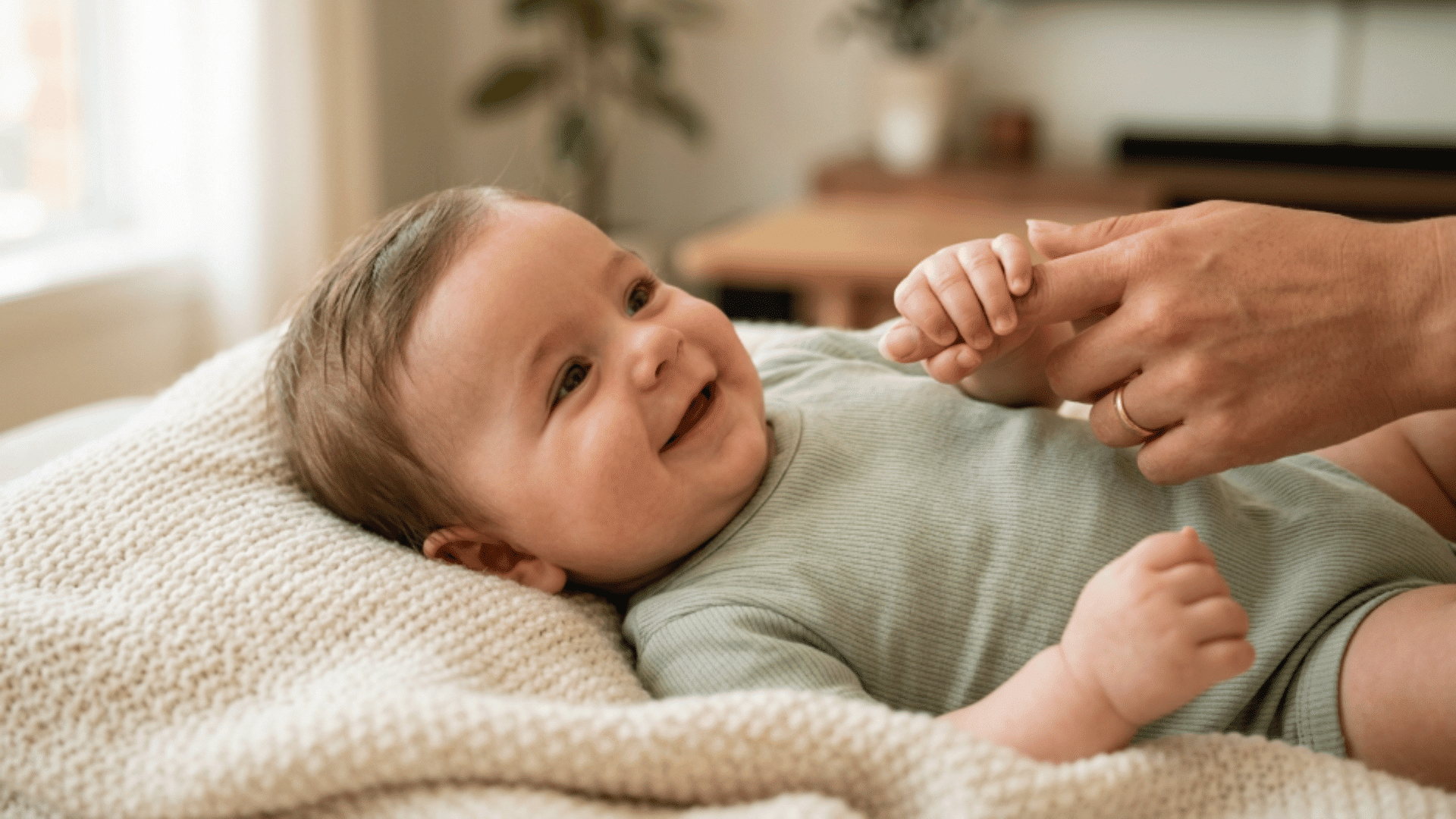
Natural behaviors and reflexes in early life help explain why babies are so strong, as their bodies are constantly developing strength through movement, touch, and daily actions.
- Natural Grasp Reflex: Babies are born with the palmar grasp reflex, which makes their fingers automatically close around anything placed in their palm.
- Early Survival Instinct: Some scientists believe this strong grip comes from early human survival instincts when babies needed to cling to caregivers.
- Rapid Muscle Development: In the first months of life, babies’ muscles grow quickly through constant stretching, kicking, and hand movements.
- Sensitive Nervous System: Their nervous system reacts fast to touch, which triggers quick gripping actions and explains part of why are babies so strong.
- Daily Practice Through Movement: Babies repeatedly grab fingers, toys, and blankets throughout the day, which helps build strength.
The Evolutionary Advantage of a Baby’s Grip
Babies’ strong grips aren’t just impressive; they’re deeply rooted in evolutionary biology.
In the past, human infants were born into environments where they needed to cling to their caregivers, especially when safety or mobility was a concern.
This instinctive grasping ability helped early humans and babies cling to their mothers, reducing their vulnerability to predators and other threats.
Over time, this evolutionary trait has persisted, underscoring the importance of strength and grip for survival in early human history. Many primate species have babies that cling to their mothers for safety and security,
How a Baby’s Grip Supports Early Development

A baby’s grip may seem small, but it plays a big role in early growth and development. Each time a baby holds onto something, it helps build strength, coordination, and awareness.
- Supports finger coordination and better control of movements
- Strengthens brain and nerve connections through touch
- Builds hand muscles with repeated gripping and releasing
- Helps develop fine motor skills for handling objects
- Encourages understanding of surroundings
How Grip Development Changes in The First Year?
Babies’ grip strength evolves significantly during their first year. Here are the key milestones in their grip development:
| Age Range | Grip Milestone | What It Means | Key Skill Developed |
|---|---|---|---|
| Birth to 2 Months | Palmar grasp reflex | Automatically grips objects in hand | Basic reflex + early strength |
| 3 to 4 Months | Starts reaching | Tries to grab objects with intention | Hand-eye coordination |
| 5 to 6 Months | Whole-hand grip | Holds objects with better control | Grip strength + control |
| 7 to 9 Months | Transfers between hands | Moves objects from one hand to another | Coordination + precision |
| 10 to 12 Months | Pincer grasp | Uses thumb and finger to pick items | Fine motor skills |
Newborn Reflexes that Show Early Strength
These reflexes are early signs that a baby is so strong, even before they gain full control over their movements.
- Moro Reflex: When a baby feels a sudden movement or sound, they quickly throw their arms out and pull them back in. This shows strong muscle reactions and quick body control.
- Rooting Reflex: When touched on the cheek, babies turn their head and open their mouth. This shows coordination and strength in the neck and facial muscles.
- Sucking Reflex: Babies have a strong sucking ability from birth, which helps with feeding and shows early muscle strength in the mouth and jaw.
- Stepping Reflex: When held upright, babies move their legs as if walking. This reflex shows early leg strength and movement patterns.
Common Myths About Baby Strength
Many people are surprised by baby strength, which often leads to a few common misunderstandings.
-
Myth: Babies who grip tightly will be physically strong later in life
Fact: Grip strength in infancy is reflex-based and doesn’t predict future physical strength -
Myth: Strong babies reach milestones faster than others
Fact: Development depends on many factors, not just strength, and varies for every baby -
Myth: If a baby isn’t gripping much, something is wrong
Fact: Some babies are naturally less responsive, and development can still be normal -
Myth: Baby strength comes mainly from muscles
Fact: Early strength is mostly controlled by reflexes and the nervous system, not muscle mass -
Myth: Babies need training to build strength early on
Fact: Natural movement like kicking, reaching, and grabbing is enough for healthy development -
Myth: A stronger grip means better coordination
Fact: Coordination develops separately over time and isn’t directly linked to grip force -
Myth: Babies lose strength as they grow
Fact: Reflex strength fades, but real muscle strength gradually increases with growth -
Myth: All babies should follow the same strength timeline
Fact: Growth and strength milestones differ widely between babies and are still normal
Conclusion
Babies’ surprising strength, especially in their grip, is the result of a mix of evolutionary traits, reflexes, and anatomical features.
As they grow, these factors contribute to essential developmental milestones, like motor skills and coordination. Understanding why babies are so strong deepens our appreciation of their early growth and natural abilities.
This strength plays an important role in helping them interact with their environment and in supporting cognitive and emotional development.
For more insights into infant growth and milestones, check out our other articles to learn more about how babies develop in their first year!
Frequently Asked Questions
Do premature babies have the same grip strength?
Premature babies may have weaker reflexes at first, but they usually catch up over time.
Does nutrition affect a baby’s strength development?
Yes, proper nutrition supports muscle growth, energy levels, and overall physical development.
Can baby exercises improve grip strength faster?
Gentle play and natural movement are enough; structured exercises are usually not necessary.