





The pants still fit at the waist. The ankles tell a different story.
For parents with several children, that moment starts another round of sorting: what still fits, what needs replacing, and what deserves a place in the younger sibling’s drawer. A school wardrobe costs less to replace when some of it can stay in the family.
That makes hand-me-down potential a useful shopping consideration. French Toast has specific styles with adjustable waists, reinforced knees, and wash-testing claims worth checking. Put those details alongside sensible care and a small storage system, and you have a practical plan for getting more use out of school clothes.
Start With the Clothes You Already Own
Before opening a shopping cart, empty the uniform drawer. Include the spare outfit in the school bag and the sweatshirt that has been living in the car. Buying another navy top is frustrating when two perfectly usable ones turn up the next day.
Ask each child to try on the pieces you hope to keep. Have them sit, reach overhead, and bend their knees. Check whether fastenings work comfortably and hems meet the school’s rules; a size label alone cannot settle those questions.
Make four piles: wear now, save for a sibling, repair, and pass along. Keep the repair pile small enough to finish. One loose button is a manageable evening job; a basket of clothes awaiting a complete makeover can become permanent furniture.
Then write a shopping list for each child. Buy the gaps after counting usable clothes, rather than automatically replacing last year’s full wardrobe. Check the current dress code before saving or buying anything with a school logo, particular cut, or required color.
Count the Wears, Including the Second Child’s
A low price is helpful today. Continued use is what makes that purchase work harder over time.
Consider a hypothetical $20 pair of trousers. If one child wears them 40 times, the purchase cost is 50 cents per wear. If a sibling later adds another 40 wears, that becomes 25 cents per wear across the family, before laundry or repair costs.
Those figures are an illustration, not a French Toast price or lifespan prediction. They show why a second turn in the school rotation matters. The saving becomes real when a usable hand-me-down replaces something you otherwise needed to buy.
Leave room for reality. Siblings can have different proportions, different schools, or opposite opinions about how a collar feels. A garment that worked beautifully for one child still needs a fitting with the next.
Set the budget around what you can afford now. Treat future sibling use as a welcome possibility, and prioritize clothes the first child can comfortably wear today. Nobody saves money on the bargain trousers that stay at the back of the drawer.
Think about your laundry schedule, too. If you wash uniforms twice a week, build the rotation around those days and allow for an unexpected spill. Buying far more than the children need can leave you storing clothes they barely wore before outgrowing them.
Check the Construction Before Planning the Hand-Me-Down
Look closely at the parts that handle daily wear. Knees, fastenings, and waistbands deserve more attention than a neatly folded product photo. A useful product description tells you what is reinforced and where the fit can change.
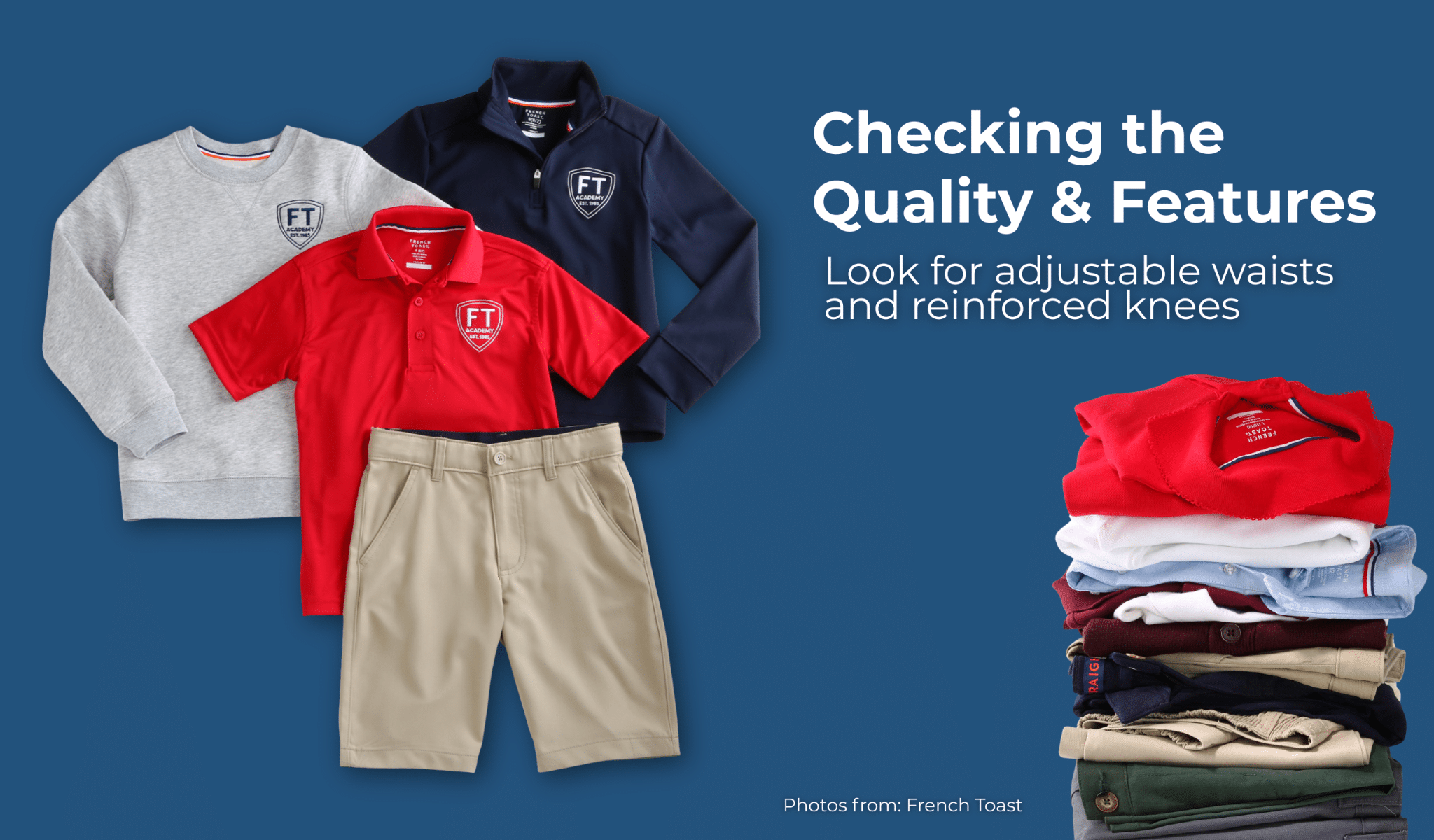
French Toast lists reinforced seam-to-seam Power Knees on its Boys’ Relaxed Fit Twill Pant, style 1519, with an adjustable waist in youth and husky sizes. The brand specifies that adult sizes lack those features. Those are concrete details to compare when shopping for active children.
For parents comparing school uniforms for elementary school students, these construction details are worth checking on the exact style and size. An adjustable waistband provides flexibility at the waist as a child grows, and lets you reset the fit when a sibling inherits the trousers. It cannot add leg length.
Wash testing deserves the same careful reading. French Toast’s catalog lists its cotton-blend poplin Long Sleeve Dress Shirt, style 1014, as “50 Wash Tested.” That gives parents a specific washing-related claim to consider, rather than a vague promise of durability.
It does not establish how many siblings will wear the shirt or guarantee that playground stains will disappear. Check each product separately, then follow its care label. A test claim for one shirt should not be assumed to apply to every polo or pair of pants.
Give Good Clothes an Easy Route to the Next Drawer
Keeping clothing useful should fit into the laundry routine you already have. Read the garment’s washing and drying instructions, and check stain-treatment directions before applying a product. Keep a small mending kit somewhere convenient so a loose button can be dealt with before it disappears.
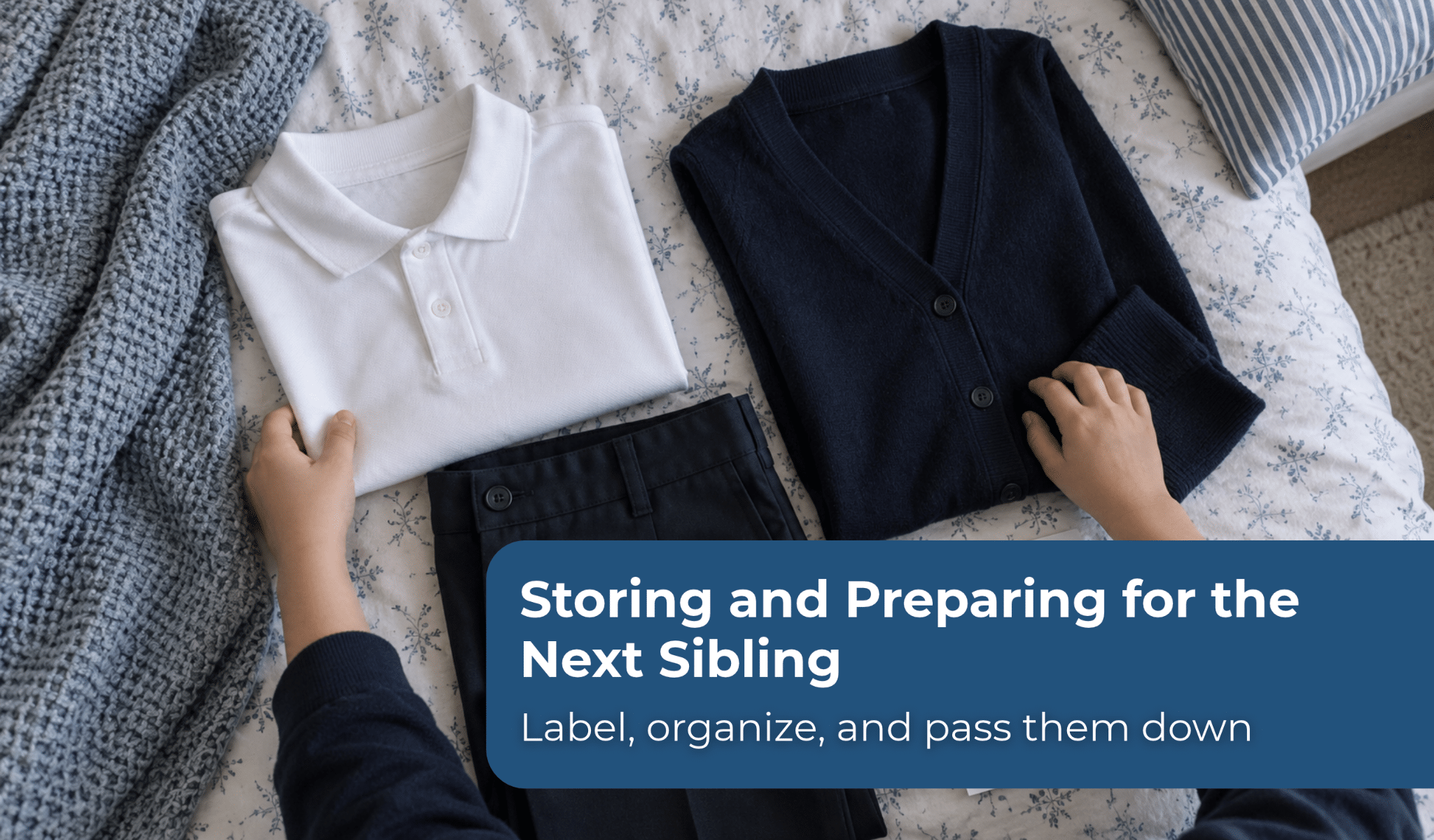
Once an item is outgrown, wash and dry it according to its label before storing it. Note any repair it needs. Your future self should be able to open the box and make a quick decision, without discovering last term’s unfinished jobs.
A simple system is enough:
- Label a container with the size and season.
- Add a short inventory on paper or your phone.
- Check that container before the next uniform shop.
Use removable name labels where practical, and replace the older child’s identification before the handover. Give the younger child a proper fitting instead of putting the entire box straight into their drawer. Let them choose between suitable pieces when there is a choice.
If the next child will not use something, move it along while it is still wearable. Ask whether the school has a uniform exchange and check what it accepts. Keep only pieces with a realistic next wearer; the goal is a useful spare wardrobe, not a cupboard you can no longer close.
Make Reuse Something Children Can Help With
In her guidance on talking with children about climate change, pediatrician Steph Lee writes, “Discuss how personal choices can affect the environment and show respect for nature.”
Sorting a school wardrobe gives families an ordinary, hands-on way to start that conversation.
Explain that a shirt can still be useful after someone outgrows it. Ask children to help fold the pieces being saved, or decorate the storage label. Reusing a wearable garment keeps it in use longer; when it replaces a new purchase, it also means one fewer item entering the household.
Keep the next job small. Sew on the missing button, adjust the waistband, and put the clean shirt in its new owner’s drawer. Tomorrow morning, another child can get dressed in something the family already had.