






To keep a 3 AM bottle feed quiet, set out a clean bottle, nipple, and small light before bed, then plan where the used bottle will go afterward. When the baby wakes, you can use that one light instead of searching through the kitchen while someone else sleeps. The steps below cover the setup, a low-noise feed, what to do with leftover milk, and a quick cleanup and reset for the next wake-up.
Prepare for Nighttime Bottle Feeding Before Bed
Choose one place to feed and put the things you will handle there before you sleep: a clean bottle and nipple, a burp cloth, and a small light you can switch on without lighting the whole room. Keep the path to the refrigerator clear. If you share night duty, both adults should know where these items are; a handoff is less quiet when one person has to open three cabinets to find a cap.
Put the clean feeding parts together in one spot, rather than leaving a loose nipple or ring in a drawer. Place a cloth and a small container for used parts within reach, away from the clean supplies. Check where the bottle will be prepared and where the used items will go after the feed.
Store expressed milk or prepared formula according to its own safety guidance, not beside the bed for convenience. According to the CDC’s infant formula guidance, use prepared formula within 2 hours of making it, or refrigerate it promptly and use it within 24 hours. Once feeding begins, use the formula within 1 hour.
Freshly expressed breast milk can stay at room temperature for up to 4 hours if the room is 77°F (25°C) or cooler, or in a refrigerator at 40°F (4°C) or cooler for up to 4 days. If your baby prefers a warm bottle, decide how you will warm it safely before bedtime.
Move Through the 3 AM Feed With Less Noise
When the baby wakes, keep the sequence familiar: wash your hands, collect the milk, assemble the bottle, and return to the same feeding spot. A dim light gives you enough visibility to check the bottle and your baby’s face without switching on the kitchen ceiling lights. Set your phone to silent before bed if you use it as a timer or feeding log. These small choices spare you from searching for supplies while a hungry baby waits.
Quiet does not mean rushing. Hold your baby for the feed, allow pauses, and watch for signs that they are done rather than trying to empty the bottle. The CDC advises against propping a bottle or leaving it in a baby’s mouth.
If you feel too drowsy to stay alert, put the baby in their safe sleep space and ask another caregiver to take over if one is available. Keeping the rest of the house asleep is not worth compromising the feed.
Before you sit down, set the bottle cap and cloth where they will not slide off an armrest. After feeding, do the burp and any necessary change with the same low light, then return the baby to their sleep space. The aim is a predictable route with fewer cabinet doors and less back-and-forth, not a perfectly silent baby.
Decide What to Do With Milk Left in the Bottle
The bottle is not finished when the baby stops drinking. Leftover milk and the parts that touched it need separate attention. The CDC gives different rules for formula and expressed breast milk; neither should simply sit out until morning.
|
What was in the bottle |
After the feeding |
|
Prepared infant formula |
Use within 1 hour from when feeding begins; discard whatever is left after the feed. Do not top up a partly used bottle for the next wake-up. |
|
Expressed breast milk |
Leftover can be used within 2 hours after the baby finishes feeding; discard it after that. |
These rules are about the milk, not whether the bottle looks clean. Keep the used bottle separate from the next feed’s clean gear, and avoid putting it back in the refrigerator as if it were untouched. When you are tired, that simple separation prevents the wrong bottle from becoming the easy one to grab.
Clean Used Bottles Without Creating a Morning Pile
Used bottles and pump parts are the part of nighttime bottle feeding most likely to be postponed. Guidance from the CDC is to clean bottles after every feeding and the parts that contact milk after each pumping session.
Rinsing a used bottle and leaving it in the sink is not the same as cleaning it. Take the parts apart and wash them with a method appropriate for the items; if washing by hand, use a basin reserved for feeding equipment rather than washing directly in the sink.
For households with a steady stream of bottles and pump parts, the eufy Baby Bottle Washer S1 Pro is an automated option to compare. It washes these items, has a 212°F steam step, and uses dual-fan HygieniDry™ for drying. Its storage mode can hold cleaned items for up to 72 hours, and the app can start cycles, monitor progress, and send notifications.
If you schedule a wash, make sure used bottles and milk-contact pump parts are cleaned promptly rather than left in the machine until morning. The washer can help keep clean spares ready for the next feed, but it is not a bottle warmer and cannot make leftover milk safe to keep.
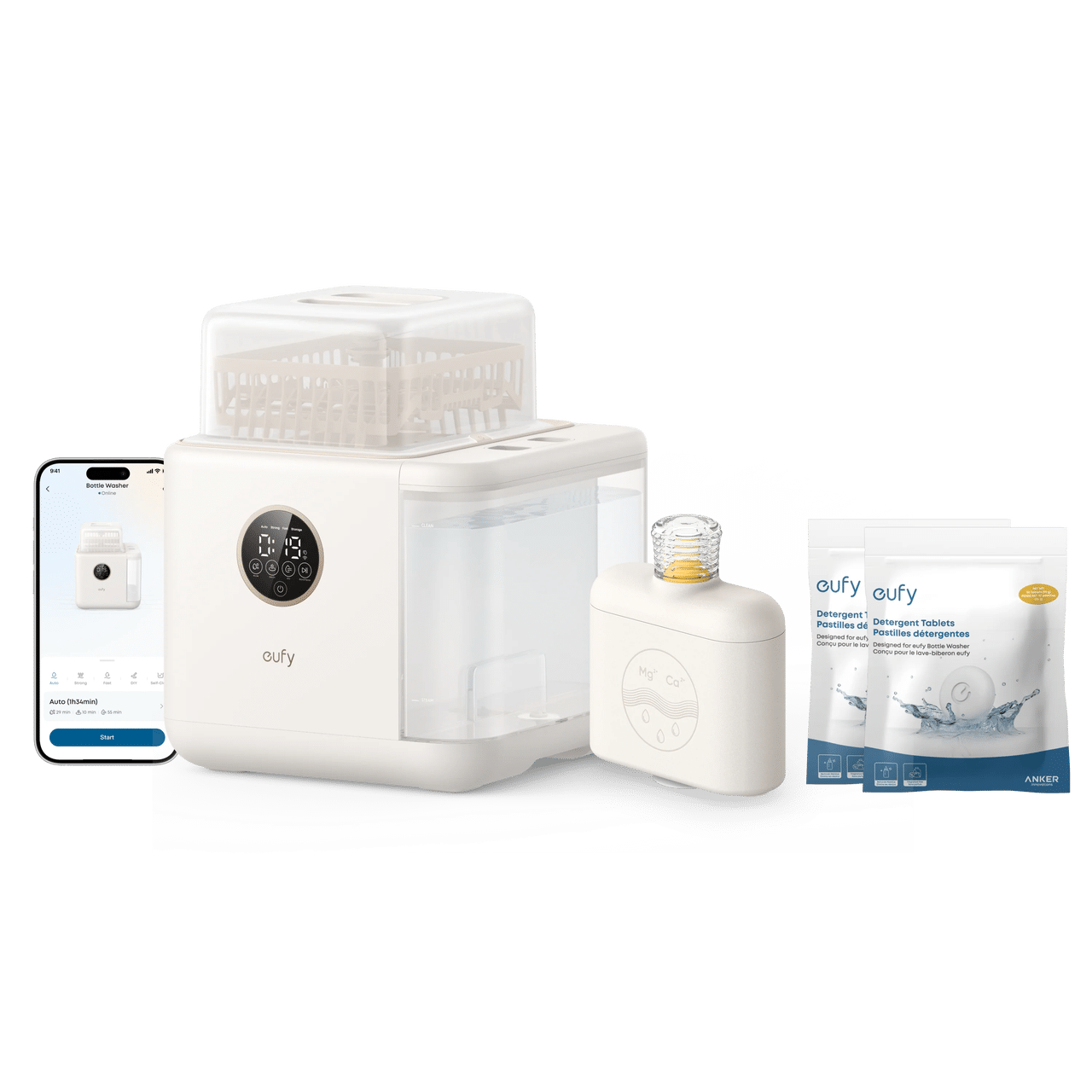
Before relying on a night cycle, check the care instructions for your bottles and pump parts, and listen to the washer from the bedrooms in your own home. A sound that is fine in the kitchen may still carry down a hallway.
If running a machine would disturb sleepers, choose a prompt cleaning method that works for your household. Scheduling a wash is not permission to reuse an unwashed bottle.
Reset the Station for the Next Wake-Up
Once the used items are cleaned and dry, replace the bottle and nipple you borrowed from the nighttime station. Restock the cloth, move the clean parts away from the used-part container, and make sure the small light still works. This is easier to do while the kitchen is already in use than when a baby wakes again and you are searching in the dark.
If the routine keeps breaking at the same point, adjust that point rather than adding more equipment by default. A second clean bottle may solve a shortage; a better place for the burp cloth may prevent a noisy search. If cleanup is what repeatedly backs up, work out who handles it and when. Then compare feeding and bottle-care options in the eufy baby collection against that plan. The goal is fewer decisions during the next feed.
3 AM Quick Check
- Clean bottle and nipple in the feeding spot
- Burp cloth and used-part container within reach
- Small light works
- Fridge path is clear
- Used bottle and parts cleaned, dried, and back in the station
For advice tailored to your baby’s feeding or health needs, check with your pediatrician.
Conclusion
A quiet 3 AM bottle starts with clean supplies in a known place and a simple route from fridge to feeding spot. Keep the light low, stay attentive while your baby drinks, and follow the right storage rule for whatever milk is left. Those steps matter more than making the feed perfectly silent.
Afterward, handle the used bottle and any pump parts instead of letting them merge into tomorrow’s pile. A washer can take on some of that work if its cycle fits your home, but it does not replace safe milk handling or prompt cleaning.