





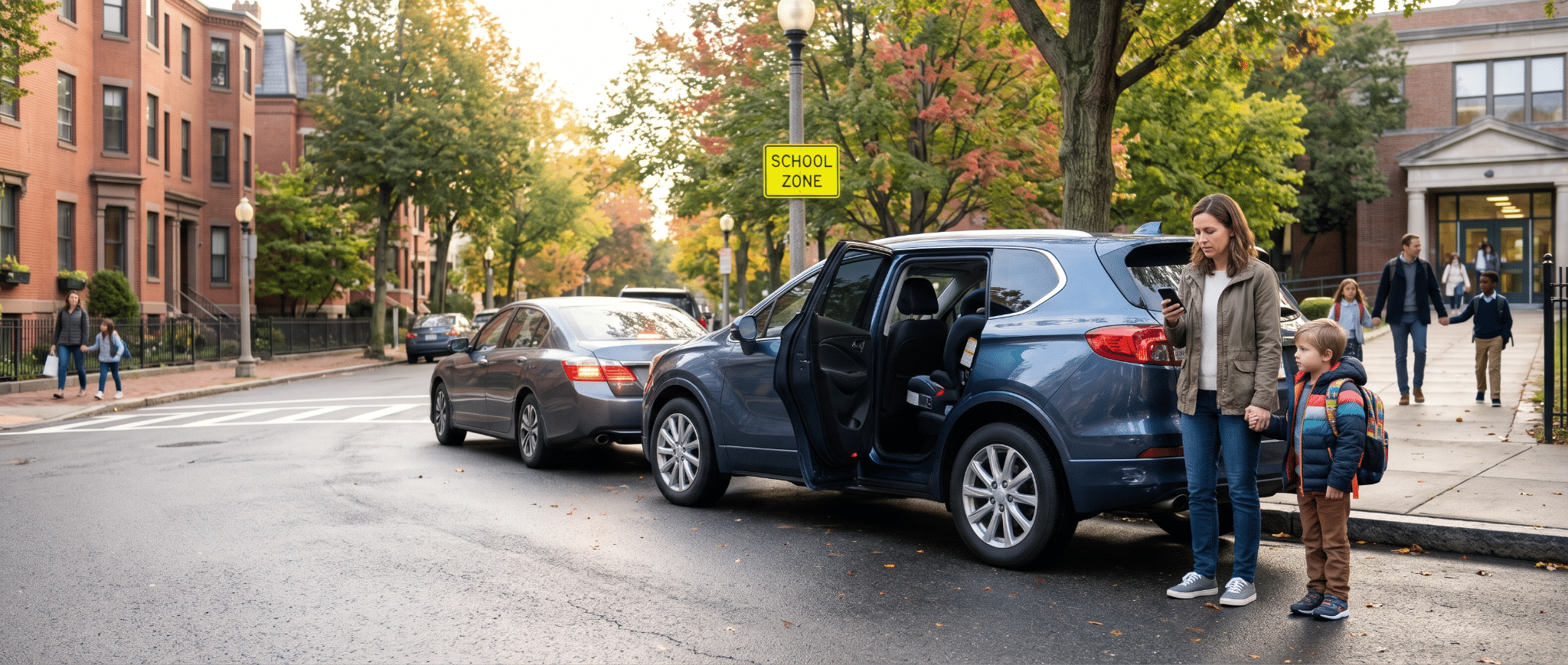
The school run is the most repetitive driving most parents do, and repetition is exactly why it goes wrong. The same left turn at the same hour, the same double parked car outside the same building, and a windshield full of other people doing the identical thing eight minutes before the bell.
Most of these crashes are slow. Nobody is airlifted anywhere. That is precisely the category Massachusetts law handles in a way parents find counterintuitive, which is why it is worth knowing before it happens rather than afterward in a school parking lot with a child crying in the back seat.
The Report Is on You, Not the Police Officer
Parents routinely assume that an officer at the scene means the paperwork is handled. In Massachusetts, it often does not.
State law requires every person operating a motor vehicle involved in a crash in which anyone is killed or injured, or in which there is damage in excess of one thousand dollars to any one vehicle or other property, to report in writing to the registrar within five days, and to send a copy to the police department with jurisdiction where the crash occurred.
Two things there catch people out. The threshold is low. A thousand dollars of damage is a bumper and a sensor on a modern car, which means most school zone contact clears it. And the duty is the operator’s, running on a five day clock that starts at the crash, not when an insurer calls.
If Nobody Felt Hurt at the Scene
Children often report nothing at the moment and something later that afternoon. The statute speaks to injury, and injury is not always apparent in the first ten minutes.
Filing the report when the damage threshold alone is met costs nothing and removes an argument that would otherwise be available months later about whether the crash was significant enough to mention.
The Car Seat Rule Parents Worry About, and the Sentence They Miss
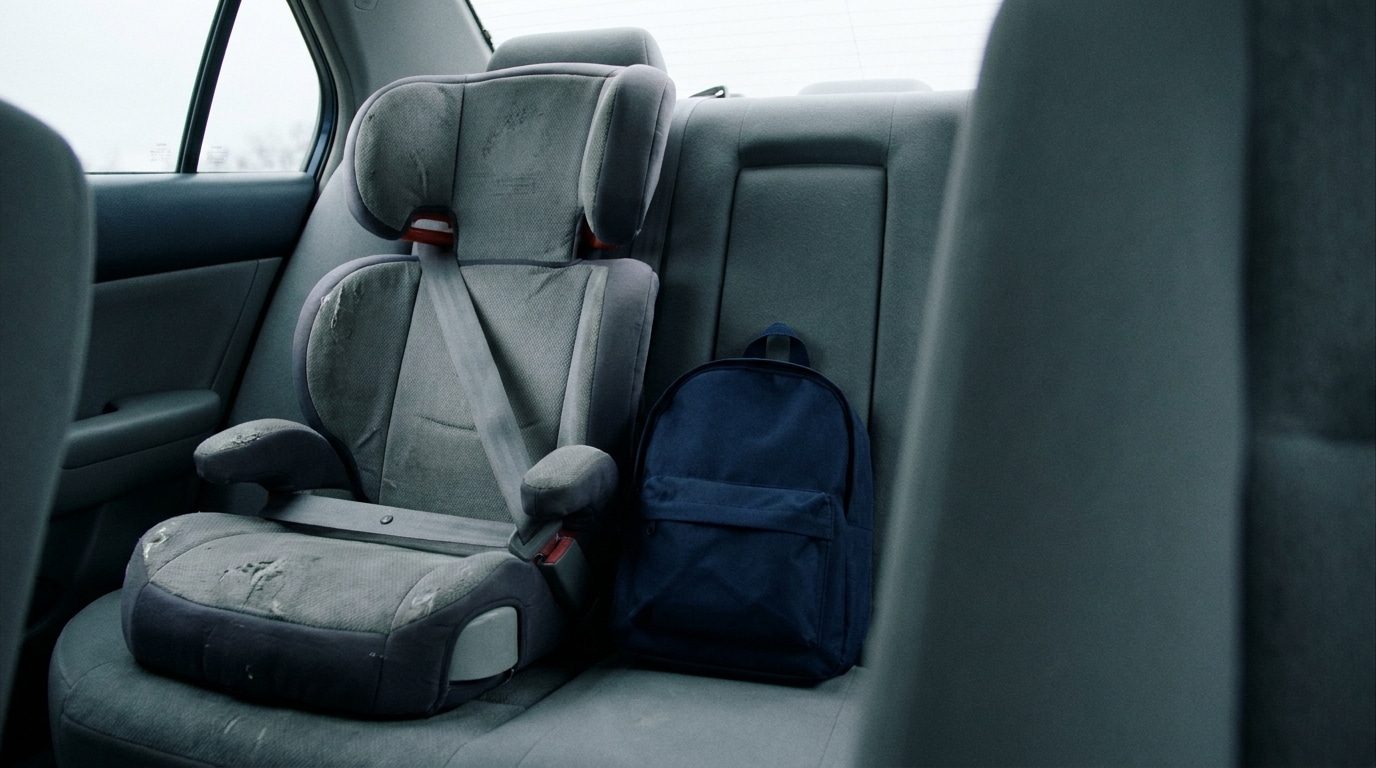
Massachusetts requires a passenger under the age of eight to be fastened in a child passenger restraint unless the child measures more than fifty-seven inches, and a passenger under thirteen who is not in a restraint to wear a properly adjusted safety belt.
The fear that follows any crash is that an imperfectly installed seat, or a booster a child had outgrown, will be turned against the family. The statute addresses that directly. A violation shall not be used as evidence of contributory negligence in any civil action, and the fine for a violation is not more than twenty-five dollars.
According to personal injury lawyer Nicholas R. Thompson, Principal and Managing Partner at RTRLAW, parents routinely stay quiet about a child’s symptoms out of a fear of being blamed for the seat, which is the opposite of what the statute permits, and a legal help after a car accident in Boston will usually want the pediatric record first precisely because the restraint question cannot be used against the claim.
The Two Thousand Dollar Gate
The second thing Massachusetts does differently is place a threshold between an injury and any recovery for what it felt like.
In a tort action arising out of the use of a motor vehicle, a plaintiff may recover damages for pain and suffering only if reasonable and necessary medical expenses exceed two thousand dollars, unless the injury falls within a short list of exceptions that includes death and permanent and serious disfigurement.
For a minor collision, this gate does most of the work. It also creates a bad incentive, because a family that skips the follow-up appointment to avoid the hassle may never cross a threshold their child’s injury genuinely warranted.
That is not a reason to seek treatment nobody needs. It is a reason not to cancel the appointment a pediatrician actually recommended.
What to Do in the First Hour
The useful steps are short and mostly about the record.
Photograph both vehicles where they came to rest, before anyone moves them to clear the lane. Photograph the child’s seat still installed, which documents its condition before it is removed or replaced. Get the other driver’s license, registration and insurance details rather than a phone number and a promise to sort it out privately.
Write down what the other driver said while it is still exact. Admissions made in the first two minutes are common and are almost never repeated once an insurer is involved.
Tell the Pediatrician It Was a Crash
Say the word crash at the appointment and make sure it reaches the chart. A note that reads sore neck after sports is worth nothing to a claim, and parents produce that note constantly without meaning to.
Mention the school too, if there is a crossing guard, a camera or a staff member who saw it. School zone cases turn on witnesses who are present every single morning and are far easier to find in week one than in month six. Many districts retain exterior camera footage for a matter of days, so a written request made early is worth more than a careful one made late.