



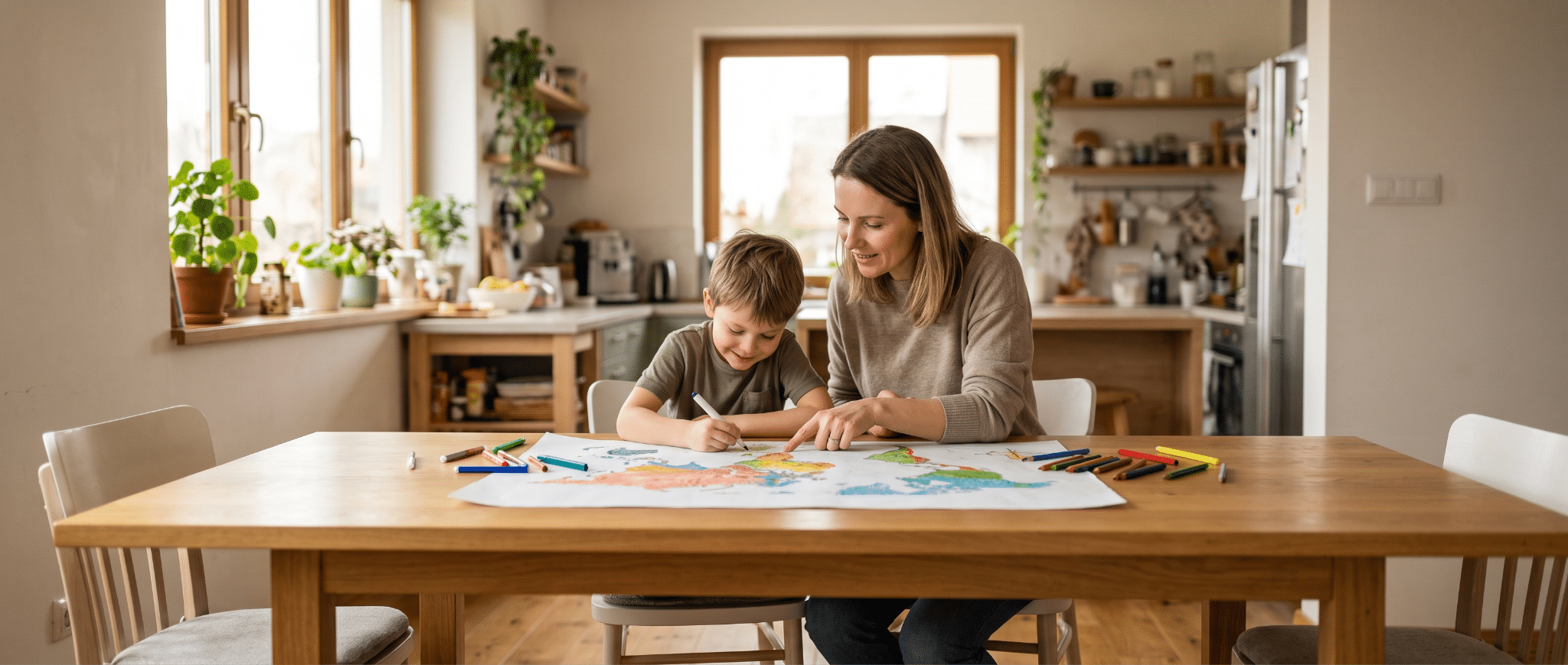
Anyone who keeps a craft table knows that children say their most serious things sideways. They say them while cutting, while waiting for glue to set, while choosing between two shades of blue. A custody change is one of the hardest things a child will be asked to absorb, and the kitchen table covered in supplies is often where the real conversation happens rather than in the careful sit-down a parent planned.
Making something together is genuinely useful during a California custody transition. A few of the projects parents reach for first, though, can quietly create problems in the case itself. Knowing which is worth more than any single craft.
Why Making Something Works Better Than a Sit-Down
Side by Side Beats Face to Face
A direct conversation asks a child to perform composure while being watched. A shared project removes the eye contact, gives the hands something to do, and hands the child control of the pace. They can let a silence run for four minutes and it does not feel like a silence, because you are both still working.
Let the Project Outlast the Conversation
The object you make gets to stay. A child who cannot hold the idea of two homes in their head can hold a thing you made about it, and can come back to the subject a week later by picking that thing up rather than by raising the topic.
The Line Between Helping a Child and Coaching One
This is where craft projects meet California procedure. When parents cannot agree on a parenting plan, the courts route the dispute to a professional before it reaches a judge. The state’s guidance on what to expect from family court mediation explains that mediators are trained mental health professionals, that some counties use mediation while others use child custody recommending counseling, and that the process focuses on the child’s relationship with both parents.
Those professionals are experienced at telling the difference between a child’s own words and a child repeating an adult’s. A journal full of dated entries about the other parent, written with a parent’s prompts, reads as coaching almost every time, and it damages the parent who produced it. Families unsure where the boundary sits often raise it early with attorneys for parental rights cases in Orange County, CA, because the instinct to document feels so protective that it rarely gets questioned at home.
What Not to Put in the Journal
Keep it about the child’s experience, not the other household’s conduct. Do not supply sentence starters that name the other parent. Do not promise a child that what they write will stay private, because you cannot guarantee that in a contested case, and a broken promise costs far more than the journal was ever worth.
Therapy Is a Decision, Not a Craft
If you share joint legal custody, choosing a therapist for your child is an important decision about the child’s care, and it generally belongs to both parents rather than to whoever books first. Starting counseling unilaterally in the middle of a custody dispute creates an argument that can overshadow the help the child actually needed.
Three Projects That Carry Weight
A Map, Not Another Calendar
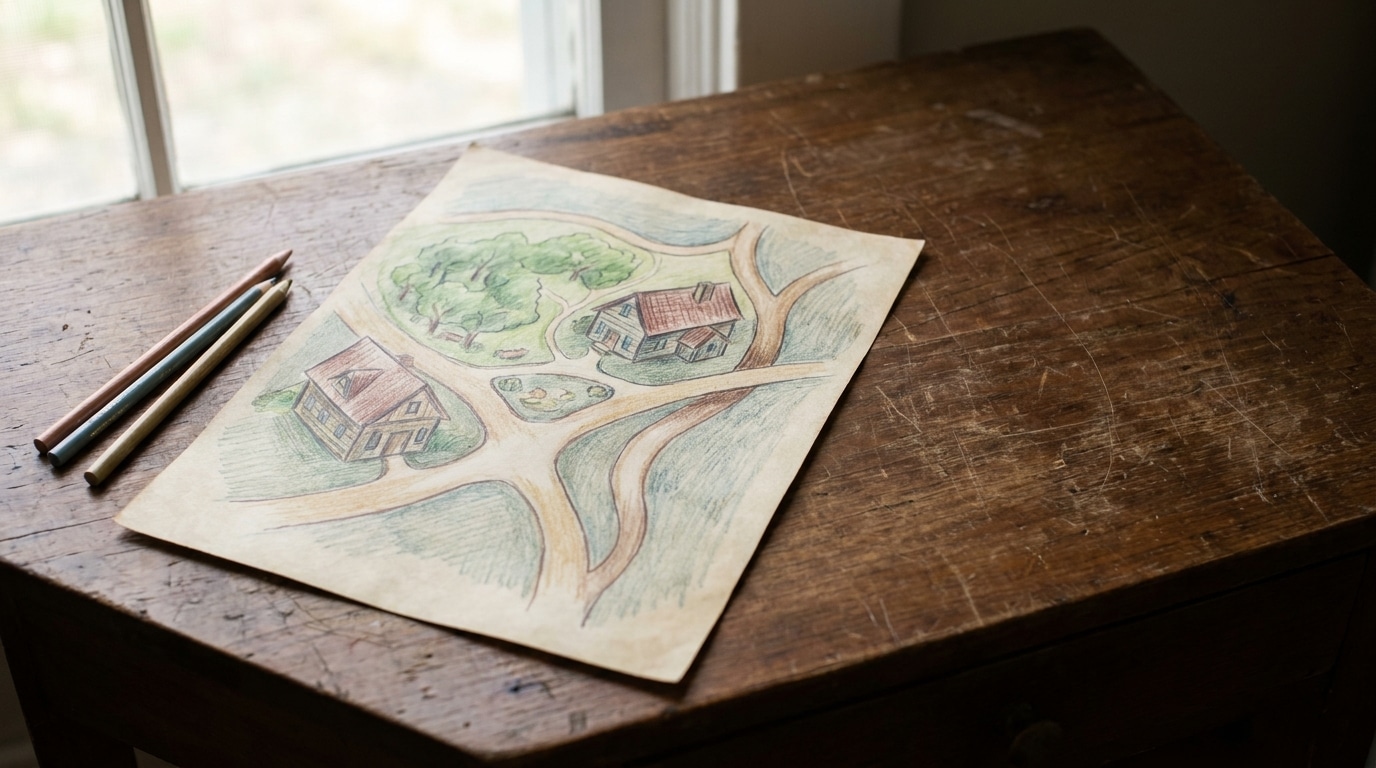
Most separating parents eventually make a color-coded calendar. Fewer make a map. Draw both homes, the school, the park, the grandparents and the roads between them, then let the child add where their things live in each house. Children worry about objects far more than adults expect, and about whether a thing left behind on Sunday still belongs to them. A map answers the question they are actually asking, which is whether their life still has a shape.
A Weather Chart for Feelings
A simple chart with sun, clouds, wind and rain, filled in daily with a sticker, lets a young child report an emotional state without needing the vocabulary for it. It also gives you a record of patterns across weeks rather than an impression formed on one bad Tuesday.
One Object That Travels
A small bag, a decorated tin, a sewn pouch, anything the child chooses that moves with them between houses and is never unpacked or inspected by an adult. Portability is the whole point, and so is the privacy.
When the Art Is Telling You Something
Creative work doubles as a reasonable early-warning system. The National Institute of Mental Health notes that behavioral signs in children warrant a conversation with a health professional when they last weeks or months and interfere with daily life, rather than when they surface for a single afternoon.
A week of grey weather stickers after a schedule change is ordinary. Two months of them, alongside sleep trouble or a child who stops making things entirely, is a different signal.
Keeping the Craft Table a Craft Table
The projects that help most are the ones with no agenda attached. A map that is just a map. A pouch that nobody inspects. The moment a child senses that the supplies have become an evidence-gathering exercise, the table stops being the place where they say the sideways things, and that loss is much harder to repair than any custody schedule.