



A good haul is a specific kind of pleasure. Six yards of barkcloth for four dollars, a shoebox of wooden spools, a bag of vintage linens somebody’s family finally cleared out, a chair with ugly upholstery and excellent bones. Estate sales, church rummage tables, thrift stores and marketplace pickups are where the material comes from, and the whole appeal is that it has a past.
That past is worth one extra step before the haul reaches the craft room.
Why Fabric Is the Problem Material
Bed bugs are not drawn to dirt, food scraps or clutter in the way other household insects are. They hide in narrow, dark, fibrous places near where people rest, and textiles supply exactly that.
The Texas Department of State Health Services describes small, wingless insects between one and seven millimeters long, about the size of an apple seed, that are usually active at night and are not known to transmit disease. The state also notes they can live several months without feeding, which is the detail that matters for a box of fabric that has been sitting in somebody’s garage since spring.
The Hiding Places a Crafter Already Handles
Think about what passes through a sewing room. Folded yardage with a crease held for months. Quilt batting. Upholstered seats with a stapled dust cover underneath. Wicker baskets. Yarn in open bins. Cardboard pattern envelopes. Wooden frames with joints and splits.
Federal guidance on how to find bed bugs points inspection at seams, folds, crevices and the undersides of things rather than at open surfaces. A crafter’s instinct to check a seam is already the right instinct. It just needs to happen in the garage instead of at the cutting table.
What Texas Requires of a Landlord
Renters have a second question, which is who pays when the problem is not confined to one apartment.
Texas law requires a landlord to make a diligent effort to repair a condition that materially affects the physical health or safety of an ordinary tenant. The Texas State Law Library notes that the statute itself does not list examples, and that problems like mold and pests generally fall under the repair rules.
Three conditions come first, and they are the ones renters most often miss. The tenant must be current on rent. The tenant must have given the landlord notice of the problem by telling the person or place where rent is normally paid, which is not the same as mentioning it to a maintenance worker in a hallway. And the problem must not have been caused by the tenant, a family member or a guest.
According to Nicholas R. Thompson, the personal injury attorney who handles bed bug injury claims nationally as The Bed Bug Barrister, the notice requirement is where otherwise strong complaints fall apart, because a verbal report leaves nothing behind. A Texas lawyer representing bed bug bite victims will generally ask how the landlord was told before asking anything about the insects themselves.
The Quarantine Step That Costs Almost Nothing
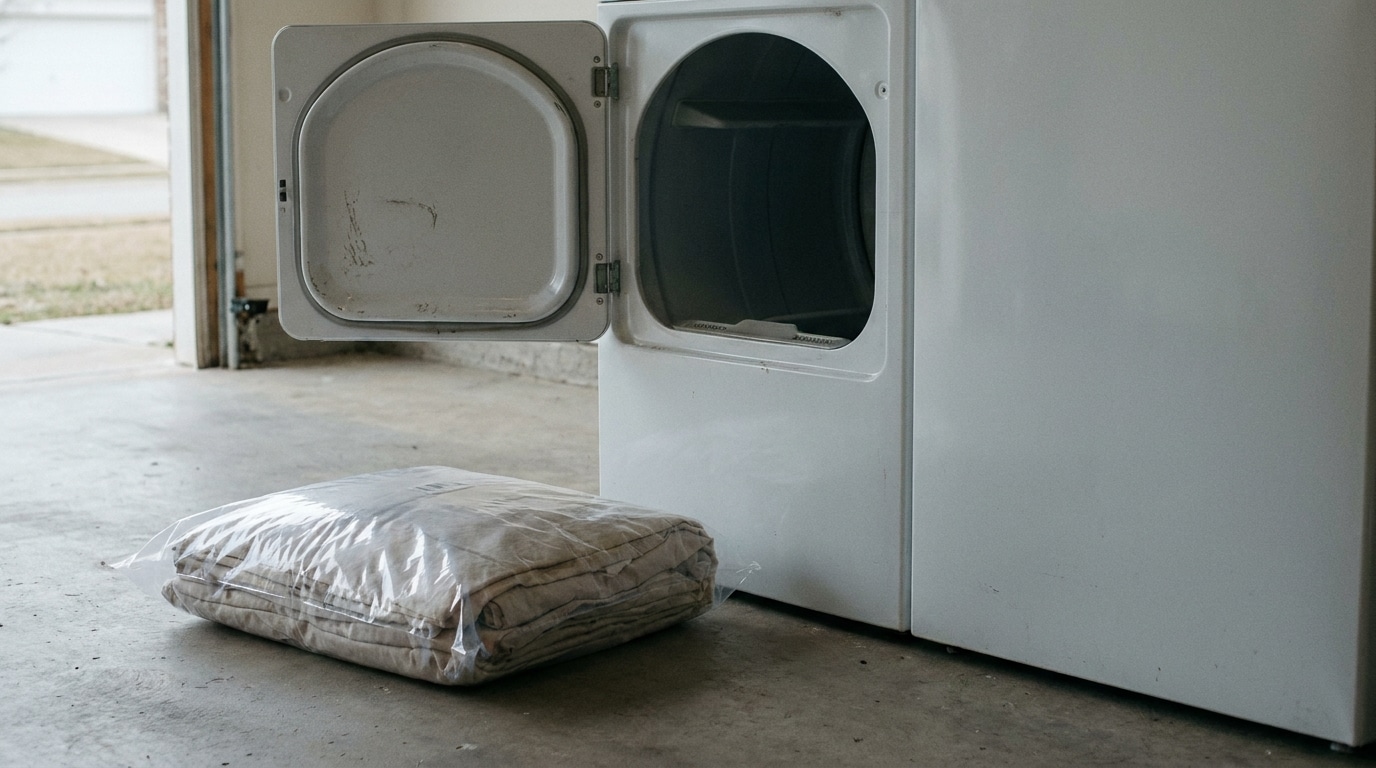
Heat settles this. A household dryer run hot kills these insects, which means most fabric hauls can be made safe on the day they arrive.
Bring the haul in a sealed plastic bag rather than an open tote, and do not set that bag on a bed or a couch while you decide where it goes. Anything that tolerates a dryer goes straight in on high heat. Anything that does not, such as a stiffened hat form or a glued frame, stays bagged until it can be inspected properly or treated another way.
Furniture is the harder case, because it cannot go in a dryer. A chair gets inspected outside: the dust cover underneath, the seam where fabric meets frame, every joint, and the inside of each cushion zipper.
Where a Secondhand Piece Should Be Opened
The practical rule is to pick one staging area and never vary it. A garage, a carport, a covered patio or a utility room all work. What matters is that it is not carpeted, not upholstered and not adjacent to a bedroom.
Open the bag there. Inspect there. Run the dryer load before anything is folded or shelved. Keep the empty bag out of the house or seal it in a second bag for the trash.
This also handles a quieter risk, which is the craft fair or swap where everyone brings boxes from their own homes and sets them on the same shared tables. Nobody in that room has done anything wrong. The tables simply connect a lot of houses for an afternoon.
Keep a Note of Where Things Came From
Renters especially benefit from a short record: the date, the seller or the store, and what was bought. If a problem turns up weeks later, that note is what separates a documented timeline from a guess.
It is the same habit as labeling a fabric bin with its content and yardage. A photograph of the piece as it looked on the day it came home, still bagged and still outside, takes two seconds and timestamps itself. Here, that habit just happens to double as evidence, which is not the reason to keep it, but is a reason not to skip it.