

Most people don’t realize how large the gap truly is between beginner and advanced paint-by-numbers kits. A beginner kit – 20 color sections, bold outlines – feels manageable enough. But an advanced one with 50-plus colors, tiny numbered zones, and gradual shading can catch you completely off guard if you’re not genuinely ready.
These six factors to consider before moving from beginner to advanced paint-by-numbers will help you make that call honestly, not based on enthusiasm, but on where your skills actually stand right now.
Your Comfort With Small Detail Work
Figured’Art spans a wide difficulty range, and the difference between beginner and advanced shows up most clearly in section size. Advanced kits split an image into hundreds of tiny numbered zones. Your brush has to stay inside lines that are sometimes only a few millimeters wide, and a slip that’d barely register on a starter kit becomes much more visible on a detailed piece.
Before you step up, pay close attention to how your current beginner work looks at the edges. Are your color boundaries clean? Do you fill sections without leaving gaps near the borders? If you finish a beginner kit and still see ragged edges or missed spots, that’s a signal to work through a few more beginner designs first.
It’s also worth testing your hand steadiness on a mid-size kit with slightly smaller sections. That’s a lower-stakes way to check whether detail work genuinely suits you.
How You Handle Color Transitions and Shading
Advanced paint-by-numbers kits don’t just give you more colors, they ask you to place those colors so they blend visually into smooth transitions. You’ll see three or four numbered zones that shift from a deep shadow tone to a highlight in close proximity, and your job is to apply each one cleanly while building a gradient effect across them.
If you’ve only worked with kits that have clear, separate color regions, this is a real skill jump. Study how the colors in your current kit interact next to each other. Do the edges look natural? That awareness carries directly into advanced work.
Shading also takes more paint discipline. Thin, even coats matter more on advanced kits because uneven texture across a gradient draws the eye for the wrong reasons.
The Time Commitment You Can Realistically Make
A beginner kit might take four to six hours across a weekend. An advanced design – especially a large-format canvas packed with fine detail – can run 20 to 40 hours of focused work. That’s not a reason to avoid it; it’s a reason to plan honestly.
Ask yourself whether your schedule has room for multi-session projects. Advanced paint-by-numbers rewards consistency. If you sit down for ten minutes and then abandon it for two weeks, the paint dries differently and your focus resets each time you return.
The most common frustration among painters who rush into advanced kits isn’t the difficulty itself, it’s the surprise at how long everything takes. Go in with open eyes.
Your Ability to Manage Many Colors at Once
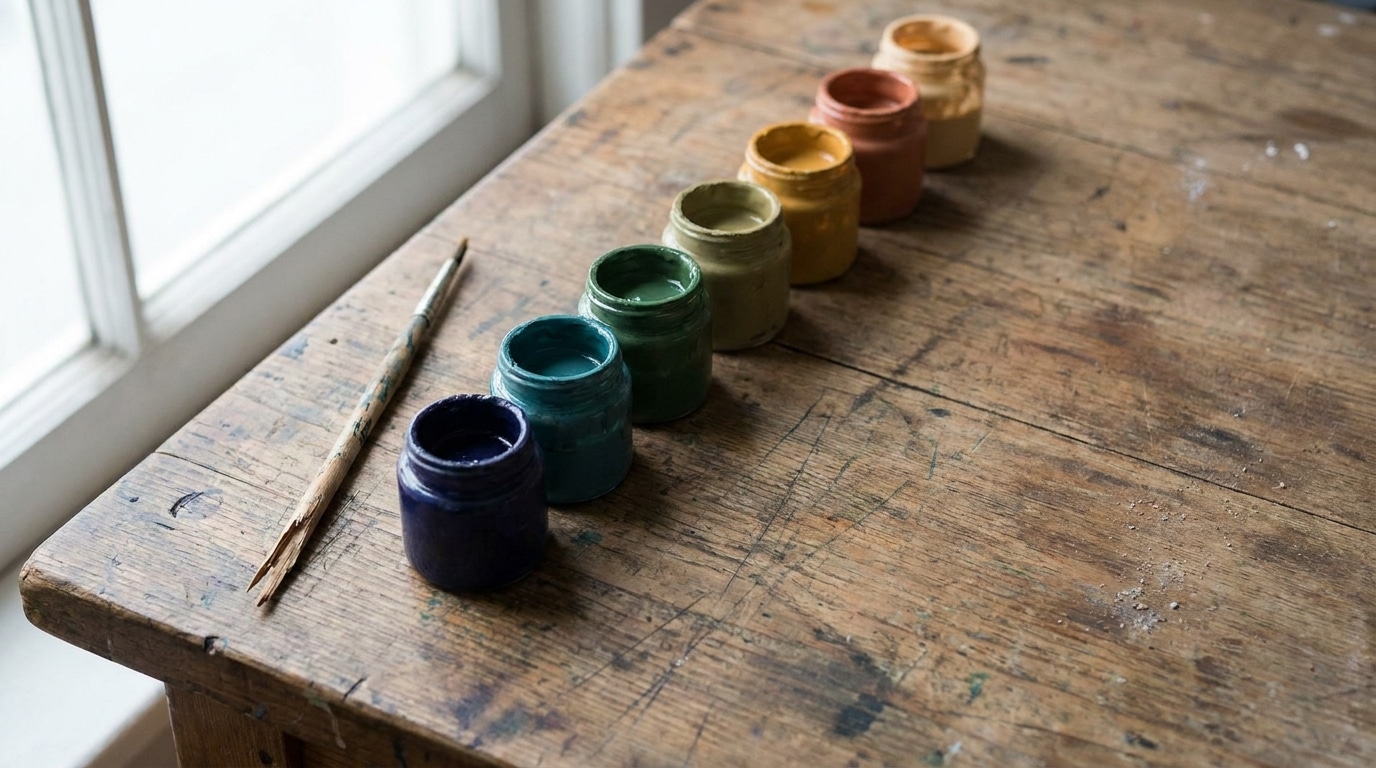
Beginner kits typically come with 15 to 25 colors. Advanced kits can push past 50, with some portrait and fine-detail designs going even higher. Keeping that many open paint pots straight without mixing up closely numbered colors is its own challenge, entirely separate from brush technique.
Build a labeling habit now. Keep a reference sheet, arrange your pots in a consistent order, and close each one between uses to prevent drying. These habits feel optional on beginner kits. On advanced ones, they’re what separate a finished painting from a frustrating mess of misapplied color.
And don’t underestimate how tiring it is to track 50 shades in a single session. Shorter, more focused sessions often produce better results than marathon painting that leads to color mix-ups late in the evening.
How Honestly You Assess Your Own Finished Work
This one is harder than brush control. Many painters move up too quickly because they enjoy the idea of advanced work more than they objectively assess whether they’re ready for it. There’s nothing wrong with ambition, but it helps to be clear-eyed about what your finished beginner canvases actually look like.
Pull out your last completed kit and look at it from across the room. Does it hold together as a coherent image with clean color transitions? Take it under direct light and check how well you filled each section.
So if you’d genuinely be happy hanging it on your wall, that’s a solid signal you’re ready to scale up. If it has visible gaps or uneven coverage you’d rather not show people, another beginner kit is the smarter choice, not a step back, just good preparation.
Whether You Have the Right Tools for Advanced Work
The brushes that come with beginner kits do the job at that level, but they’re often not precise enough for advanced work. A fine-tipped brush – size 0 or 00 – makes filling small sections far more manageable. Without one, you’ll spend three times the effort trying to stay inside tight zones with a brush that’s simply too wide.
Paint coverage matters more on advanced kits, too. Small zones need full opacity in one or two coats, since going back over dried paint in a tiny area risks muddying the edges. And if your paint has dried out or thinned unevenly, it shows immediately on a complex design.
Before you buy an advanced kit, invest ten dollars in a set of fine-detail brushes. That single upgrade changes what’s possible.
Conclusion
Timing matters as much as skill. The factors to consider before moving from beginner to advanced paint-by-numbers come down to three honest questions: are your foundational skills solid, do you have time for longer projects, and do you have the right tools for fine detail? Answer those truthfully, and you’ll make the jump at the right moment, not just the first moment excitement strikes.