



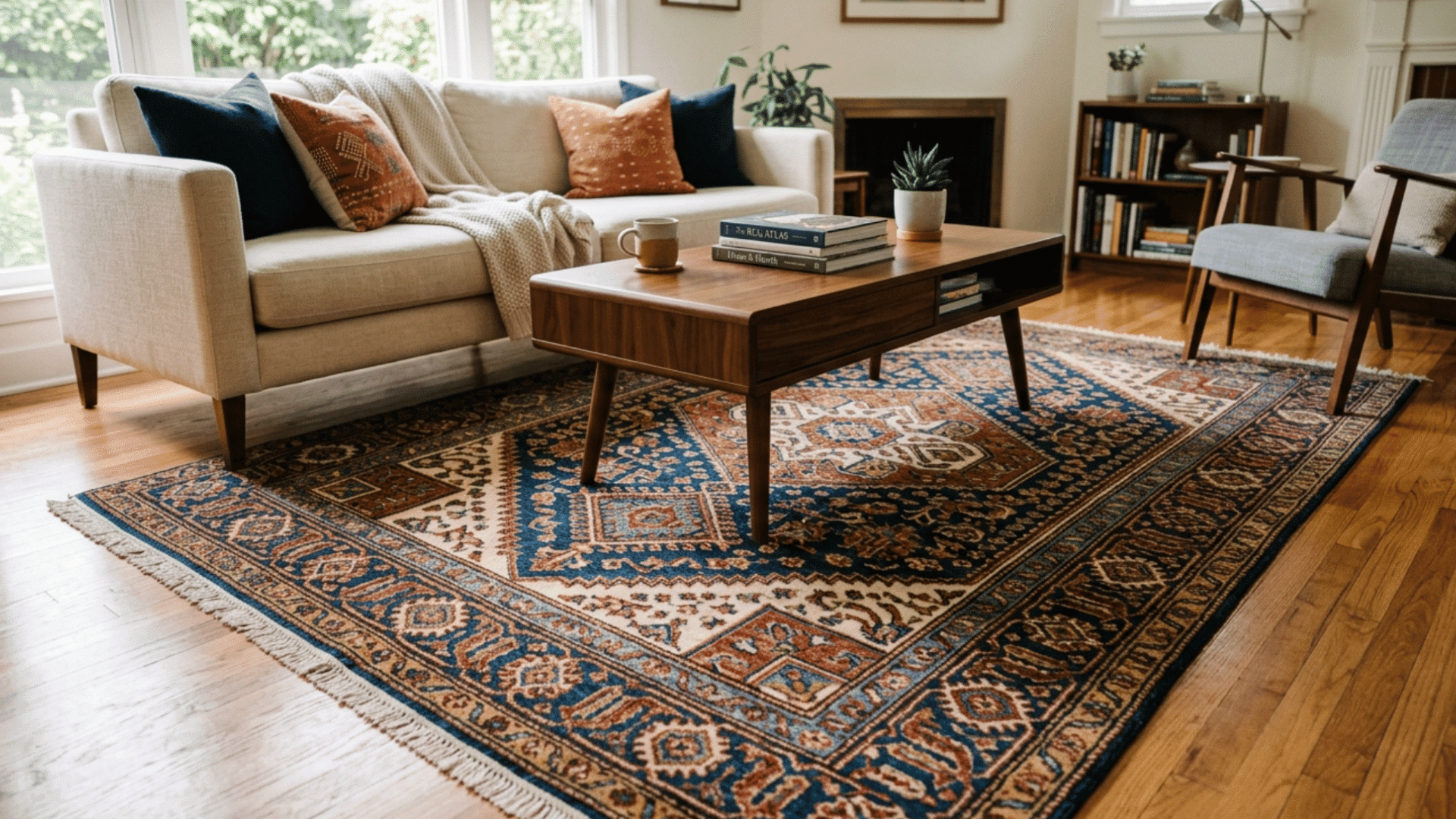
I used to think any rug would work as long as it looked nice. That belief changed the moment I bought a rug that was too small for my living area, and worse, it wasn’t returnable.
That one mistake taught me something I wish I’d known sooner: rug sizes matter far more than design. But with so many options out there, figuring out what works where can get surprisingly confusing.
That’s exactly what this blog is for. It covers standard
Why Rug Size Matters in Home Design?
Rug size plays an important role in how a room looks and feels. The right rug size helps define the space, making it look well-organized and balanced.
If the rug is too small, the room can feel disconnected and incomplete. On the other hand, a properly sized rug brings all the furniture together and creates a cohesive layout.
It also affects comfort, as a larger rug provides more coverage underfoot.
Choosing the right rug size not only improves the visual appeal of your home but also improves the overall functionality of the space.
Know About Standard Rug Sizes
Rugs come in a wide range of sizes, and knowing which one works best for each saves a lot of guesswork. Here’s a quick breakdown of the most common options and where they fit best.
|
Rug Type |
Standard Sizes |
Key Benefits |
|
Small Rugs |
2’x3’, 3’x5’ |
Adds warmth without taking too much space; great for layering |
|
Medium Rugs |
5’x7’, 5’x8’ |
Balanced coverage; fits well in smaller spaces |
|
Large Rugs |
8’x10’, 9’x12’ |
Anchors furniture; creates a unified look |
|
Extra Large Rugs |
10’x14’ or larger |
Defines zones; makes large spaces feel complete |
|
Runner Rugs |
2’x8’, 2’x10’ |
Adds warmth and style to narrow or overlooked areas |
Rug Size Breakdown for Every Room in the House
Not every room plays by the same rules when it comes to rug sizing. Here is a practical breakdown of what works best in each space, from the living room to the home office.
Rug Size for Living Room
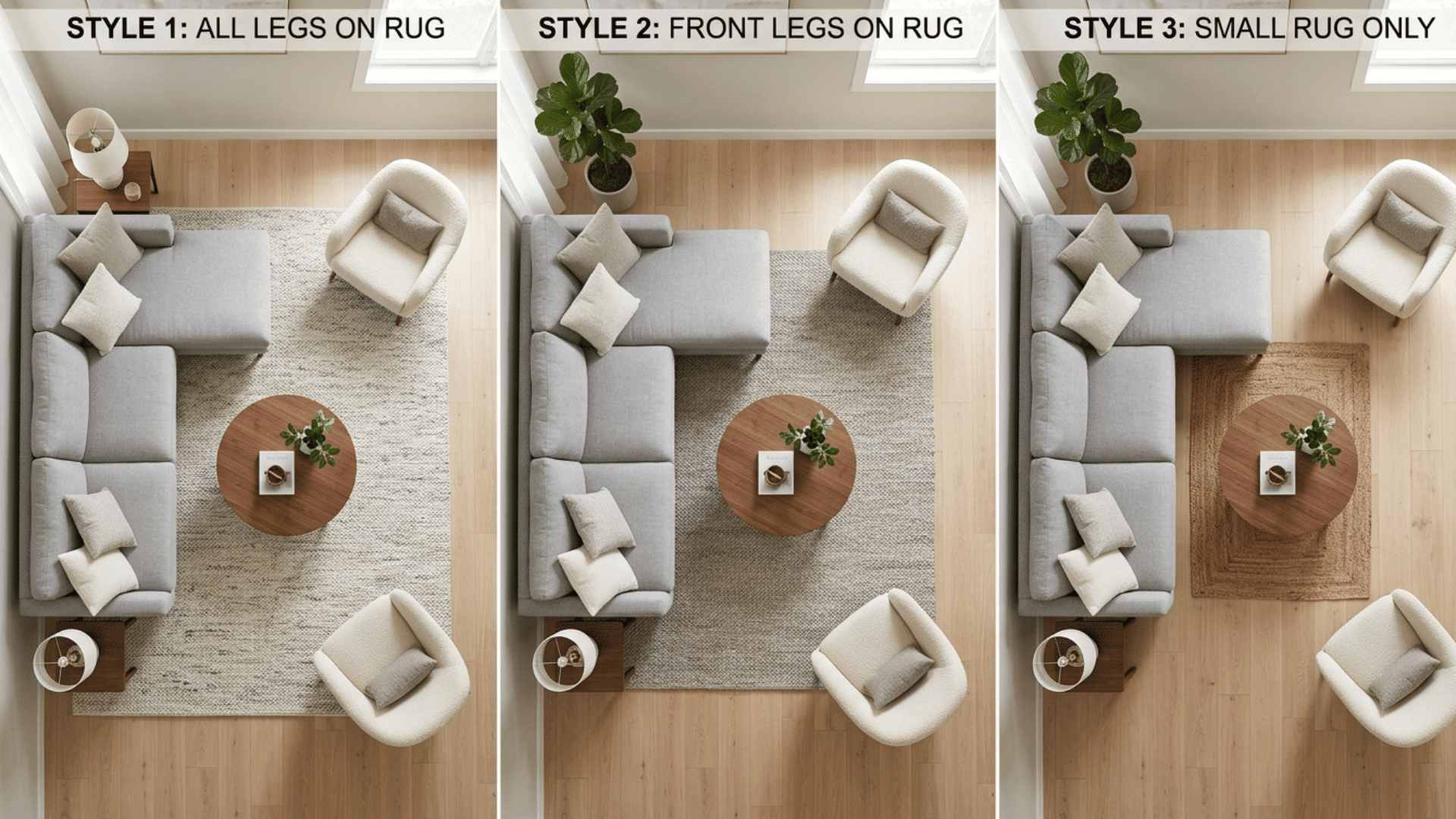
Choosing the right rug size for the living room depends on how your furniture is placed.
- In larger rooms, placing all the legs of the sofa and chairs on the rug creates a clean, well-connected look, especially with 8×10 or 9×12 rugs.
- A more common option is keeping just the front legs on the rug, which works well with 6×9 or 8×10 sizes and feels balanced.
- For smaller spaces, a 5×7 rug under only the coffee table helps save space while still adding warmth.
Following this living room rug size advice will improve comfort and style while tying your furniture layout together smoothly.
Rug Size for Bedroom
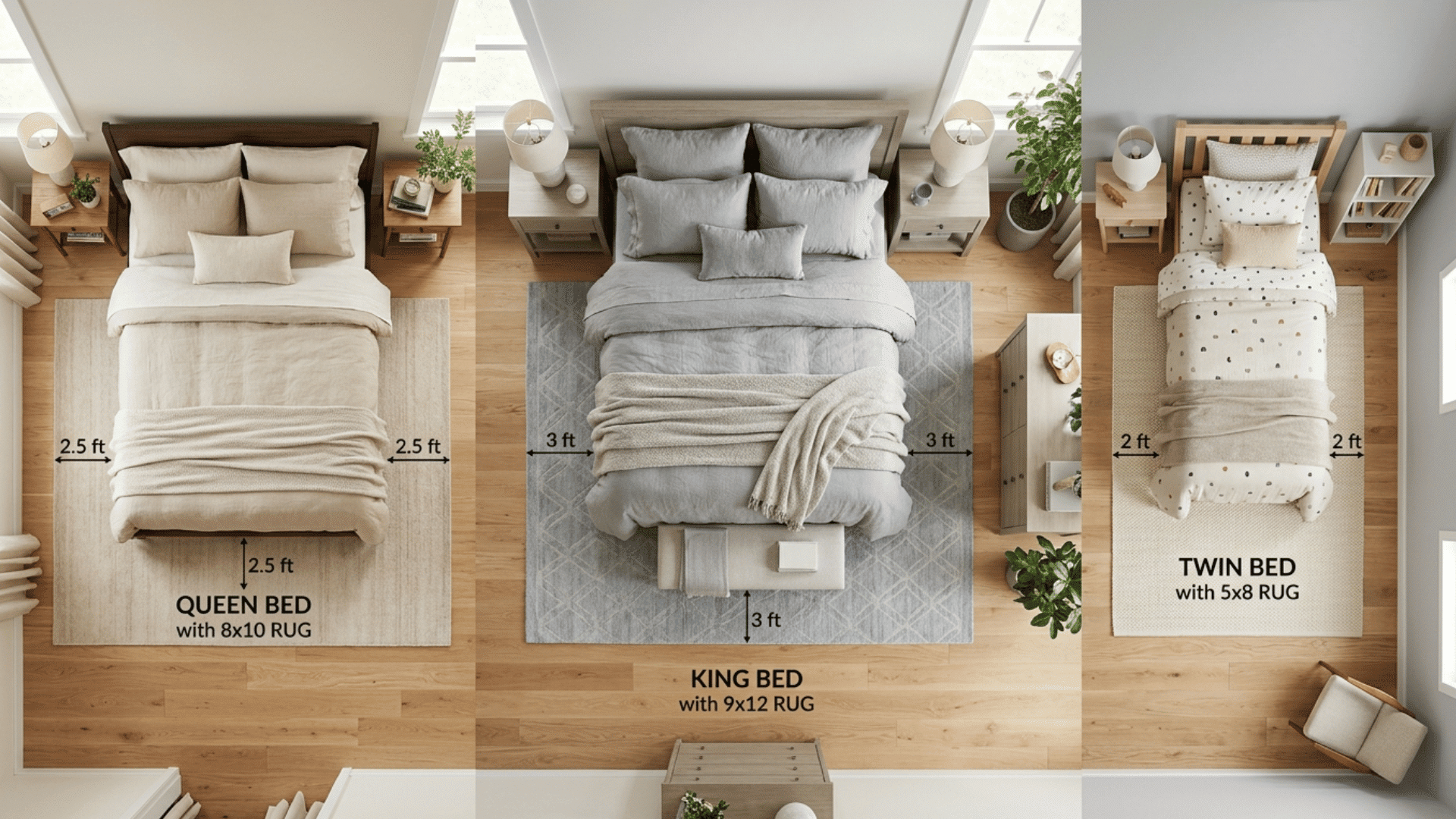
Choosing the right rug can change your bedroom into a cozy retreat.
- Queen Bed: An 8×10 rug is usually the perfect size for a queen bed. It should extend beyond both sides of the bed and at the foot of the bed, leaving enough room to step onto it comfortably.
- King Bed: For a king, go bigger with a 9×12 rug. This ensures the rug frames the bed properly and provides ample coverage along the sides.
- Twin Beds: For a small bedroom with a twin-sized bed, you can often use a 5×8. In kids’ rooms or guest rooms with two twin beds, try a runner rug down the middle or a 9×12 rug with both beds entirely on top.
- Furniture placement: The rug should sit about halfway under the bed, starting at the nightstands and extending out beyond the foot of the bed.
Rug Size for Dining Room
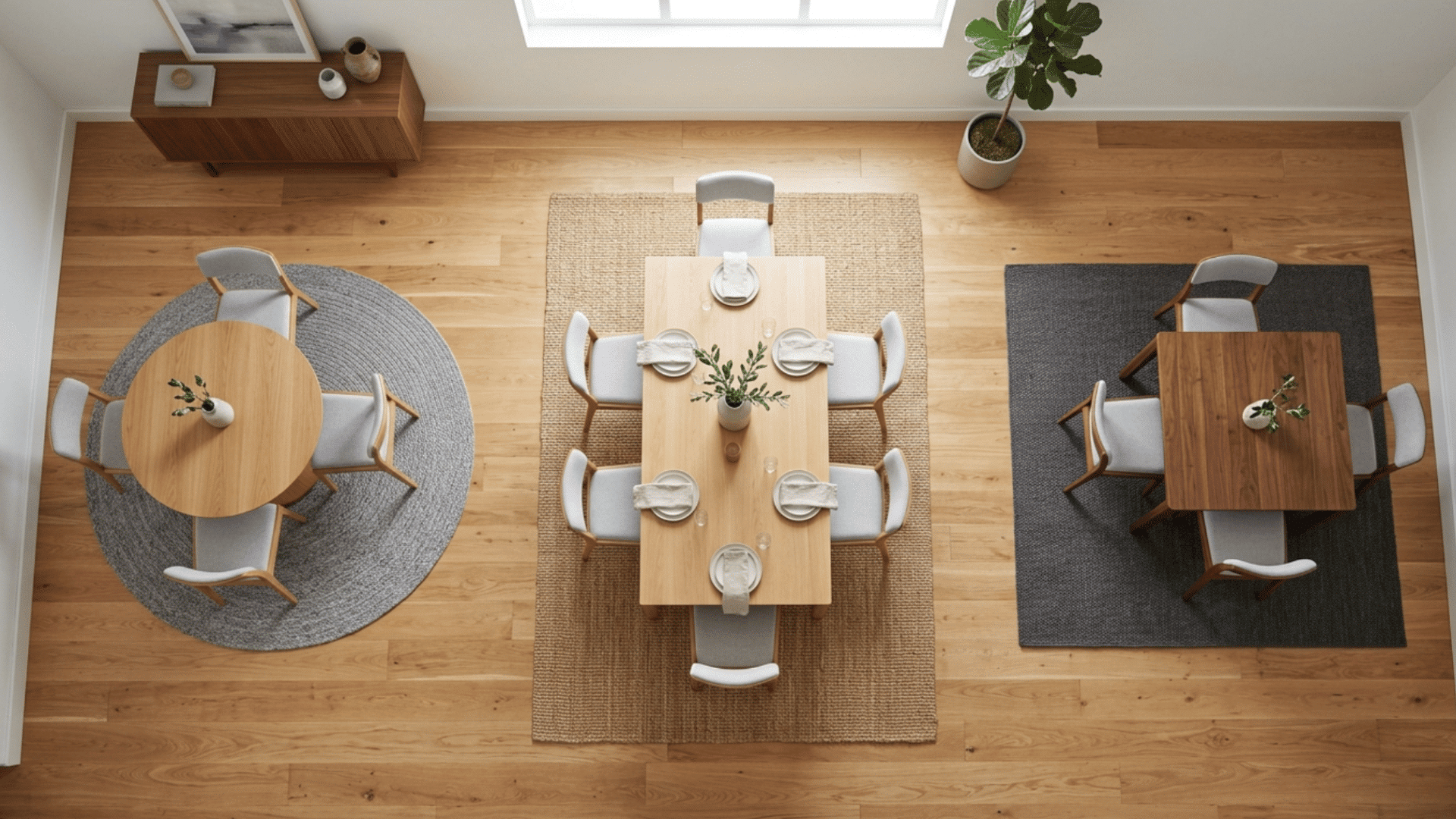
Stick to common rug sizes like 8×10 or 9×12 for larger settings, and 6×9 for smaller rooms.
- For rectangular tables, add at least 24 inches on all sides so chairs stay on the rug even when pulled out.
- Round tables work best with round rugs extending beyond the chair legs.
- Square tables pair well with square rugs for a balanced look.
- Opt for low-pile or flat-weave materials for easy cleaning.
Rug Size for Entryway, Hallway, and Outdoors
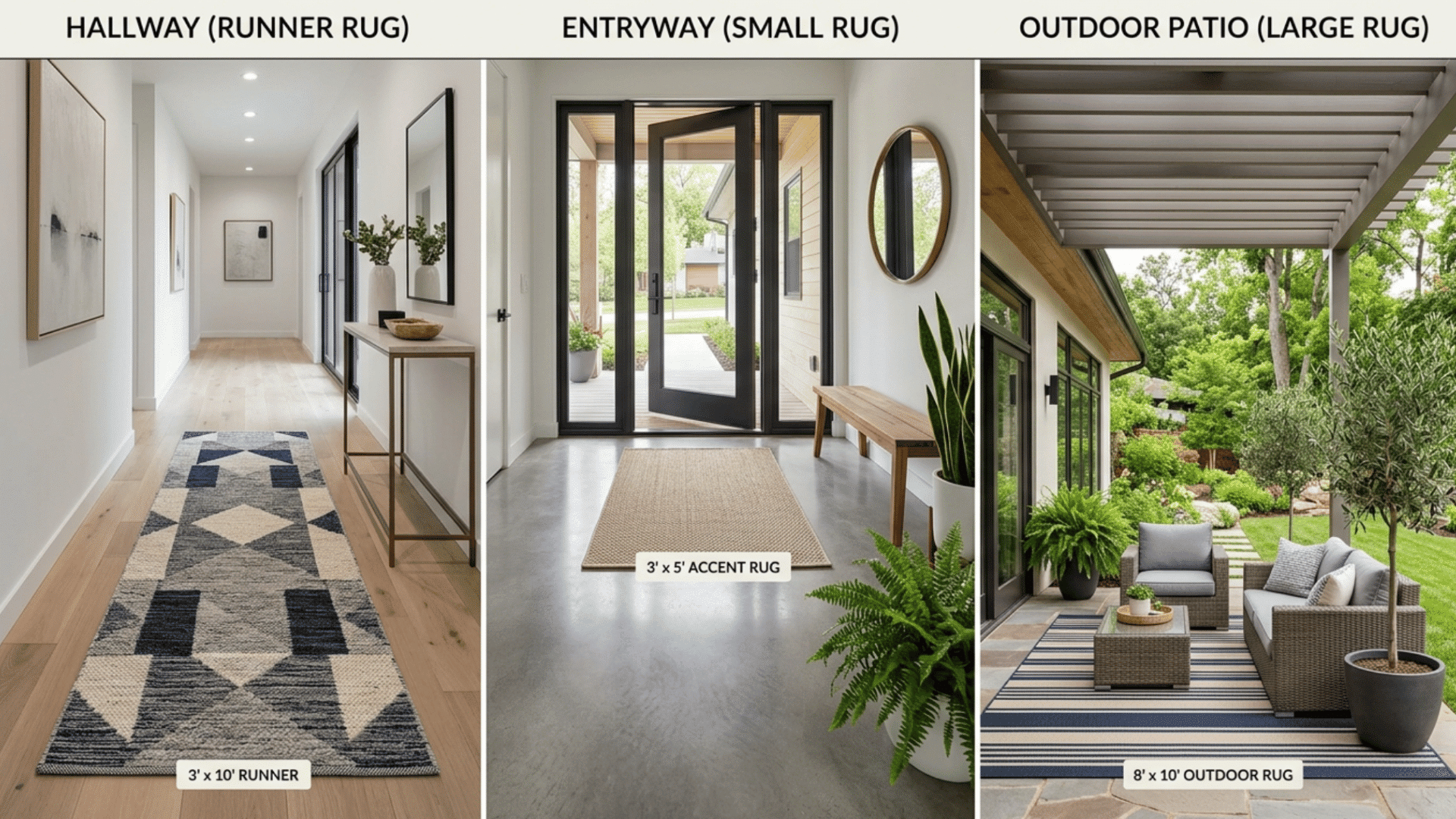
- For narrow spaces, runner rugs are ideal. These common rug sizes ensure hallways feel balanced without overwhelming the space.
- For patios and decks, opt for outdoor rugs that match the area’s shape, leaving at least 12 inches of floor visible around the edges.
- In high-traffic areas, choose durable, weather-resistant materials for longevity.
Just as with selecting a living room rug size, proper proportions are key to maintaining flow and functionality, creating a welcoming and cohesive look indoors and out.
Rug Size for Home Office
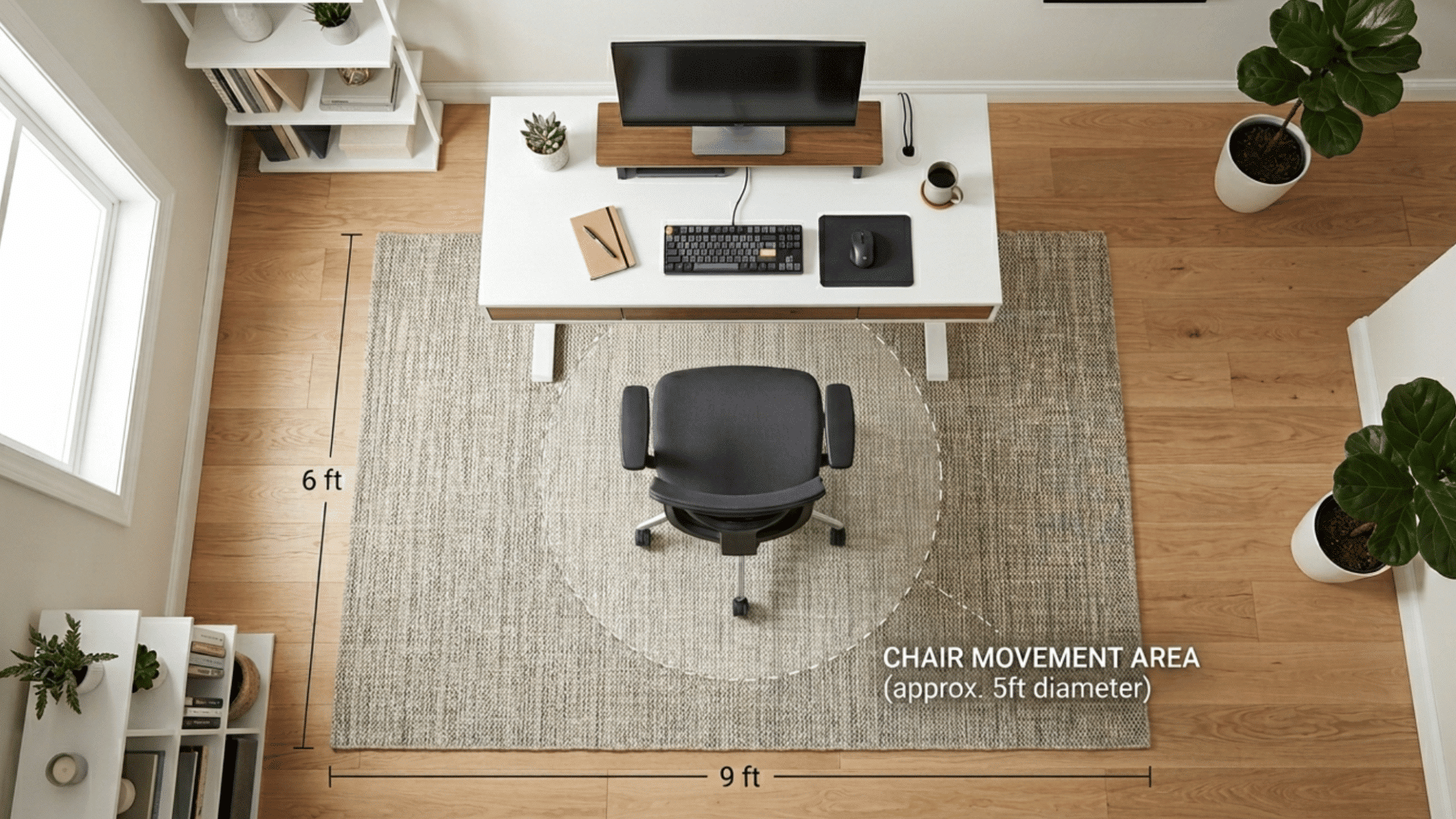
A 5x7or 6×9 rug works really well in a home office, but there’s one thing most people overlook: chair movement.
If you use a rolling desk chair, make sure the rug is large enough for the chair to move freely without catching on the edges.
A low-pile or flat-weave rug is a much better choice here since thick rugs create resistance. Ideally, all four legs of your desk should sit comfortably on the rug for a clean, grounded look.
Smart Tips for Choosing the Right Rug
Picking the right rug size gets easier when you follow a few simple tips. These small details can make a big difference in how your space looks and feels.
- Use Painter’s Tape: Mark the floor to see how the different rug will fit before buying
- Consider Custom-Sized Rugs: Great option for rooms with tricky layouts or unique dimensions
- Balance Style and Function: Choose a rug size that looks good and allows easy movement
- Layer Your Rug: Place a smaller rug over a larger one to add depth and texture
- Keep Space from Walls: Leave 12–18 inches of bare floor around the rug for a clean look
- Don’t Skip a Rug Pad: It keeps the rug in place, adds comfort, and protects your flooring
Helpful Rug Size Guides from Different Retailers
Many rug retailers offer helpful size guides that make choosing the right rug much easier.
These guides often include visual layouts, real room examples, and size charts that show how different rugs fit with furniture before making the purchase.
If planning to buy a rug, it’s a good idea to check size guides from brands like IKEA, Wayfair, and Ruggable.
They break things down and help you understand which size will actually work in your space. Referring to these guides before buying can save time and help avoid choosing the wrong rug size.
Final Takeaway
Picking the right rug size doesn’t have to feel overwhelming once you know what to look for. Start with your room dimensions, think about your furniture layout, and measure before you shop.
And if you’re ever stuck between two rug sizes, go bigger. A rug that’s slightly too large almost always looks better than one that feels too small and out of place.
The right rug ties everything together, makes the space feel complete, and pulls your whole decor in the right direction. Ready to find your perfect fit? Start measuring your space today and shop with confidence.
Frequently Asked Questions
How Do I Measure My Room for a Rug?
Measure the seating or furniture area, not just the full room. Focus on where the rug will sit and leave equal space around the edges for balance.
Should Rugs Match the Furniture or Floor Color?
A rug doesn’t need to match exactly. It should complement your furniture and floor while adding contrast or tying colors together.
How Thick Should a Rug Be for Different Rooms?
Low-pile rugs work best in high-traffic areas like living rooms and hallways, while thicker rugs feel more comfortable in bedrooms