
There’s something about a porch that just feels right. Maybe it’s the fresh air, or maybe it’s having a spot that’s yours, somewhere between inside and outside, where the day slows down a little.
The way people are designing them today is smarter, cozier, and honestly way more creative than most expect. And the best part about this is that these ideas work for almost any space, big or small.
If you’re just getting started, even a few simple porch upgradescan completely change the feel. So if a porch upgrade has ever crossed your mind, what’s below might just change how you see that space entirely.
Why Porches Were Never Out of Style?
Porches have a lasting appeal because they serve a clear purpose in everyday life. They offer a simple space to step outside or relax.
Unlike many designs that come and go, porches are built around comfort, which never loses value.
They also play a big role in how a home looks from the street, adding warmth and character. If you’re thinking beyond just the porch, improving your overall home exterior can improve the entire look.
In many homes, a porch is part of daily routine, whether it’s a quiet morning or a quick break outside. This mix of usefulness and charm keeps porches relevant year after year.
What are the Latest Trends in Porch Design Today?
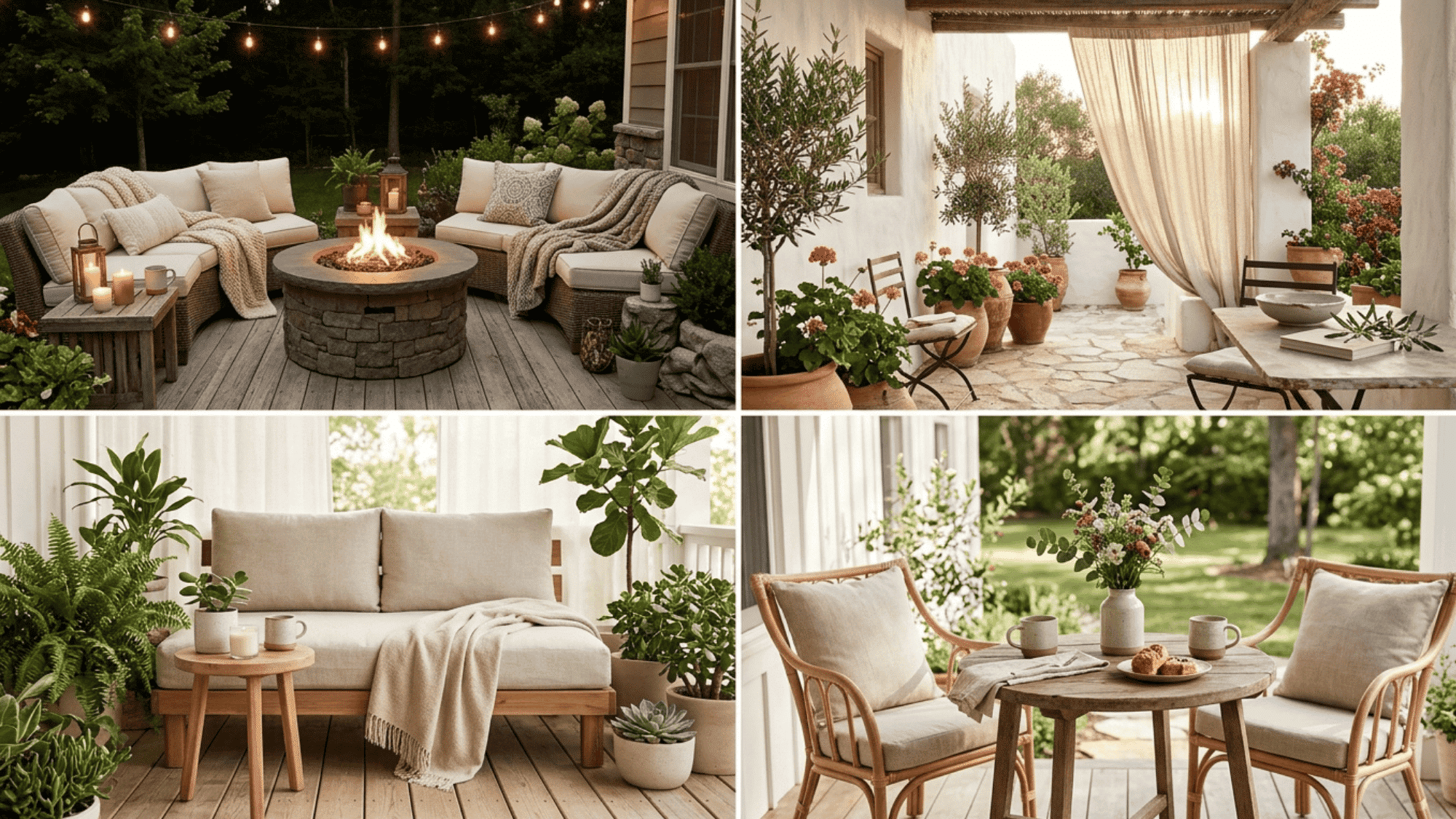
Porch design in 2026 is moving beyond simple decoration. People are focusing on comfort, function, and everyday usability.
These trends show how porches are evolving into modern extensions of the home rather than merely entryways:
1. Multi-Use Porch Layouts
Modern porches are being designed to support multiple activities at once. Instead of a single seating setup, the focus is on creating a layout that adapts to daily needs.
This makes better use of available space without increasing square footage. Here’s how to make a multi-use layout work effectively:
- Combine seating and dining without overcrowding
- Use furniture placement to separate activities
- Keep pathways clear for easy movement
2. Outdoor Living Room Concept
The idea is to create a space where people can spend longer, more comfortable periods, similar to a living room in the house. To create that living room feel outdoors, focus on:
- Use deep seating for better comfort
- Add a central table to anchor the space
- Layer textiles for a more finished look
3. Fire Features Integration
Fire features are becoming a key part of porch planning rather than an afterthought. They help extend usability into cooler months while naturally drawing people together in one area.
This makes the porch more functional across different seasons. To integrate a fire feature effectively:
- Position seating around the fire element
- Choose a size based on porch space
- Use safe, weather-friendly materials
4. Wellness-Focused Spaces
There is a growing focus on using porches as spaces to unwind and disconnect. Instead of filling the area with decor, the goal is to create a calm environment that supports relaxation and quiet time.
- Limit decor to essential items
- Focus on comfort-driven seating
- Keep the layout open and uncluttered
5. Indoor-Outdoor Continuity
Porches are being designed to feel connected to the interior of the home. This is achieved by maintaining consistency in design elements so the transition between spaces feels natural.
To achieve this smooth connection:
- Repeat interior colors outside
- Match materials across spaces
- Align furniture styles for consistency
6. Smart Porch Features
Technology is playing a bigger role in how porches are used and maintained. Smart features are being added to improve convenience without changing the overall design.
This makes outdoor spaces easier to manage in daily life, with these features:
- Install lighting with timers or sensors
- Use speakers for background audio
- Add basic security elements if needed
7. Statement Ceiling Design
Ceilings are no longer overlooked; they are now used to enhance the overall design. Adding detail above helps balance the visual weight of the space without crowding the floor.
This makes even simple porches feel more complete. To improve your porch ceiling:
- Use paneling for added texture
- Try a subtle color contrast above
- Keep the design balanced with the rest of the space
8. Curved Furniture Shapes
Furniture design is shifting toward softer forms that feel more natural in outdoor settings. Straight lines are being replaced with shapes that create a smoother visual flow. To bring in this trend:
- Choose rounded seating for comfort
- Avoid overly sharp or bulky pieces
- Maintain spacing for better flow
9. European-Inspired Styling
Porch styling draws on European outdoor spaces that emphasize simplicity and natural materials. The emphasis is on creating a relaxed, effortless look rather than a highly styled setup.
This approach keeps the space timeless. To achieve this style:
- Stick to earthy, neutral tones
- Use simple, functional furniture
- Avoid over-decorating the space
10. Defined Functional Zones
Organizing the porch into clear sections helps improve how the space is used. Even without physical dividers, thoughtful layout planning can make the porch feel structured and efficient.
This is especially useful for smaller areas. To define zones effectively:
- Use rugs to visually separate zones
- Arrange furniture based on purpose
- Keep each section simple and clear
11. Low-Maintenance Materials
People are choosing materials that hold up well in outdoor conditions and require less frequent upkeep. This makes the porch easier to maintain over time. To ensure low maintenance:
- Pick weather-resistant fabrics
- Use finishes that handle wear well
- Avoid high-maintenance surfaces
12. Outdoor Dining Integration
Porches are increasingly being used for everyday meals, not just occasional use. Even small setups can support this shift toward more practical outdoor living. It adds another layer of function to the space. To set up a dining area:
- Choose compact table sizes
- Place near easy access points
- Keep the surrounding space open
13. Smooth Lighting Design
Lighting is now being planned as part of the overall layout rather than added later. This improves both usability and the overall feel of the space during evenings. To design effective lighting:
- Layer different light sources
- Focus on even light distribution
- Avoid overly harsh brightness
14. Compact Space Optimization
With many homes having smaller porches, making the most of limited space is essential. Smart design choices help maintain function without making the area feel crowded.
This keeps the layout practical and easy to use. To optimize small spaces:
- Use slim-profile furniture
- Keep layouts open and flexible
- Avoid unnecessary additions
15. Natural Material Integration
Natural materials are being preferred for their ability to blend with the outdoor surroundings. They add warmth and texture without needing heavy decoration. To use materials effectively:
- Mix wood and woven textures
- Keep finishes simple and raw
- Choose materials that age well
16. Personalized Styling
Porches are becoming more reflective of how people actually live rather than how spaces are styled for display. The focus is on practicality and comfort over perfection. This creates a more natural and usable environment.
To achieve this look:
- Arrange based on daily habits
- Keep decor functional
- Avoid over-styling the space
The Bottom line
Porches haven’t stayed popular by accident. They work because they feel good, and now, they can look just as good too. It can be a fire feature, smarter lighting, or just rearranging what’s already there; small changes always add up.
A porch doesn’t need to be big to be great. It just needs a little thought. The trends here aren’t about following rules. They’re about creating a space that’s actually used and enjoyed.
So pick one idea. Start small. Because once that porch starts coming together, it’s hard not to fall a little more in love with it every single day.