



Every time I opened my pantry, something fell out, expired cans hid in the back, and I kept buying duplicates of things I already had.
And that frustrating cycle of losing ingredients to the pantry black hole is more common than most people admit.
What helped me was not a fancy renovation or a Pinterest setup; it was real forum discussions and tips from everyday people who figured out how to organize a pantry in normal kitchens.
The pantry storage ideas below come straight from home organizers who tested things and found simple systems that actually stick.
But first, it helps to understand why most pantries fall apart, because fixing the root cause makes everything else easier to maintain.
Why Most Pantries Stop Working Over Time
Most pantry problems have nothing to do with a lack of space or the right storage bins. The real issue is usually a system that was never built to match the way you actually shop, cook, and put things away.
These are the most common reasons pantries fall apart faster than they get organized.
- No clear zones: When everything shares the same shelf, nothing is ever easy to find.
- Too many categories: Overly detailed groupings make it harder to put things back consistently.
- Buying before checking: Restocking without knowing what you already have creates clutter fast.
- Ignoring expiry dates: Old items pushed to the back make the whole space feel overwhelming.
- Storage that fights the space: Bins and baskets that do not fit the shelf depth waste more room than they save.
Real Pantry Tips from Real Home Organizers
These tips came from real people sharing what actually worked in their own kitchens. From deep pantries to tiny shelves, the advice below is practical, tested, and completely free of perfection pressure.
A pantry over two feet deep, items would expire before ever being reached again. The fix was simple — everyday items up front, backups directly behind, lazy susans for visibility, and stacked cardboard inserts to raise back items so nothing gets lost or forgotten.
Source – u/phoebe-buffey
A simple inventory list helps check what you already have before shopping rather than guessing and buying duplicates. A basic app or Google Sheet is all it takes to make a deep pantry feel completely manageable.
Source- u/mariners2o6
Foldable wire shelves create instant extra levels without permanent installation, while category baskets let you grab what you need without moving everything else. Decanting into clear containers makes it even easier to see what is running low at a glance.
Source – u/SeekinSanctification
Everyday food stays up front within easy reach while seldom-used appliances and bulky items live in the back. Moving things out of the way when needed takes about two minutes and only happens occasionally.
Source – u/2worldtraveler
A former chef here, put liquids at the very bottom so spills and breakage do not ruin anything below, loose grains go on the next shelf up, and dry everyday foods sit higher for easy daily access. Kitchen equipment and rarely used items live at the very top.
Source – u/FibroBitch96
Pantry Storage Ideas That Actually Work
The forum tips above cover some of the smartest ways to handle deep shelves and limited space, but there are plenty of other pantry storage ideas worth knowing about.
The ones below are simple, budget-friendly, and easy to implement in almost any kitchen. Pick what fits your space and build from there.
1. Use Clear Containers for Staples
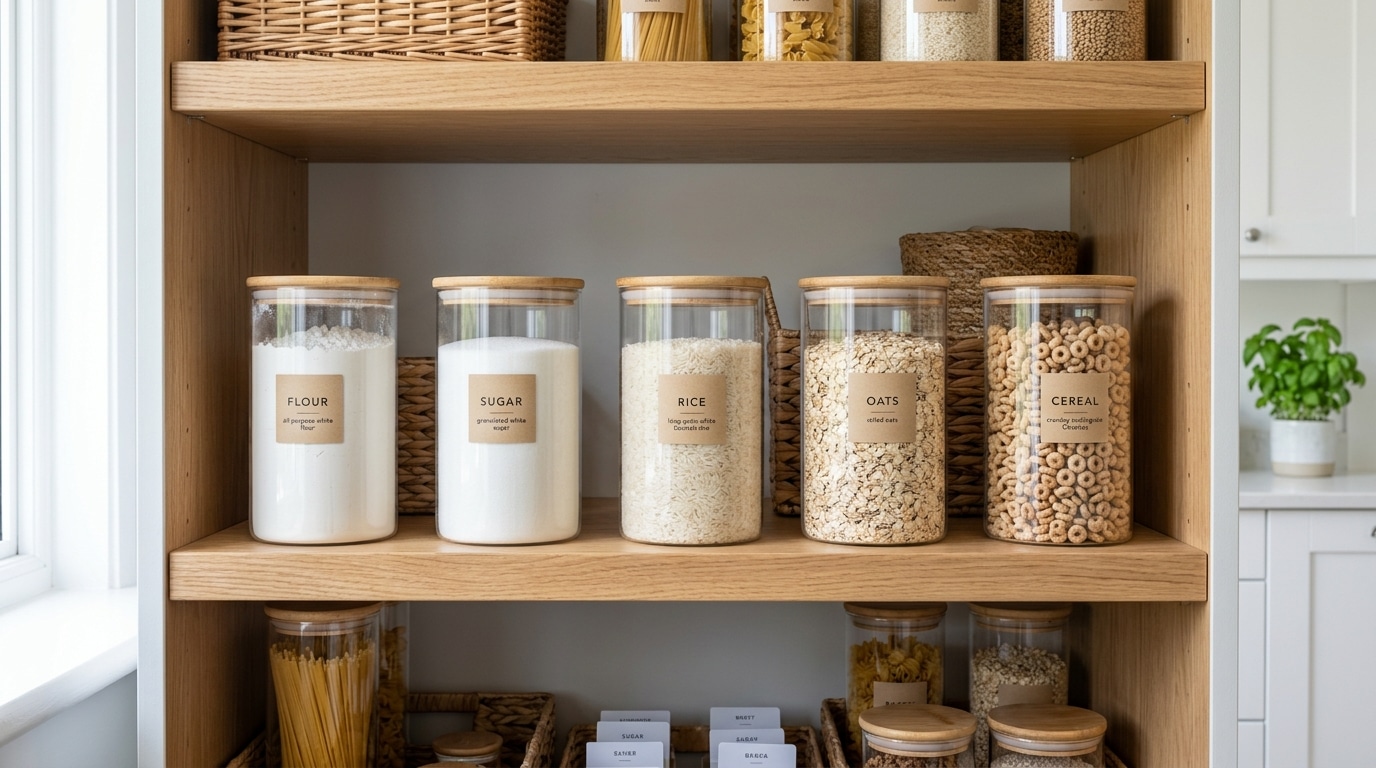
Storing flour, sugar, rice, and cereal in transparent containers makes it easy to see exactly what you have without opening anything.
It also keeps dry goods fresher for longer and makes restocking feel less like guesswork. Any airtight, clear container works; it does not have to be a matching set.
2. Repurpose Glass Jars
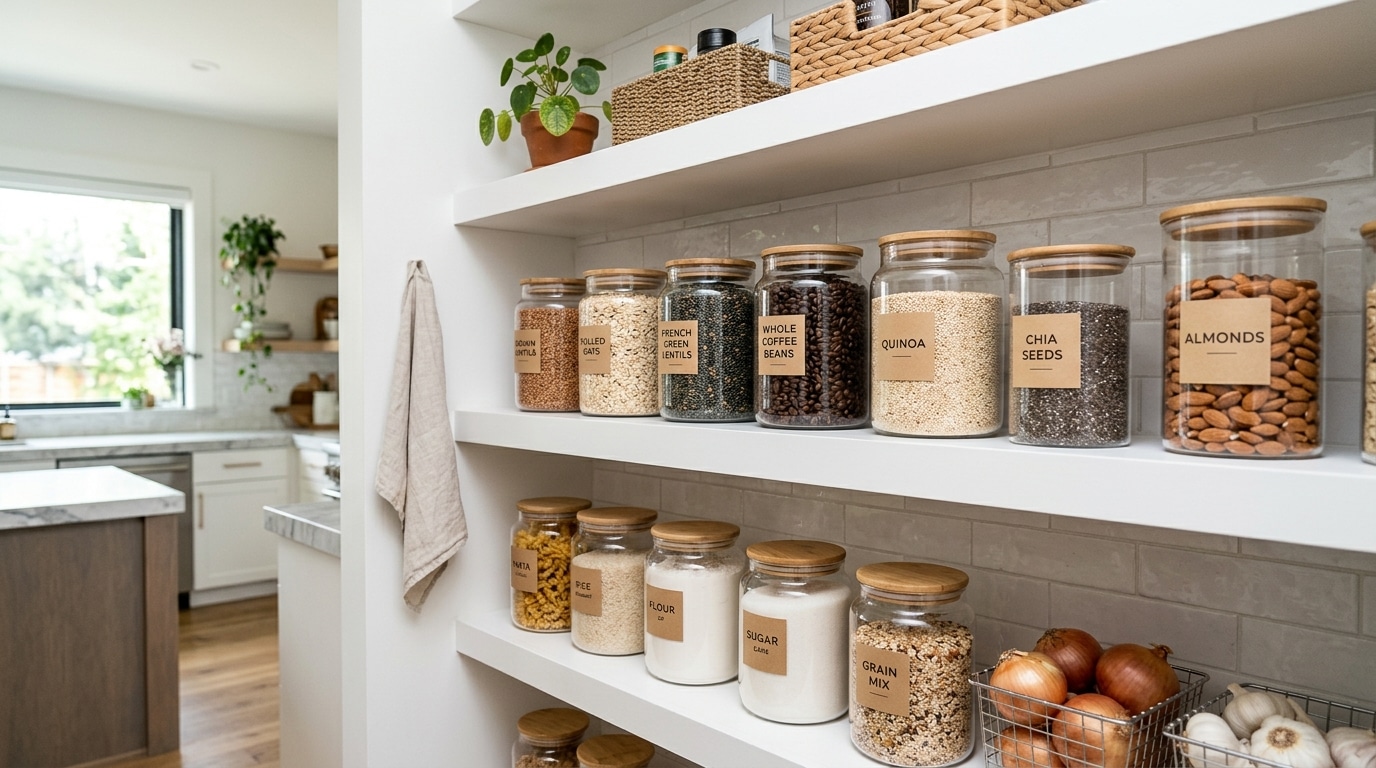
Pasta sauce, pickle, and jam jars are free once empty and work perfectly for storing dry goods like lentils, oats, or coffee.
They are easy to clean, stack reasonably well, and reduce single-use plastic in the kitchen. It is one of the simplest and most affordable pantry storage ideas that also looks good.
3. Add Lazy Susans to Deep Shelves
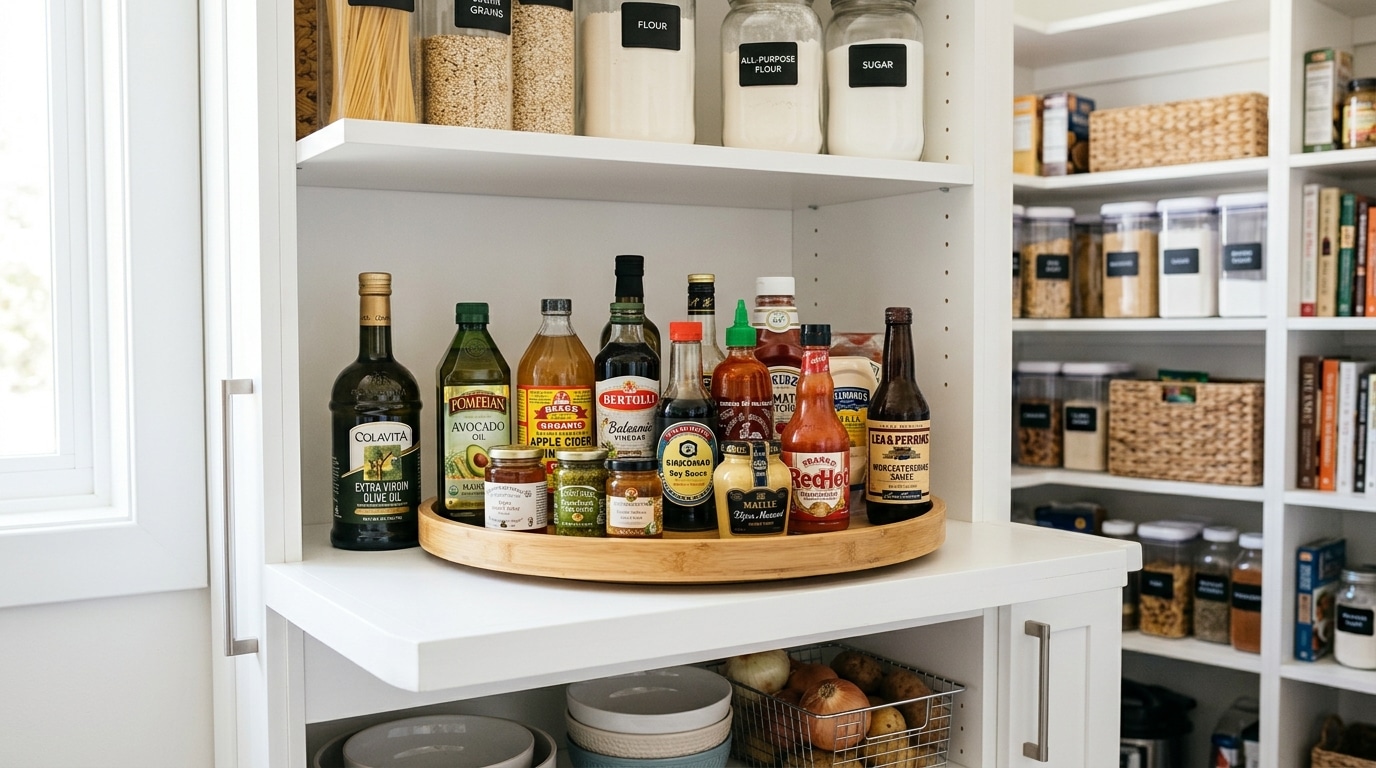
A Lazy Susan is one of the most useful things you can add to a deep pantry shelf, especially for oils, vinegars, sauces, and condiments that tend to get pushed to the back.
Spinning to reach something takes two seconds and completely eliminates the problem of items being forgotten in corners. One Lazy Susan per shelf is usually enough to make a noticeable difference.
4. Install Tiered Shelf Organizers
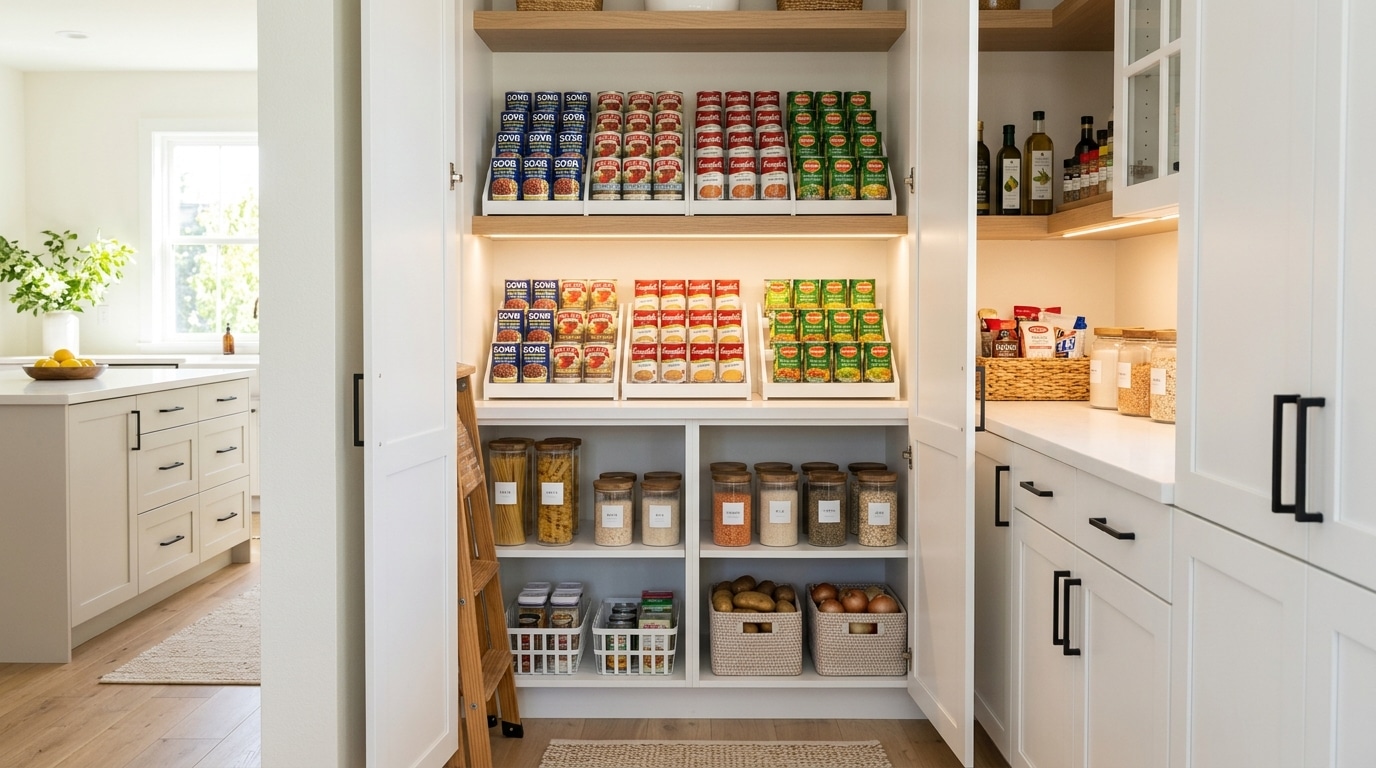
Tiered organizers let you see every can or jar at a glance without having to move anything out of the way first. They are especially useful for canned goods where
the back row always seems to disappear. Most are adjustable and easy to reposition as your pantry needs change.
5. Create Zones with Bins
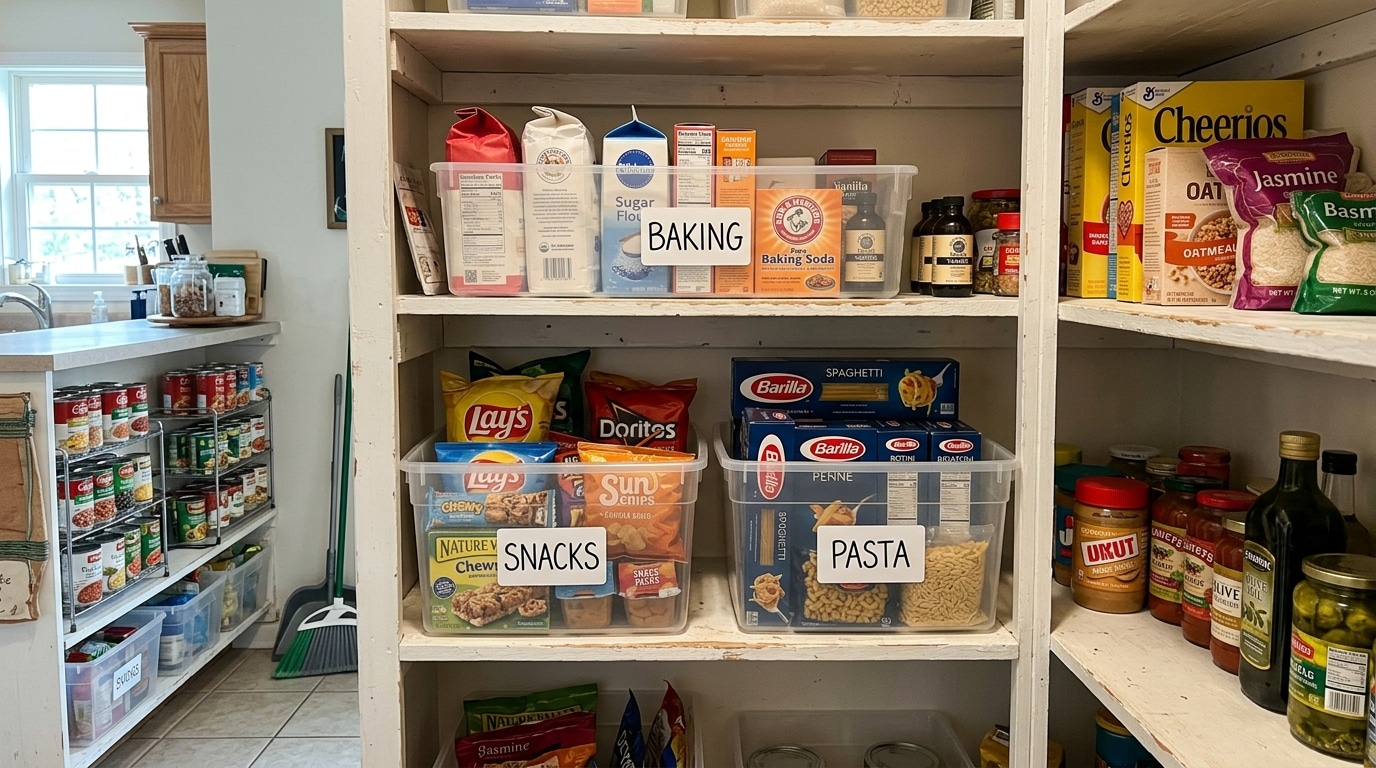
Grouping similar items together in labeled bins, one for snacks, one for baking, and one for pasta, makes restocking faster and helps everyone in the household put things back in the right place.
Zones work best when they match how you actually cook rather than how a perfectly curated pantry photo looks. Even basic plastic bins from a dollar store do the job well.
6. Use Shoeboxes or Cereal Boxes as Dividers
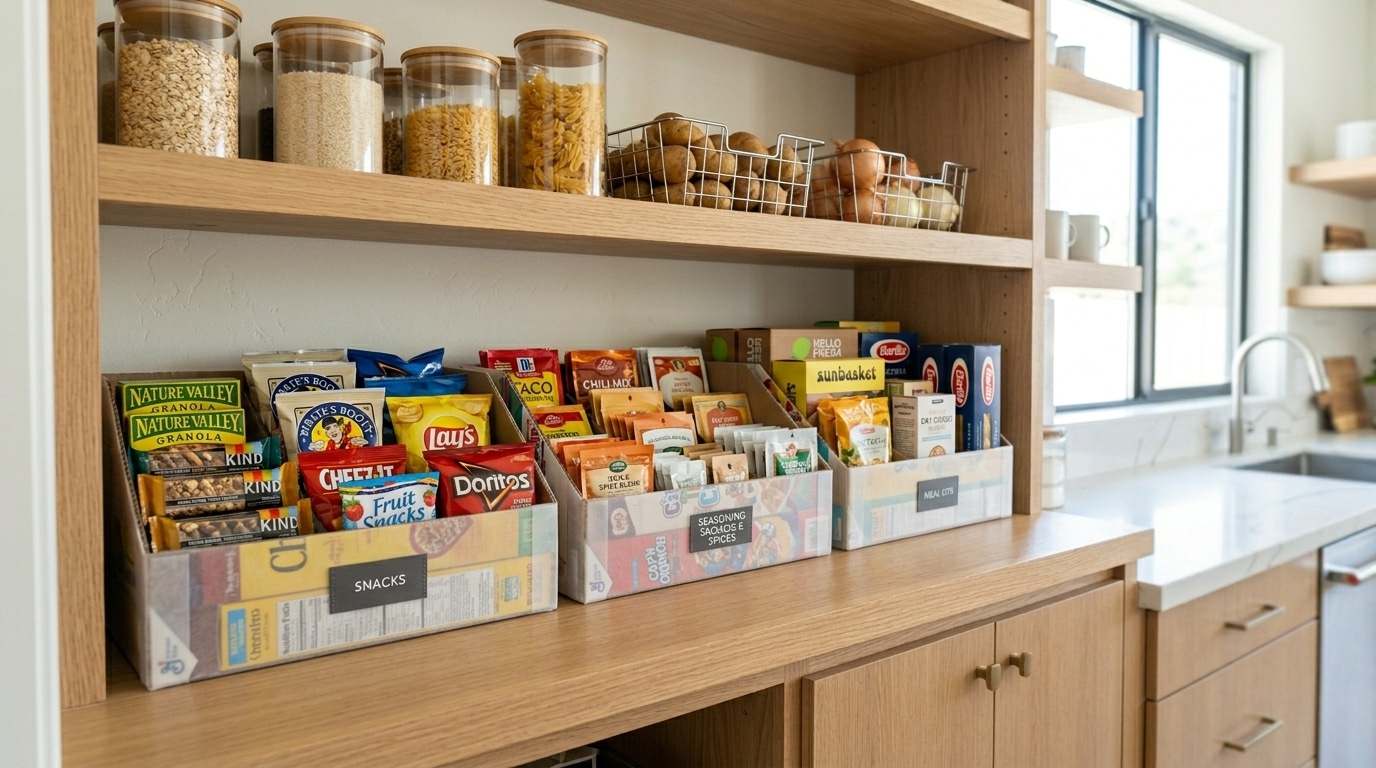
Before buying organizers, try cutting down cereal boxes or repurposing shoeboxes to separate snack packets, meal kits, and seasoning sachets on a shelf.
They fit surprisingly well, cost nothing, and can be replaced anytime without guilt. It is a low-effort fix that makes a cluttered shelf feel instantly more manageable.
7. Store Small Items in Muffin Tins
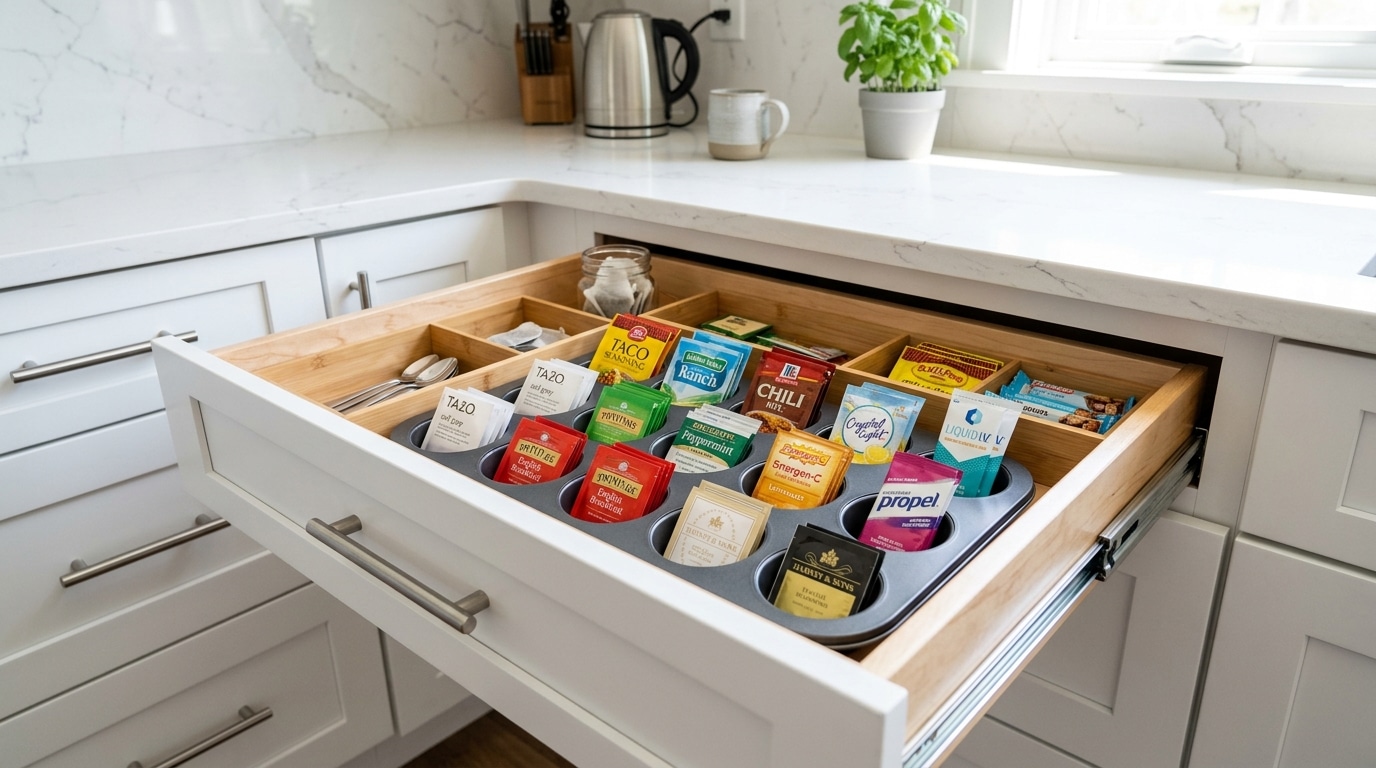
A muffin tin tucked into a drawer or on a low shelf works surprisingly well for organizing tea bags, seasoning packets, and drink mixes by type.
Each cup holds just enough to keep things separated without taking up much space. It is a creative pantry storage idea that costs nothing if you already own one.
8. Keep Open Packages Together
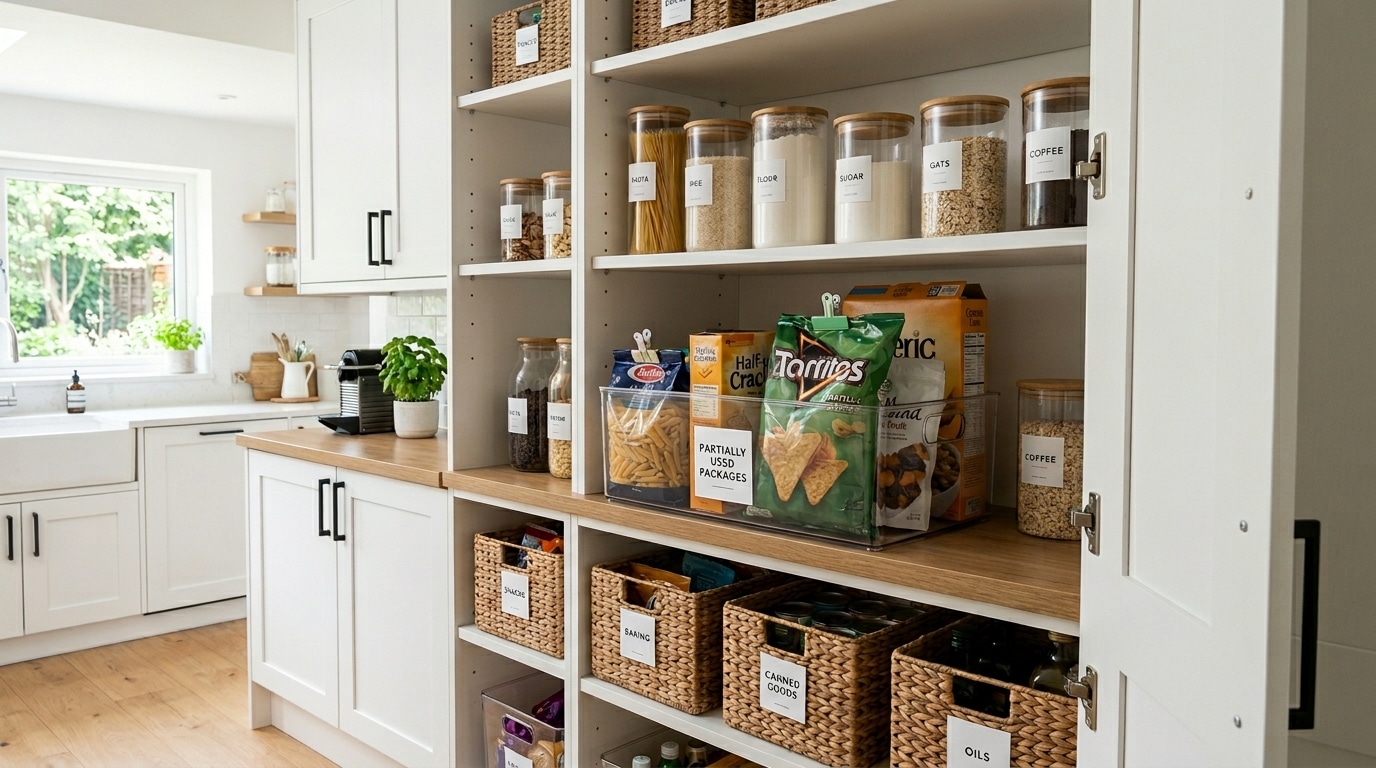
Designating one bin specifically for partially used bags and open boxes stops loose packaging from spreading across every shelf. When everything is open and lives in one spot, nothing gets forgotten,
and you naturally use it up before buying more. It is a small habit that quietly prevents a lot of unnecessary waste and clutter.
9. Maximize Door Space
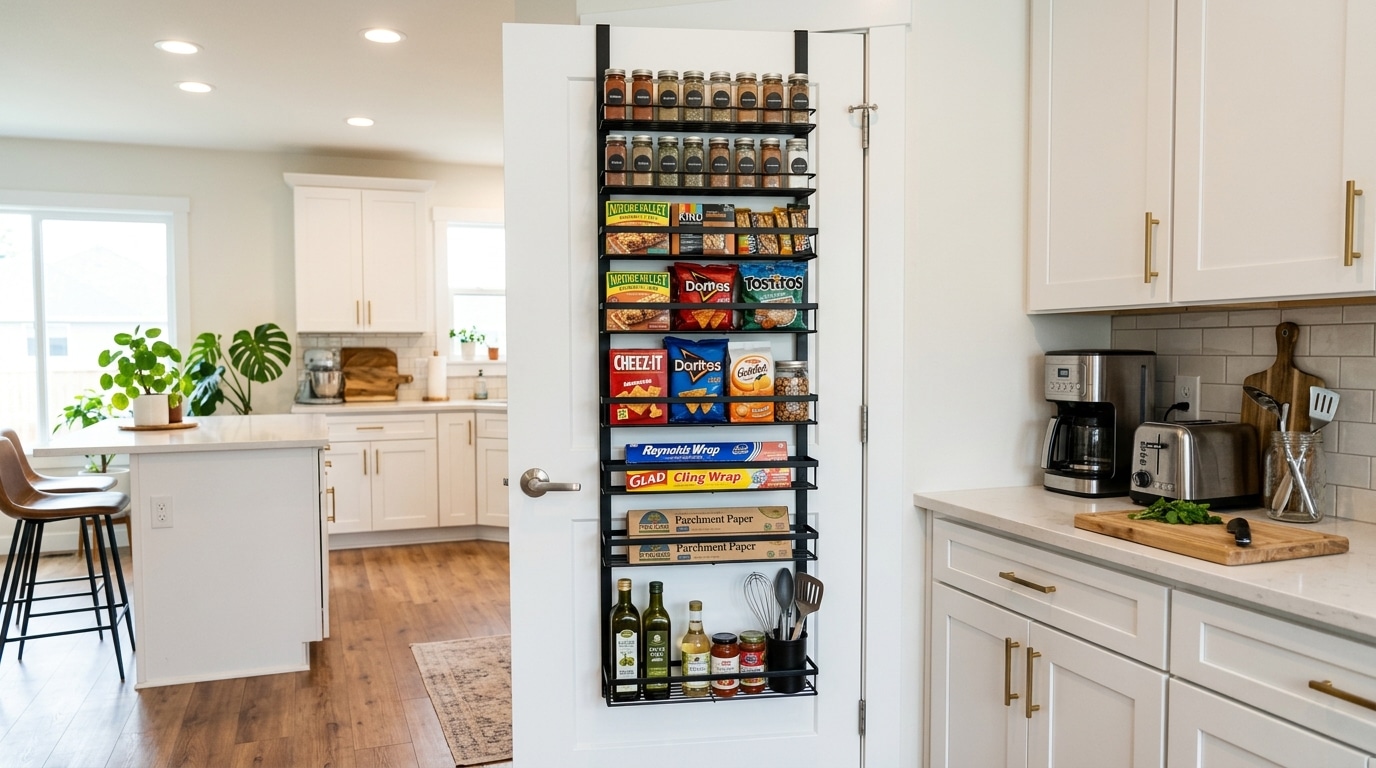
The back of a pantry door is often completely wasted space that can hold spices, snacks, foil, and small packets with a simple over-the-door organizer. Most options are affordable,
easy to install without tools, and free up a surprising amount of shelf space inside. It works especially well in smaller kitchens where every inch of storage matters.
10. Add Under-Shelf Baskets
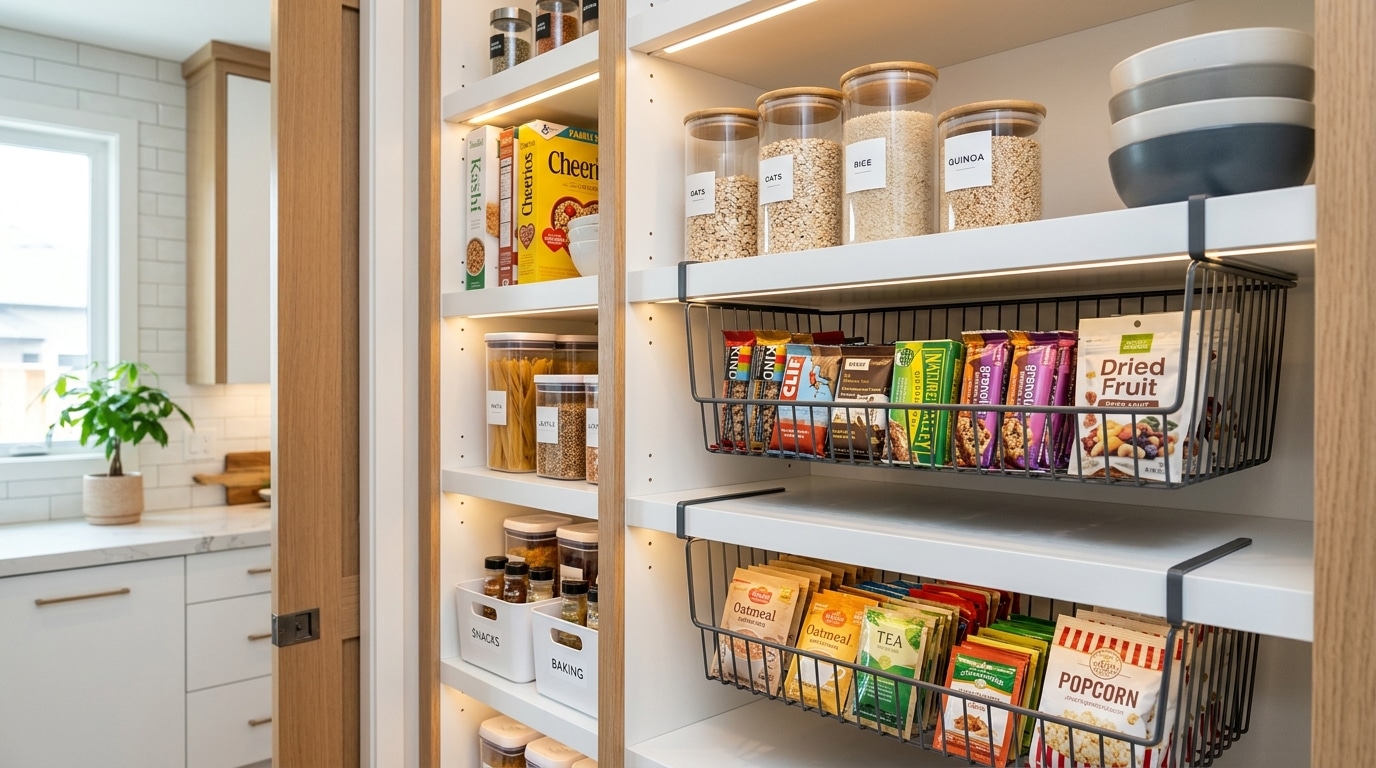
Under-shelf baskets clip onto existing shelves and provide an extra layer of storage for lightweight items such as snack bars, foil packets, or small bags.
They are an easy way to use the vertical space between shelves that would otherwise go completely unused. Most clip on without any tools and can be moved around as needed.
11. Store Baking Sheets Vertically with Tension Rods
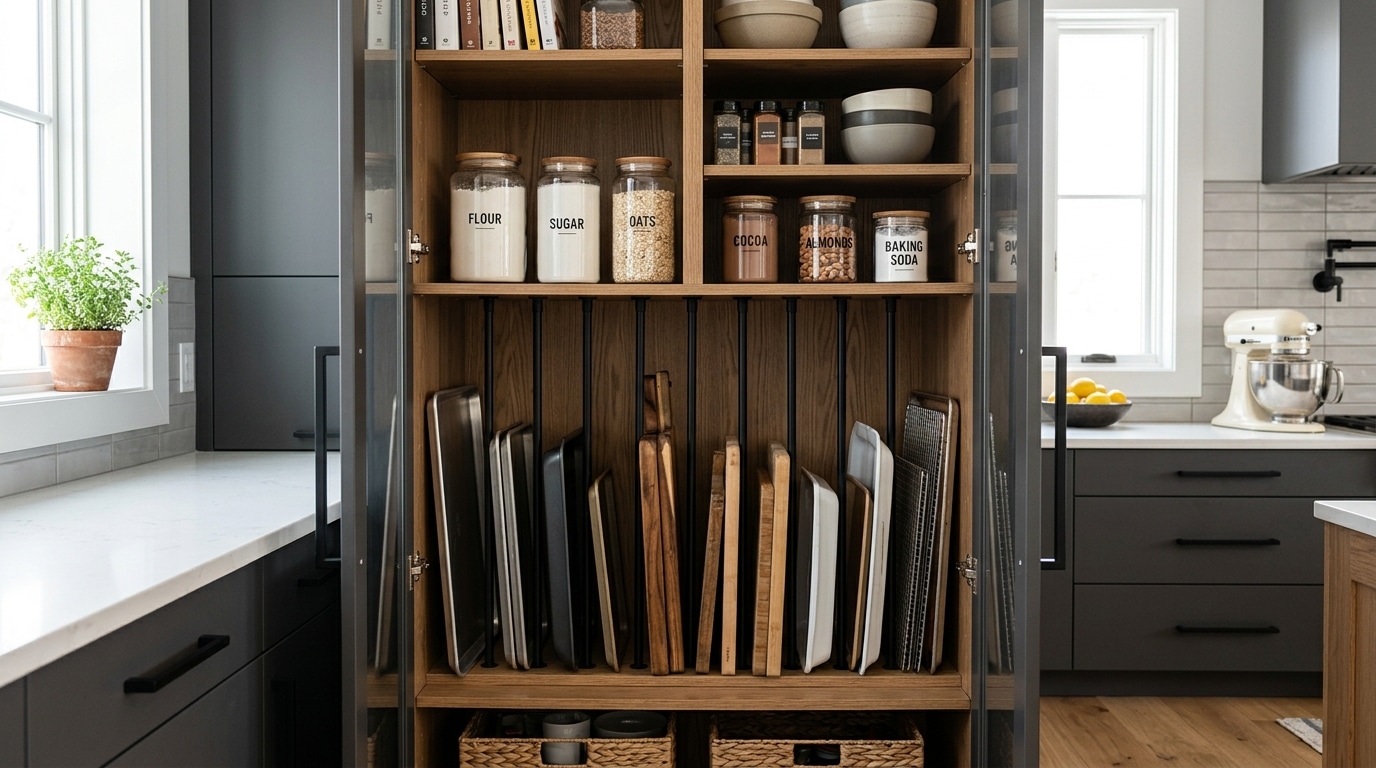
Standing baking sheets, cutting boards, and trays vertically between tension rods makes them far easier to grab without pulling out a heavy stack.
It also frees up flat shelf space for food and keeps the pantry feeling less cluttered overall. Two tension rods placed a few inches apart on a shelf are all it takes to make this work.
12. Try Magnetic Spice Storage
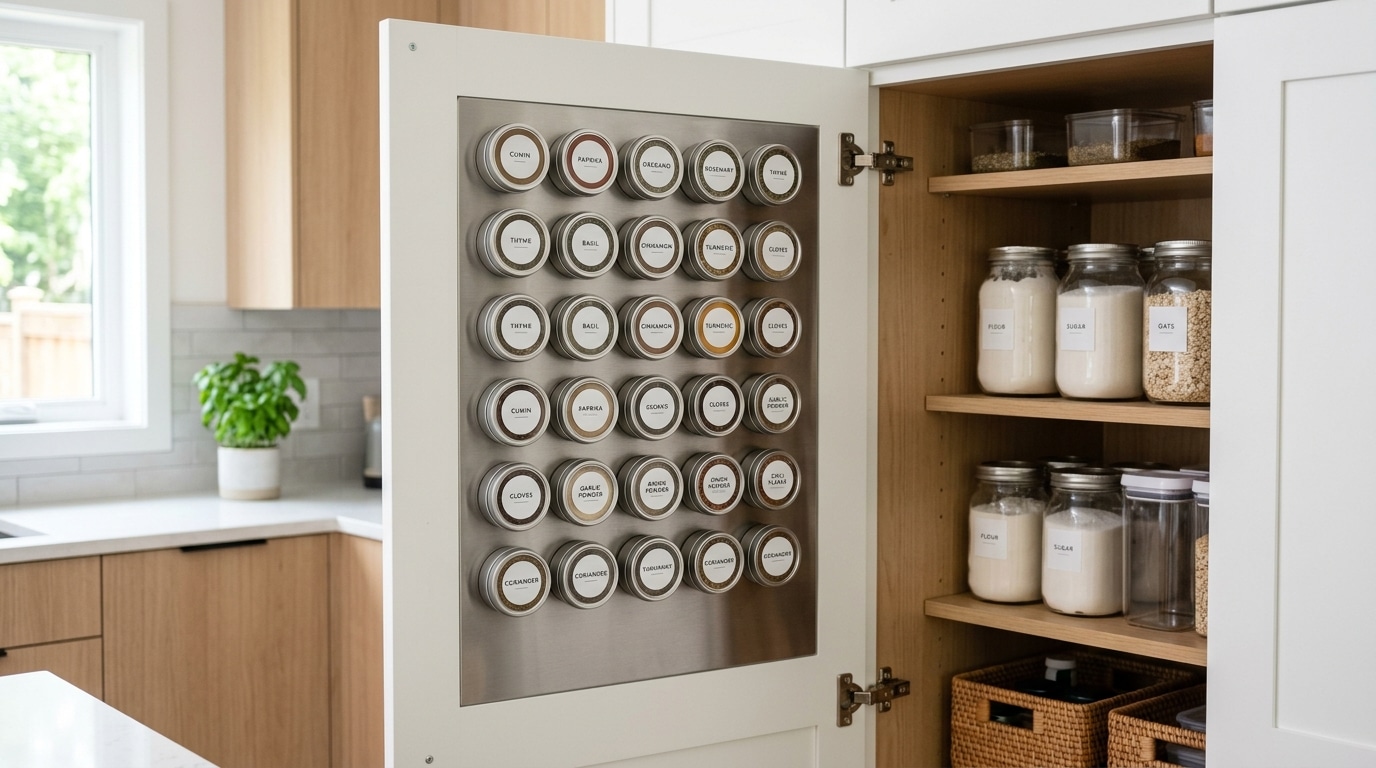
Magnetic spice tins attached to a metal surface inside the pantry door or on the side of a shelf unit instantly free up an entire shelf.
They keep spices visible, accessible, and off the main shelving where they tend to crowd everything else. It is a clever pantry storage idea that works especially well in kitchens where counter and shelf space is tight.
How to Keep Your Pantry Organized Once It’s Done
Learning how to organize a pantry is one thing, but building simple habits that maintain it is what makes the difference in the long term. None of these take more than a few minutes, and all of them make a real difference over time.
- Weekly Reset: Spend five minutes tidying shelves before every grocery run so things never spiral out of control.
- Track Inventory: Use a whiteboard, checklist, or free app to know exactly what you have before you shop.
- Reevaluate Regularly: Adjust your zones and storage setup whenever your cooking habits or household needs change.
- Declutter Monthly: Pull out expired or unwanted items once a month before they quietly take over your shelves.
- Label Everything: Clear labels on bins and containers make it easy for everyone in the household to put things back in the right place every time.
Final Thoughts
Organizing a pantry does not happen overnight, and that is completely okay. From clearing out expired items and understanding why the chaos started
Trying real pantry storage ideas from people who have actually been there, every small step adds up to a system that genuinely works for your kitchen and your life.
If you have figured out how to organize a pantry in a way that works for your space, share it in the comments below. The best tips always come from real kitchens, not staged ones.