




Water conservation is becoming increasingly important for many households. Many people are looking for practical ways to reduce water waste and manage resources more efficiently.
Rainwater harvesting systems offer a simple method for collecting and storing rainwater for future use.
From basic collection barrels to larger storage and filtration systems, there are solutions for properties of all sizes and water needs.
If you want to learn about them and how to collect rainwater, this blog explains how they work, the main components involved, and the factors to consider when selecting a system for your home.
What are Rainwater Harvesting Systems?
These systems are designed to collect and store rainwater from rooftops and other catchment surfaces. The collected water can be used for various household and outdoor purposes.
These systems help capture rainfall that would otherwise flow away as runoff. As a result, less water is wasted during periods of rainfall.
They are available in various sizes and designs to meet different water needs. Options range from simple rain barrels to larger storage tank systems.
Understanding rainwater harvesting systems can help in selecting a suitable setup for specific water needs. The right system can support efficient water collection and storage throughout the year.
How Do Rainwater Harvesting Systems Work?
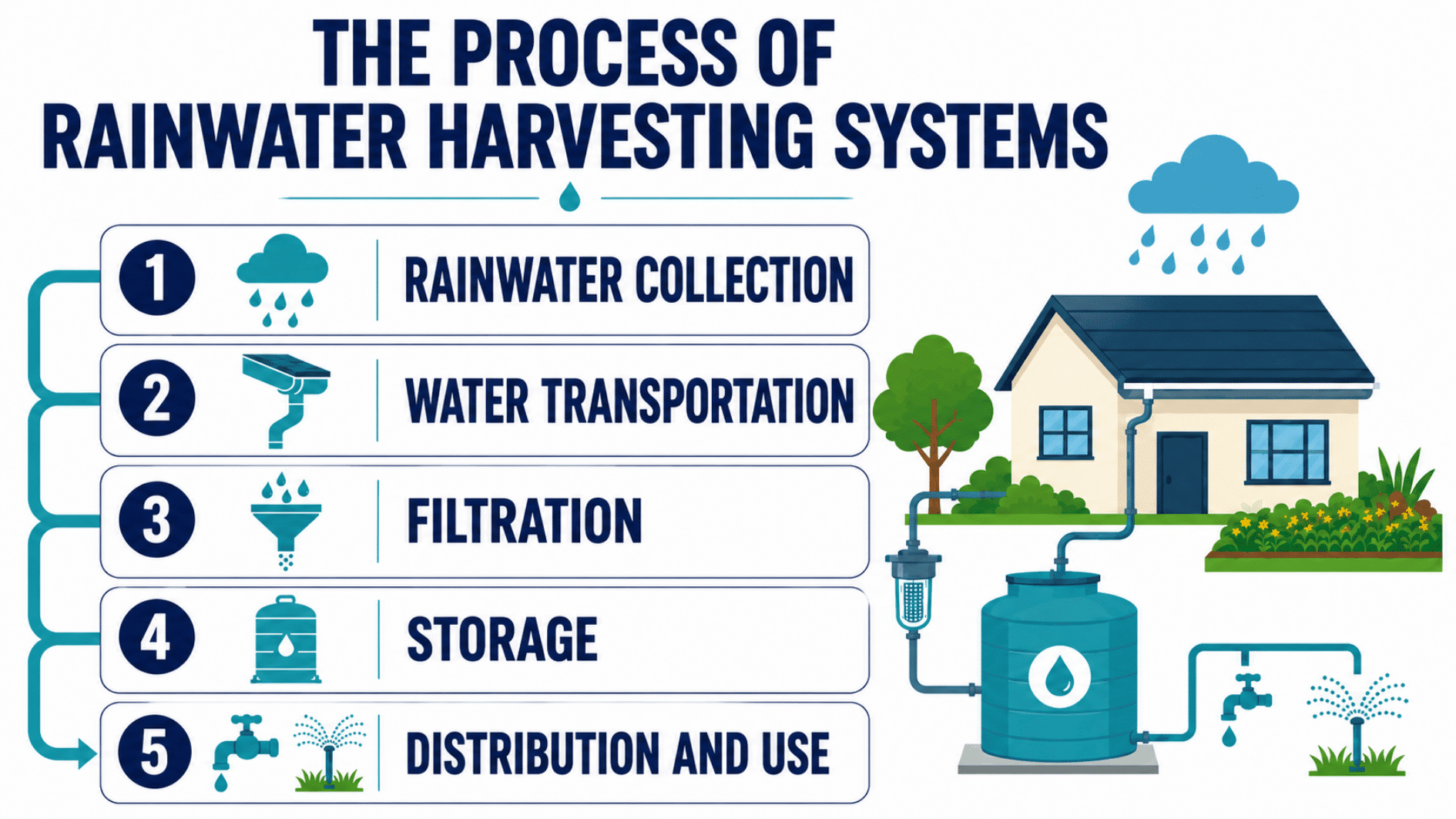
It captures, filters, and stores rainwater for later use. The collected water can be used for irrigation, cleaning, and other household applications, helping reduce dependence on traditional water sources.
Key Components of a Rainwater Harvesting System
Rainwater harvesting systems rely on several key components to collect, filter, store, and distribute rainwater. Each component plays an important role in ensuring the system operates efficiently.
| Component | Function | Importance |
|---|---|---|
| Catchment Surface |
Collects rainwater |
Main collection source. |
| Gutters and Downspouts |
Direct water to the system |
Support water collection. |
| Filtration System |
Removes debris |
Improves water quality. |
| Storage Tank |
Stores collected water |
Provides water reserves. |
| Pump System |
Moves water for use |
Supports distribution. |
| Distribution Pipes |
Deliver water where needed |
Ensure water access. |
The Process of Rainwater Harvesting Systems
Rainwater harvesting systems follow a series of steps to collect, filter, store, and distribute rainwater. Each component plays a role in ensuring the water is captured efficiently and made available for future use.
- Rainwater Collection – Rainwater is collected from rooftops or other catchment surfaces and directed into the harvesting system.
- Water Transportation – Gutters and downspouts carry the collected rainwater to the filtration system.
- Filtration – Filters remove leaves, dirt, and other contaminants from the water.
- Storage – The filtered water is stored in tanks or reservoirs for future use.
- Distribution and Use – Stored water is supplied for household and outdoor applications.
Types of Rainwater Harvesting Systems
Different types of systems are available to suit varying water needs, property sizes, and budgets. Understanding these options can help in selecting a system that aligns with specific requirements.
1. Rain Barrels
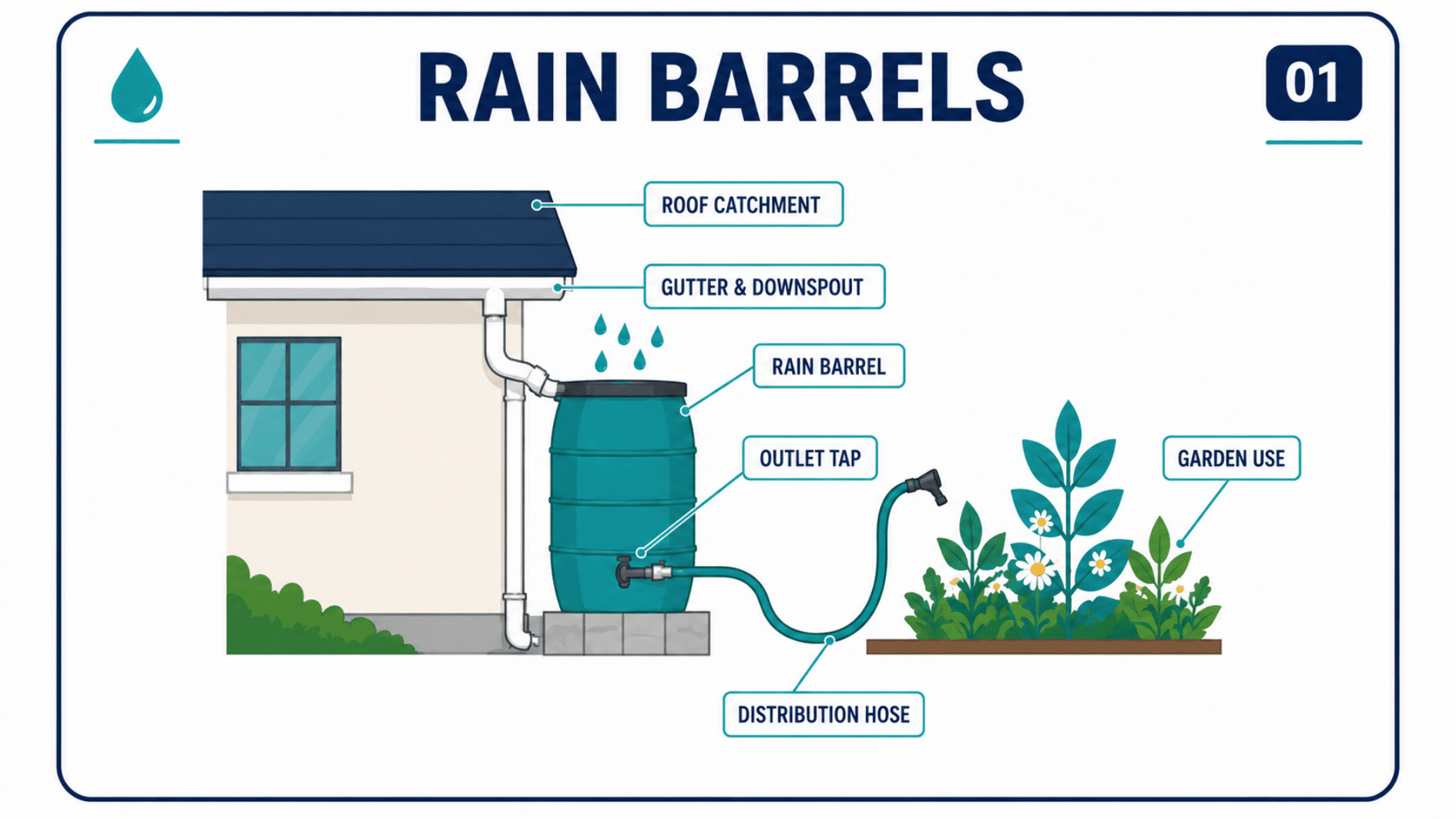
Rain barrels collect rainwater directly from roof downspouts and store it for later use. They are a simple option for small-scale water collection.
- Suitable for small-scale water collection.
- Easy to install and maintain.
- Commonly used for gardening.
2. Above-Ground Storage Tanks
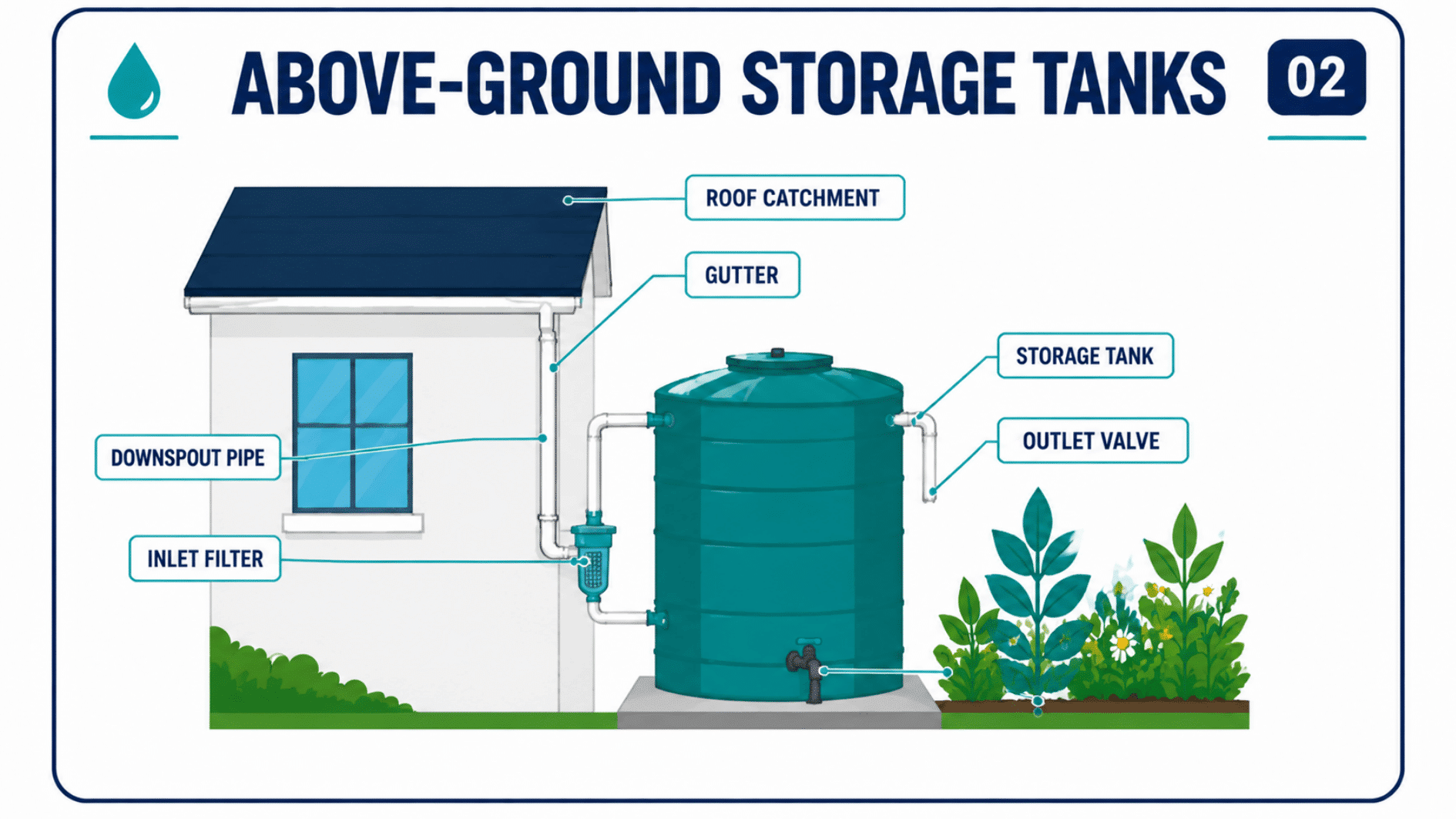
Above-ground storage tanks hold larger volumes of rainwater than standard barrels. They are commonly used when greater storage capacity is needed.
- Available in different capacities.
- Easier to inspect and clean.
- Suitable for residential and commercial properties.
3. Underground Storage Tanks
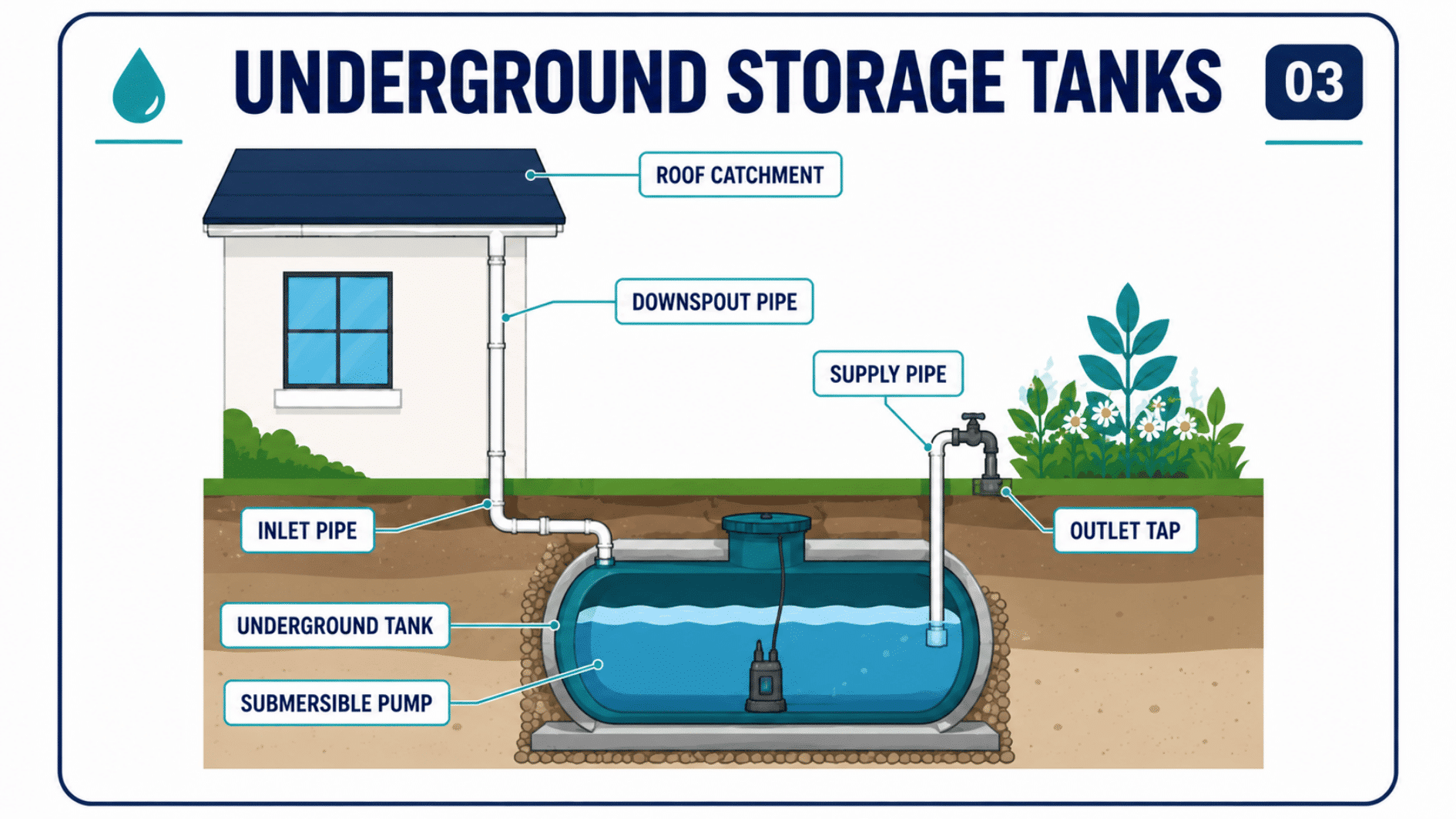
Underground storage tanks store rainwater below the ground, helping save surface space. They are suitable for properties where visible storage is limited.
- Ideal for properties with limited outdoor space.
- Protect water from sunlight exposure.
- Offer larger storage capacity.
4. Dry System
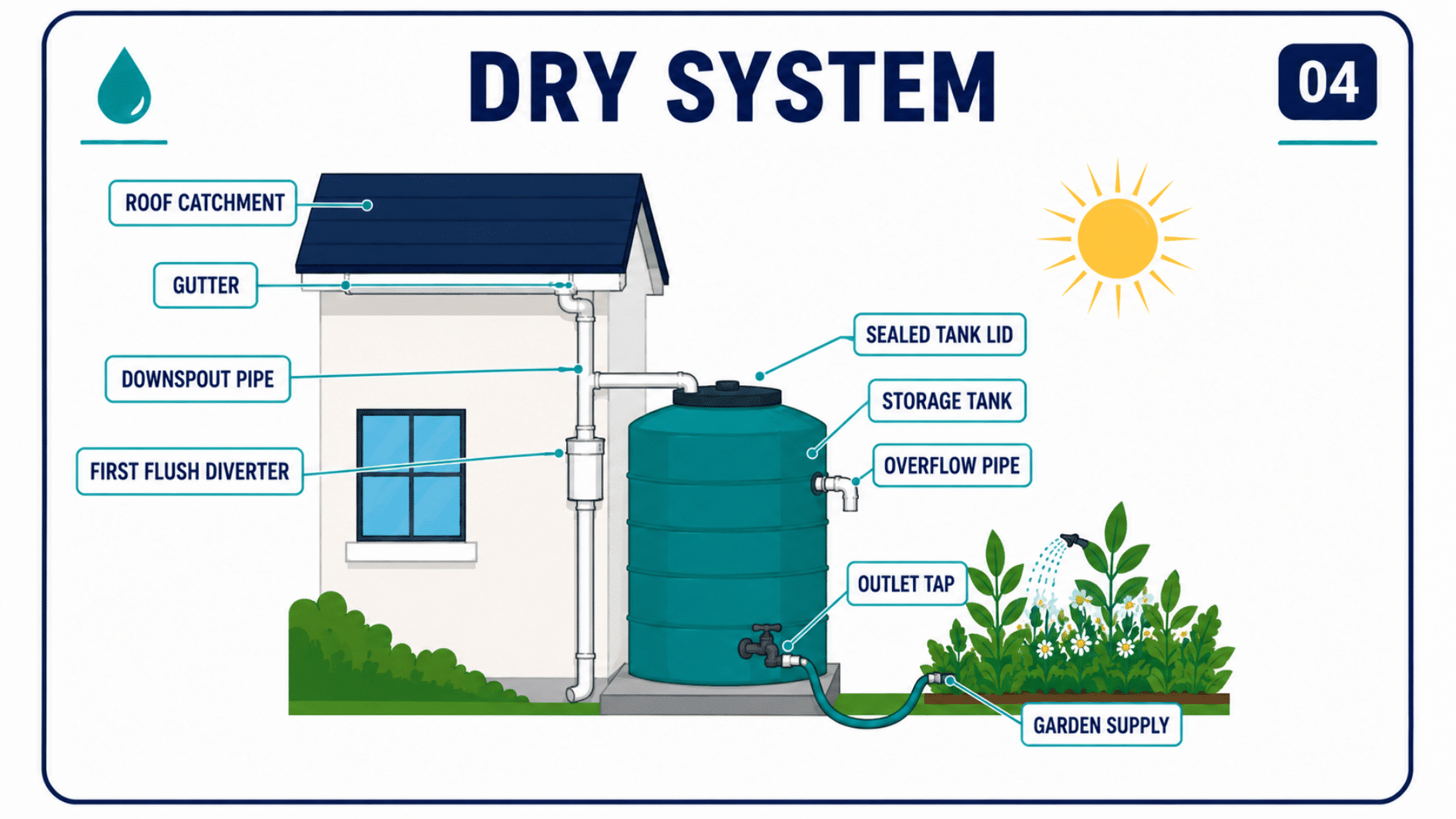
A dry system channels rainwater directly from the collection area into a storage tank. It is a straightforward option with relatively simple maintenance requirements.
- Works well in areas with seasonal rainfall.
- Requires minimal equipment.
- Suitable for residential applications.
5. Wet System
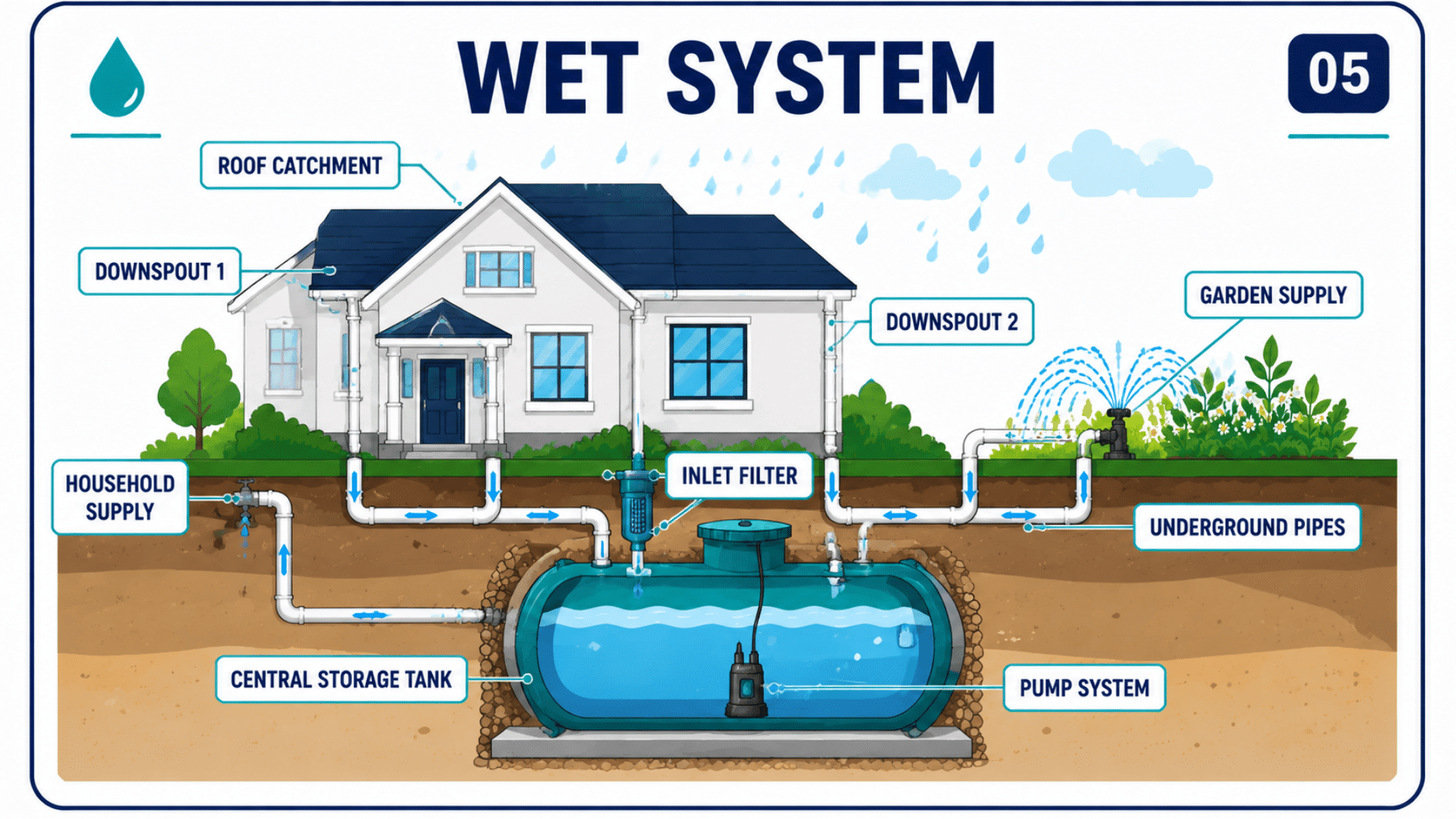
A system that uses underground pipes to transport rainwater from collection points to storage tanks.
- Suitable for larger properties.
- Allows flexible tank placement.
- Can collect water from multiple downspouts.
Choosing the Right System for Your Home
The right rainwater harvesting system depends on factors such as available space, water requirements, and budget. Comparing common needs with suitable system types can help simplify the selection process.
| Property Requirement | Recommended System | Why It Fits |
|---|---|---|
|
Small garden or limited water use |
Rain Barrel | Compact and simple. |
|
Moderate water demand |
Above-Ground Storage Tank | Higher storage capacity. |
|
Limited outdoor space |
Underground Storage Tank | Saves surface space. |
|
Simple residential setup |
Dry System | Easy to maintain. |
|
Large property or multiple collection points |
Wet System | Supports wider collection. |
|
Need for long-term water storage |
Underground Storage Tank | Suitable for large volumes. |
Conclusion
Rainwater harvesting systems provide a practical way to collect and store rainwater for future use. They can help reduce water consumption and make better use of available rainfall.
Understanding how to collect rainwater and the components involved can make it easier to select a suitable system. Different options are available to meet varying space and water requirements.
From rain barrels to underground storage tanks, each system offers unique features and storage capabilities. The right choice depends on factors such as property size, water demand, and budget.
By choosing an appropriate rainwater harvesting system, households can make better use of available rainfall and maintain a reliable source of stored water throughout the year.
Frequently Asked Questions
What are the Common Problems with Rainwater Harvesting Systems?
Common issues include algae growth, sediment buildup, pests entering storage tanks, blocked filters, and occasional leaks that can affect system performance.
How Long Will Rainwater Stay Fresh?
Rainwater can stay fresh for a long time when stored in a sealed, light-protected tank, but exposure to sunlight and contaminants can affect its quality.
How Fast Will a 50-Gallon Rain Barrel Fill Up?
A 50-gallon rain barrel can fill up quickly during moderate to heavy rainfall, depending on factors such as roof size, rainfall intensity, and the collection system setup.
Is Rainwater Dirtier Than Tap Water?
Rainwater can contain dust, pollutants, and contaminants collected from the air and roof surfaces, while tap water typically undergoes treatment and quality testing before distribution.