



I used to think a dull brass piece just meant it was time to buy a new one, until I learned better. Your old lamp, doorknob, or that decor piece sitting in the corner probably isn’t ruined, just tarnished a little.
And not every method works the same way for every piece. Some brass wants a gentle touch, while other pieces can handle a bit more effort.
Either way, learning how to clean brass doesn’t have to feel confusing or risky. A little patience goes a long way. So before reaching for just any cleaner, it’s worth knowing what actually works.
Can You Clean Brass Without Removing the Patina?
Yes, you can care for brass without changing its aged appearance. The goal is to refresh the item while keeping the original look that gives it character.
Many brass pieces change color and texture over time. A gentle approach lets you decide how much change you want before you start cleaning.
Every brass piece can have a different look and feel. Some owners like a brighter finish, while others enjoy the character that comes with age.
Checking Your Brass Item Before Cleaning
A quick inspection can save you from making a costly mistake. Brass pieces are not always made or finished the same way. Take a moment to make the checks below before you begin:
| Check | Why It Matters | Action |
|---|---|---|
| Brass type | Different surfaces need different care | Identify solid or plated brass |
| Coating | Protects the original surface | Use gentle cleaning methods |
| Finish | Defines the final look | Choose shine or patina care |
| Damage | Prevents further marks | Clean worn areas carefully |
| Dust | Makes cleaning easier | Wipe with a soft cloth |
| Test spot | Avoids unwanted changes | Try a hidden area first |
Simple Methods to Clean Brass at Home
Brass can lose its fresh appearance over time, but restoring it does not have to be complicated. Adding brass to your spring cleaning routine can make regular upkeep easier.
Choose from the options below to find an approach that works for you:
1. Clean Brass with Warm Water and Mild Soap
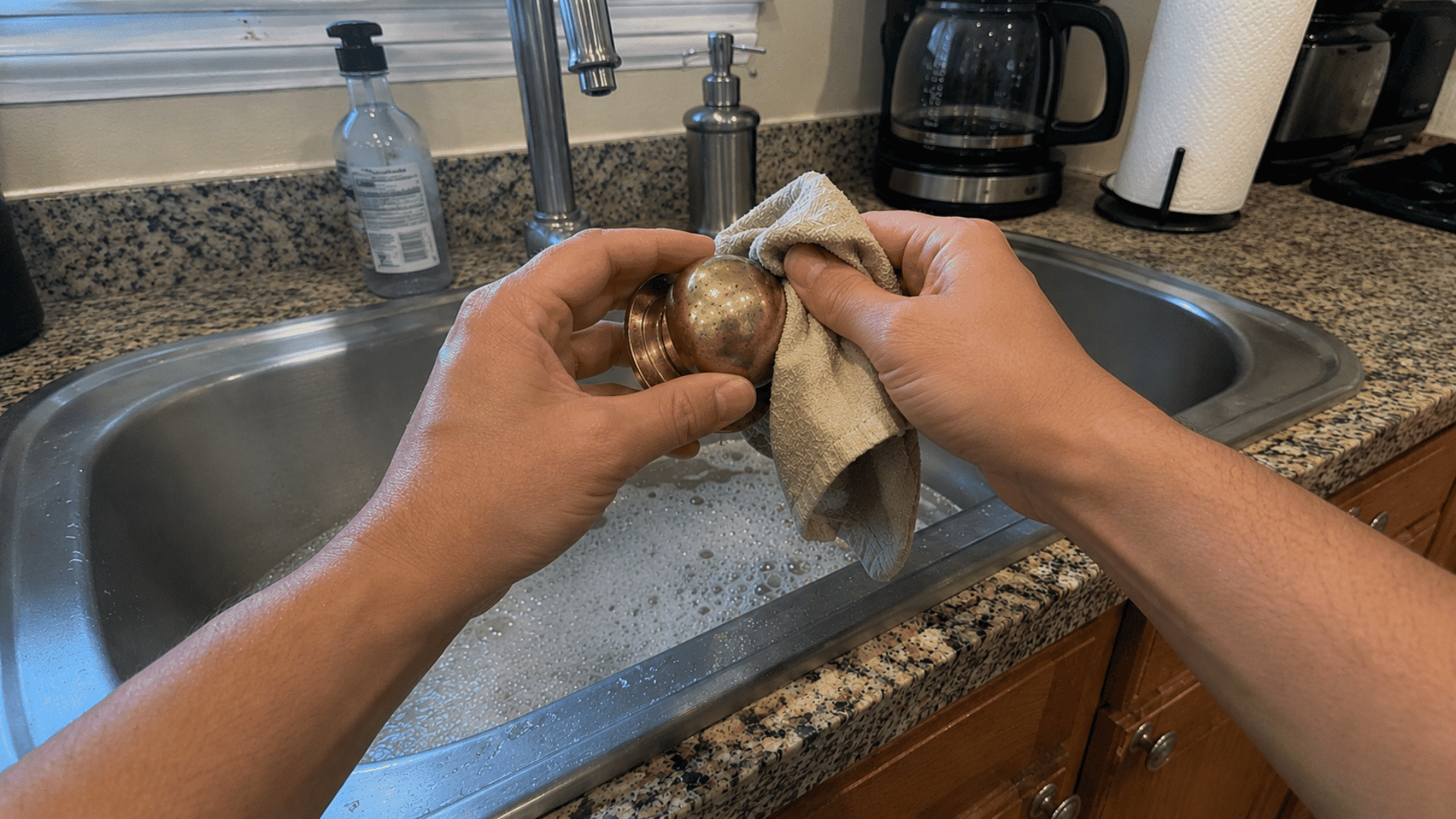
This is a practical choice when your piece only needs routine care. It is also a good starting point when you want to keep things simple.
You’ll need: Warm water, mild dish soap, a bowl, and two soft cloths.
Follow these steps to clean brass using warm water and mild soap:
- Mix warm water with a few drops of mild dish soap.
- Dip a soft cloth into the solution and wring it out.
- Gently wipe the brass surface to remove dirt and fingerprints.
- Rinse the item with clean water to remove soap residue.
- Remove any remaining moisture with a clean, soft cloth.
My Tip: Test the method on a hidden area first before cleaning the entire item.
2. Clean Brass with Lemon and Salt
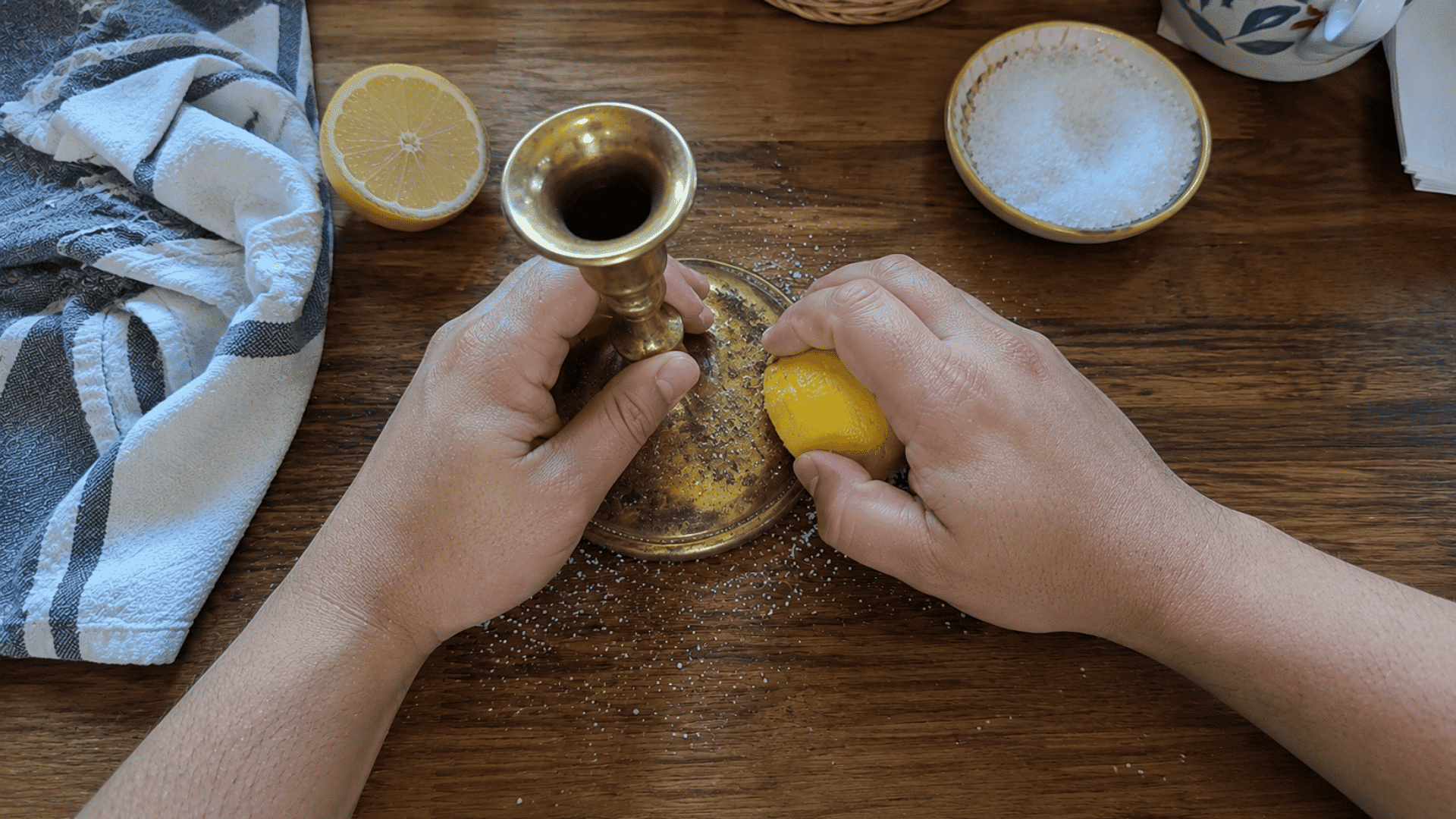
For more noticeable buildup, a kitchen-based option may be worth trying. It takes little preparation and works well for occasional upkeep.
You’ll need: One lemon, salt, a soft cloth, and clean water for rinsing.
Follow these steps to clean brass using lemon and salt:
- Cut a lemon in half before starting the cleaning process.
- Add a small amount of salt to the lemon surface.
- Gently rub the lemon over the brass item.
- Rinse the surface with clean water after cleaning.
- Finish by drying the surface to prevent moisture marks.
My Tip: Use gentle pressure while rubbing to avoid creating marks on the brass surface.
3. Clean Brass with Vinegar and Baking Soda
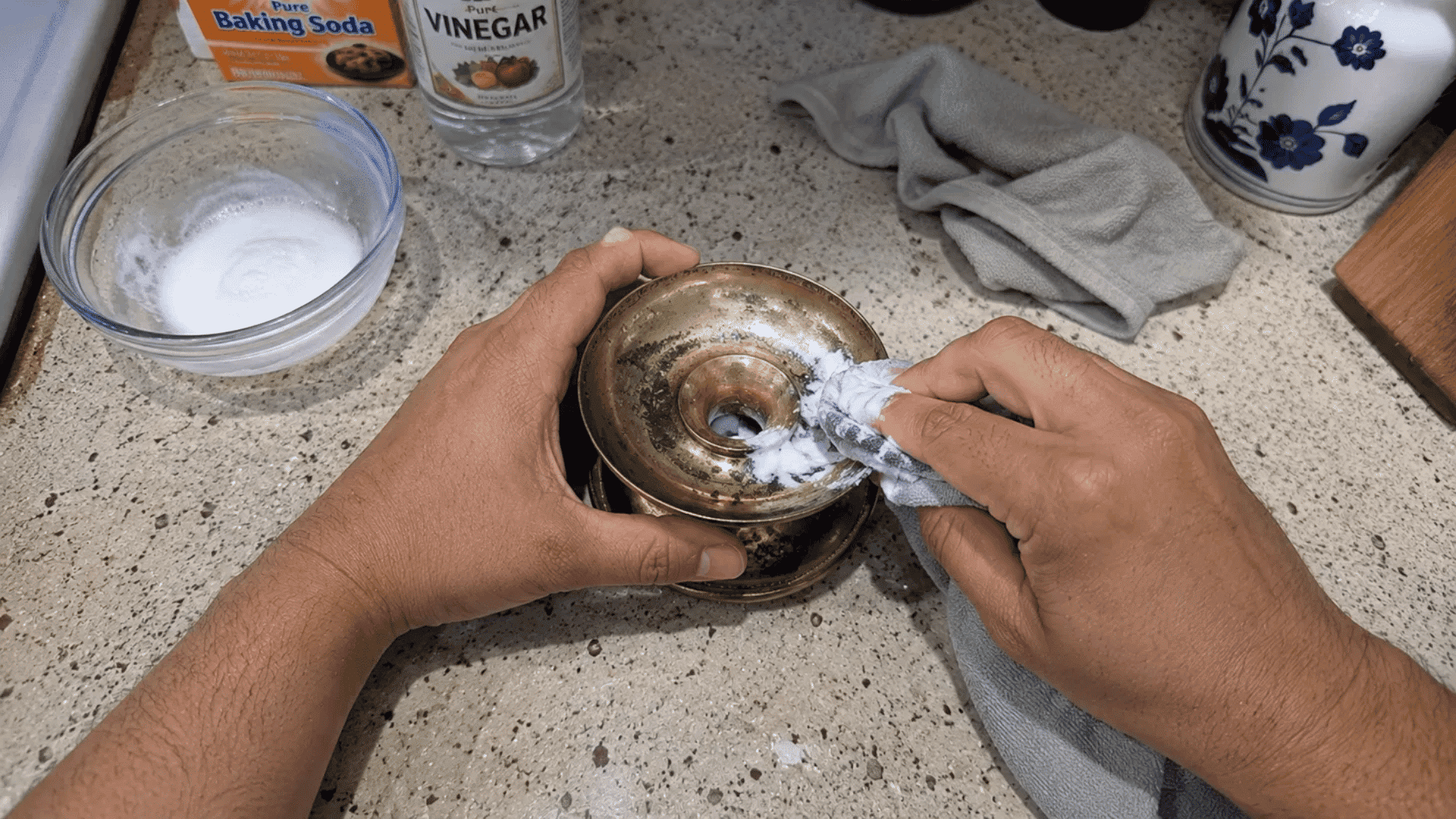
Some pieces need a little more attention when their appearance has changed significantly. This option gives you another household approach to consider.
You’ll need: White vinegar, baking soda, a small bowl, a soft cloth, and clean water.
These are the steps you can try to clean brass using vinegar and baking soda:
- Mix baking soda with vinegar until it forms a smooth paste.
- Apply the paste gently using a soft cloth.
- Rub the brass surface lightly to loosen tarnish.
- Rinse the item thoroughly with clean water.
- Wipe away leftover moisture after rinsing the brass.
My Tip: Use this method sparingly because frequent use may affect some brass finishes.
4. Clean Brass with Tomato Ketchup
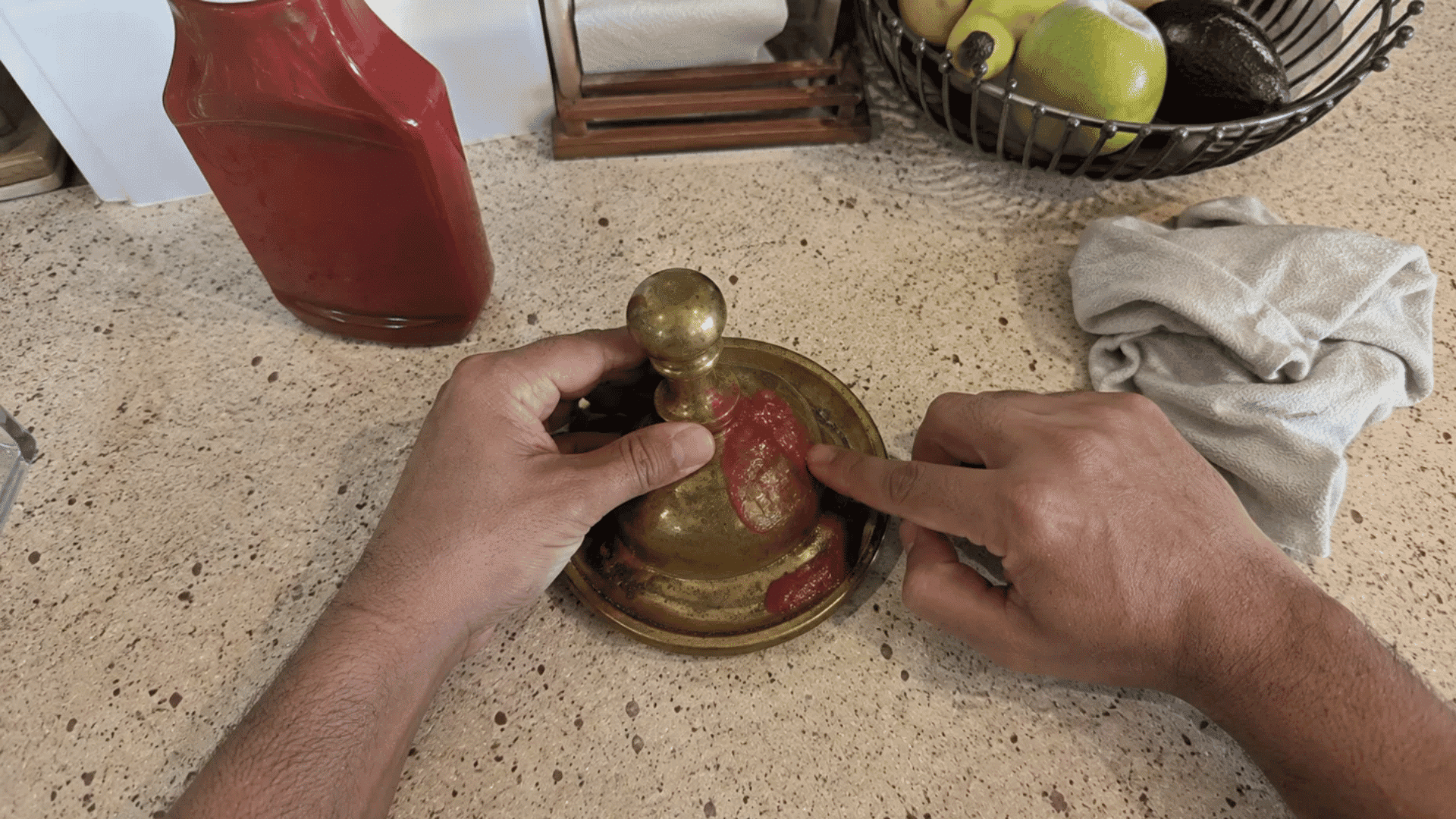
It may sound unusual, but this pantry staple can serve another purpose beyond cooking. This option is convenient when you prefer using something already available at home.
You’ll need: Tomato ketchup, a soft cloth, and clean water for rinsing.
Follow these steps to clean brass using tomato ketchup:
- Apply a thin layer of ketchup over the brass surface.
- Let the ketchup sit briefly to loosen surface tarnish.
- Gently wipe the brass with a soft cloth.
- Rinse the item with clean water after cleaning.
- Dry the brass completely to prevent moisture marks.
My Tip: Use a small amount of ketchup first to check how the surface reacts.
5. Clean Brass with Vinegar Paste
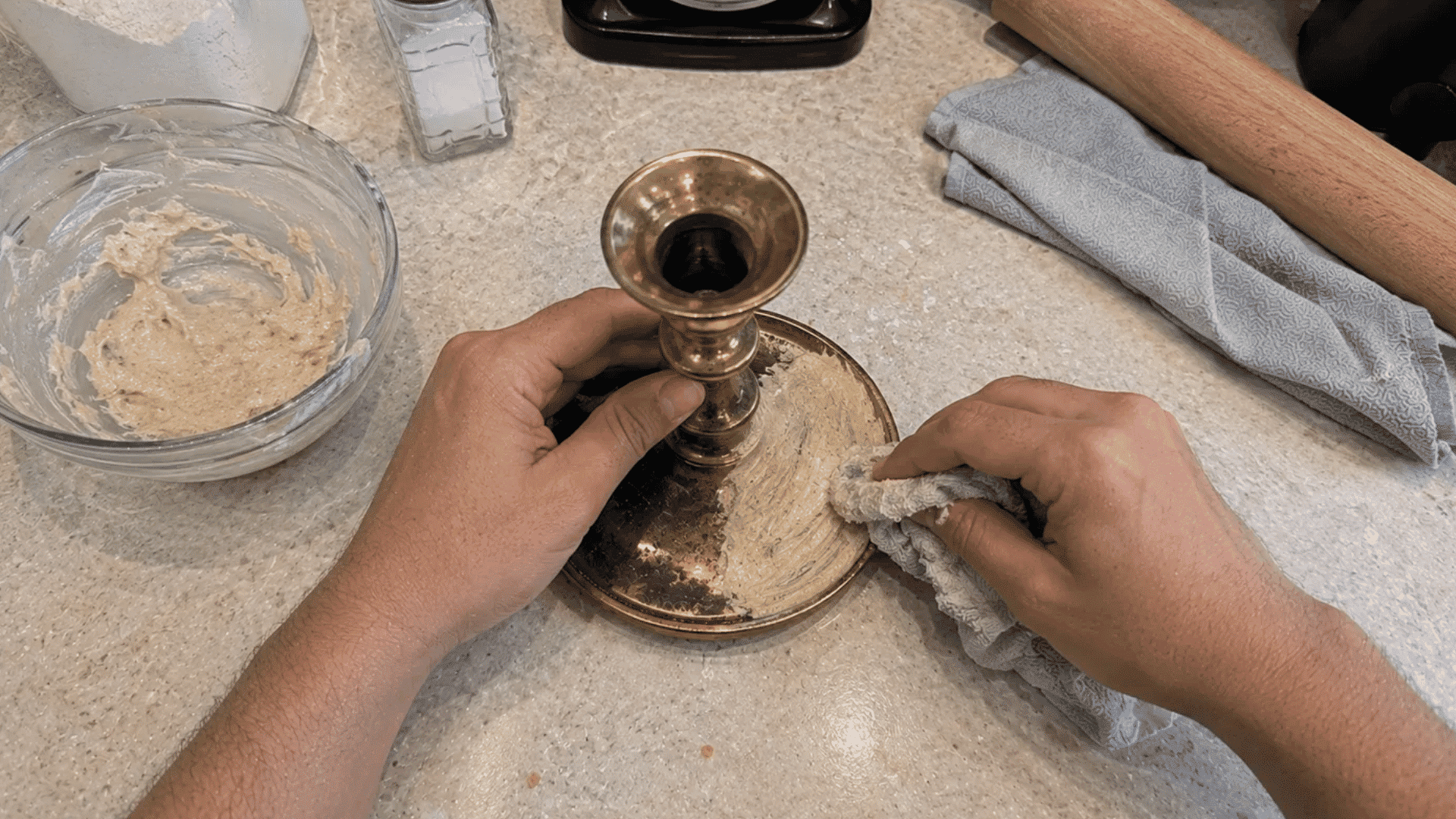
This option can be useful when you prefer a mixture that stays in place while you work. Its thicker consistency makes application easier to control.
You’ll need: Flour, salt, white vinegar, a small bowl, a soft cloth, and clean water.
Here are the steps to clean brass using vinegar paste:
- Mix flour, salt, and vinegar into a smooth cleaning paste.
- Apply the paste evenly over the brass surface.
- Leave it briefly before wiping it away gently.
- Rinse the brass item with clean water afterward.
- Dry the surface completely using a soft cloth.
My Tip: Avoid leaving the paste on too long to protect the brass finish.
6. Clean Brass with Commercial Brass Cleaner
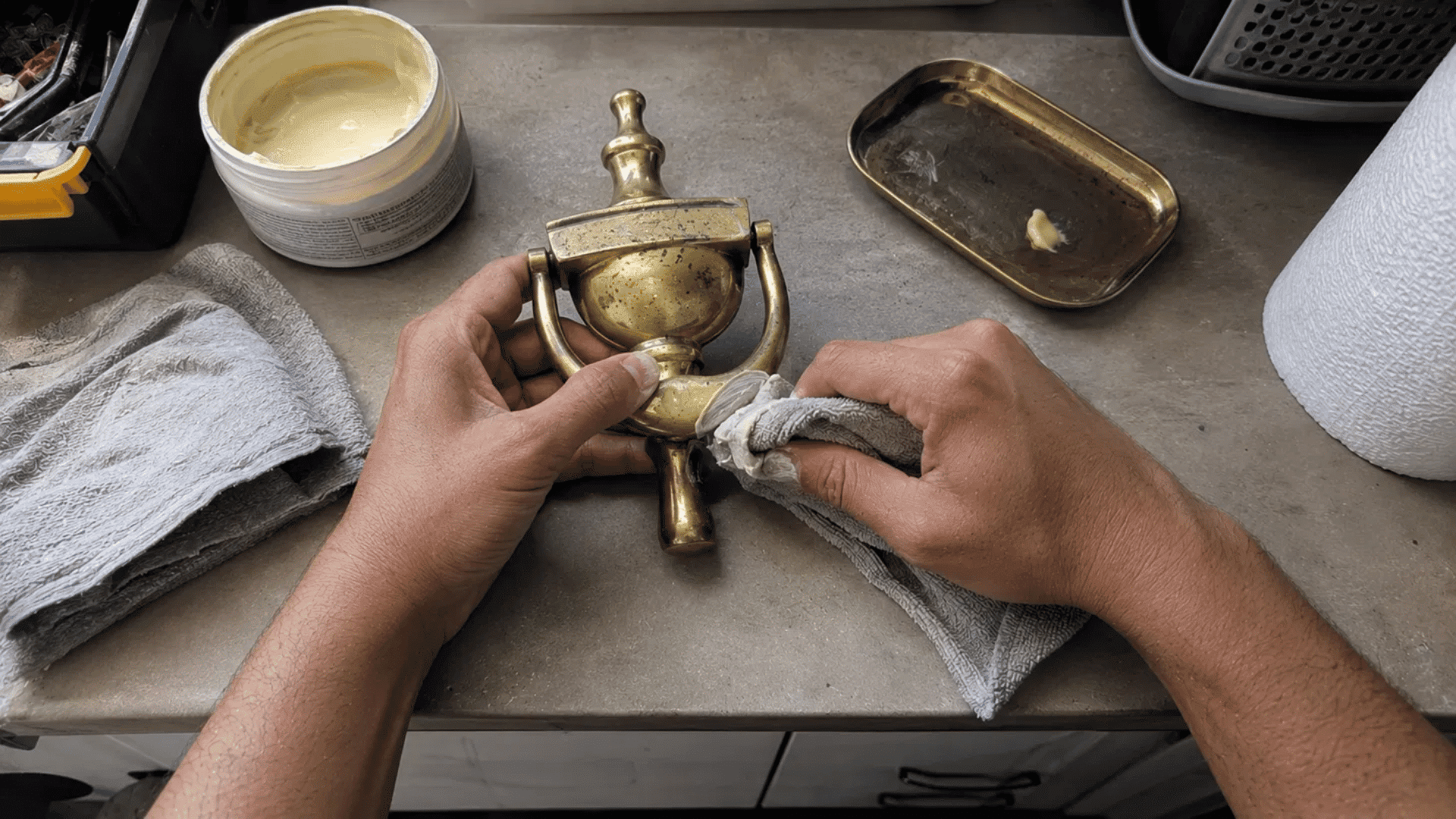
For a store-bought approach, a product made specifically for this task can be convenient. It may suit pieces that need more focused care.
You’ll need: A commercial brass cleaner suitable for your item, soft cleaning cloths, and any protective equipment listed on the product label.
Follow these steps to clean brass using a commercial brass cleaner:
- Read the product instructions before applying the cleaner.
- Apply a small amount using a soft cloth.
- Rub the surface gently, following the product directions.
- Remove the cleaner residue with a clean cloth.
- Dry the brass item completely after cleaning.
My Tip: Choose a cleaner that matches the brass finish and test it first.
How Often Should You Clean Brass?
Brass items don’t need frequent deep-cleaning-sessions, especially when kept in good condition. How often you clean brass depends on how the item is used and the finish you want to maintain.
Frequently handled brass pieces may need more attention because fingerprints and dust can build up faster. Decorative items in protected areas often require less cleaning throughout the year.
Regular dusting with a soft cloth can help keep brass looking clean between deeper cleanings. Adding it to your house cleaning schedule can make the habit easier to remember.
The right cleaning schedule depends on personal preference and the appearance you want to maintain. Cleaning only when needed can help protect the brass finish.
Maintainence Tips for Brass After Cleaning
The way you care for your pieces afterward can affect how often they need attention. Small everyday choices can make a noticeable difference over time.
- Dust regularly: Wipe away surface dust before it collects.
- Dry thoroughly: Remove leftover moisture after washing.
- Handle carefully: Avoid unnecessary contact with oily hands.
- Store properly: Choose a dry spot with low humidity.
- Clean when needed: Address visible tarnish before it becomes heavier.
- Avoid abrasives: Skip rough scrubbers or DIY grout cleaner that may be unsuitable for the surface.
- Use protective pads: Place felt underneath decorative brass pieces.
- Limit chemical exposure: Keep DIY window cleaner and other household sprays away.
- Check occasionally: I inspect displayed pieces for early changes in appearance.
- Follow care instructions: Check manufacturer directions for specialty finishes.
Can You Prevent Brass From Tarnishing?
Yes, you can prevent brass from tarnishing with simple care habits. Regular cleaning, proper storage, and protecting the surface can help slow down natural changes over time.
Keeping brass items away from moisture and wiping away fingerprints can reduce buildup. Small steps like gentle handling and occasional care can help maintain the finish you prefer.
Simple care habits can slow down tarnish, but some changes in brass are part of its natural aging process. The level of care depends on how you want your items to look over time.
Wrapping It Up
I’ll be honest, I didn’t expect something so simple to make such a noticeable difference once I actually tried it. Your brass doesn’t need constant attention, just a little care every now and then to keep it looking its best.
Maybe you’ll stick with one method, or maybe you’ll switch it up depending on the piece. Either way, once you get comfortable cleaning brass, the whole process starts feeling a lot less intimidating.
And all it takes is a bit of patience and the right approach. So go ahead, give your brass the attention it deserves, and let it shine the way it’s meant to.
Frequently Asked Questions
Can You Clean Brass Without Polishing It?
Yes, gentle cleaning can remove surface dirt while keeping the natural appearance of brass.
How Can You Tell if Brass Has a Protective Coating?
A smooth, clear layer or sealed surface may indicate that the brass has a protective coating.
Can Brass Change Color After Cleaning?
Yes, brass can change appearance depending on the cleaning product, surface condition, and finish.
Can You Clean Brass Fixtures Without Removing Them?
Yes, you can clean brass fixtures in place using suitable methods and careful handling.
{
“@context”: “https://schema.org”,
“@type”: “FAQPage”,
“mainEntity”: [
{
“@type”: “Question”,
“name”: “Can You Clean Brass Without Polishing It?”,
“acceptedAnswer”: {
“@type”: “Answer”,
“text”: “Yes, gentle cleaning can remove surface dirt while keeping the natural appearance of brass.”
}
},
{
“@type”: “Question”,
“name”: “How Can You Tell if Brass Has a Protective Coating?”,
“acceptedAnswer”: {
“@type”: “Answer”,
“text”: “A smooth, clear layer or sealed surface may indicate that the brass has a protective coating.”
}
},
{
“@type”: “Question”,
“name”: “Can Brass Change Color After Cleaning?”,
“acceptedAnswer”: {
“@type”: “Answer”,
“text”: “Yes, brass can change appearance depending on the cleaning product, surface condition, and finish.”
}
},
{
“@type”: “Question”,
“name”: “Can You Clean Brass Fixtures Without Removing Them?”,
“acceptedAnswer”: {
“@type”: “Answer”,
“text”: “Yes, you can clean brass fixtures in place using suitable methods and careful handling.”
}
}
]
}