



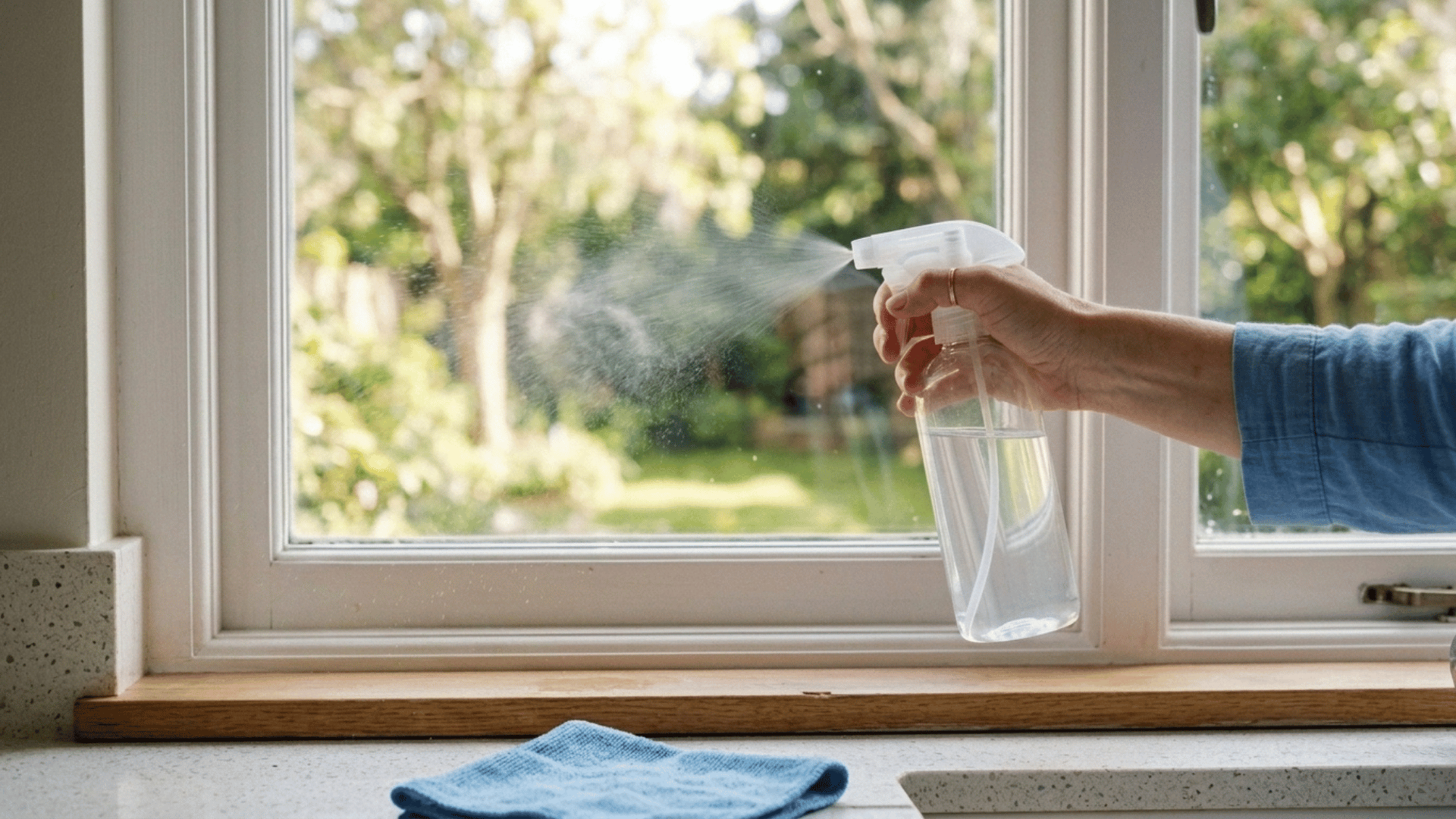
A clear window can instantly make a room feel brighter, but fingerprints, dust, water spots, and cloudy glass can quickly take away that fresh look.
Simple household ingredients can clean glass just as well as store-bought sprays. A DIY window cleaner comes together with items already in your kitchen or pantry.
Here, you will learn different homemade recipes, the best tools for cleaning glass, ways to avoid streaks, common mistakes, and simple storage tips to keep your cleaner ready when needed.
Why Homemade Window Cleaners Work Well?
Making a homemade window cleaner is a simple way to keep glass clean without spending much on store-bought sprays.
These mixtures are easy to prepare and use ingredients that are often already available at home.
White vinegar helps remove grease, mineral marks, and cloudy residue, while rubbing alcohol helps the solution dry faster.
Dish soap loosens dirt and oily fingerprints, and distilled water reduces mineral marks.
Cornstarch can help lift stubborn grime from glass, while lemon juice cuts through light grease and adds a fresh scent to the cleaner.
Homemade Window Cleaner Solution Recipes
Each of these homemade window cleaner solutions suits a different type of grime, so pick the one that matches what’s already in your kitchen.
1. Classic Vinegar and Water Spray
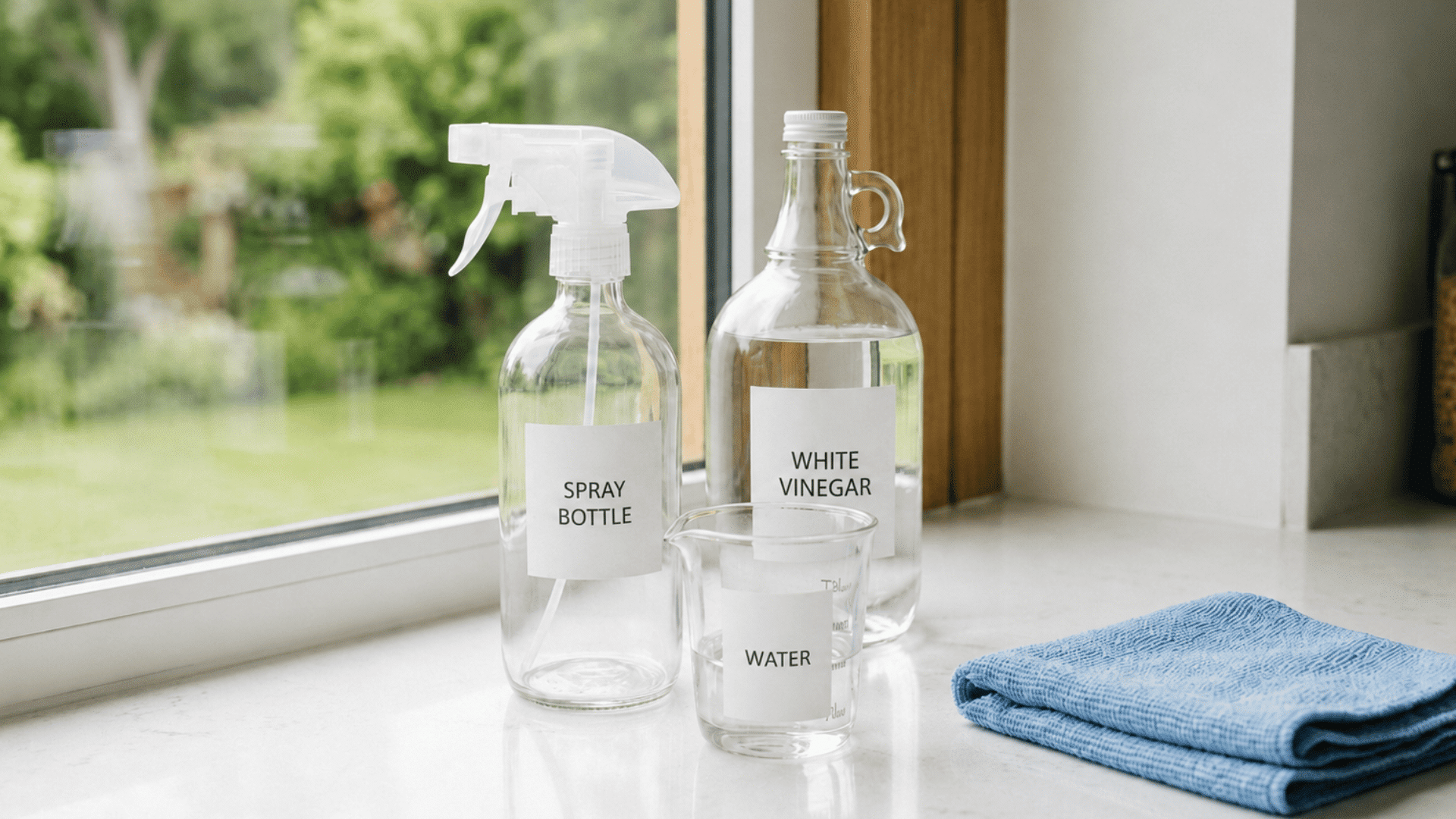
This recipe is the simplest DIY window cleaner you can make, and it works well for windows that only need a light clean. Vinegar’s acidity breaks down dust and light grime without leaving a film.
Ingredients: 1 cup distilled water and 1 cup white vinegar
How to prepare:
- Pour the vinegar and water into the spray bottle.
- Screw on the cap and shake gently to mix.
- Spray on the glass and wipe with a microfiber cloth.
2. Vinegar and Dish Soap Cleaner
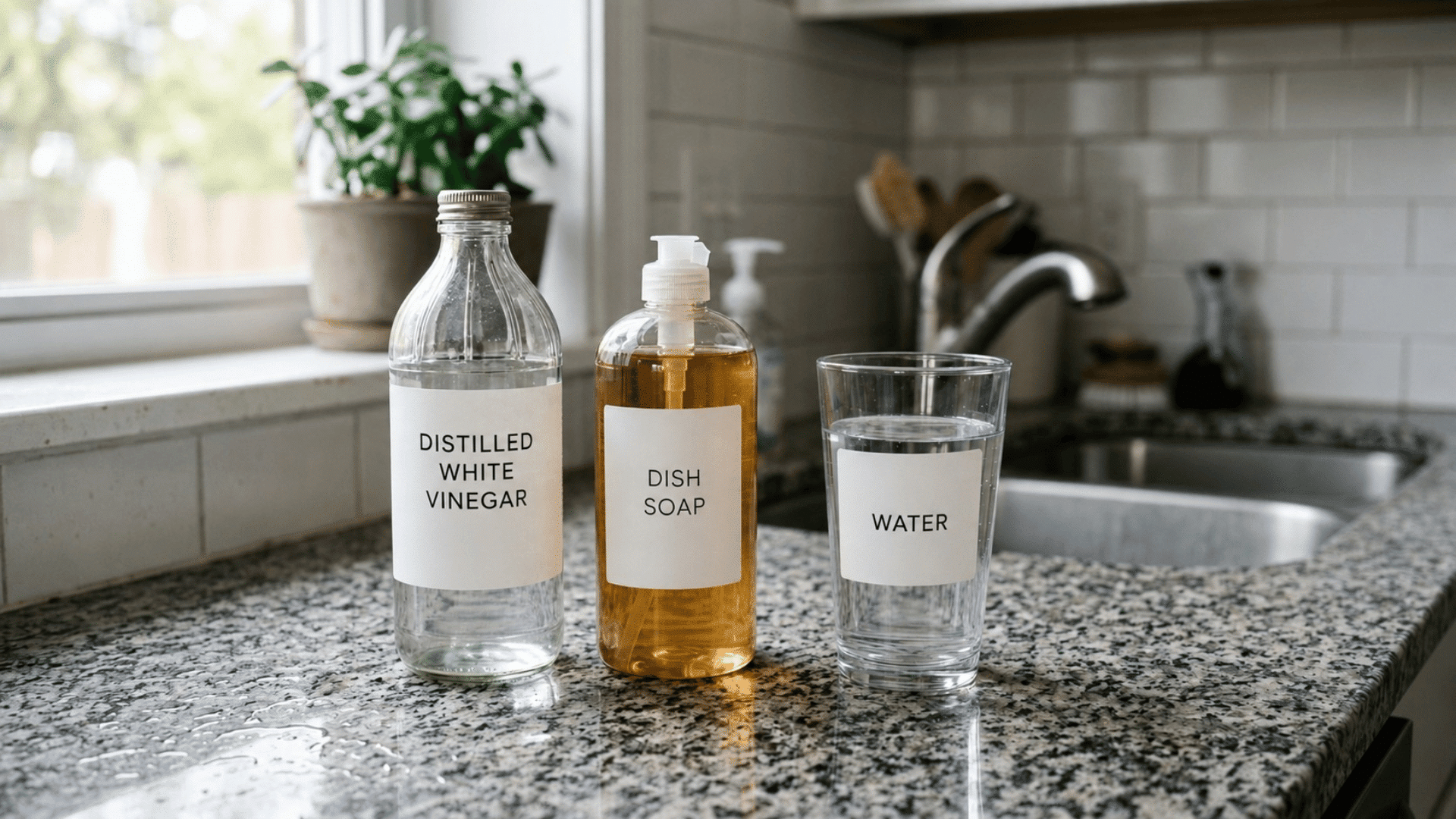
Add a small amount of dish soap to your vinegar spray, and you get a cleaner built for greasy fingerprints and kitchen windows. The soap lifts oily residue that vinegar alone struggles with.
Ingredients: 2 cups warm distilled water, ½ cup white vinegar, ¼ teaspoon liquid dish soap
How to prepare:
- Combine the water and vinegar in a spray bottle.
- Add the dish soap.
- Close the bottle and shake until the soap fully dissolves.
3. Alcohol and Vinegar Solution
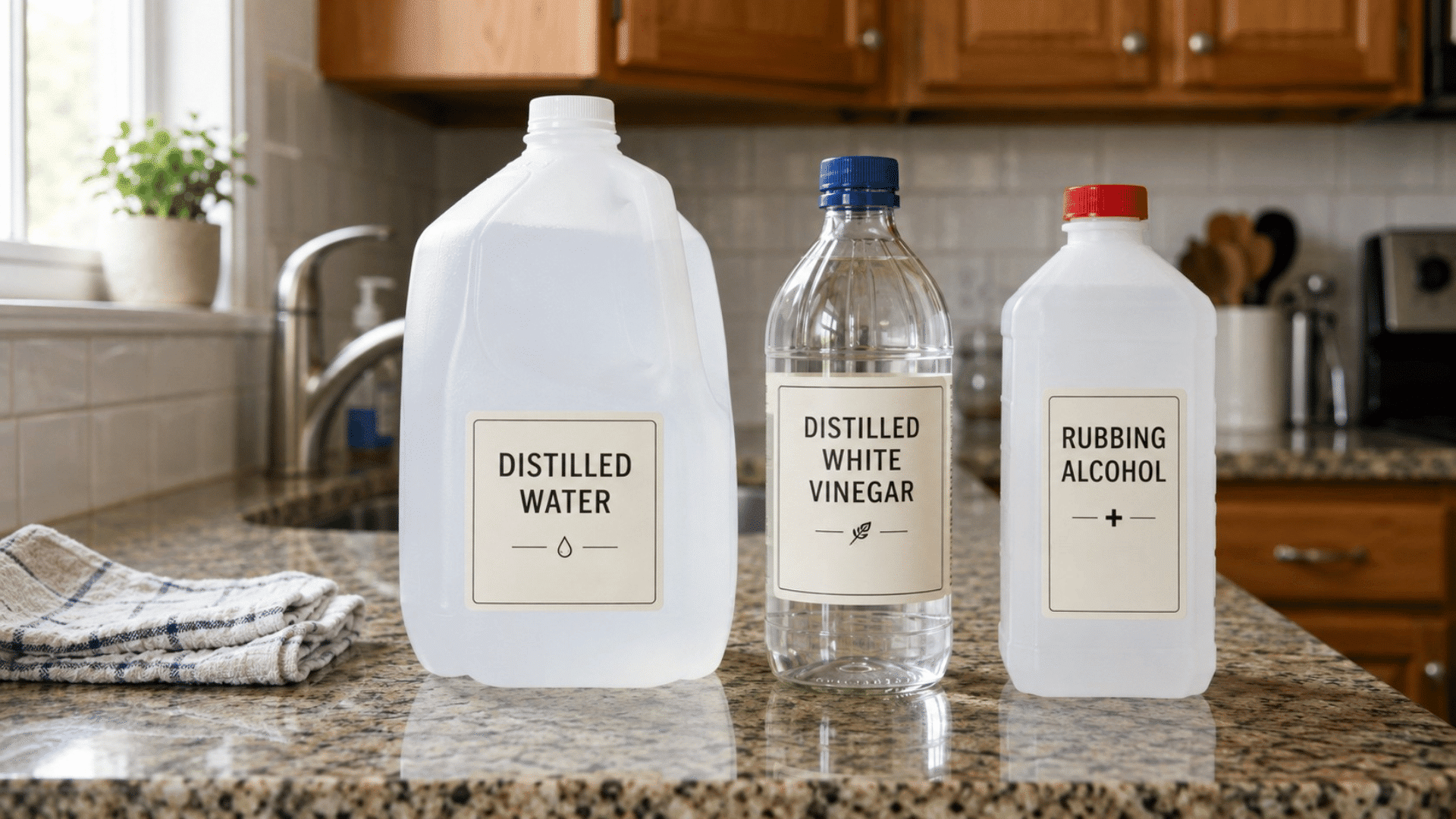
Rubbing alcohol evaporates quickly, which makes this mix a solid pick for anyone who wants glass to dry streak-free. It also cuts through grease better than vinegar on its own.
Ingredients: 1 cup rubbing alcohol (70% isopropyl), 1 cup distilled water, 1 tablespoon white vinegar
How to prepare:
- Measure the rubbing alcohol and water into a spray bottle.
- Add the vinegar.
- Gently shake the bottle to combine the ingredients.
- Spray a light coat on the window and wipe dry with a lint-free cloth.
4. Cornstarch-Boosted Streak Remover
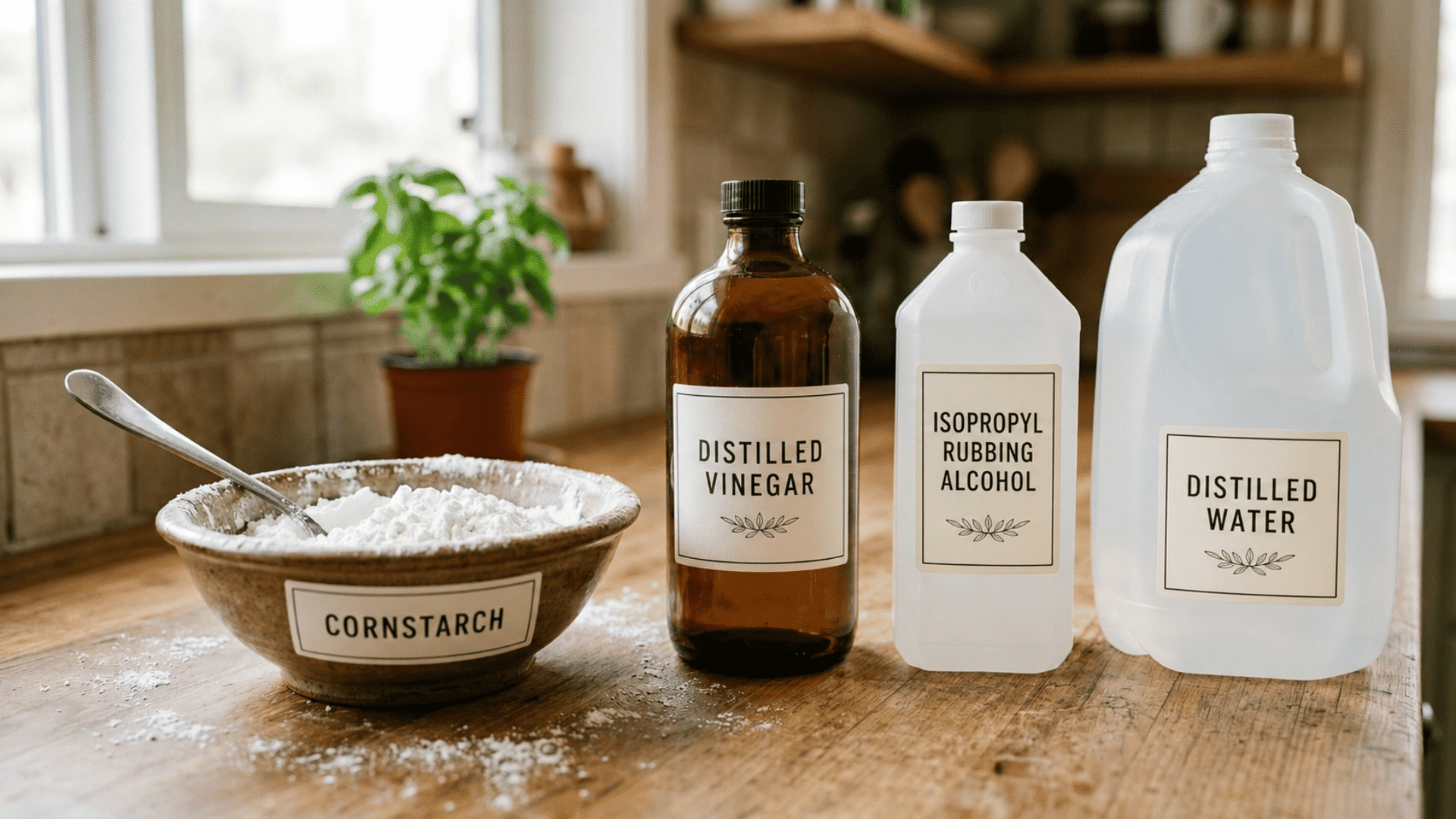
Cornstarch adds a mild abrasive quality to your cleaner, which helps on windows with caked-on grime that plain liquid sprays can’t lift. It also helps buff away streaks left behind by old cleaners.
Ingredients: 2 cups distilled water, ¼ cup rubbing alcohol, ¼ cup white vinegar, 1 tablespoon cornstarch
How to prepare:
- Warm the water slightly so the cornstarch dissolves more easily.
- Stir the cornstarch into the water until no clumps remain.
- Add the rubbing alcohol and vinegar.
- Pour the mixture into a spray bottle.
- Shake well before every use, since cornstarch settles at the bottom.
5. Baking Soda and Vinegar Scrub
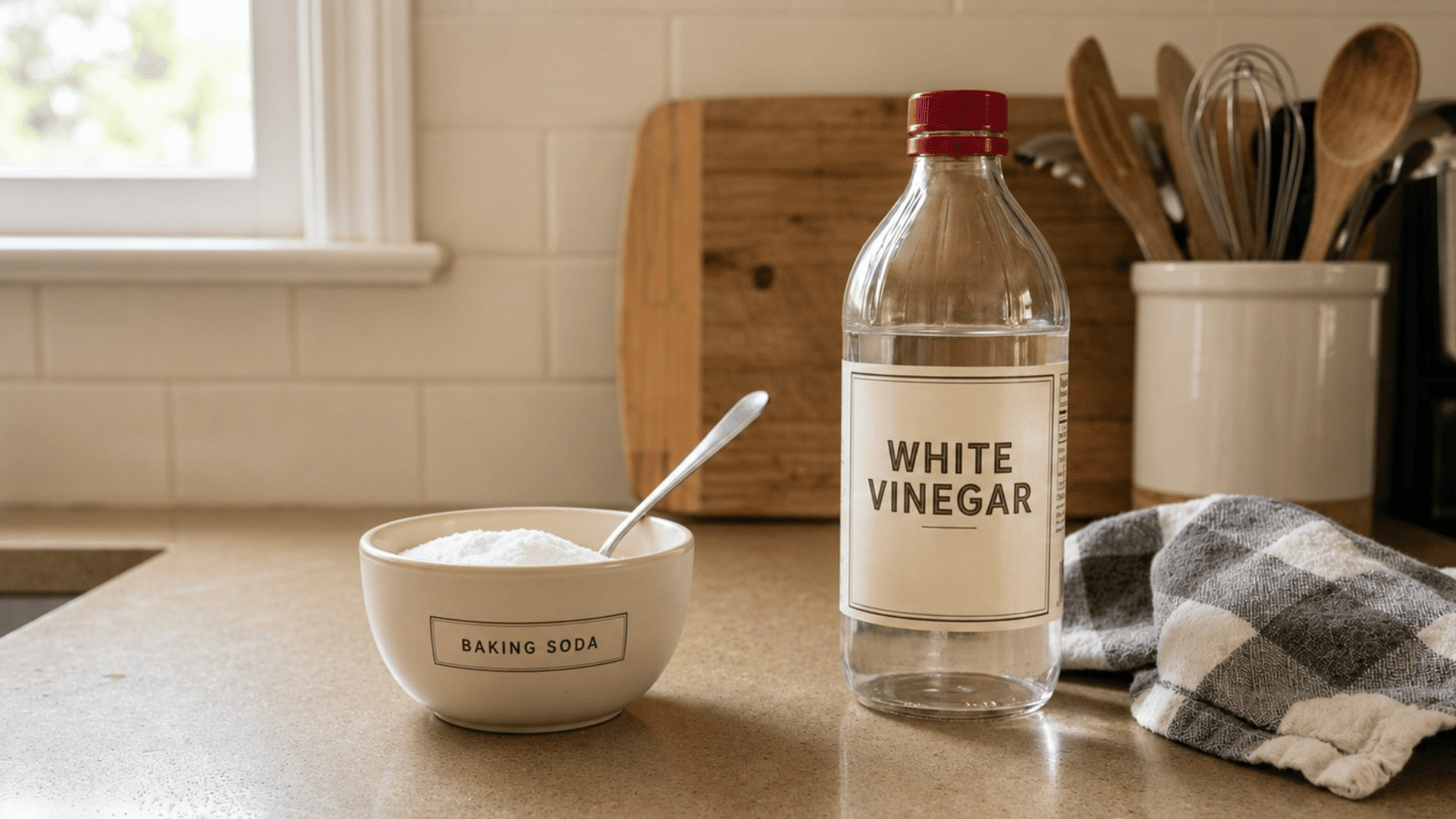
Baking soda reacts with vinegar to create a light foaming action that helps loosen stuck-on dirt around window frames and tracks. This combination works best as a paste rather than a spray.
Ingredients: 2 tablespoons baking soda and 1 tablespoon white vinegar
How to prepare:
- Sprinkle the baking soda directly onto a damp cloth.
- Add the vinegar a little at a time, letting it fizz.
- Rub the paste gently over dirty spots on the glass.
- Wipe clean with a fresh, damp cloth.
6. Fresh Lemon Juice Cleaner
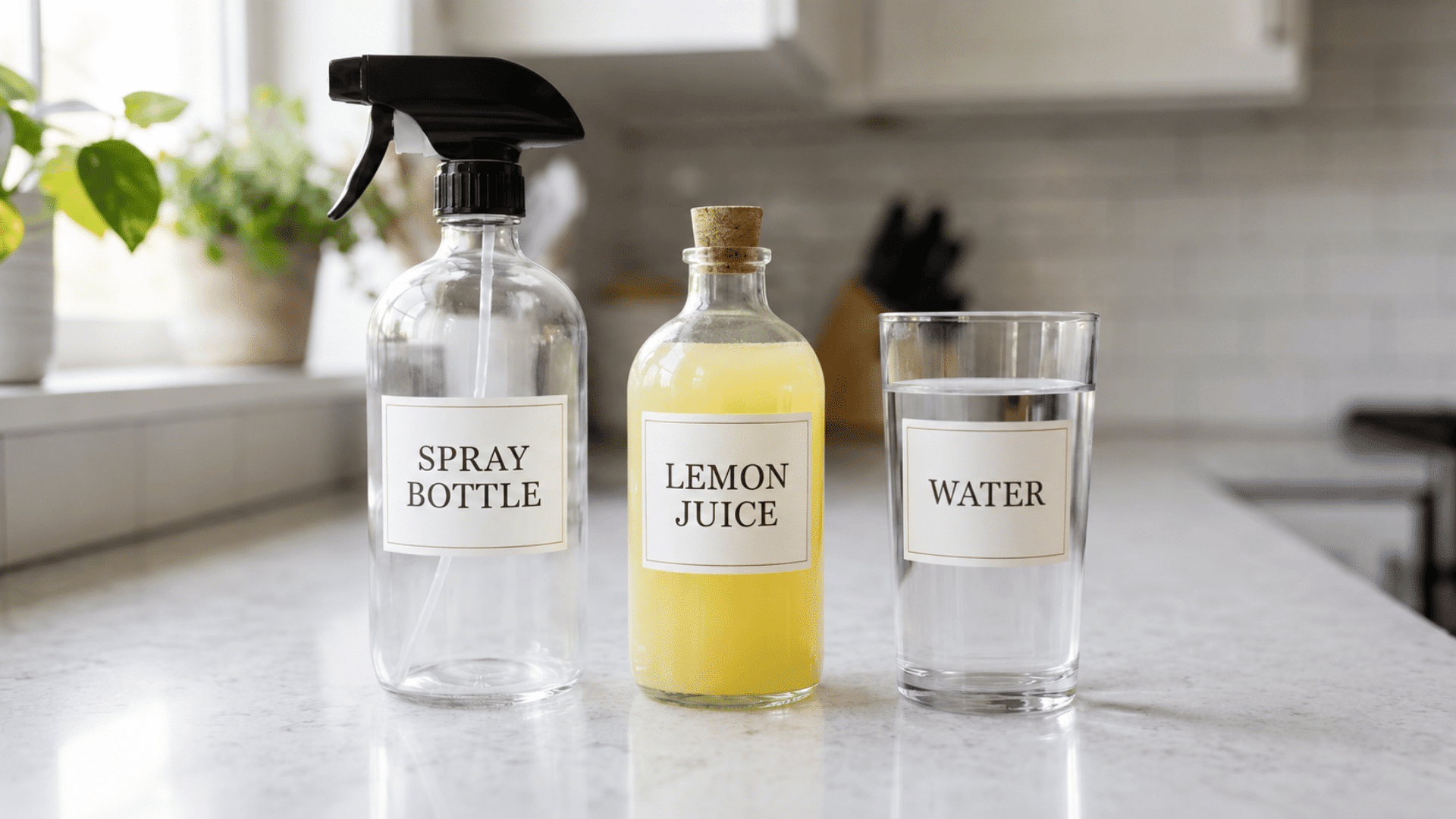
Lemon juice has the same acidity as vinegar but leaves a lighter, fresher scent. It works well for anyone who finds vinegar’s smell too strong.
Ingredients: 2 cups distilled water and ¼ cup fresh lemon juice
How to prepare:
- Pour the water into the spray bottle.
- Add the lemon juice.
- Shake to combine and spray directly on the glass.
7. Large-Batch Cleaner for Outdoor Windows
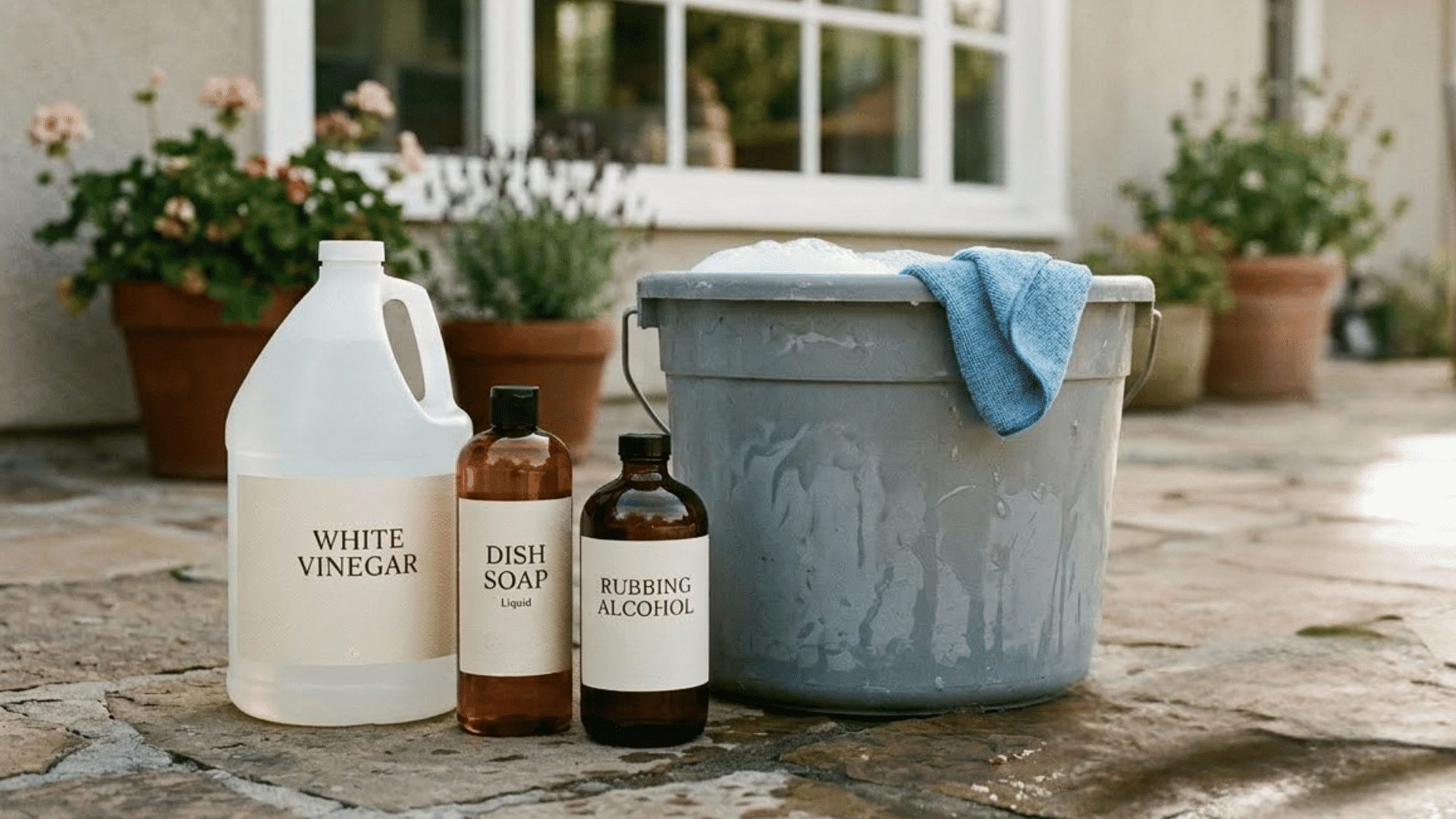
Outdoor windows collect more dirt, pollen, and bug residue than indoor glass, so this recipe scales up to a bucket rather than a spray bottle.
It works well with a squeegee for second-story or hard-to-reach windows.
Ingredients: 2 gallons warm water, 1 cup white vinegar, 1 tablespoon dish soap, ½ cup rubbing alcohol
How to prepare:
- Fill a bucket with the gallon of water.
- Add the vinegar, dish soap, and rubbing alcohol.
- Stir the solution well to combine.
- Dip a squeegee or soft brush into the mixture.
- Work the solution across the glass, then rinse with a hose
Best Tools for Cleaning Windows and Glass
Having the right tools makes window cleaning easier and helps remove dirt, marks, and streaks while keeping glass surfaces clear and polished.
Microfibre Cloth
Gently removes dust, fingerprints, and cleaner residue from glass surfaces while preventing scratches and reducing streaks during the final wiping process.
Squeegee
Helps remove excess water and cleaning solution from large windows, leaving the surface clearer and reducing the chances of visible streak marks.
Spray Bottle
Makes it easier to apply an even amount of homemade cleaner, helping prevent over-wetting while keeping the cleaning process simple and controlled.
Soft Sponge
Loosens stuck-on dirt, grease, and marks from windows before wiping, especially when glass surfaces need extra cleaning before polishing.
Lint-Free Cotton Cloth
Helps dry glass edges and remove remaining moisture without leaving behind tiny fibers, making it useful for final touch-ups.
Small Brush for Window Tracks
Reaches narrow corners and removes trapped dust, dirt, and debris from window tracks where regular cleaning cloths cannot reach.
Suggested: If you keep any kind of routine for staying on top of the house, it's the difference between the windows getting done and getting skipped.
Proper Ways to Store Homemade Window Cleaner Safely
Proper storage keeps homemade window cleaners effective and helps prevent accidental spills, misuse, or changes in the mixture over time.
- Use a Clean, Labeled Spray Bottle: Store your cleaner in a properly washed bottle with a clear label to avoid confusion with other household liquids.
- Keep Away from Children and Pets: Place the bottle in a secure area where children and pets cannot reach it or accidentally open it.
- Store in a Cool Place: Keep homemade cleaners away from direct sunlight, heat sources, and damp areas to help maintain their quality.
- Shake Mixtures Before Use: Gently shake the bottle before cleaning to mix settled ingredients and make sure the solution works evenly.
- Make Small Batches for Better Freshness: Prepare only the amount you need so the cleaner stays effective and does not sit unused for too long.
Wrapping it Up
Keeping windows and glass clean does not always require expensive products or complicated methods.
Simple ingredients found at home can help remove everyday dirt, fingerprints, and marks from most household glass surfaces.
A DIY window cleaner can be a useful option when you want an easy and affordable cleaning solution. Before using any homemade mixture, test it on a small hidden area to make sure it suits the surface.
With the right recipe and tools, cleaning becomes much easier. Which homemade window cleaner recipe are you planning to try first?
Frequently Asked Questions
How Often Should You Clean Your Windows?
Most homes only need window cleaning twice a year, in spring and before winter. High-traffic areas like kitchen windows or glass doors may need a wipe-down more often.
Can You Use Homemade Window Cleaner on Car Windows?
Yes, but skip recipes with oil-based essential oils, since they can smear on a windshield.
Why Do Windows Streak Even After Cleaning?
Streaks usually come from cleaning in direct sunlight, using too much solution, or wiping with a lint-heavy cloth.