


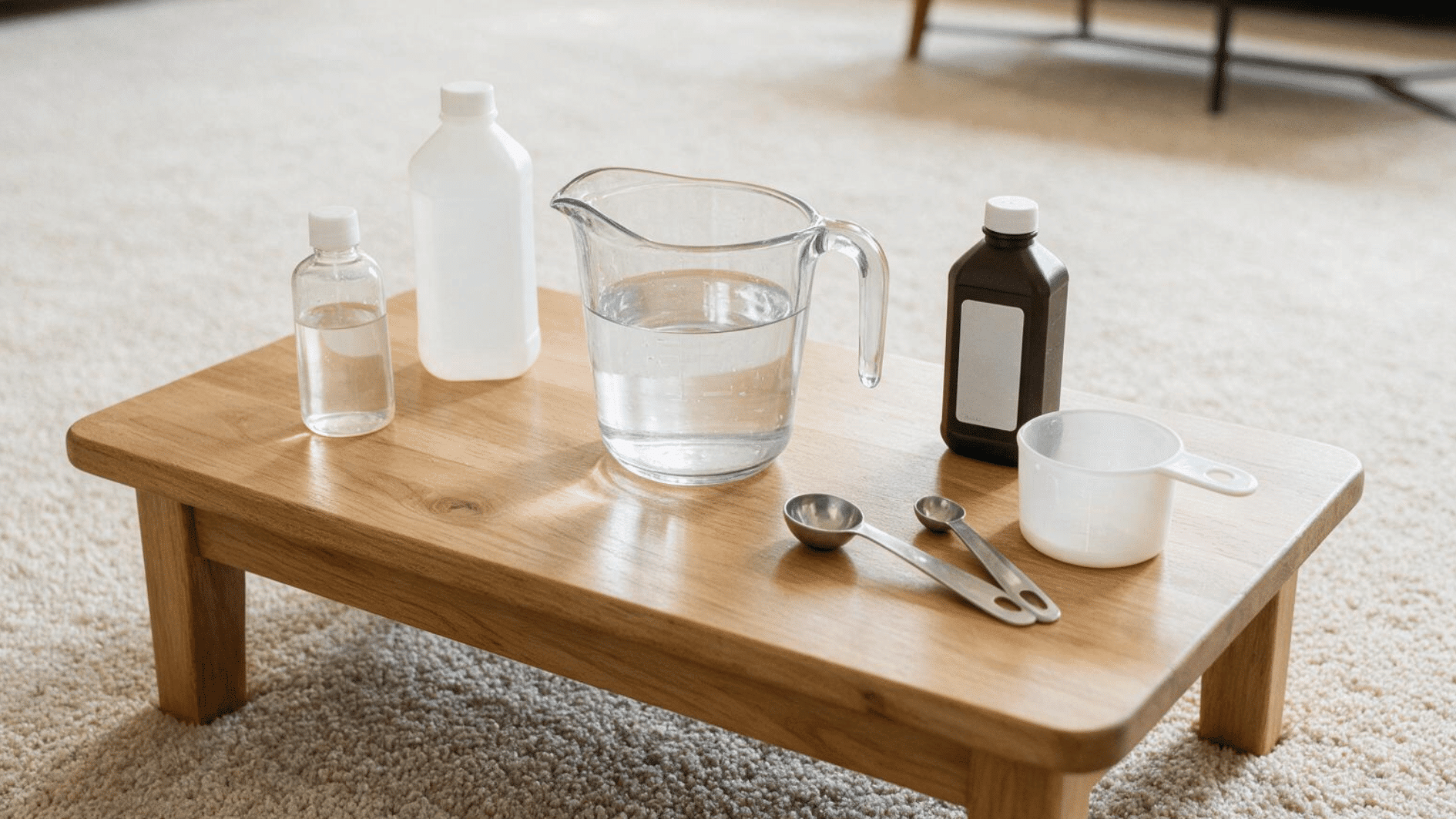
There’s a certain panic that hits when you spot a fresh stain on the carpet and every instinct says “grab something, anything” from under the sink.
I’ve been there, mixing whatever seemed logical and hoping for the best. Sometimes it worked. Sometimes it didn’t, and I made things worse.
That trial and error is exactly why this exists. You shouldn’t have to guess what’s safe for your carpet or your machine.
In this blog, you’ll find a proper diy carpet cleaner solution for nearly every mess.
What Is a DIY Carpet Cleaner Solution & Does It Work?
A DIY carpet cleaner solution is a homemade mixture used to help loosen dirt, spills, and stains from carpet fibers. It is usually made with common household cleaning ingredients instead of a ready-made carpet product.
You can use some mixtures for small spot treatments, while others may suit larger carpet areas when used carefully. The exact method depends on the carpet material and the type of mess you are treating.
Many people choose DIY options because they are simple to prepare and can be useful for everyday cleaning needs. They also give you more control over what goes into the solution and how much you make.
Supplies Needed
|
Supply |
What It Does |
Common Use |
|---|---|---|
|
Warm water |
Dilutes cleaning ingredients |
Most DIY mixtures |
|
White vinegar |
Helps with light cleaning |
Diluted carpet cleaning |
|
Clear dish soap |
Helps loosen greasy grime |
Hand spot cleaning |
|
Baking soda |
Helps absorb odors |
Dry deodorizing |
|
Spray bottle |
Controls liquid application |
Light hand cleaning |
|
Measuring cup |
Keeps ratios accurate |
Mixing recipes |
|
White cloths |
Blot stains and moisture |
Spot cleaning |
|
Dry towels |
Absorb excess moisture |
Drying cleaned areas |
|
Vacuum |
Removes loose dirt |
Before and after cleaning |
DIY Carpet Cleaner Solutions You Can Try
These DIY carpet cleaner solutions give you a few practical options to consider based on what you have at home:
1. DIY Carpet Cleaner Solution for a Carpet Cleaning Machine
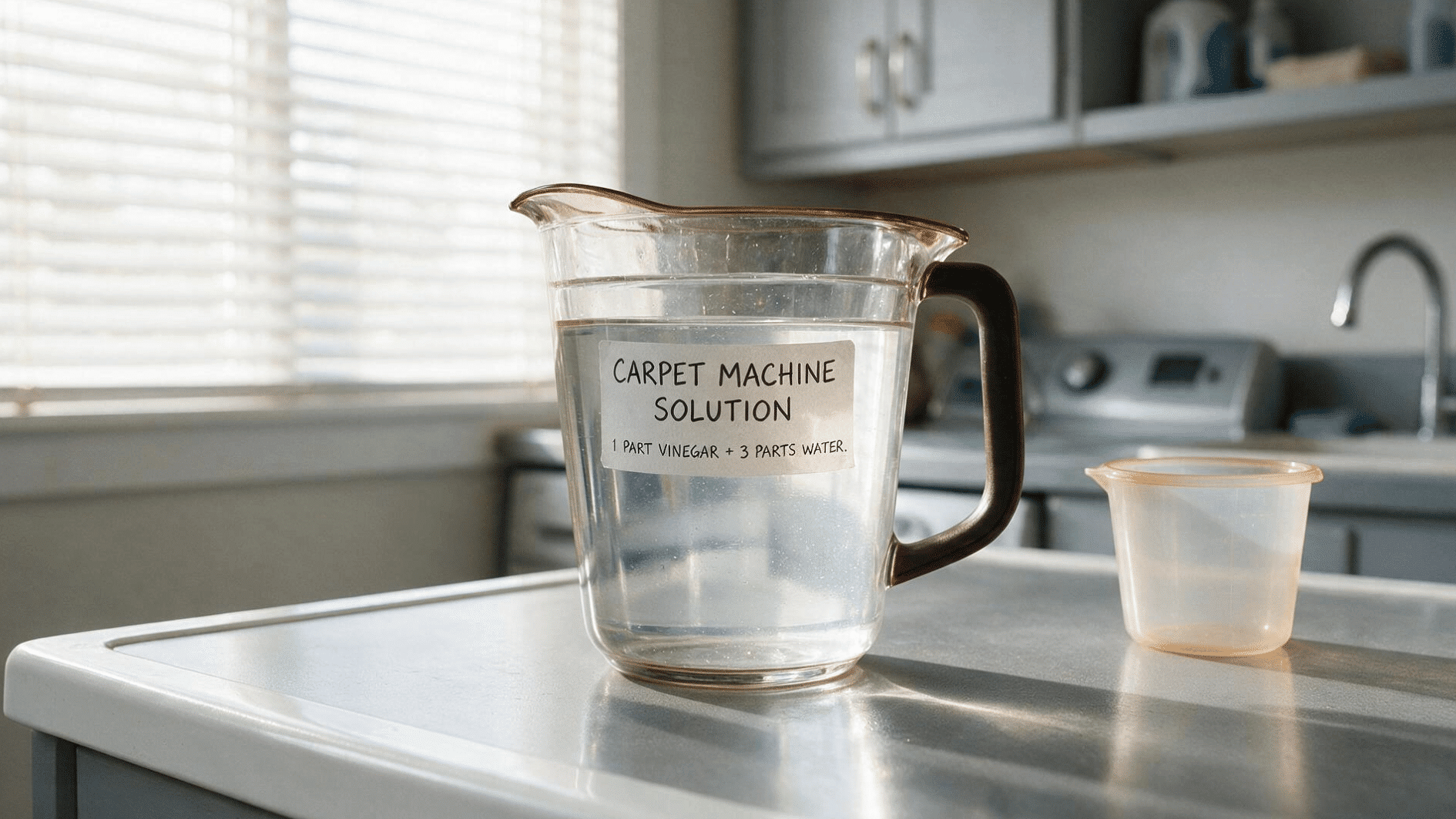
Use this only if your specific carpet cleaner model allows homemade or alternative solutions. Skip it entirely if the manual requires a manufacturer-approved formula instead.
Don’t add dish soap, laundry detergent, baking soda, or essential oils to this mixture. These can foam, leave residue, or damage the appliance.
What You’ll Need: 1 part white vinegar, 3 parts warm water, and a measuring cup.
How to Make:
- Confirm the machine’s manual permits a diluted vinegar solution.
- Combine the vinegar and water in the stated ratio.
- Pour the mixture into the correct tank, staying under the fill line.
- Run the machine using its standard cleaning cycle.
- Rinse both tanks and let the carpet dry completely afterward.
2. Vinegar and Water Carpet Cleaner
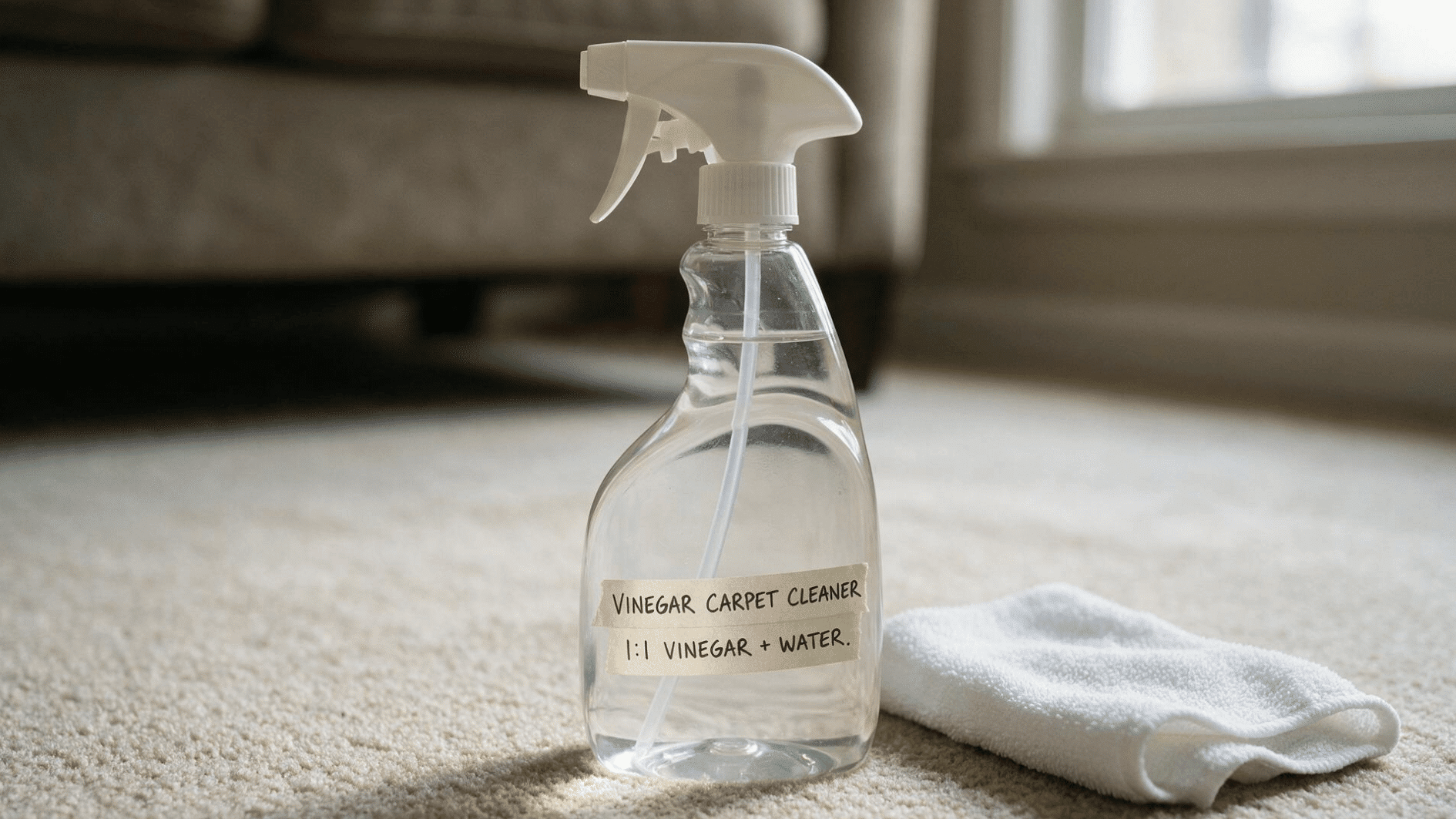
This two-ingredient mixture works for light hand cleaning. Use it only on carpet that can safely handle diluted vinegar. Avoid scrubbing back and forth. Blotting limits spreading and stays gentler on the carpet fibers.
What You’ll Need: 1 cup white vinegar, 1 cup warm water, a spray bottle, and a white cloth.
How to Make:
- Fill the spray bottle with equal parts vinegar and water.
- Spot-test on a hidden section and let it dry fully.
- Mist the stained area lightly, avoiding oversaturation.
- Blot with the white cloth until the mark lifts.
- Let the treated area air-dry before walking on it.
Tip: The vinegar smell fades as the carpet dries, so there’s no need to over-rinse the area.
3. Dish Soap Carpet Cleaner for Greasy Stains
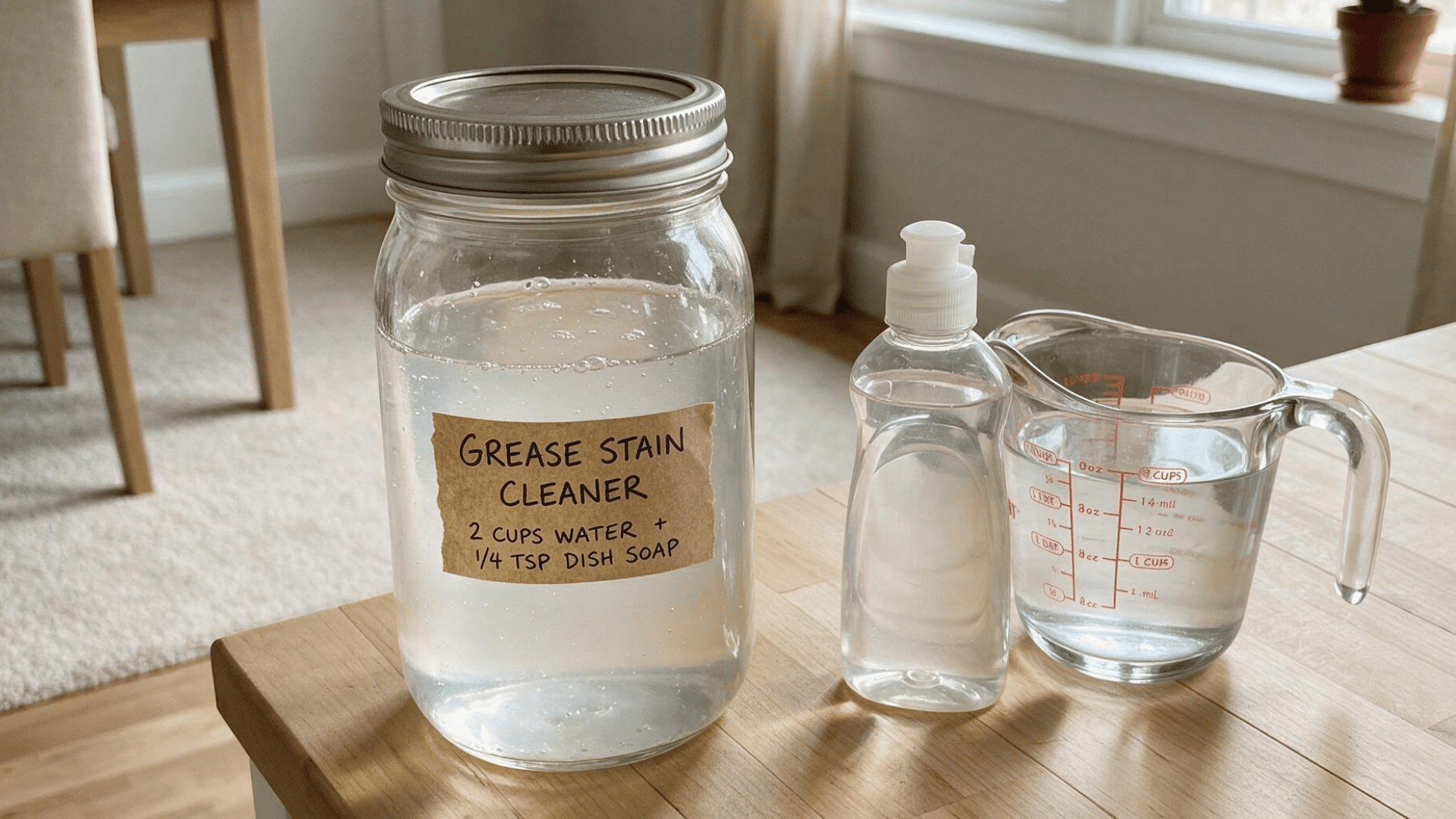
A very small amount of clear dish soap helps loosen food, grease, and oily marks that plain water can’t cut through. This mixture is for hand spot cleaning only.
Don’t pour dish soap into a carpet cleaning machine unless the manufacturer specifically permits it.
What You’ll Need: 2 cups warm water, 1/4 teaspoon clear liquid dish soap, two white cloths, and a dry towel.
How to Make:
- Stir the dish soap into the warm water until just blended.
- Work from the outer edge of the stain inward with a damp cloth.
- Follow up with a second cloth dampened in plain water only.
- Finish by pressing a dry towel firmly over the spot.
4. Low-Suds Castile Soap Carpet Cleaner
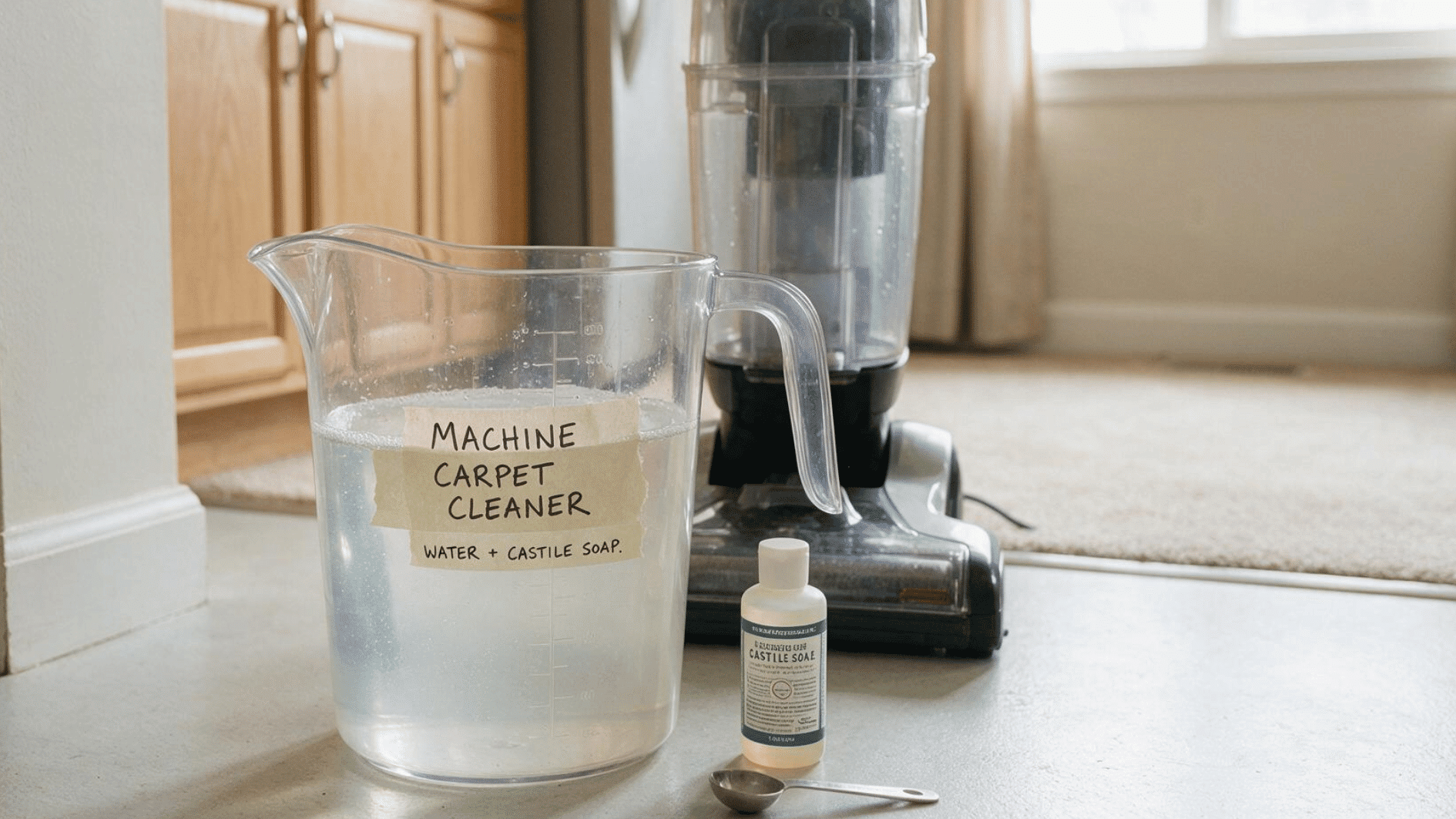
This low-soap mixture is intended for carpet extractors only when your machine manual allows non-manufacturer cleaning solutions. Castile soap is used sparingly to keep suds under control.
Don’t increase the soap amount for extra cleaning power. Carpet extractors work better with low-foaming formulas.
What You’ll Need: 1 gallon of warm water and 1 teaspoon of unscented liquid Castile soap.
How to Make:
- Fill a bucket with 1 gallon of warm water.
- Stir in 1 teaspoon of unscented liquid Castile soap without creating foam.
- Add the mixture to the correct machine tank only if your manual permits alternative solutions.
- Clean with slow passes, then extract as much moisture as possible.
- Empty and rinse the machine thoroughly after use.
Tip: Don’t increase the soap amount for extra cleaning power. Carpet extractors work better with low-foaming formulas.
5. Hydrogen Peroxide Carpet Pretreatment for Tough Stains
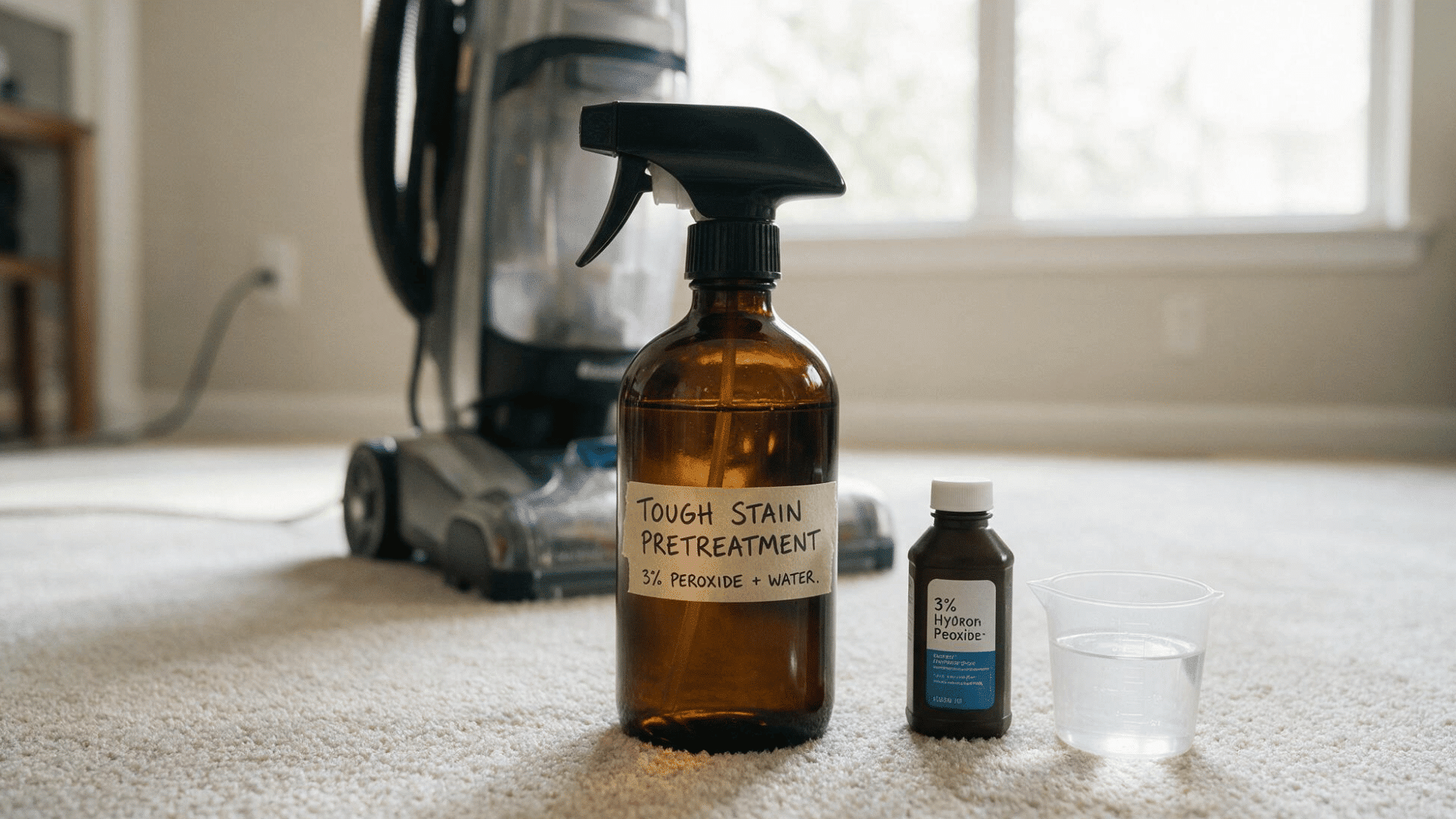
A mild hydrogen peroxide treatment can help with some stubborn carpet stains before machine cleaning. Keep this mixture outside the machine tank and use it only on compatible carpet.
Hydrogen peroxide can lighten some carpet dyes, so test a hidden area first.
What You’ll Need: 1/2 cup 3% hydrogen peroxide, 1 cup warm water, and a spray bottle.
How to Make:
- Combine the hydrogen peroxide and warm water in a clean spray bottle.
- Test a small amount on a hidden carpet area and let it dry fully.
- Lightly mist the stained area without saturating the carpet.
- Let it sit briefly, then run your carpet cleaner according to its instructions.
Tip: Mix only what you need and keep hydrogen peroxide away from dark or color-sensitive carpet unless a spot test shows no change.
How to Use Homemade Carpet Cleaner In a Machine
Use a homemade carpet cleaner in a machine only if the machine manufacturer allows non-commercial solutions.
Check the manual first, because some machines require approved formulas, and using the wrong mixture may damage parts or affect the warranty.
If homemade cleaner is allowed, strain the solution so no particles can clog the machine. Add only the recommended amount to the clean-water tank and avoid making the mixture too soapy.
Work in small sections and do not oversaturate the carpet. After cleaning, run a plain-water rinse if your machine allows it, then let the carpet dry fully.
Which Carpet Cleaners Allow Homemade Solutions?
Different carpet cleaning machines have different requirements for cleaning formulas. Some are more restrictive than others, so the table below shows what to check before using a homemade solution:
|
Machine |
DIY Solution? |
What to Know |
|---|---|---|
|
BISSELL |
Usually not recommended |
Many models call for compatible BISSELL formulas |
|
Hoover |
Depends on model |
Follow the listed solution type and dilution |
|
Rug Doctor |
Not for rentals |
Rental machines require approved cleaning solutions |
|
Shark |
Depends on model |
Use solutions permitted for your specific cleaner |
|
Other brands |
Varies |
Check the manual before adding a homemade mixture |
What NOT to Put In a Carpet Cleaning Machine
Household cleaning products are designed for different jobs, and not everything that works in a sink or spray bottle belongs in a carpet cleaner. A few common ones that I avoid:
- Dish Soap: It can produce excessive suds as the machine agitates the mixture.
- Laundry Detergent: It may foam heavily and leave detergent residue behind.
- Baking Soda: Fine powder can collect in components designed for liquids.
- Essential Oils: Oils can leave residue on carpet and machine components.
- Bleach: It can discolor carpet and may damage materials not designed for it.
- Unapproved Vinegar: Use it in the machine only when the manufacturer permits it.
- Multiple Cleaners: Combining products can create unexpected chemical reactions or excessive residue.
Test Your DIY Carpet Cleaner Solution
Test a DIY carpet cleaner on a small hidden area first to make sure it does not change the carpet’s color, texture, or finish. Choose a spot under furniture or near an edge where any reaction will be less noticeable.
Apply a small amount of the solution and blot gently with a clean white cloth. Do not soak the carpet. Let the test area dry completely before checking the result.
Look for fading, stiffness, discoloration, or dye transfer onto the cloth. If the carpet looks unchanged after drying, you can use the cleaner more confidently on the stained area.
Machine Carpet Cleaning vs. Hand Cleaning
|
Cleaning Method |
DIY Solution |
Main Concern |
|---|---|---|
|
Hand spot cleaning |
Many simple mixtures may work |
Test the carpet first |
|
Stain pretreatment |
Useful for small, isolated areas |
Avoid soaking the fibers |
|
Carpet cleaning machine |
Only permitted formulas |
Foaming and machine compatibility |
|
Water-only rinse |
Check machine instructions first |
Excess moisture left behind |
|
Dry odor treatment |
Keep separate from machines entirely |
Powder and vacuum compatibility |
When Should You Skip Homemade Carpet Cleaner?
DIY carpet cleaning has its limits, and some situations call for more than a homemade mix. Here’s when it’s worth skipping:
- Large or Recurring Stains: The source may extend into the carpet pad.
- Water Damage: Moisture can reach the padding and subfloor.
- Possible Mold: Treating it as an ordinary stain may not address the underlying problem.
- Wool or Silk: These fibers can require specific cleaning methods.
- Antique or Valuable Rugs: Experimenting with household cleaners may cause permanent changes.
- Unknown Carpet Fibers: Avoid using a recipe when you can’t confirm material compatibility.
- Repeated Failed Cleaning: Layering different products can make the stain harder to treat.
- Warranty Requirements: Follow the cleaning methods specified by the carpet manufacturer.
Wrapping It Up
A good diy carpet cleaner solution isn’t about one magic recipe. It’s about knowing what to reach for and when.
Small spills are much easier to handle when you already have a simple plan. Knowing which mixture suits the mess can make cleanup feel quicker and less frustrating.
I still keep a couple of these mixtures on hand at all times, and honestly, they cover far more than I expected when I first started experimenting.
So next time something spills, skip the panic. You already know exactly where to start, and what to leave alone.
Frequently Asked Questions
Can I Put Vinegar in a Carpet Cleaner Machine?
Only if your exact machine’s instructions permit vinegar or alternative homemade solutions. Don’t assume it’s approved just because it works for other models.
Can I Put Dish Soap in a Carpet Cleaner?
No, not unless the manufacturer specifically allows it. Dish soap creates excessive foam when circulated through a machine’s internal components.
Can You Use Just Water in a Carpet Cleaner?
Yes, in some machines, for rinsing or extraction. Check the exact model’s instructions before running a water-only cycle.
Why Does Carpet Feel Sticky After Cleaning?
Sticky carpet usually means leftover detergent. Using less product and rinsing it out thoroughly with plain water helps prevent residue.