




A dishwasher usually shows signs of strain first, long before it breaks down completely.
The buildup affects performance gradually. Dishes come out less clean, cycles run less efficiently, and problems develop in easy-to-overlook spaces.
This blog explains how to clean a dishwasher properly, covering the interior components that need attention, a maintenance schedule to follow, and the habits that keep buildup from returning.
How Do You Know It’s Time to Clean Your Dishwasher?
A musty smell coming from the machine even right after a cycle is usually the first clue. If dishes still feel greasy or glasses look cloudy when you unload them, that’s another sign.
Standing water at the bottom of the tub after a cycle finishes often points to a clogged drain or filter. Visible grime or food debris along the door edges or racks is easy to spot once you know to check for it.
None of these signs mean the dishwasher is failing. They mean it’s due for a cleaning.
Catching them early keeps the fix quick and prevents the problem from getting worse, and a quick pass using the 20 10 cleaning rule is often all it takes to stay ahead of it.
How to Clean a Dishwasher in a Proper Manner
Proper dishwasher cleaning means addressing four areas separately: the filter, the spray arms, the interior tub, and the door seal. Each traps a different type of buildup and needs its own approach.
1. Clean the Filter
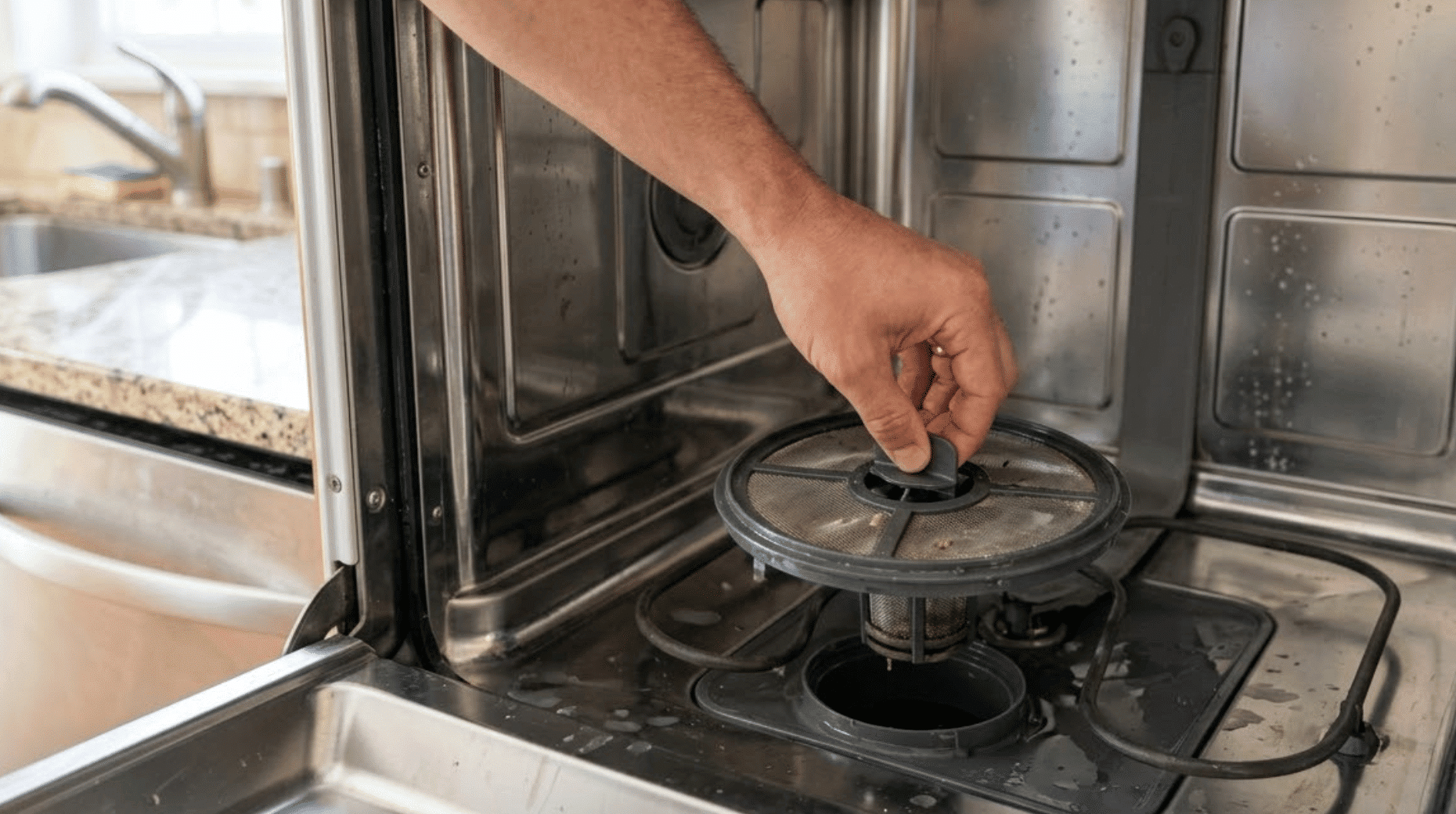
Food particles and grease collect in the filter faster than most people expect, since it catches everything the spray arms wash off dishes during each cycle. A clogged filter reduces cleaning performance.
Materials Required: Filter (removable), soft brush or old toothbrush, running water, dish soap
Steps:
- Locate the filter at the bottom of the dishwasher tub and twist it counterclockwise to unlock it.
- Lift the filter out and rinse it under warm running water.
- Use the soft brush to scrub away trapped food particles and grease.
- Place the filter back in position and turn it clockwise to lock it in place.
2. Clear Clogged Spray Arms and Nozzles
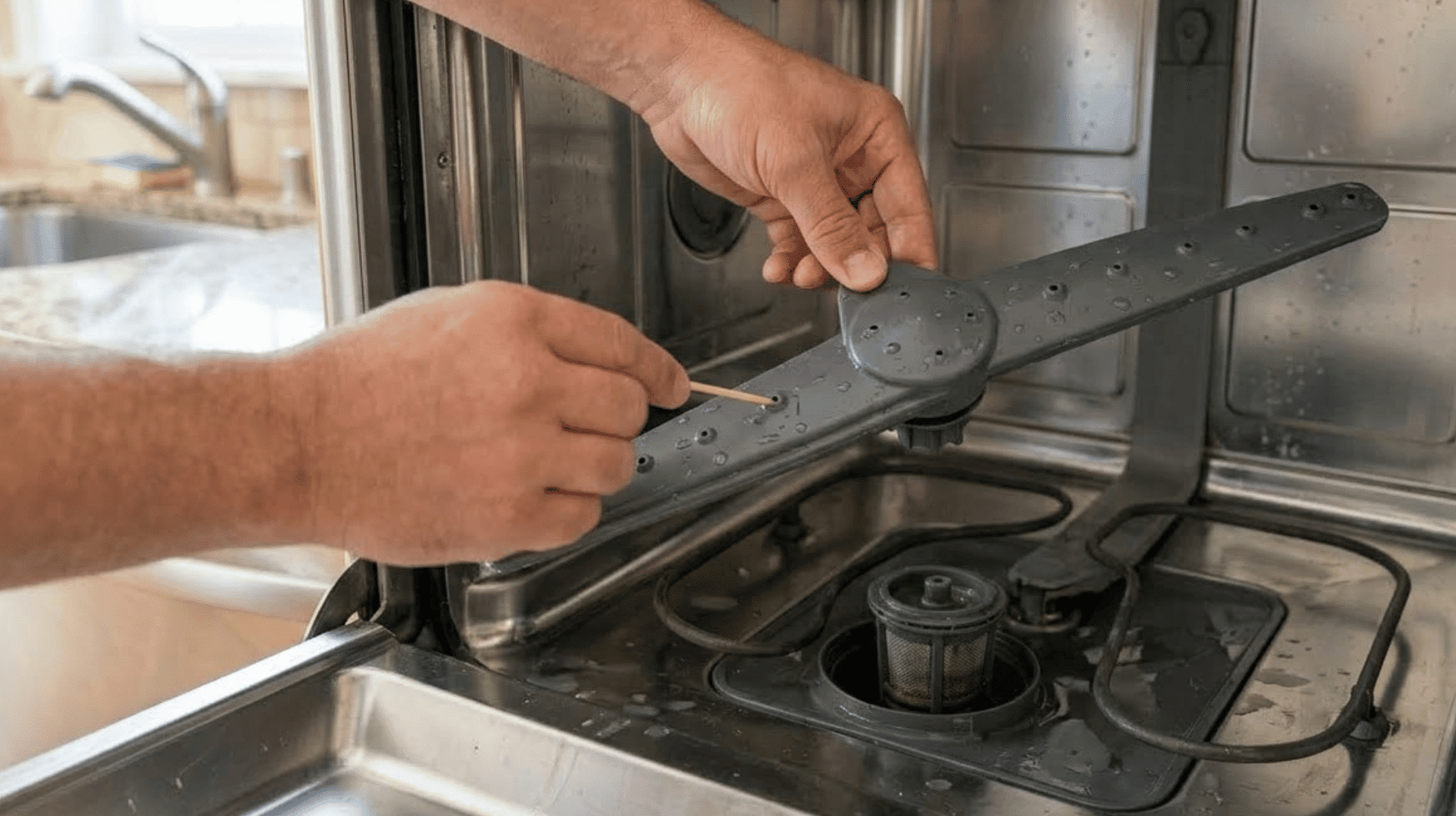
Spray arms rely on small nozzles to distribute water evenly across every rack. Mineral deposits and food debris can block these openings over time, leaving dishes only partially clean after a full cycle.
Materials Required: Toothpick or small pin, soft brush, running water
Steps:
- Remove the lower rack, then lift out the bottom spray arm.
- Detach the upper spray arm from beneath the top rack.
- Use a toothpick to clear any debris blocking the nozzles.
- Rinse both arms under running water and reattach them in their original positions.
3. Deep Clean with Vinegar and Baking Soda
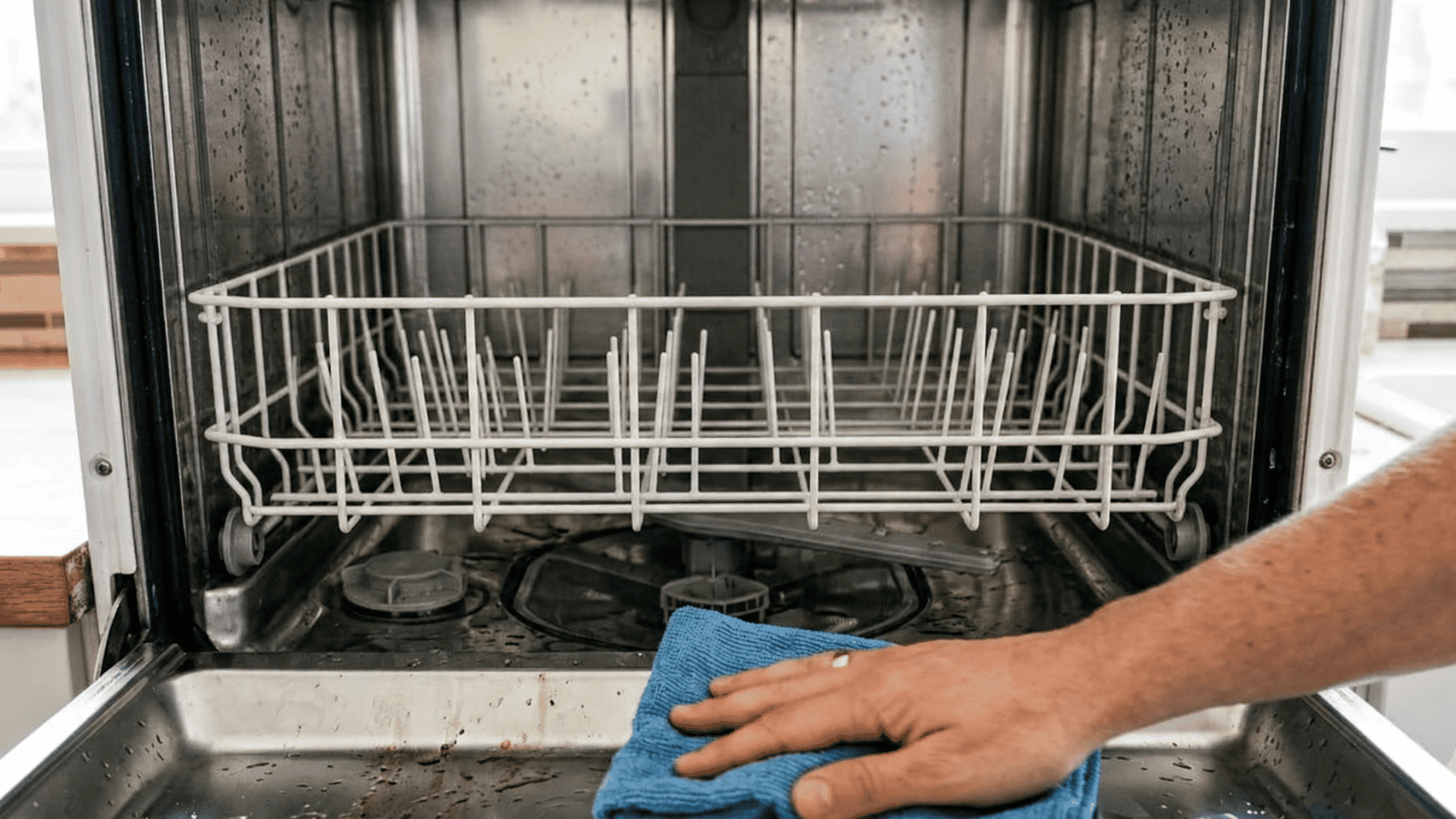
Regular wiping does not remove limescale or odor trapped in the tub’s interior surfaces. Running two separate cycles, one with vinegar and one with baking soda, breaks down residue that builds up gradually.
Materials Required: White vinegar, baking soda, dishwasher-safe bowl
Steps:
- Fill a dishwasher-safe bowl with two cups of white vinegar and place it upright on the top rack.
- Run a hot water cycle with the heat-dry option turned off and no detergent.
- Once the cycle ends, sprinkle one cup of baking soda along the bottom of the empty tub.
- Run a short hot water cycle to finish deodorizing the interior.
4. Wipe the Door Seal, Gasket, and Exterior
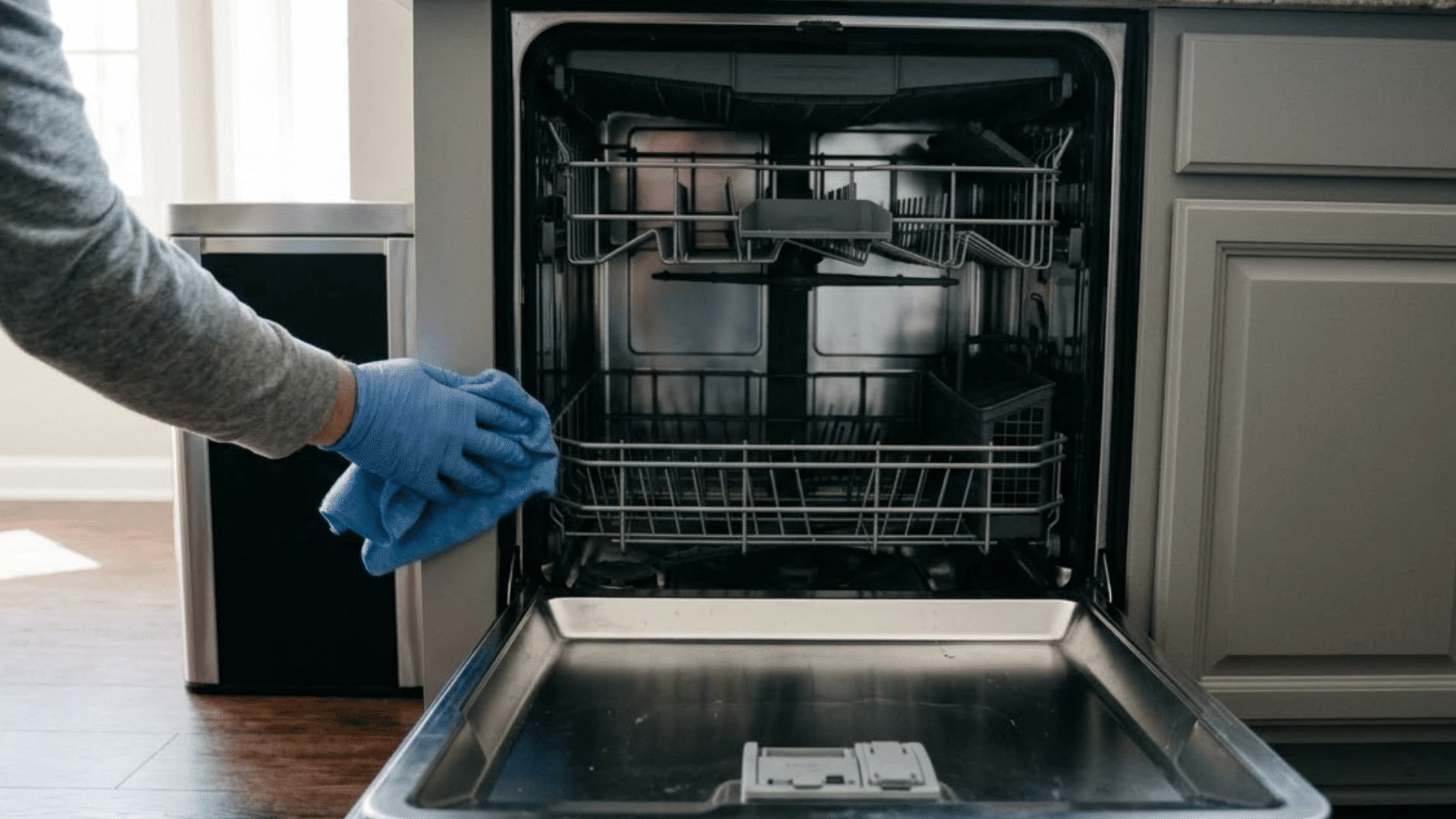
The rubber gasket around the door traps moisture, making it a common spot for mold and mildew to develop unnoticed. The exterior collects fingerprints and food splatter that a quick wipe usually misses.
Materials Required: Microfiber cloth, mild dish detergent, stainless steel cleaner (if applicable)
Steps:
- Dampen a microfiber cloth with water and a small amount of mild detergent.
- Wipe along the rubber gasket, pressing into the folds where moisture collects.
- Clean the door front, handle, and control panel with the same cloth.
- For stainless steel, follow with a stainless steel cleaner, wiping in the direction of the grain.
How Often Should You Clean Each Part?
Different parts of the dishwasher collect buildup at different rates, so a single cleaning schedule does not work for all of them. Following a part-specific routine keeps the machine running efficiently year-round.
| Dishwasher Part | Cleaning Frequency | Reasons |
|---|---|---|
| Filter | Weekly | Food particles collect quickly and cause clogs |
| Spray arms and nozzles | Monthly | Mineral buildup can reduce water flow |
| Interior tub | Monthly | Vinegar and baking soda remove odors and limescale |
| Door seal and gasket | Every two weeks | Trapped moisture may encourage mold growth |
| Exterior and control panel | As needed | Regular wiping removes fingerprints and splashes |
Best Practices to Prevent Future Buildup
Small habits during everyday use reduce how quickly grease, mineral deposits, and food residue accumulate. Building these into a routine means less scrubbing and fewer deep cleans down the line.
Scrape Dishes First
Remove large food particles before loading, since leftover scraps feed buildup in the filter.
Run Hot Water at The Sink
Start the tap before beginning a cycle so the dishwasher heats up faster and cleans more effectively.
Leave the Door Cracked Open
Air out the interior after each cycle to prevent trapped moisture from turning into odor or mold.
Use Rinse Aid Regularly
Reduce mineral spotting and residue buildup on interior surfaces between deep cleans.
Avoid Overloading Racks
Give water and detergent enough room to circulate, so less residue settles on dishes and surfaces.
Our kitchen organization hacks guide covers a few more habits worth adding once the dishwasher routine sticks.
Common Mistakes to Avoid
A few missteps during cleaning can reduce results or even damage the dishwasher. Avoiding these keeps the process effective and safe for the machine’s interior components.
- Mixing Vinegar and Baking Soda Together: Run them in separate cycles, since combining them cancels out their individual cleaning effects.
- Using Vinegar Too Frequently: Limit deep cleans to once a month, as vinegar’s acidity can wear down rubber seals and hoses over time.
- Skipping the Filter During a Deep Clean: Cleaning the tub without removing the filter leaves the biggest source of odor and residue untouched.
- Running the Dishwasher without The Filter in Place: Always reinsert and lock the filter before starting a cycle, or unfiltered debris can damage the pump.
- Using Abrasive Scrubbers on The Interior: Stick to soft brushes and cloths, since rough scouring pads can scratch surfaces and seals.
Conclusion
Knowing how to clean a dishwasher properly makes a real difference in performance. A well-maintained machine runs quieter and dries dishes more effectively.
Treat cleaning as routine appliance care, not a task for when something goes wrong. Consistency prevents the buildup that eventually requires more work to reverse.
Start with whichever area needs attention first, then build the rest of the schedule around it. A clean dishwasher is a more reliable one.
Frequently Asked Questions
Can You Use Bleach to Clean a Dishwasher?
Bleach is not recommended, especially on stainless steel interiors, since it can damage seals and finishes over time. Vinegar or a dishwasher cleaning tablet is safer for regular upkeep.
Why Does My Dishwasher Still Smell After Cleaning?
A lingering odor usually means the filter, drain, or gasket was missed during cleaning. Check these areas individually, since a full cycle alone will not remove trapped residue.
Can You Clean a Dishwasher with Dishes Still Inside?
Yes, using a dishwasher cleaning tablet in the tub along with regular detergent lets you clean the machine and wash dishes in the same cycle.